Murciélagos mutantes


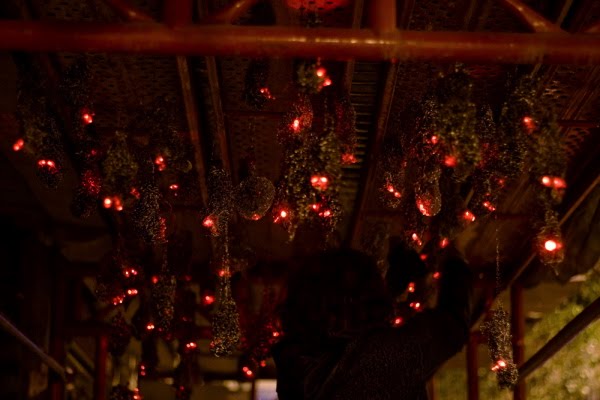
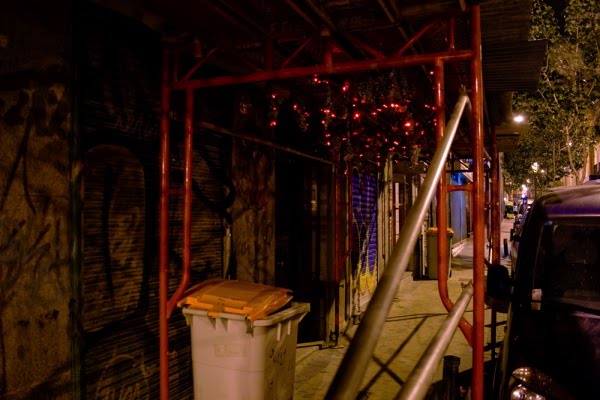
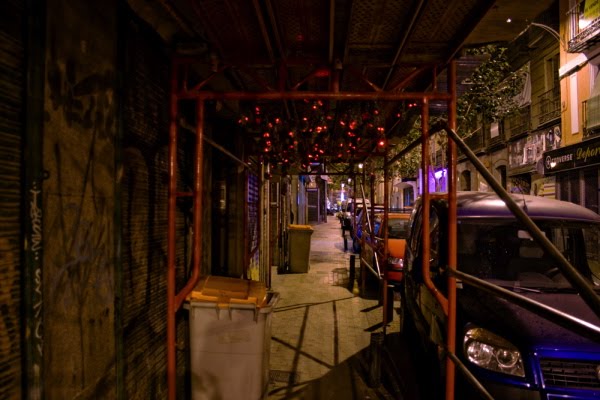
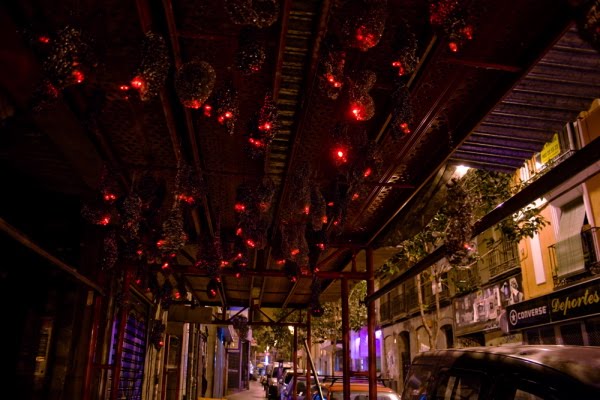
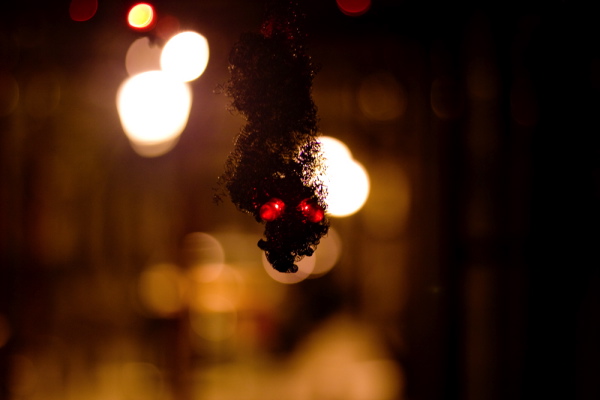
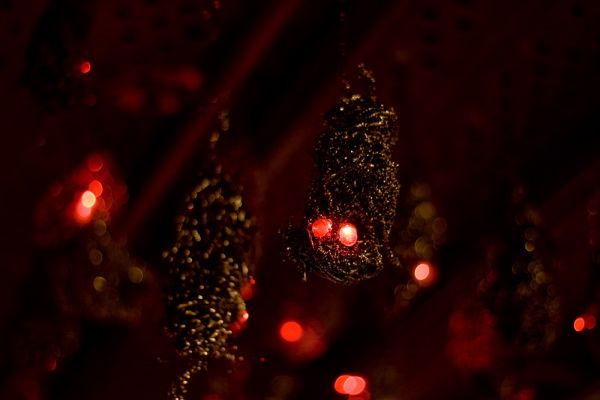
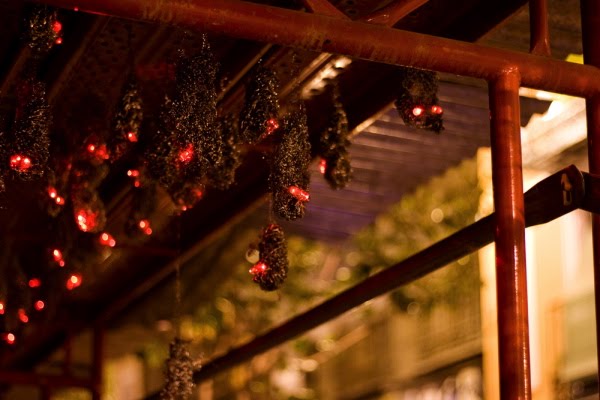
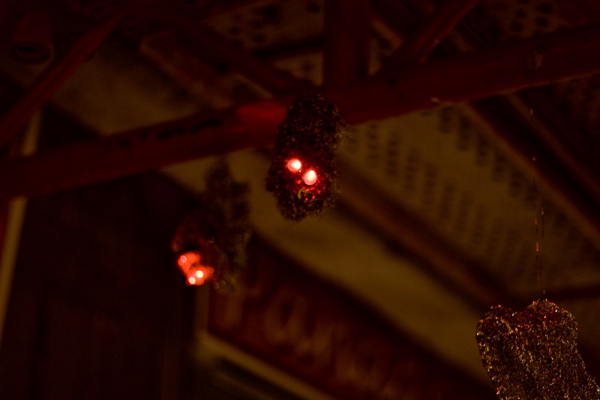
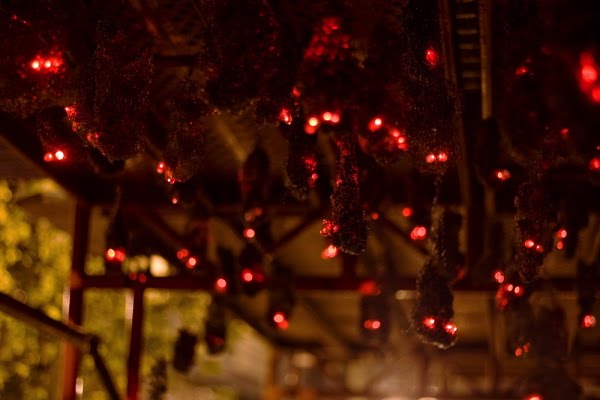
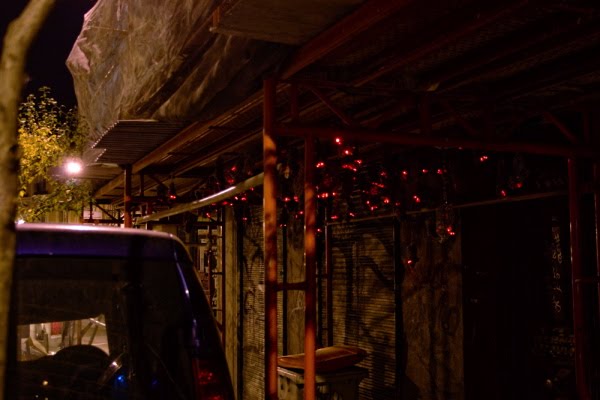
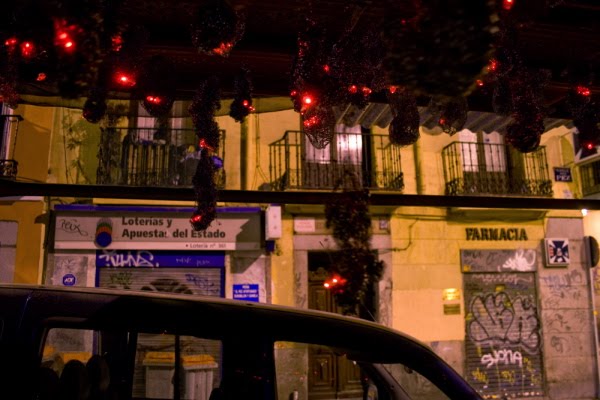
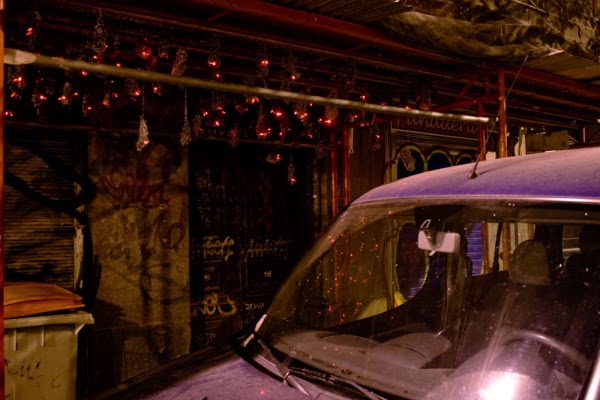
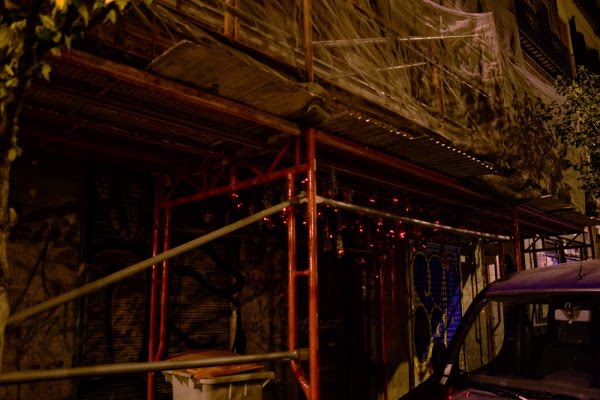
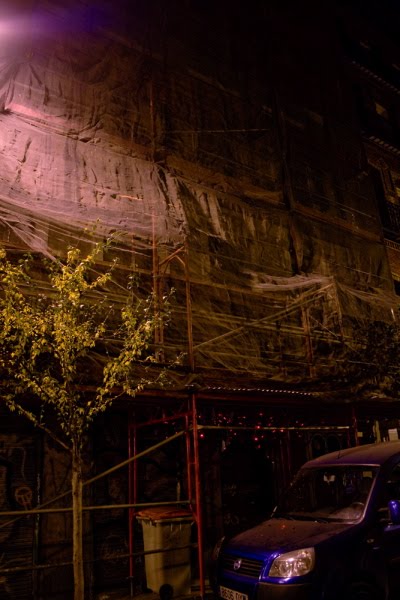
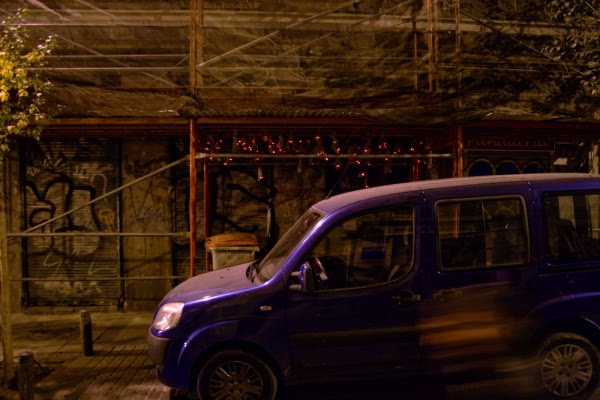
Esas oscuras grutas de andamios, tan frecuentes en nuestro deambular diario por un Madrid en obras, parece que se han convertido en el refugio urbano de unas extrañas criaturas.

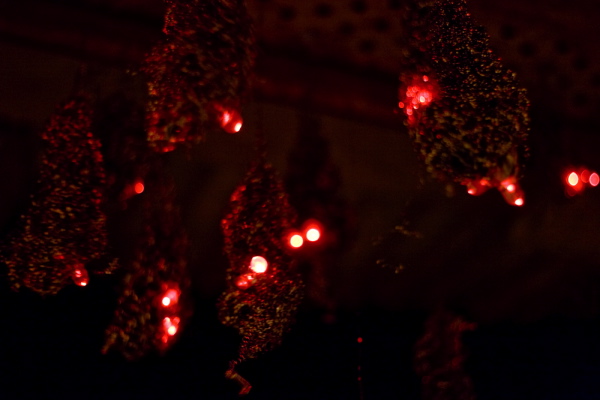
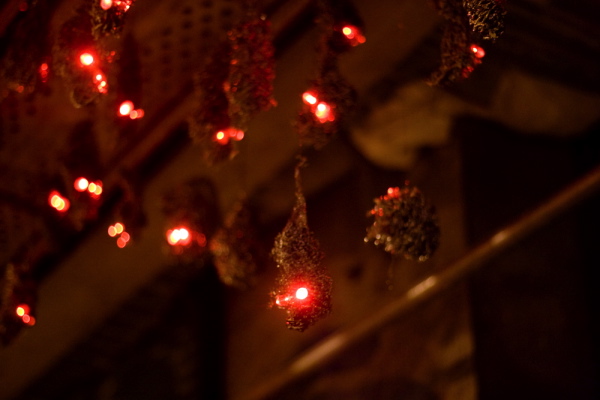
Estos enigmáticos seres de la noche, mutantes de murciélago, se mimetizan con el entorno y con sus ojos acechantes, esperan a las víctimas que descuidadas se internan en estos claustrofóbicos pasadizos, en los nunca se sabe si es de día, de noche, si llueve o haces sol.

Nosotros tuvimos la suerte de avistar una colonia de unos 100 y por suerte hemos sobrevivido para contarlo.

Habitando andamios fue llevado a cabo el martes 18 de octubre en la Calle del Pez de Madrid, con 100 estropajos de alambre, de esos conocidos popularmente como nanas y nuestras luces.

Una semana después, nuestras malignas criaturitas, seguían habitando el mismo andamio, oscuro y cutre.

Gustavo Sanabria estaba con nosotros y pudo documentar detalladamente el descubrimiento.

Tiempo de montaje: 2 horas.
Daños ocasionados: 0.
Permanencia de la intervención: 7 días.

————————————————————————-

These dark caves of scaffolding, so frequently seen in our daily walks through a Madrid under construction, seem to have become the urban refuge for some strange creatures.

These enigmatic beings of the night, mutant bats, are blending into the environment and with their spying eyes, waiting for their victims who carelessly enter these claustrophobic passages, in which one never knows if it is night or day, if it is raining or if the sun is shining.

We were lucky enough to see a colony of about 100, which fortunately we have survived to tell.

Inhabiting scaffolding was carried out on Tuesday October the 18th in Calle del Pez in Madrid, with 100 wire scouring pads.

A week later, our malignant creatures, still inhabited the same Dark and seedy scaffold.

Gustavo Sanabria was with us and was able to document our discovery in detail.

Time of installation: 2 hours.
Damages: none.
Exhibition time: 7 days
.


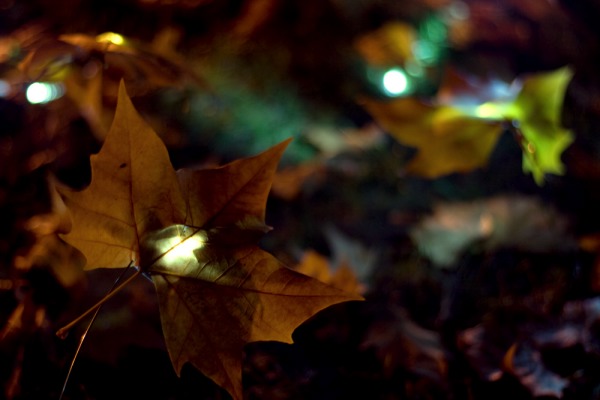
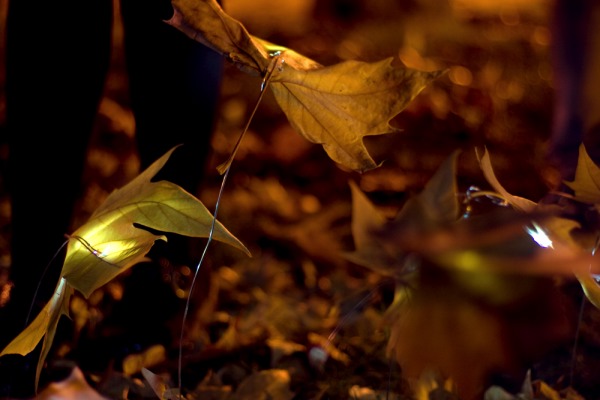
An Almost ephemeral Autumn / Fuga de hojas en parque urbano


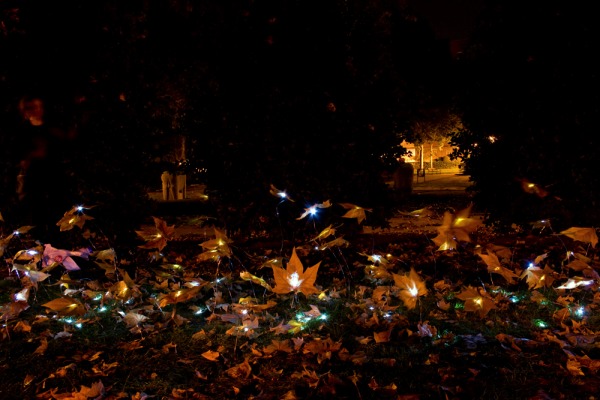
Para encontrar el otoño en Madrid tuvimos que buscar bastante, pero por fin dimos con él en un recóndito parque del barrio de Moratalaz.

La noche del martes 3 de noviembre fue preciosa, no hacía nada de frío y nadie pasaba por el parque a esas horas de la madrugada, por lo que pudimos disfrutas de 3 horas de completa serenidad, sentados entre las hojas, componiendo nuestra obra.

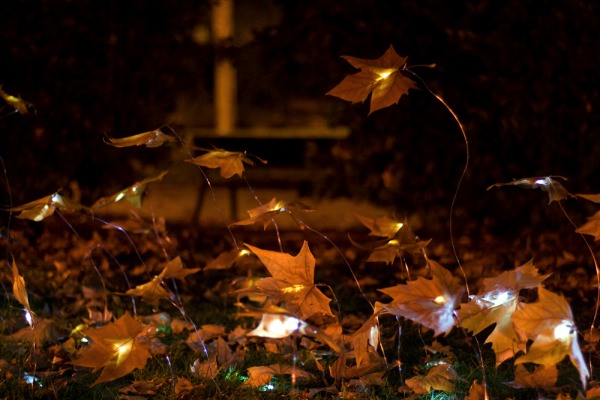
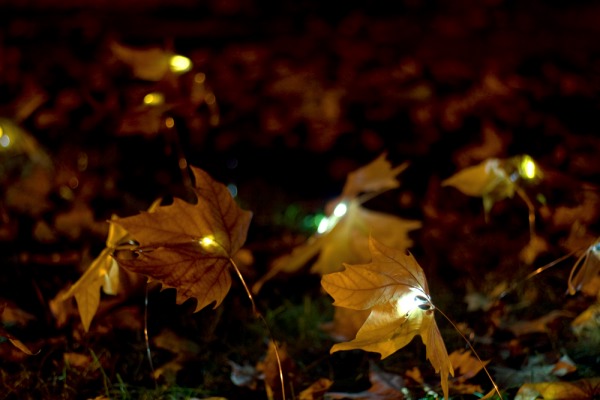
Para la instalación, Otoño casi efímero, iluminamos unas 200 hojas secas y las elevamos del suelo, hasta que nos pareció que de verdad una ligera ráfaga de luz había hecho elevarse las hojas caídas por el otoño.

Las preciosas fotos son de Gustavo Sanabria. Kaspar nos ayudó de nuevo, esta vez eligió para nosotros las mejores hojas, gracias amigo.

Tiempo de montaje: 3 horas.
Daños ocasionados: 0.
Permanencia de la intervención: 4 horas.

————————————————————–

Finding somewhere in Madrid with Autumn at its best was hard but in the end we did. It was in a far-away park in the Moratalaz district.

The night of the 3rd November was awesome, it wasn´t at all cold and nobody walked about in the park then, just after midnight. We were able to enjoy 3 hours of absolute calm, sitting among the fallen leaves, composing our work.

For the installation An Almost ephemeral Autumn we lit 200 dry leaves and lifted them from the ground until it seemed as if a truly soft breeze of light had made the Autumn fallen leaves raise into the air.

The beautiful photos were taken by Gustavo Sanabria. Kaspar, once again helped, and chose some of the best leaves around. Thanks so much, my friend.

Time of installation: 3 hourss.
Damages: none.
Exhibition time: 4 hours
.

Nos rendimosssssssss


No podemos aguantar ni una obra más en nuestras resentidas calles, ni un impuesto más en nuestro maltrechos bolsillos, por lo que hemos decidido enarbolar la bandera blanca y entregarnos, a ver si así conseguimos el trato humanitario que correspondiente a un prisionero de guerra, porque últimamente como ciudadanos de a pie no lo estamos disfrutando.

Se nos abren las carnes pensando que este despliegue de obras no ha terminado y que para la candidatura a los Juegos Olímpicos del 2020, todo lo hecho hasta ahora estará ya obsoleto, si no inservible o pasado de moda y habrá que empezar de nuevo.

Nuestro acto simbólico, Rendición ante un posible Madrid 2020, tuvo lugar el martes 27 de octubre y consistió en un paseo por algunas de las obras públicas más representativas y duraderas de Madrid, en cuyas tremendas zanjas, fuimos dejando nuestras banderas blancas y luminosas.

El paseo concluyó en las impresionantes obras de Colón, donde desplegamos al viento mas de 30 banderas, para que todo el que pasara, supiera que nuestra rendición se había llevado a cabo.

Gustavo Sanabria estuvo documentando la acción y se rindió con nosotros. Nuestro amigo Kaspar nos ayudó en todo momento y también se tuvo que rendir, mil gracias.

Tiempo de montaje: 4 horas.
Daños ocasionados: 0.
Permanencia de la intervención: ¿?.
—————————————————————————————

We cannot deal with another construction project on our sullen streets, nor another tax on our depleted pockets, therefore we have decided to hoist the white flag and turn ourselves in to see if we receive the humanitarian treatment accorded a prisoner of war, because lately we are not enjoying being ordinary citizens.

It cuts us to the quick to think that this round of projects has not finished and that for the candidature of the 2020 Olympic Games, everything done until now will already be obsolete, if not useless or out of fashion and will have to be started again.

Our symbolic act, Surrender before a possible Madrid 2020, took place on Tuesday the 27th of October and consisted of a walk around some of the most representative and long-lasting public works projects in Madrid, in whose tremendous trenches, we left our lighted white flags.

Our walk finished at the grandiose public projects in Colón, where we unfurled to the wind more than 30 flags, so that everyone who passed, would know that our surrender had been carried out.

Gustavo Sanabria was documenting the action and surrendered with us. Our friend Kaspar helped us at all times and also surrendered, a thousand thanks.

Time of installation: 4 hours.
Damages: none.
Exhibition time: ¿?.

Sacando coches de la carretera


.


Con afán de mejorar las condiciones de tráfico de Madrid, estuvimos varias días sacando de las carreteras coches que sobraban. Las zonas elegidas para nuestra particular limpieza, fueron las Carreteras de Barcelona y de Extremadura, siempre llenas de coches y por supuesto atascadas en las primeras horas del día.

En nuestra acción, Mejorando el tráfico urbano, hicimos una simulación con 70 coches, que dejamos suspendidos y con las luces encendidas, de varios puentes peatonales, a la espera de que los conductores atascados pensaran un poco en el excesivo uso que hacemos del transporte privado.

No sabemos lo que duraron puestos, pero seguro que muchos conductores se toparon con ellos y tuvieron tiempo para observarlos detenidamente.

Las fotos son de Gustavo Sanabria.

Tiempo de montaje: 6 horas.
Daños ocasionados: 0.
Permanencia de la intervención: ¿?.

———————————————————————————————

With the intention of improving the traffic conditions of Madrid we tookw different days taking cars cars off the roads. The places we chosen for our particular clean-up work were Barcelona and Extremadura Motorways, to the east and west of Madrid, where there are traffic jams every day in early hours.

In our installation “Improving the city traffic” we simulated a real street with 70 cars that we hang with the lights from different pedestrian bridges, so that drivers could think a little in the overuse of private transport.

We do not no how long they remained in place but surely a great number of drivers noticed them and had enough time to observe the installation in detail.

Photos by Gustavo Sanabria.

Time of installation: 6 hour.
Damages: none.
Exhibition time: ¿?.

Madrid pasada por agua y sangre


Mucho hemos hablado ya de lo que pasa en las sufridas calles de Madrid, obras una y otra vez, publicidad invasiba en un espacio público, donde se comercia con cada centímetro de suelo para eventos privados, casetas de feria y exceso de terrazas para el consumo sólo del que paga.

Además está el tema de la basura en la calle, de la orina por todos lados, de la falta de verde y de la falta de arte, del tráfico… y mil cosas más que nos condicen a pensar que vivimos en una ciudad que está en carne viva, herida y postrada casi de muerte y a la que el más pequeño roce produce una hemorragia difícil de contener.

Y eso es lo que hemos querido escenificar con esta pequeña acción llamada Hemorragia urbana, que llevamos a cabo el martes 20 de octubre en el barrio de Malasaña de Madrid.

Esperamos a un día de fuertes lluvias y salimos a buscar charcos en el pavimento. Elegimos una zona conflictiva, la Plaza del 2 de Mayo en el pasado escenario del famoso y sangriento fusilamiento de 1808 y en el presente ya que allí se siguen representando escenas de violencia y represión, contra los que beben en la calle.

Solo tuvimos que teñir el agua de rojo y poner nuestras luces dentro, para simular que la sangre se deslizaba por el pavimento, creando un efecto de lo más dramático. Mientras llovía, parecía que el agua caía roja del cielo y cuando paraba, era como si el suelo supuraban sangre que se deslizaba hasta las alcantarilla.

A los pocos minutos, la gente que pasaba por la calle se había llevado las luces y unas bonitas manos de color rojo. El tinte, por supuesto, era comestible.

Gracias a Gustavo por las estupendas fotos, pasadas por agua y a Raquel Sakristán que nos echó una manita en las labores de sangrado.

Tiempo de montaje: 2 horas.
Daños ocasionados: 0.
Permanencia de la intervención: 20 minutos.
—————————————————————————————-

We have already spoken at length about what happens in the long- suffering streets of Madrid, construction time and time again, publicity invading public spaces, where they sell every square centimetre for private events, stalls and an excess of terraces for consumption by those that can pay.

Also, there is the issue of garbage in the streets, urine everywhere, the lack of green and the lack of art, the traffic… and a thousand more things which condition us to think that we live in a city that is raw, hurt and prostrated almost to death and to which the slightest graze produces a hemorrhage which is difficult to contain.
And that is what we wanted to dramatize with this little action called Urban Hemorrhage that we carried out on Tuesday the 20th of October in the neighborhood of Malasaña in Madrid.

We expected a day of heavy rain and we went out to look for puddles on the pavement. We chose a conflictive zone, the May the 2nd Plaza, in the past the scene of the famous and bloody execution of 1808 and in the present scenes of violence and repression are still being played out there against those that drink in the streets.

We only had to dye the water red and put our lights in it to simulate the blood that flowed over the pavement, creating a most dramatic effect. As it rained, it seemed that the water fell red from the sky and when it stopped, it was as if the ground was seeping blood that was flowing to the sewers.

In only a few minutes, the people who were walking through the streets had carried away the lights and pretty red colored hands. The dye was, of course, edible.

Thanks to Gustavo for the fantastic photos, covered in rain and to Raquel Sakristán who gave us a hand with the labors of bleeding.

Time of installation: 2 hours.
Damages: none.
Exhibition time: 20 minutes
.