Caressing Zone / Zona de acaricias


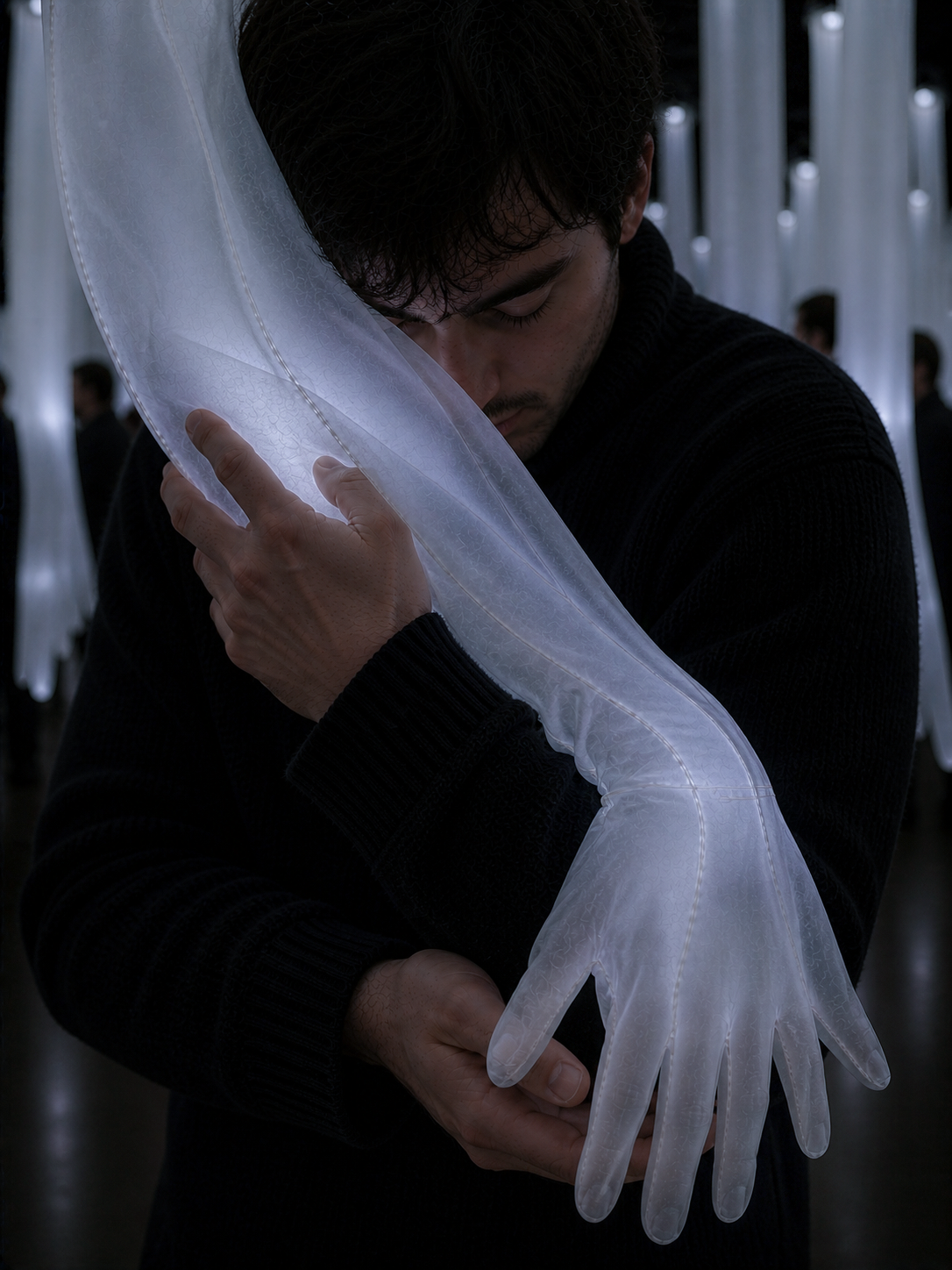
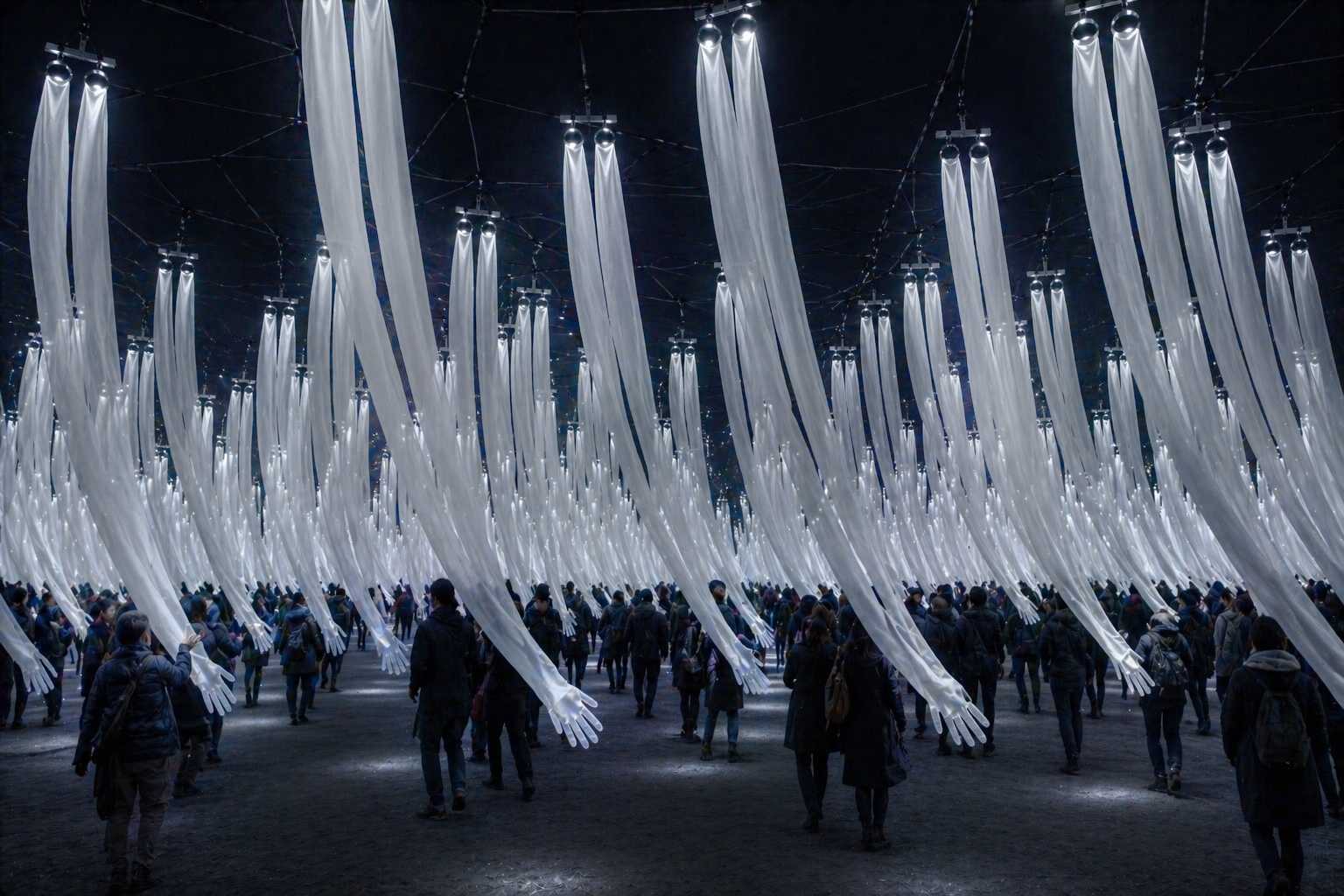
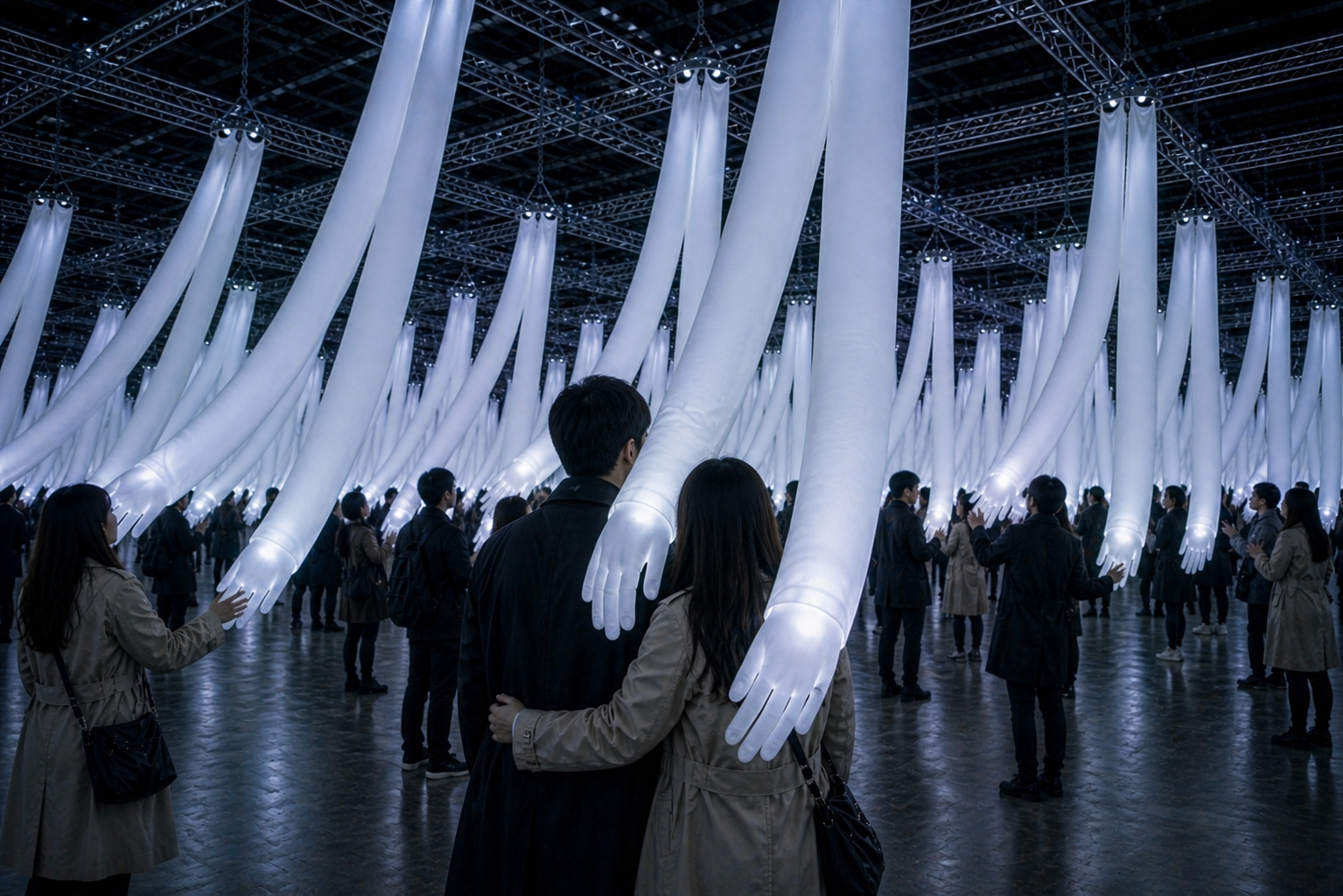
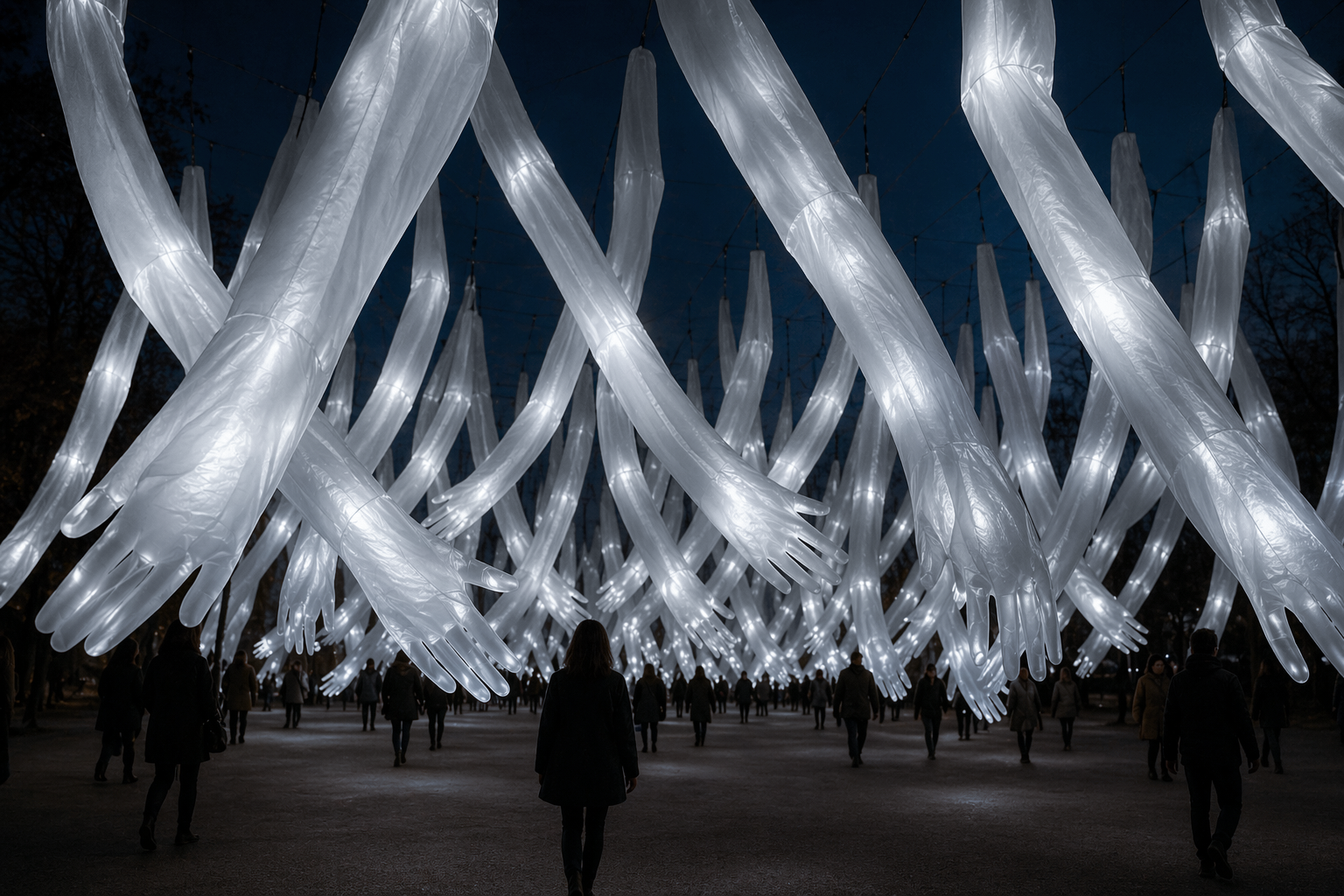
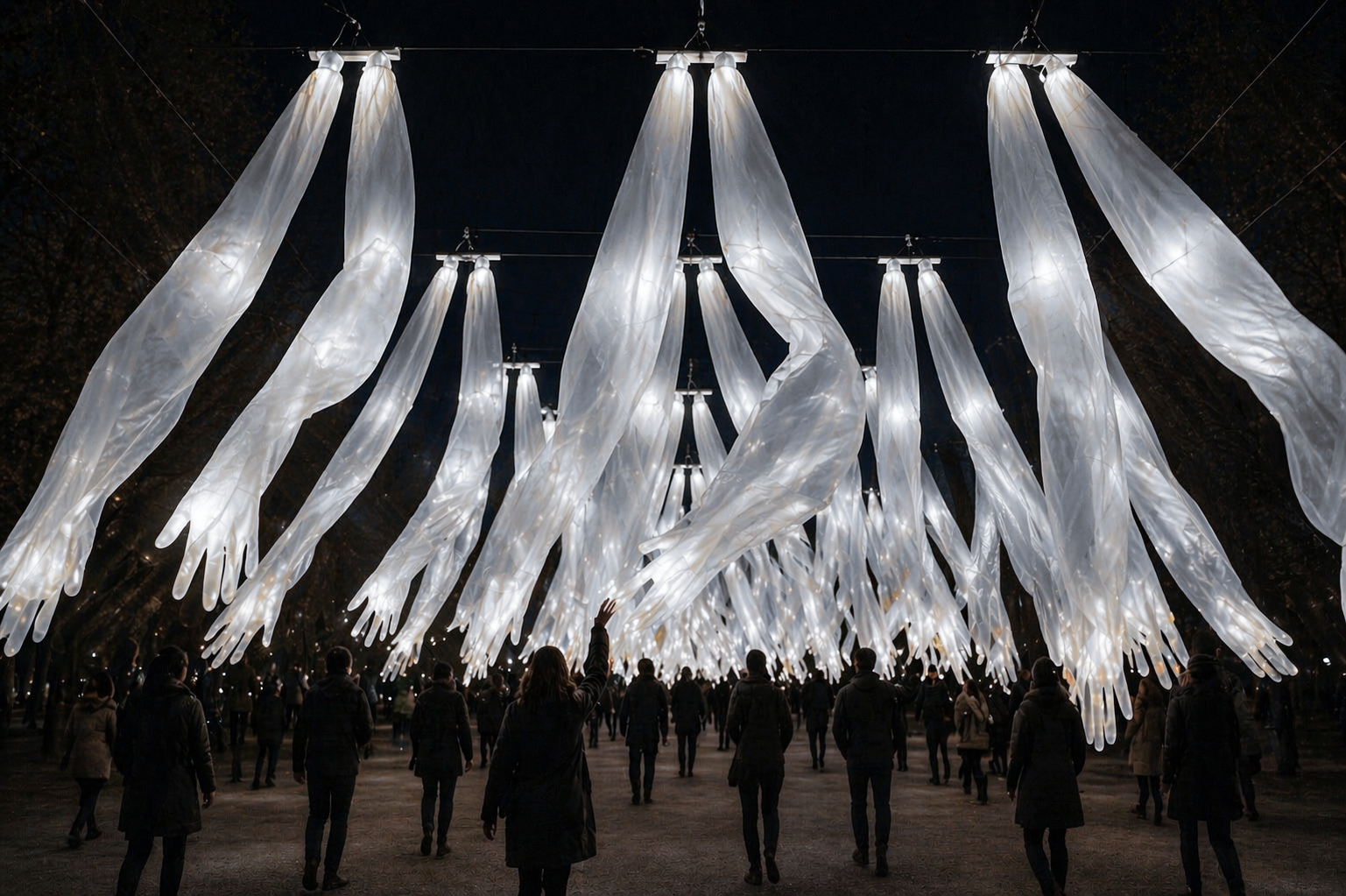
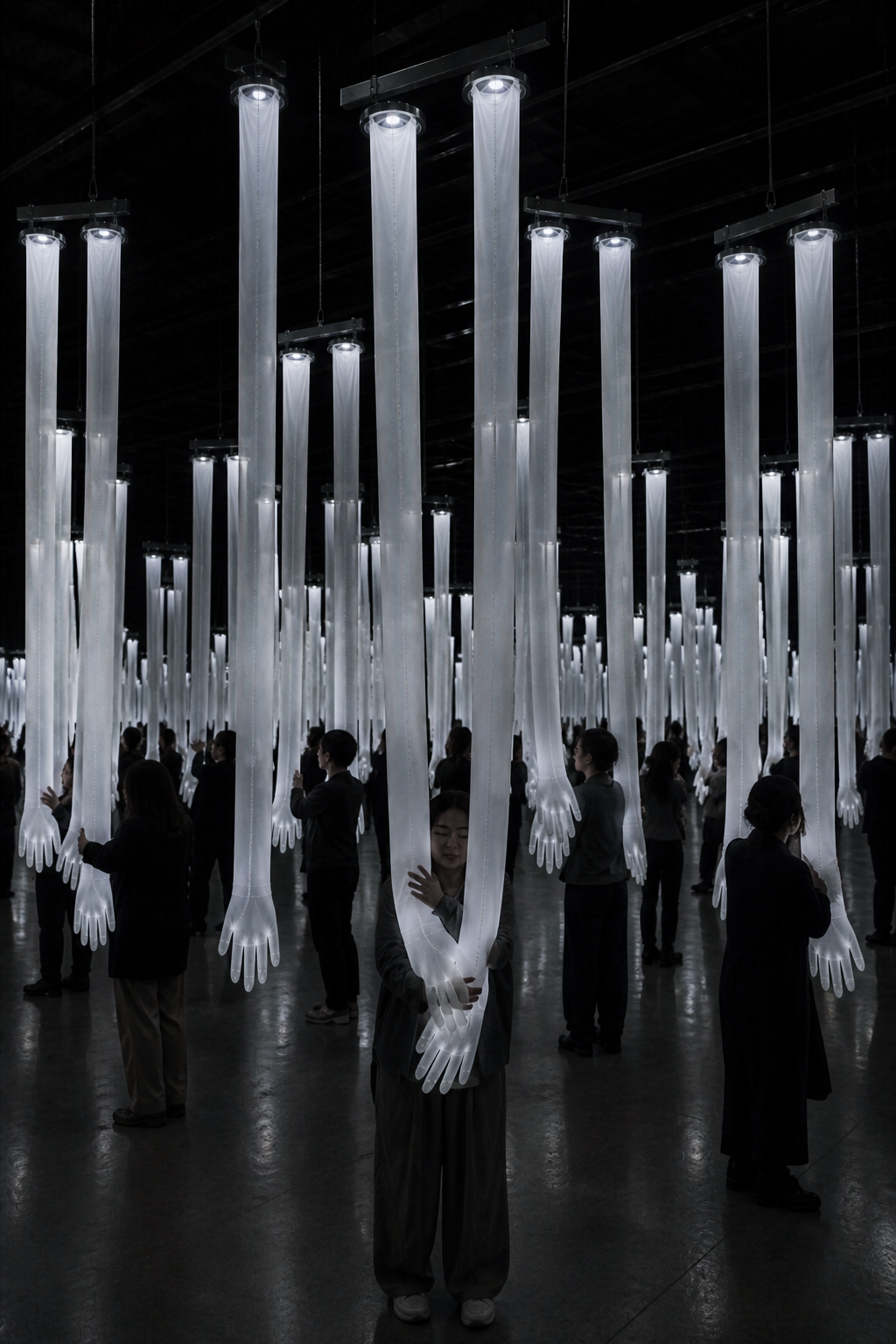
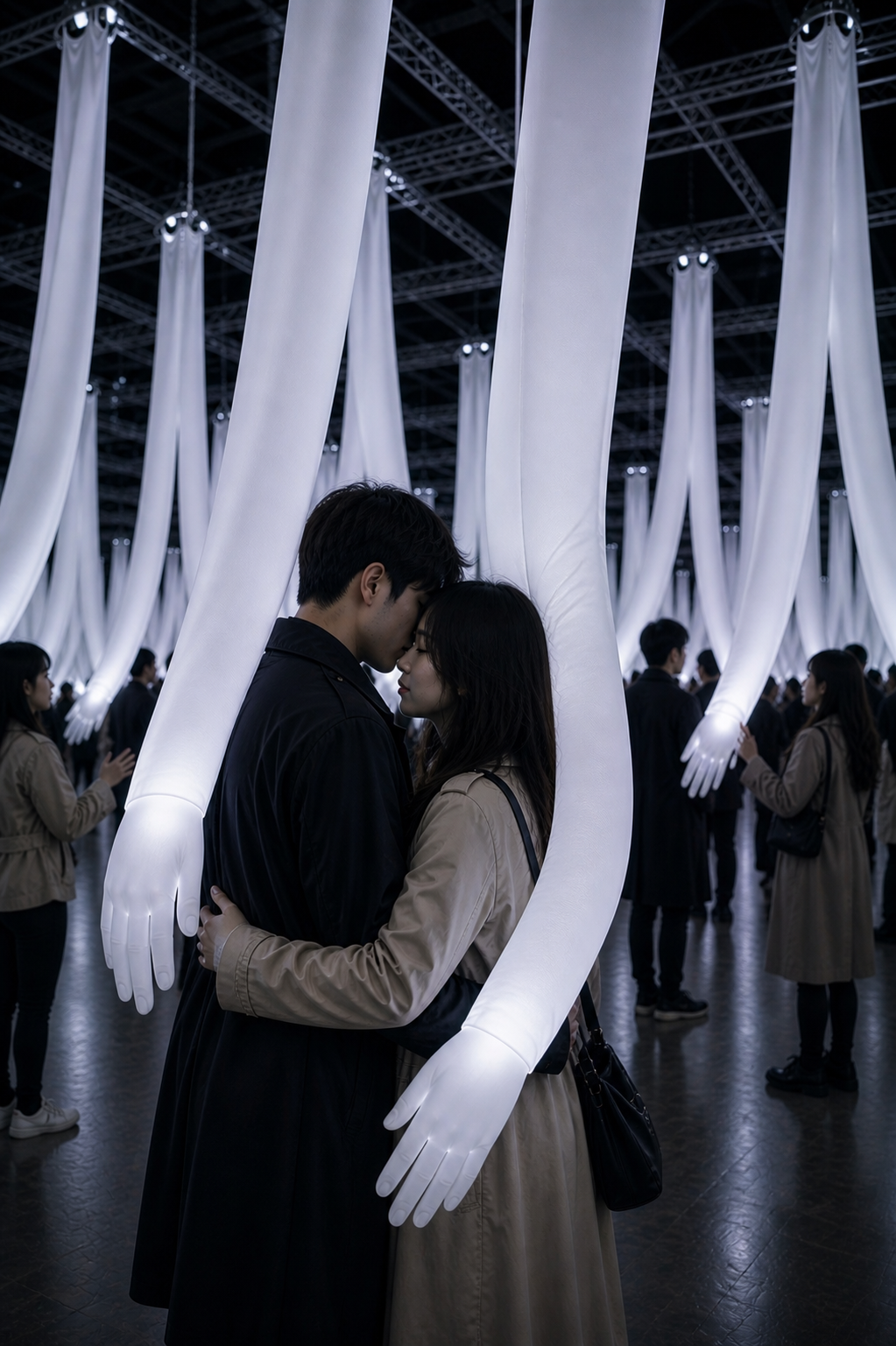

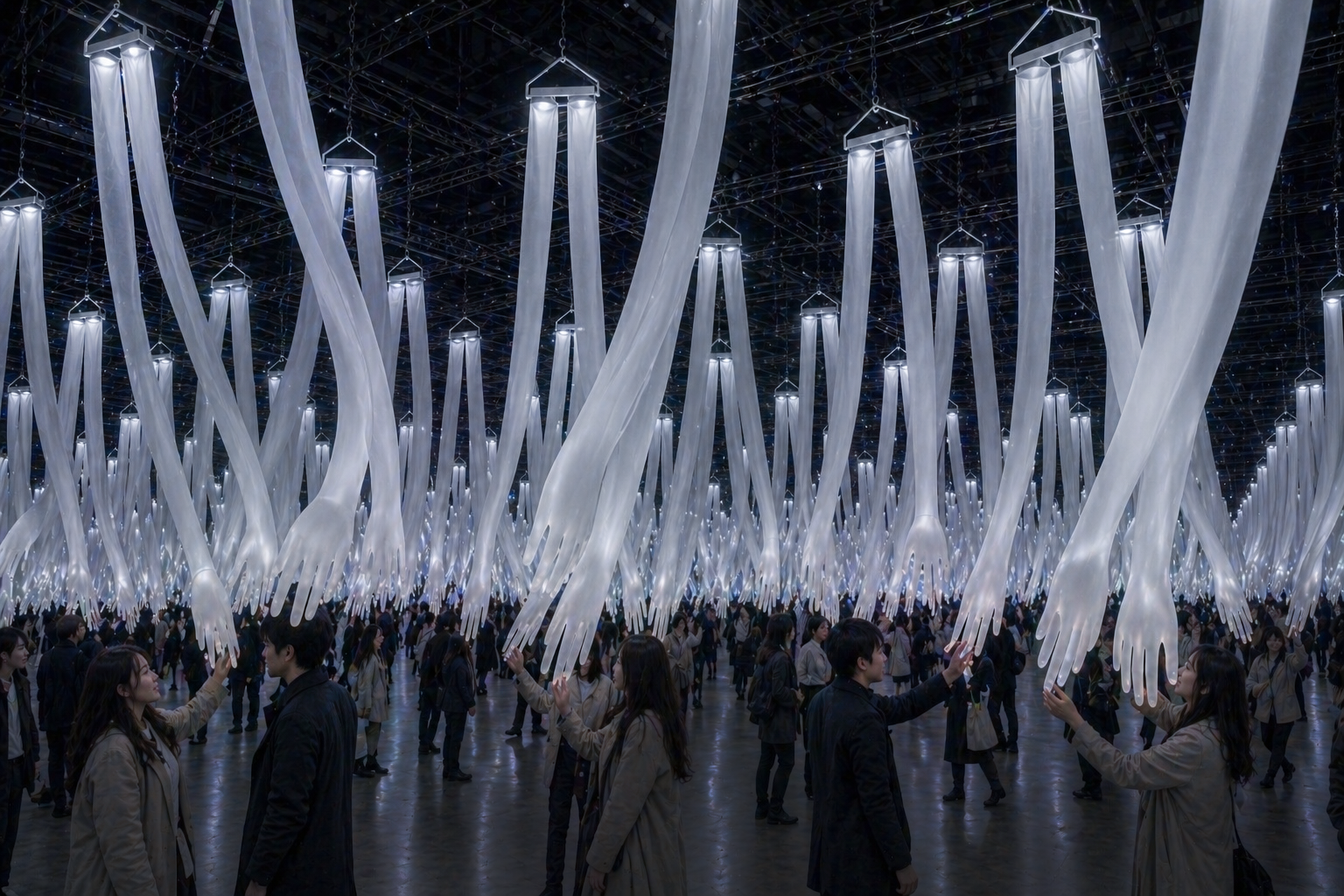
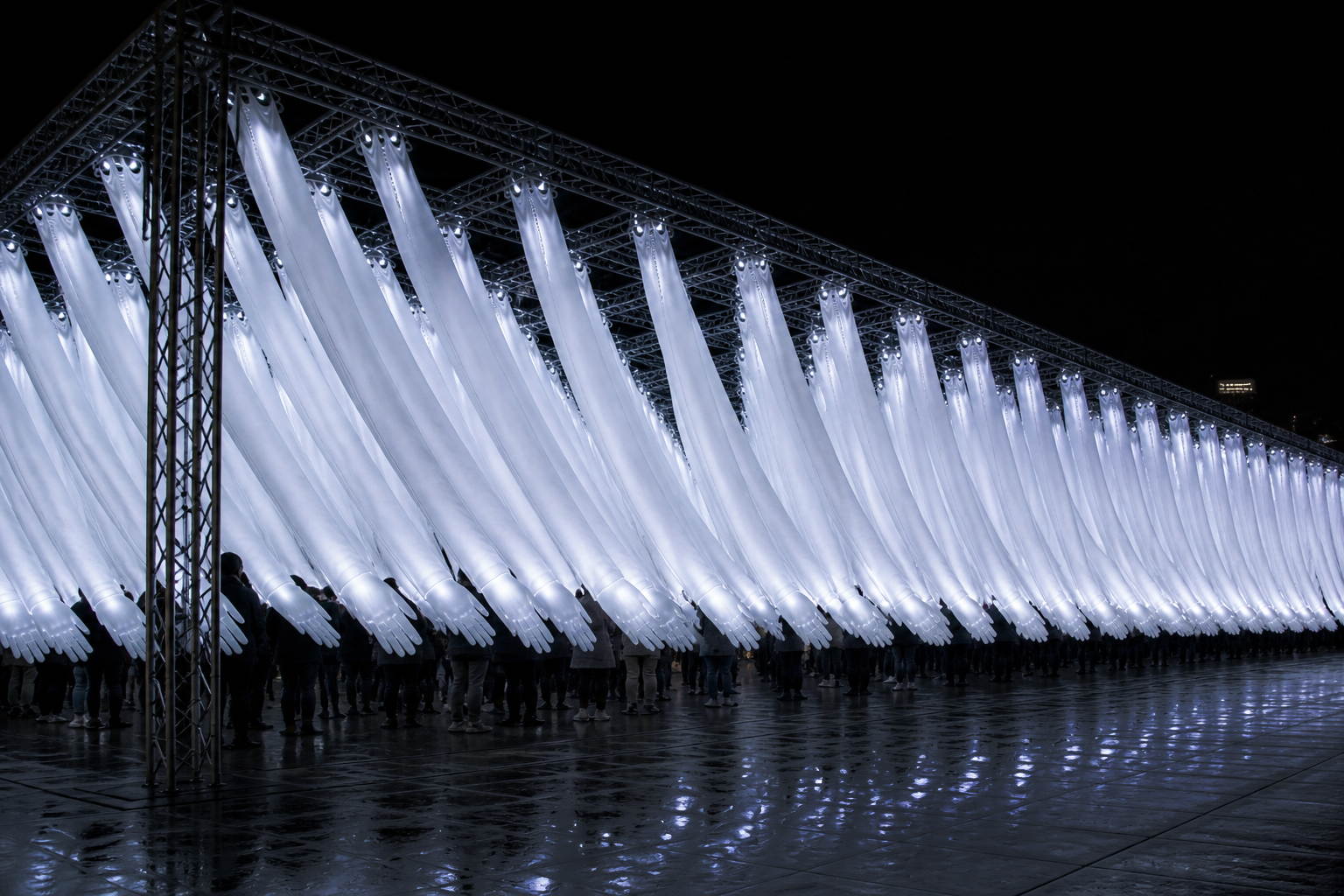
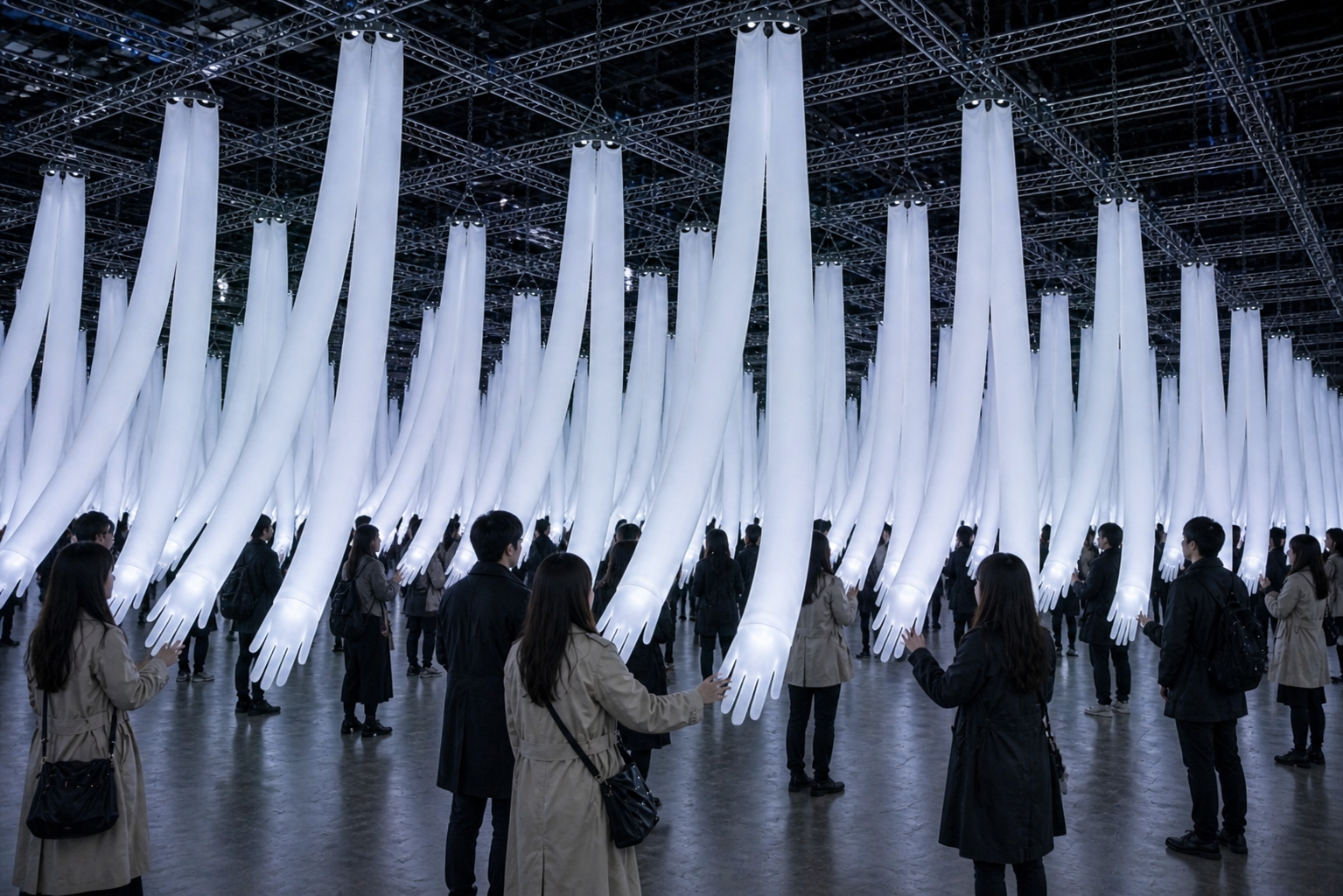
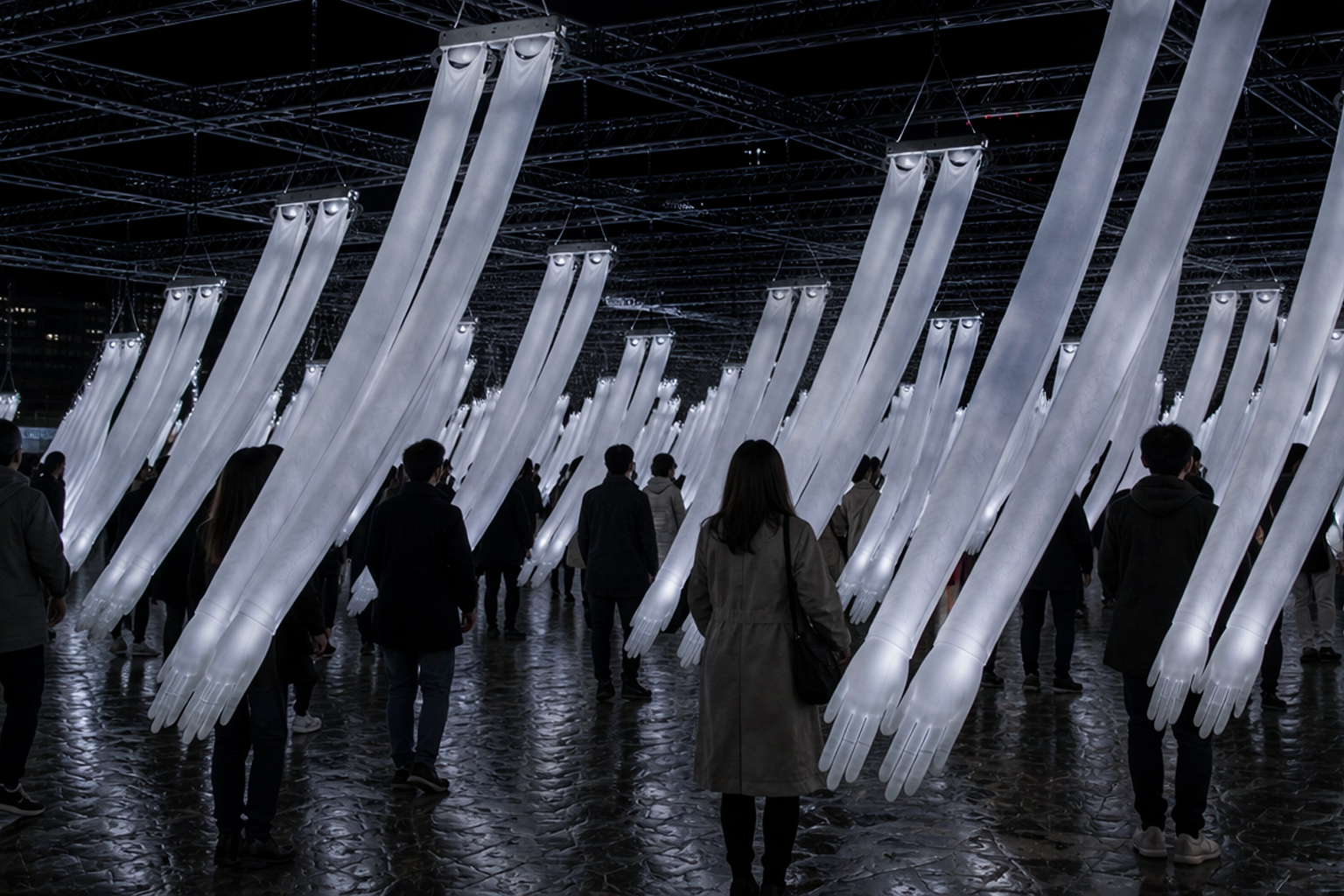
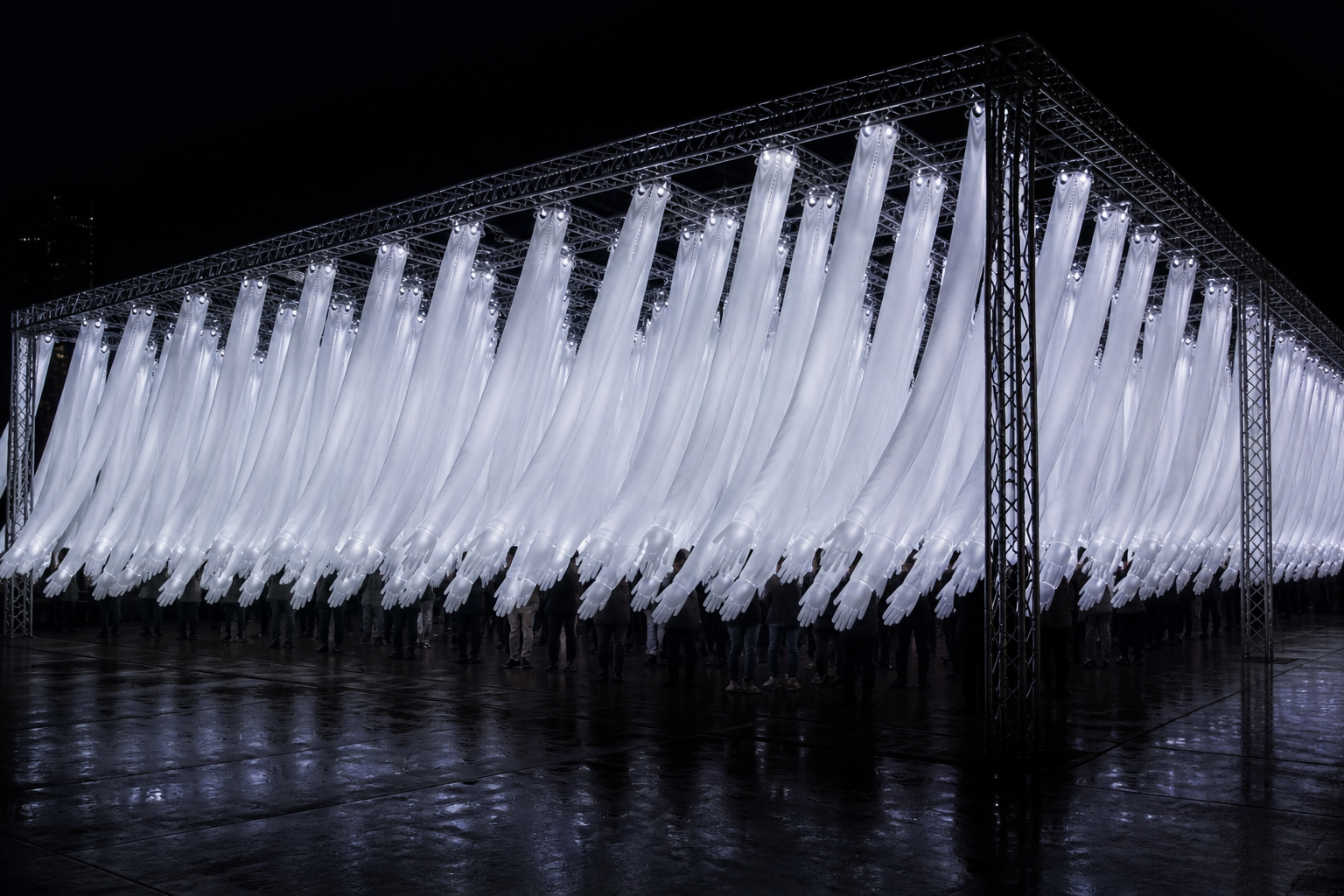
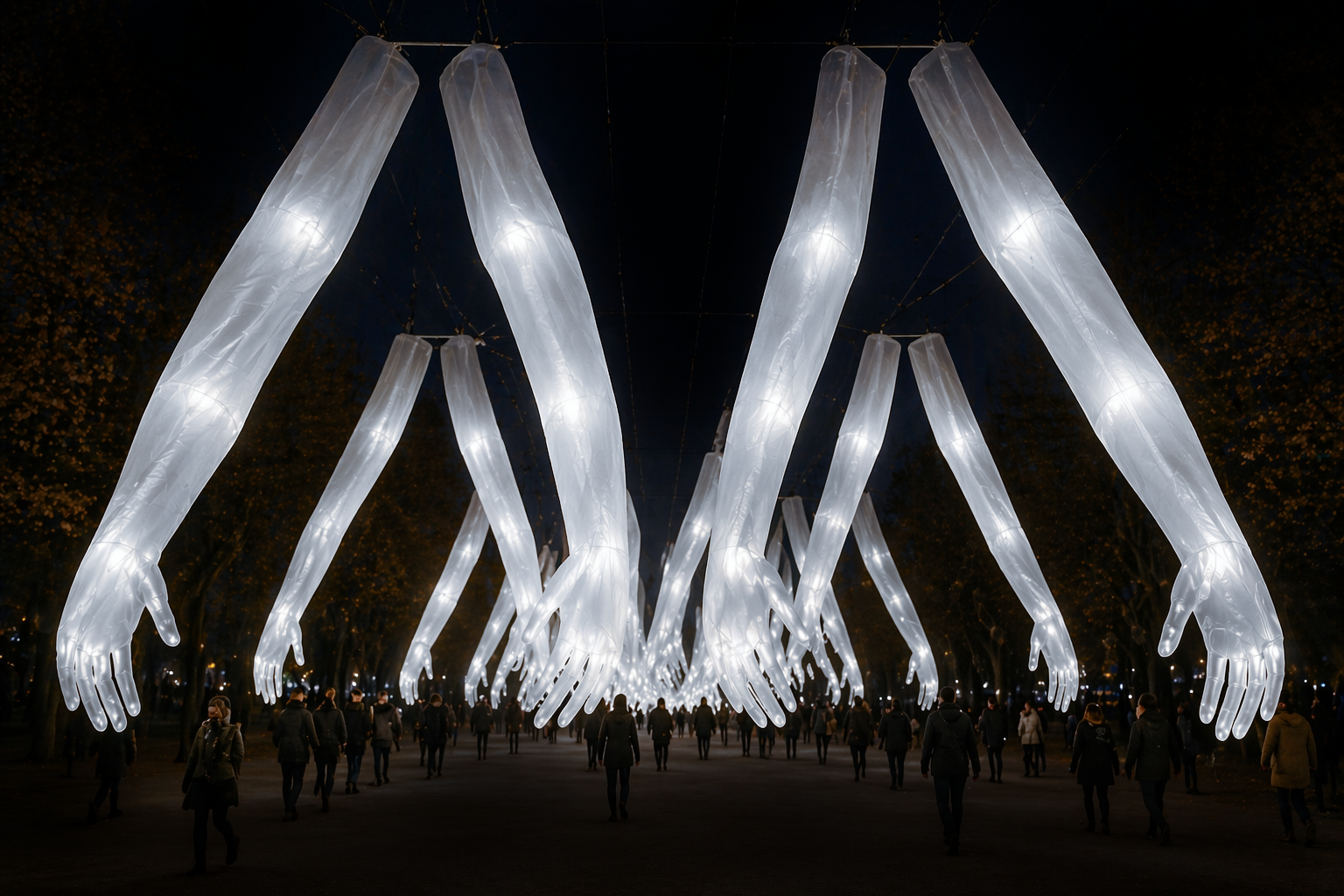
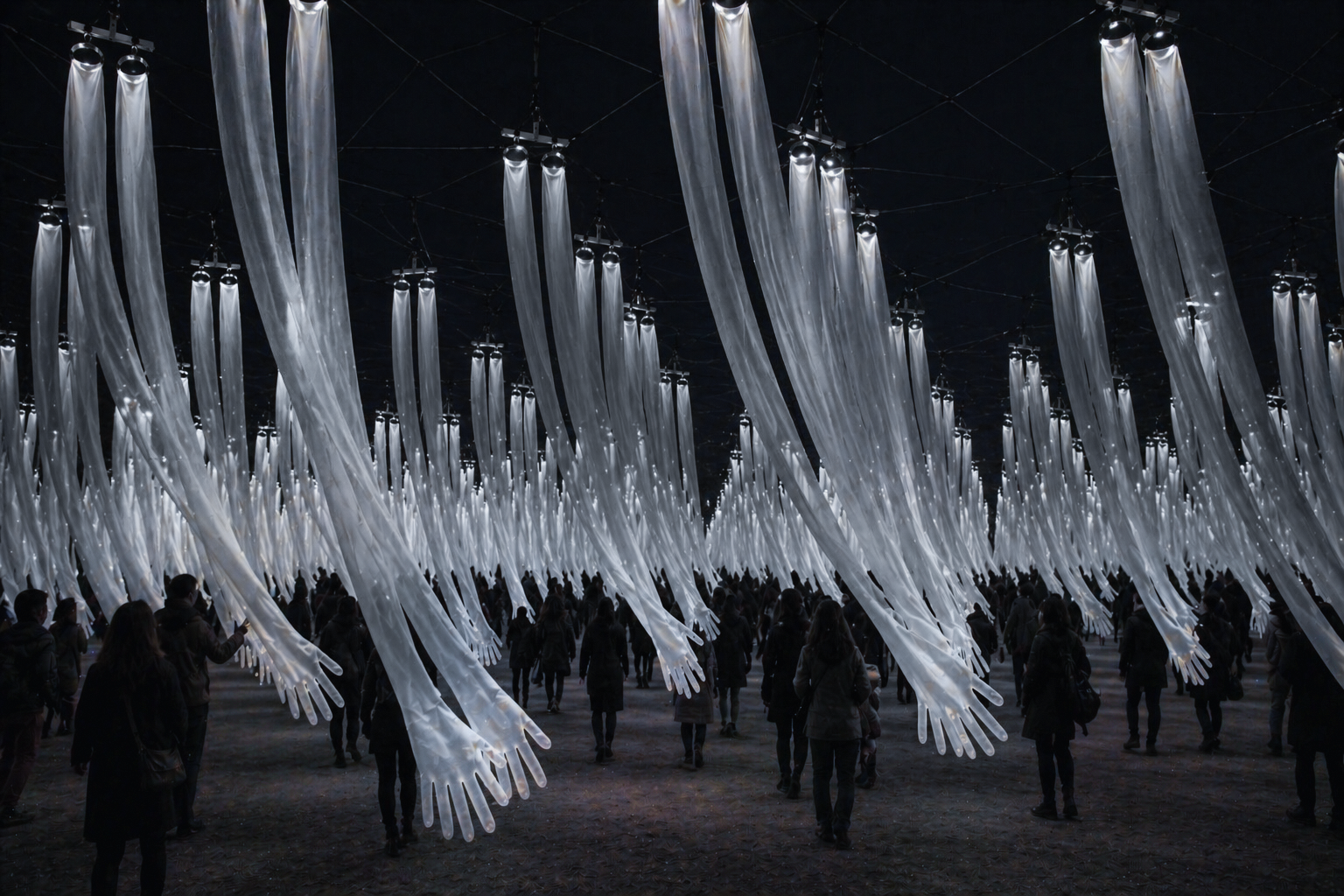
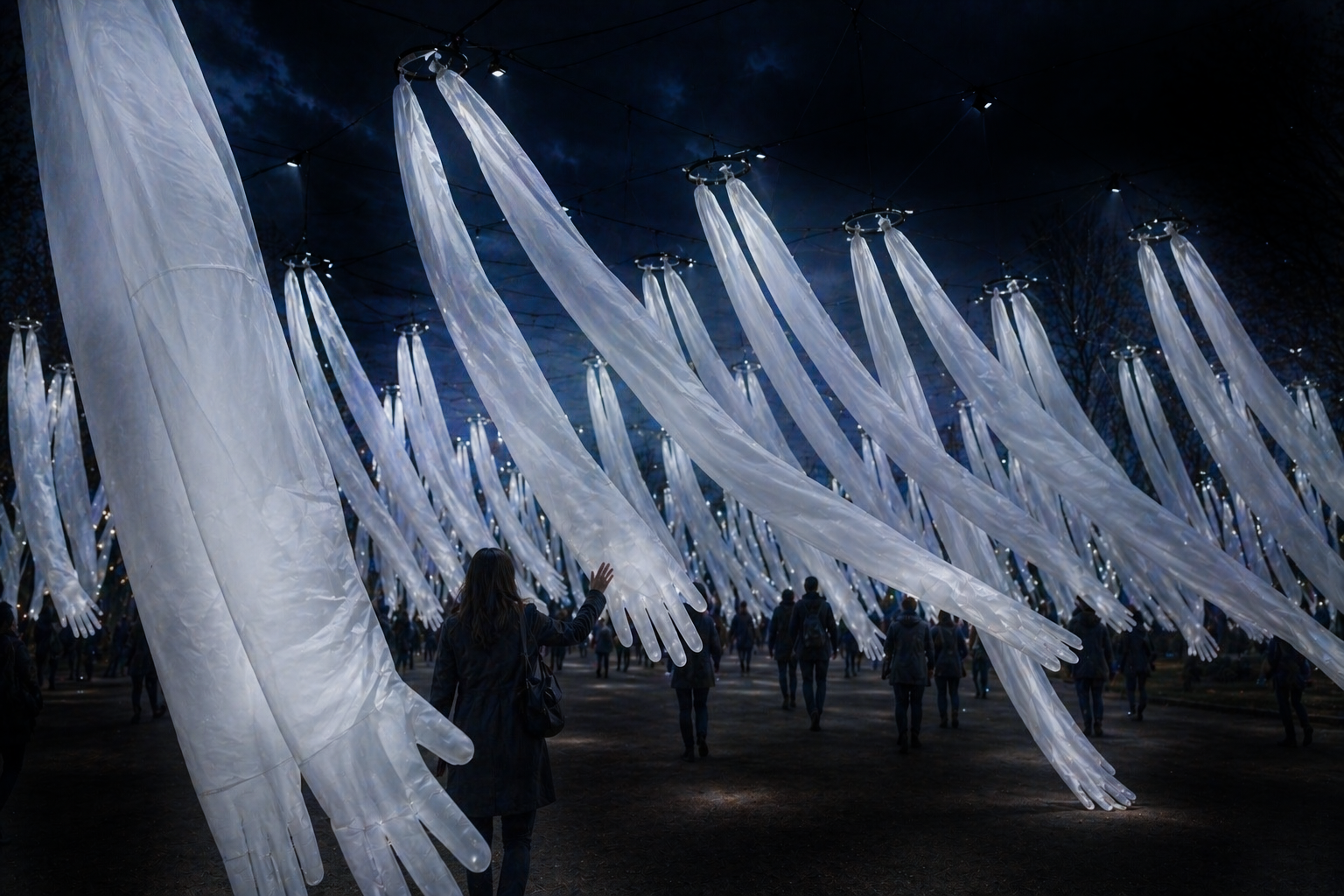
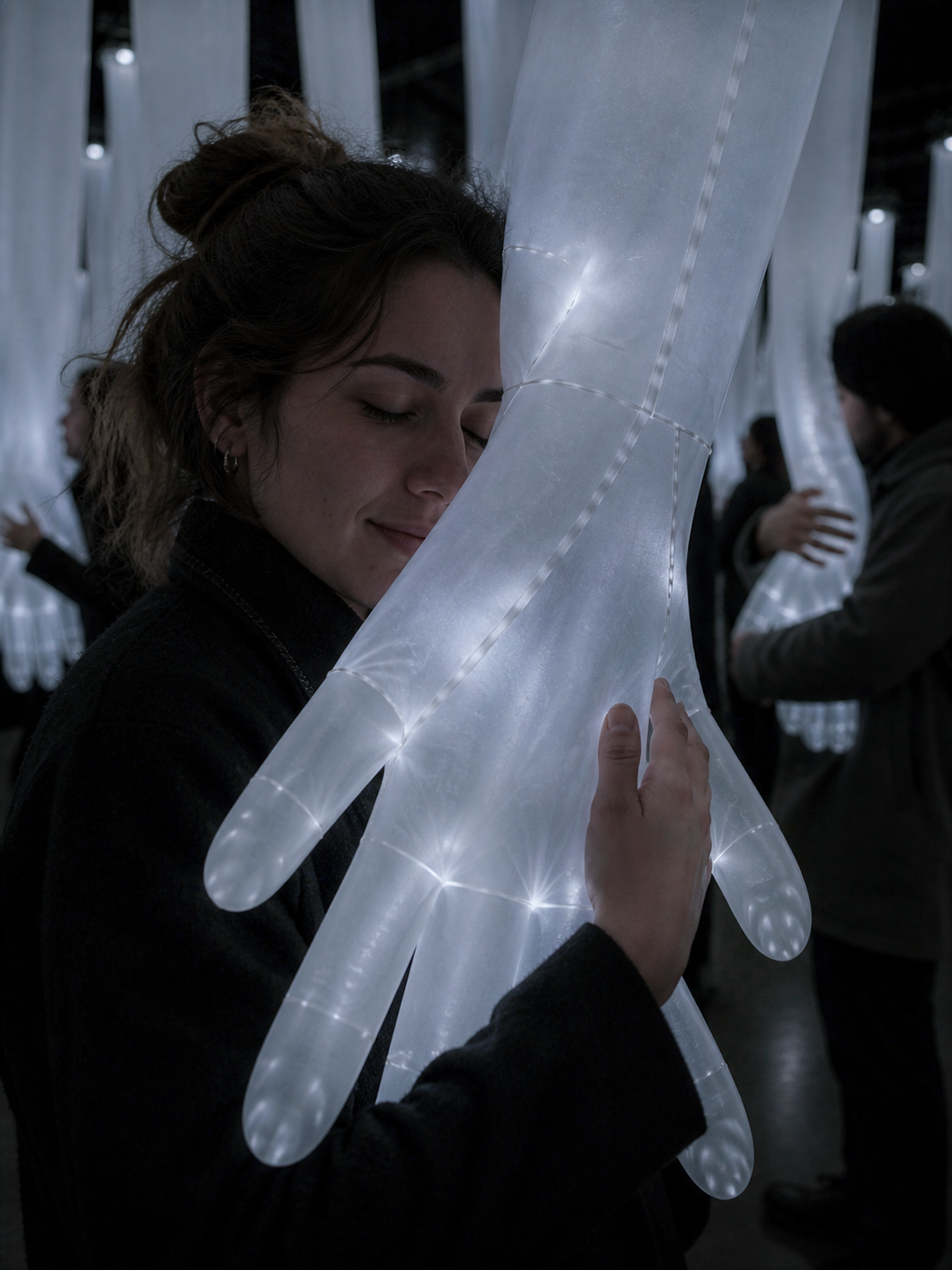
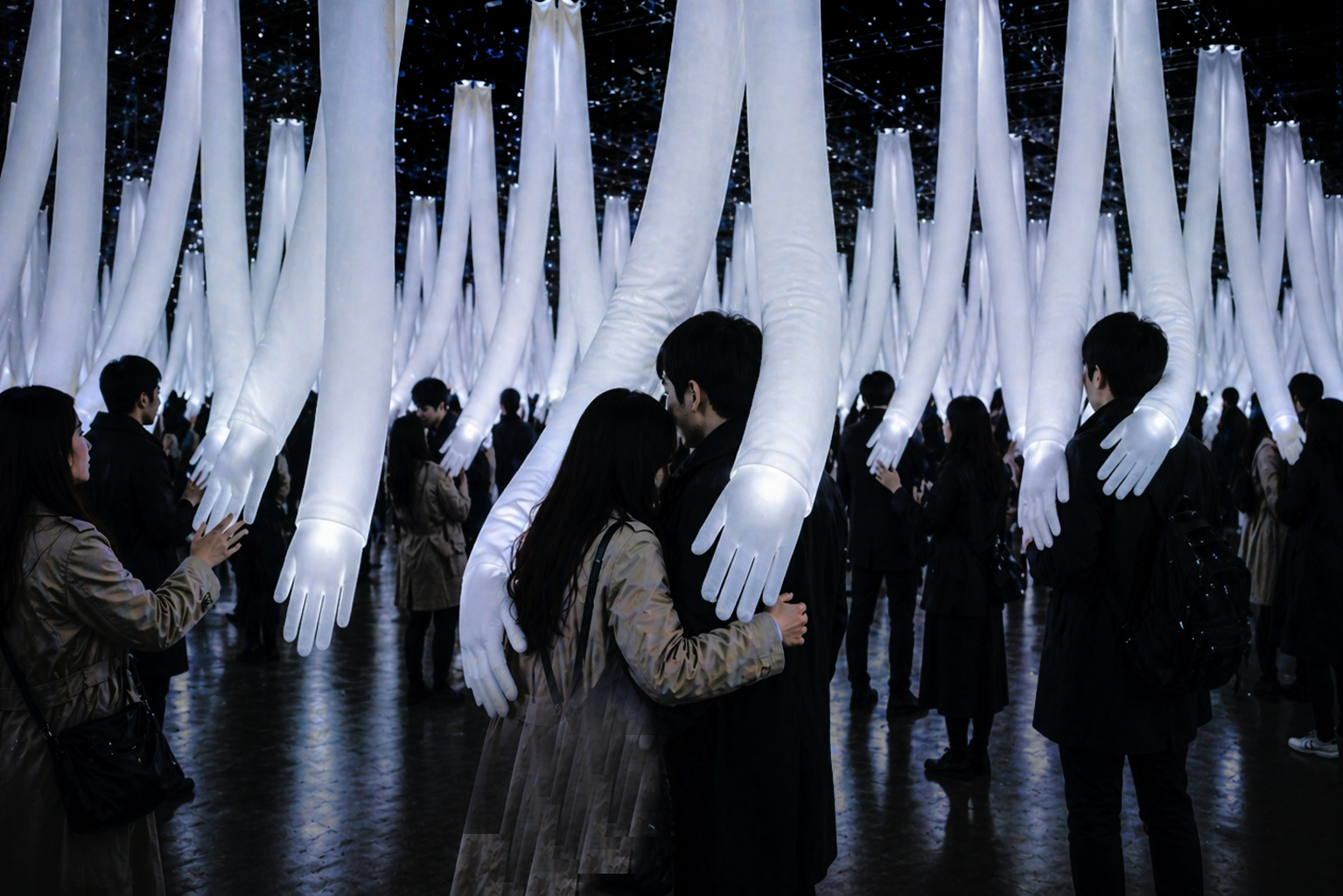
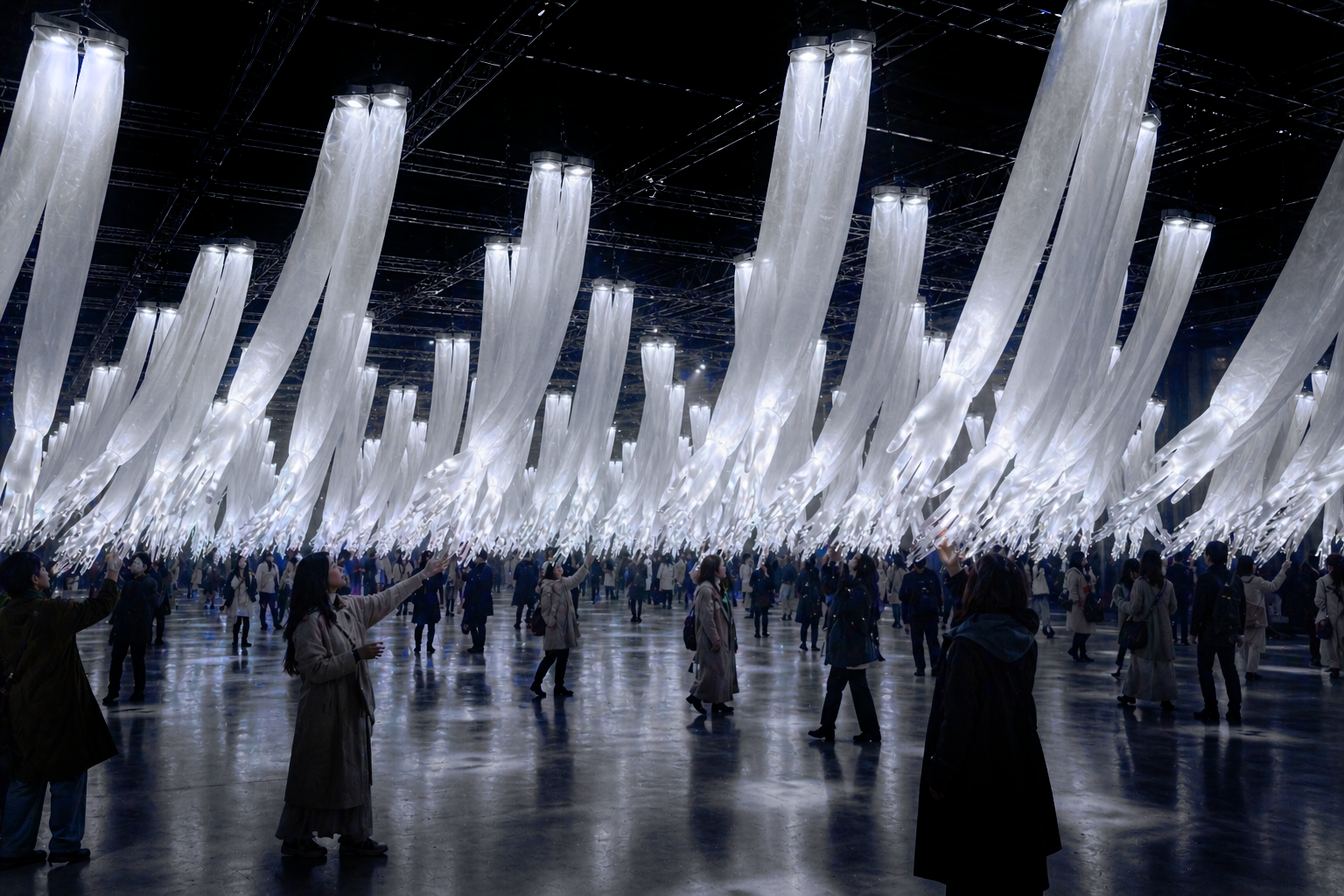

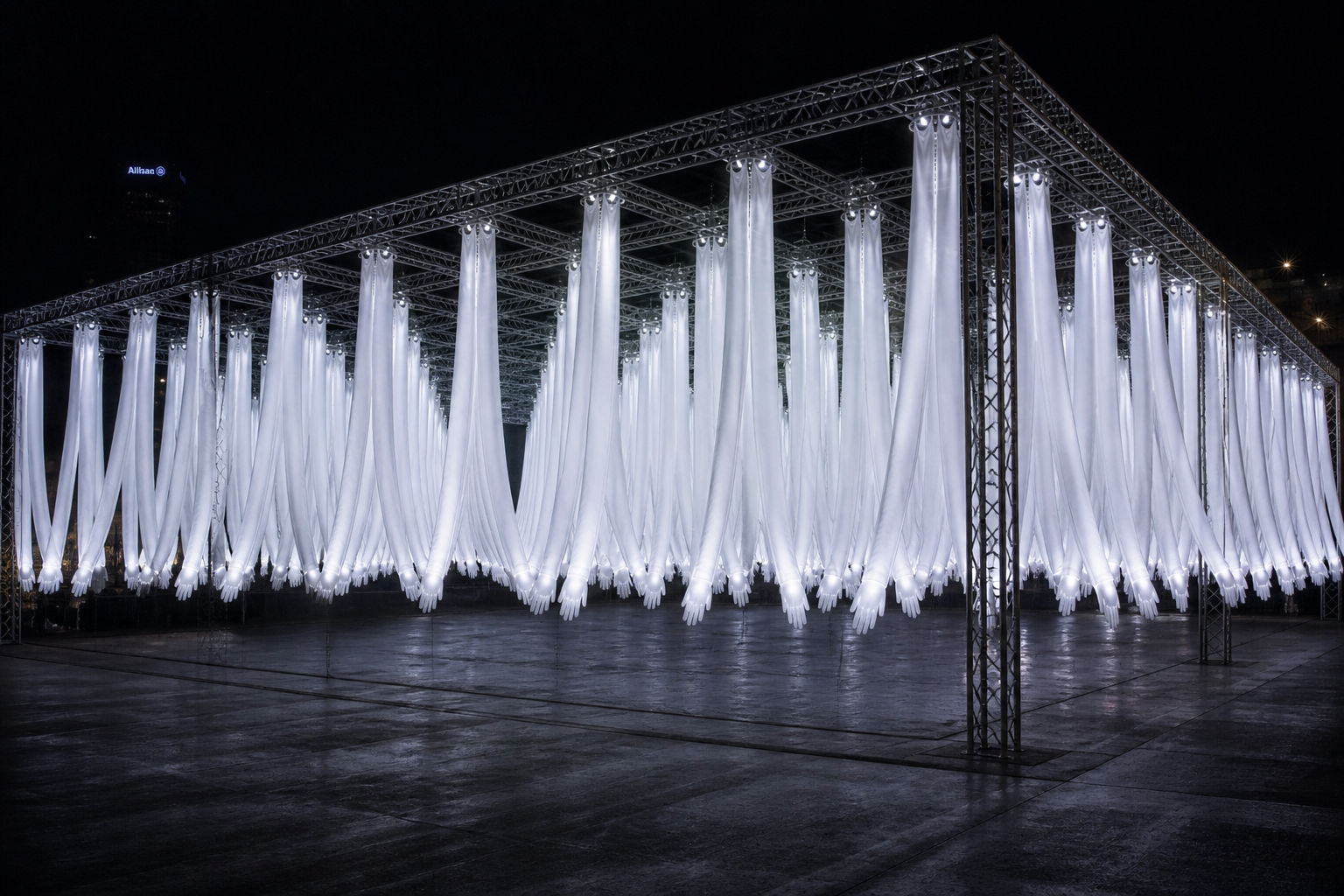
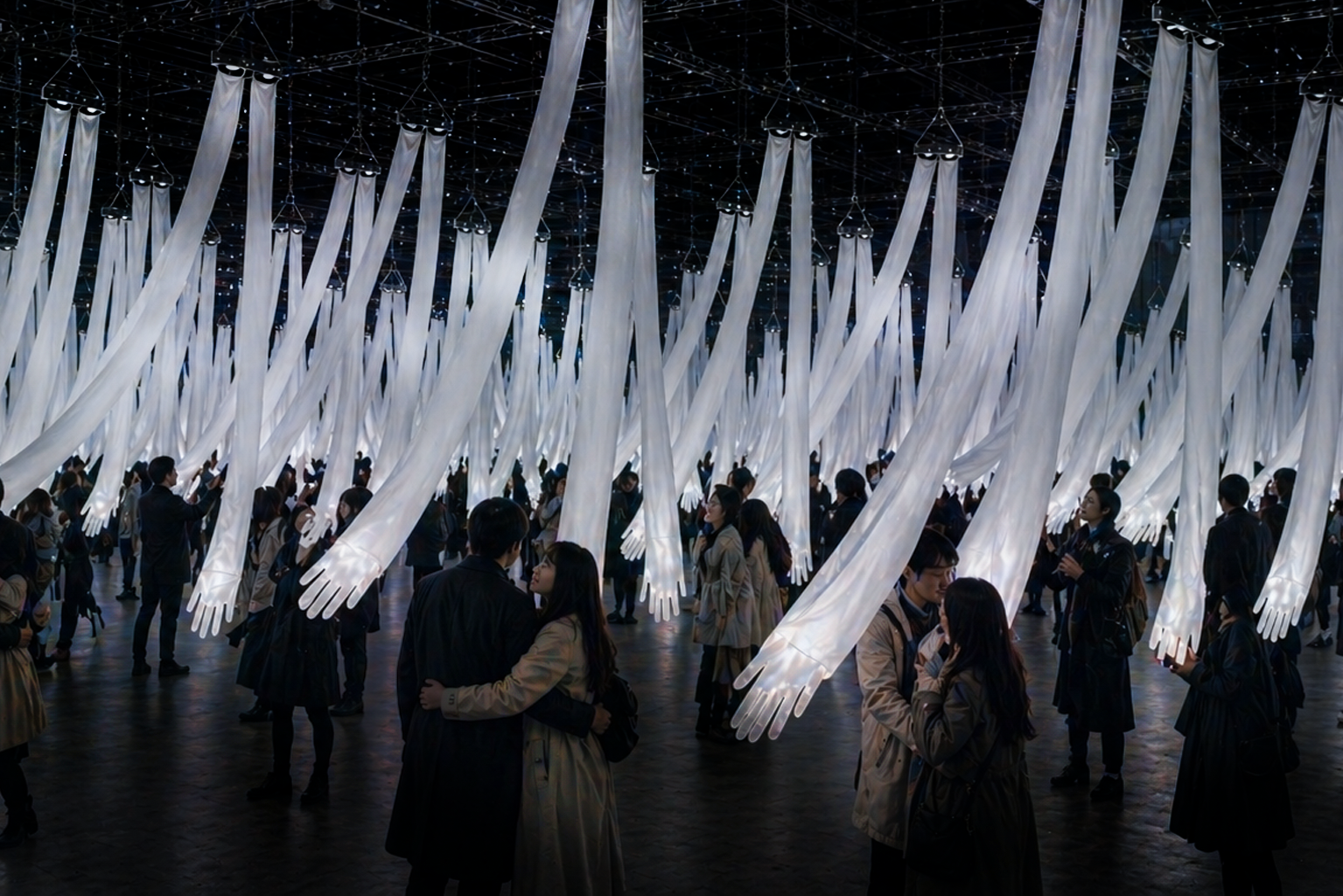
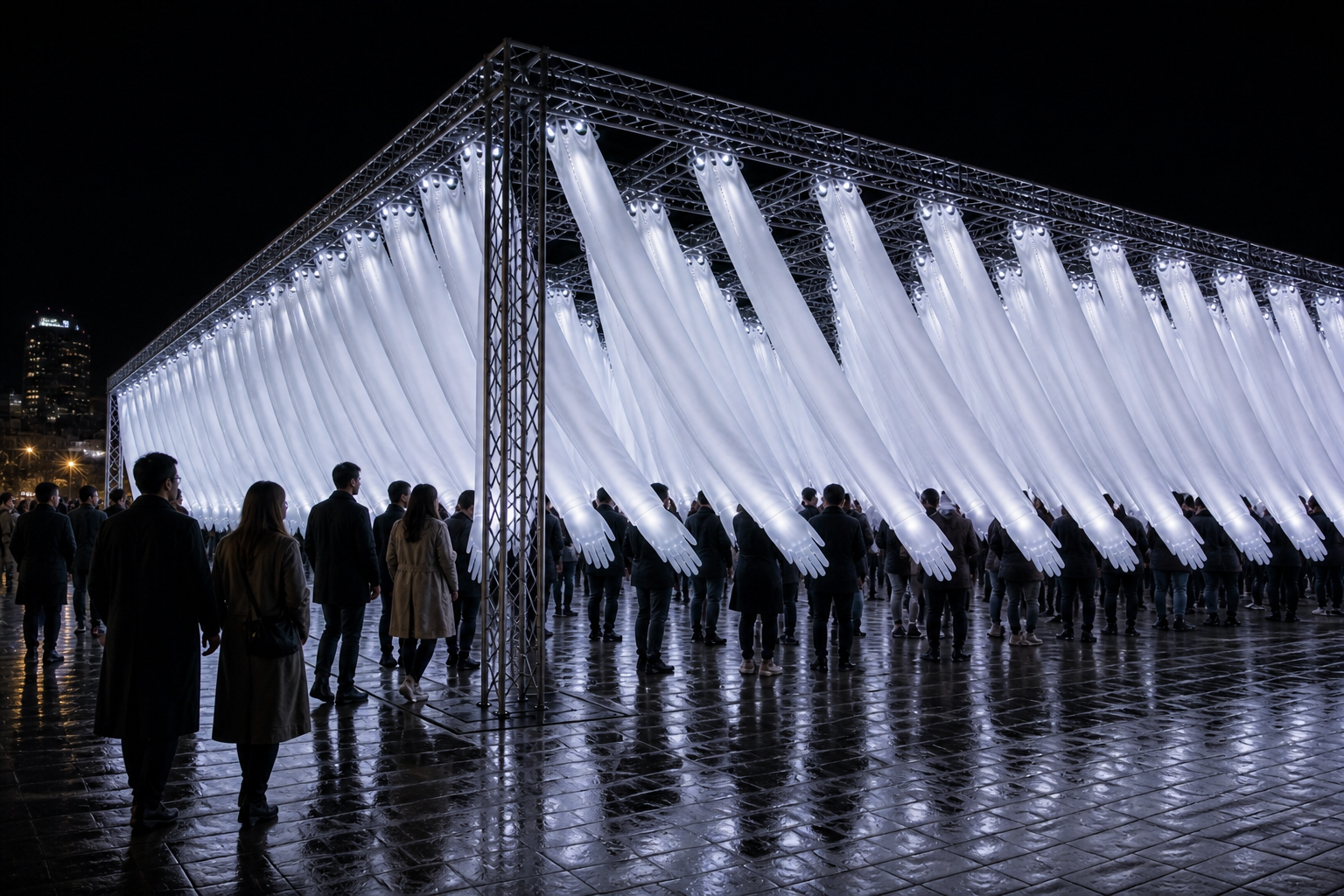
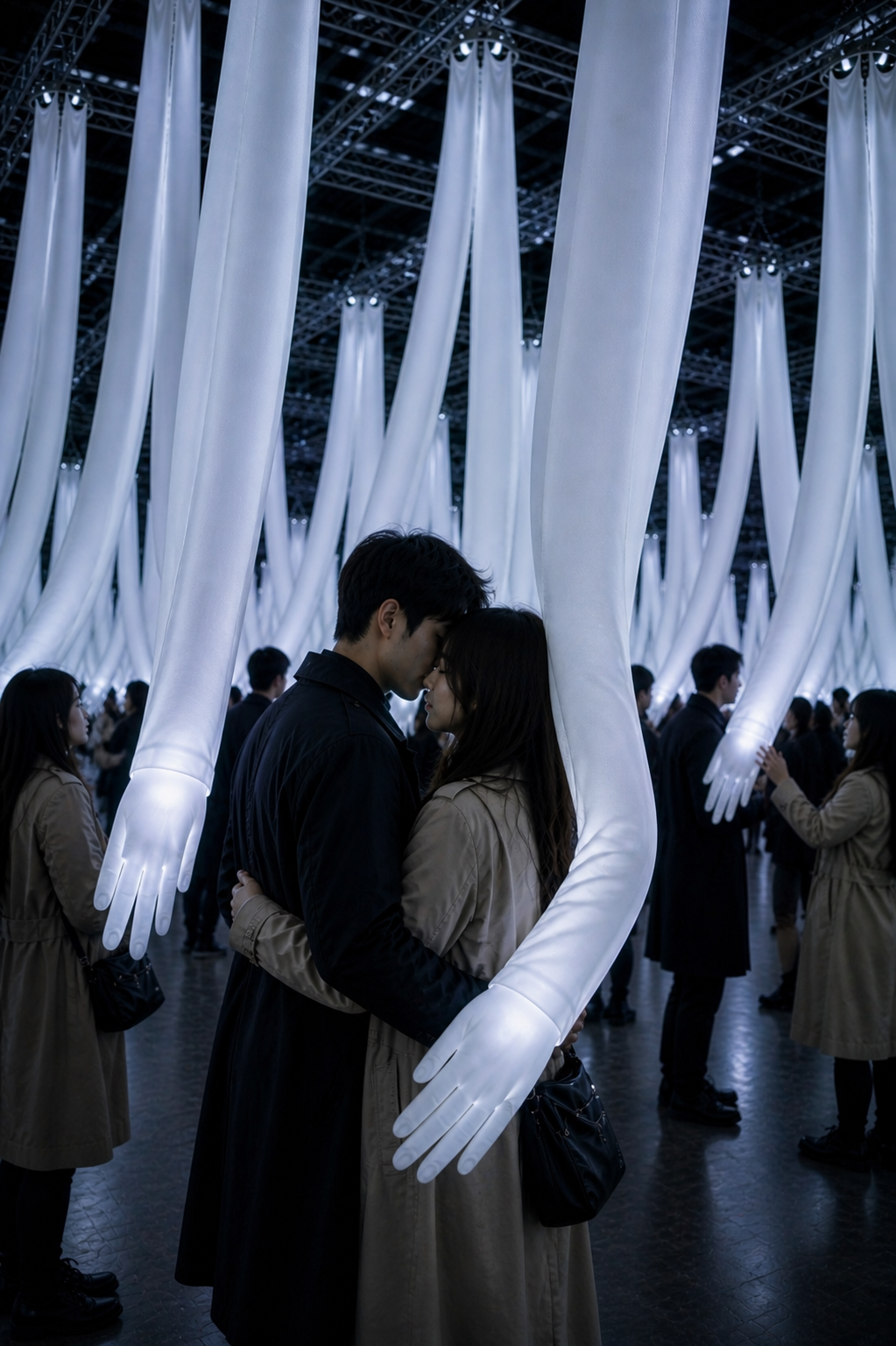
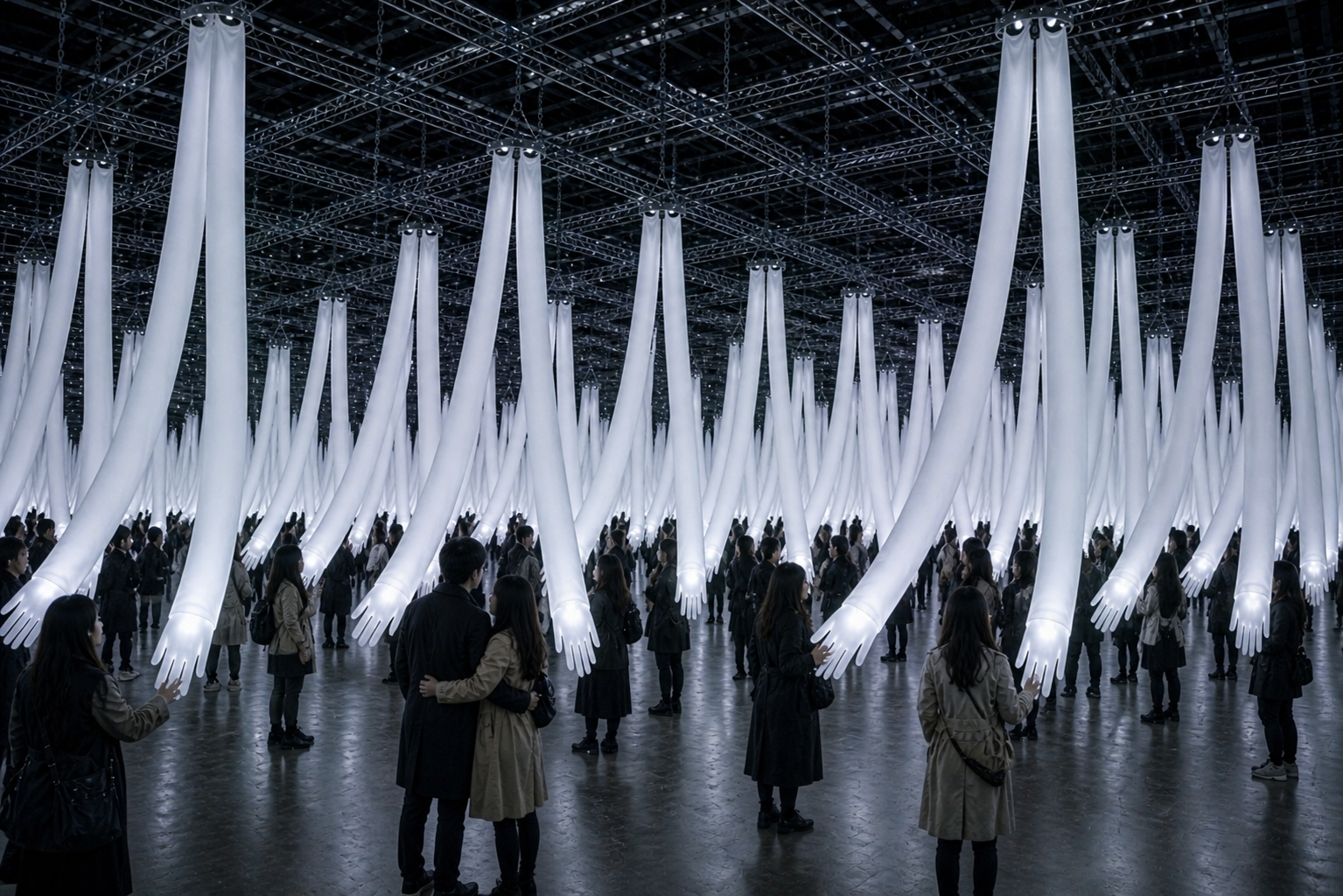
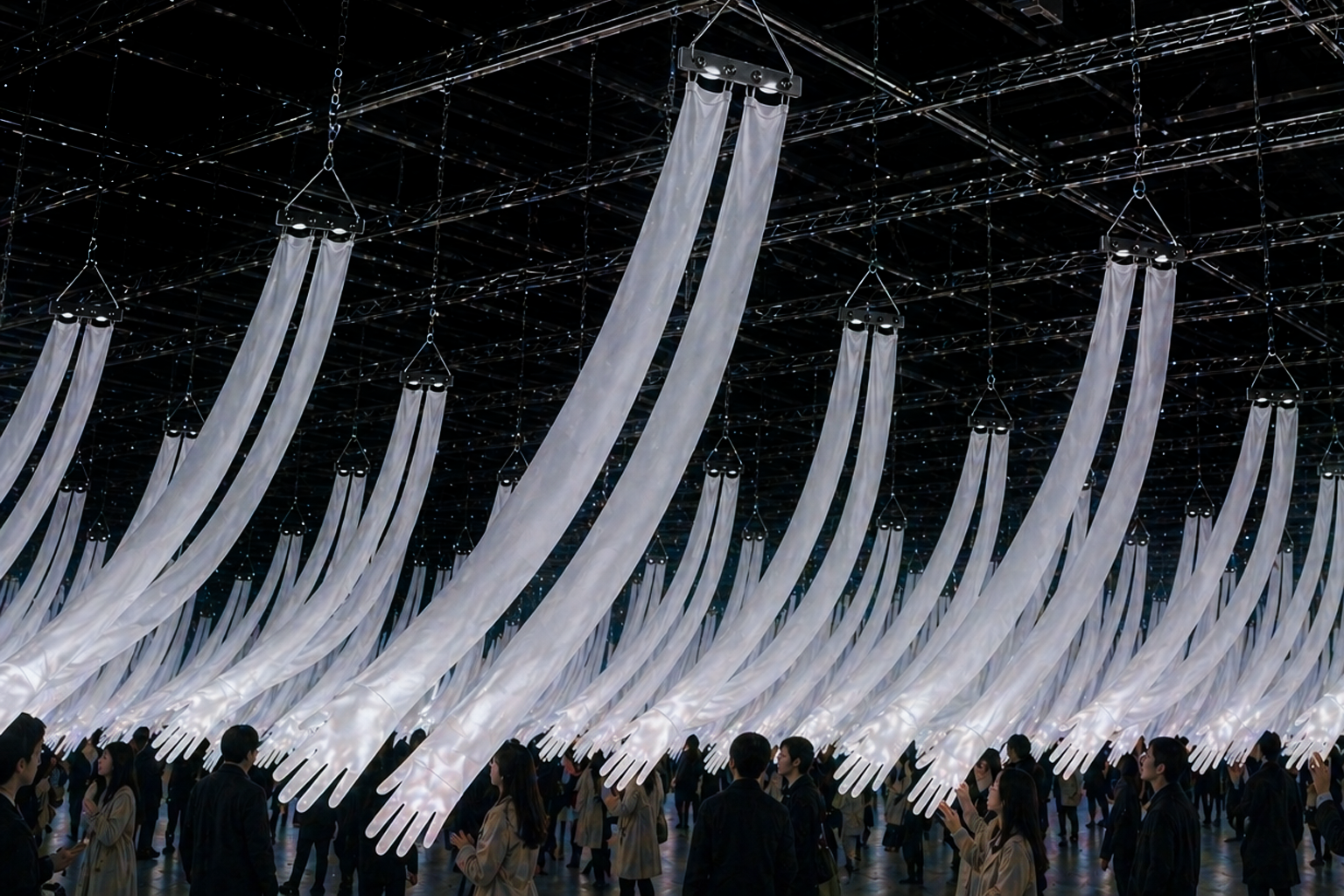
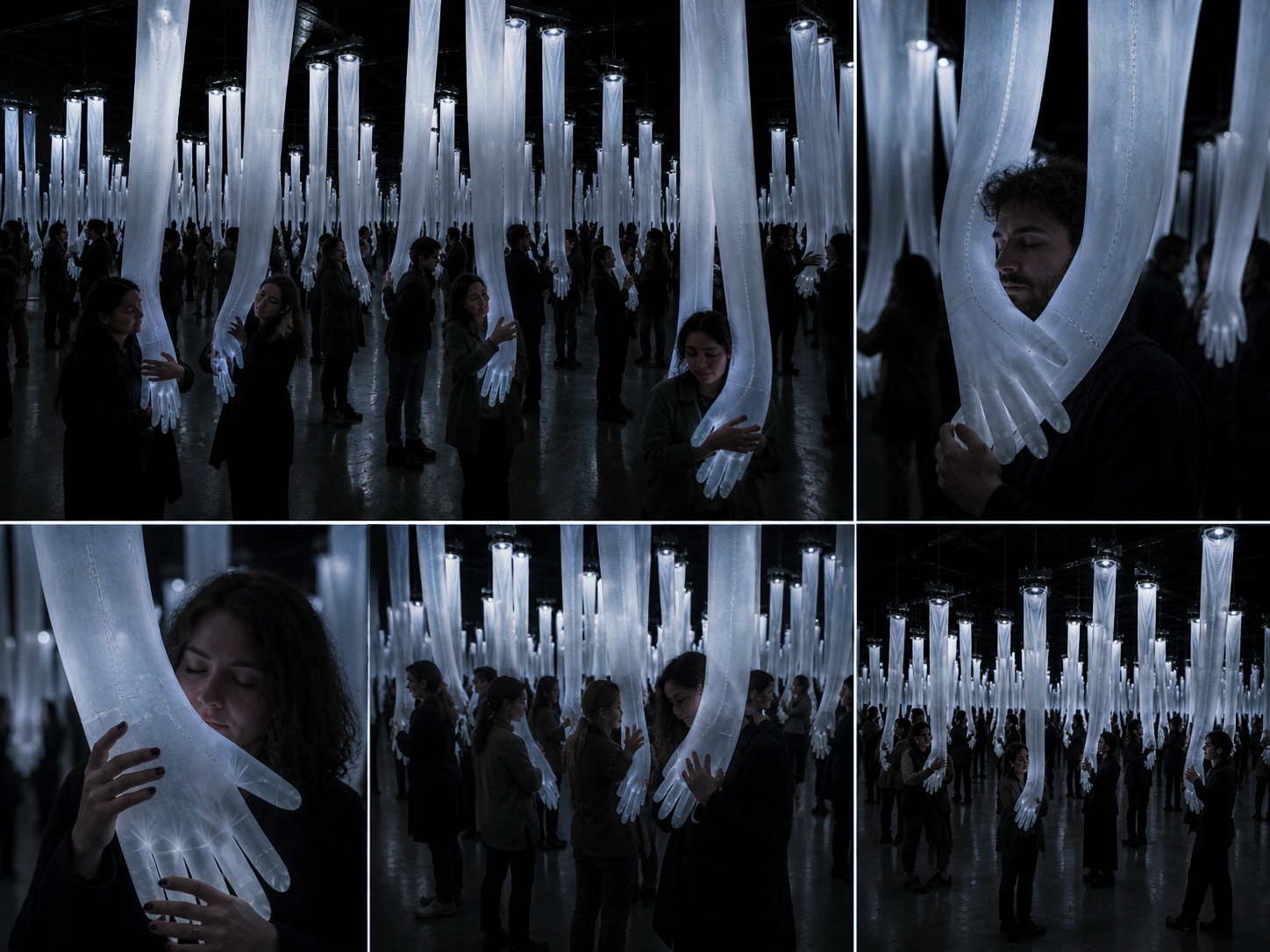
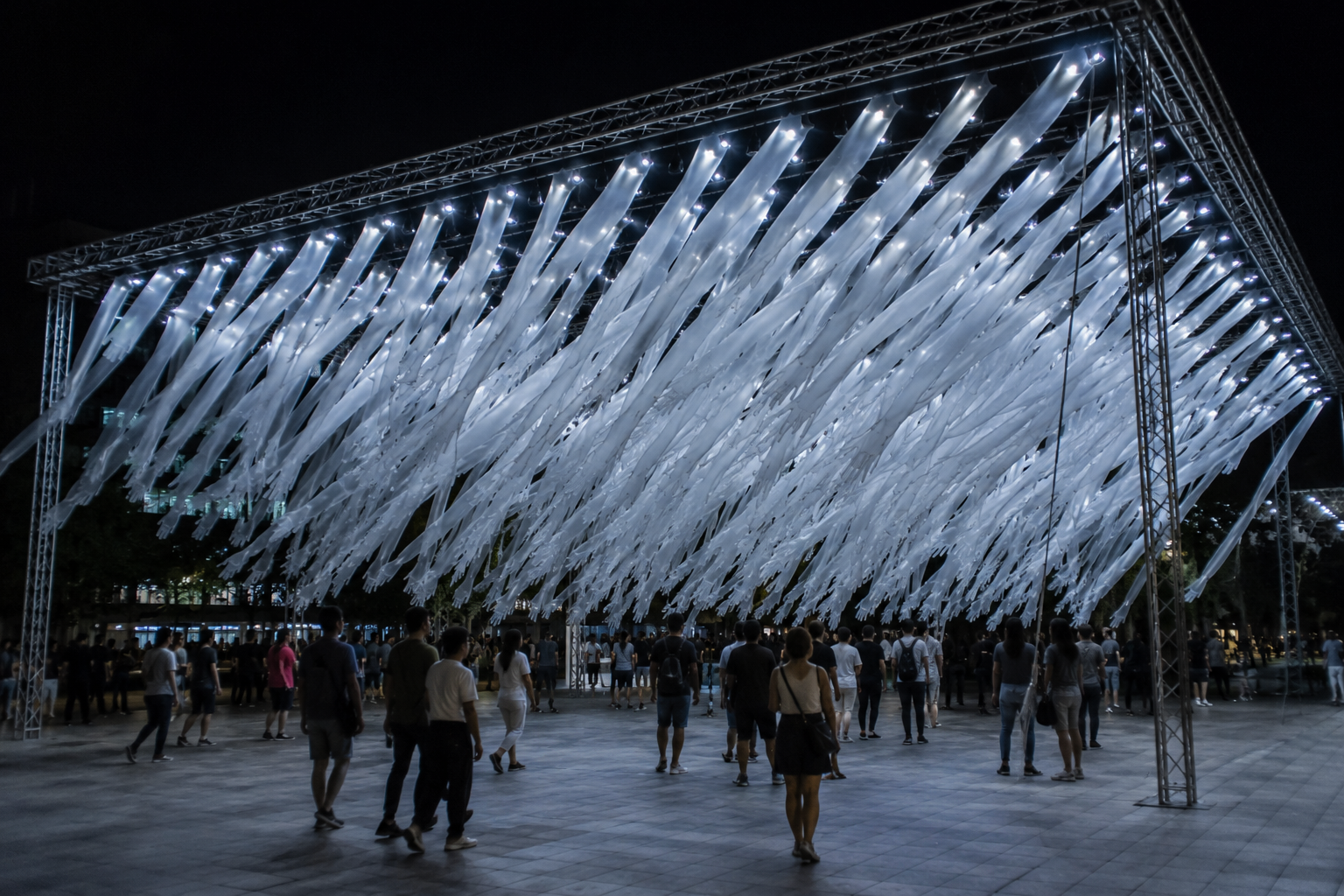
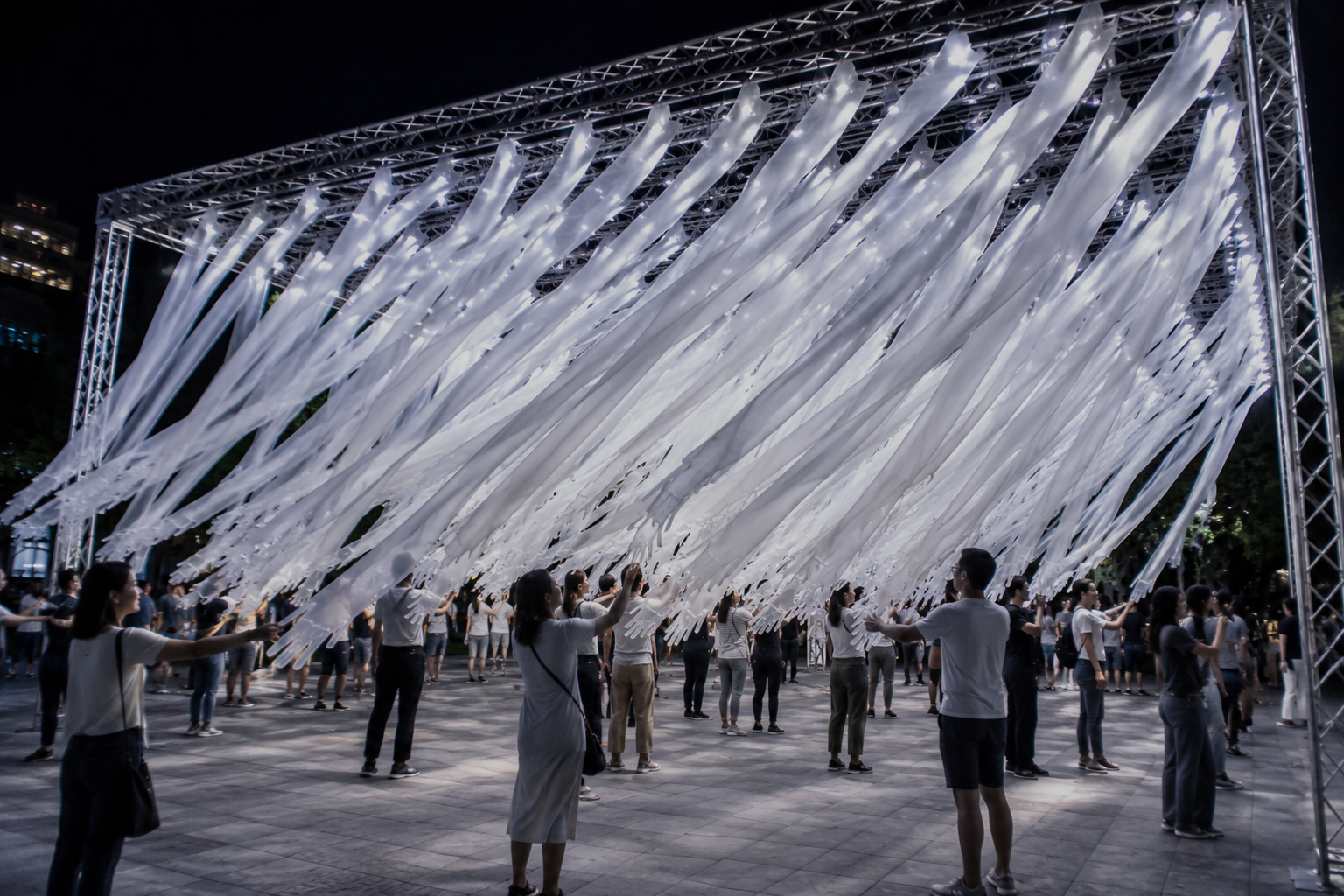
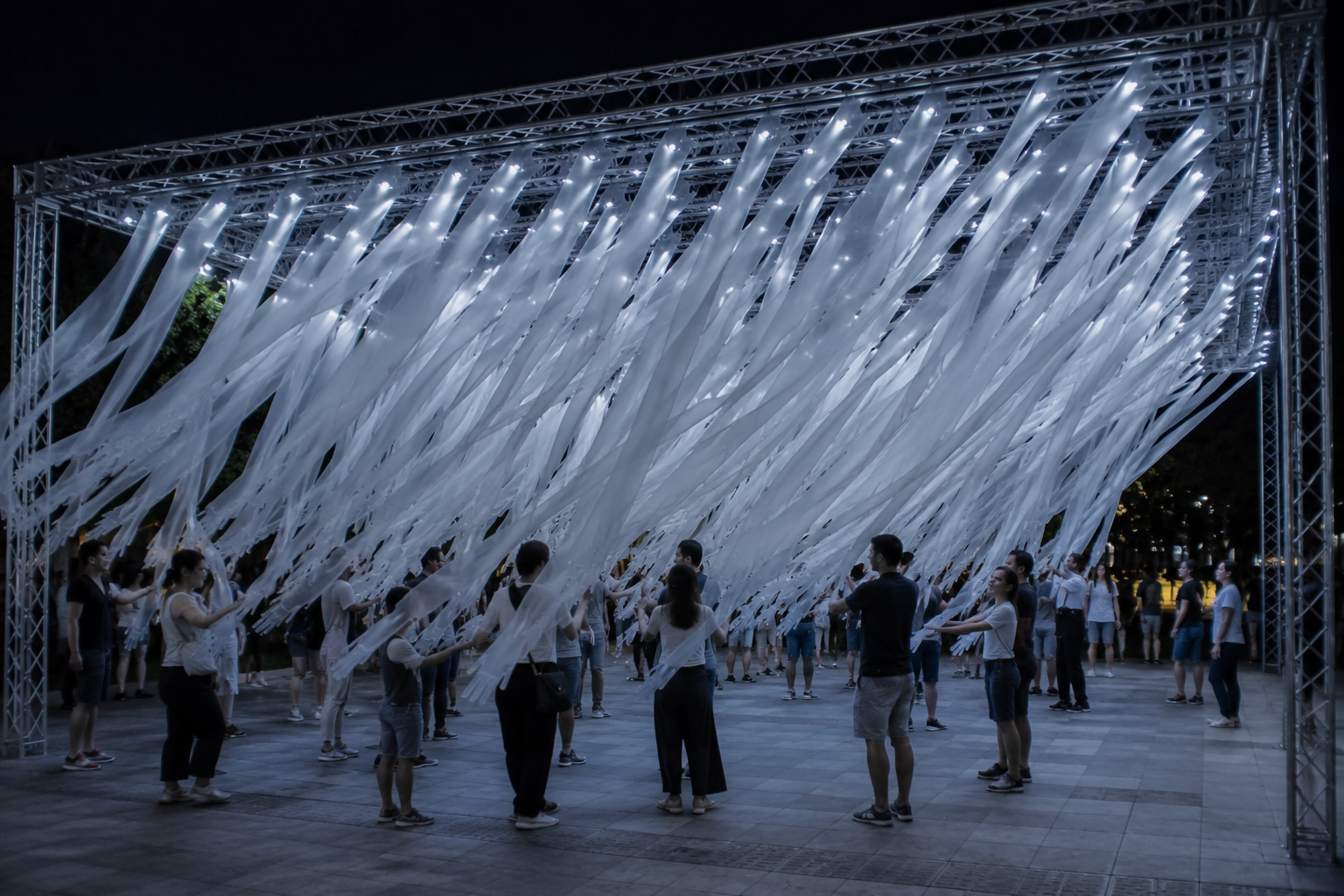
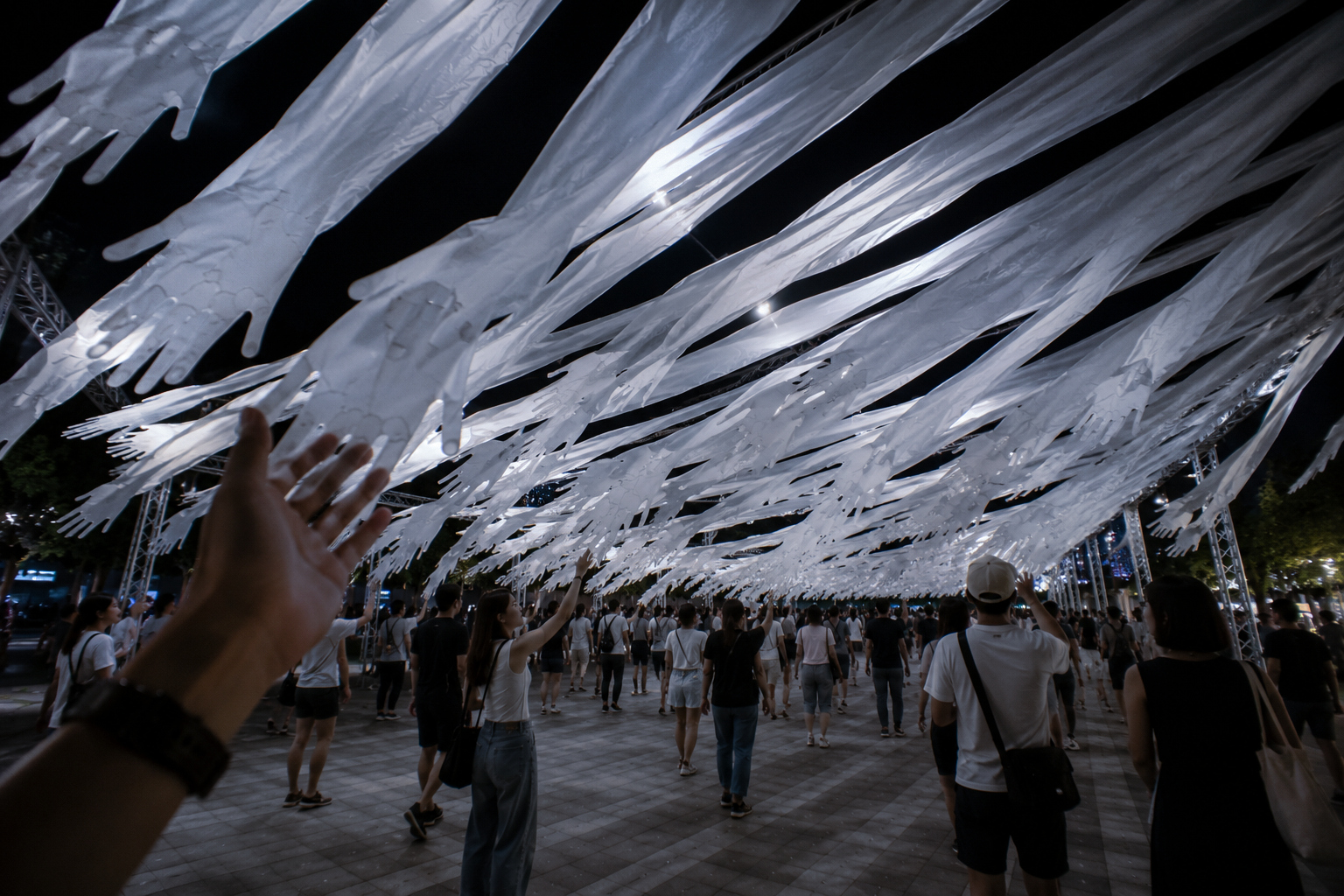
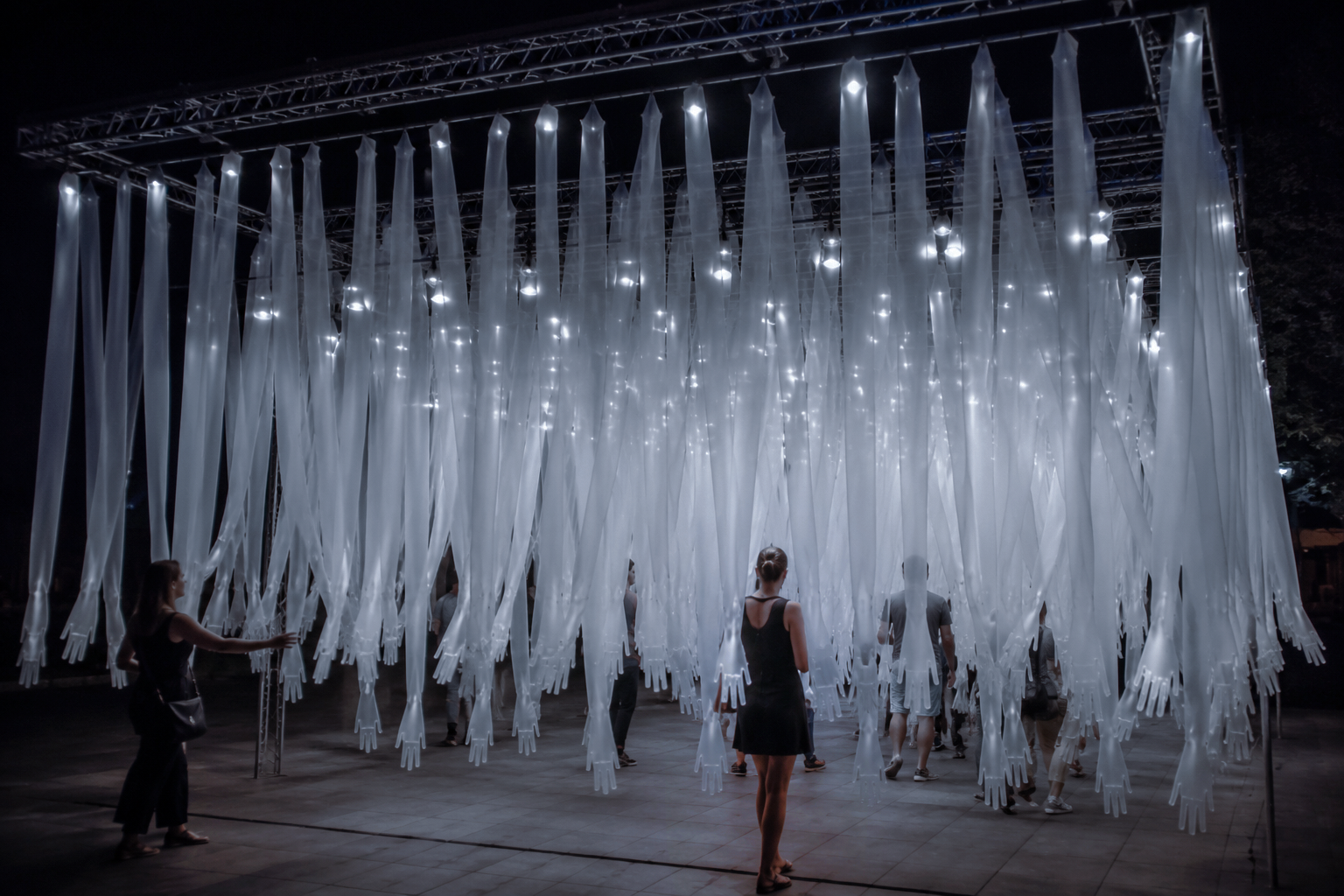
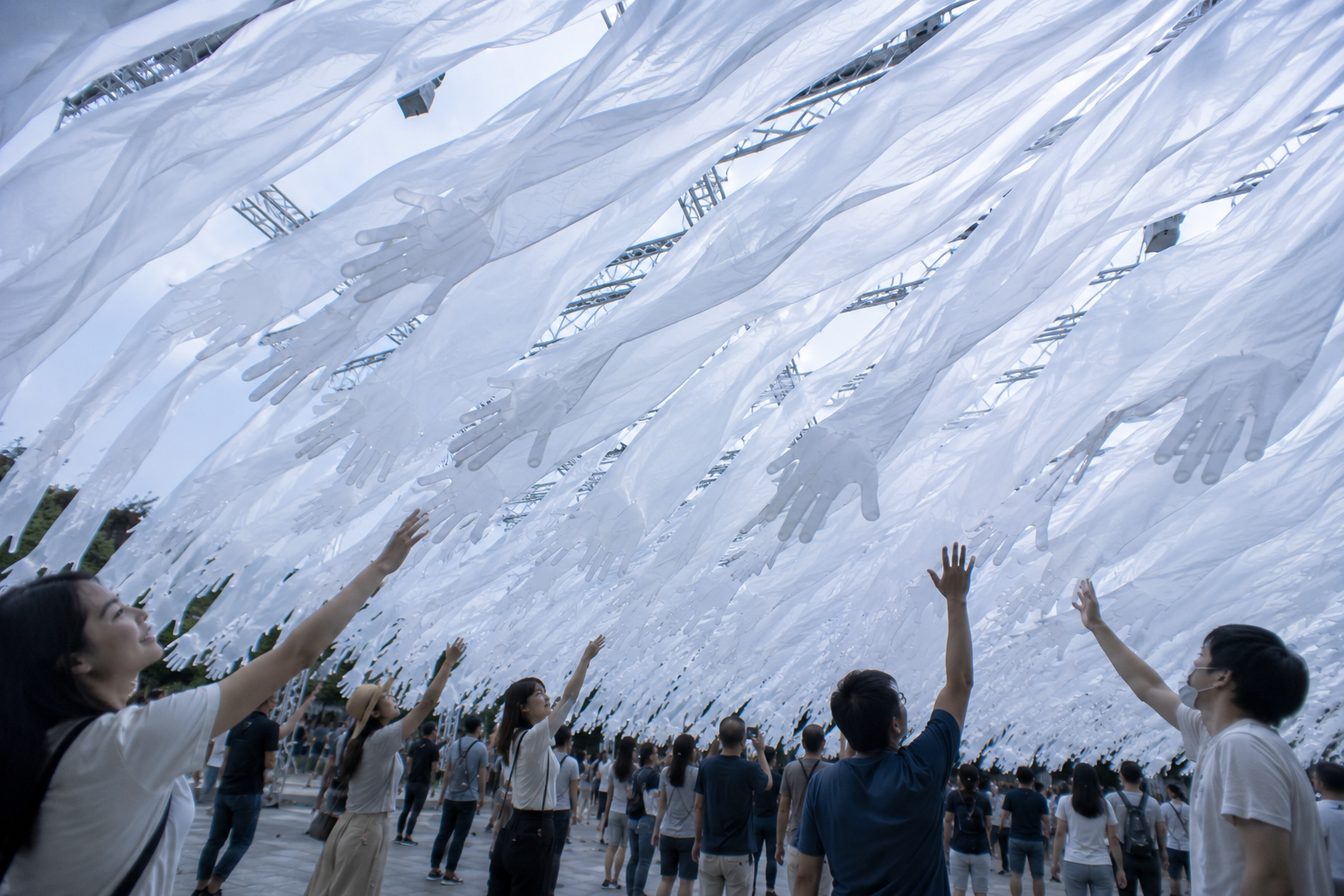
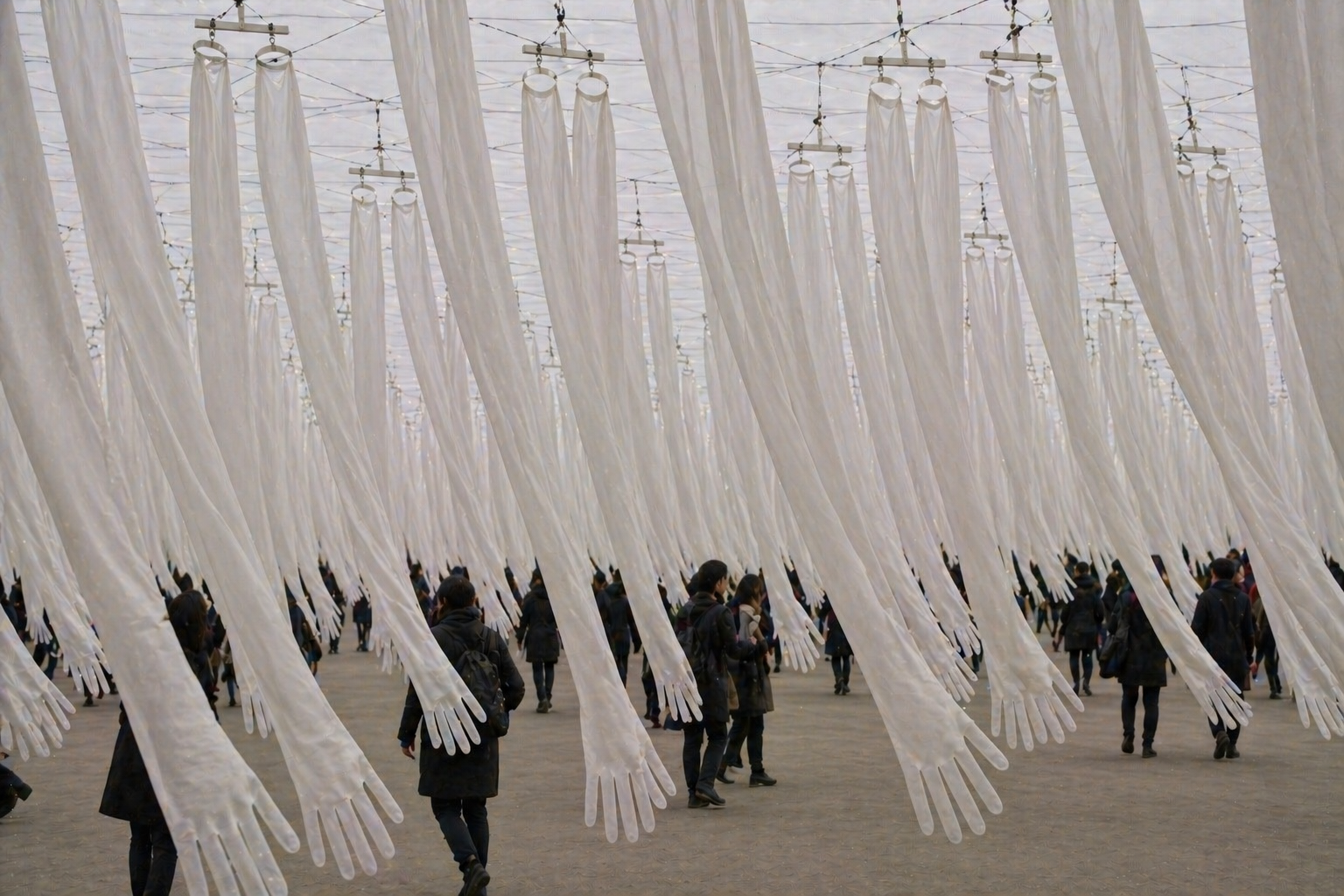
With this installation we want to temporarily transform public space into a place of contact and shared softness. Caressing Zone is made up of hundreds of translucent arms and hands suspended above the audience, moving slowly with the wind and brushing against those who walk through the space. We are interested in introducing into the city an action normally reserved for intimacy: the caress.
The installation revisits ideas we have already explored in other works involving fragmented bodies, textile materials, light, and the sensitive occupation of urban space. In contrast to architectures shaped by hardness, speed, or control, we are interested in introducing soft, unstable elements connected to physical contact.
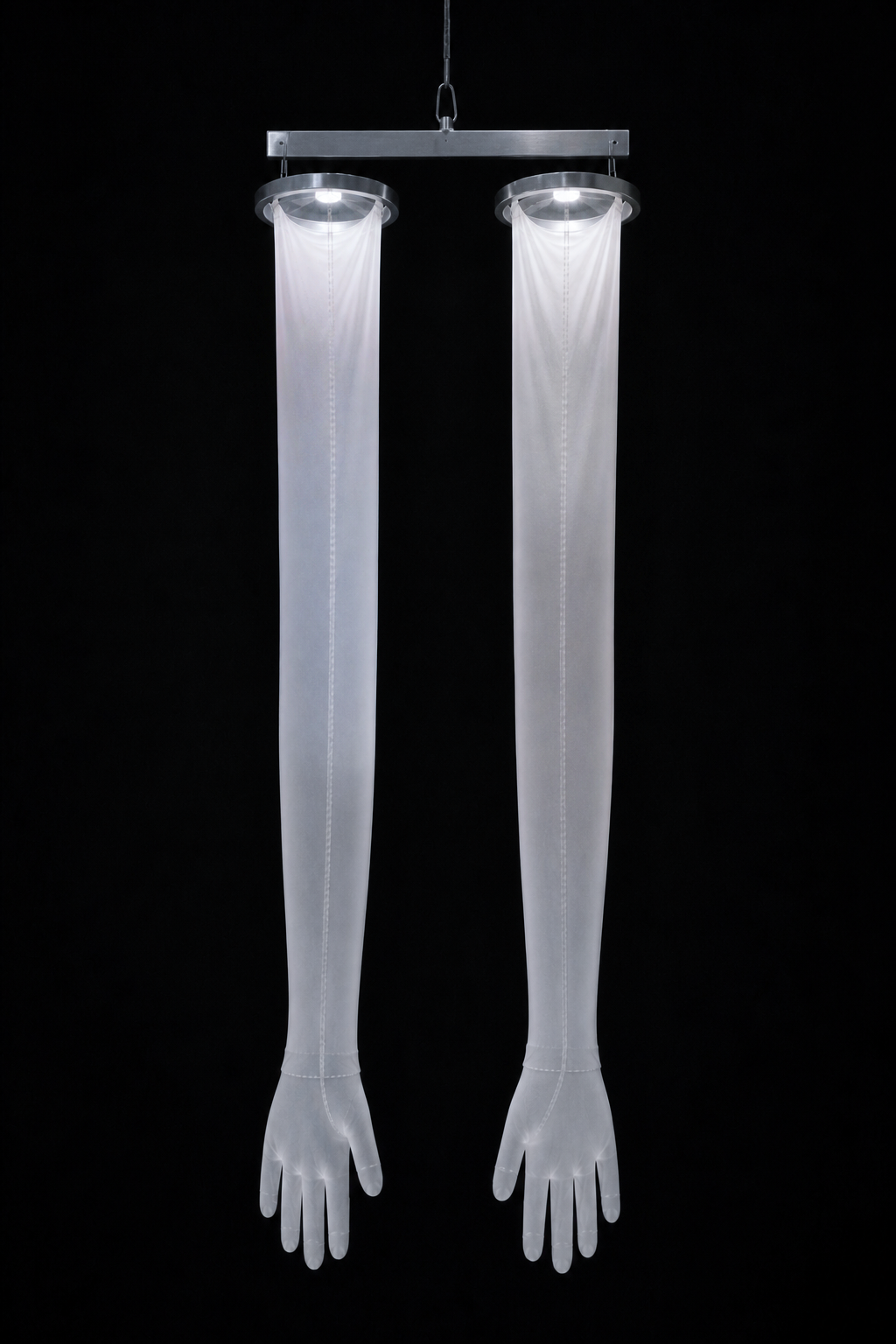
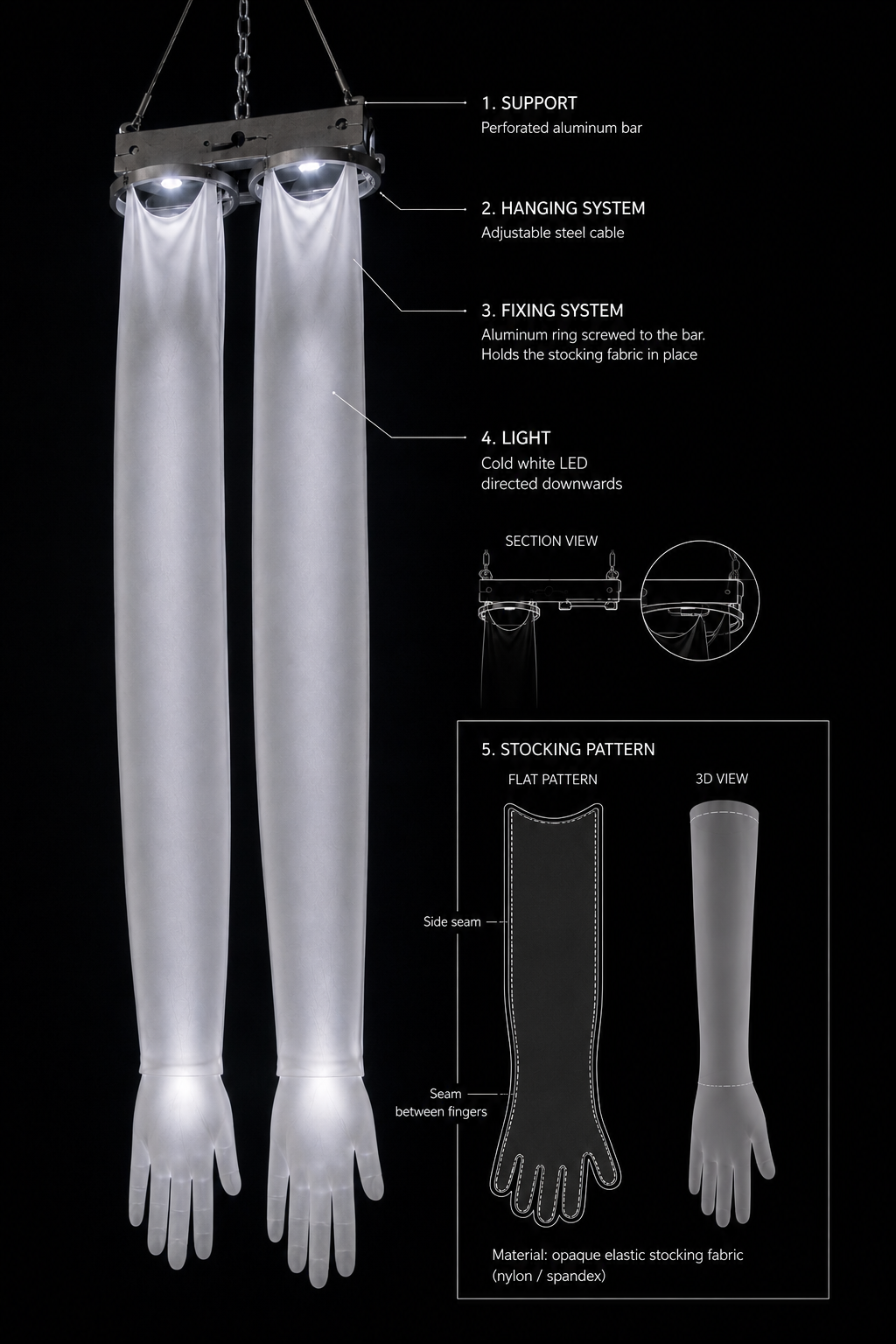
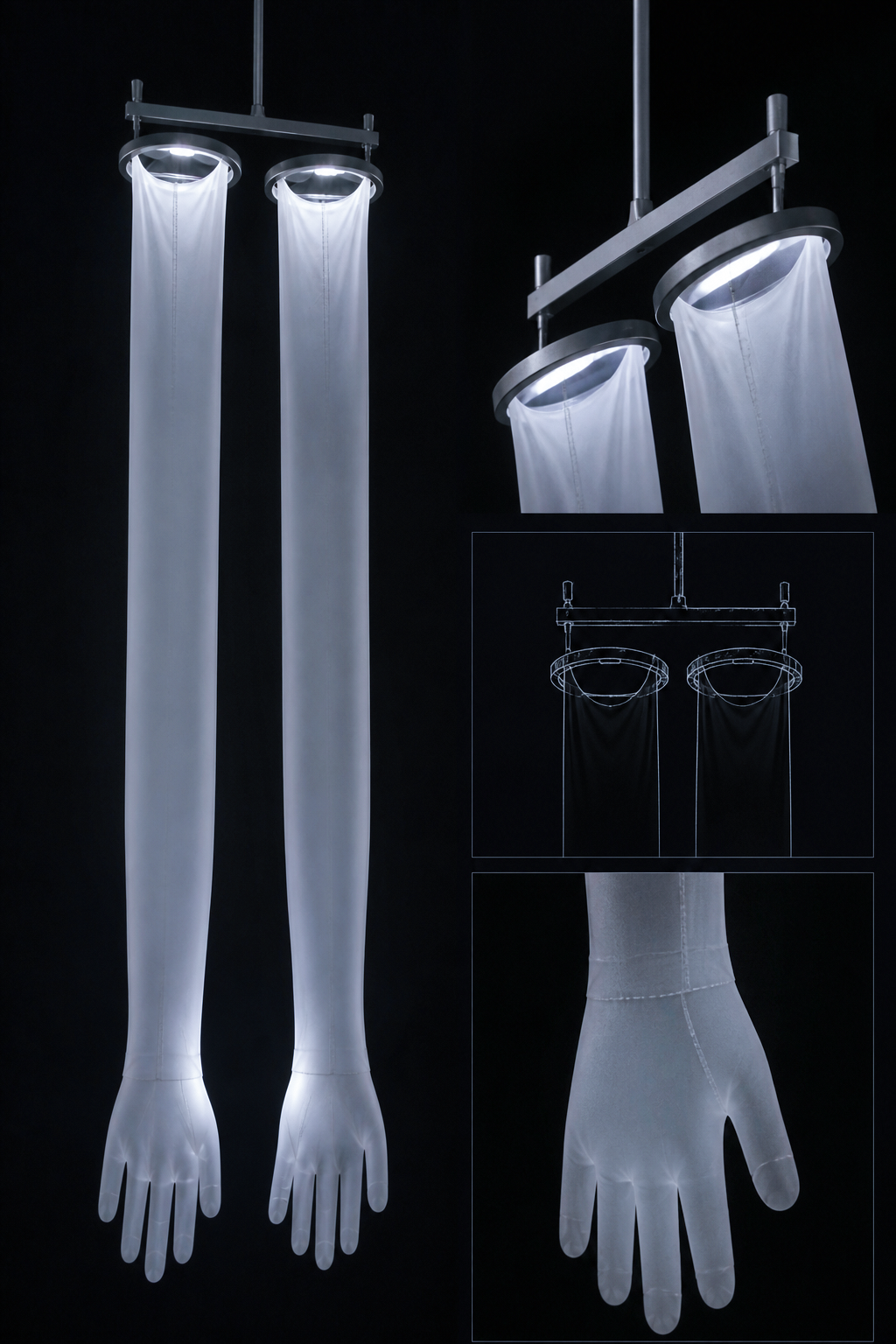
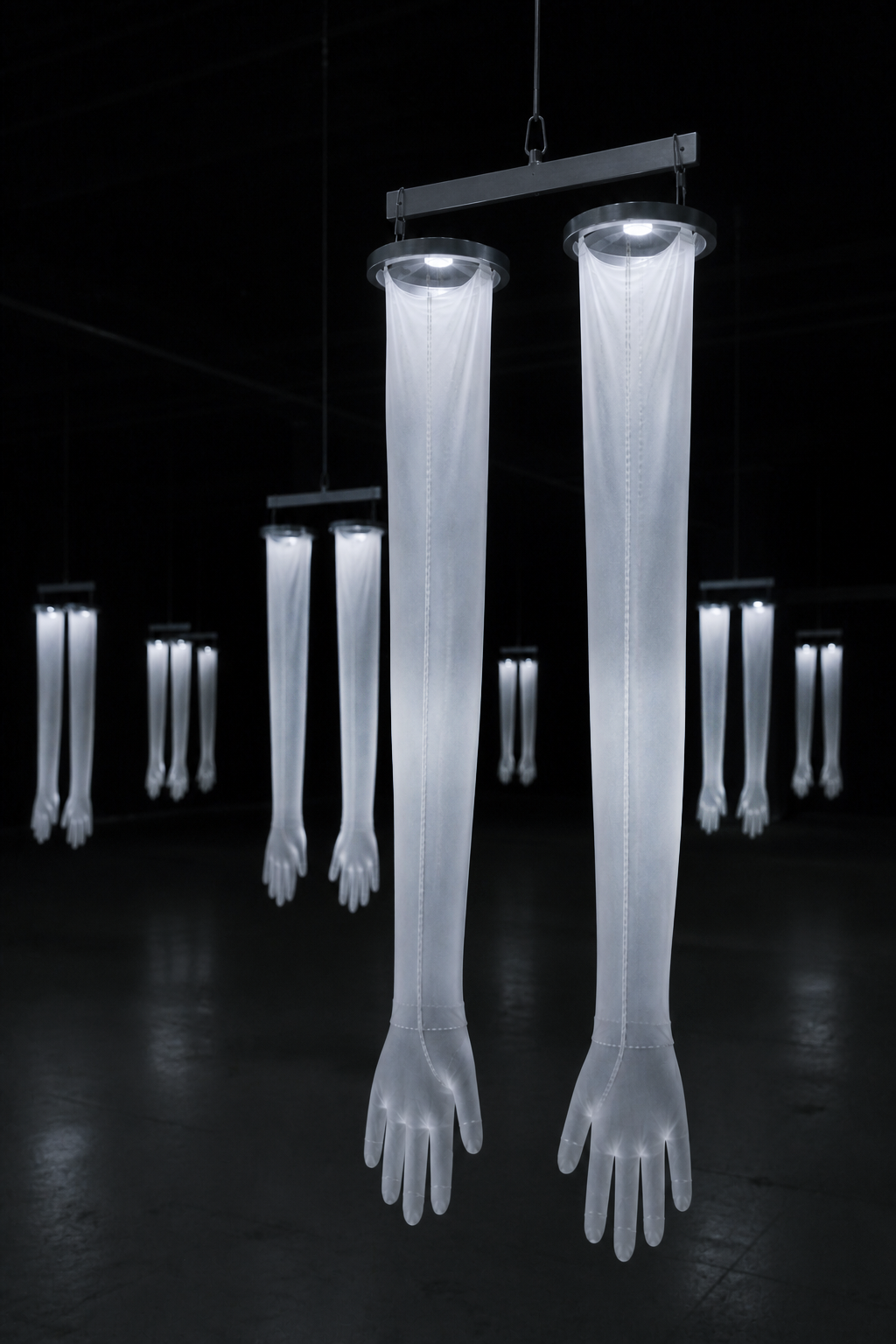
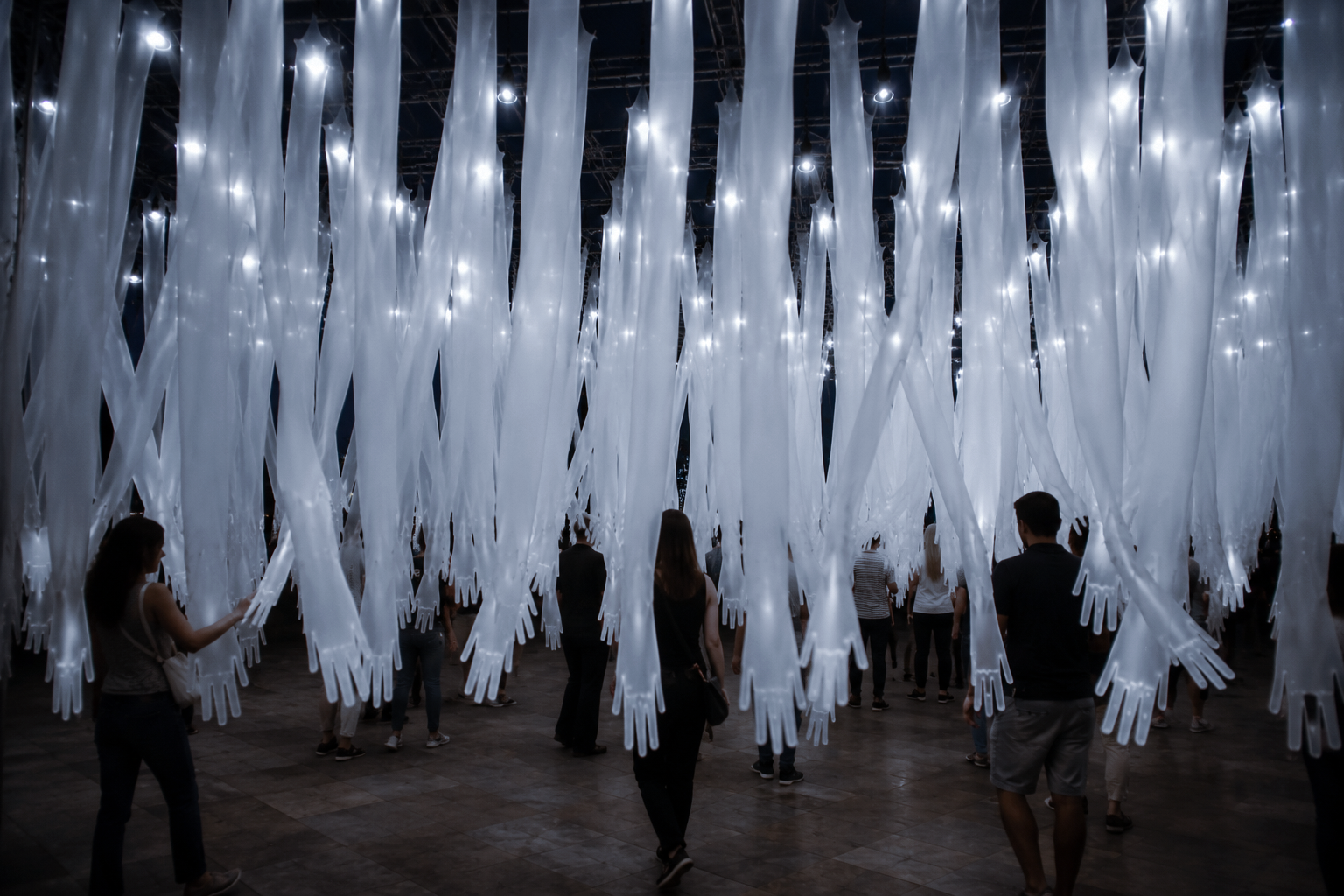
The arms are made from translucent fabrics similar to white women’s stockings. We chose this material for its fragility, lightness, and its ability to constantly react to air and light. We are not interested in creating perfect anatomical forms, but rather soft and changing textile presences activated by the wind and by the movement of visitors. The cold light placed in the upper part of each arm passes through the fabric, revealing seams, folds, and small deformations produced by movement and use.
We are also interested in working with materials historically associated with feminine, domestic, or invisible worlds. Here, the stockings are used as both structural and luminous elements, leaving the private sphere to occupy a monumental and collective structure within the city.
The installation clearly alters the behaviour of the audience. People slow down, look upwards, and move through the space differently, accepting the continuous brushing of the moving fabrics. The wind never moves the arms in exactly the same way, so the piece is constantly reacting to the environment and to the bodies passing through it.
Formally, the work is built using a large truss or scaffolding structure from which hundreds of pairs of arms are suspended. Each arm is made from a sewn textile sleeve stretched open at the top by a circular metal frame. Two frames are connected by a simple horizontal metal piece, similar to a small industrial hanger, allowing each pair of arms to hang from the main structure using a single suspension point.
Inside each arm we place a small cold light source, technically simple and easily accessible, which illuminates the fabric evenly from within without producing visible glare. We are not interested in technological spectacle, but in creating a faint, almost bodily presence. The fabric remains open thanks to the upper frame while the rest of the arm hangs freely and moves with the air.
The installation can adapt to different scales and configurations: immersive corridors, open squares, circular structures, or large walkable environments. Depending on the site, the density and height of the arms can be adjusted to create different levels of interaction with the public.
At night, Caressing Light feels like a large suspended organism floating above the city. From a distance, the arms appear as a luminous mass slowly moving with the wind; from inside, the experience becomes far more physical and tactile.
At a time like this, filling public space with gestures of care and caresses almost starts to feel like a subversive act.
We hope to see this installation come to life soon.
Con esta instalación queremos transformar temporalmente el espacio público en un lugar de contacto y suavidad compartida. Zona de caricias está formada por centenares de brazos y manos translúcidas suspendidas sobre el público, moviéndose lentamente con el viento y rozando a quienes atraviesan el espacio. Nos interesa introducir en la ciudad una acción normalmente reservada a la intimidad: la caricia.