Signage of Care / Señaletica de los cuidados
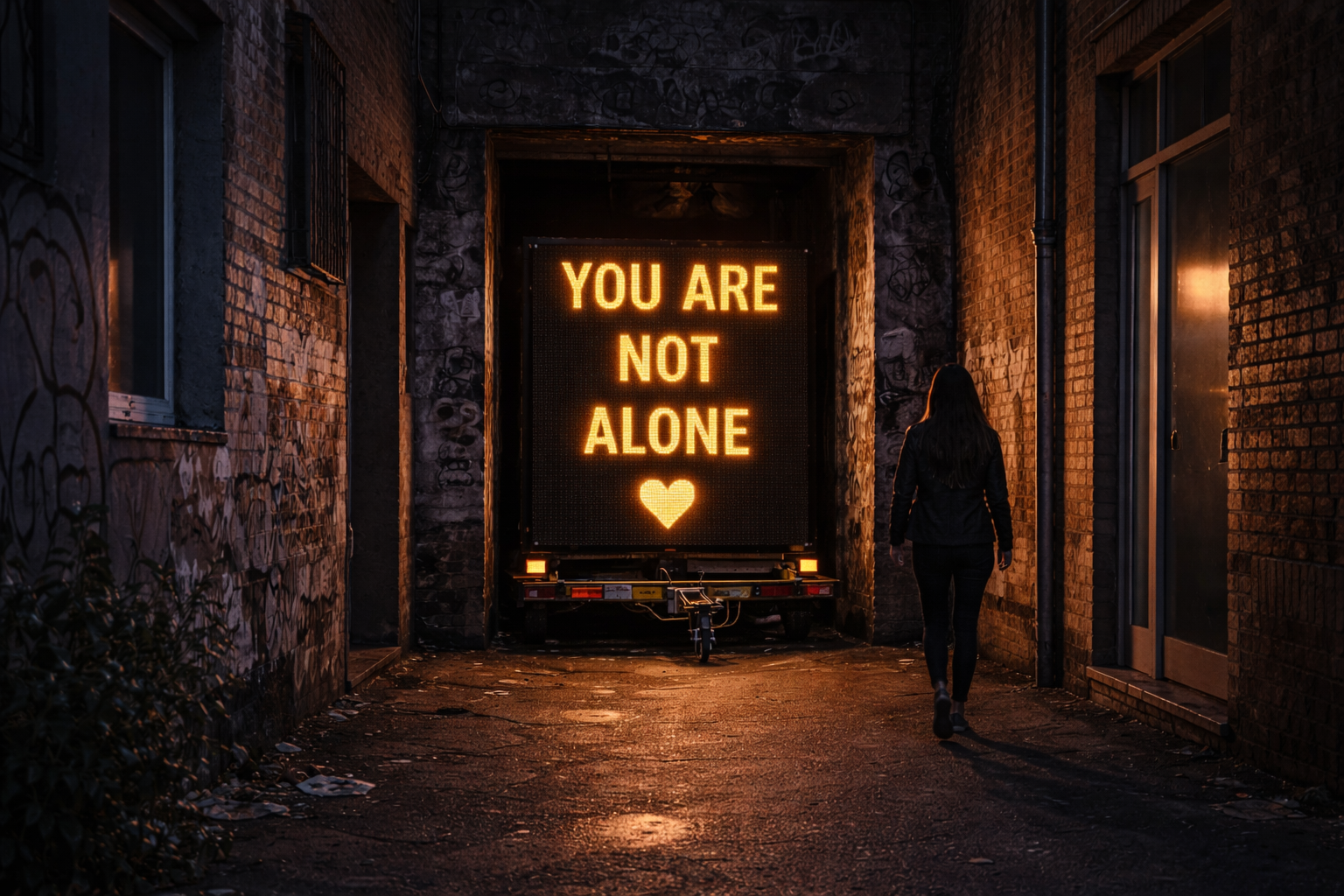
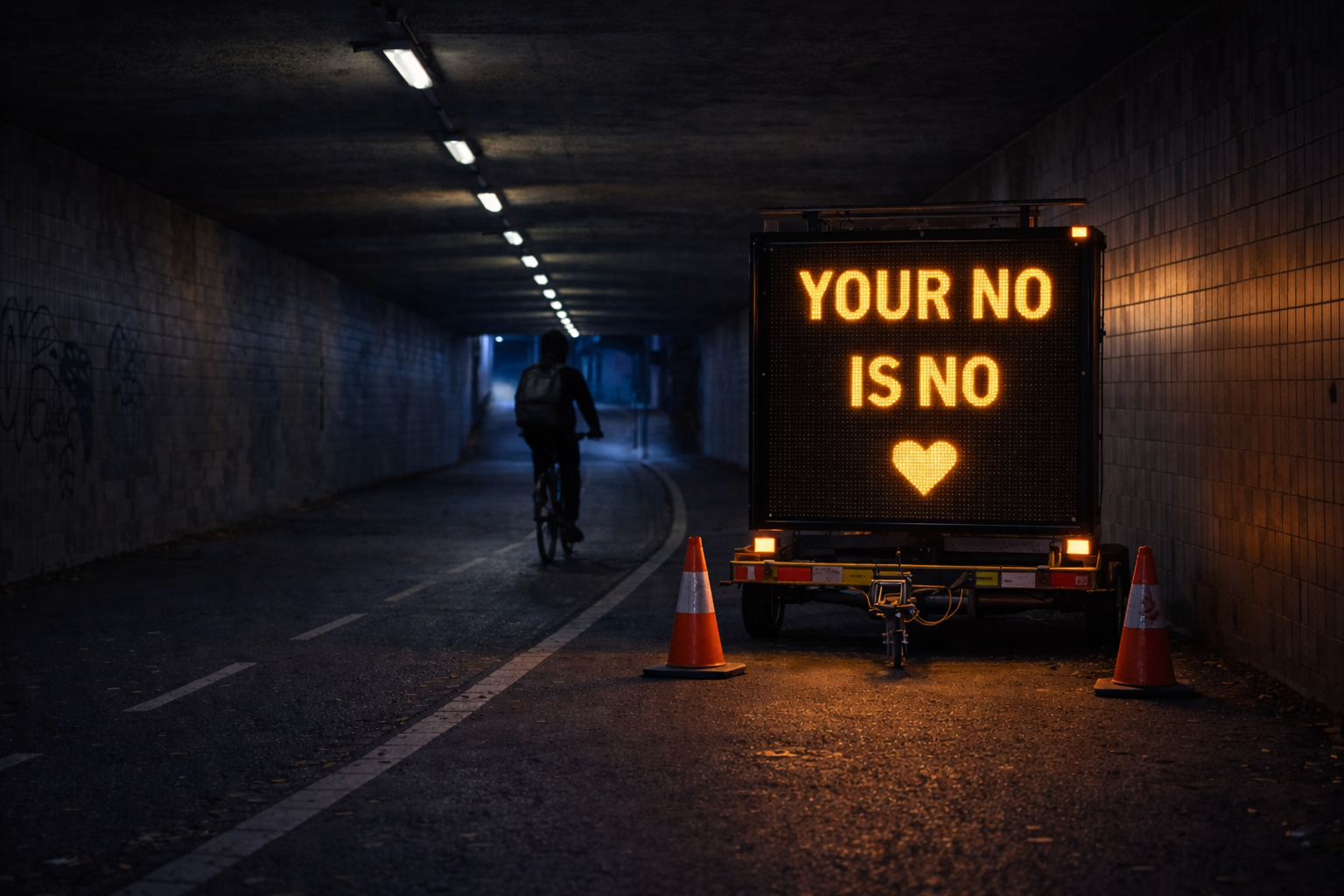
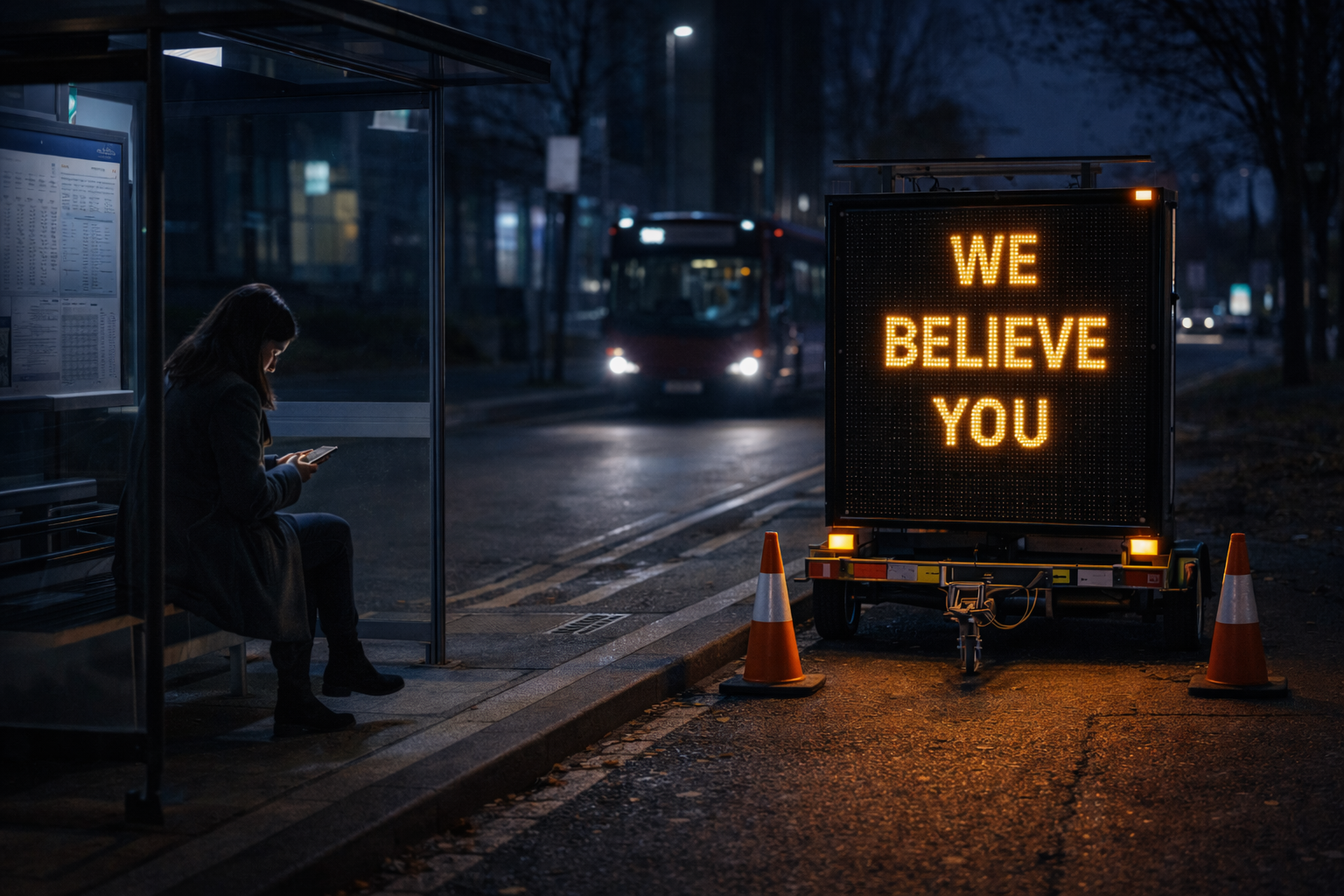
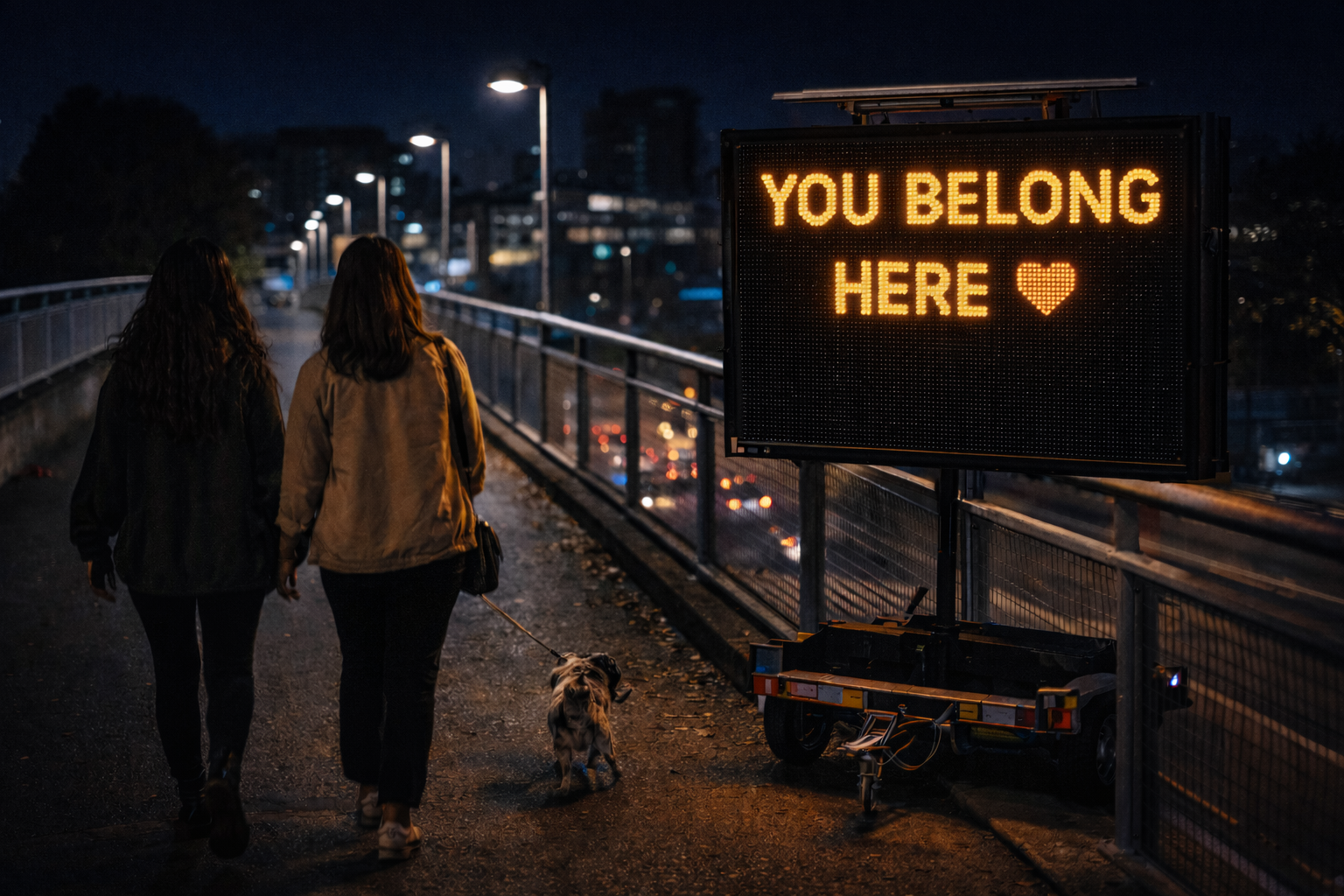
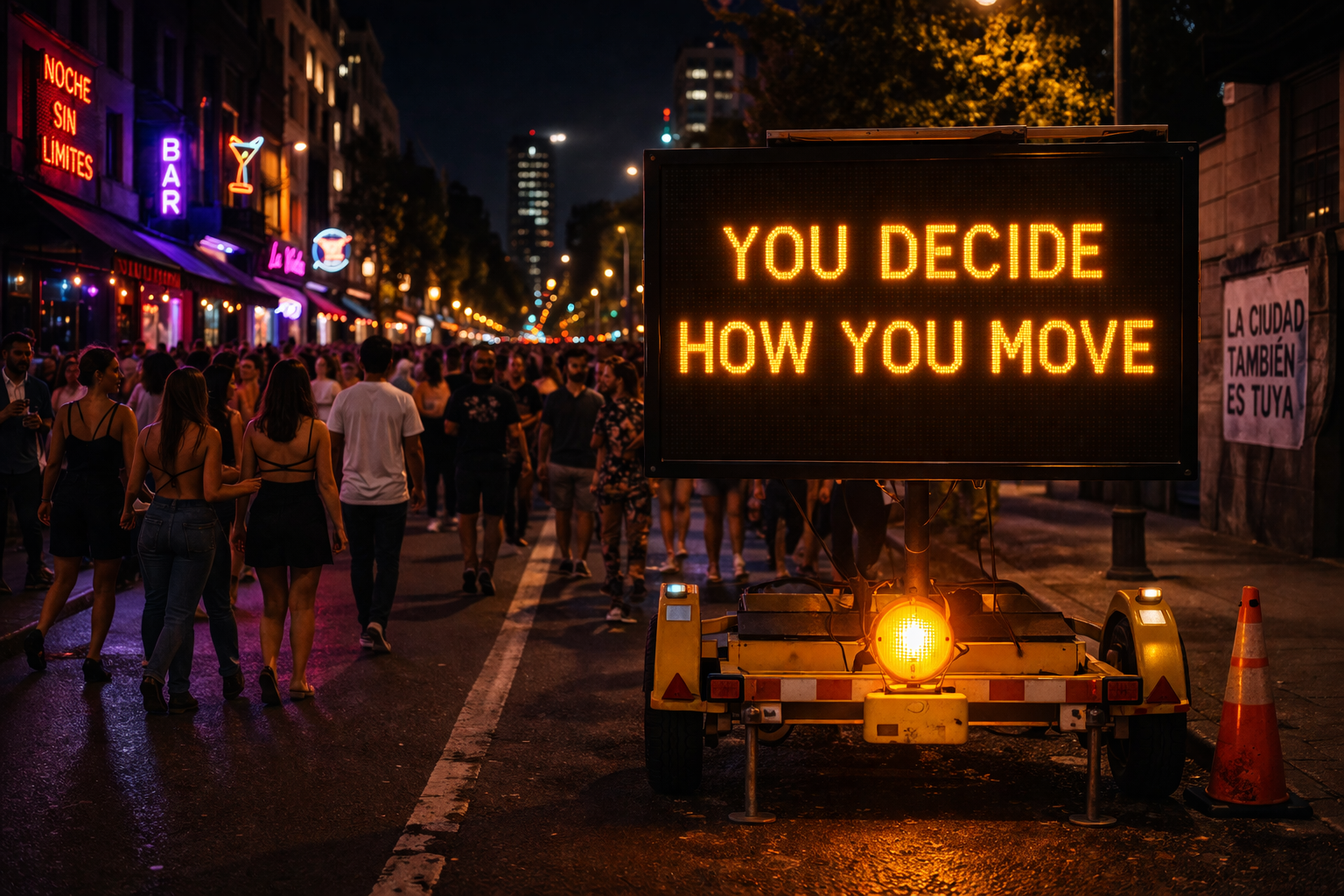
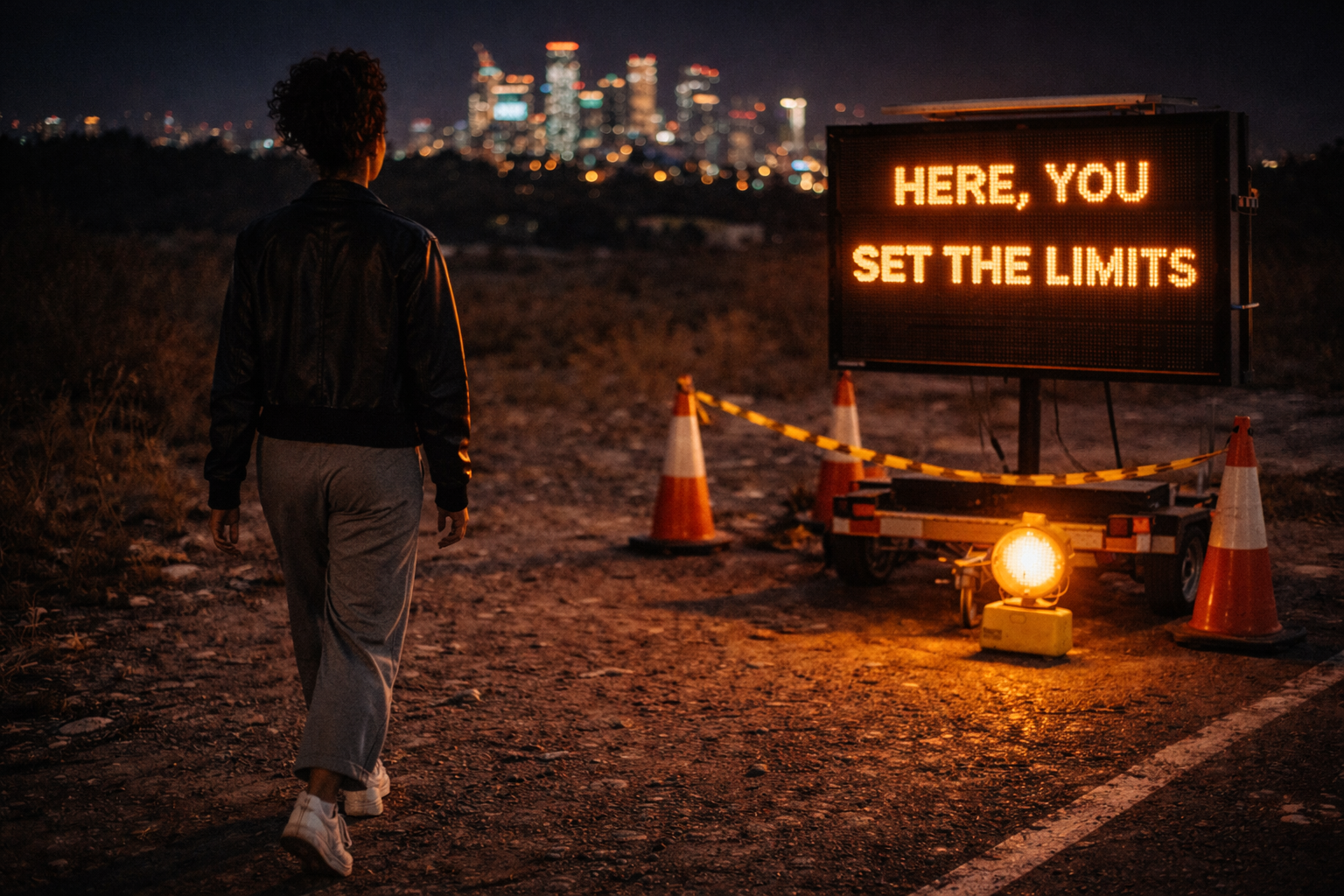
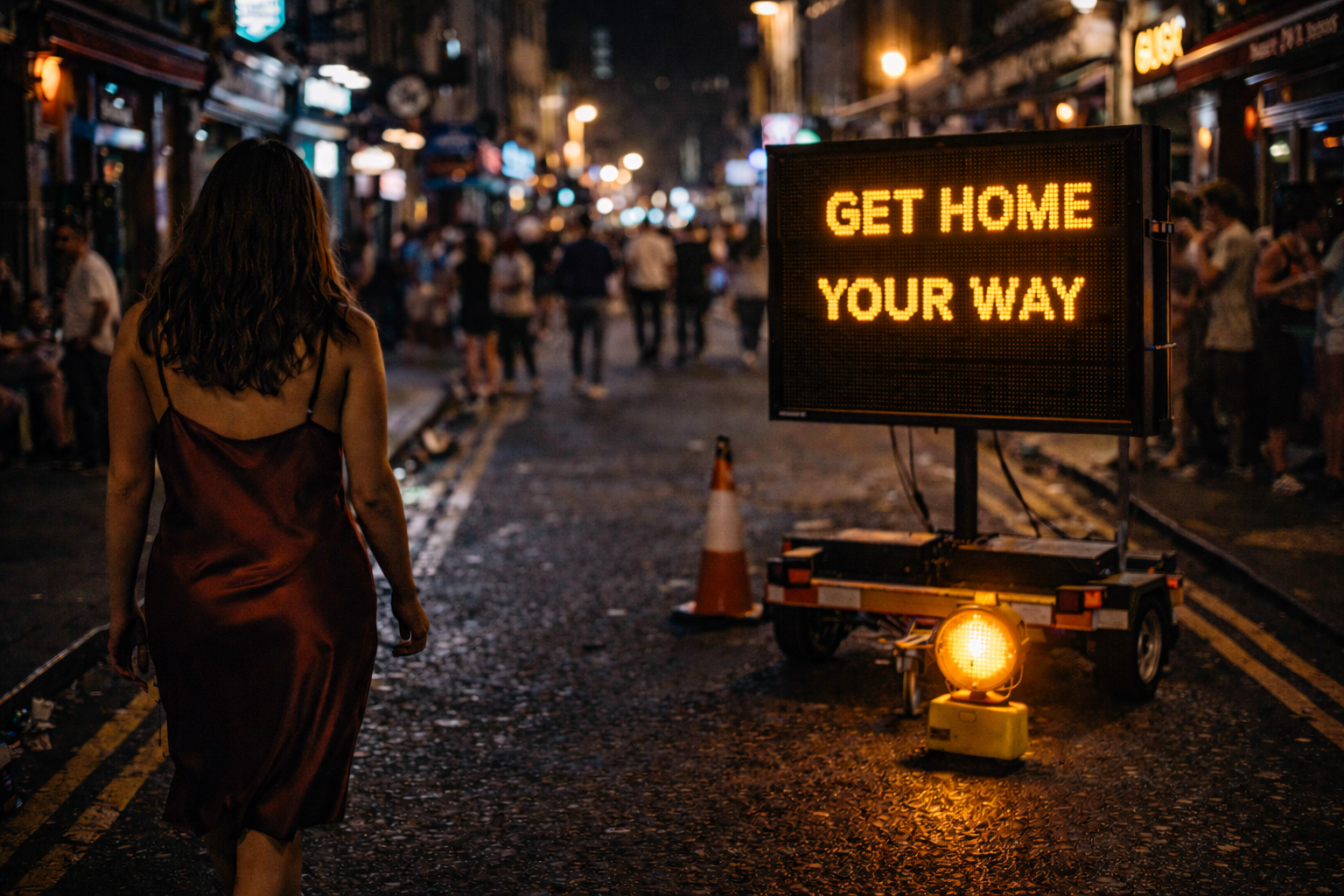
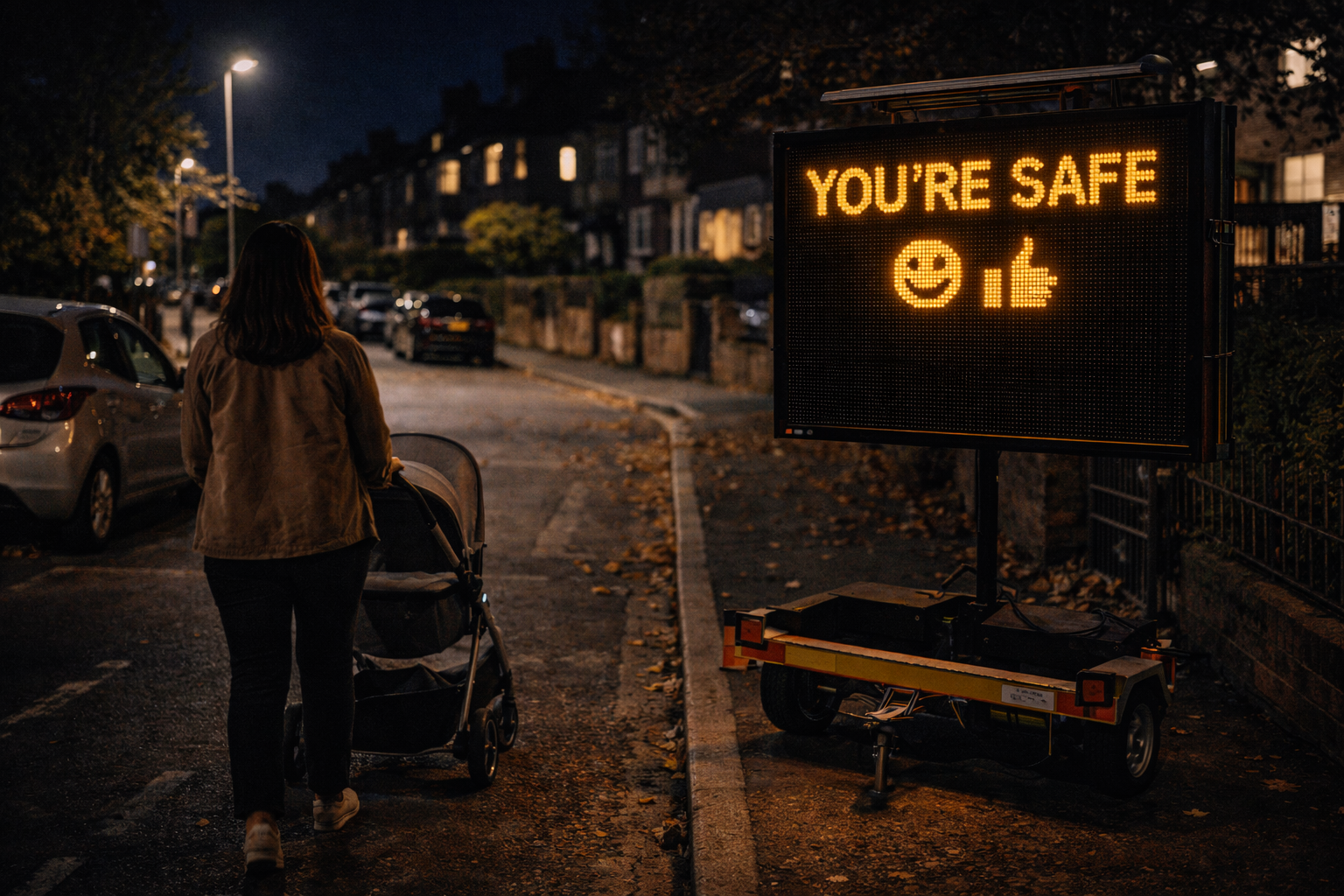
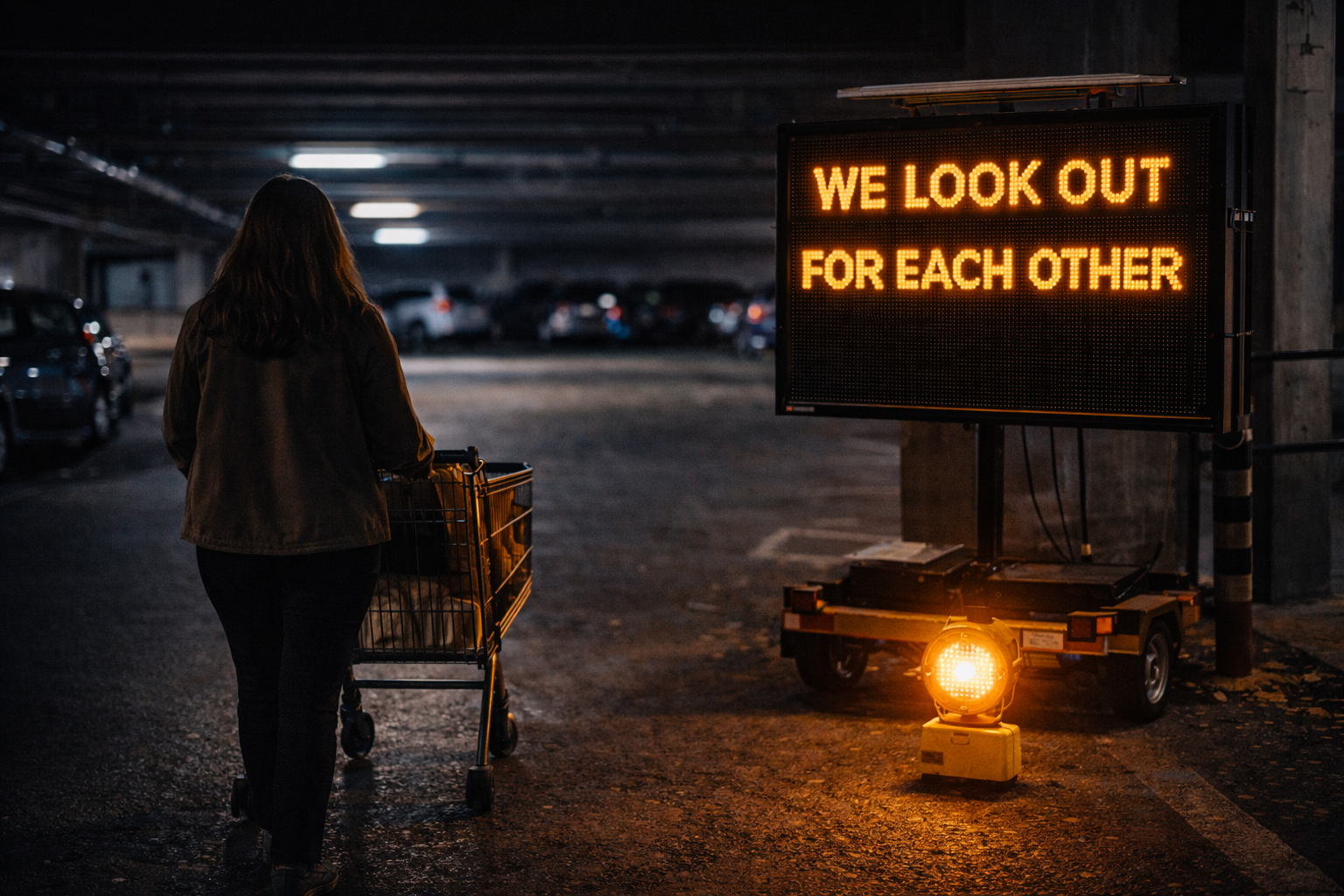
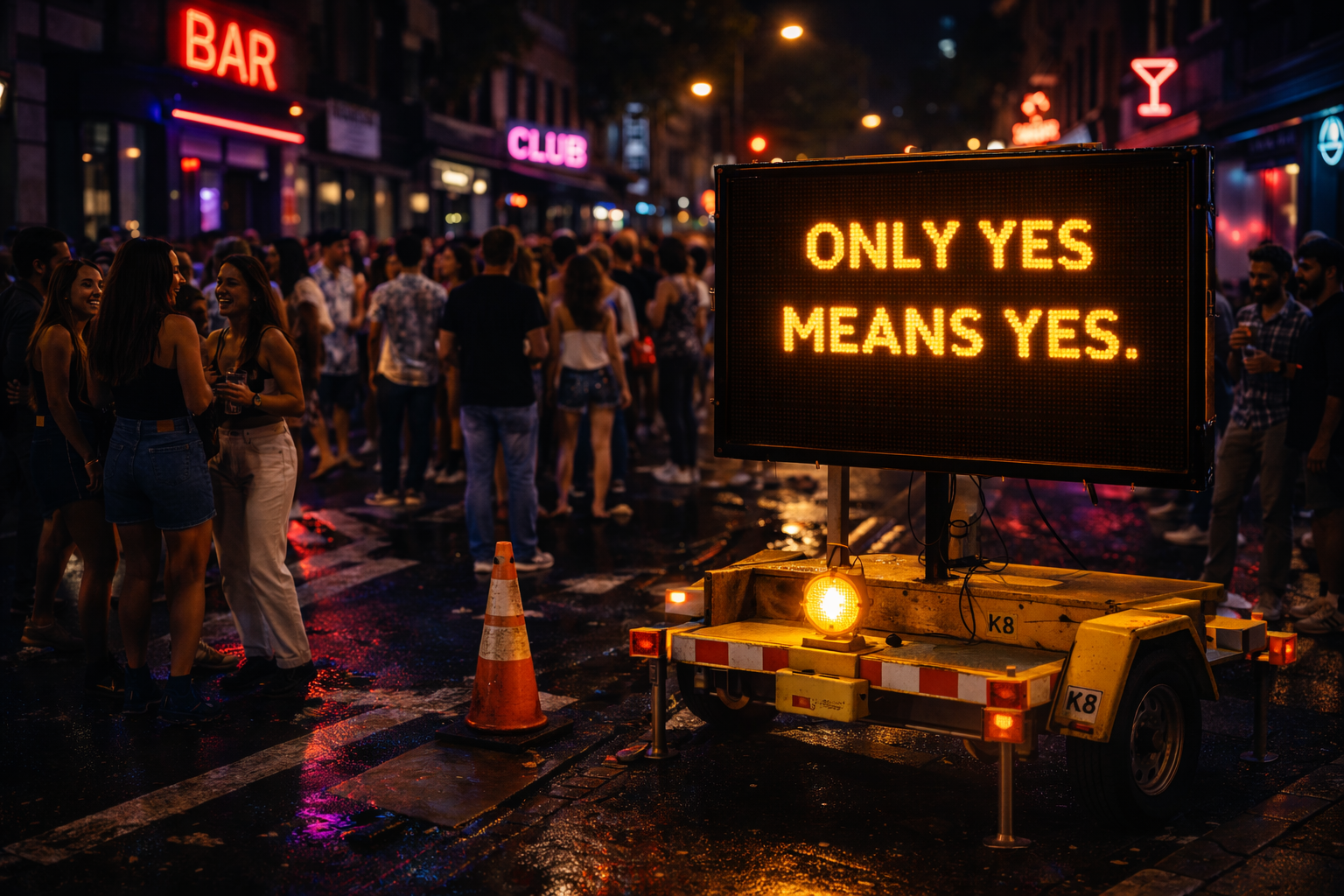
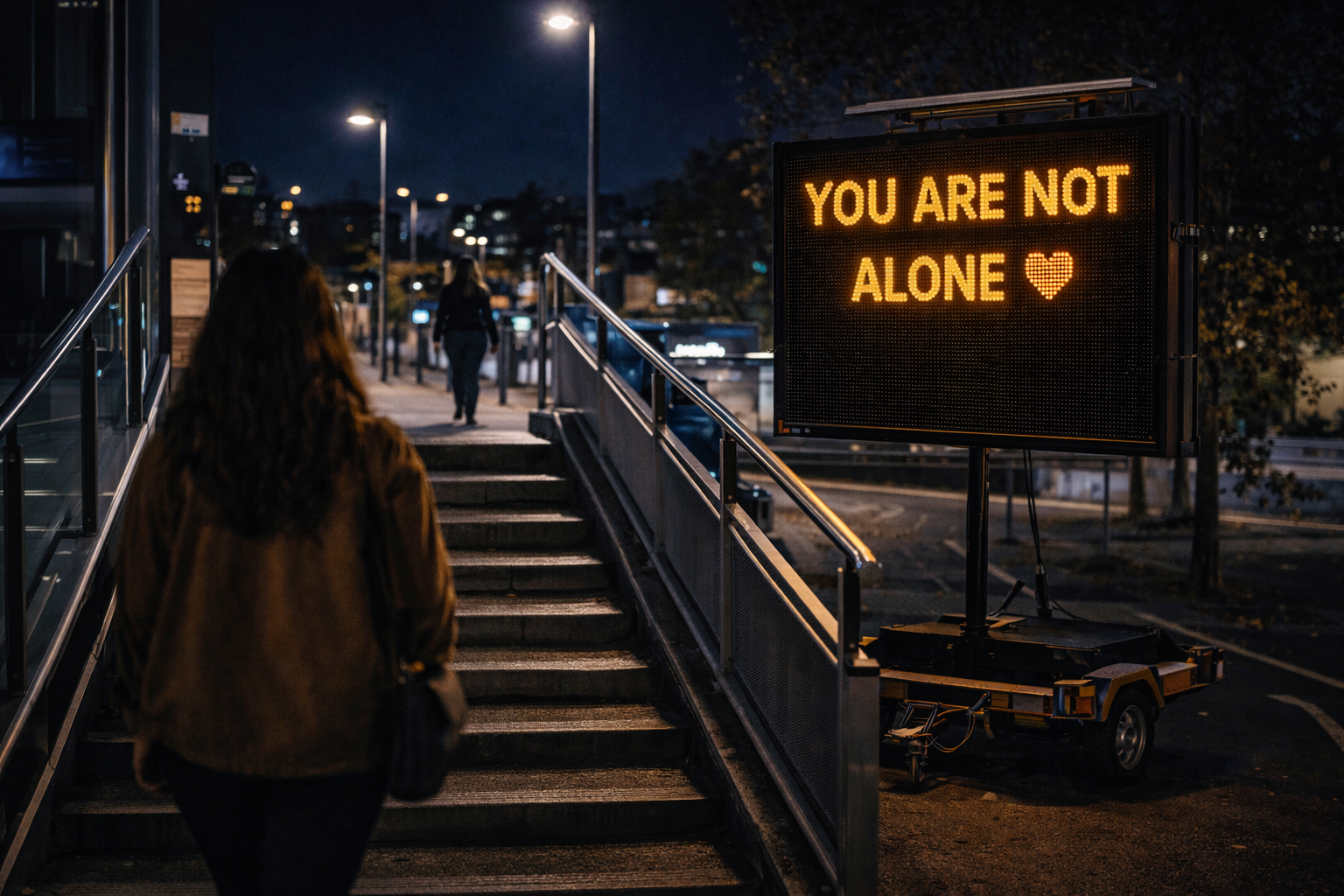
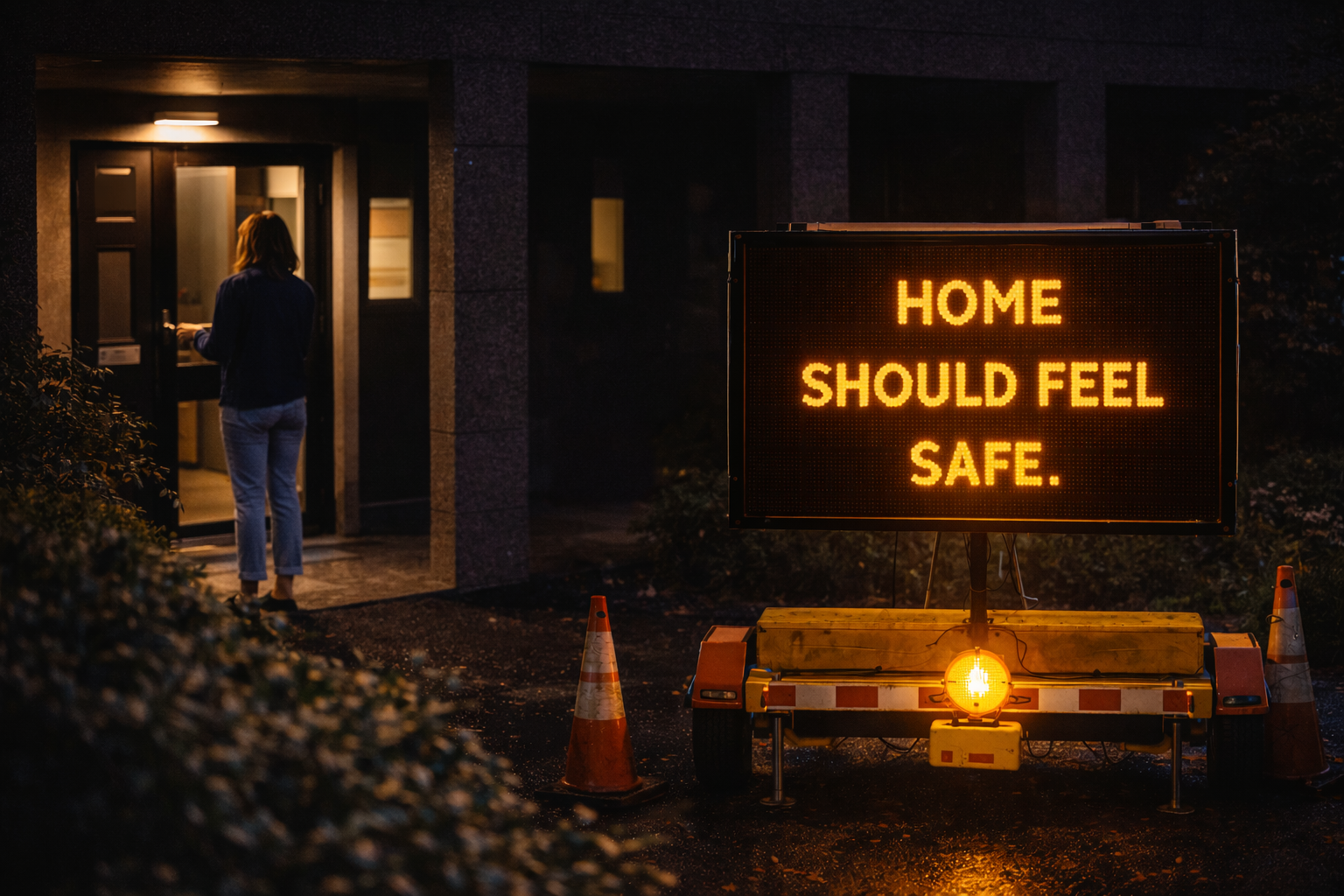
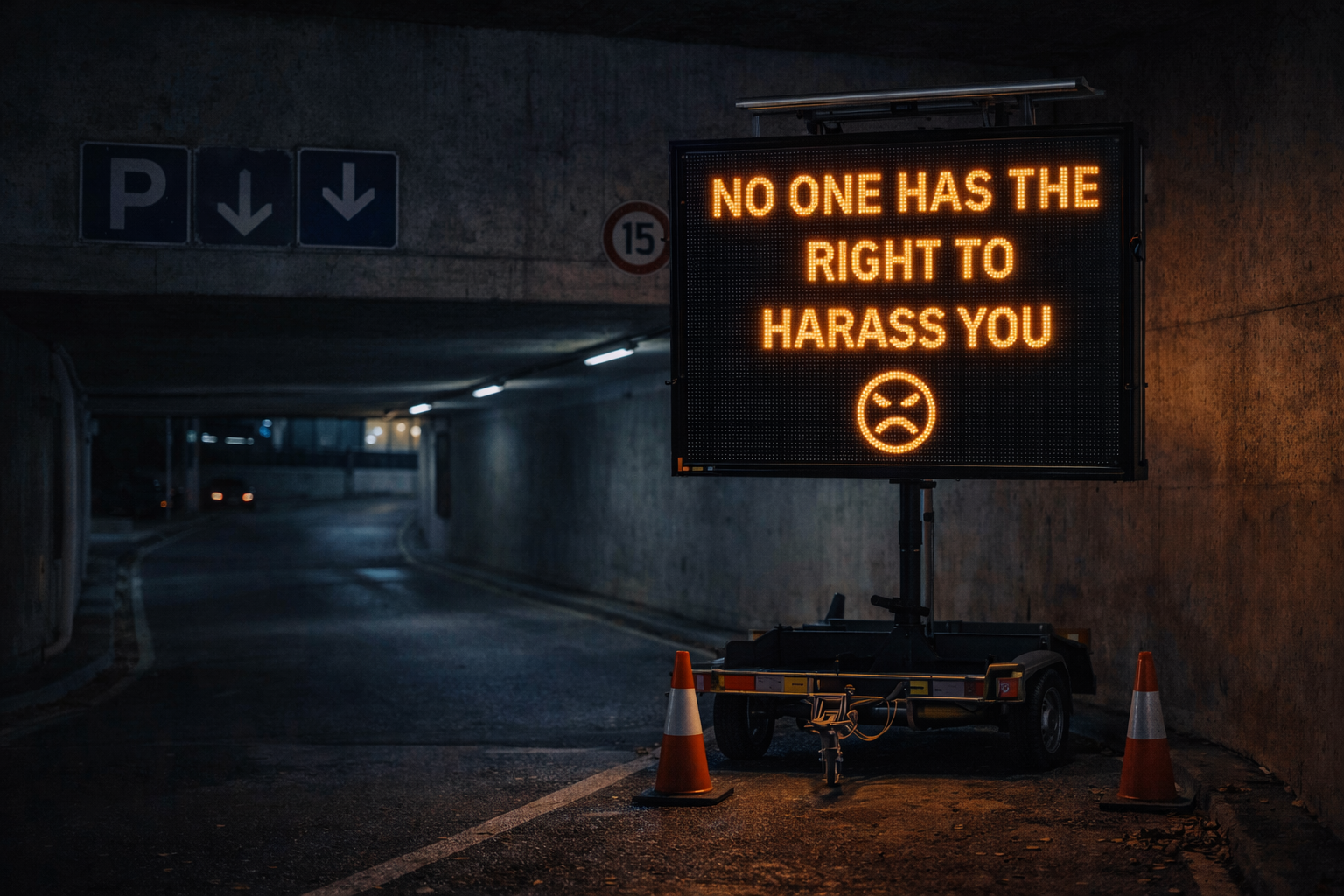
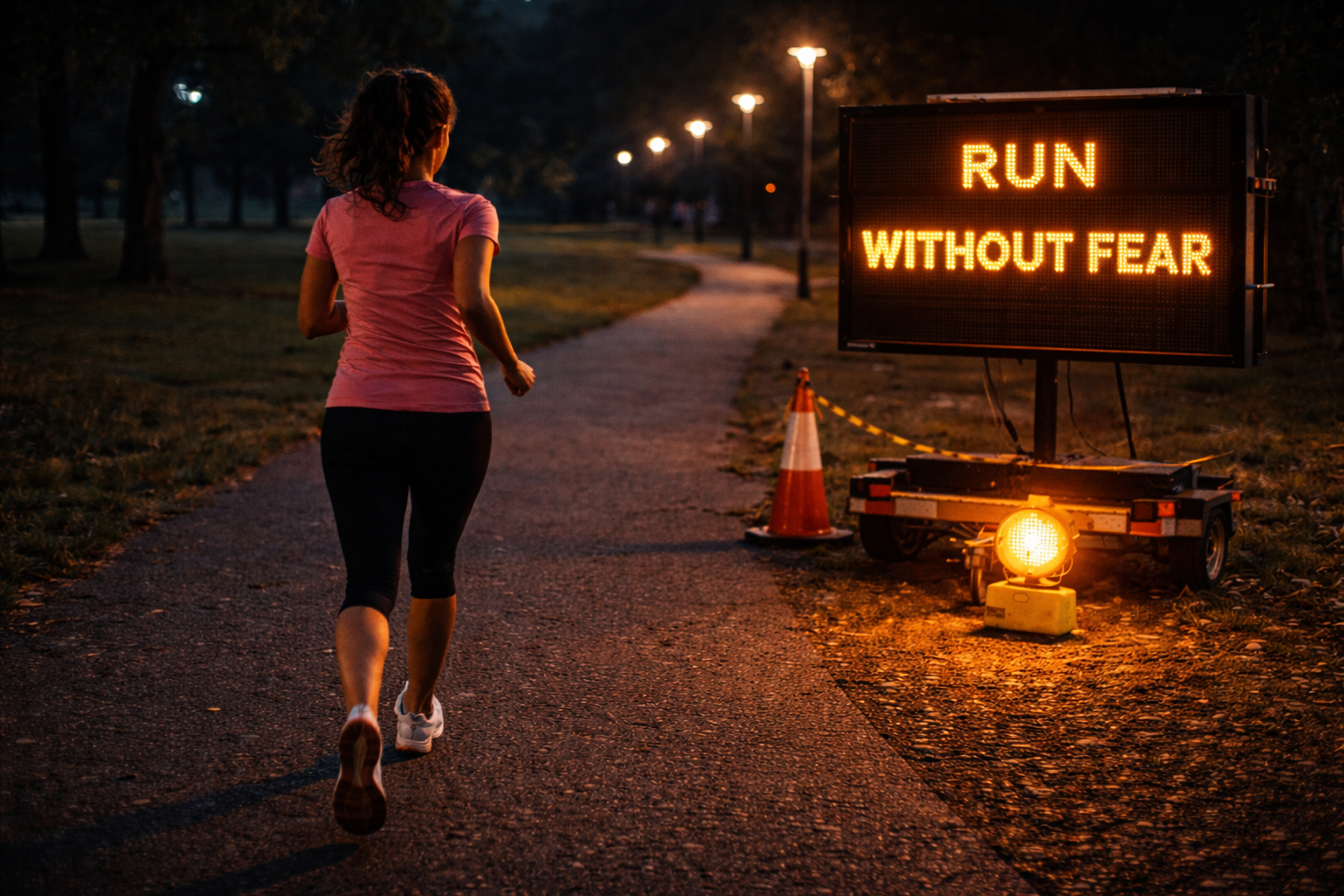
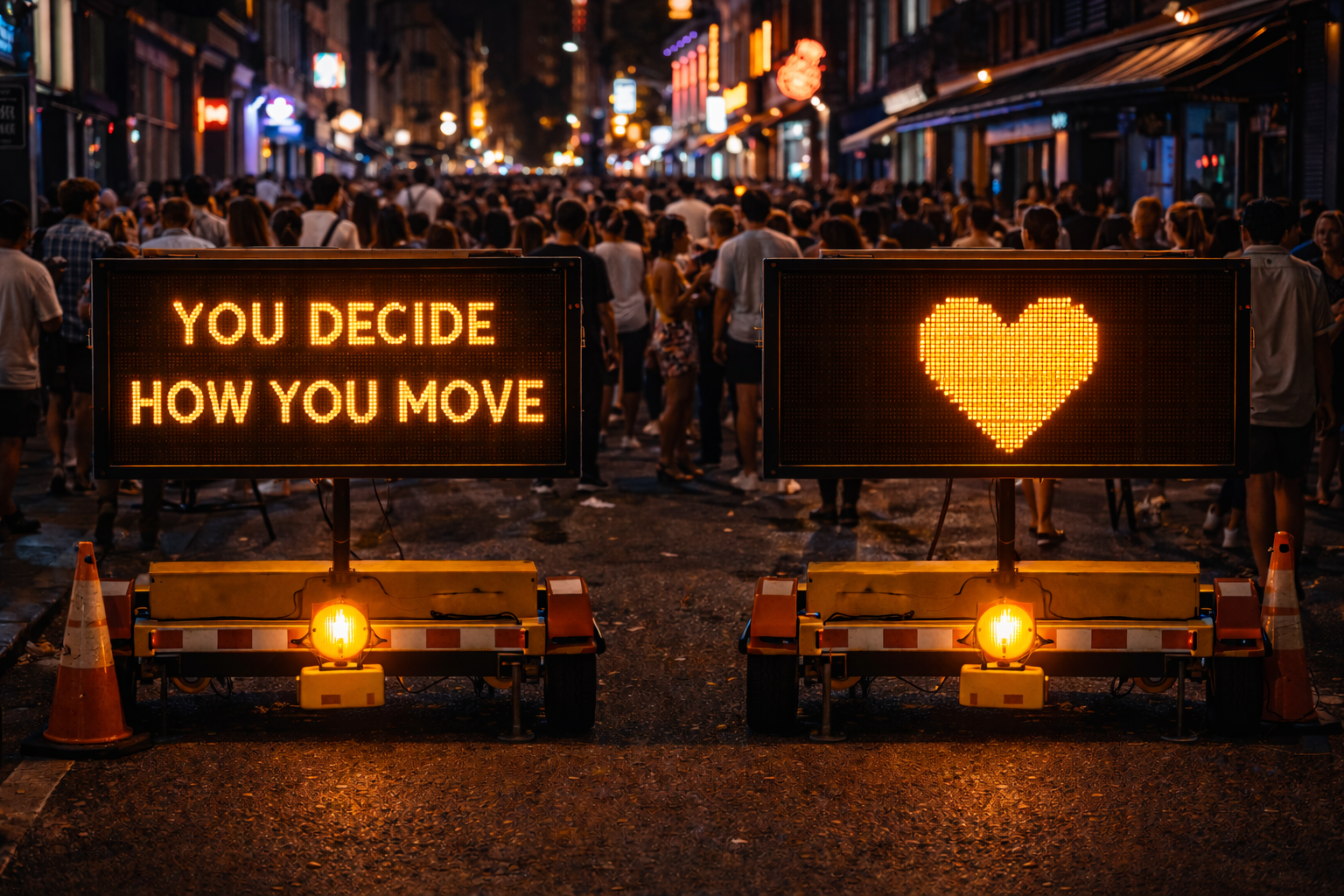


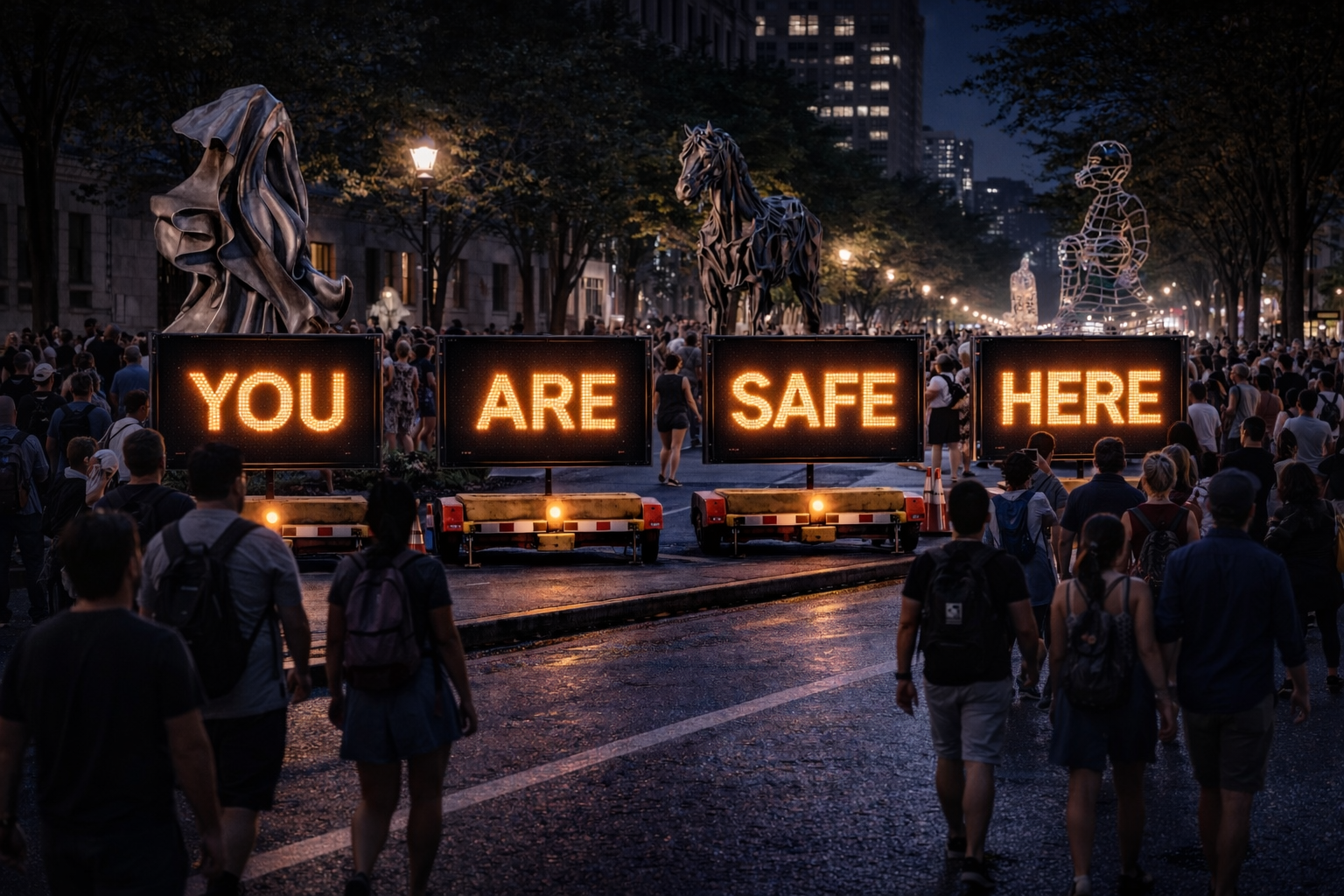

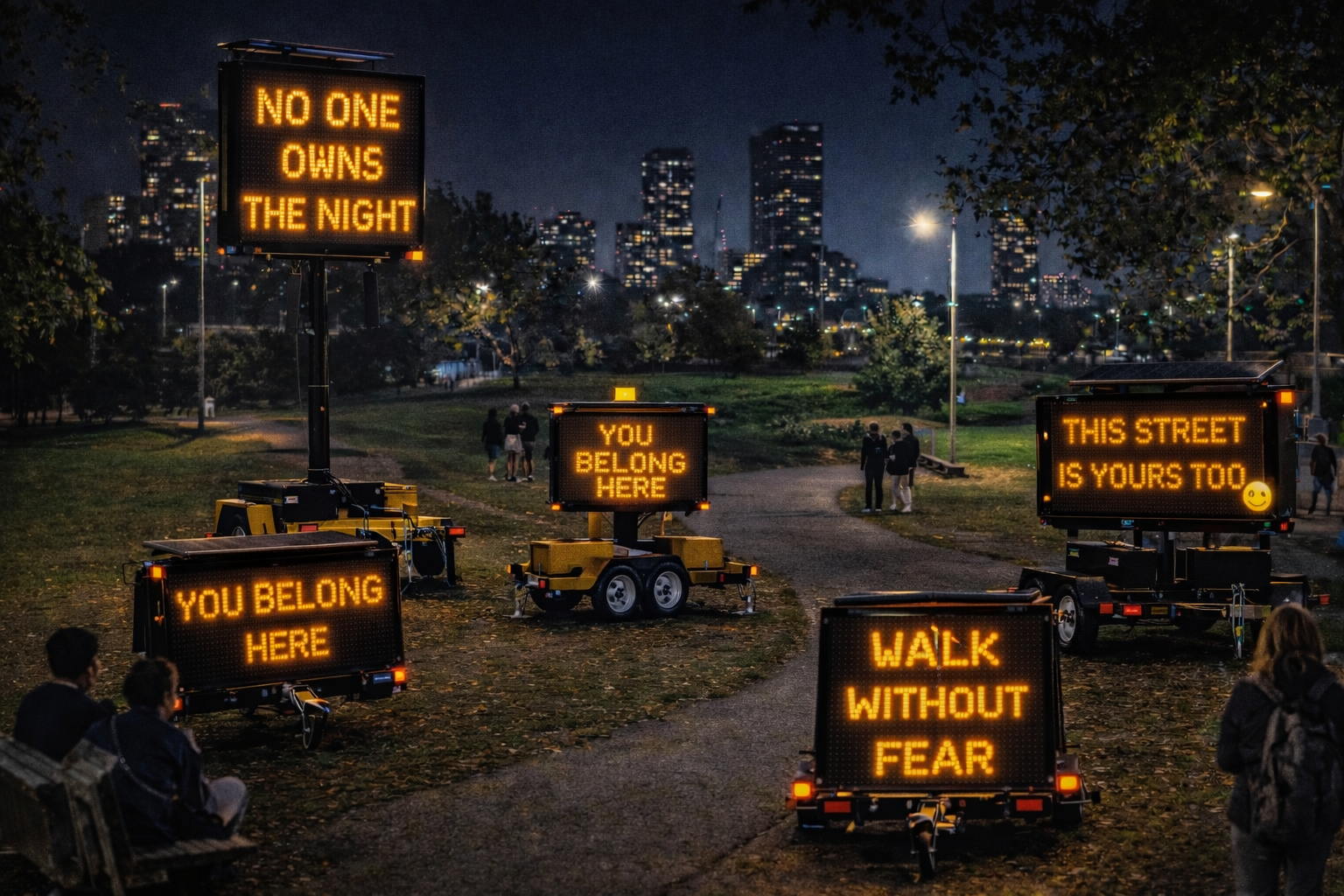
Some years ago we were invited to imagine proposals that could help women feel safer in the city through small interventions in those residual spaces where a sense of insecurity often appears: poorly lit streets, forgotten corners, or places that lie outside the usual routes.
The invitation was not accidental. For some time we had already been developing pieces that addressed different forms of inequality affecting women, often through small guerrilla interventions in public space. At that time we were frequently asked to respond to this kind of artistic challenge; it seems as if an eternity has passed since then.
From that reflection emerged the idea of “Signage of Care”, a proposal that suggests using common elements of urban signage to introduce brief messages of support for women into the city.
The question was simple: how can we act in those places without large infrastructures, through minimal gestures capable of activating the space and making it visible?
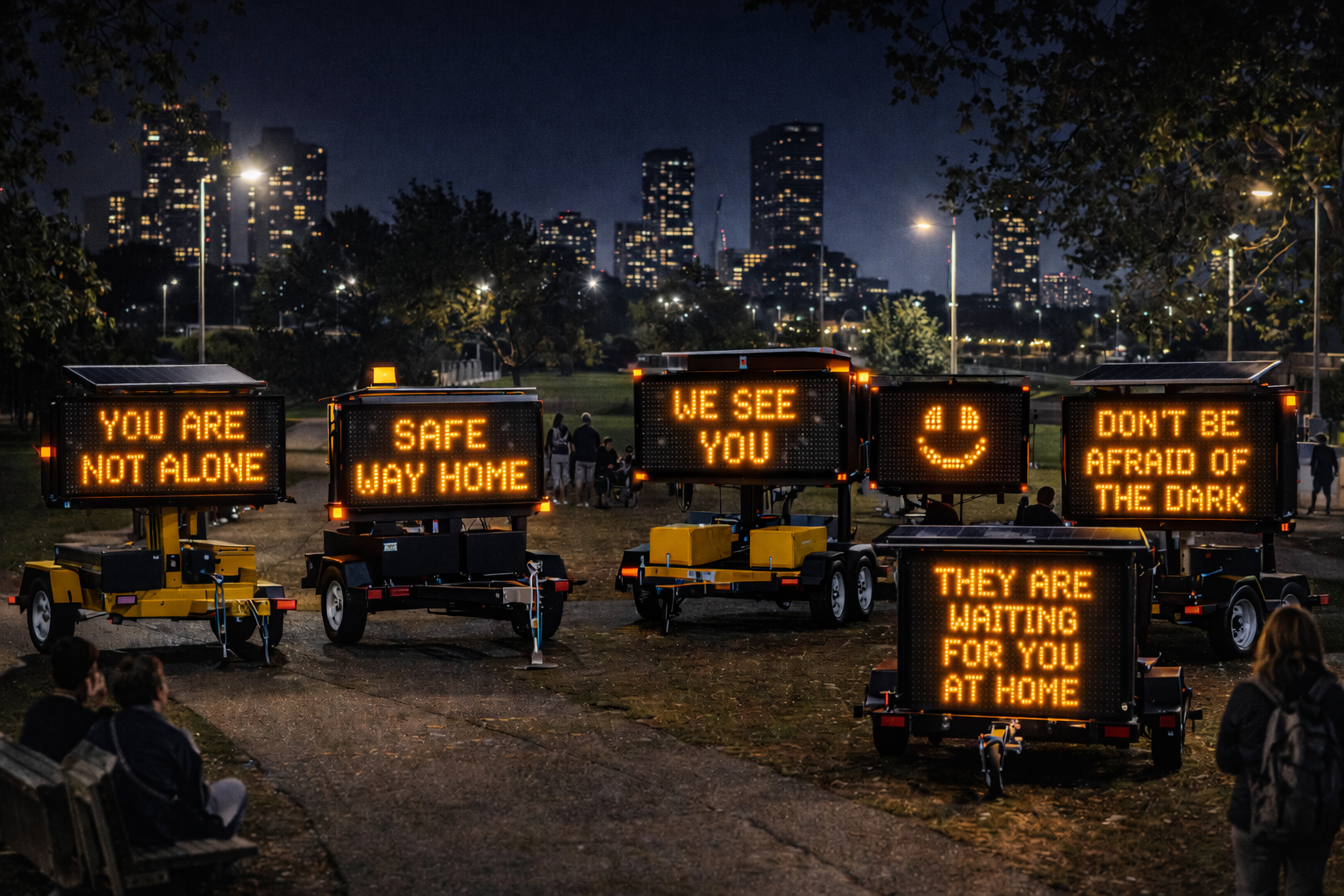
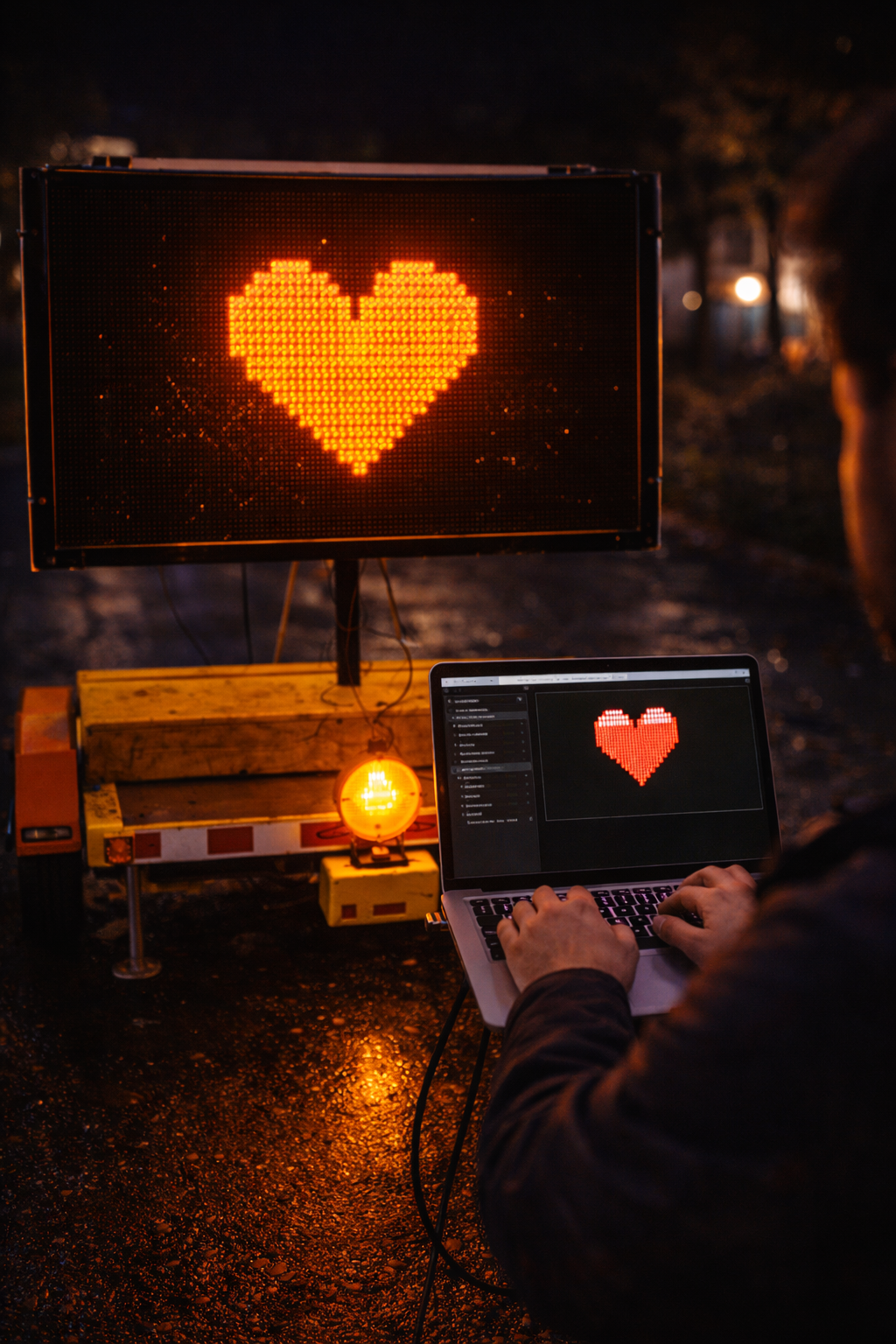
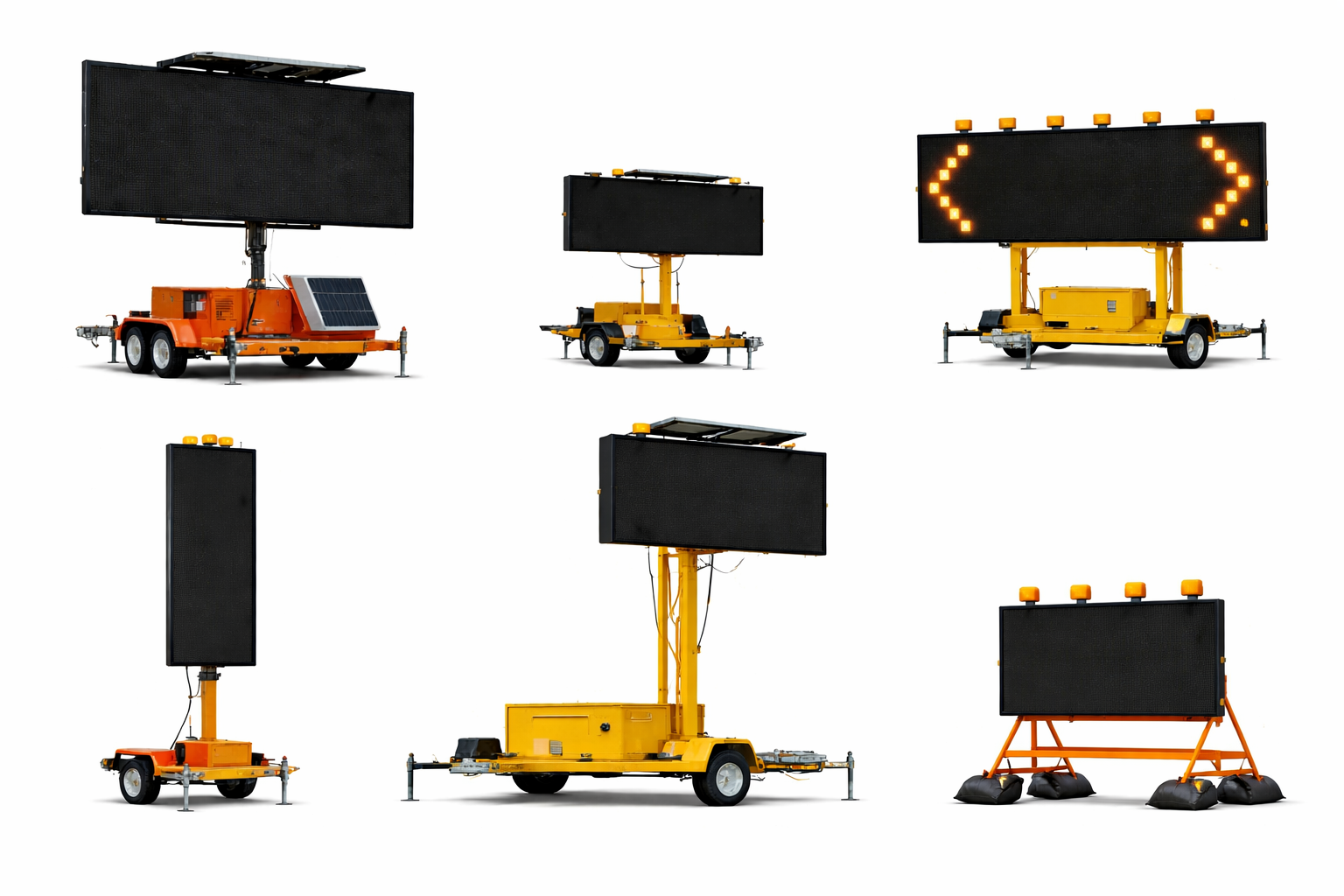
From there we began to think about a very common element of the urban landscape: variable electronic message panels, those mobile devices normally used to announce road works, detours or warnings in public space. We were interested in reversing their usual function so that, instead of warning of danger, they could transmit words of support directed at women.
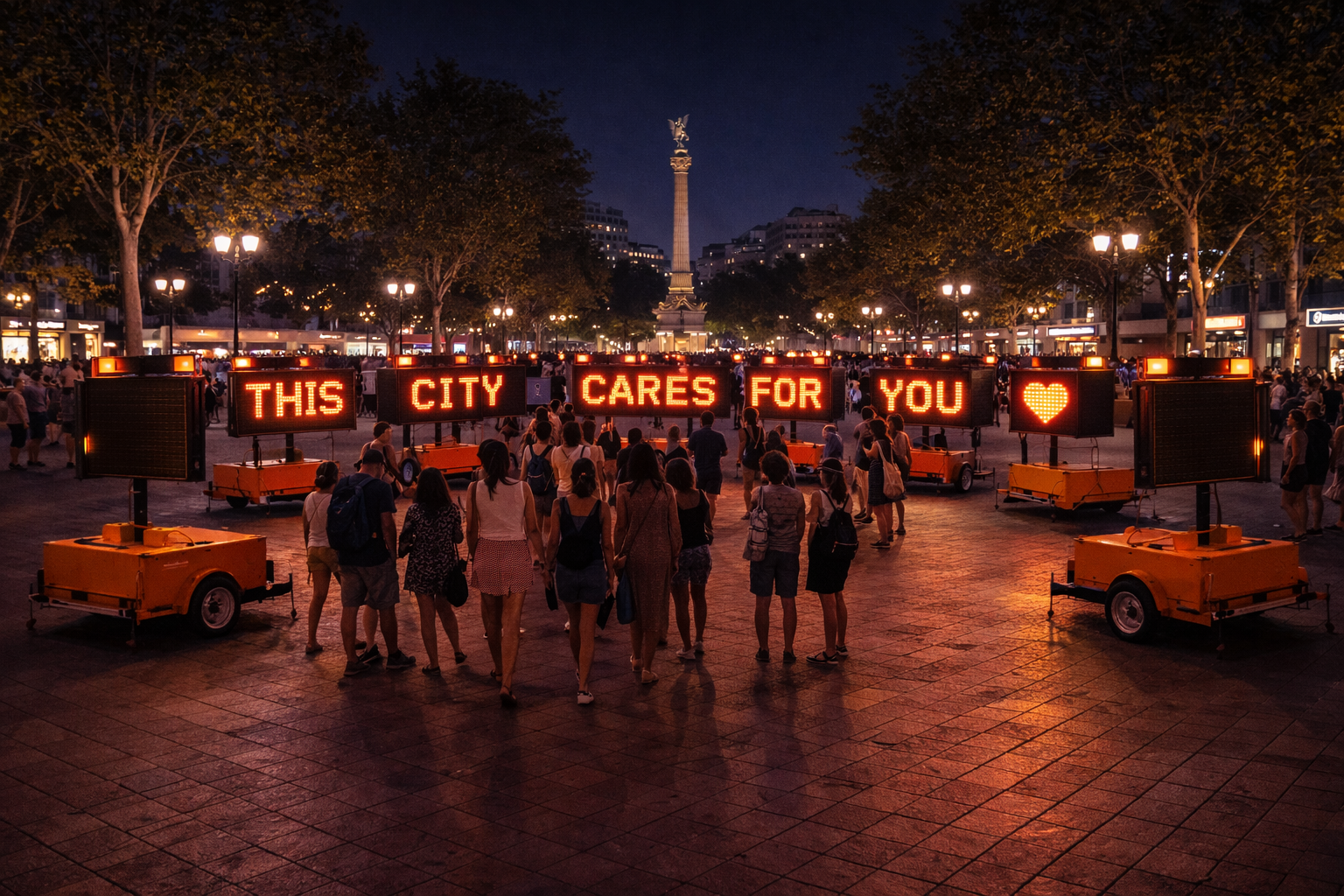
We then imagined a mobile system made up of signalling trailers equipped with programmable luminous panels, capable of being temporarily placed in different points of the urban space and emitting very short messages.
These messages could arise from conversations and workshops with women from the city itself, where they would point out the places they avoid or cross with unease and decide which words they would like to encounter there. The very format of the panel —with very limited space— would force those ideas to be condensed into very short phrases, almost like signs.
This is a proposal that we have never managed to materialize, but one that we still feel very close to. Perhaps because we ourselves are women and know well the feeling that sometimes appears when walking alone through the city. When imagining this piece we inevitably place ourselves within that experience: we think about what it might mean to find, in the middle of an inhospitable place, an unexpected sign of care.
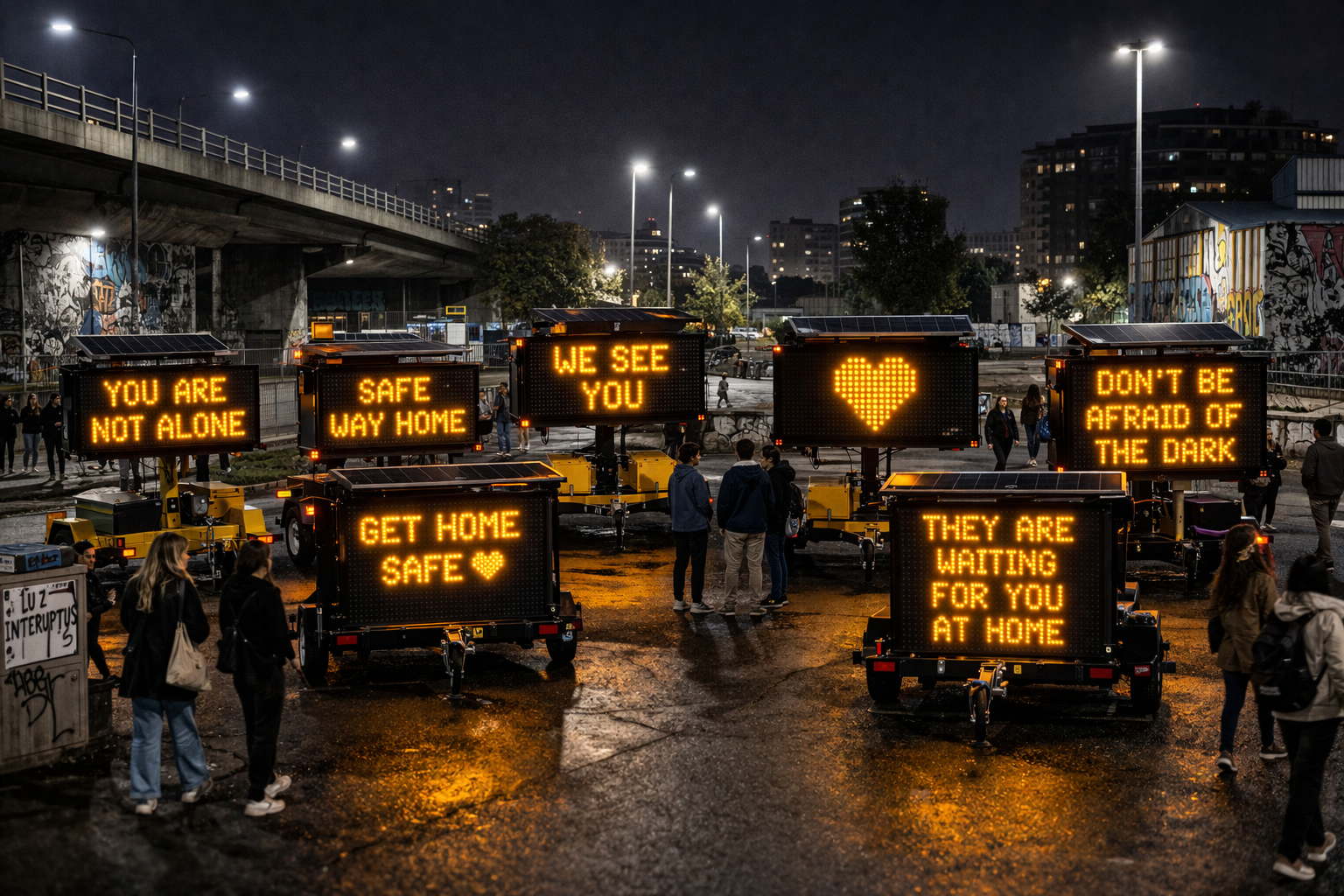
The original idea is to place words and short phrases chosen by women in those places in the city that many of them perceive as unsafe. Each trailer would display one of these short messages, functioning as a luminous sign of support at specific points in the urban space.
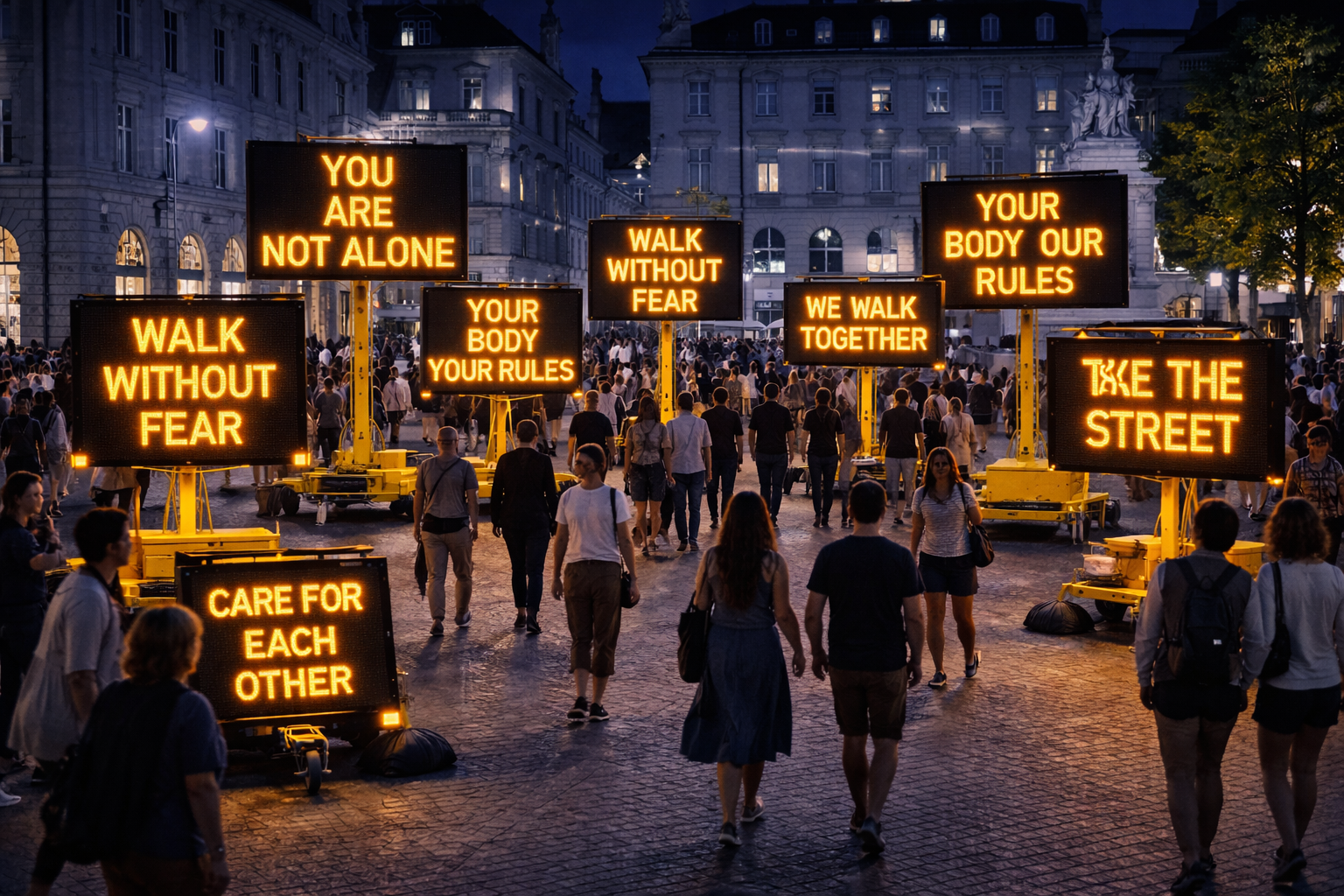
However, in contexts such as festivals or events of limited duration, where interventions must be perceived immediately, it may be more appropriate to condense those ideas into a single installation visible all at once.
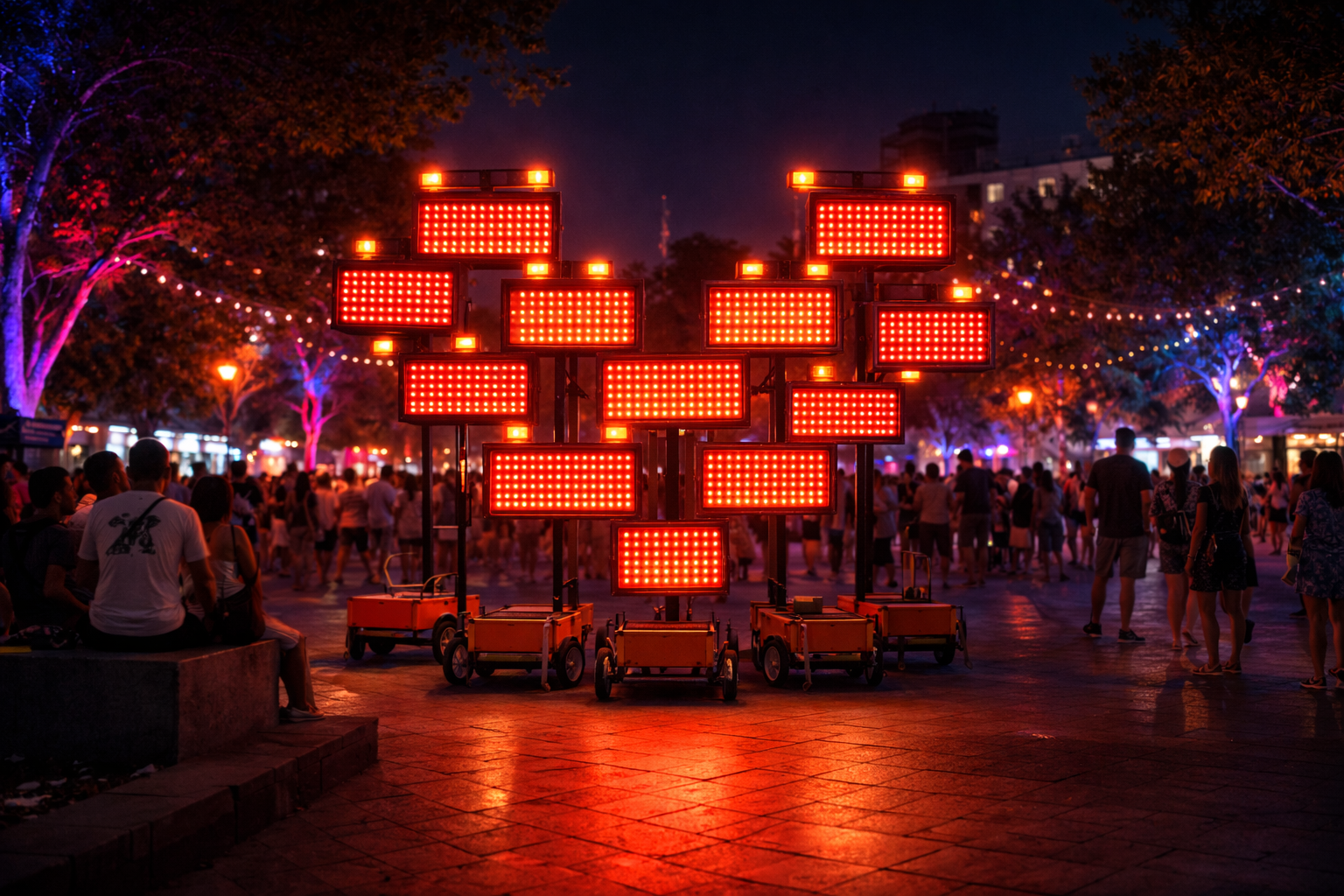
In these cases, the devices could gather in a single place, forming a large collective piece: a temporary architecture of words and phrases emerging from the experience of other women. Seen together, those voices would acquire another scale, composing a set of supportive messages that also functions as a call for attention to the way we inhabit the city.
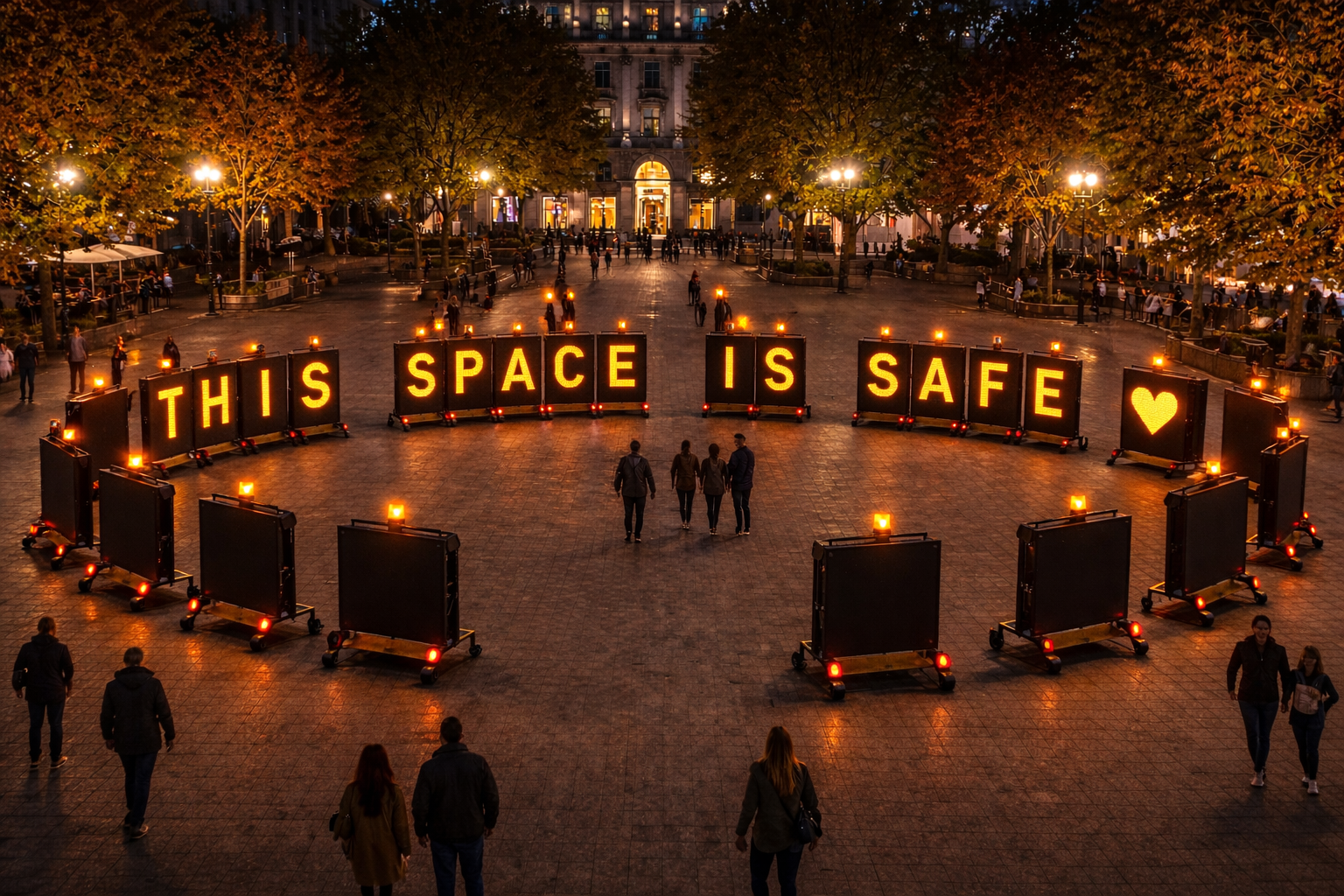
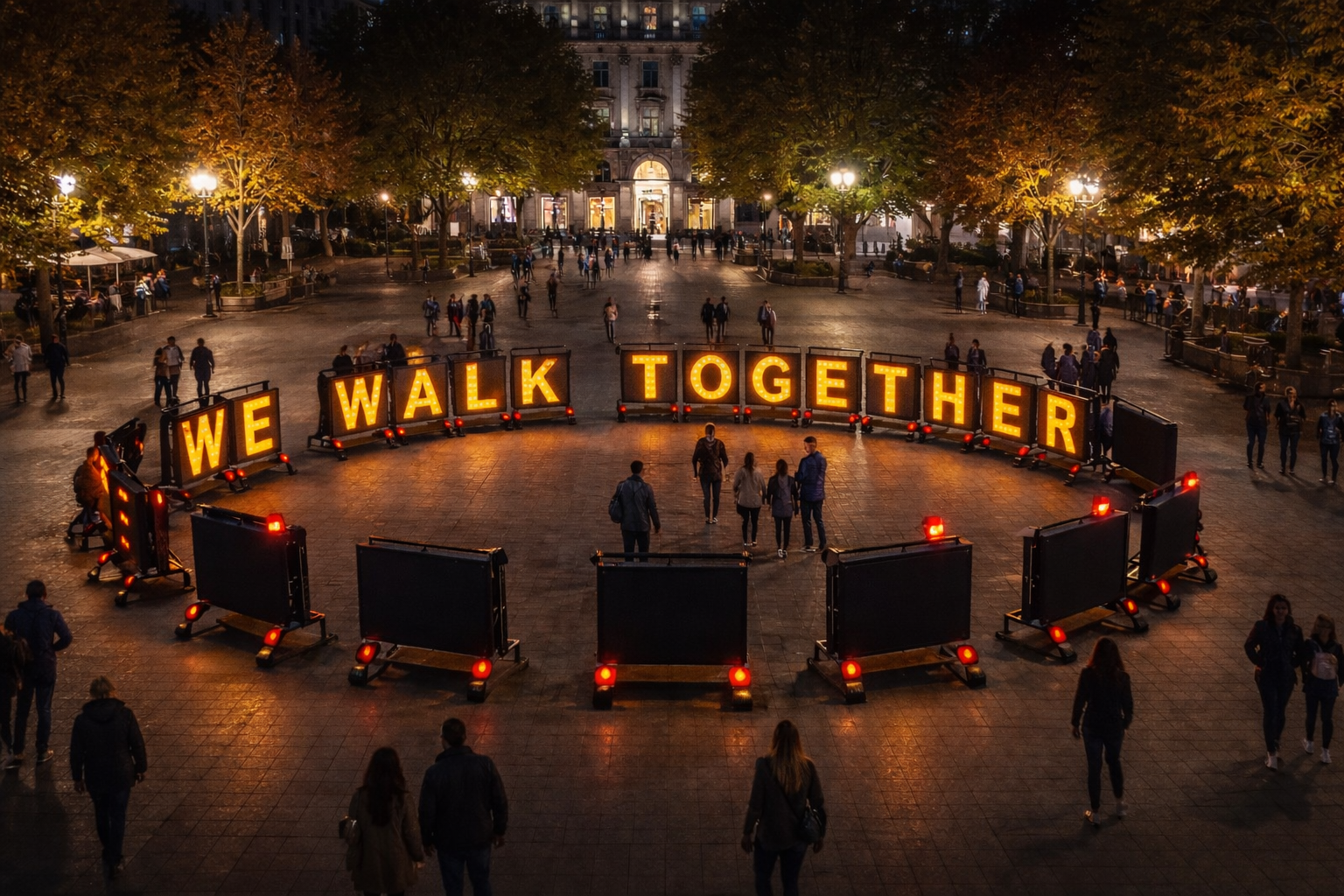
Another possibility would be to deploy the trailers along a street or square, composing new related messages. In this configuration each panel would display a single letter, so that the full phrase would only be revealed while walking through the space. The intervention could thus extend along an urban route, amplifying the message and turning each device into a piece within a large-scale sentence.
From a technical point of view, the system is deliberately simple. Messages can be easily programmed from a computer, allowing the texts to be modified or the intervention reorganized when the trailers change position.
The devices we imagine using do not need to be manufactured specifically for the artwork. They are the same signalling trailers commonly used in road works and traffic diversions and can easily be rented in many cities. This condition especially interests us: working with existing elements, designed for the street, and giving them a different use.
Equipped with low-consumption LED panels and rechargeable batteries —often assisted by small solar panels— they allow quick, mobile and reusable installations.
As happens in many of our projects, we are interested in working with simple solutions, accessible materials and reusable structures, transforming ordinary tools of the city into devices capable of generating conversation, presence and care.
We would like to be able to materialize this proposal and take advantage of the amplifying capacity offered by large public events to talk about issues that concern us, such as the mobility of women in urban environments often designed without taking into account their ways of inhabiting the city or their needs. We also believe that safety does not necessarily have to be resolved simply by adding more lighting, but by rethinking spaces through other logics of attention, presence and care.
We also believe that the context of light festivals, developed at night in public space, could offer a particularly appropriate framework to deploy these luminous messages.
Friends, see you in the streets, at any hour and under the circumstances we choose, but safe and calm. It may seem obvious, but in these times even the most obvious things still need to be claimed.
———————————–
Hace algunos años nos invitaron a imaginar propuestas que pudieran ayudar a que las mujeres se sintieran más seguras en la ciudad mediante pequeñas intervenciones en esos espacios residuales donde suele aparecer la sensación de inseguridad: calles mal iluminadas, rincones olvidados o lugares que quedan fuera de los recorridos habituales.
El encargo no era casual. Desde hacía tiempo veníamos desarrollando piezas que abordaban distintas formas de desigualdad que afectan a las mujeres, a menudo a través de pequeñas intervenciones de guerrilla en el espacio público. En aquel momento nos planteaban con frecuencia este tipo de retos artísticos; parece que haya pasado una eternidad desde entonces.
De esa reflexión surgió la idea de «Señalética de los cuidados», una propuesta que plantea utilizar elementos habituales de señalización urbana para introducir en la ciudad breves mensajes de apoyo dirigidos a las mujeres.
La pregunta era sencilla: ¿cómo actuar en esos puntos sin grandes infraestructuras, con gestos mínimos capaces de activar el lugar y hacerlo visible?
A partir de ahí empezamos a pensar en un elemento muy común del paisaje urbano: los paneles electrónicos de señalización variable, esos dispositivos móviles que normalmente anuncian obras, desvíos o advertencias en la vía pública. Nos interesaba invertir su función habitual para que, en lugar de advertir de un peligro, pudieran transmitir palabras de apoyo dirigidas a las mujeres.
Imaginamos entonces un sistema móvil formado por carritos de señalización equipados con paneles luminosos programables, capaces de situarse temporalmente en distintos puntos del espacio urbano y emitir mensajes muy breves.
Estos mensajes podrían surgir de conversaciones y talleres con mujeres de la propia ciudad, donde ellas mismas señalarían los lugares que evitan o atraviesan con inquietud y decidirían qué palabras les gustaría encontrar allí. El propio formato del panel —con un espacio muy limitado— obligaría a condensar esas ideas en frases muy cortas, casi como señales.
Esta es una propuesta que nunca hemos llegado a materializar, pero que seguimos sintiendo cercana. Quizá porque nosotras mismas somos mujeres y conocemos bien esa sensación que aparece a veces al caminar solas por la ciudad. Al imaginar esta pieza inevitablemente nos situamos en esa experiencia: pensamos en lo que podría significar encontrar, en medio de un lugar inhóspito, una señal inesperada de cuidado.
La idea original parte de situar palabras y pequeñas frases elegidas por mujeres en aquellos lugares de la ciudad que muchas de ellas perciben como inseguros. Cada carrito mostraría uno de esos mensajes, funcionando como una señal luminosa de apoyo en puntos concretos del espacio urbano.
Sin embargo, en contextos como festivales o eventos de duración limitada, donde las intervenciones deben percibirse de manera inmediata, puede resultar más adecuado condensar esas ideas en una única instalación visible de una sola vez.
En estos casos, los dispositivos podrían reunirse en un único lugar, formando una gran pieza colectiva: una arquitectura temporal de palabras y frases surgidas de la experiencia de otras mujeres. Al verse juntas, esas voces adquirirían otra escala, componiendo un conjunto de mensajes solidarios que funciona también como una llamada de atención sobre la forma en que habitamos la ciudad.
Otra posibilidad sería desplegar los carritos a lo largo de una calle o una plaza, componiendo nuevos mensajes relacionados entre sí. En esta configuración, cada panel mostraría una sola letra, de modo que la frase completa solo se revelaría al recorrer el espacio. La intervención podría así extenderse a lo largo de una vía urbana, amplificando el mensaje y convirtiendo cada dispositivo en una pieza dentro de una frase de gran escala.
Desde el punto de vista técnico, el sistema es deliberadamente sencillo. Los mensajes se programan fácilmente desde un ordenador, lo que permite modificar los textos o reorganizar la intervención cuando los carritos cambian de posición.
Los dispositivos que imaginamos utilizar no necesitan fabricarse específicamente para la obra. Son los mismos carritos de señalización que se emplean habitualmente en obras y desvíos de tráfico y que pueden alquilarse fácilmente en muchas ciudades. Esa condición nos interesa especialmente: trabajar con elementos existentes, diseñados para la calle, y darles un uso distinto.
Equipados con paneles LED de bajo consumo y baterías recargables —a menudo asistidas por pequeños paneles solares— permiten instalaciones rápidas, móviles y reutilizables.
Como ocurre en muchos de nuestros proyectos, nos interesa trabajar con soluciones simples, materiales accesibles y estructuras reutilizables, transformando herramientas ordinarias de la ciudad en dispositivos capaces de generar conversación, presencia y cuidado.
Nos gustaría poder materializar esta propuesta y aprovechar la capacidad de amplificación que ofrecen los eventos públicos multitudinarios para hablar de cuestiones que nos preocupan, como la movilidad de las mujeres en entornos urbanos muchas veces diseñados sin tener en cuenta sus formas de habitar la ciudad ni sus necesidades. Pensamos además que la seguridad no tiene por qué resolverse únicamente añadiendo más iluminación, sino repensando los espacios desde otras lógicas de atención, presencia y cuidado.
Creemos además que el contexto de festivales de luz, desarrollados de noche en el espacio público, podría ofrecer un marco especialmente adecuado para desplegar estos mensajes luminosos.
Amigas, nos vemos en las calles, a cualquier hora y en las circunstancias que elijamos, pero seguras y tranquilas. Parece algo obvio, pero en estos tiempos incluso lo más obvio necesita ser reclamado.