Hanging Landscapes. A low-tech intervention made with white fabric, wind, light and the scent of clean laundry / Paisajes Tendidos. Intervención bajamente tecnológica hecha con tela blanca, viento, luz y olor a limpio
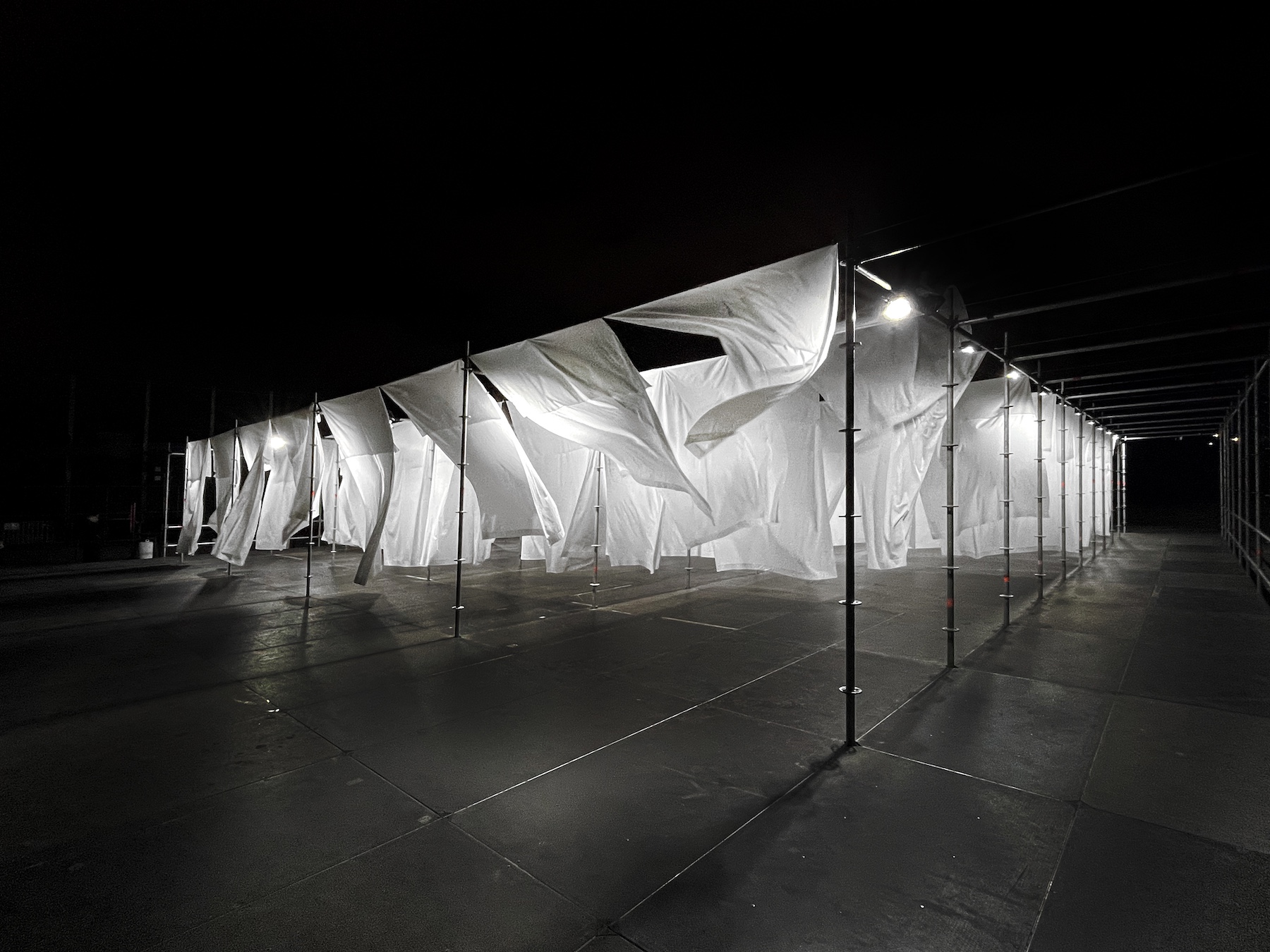
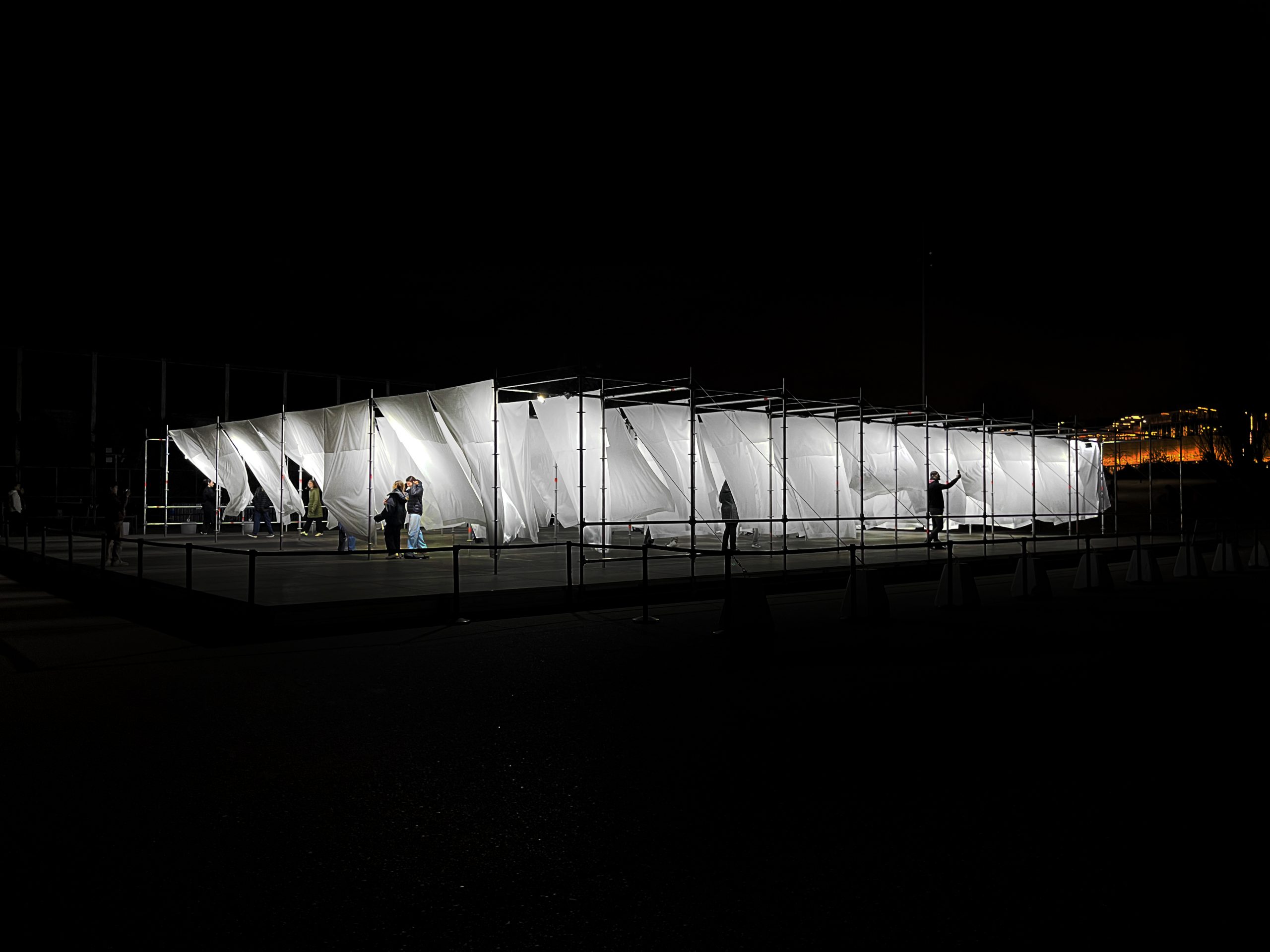
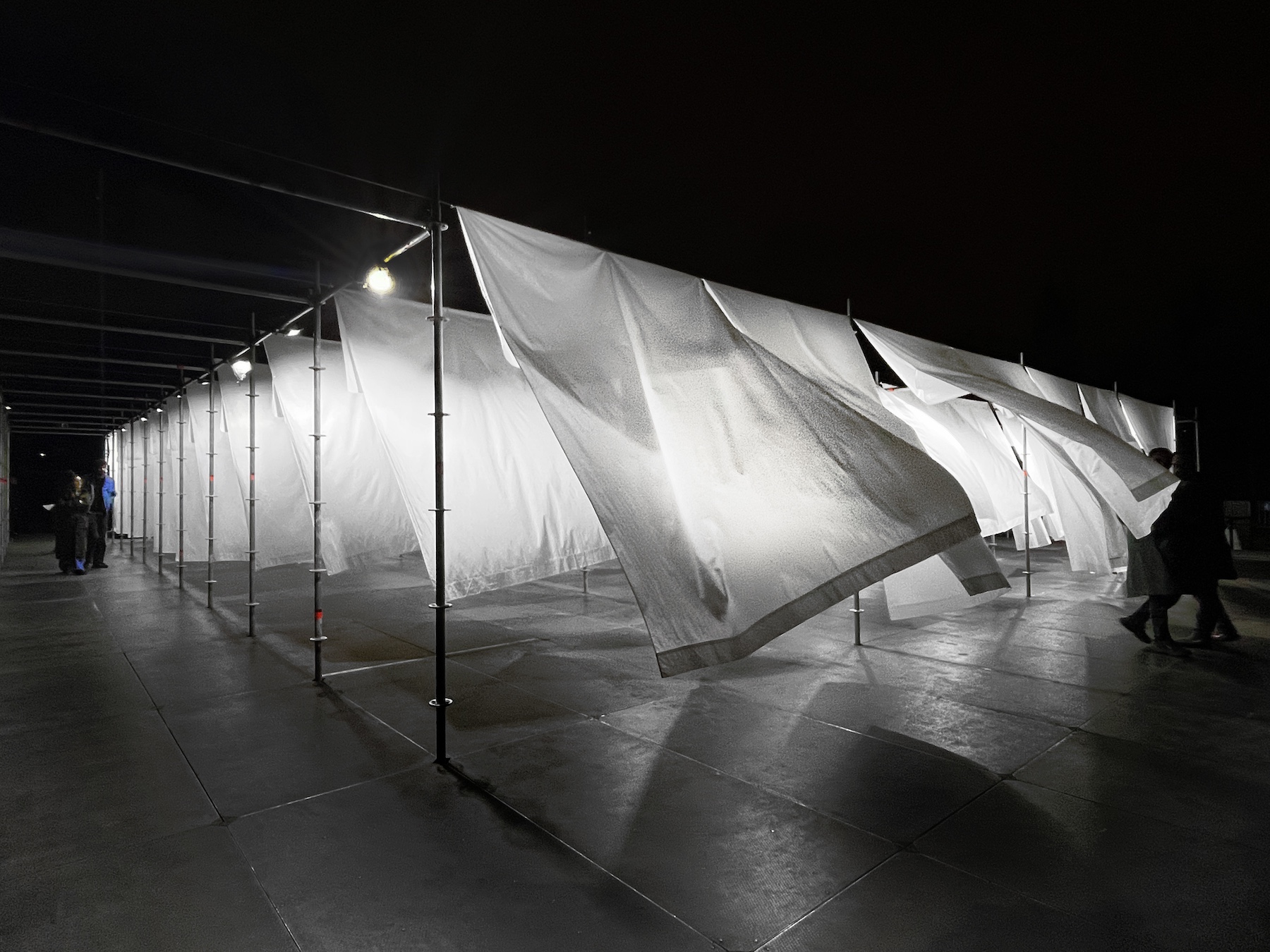
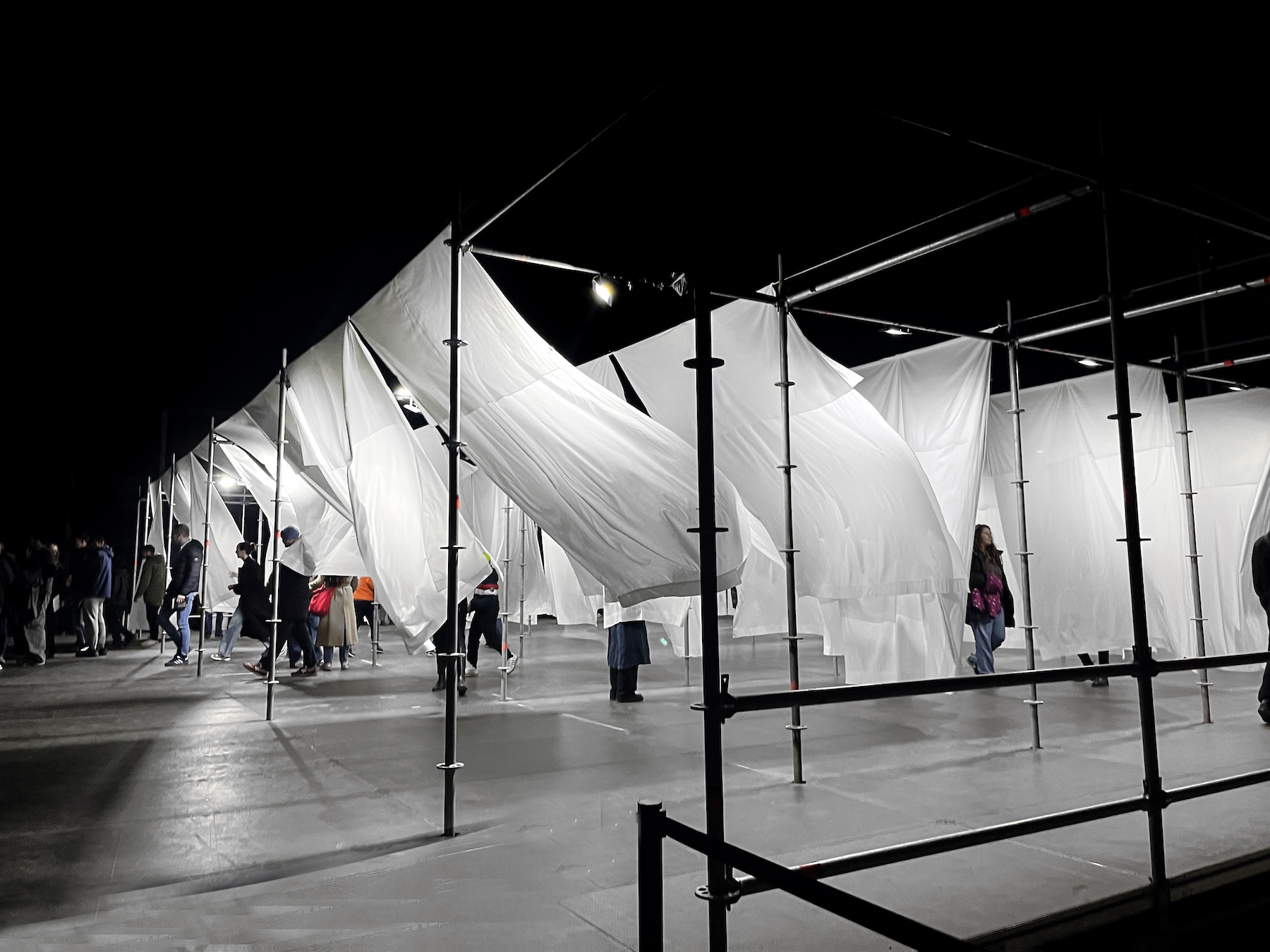
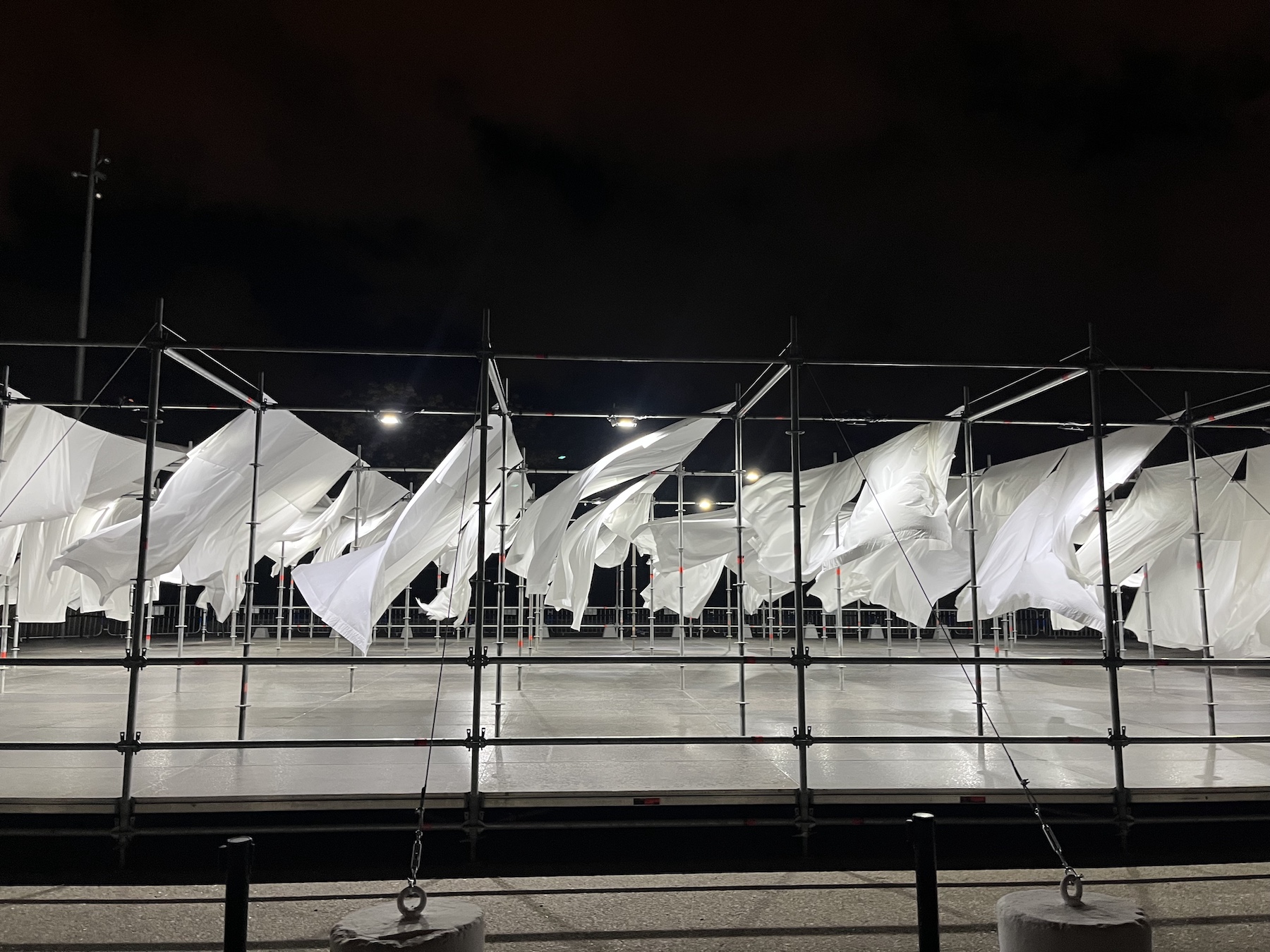
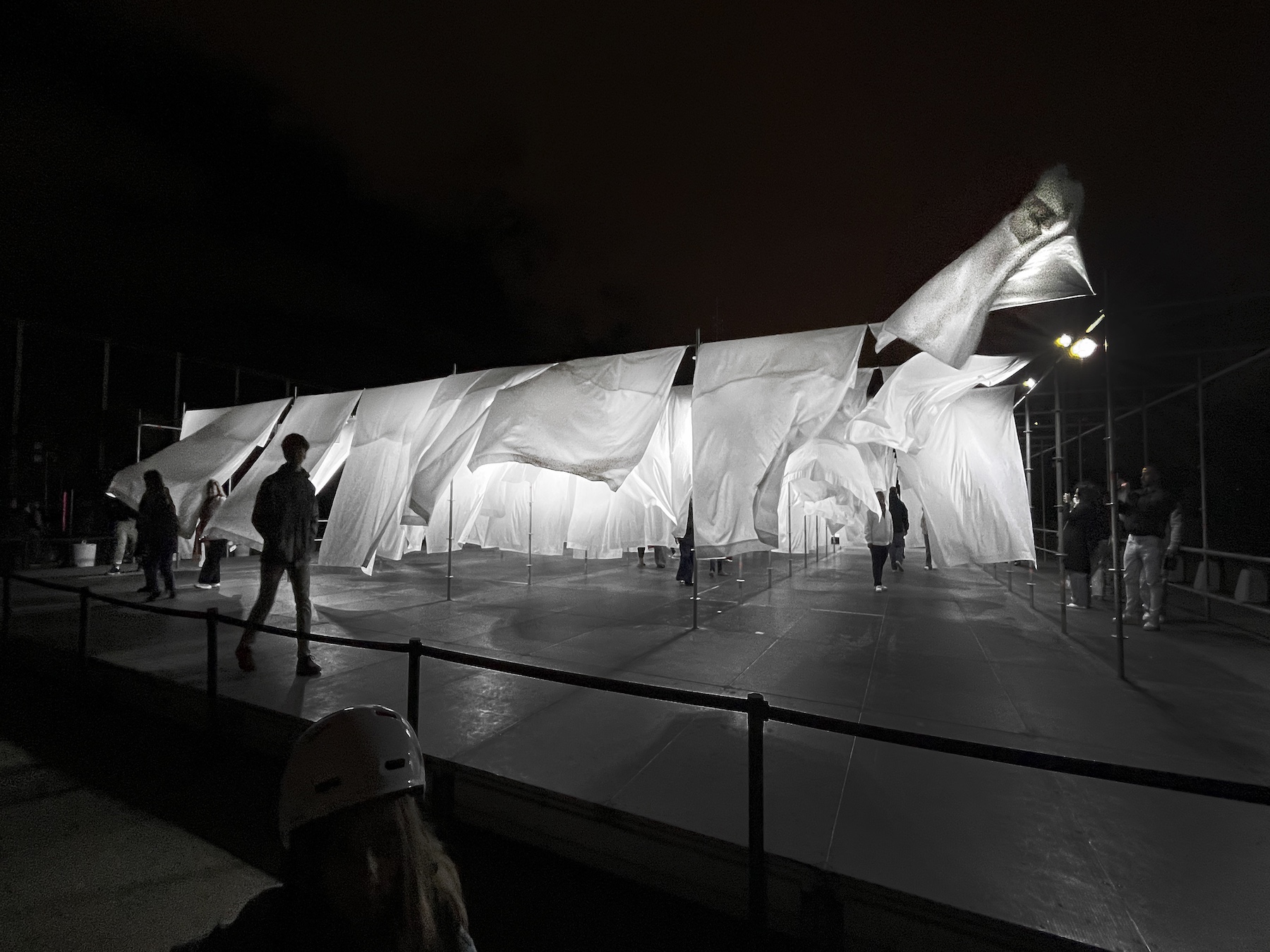
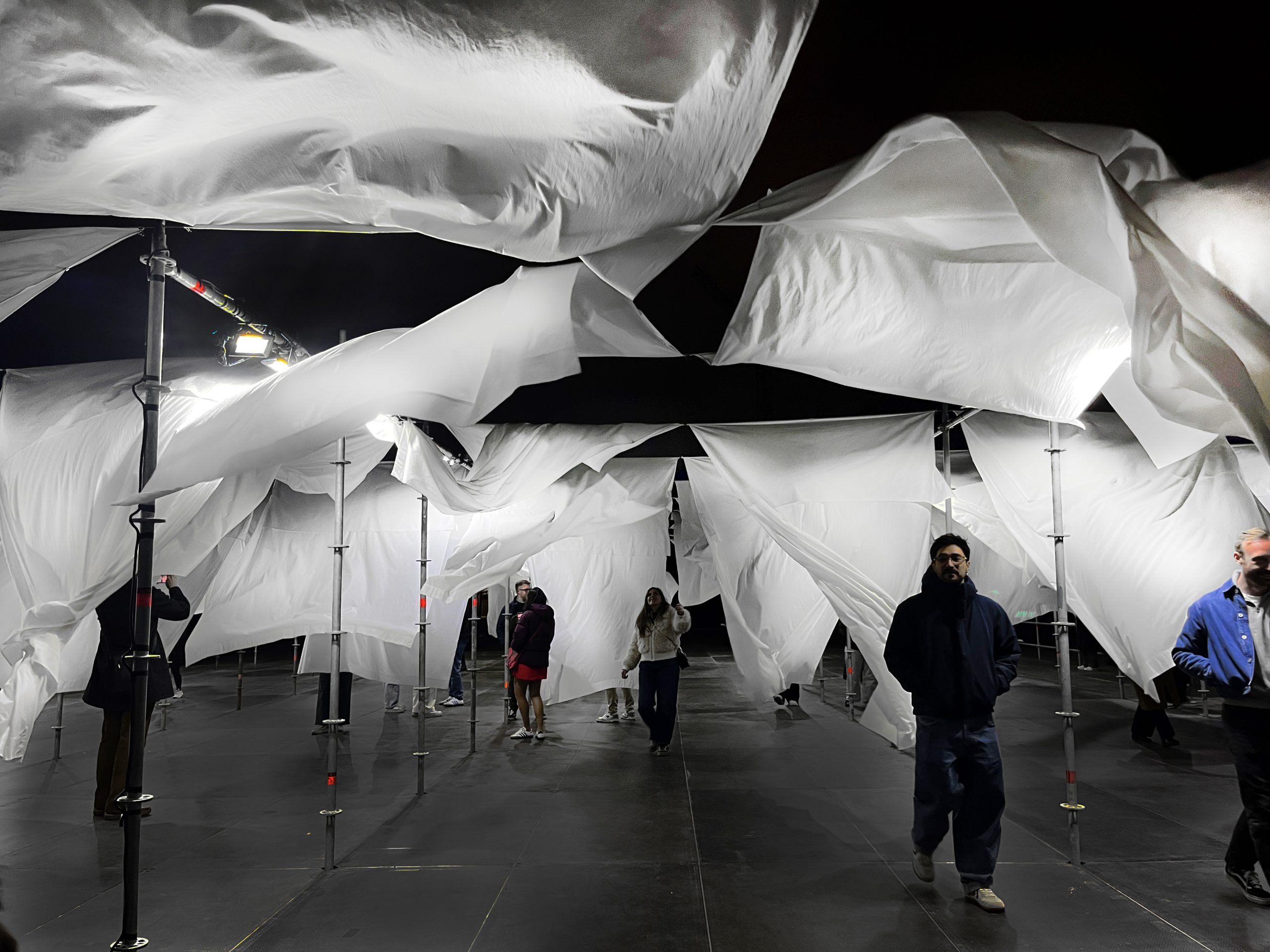
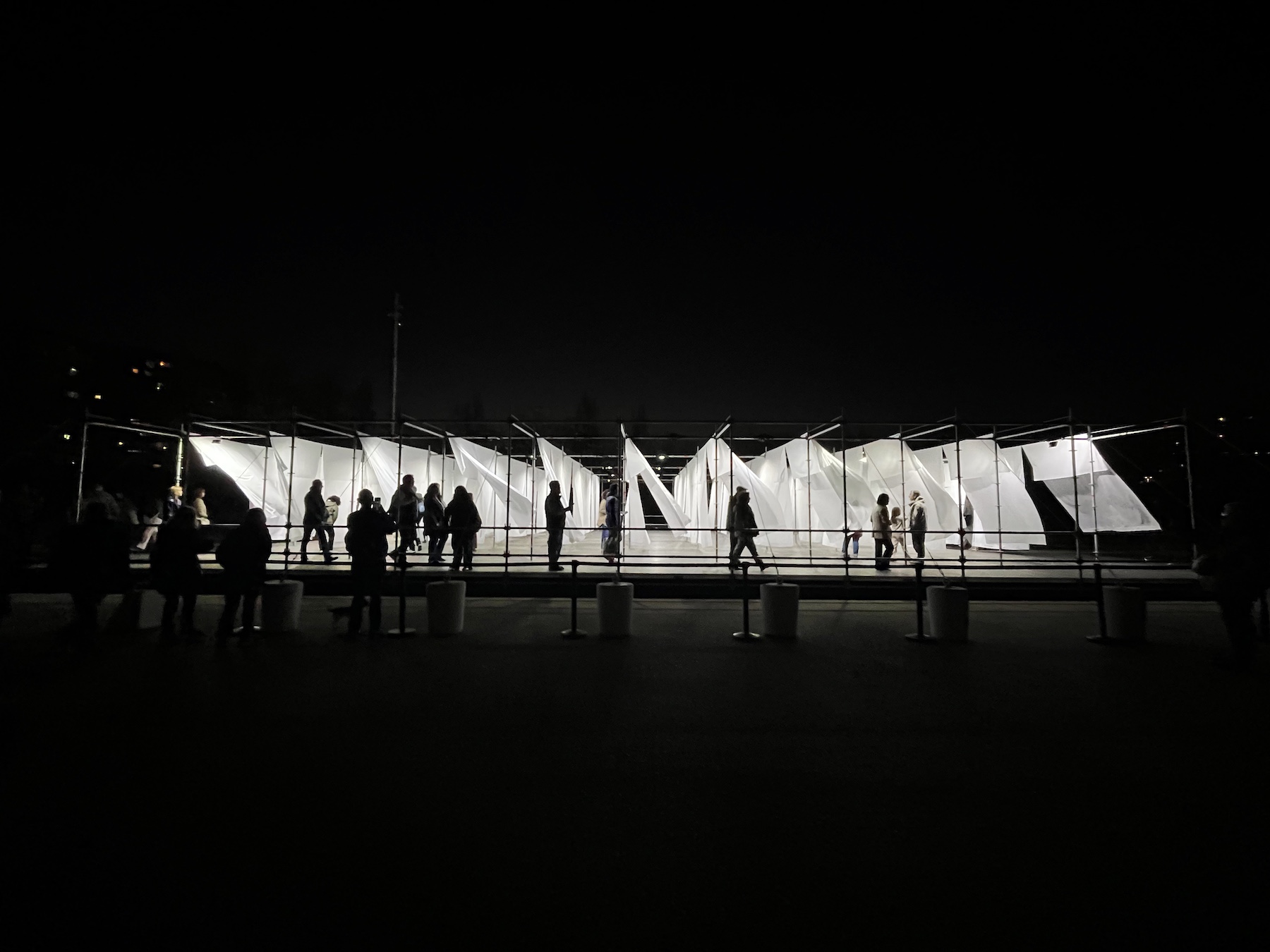
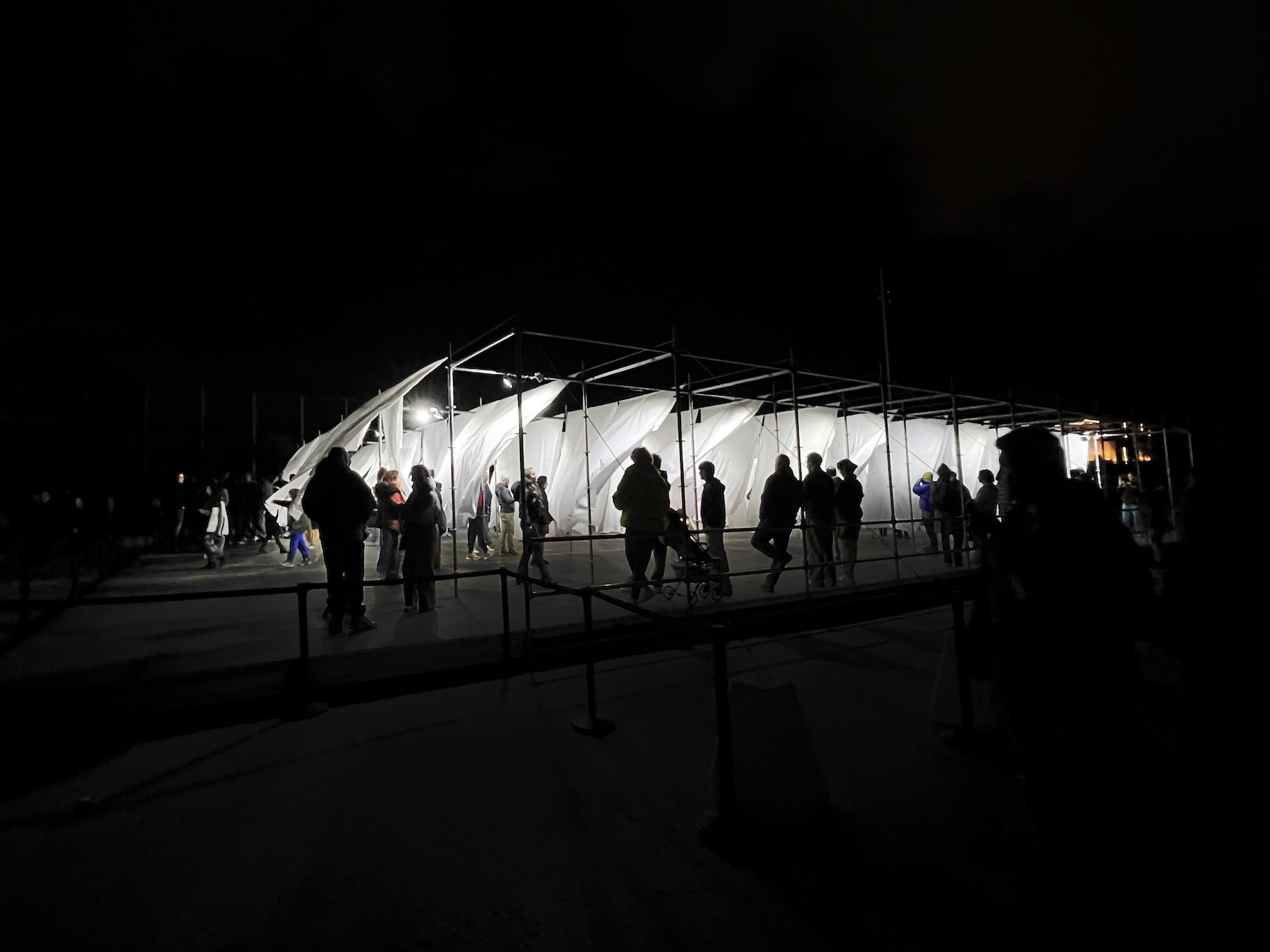
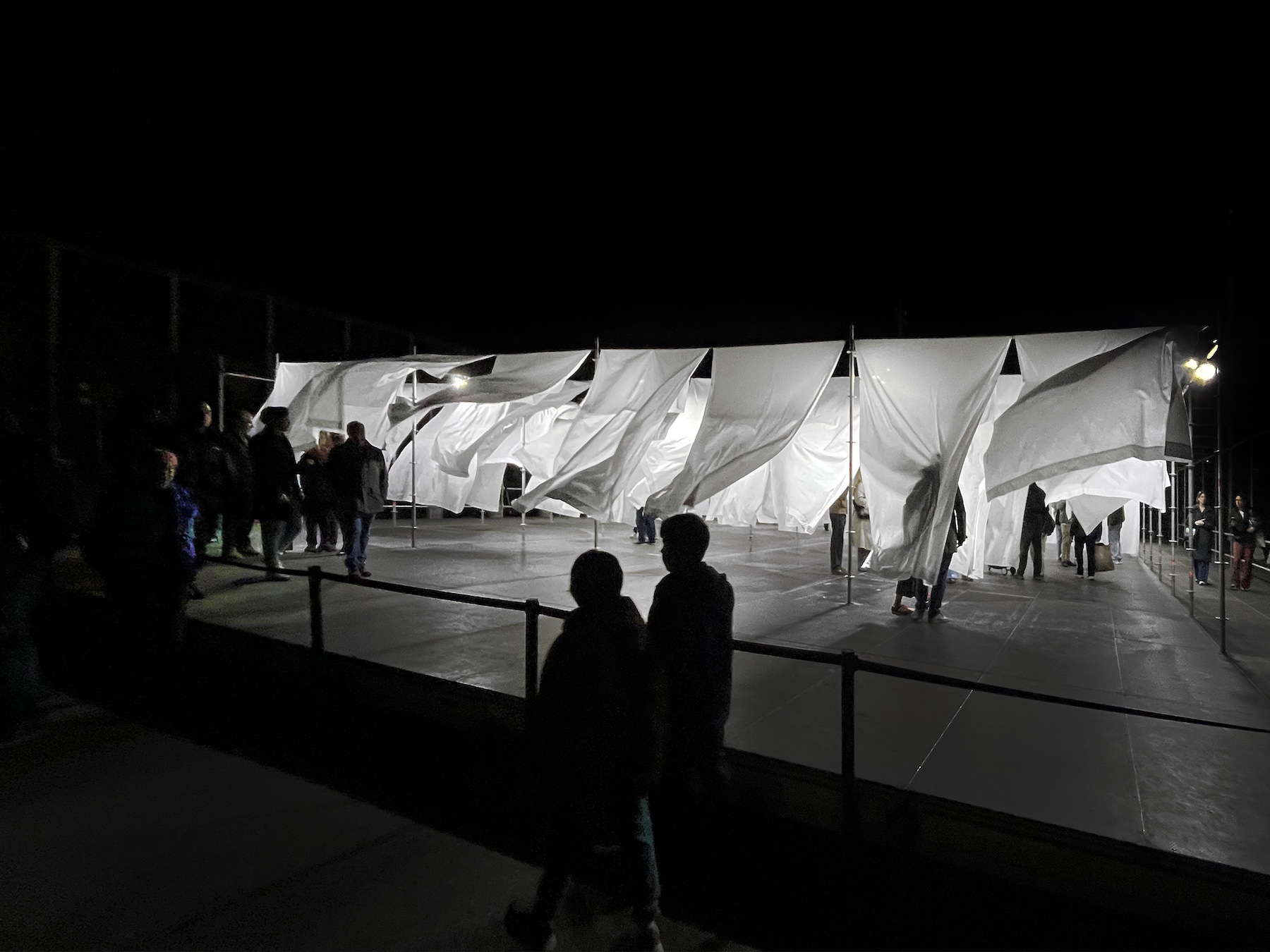
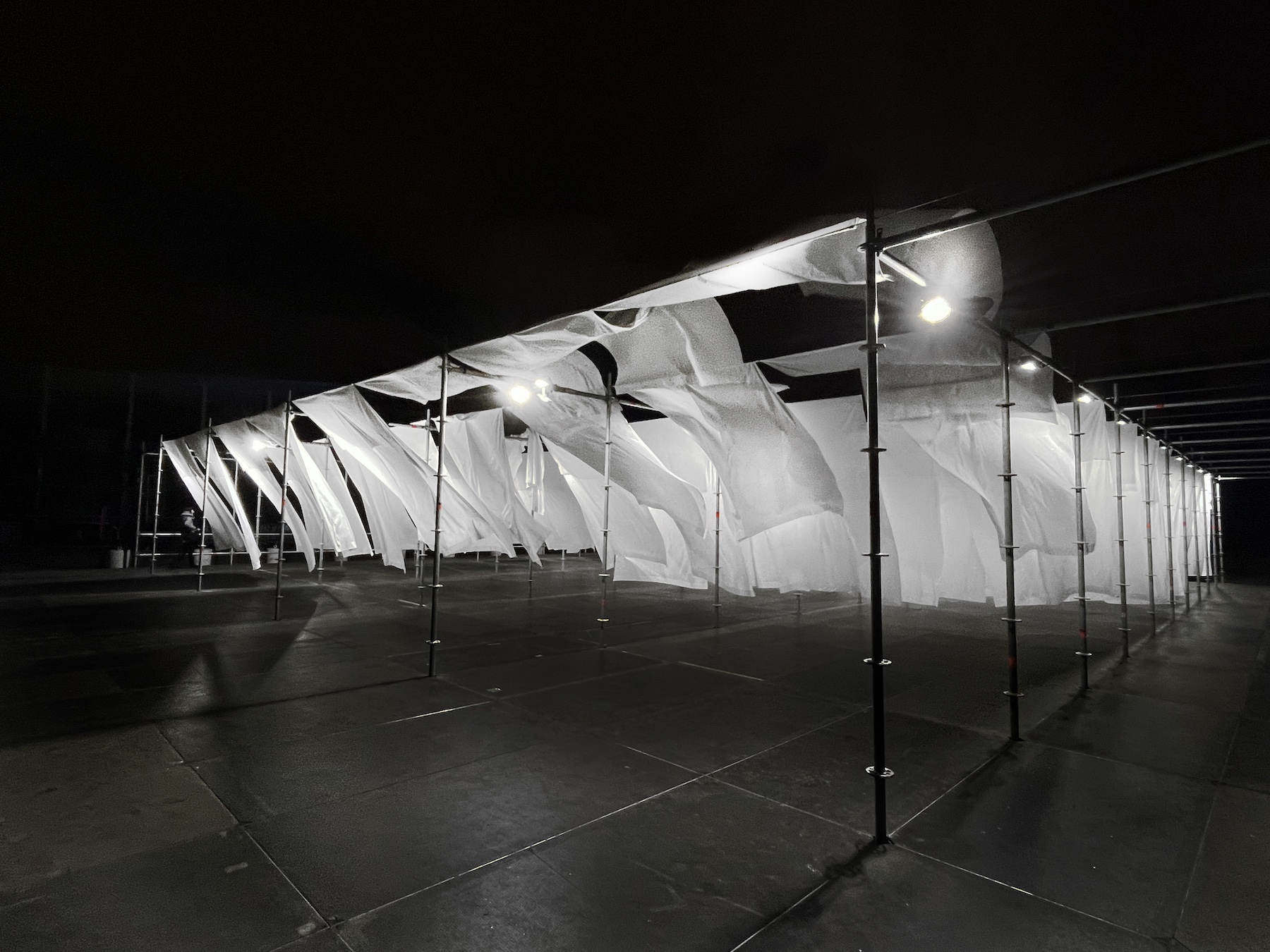
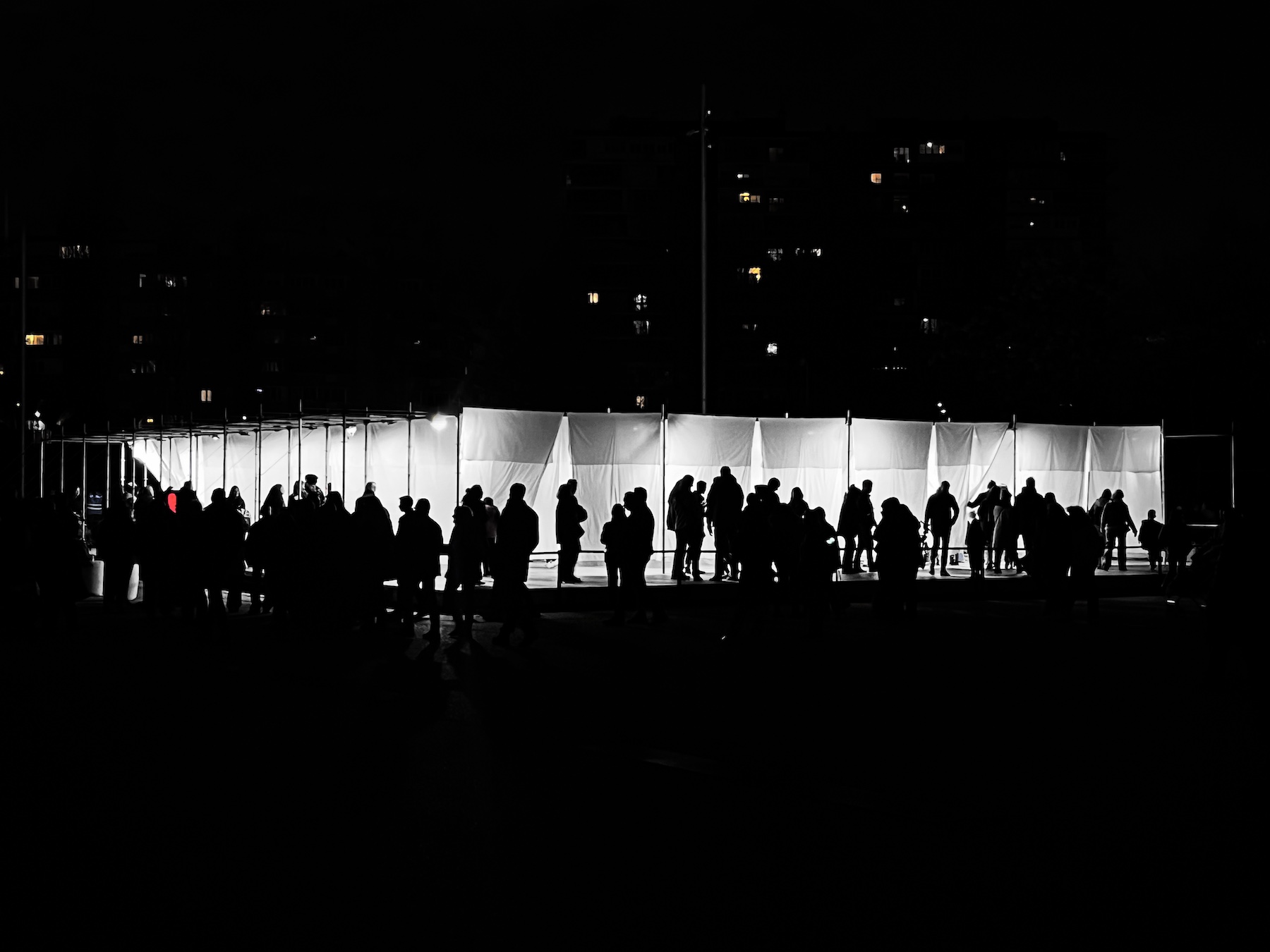
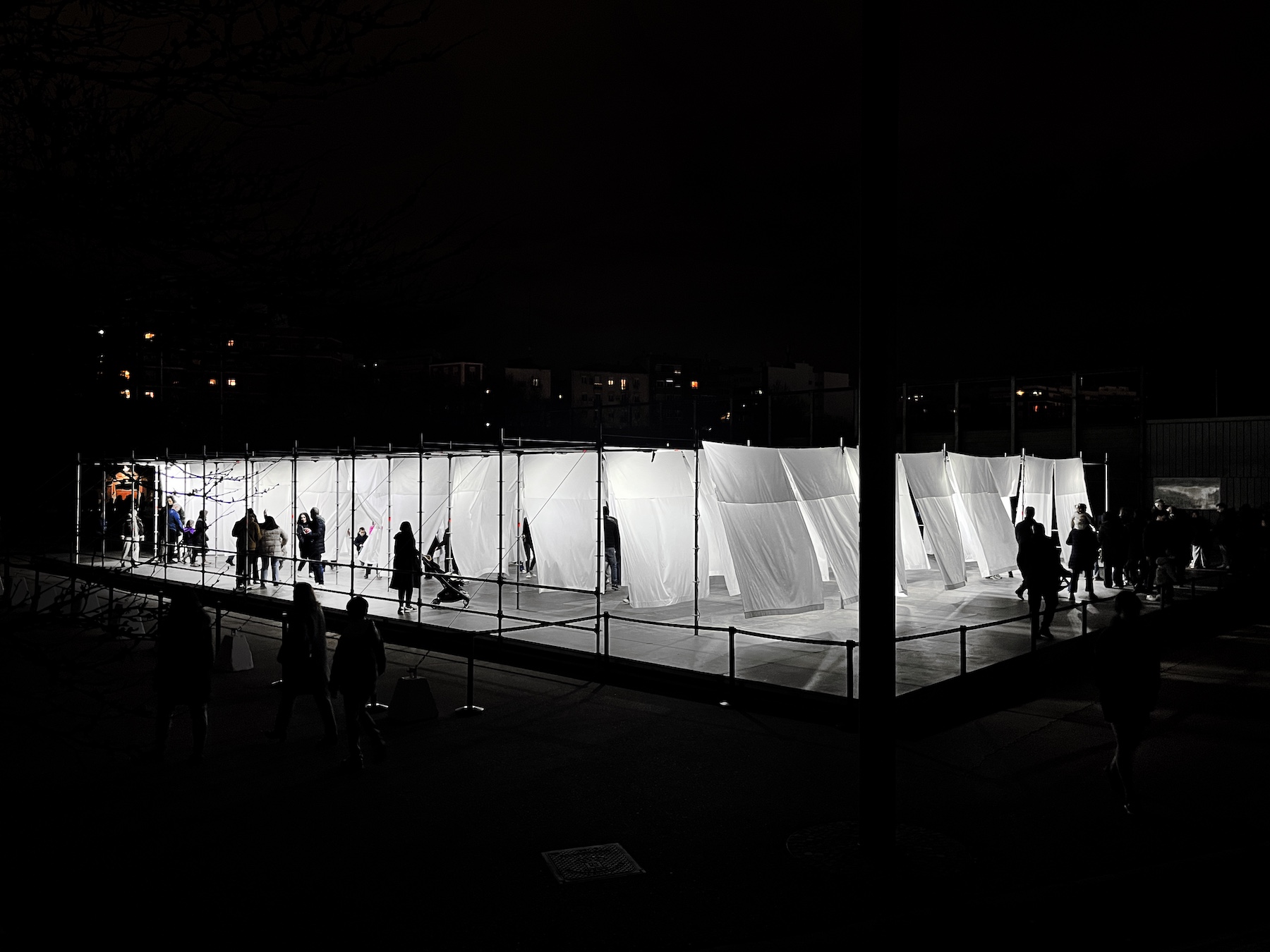
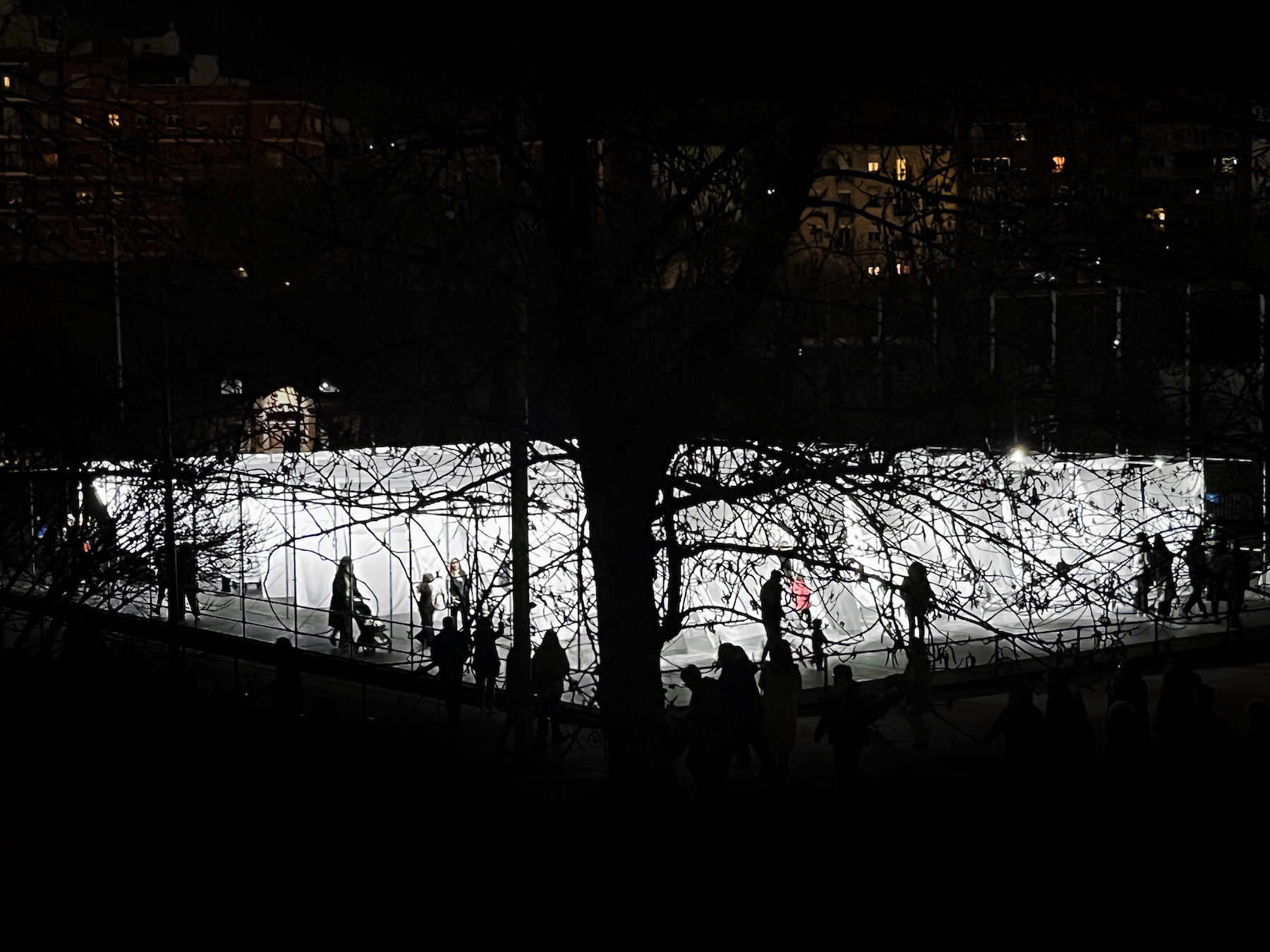
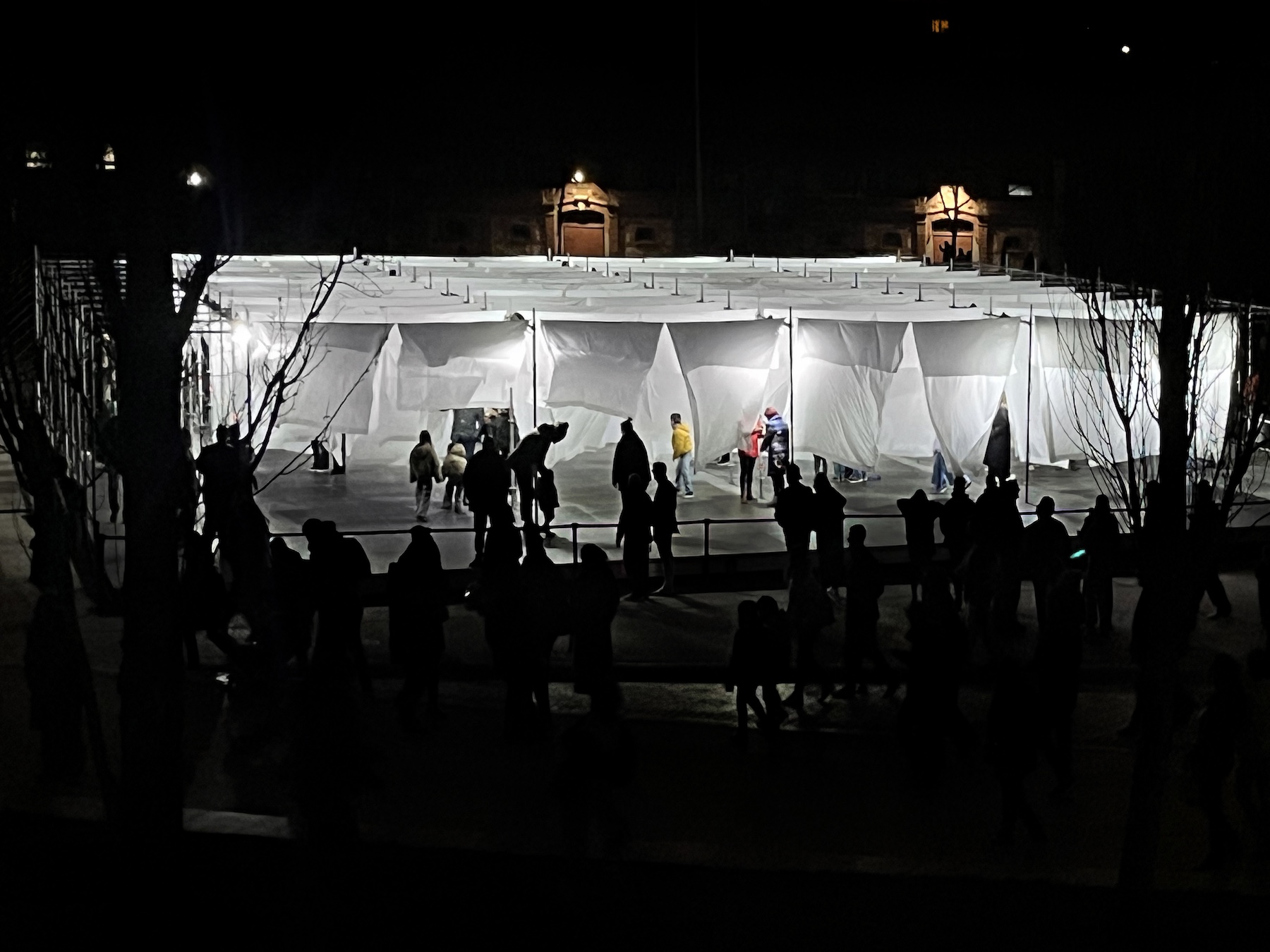
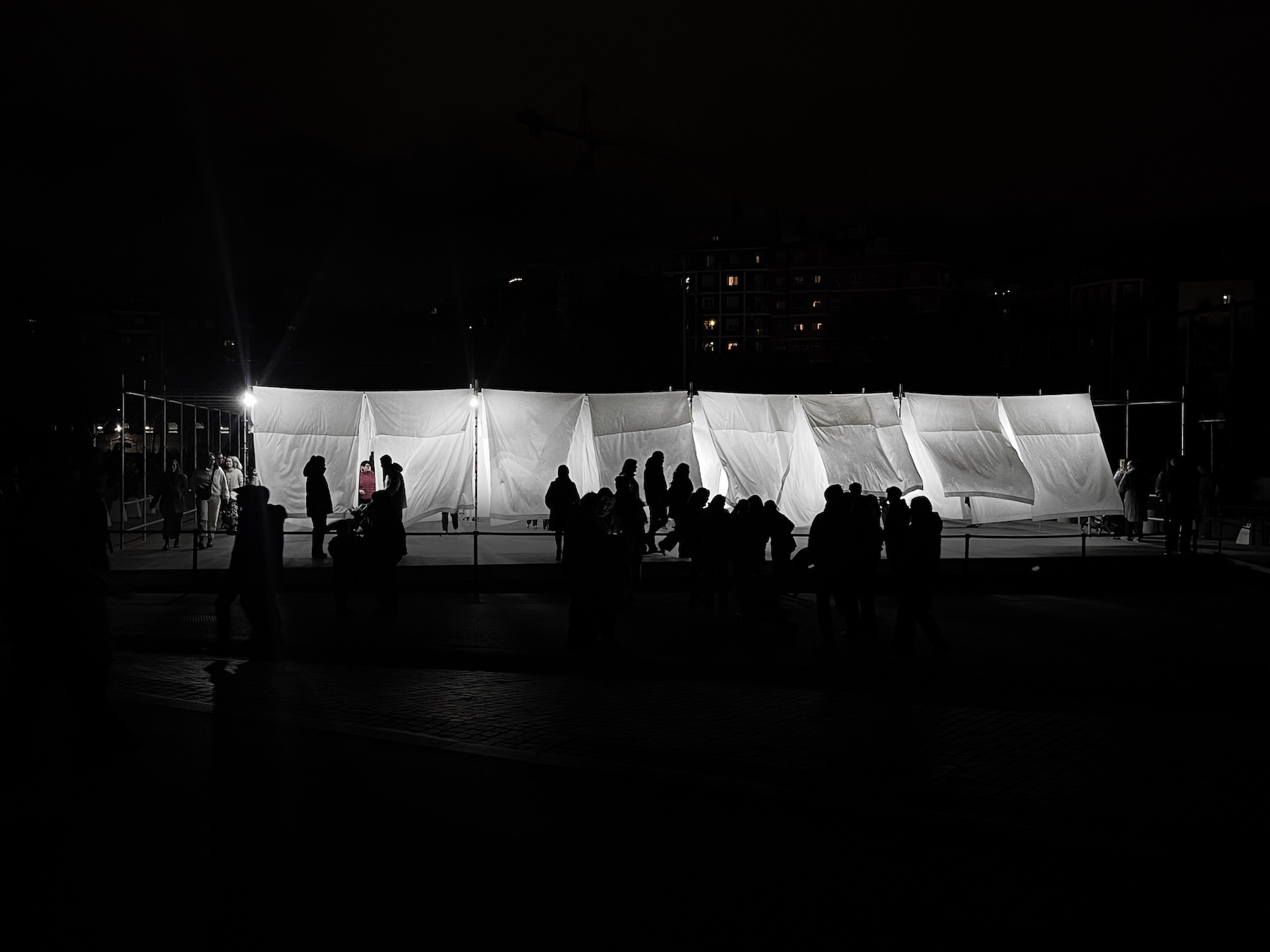
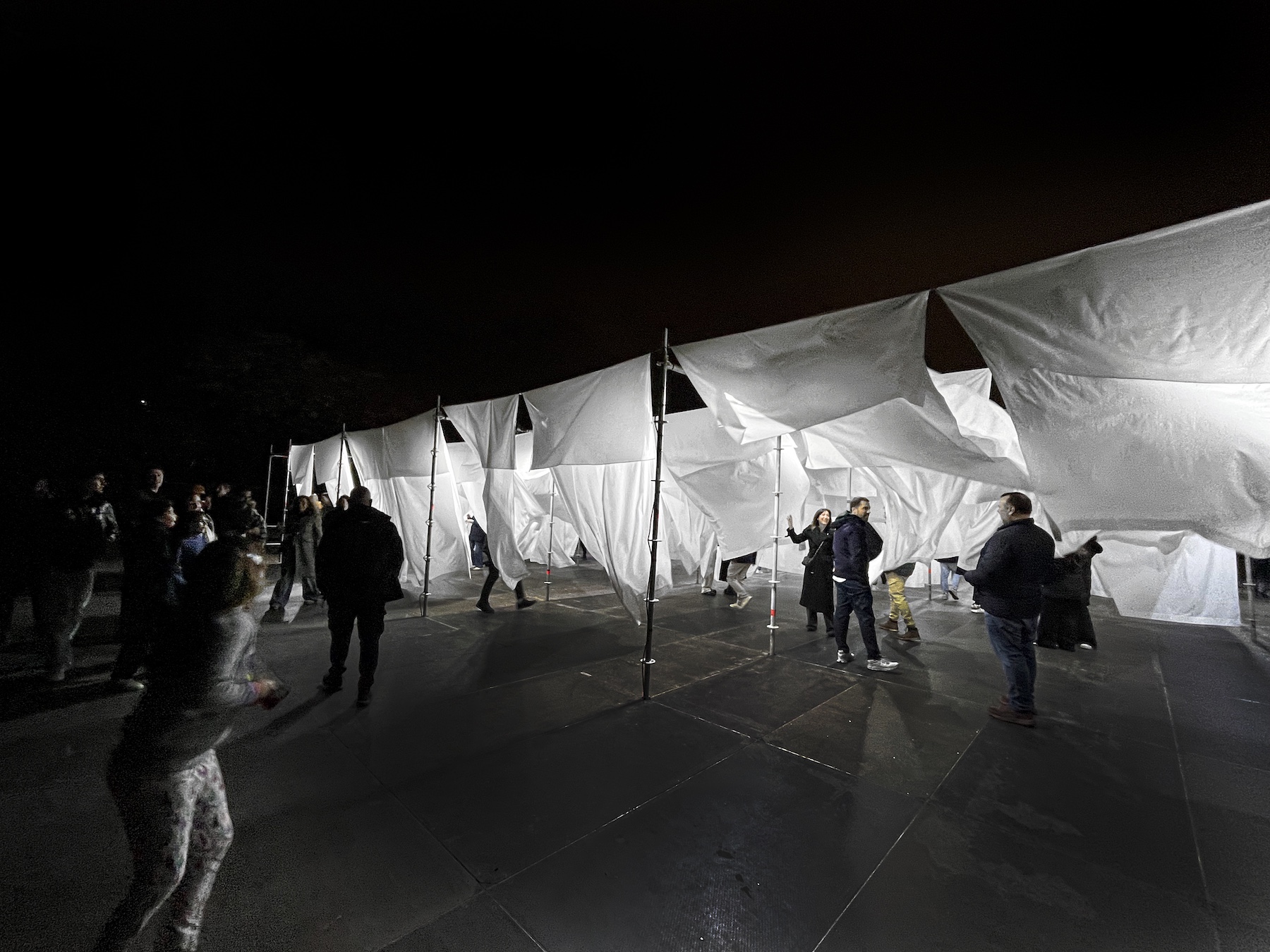
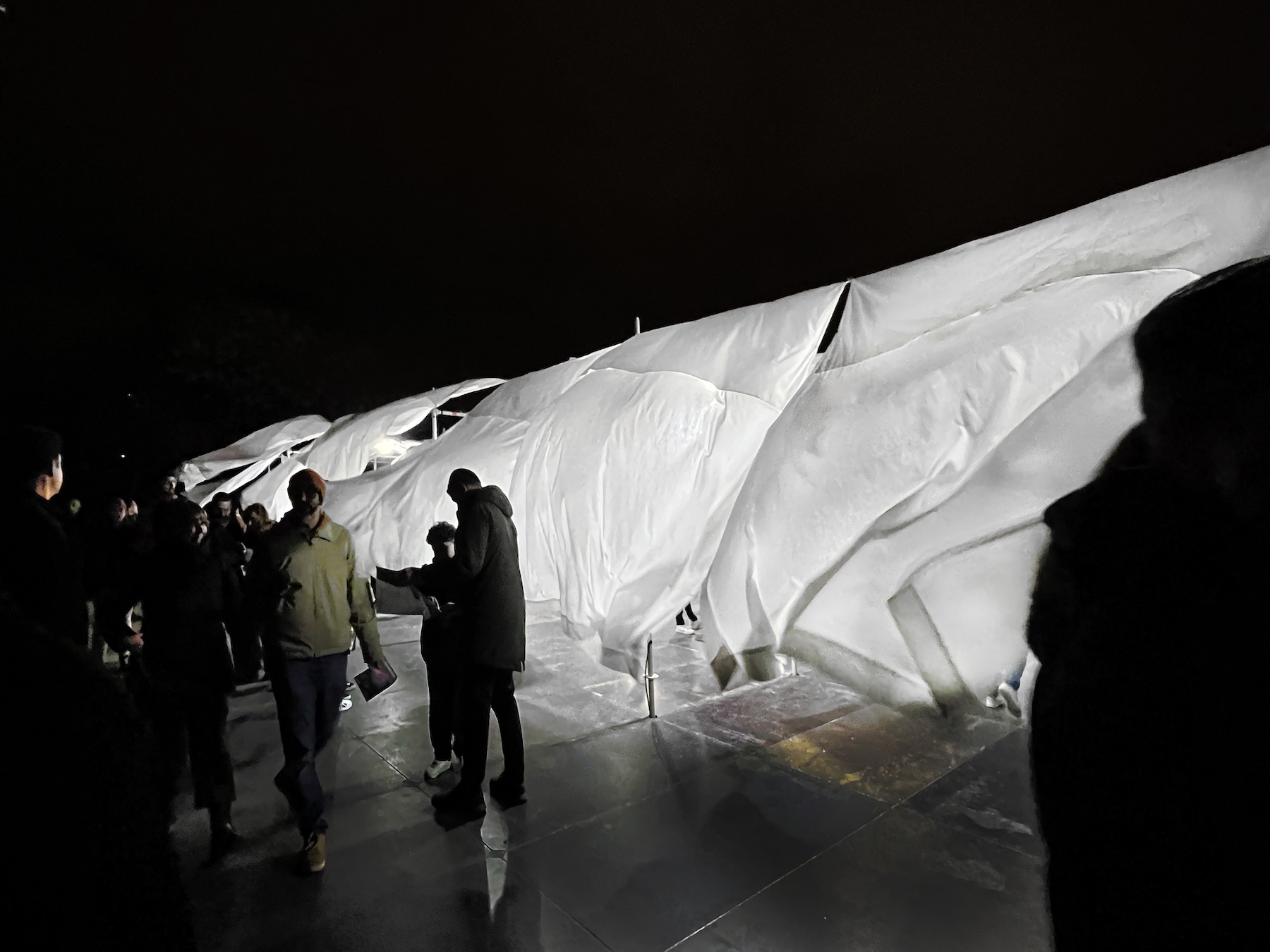
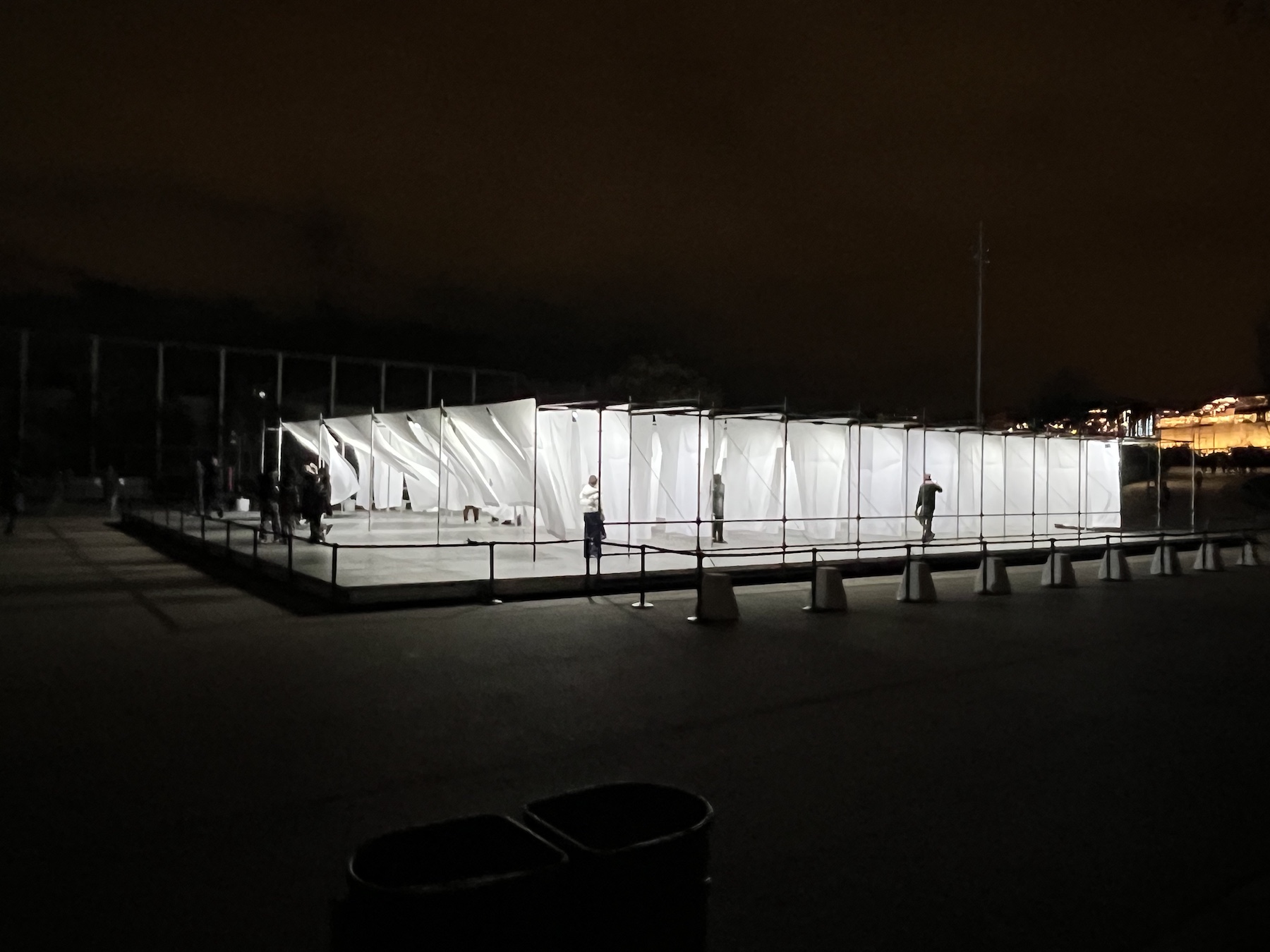
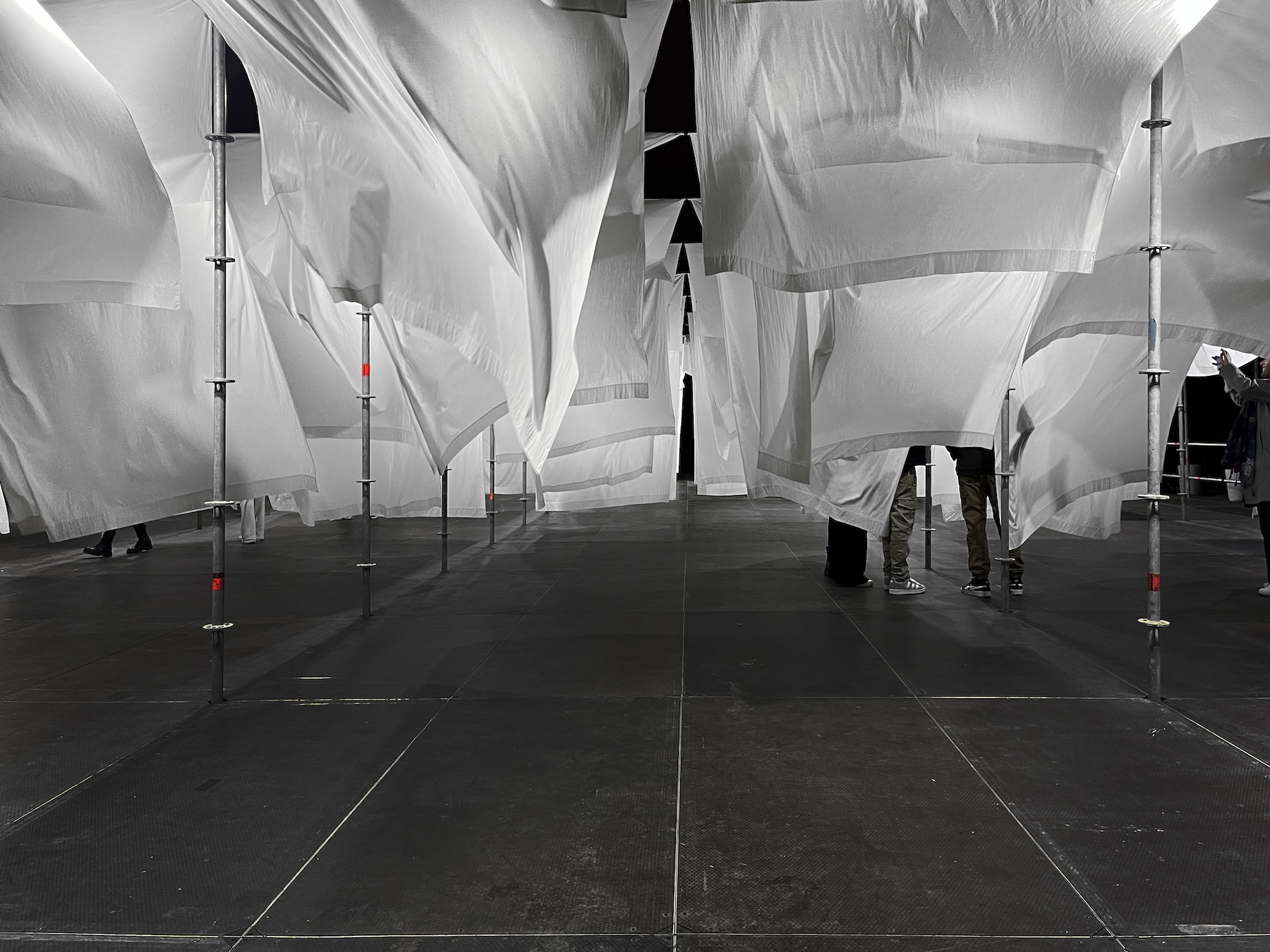
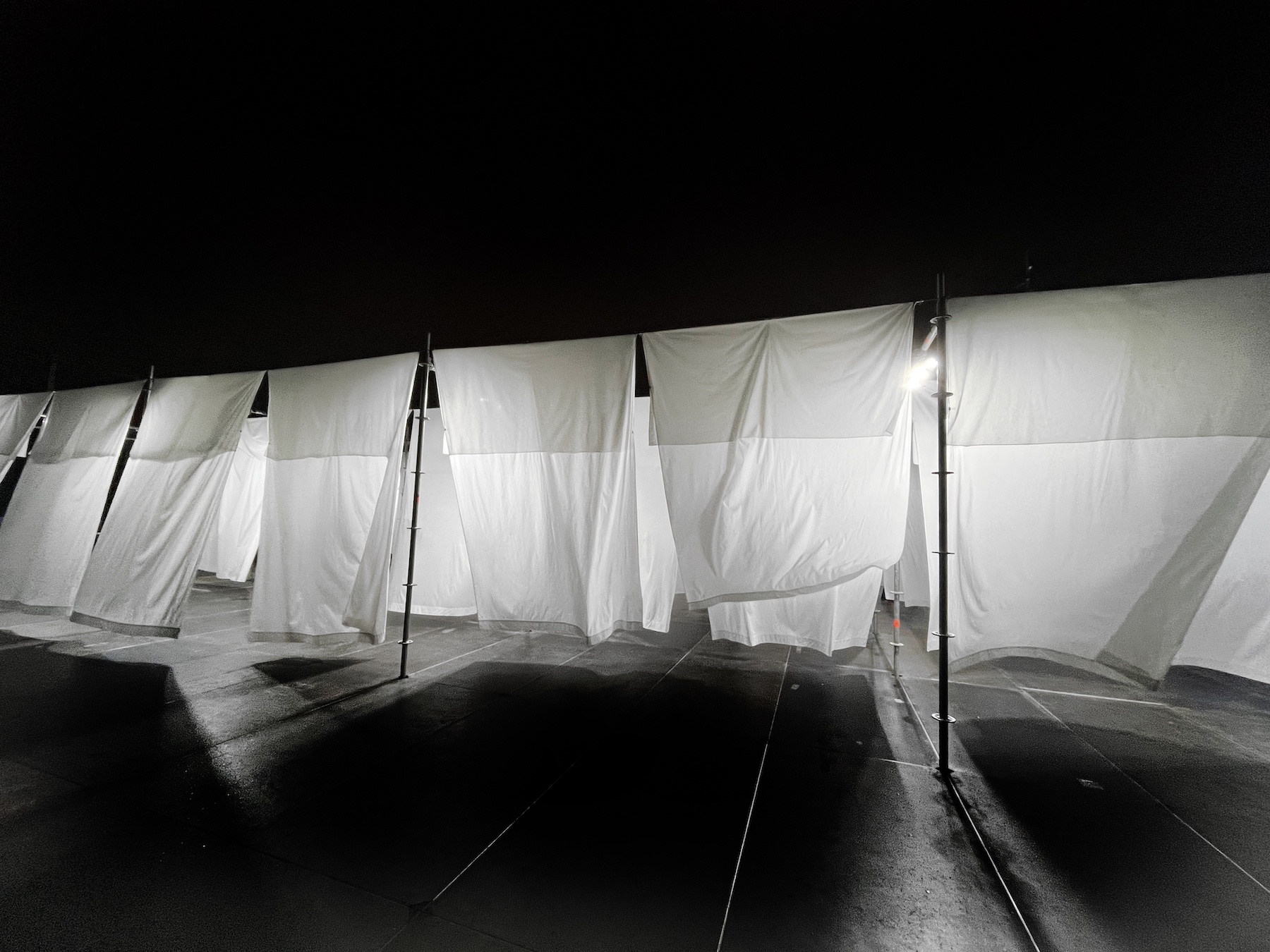
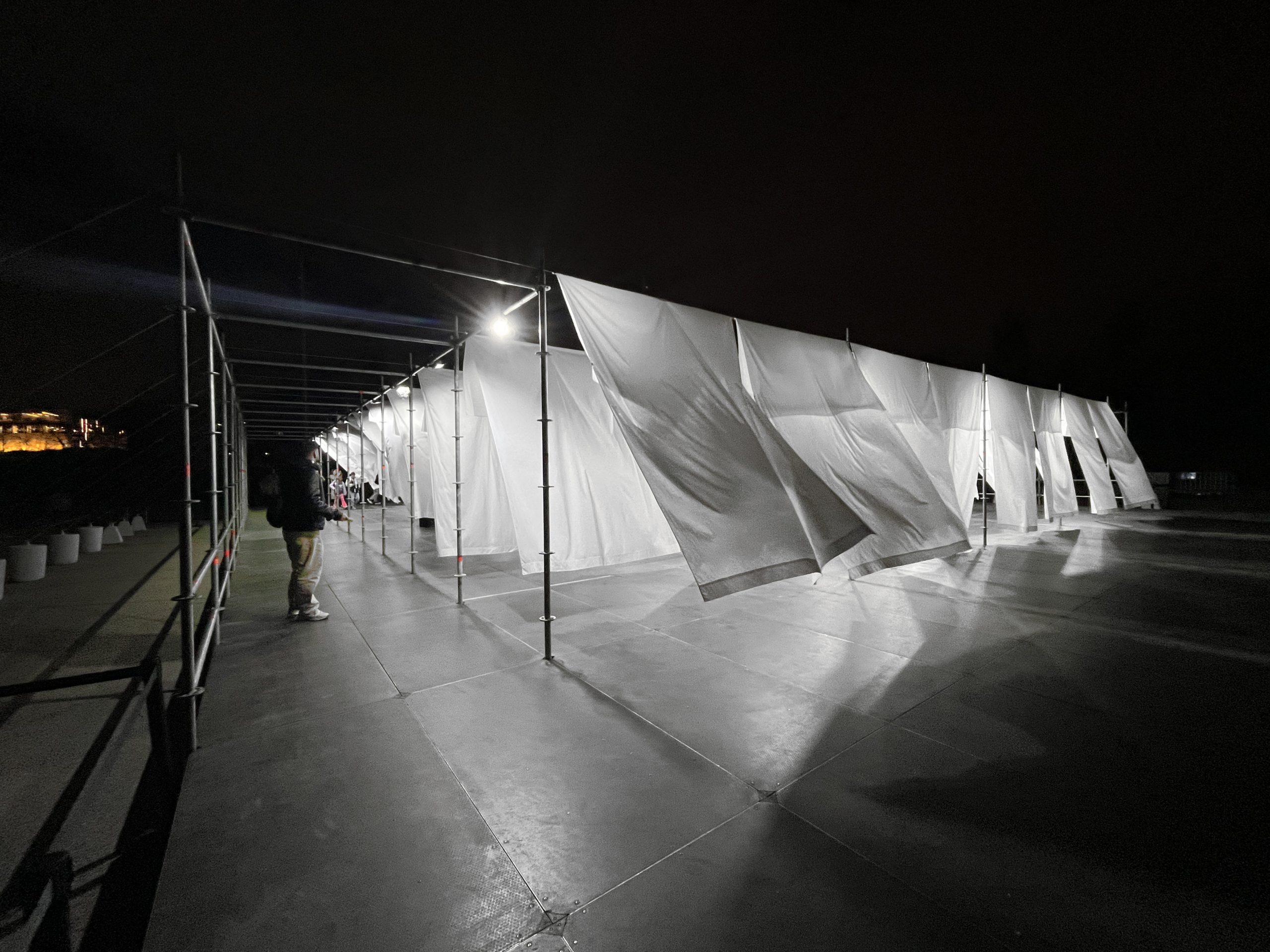
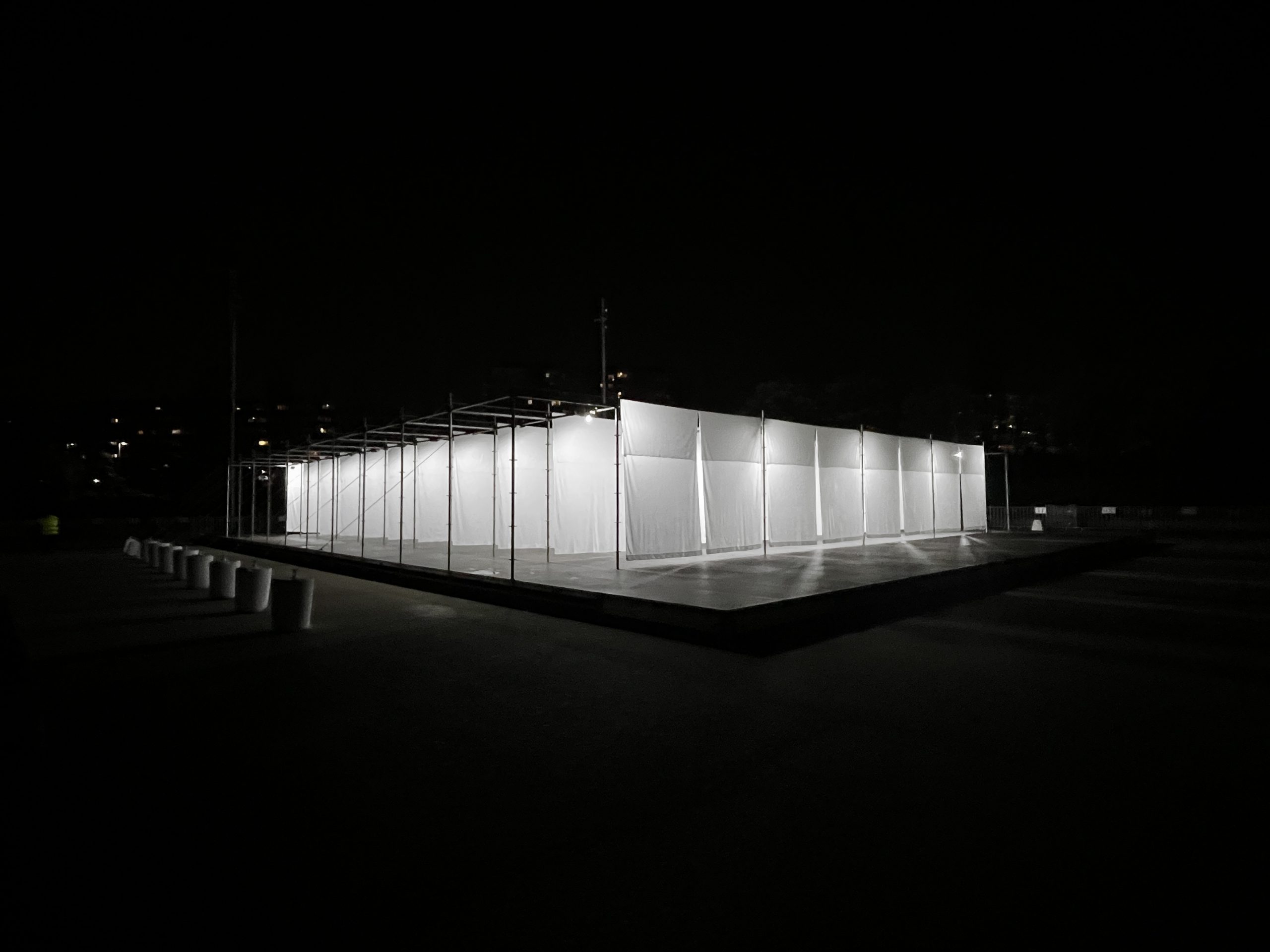
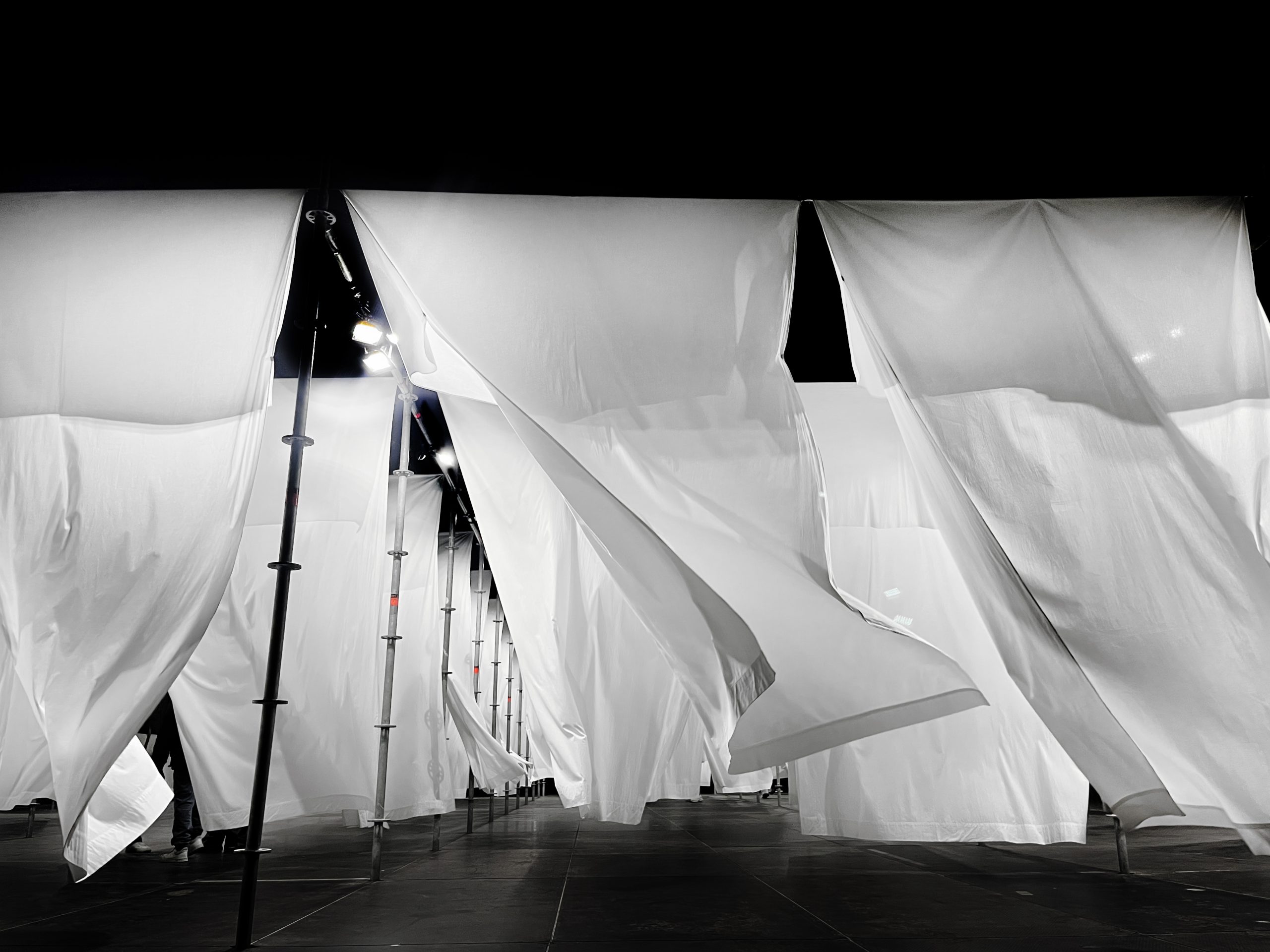
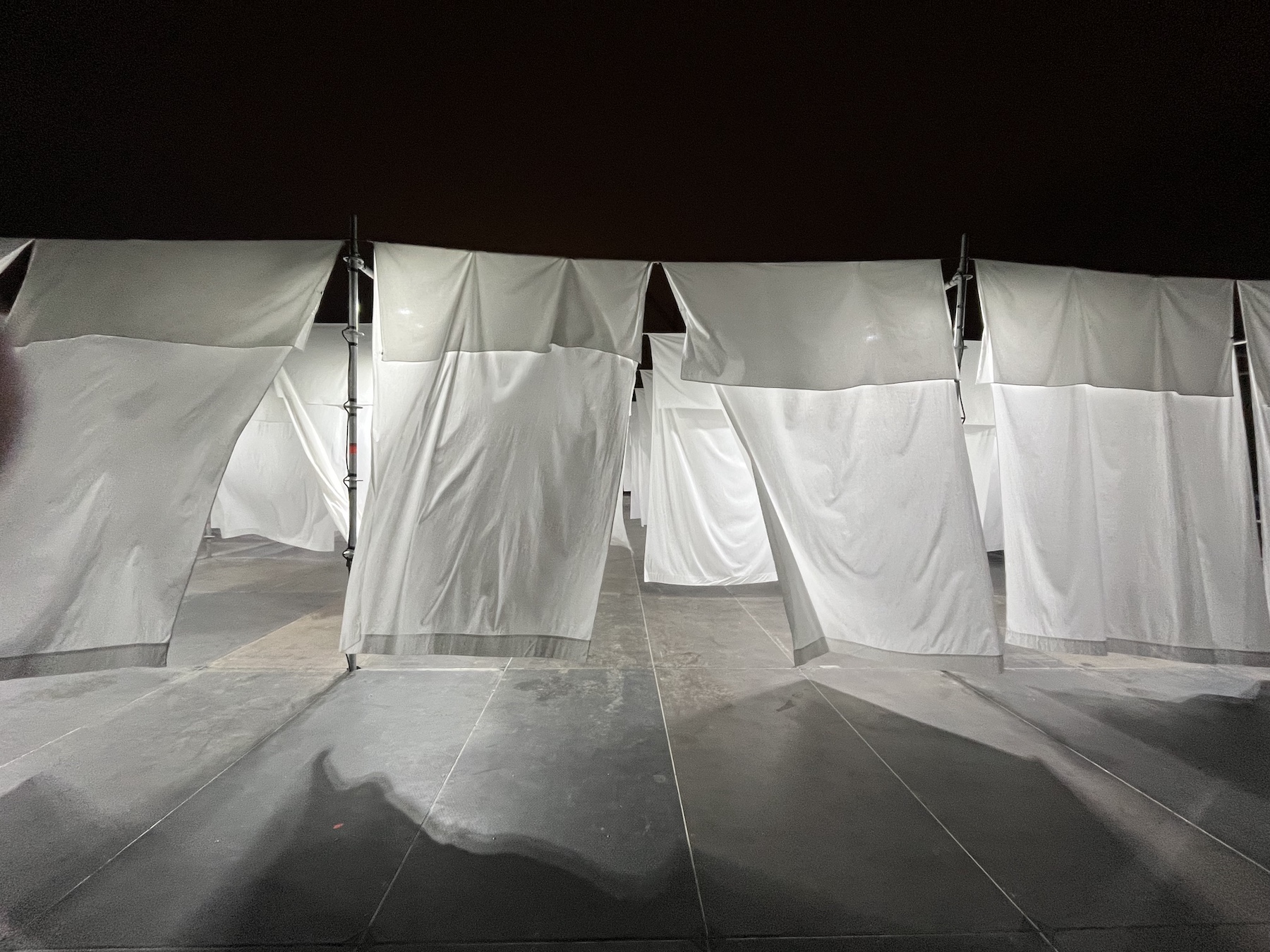
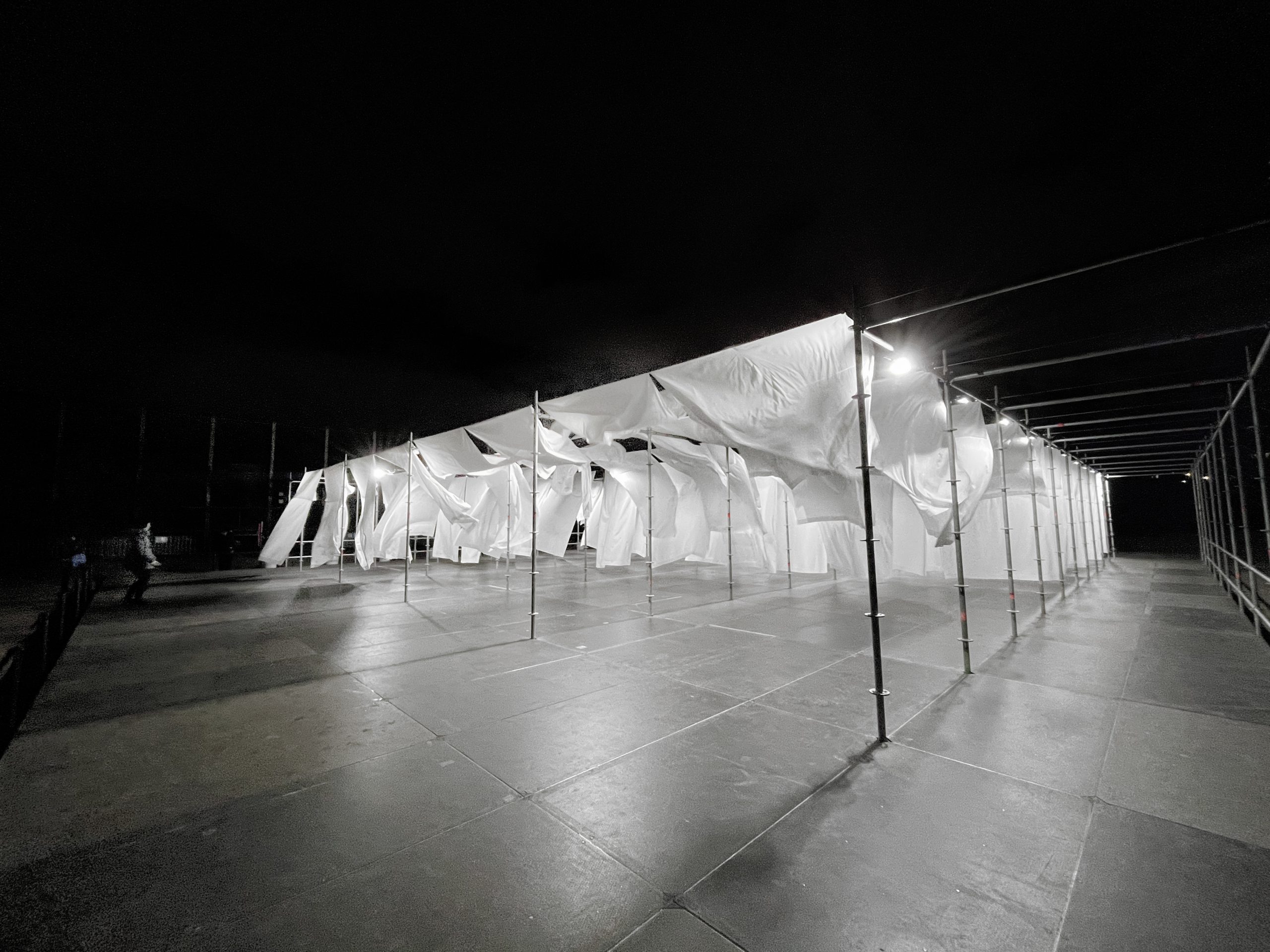
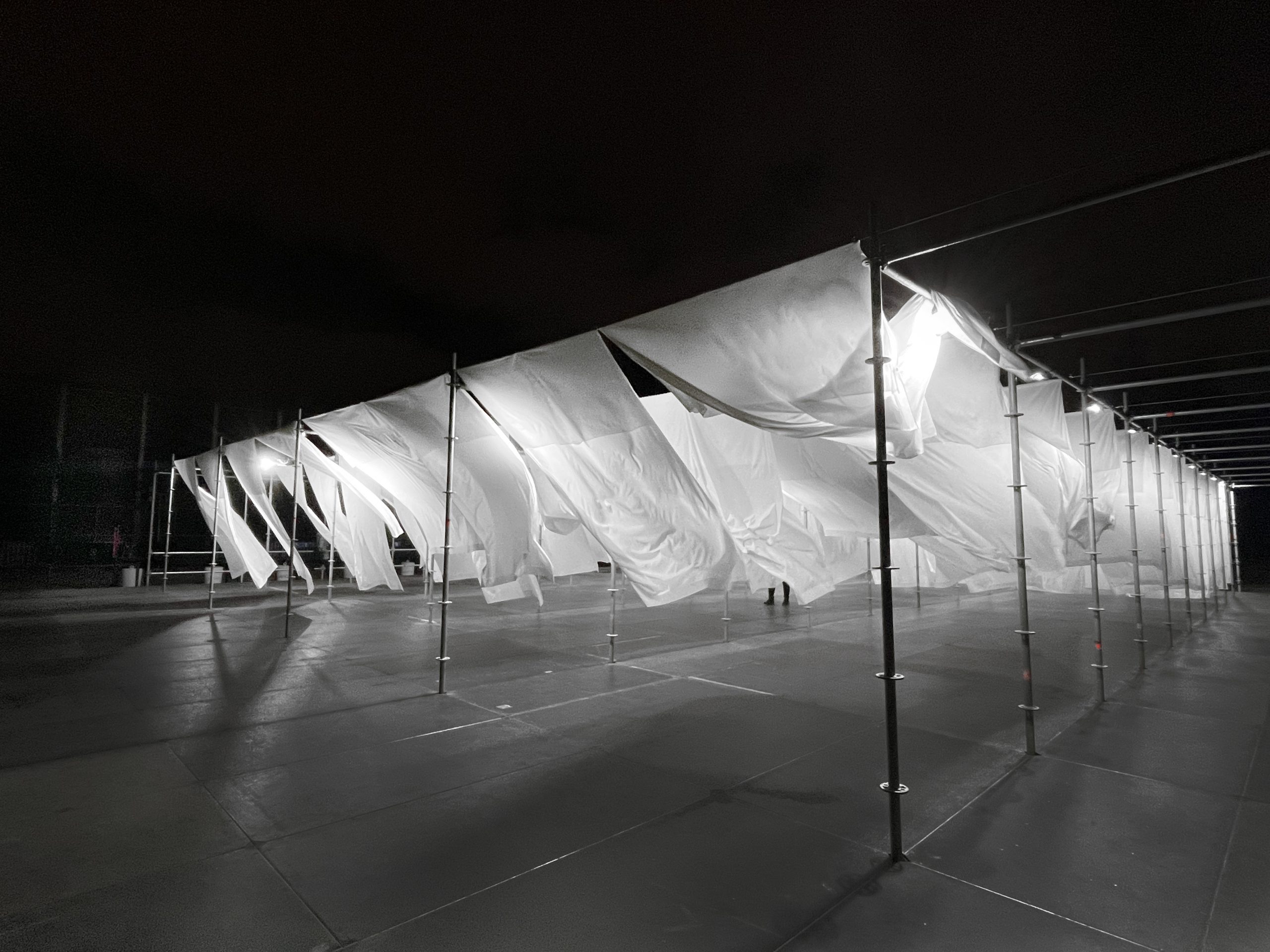
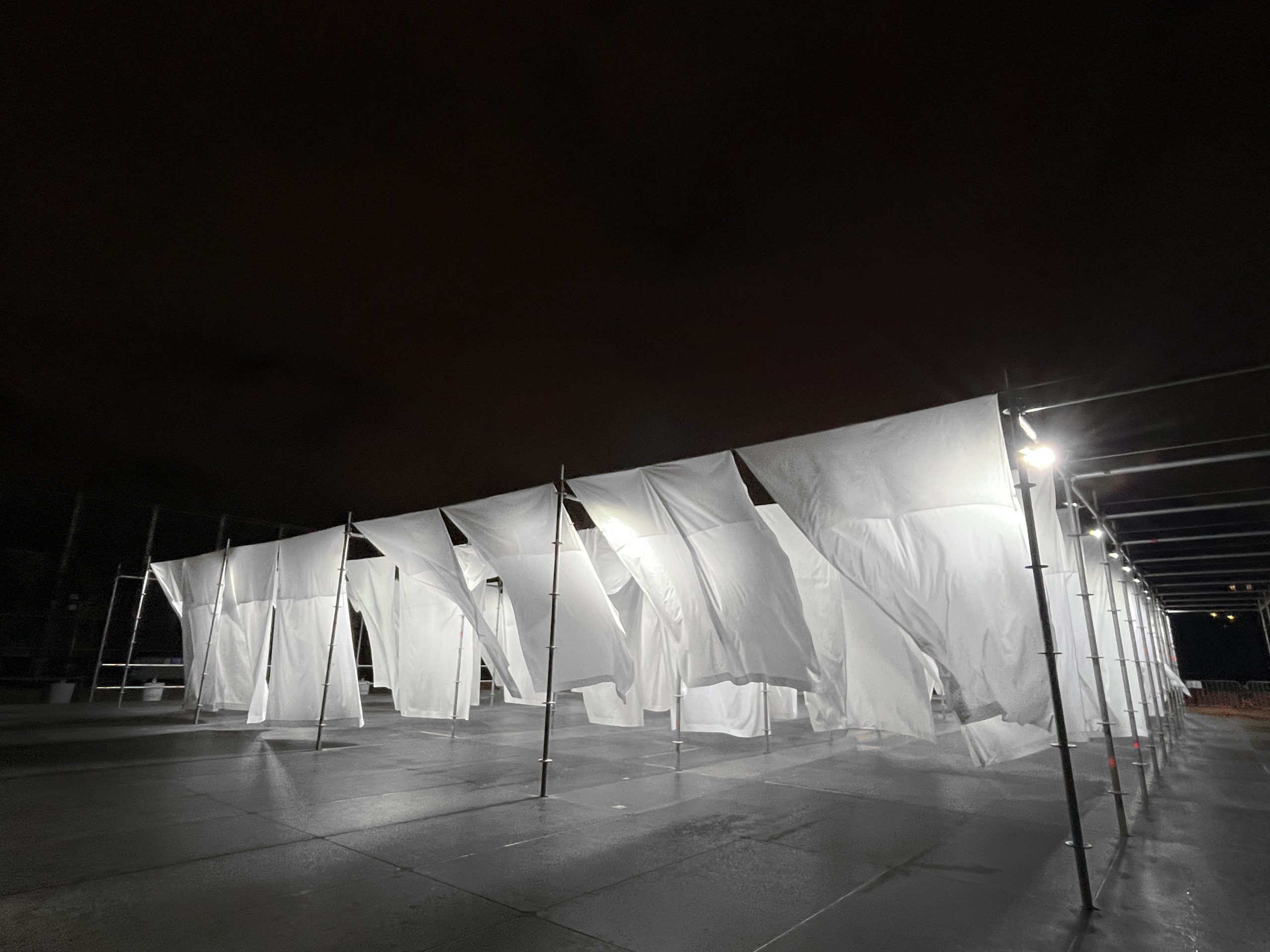
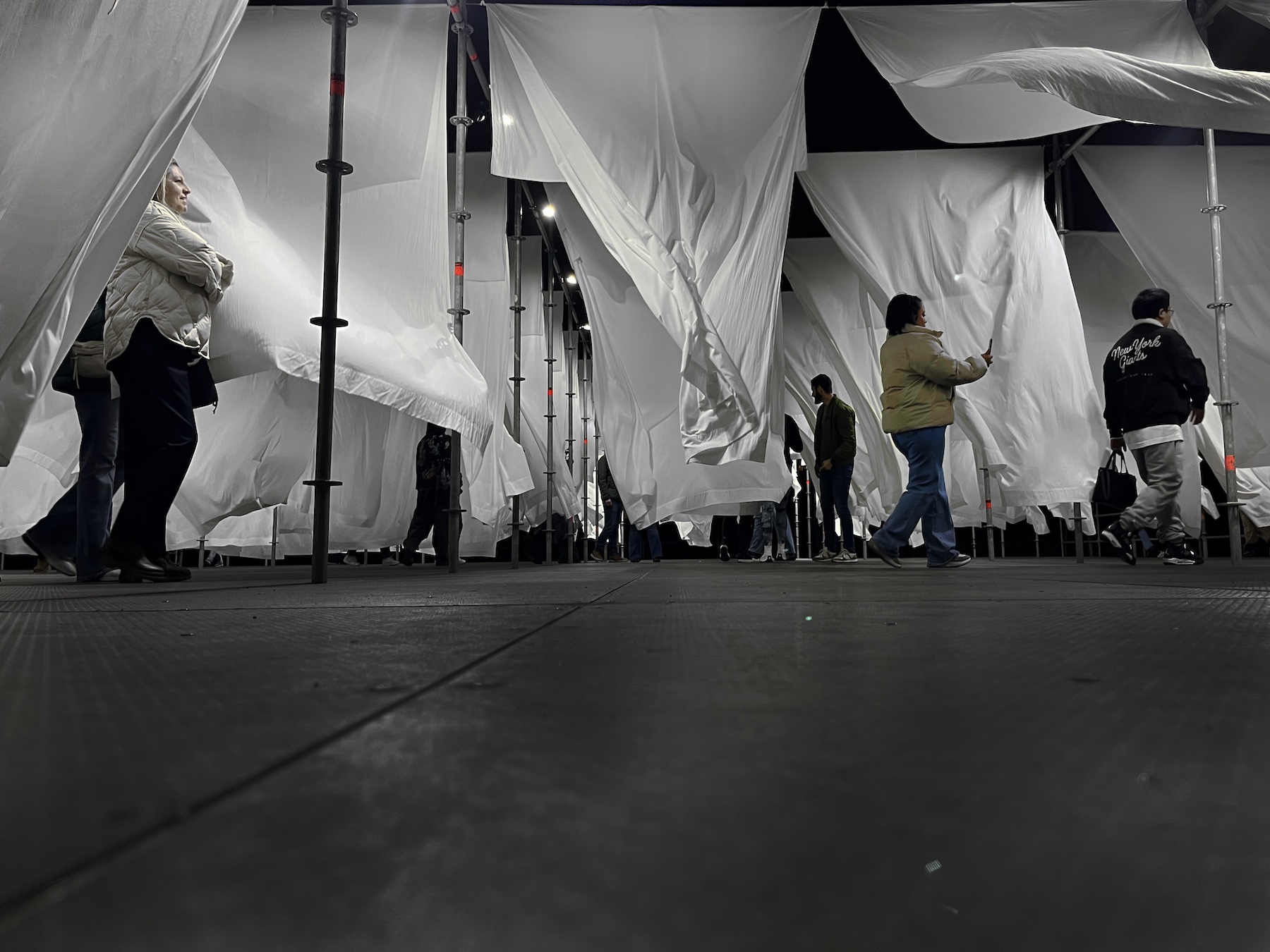
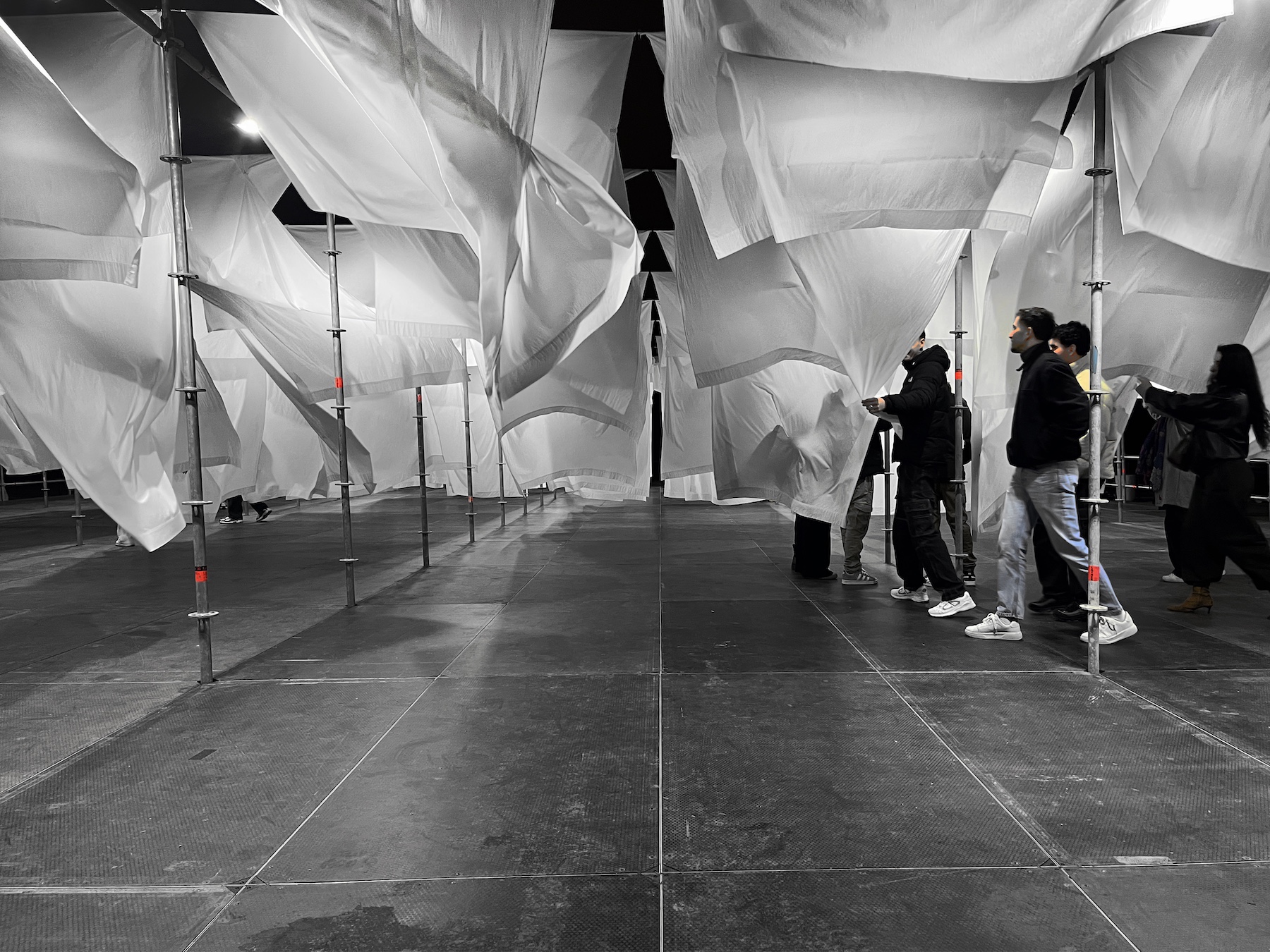
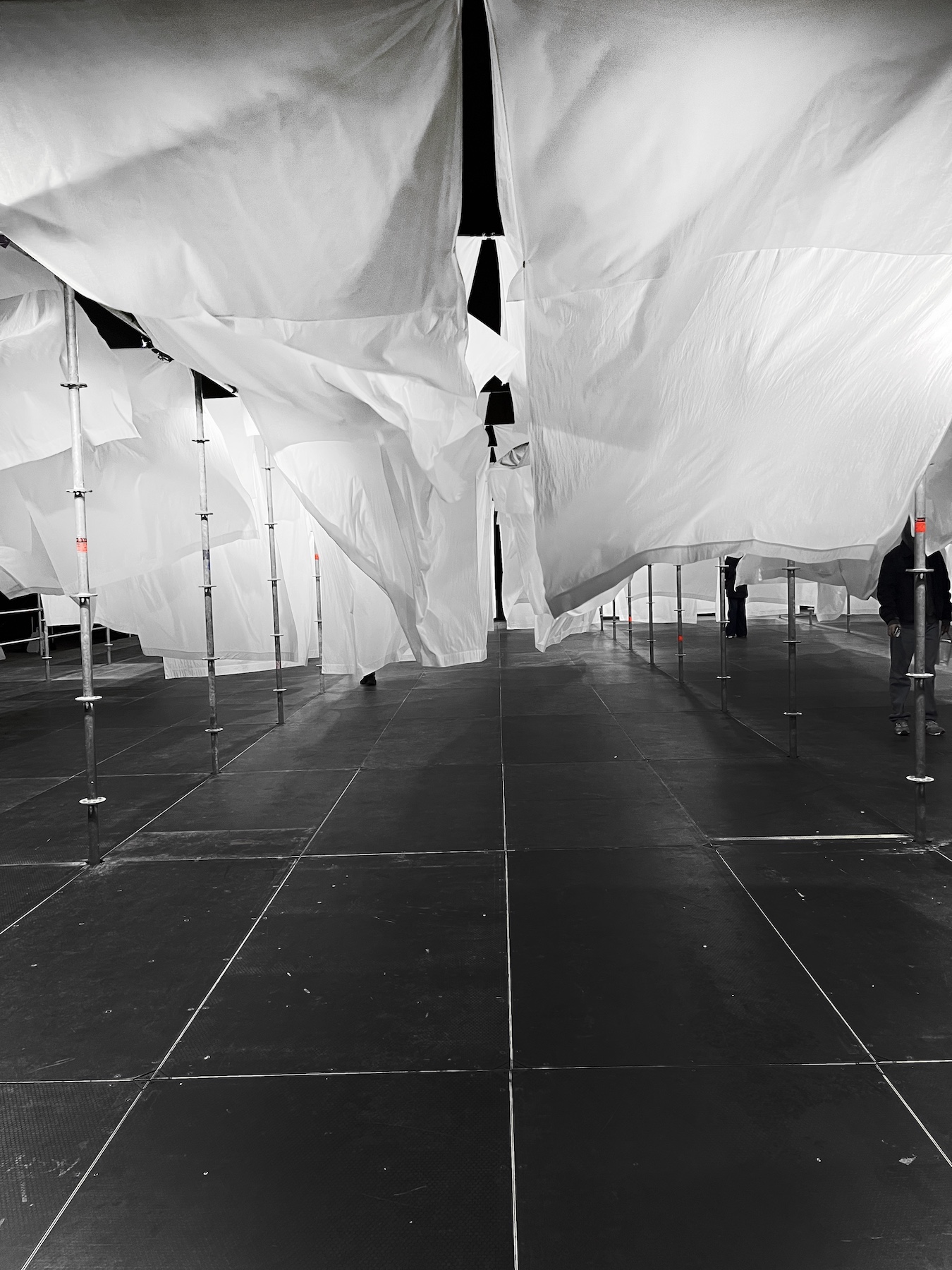
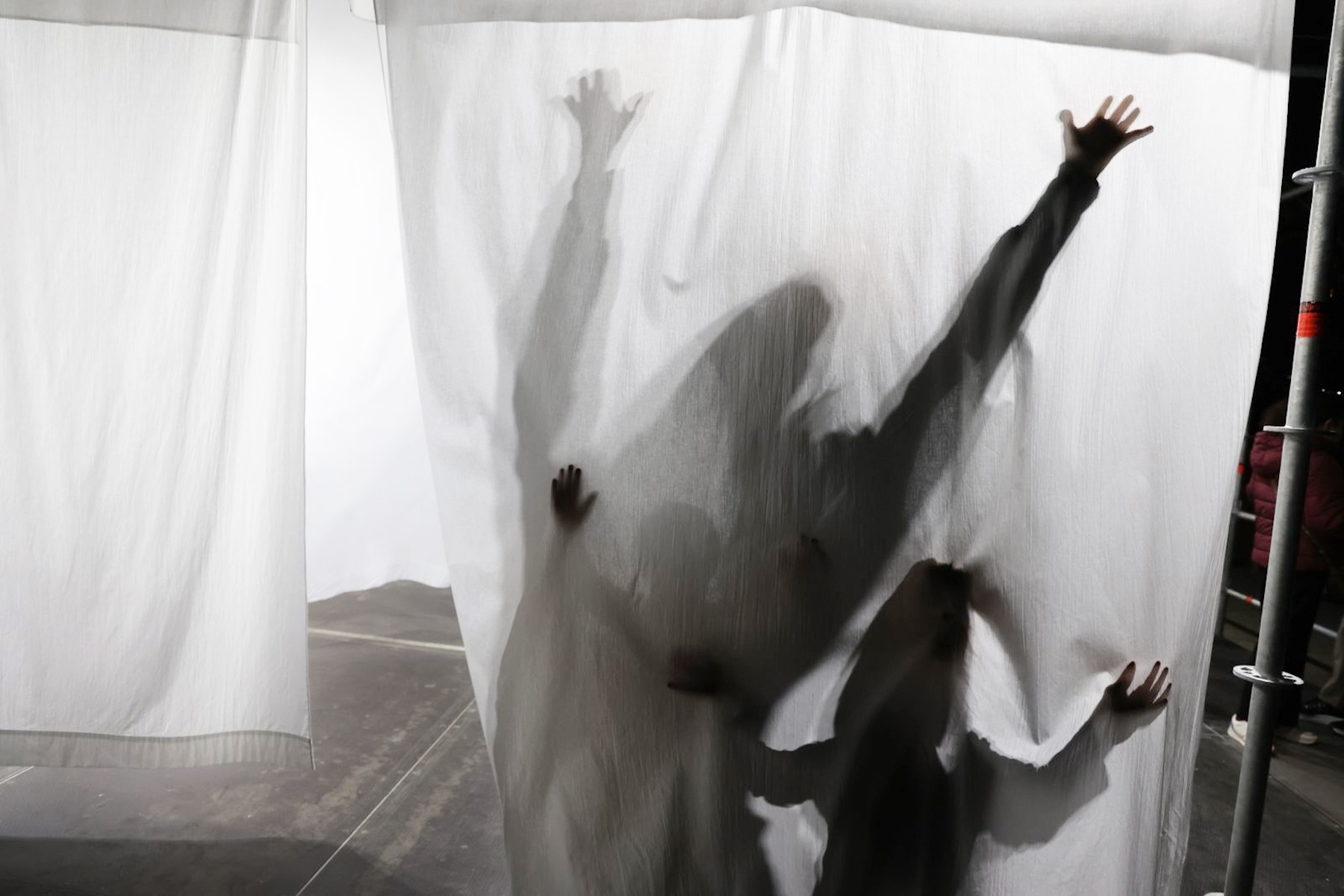
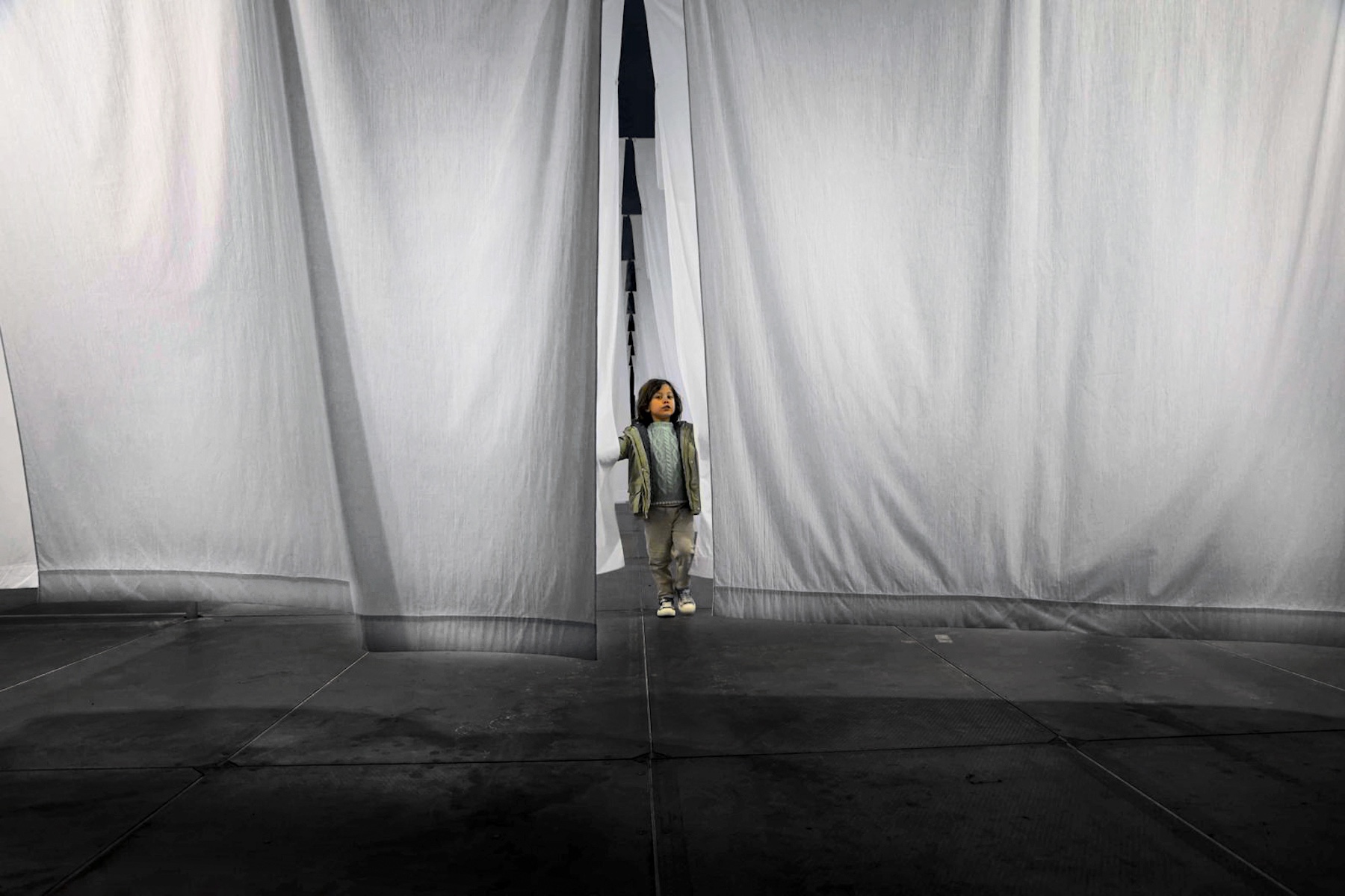
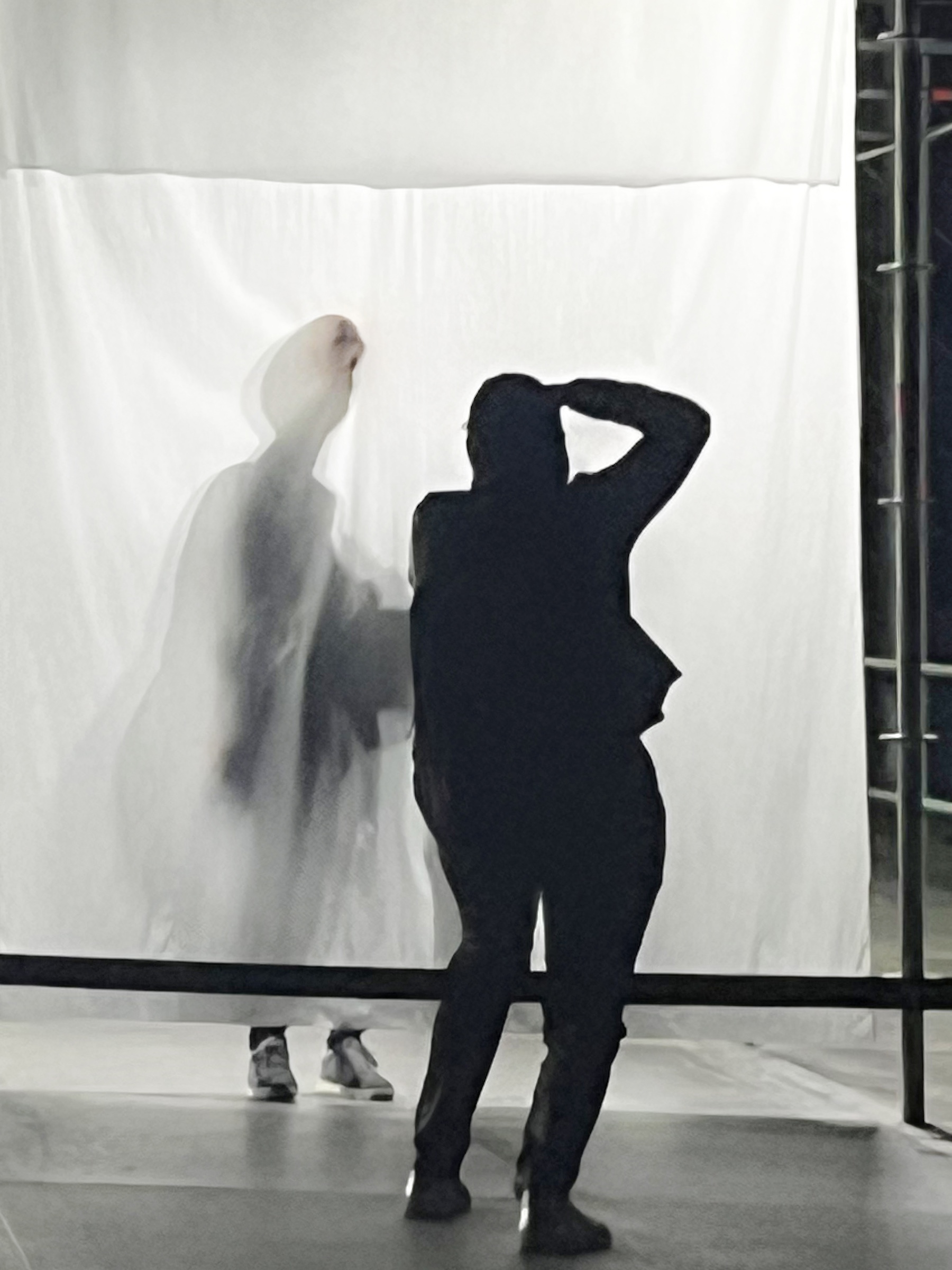
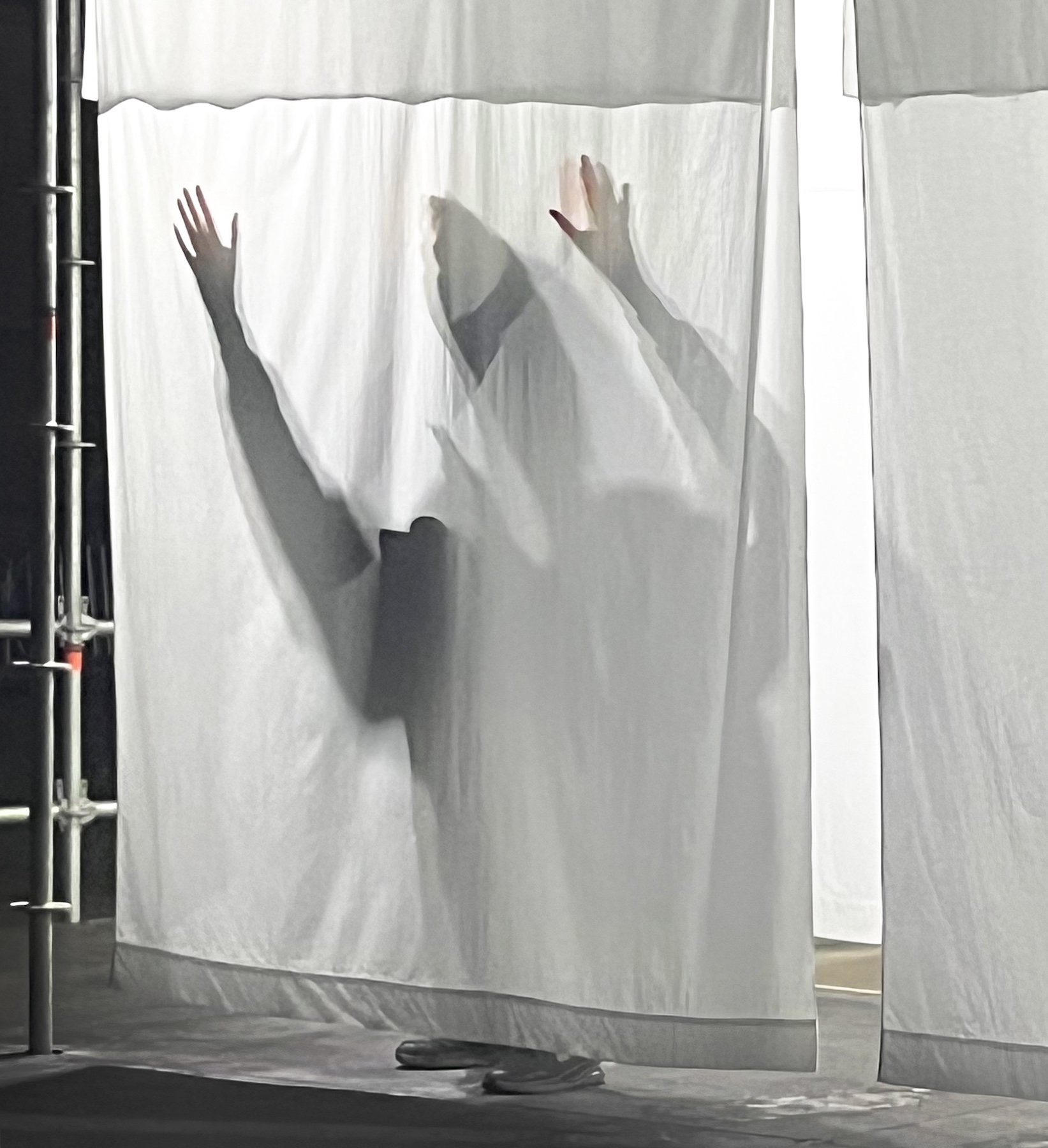
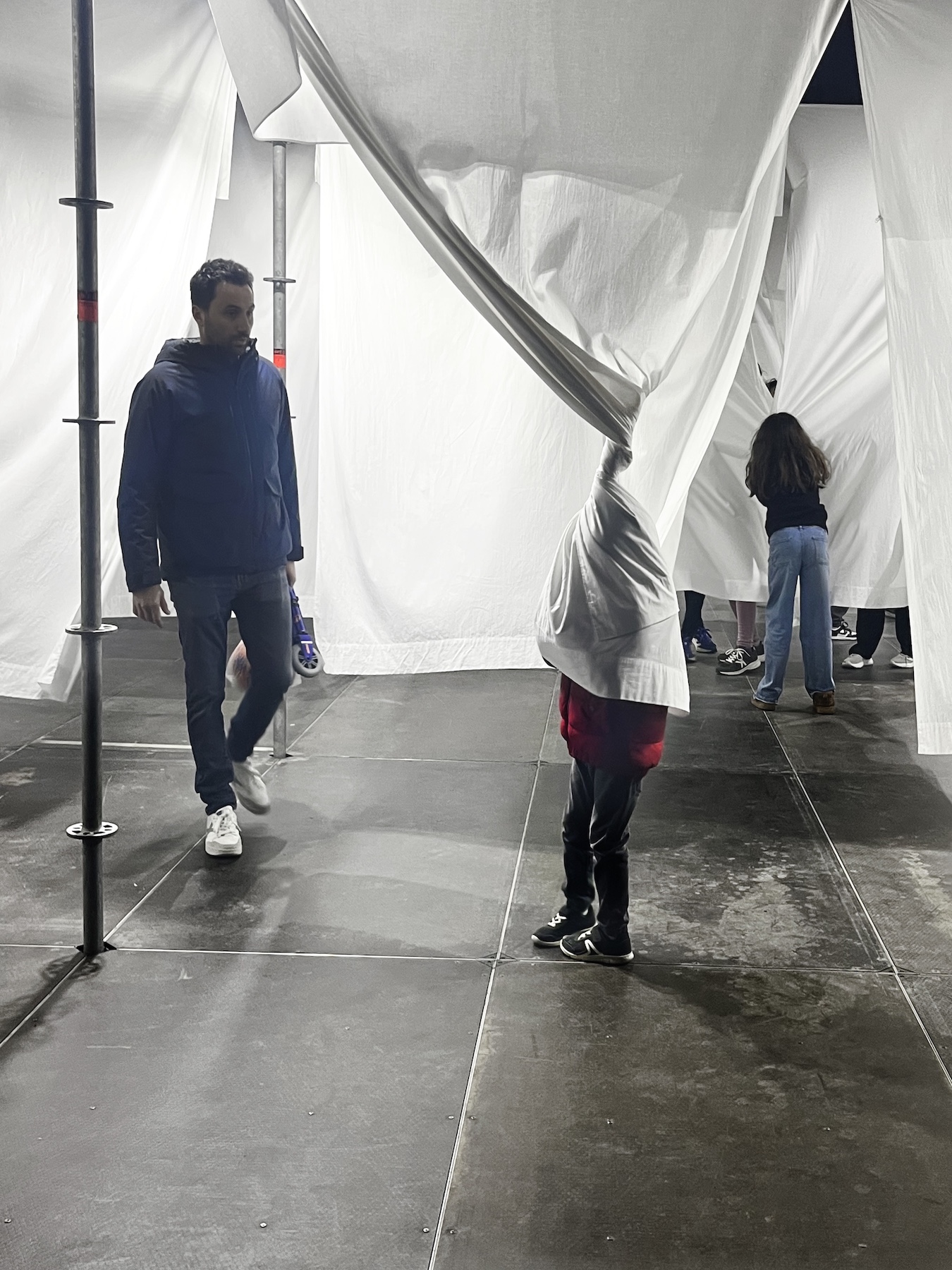
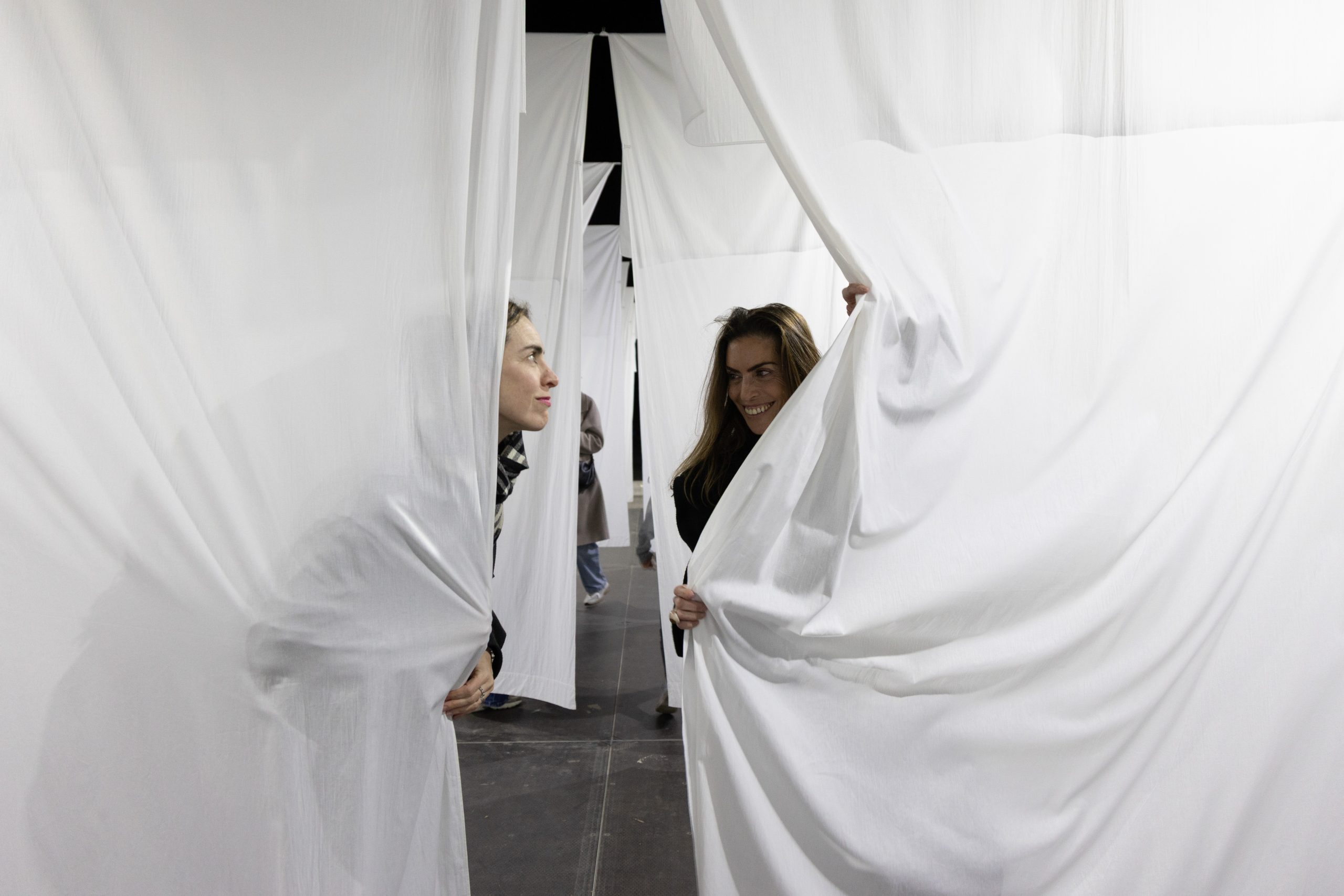
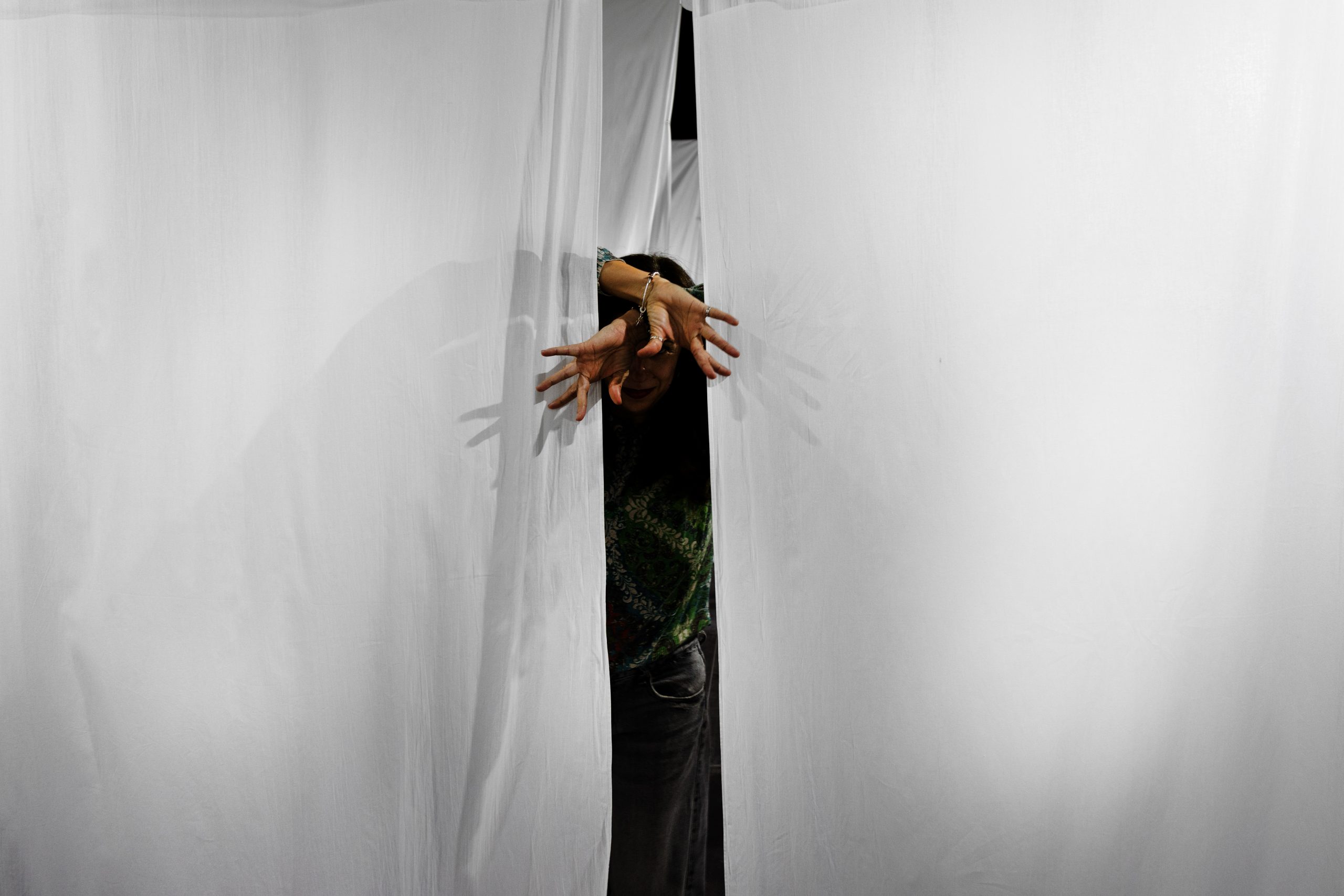
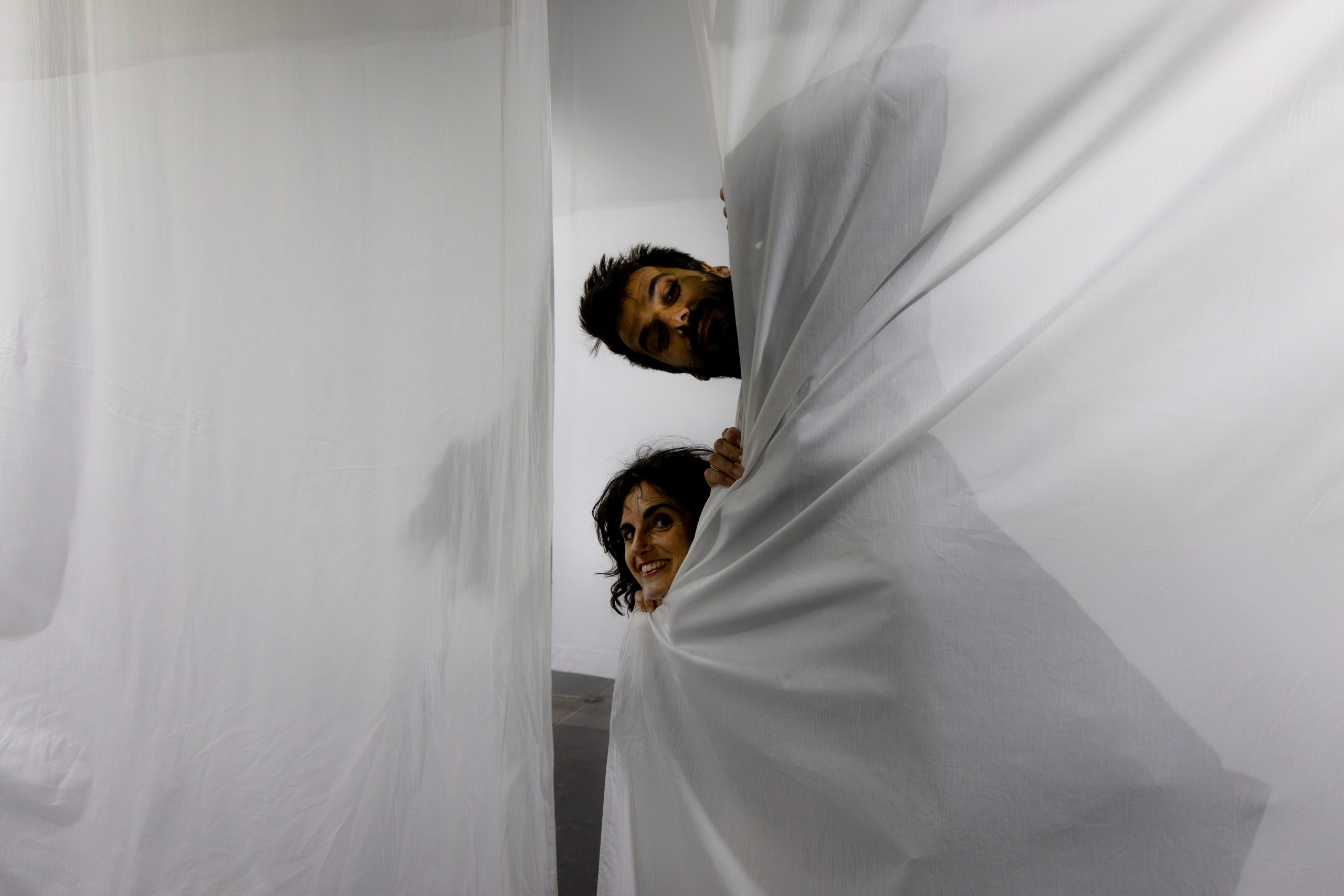
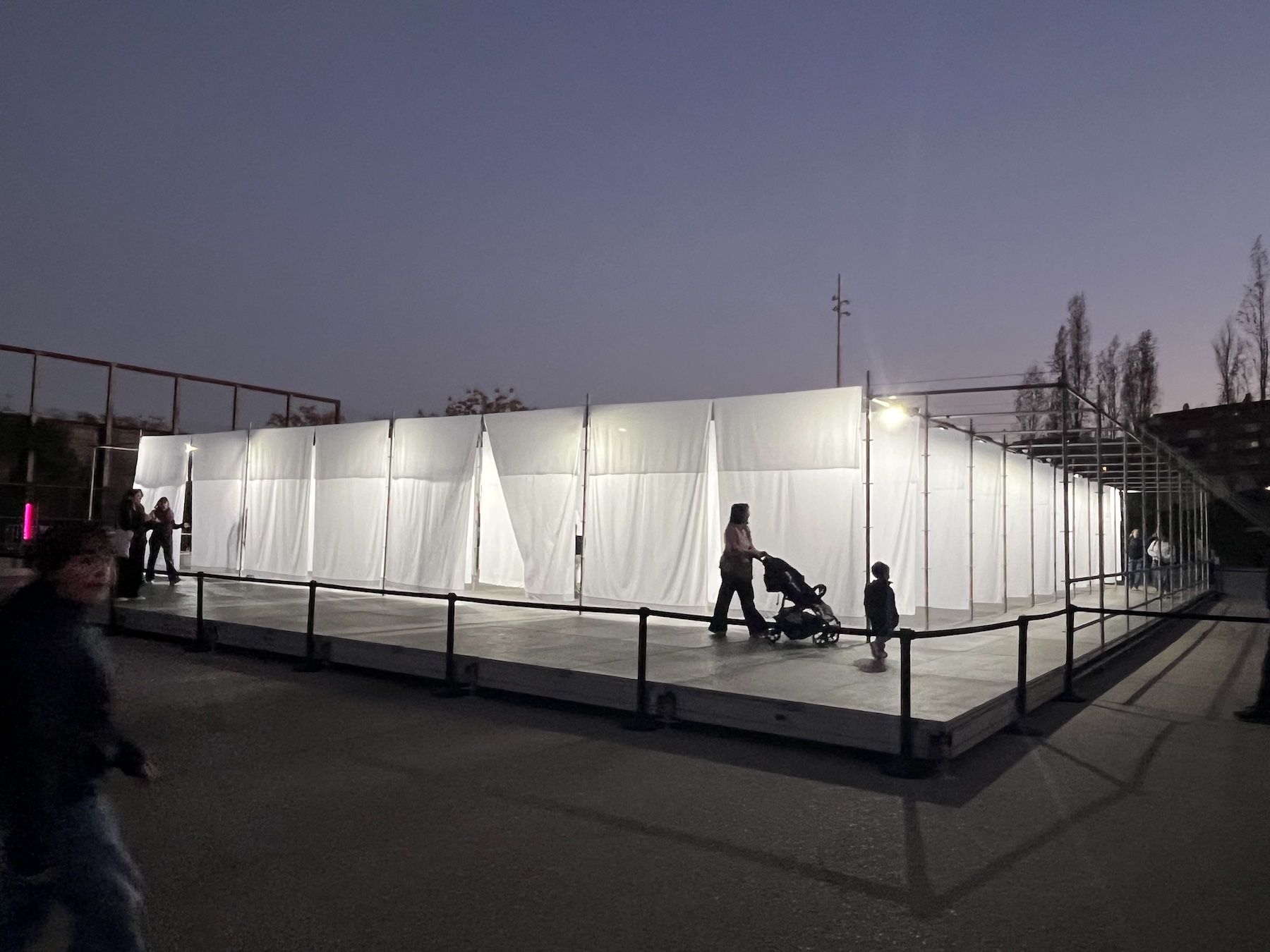
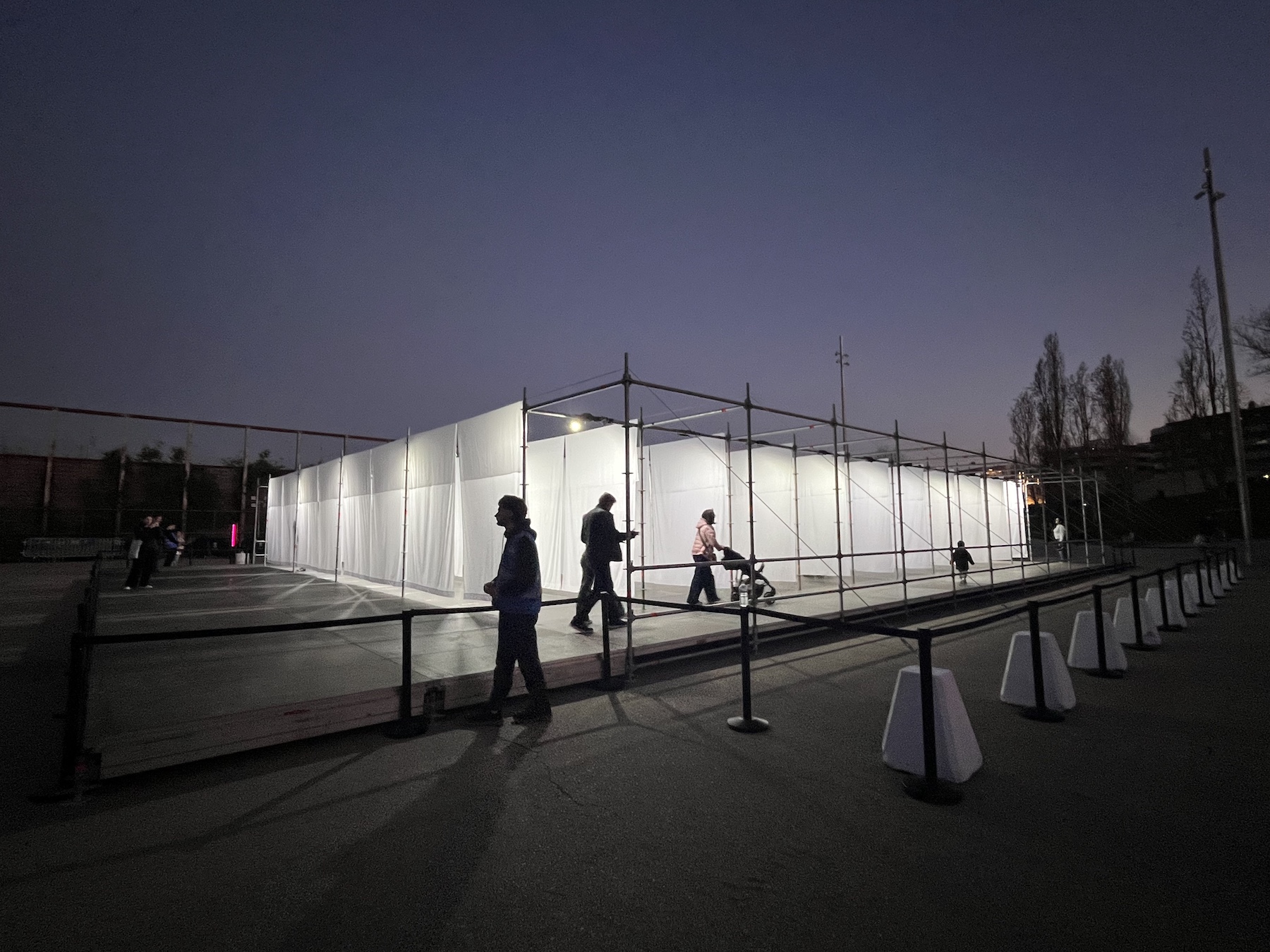
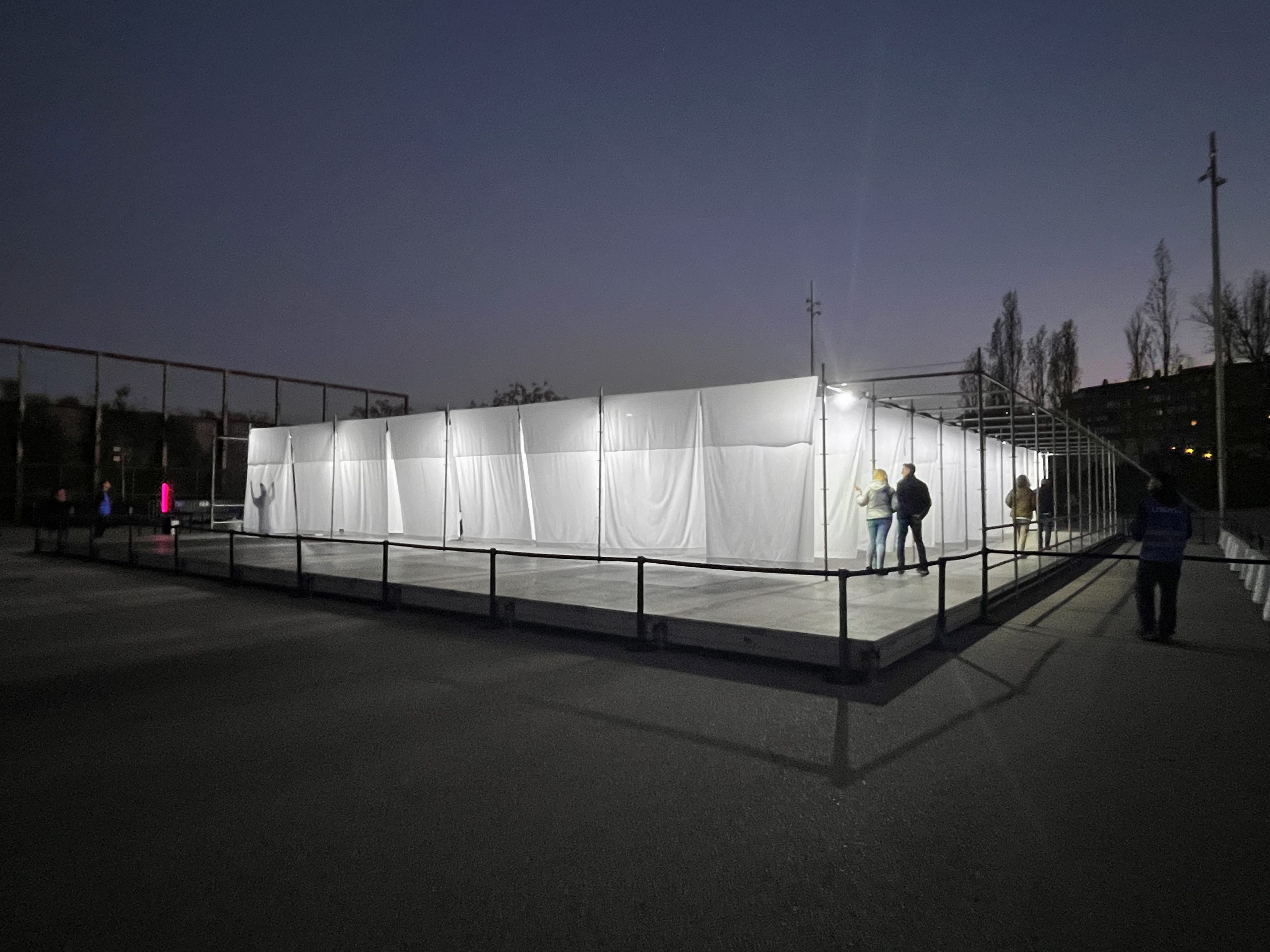
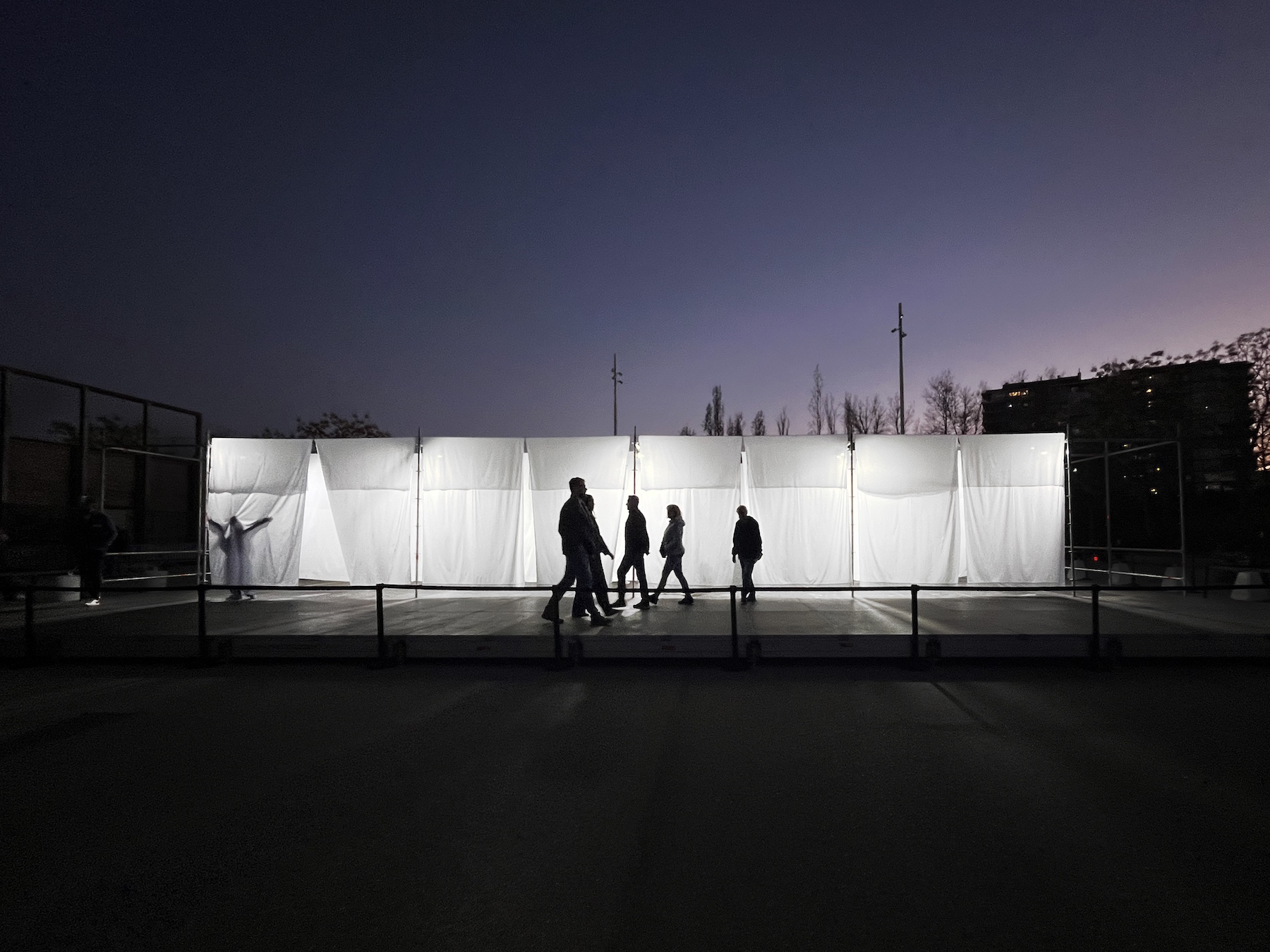
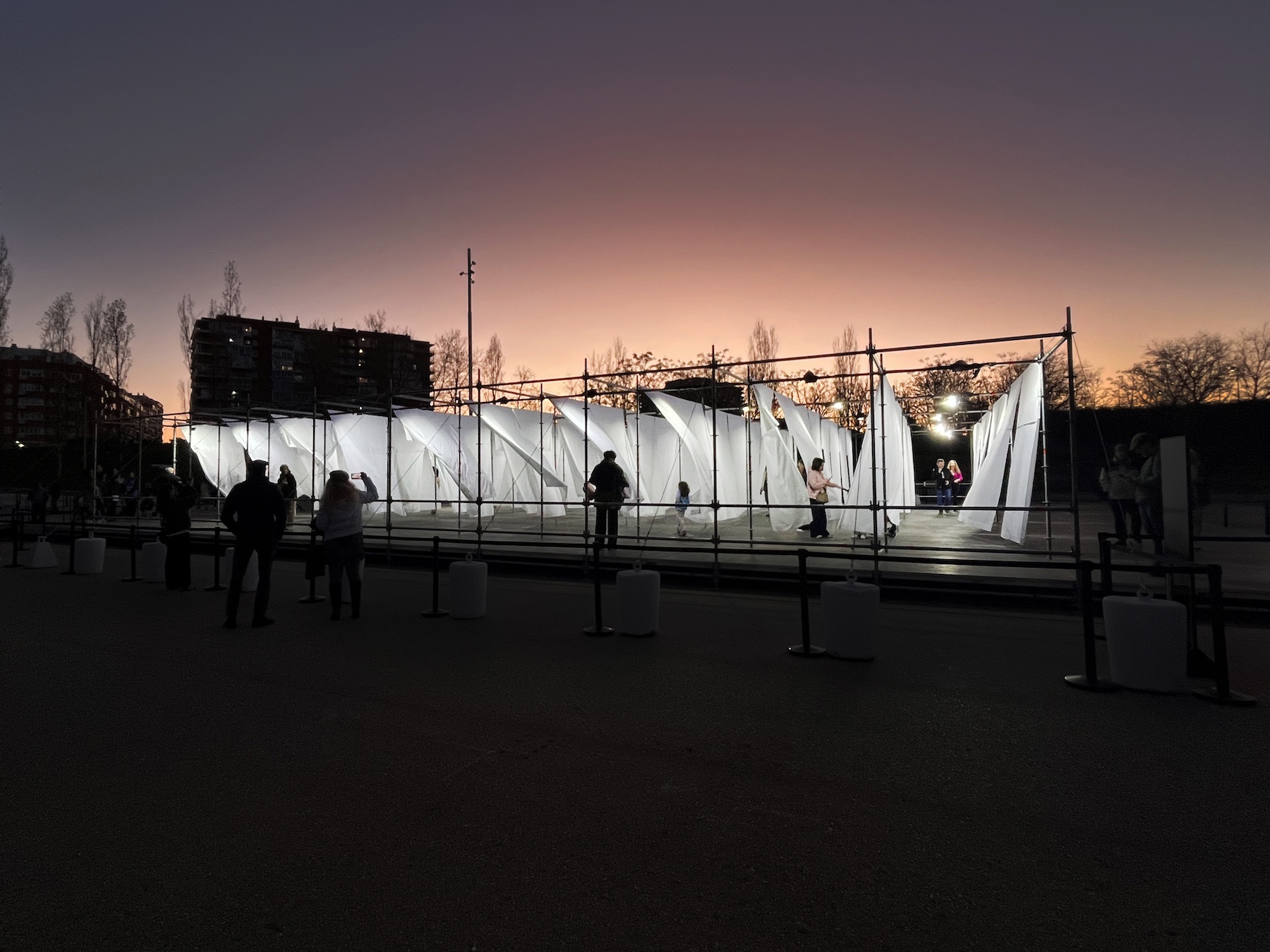
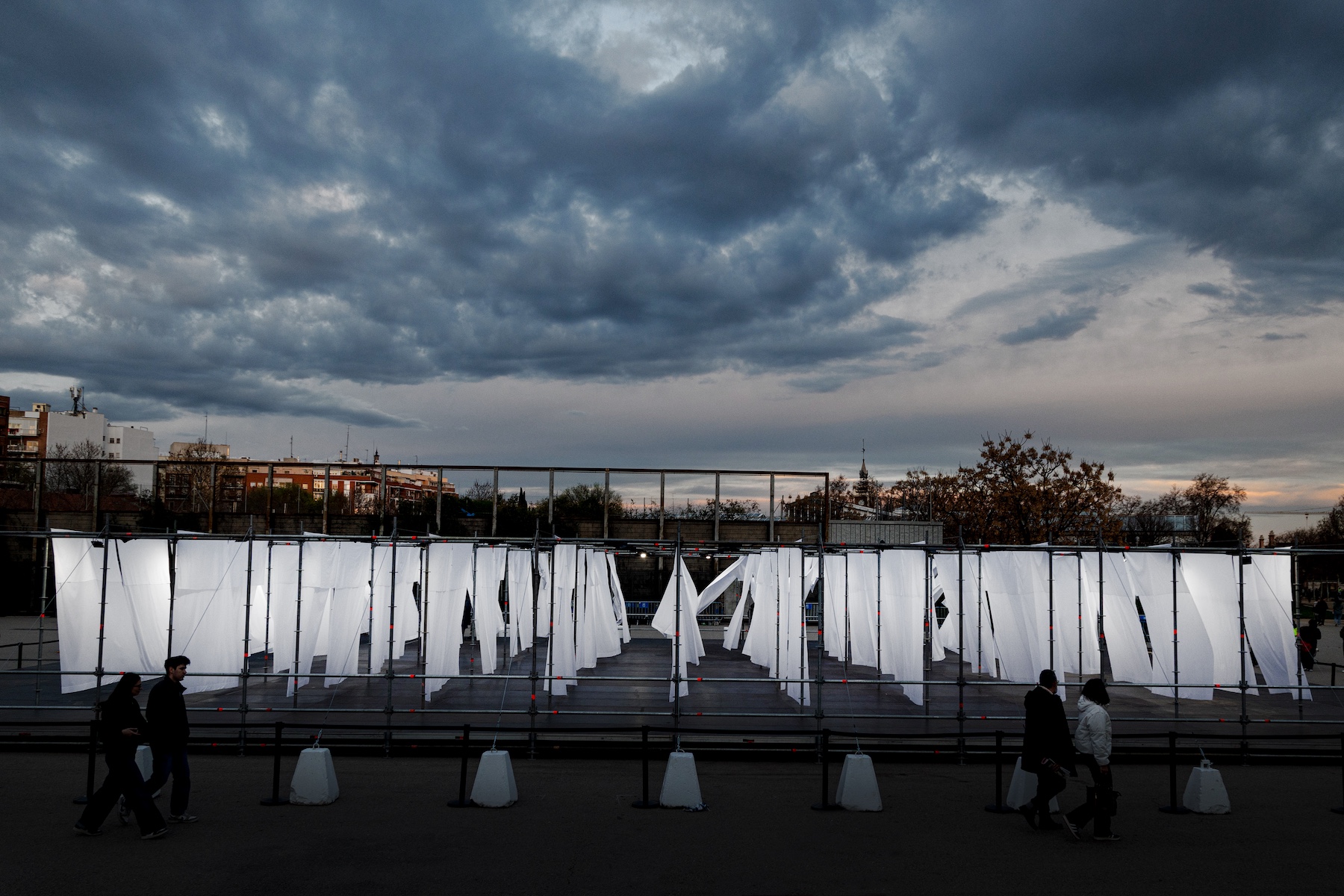
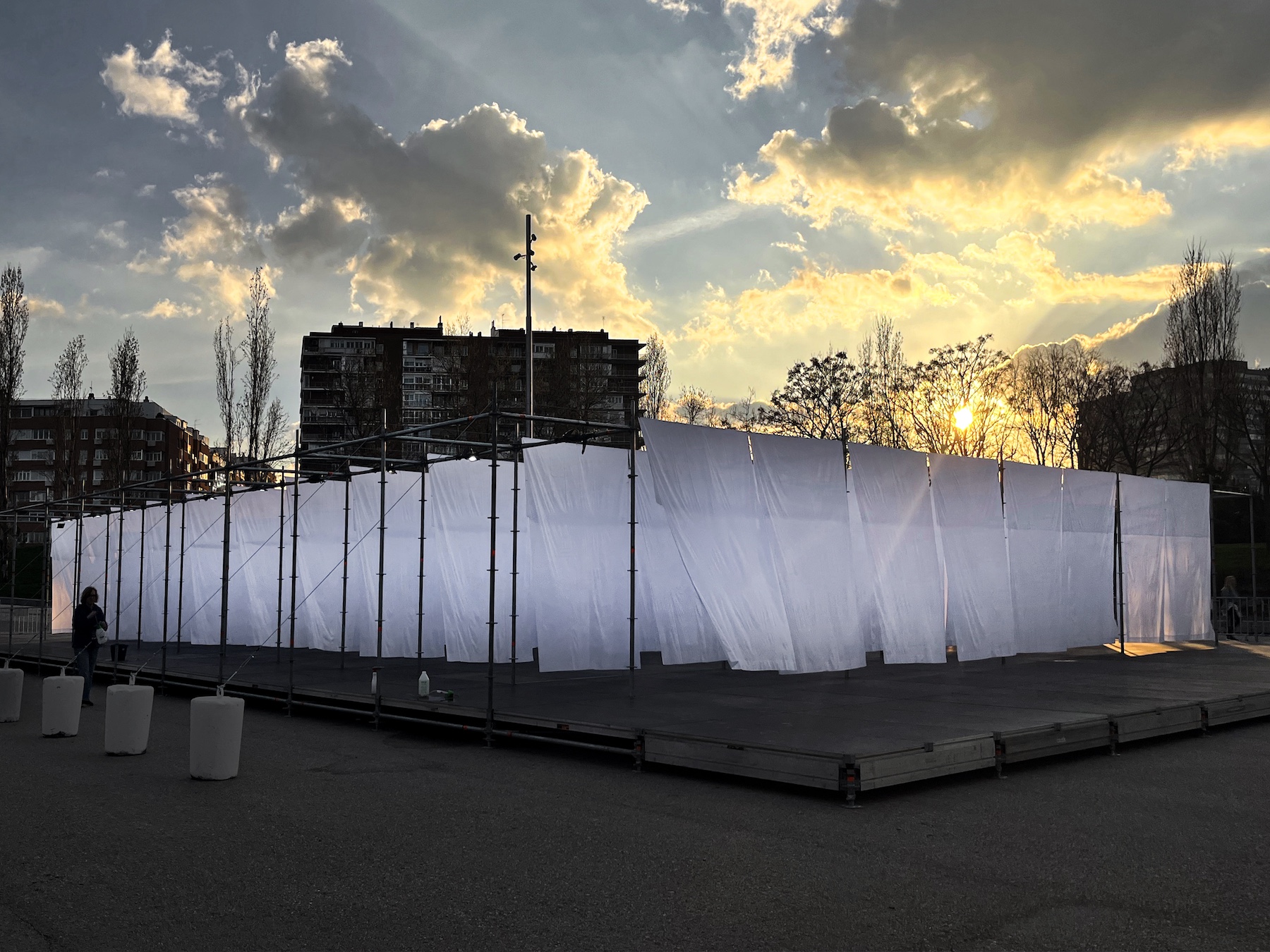
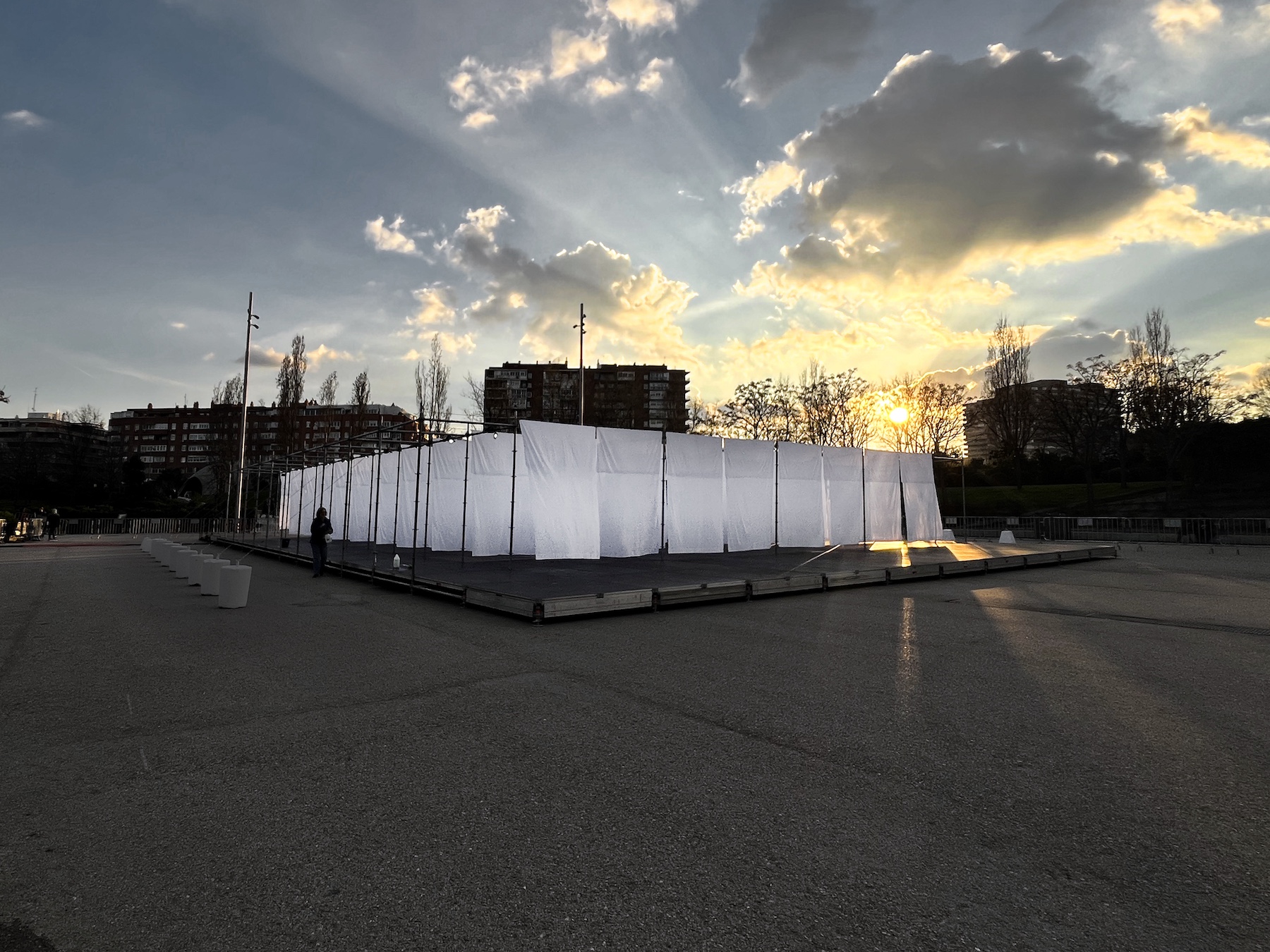
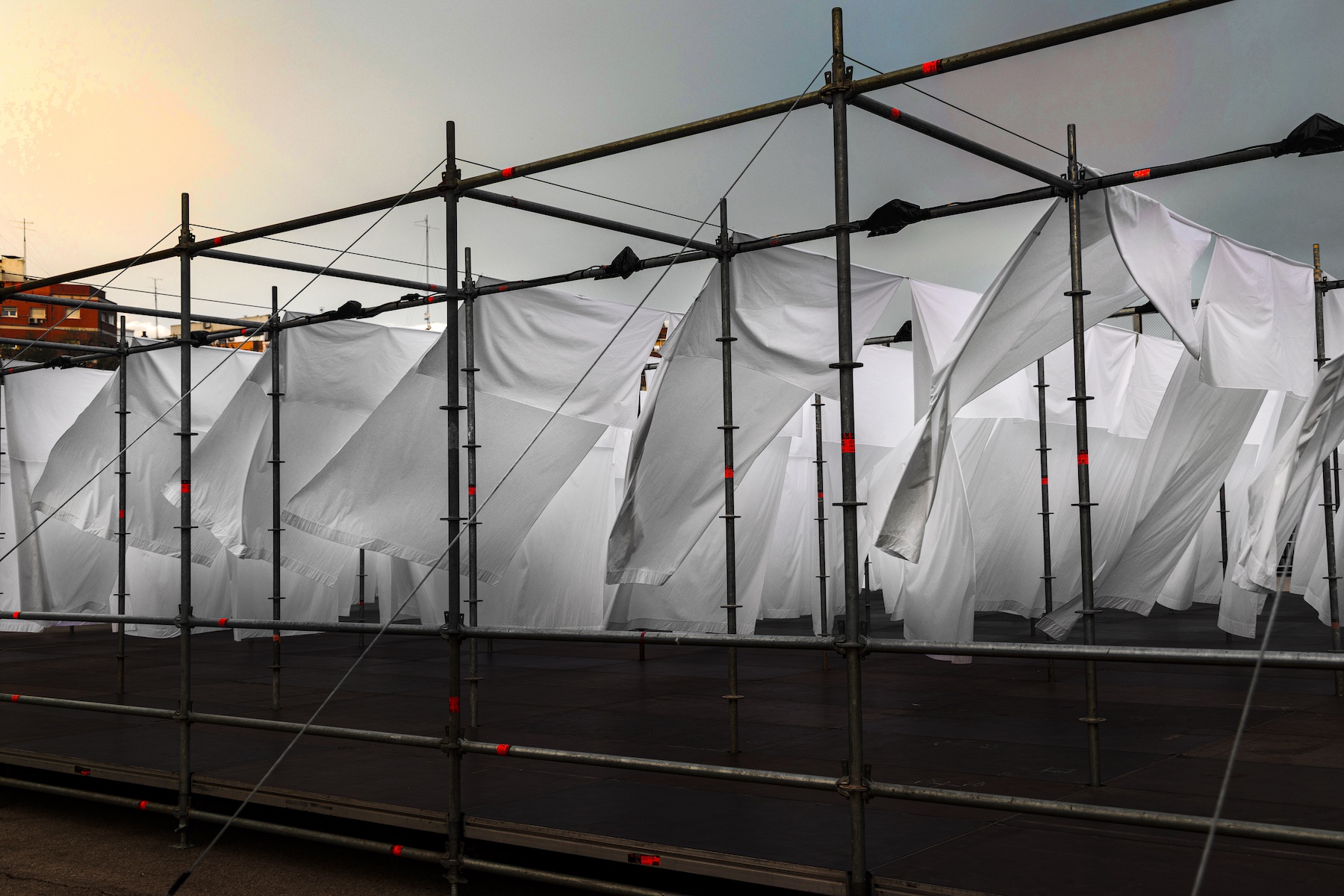
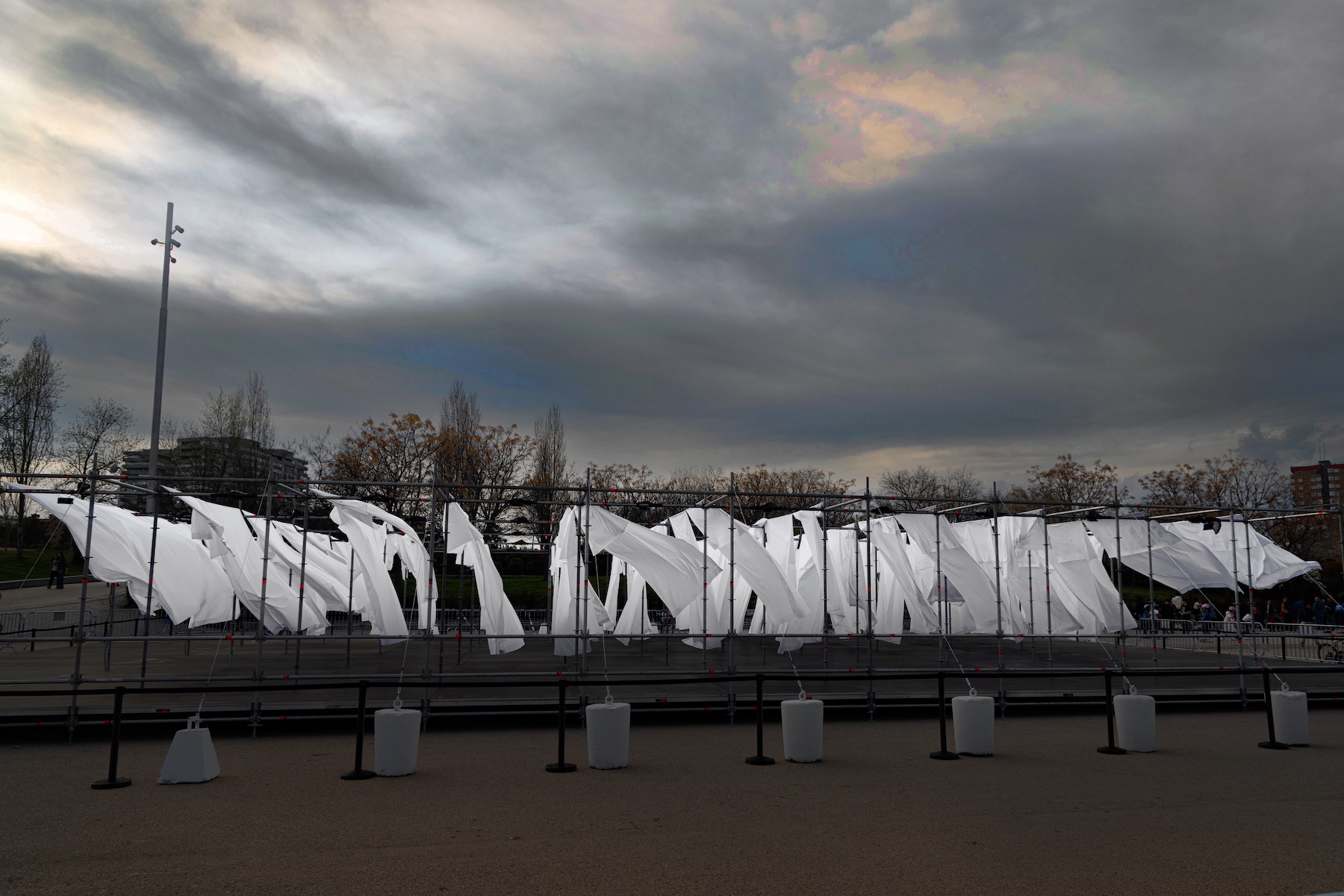
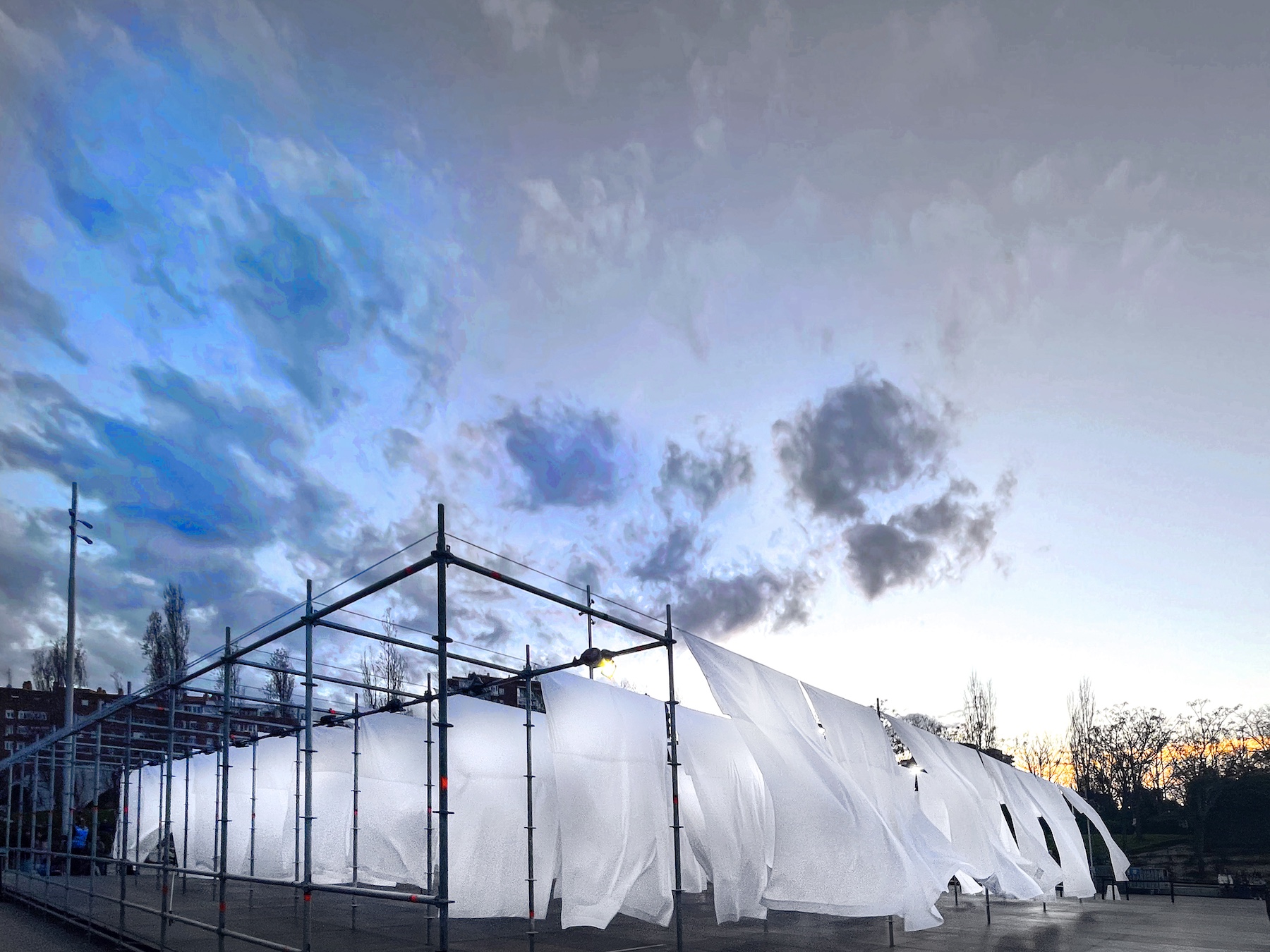
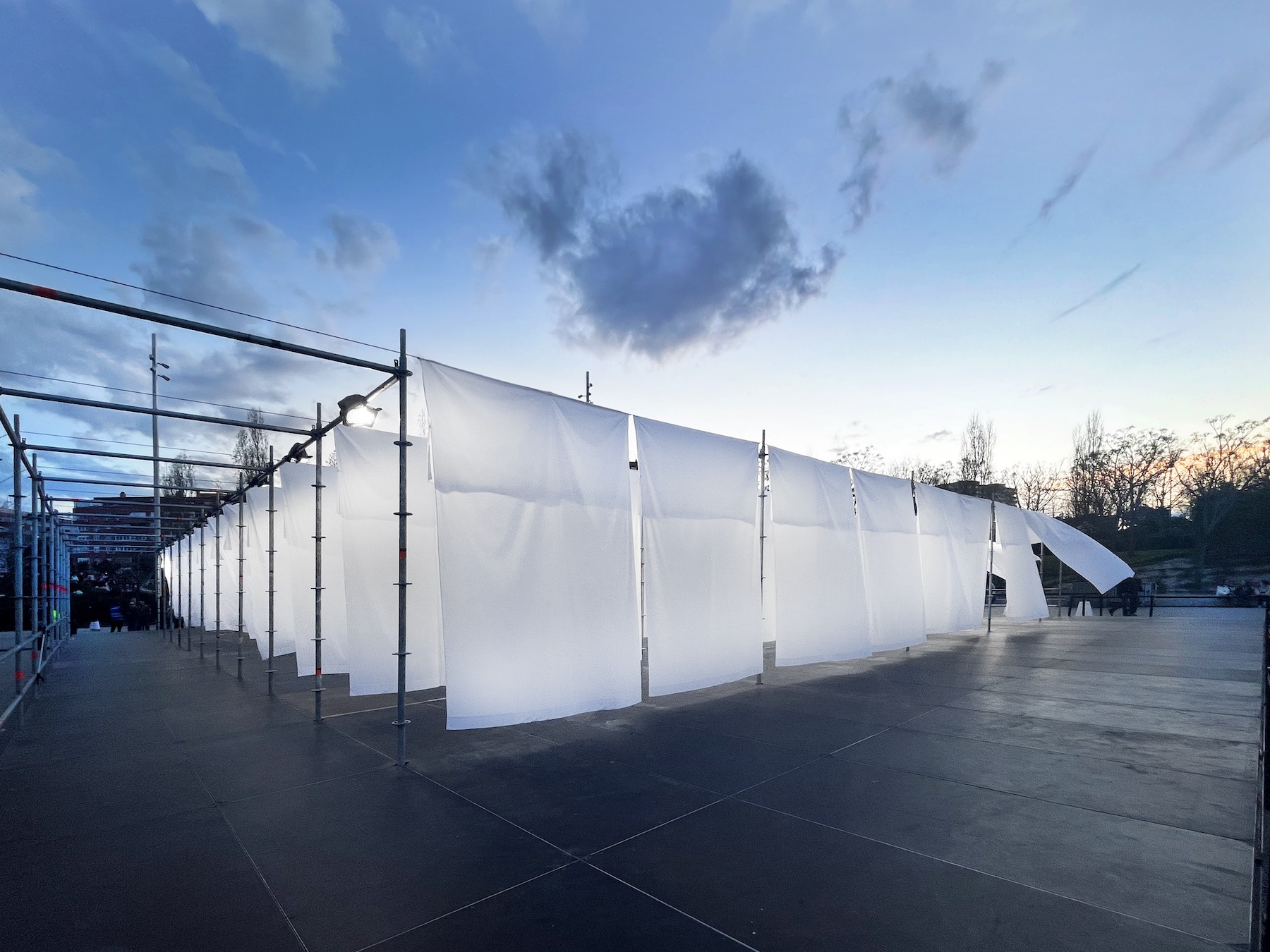
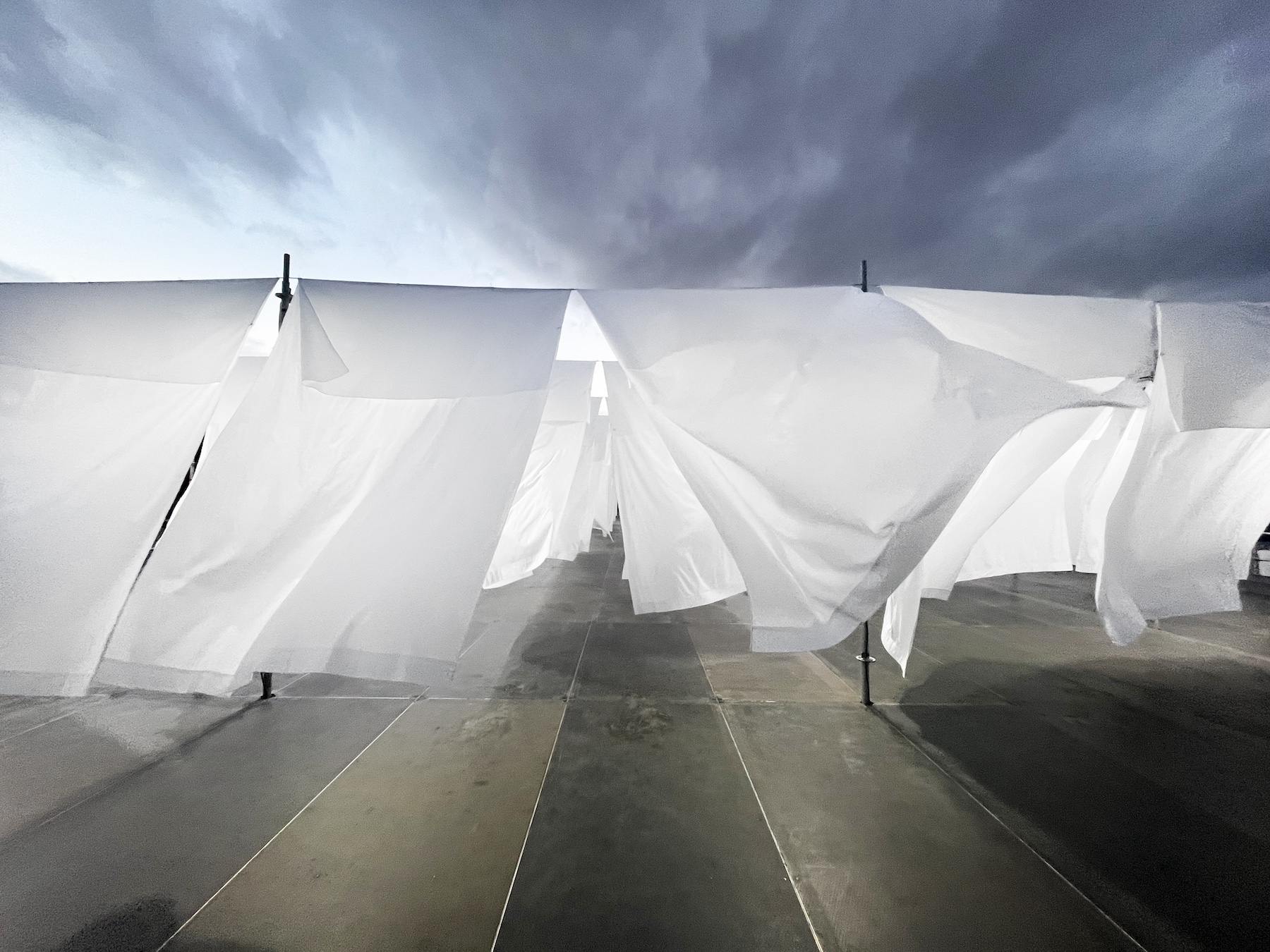
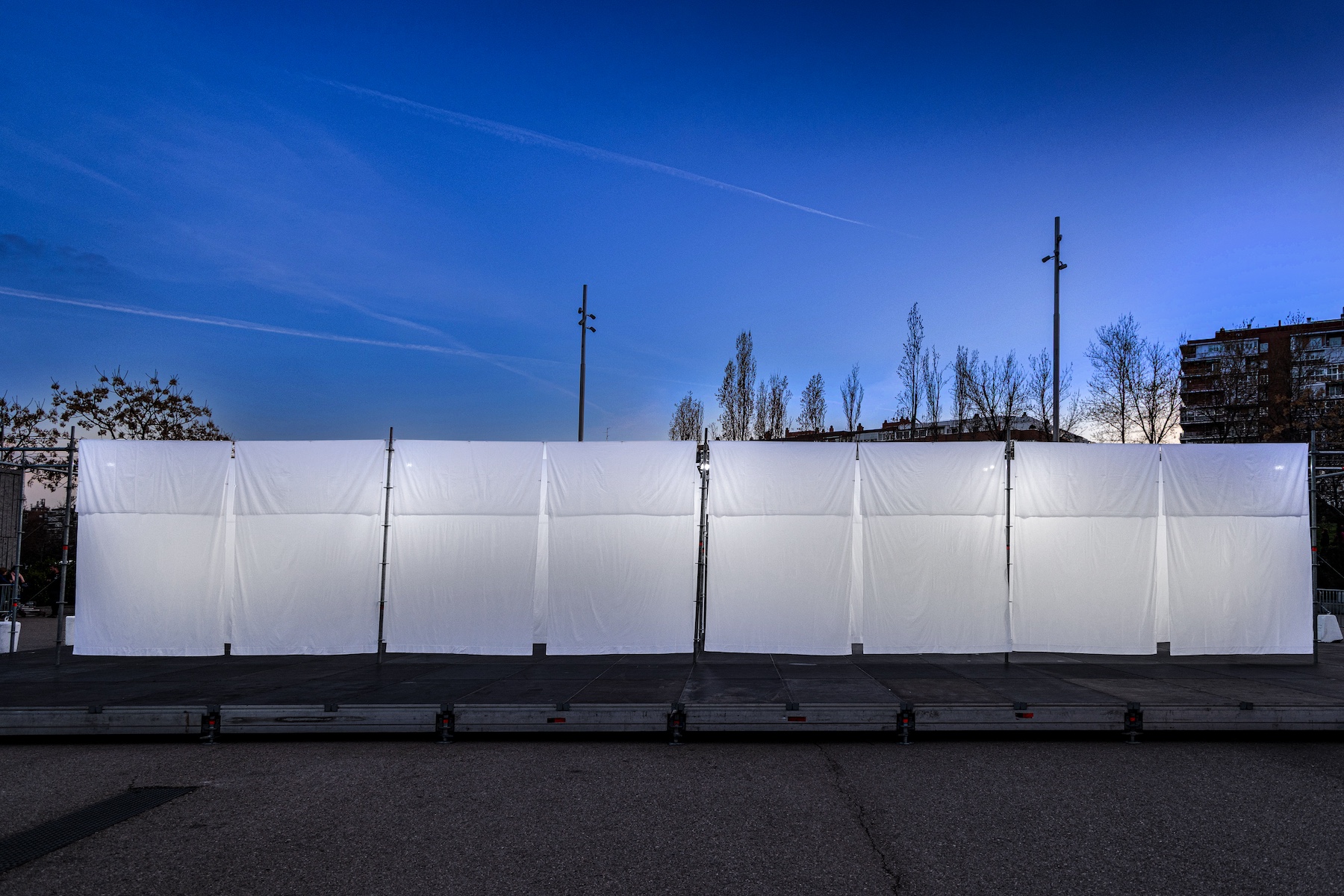
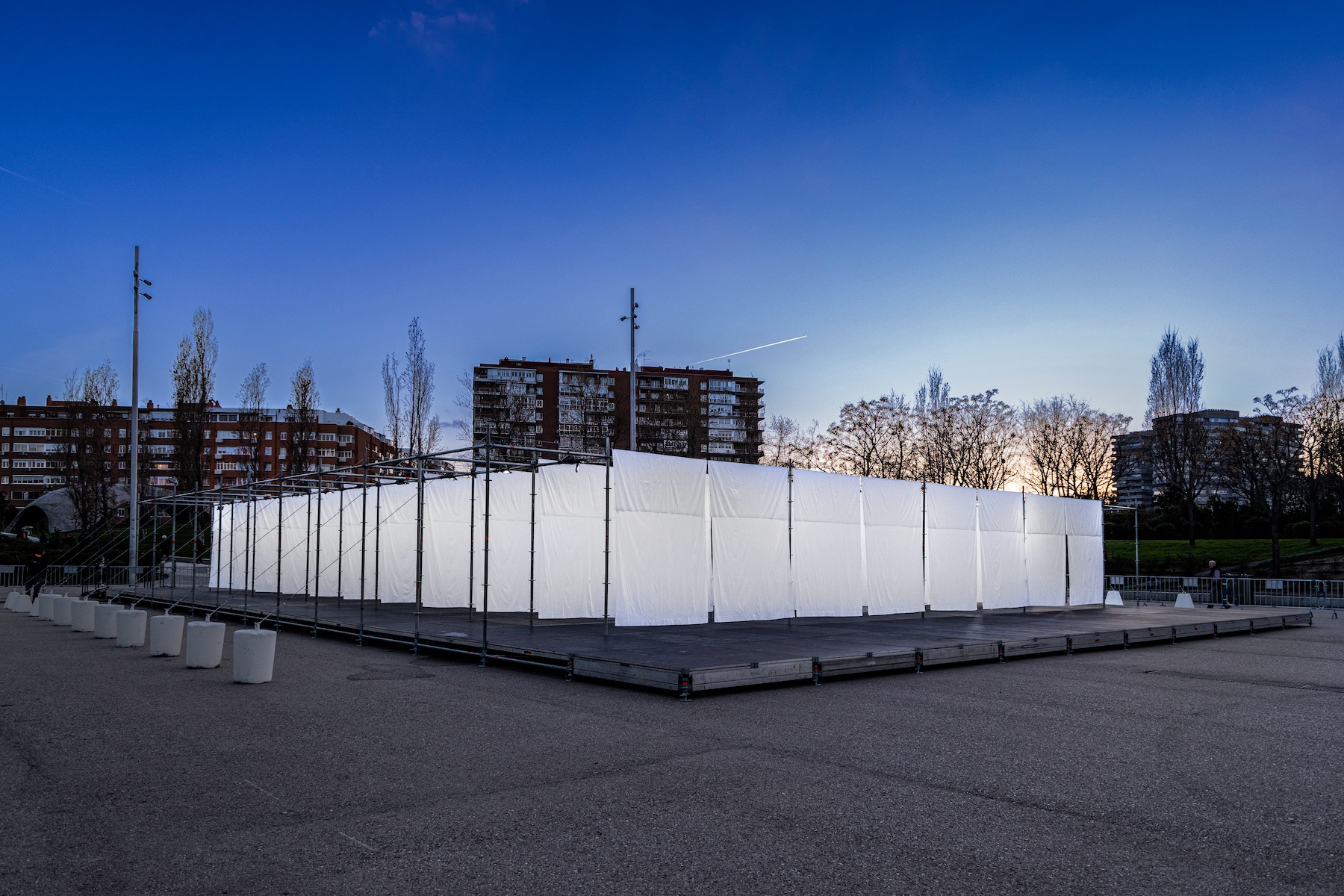
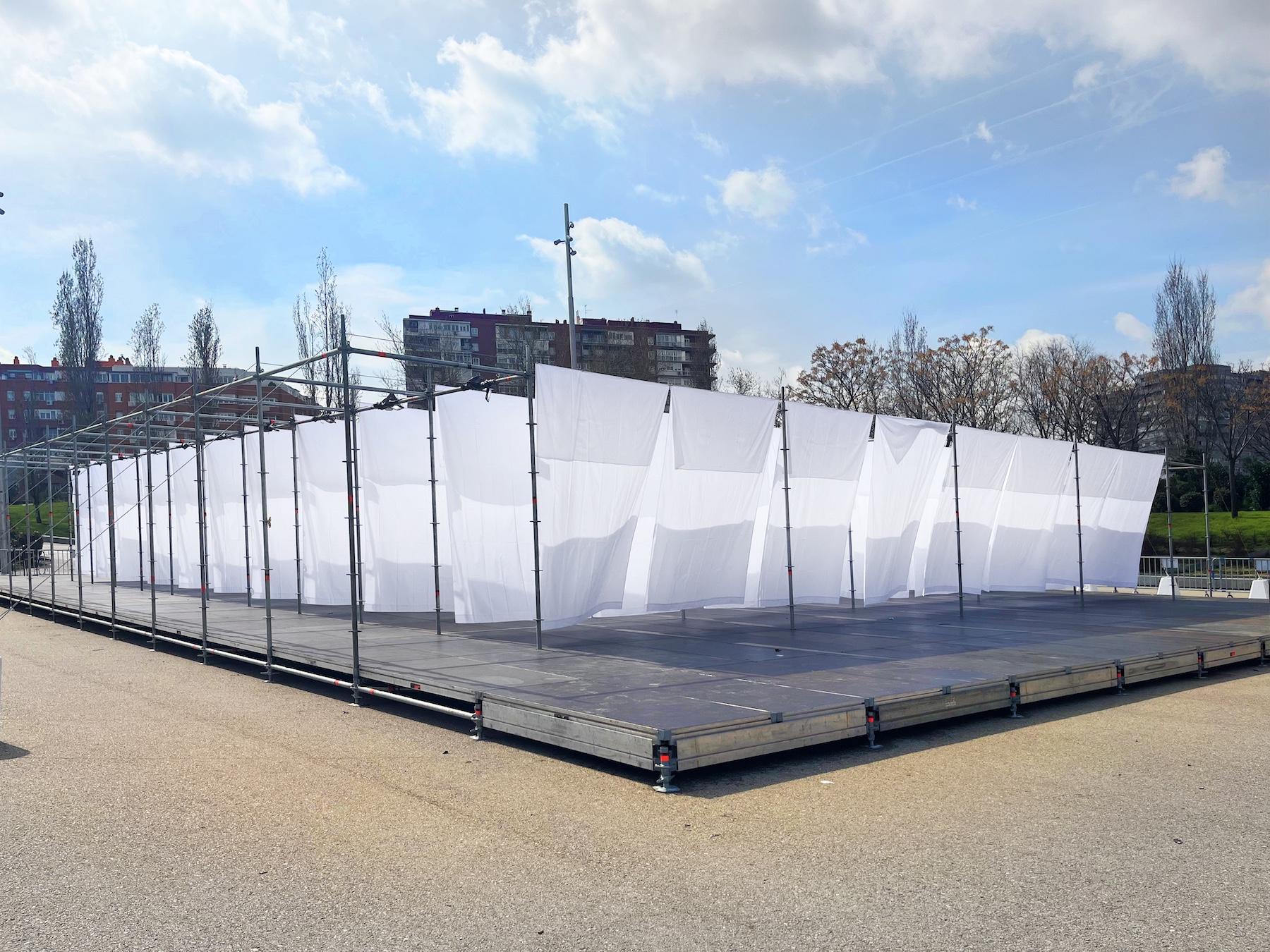
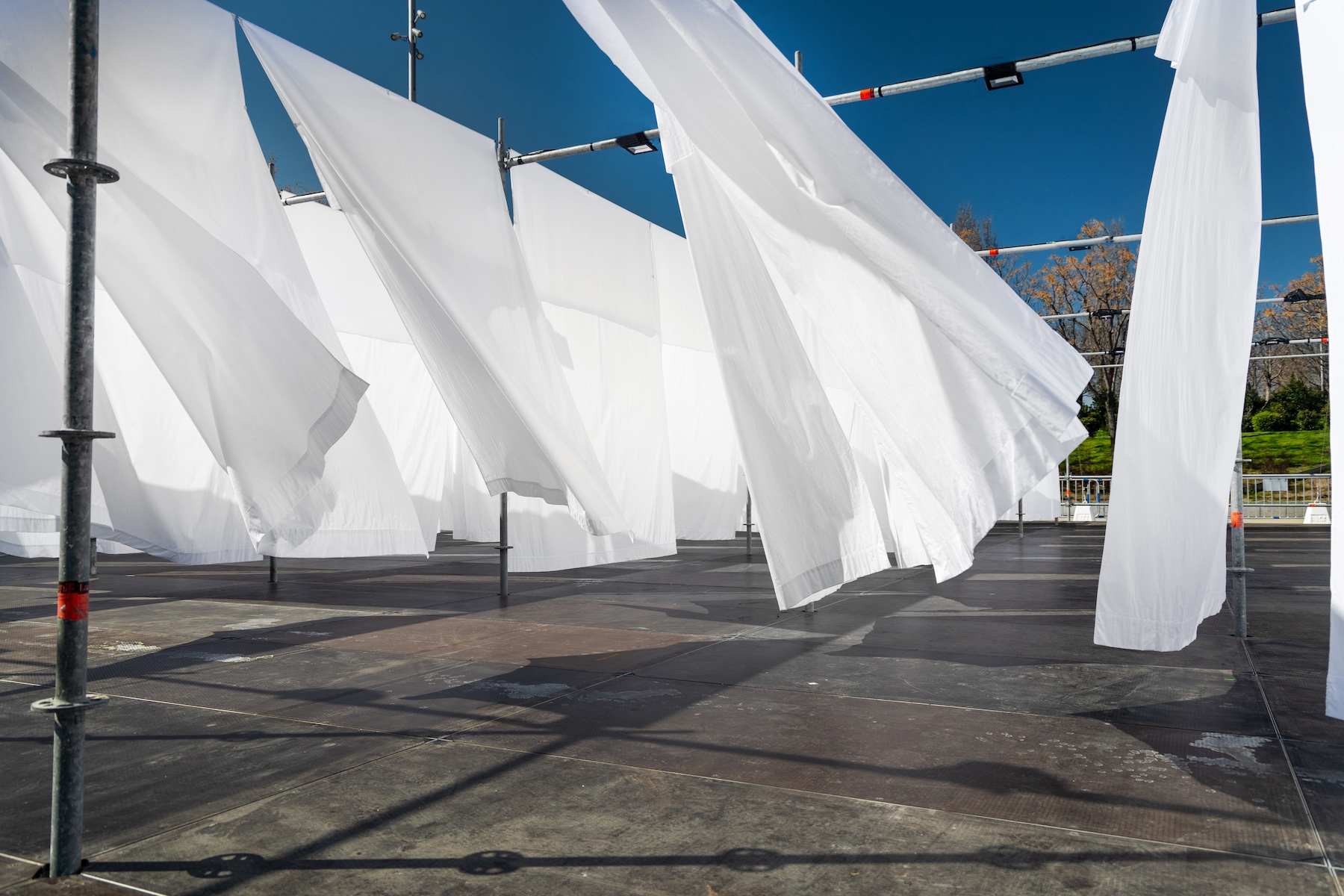
Last March we presented in Madrid Hanging Landscapes. A low-tech intervention made with white fabric, wind, light and the scent of clean laundry, as part of the LuzMadrid 2026 festival. It gave us particular pleasure to do it in the city where we live and where we have been working since the beginning.
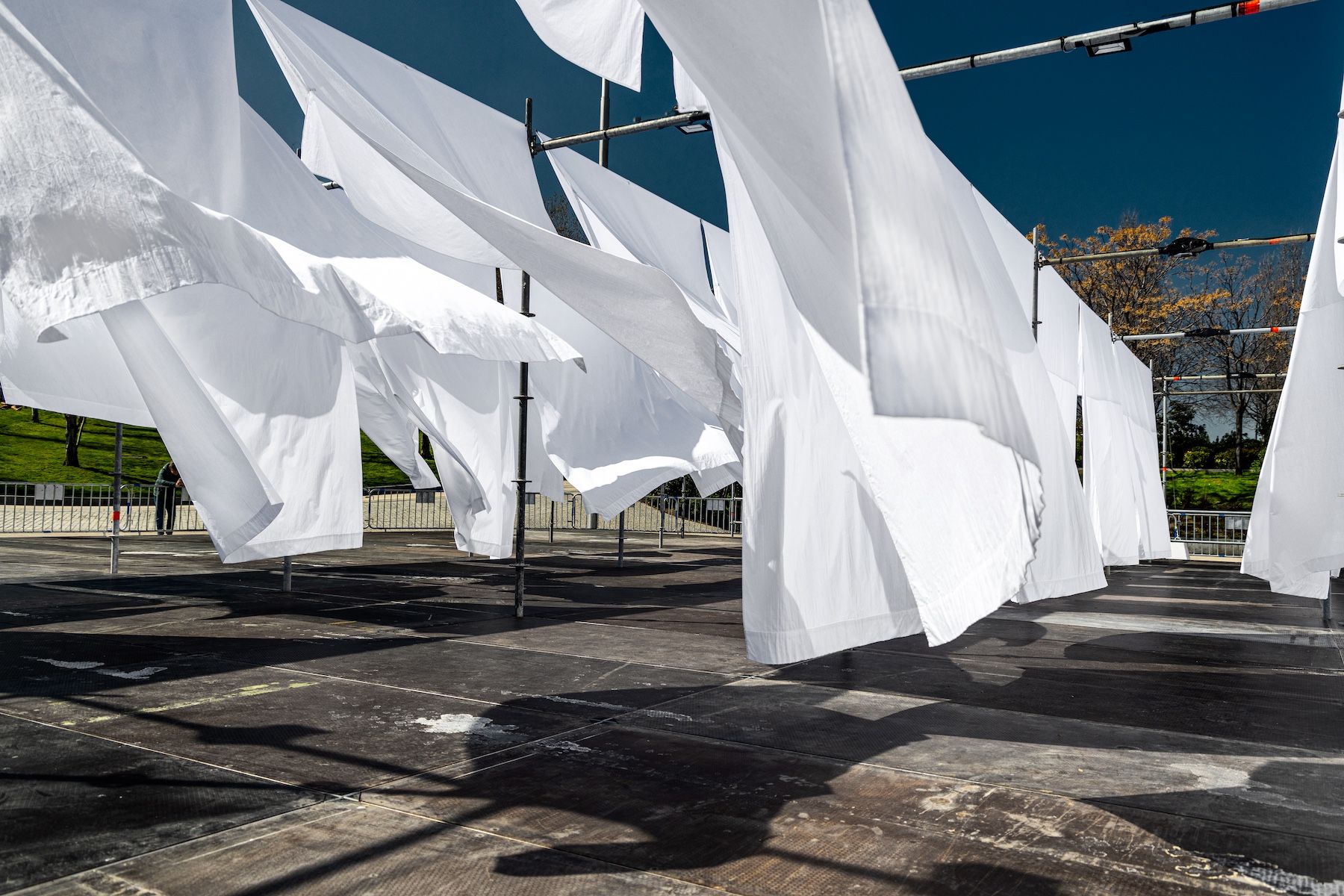
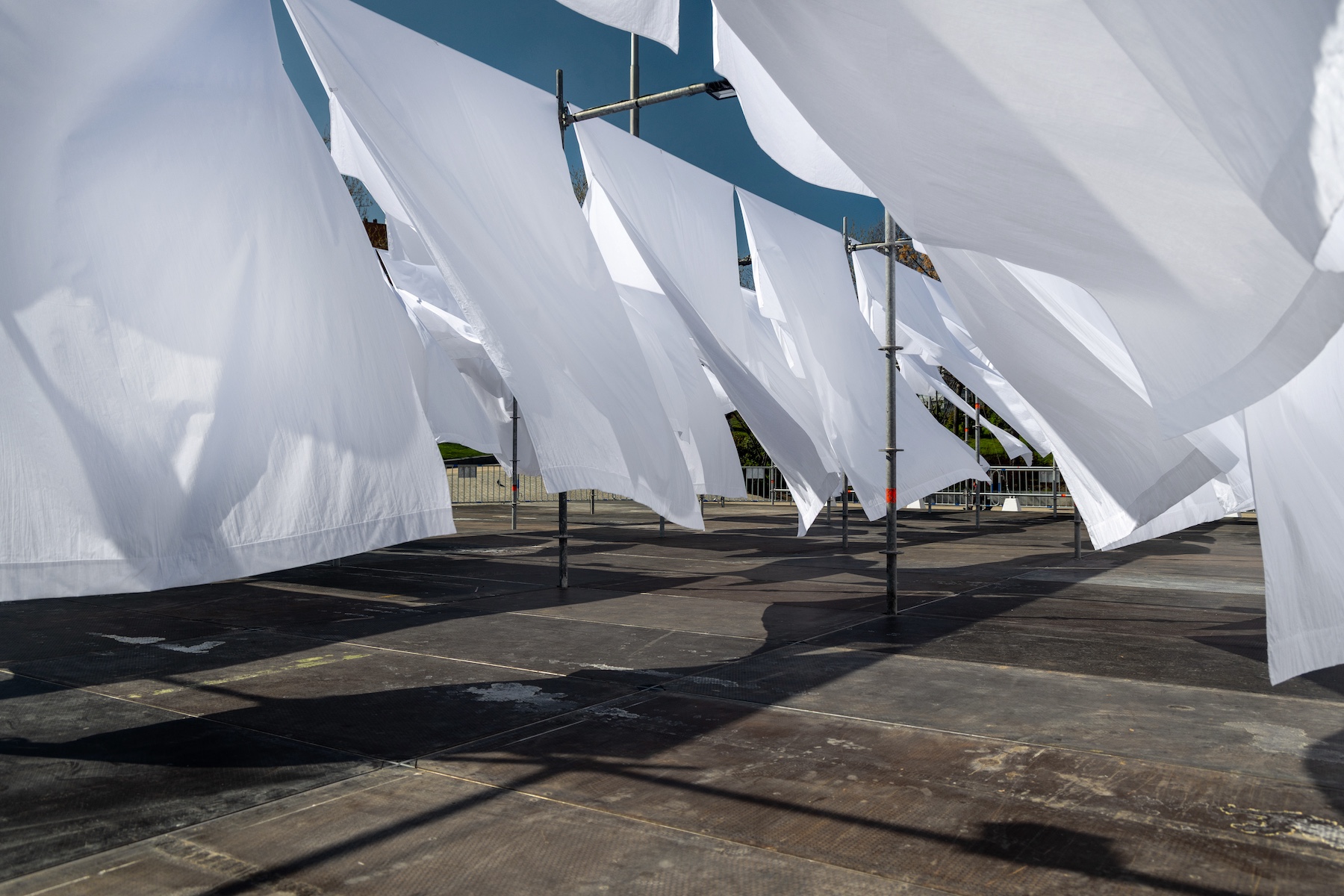
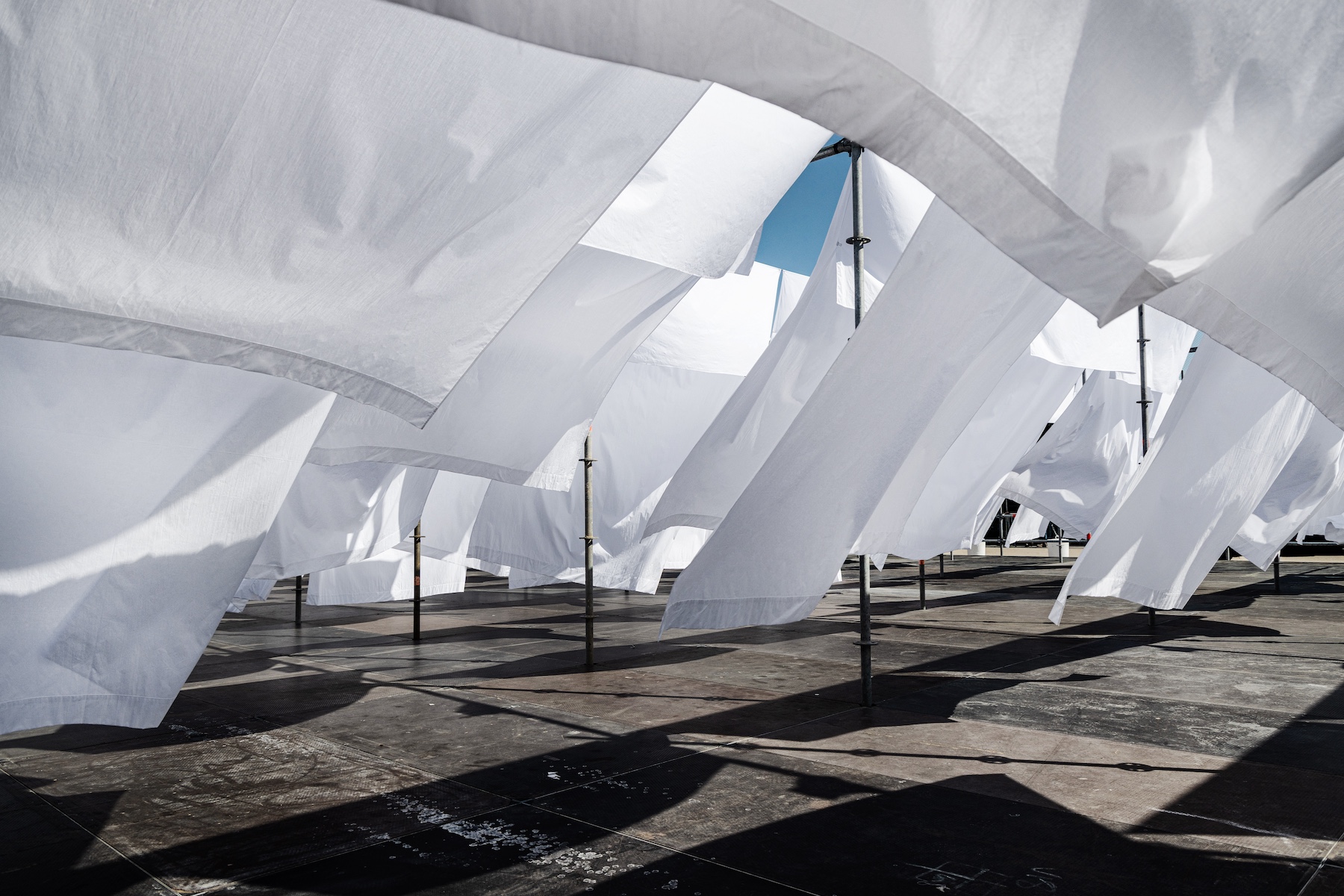
Hanging Landscapes brings back an image that belongs to the collective imagination: white sheets stirred by the wind, hanging in the sun, carrying the scent of clean laundry and crossed by clear light. A scene linked to childhood, to the home and to everyday life.
But this image also allows us to remember those who for generations worked under hard and almost always invisible conditions: the washerwomen of the Manzanares River.
Well into the twentieth century, many women from Madrid washed clothes by hand in the river or in public washhouses. They walked from their homes carrying large baskets. They spent hours standing or kneeling, scrubbing in cold water, and then hung the laundry out in the sun. It was physically demanding work, poorly paid and rarely acknowledged, yet essential for sustaining the everyday life of the city.
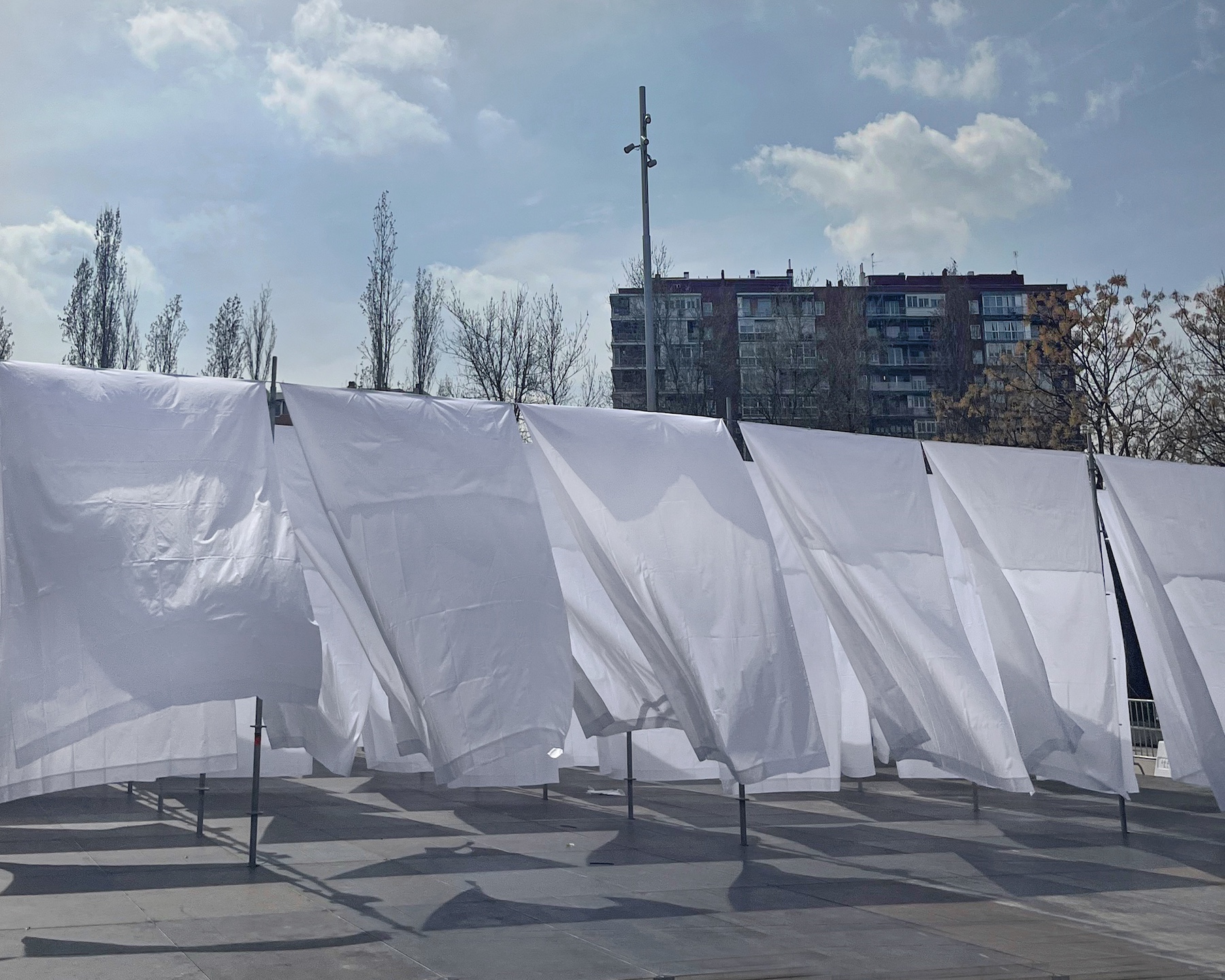
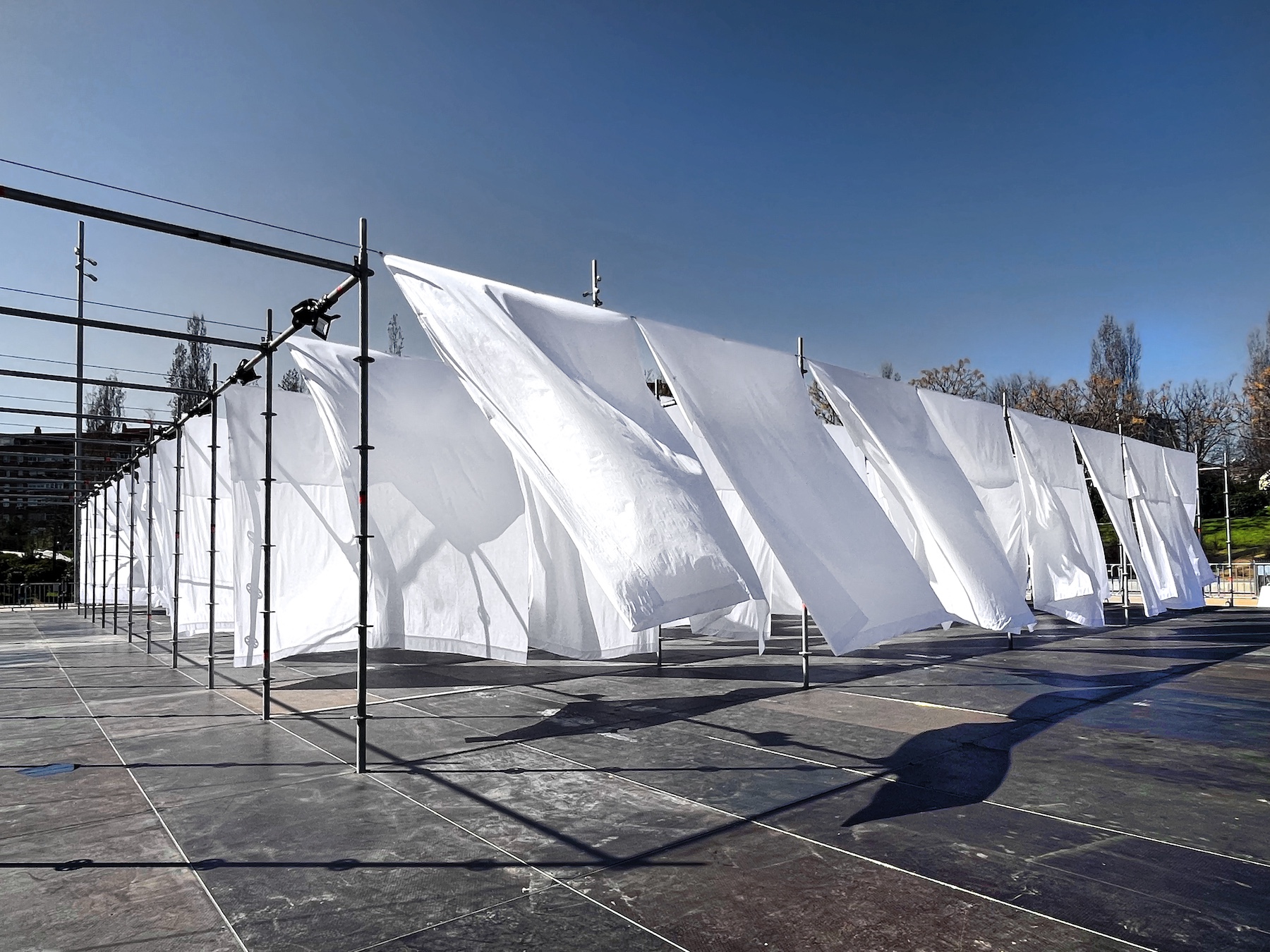
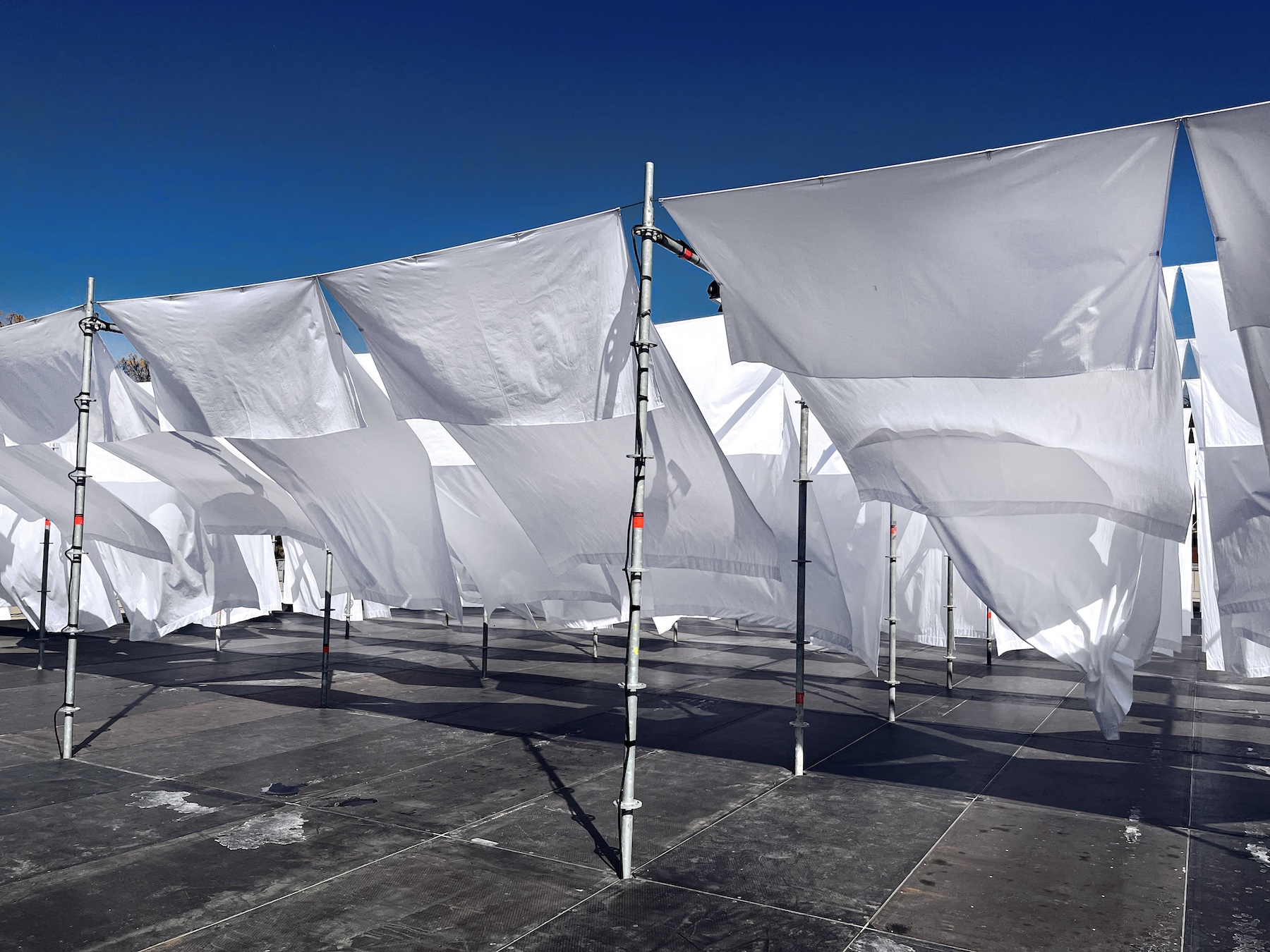
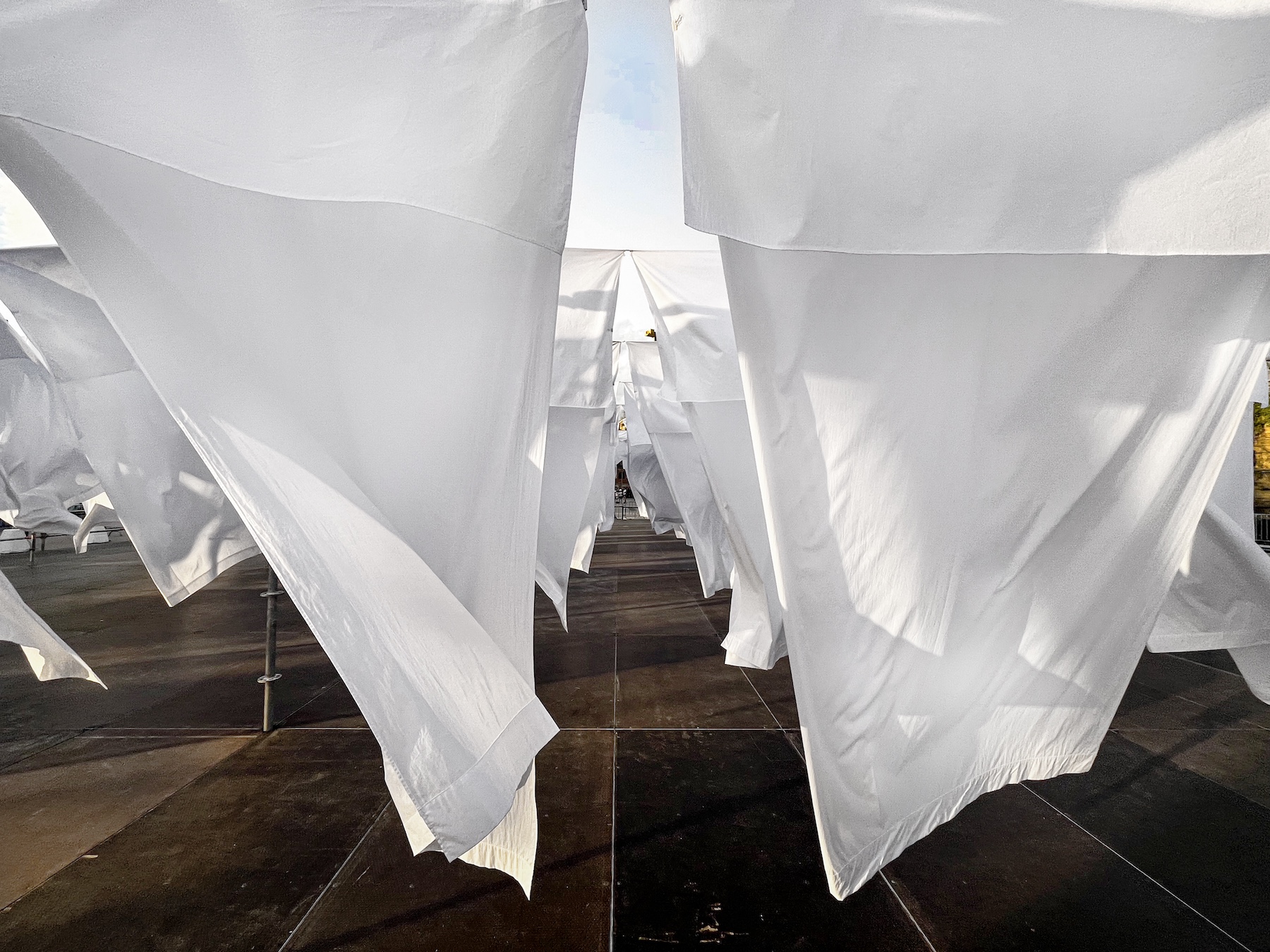
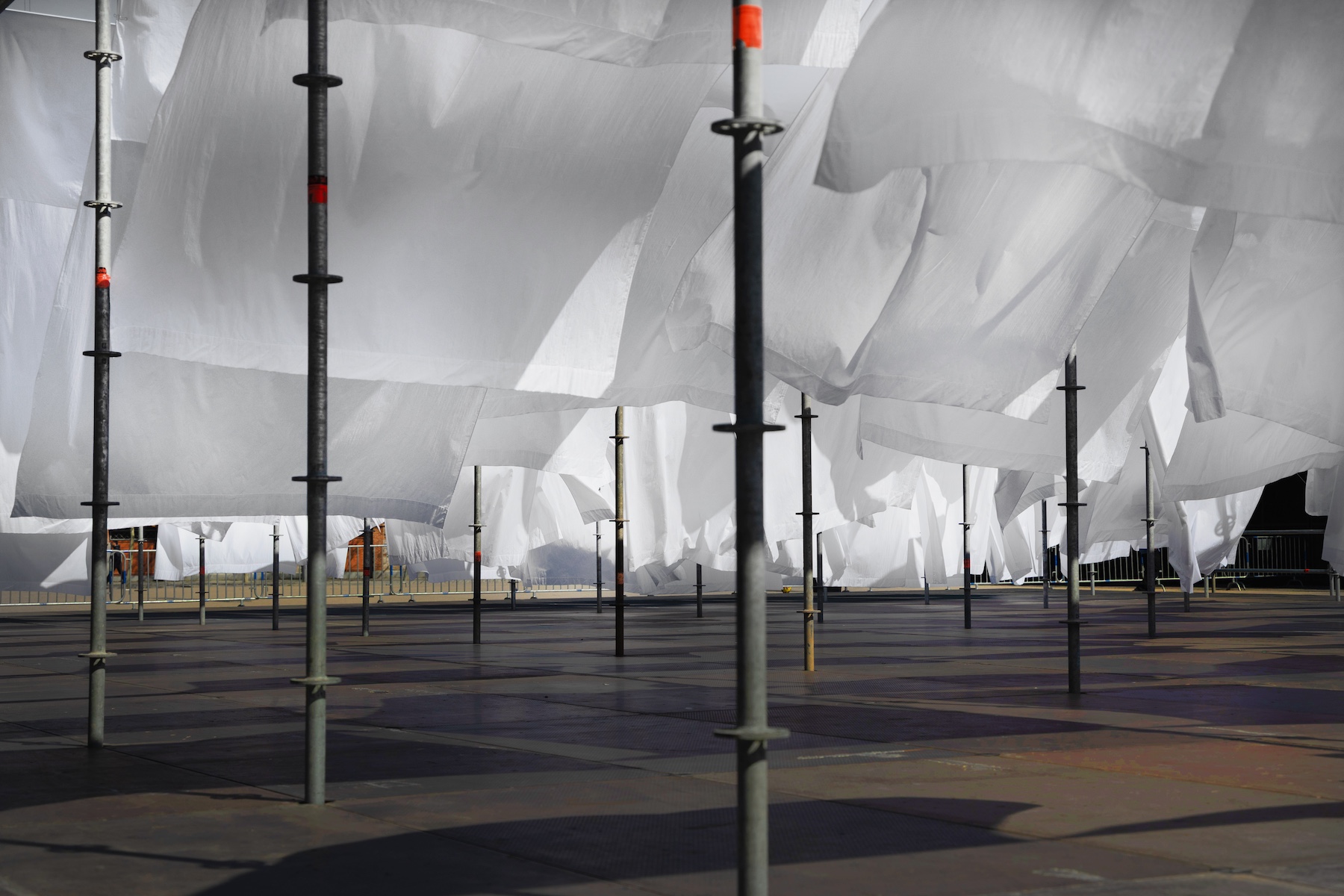
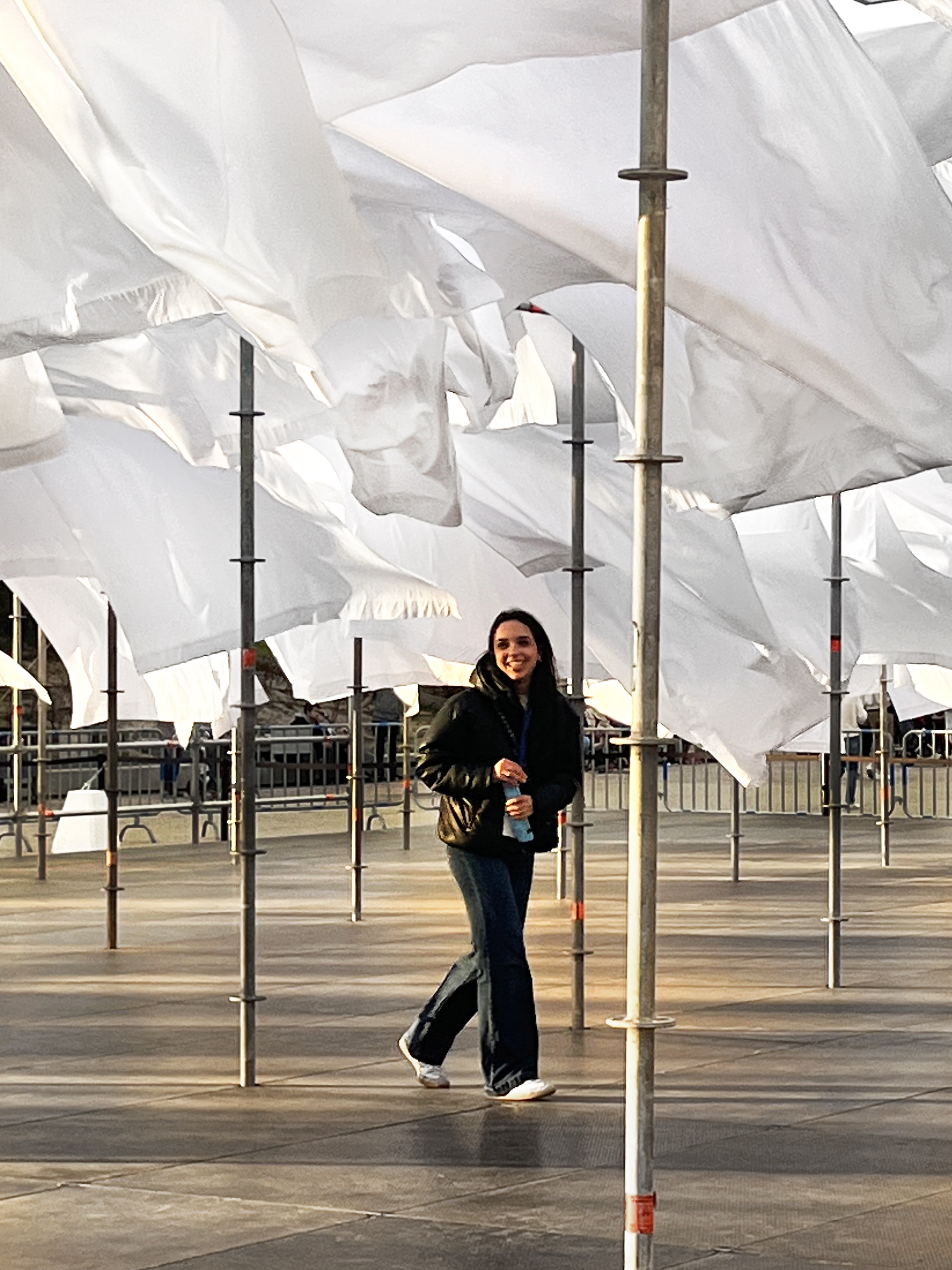
The piece did not attempt to represent this history directly, but rather to recreate the environment that once belonged to it: white laundry in the wind, movement, light and the sound of fabric moving in the air.
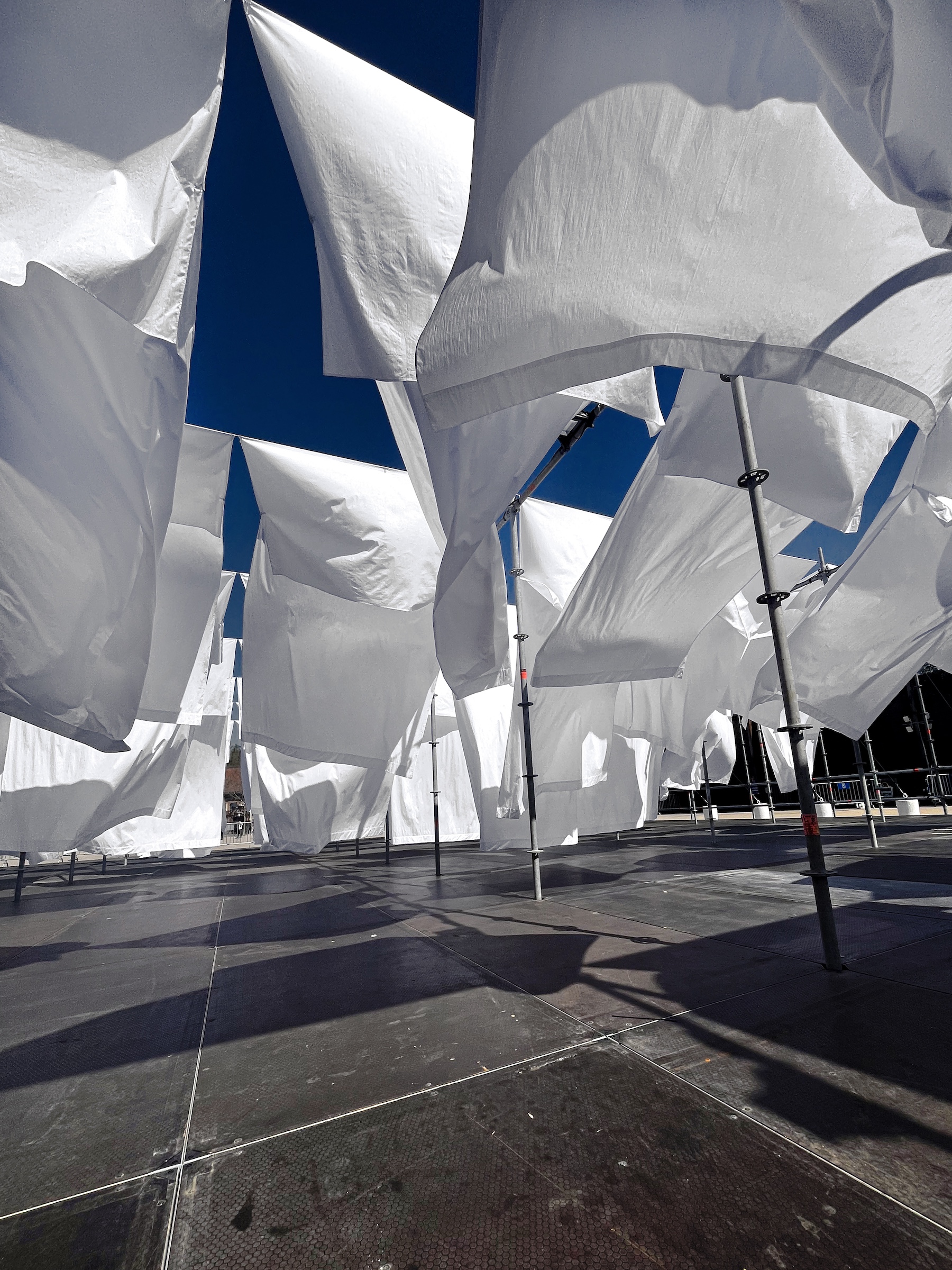
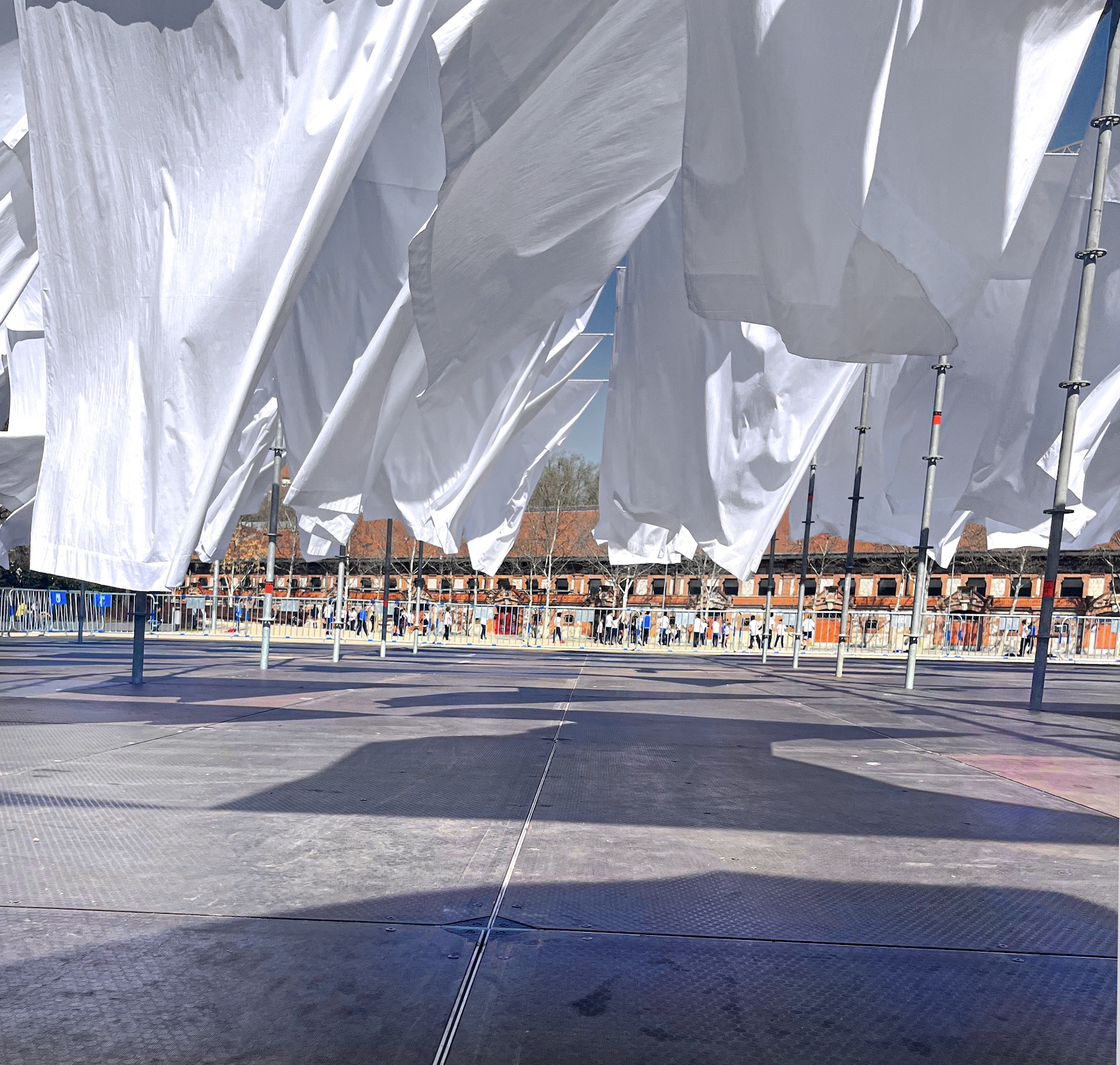
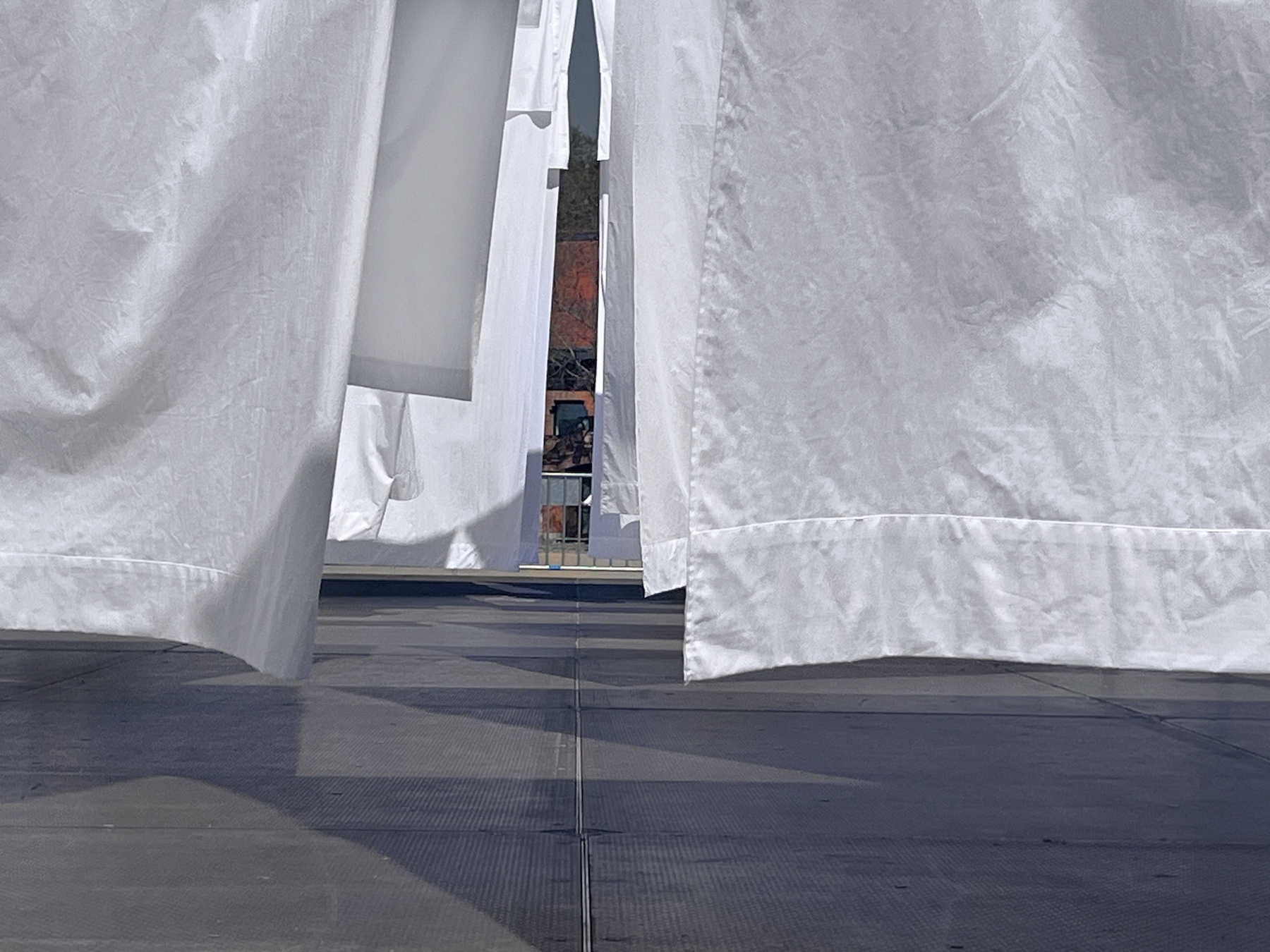
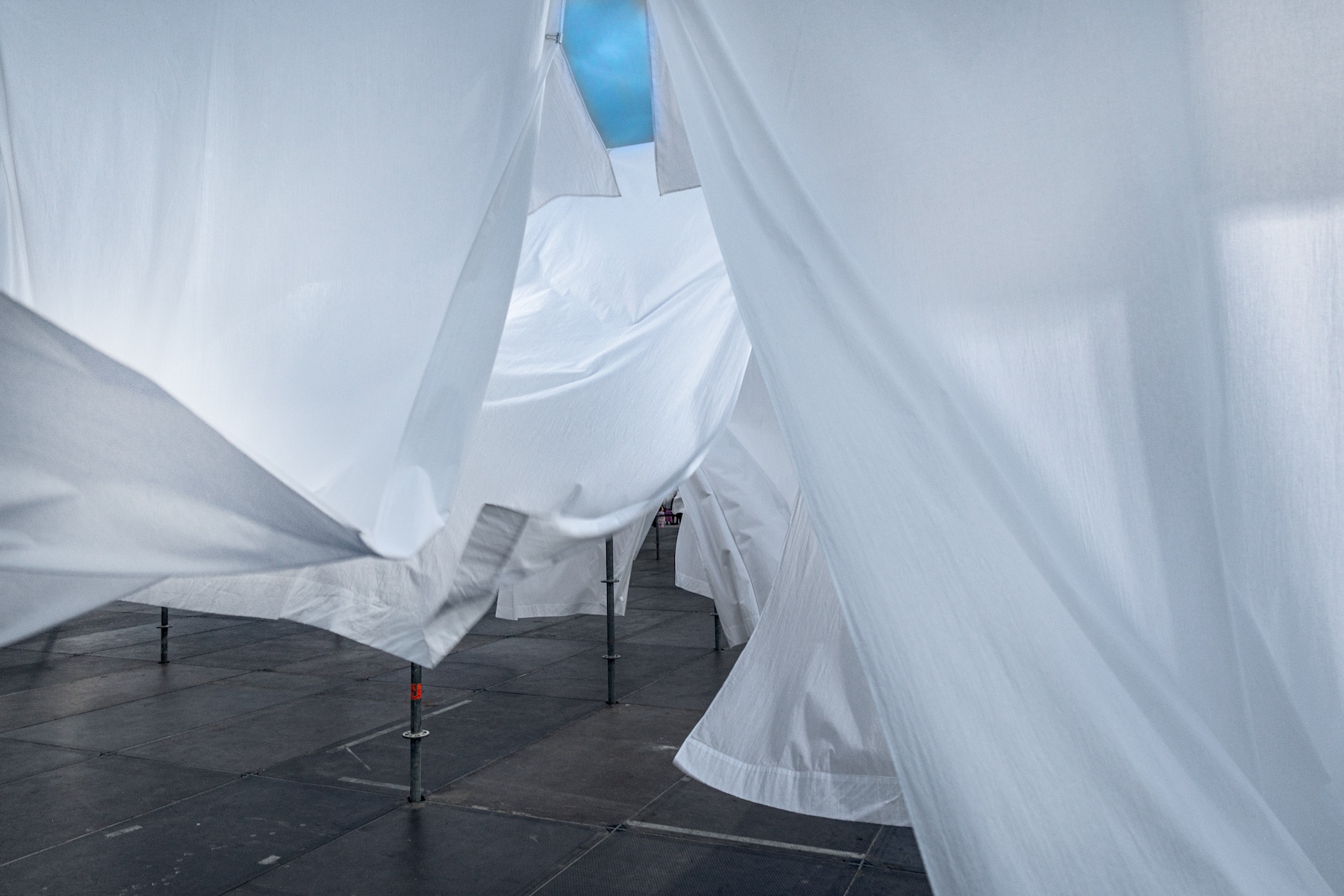
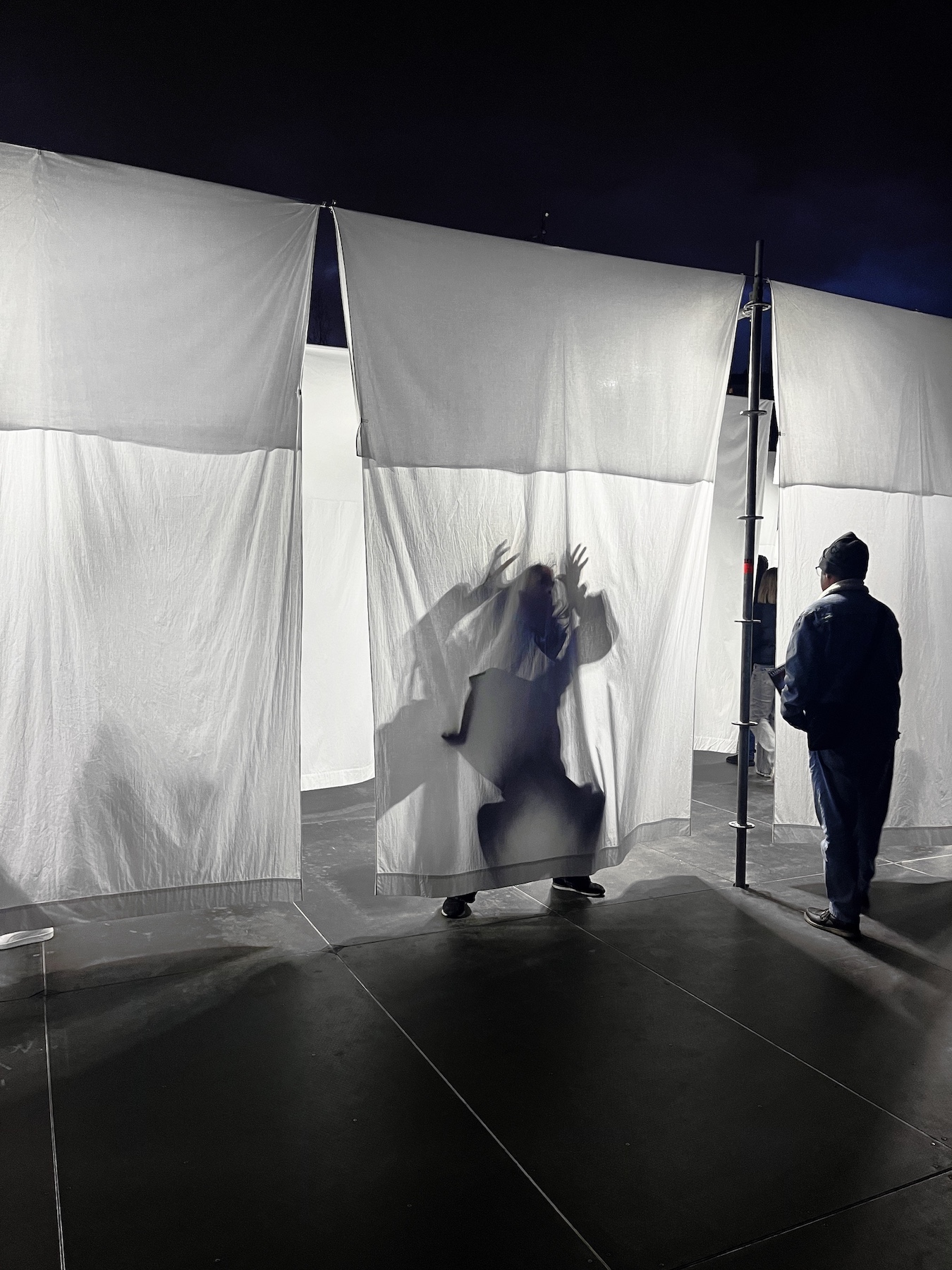
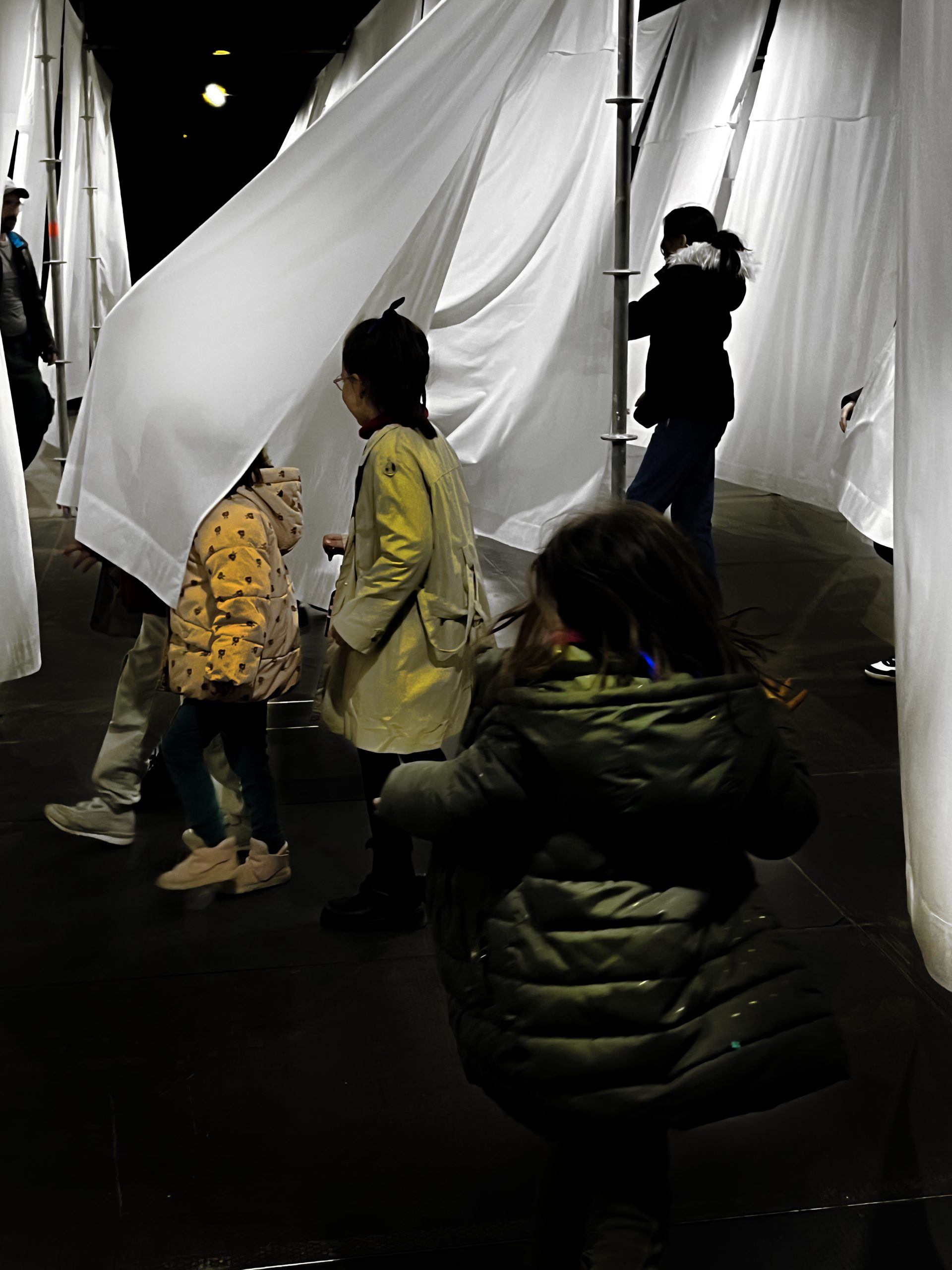
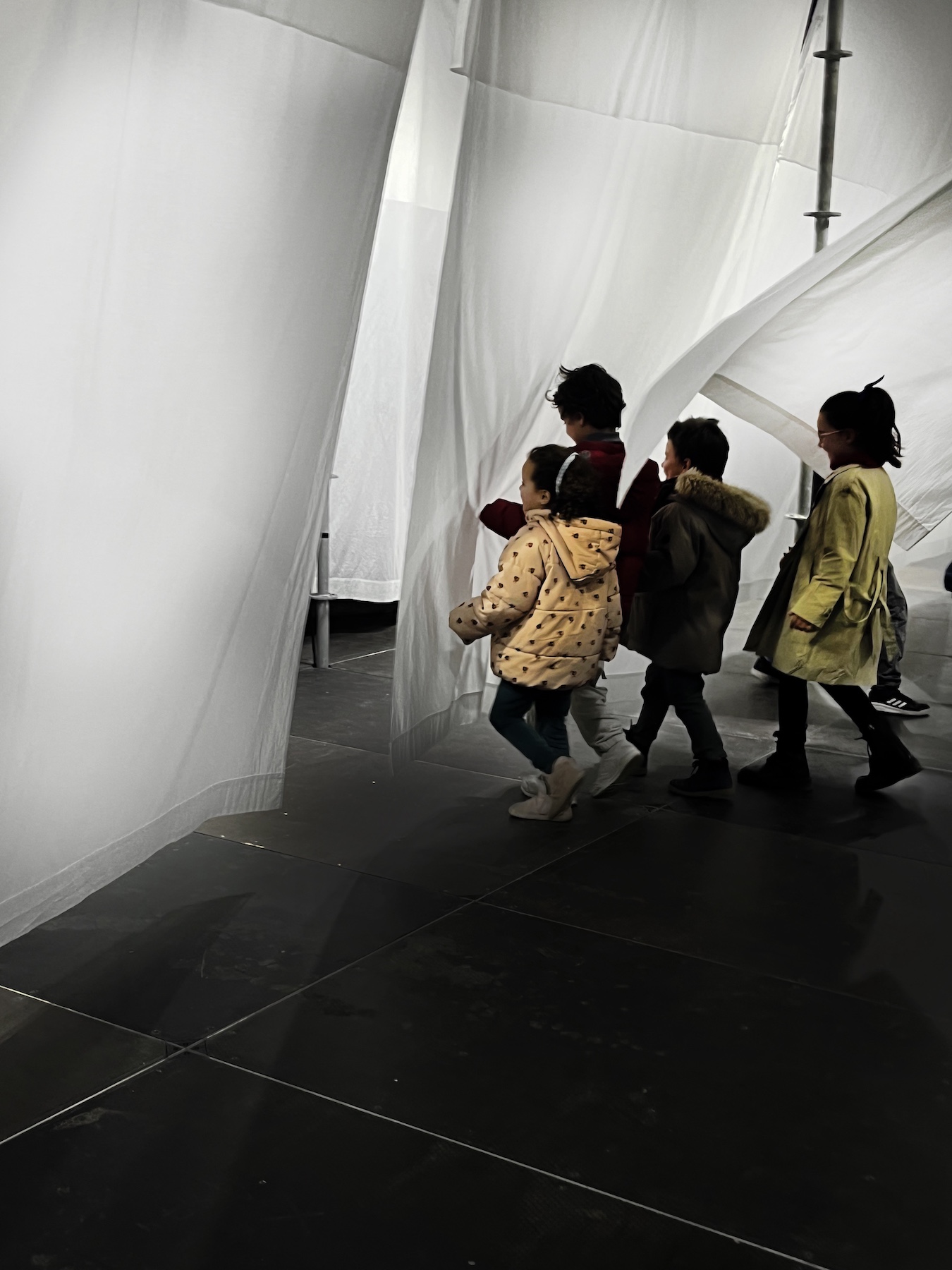
During the days of the installation something especially beautiful happened: children understood the piece immediately. They turned it into their playground, running between the sheets as if it were a small labyrinth. In many cases they even encouraged their parents to join in, inviting them to behave like big children for a while.
More than 15,000 people enjoyed the installation during the three days of the festival, a notable figure considering that visitors were invited to stay and enjoy the piece for as long as they wished.
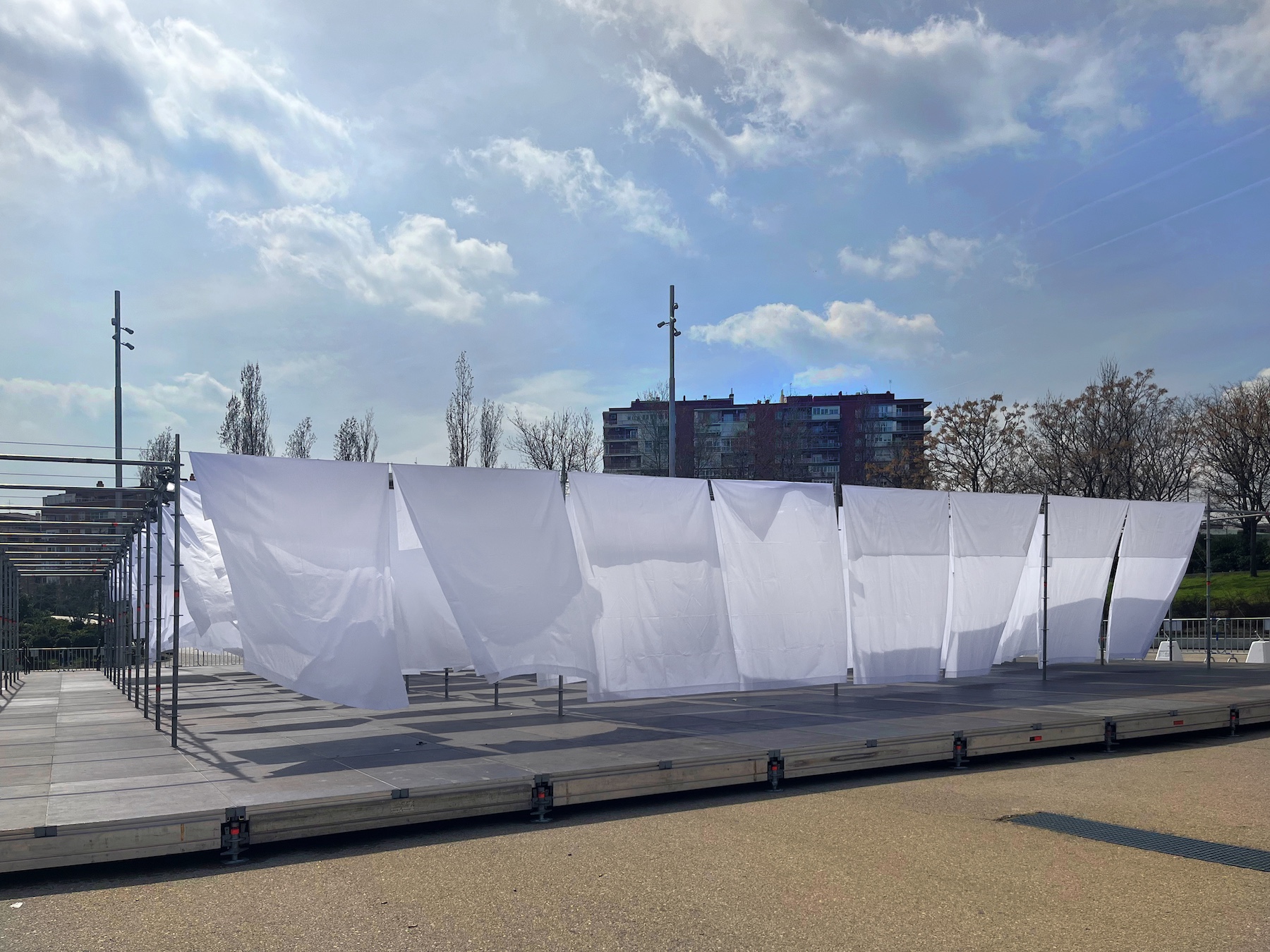
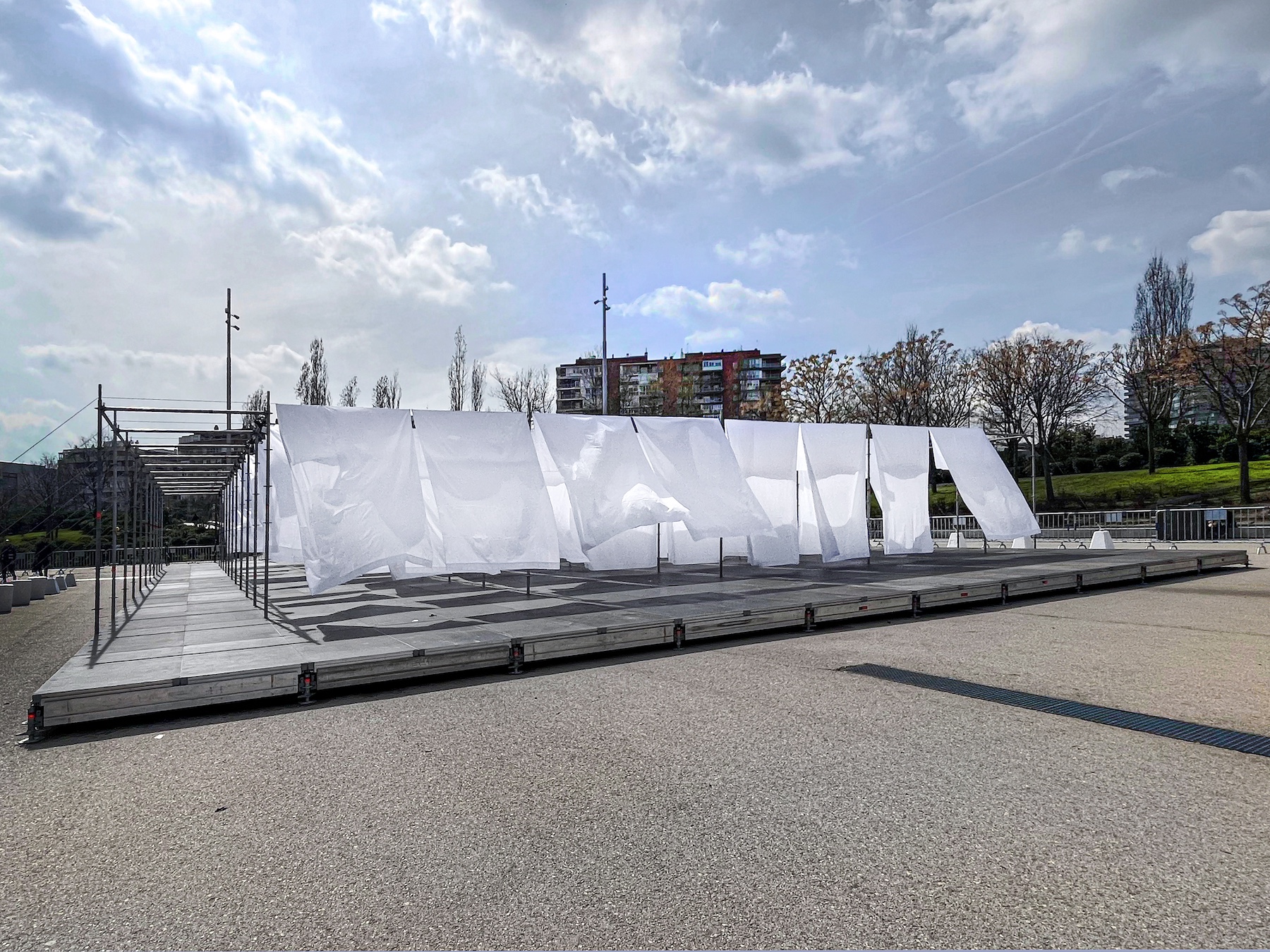
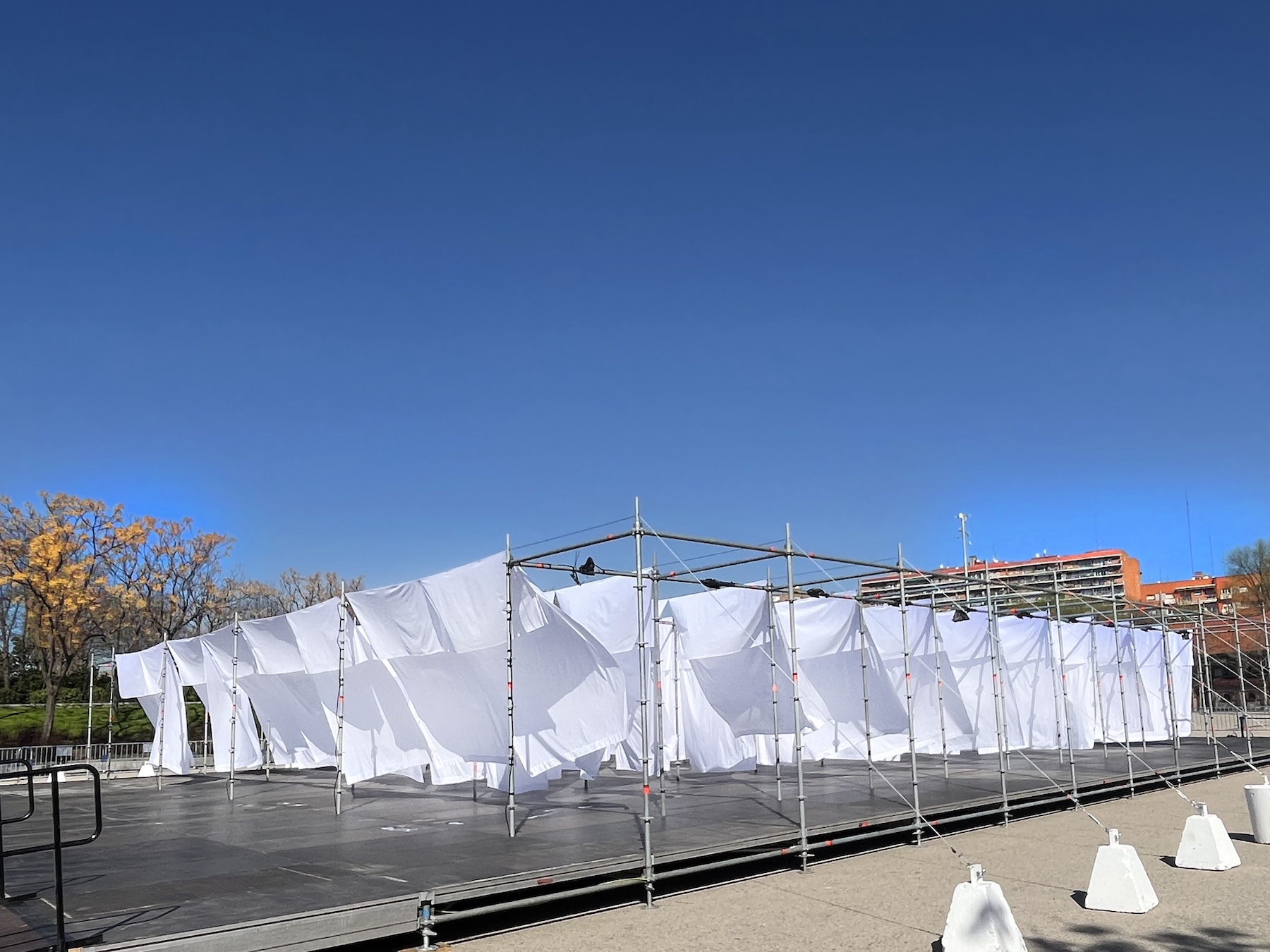
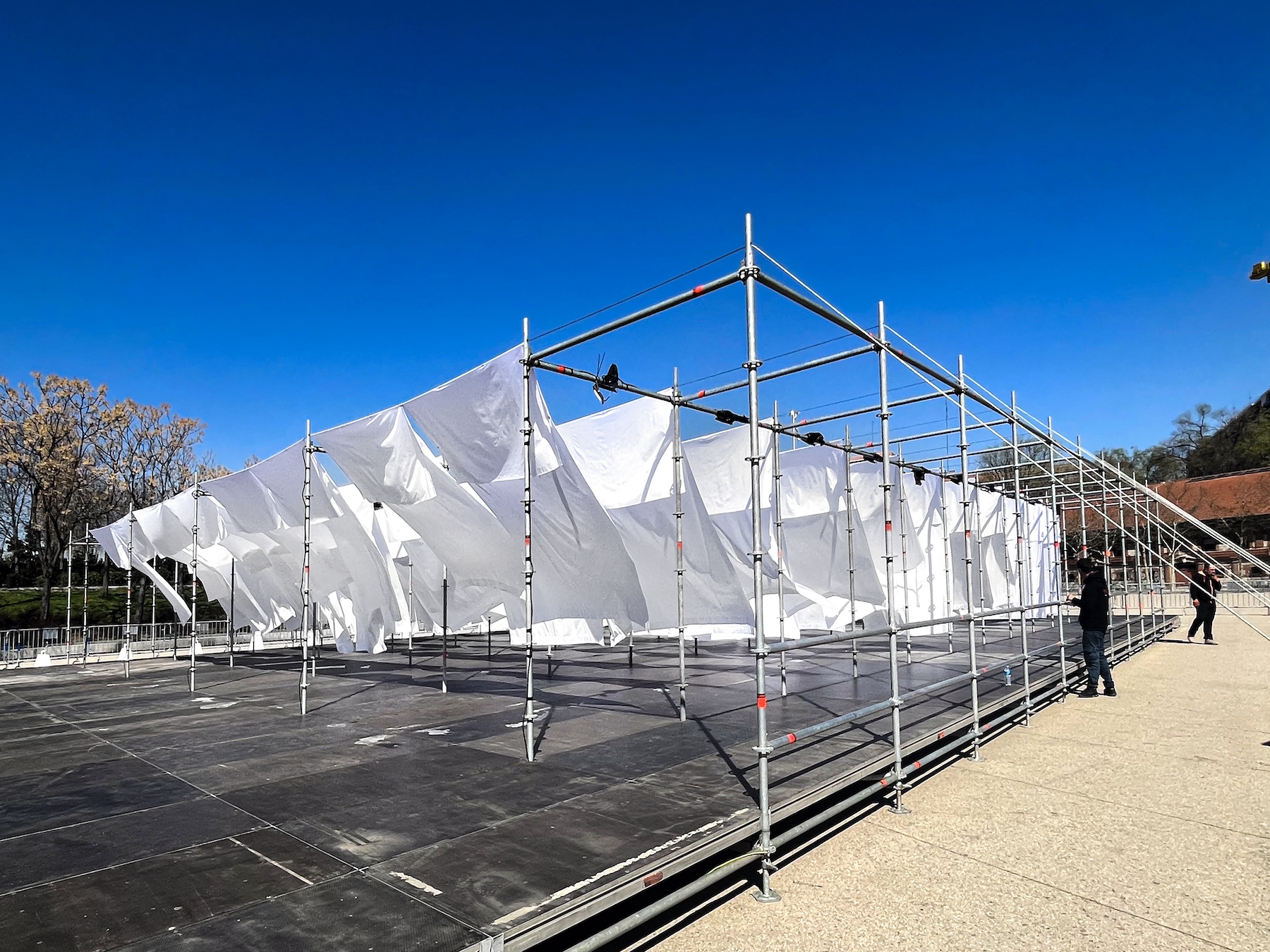
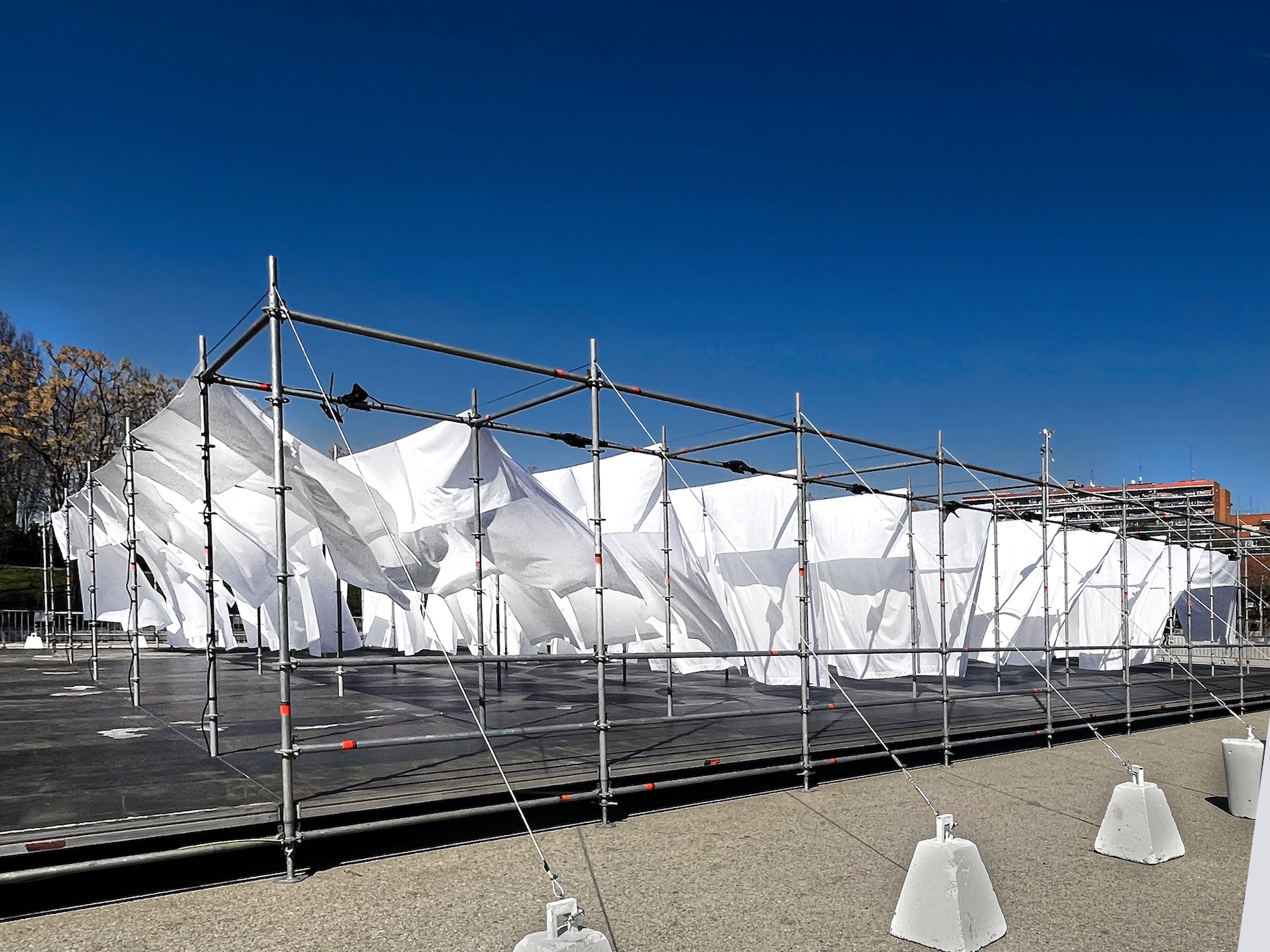
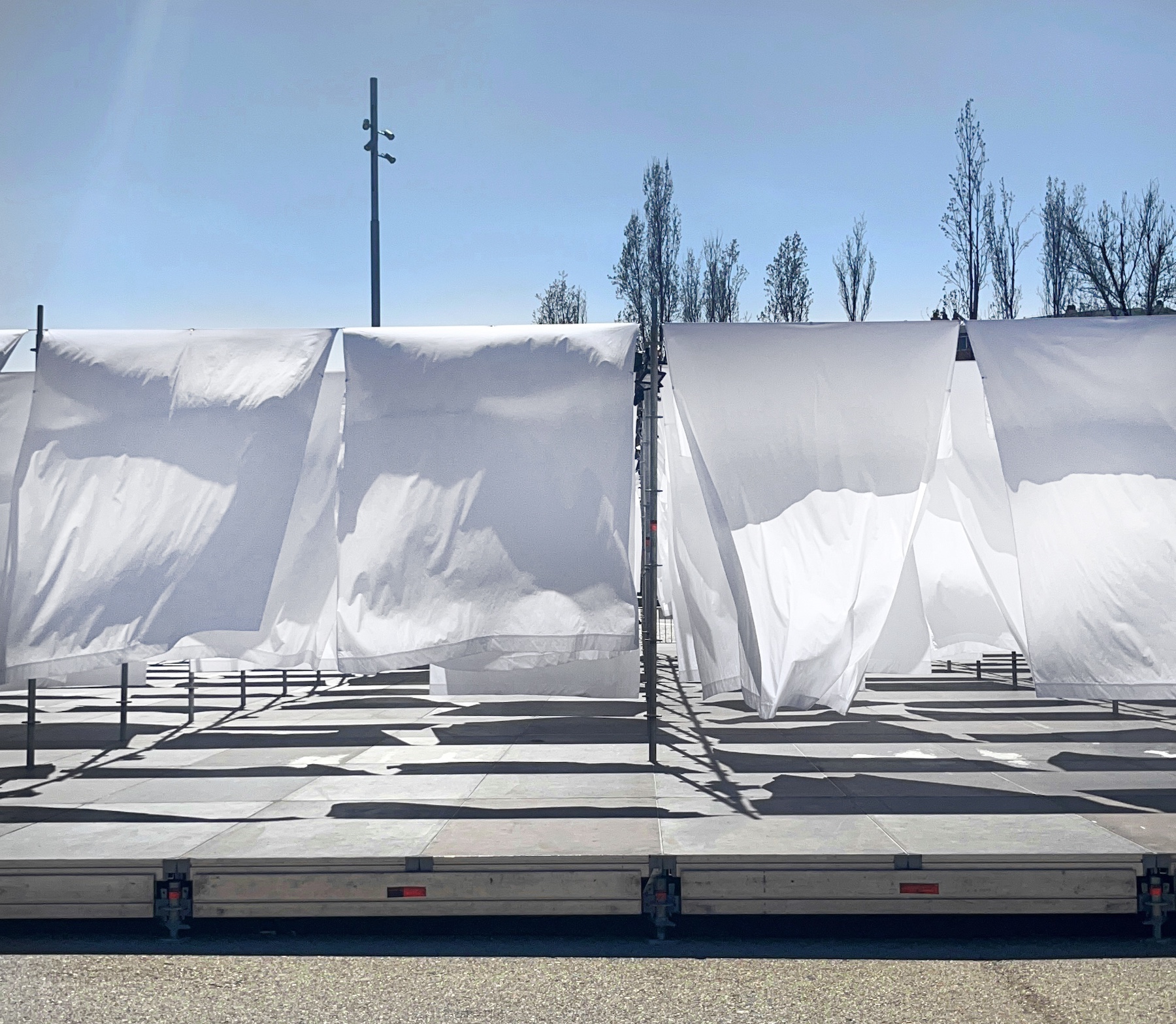
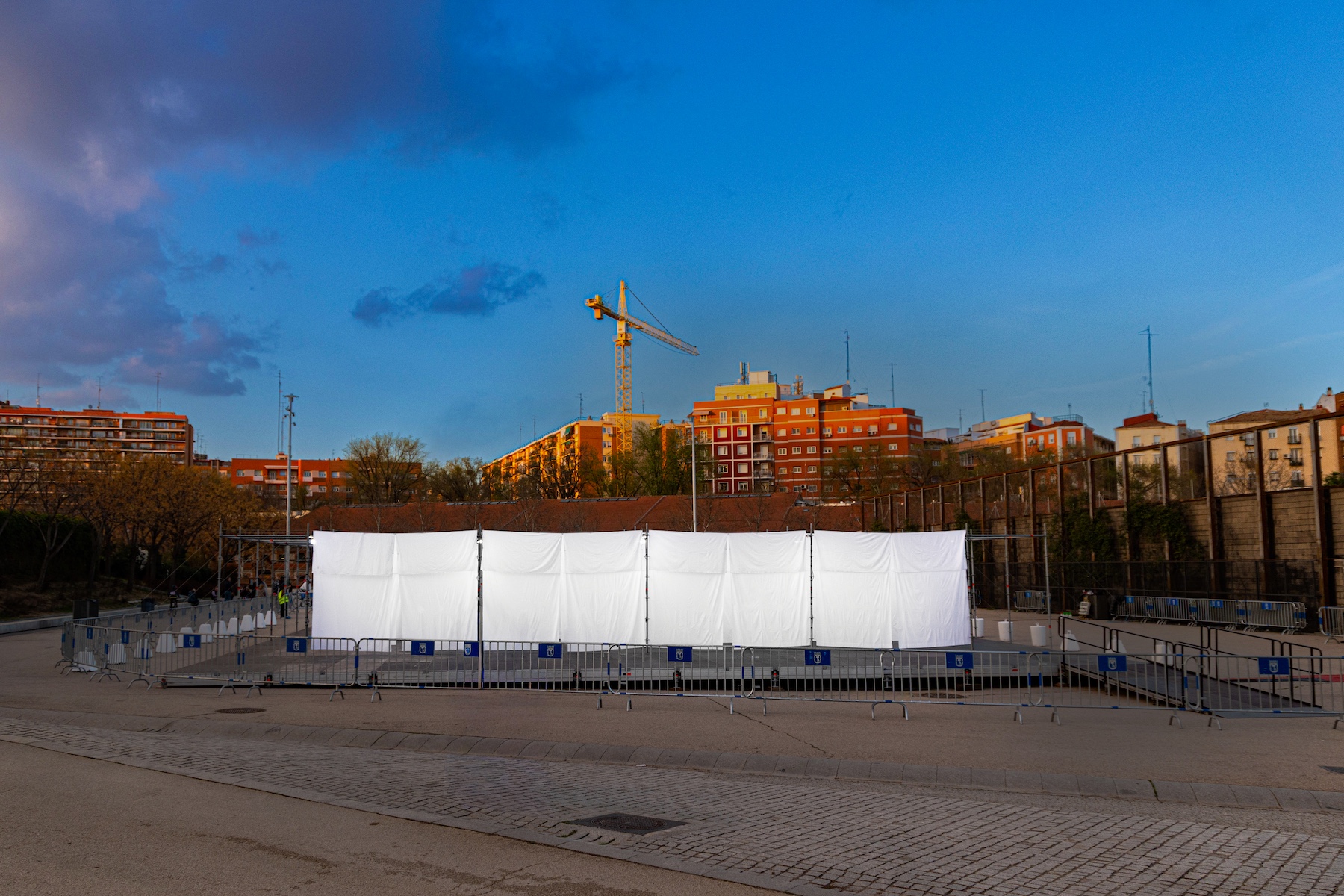
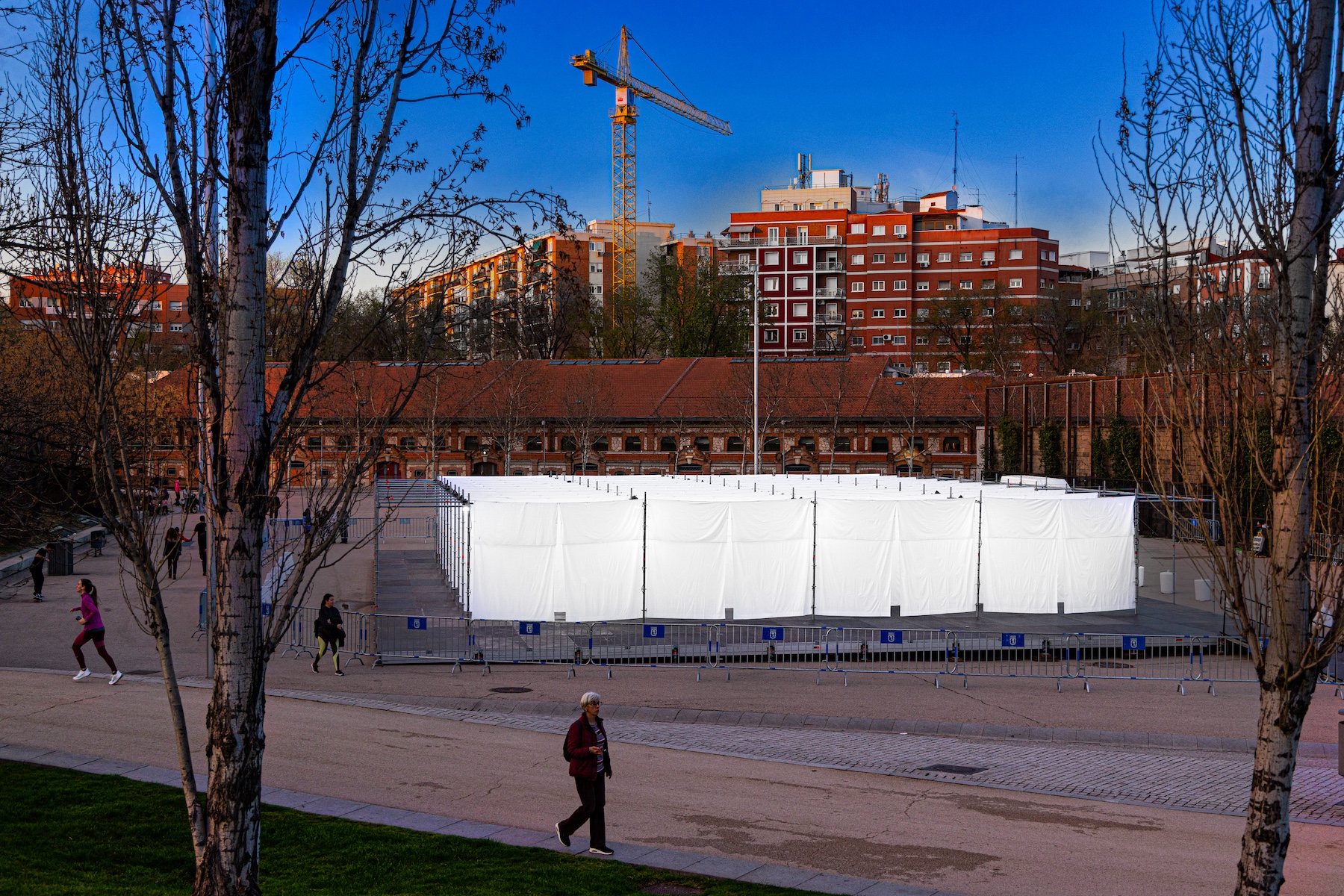
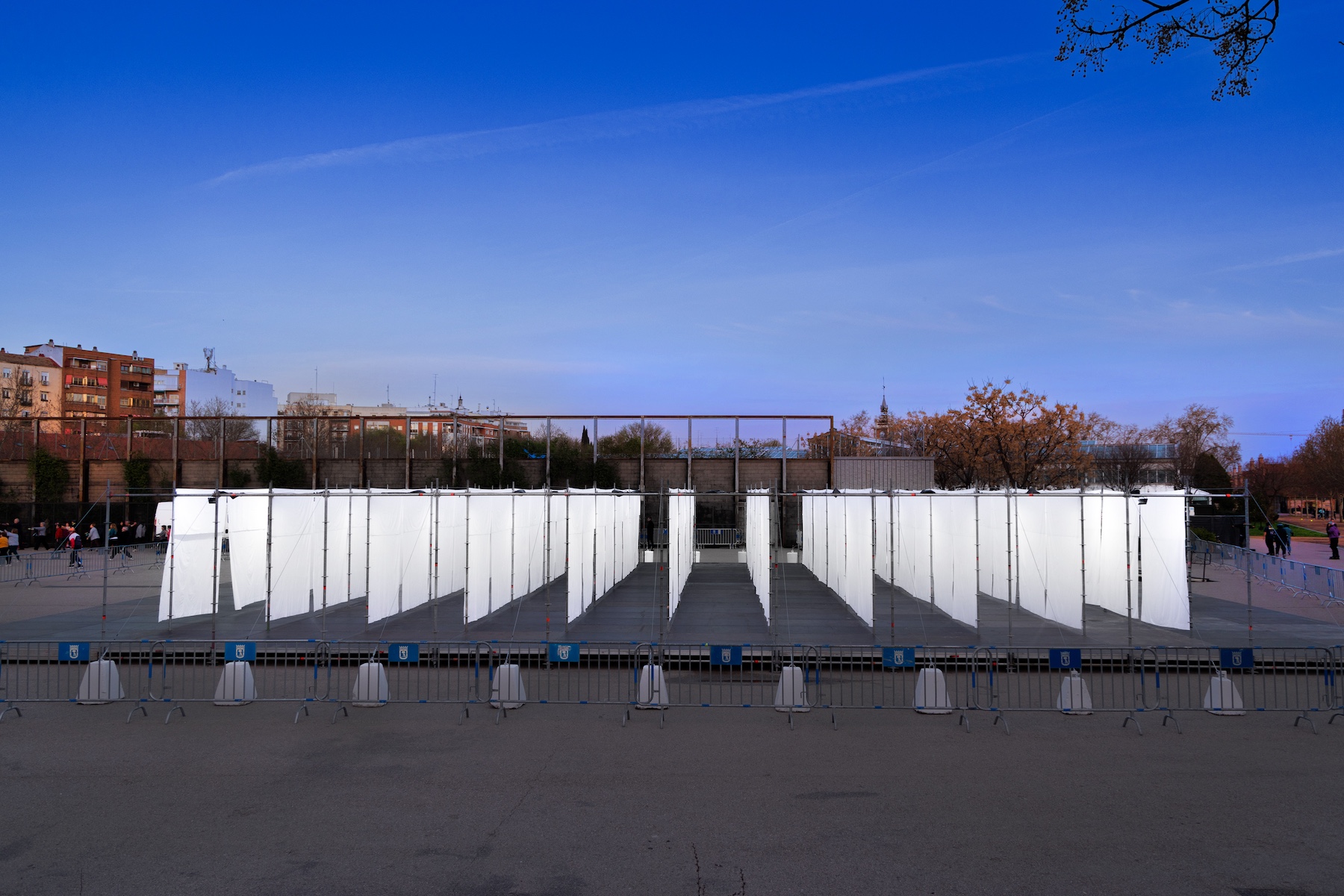
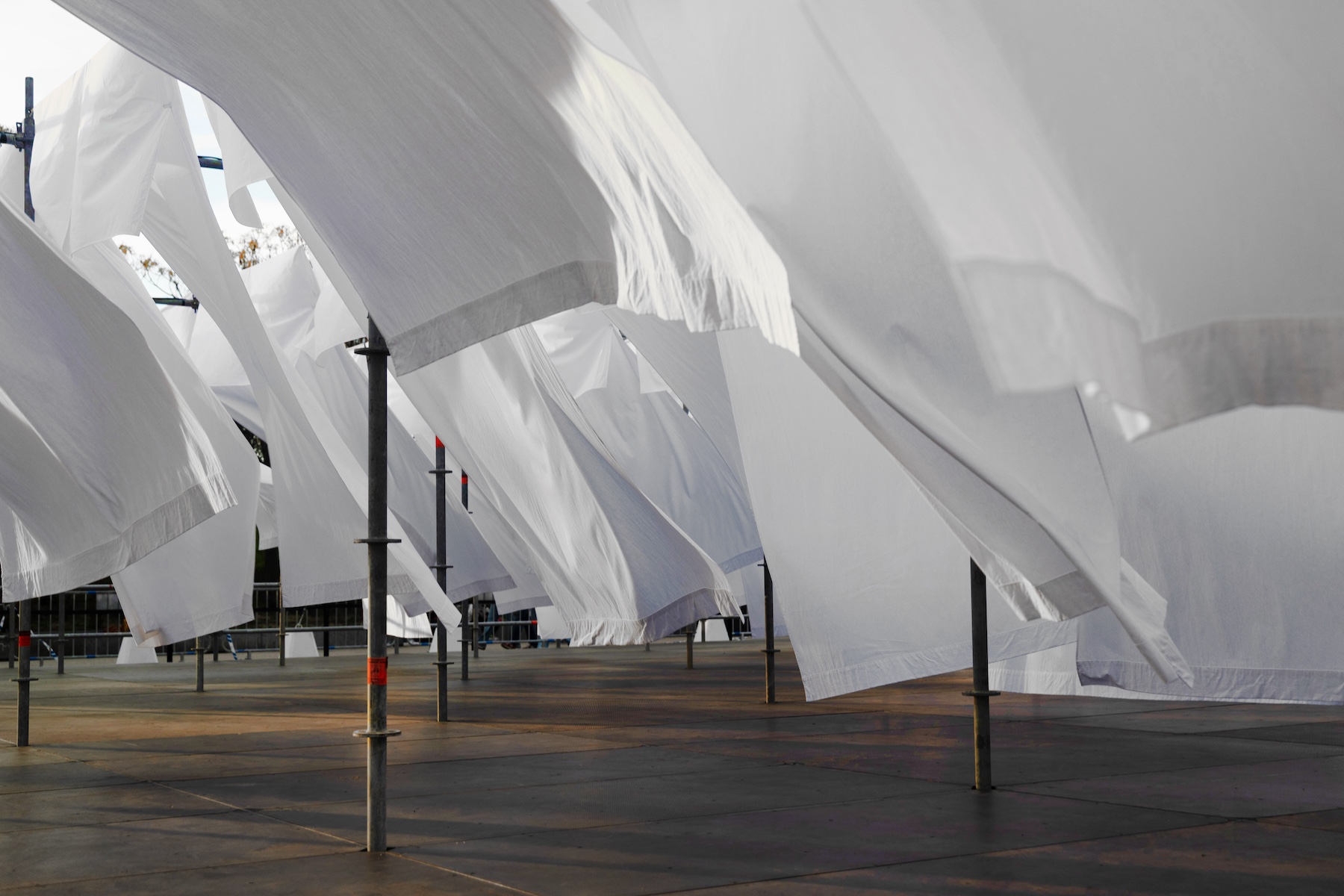
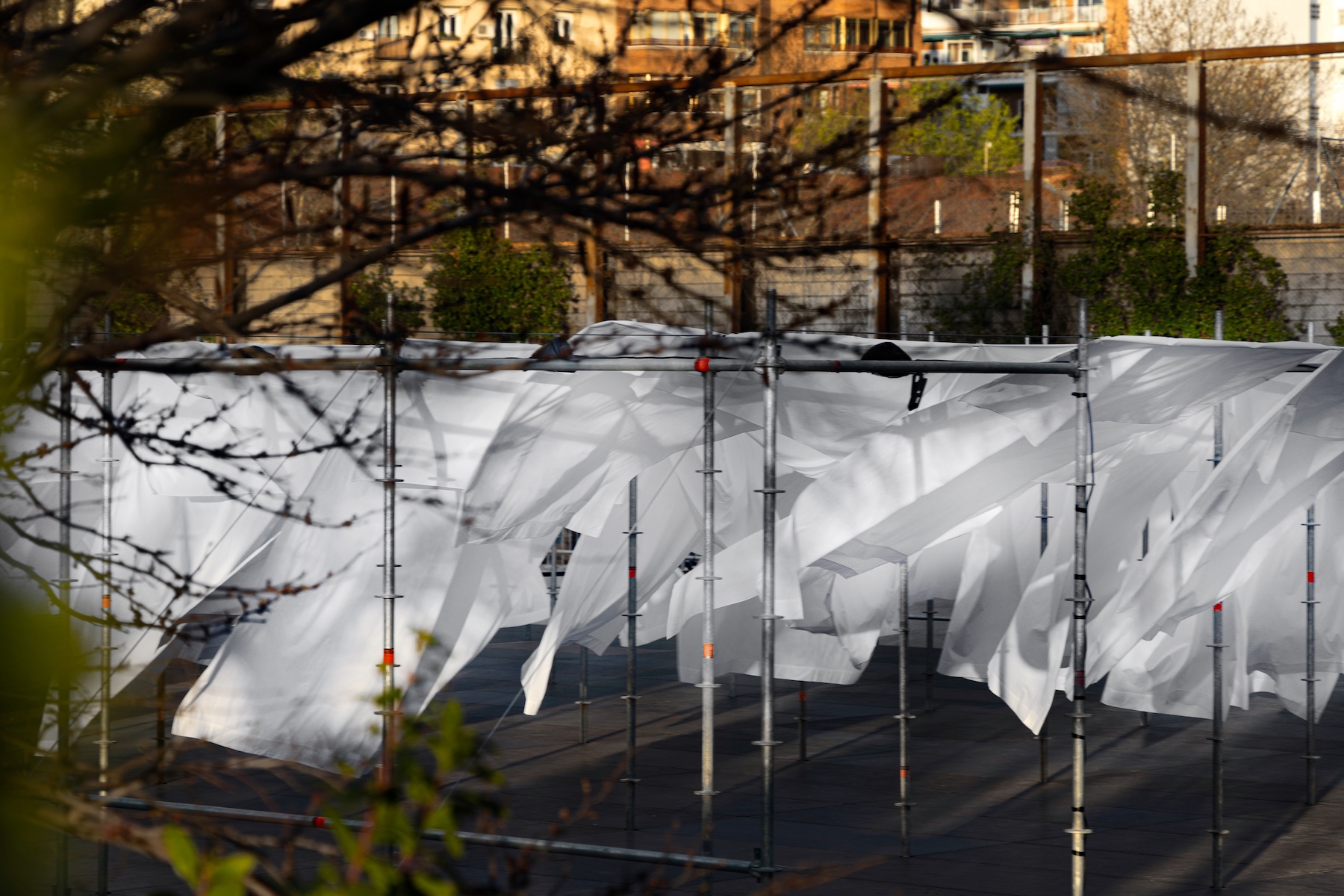
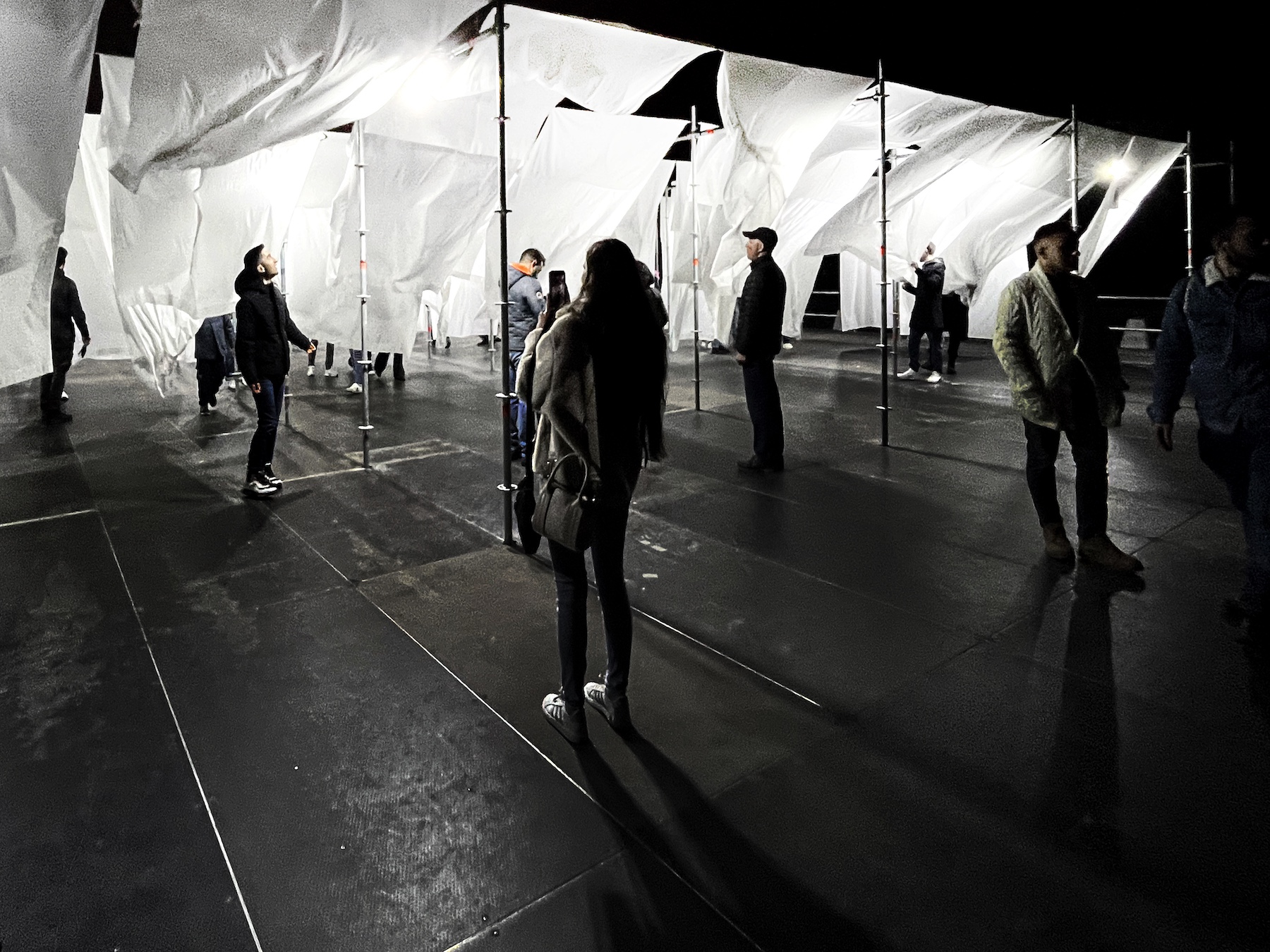
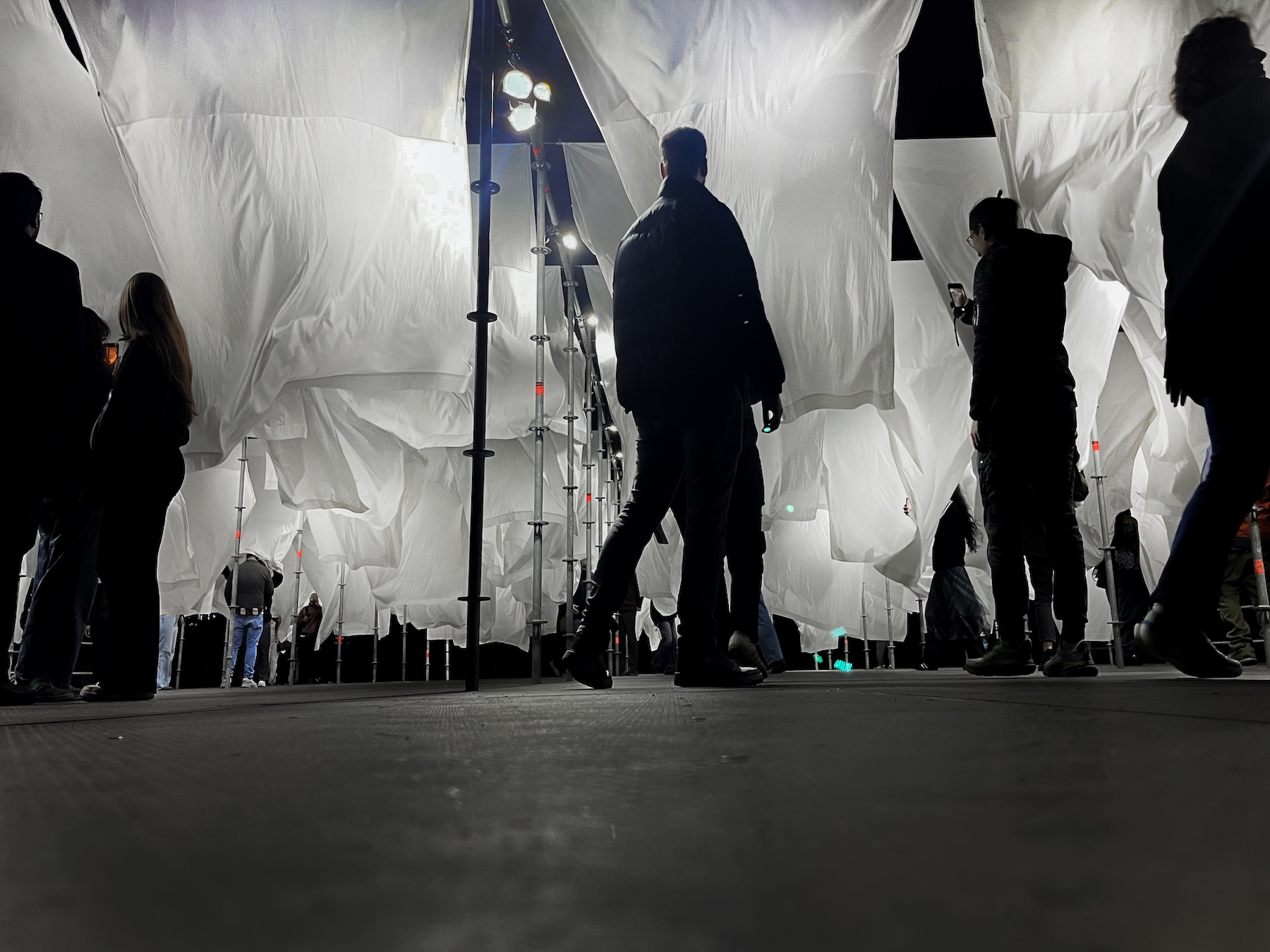
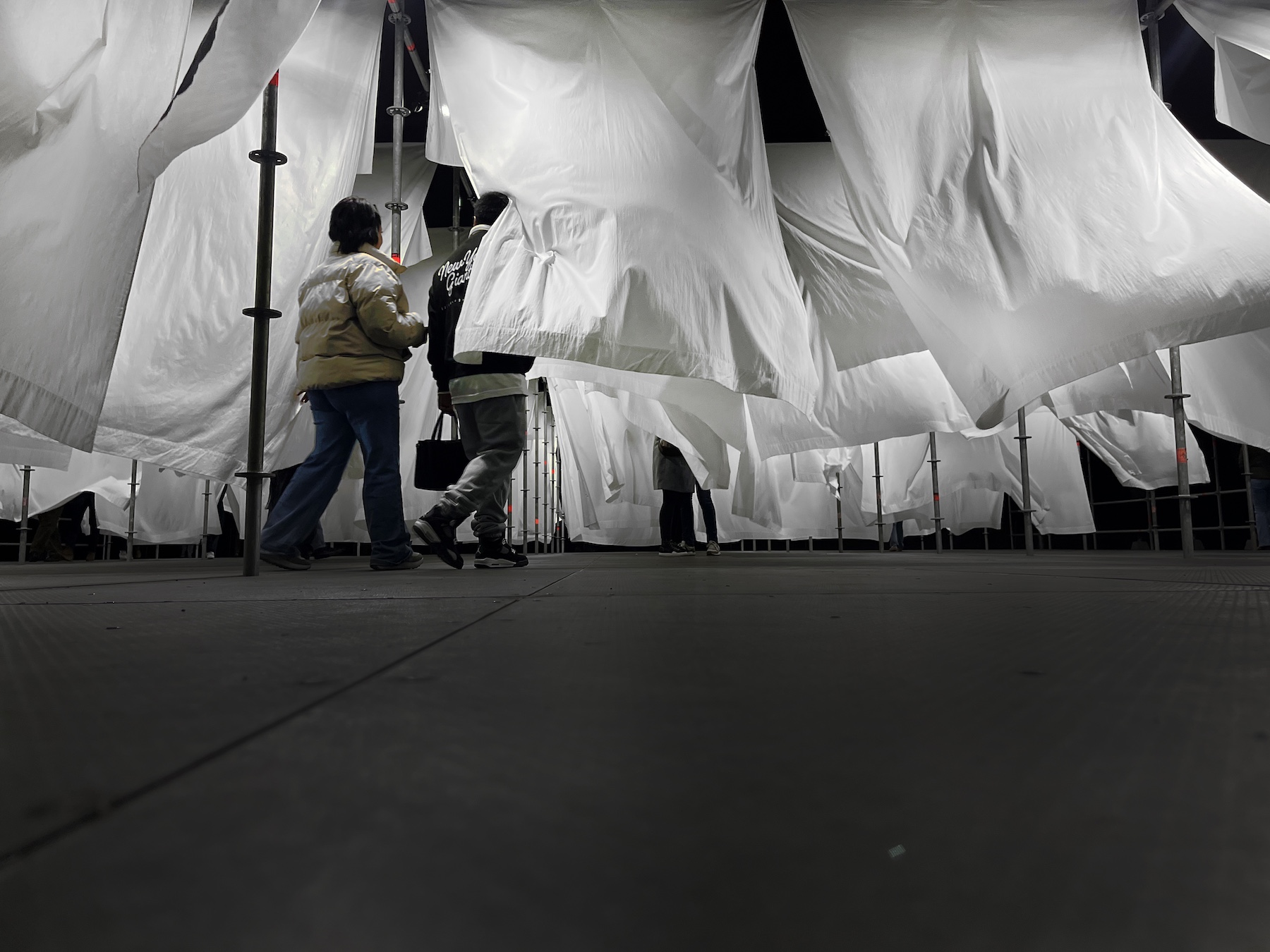
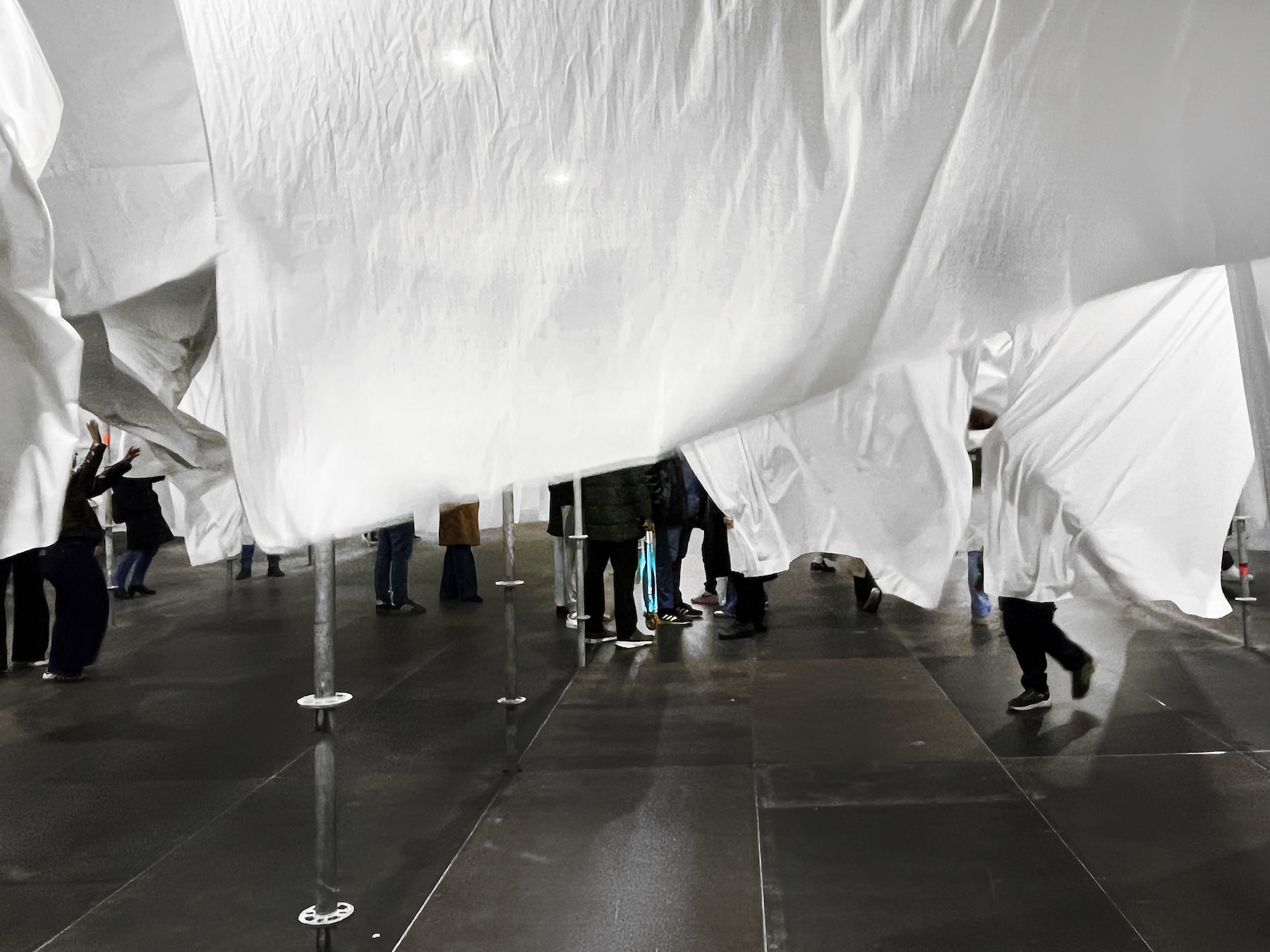
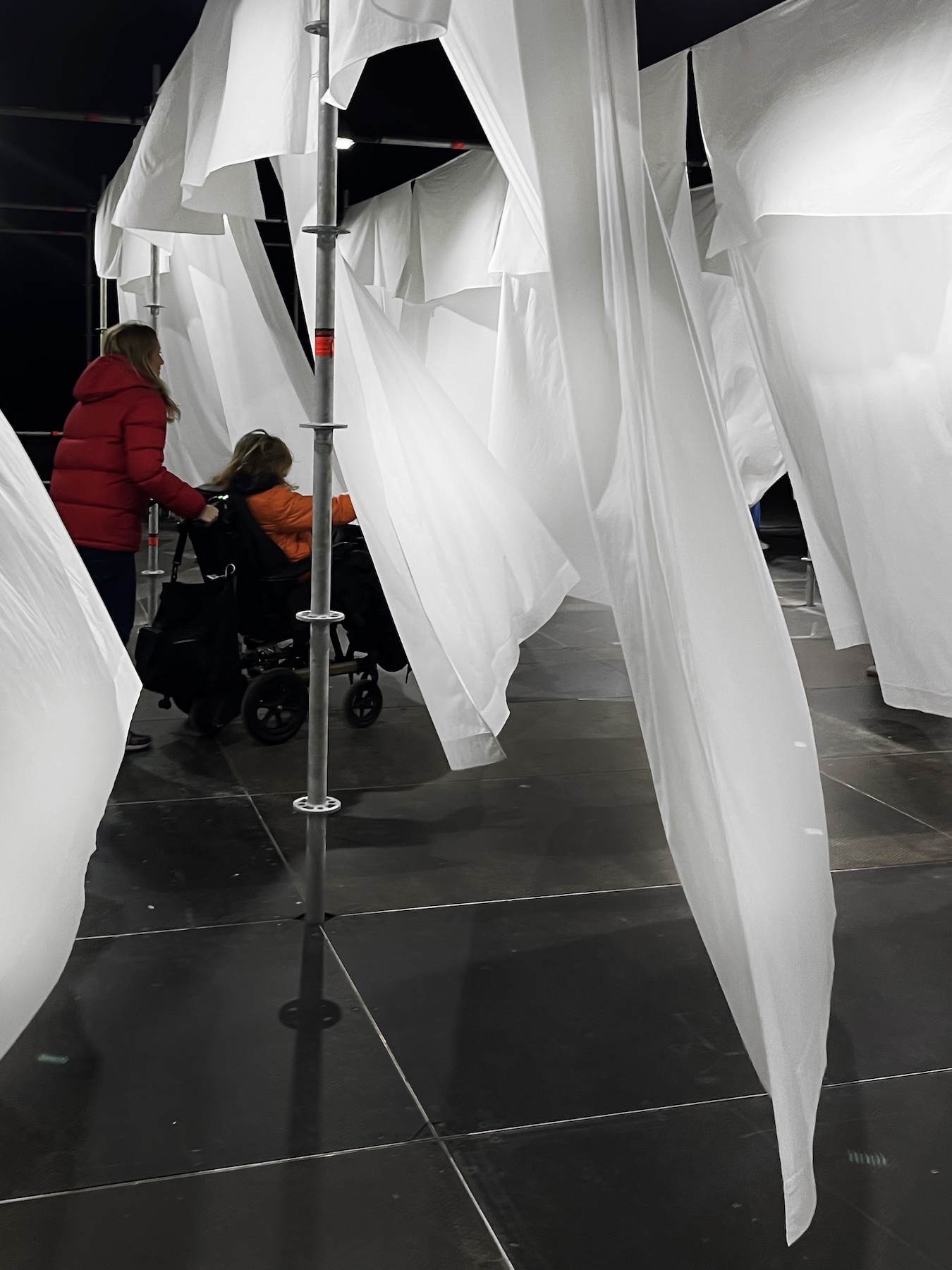
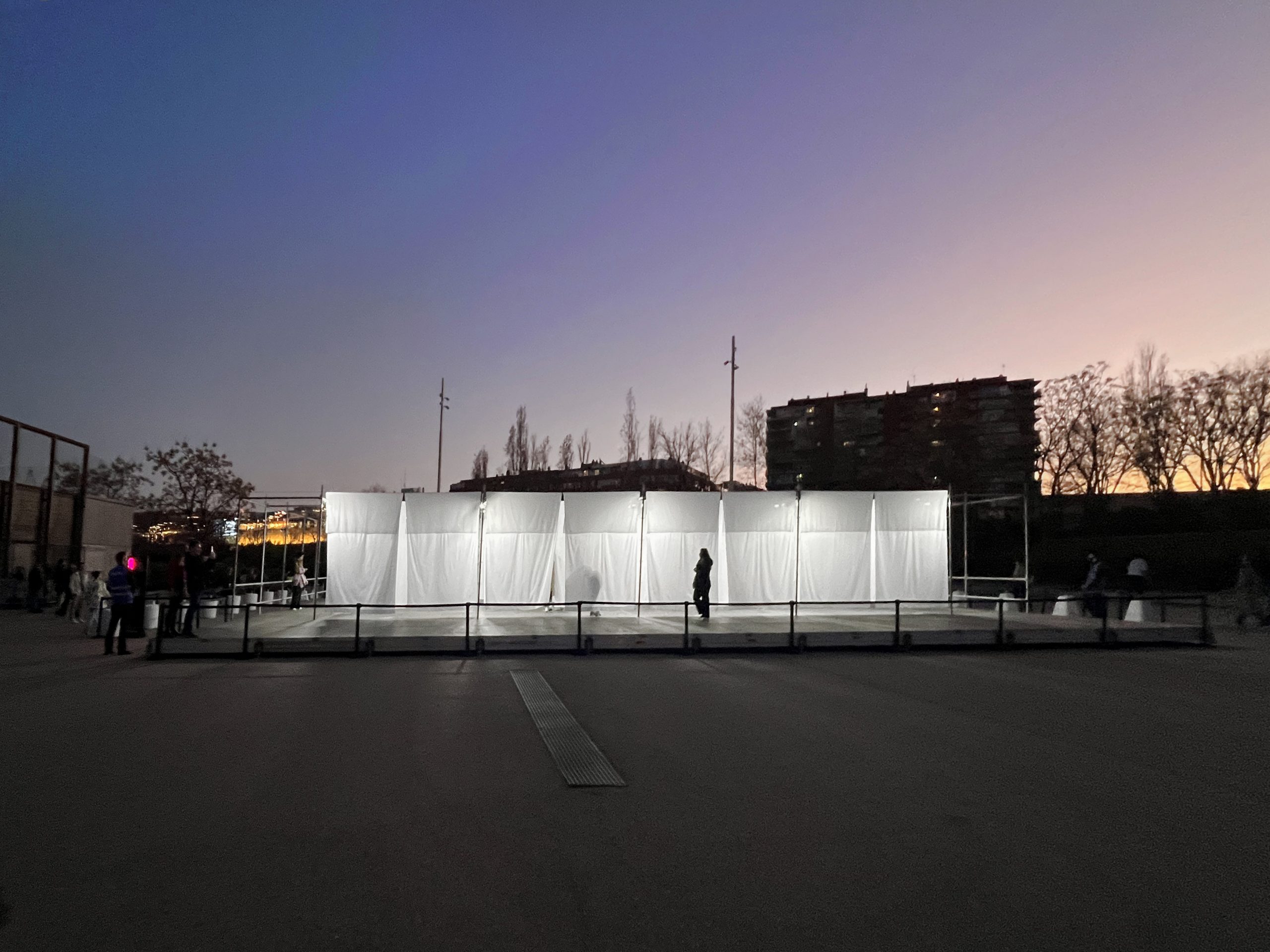
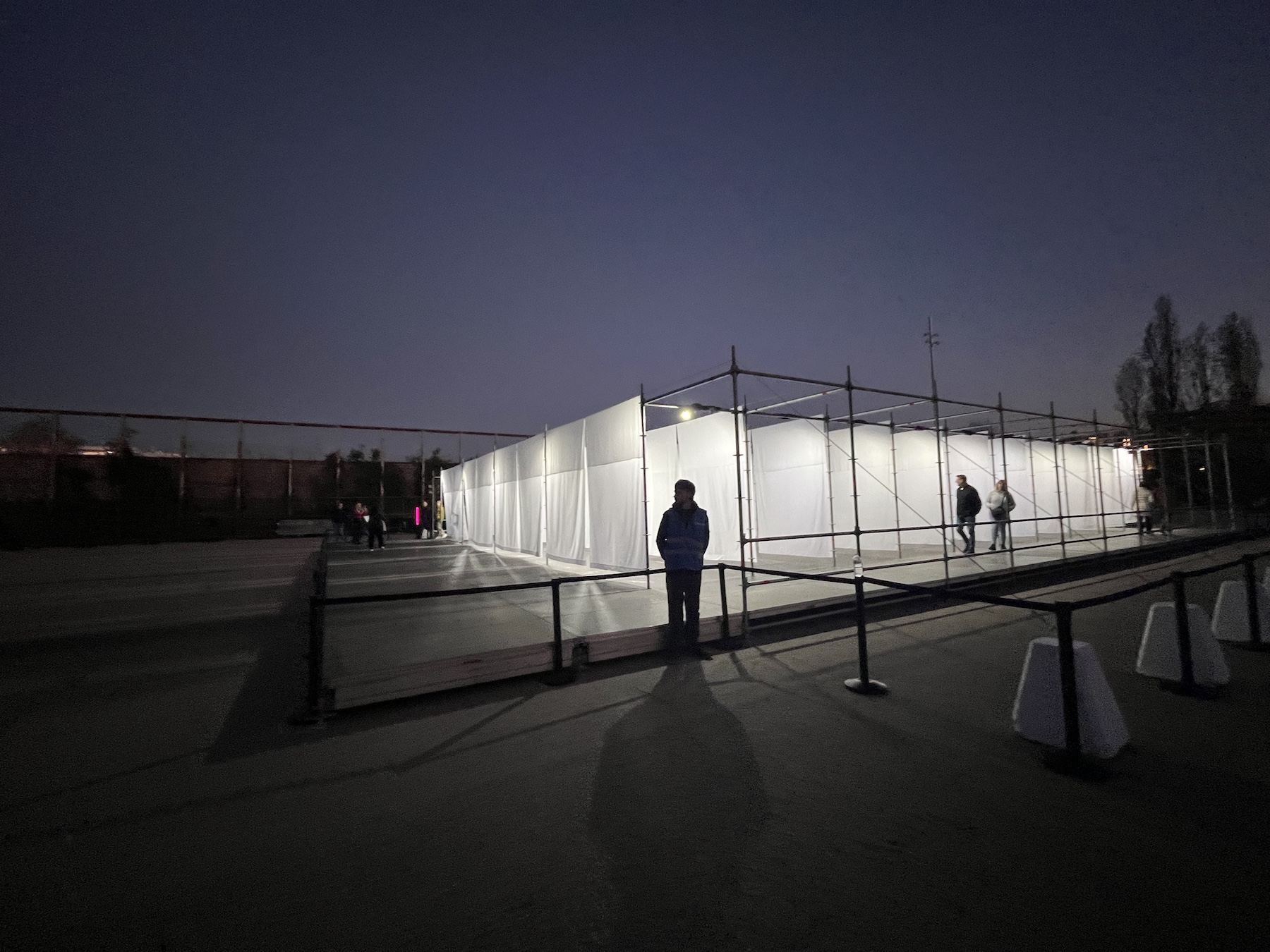
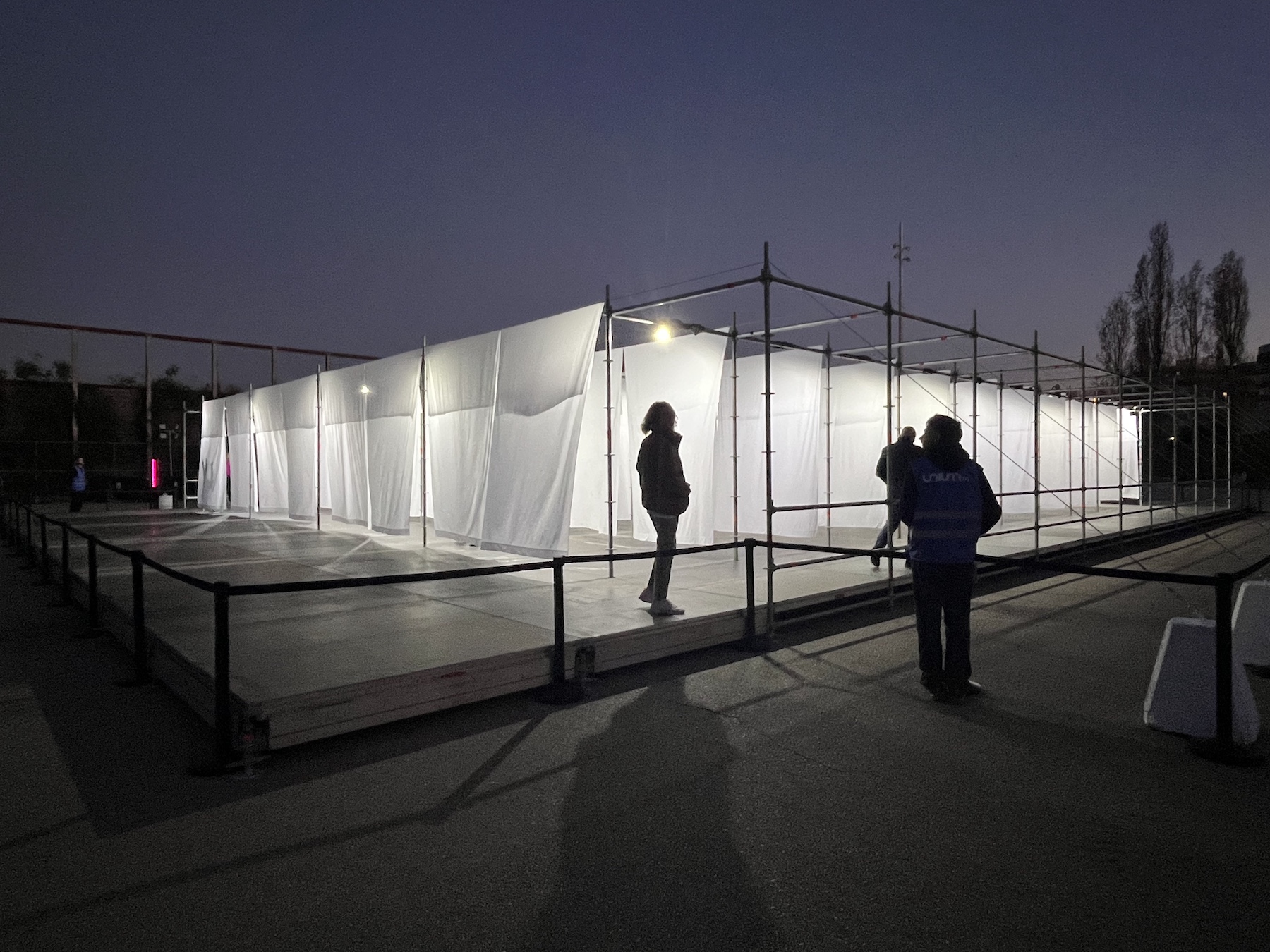
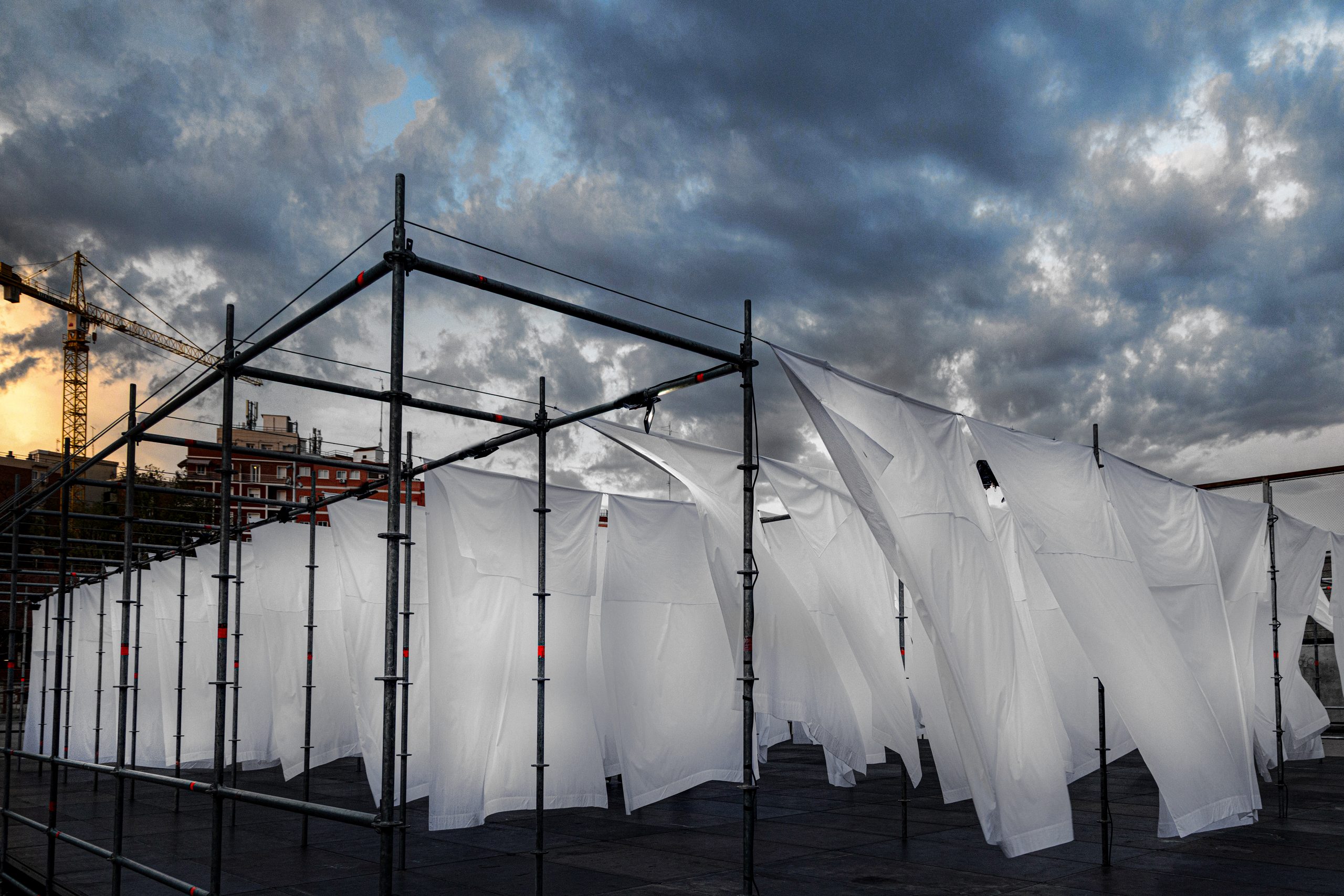
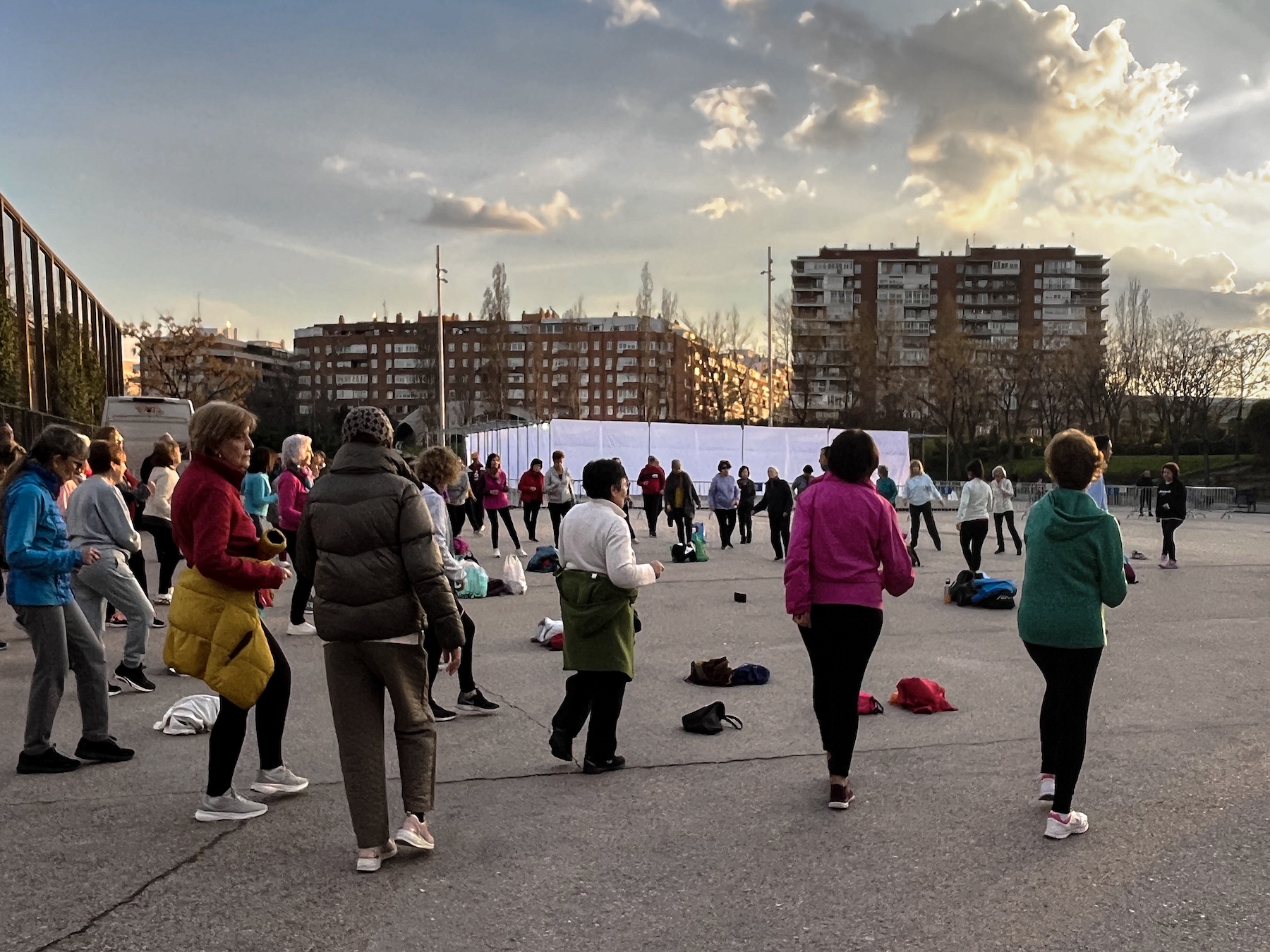
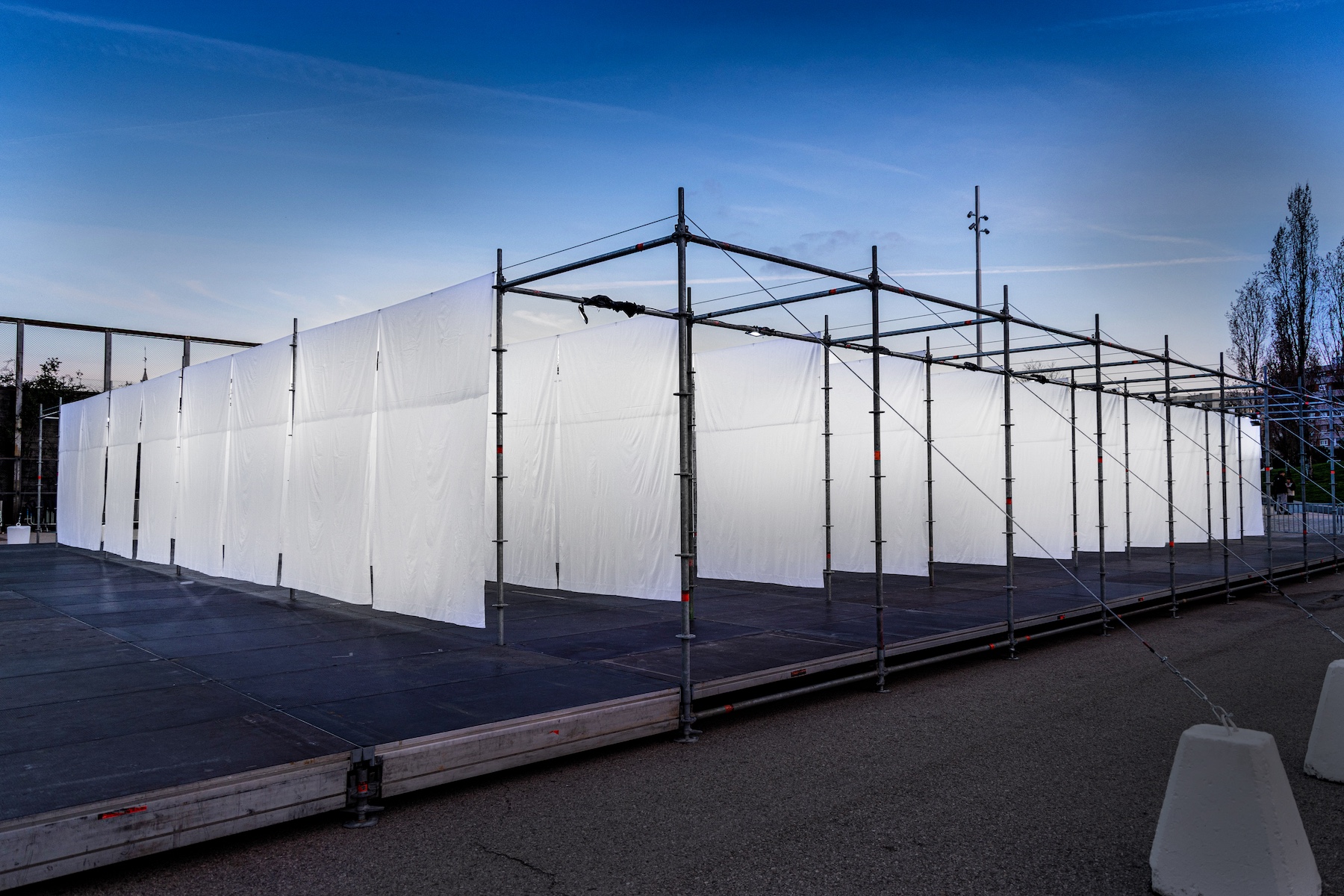
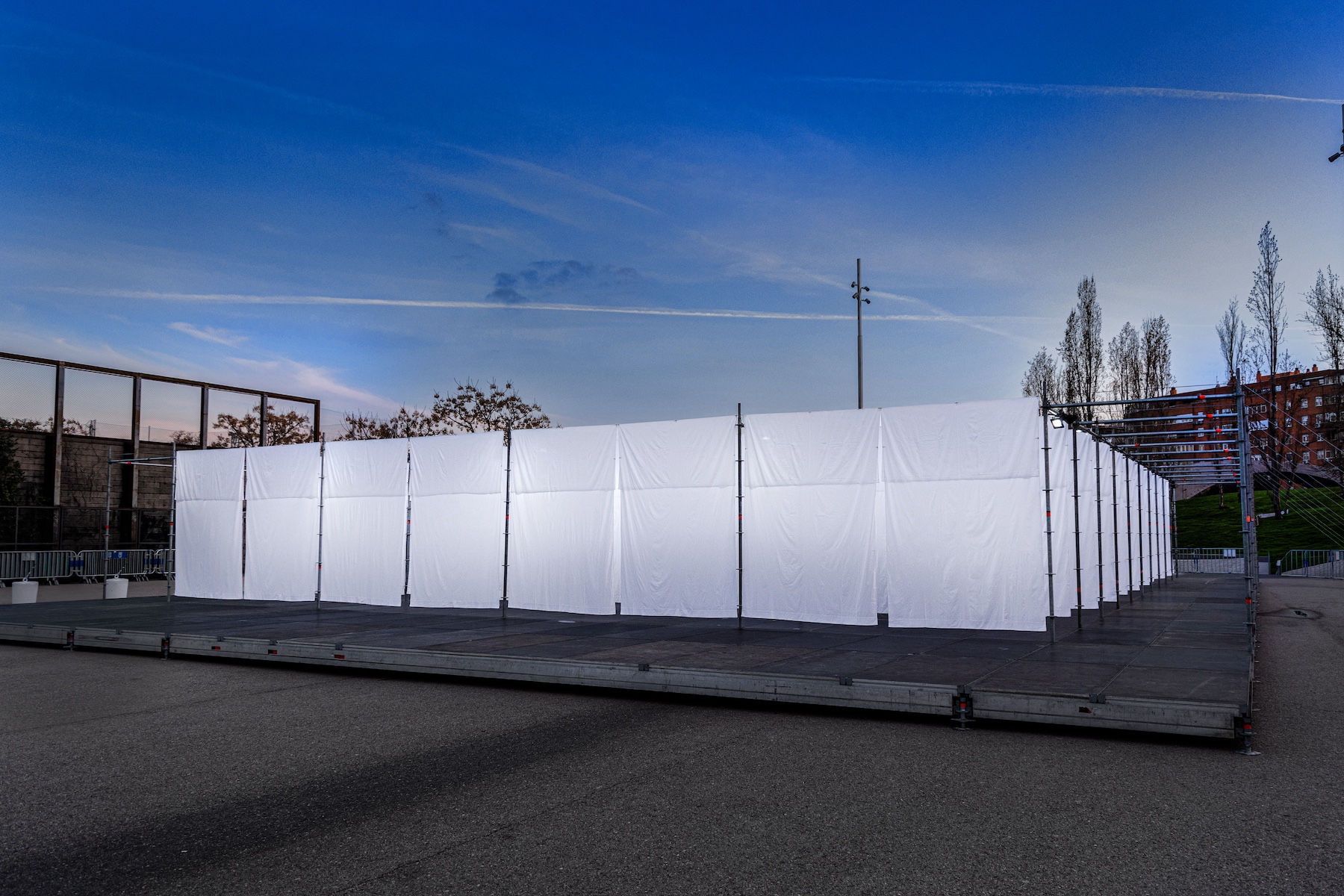
The installation consisted of a large clothesline holding nearly one hundred backlit white sheets, creating a light and ever-changing landscape that constantly transformed with the wind. The structure was built using a simple Layher scaffolding system, whose industrial appearance contrasted with the lightness of the sheets moving in the air.
No artificial ventilation system was necessary: the piece was placed in an especially windy open area, allowing the sheets to move naturally throughout the intervention.
With very few elements —fabric, wind and light— Hanging Landscapes sought to recover a simple image filled with memory, returning to the urban landscape something that for decades had been part of the everyday life of the river.
And so, a multitude of sheets that could also be white flags in the wind, bandages, diapers or banners… became, for a few days, a comfortable and safe space for play.
We would like to thank the direction of the LuzMadrid festival for their trust and for allowing us to defend something that seems increasingly rare: that a piece can stand without technical spectacle, relying on low technology, simple resources and a clear idea.
Thanks to our producer Burna, to our photographer Melisa Hernández, to Tres Elefantas, to the entire technical team who accompanied us during the installation, and to the security and logistics staff. Together they managed to turn the space into a luminous, comfortable and safe place.
Very special thanks to the visitors who understood and made the piece their own, and to all the friends who joined us and allowed themselves to be photographed tangled among white fabric without fear of looking ridiculous.
Susana, Meli, Delia, Cristina, Martina… as always, a pleasure.
Time of installation: 2 days.
Damage caused: 0.
Duration of the intervention: 3 days.
——–
El pasado mes de marzo presentamos en Madrid Paisajes Tendidos. Intervención bajamente tecnológica hecha con tela blanca, viento, luz y olor a limpio, dentro del festival LuzMadrid 2026. Nos hacía especial ilusión hacerlo en la ciudad en la que vivimos y sobre la que llevamos trabajando desde que empezamos.
Paisajes Tendidos recupera una imagen que forma parte del imaginario colectivo: sábanas blancas agitadas por el viento, colgadas al sol, con olor a limpio y atravesadas por una luz clara. Una escena ligada a la infancia, al hogar y a la vida cotidiana.
Pero esa imagen también permite recordar a quienes durante generaciones trabajaron en condiciones duras y casi siempre invisibles: las lavanderas del río Manzanares.
Hasta bien entrado el siglo XX, muchas mujeres madrileñas lavaron la ropa a mano en el cauce del río o en lavaderos públicos. Caminaban desde sus casas cargando grandes cestos. Pasaban horas de pie o de rodillas, frotando en agua fría, y tendían después la ropa al sol. Un trabajo físico, mal remunerado y sin reconocimiento, pero indispensable para sostener la vida cotidiana de la ciudad.
La pieza no pretendía representar directamente esa historia, sino recrear el entorno que fue suyo: ropa blanca al viento, movimiento, luz y el sonido de las telas agitándose.
Durante los días de la instalación ocurrió algo que nos pareció especialmente bonito: los niños entendieron la pieza de inmediato. La convirtieron en su campo de juego, corriendo entre las sábanas como si se tratara de un pequeño laberinto. En muchos casos incluso arrastraron a sus padres a participar, invitándoles a comportarse durante un rato como niños grandes.
La pieza fue disfrutada por más de 15.000 personas durante los tres días que duró el festival, una cifra reseñable si se tiene en cuenta que los visitantes estaban invitados a permanecer y disfrutar de la instalación todo el tiempo que quisieran.
La instalación estaba formada por un gran tendedero con cerca de un centenar de sábanas blancas retroiluminadas, creando un paisaje ligero y cambiante que se transformaba constantemente con el viento. El montaje se resolvió con una estructura sencilla de andamio Layher, cuyo aspecto industrial contrastaba con la ligereza de las sábanas agitadas por el viento.
No fue necesario ningún sistema artificial de ventilación: la pieza se situó en un espacio abierto especialmente ventoso, lo que permitió que las sábanas se movieran de forma natural durante toda la intervención.
Con muy pocos elementos —tela, viento y luz— Paisajes Tendidos buscaba recuperar una imagen sencilla pero cargada de memoria, devolviendo al paisaje urbano algo que durante décadas formó parte de la vida cotidiana del río.
Y así, un montón de sábanas que también podrían ser banderas blancas al viento, vendas, pañales o estandartes… se convirtieron por unos días en un espacio confortable y seguro para el juego.
Queremos agradecer a la dirección del festival LuzMadrid por la confianza y por permitirnos defender algo cada vez menos habitual: que una pieza pueda sostenerse sin espectáculo técnico, desde la baja tecnología, con recursos sencillos y una idea clara.
Gracias a nuestra productora Burna, a nuestra fotógrafa Melisa Hernández, a Tres Elefantas, a todo el equipo técnico que nos acompañaron durante el montaje y las personas de seguridad y logística, entre todos consiguieron convertir el espacio en un lugar luminoso, confortable y seguro.
Gracias muy especiales a los visitantes que entendieron e hicieron suya la pieza y a todos los amigos que nos acompañaron y se dejaron fotografiar enredadso entre tela blanca sin miedo al ridículo.
Susana, Meli, Delia, Cristina, Martina… como siempre, un placer.
Daños ocasionados: 0.
Permanencia de la intervención: 3 días.