Public Swimming pool on a background of a Field of Barley / Piscina pública sobre fondo de Campo de Cebada

El barrio de La Latina de Madrid tenía una popular piscina pública, estaba en la Plaza de la Cebada y a ella acudían vecinos del Centro para practicar el saludable deporte de nadar, también en invierno.

En el 2008 la piscina se demolió con la firme promesa por parte del Ayuntamiento, de que en 2 años habría otra en su lugar, mas moderna y con mas capacidad para dar servicio a más gente del barrio.

El proyecto incluía también la remodelación del Mercado de la Cebada que sería sustituido por uno de arquitectura vanguardista con zonas de ocio, deportivas y con verdes en su cubierta.

A 21 de mayo de 2012 aun no se ha comenzado la construcción de la piscina ni del mercado y la perspectiva de que el futuro edificio albergue unas instalaciones deportivas al alcance de todos los ciudadanos cada vez se ve más lejana.

Las últimas noticias que llegan, nos pintan un panorama poco optimista, acorde con esa nociva tendencia de convertir los mercados tradicionales en centros de ocio y gastronomía para ricos, que deja a los barrios sin el pequeño comercio tradicional. Según los medios de comunicación, van a levantar un lujoso centro comercial con una amplia oferta gastronómica y de ocio, en el que nos tememos que ni el equipamiento deportivo ni el comercio van a estar al alcance de los bolsillos del vecindario, por lo que acabará convirtiéndose en centro de peregrinaje de «gente con dinero» ajena al barrio que se quedará sin su espacio deportivo y comercio tradicional.

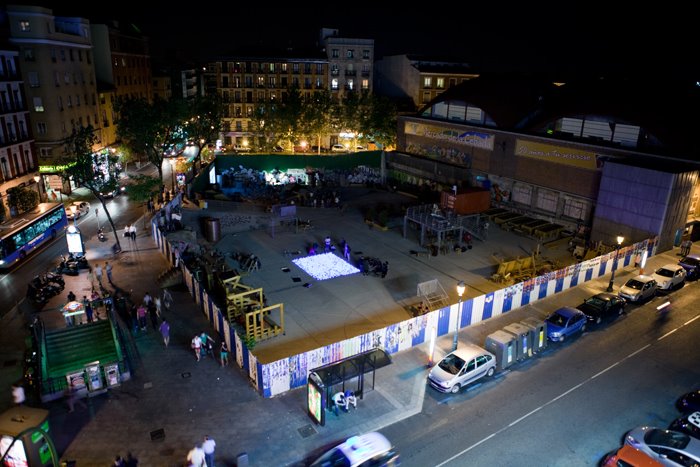
Mientras el solar se transforma en otro centro comercial de moda, vecinos y colectivos han convertido este solar vacío en un maravilloso Campo de Cebada, vacío de agua pero lleno de actividades que han logrado convertirlo en un espacio de referencia, donde los vecinos pueden participar y desarrollar actividades autogestionadas en la que todo el mundo está invitado a quedarse.

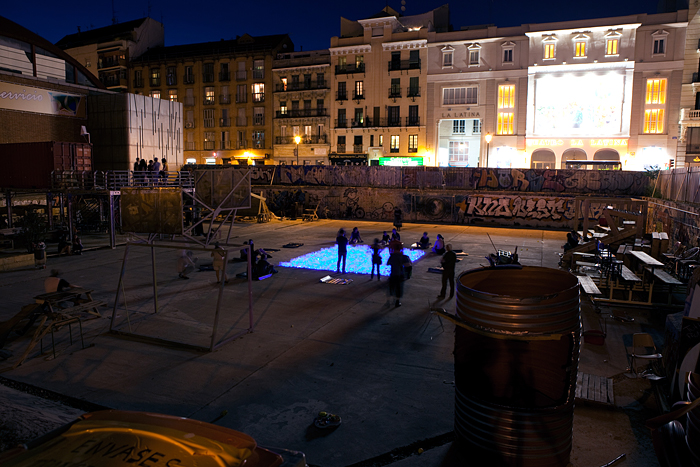
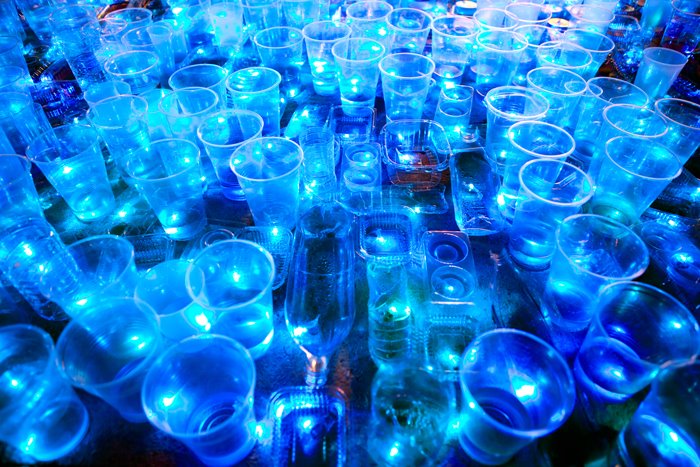
En este contexto, y para celebrar el primer aniversario de la cesión por parte del Ayuntamiento del Campo de la Cebada, el día 15 de mayo, llevamos a cabo una instalación en forma de piscina de luz que recordara a los vecinos lo que fue el espacio y lo que en un futuro no muy lejano debería volver a ser.

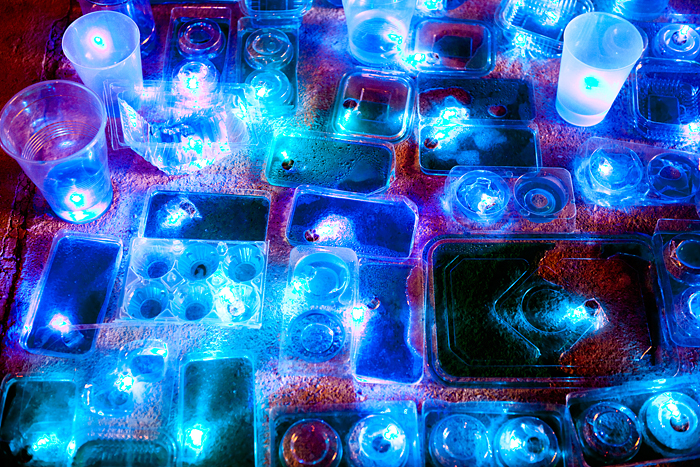
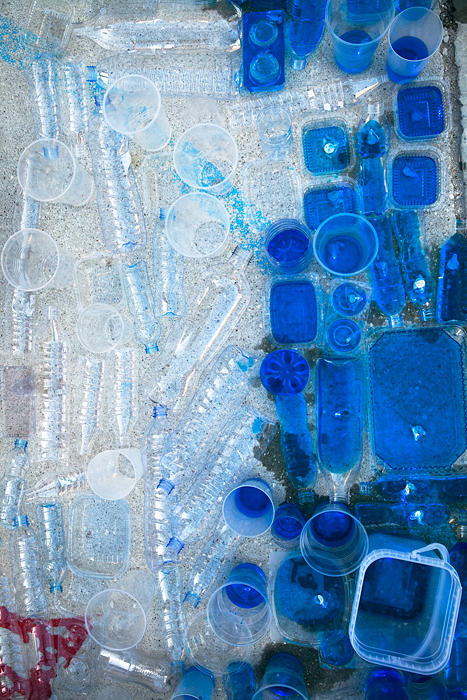
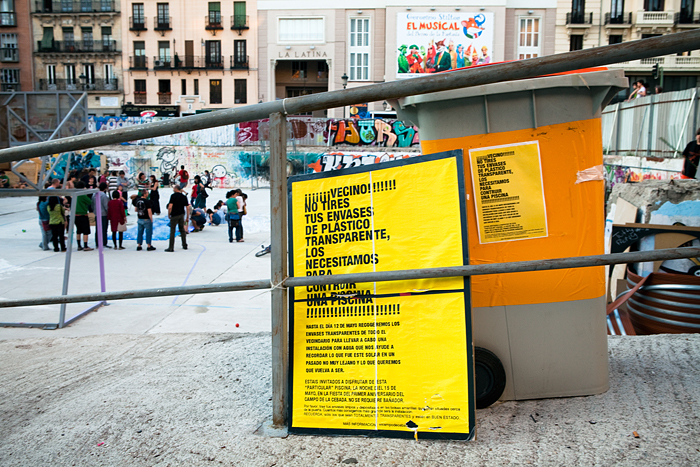
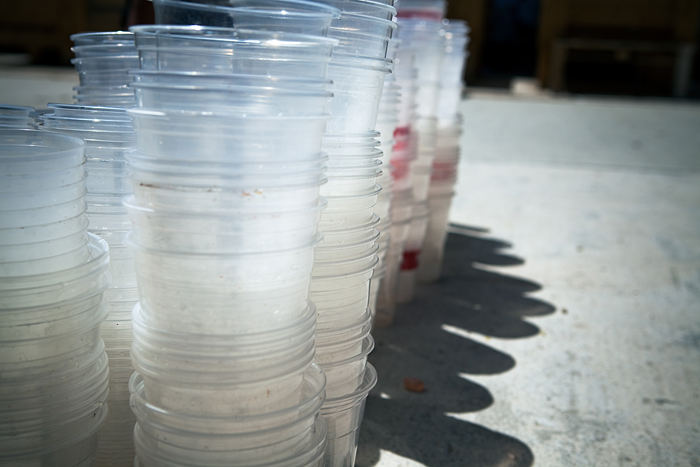
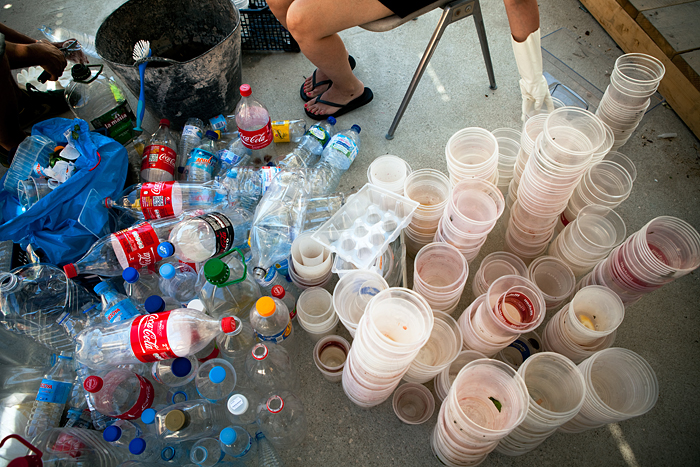
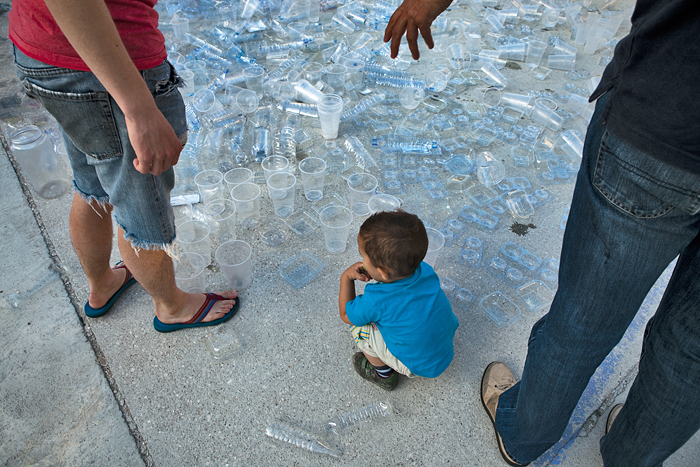
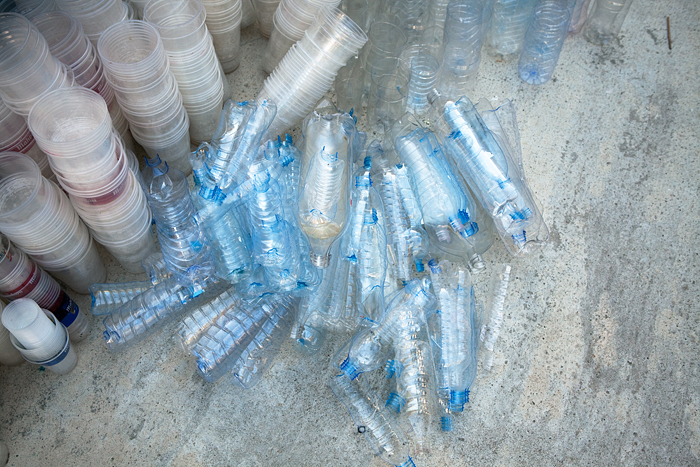
Durante un mes, hemos estado recogiendo envases transparentes reciclados, que los vecinos fueron dejando en contenedores dentro del Campo, además, coincidiendo con las fiestas de San Isidro nos fuimos a las Vistillas y recogimos más de 800 vasos que la gente había dejado en la calle después de beberse el contenido alcohólico.

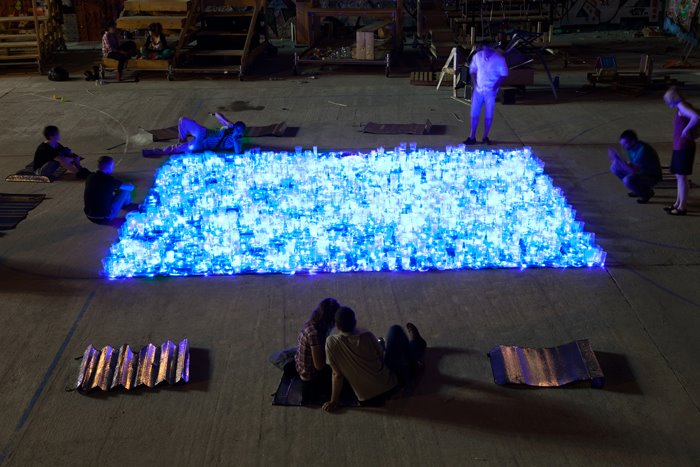
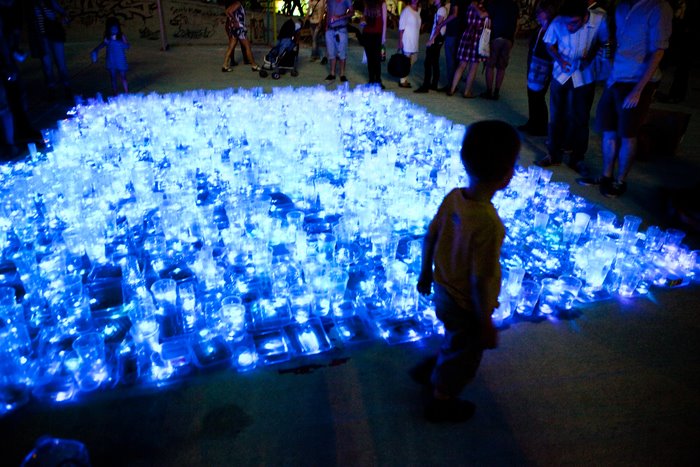
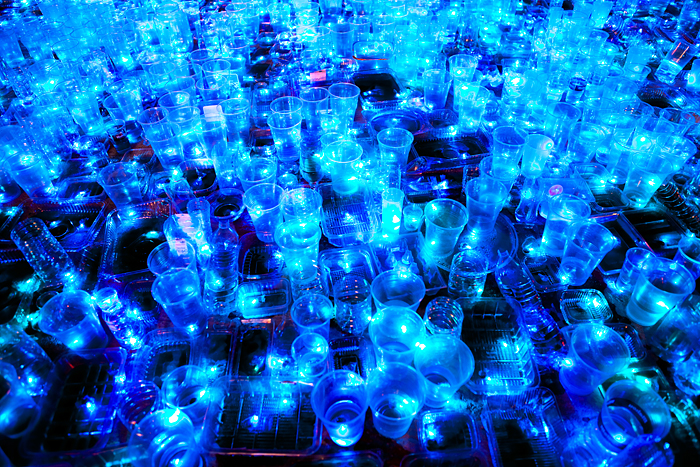
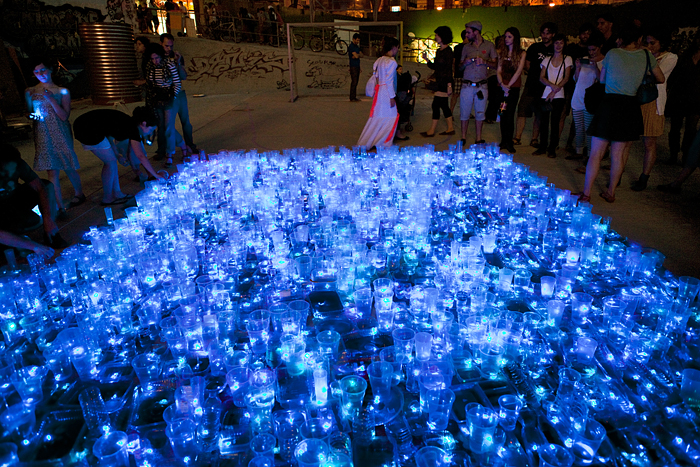
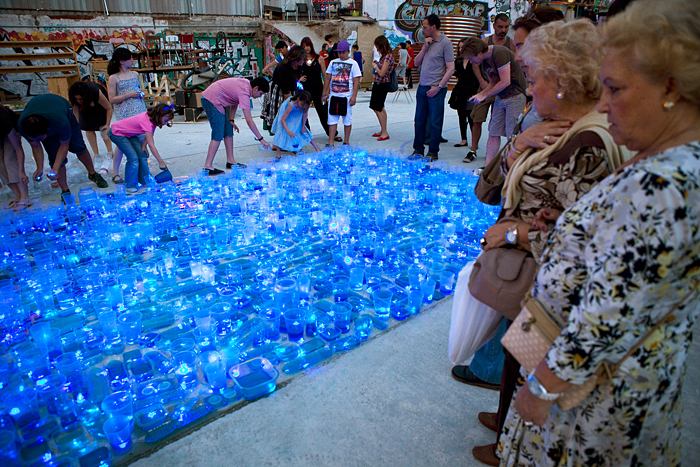
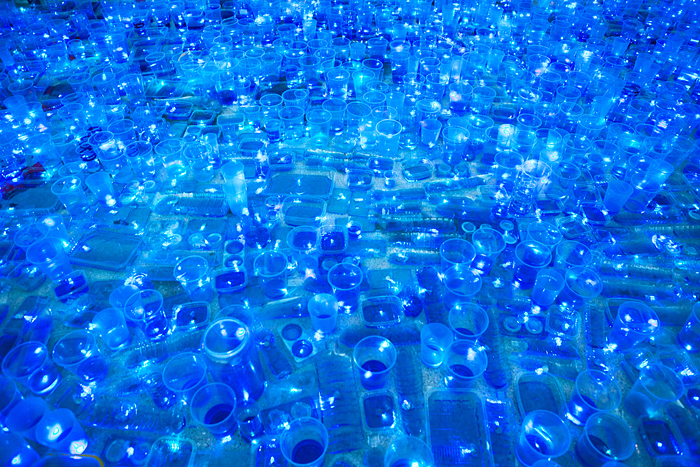
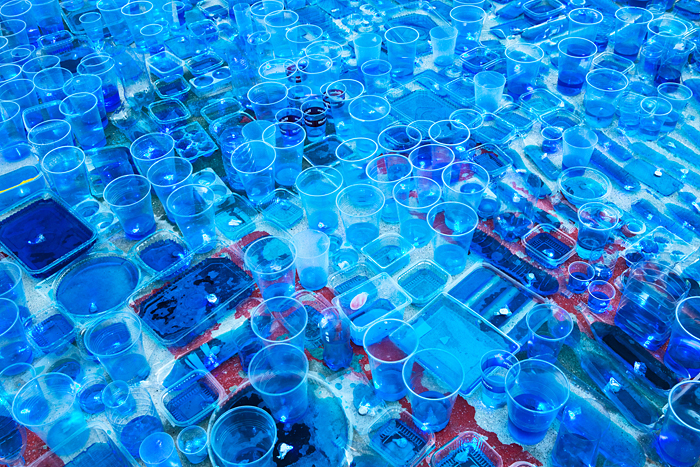
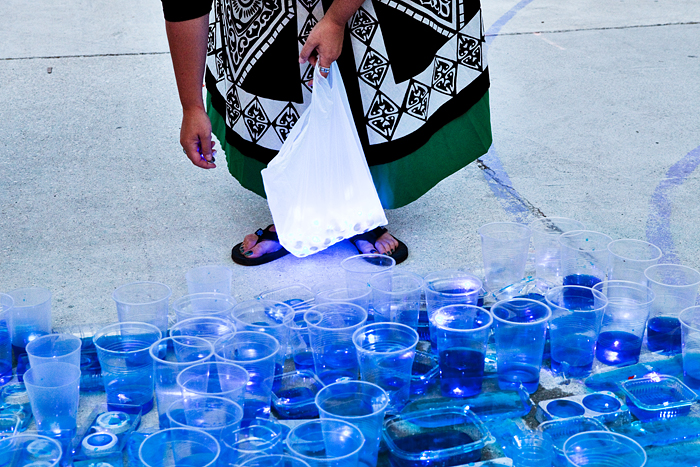
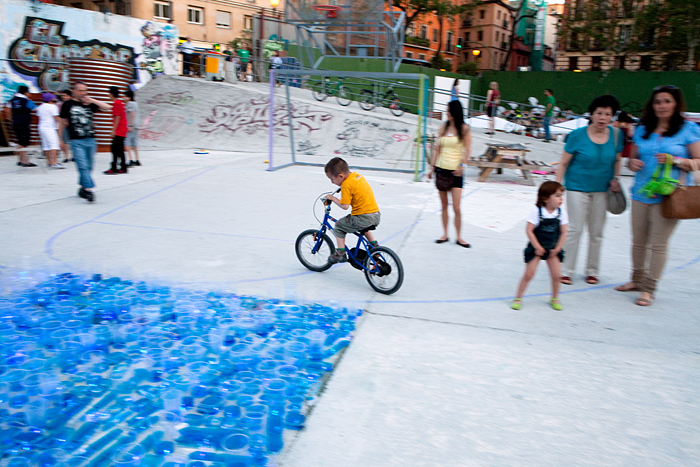
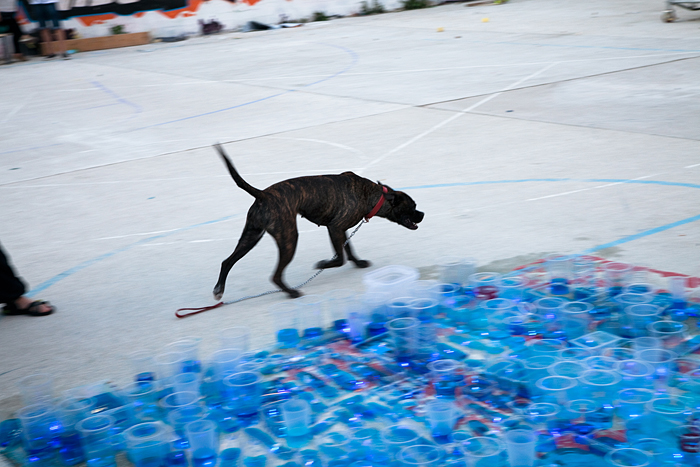
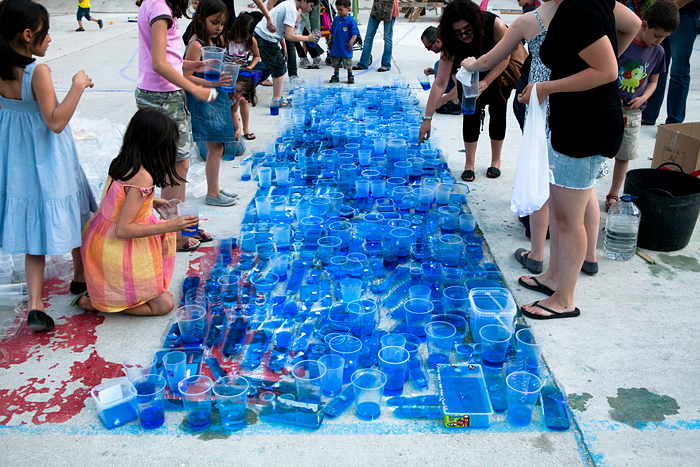
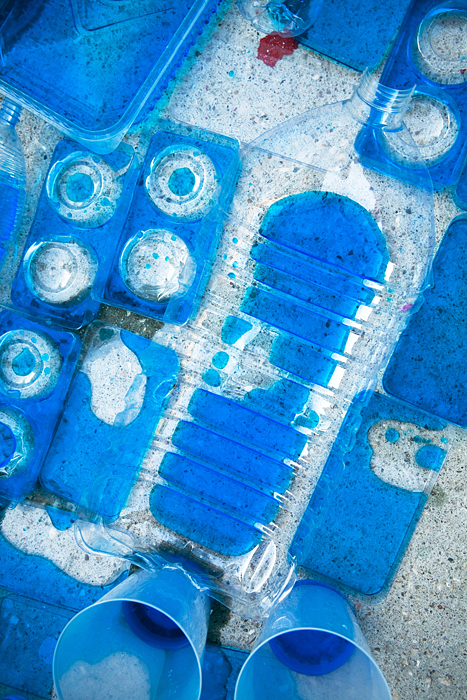
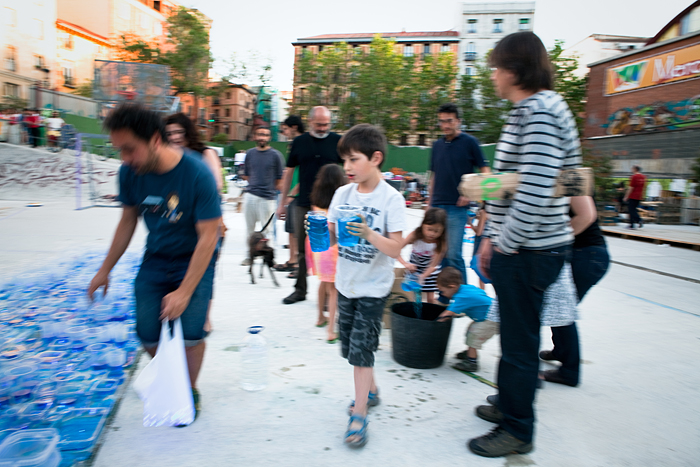
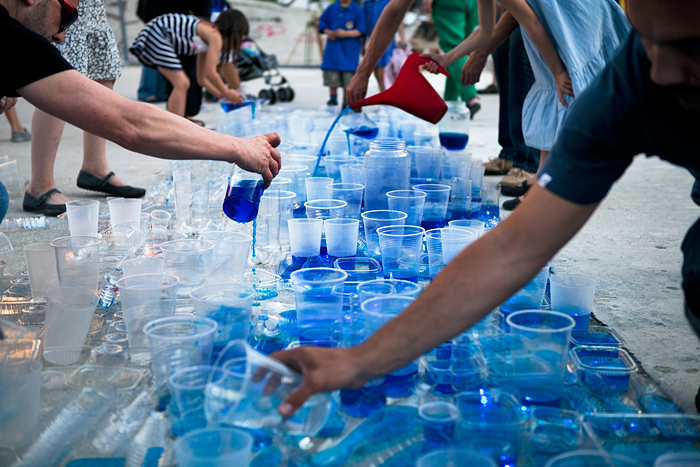
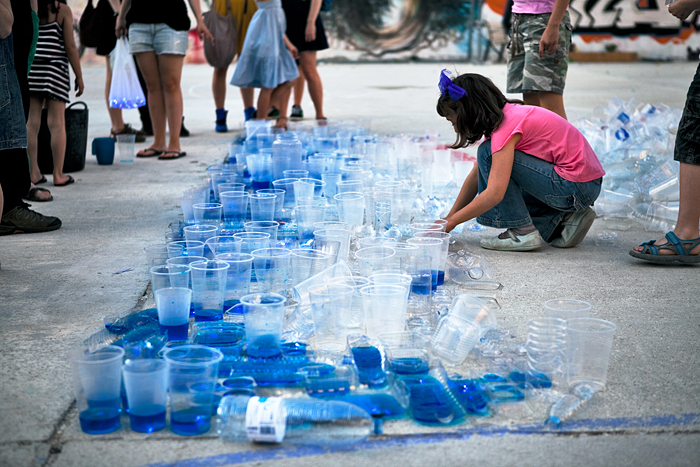
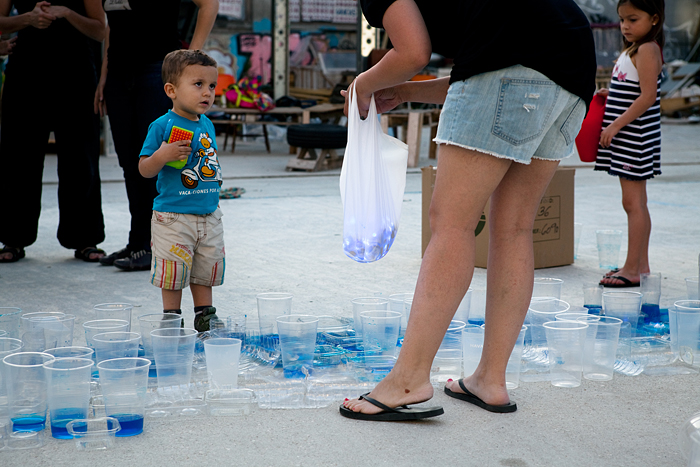
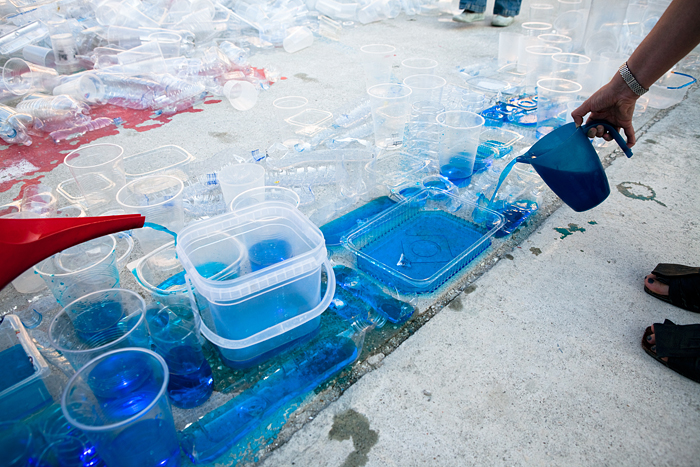
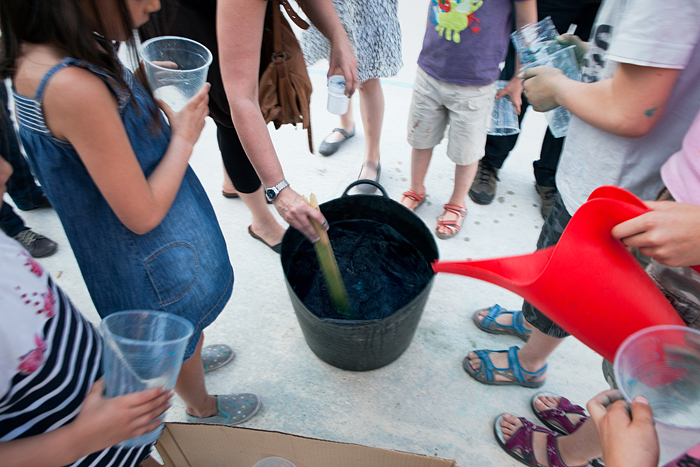
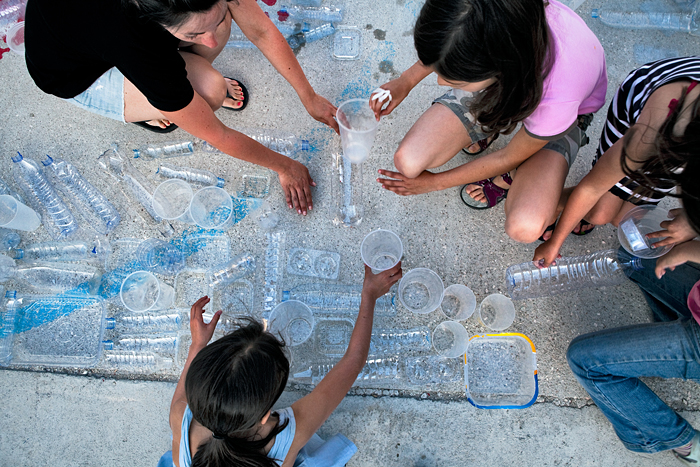
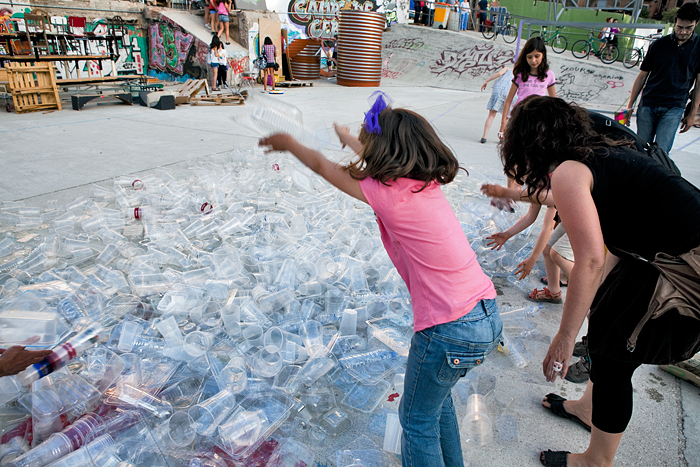
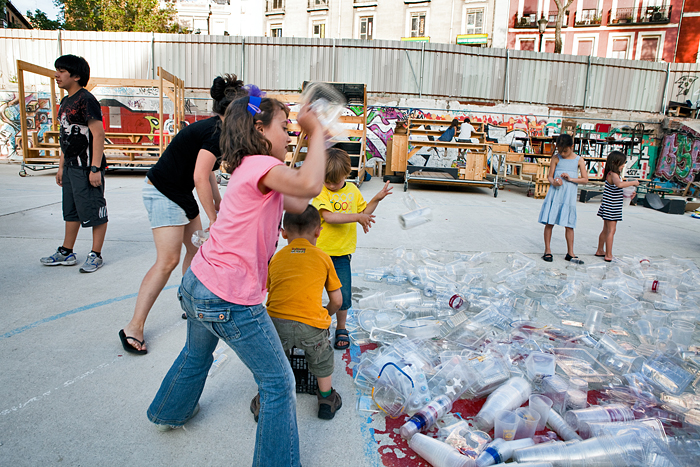
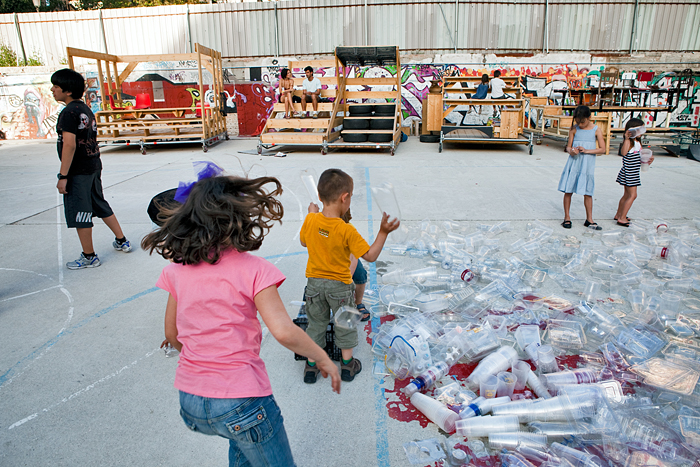
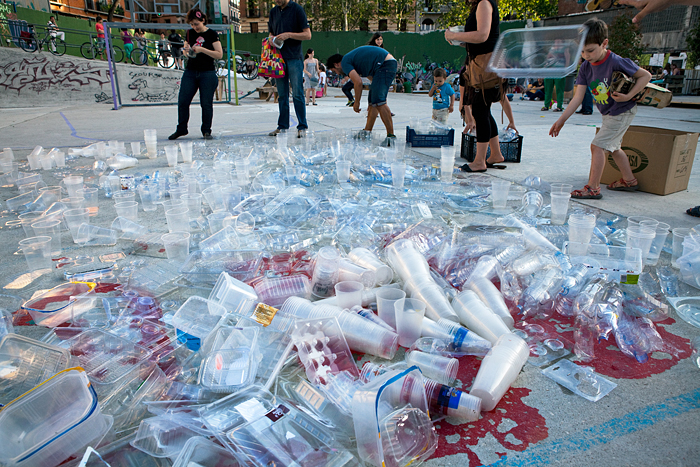
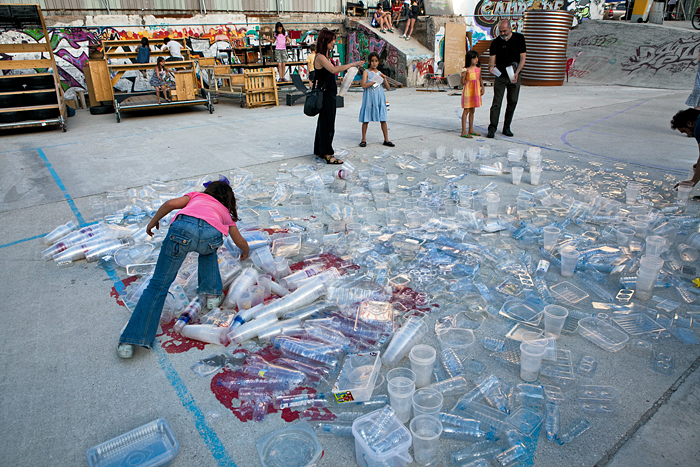
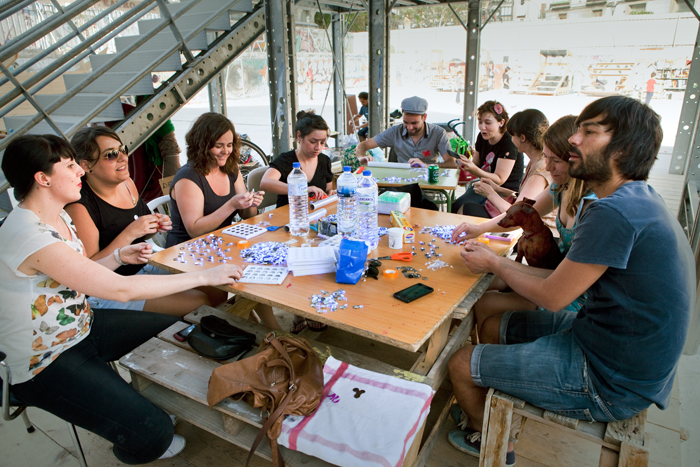
Al final, conseguimos más de 2.000 recipientes transparentes que lavamos y acondicionamos y con la ayuda de muchos pequeños ayudantes, amigos y visitantes del campo fuimos colocando con cierto orden desordenado, llenado de agua de color azul y con luces hasta conseguir una luminosa piscina de 6×4 metros.

La instalación se llamó Piscina sobre fondo de Campo de Cebada y estuvo luciendo hasta la madrugada.

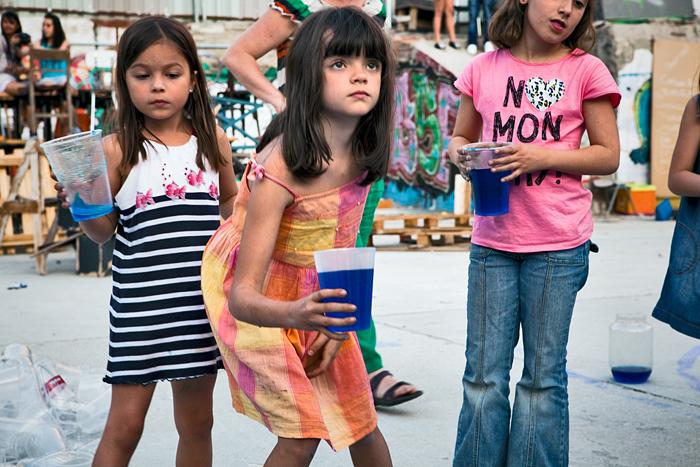
Gracias a todos nuestros amigos, que desinteresadamente nos ayudaron, Lorena, Luca, Jose, Marianico, Betsa, Aurora, MIren, Cris Aliencito, Jacobo, Ruben, Eva… a los amigos del Campo de la Cebada que nos dejaron el espacio y nos pusieron todas la facilidades para recolectar los envases que necesitamos para llevar a cabo la instalación: Pero sobre todo tenemos que agradecer la participación activa de los niños, que con su creatividad y alegría se convirtieron en protagonistas del resurgimiento, por un rato, de nuestra piscina efímera.
Fotos de Gustavo Sanabria.

Tiempo de montaje: 12 horas.
Daños ocasionados: 0.
Permanencia de la intervención: 8 horas.

———————————————————————-

The La Latina neighborhood in Madrid had a popular public swimming pool, it was in the Plaza de la Cebada and the residents went to the Center to practice the healthy sport of swimming, even in winter.
In 2008 the pool was demolished with a firm promise on the part of the Town Hall, that in 2 years there would be another in its place, more modern and with more capacity to serve more people from the neighborhood.

The project also included the remodeling of the Mercado de la Cebada that would be replaced by one of avant-garde architecture with areas for leisure, sports and with greenery on its exterior.
As of May 21 of 2012 neither the construction of the swimming pool or the market had begun and the prospect that the future building housing sports facilities available to all residents seems increasingly distant.

The latest news, paints a less optimistic picture, in keeping with that unhealthy trend of converting the traditional markets into leisure and gastronomic centers for the rich, that leave the neighborhoods without the traditional small business. According to media reports, they are going to build a luxurious shopping center with a large offering of gastronomic and leisure attractions, in which we are afraid that neither the sports center nor the businesses are going to be affordable for those from the neighborhood, which will become a center of pilgrimage for «people with money» from outside the neighborhood who will be without their sports center or traditional business.

While the building site is transformed into another fashion shopping center, neighbors and collectives have converted this empty lot in a wonderful Field of Barley, empty of water but full of activities that have converted it into a space of reference where residents can participate in and carry out self-organised activities where everyone is invited.

In this context, and to celebrate the first anniversary of the transfer by the town hall of the Field of Barley, the day of May 15th, we carried out an installation in the form of pool of light to remind the neighbors of what the space was and should be in the not too distant future.

For a month, we have been collecting transparent recycled packaging, that the residents were leaving in containers within the field, in addition, coinciding with the San Isidro fiestas  we went to LasVistillas and collected more than 800 glassess that the people had left in the street after drinking their alcoholic contents.

In the end, we got more than 2,000 transparent containers that we washed and reconditioned and with the help of many little helpers, friends and visitors of the field we went about placing them in a certain disorderly order, filled with blue colored water with lights up to achieve a luminous 6 ×4 meter pool.

The installation was called Pool on a background of Field of Barley and was shining until the early morning hours.

Thanks to all our friends who selflessly helped us, Lorena, Luca, Jose, Marianico, Betsa, Aurora, MIren, Cris, Aliencito, Ruben, Eva … to the friends of the Field of barley that provided the space and the facilities to collect the packaging to carry out the installation and especially to children, who with their creativity and joy were the protagonists of the resurgence, for a while, of our ephemeral pool.

Photos by Gustavo Sanabria.

Time of installation: 12 hour.
Damages: none.
Exhibition time: 8 hours.

Manifestación nocturna de bicicletas / Nighttime bicycle demonstration

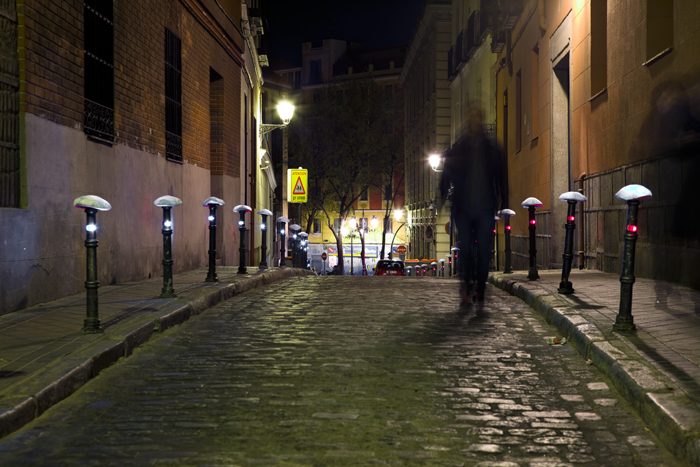
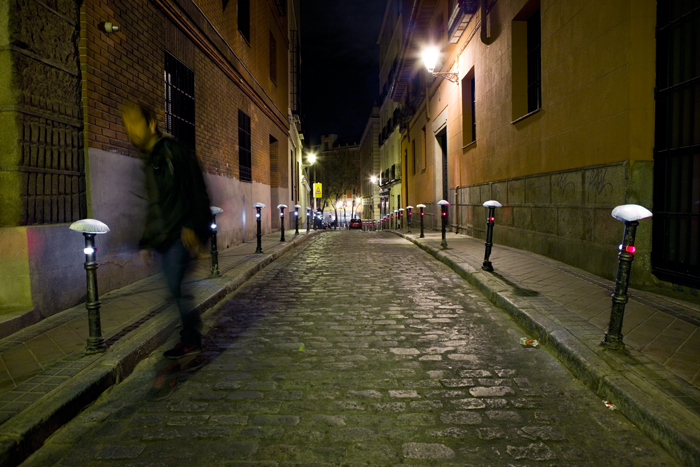
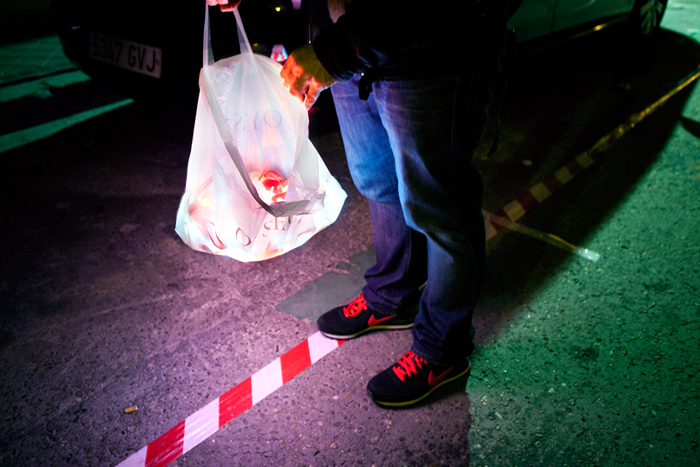
Una cálida noche del mes de abril, salimos a la calle cargados de luces para llevar a cabo nuestra instalación Bicicletas buscan dueño.

Con ella pretendíamos motivar a la gente para que use la bicicleta en sus desplazamientos por la ciudad, ya que constituye una alternativa saludable y económica al transporte público que acaba de subir un 11% de media y que en algunos casos ha duplicado su precio; además de ser una manera efectiva de paliar la contaminación ambiental que cada vez es más preocupante para la salud de los madrileños y por la que La Unión Europa amenaza seriamente con sancionarnos.

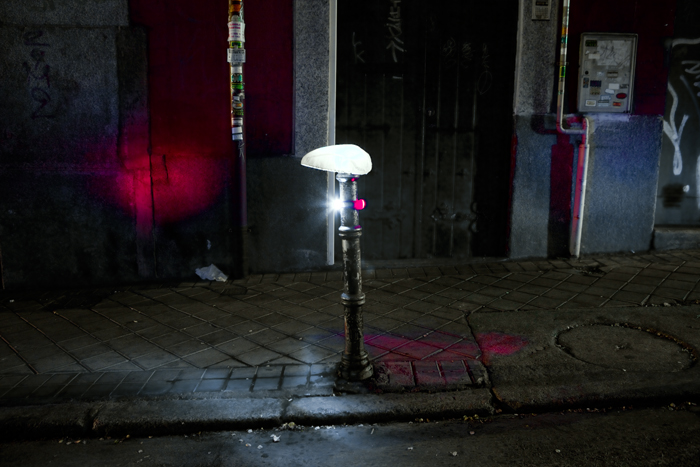
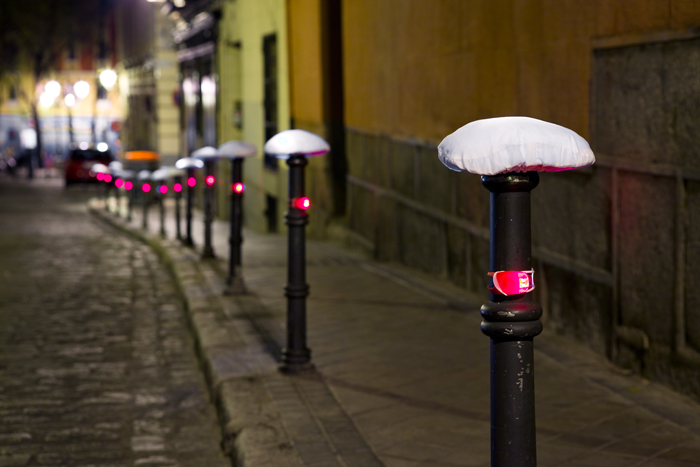
Para conseguirlo, usamos molestos bolardos de la calle, ya lo hemos hecho en otra ocasión, no podemos evitarlo, están demasiado presentes en muestra vida gracias al uso y abuso que de ellos hace el ayuntamiento, en su empeño por evitar huecos por los que los coches puedan acceder al espacio reservado a los peatones.

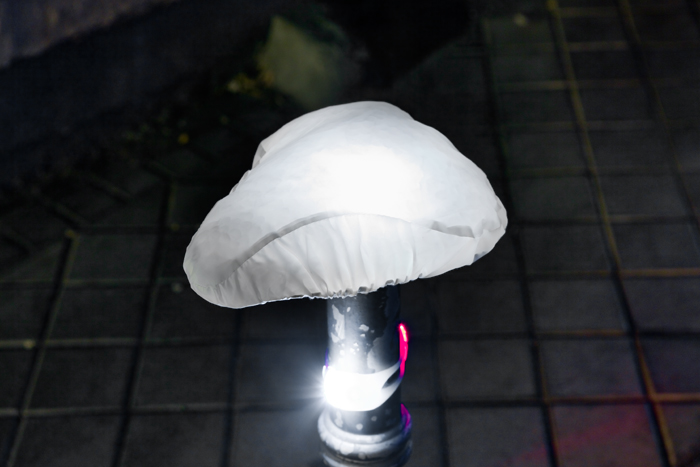
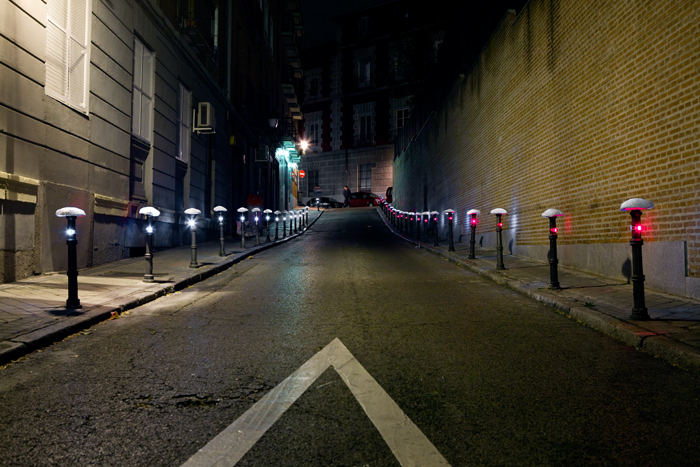
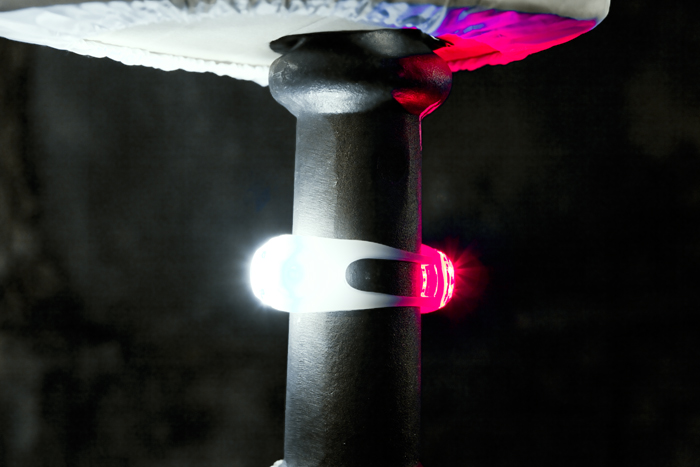
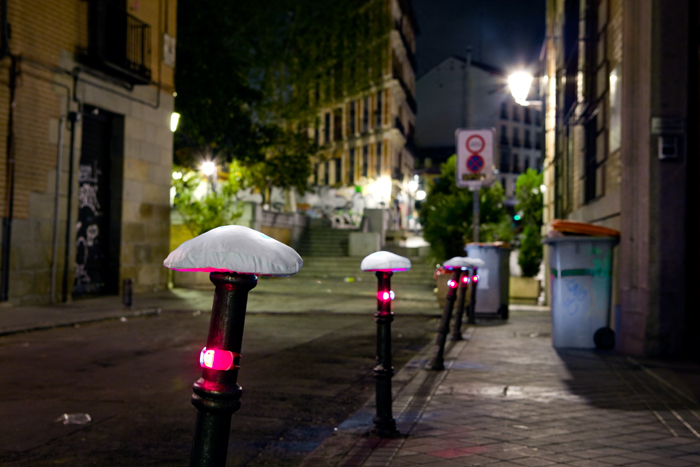
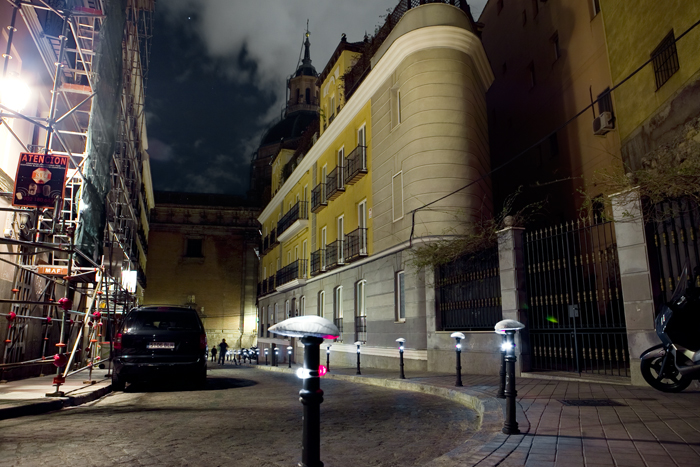
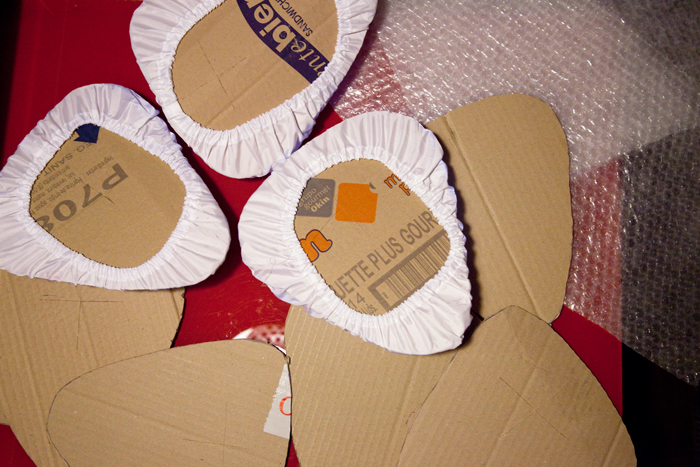
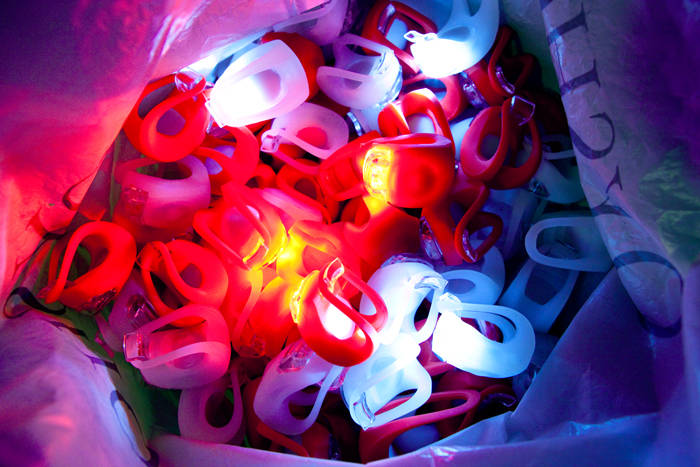
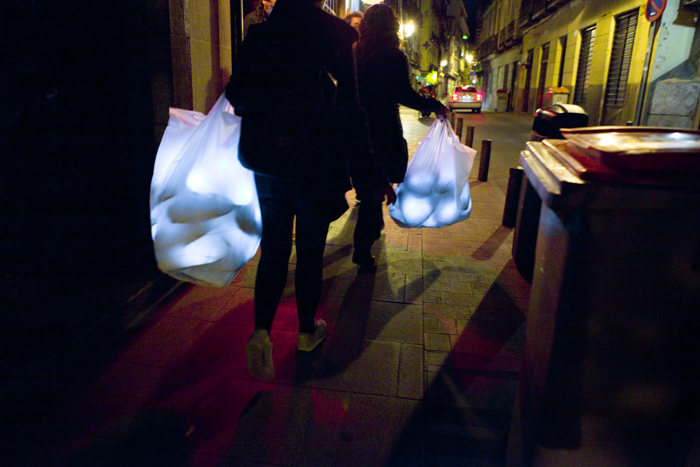
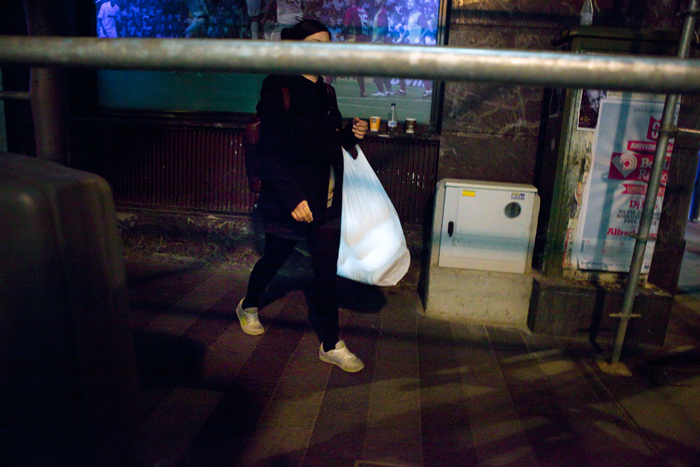
Esta vez los convertimos en un singular ejercito de bicicletas iluminadas, que recorrían calles tranquilas del centro, buscando quien se animase a adoptarlas y usarlas, comprobando por sí mismos, que aun sin carril bici, se puede transitar fácilmente, sin molestar al peatón ni interrumpir el tráfico.

Y es que por mucho que nos empeñemos, en muchas zonas de Madrid es imposible implantar un carril bici sin que invada el espacio de los peatones o imposibilite la circulación de los coches. No nos desanimemos por ello… hay algunos usuarios de la bicicleta, que están colaborando para crear un plano de calles tranquilas por las que circular sin miedo y disfrutando del viaje. Ellos nos ha servido de inspiración.

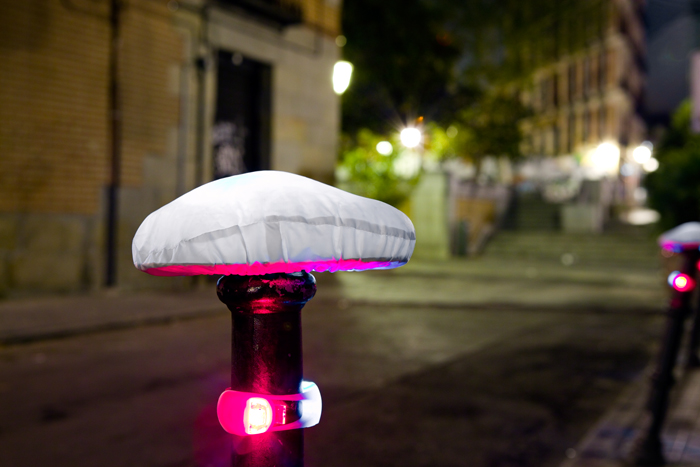
No podemos dejar de dar las gracias a los amigos de OnYerBikeSeat que de manera desinteresada se ofrecieron a regalarnos las fundas de sillines para nuestra instalación y a Cris y a Alex, que como viene siendo habitual, nos ayudaron con el montaje.

Y bueno, si finalmente no hemos conseguido animar a la gente a echarse a la calle en bici, esperamos que nuestro invento por lo menos haya servido de asiento para un corto descanso, de camino a casa.

La fotos, como no, son de Gustavo Sanabria.

Tiempo de montaje: 4 horas.
Daños ocasionados: 0.
Permanencia de la intervención: 5 horas?.

—————————————————————–

One warm night in the month of April, we took to the street loaded with lights to carry out our installation Bicycles seeking owners.

With it we were trying to motivate the people to use bicycles in their travels about the city, given that it constitutes a healthy and economical alternative to public transport which has just risen by an average of  11% and which in some cases has doubled in price; as well as being an effective way to diminish the environmental pollution that is increasingly worrying in regards to the health of the citizens of Madrid and for which  The European Union is seriously threatening to sanction us.

To carry this out, we used the annoying street bollards, which we have already done on another occasion, we cannot avoid it, they are all too present in our life thanks to the use and abuse that city hall makes of them, in their endeavour to avoid holes through which cars can access the space reserved for pedestrians.

This time we turned them into a unique army of illuminated bicycles, that roamed the quiet streets of the city center, looking for someone who might be inclined to adopt and use them, proving to themselves, that even without a bike lane, you can travel easily, without disturbing pedestrians or disruptimg traffic.

And no matter how hard we try, in many areas of Madrid it is impossible to create a bike lane without invading pedestrian space or hindering the circulation of cars. We do not feel discouraged by that… there are some bicycle users, who are collaborating to create a map of the quiet streets through which you can travel without fear and enjoythe journey. They have served as an inspiration to us.

We cannot fail to thank our friends at OnYerBikeSeat that selflessly volunteered to give us the saddle covers for our installation and also Cris and Alex, who as usual, helped us with the installation.

And, well, if in the end we did not manage to encourage people to take to the streets by bike, we hope that our invention has at least served as a seat for a short break on the way home.

The photos, as usual, are by Gustavo Sanabria.

Time of installation: 4 hour.
Damages: none.
Exhibition time: 5 hours?.

Pharmacy herbs / Hierbas de botica

Malas hierbas mutantes from luzinterruptus on Vimeo.

De todas las contaminaciones ambientales que acusa la ciudad de Madrid, la más evidente es la contaminación lumínica, tanto es así que en nuestro cielo nunca podemos ver la Via Láctea y apenas las estrellas. Esta sobreiluminación se aprecia a simple vista a más de 200 km de distancia y produce un resplandor que se observa con telescopio de mediano tamaño, a más de 700 km.

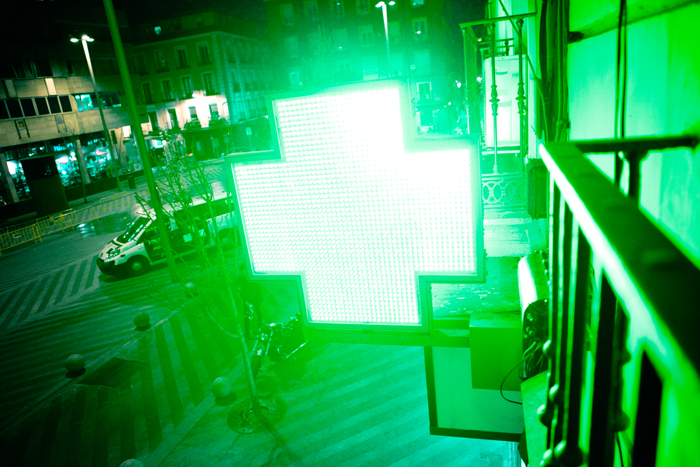
Es por tanto muy sorprendente, que en un momento en el que la Unión Europea es tan cuidadosa con temas de contaminación medioambiental, la normativa de rótulos luminosos de la Concejalía de Medio Ambiente del Ayuntamiento de Madrid, aprobada hace un par de años, haya cambiado la reglamentación de los rótulos de las farmacias, para sustituirlos por otros mucho más potentes.
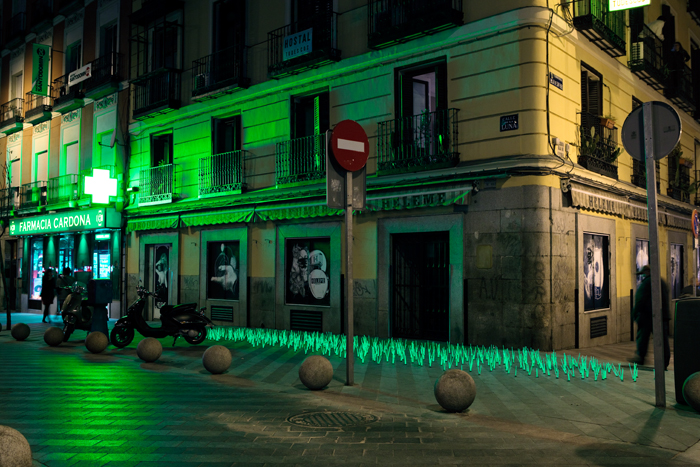
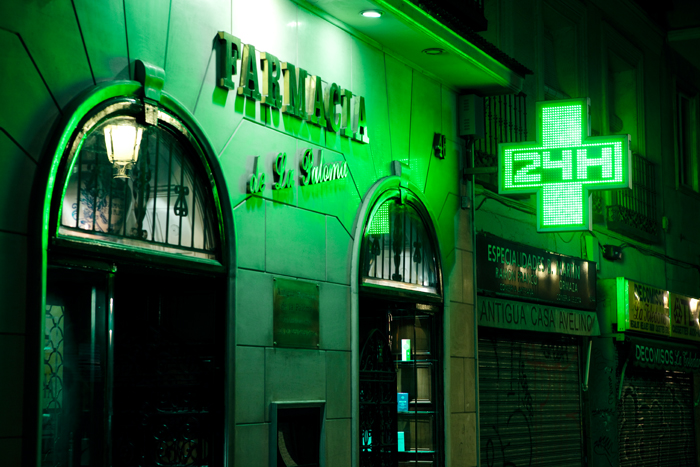
Tanta luz desprenden las nuevas cruces, que el entorno que rodea cada farmacia, está permanentemente teñido de un profundo, vibrante y antinatural color verde. Objetivamente hablando, se podría decir que la mayoría de los espacios verdes urbanos de nuestra ciudad, son mas el resultado de una errónea normativa de rótulos luminosos, que del empeño de nuestras instituciones por dotar a la ciudad de lugares donde poder estar en contacto con la naturaleza.
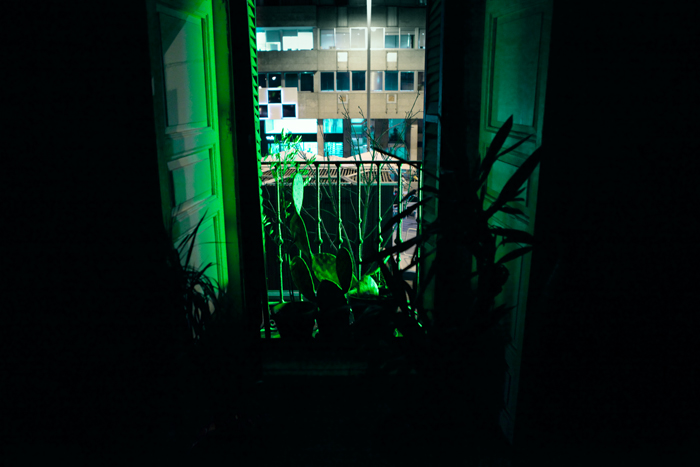
Además del evidente cambio de color de las calles, los vecinos que viven en las inmediaciones de las farmacias abiertas 24 horas, han visto con impotencia como cada noche sus habitaciones se convierten en inquietantes estancias verdes, en las que la vida y la percepción de lo que en ellas acontece se ve alterada, sin que puedan hacer nada para evitarlo.
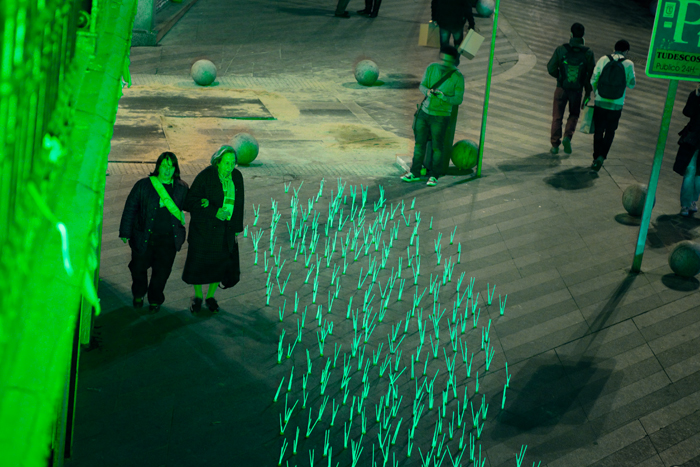
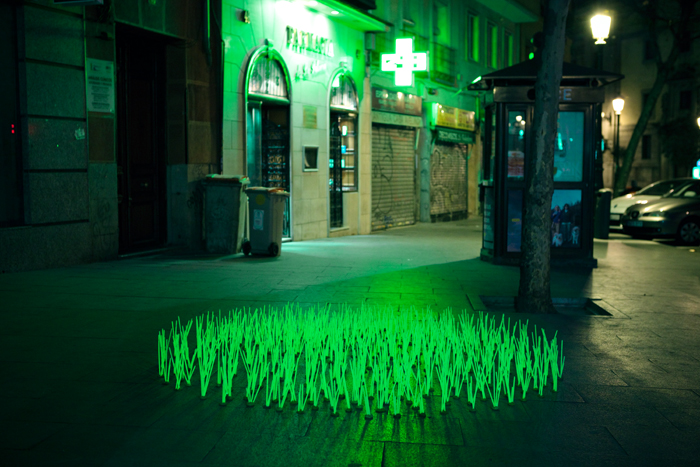
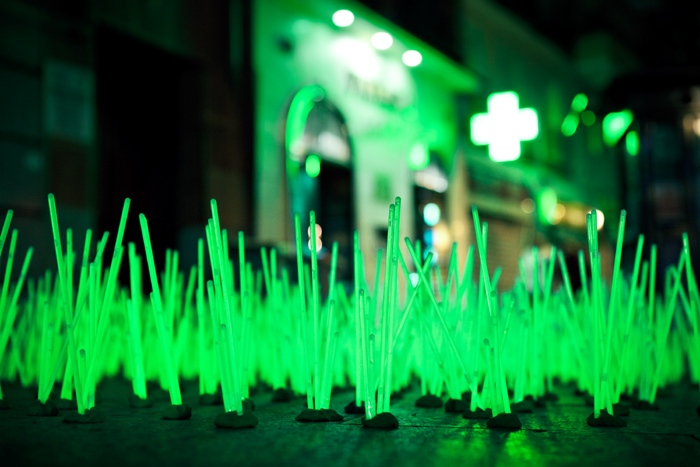
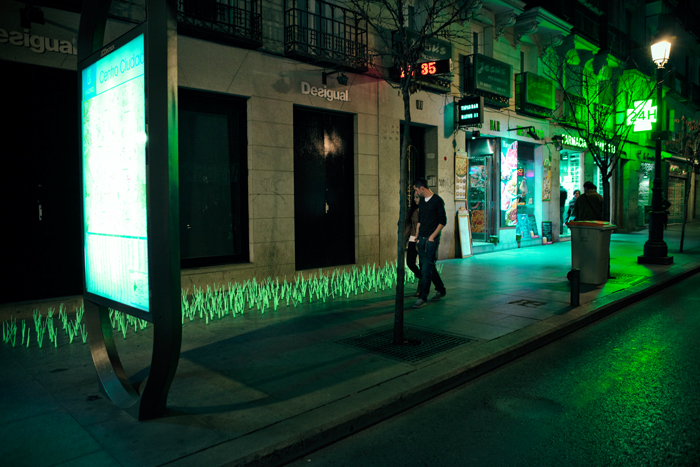
Sin querer frivolizar con un tema tan serio, pero intentando tratarlo con cierto sentido del humor, que nunca viene mal, hemos llevado a cabo nuestra instalación Malas hierbas mutantes en la que recreamos un futuro no muy lejano, en el que una nueva y resistente especie vegetal fotosensible, crece en el asfalto alrededor de las farmacias, alimentada por la fotosíntesis de su potente luz de «bajo consumo».

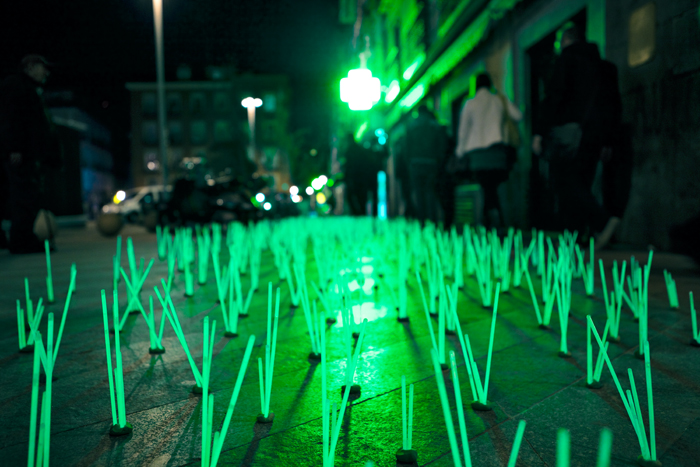
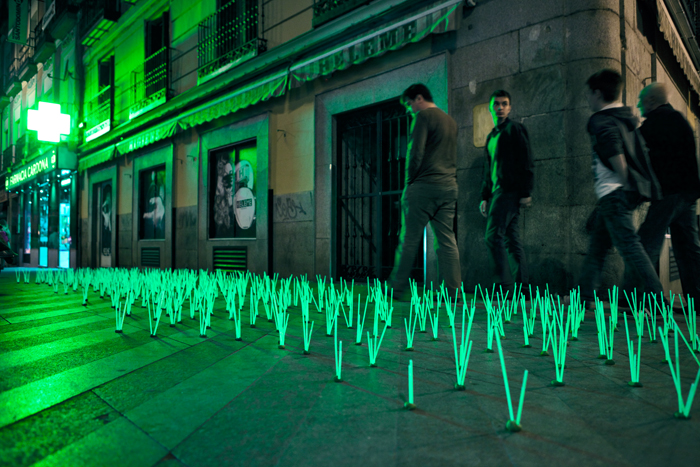
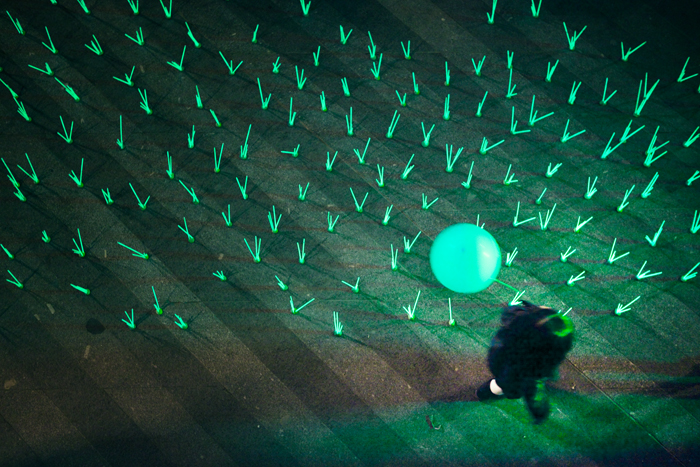
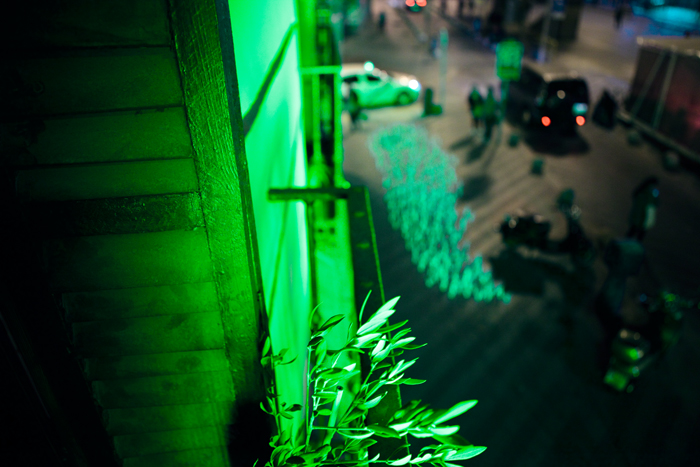
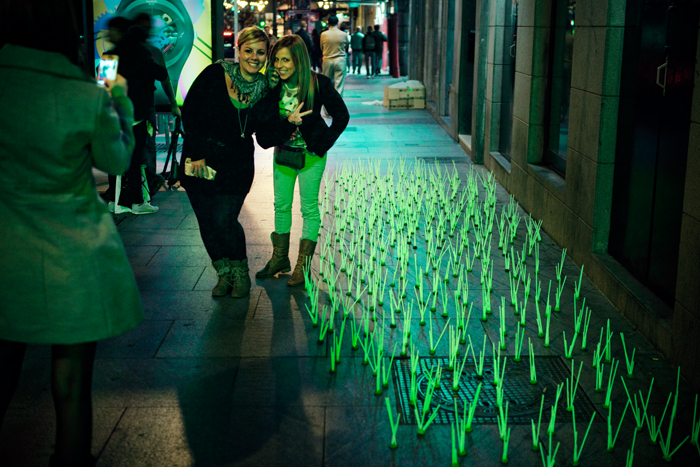
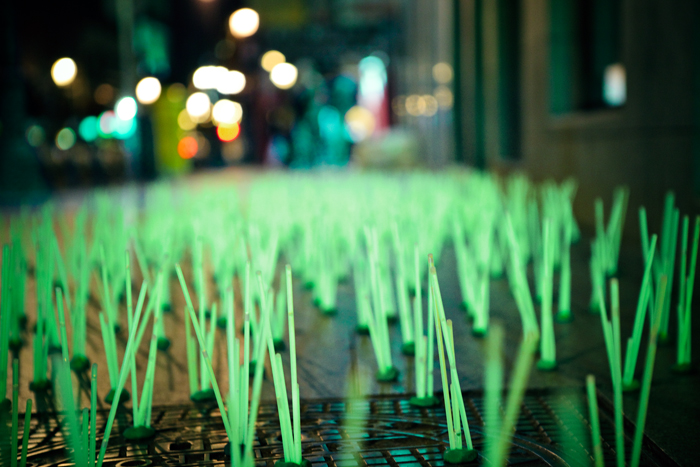
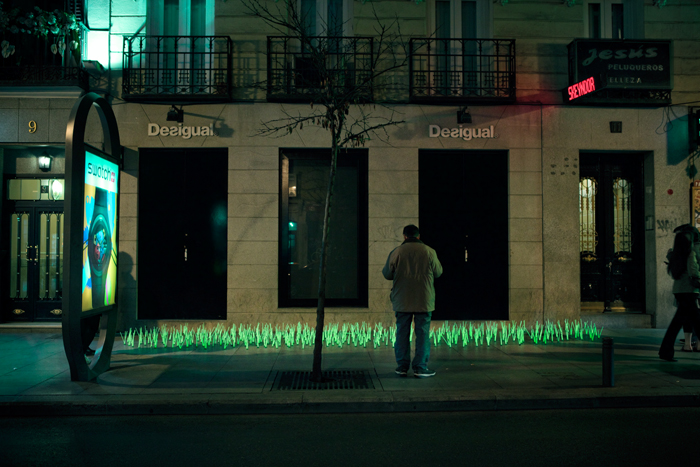
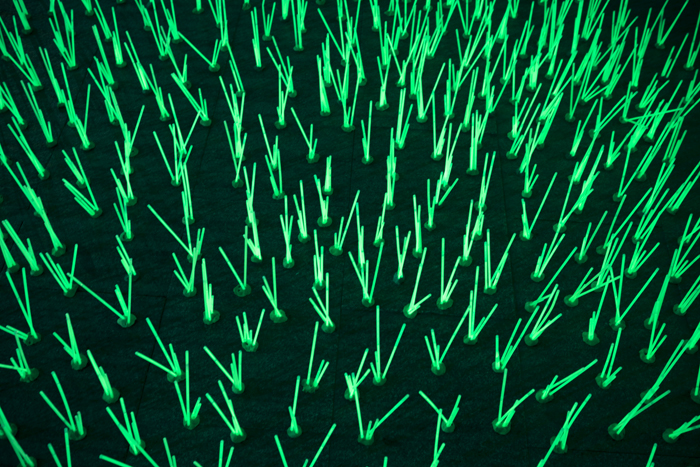
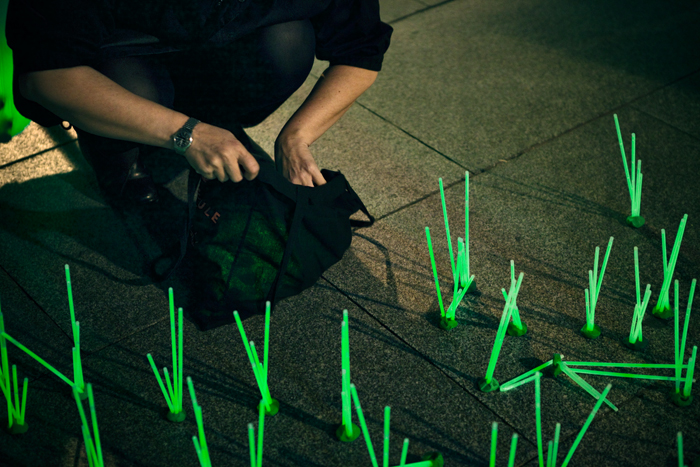
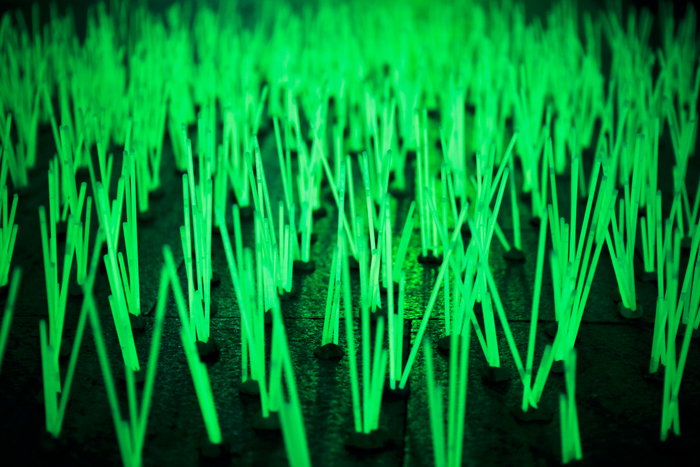
Para llevarla a cabo, adquirimos palitos fluorescentes, a los que dimos forma de briznas de hierba y colocamos en el pavimento, convirtiendo los reflejos, en pequeños campos radiactivos, que produjeron una curiosa expectación en los muchos ciudadanos que transitaban a esas horas por la calle.

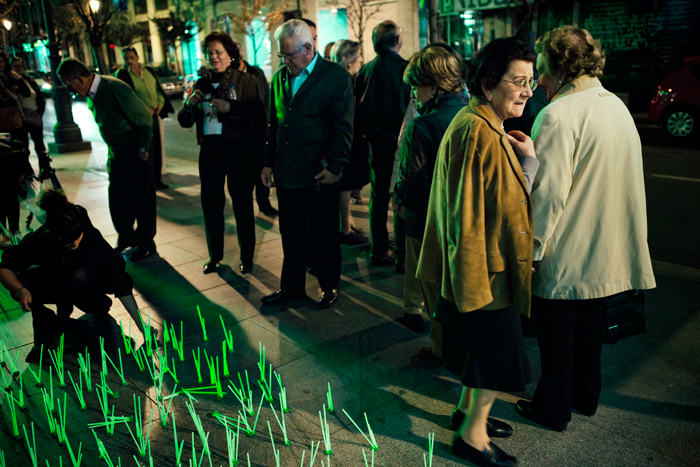
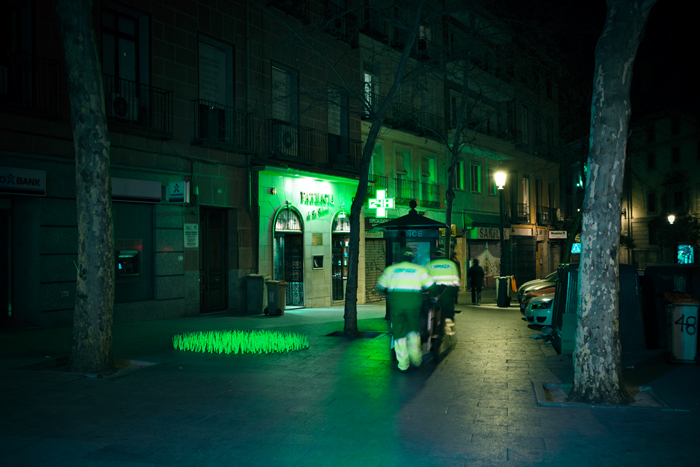
Elegimos 3 ubicaciones céntricas y allí dejamos por un rato nuestros campos luminosos, mientras, charlábamos con los peatones curiosos, después, lo recogimos todo para no contaminar.

Gracias a Clément y a Andre por invitarnos a conocer su casa y hacer fotos desde sus balcones teñidos de verde, también a Cris y Alex que nos ayudaron con la instalación.

Las fotos y el vídeo son, como siempre, de Gustavo Sanabria.

Tiempo de montaje: 5 horas.
Daños ocasionados: 0.
Permanencia de la intervención: 5 horas.

—————————————

Of all the environmental pollution that can be found in the city of Madrid, the most evident is light pollution, so much so that in our sky we can never see the Milky Way and hardly any stars. This overillumination is evident to the naked eye at a distance of more than 200 kms and produces a glow that can be seen with a medium-size telescope for more than 700 kms.

It is therefore very surprising, that at a time when the European Union is so careful with issues of environmental pollution, the Dept. of the Environment of the City Council of Madrid rules for illuminated signs, adopted a couple of years ago, changed the rules for  pharmacy signs, to allow them to be replaced with much more powerful ones.

So much light emanates from the new crosses that the environment that surrounds each pharmacy, is permanently tinted a deep, vibrant and unnatural green color. Objectively speaking, one could say that the majority of the urban green spaces in our city, are more the result of erroneous illuminated sign rules than the commitment of our institutions to provide the city with places where you can be in contact with nature.

In addition to the obvious color change of the streets, the neighbors who live in the vicinity of 24 hour pharmacies, have watched impotently as every night their rooms become disturbing green places, in which life and the perception of what happens in them is altered, without being able to do anything to avoid it.

Without wanting to play down such a serious subject, but trying to approach it with a sense of humor, which never hurts, we carried out our installation Mutant weeds in which we recreated a not-too-distant future, in which a new and hardy species of photosensitive plant, grows in the asphalt around the pharmacies, nourished by the photosynthesis of its powerful «low» light.

To accomplish this mission, we acquired fluorescent sticks, which we gave the form of blades of grass and we placed them on the pavement, converting the reflections into small radioactive fields that produced a curious anticipation in the many citizens who walked the streets at those hours.
We chose 3 downtown locations and there we left our illuminated fields for a while, while, we talked with the curious pedestrians, after which, we picked everything up so as not to pollute.

Thanks to Clement and Andre for inviting us to their home to take pictures from their green tinted balconies, also to Cris and Alex who helped us with the installation.

The photos and the video are, as always, by Gustavo Sanabria.

Proyectos para llevar a cabo en un futuro próximo / Projects to carry out in the near future

Dejamos por aquí dos nuevos proyectos que estamos deseando poner en marcha, después de haberlos presentado a varios festivales. Estos, se suman a otros muchos que ya hemos publicado aquí y que seguimos interesados en producir.

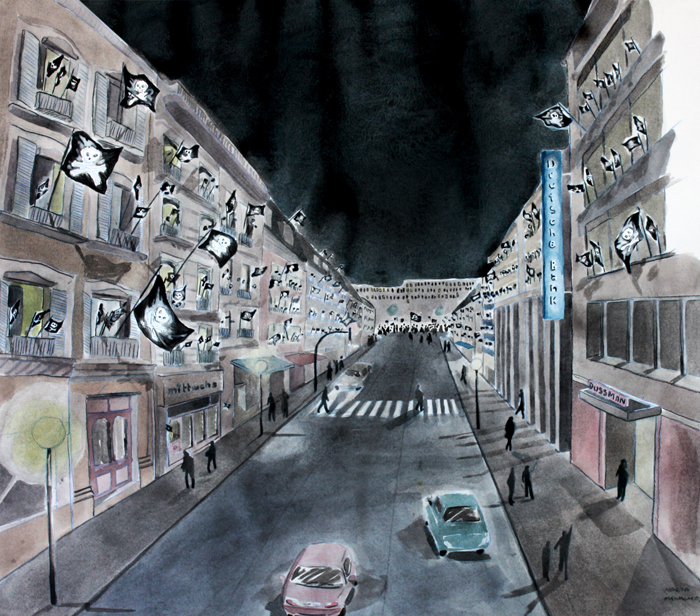
El primero Calles pirateadas va de banderas iluminadas, con las que pretendemos llenar las calles, provocando en la mente de los ciudadanos, un recuerdo de la infancia, asociado a aventuras, a tierras y mares lejanos y a piratas de pata de palo, que nada tienen que ver con la informática.

El segundo, Verbena vegetariana es una mirada nostálgica a las fiestas de los pueblos españoles, con sus bailes y los farolillos de colores. Nosotros queremos llevar esa imagen a las calles de una gran ciudad pero esta vez los farolillos y bombillas de colores, serán sustituidos por pimientos de colores iluminados en el interior.

Esperamos que pronto estén producidos y os podamos contar más cosas sobre ellos.

Las ilustraciones son, como siempre, de nuestra amiga Marta Menacho.

———————————————————

Here we present two new projects that we are anxious to start, after having submitted them to several festivals. These, are added to many others that we have already published here and that we remain interested in carrying out.

The first, Pirated Streets is made up of illuminated flags, with which we intend to fill the streets, provoking memories of childhood in the minds of the people, associated with adventures, to distant lands and seas and of pirates with wooden legs, none of which have anything to do with computers.
The second, Vegetarian celebration is a nostalgic look at the festivals of Spanish villages, with their dances and their colored lanterns. We want to bring that image to the streets of a big city but this time the light bulbs and lanterns of colors, will be replaced by colored peppers, brightly lit from the inside.
We hope that they will be carried out soon and we can tell you more about them.

The illustrations are, as always, by our friend Marta Menacho.

Lo que perdimos en el 2011 / What we lost in 2011

What we lost in 2011 from luzinterruptus on Vimeo.

Con un poco de retraso os dejamos el video de nuestra instalación navideña Lo que perdimos en el 2011, en la que pedíamos a amigos personales y queridos que nos dijeran la palabra que definiera lo más importante que habían perdido durante el año 2011.

Nosotros unimos esas palabras a grandes cometas de papel y las hicimos subir al cielo para que ardieran en él y cayeran a la tierra en forma de cenizas.

—————————————-

With a little delay we have posted the video of our christmas installation for What we lost in 2011 for you, in which we asked our personal friends and loved ones to give us a word which best defined the most important thing that had been lost during the year 2011.

We attached these words to large paper kites and launched them into the sky heaven so that they would burn up in it and fall to the earth in the form of ashes.