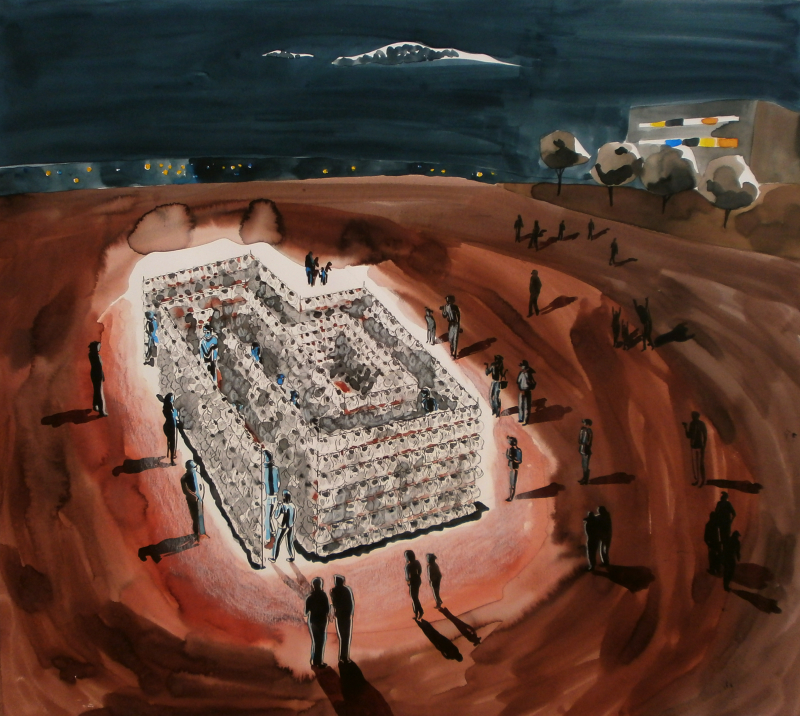
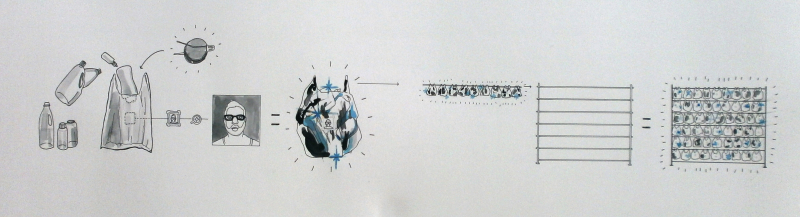
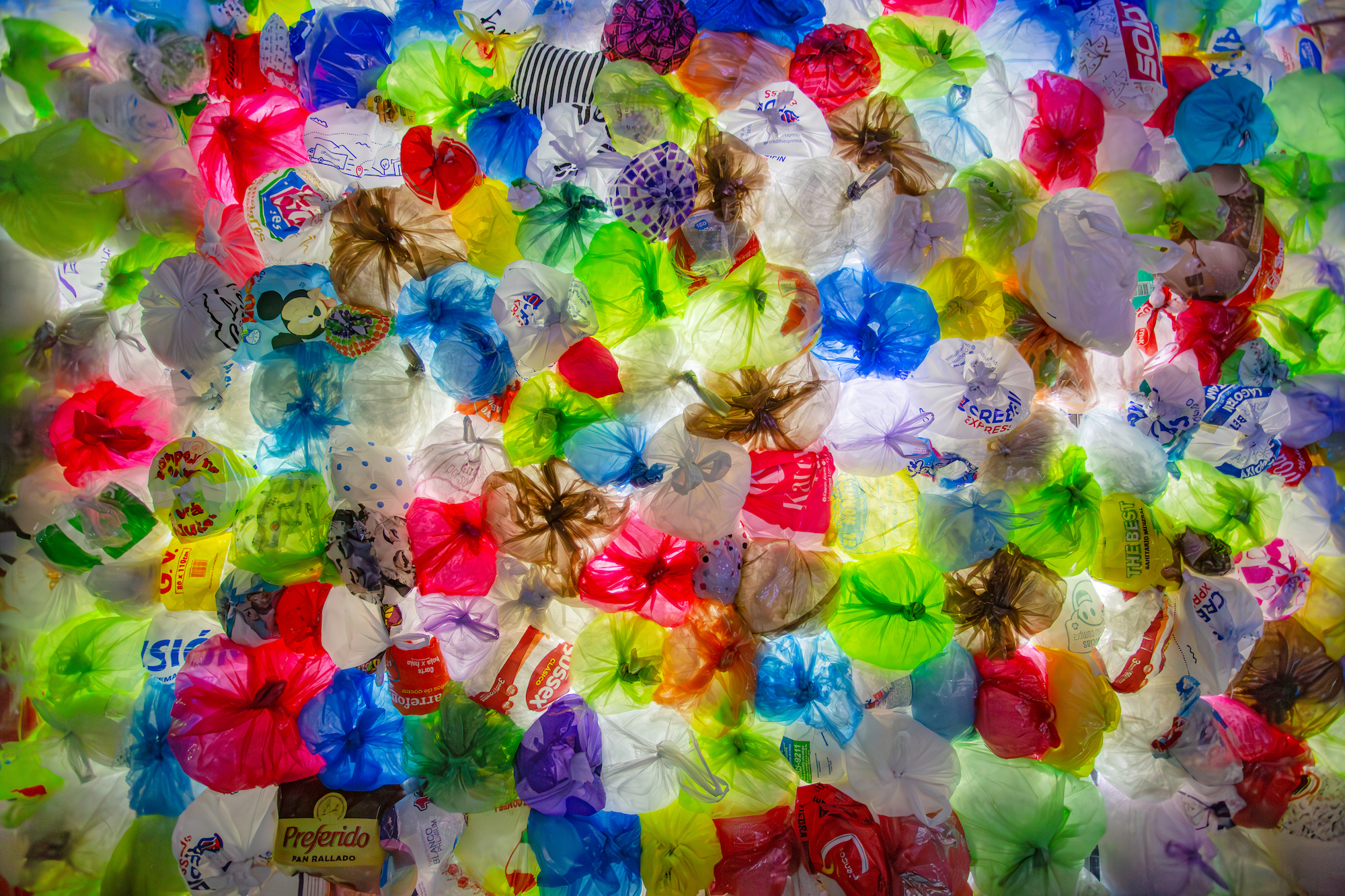
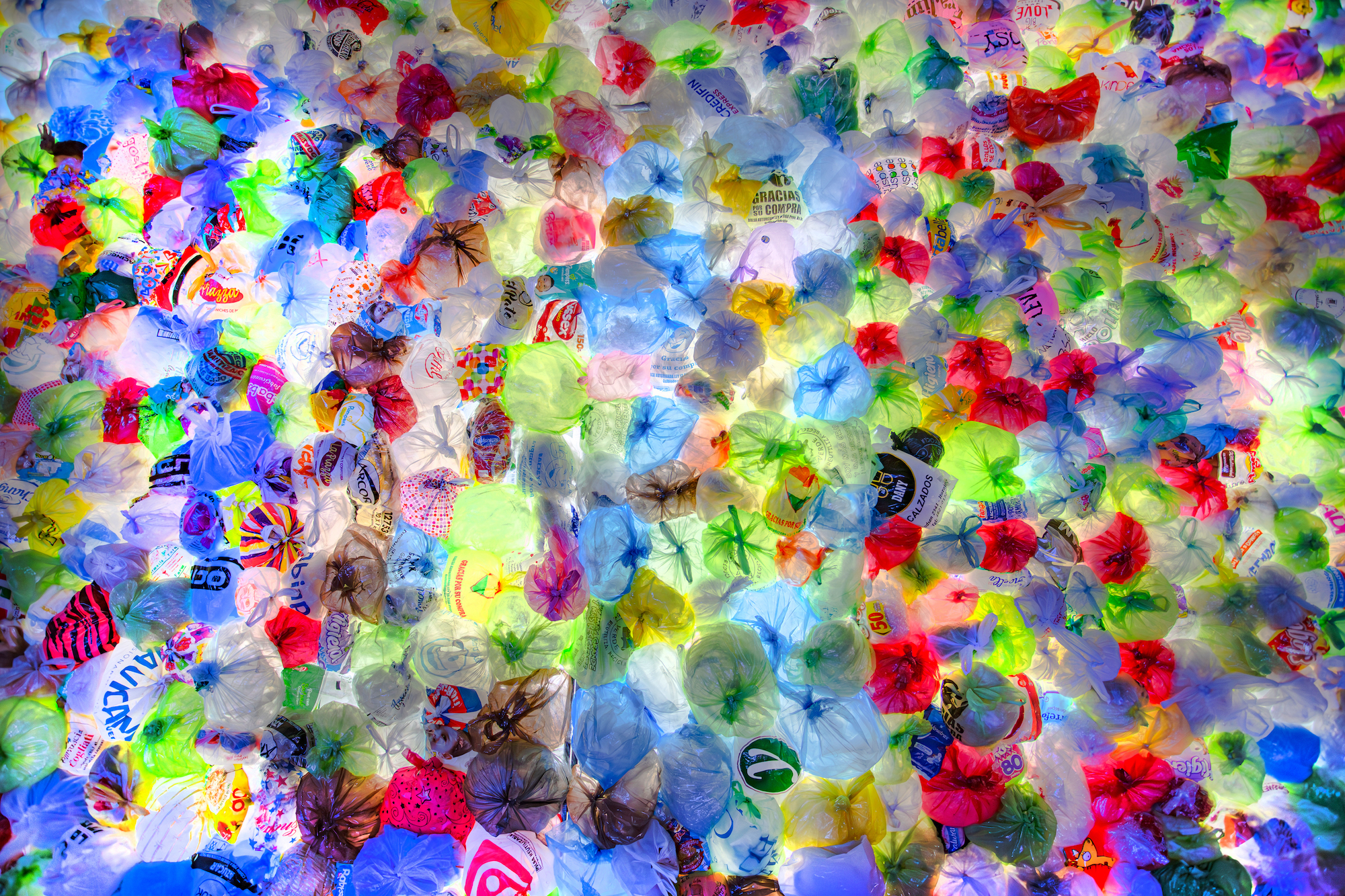
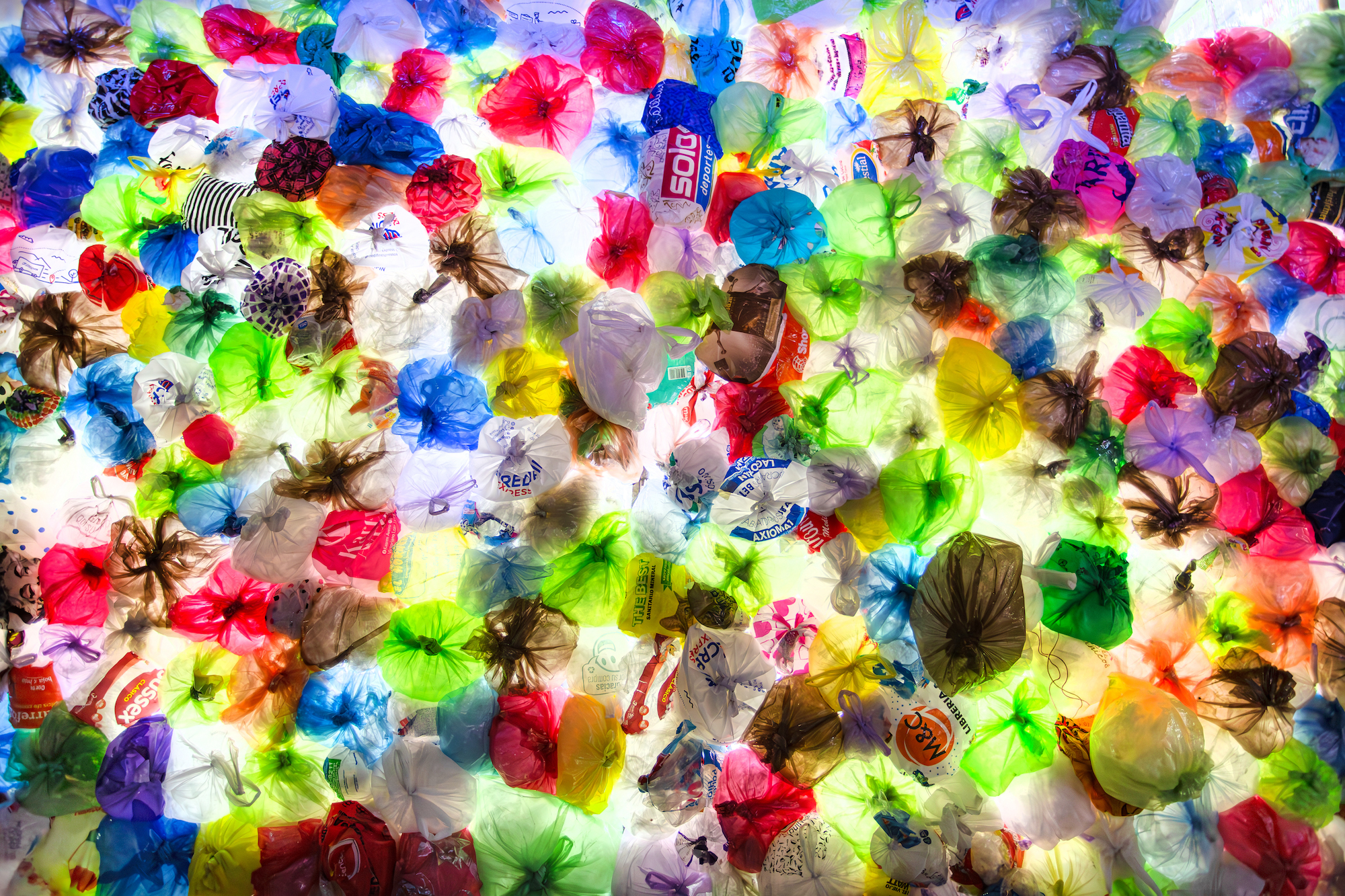
Queremos que la gente sea consciente de los residuos plásticos que genera en su vida diaria, más de lo que sospechamos, eso seguro. En paises más evolucionados estos serán reciclados convenientemente pero en una gran mayoría, se quedarán por los siglos de los siglos en vertederos, sin posiblidad de ser destruirlos.
Para visibilizar este problema, hemos pensado en una instalación hecha con residuos plásticos generados por los habitantes de la ciudad.
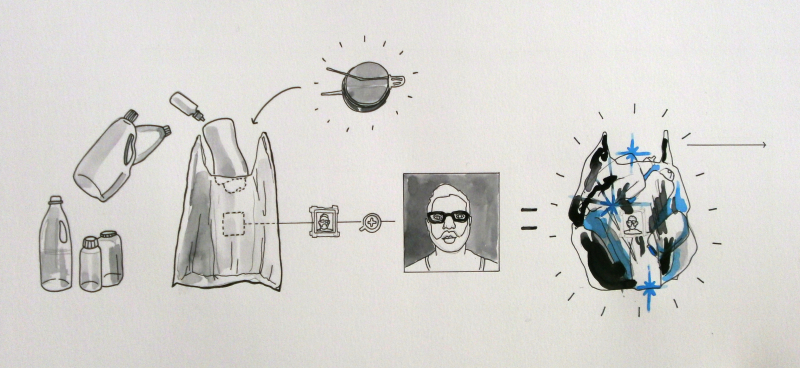
Para llevarla a cabo, pedimos a los vecinos que durante una semana selecciones los objetos de plastico que vayan a tirar, preferiblemente transparentes, botellas, embases, plástico de envolver, vasos… los límpien y los metan en bolsas transparente de asa que distribuiremos para ese fin, cuando nos entreguen cada bolsa, nosotros le entregaremos entradas para algun museo, teatro o actividad cultural de la ciudad.
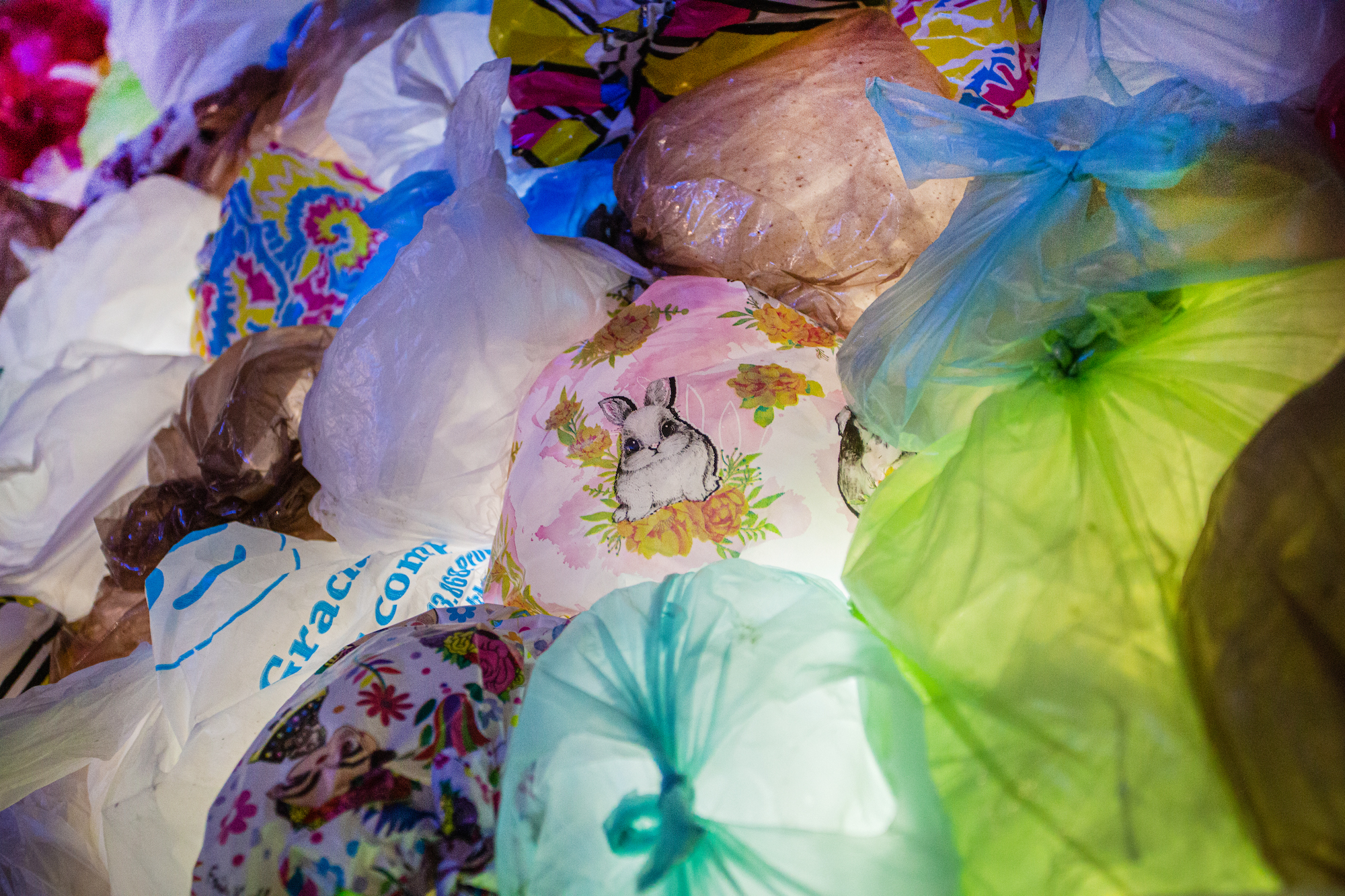
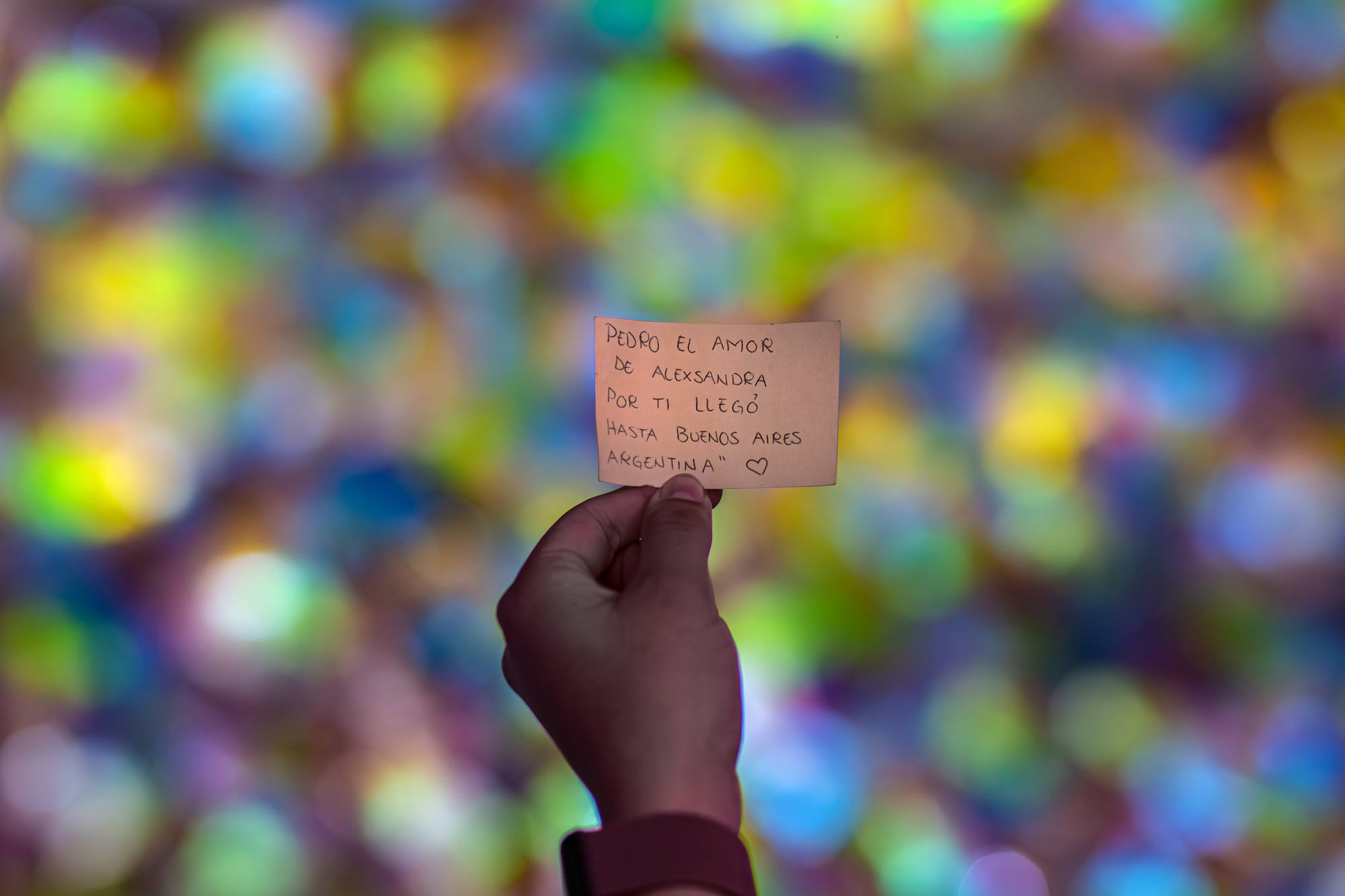
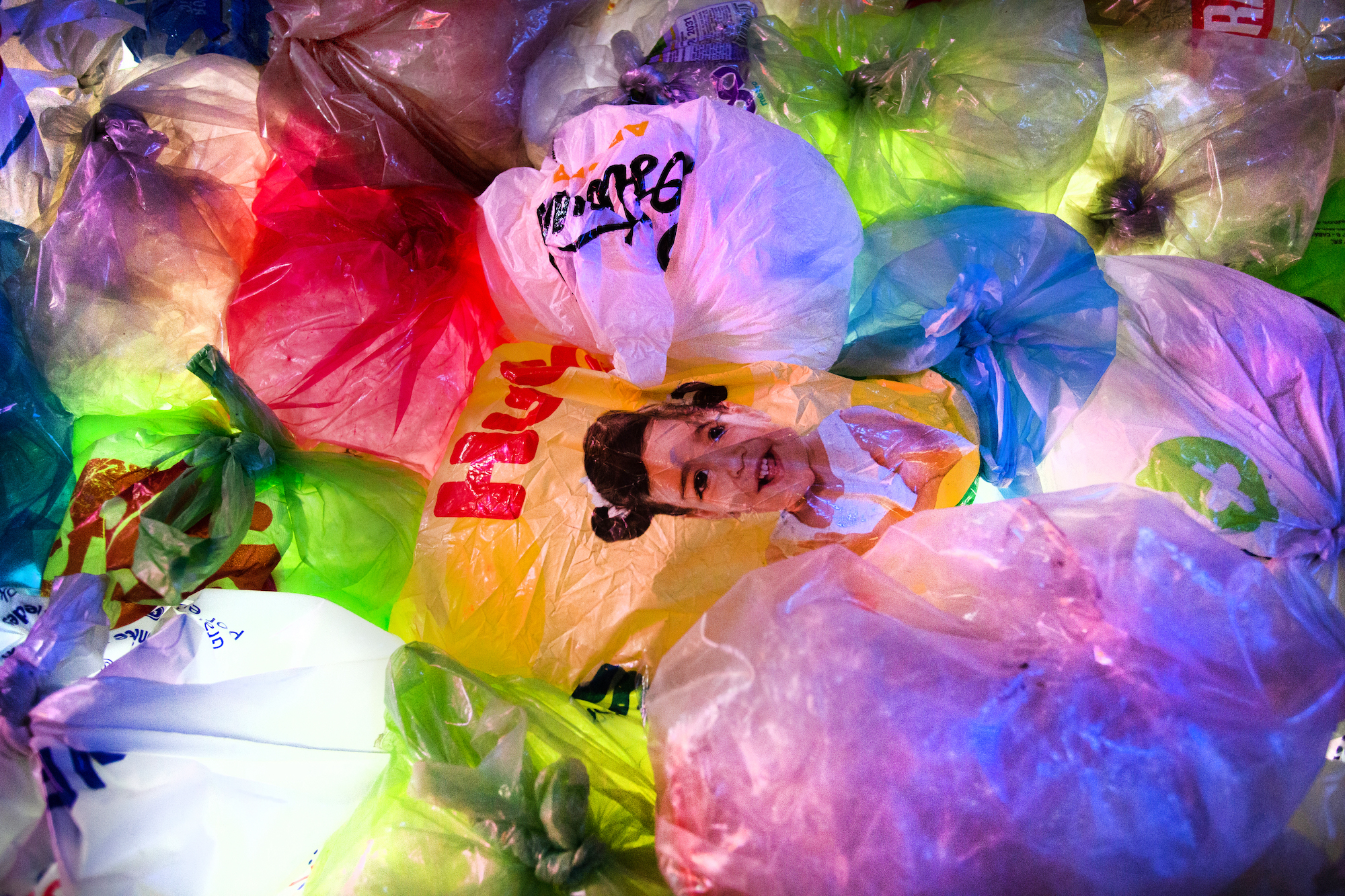
En el momento de entregar las bolsas, además les haremos una foto, que colocaremos a la vista dentro de la bolsas transparente, esto servirá para identificar cada bolsa con su dueño.
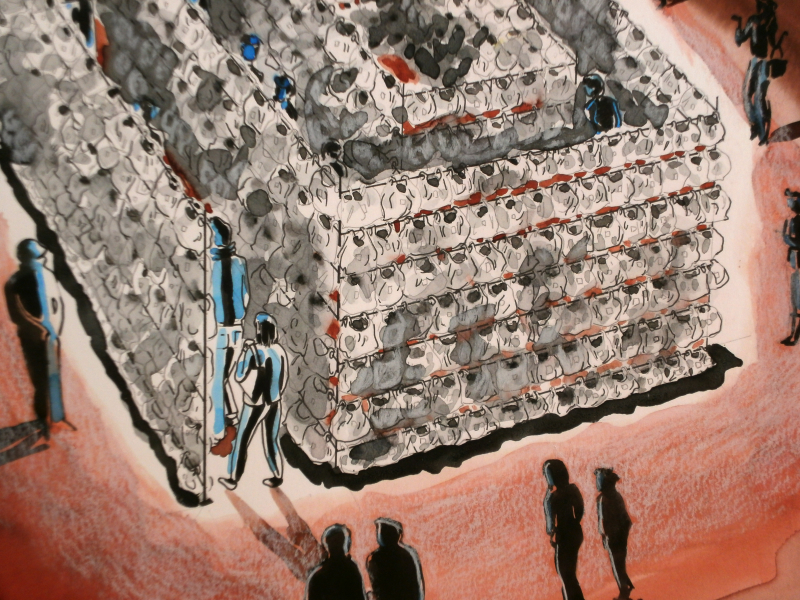
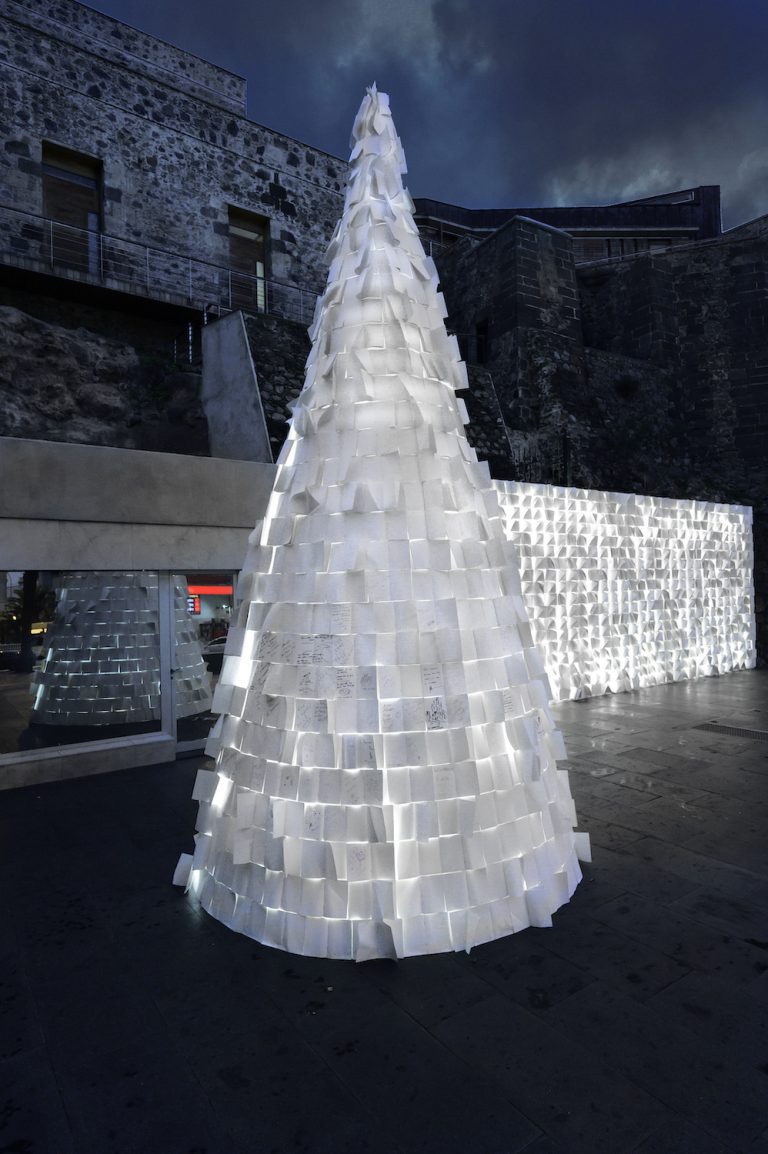
Así pues los elementos con los que trabajararemos serán, residuos plásticos transparentes, dentro de bolsas transparente, identificadas con la foto del dueño de los objetos. Además insertaremos luces autónomas en todas las bolsas de manera que se transmita uniformemente por el plástico contenido en su interior.
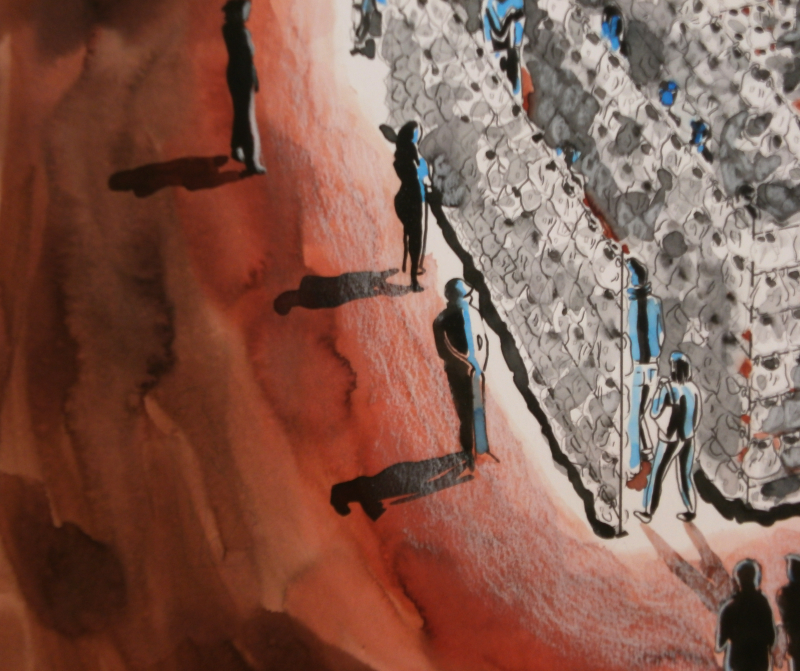
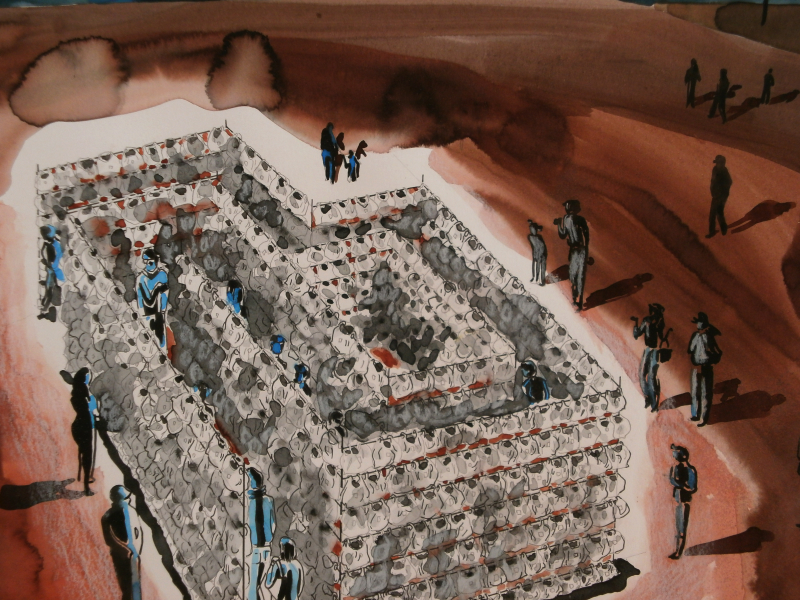
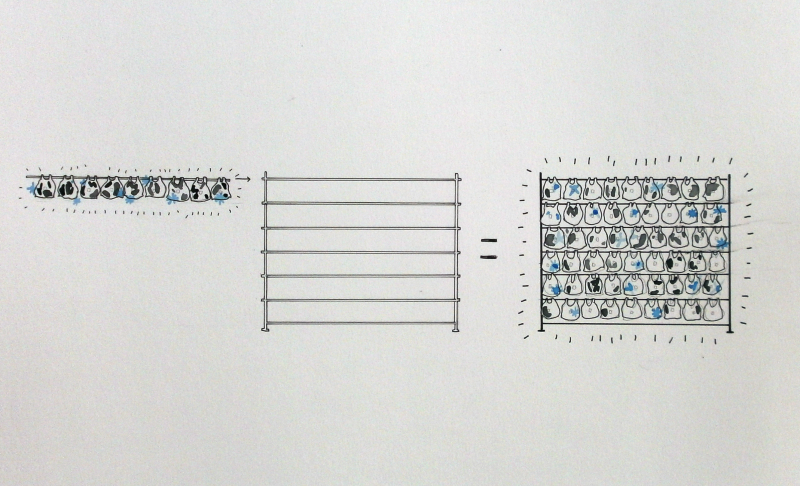
Para la construcción de la pieza, usaremos tubos de andamos, de los más comunes que se utilizan en las obras, con ellos daremos forma a un laberinto, con pasillos transitables que permitan a la gente internarse y pasear por él.
Con la estructura construida, añadiremos tubos horizontales sobre los que irán insertadas las bolsas, de manera que todo el laberinto quede forrado de plástico con luz.
Durante la noche se invitará a la gente a pasear buscando sus propios residuos o encontrando los de sus amigos y familiares.
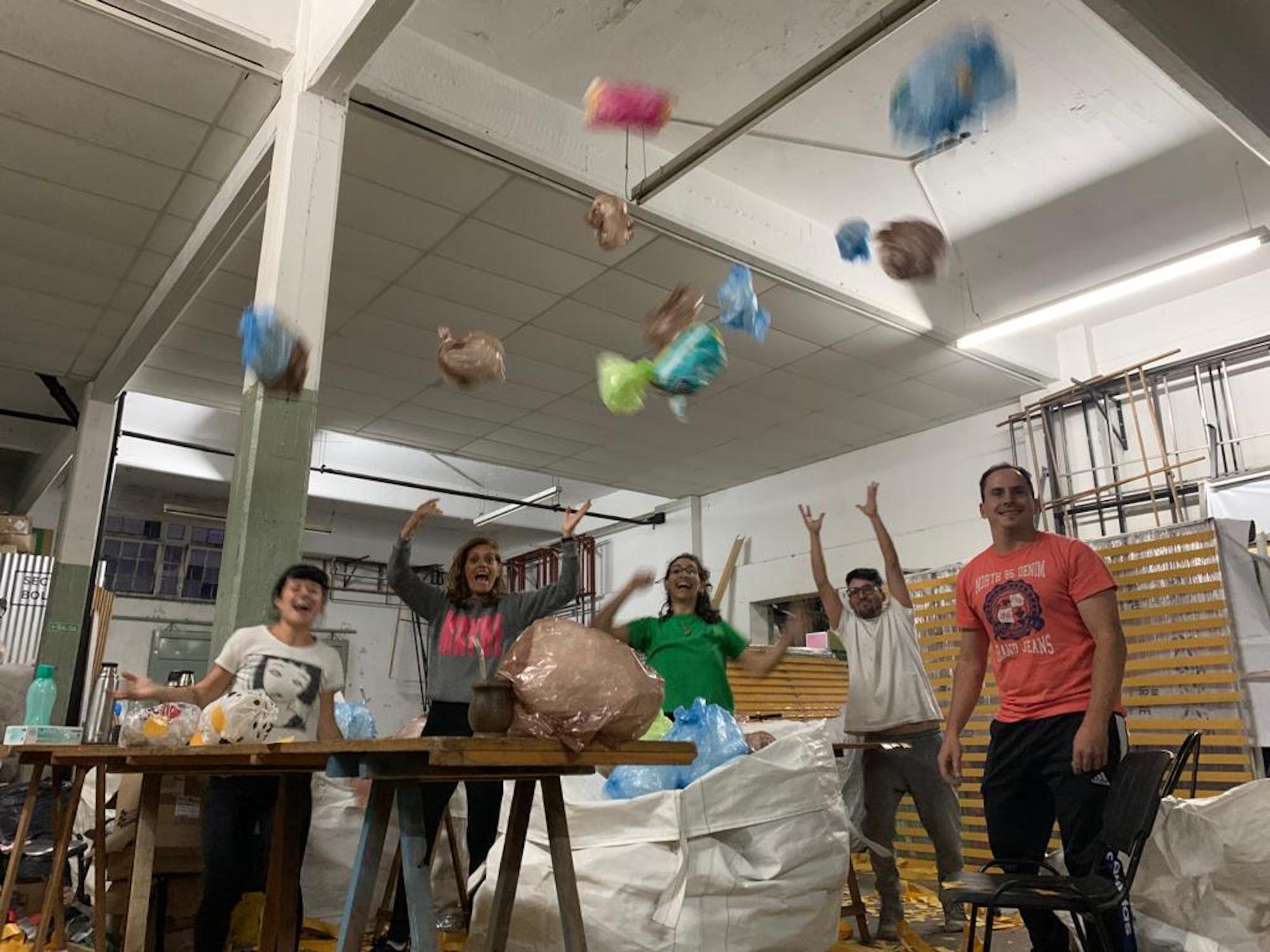
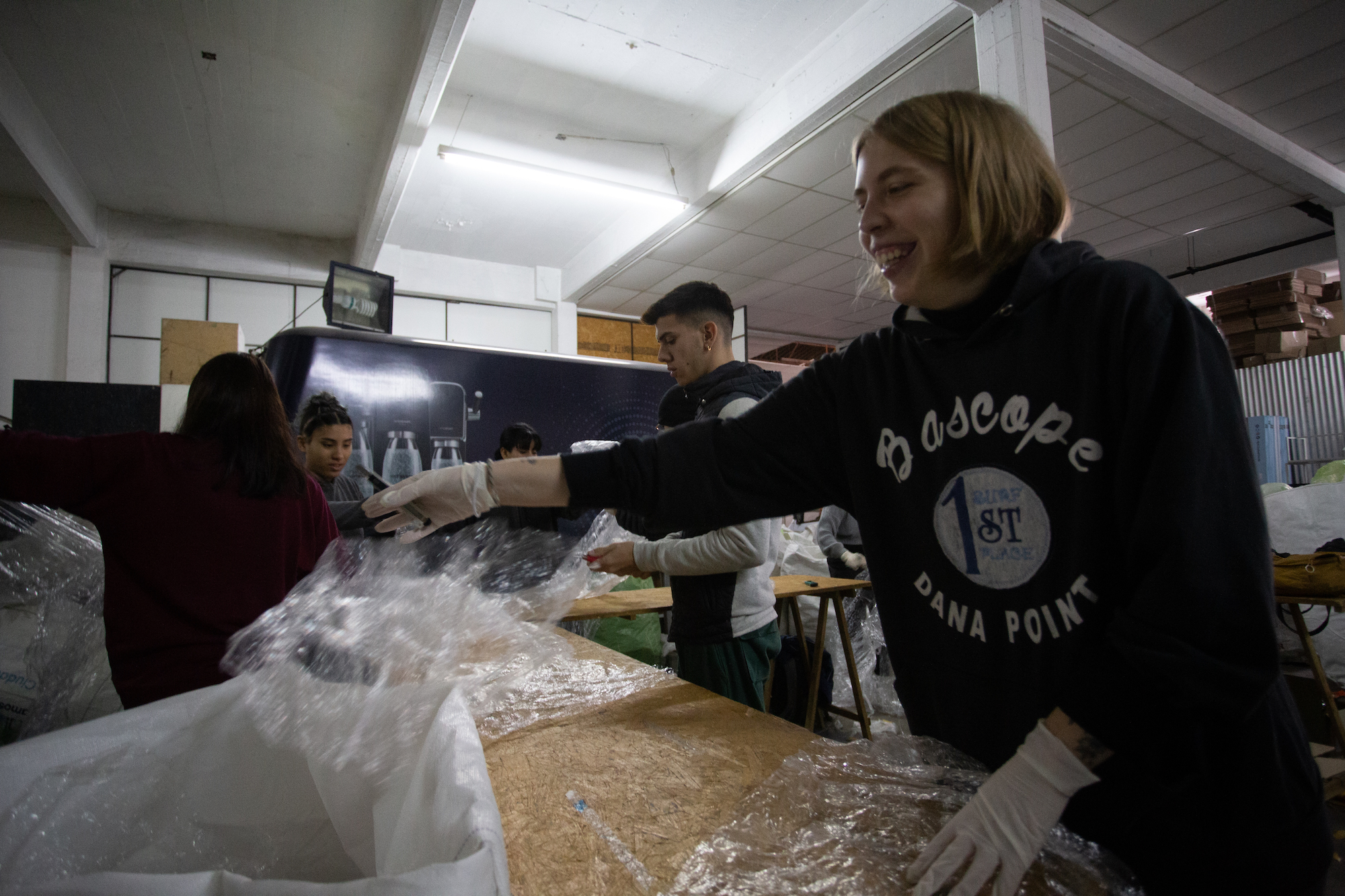
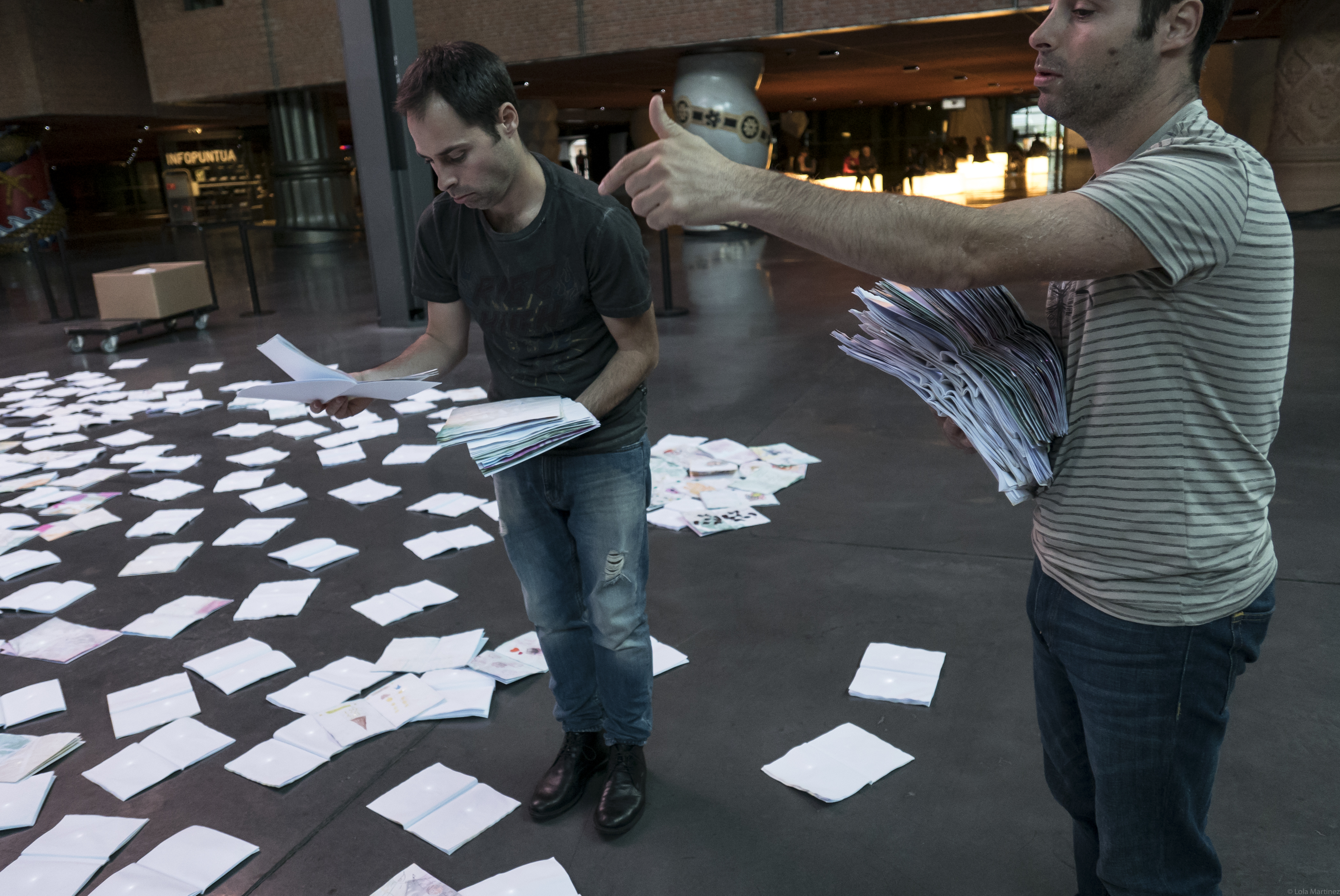
Tanto la recolecta de material como la cosntrucción de la pieza se hará con ayuda de todos los voluntarios que nos quieran ayudar.
We want people to be aware of the plastic waste generated in their daily lives, which is more than we suspect, for sure. In more developed countries these will be conveniently recycled but in the vast majority, they will remain in a landfill for centuries, without the possibility of being destroyed.
To highlight this problem, we have thought of an installation made up of plastic waste generated by the inhabitants of the city.
To accomplish this mission, we will ask the residents to save the plastic objects that they are going to throw away for a week, preferably transparent bottles, packages, plastic wrap, glasses… they clean them and put them in transparent bags with handles which we will distribute for that purpose, when we deliver each bag to them, we will give them tickets to a museum, theater or cultural activity in the city.
When we deliver the bags, in addition we will take a photo of them, which we will put, where it can be seen, inside the transparent bags, this will serve to identify each bag with its owner.
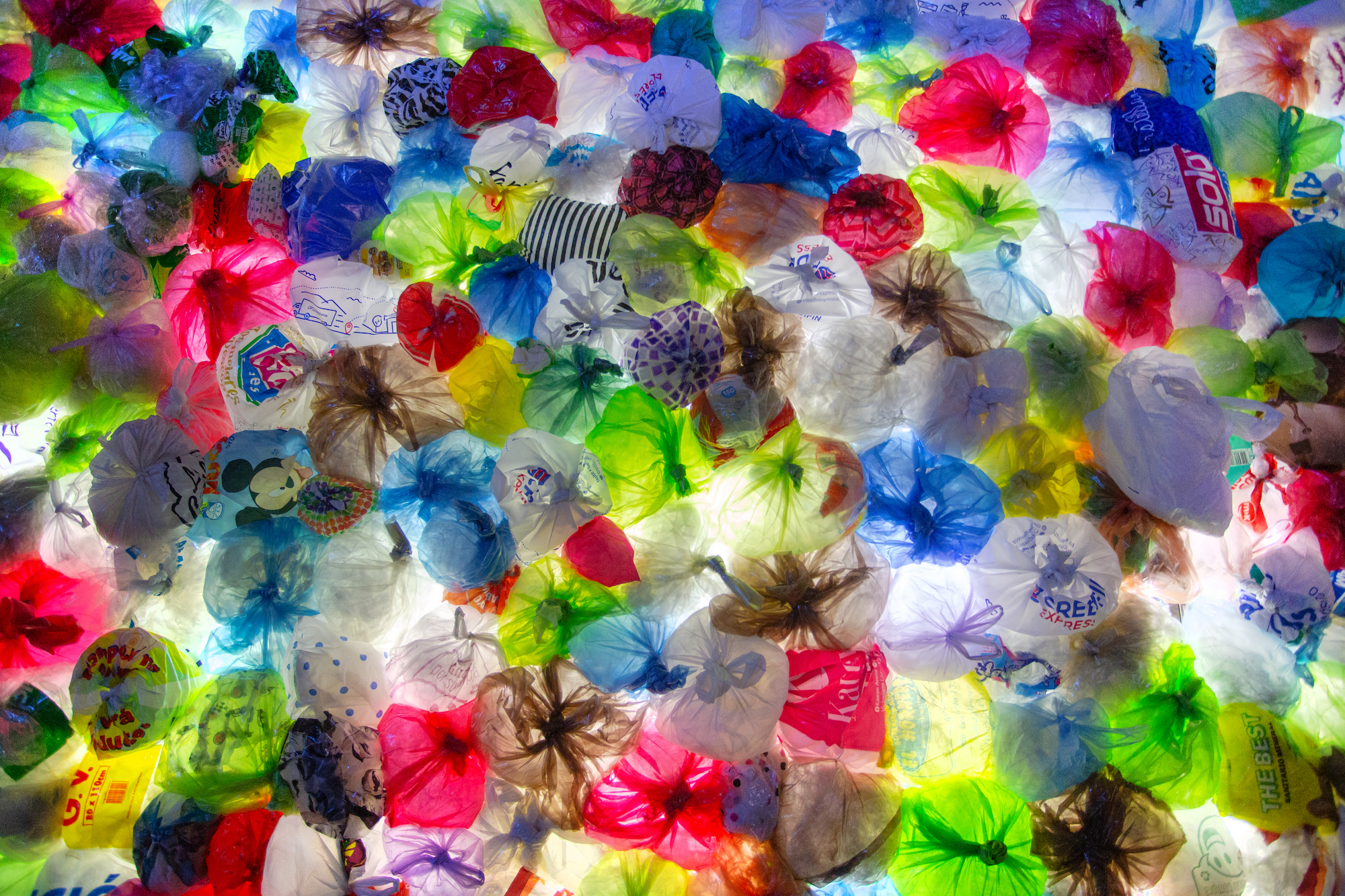
Thus the elements that we work with will be, transparent plastic waste, within transparent bags, identified by the photo of the owner of the objects. In addition we will put autonomous lights in all the bags in such a way that the light is transmitted evenly throughout the plastic content in its interior.
For the construction of the piece, we’ll use scaffolding pipe, of the kind commonly used on worksites, with which we will give shape to the maze, with passable corridors that allow people to enter and walk around in it.
With the structure built, we will add horizontal tubes upon which the bags can be inserted, so that the whole labyrinth is lined with plastic light.
During the night the people will be invited to walk around looking for their own waste or to find that of their friends and family.
The collection of material as well as the construction of the piece will be done with the help of all the volunteers who would like to help us.
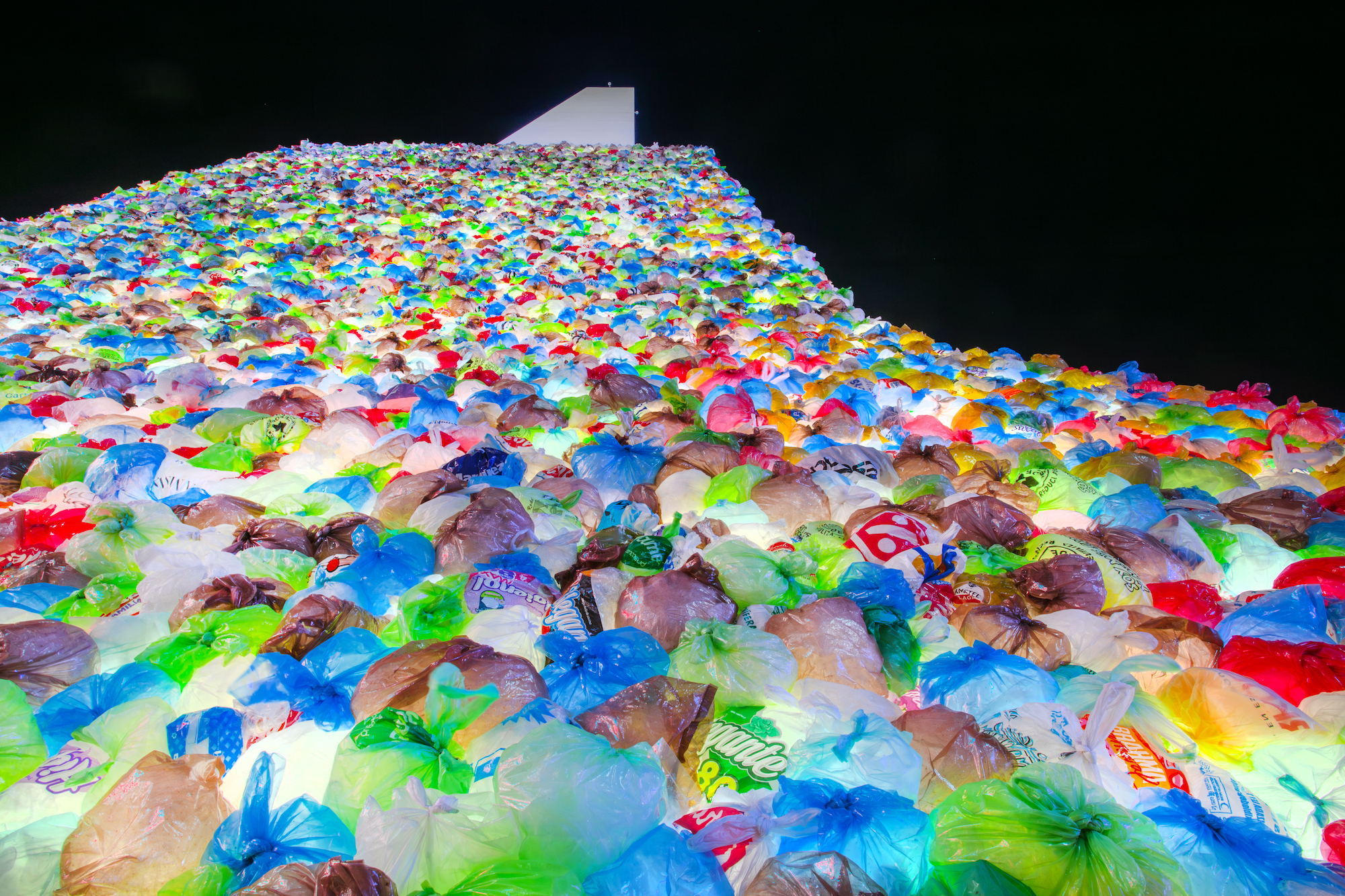
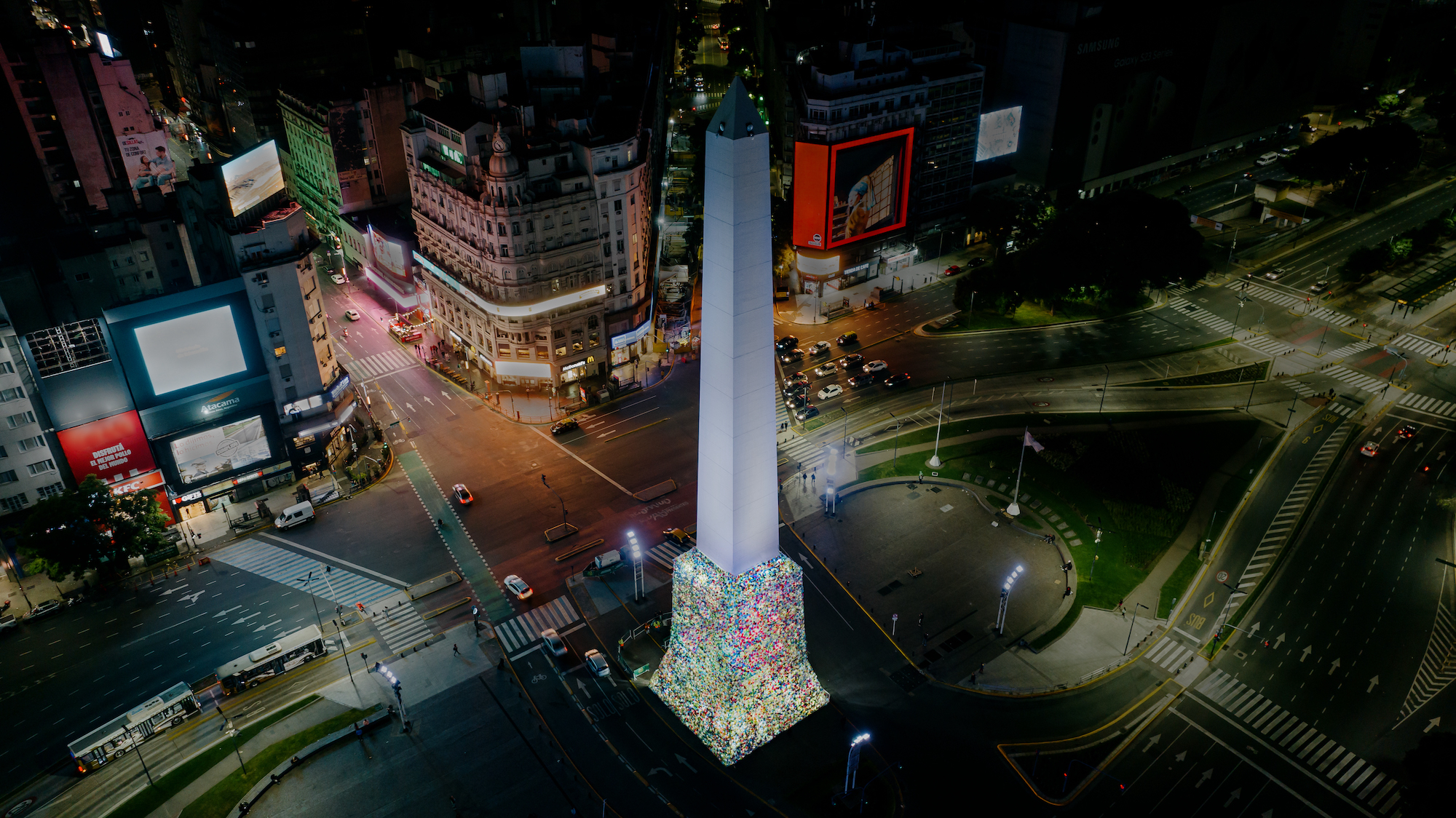
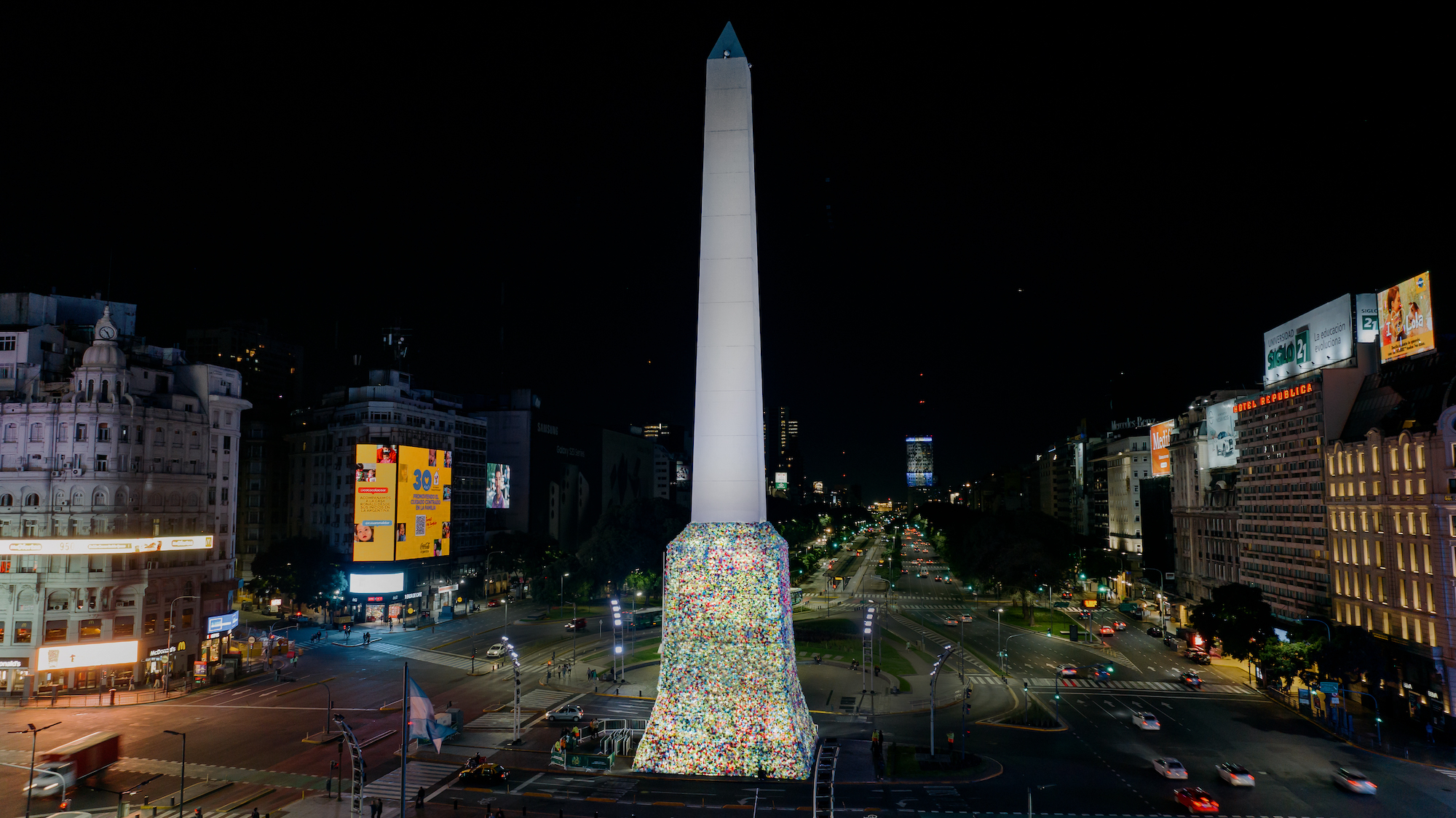
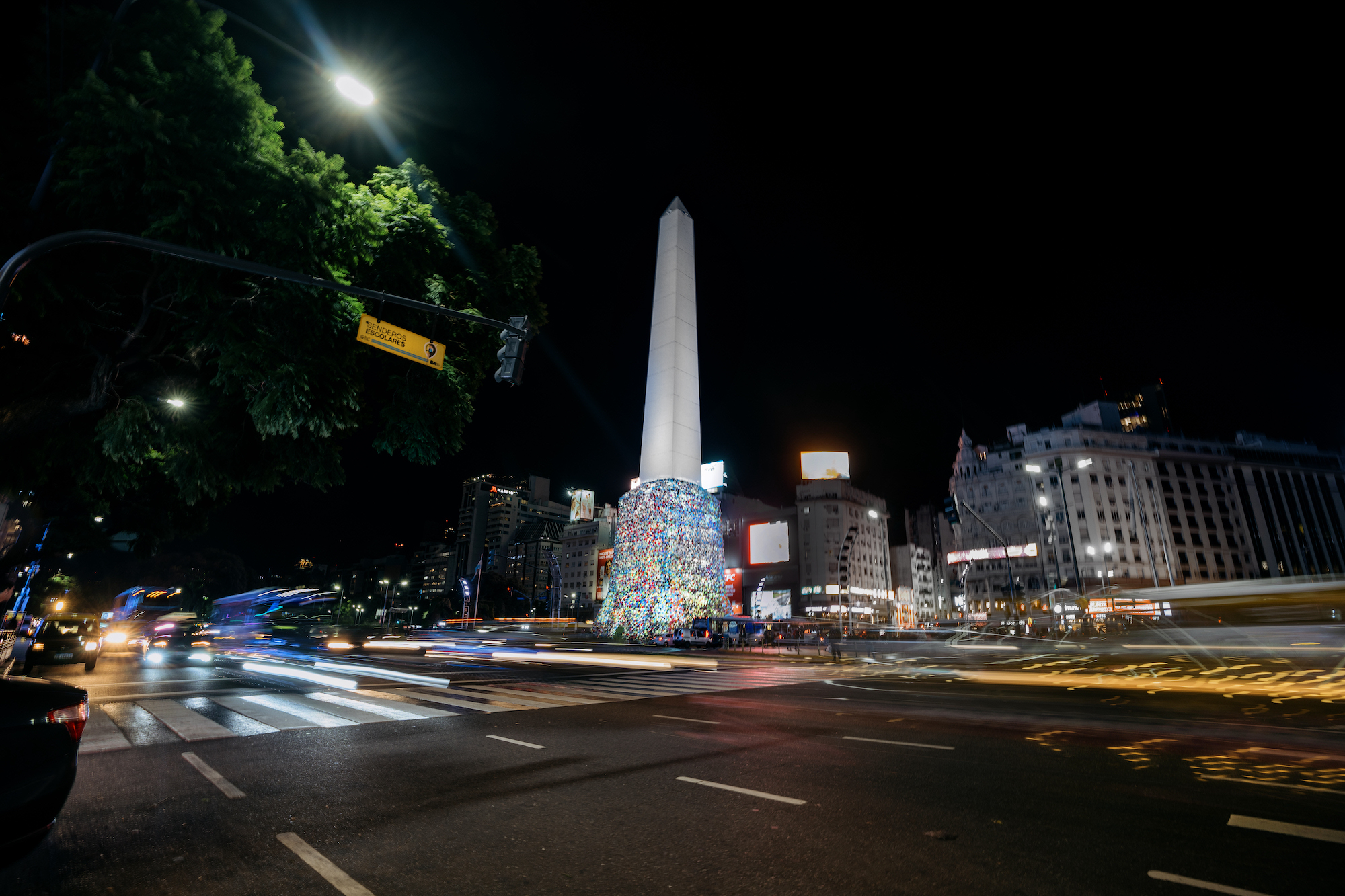
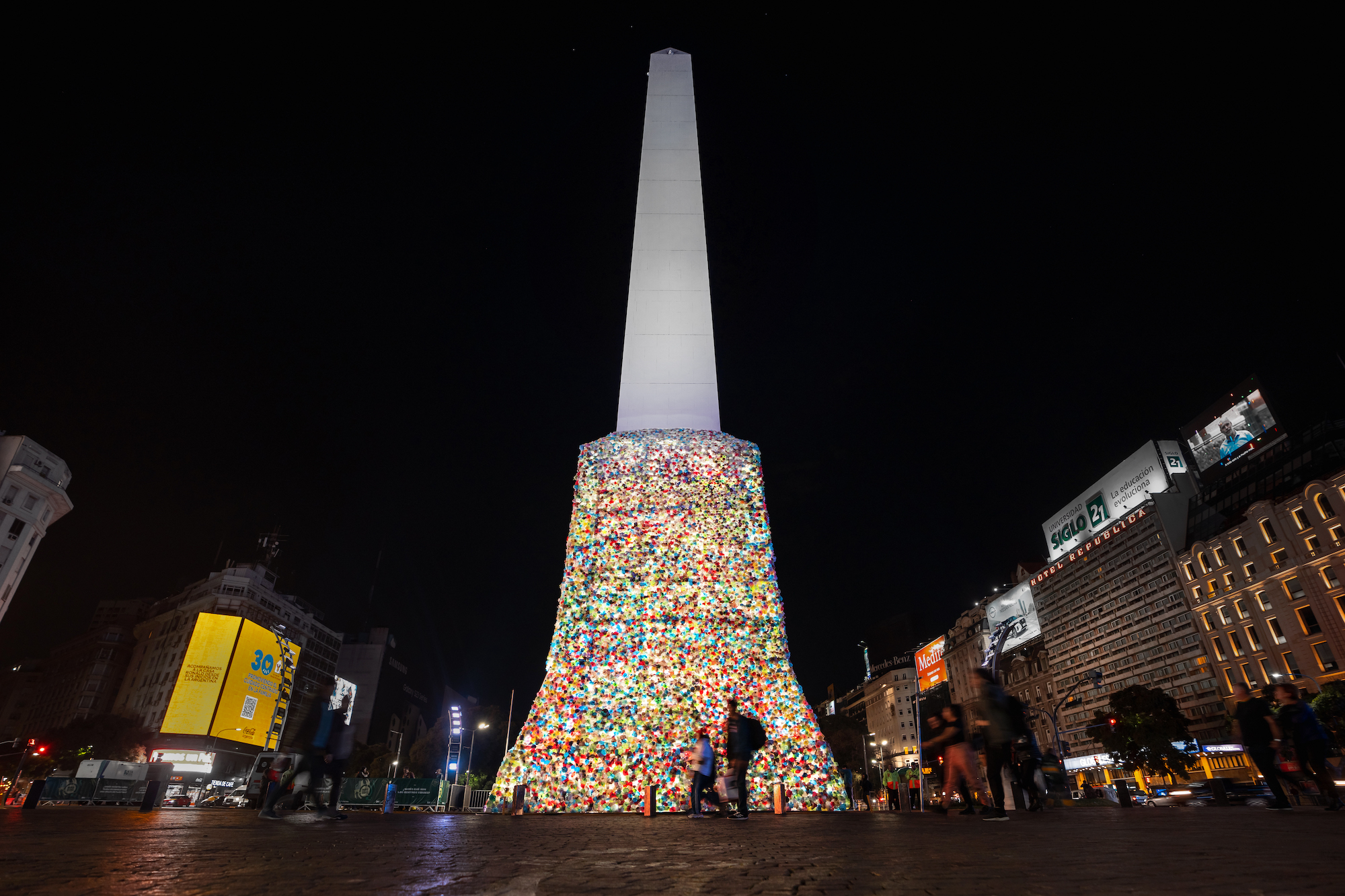
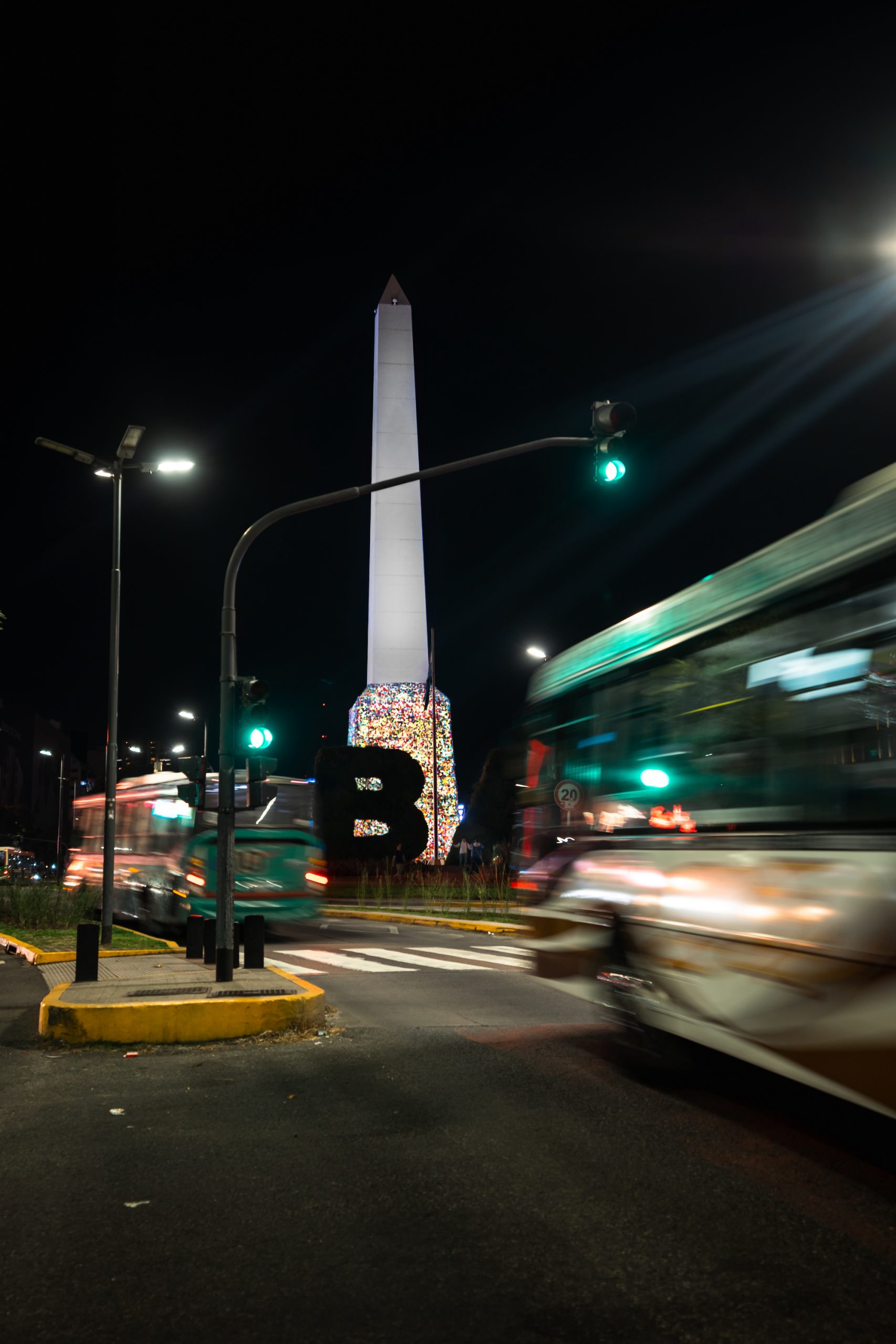
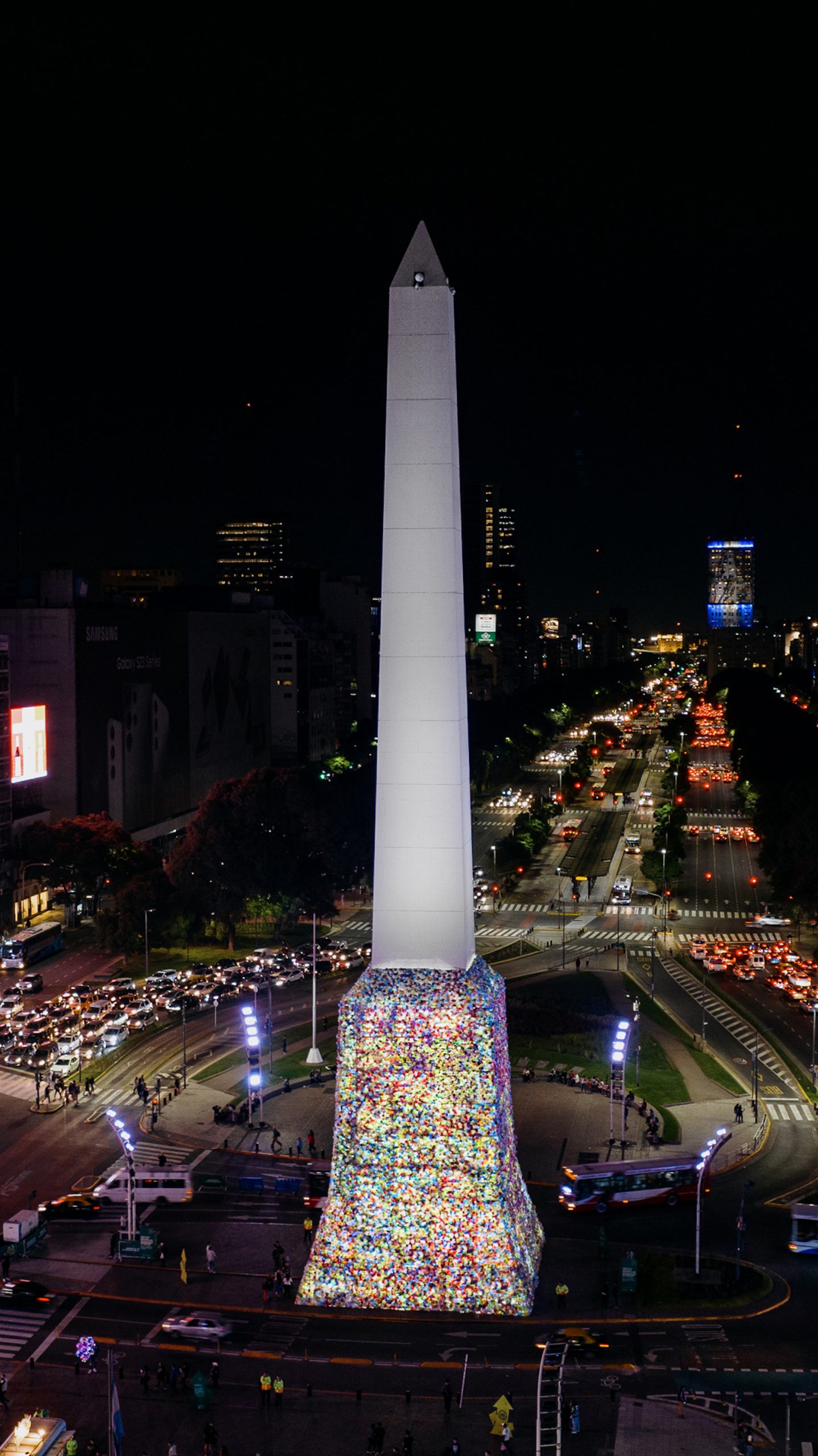
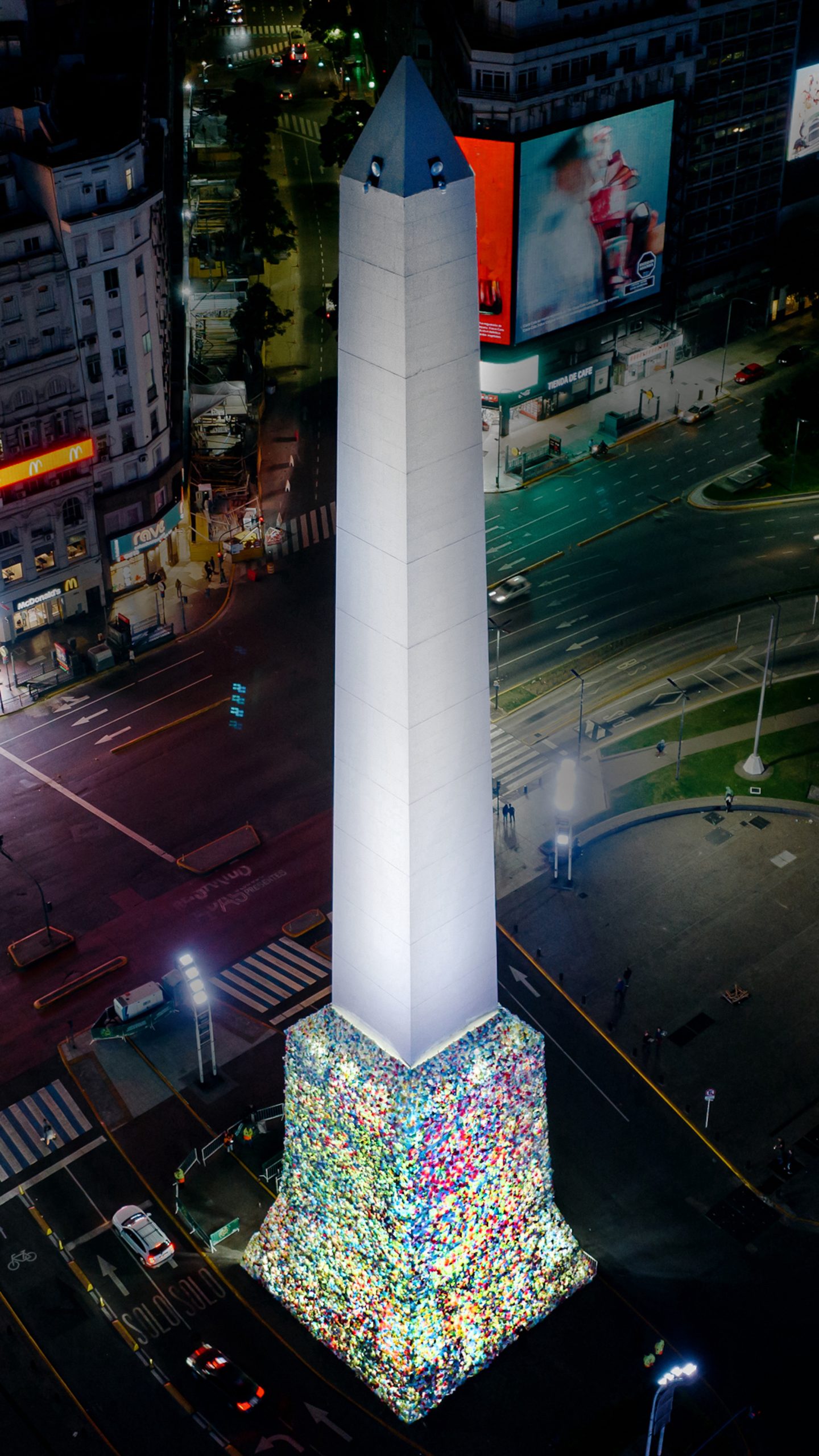
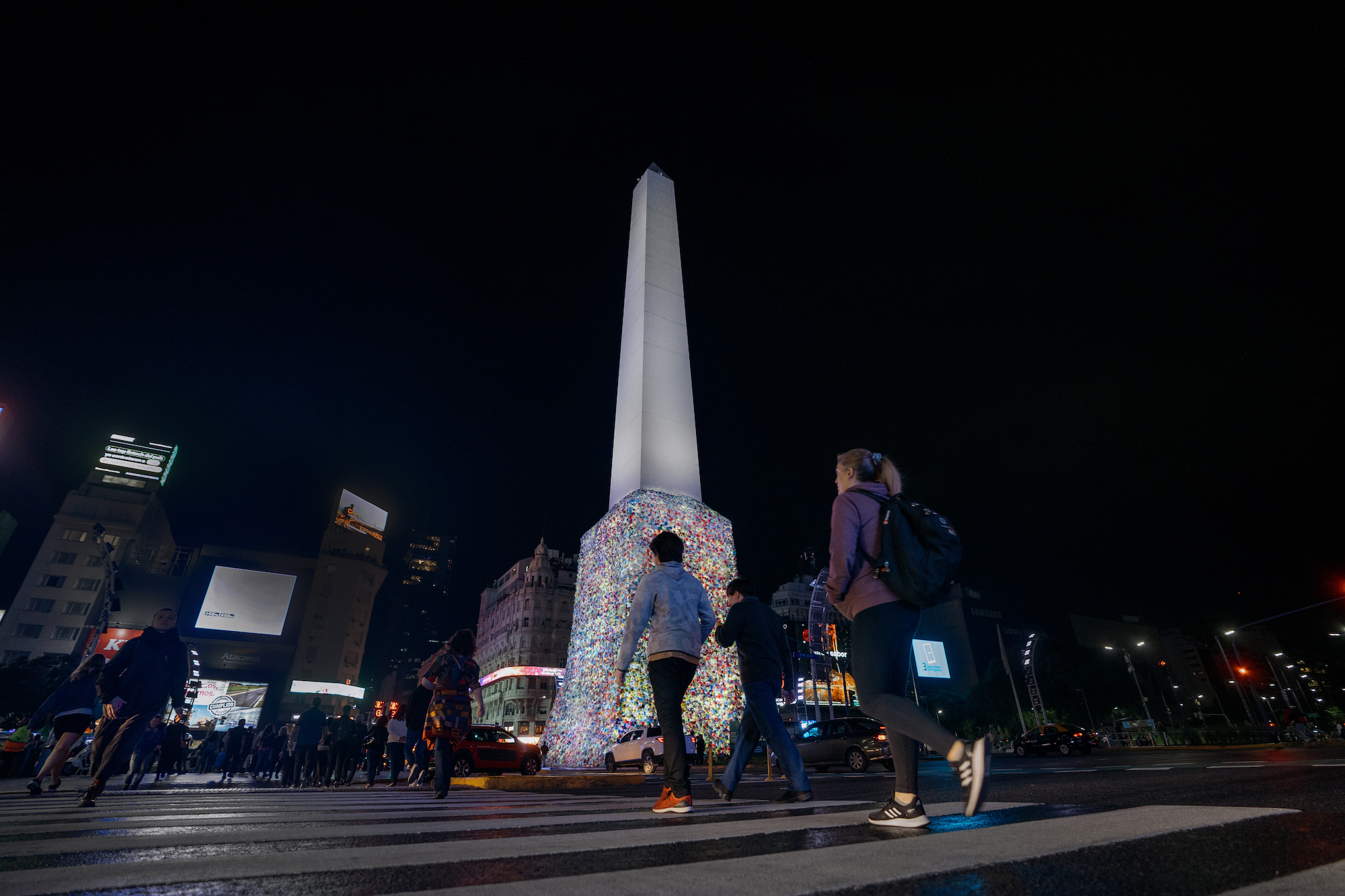
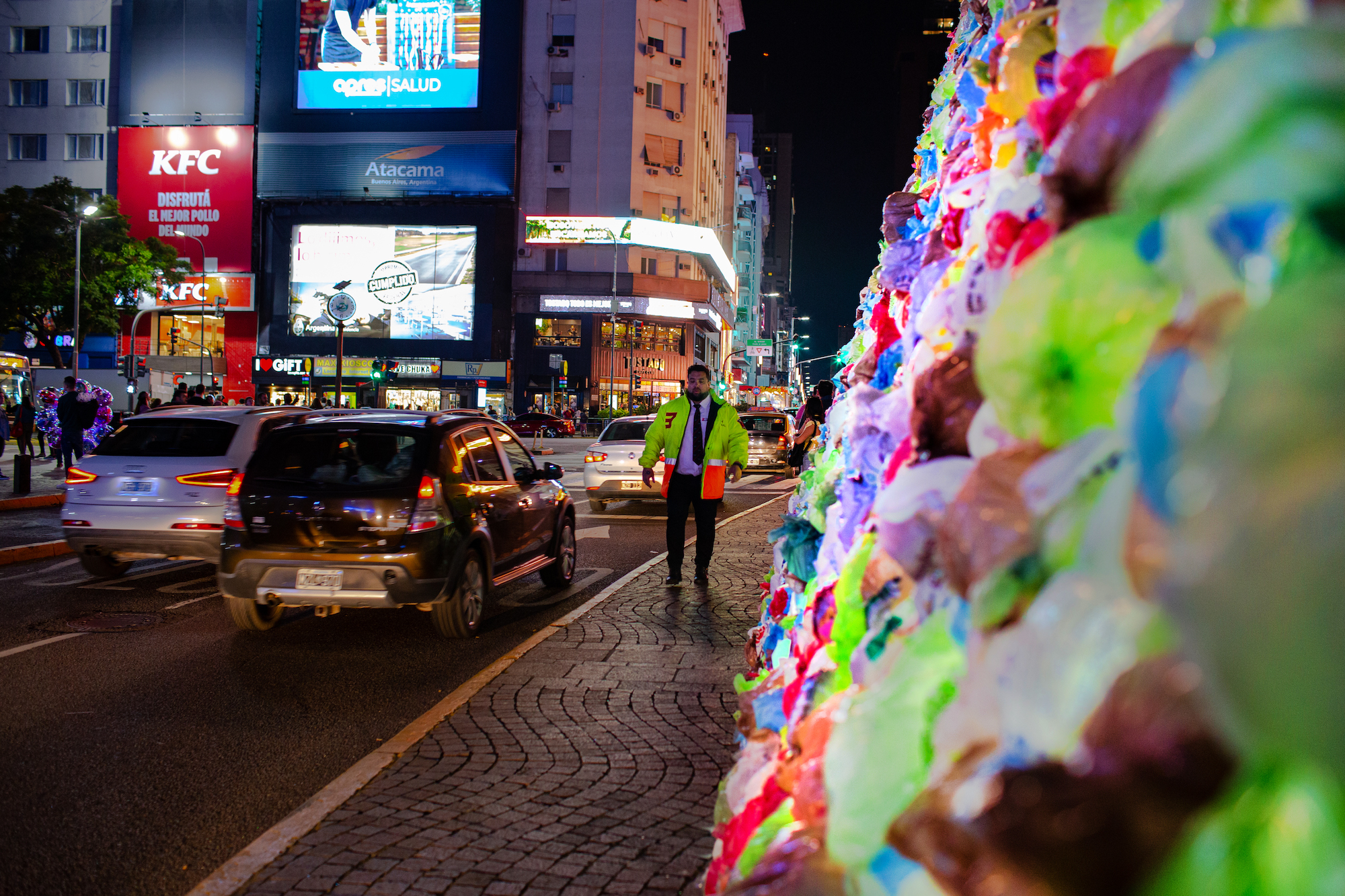
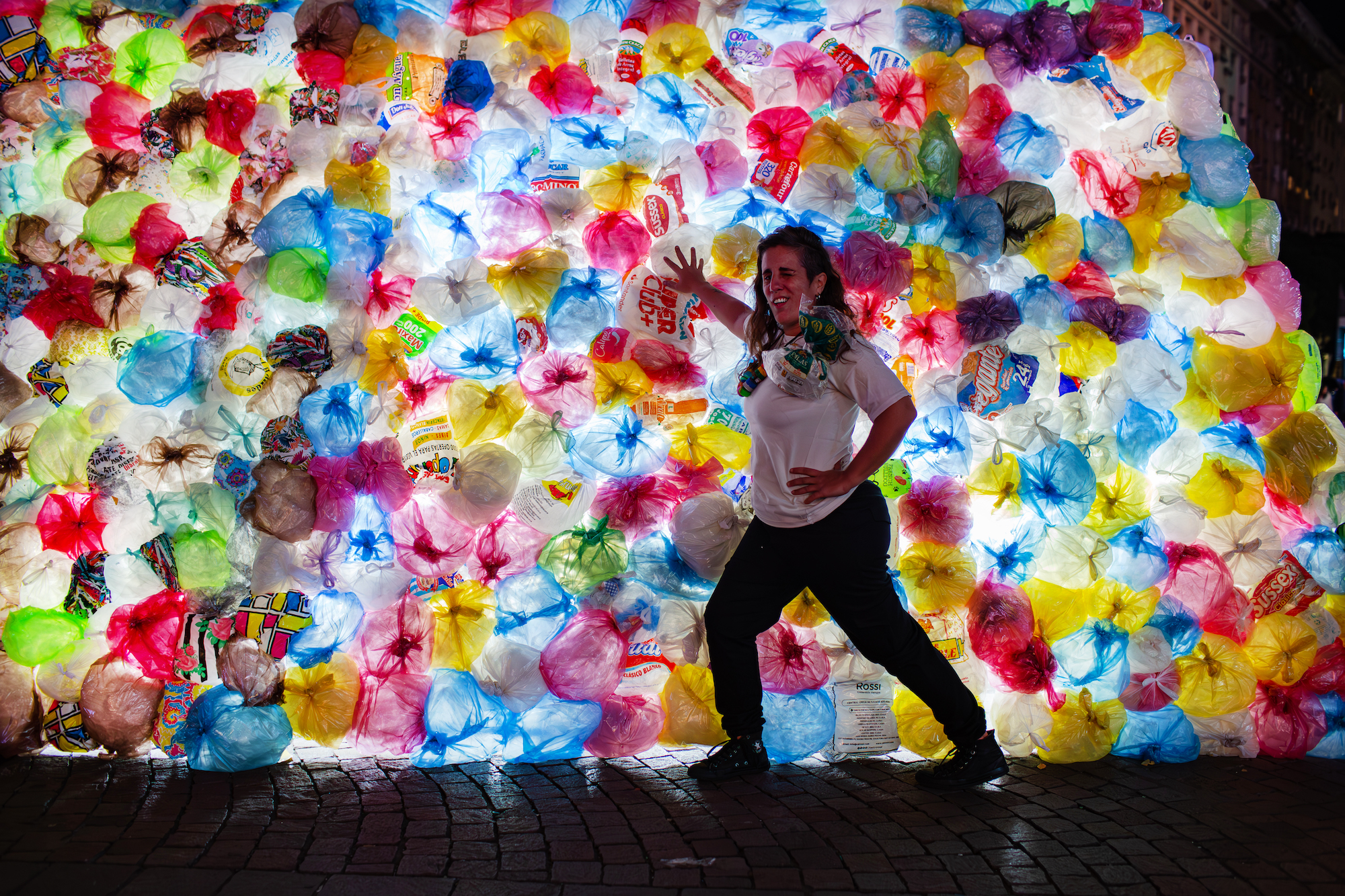
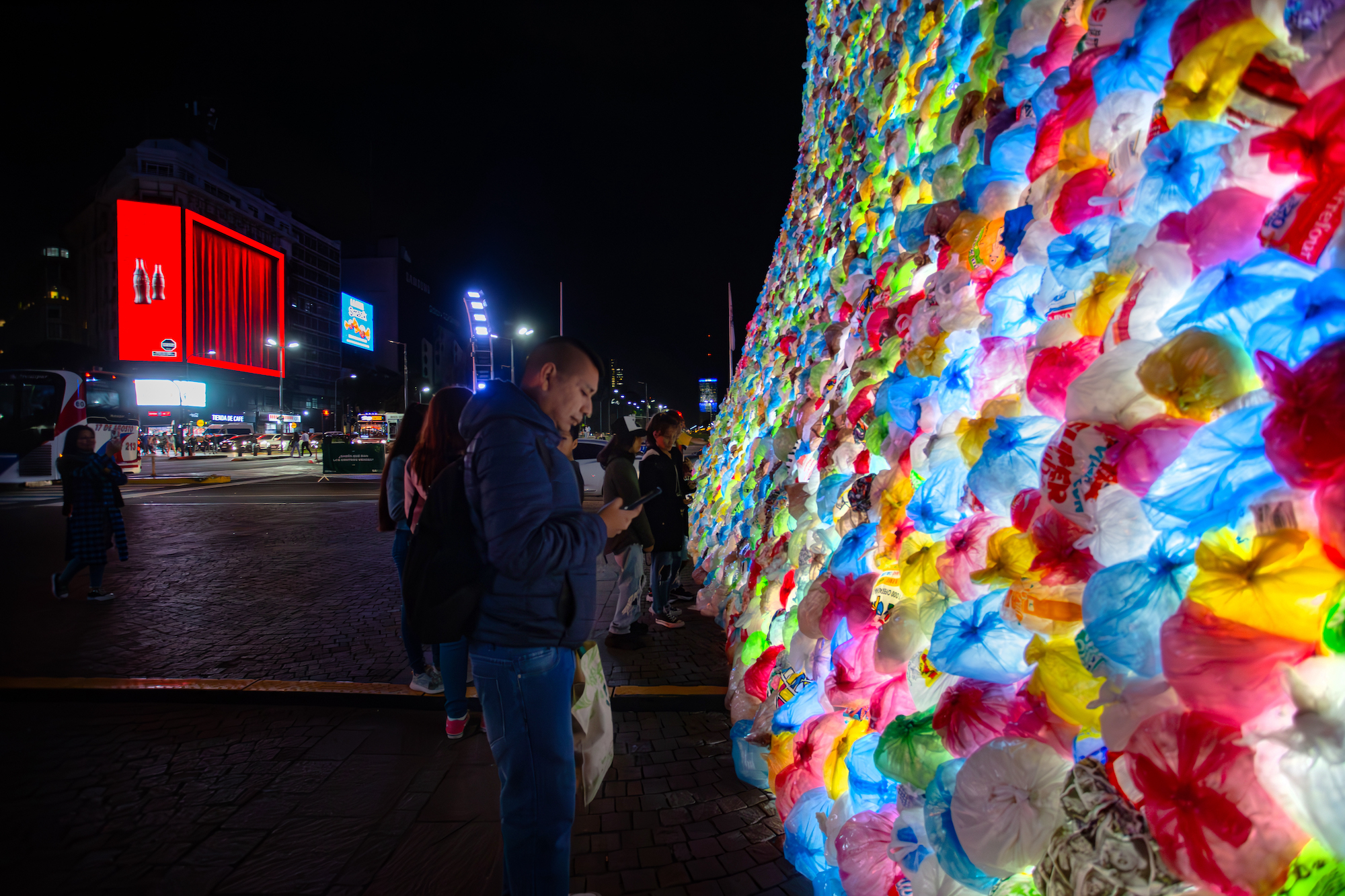
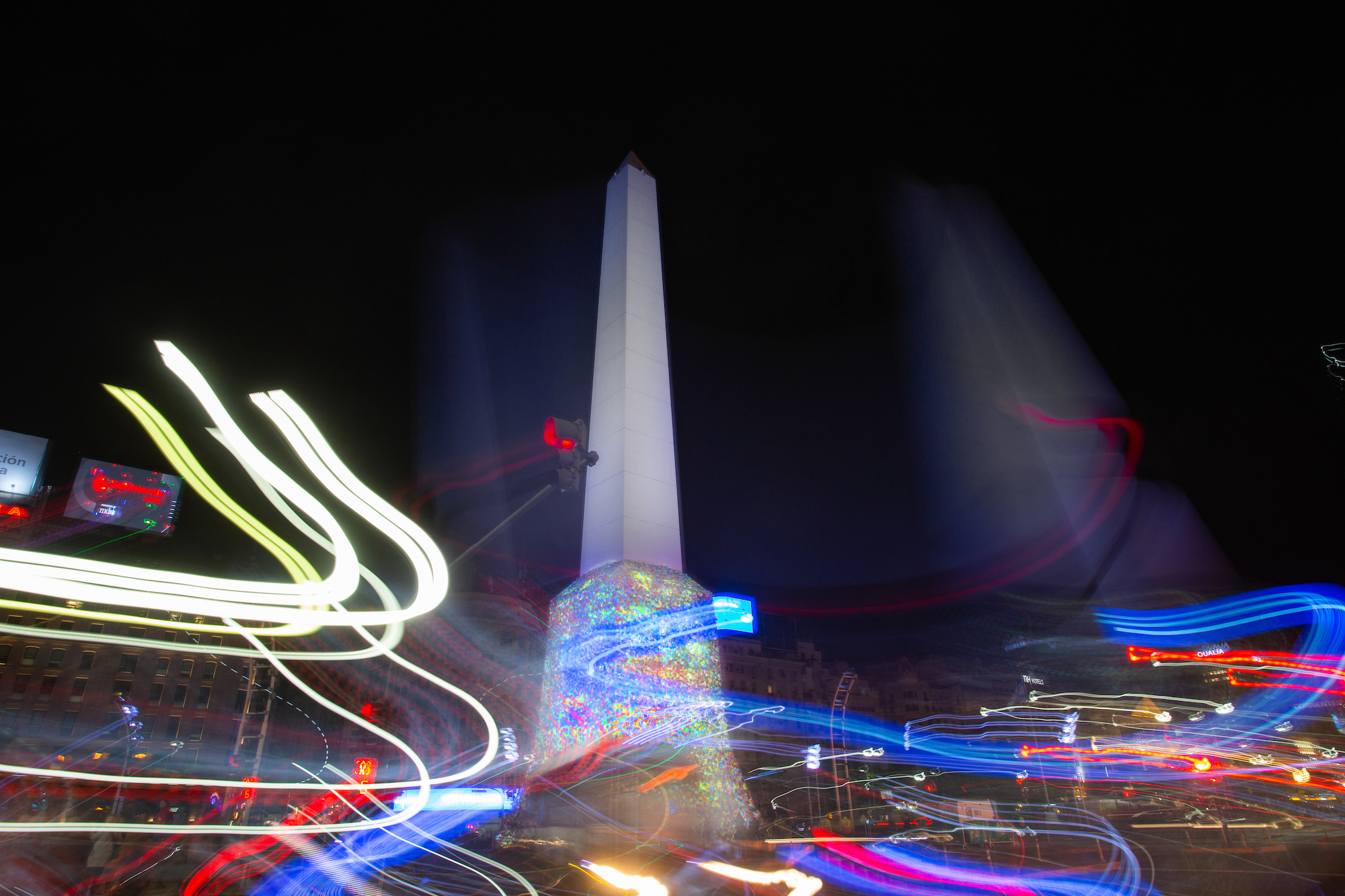
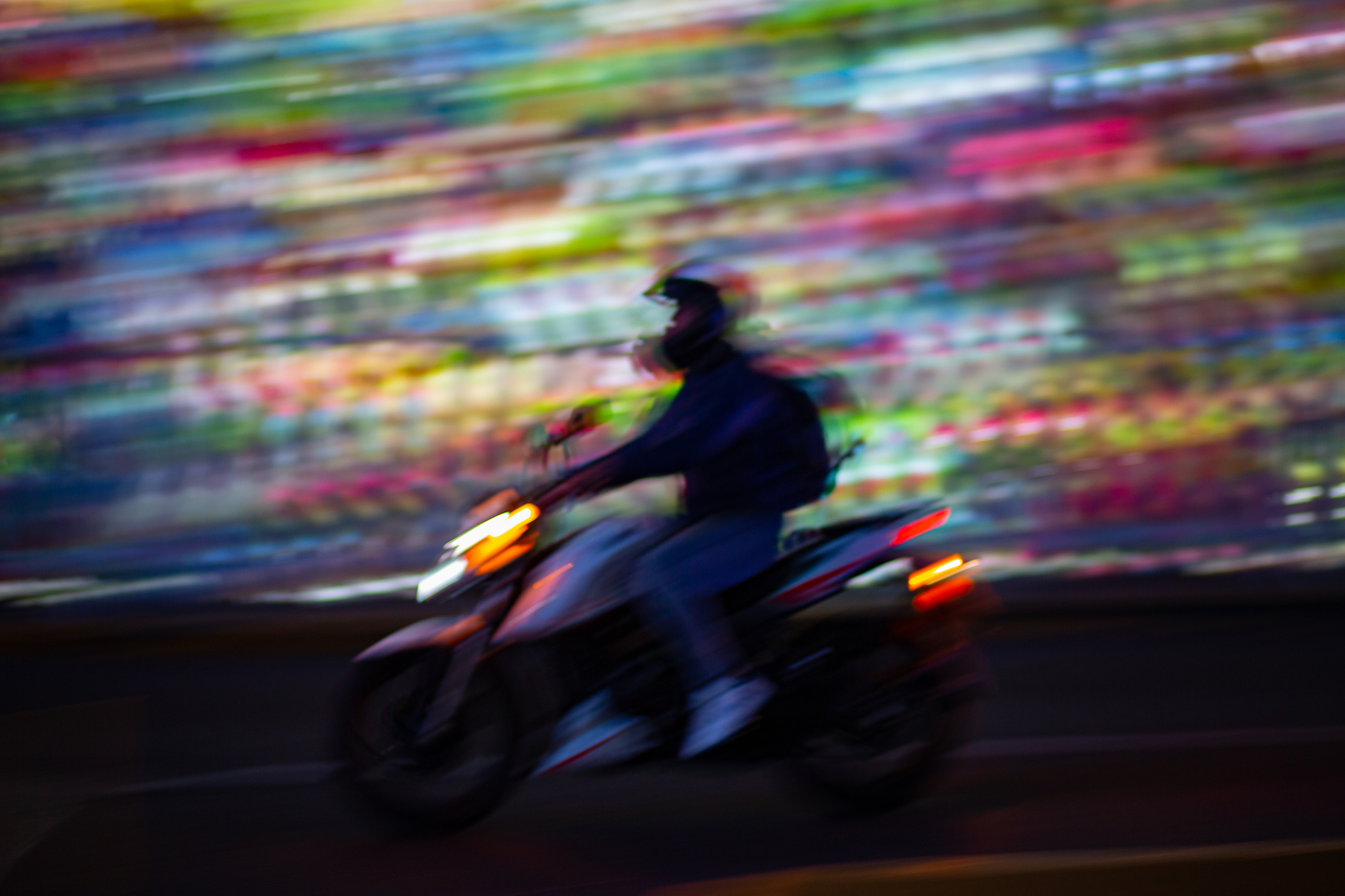
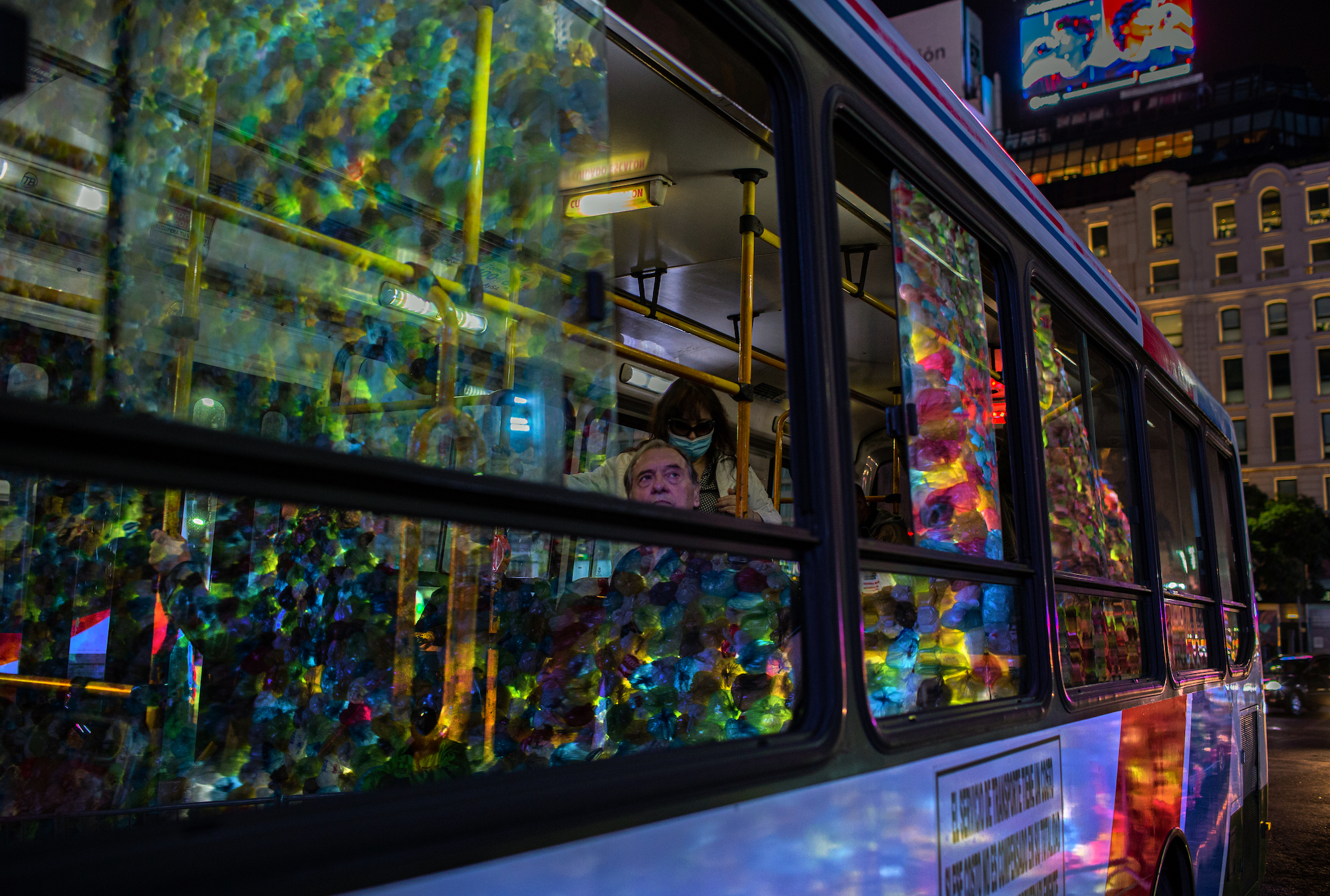
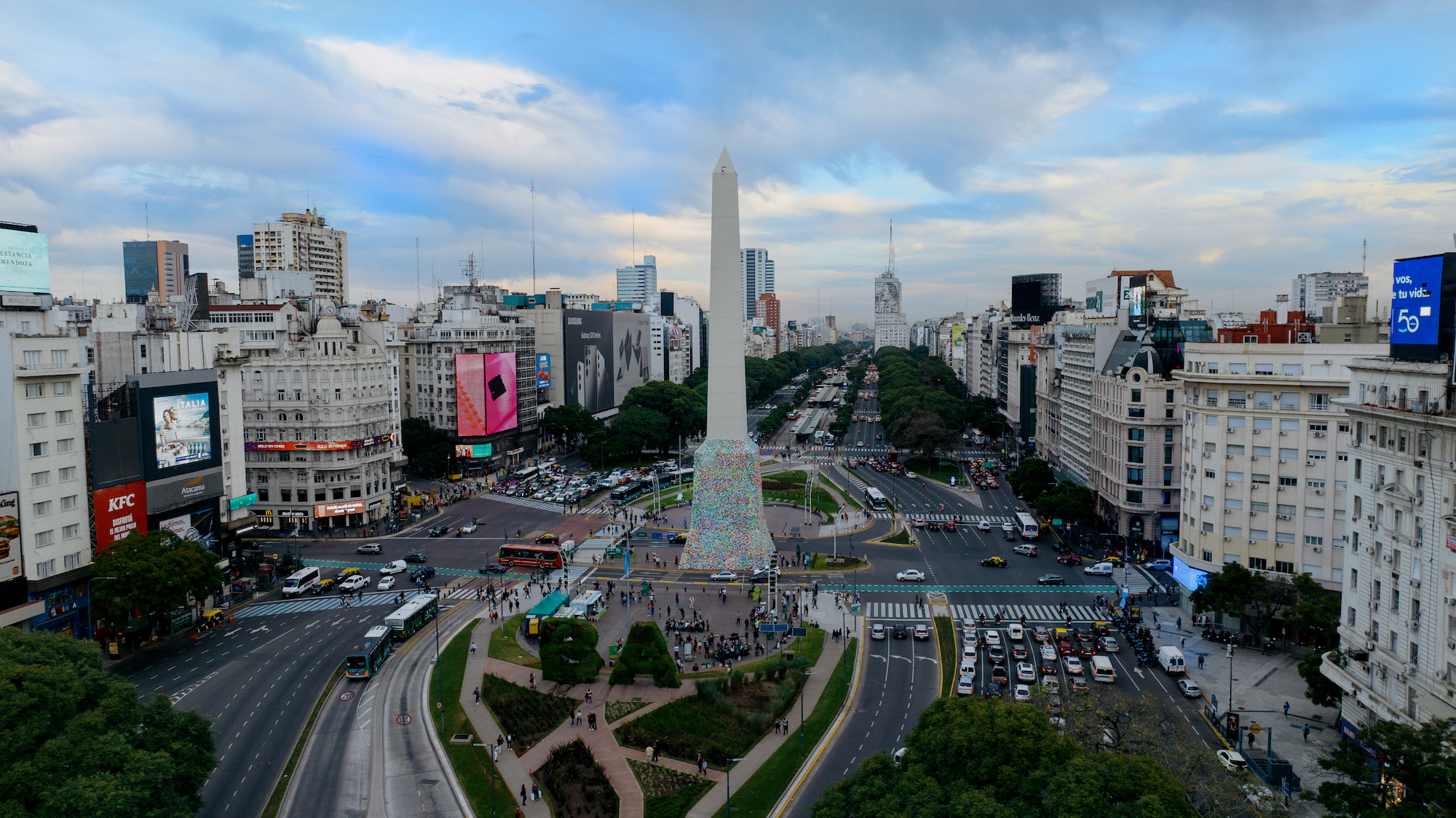
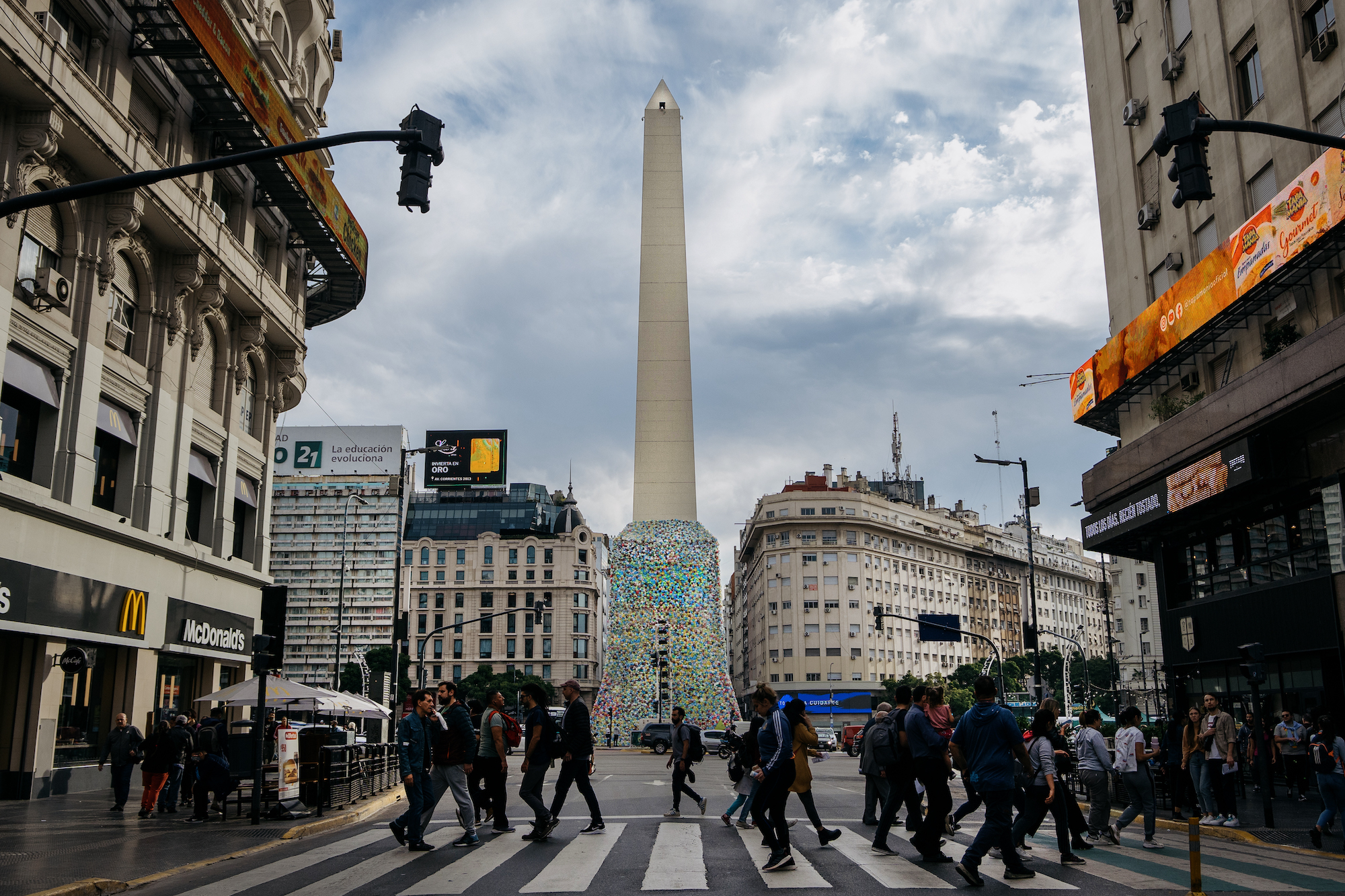
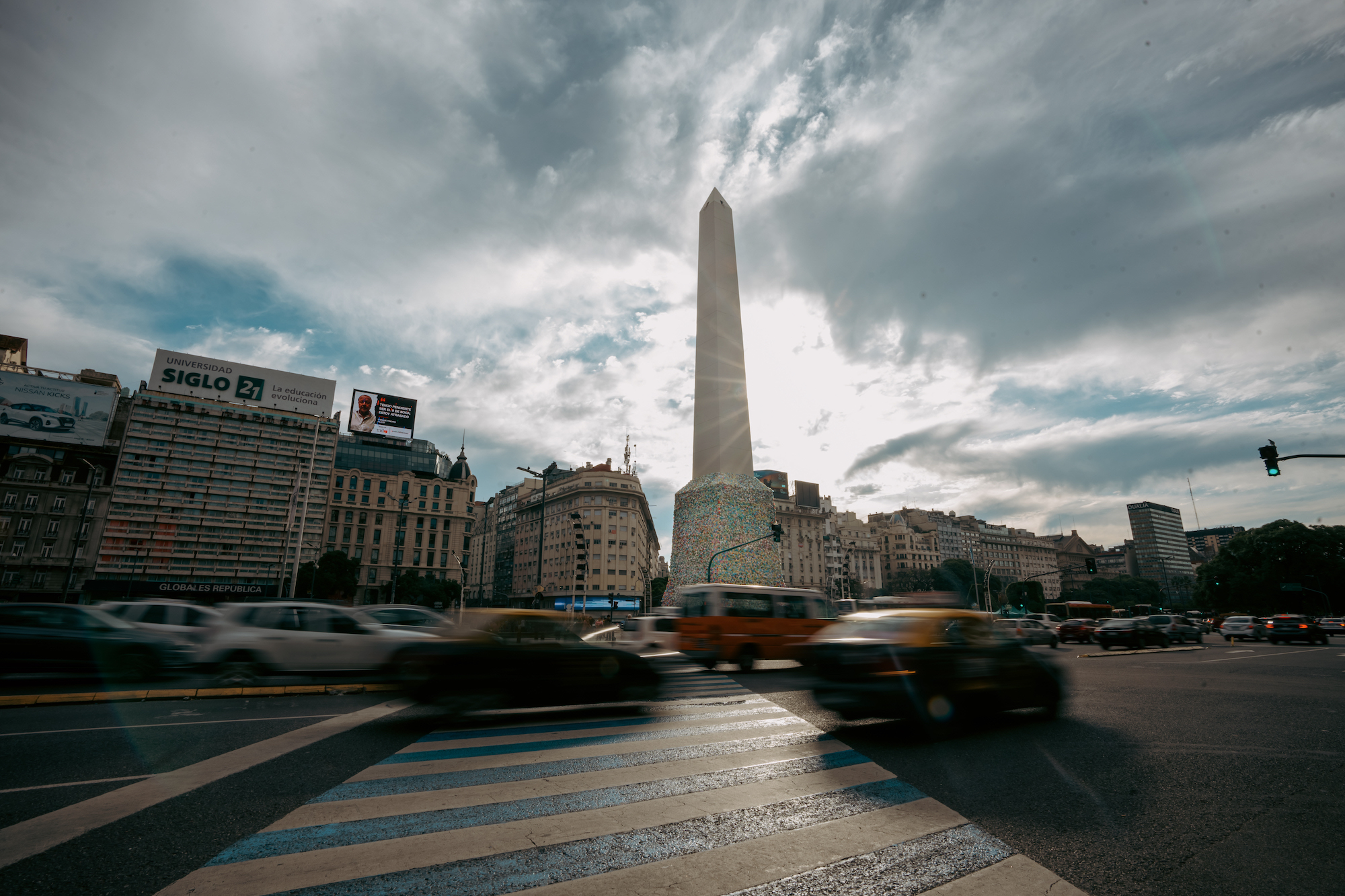
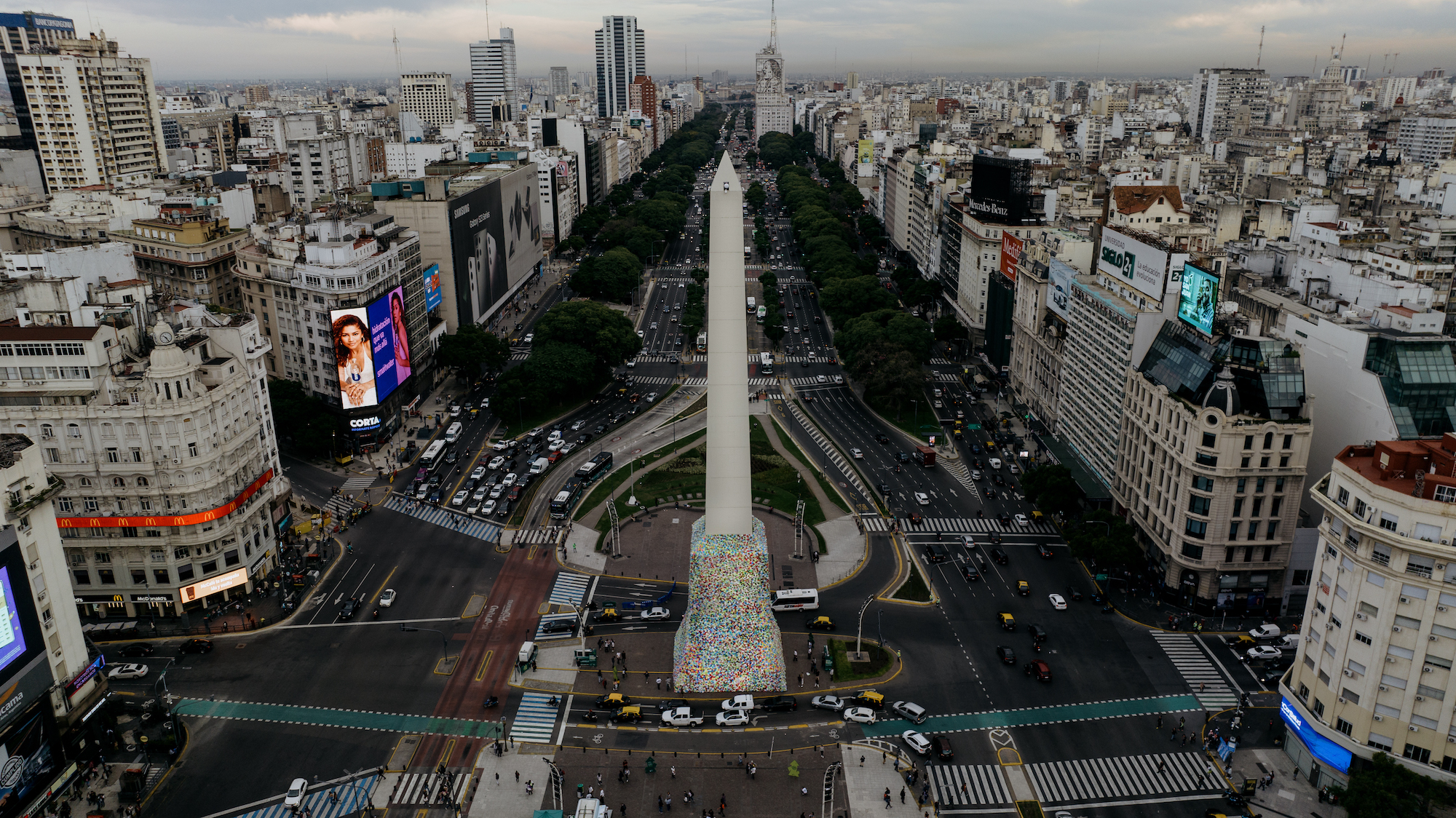
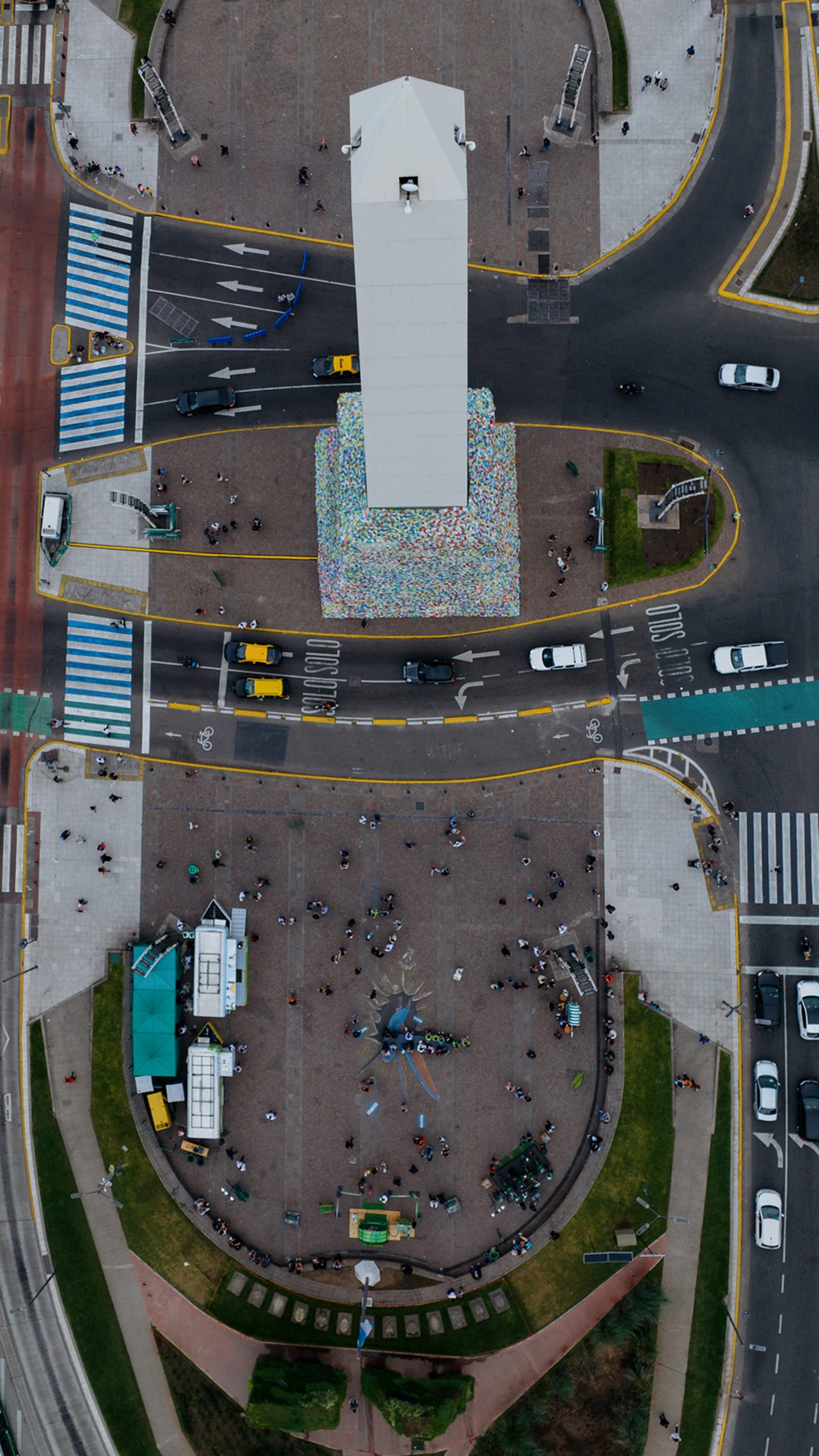
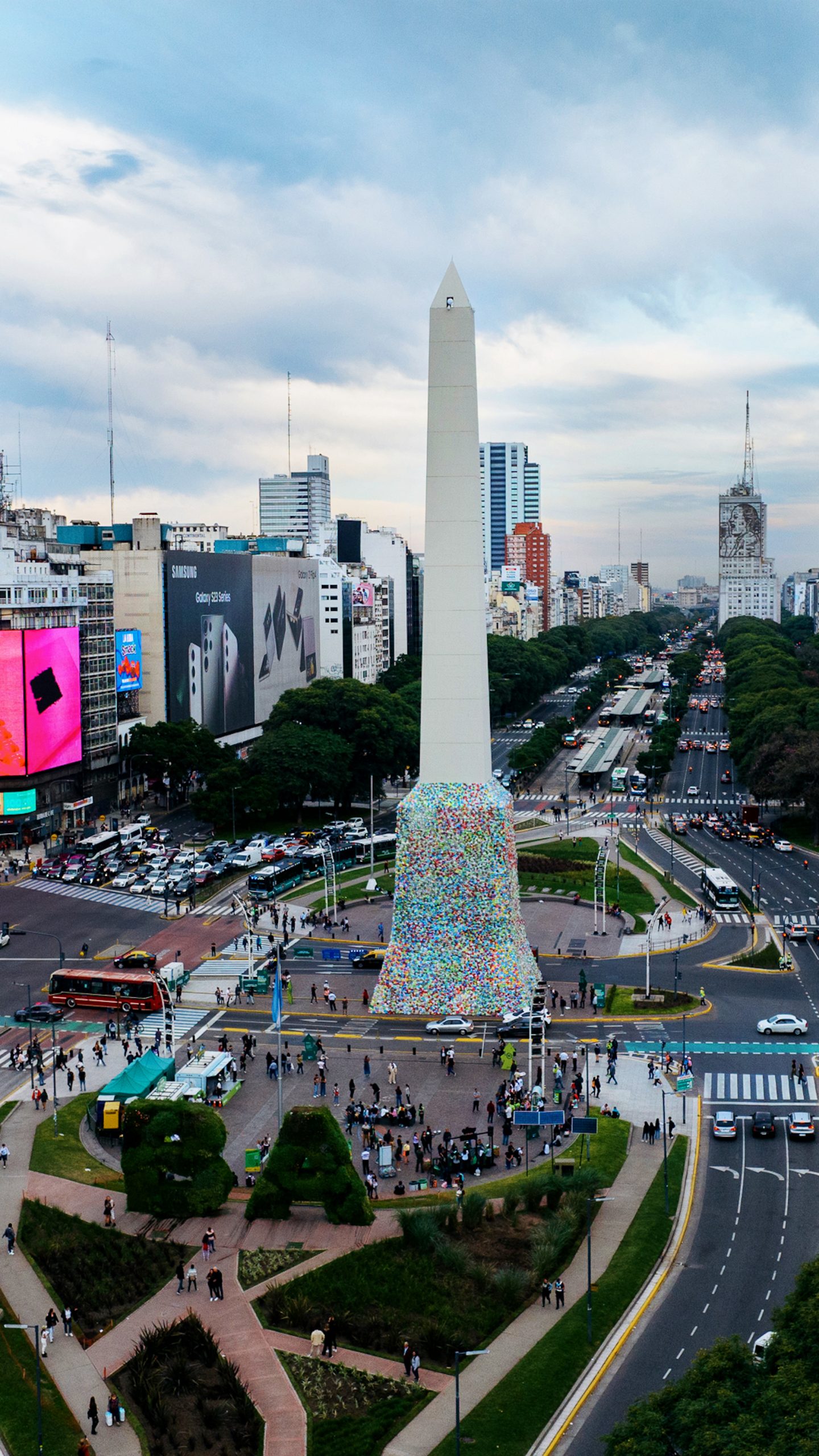
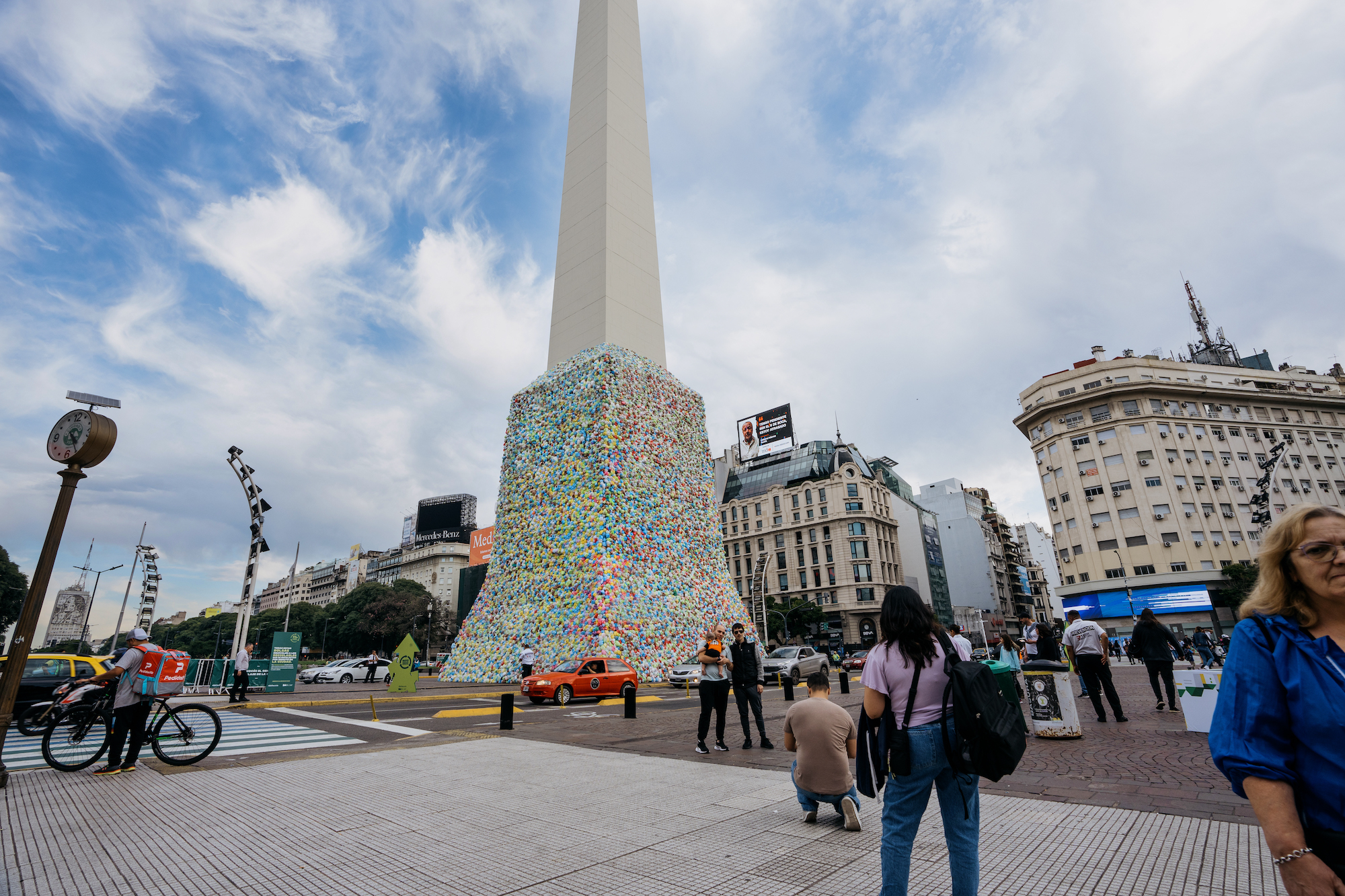
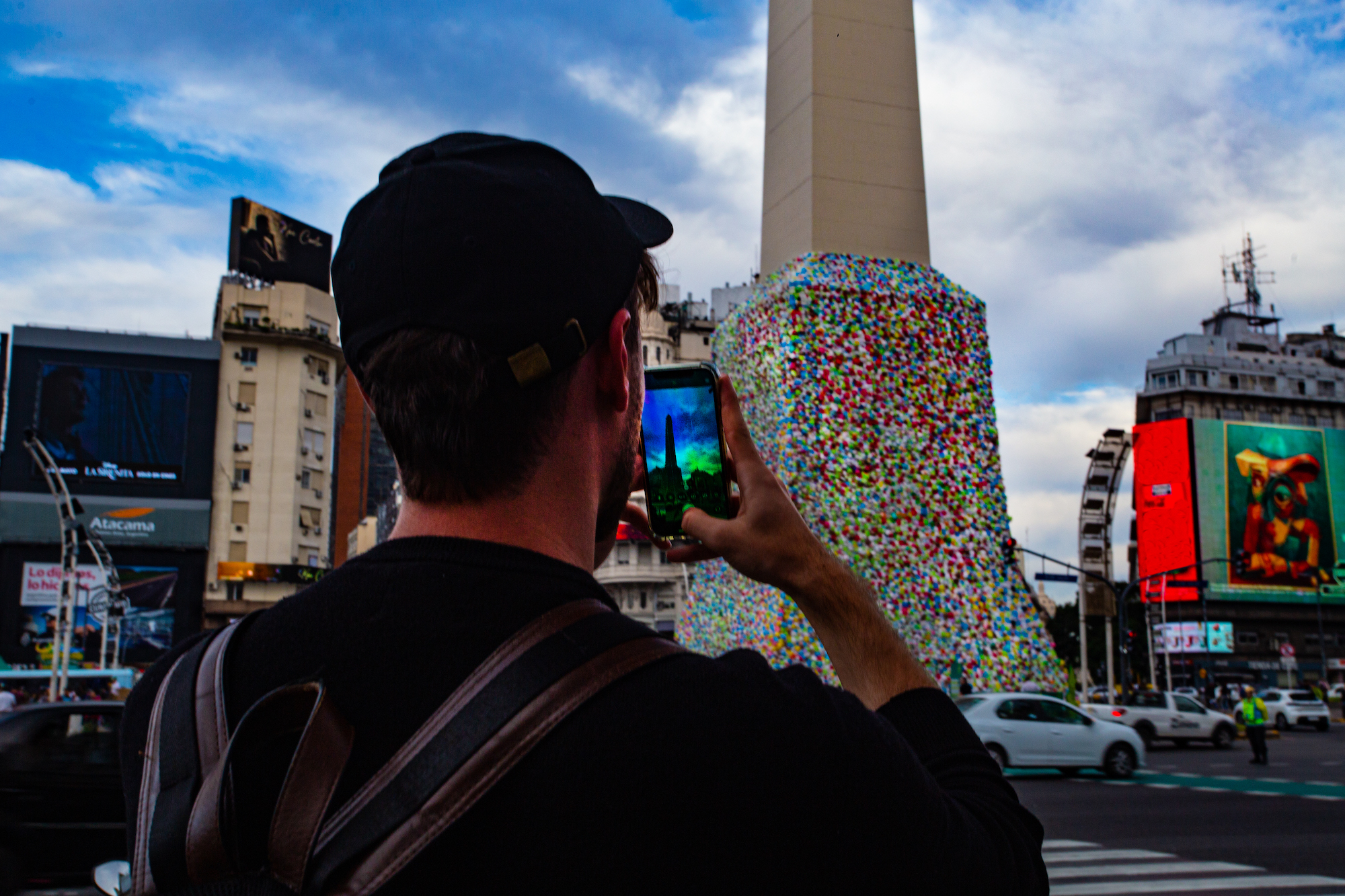
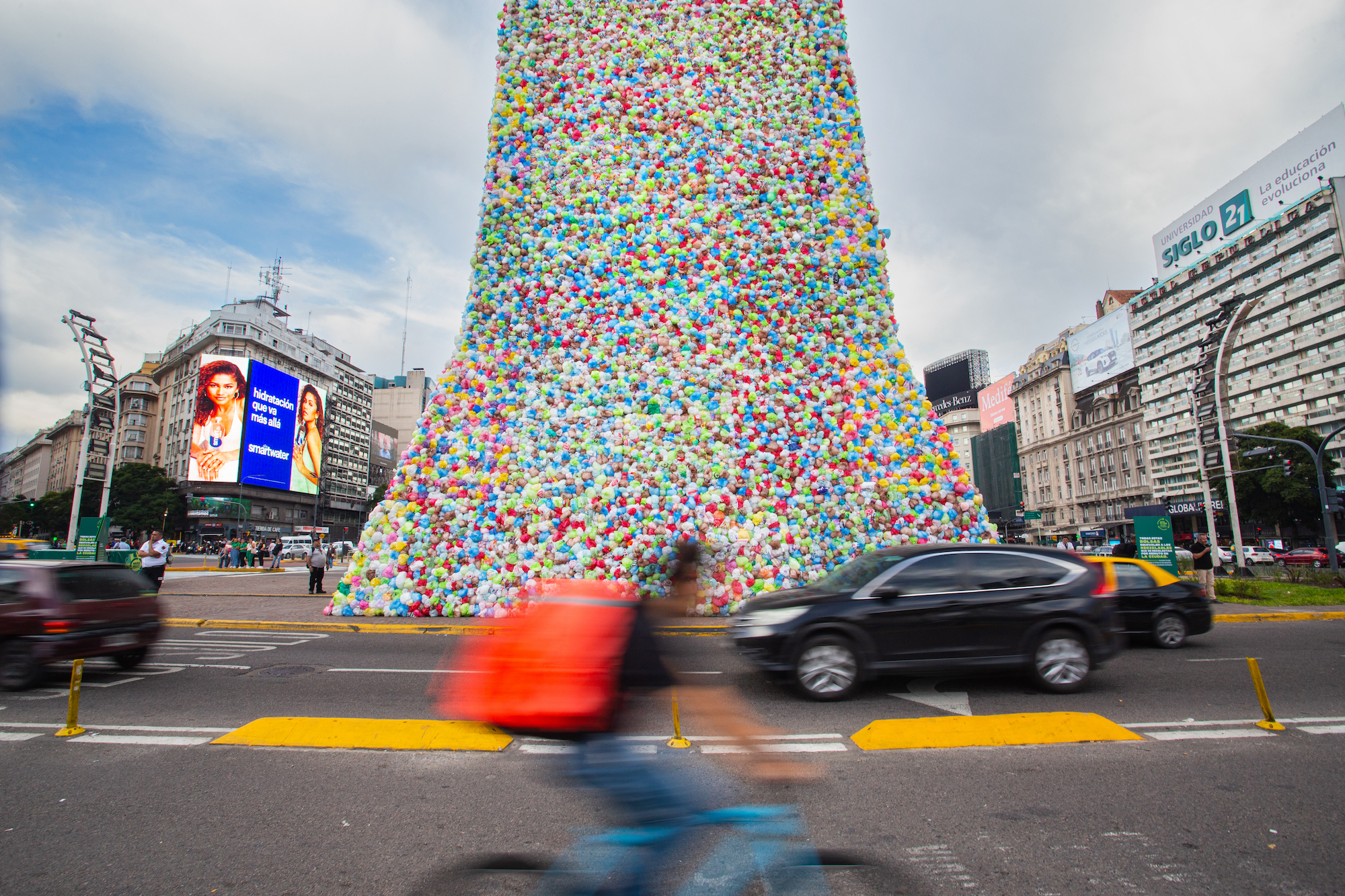
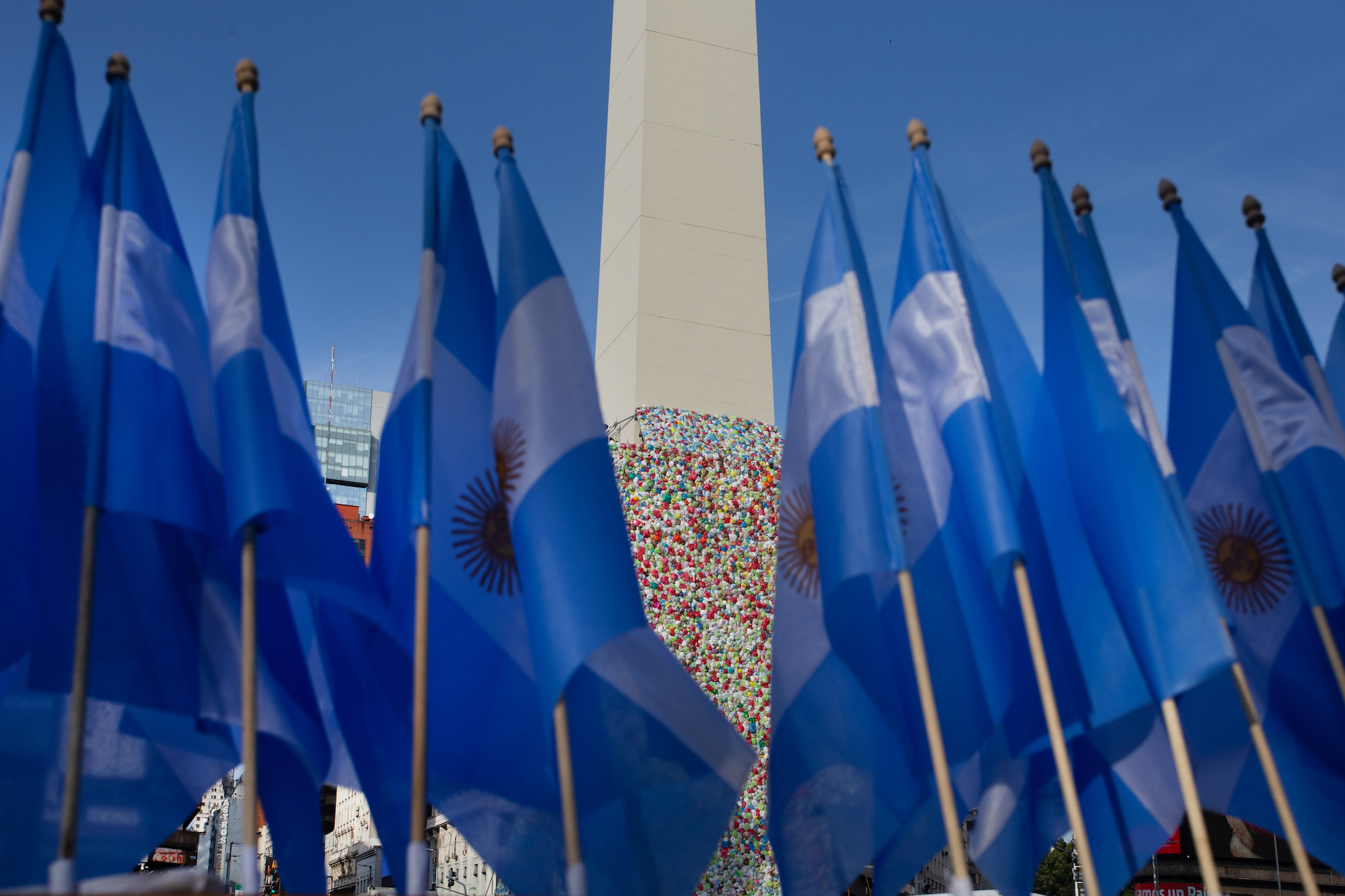
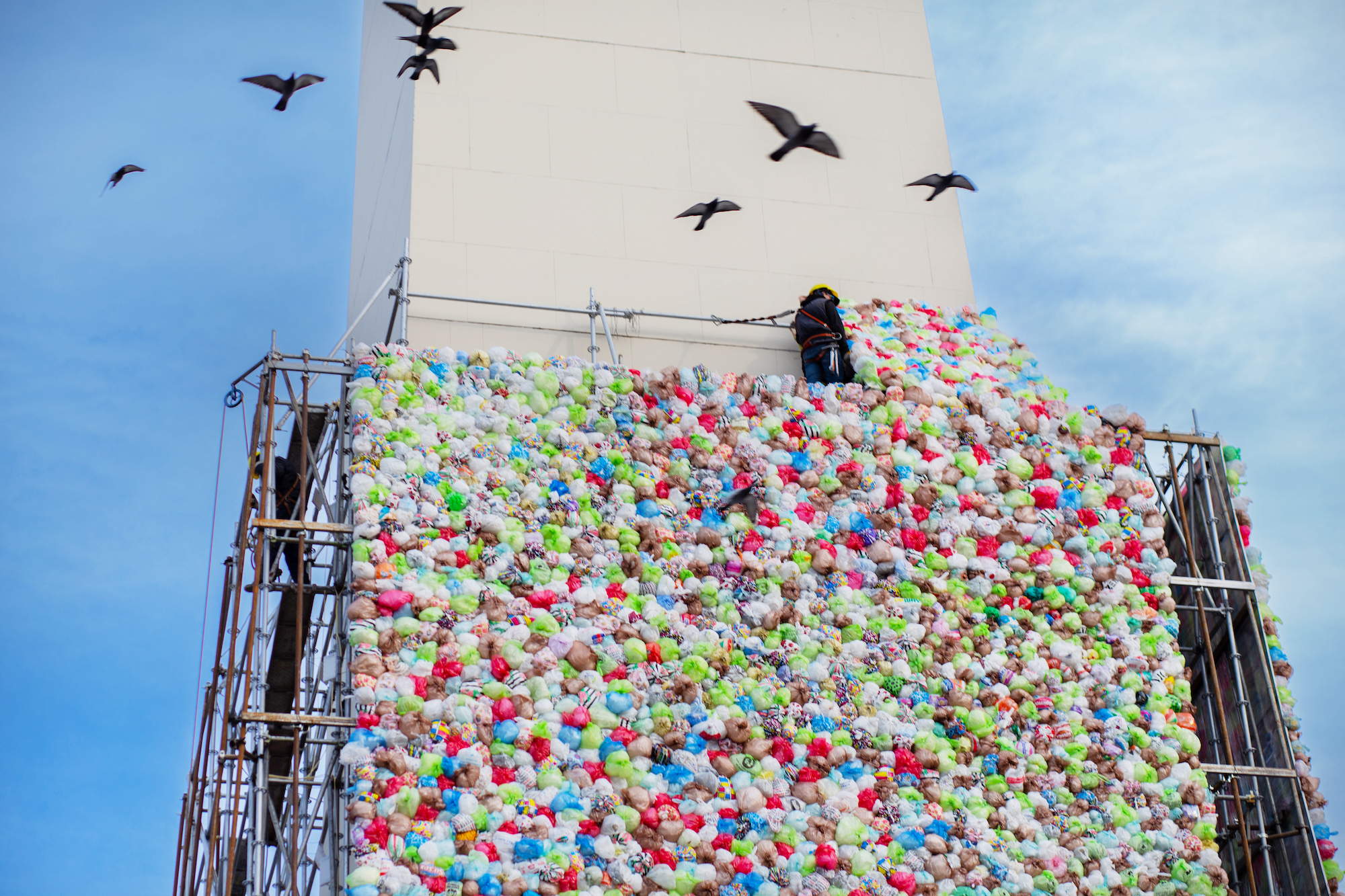
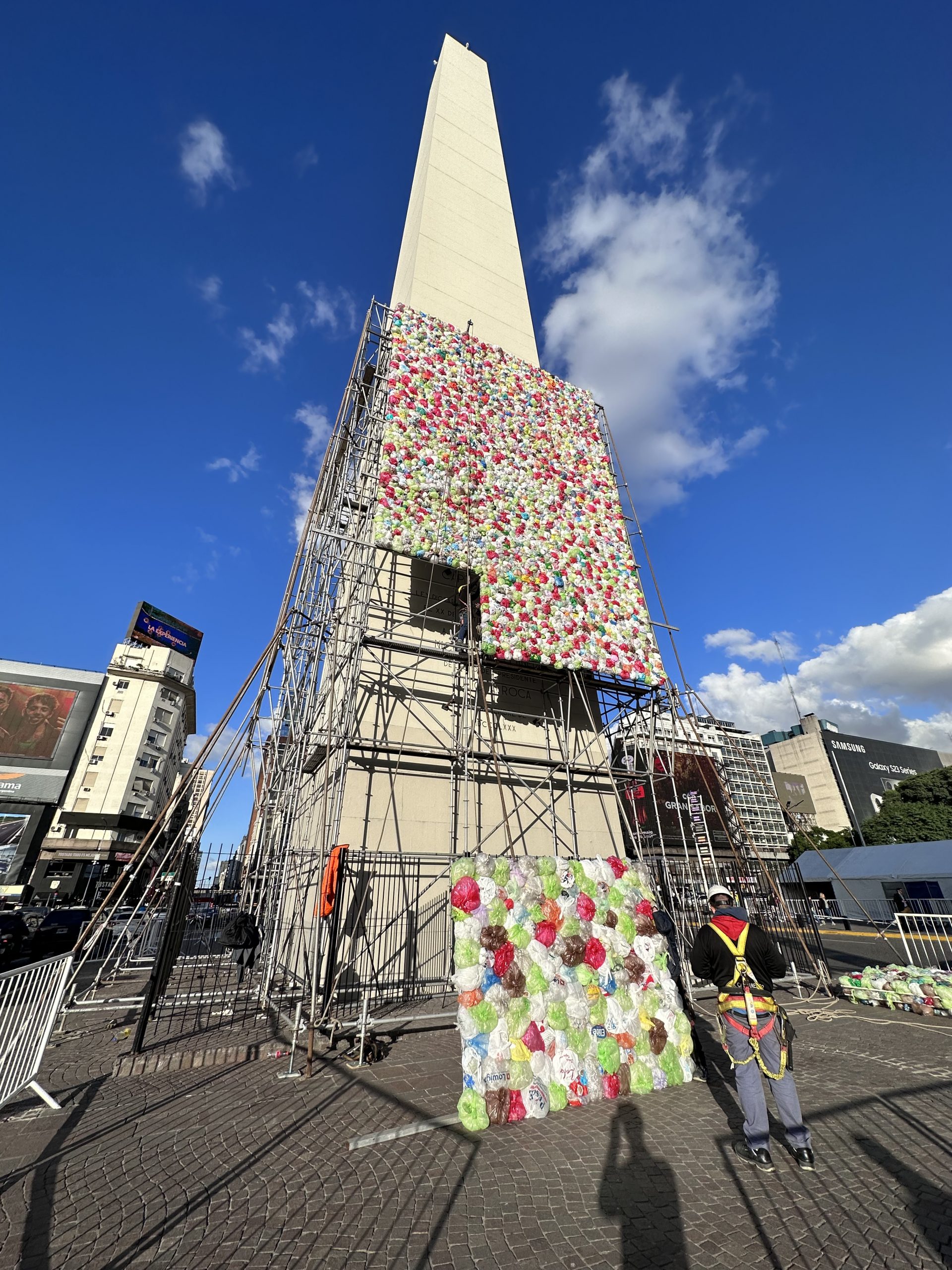
We have set up this piece in the buildings of many world-famous cities. However, the challenge, in this case, was extraordinary as we had to do this on El Obelisco de Buenos Aires, Argentina’s most emblematic monument, which has been the backdrop to the most relevant events of the city of Buenos Aires. Today, it is the epicenter of the city’s commercial and social life as well as the busiest traffic area and the stage for most demonstrations and street protests. It is also the spot where the most popular celebrations take place.
We wanted to send out the same message as usual: to represent, in a graphic understandable way, the plastic surplus infesting our environment, a recurrent theme in our work and in life since everything we consume is practically made of plastic, either wrapped in it or as part of our food transformed into minuscule particles that we also breathe.
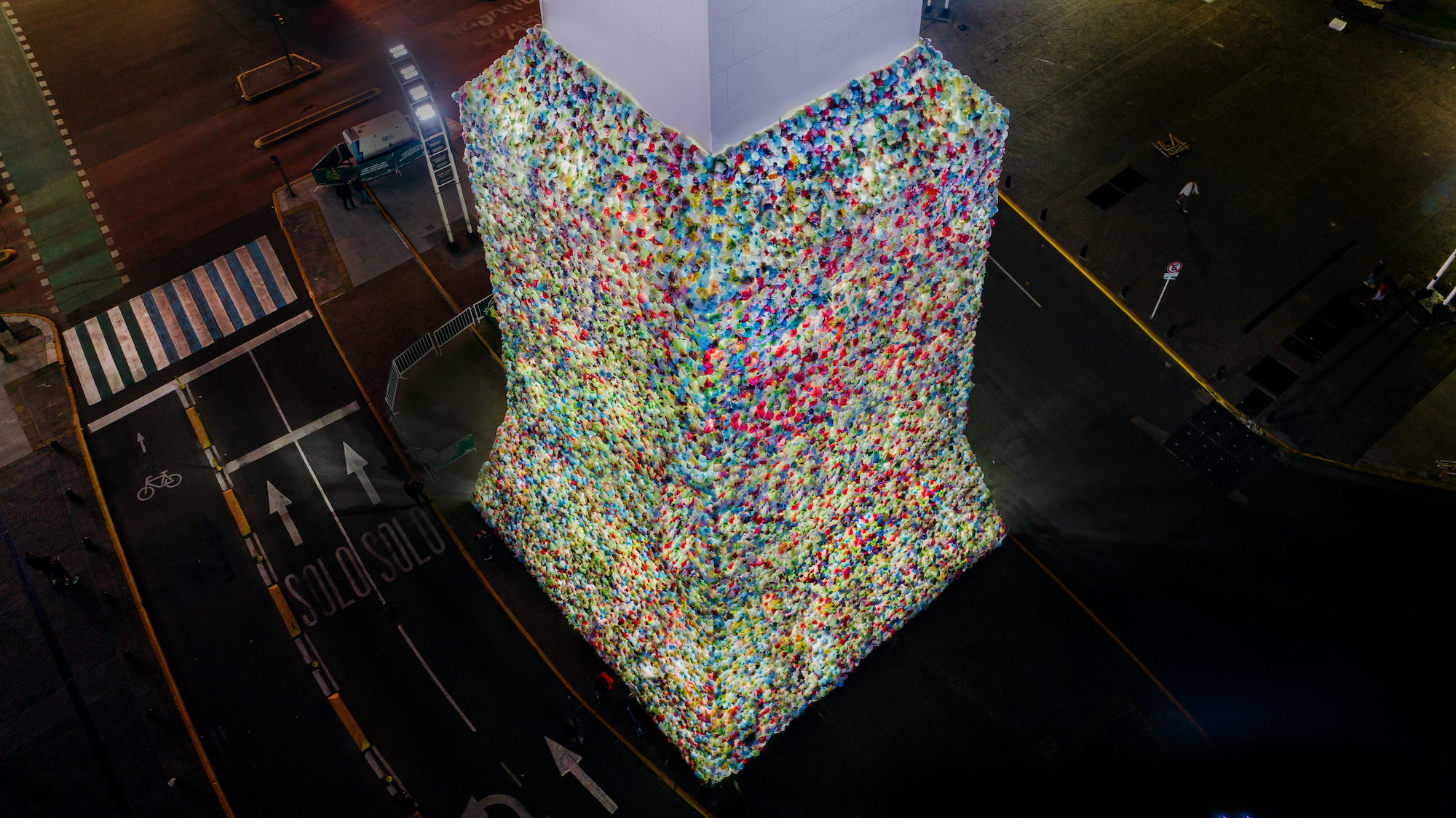
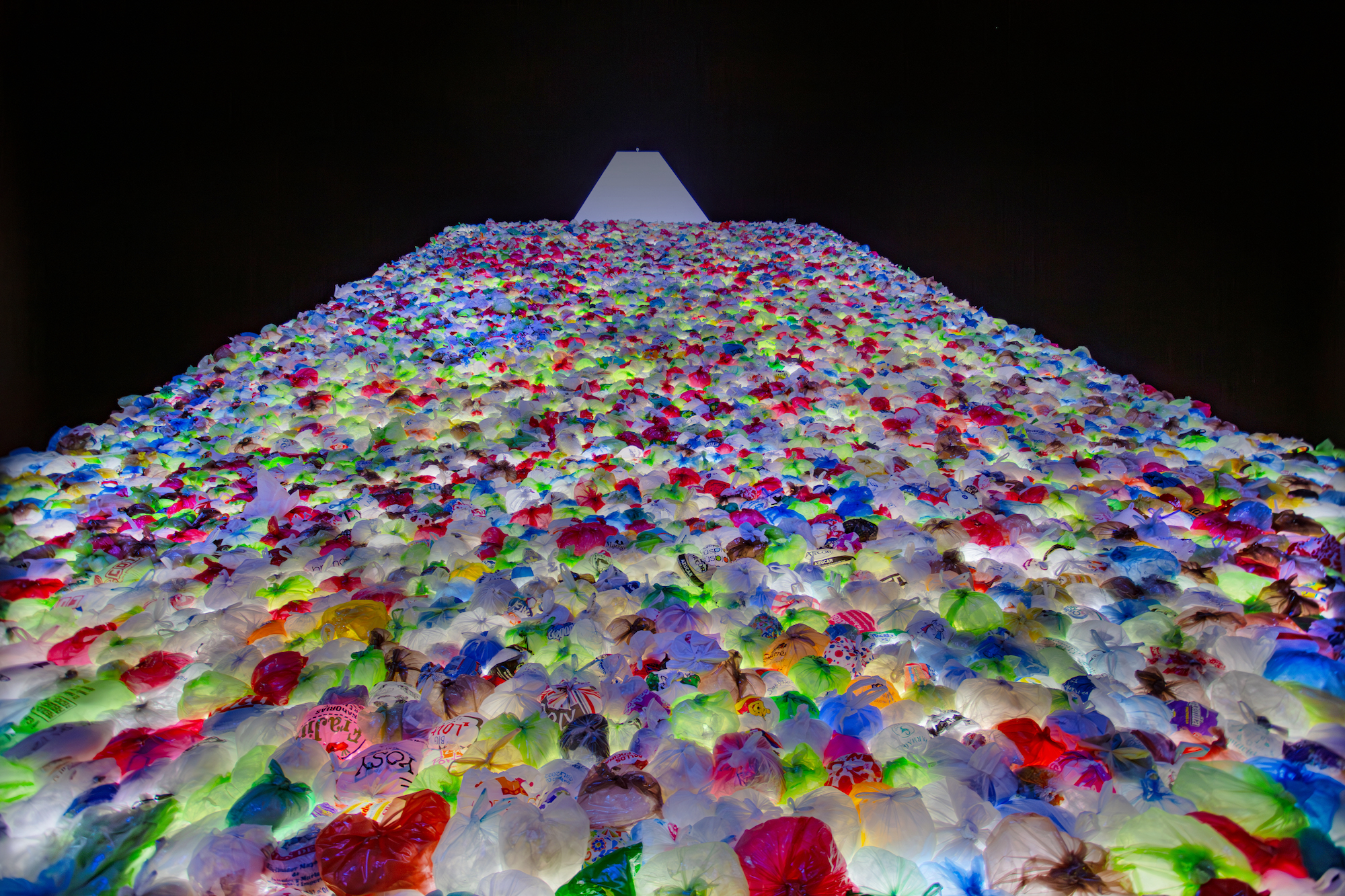
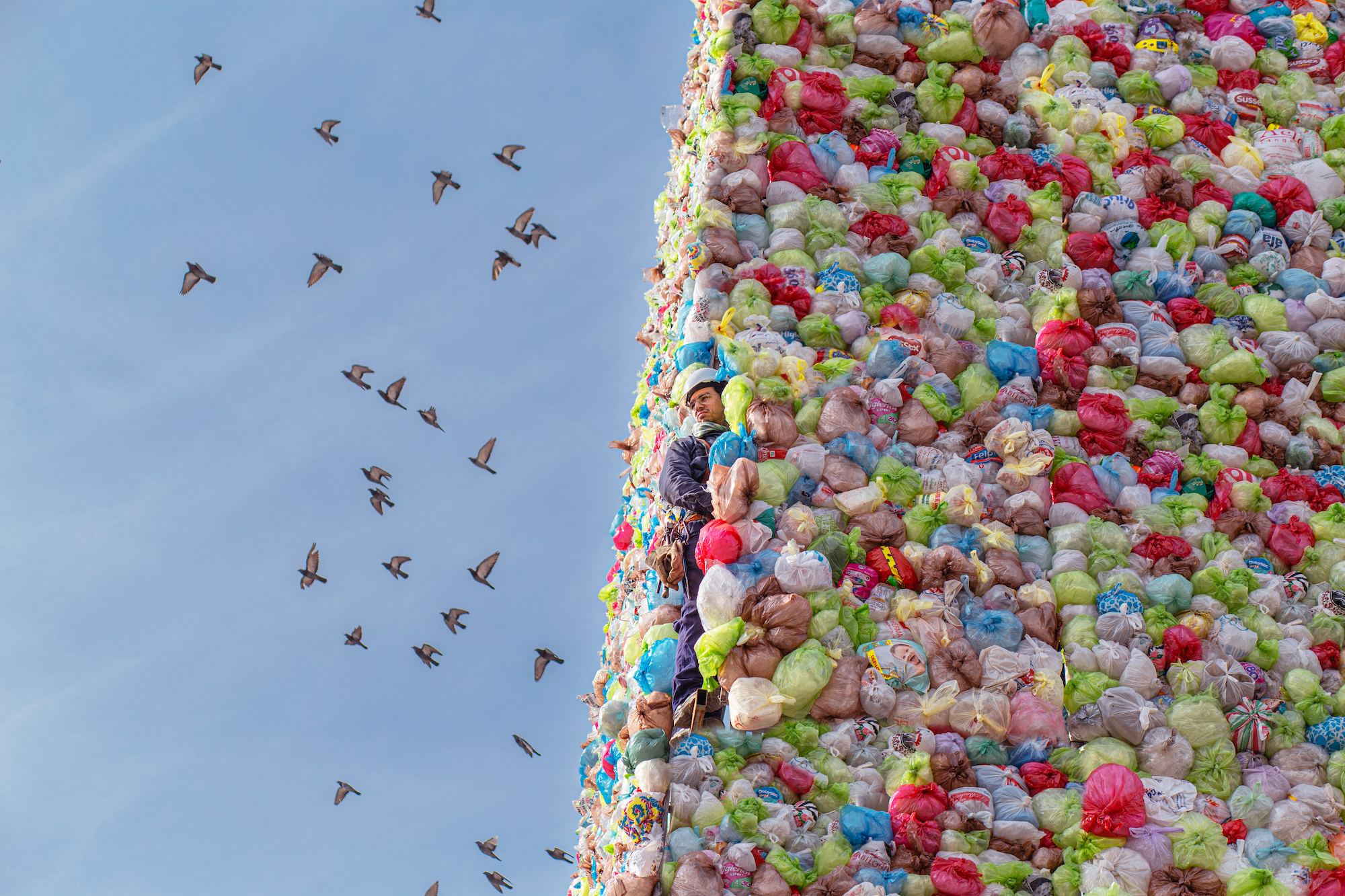
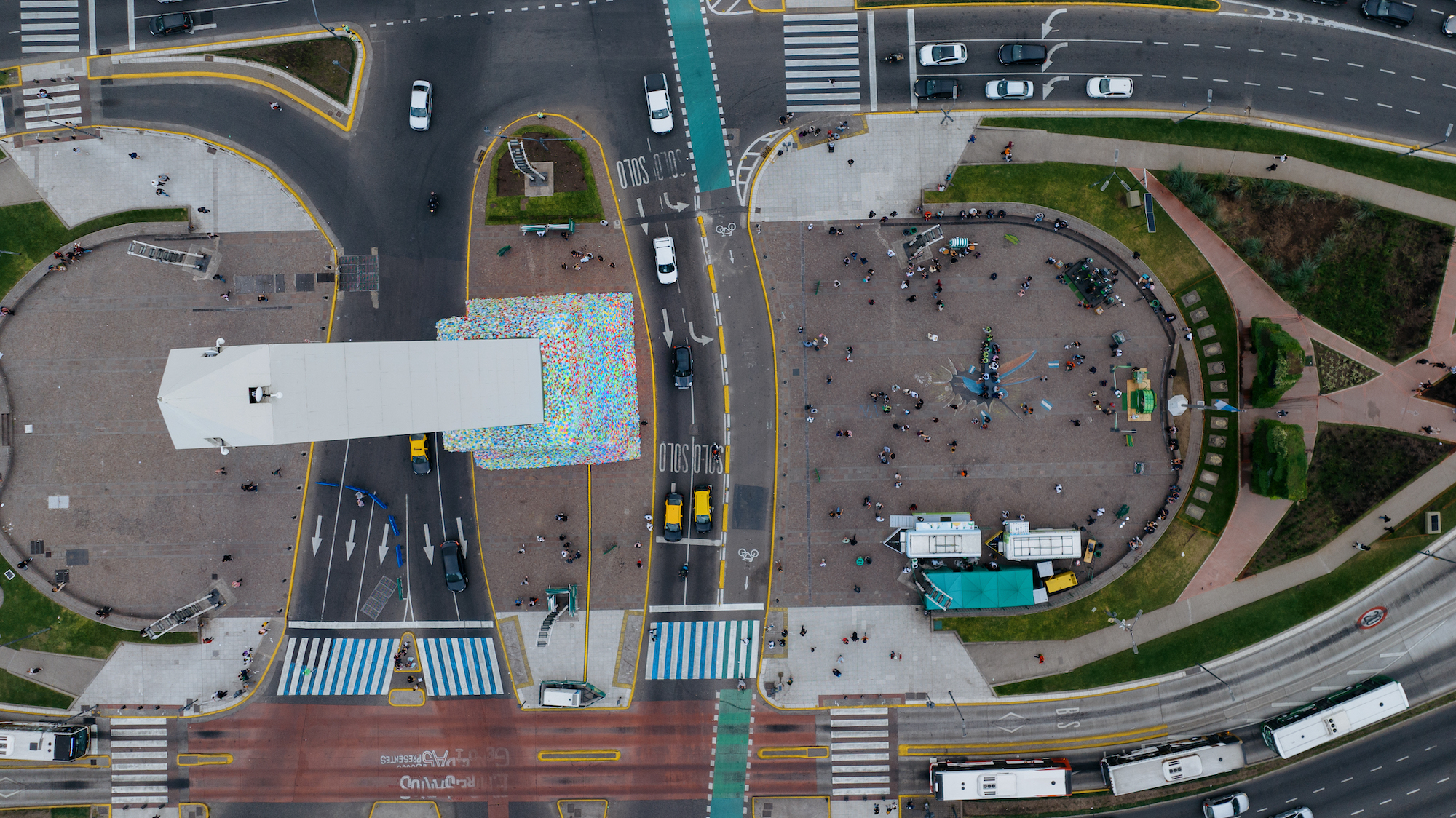
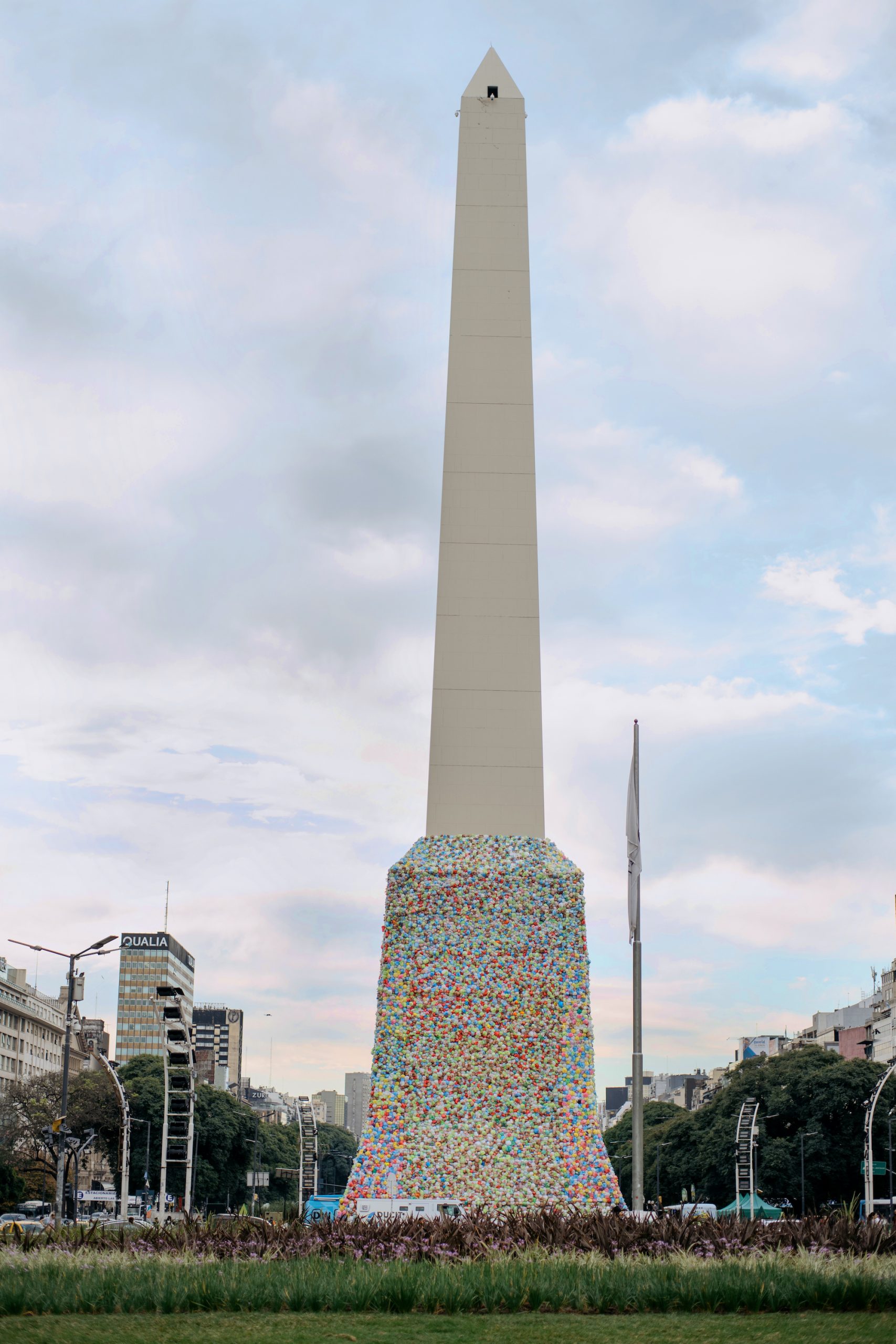
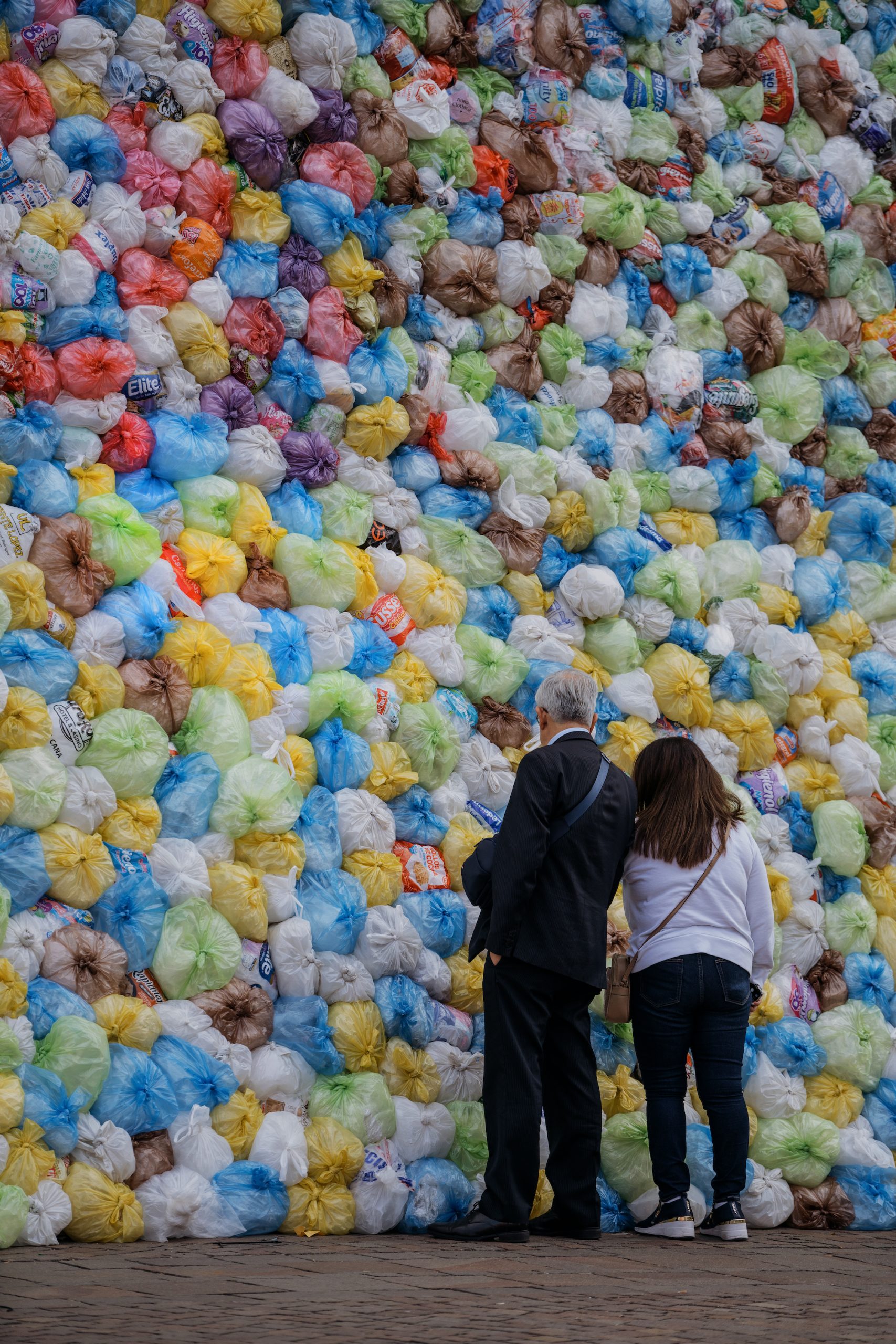
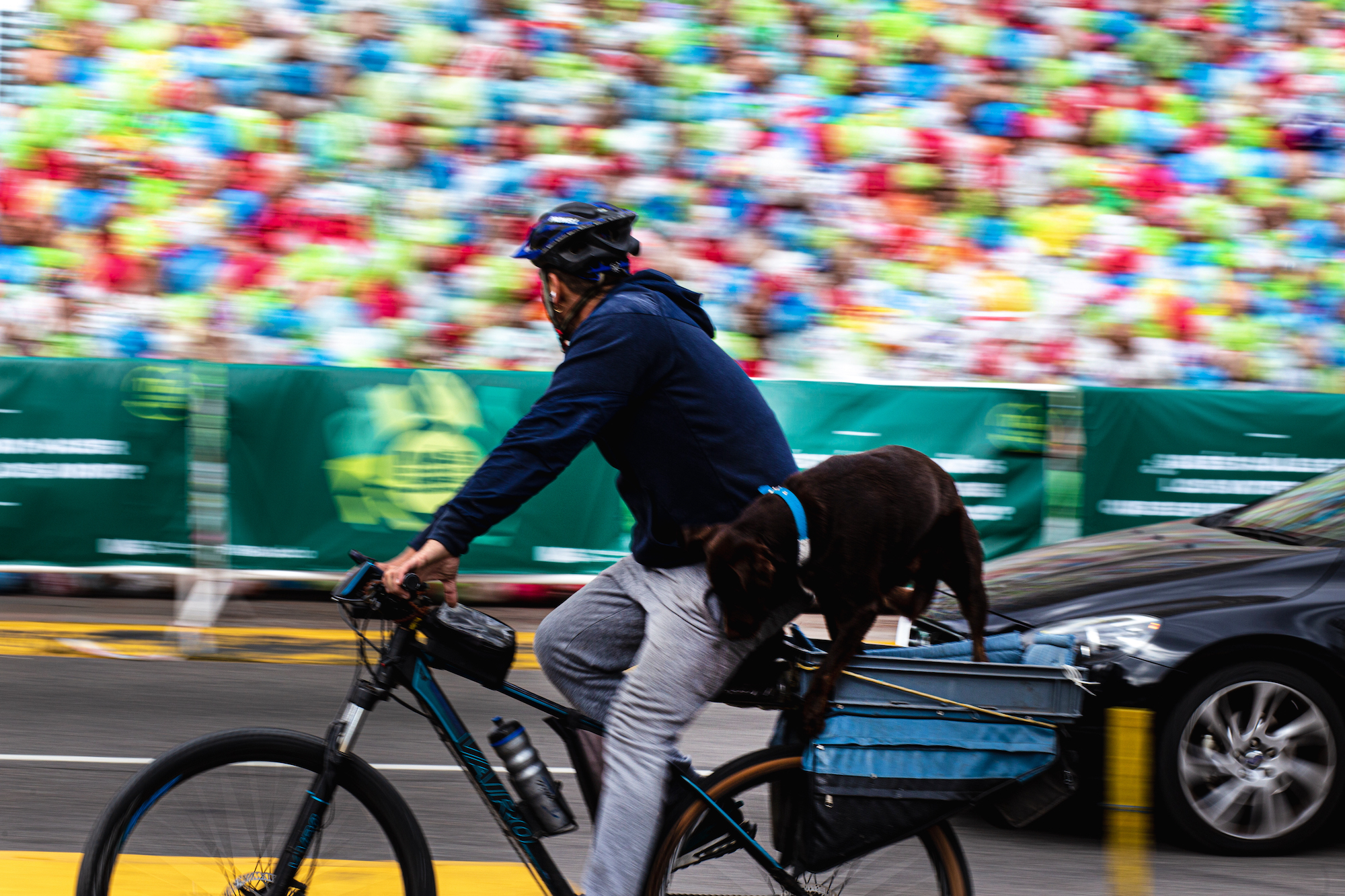
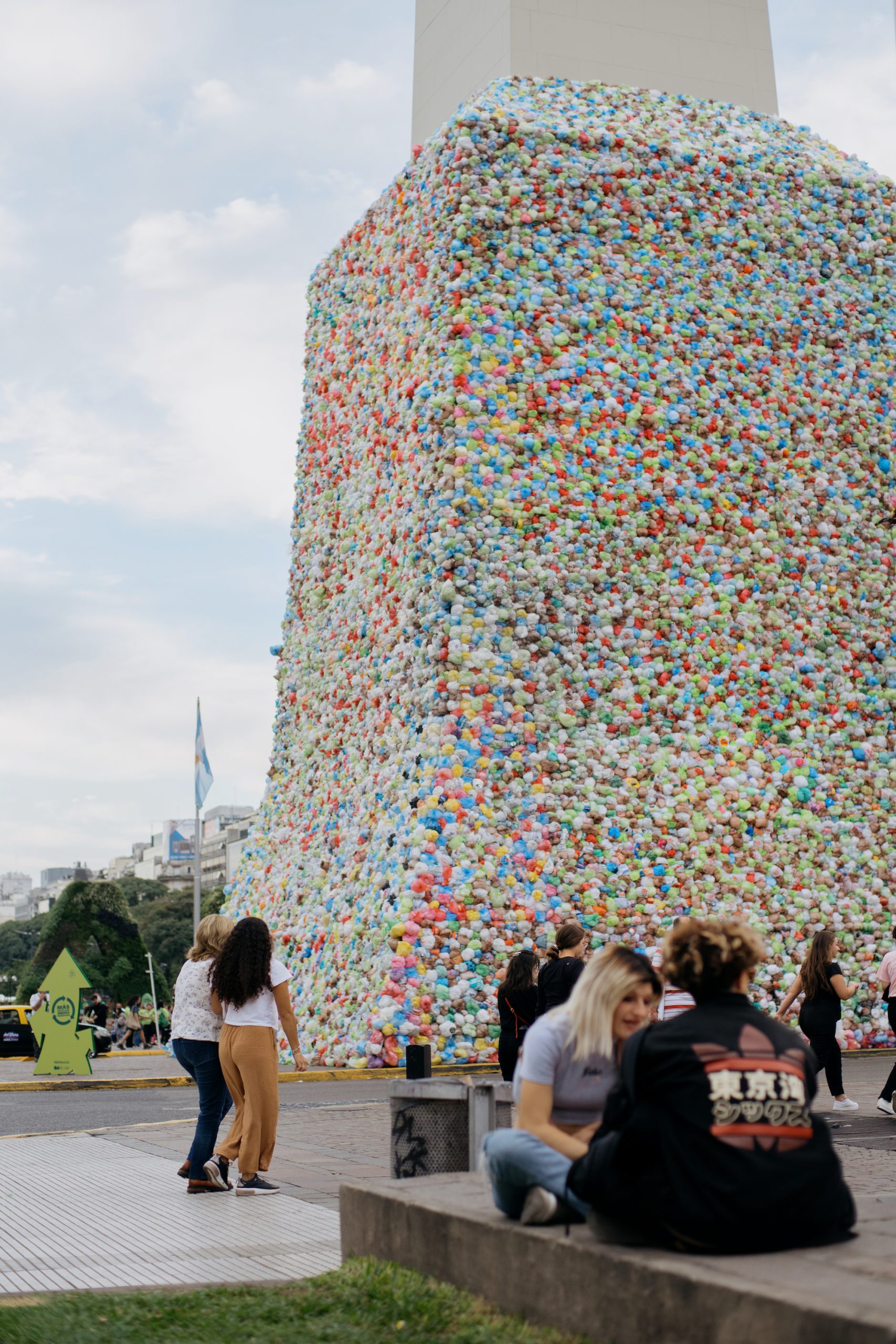
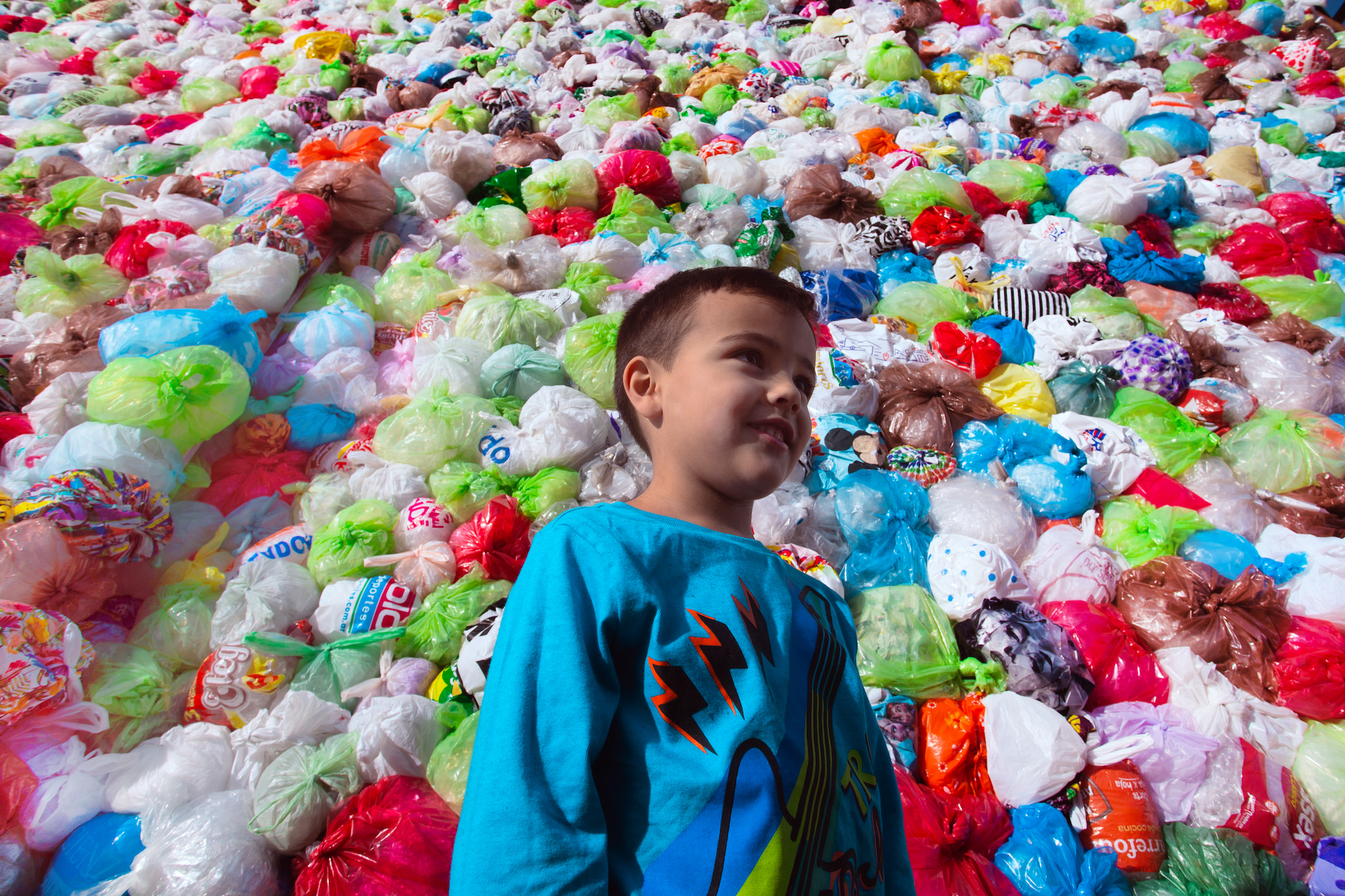
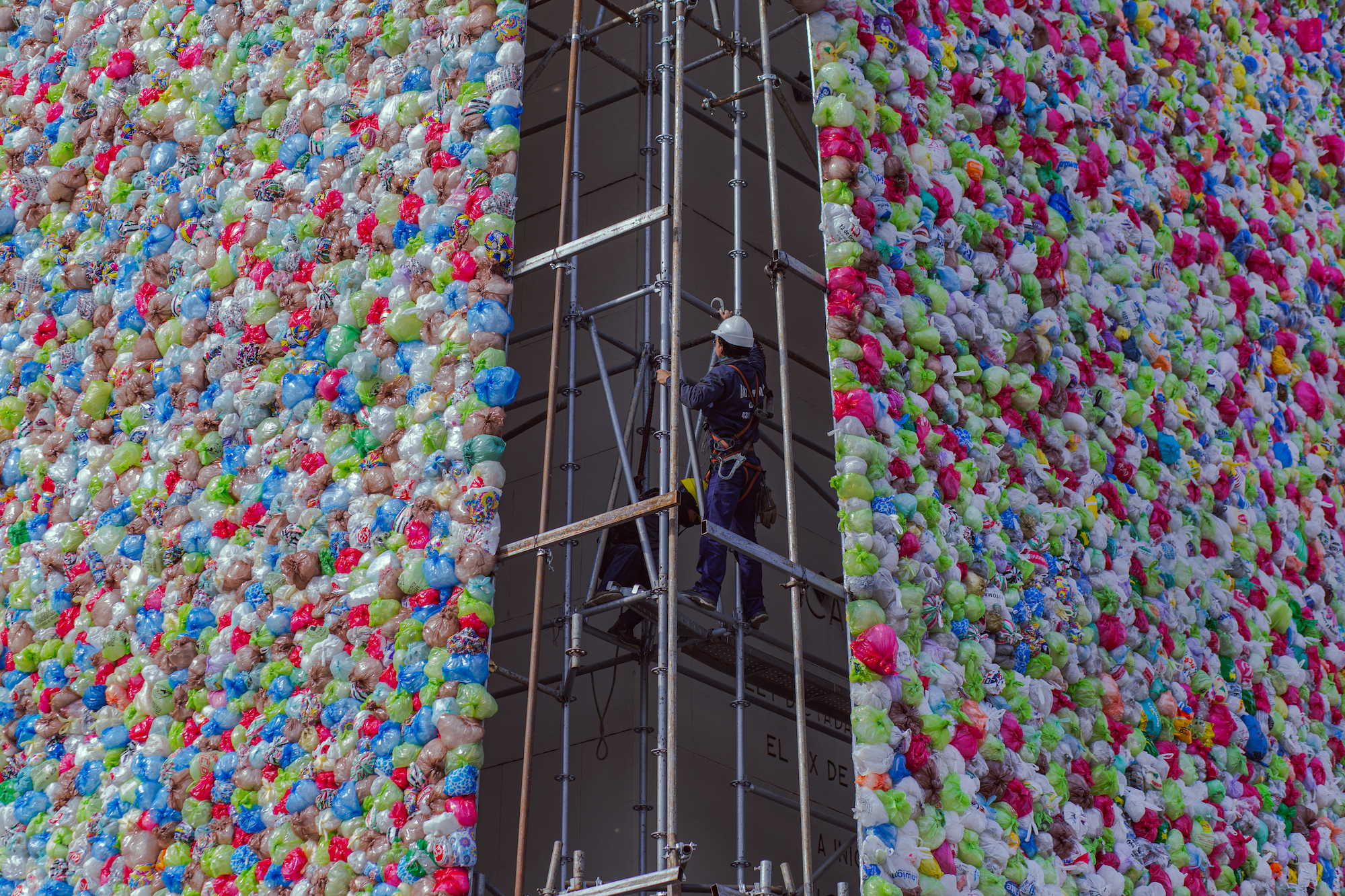
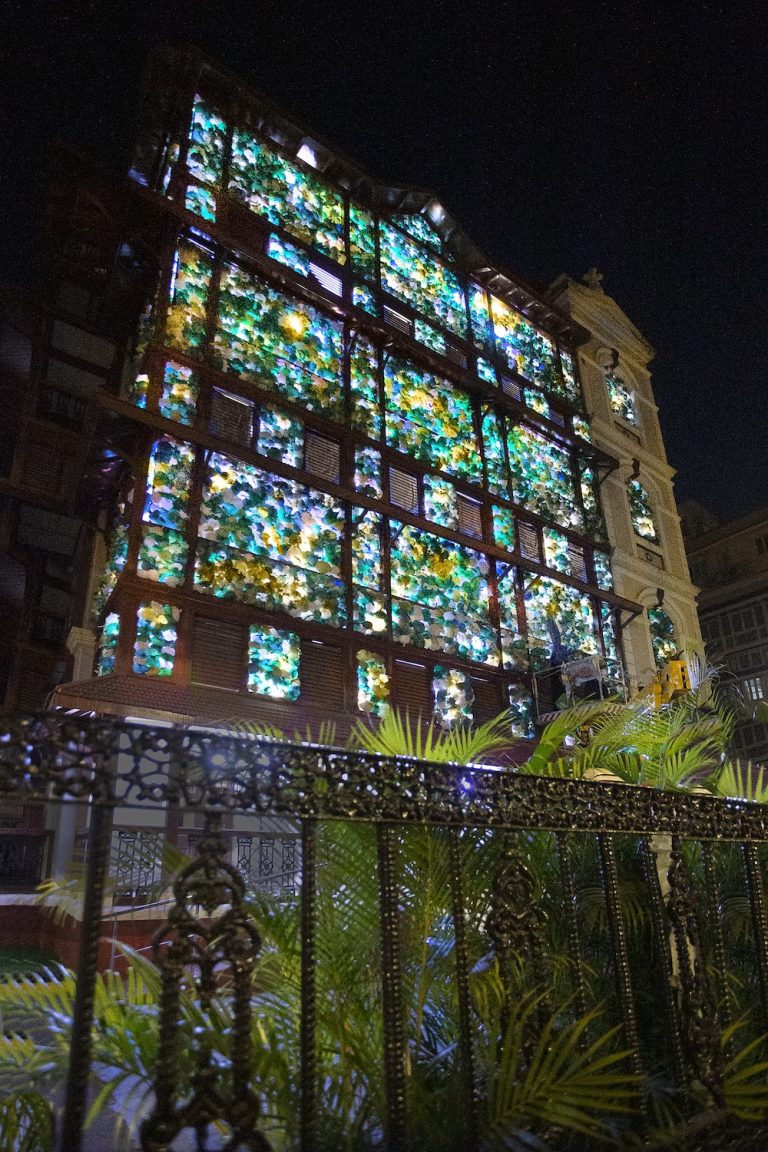
In order to make our installation worthy of such a lofty setting, visible from all access points to the square, and stand out amid the crowding advertisement, the variety of buildings, the chaotic transit, and the light pollution, we had to raise it over 25 meters (82 ft) above the ground – quite a building challenge. We achieved this by a complex system of scaffolds and cross sections made with iron extracted from old billboards. We attached our plastics to these panels and fixed them to the structure until the obelisk’s perimeter was covered and the fence around the monument disappeared out of sight.
The hardest part was getting the recycled plastic that we needed to line the almost 900 square meters (9,867 square feet) of panels and to do this in less than a month. We would have found this impossible somewhere else. However, we knew about Buenos Aires’ exemplary recycling system which is oftentimes managed by CSOs. We have already relied on it successfully back in 2018, when they helped us get the recycled bottles for our Labyrinth of Plastic Waste that we set up at Teatro Colón.
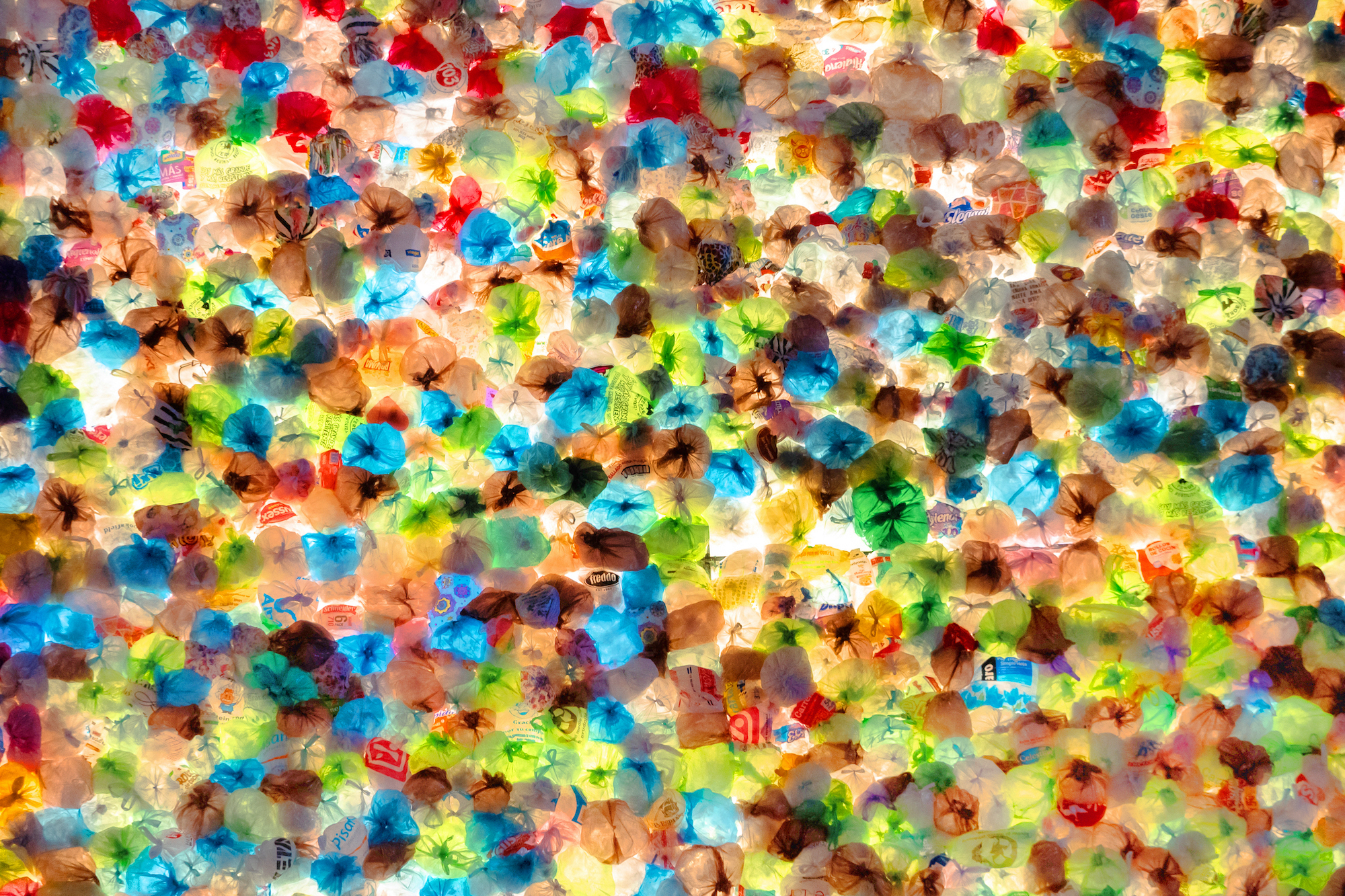
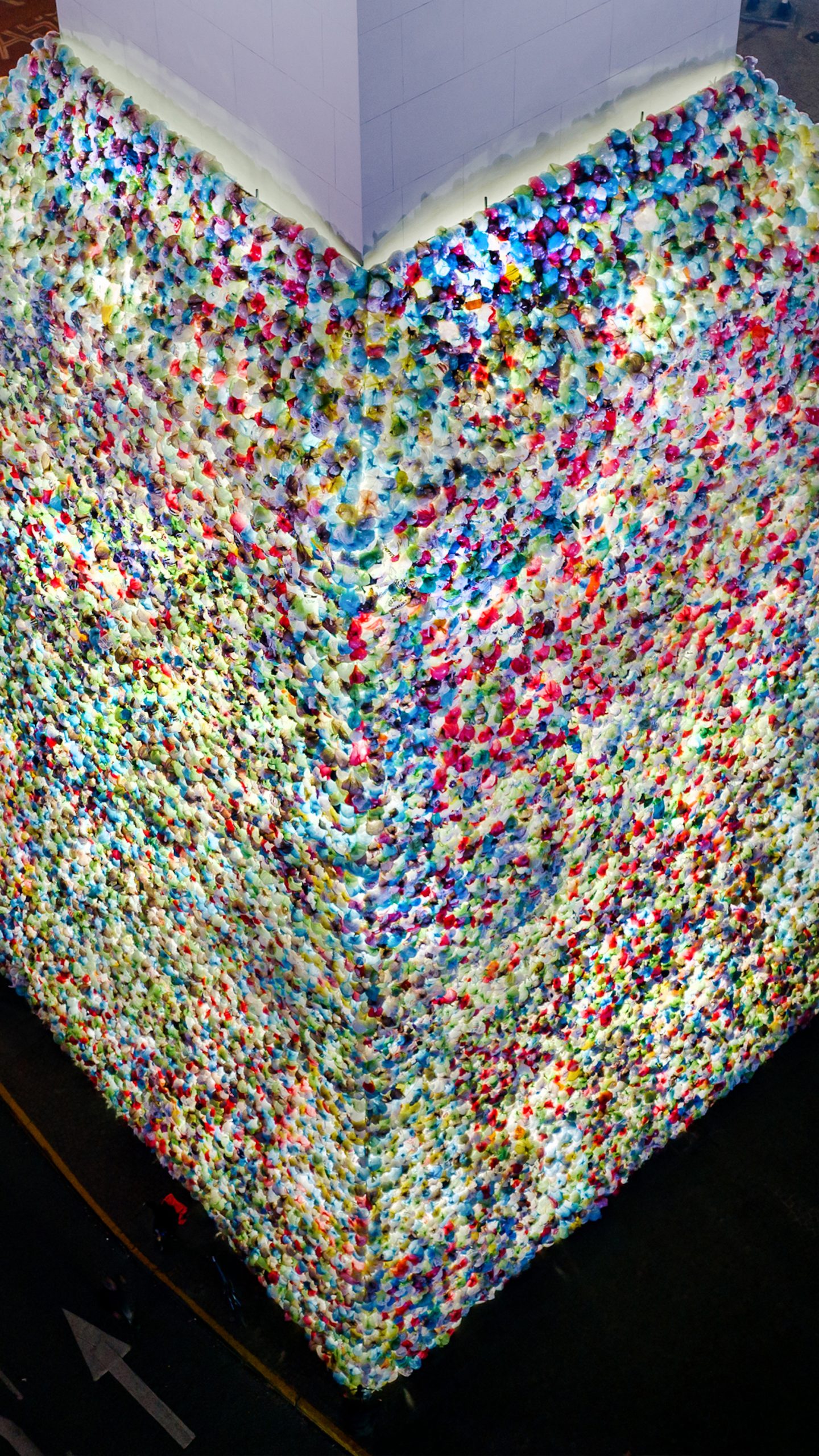
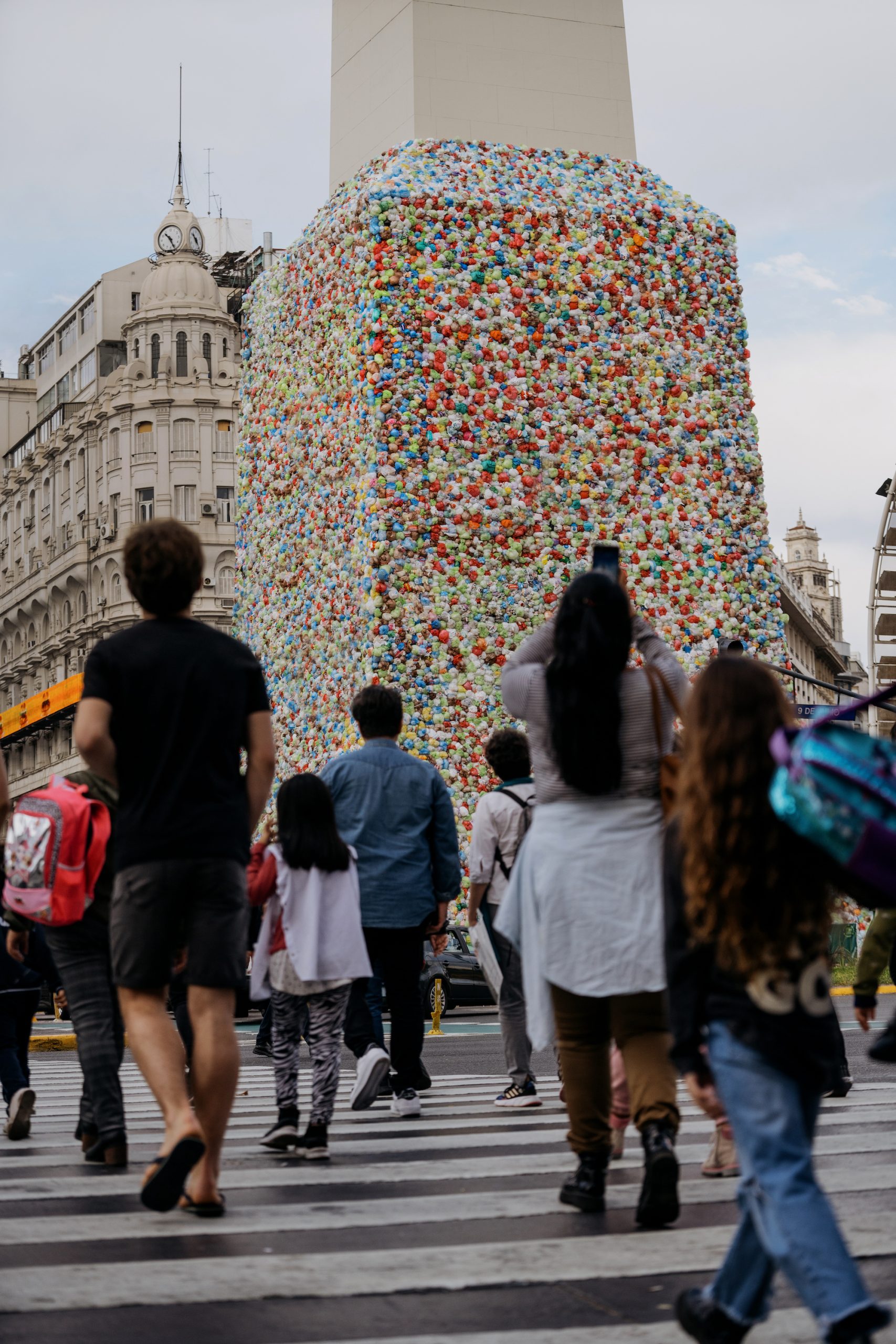
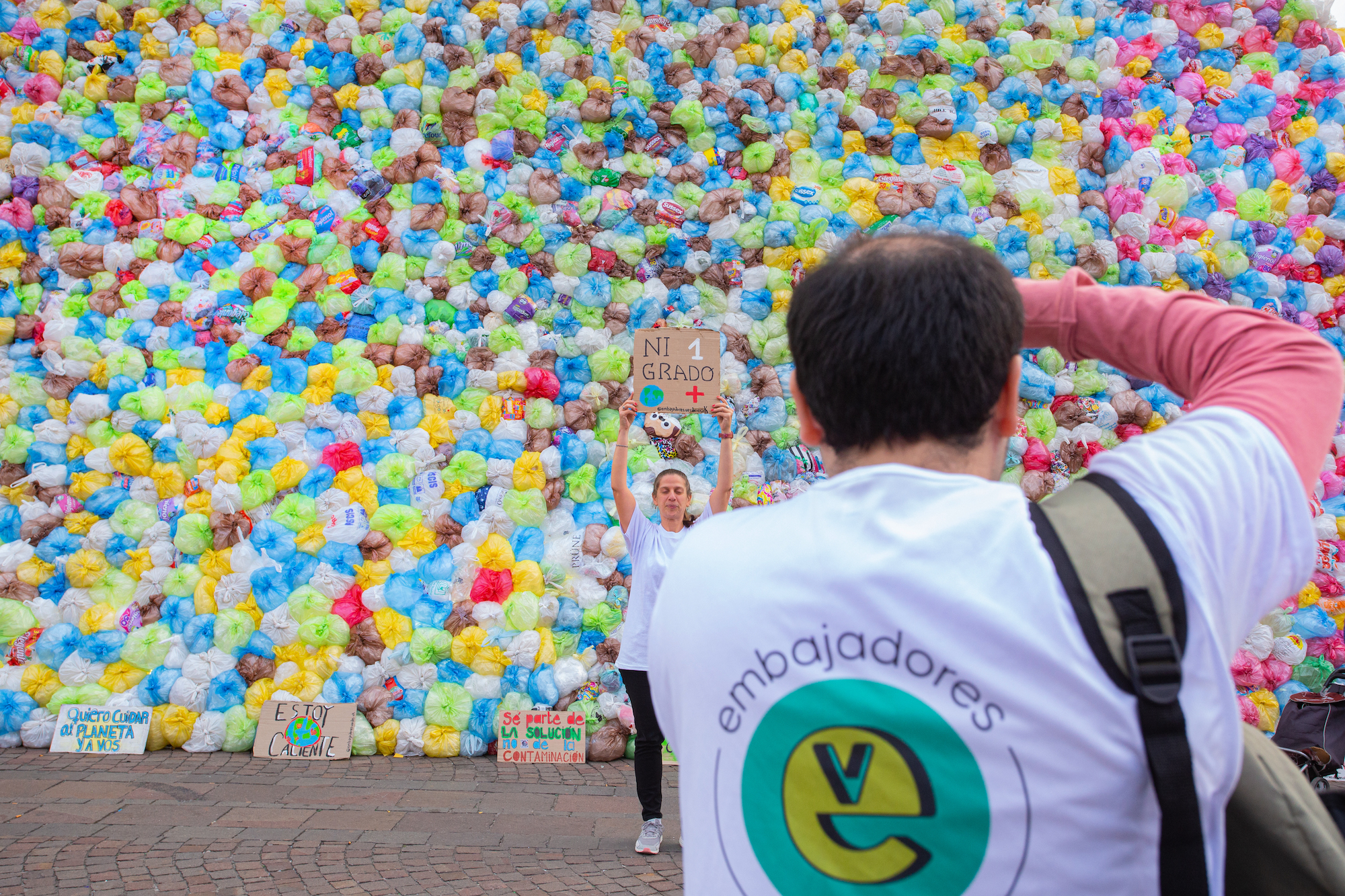
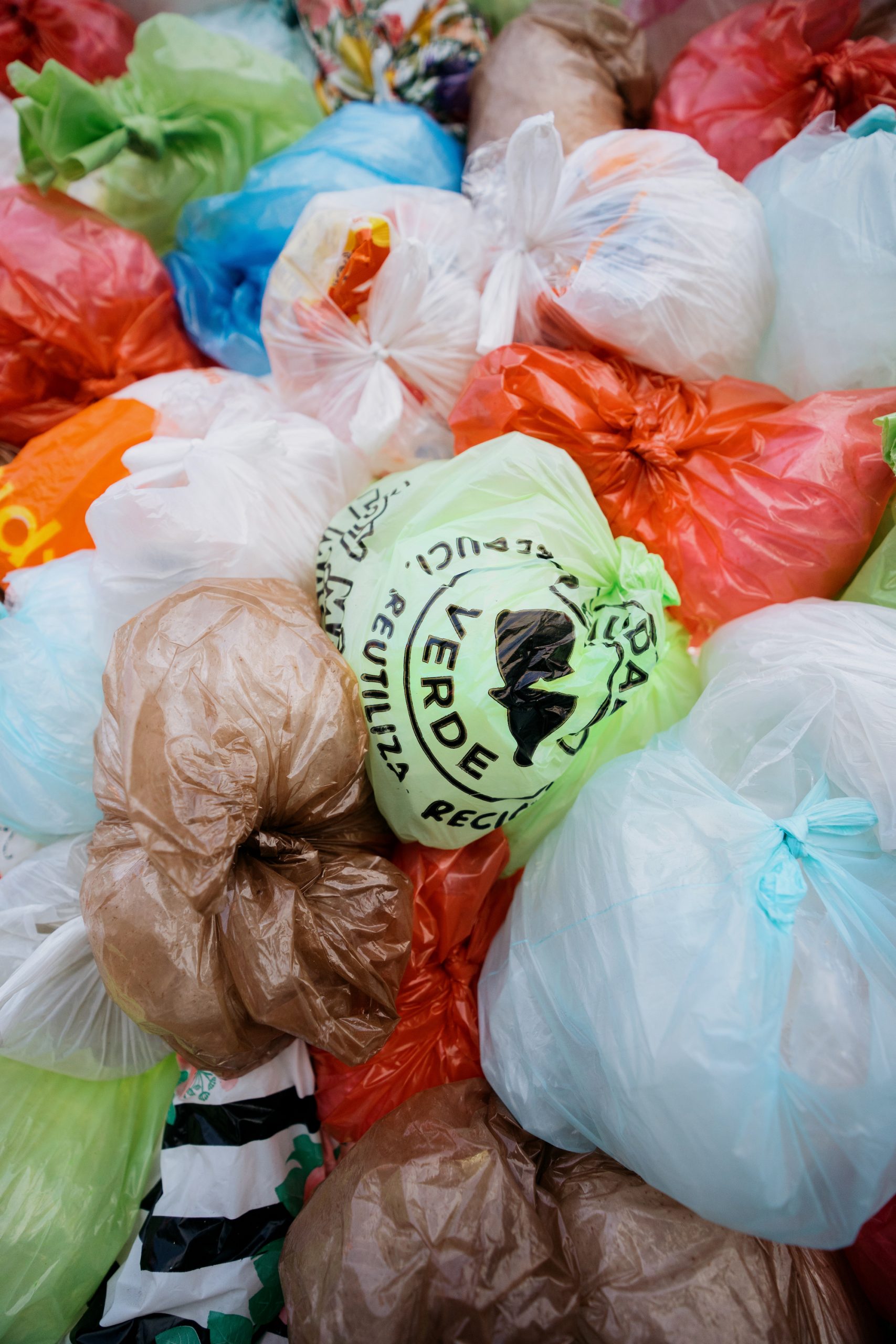
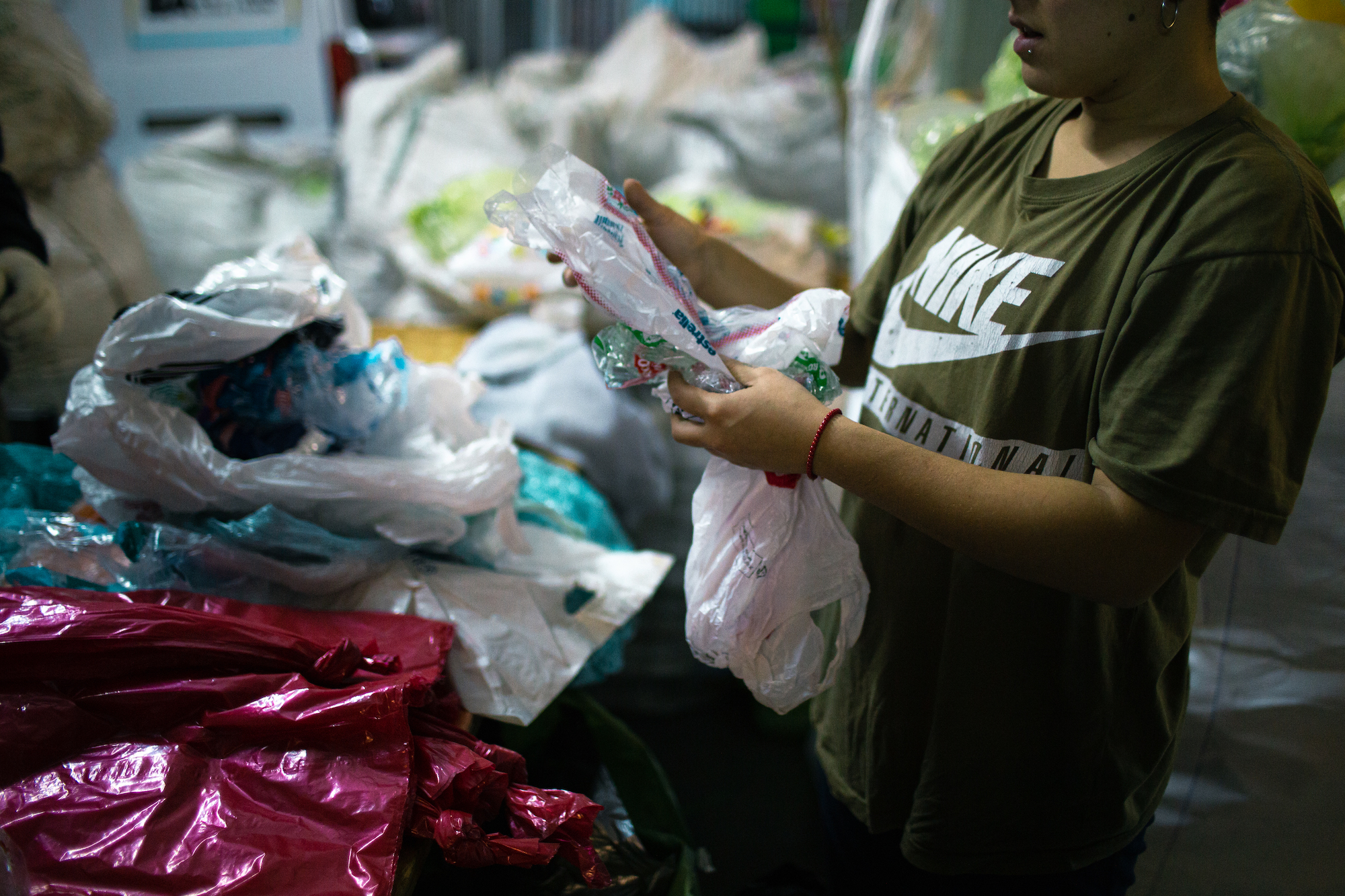
We needed more than 30,000 bags collected from the recycling system. In order to fill them, we required tons of transparent plastic, the one used for the packaging and transportation of goods. The city’s local government made a public announcement so that citizens would take the bags they had at home to the recycling facilities where we picked up a large amount of it. Additionally, these CSOs gathered a generous selection of bags that they received in good condition, so we also salvaged a good quantity from there. We made the remaining part out of plastics that we rescued from trash containers that the Cooperativa Baires Cero processed and turned into rolls of colored bags that we also used. The transparent plastic used as filling did not pose a problem as tons of it are found at recycling facilities.
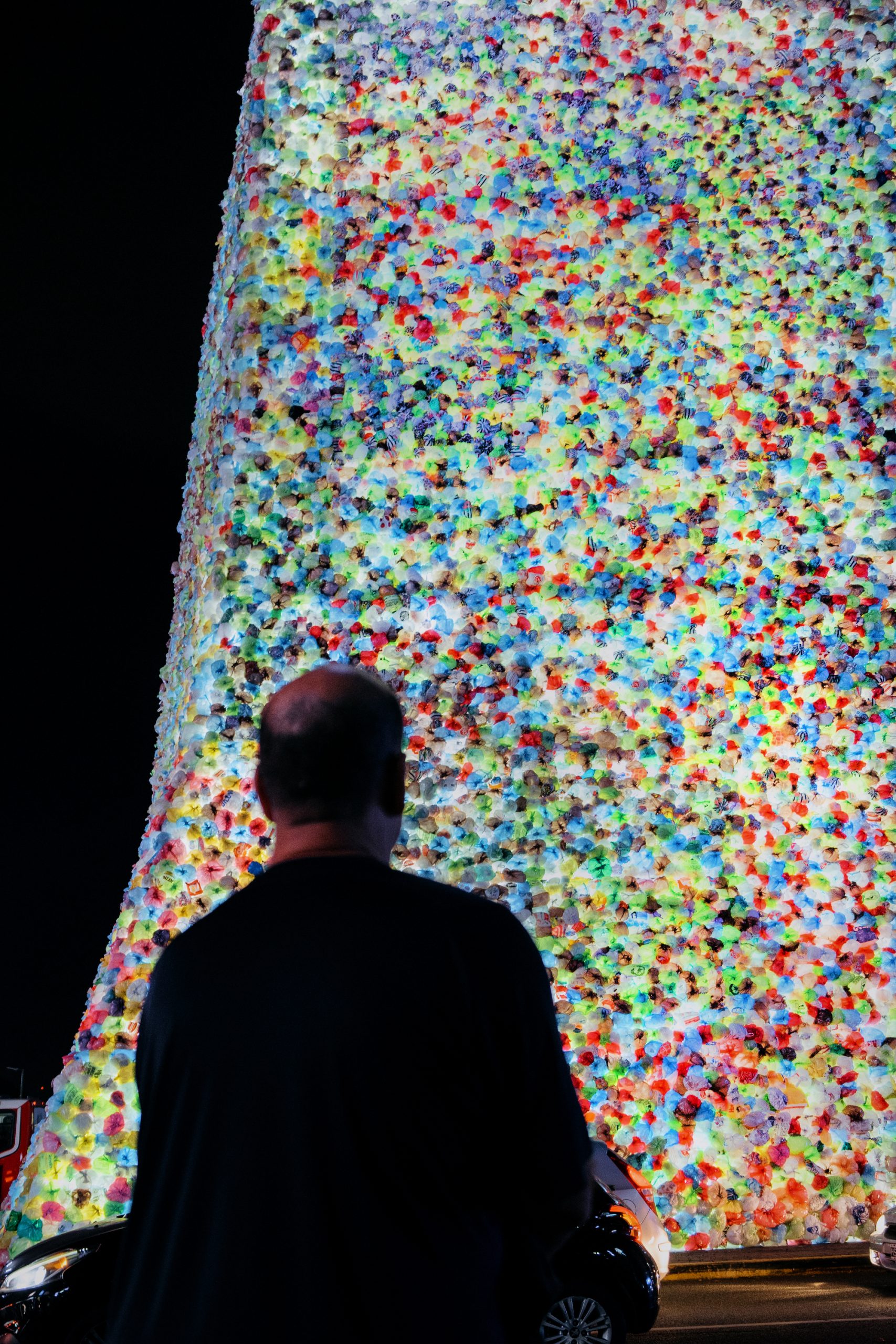
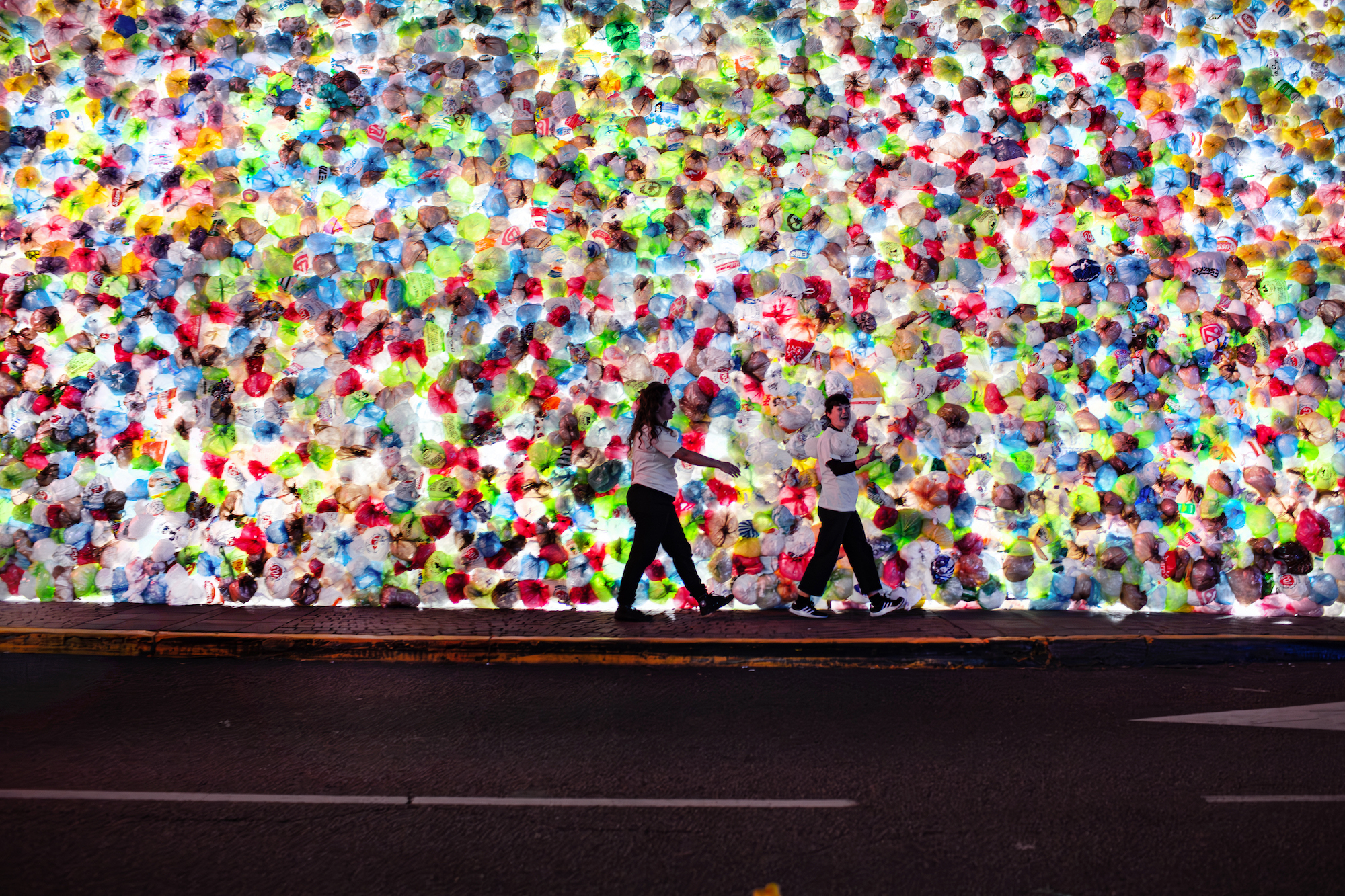
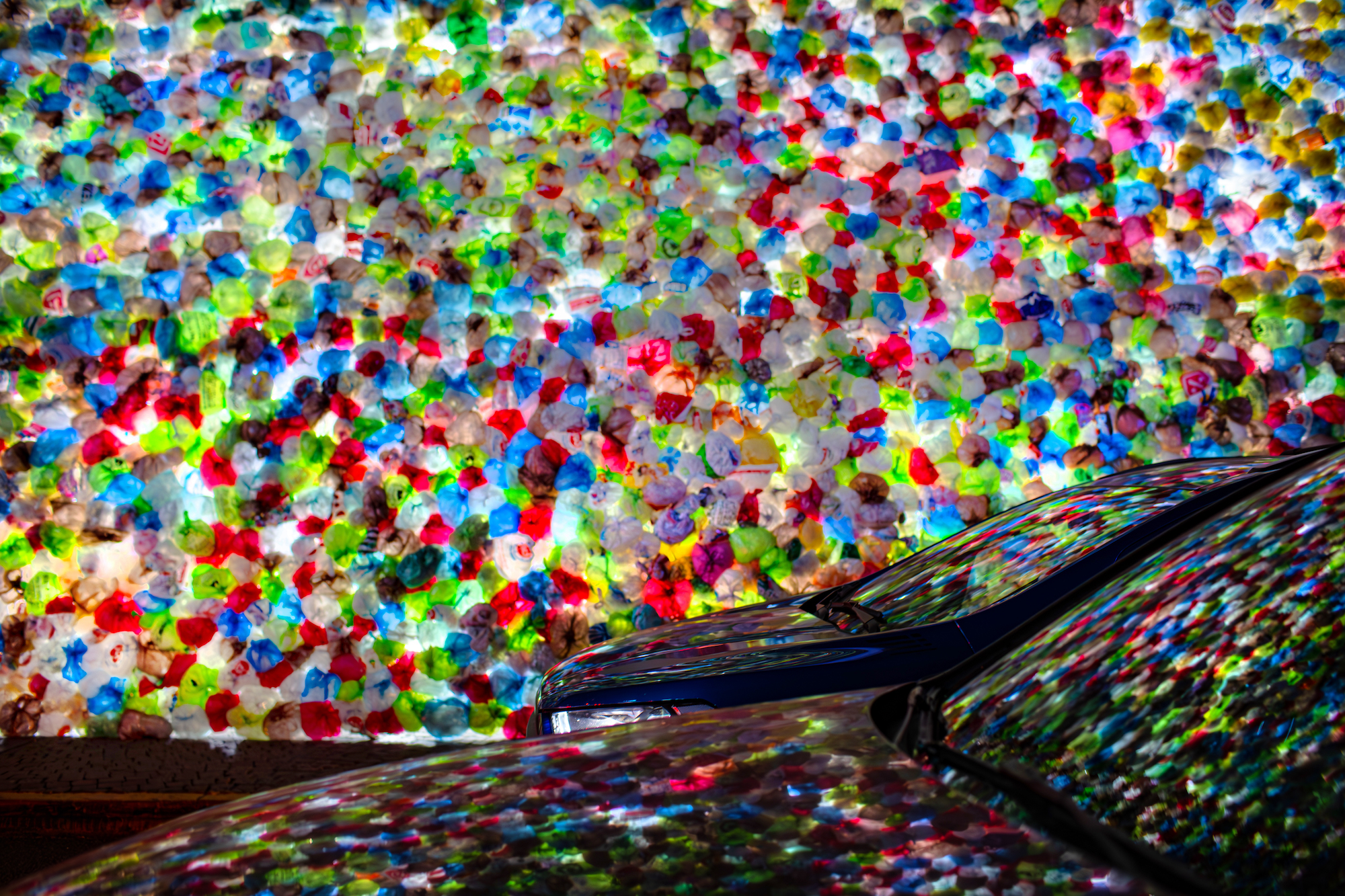
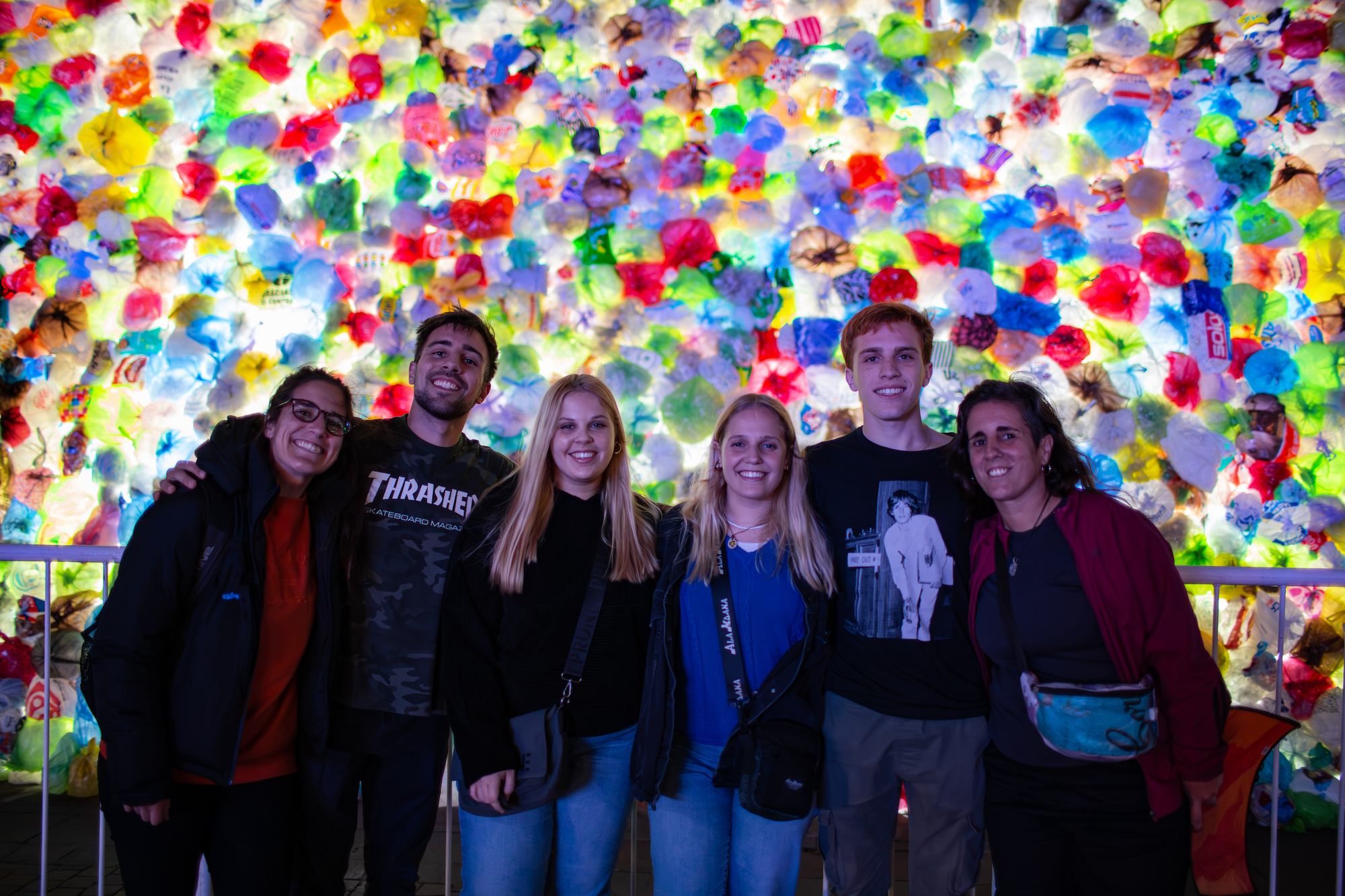
We employed powerful LED beams to backlight the panels. The light went through the layers of plastic turning the waste material into a grandiose stained-glass window which sent a clear message: large quantities of disposable plastic are still in circulation despite all the bans.
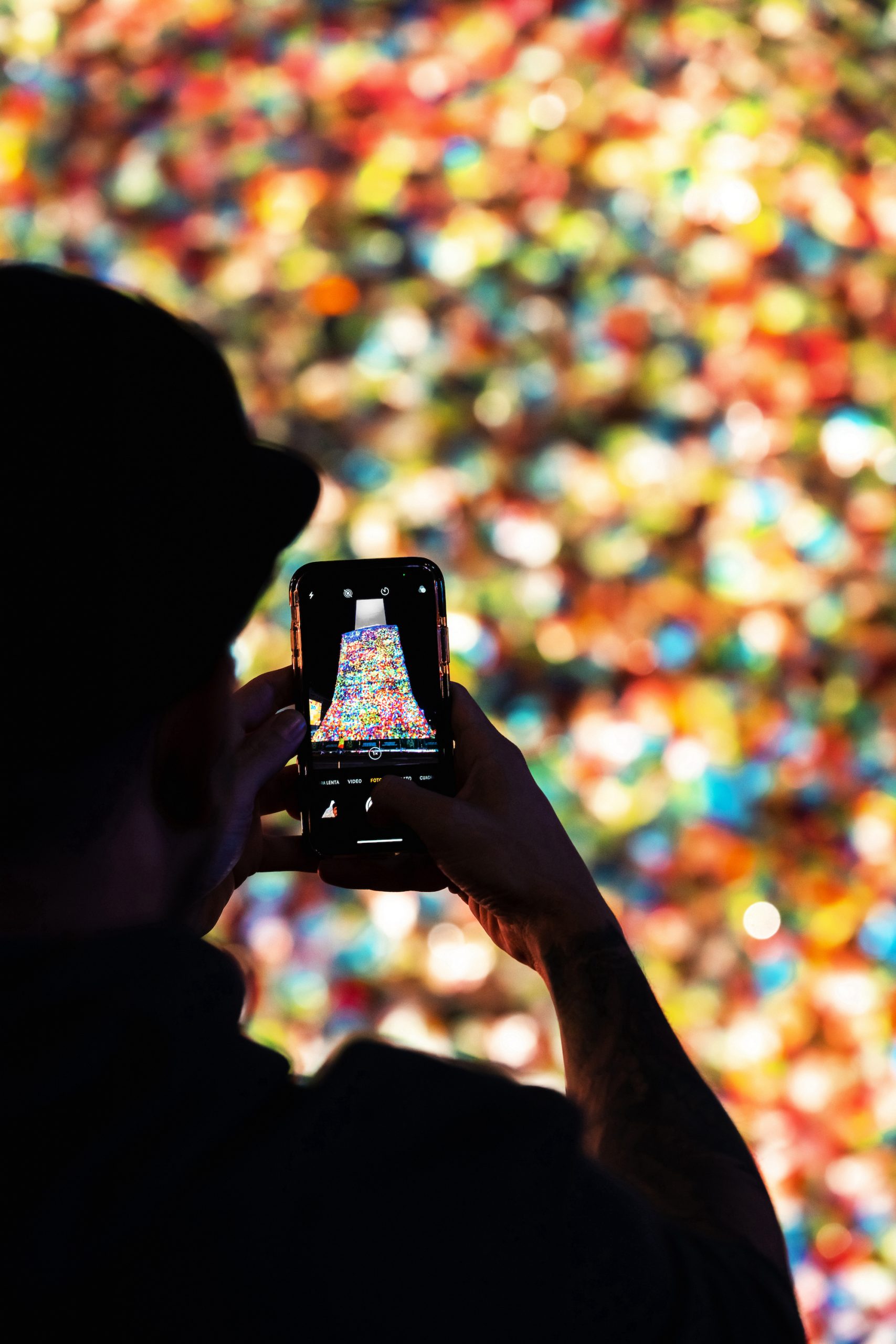
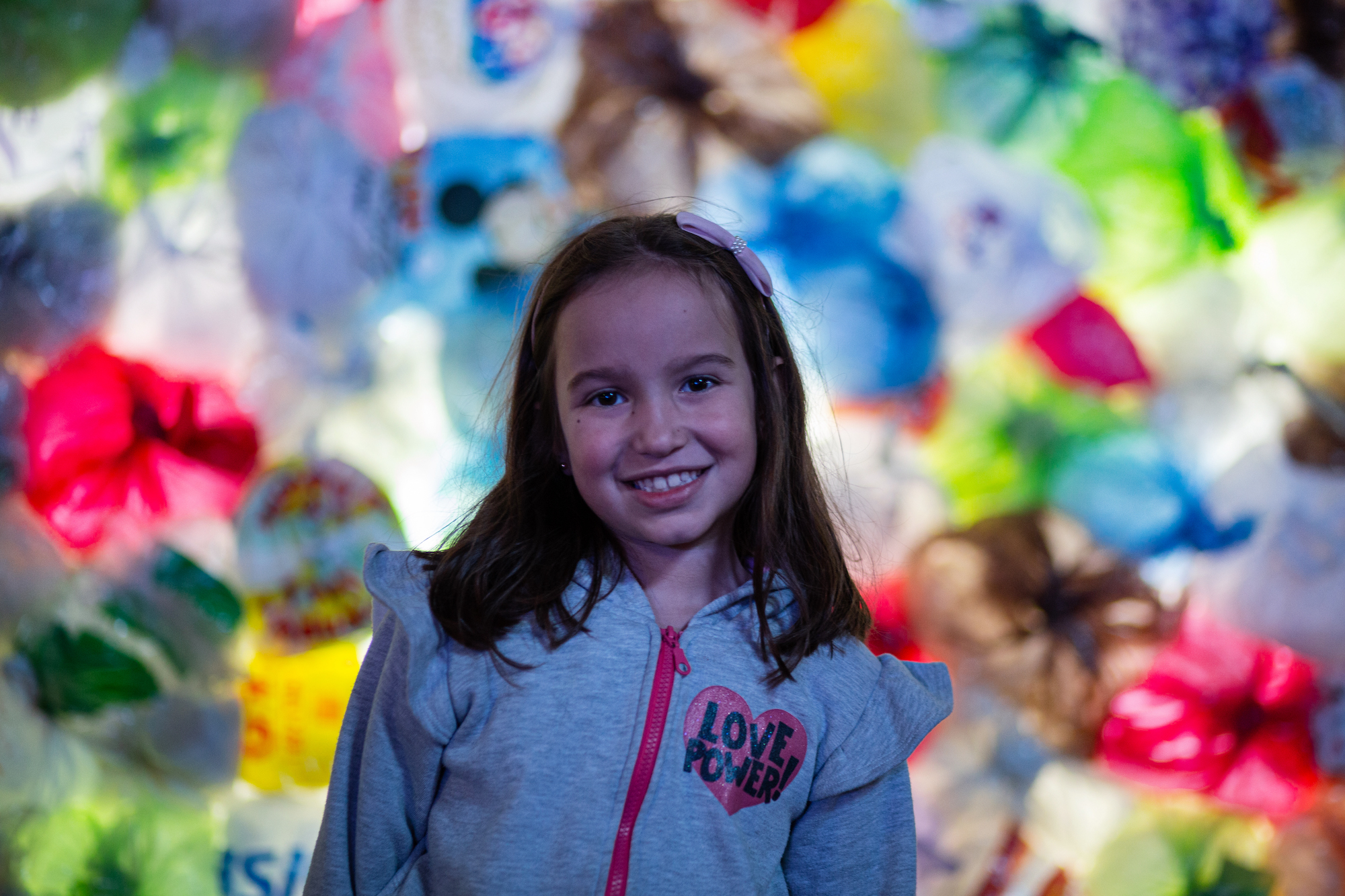
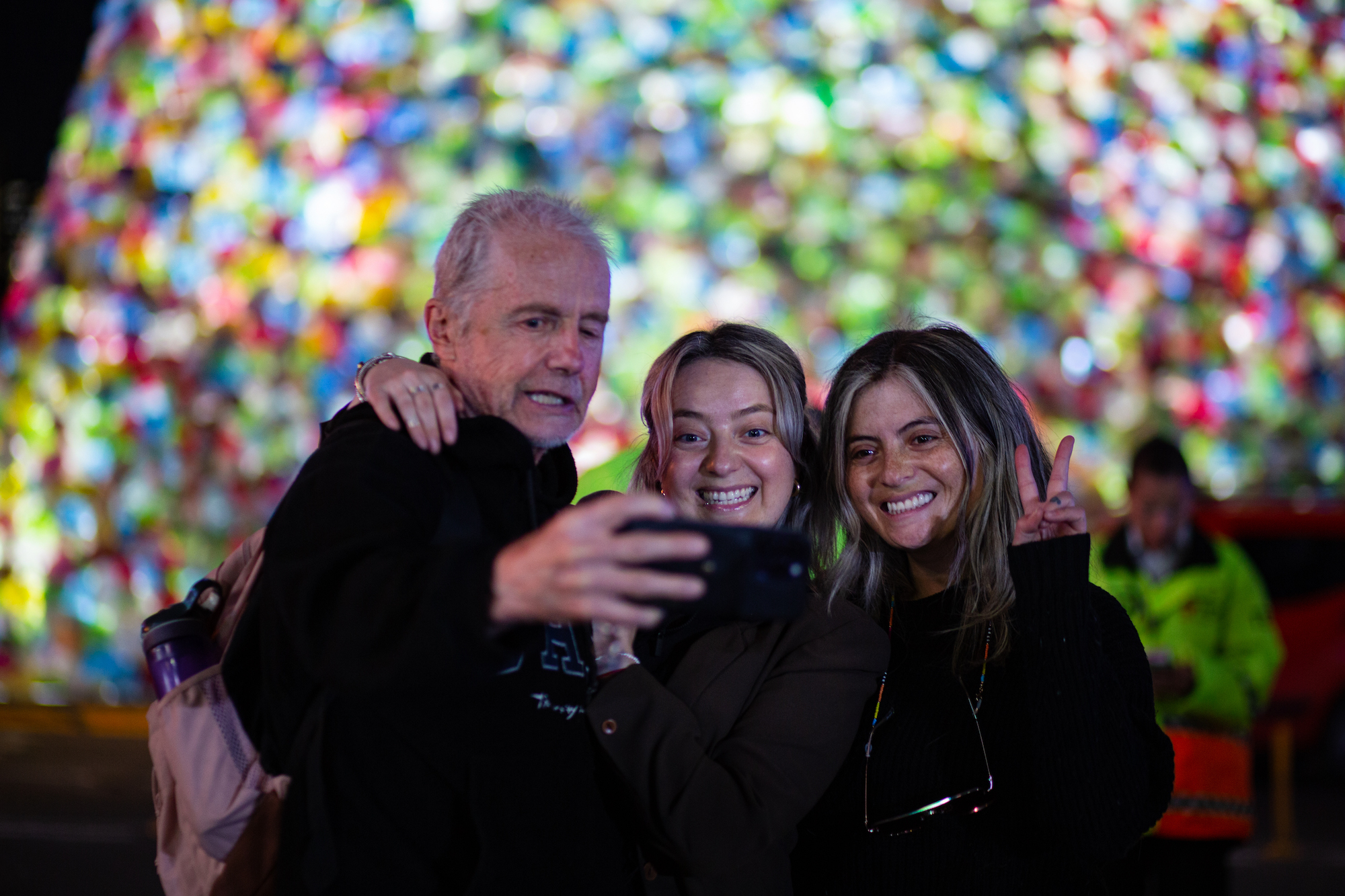
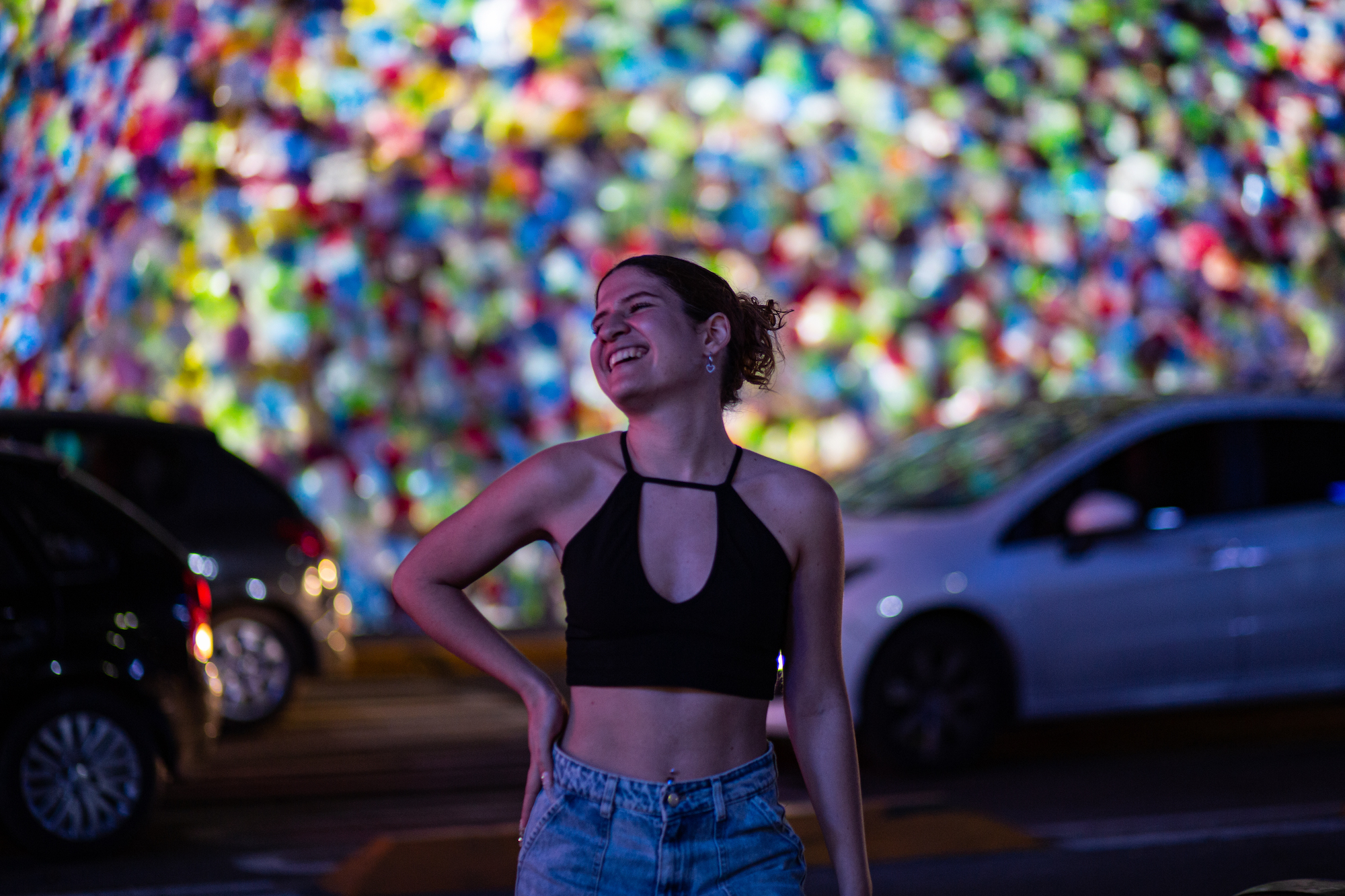
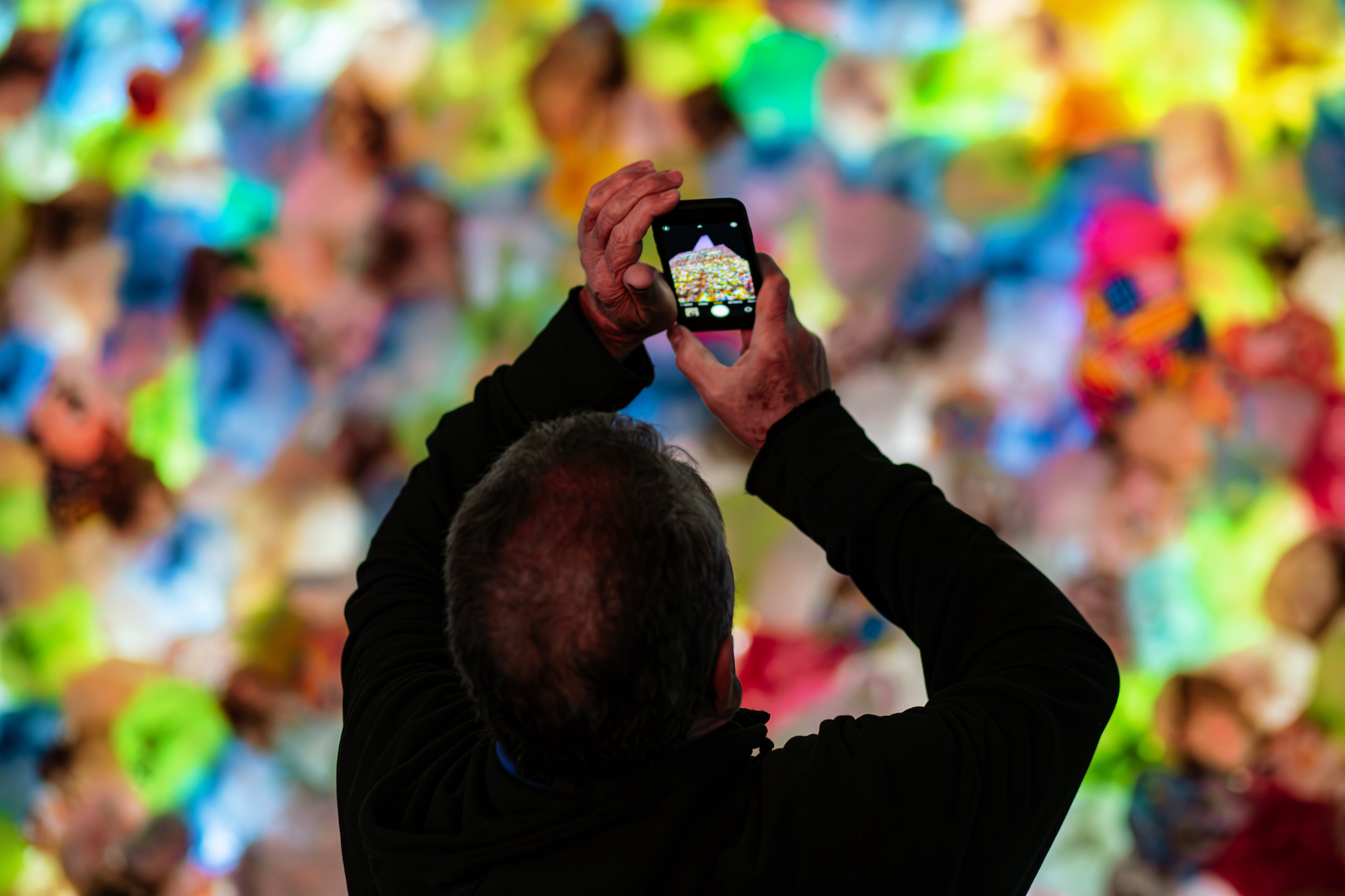
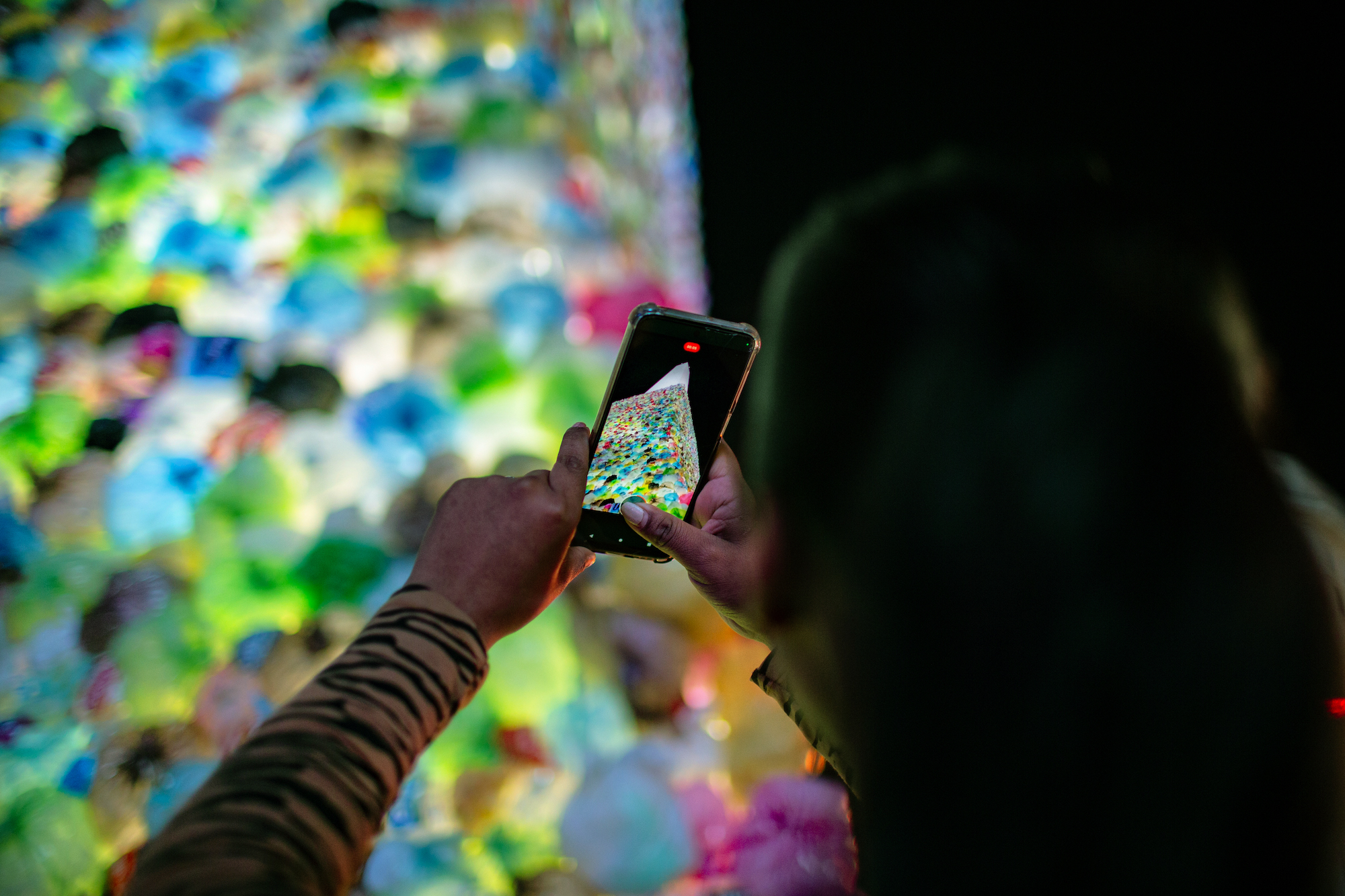
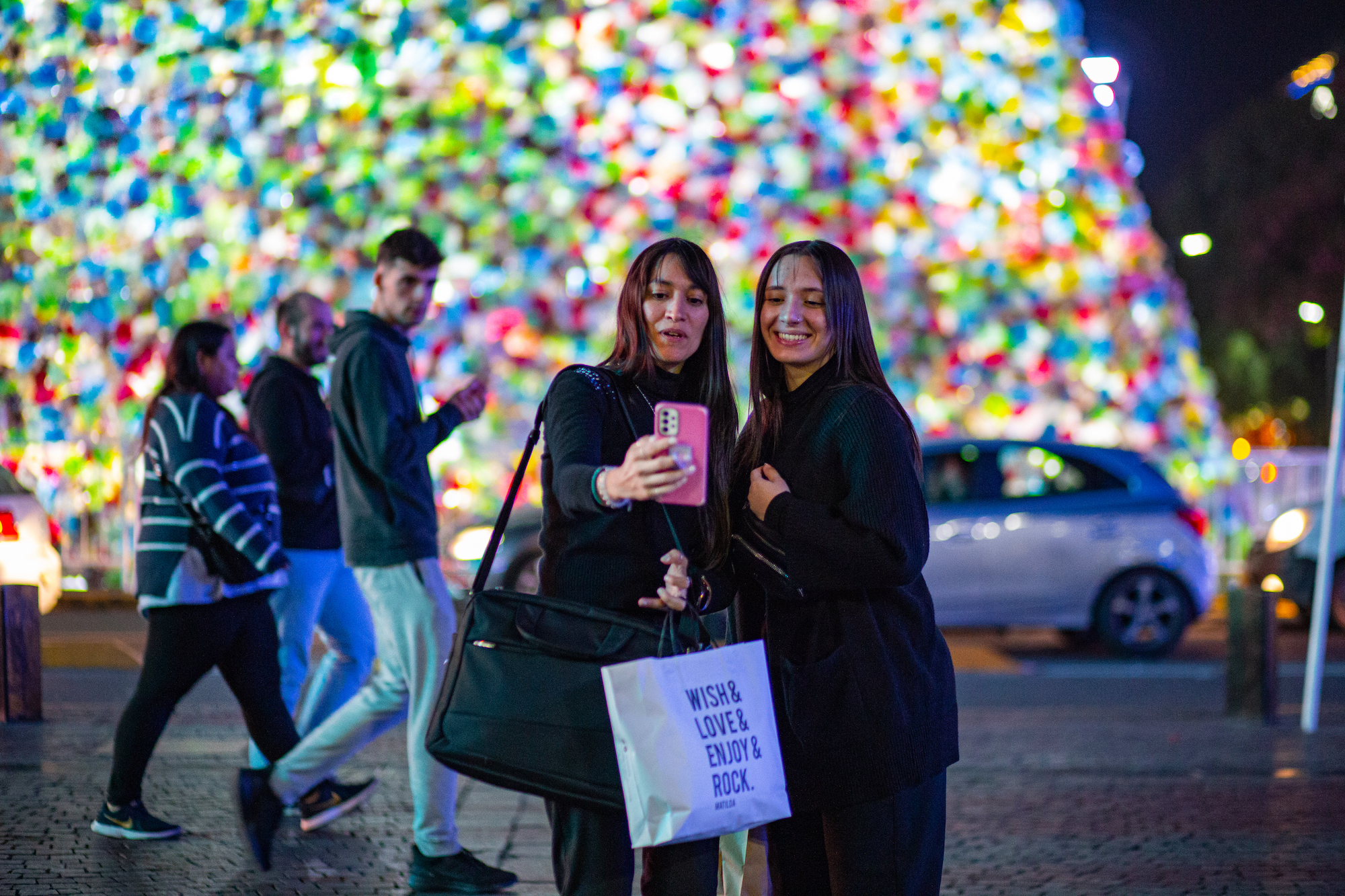
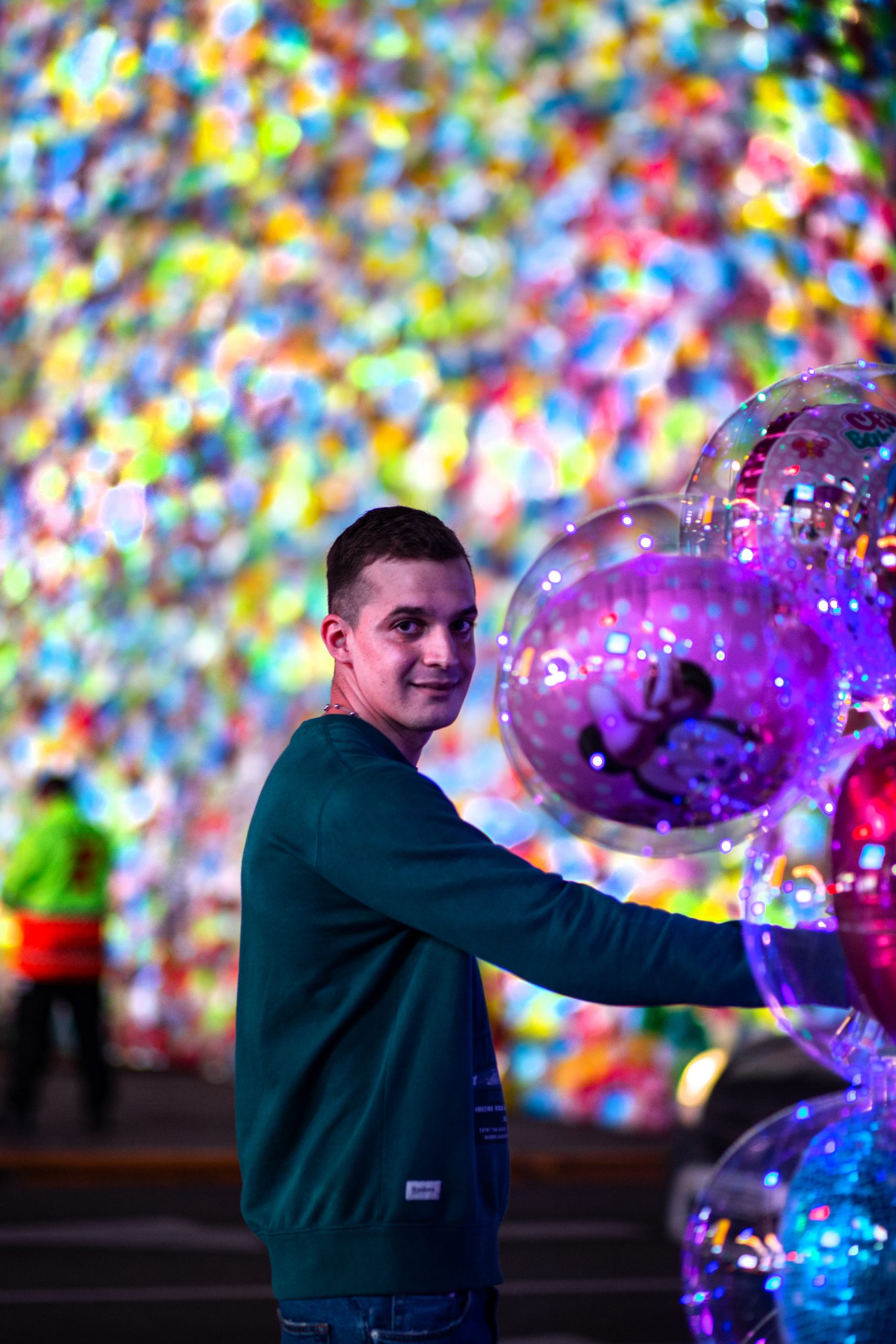
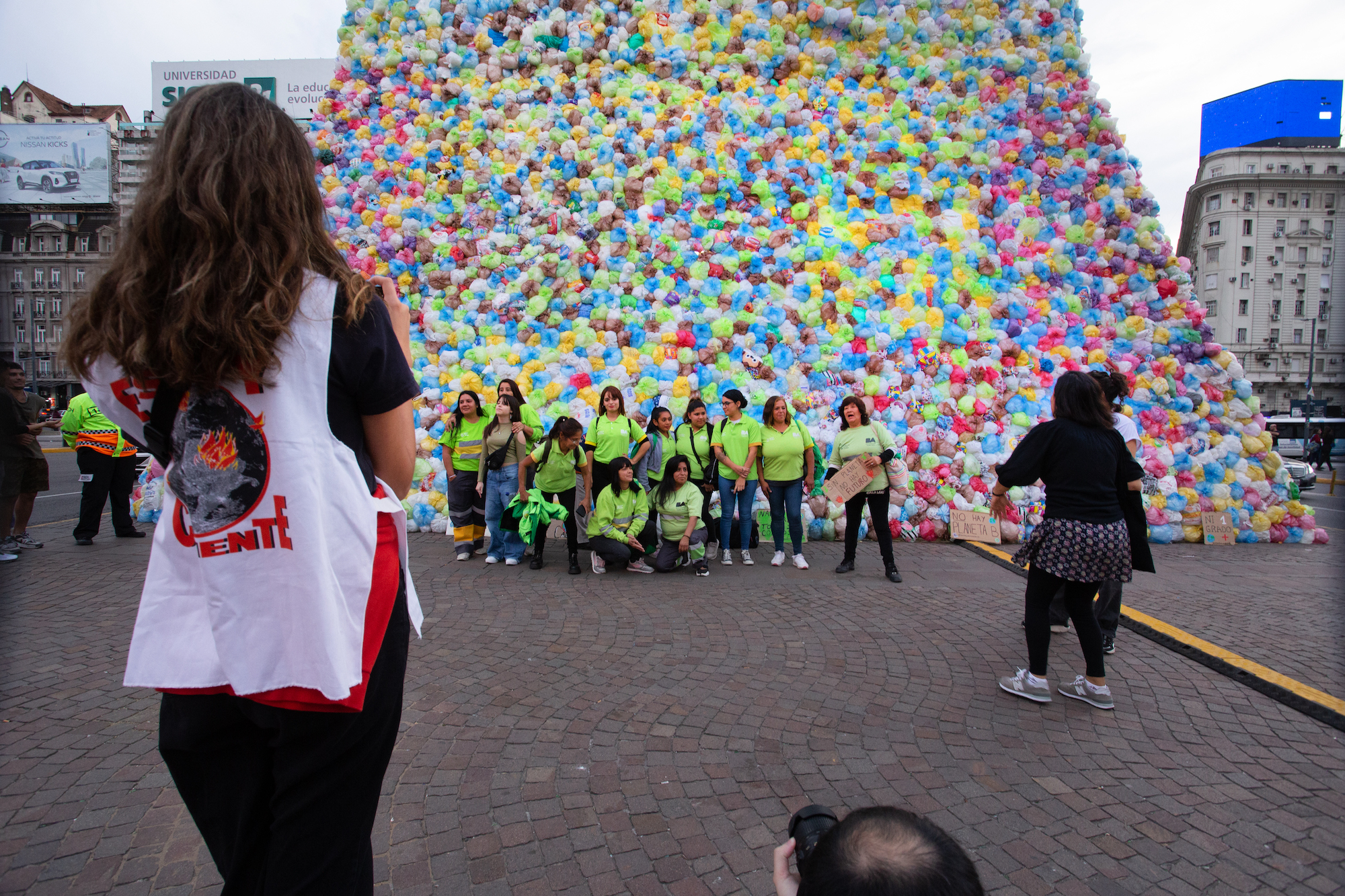
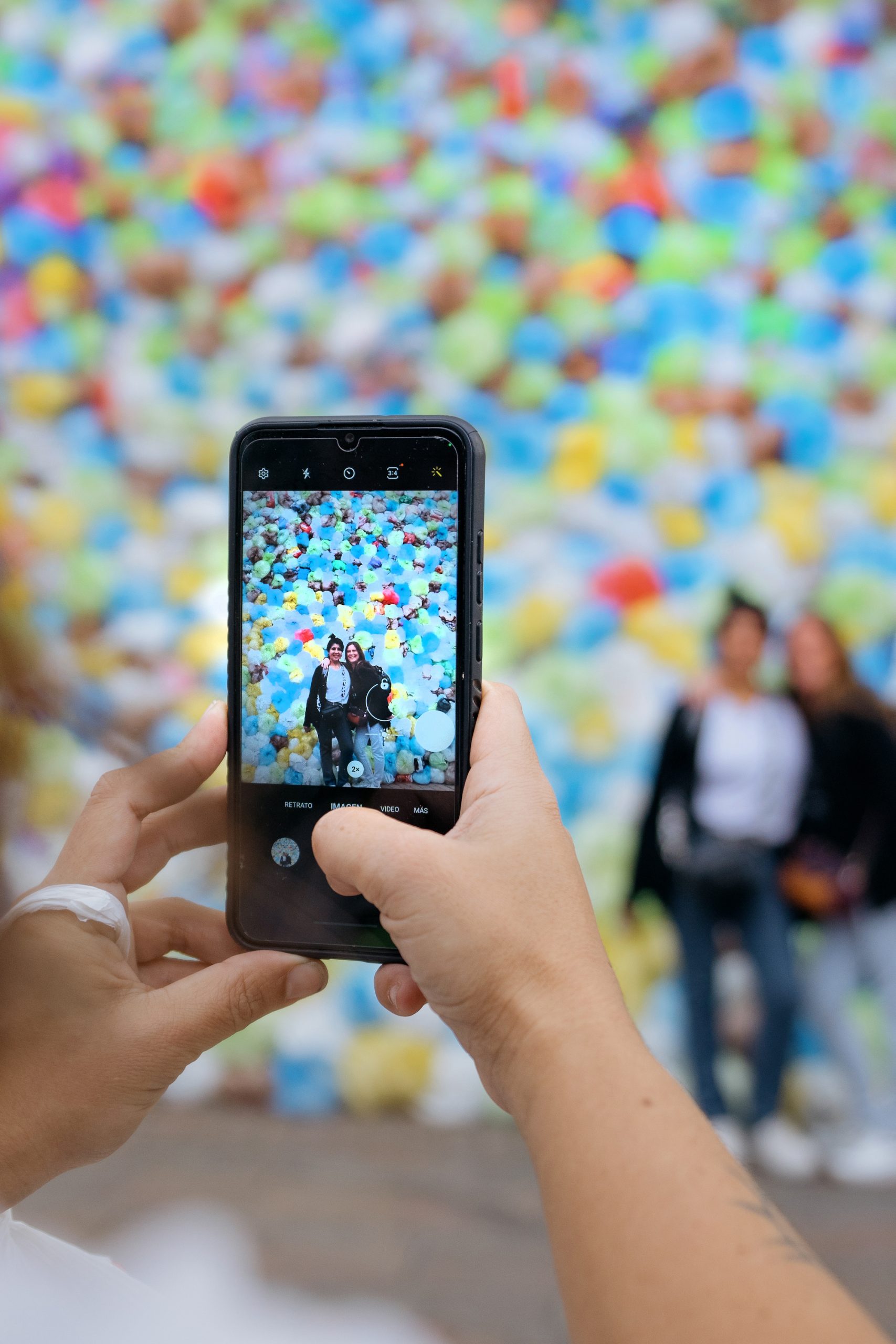
This piece remained installed for a week. We hope that the visitors – who had a chance to photograph themselves against an extraordinary background – had the time to think about what we wanted to expose by gathering before their eyes and their cellphones such a huge quantity of toxic material.
After the piece was disassembled, all the material was returned to the CSOs that had previously lent it to us. The panels were also recovered to be used for other purposes. The scaffolds and beams that we rented will continue to be used in other productions.
We want to thank the awesome team that helped us put all this together:the local government of the city of Buenos Aires for accepting our proposal and Abrazo Brand Experience for hiring us, producing the piece and managing the space and the materials. Many thanks to Circo Reciclado for their collaboration with the local CSOs, for getting the material and assembling all the panels, all this thanks to the work of a magnificent team made up of friendly organizations that are dedicated to recycling.
Special thanks to the 6 local recycling organizations that selected the materials and eventually helped in the process of filling the bags: Gardel Recicla (Haedo), La muchachita de los Toldos (Ituzaingo), 5 de Diciembre (Gral. Rodriguez), Nuestro Ambiente Limpio (Gral. Rodriguez), El brote (Lujan), El Ceibo (CABA) and Baires Cero (CABA). Many thanks as well to our friends from Abuela Naturaleza.
Our deepest appreciation to the lighting technicians who never gave up until the light seeped through the plastic. To the people who set up the scaffolds who, secured by harnesses, attached the panels while working at a considerable height as though they were walking on the ground. To the security guards who watched the piece and also assisted the visitors in the best of moods. And, of course, to the visitors who shared this experience on their social networks and generated thousands of visits and reflections.
Let’s not forget the great audiovisual team from Abrazo Brand Experience who provided us with wonderful photos and videos of our piece from all the possible angles, even from above. And, of course, many thanks to our dear Melisa Hernández for taking care of the team at all times and recording in images the life at the Obelisco and the public’s interaction with the piece.
Marcelo, Facu, Diego, José, Diego, Caro, Río… we miss you already!
Time of installation: and installation: 20 days. Damages: none. Exhibition time: 7 day.
Esta pieza ya la hemos instalado en edificios de muchas ciudades emblemáticas, pero en este caso el reto era extraordinario, ya que debíamos hacerlo sobre «El Obelisco», el monumento más emblemático de Argentina, escenario de los acontecimientos mas relevantes de Buenos Aires, epicentro de su via social y comercial, así como punto neurálgico del tráfico y escenario de la mayoría de las protestas y manifestaciones así como de los festejos mas multitudinarios.
El mensaje que queríamos trasmitir era el mismo de siempre: visualizar gráficamente, el exceso de plástico que nos rodea, un tema recurrente en nuestro trabajo y en la vida, ya que prácticamente todo lo que consumimos, está hecho de este material o va envuelto en él o nos lo estamos comiendo en minúsculas partículas que se encuentran en los alimentos que consumimos, o en el aire que respiramos.
Para que la instalación estuviera a la altura de tan esbelto escenario, fuera bien visible desde todos los accesos a la plaza y se impusiera al exceso de publicidad, al eclecticismo de los edificios, al caos circulatorio y a la contaminación lumínica, debíamos elevarla a mas de 25 metros, todo un desafío constructivo. Lo conseguimos mediante un complicado sistema de andamios y perfiles, fabricados con hierro sacado de vallas publicitarias de la ciudad ahora en desuso. En estos paneles pegamos nuestros plásticos y los sujetamos a la estructura hasta llenar todo el perímetro del obelisco, haciendo desaparecer de la vista la valla de protección del monumento.
La dificultad máxima era conseguir el plástico reciclado que necesitábamos para forrar los casi 900 metros cuadrados de paneles y hacerlo en menos de 1 mes. En cualquier otro contexto nos hubiera parecido imposible de afrontar, pero sabíamos que Buenos Aires tiene un ejemplar sistema de reciclaje, gestionado en muchos casos por cooperativas ciudadanas y confiábamos ciegamente ya en el en el 2018 nos ayudaron a conseguir las botellas recicladas del Laberinto de residuos plásticosque montamos en el Teatro Colón.
Necesitamos mas de 30.000 bolsas recogidas del sistema de reciclaje, y para rellenarlas, toneladas de plástico transparente del que se usa en el empaquetado y transporte de mercancías. El Gobierno de la Ciudad hizo un llamamiento a los ciudadanos para que llevaran las bolsas que tuvieran en casa a los puntos limpios y de ahí recogimos una gran cantidad. Además, las cooperativas nos hicieron una buena selección de las bolsas que les iba llegando en buenas condiciones y de ahí pudimos salvar también una gran cantidad. El resto las creamos con plásticos recuperados de la basura, que la Cooperativa Baires Cero procesó y convirtió en rollos de bolsas de colores que también usamos. El plástico transparente de relleno no fue ningún problema ya que se acumula por toneladas en los puntos limpios.
Para la iluminación, empleamos potentes focos leds de bajo consumo con los que retroiluminamos los paneles, consiguiendo que la luz traspasara las capas de plástico y convirtiera el material de deshecho en una grandiosa vidriera en la que leer que aun hay grandísima cantidades de plástico de un solo uso en circulación a pesar de las prohibiciones.
La pieza estuvo instalada una semana y esperamos que los visitantes además de fotografiarse con un fondo tan extraordinario tuvieran tiempo de pensar en lo que tratamos de evidenciar al acumular delante de sus ojos y sus dispositivos móviles tantísima cantidad de material tóxico.
Al desmontar, todo el material fue devuelto a las cooperativas que previamente nos lo habían cedido, también se recuperaron los paneles para darles otros usos. Por supuesto los andamios y los focos alquilados seguirán usándose en otras producciones.
Queremos dar gracias al tremendo equipo que nos ayudo a poner esto en pie: al Gobierno de la Ciudad de Buenos Aires por aceptar nuestra propuesta y a Abrazo Brand Experience por contratarnos, producir la pieza y coordinar la gestión del espacio y los materiales. A Circo Reciclado por aliarse con las cooperativas de la ciudad, conseguir el material y montar todos los paneles, de la mano de un grandísimo equipo compuesto por asociaciones amigas dedicadas al reciclaje.
Gracias especiales a las 6 cooperativas de reciclaje de la ciudad que empezaron seleccionándonos el materiales y acabaron ayudando en el proceso de llenado de las bolsas. Gardel Recicla (Haedo), La muchachita de los Toldos (Ituzaingo), 5 de Diciembre (Gral. Rodriguez), Nuestro Ambiente Limpio (Gral. Rodriguez), El brote (Lujan), El Ceibo (CABA) y Baires Cero (CABA). También a los amigos de Abuela Naturaleza.
Nuestro agradecimiento también para los iluminadores, que no desistieron hasta que la luz brotó a raudales de dentro del plástico. A los montadores de los andamios que sujetos con arneses fijaron los paneles moviéndose en altura como si estuvieran paseando por el suelo. A los guardias de seguridad que custodiaron la pieza y ya de paso atendieron a los visitantes con el mejor ánimo. Y por supuesto a los visitantes que compartieron en sus redes y generaron miles de visitas y reflexiones.
No podemos olvidar al gran equipo de audiovisuales de Abrazo Brand Experience que nos proporcionó maravillosas fotos y videos de la pieza desde todos los puntos de vista posibles incluido el cielo. Y por supuesto a la gran Melisa Hernández, por estar siempre pendiente del equipo y plasmar en imágenes la vida en el Obelisco y la interacción del público con la pieza.
Marcelo, Facu, Diego, José, Diego, Caro, Río… ya os echamos de menos.
Tiempo de montaje: 20 días. Daños ocasionados: 0. Permanencia de la intervención: 7 días.
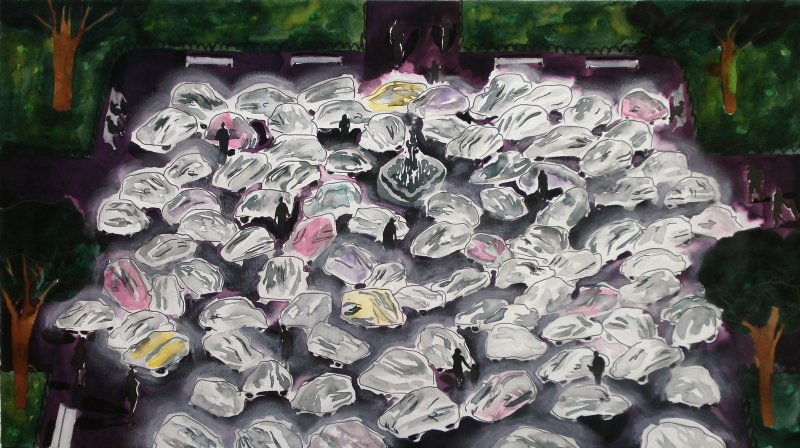
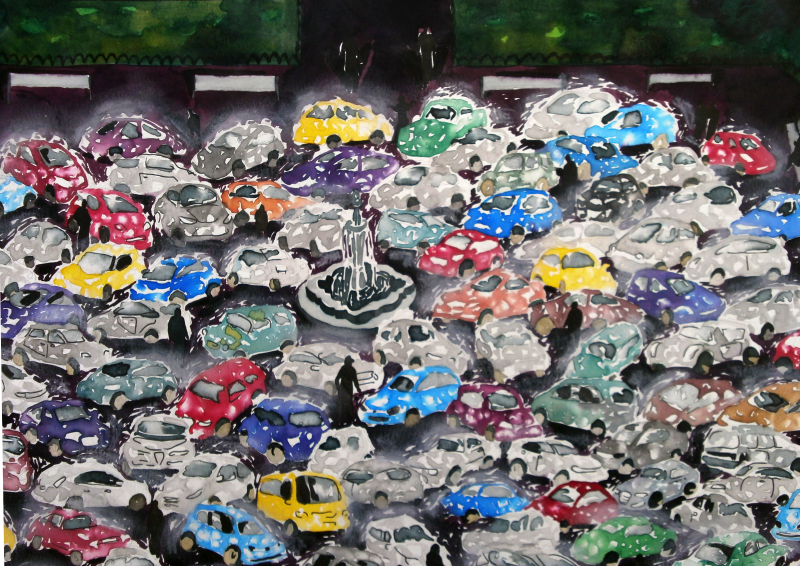
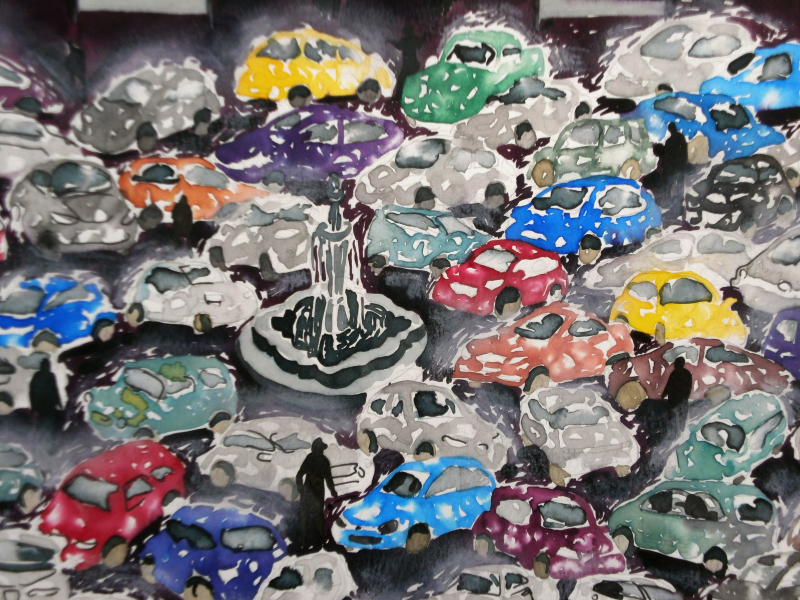
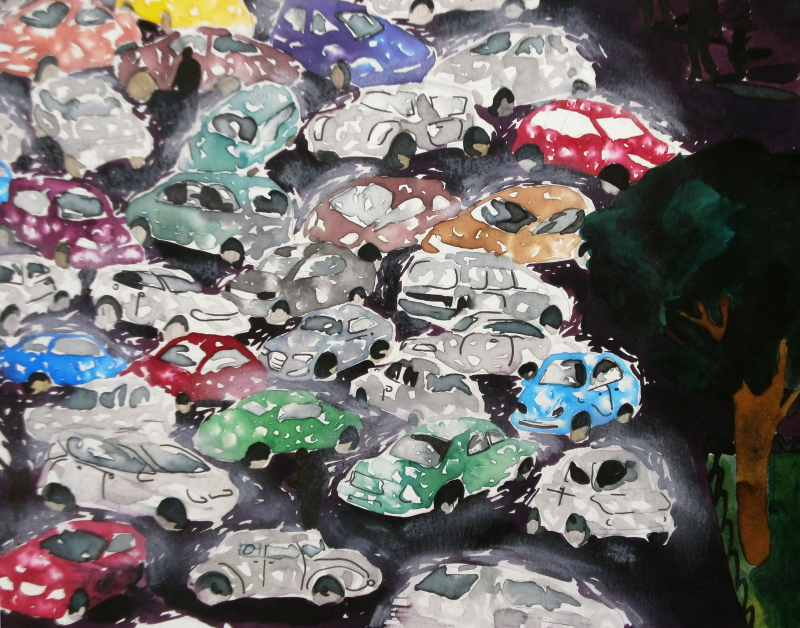
Nos gustaría tanto que desaparecieran los coches aparcados del centro de las ciudades que hemos pensado una solución alternativa que mejores su molesta presencia.
La acción tiene dos posibles ubicaciones, la primera sería meter en una plaza, normalmente cerrada al tráfico, gran cantidad de coches, todos los que cupieran, de manera que se formaran pequeños pasillos en los que la gente pudiera transitar y esconderse, para jugar al escondite en un laberinto casi opresivo.
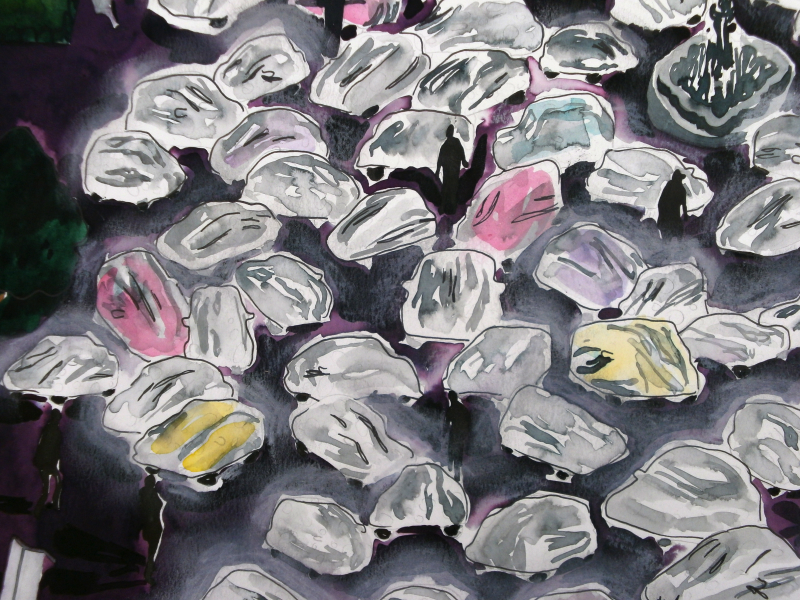
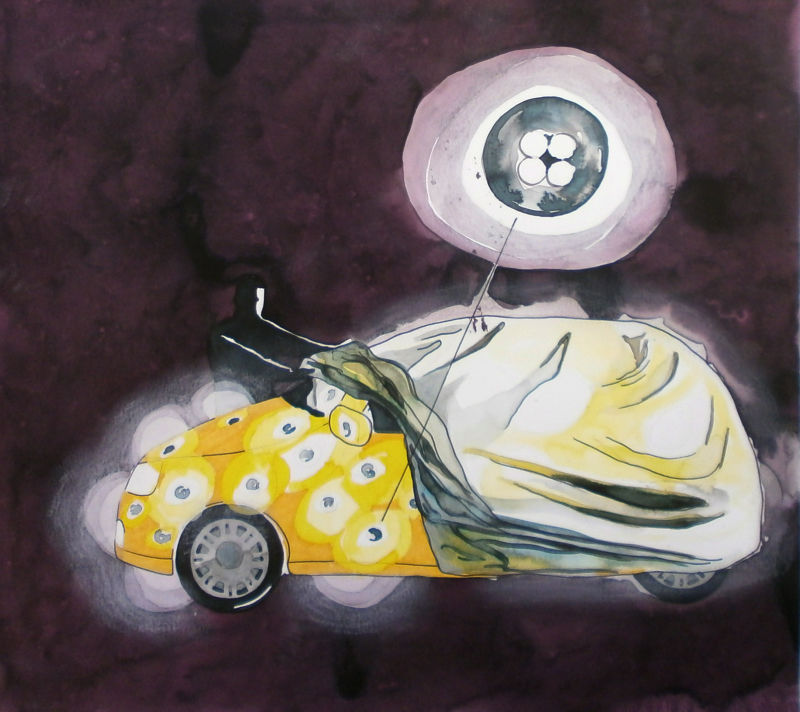
Para restar presencia a los vehículos y que «casi» desaparezcan de la escena, los llenaremos de luces autónomas y los cubriremos con fundas desechables de las que se usan en los talleres de reparación, de color blanco y tejido translucido, de manera que la luz de los focos con los que hemos cubierto la carrocería, se filtren entre el tejido creando siluetas de luz fantasmal.
Así el escenario se llenará de misteriosas presencias que durante una noche nos habrían desear que los coches se desintegraran en el espacio público de la ciudad.
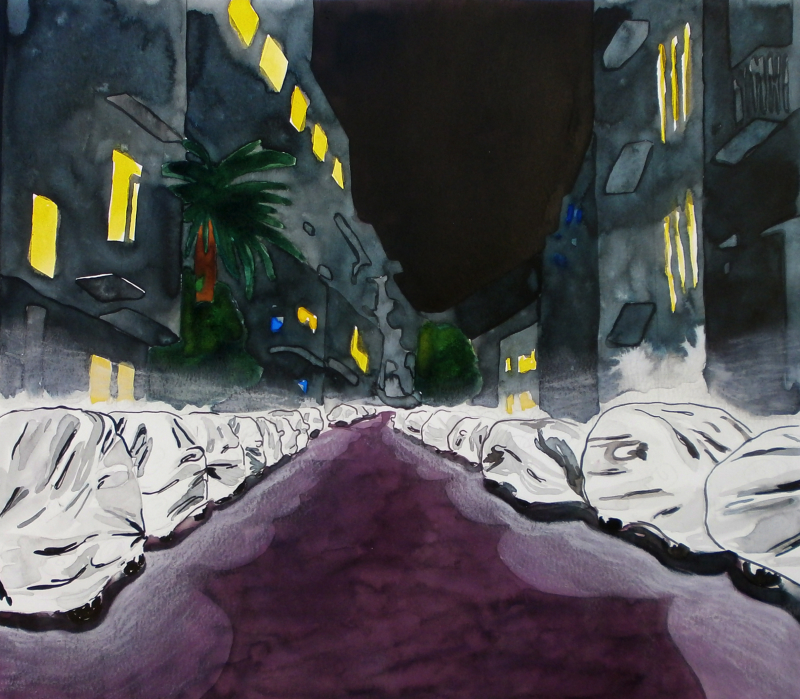
La segunda posible ubicación podría ser una calle principal y larga, llena de coches aparcados en ambas aceras. Les daríamos el mismo tratamiento de luz con las fundas blancas y los focos.
Por supuesto, los coches deberían ser cedidos por una noche por voluntarios, después se les devolvería iluminados y con funda de regalo.
Las ilustraciones son, por supuesto, de Marta Menacho.
———————————————————
We would like very much that parked cars disappear from the center of cities, so we designed an alternative solution that improves their troublesome presence.
The action has two possible locations, the first would be to put a great number of cars, as many as would fit, into a square, normally closed to traffic, in such a way as to form small passageways where people could walk and hide, to play hide and seek in a somewhat oppressive maze.
To take away from presence of the vehicles so that they «almost» disappear from the scene, we would fill them with autonomous lights of and cover them with disposable car covers of the type used in the repair shops, of white, translucent fabric, in such a way that the light which we have covered the body with, filters through the cloth creating ghostly silhouettes of light
Thus the space will be filled with mysterious presences that during one night would make us wish that cars would disappear from the public spaces in the city.
The second possible location could be on a long main street, filled with parked cars along both sidewalks. Would give them the same treatment, with the white covers and the lights..
Of course, the cars would have to be given to us voluntarily for one night, later they would be returned, illuminated and with the cover as a gift.