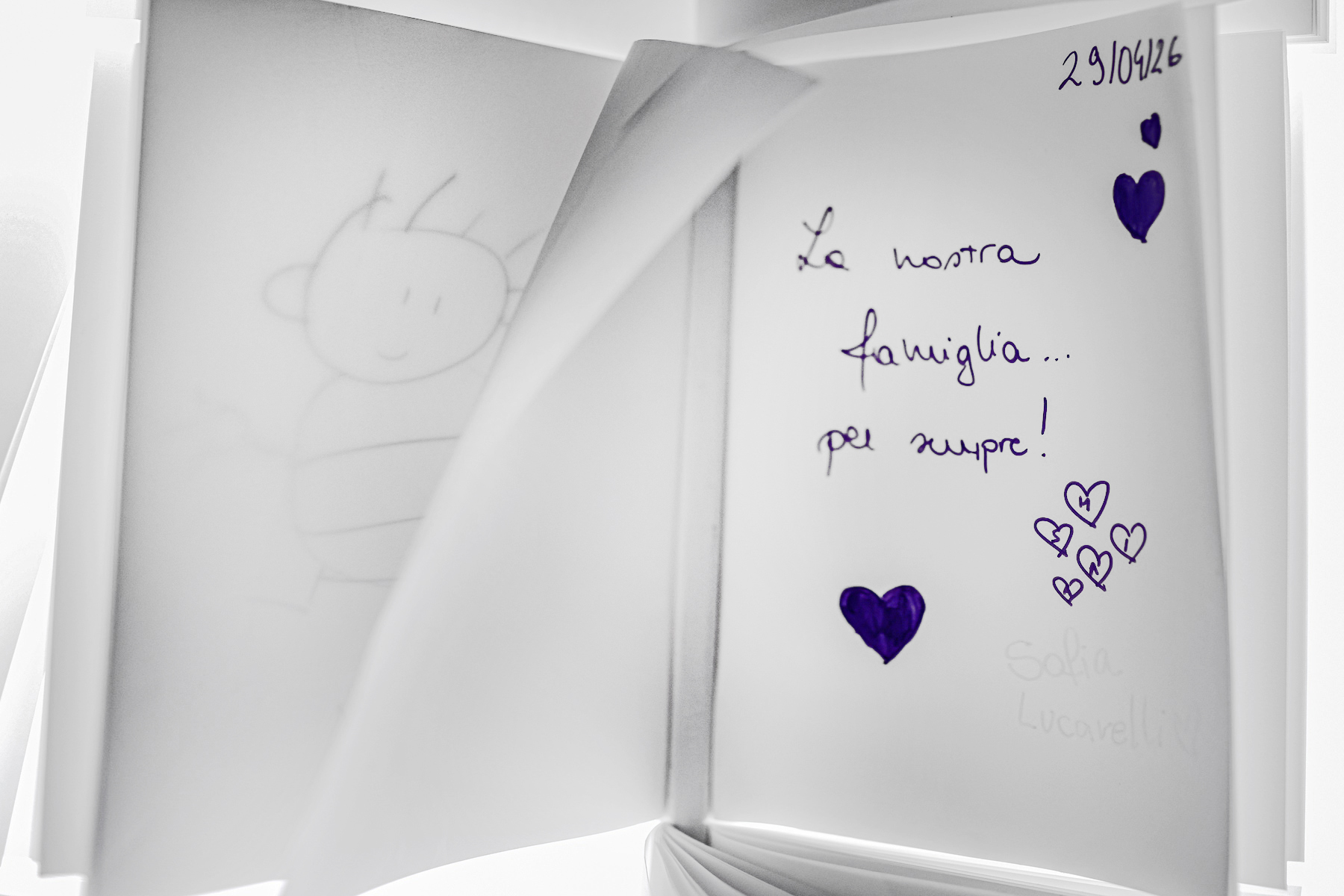
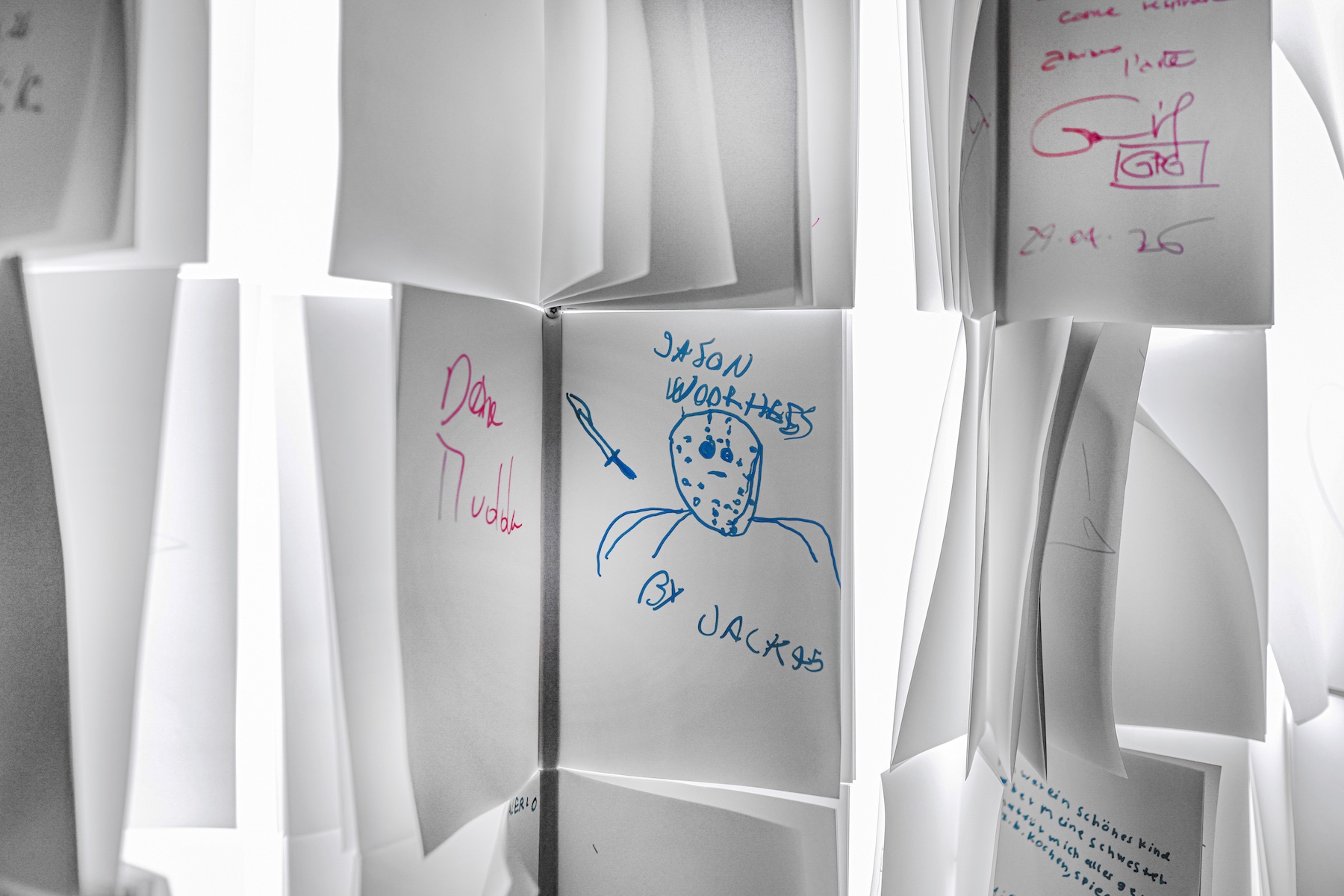
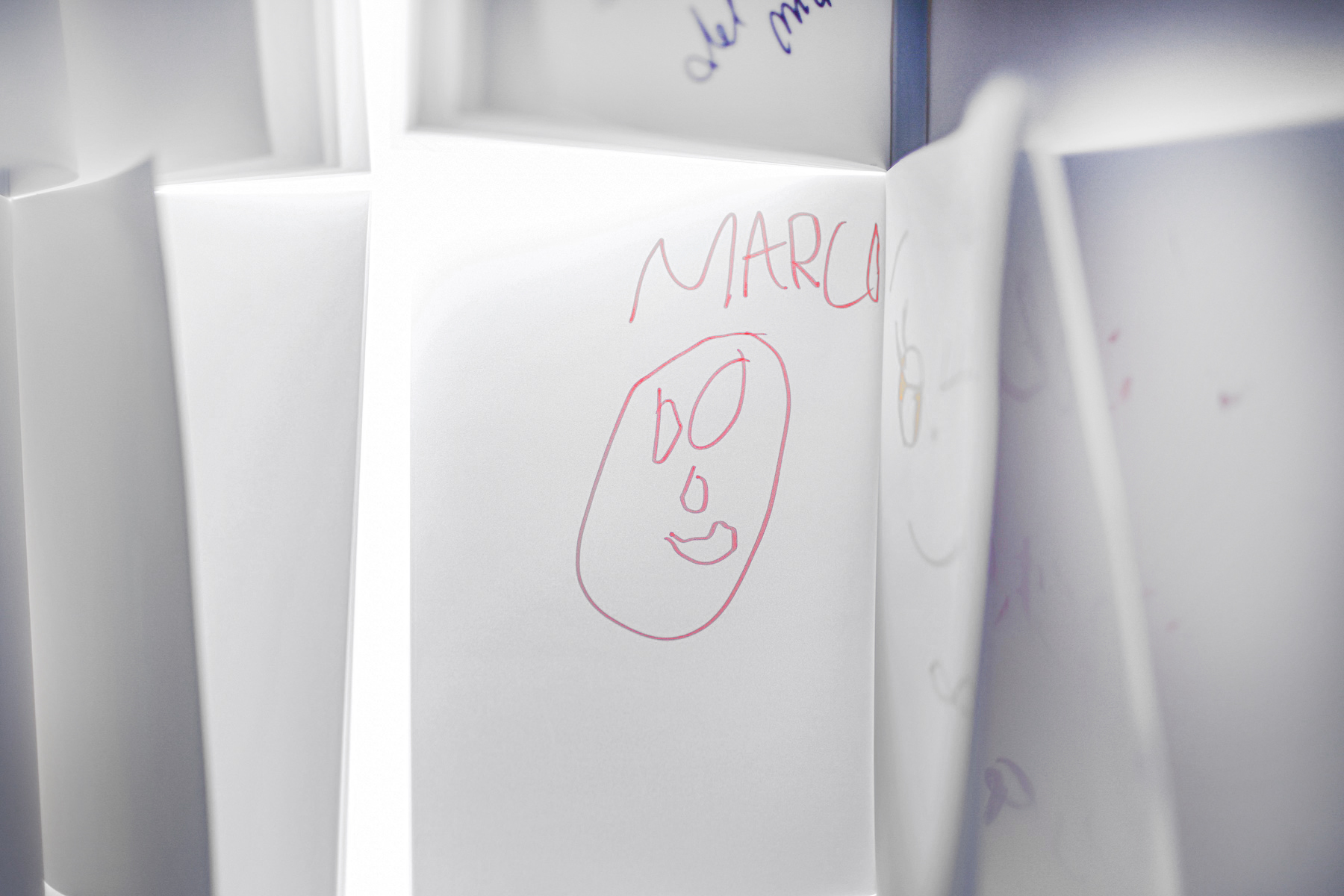
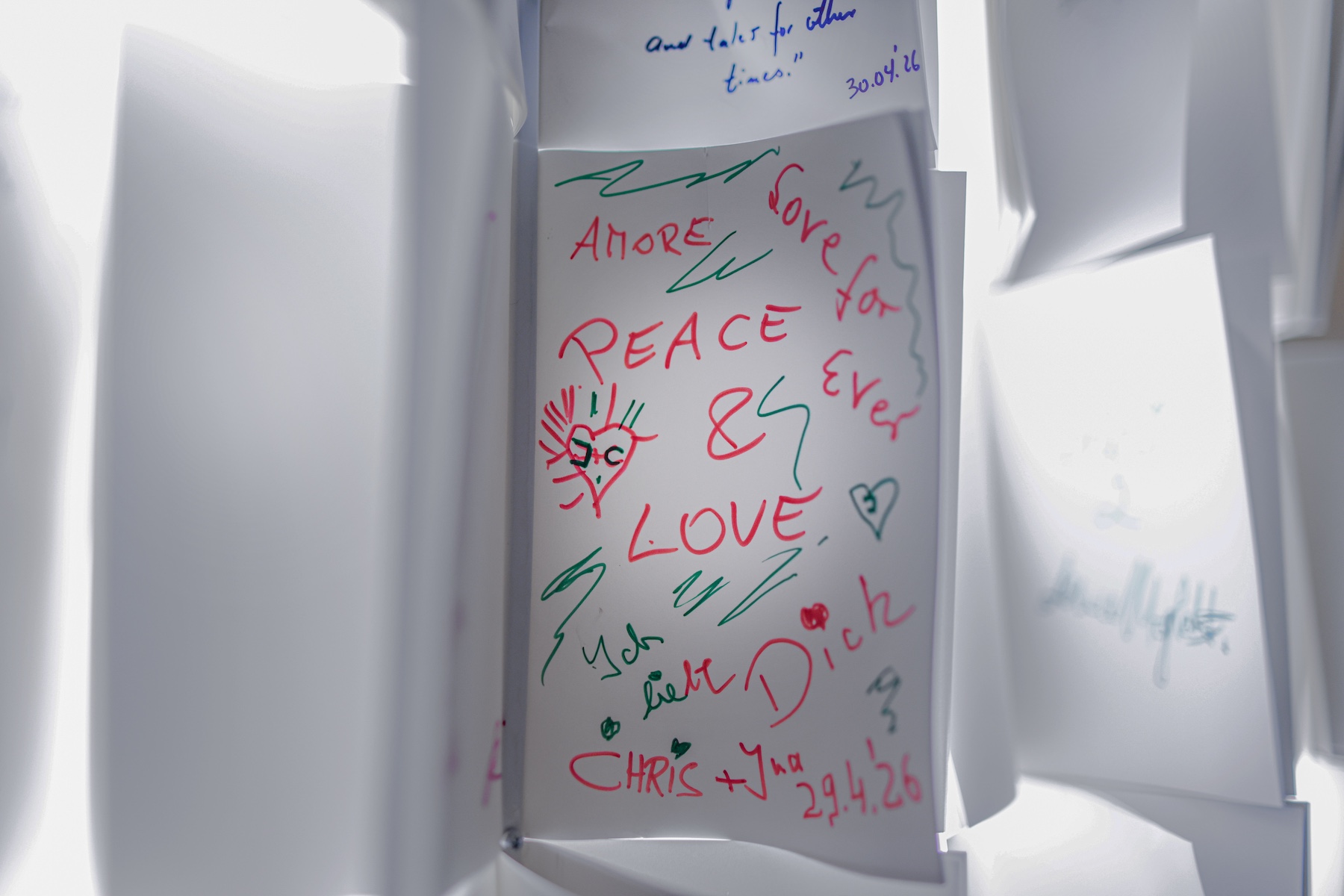
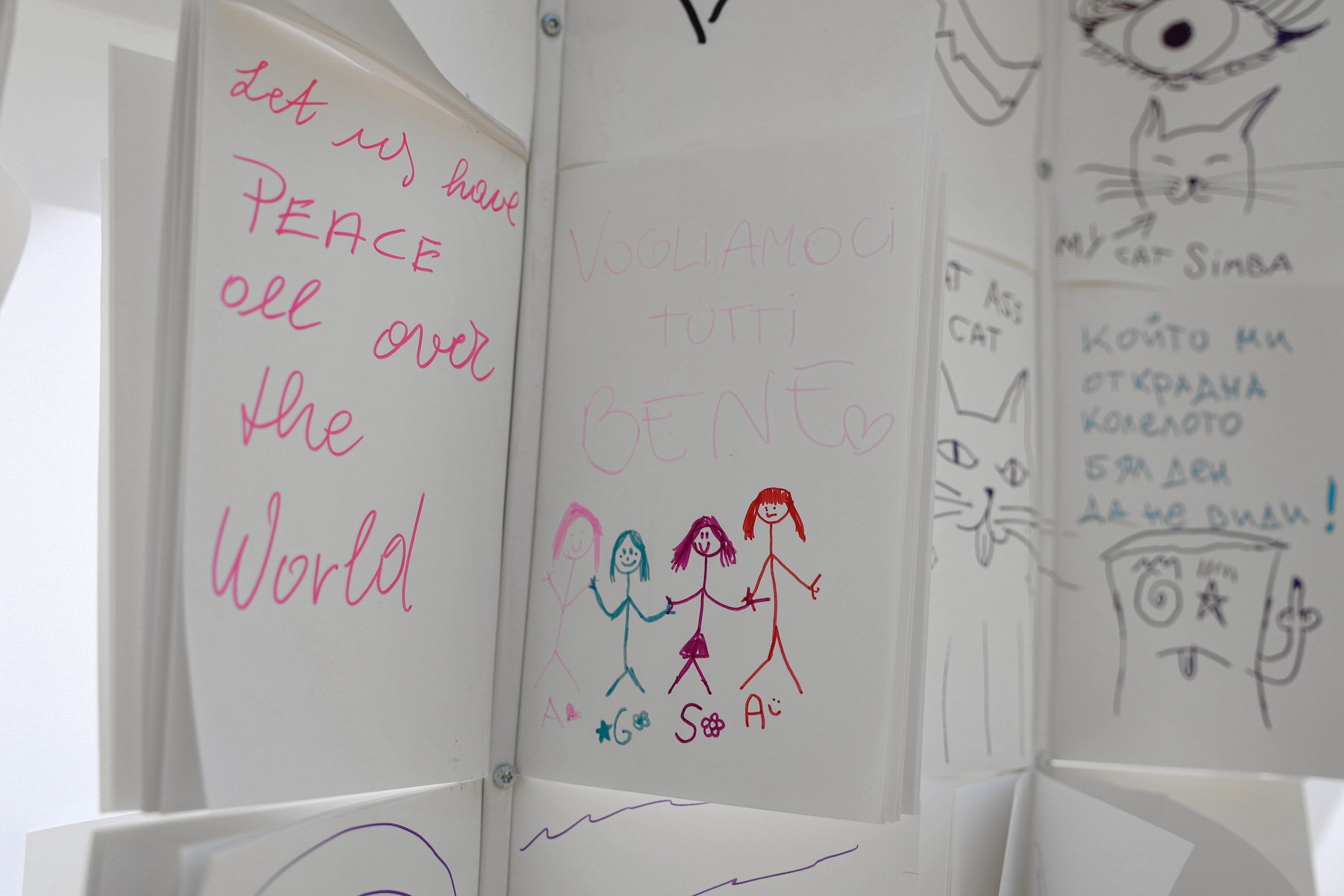
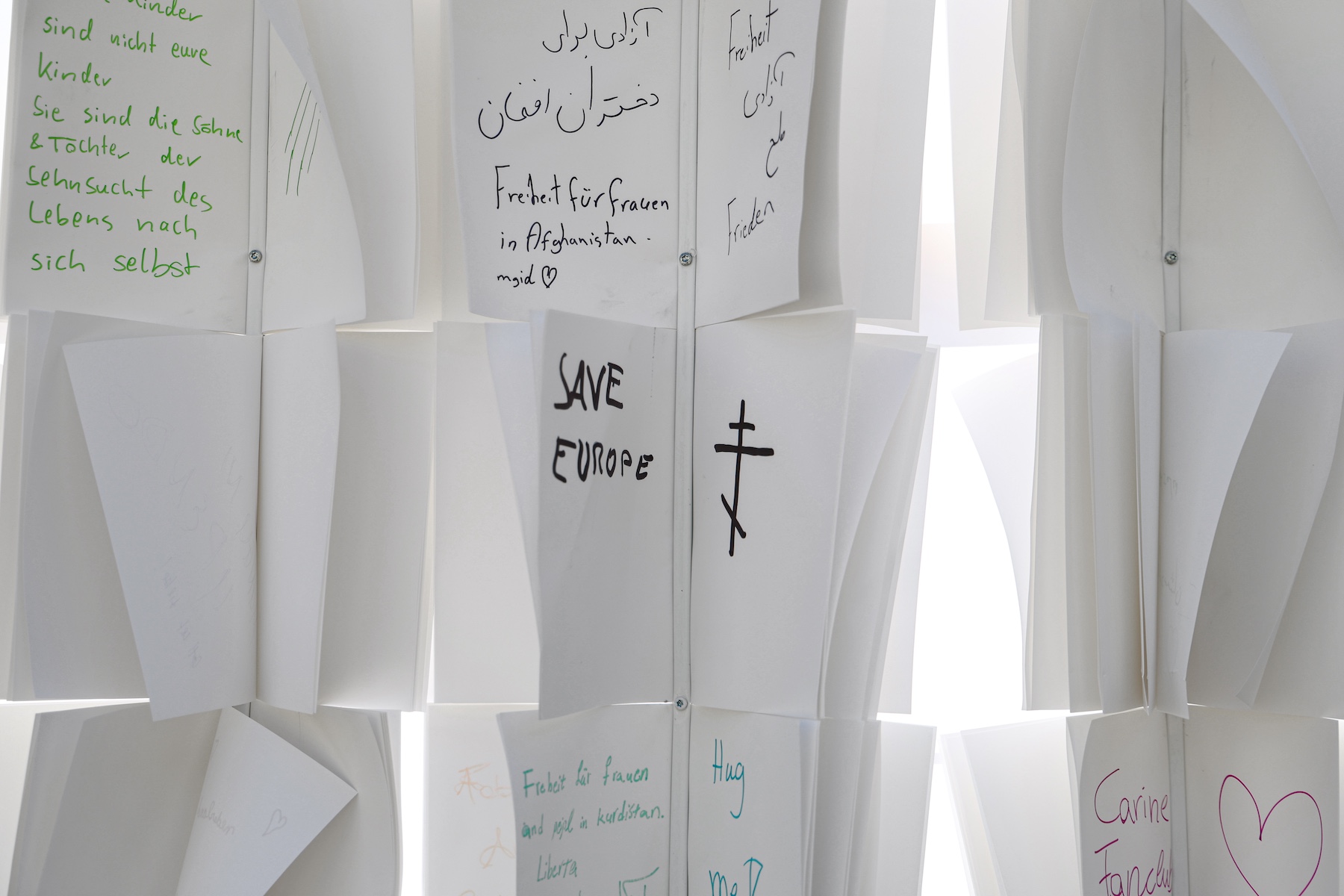
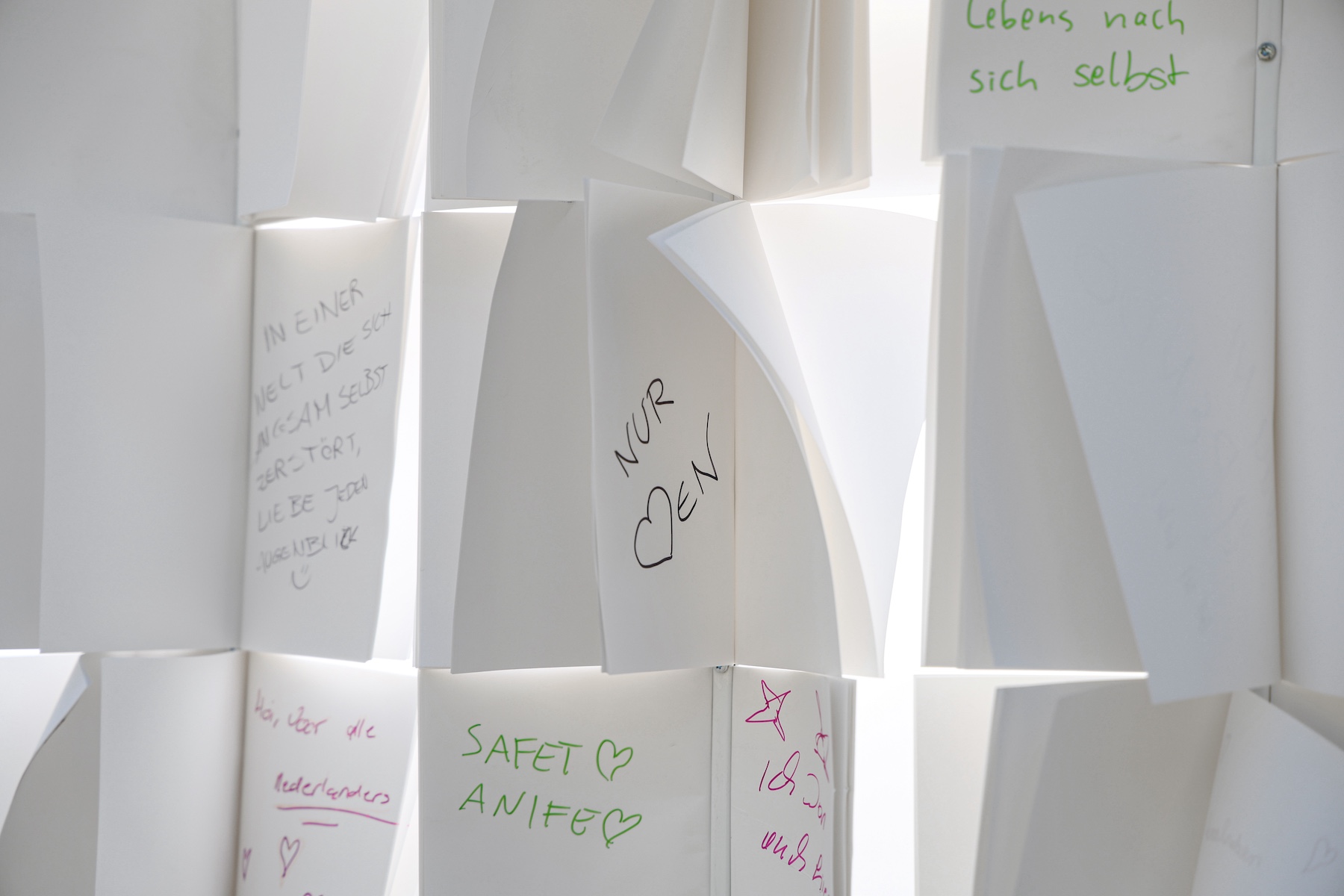
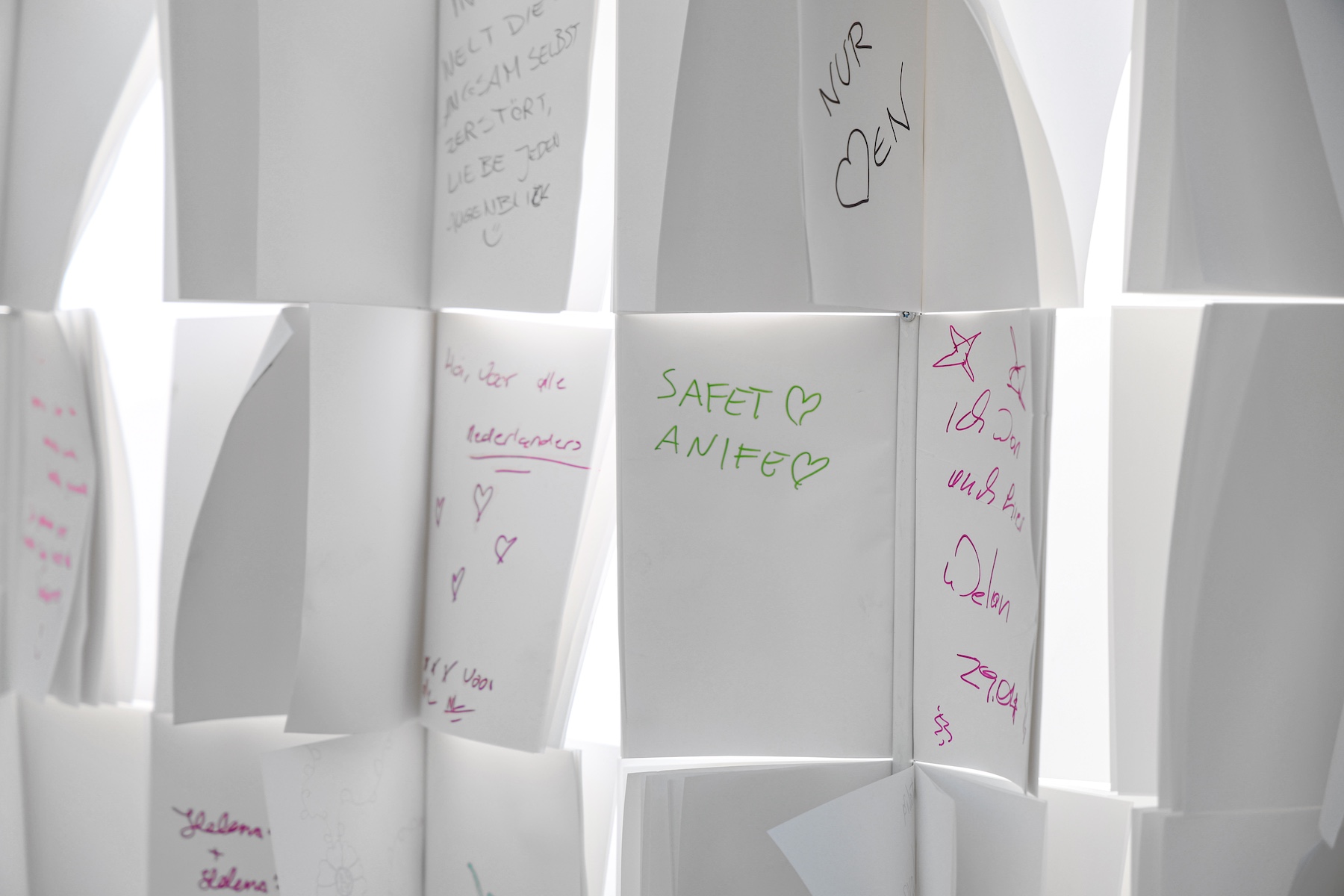
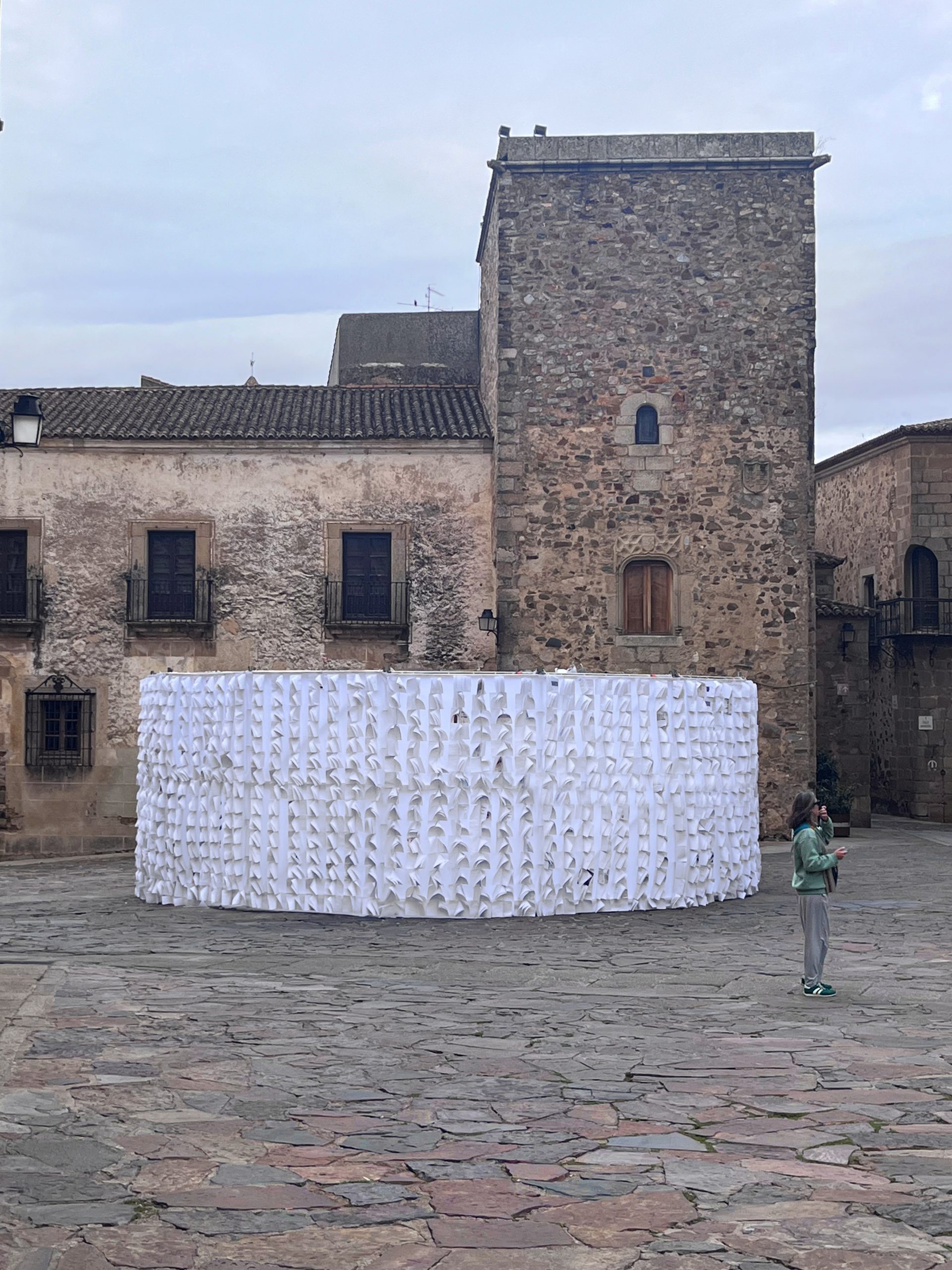
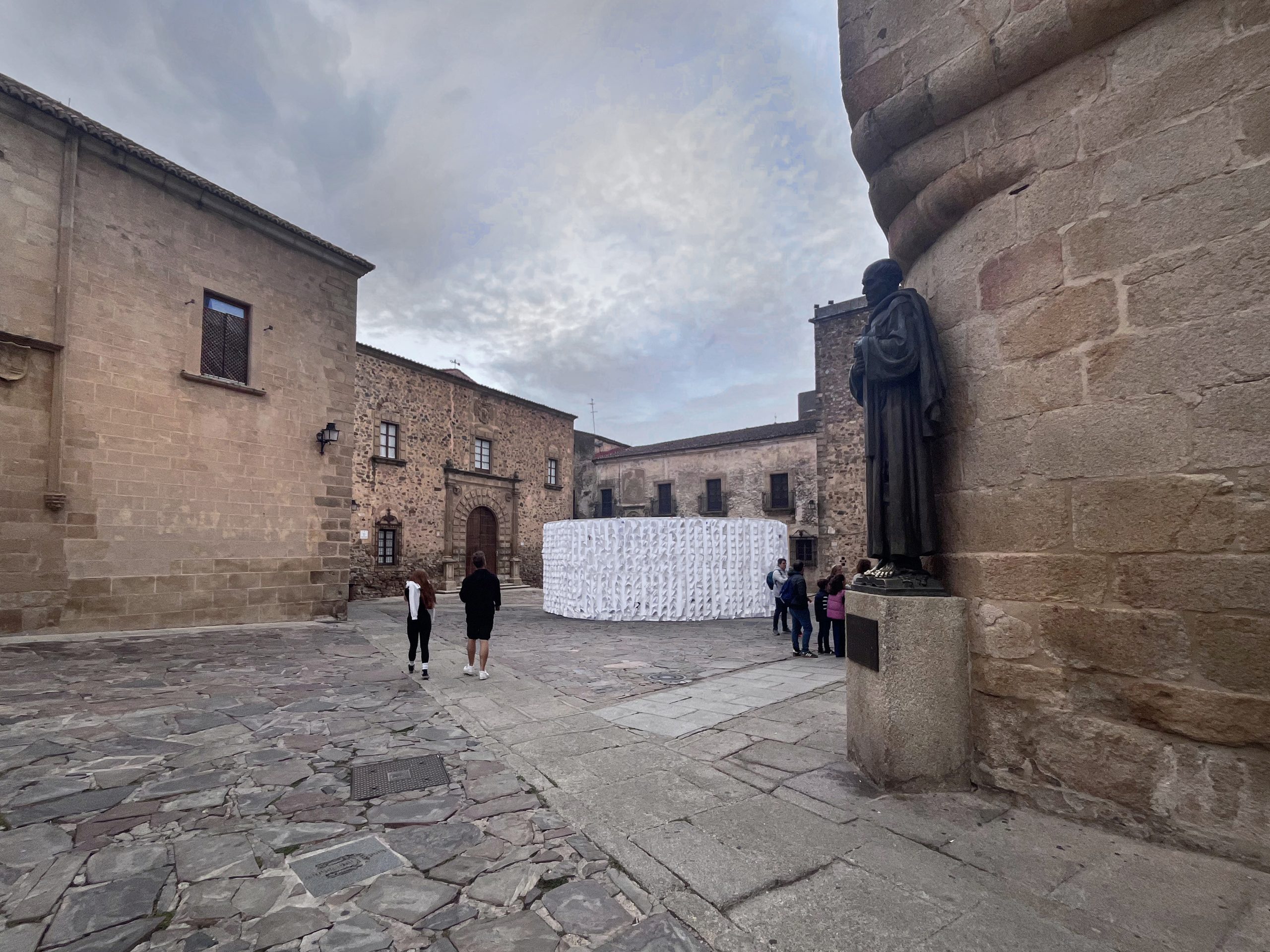
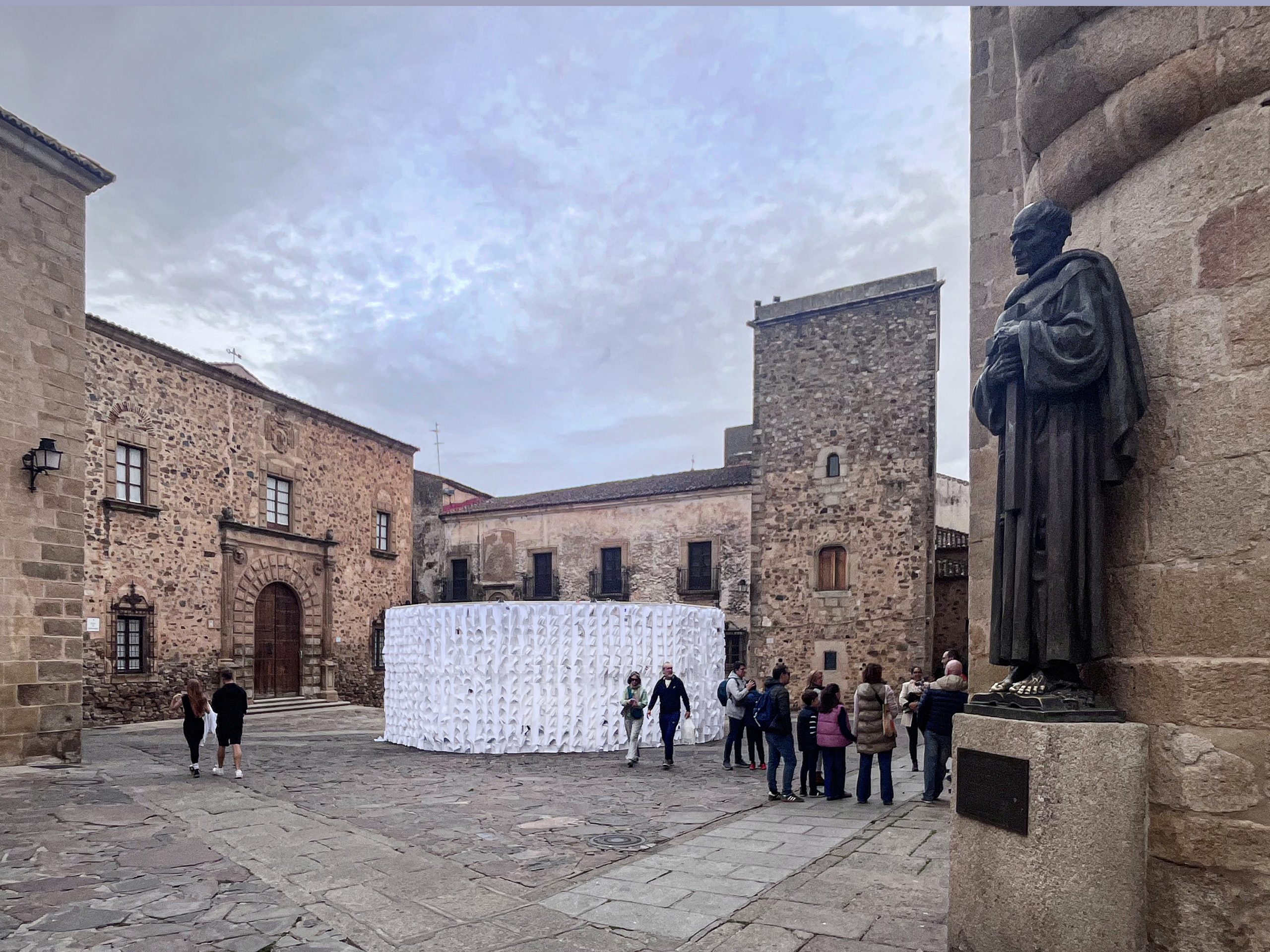
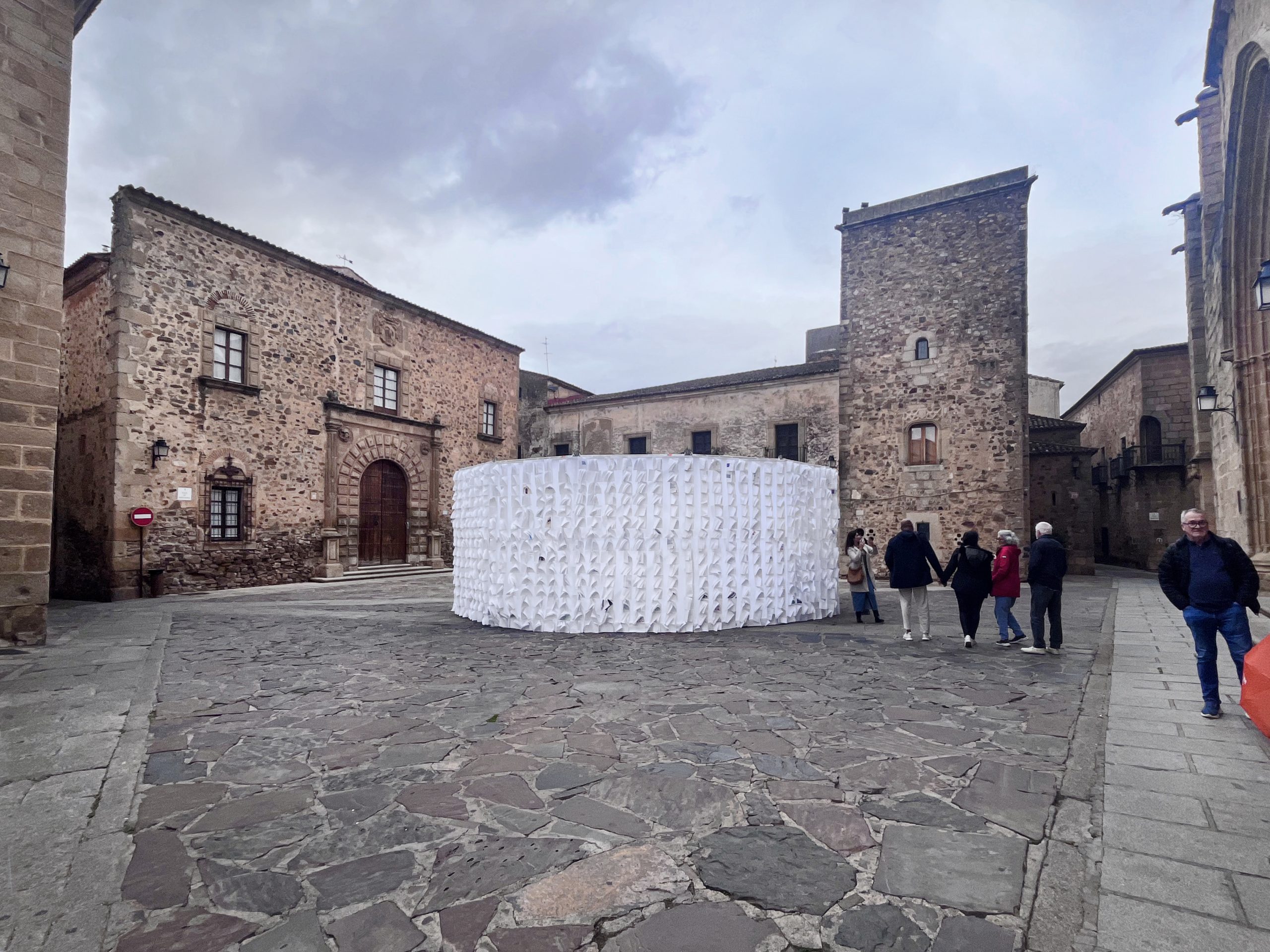
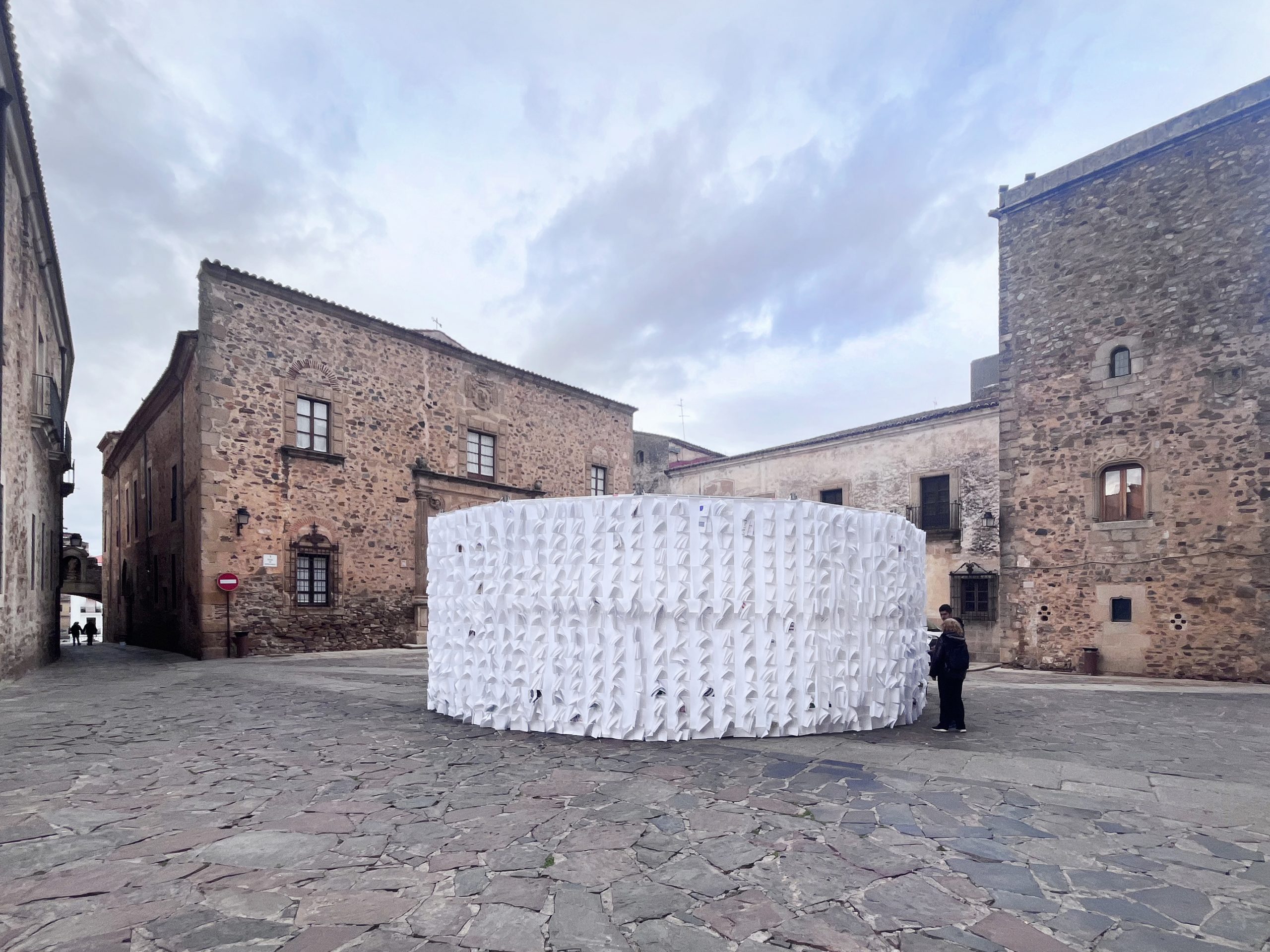
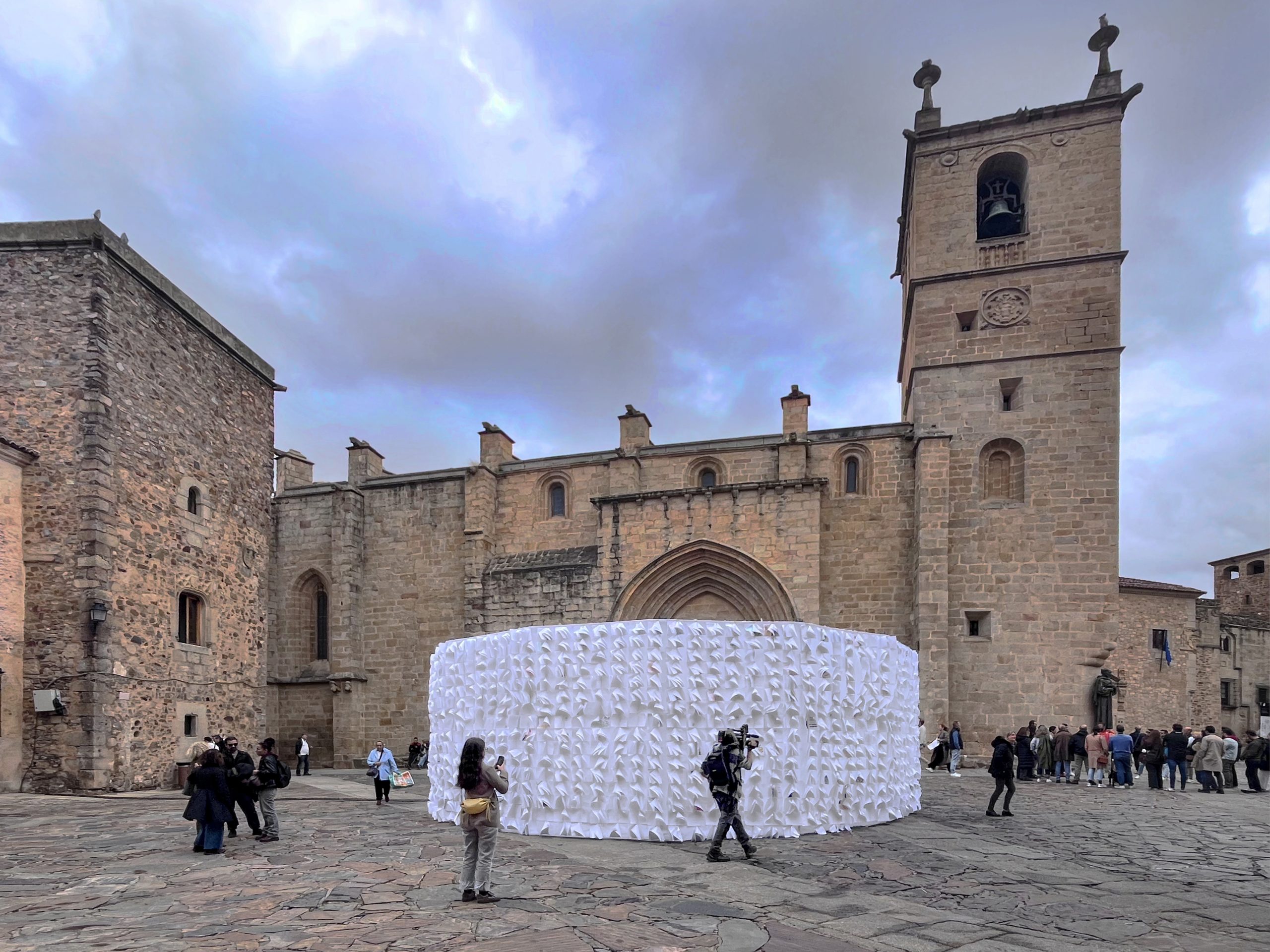
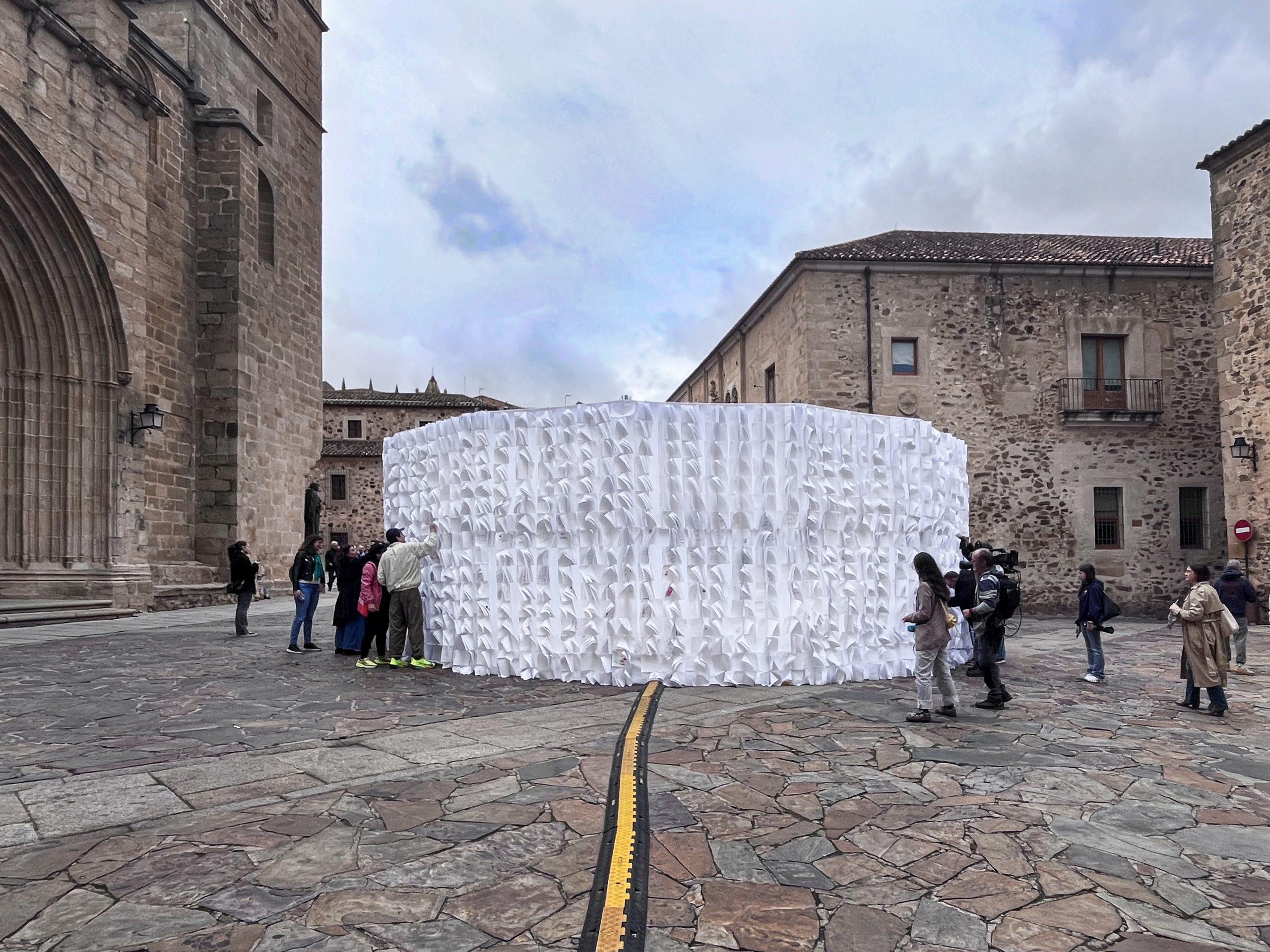
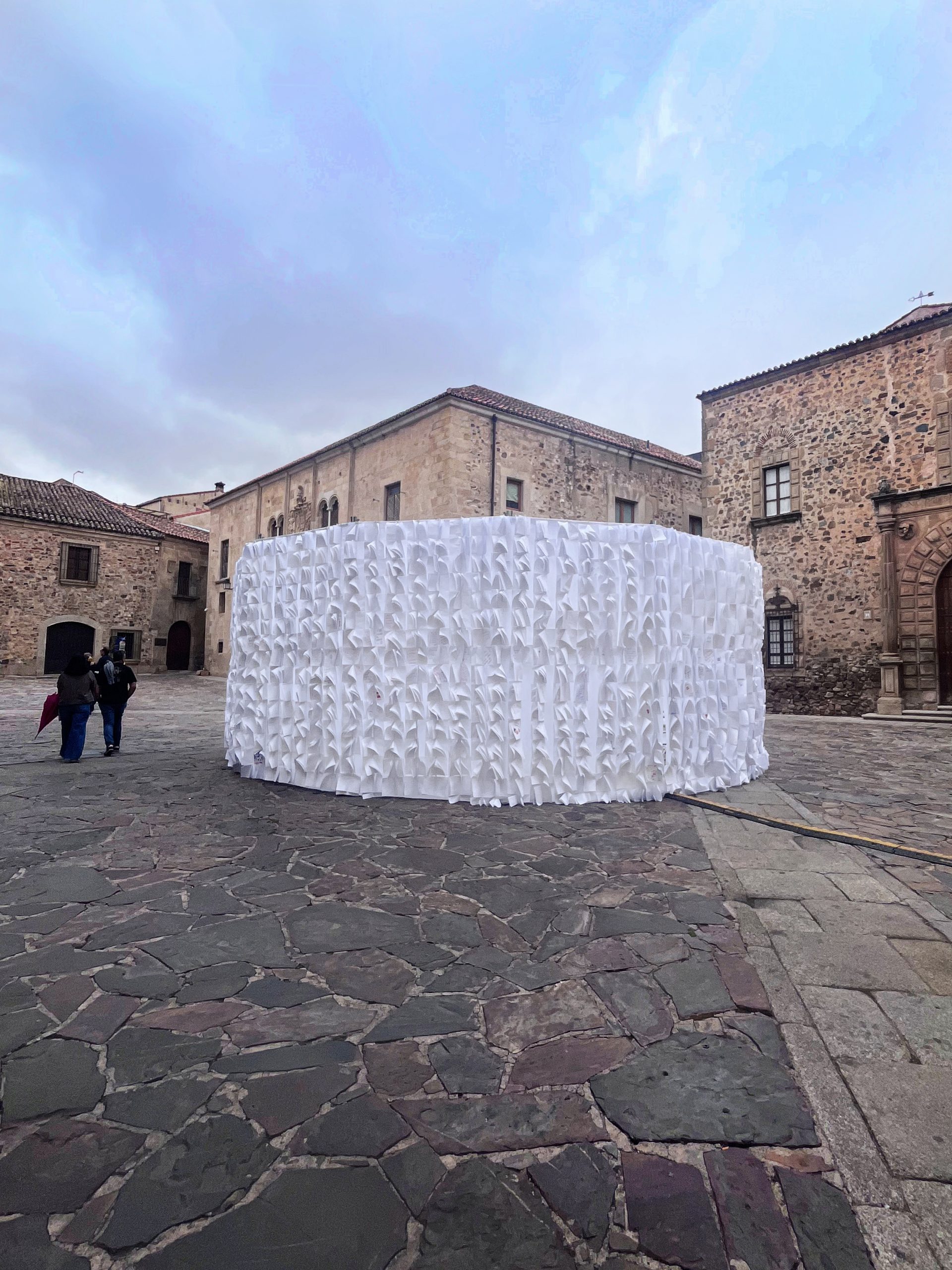
On Blank Pages / En hojas blancas. Cáceres 2025


ç

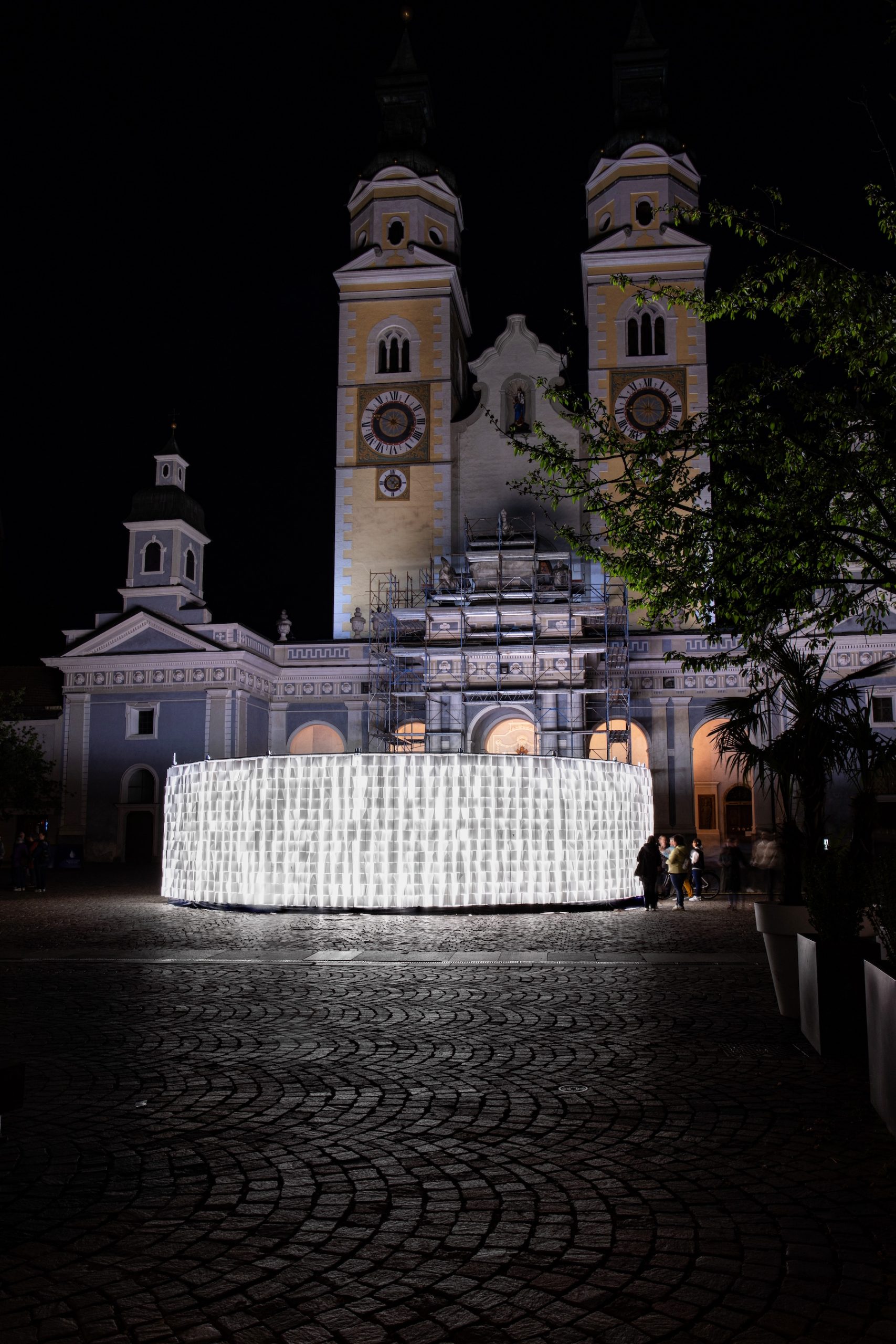
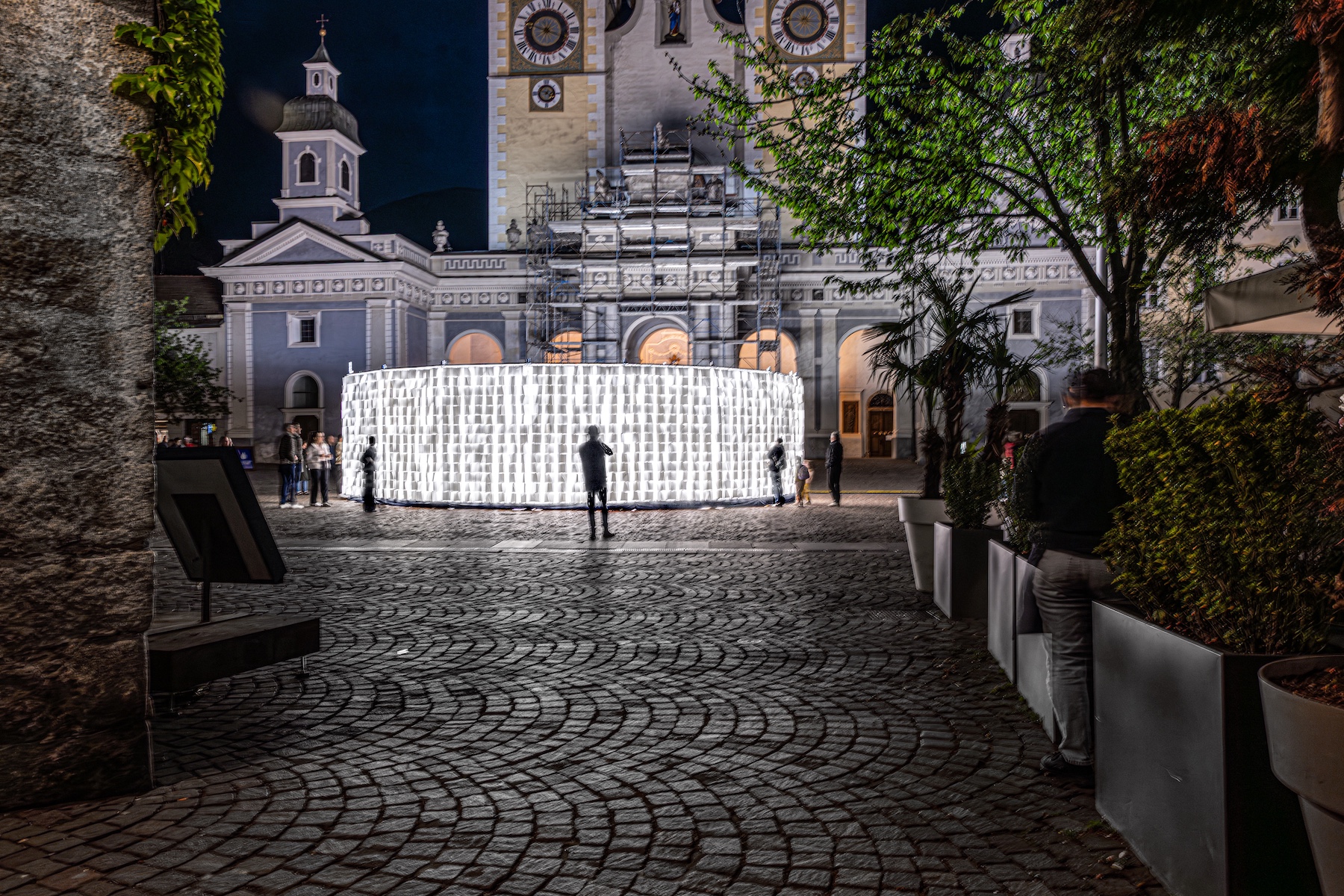
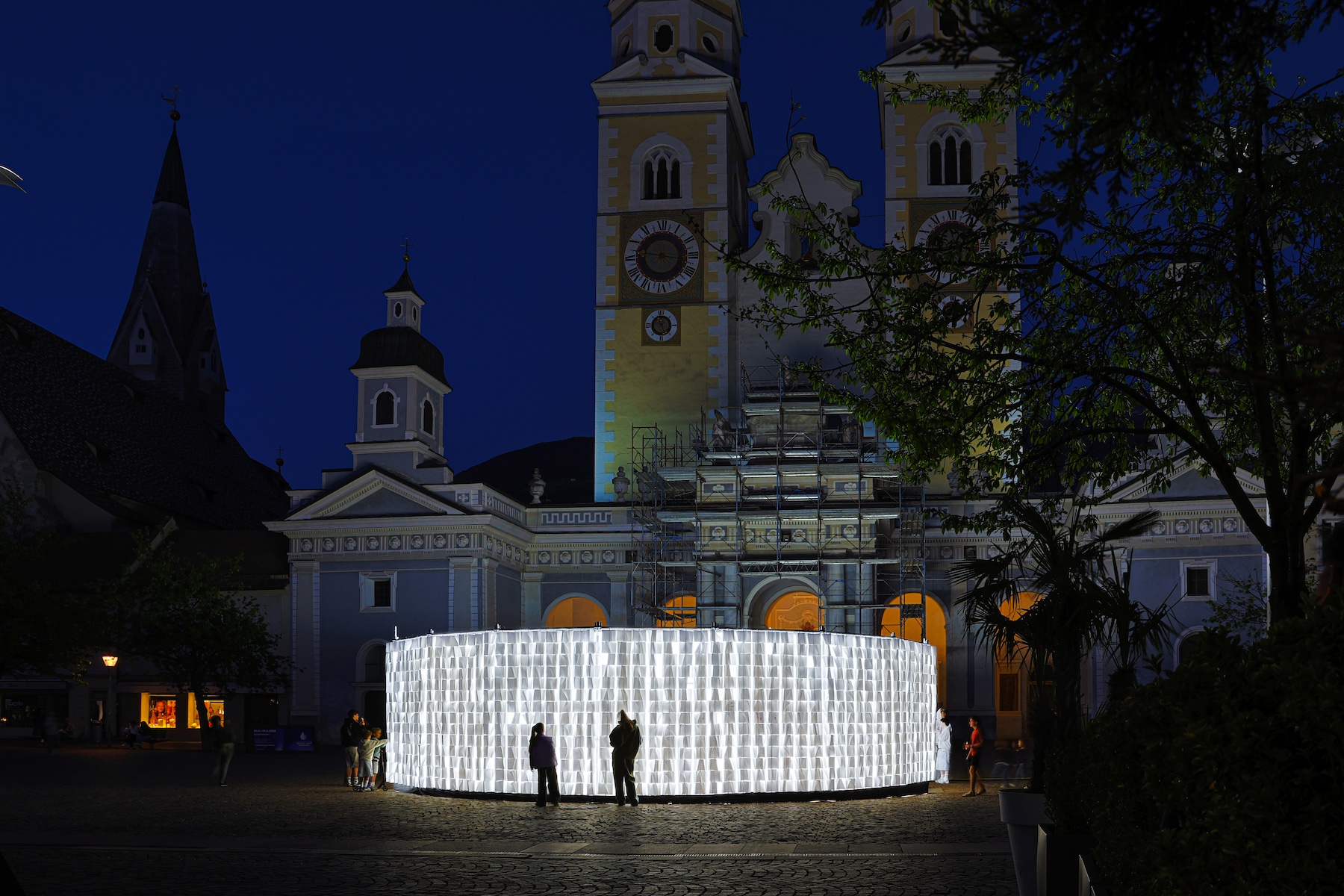
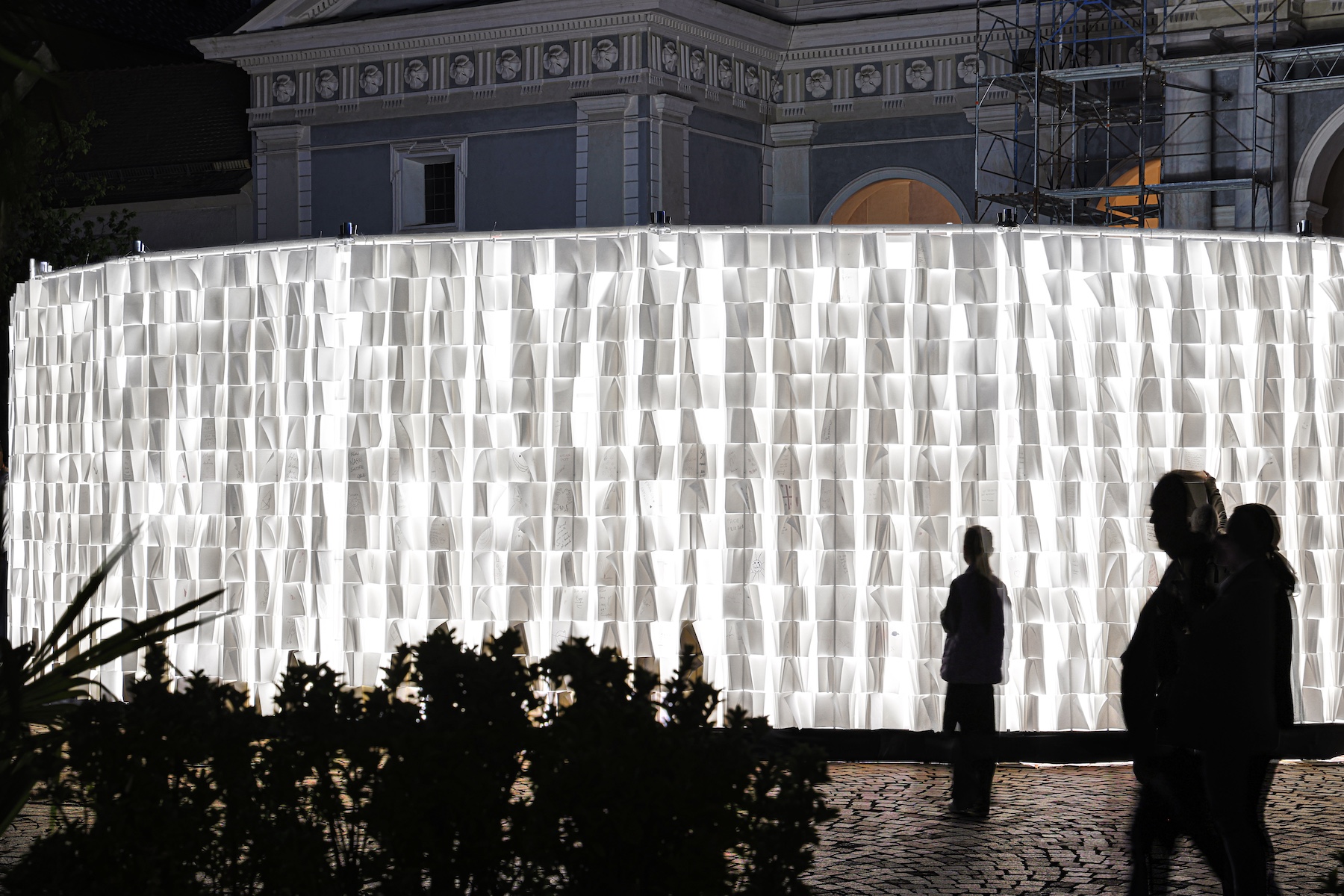
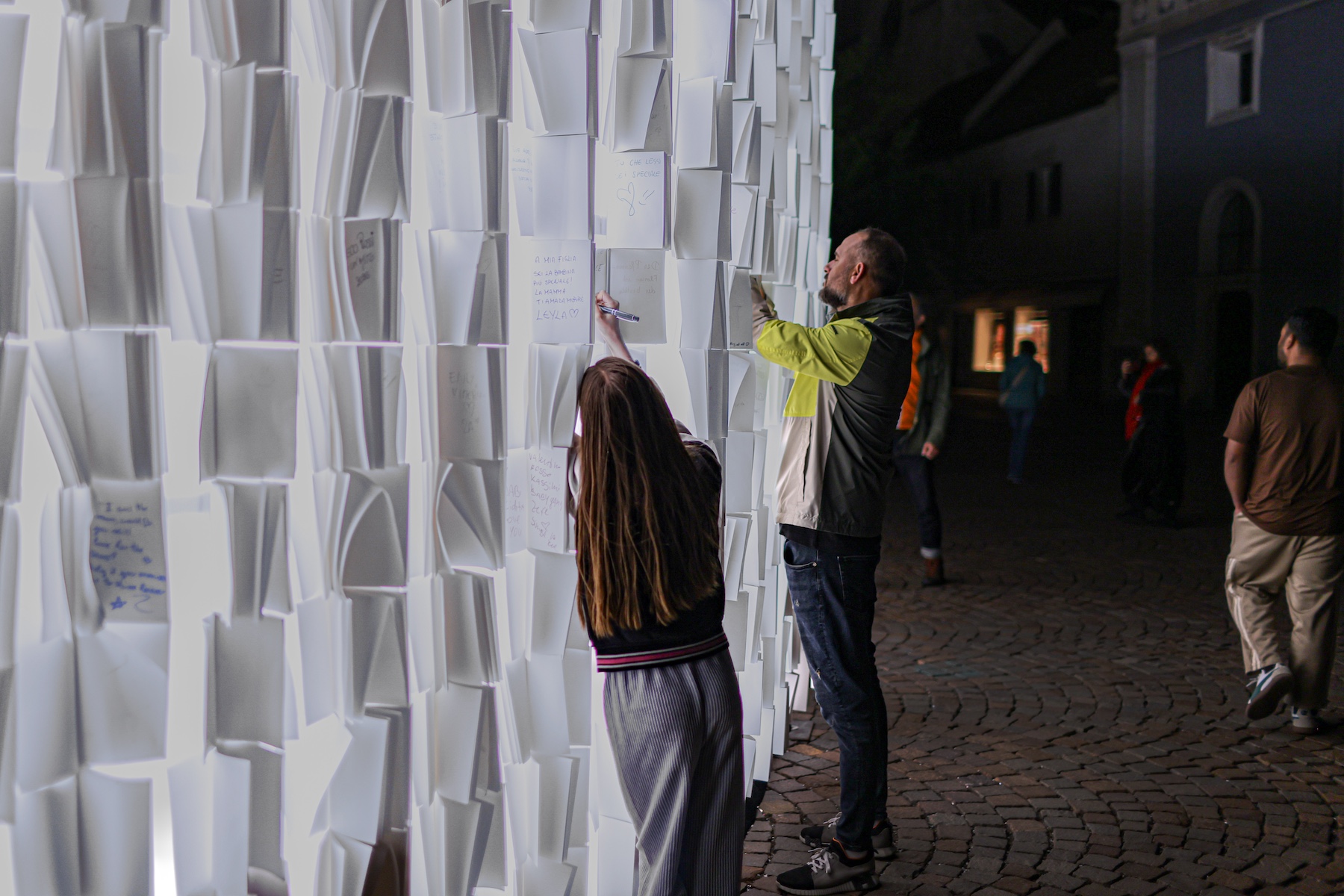
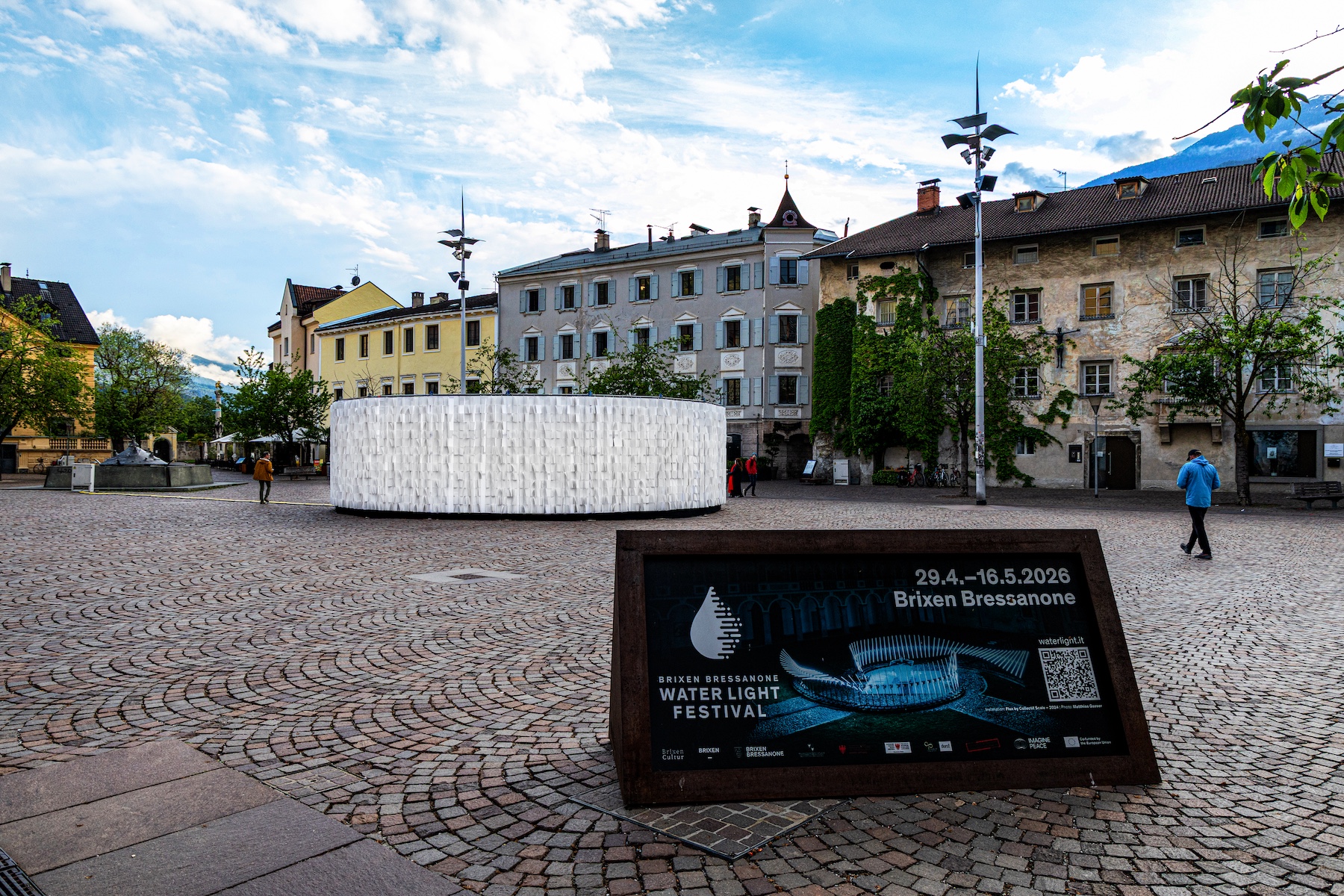
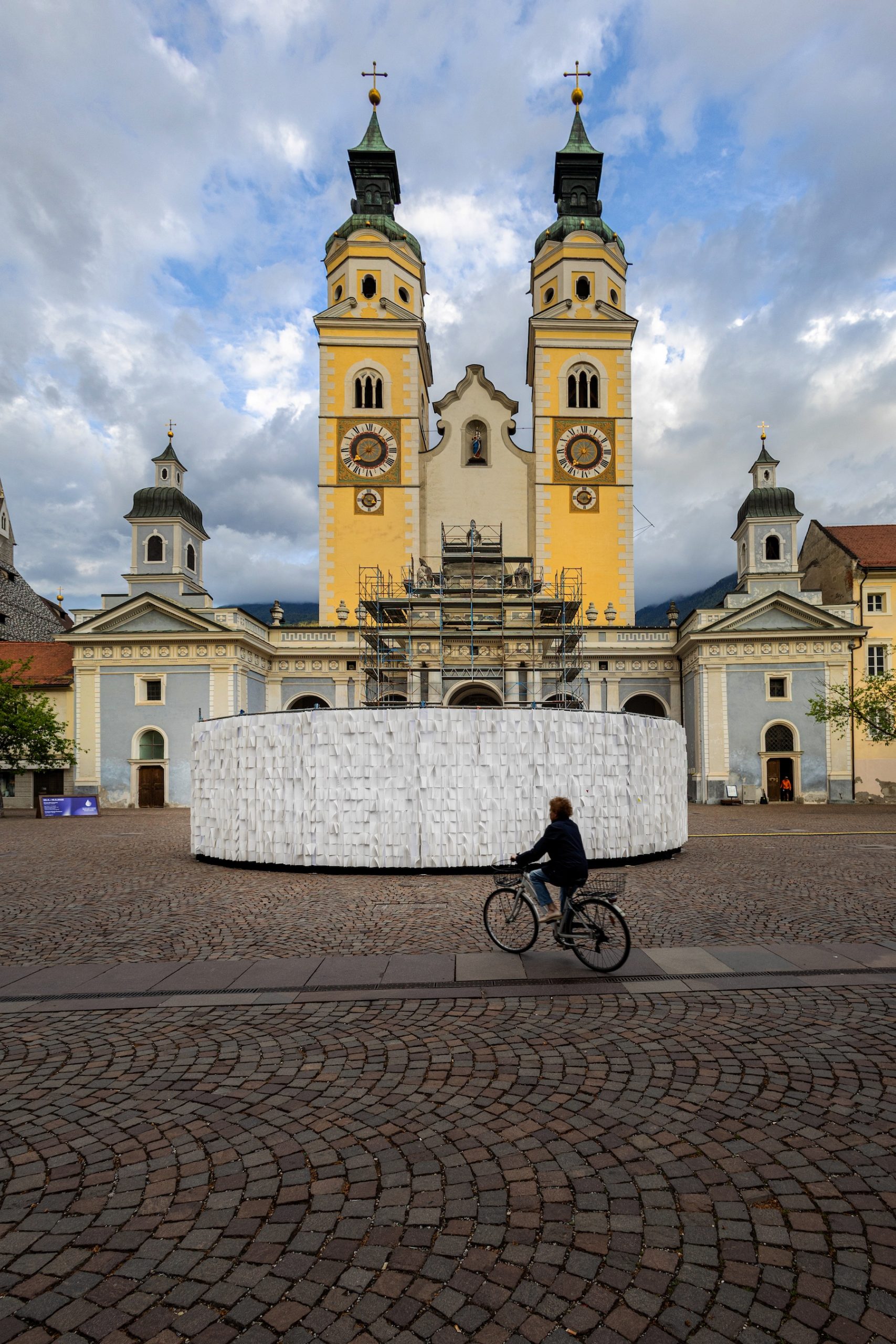
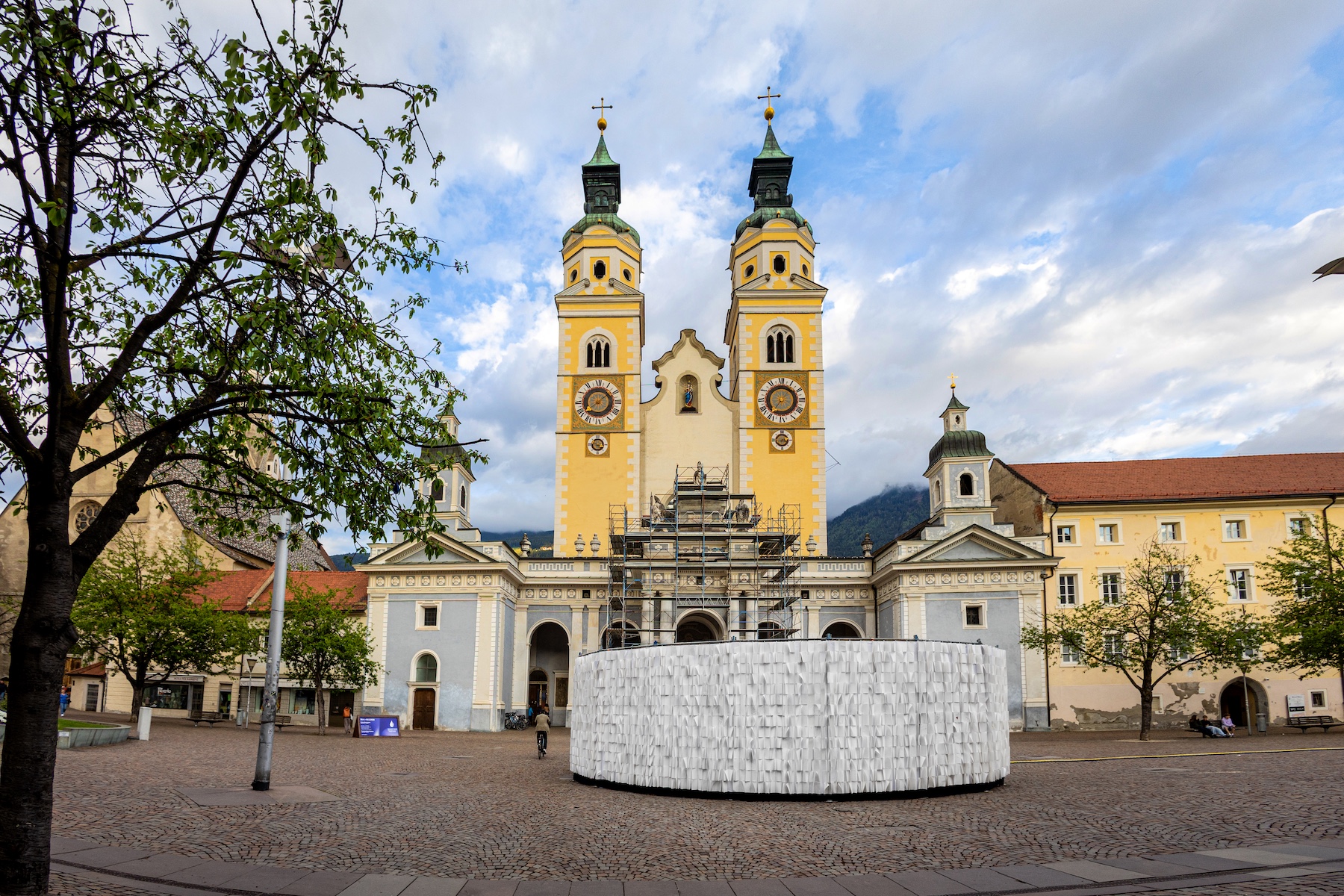
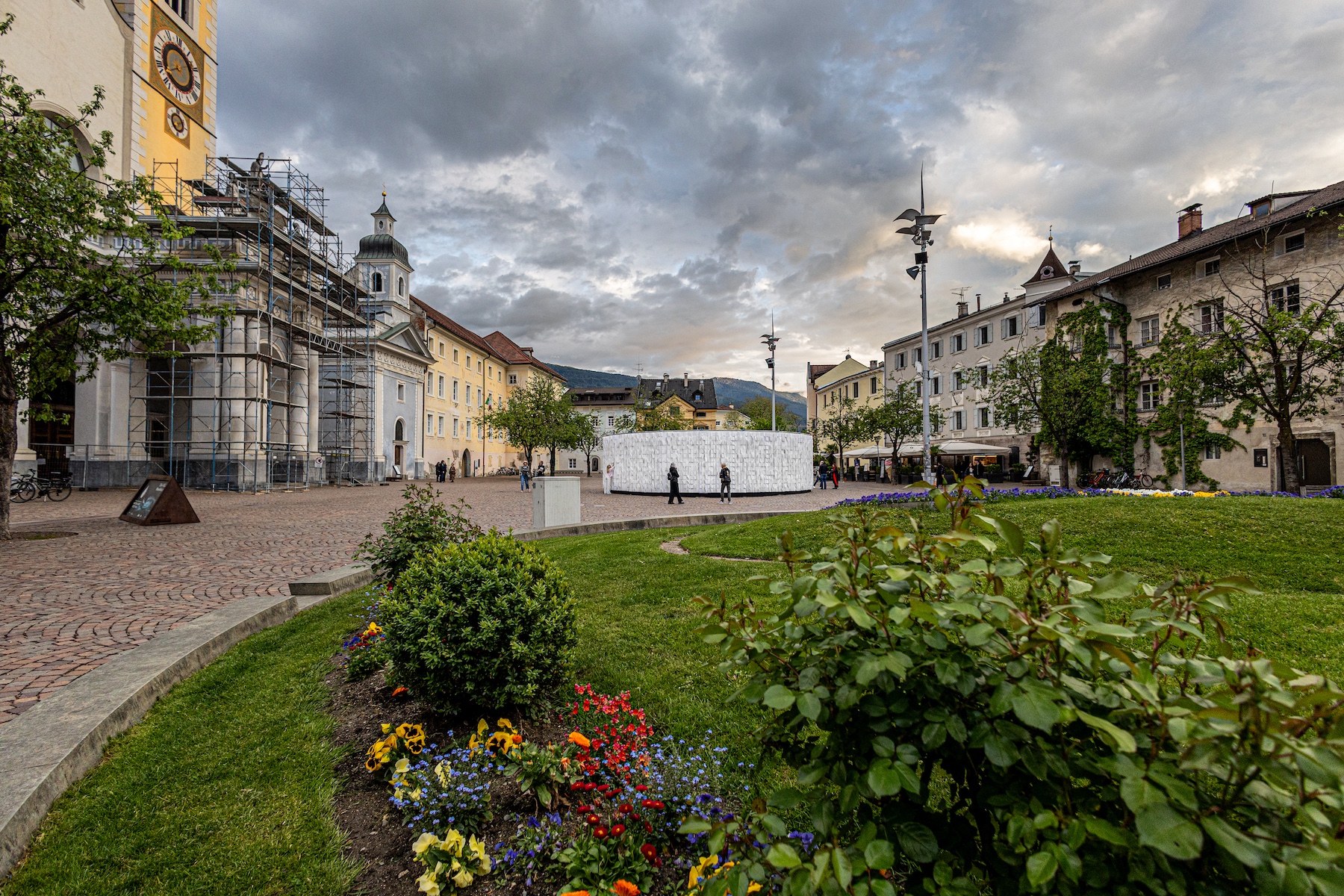
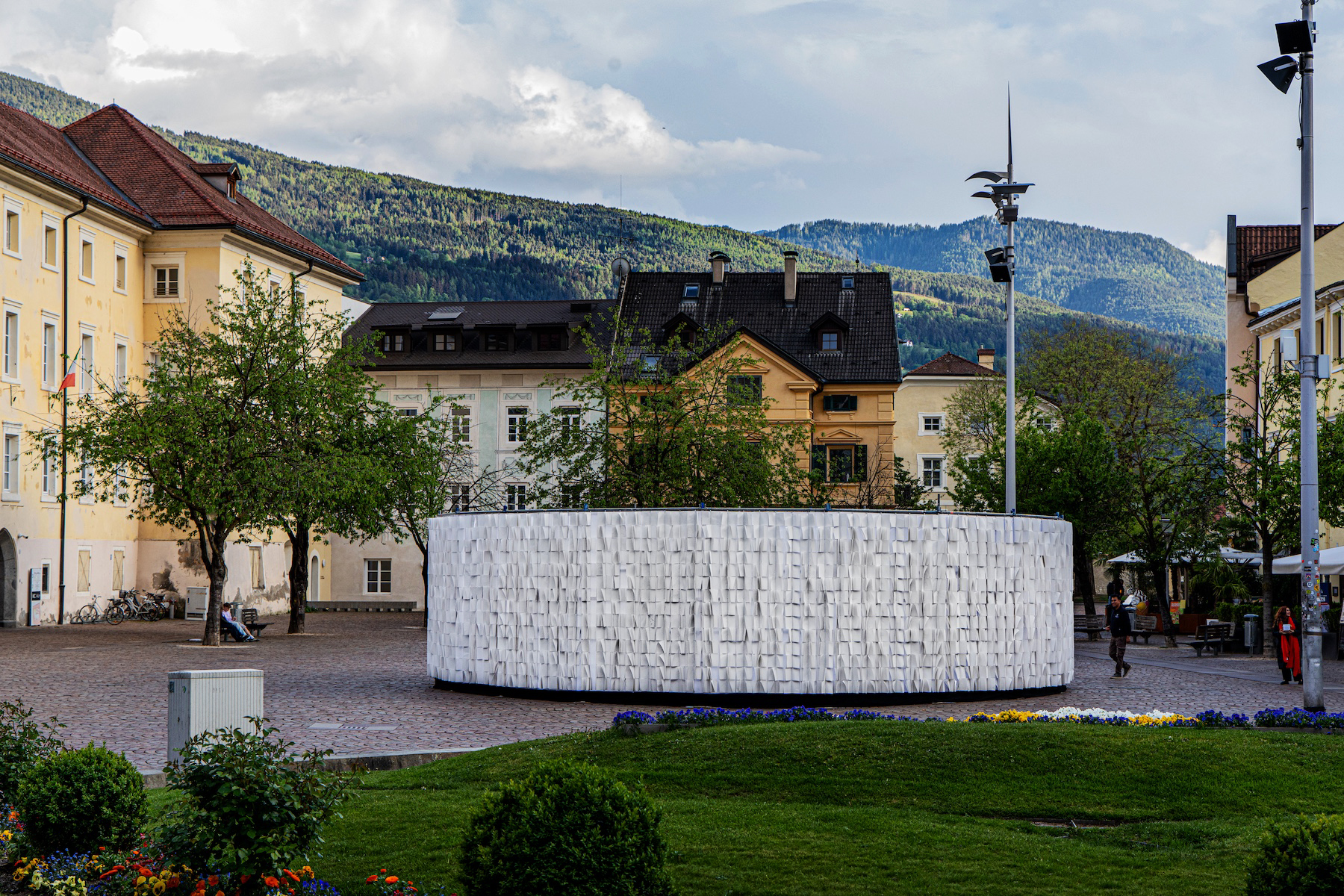
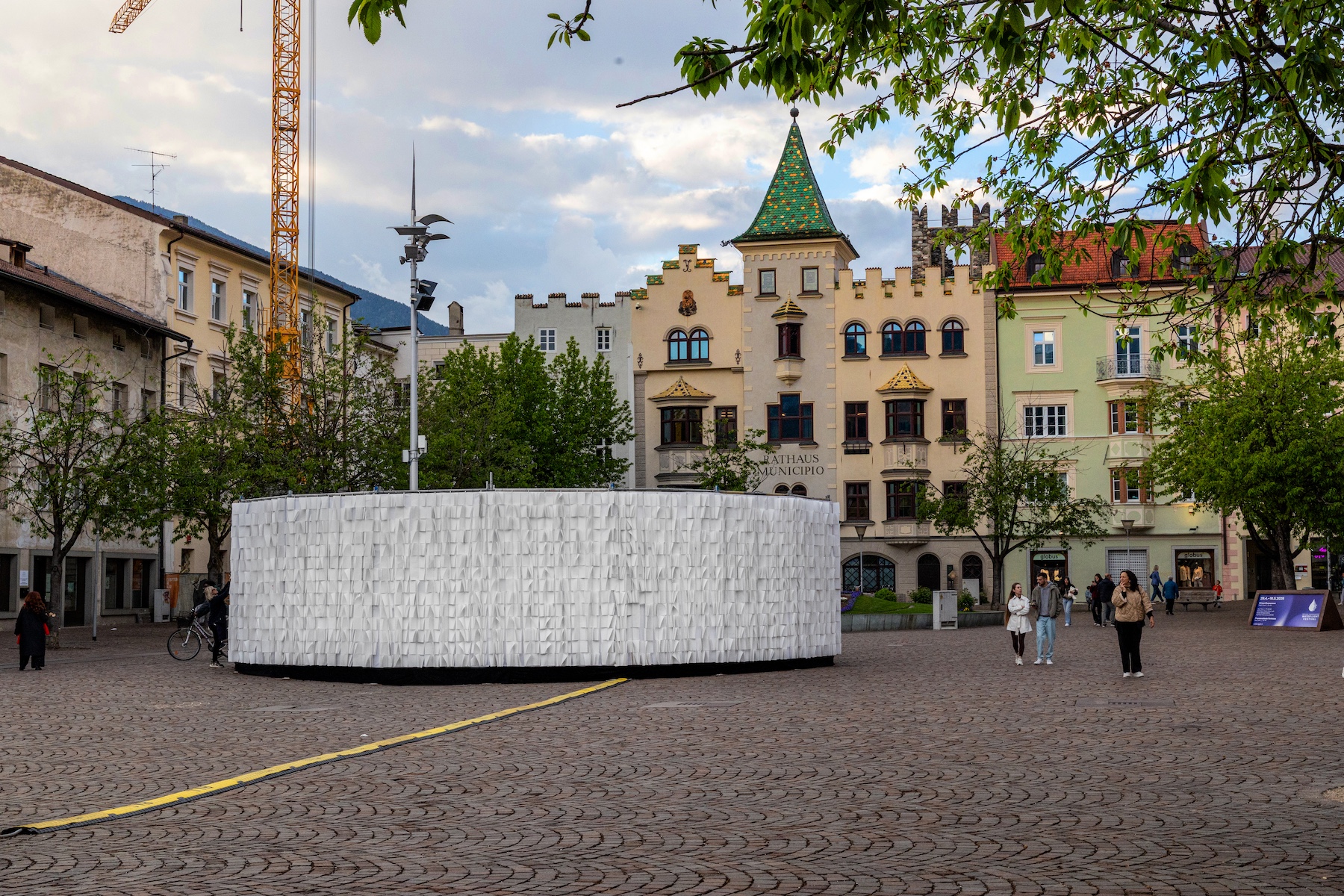
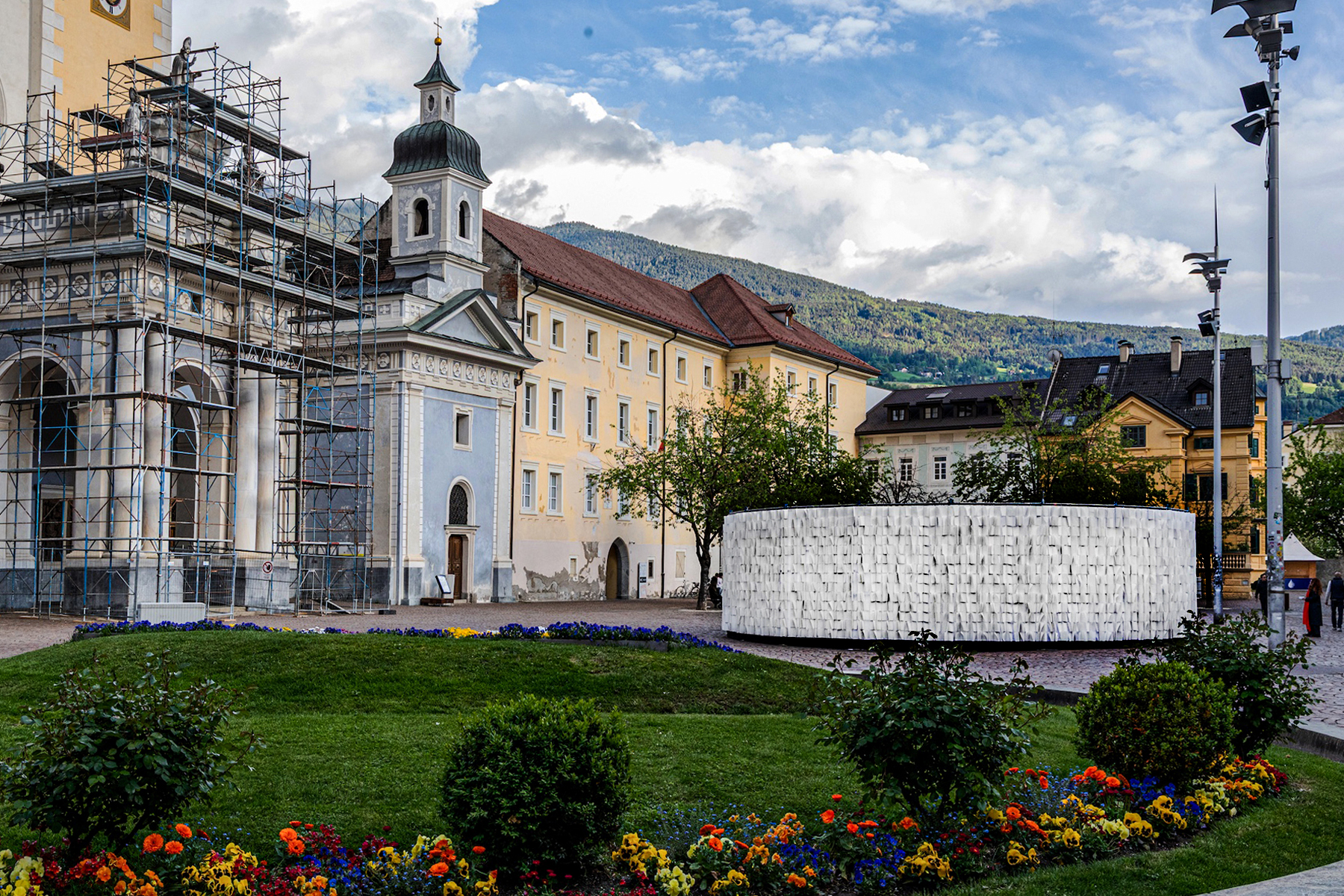
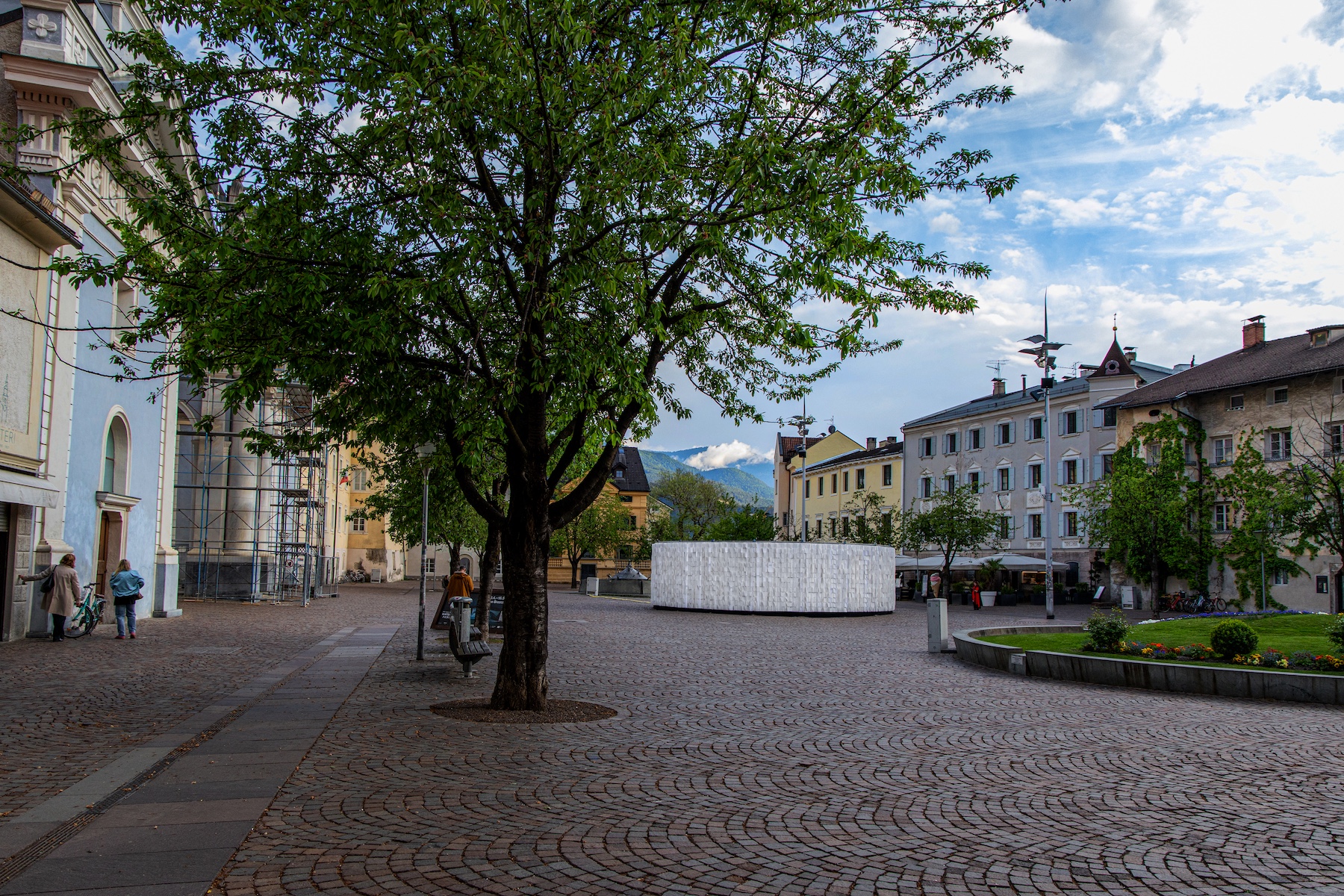
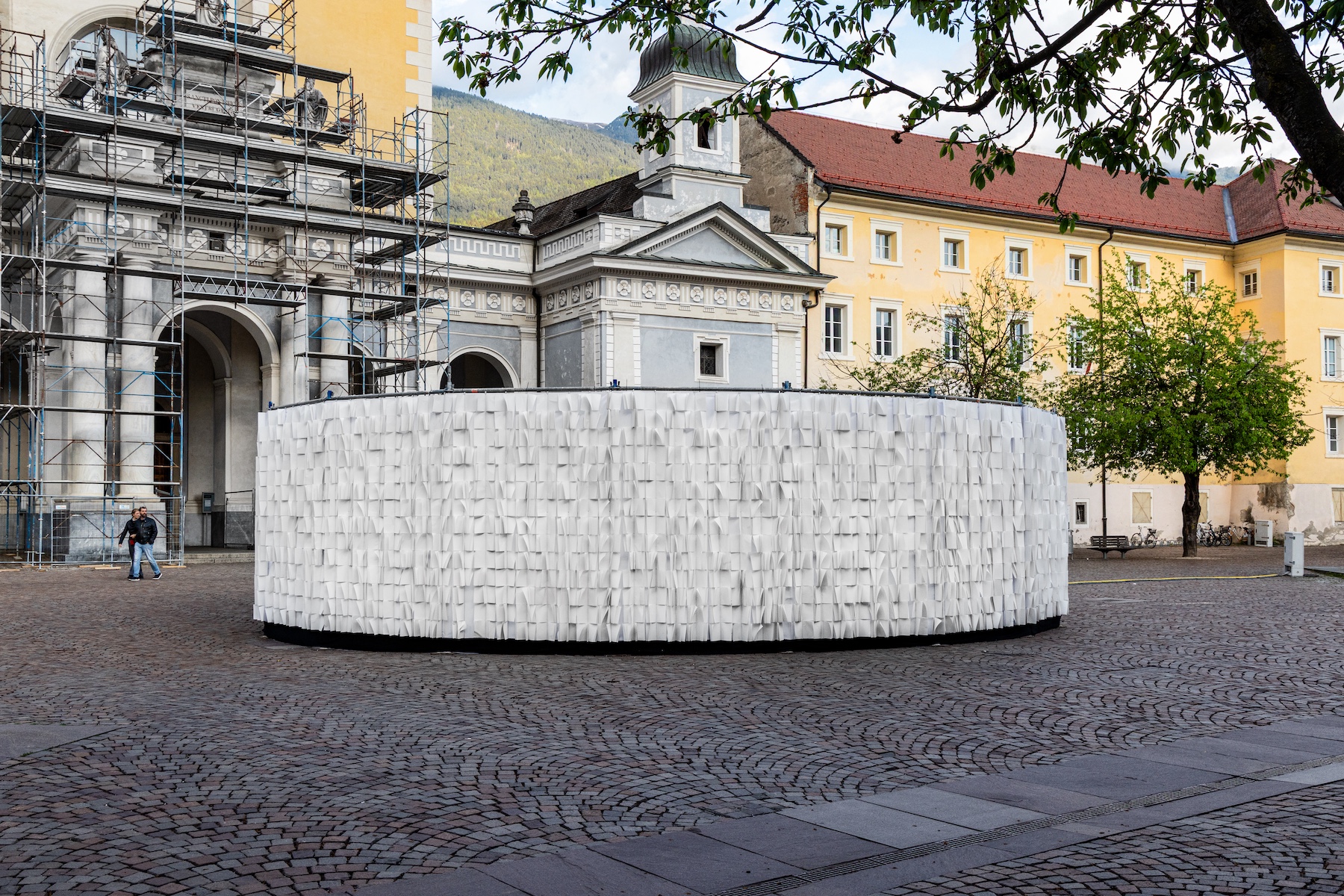
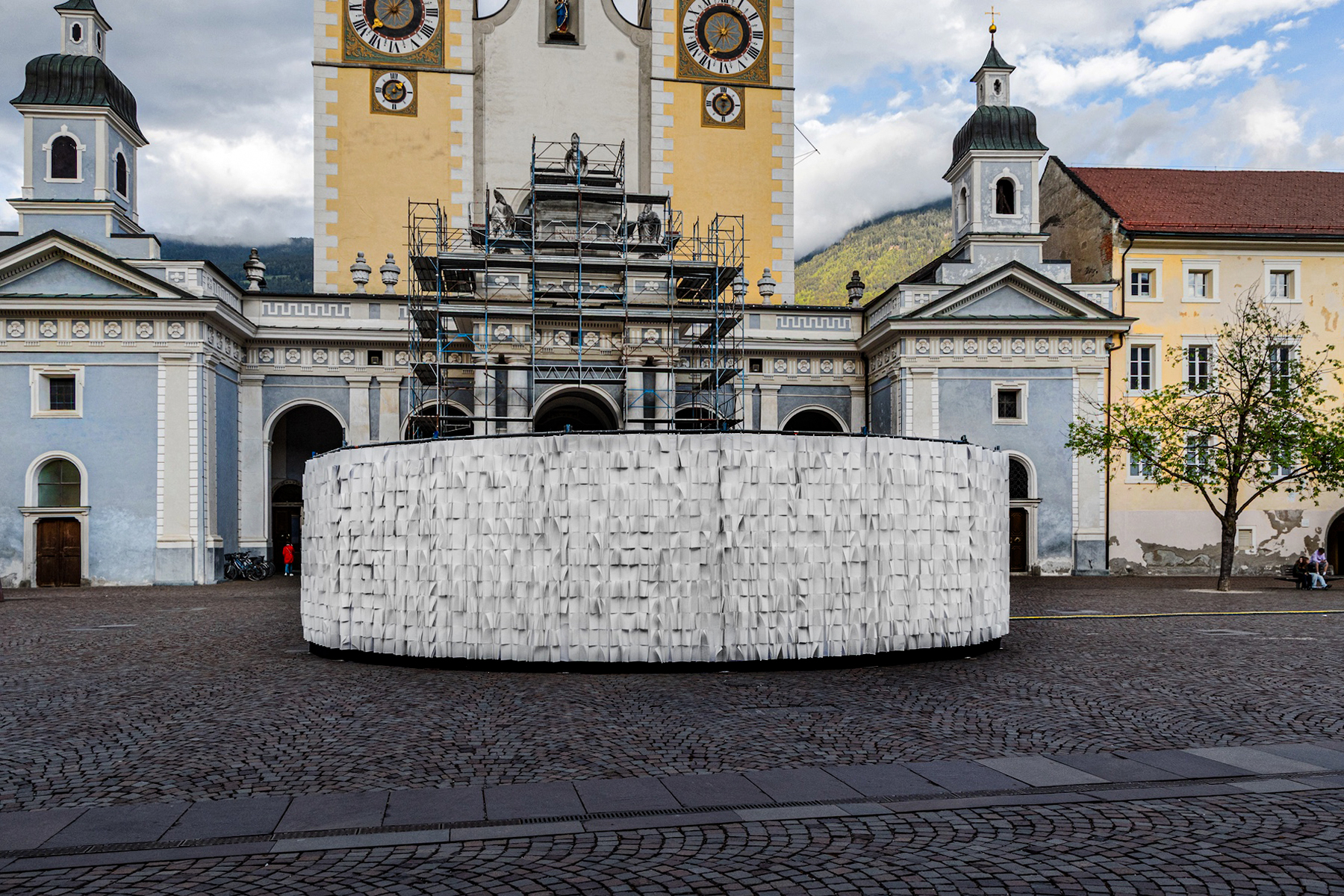
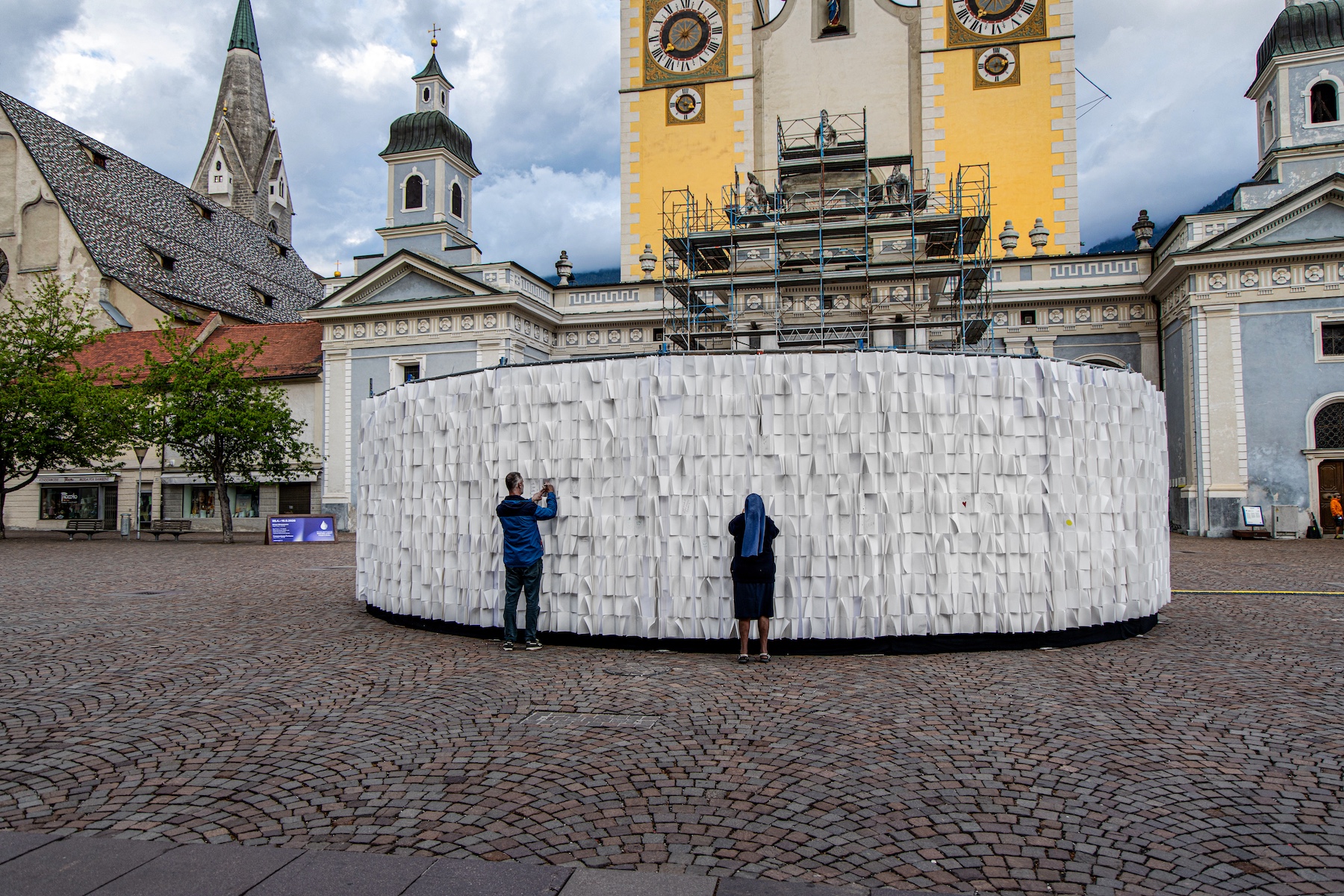
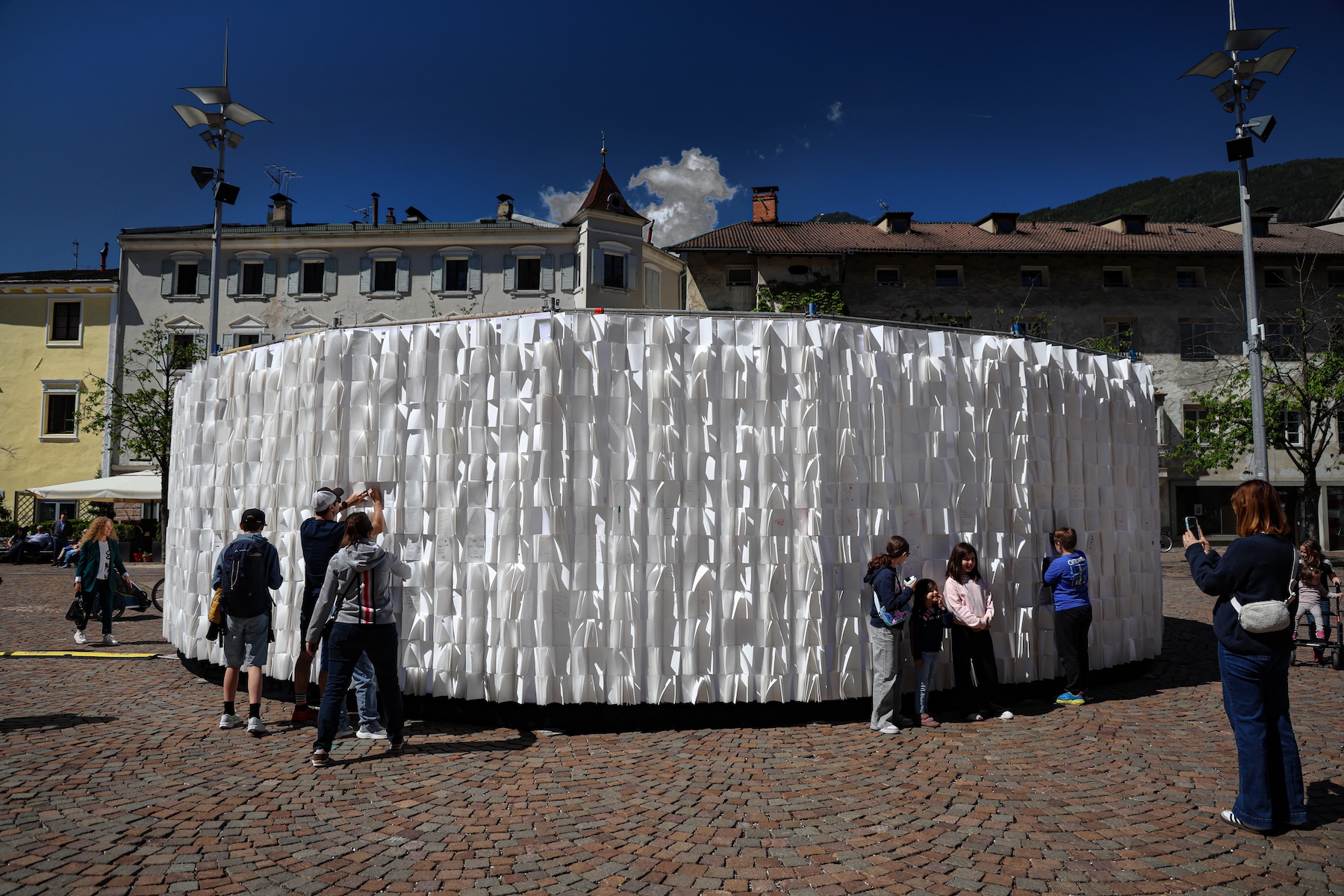
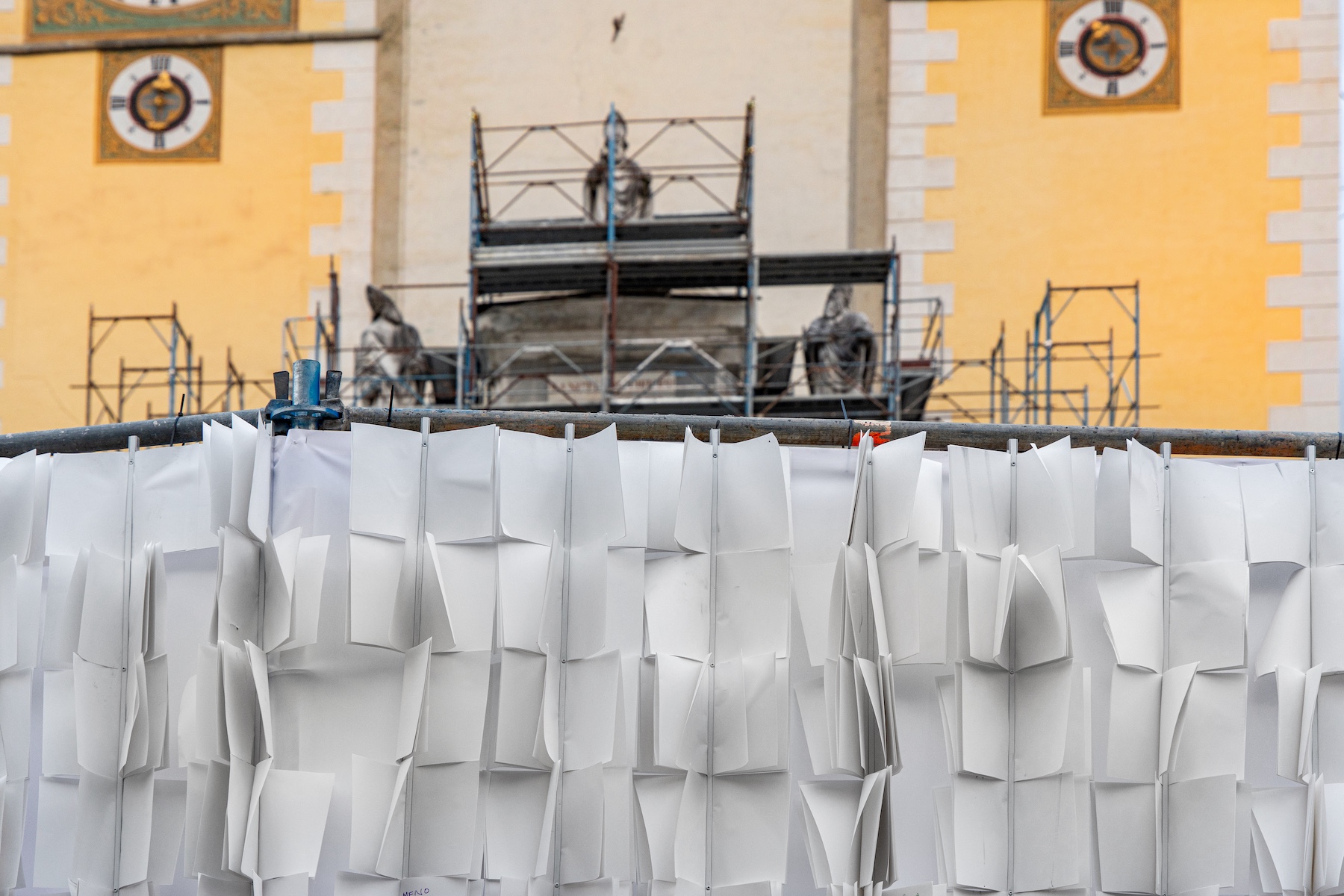
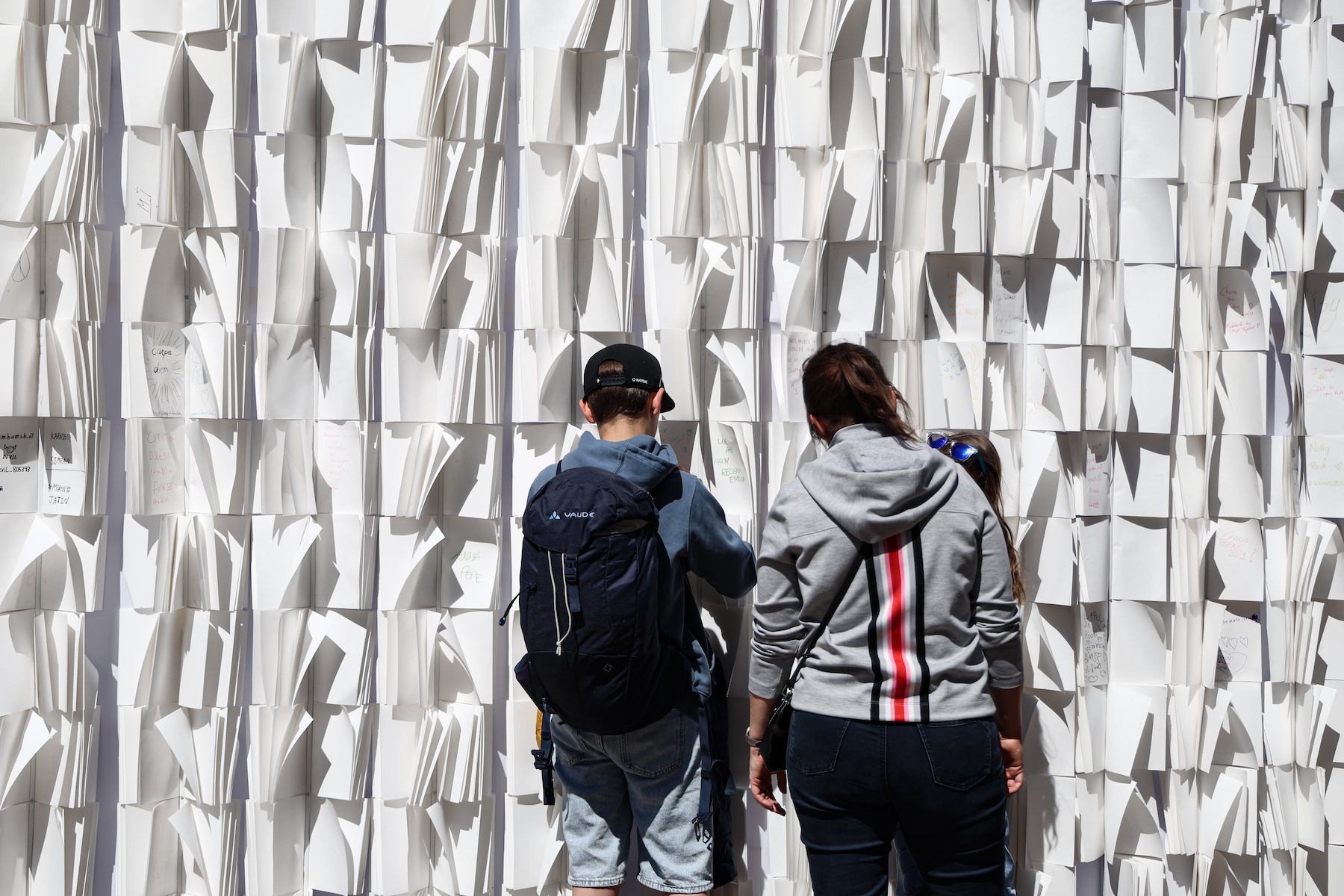
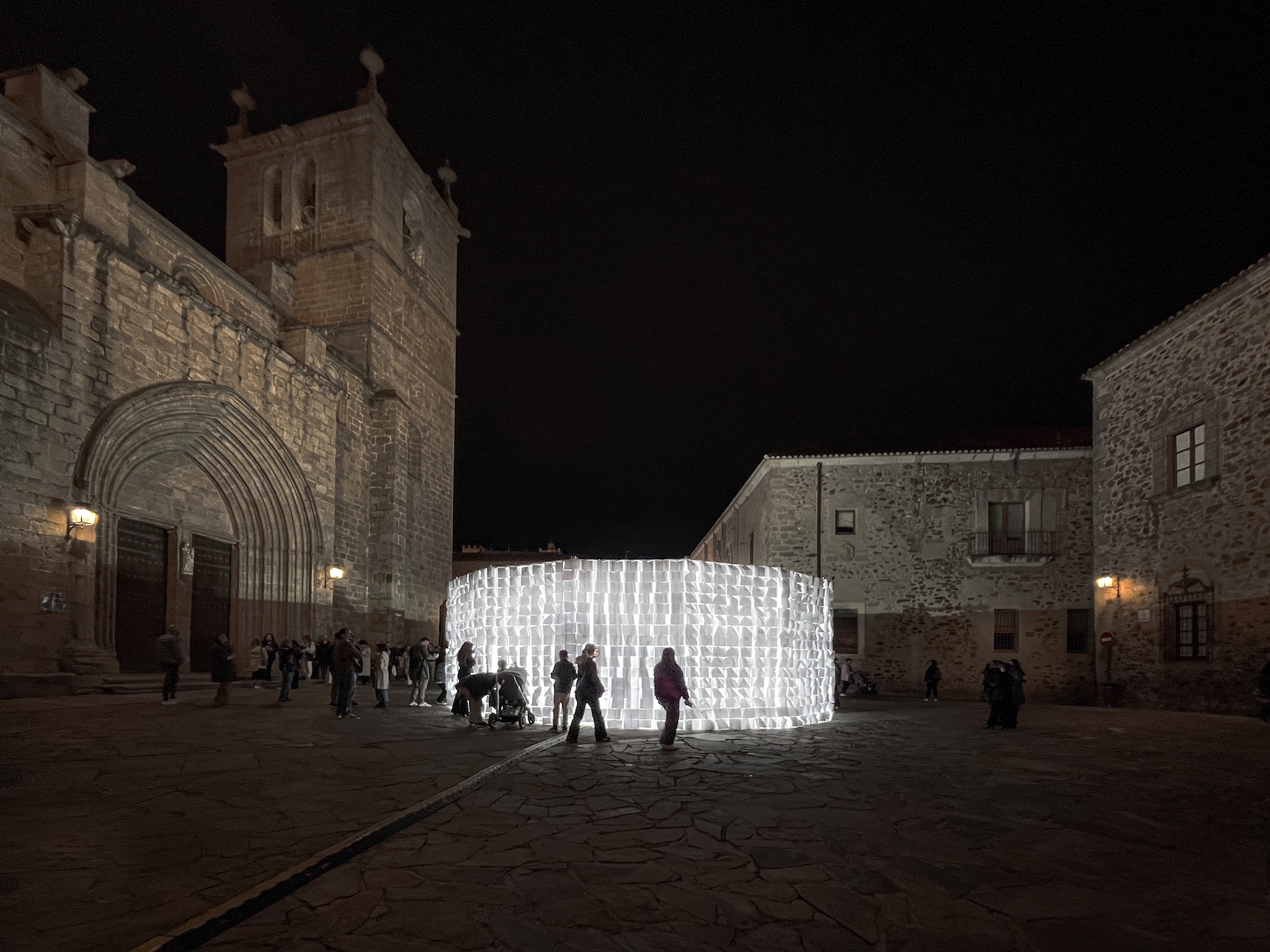
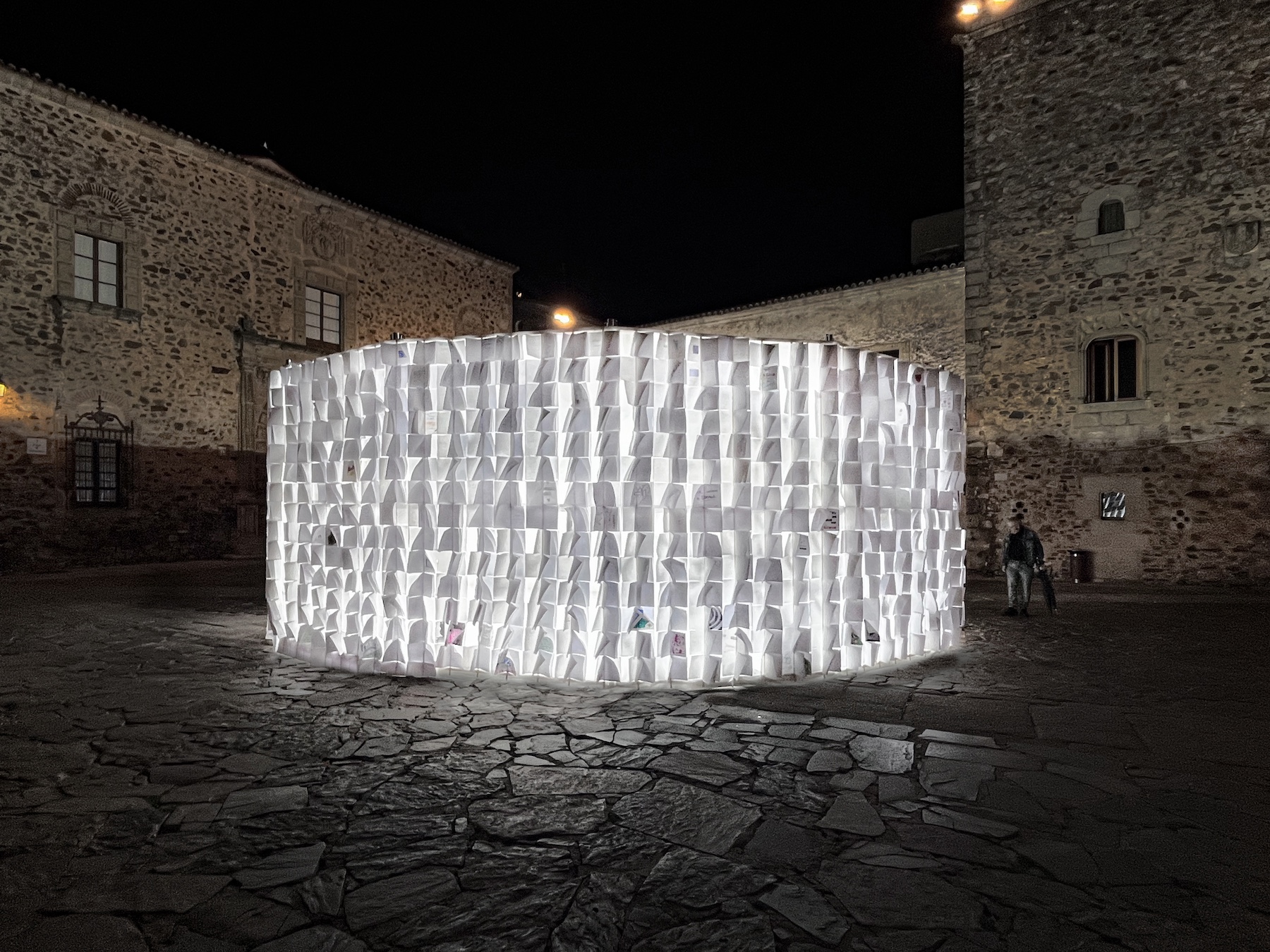
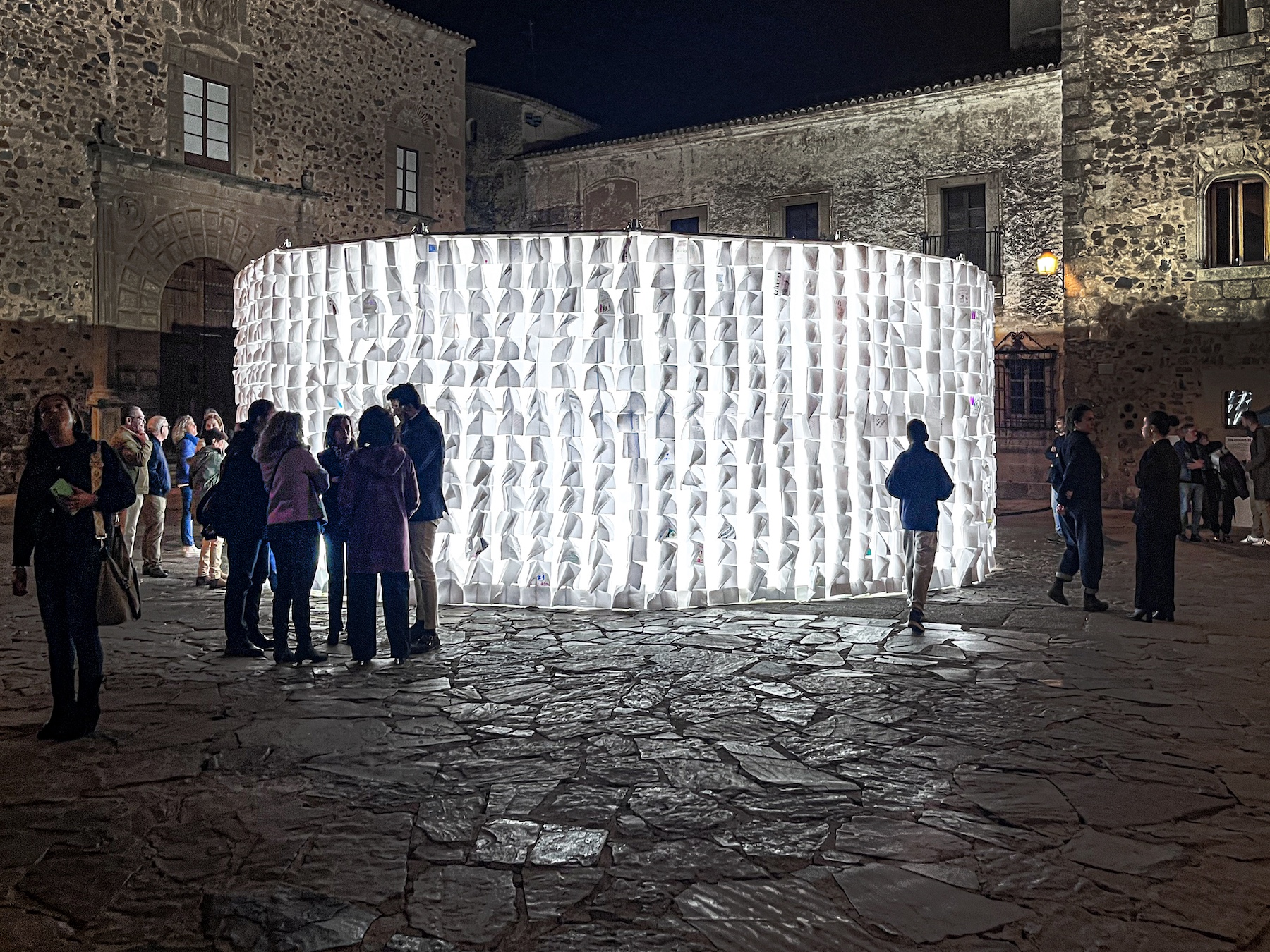
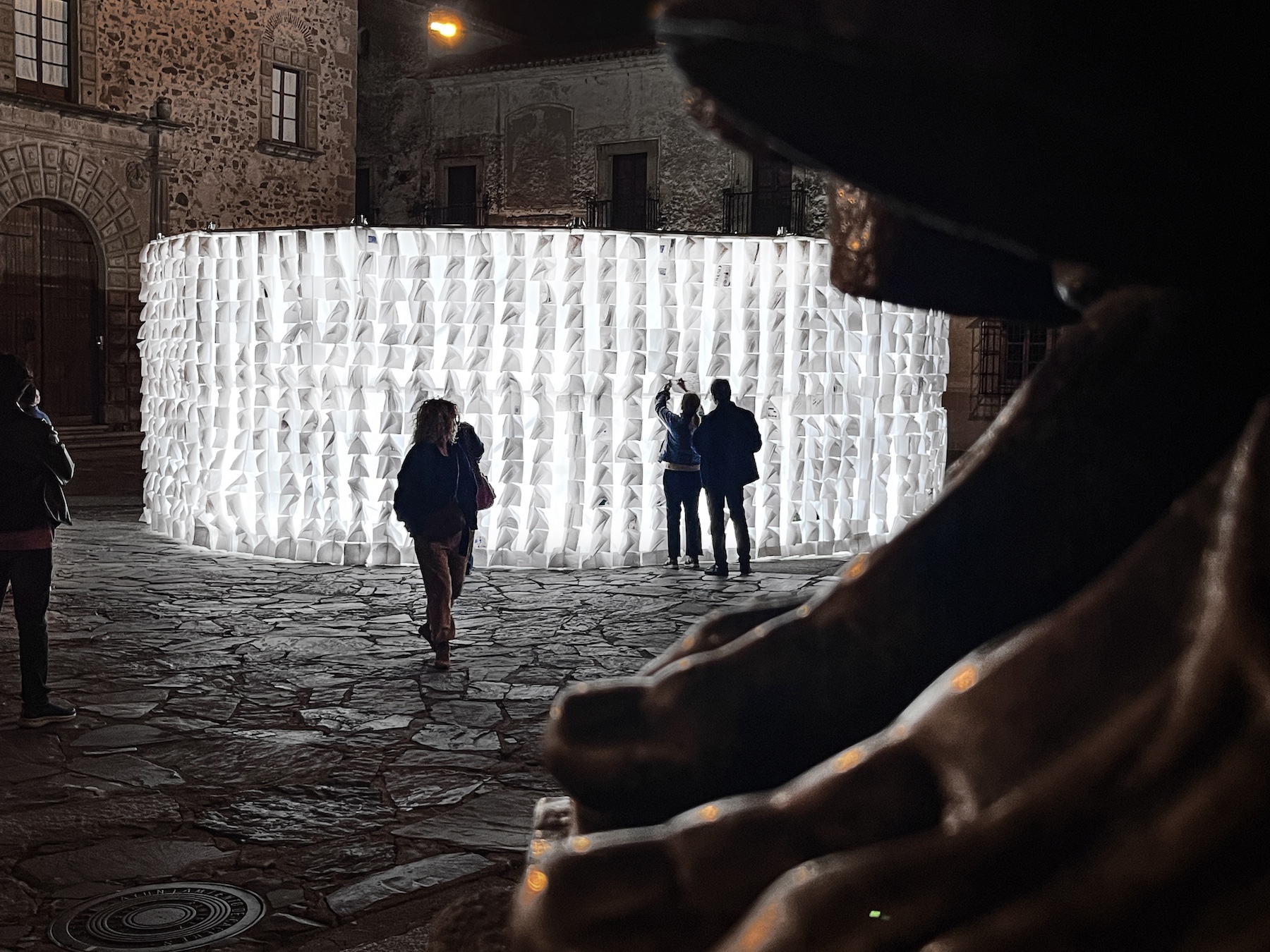
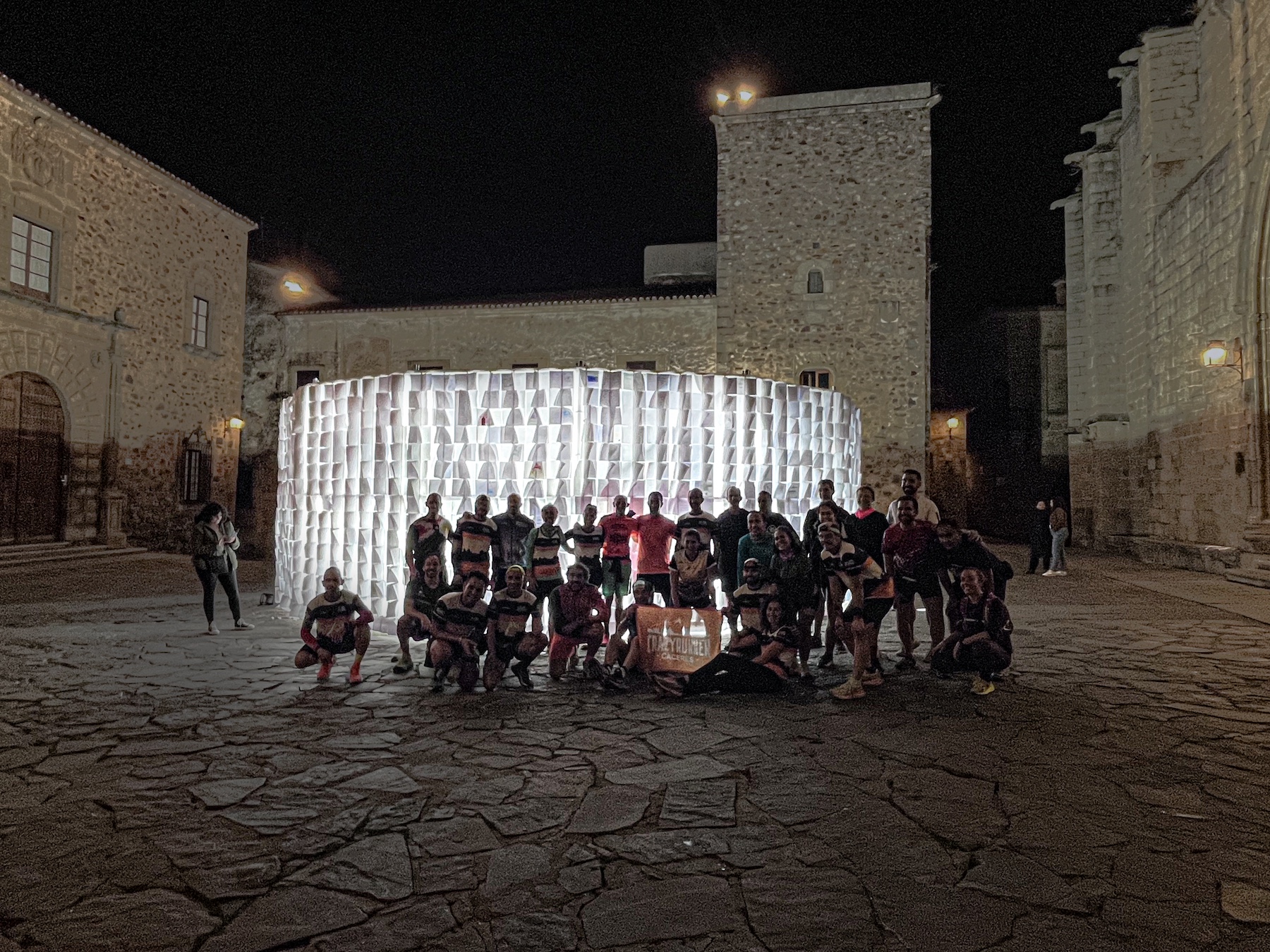
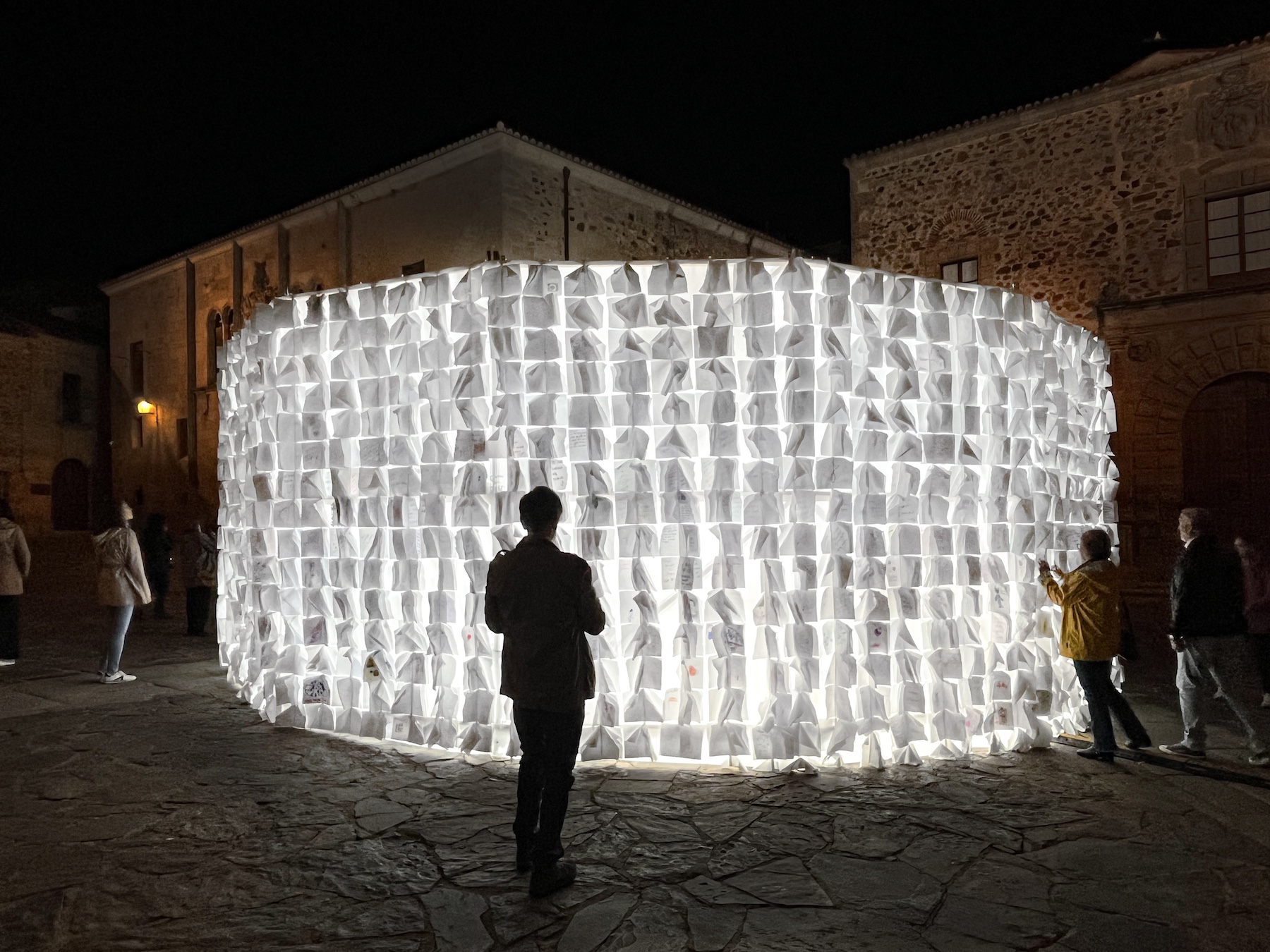
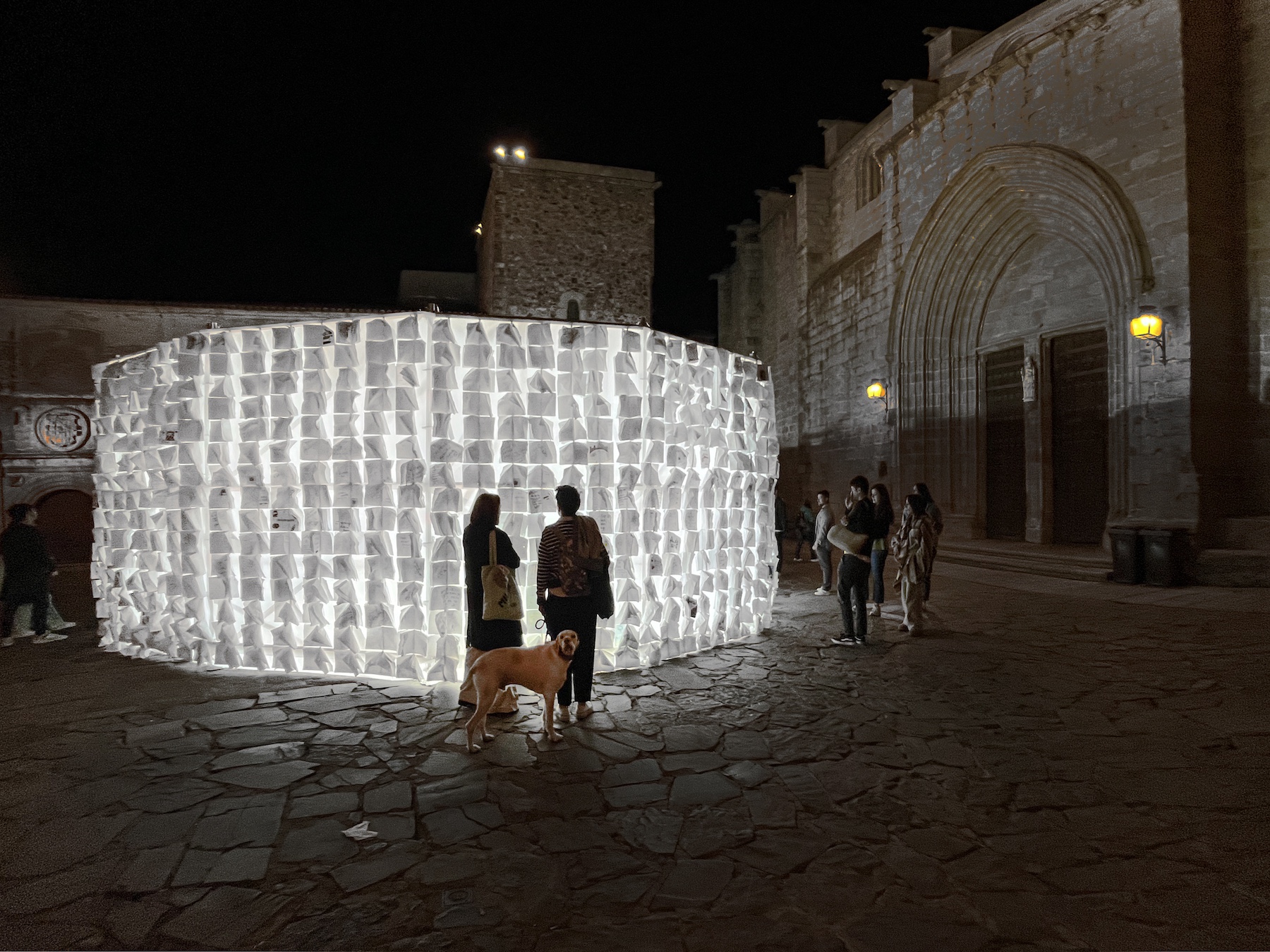
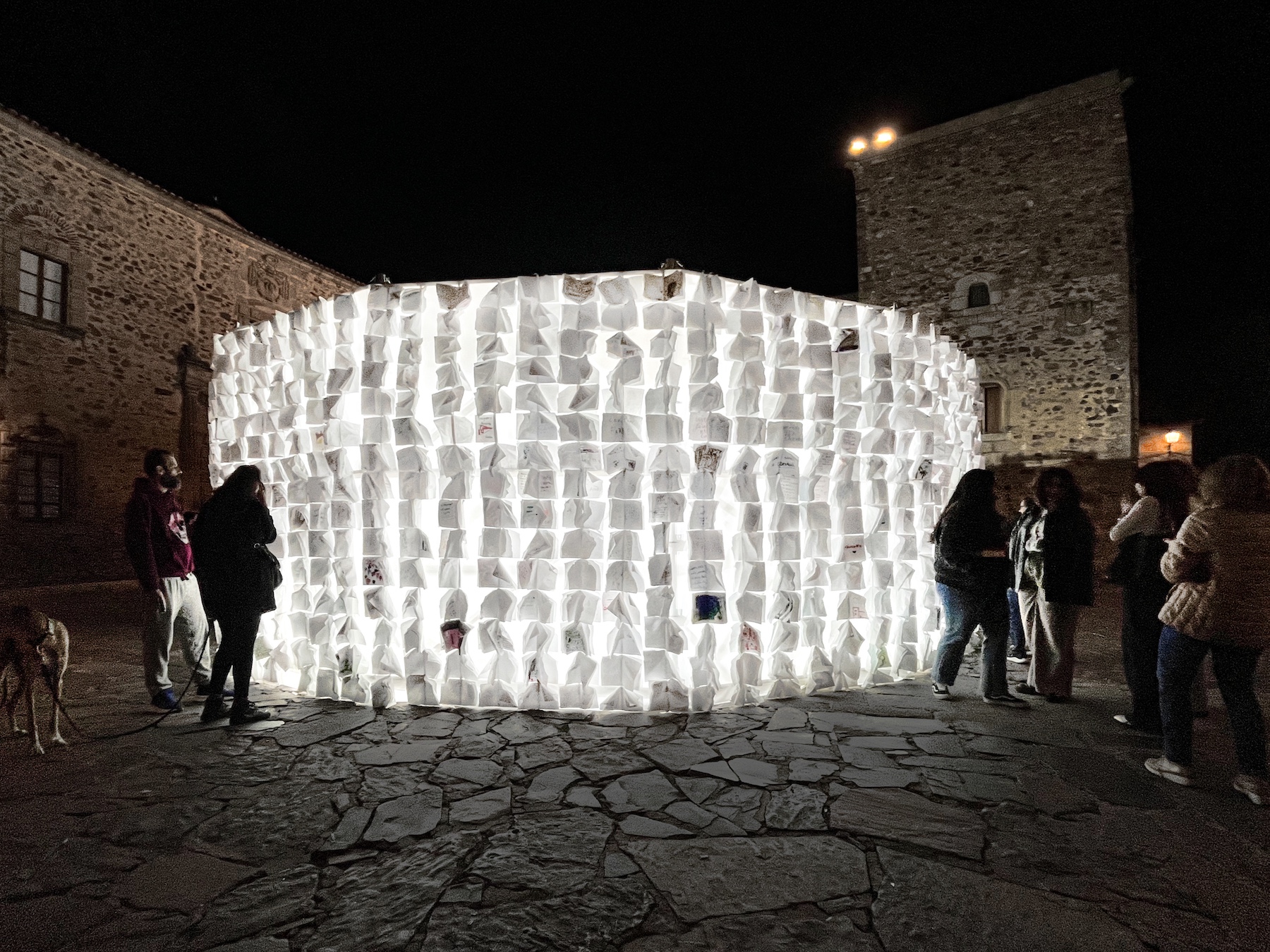
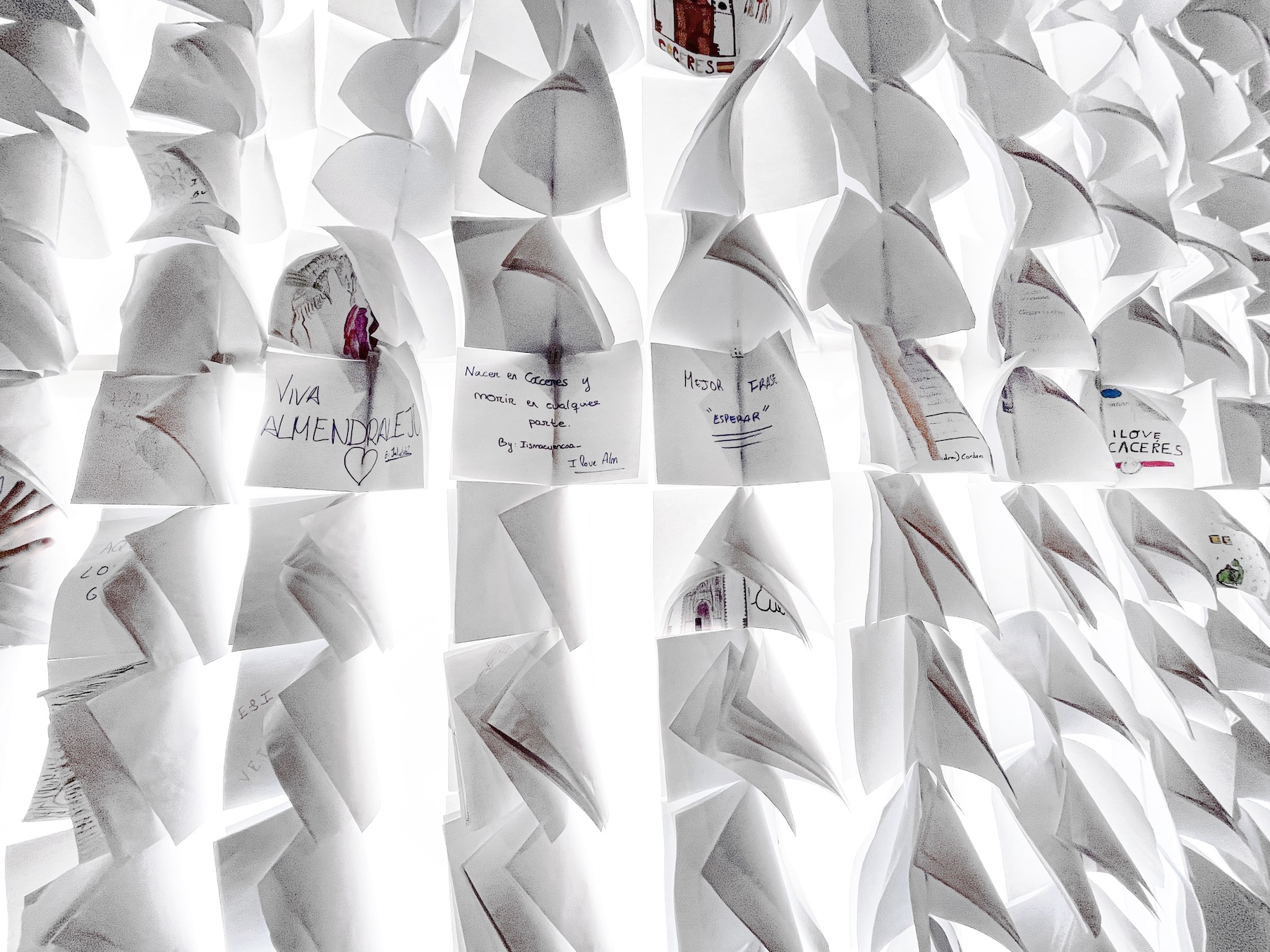
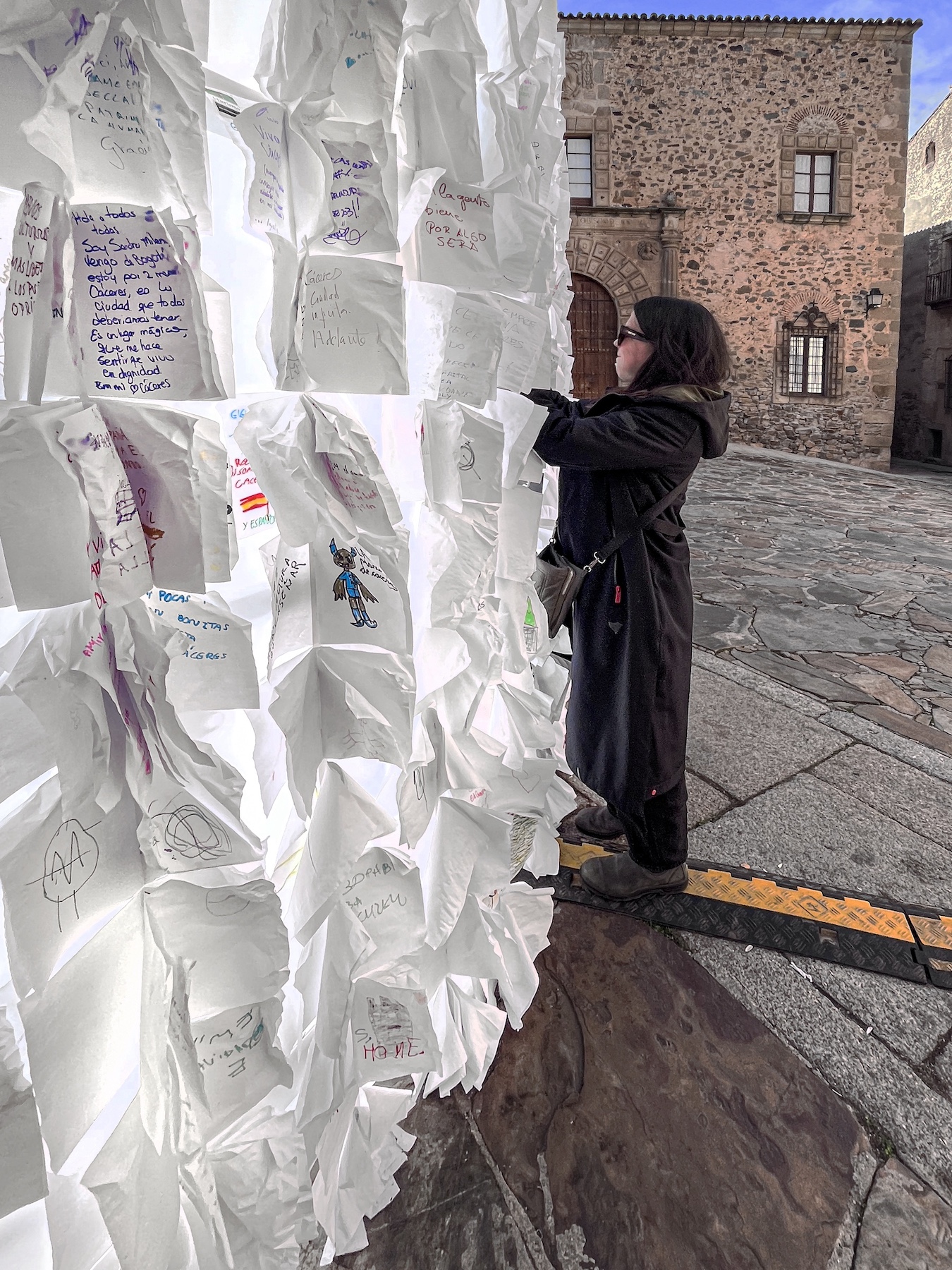
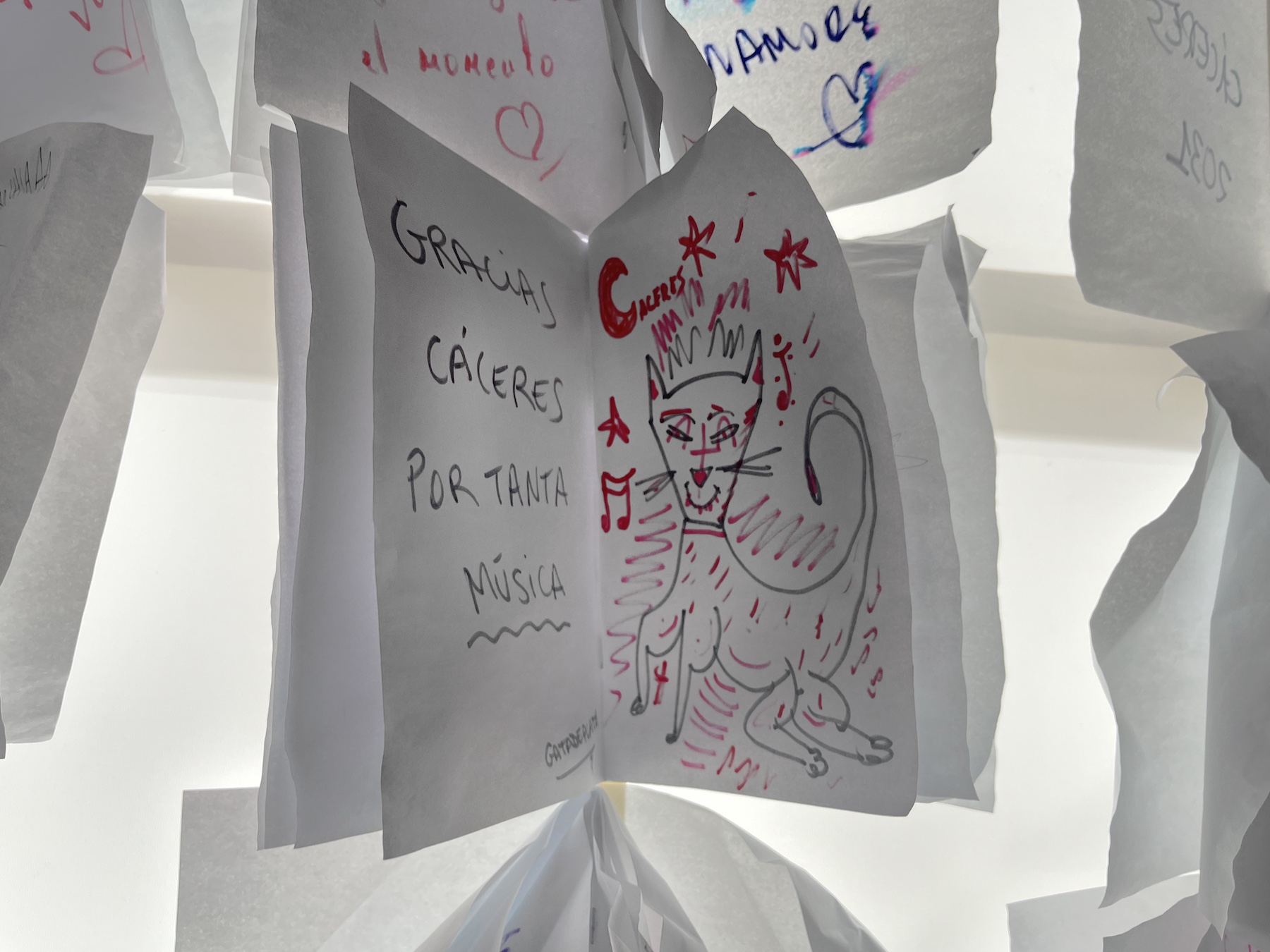
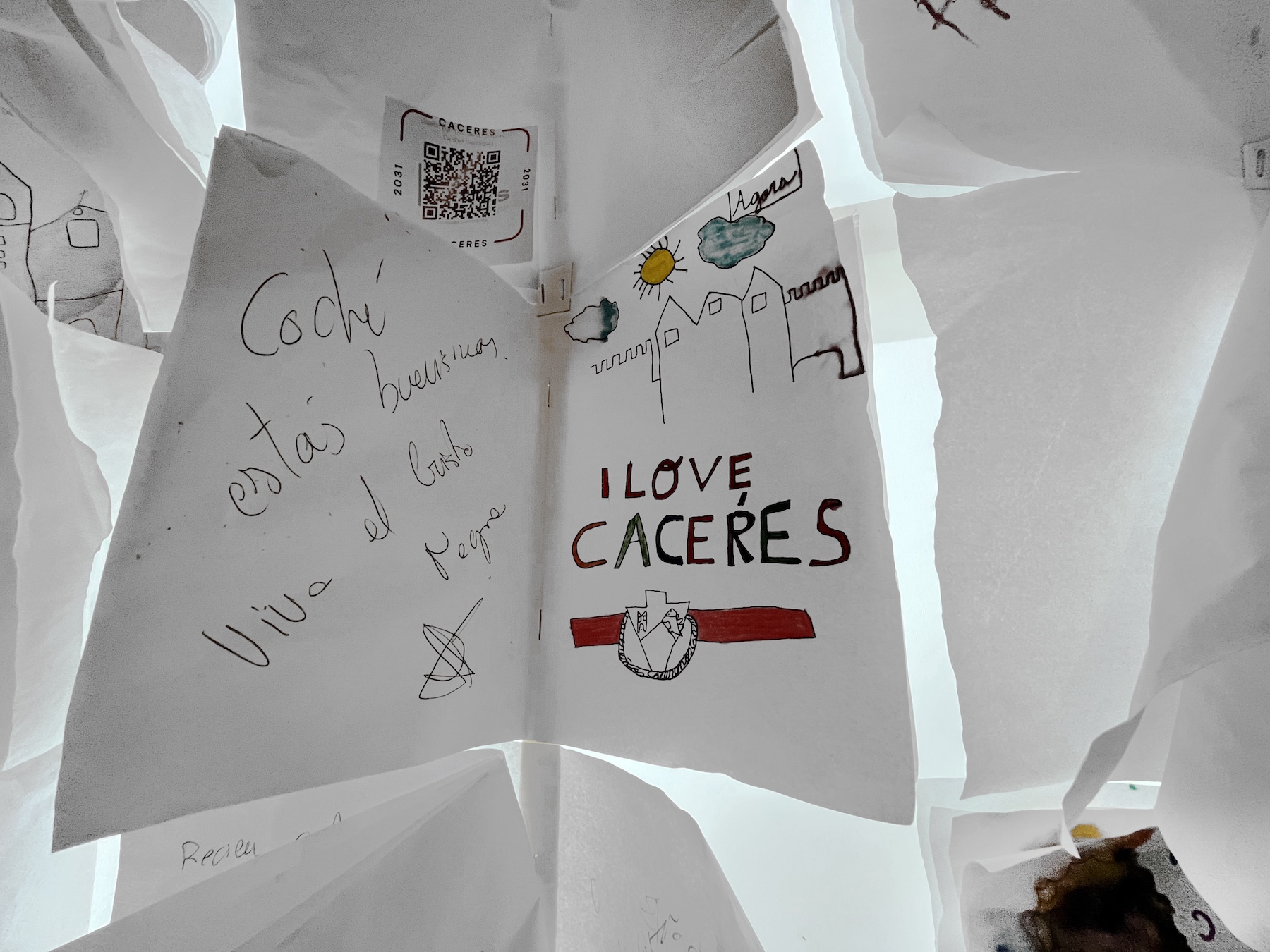
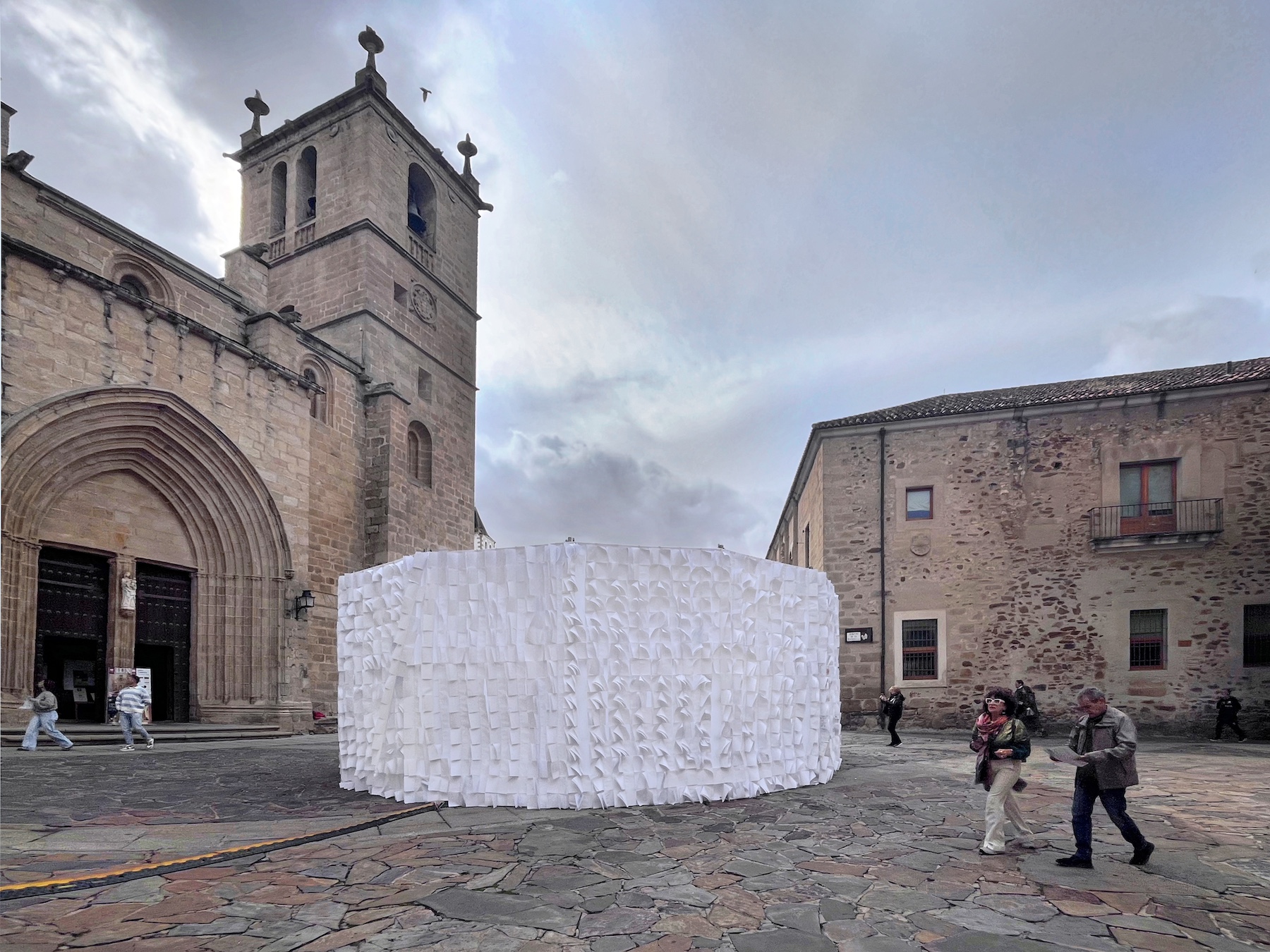
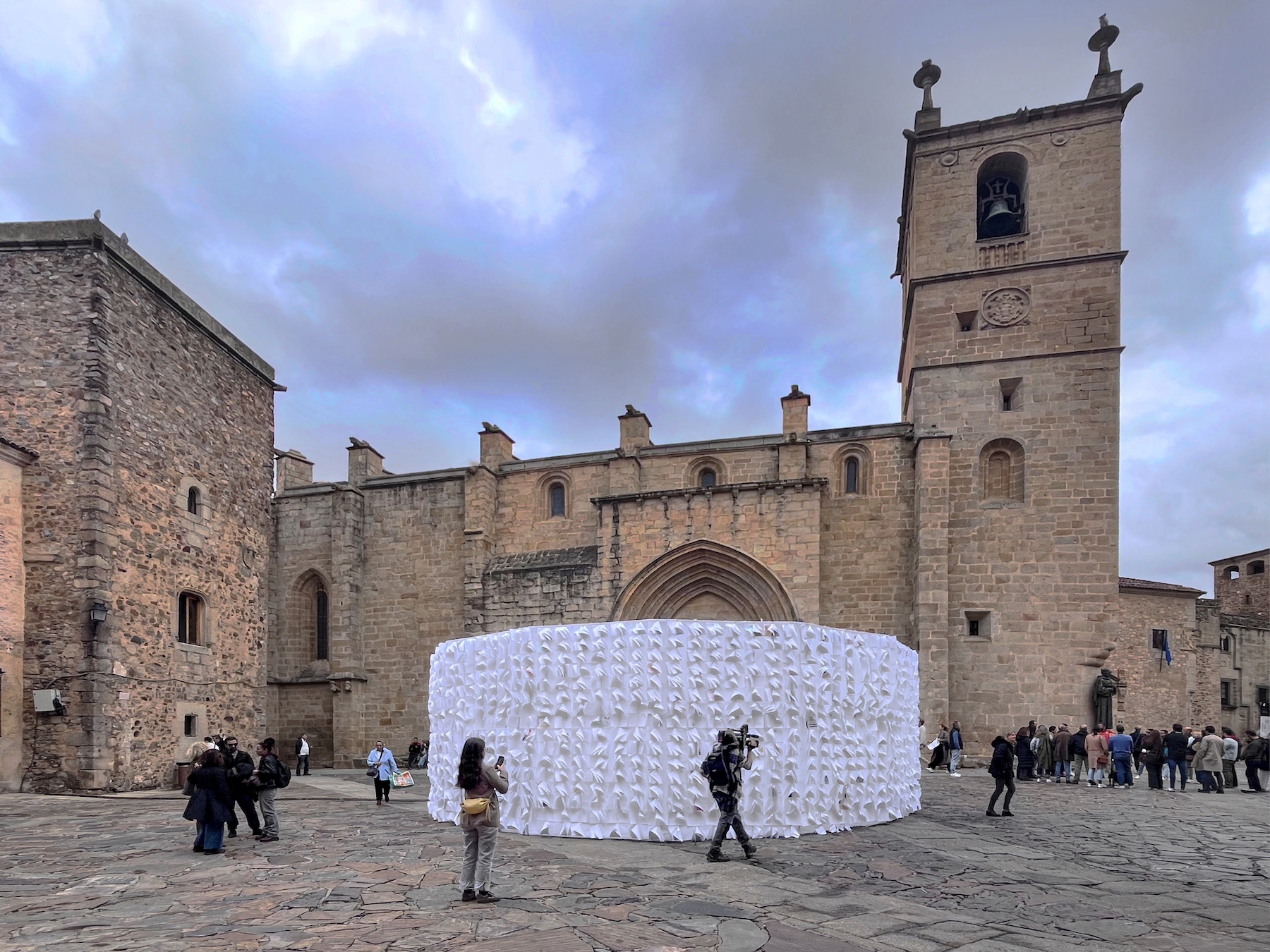
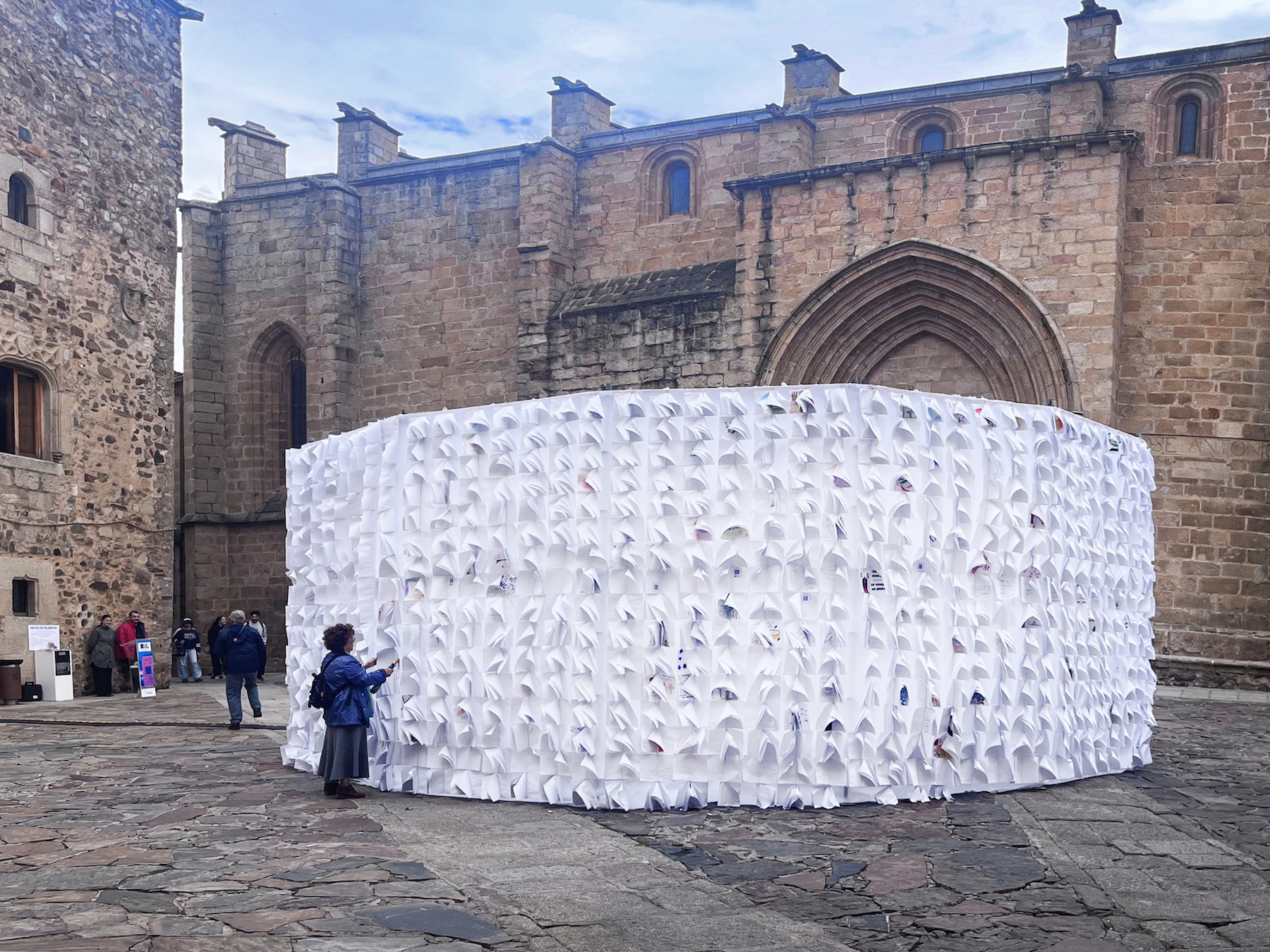
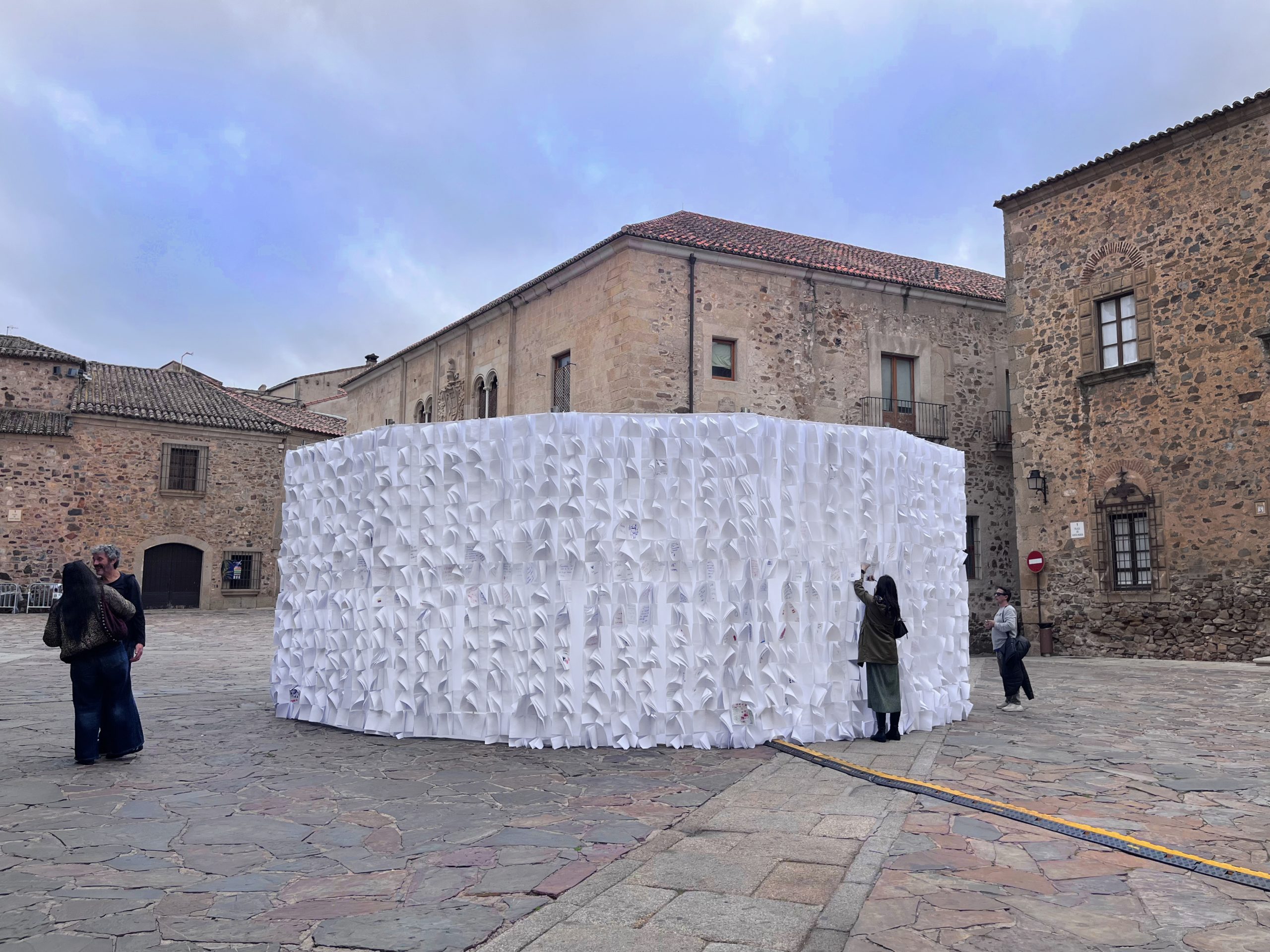
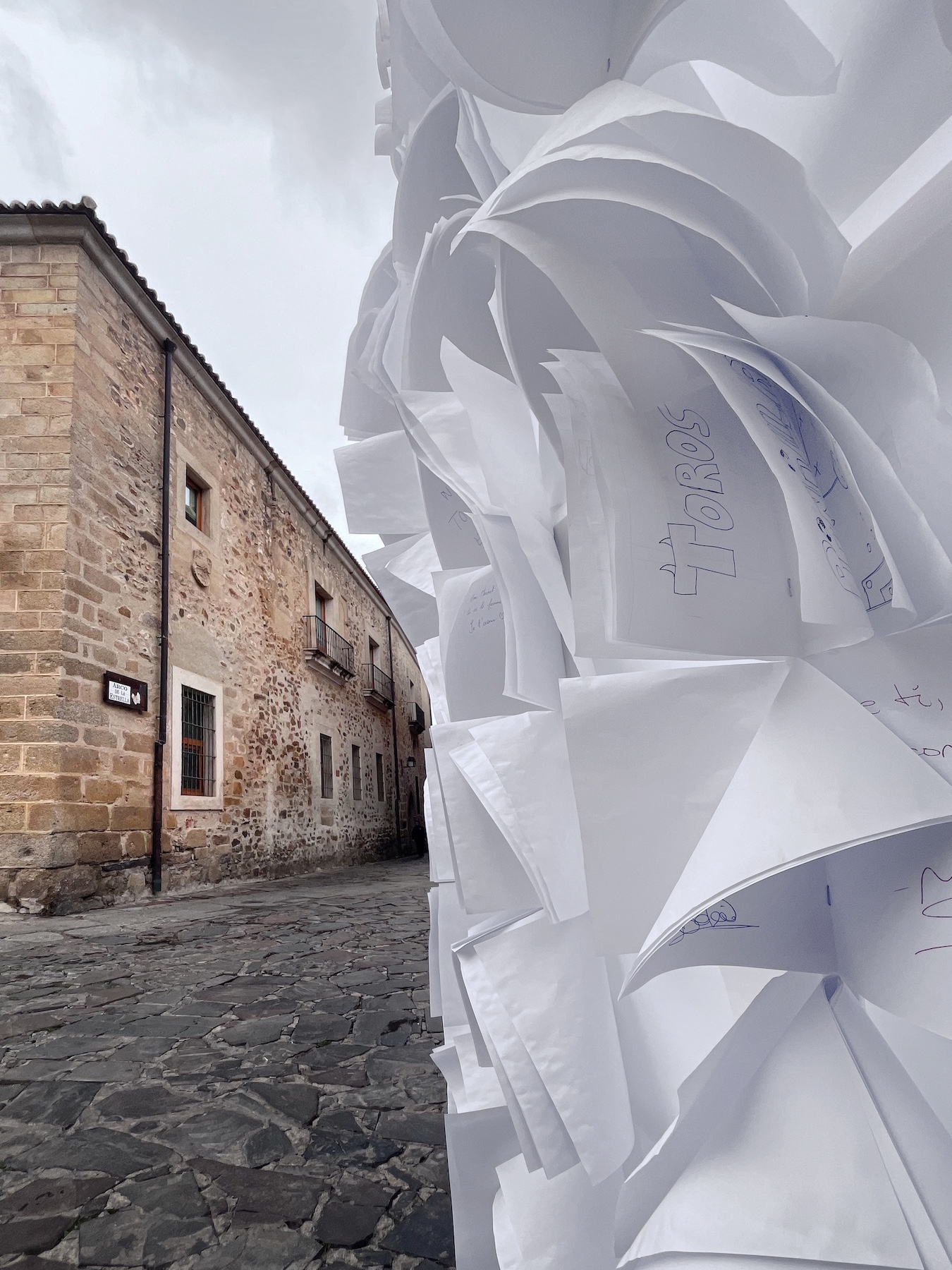
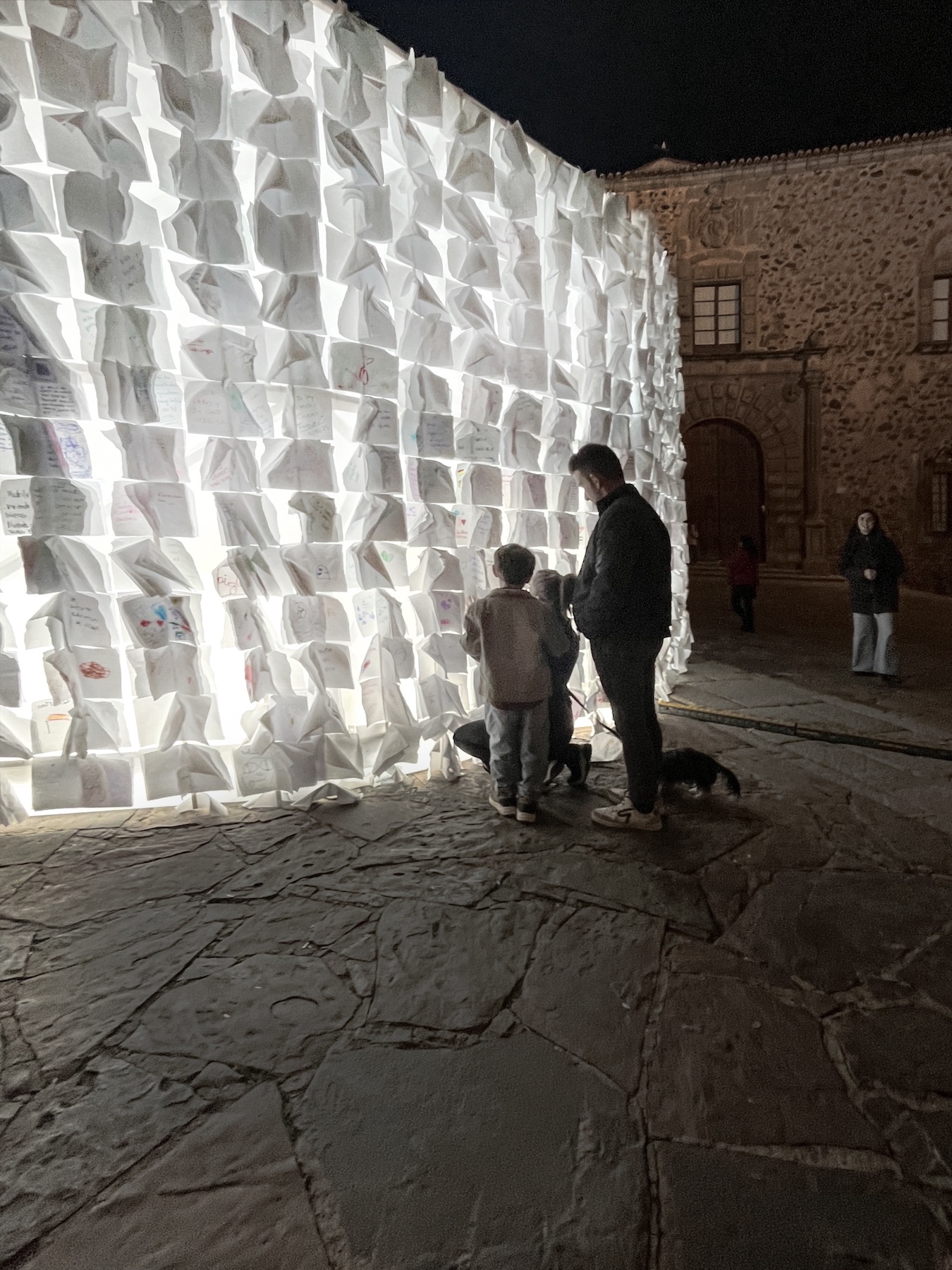
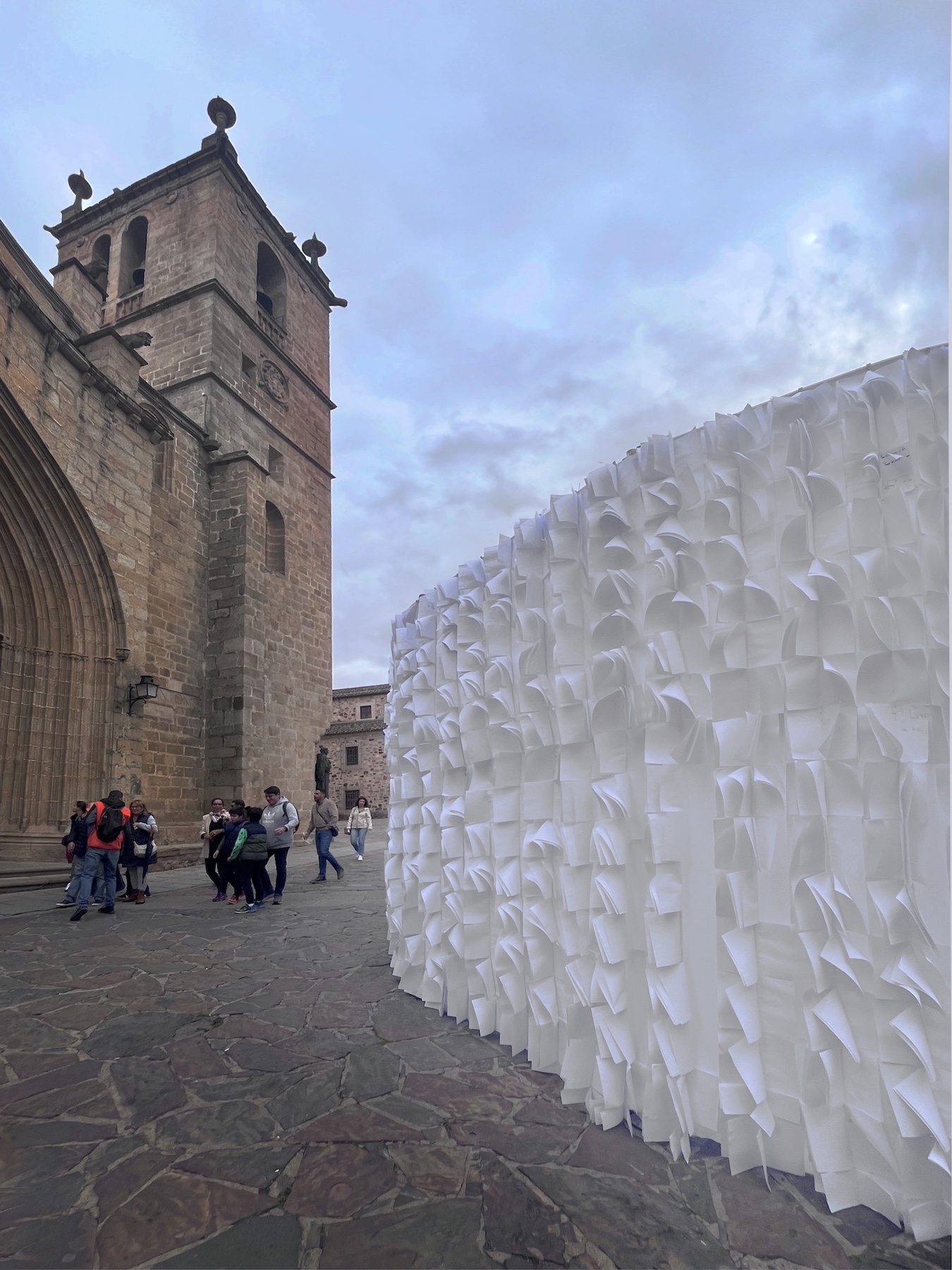
Last November, we were invited to work in Cáceres with our piece “On Blank Pages”. The installation inaugurated the activities with which the city begins its candidacy to become the European Capital of Culture 2031.

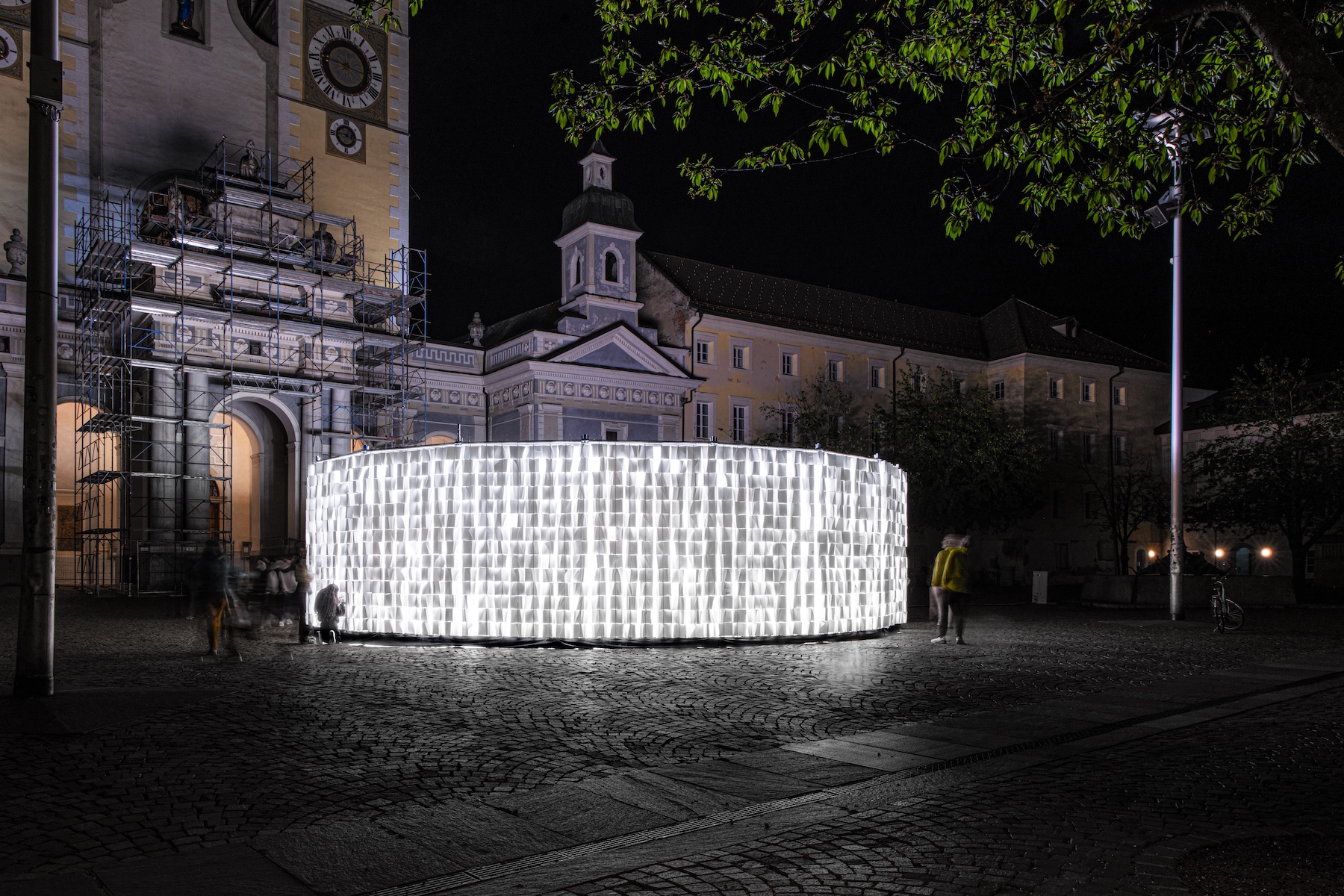
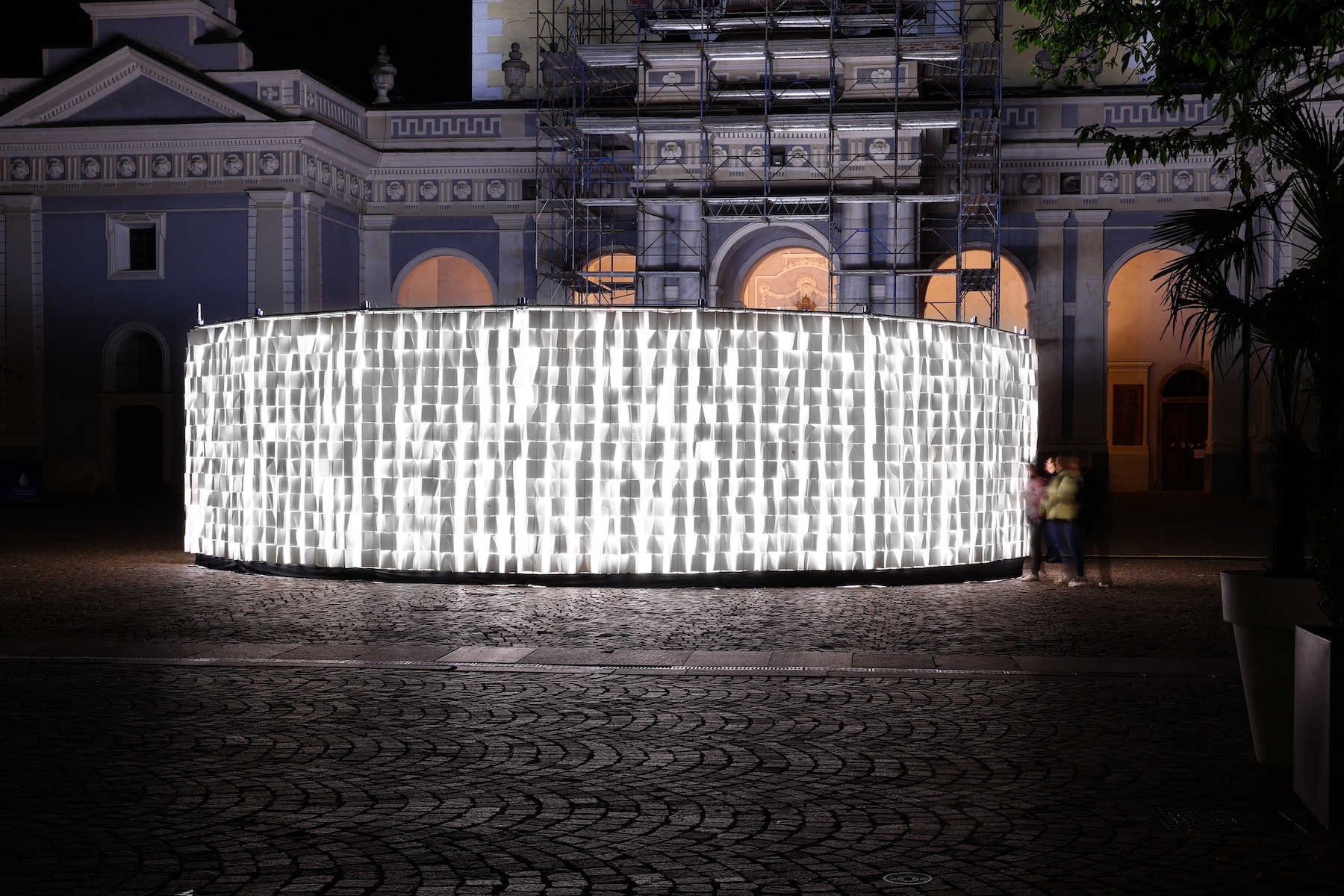
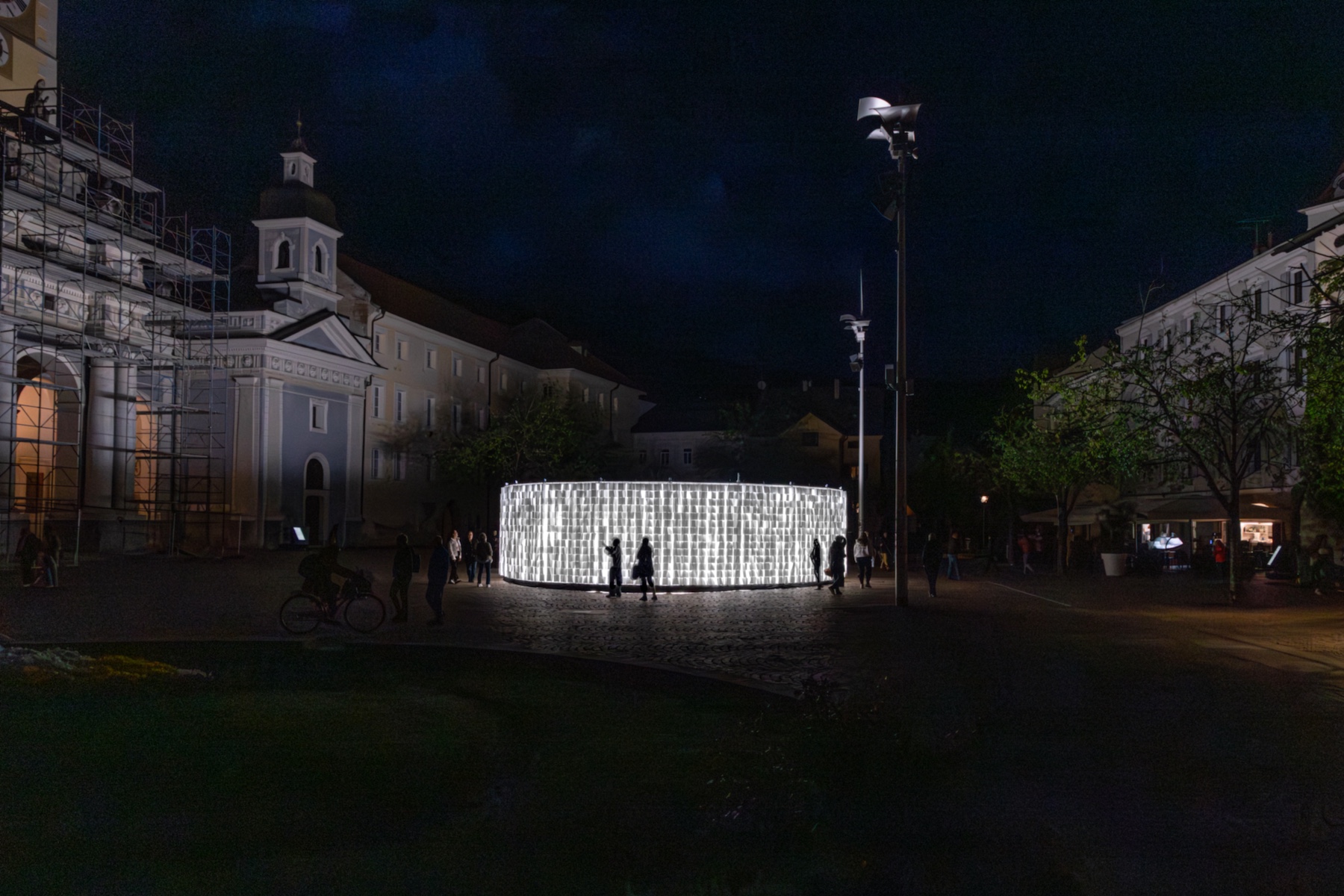
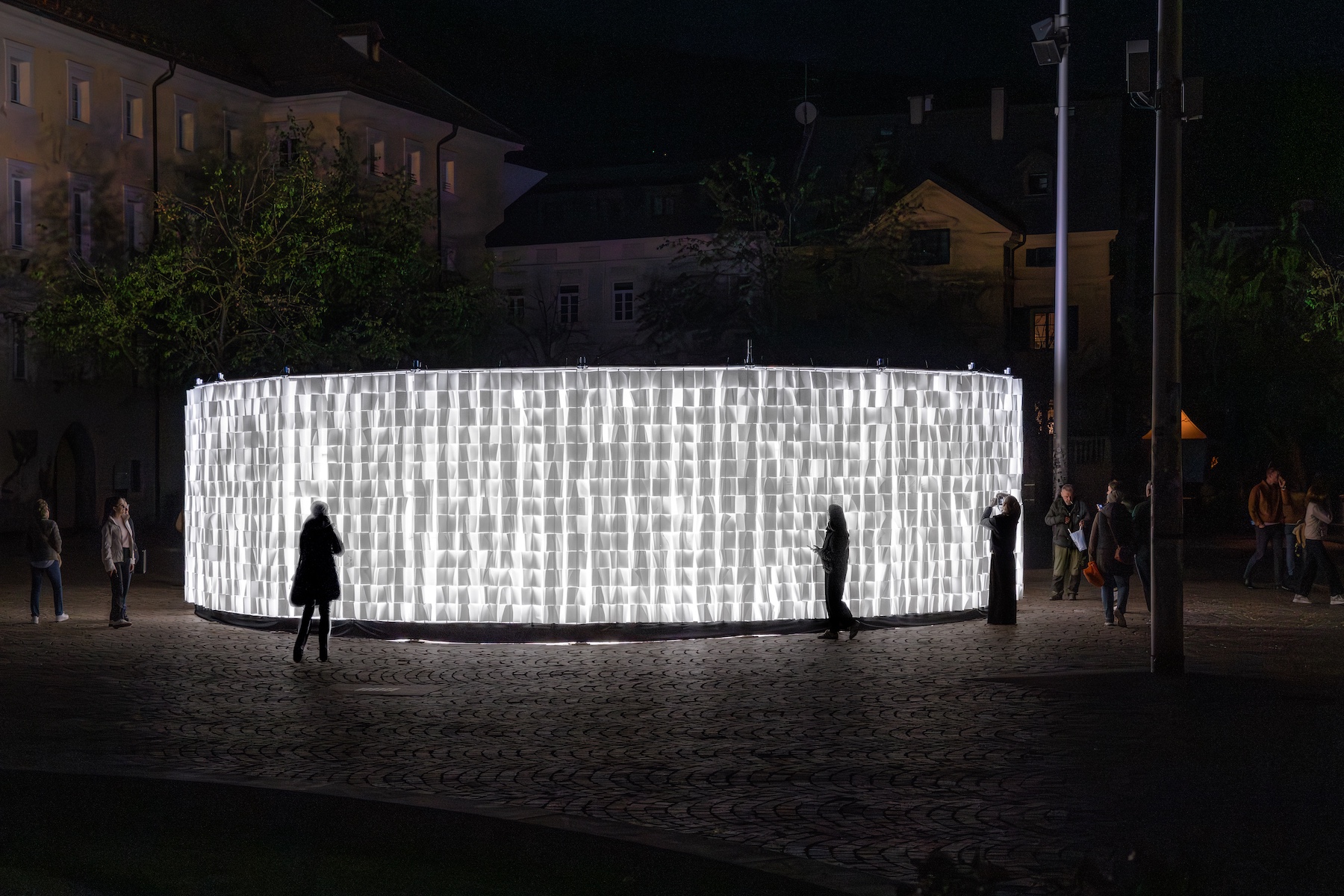
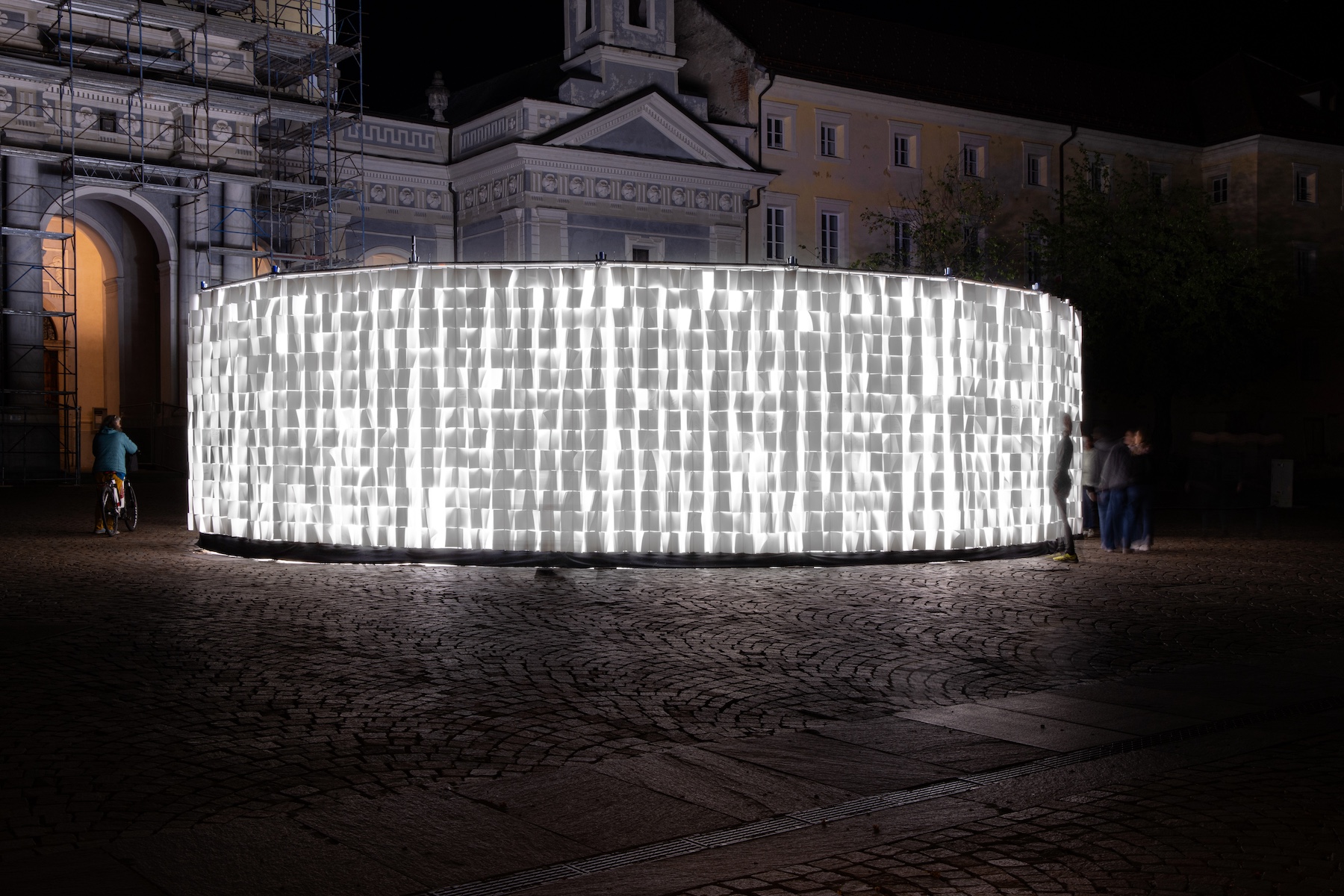
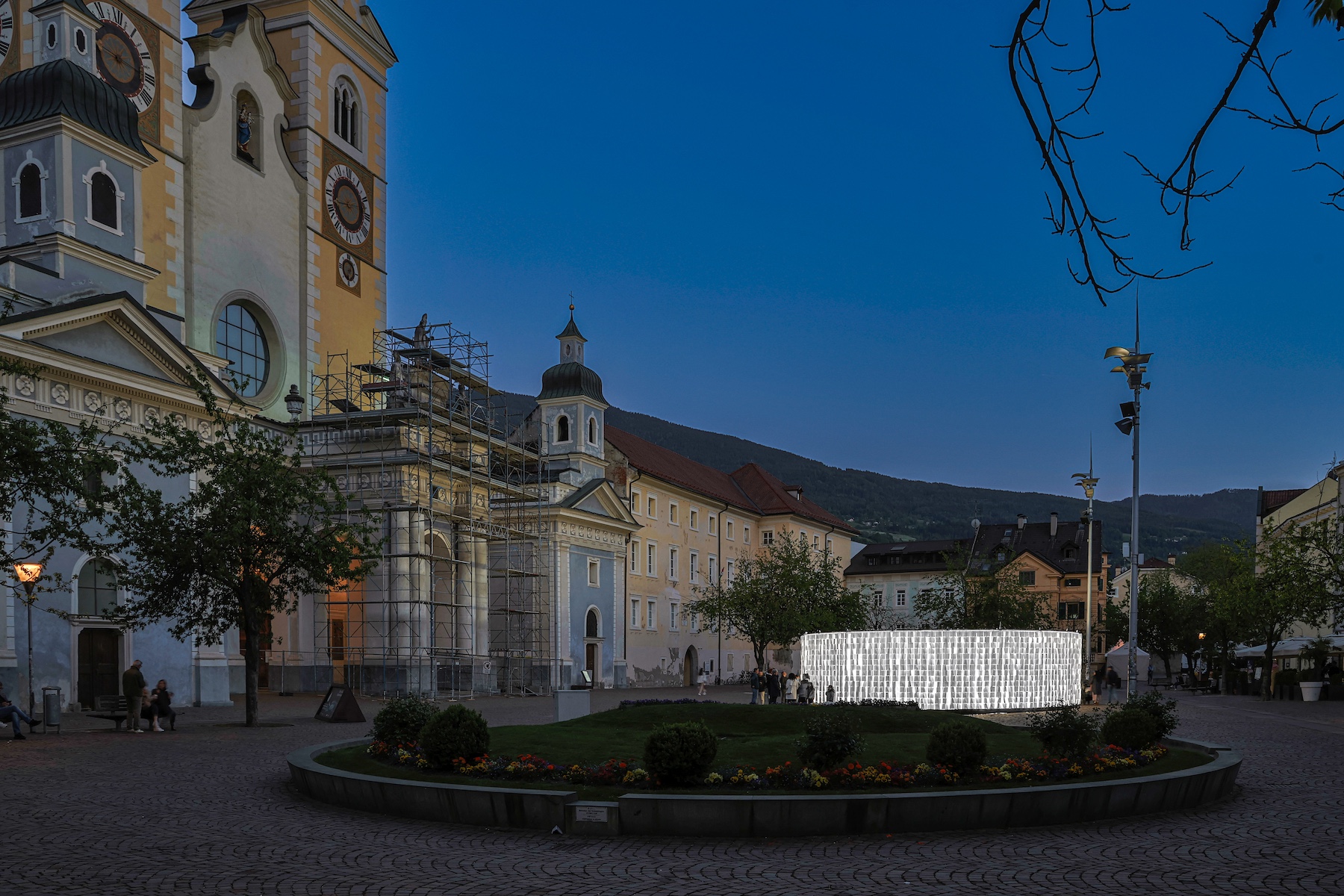
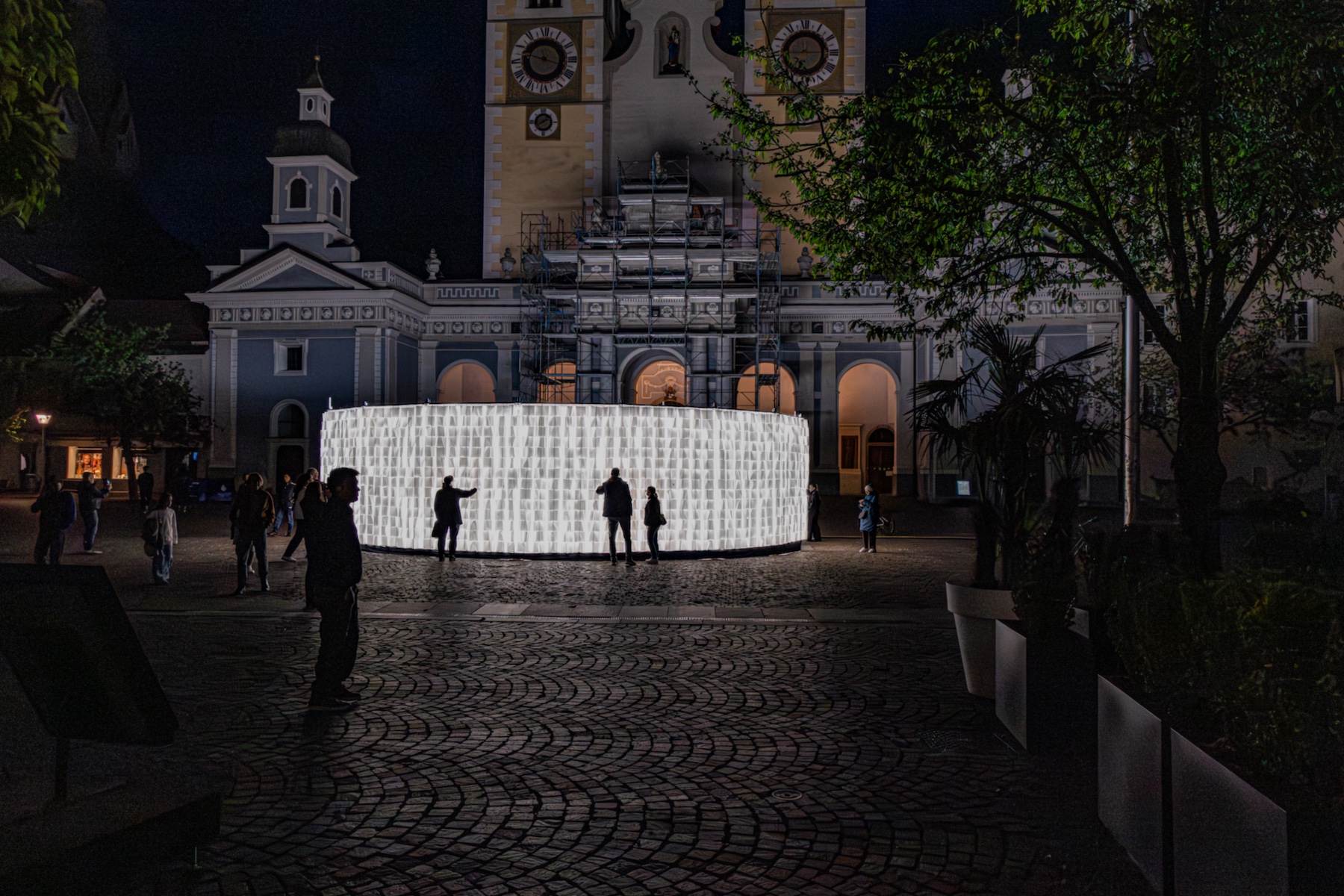
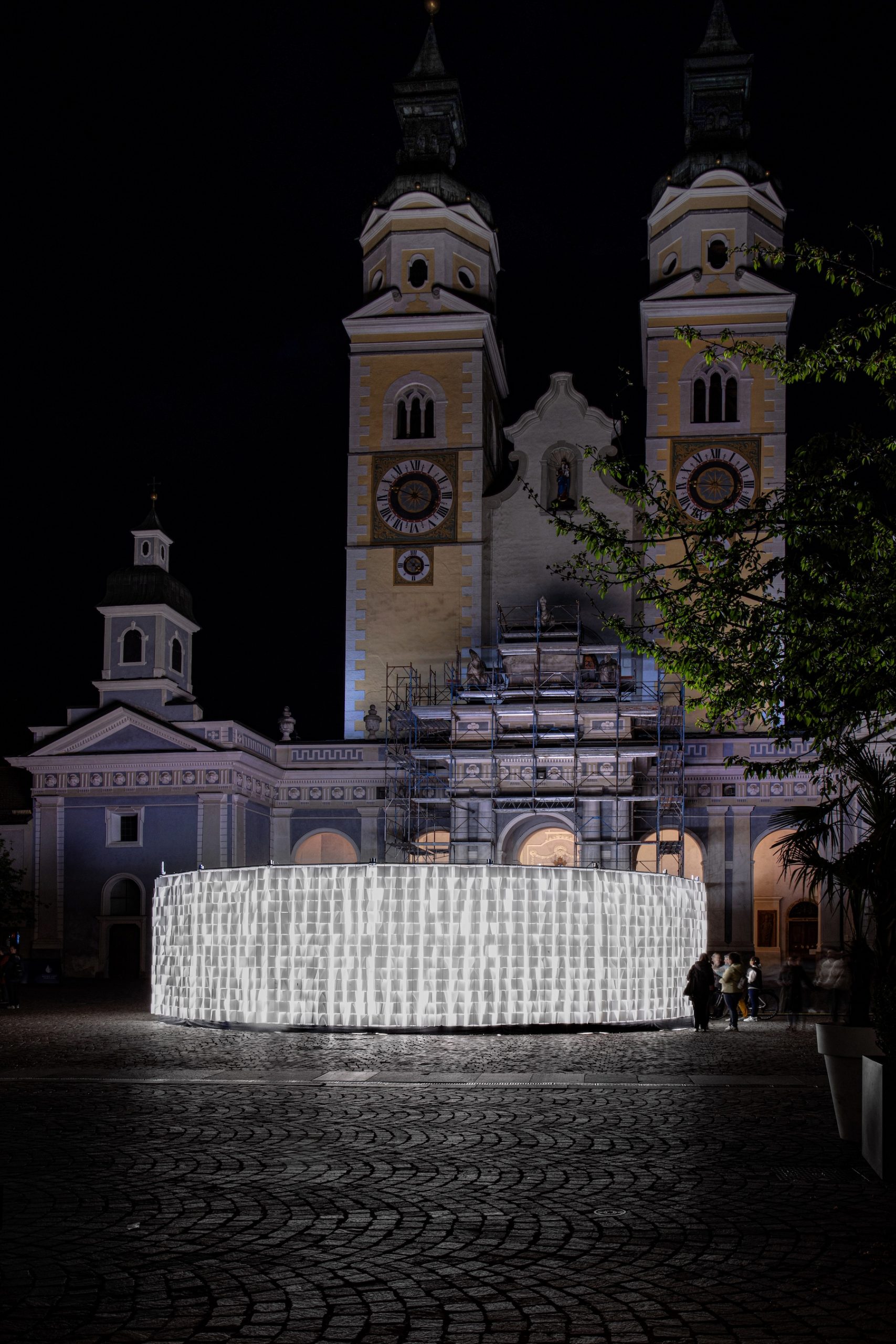
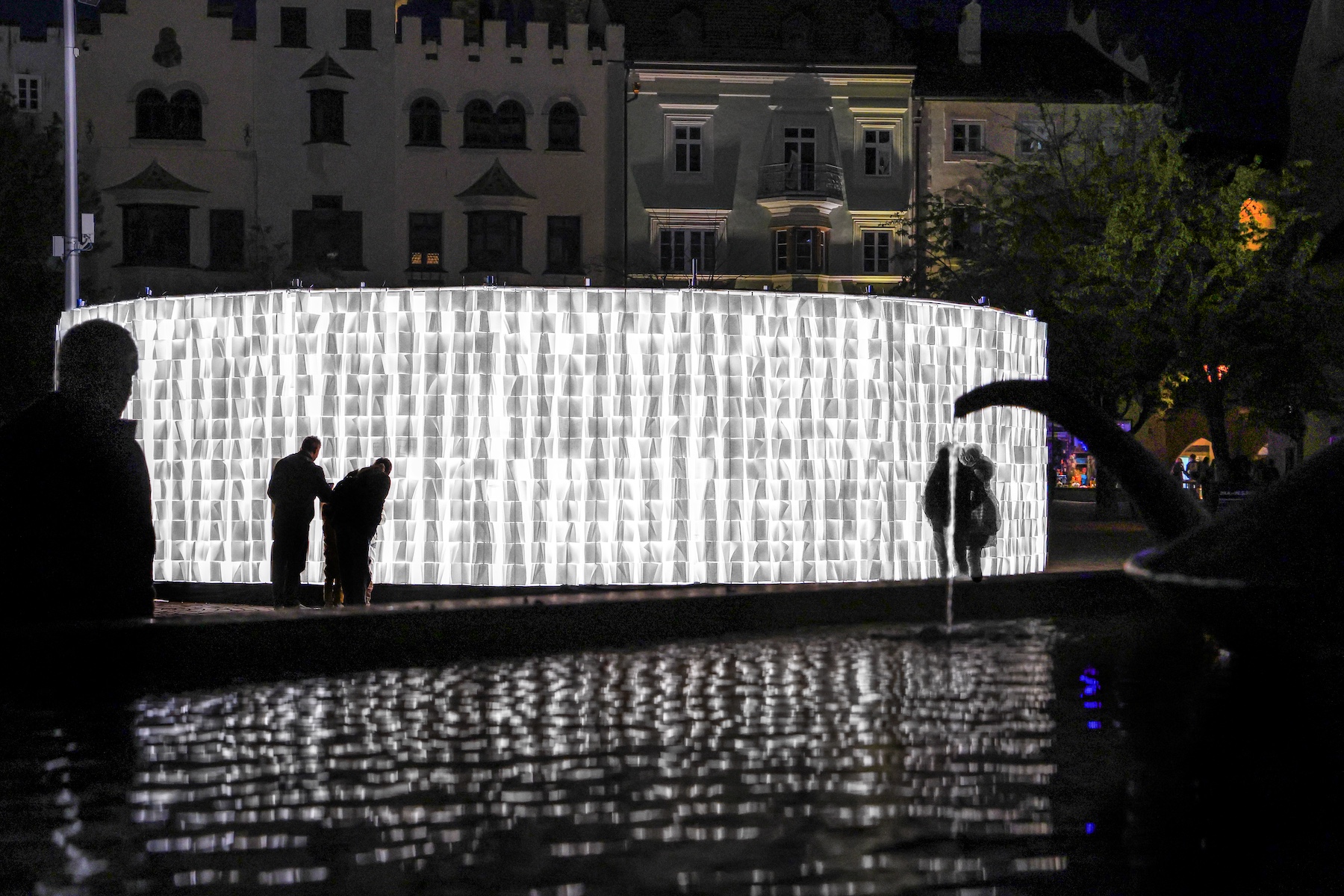
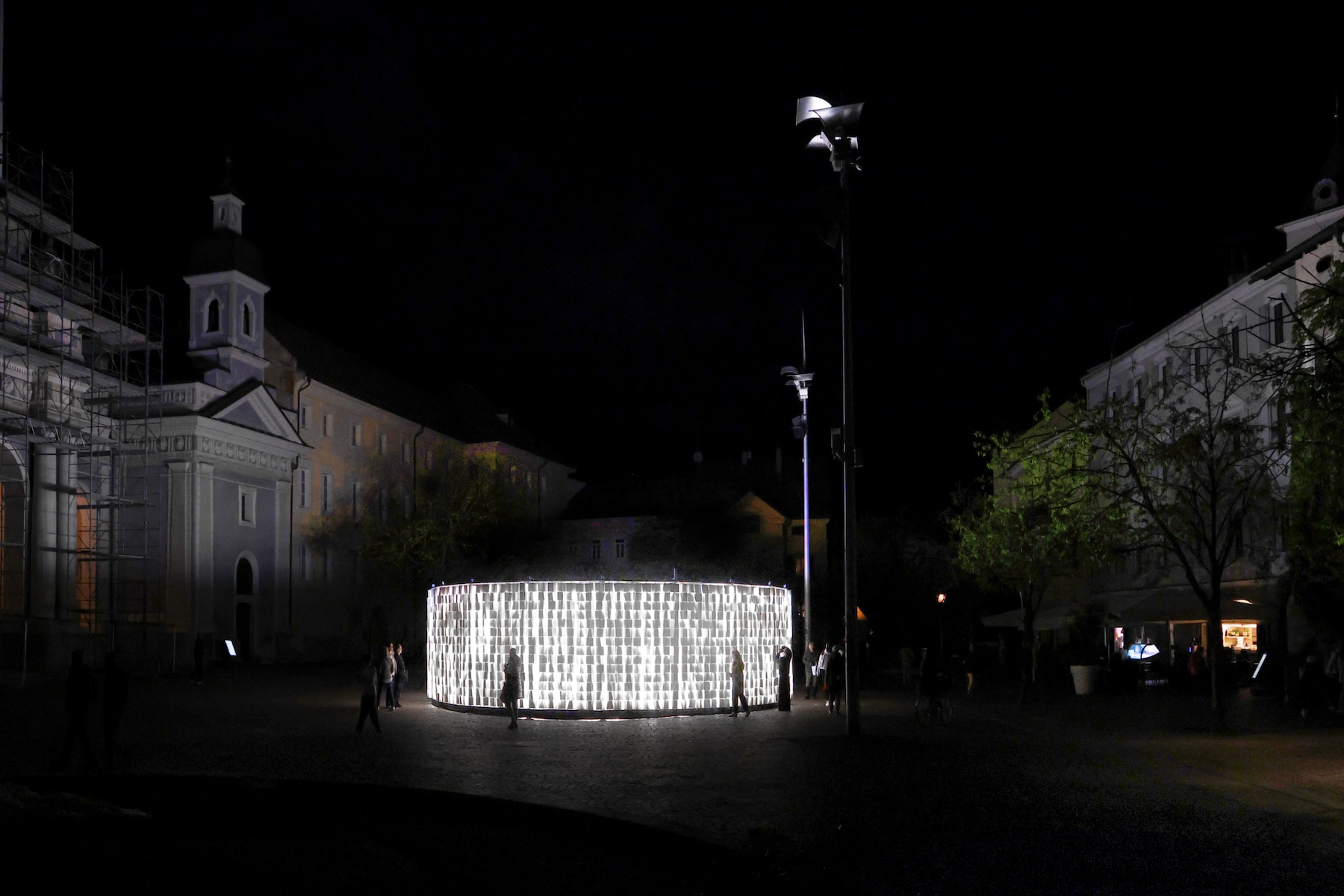
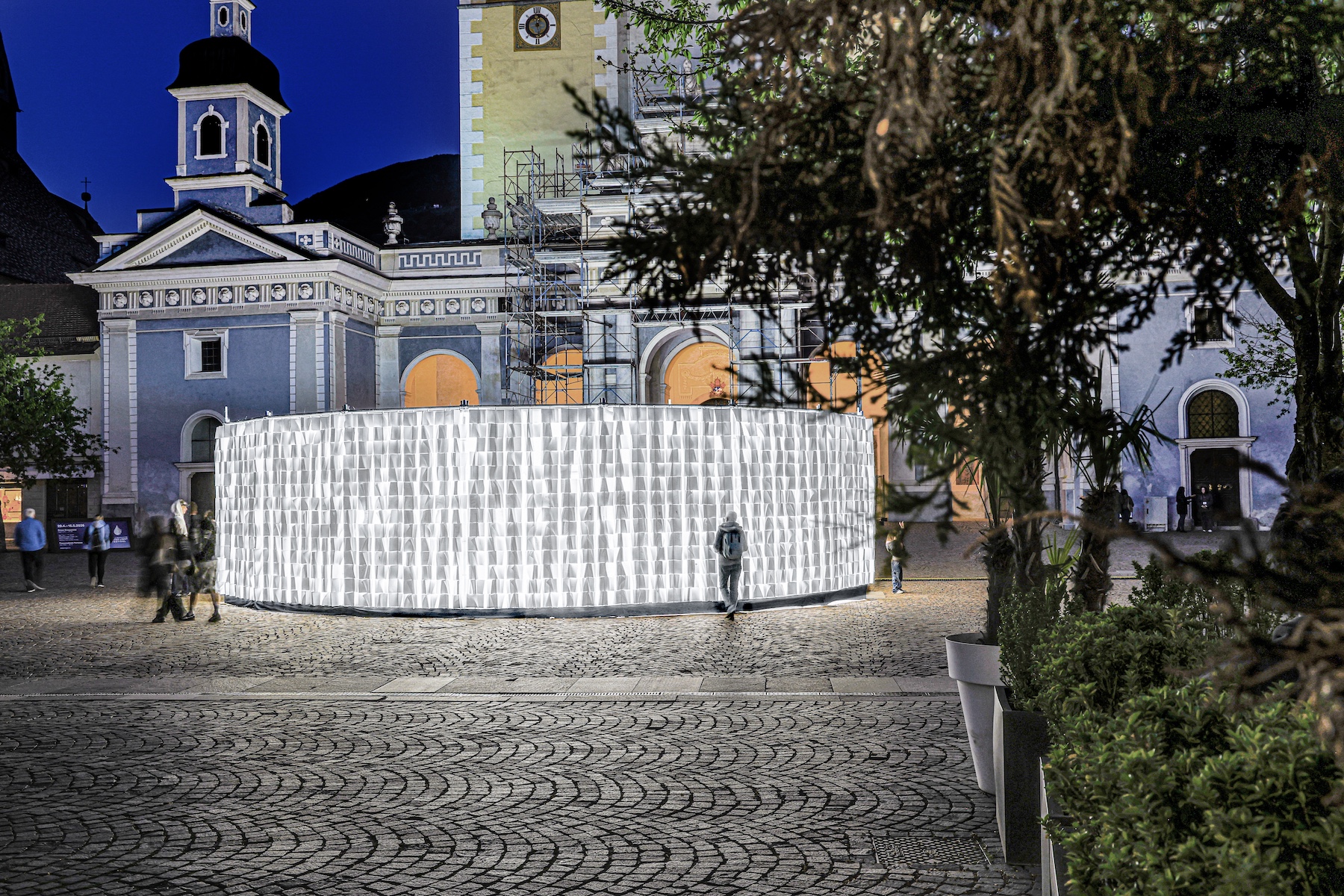
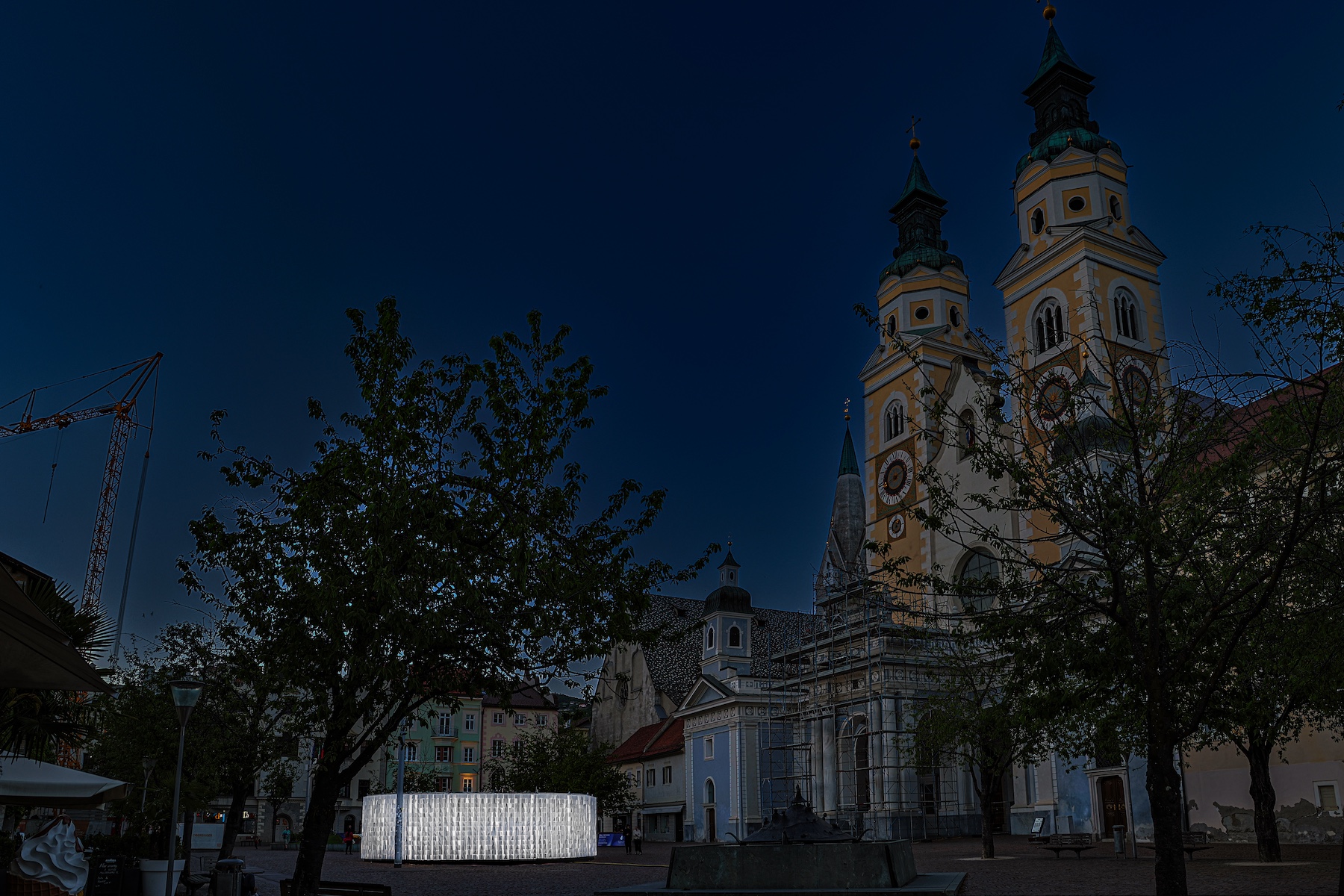
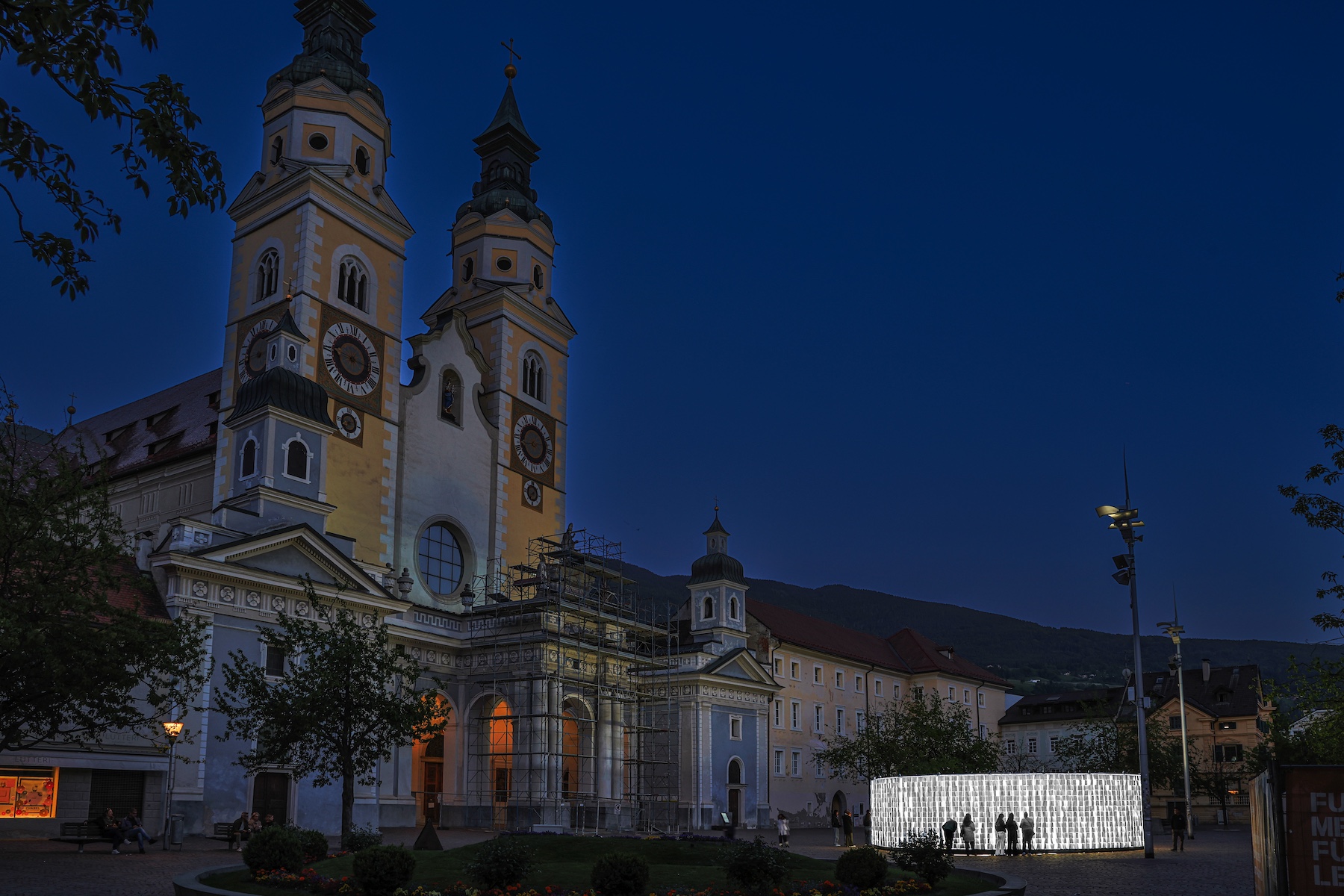
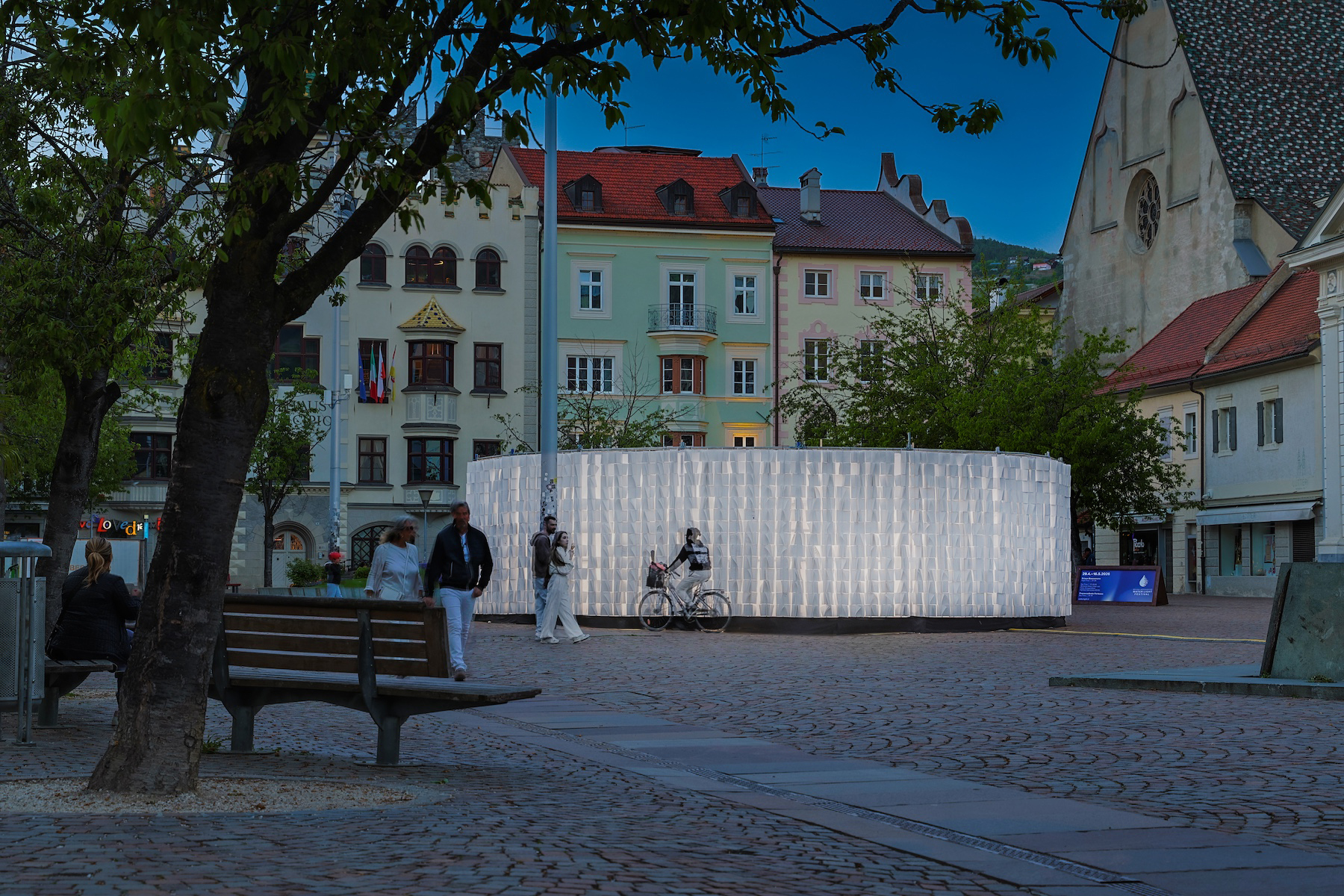
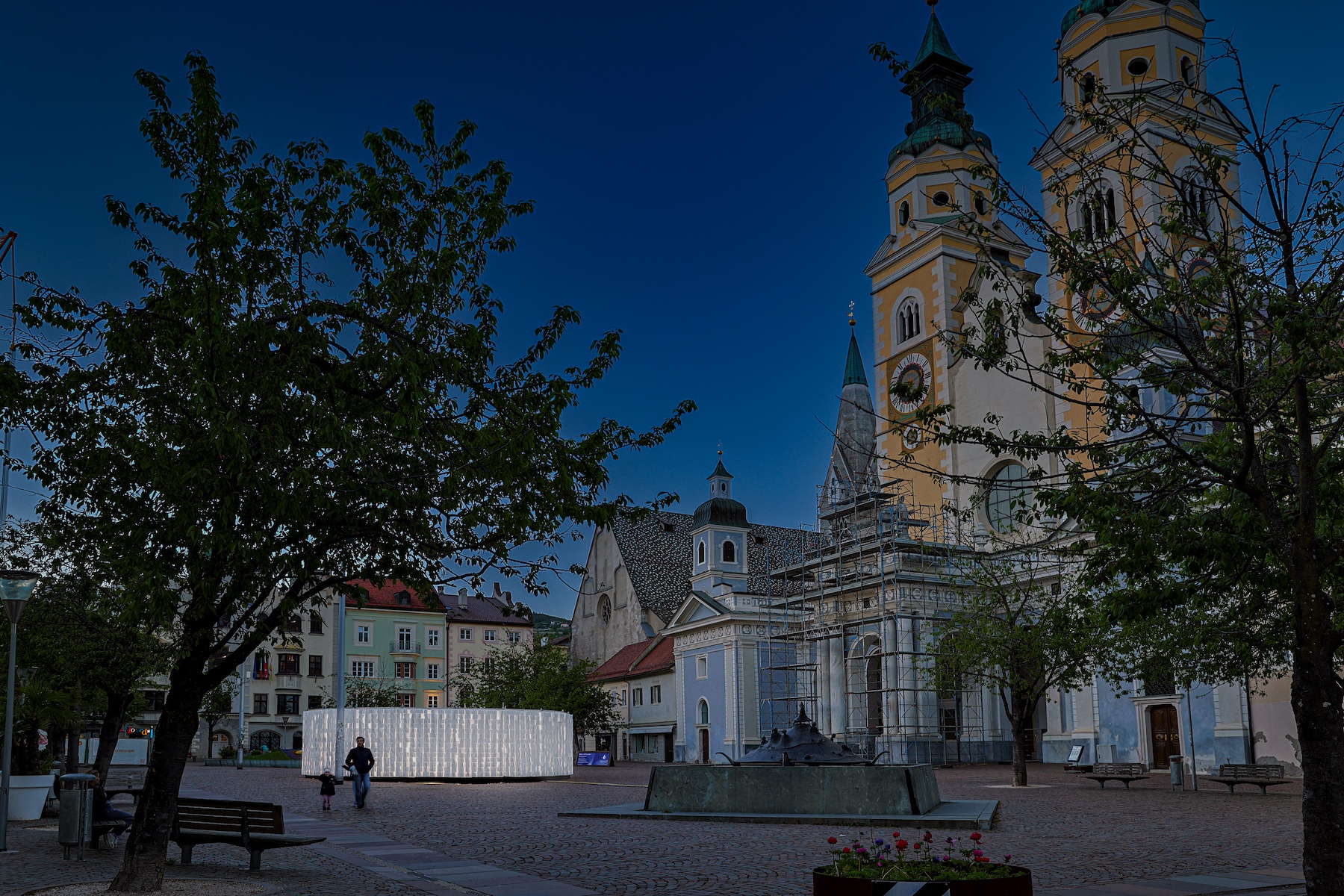
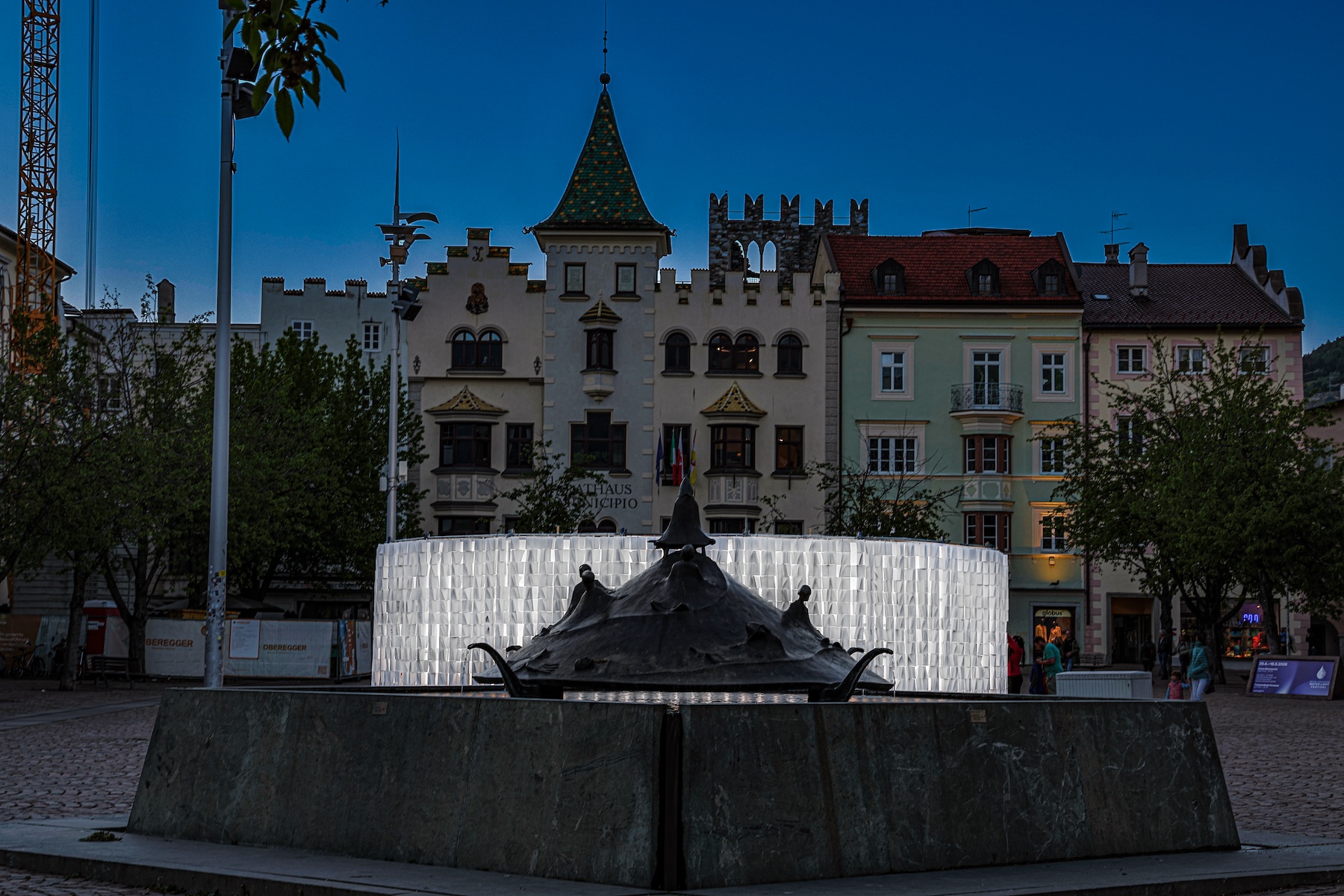
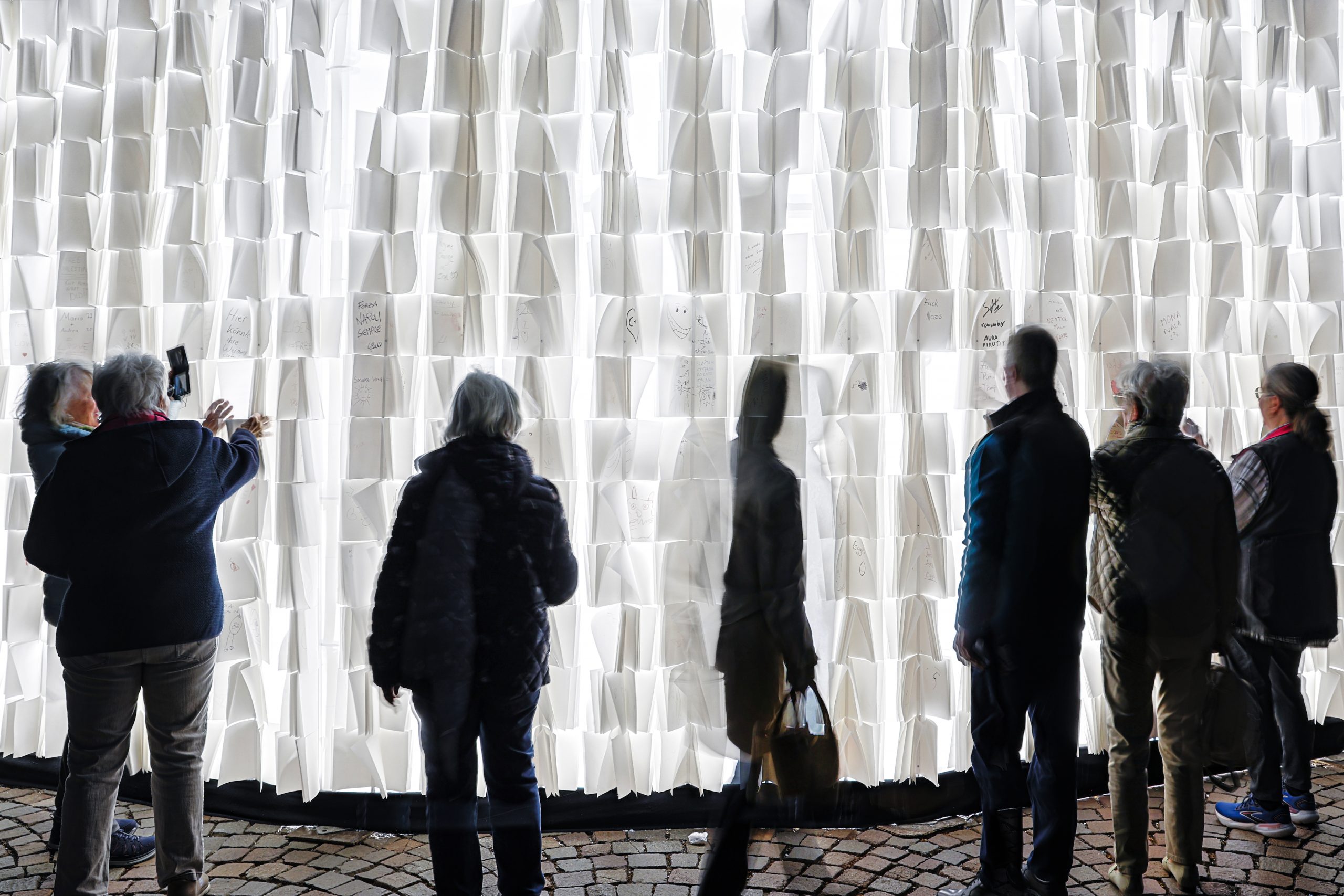
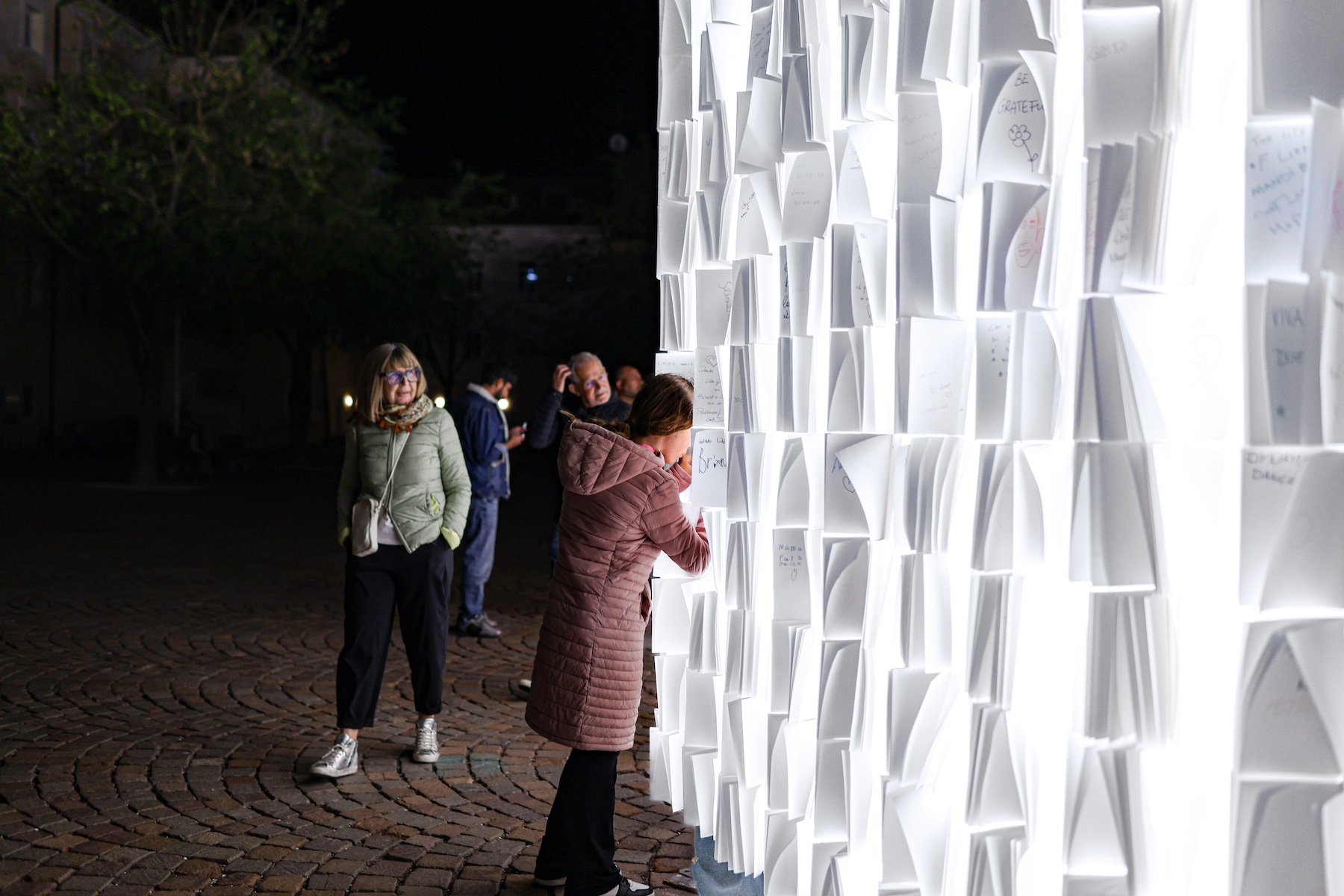
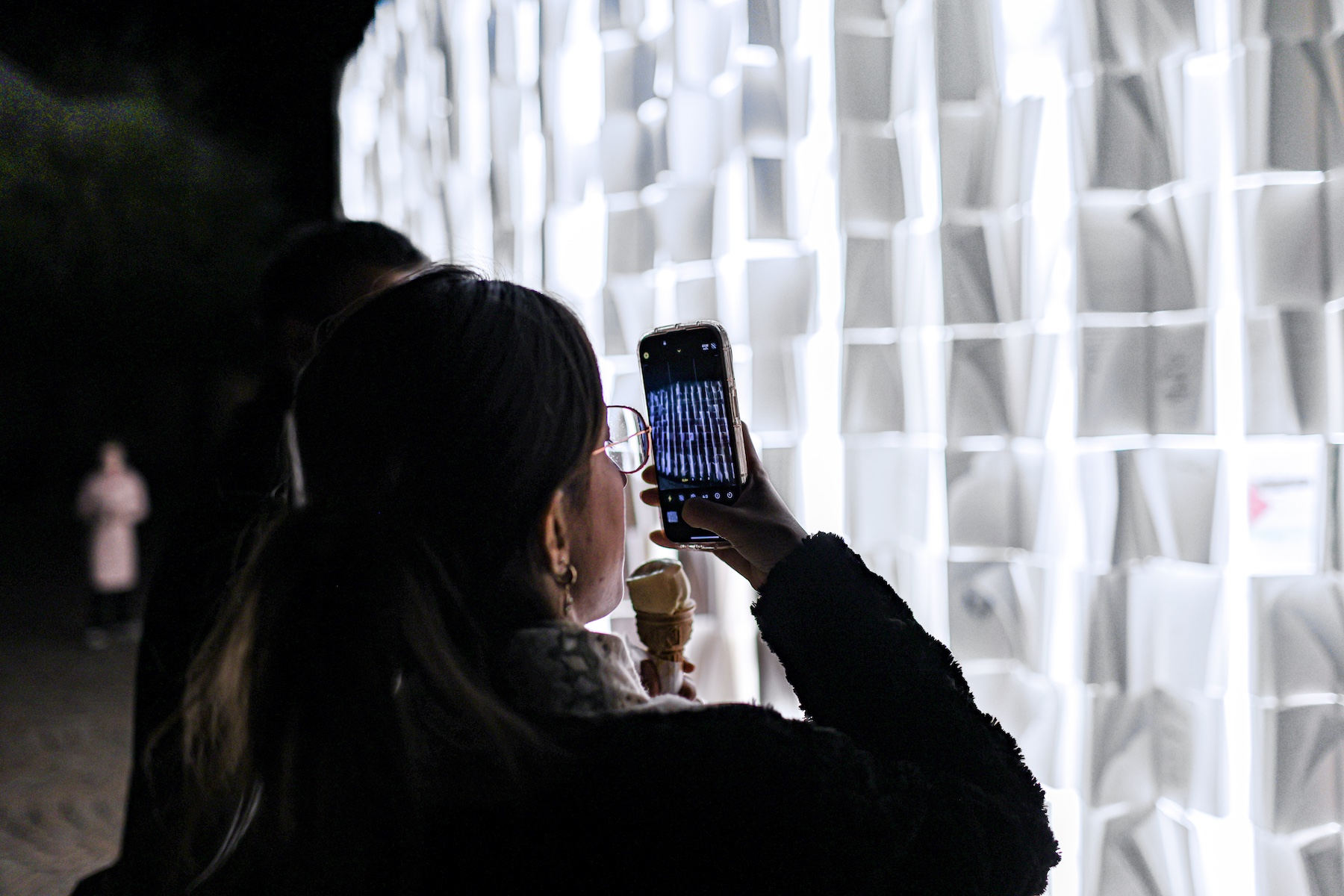
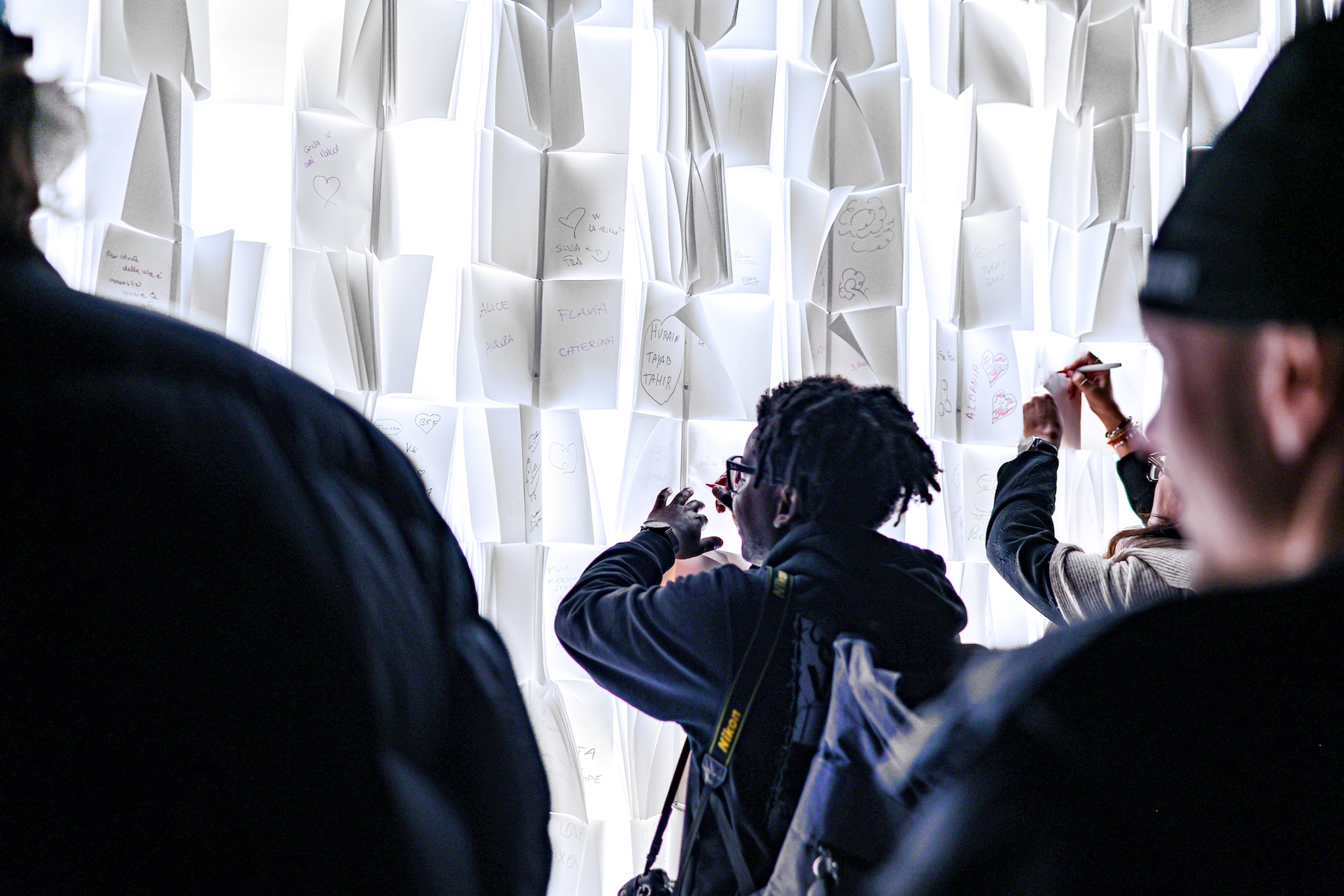
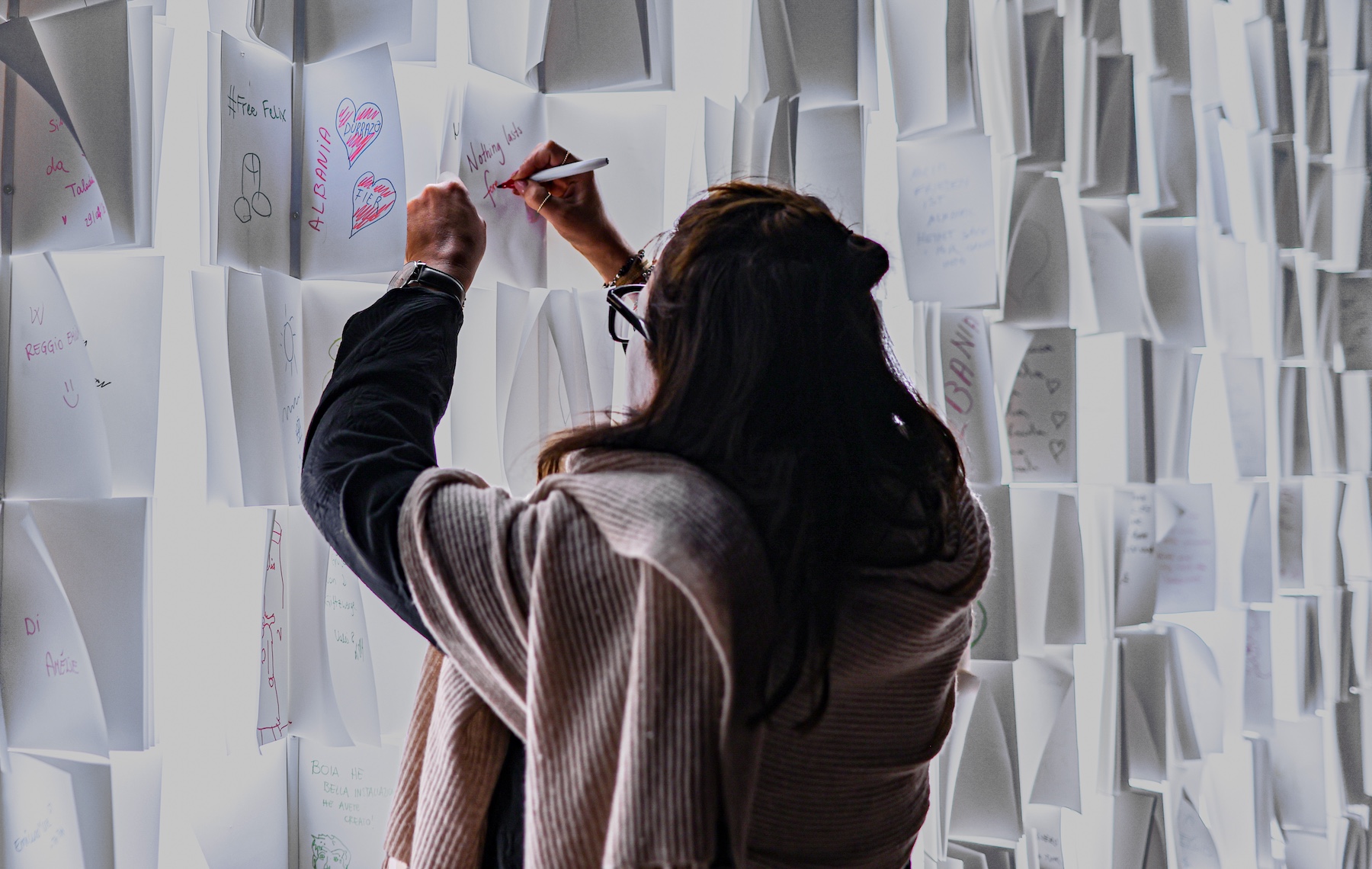
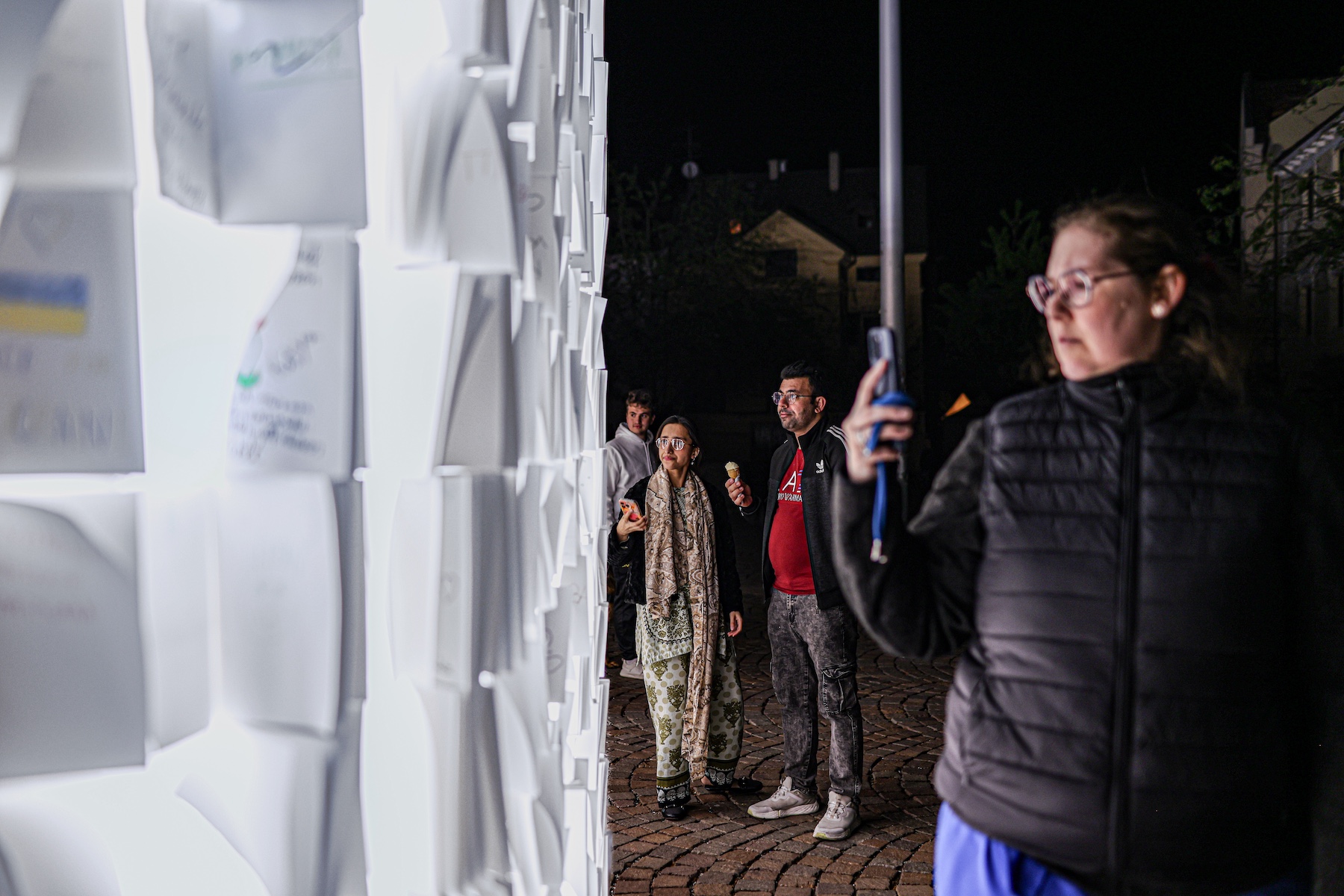
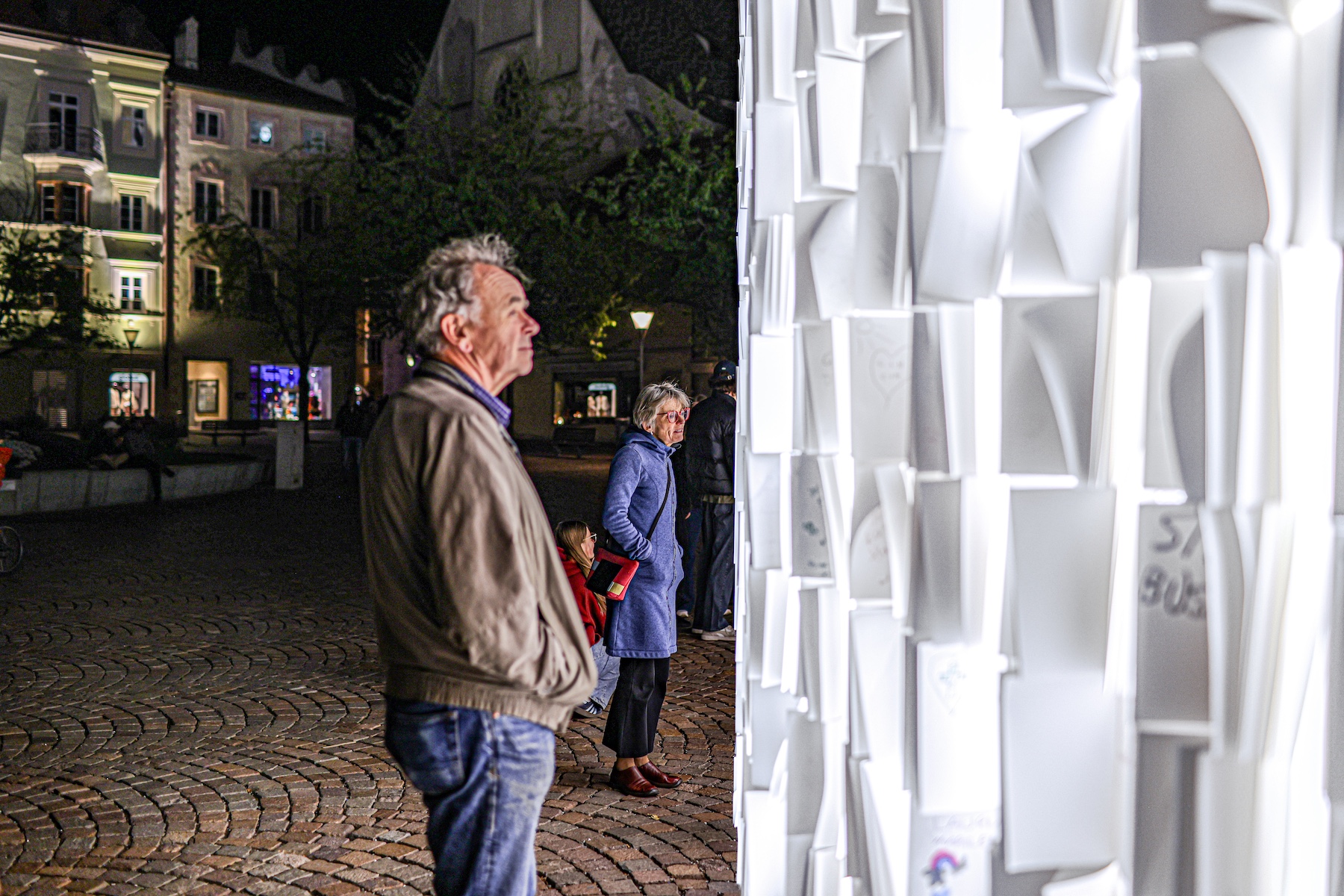
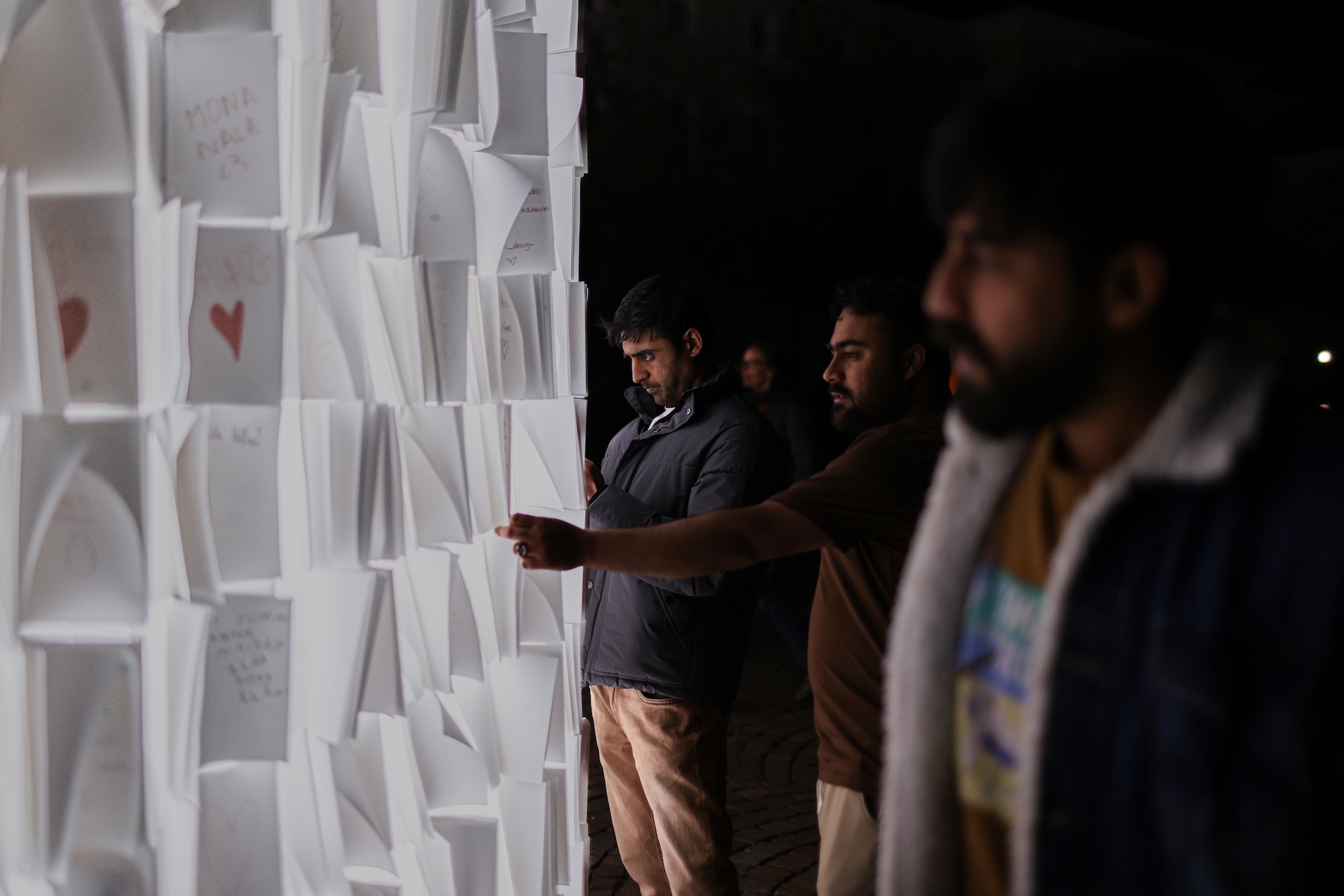
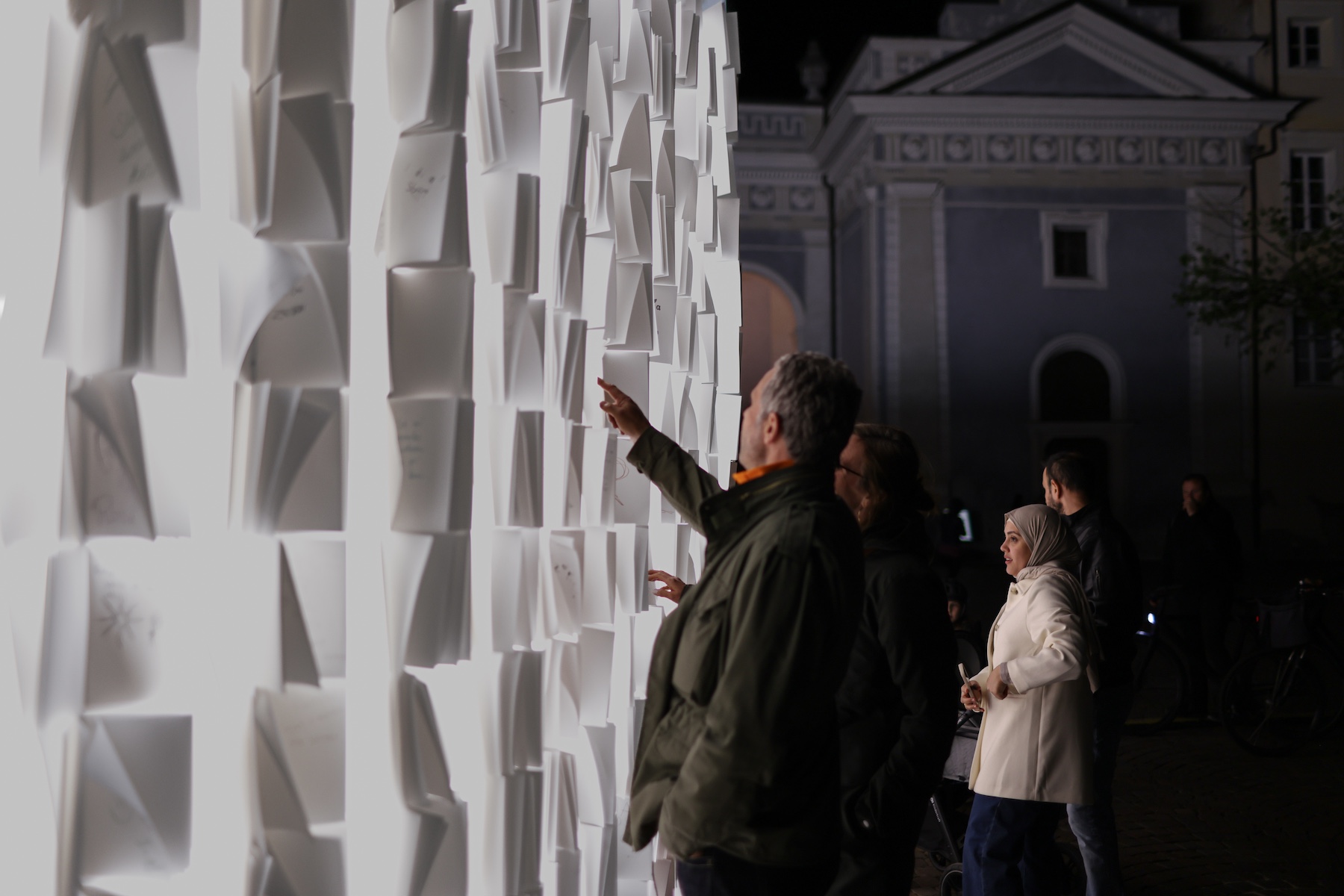
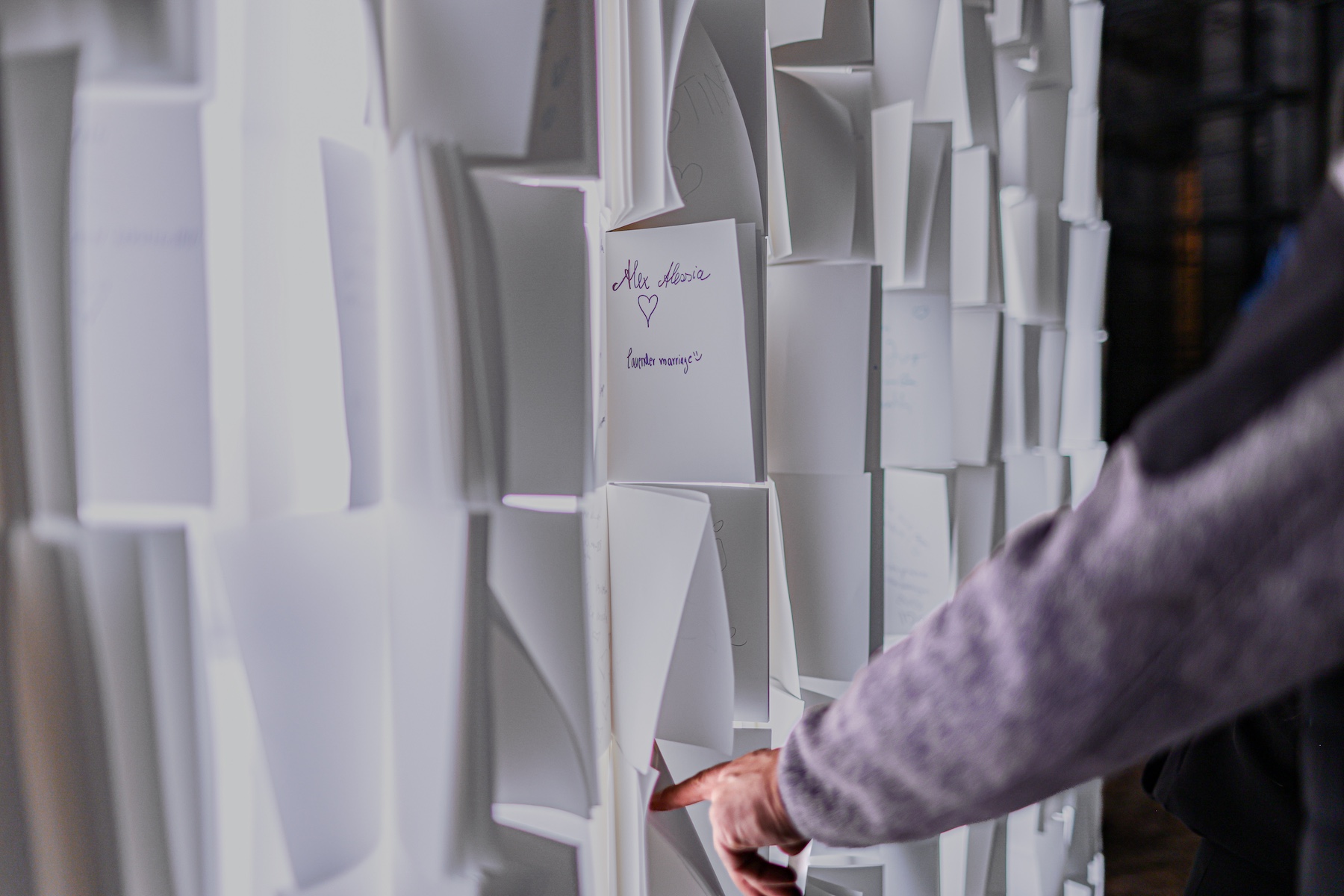
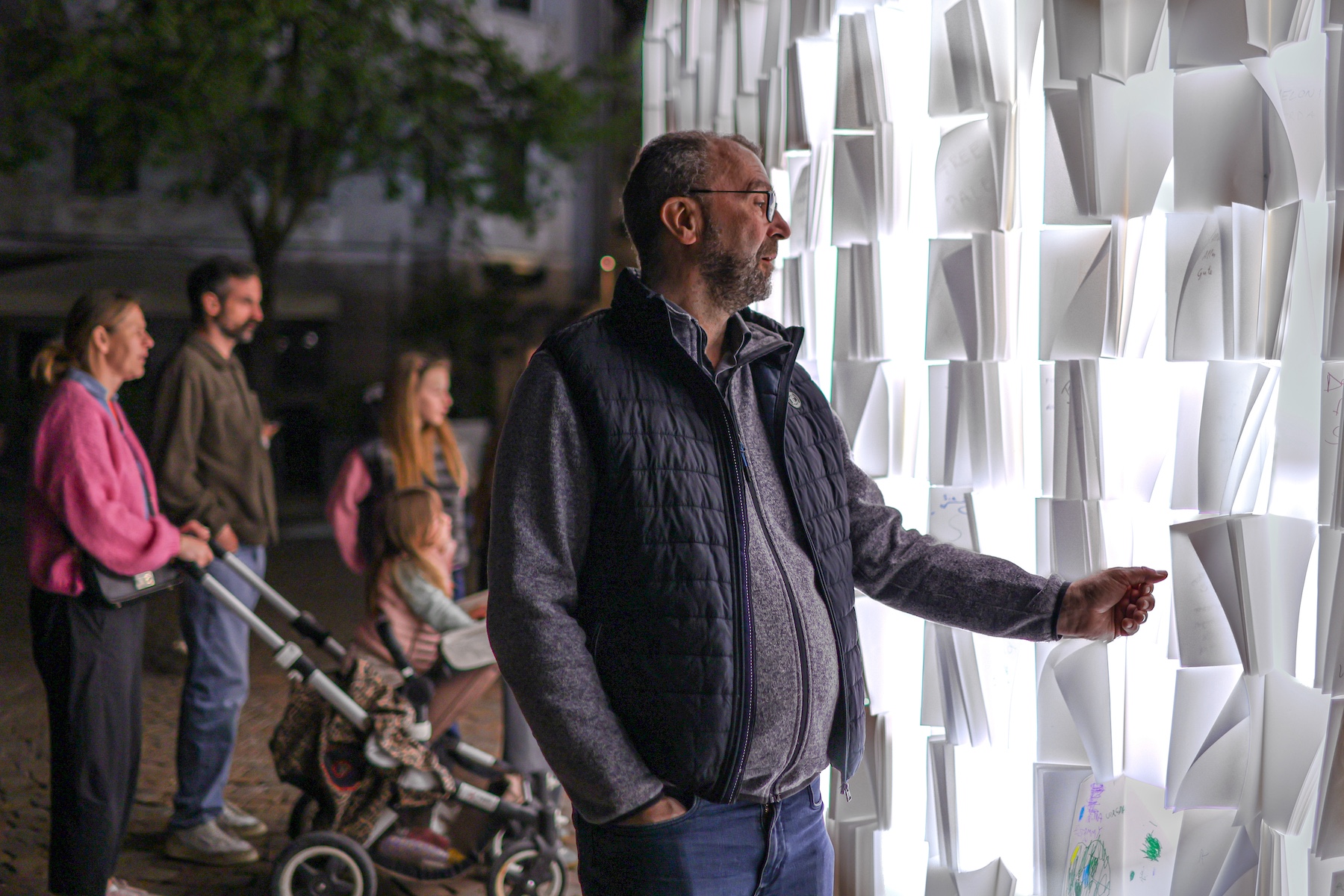
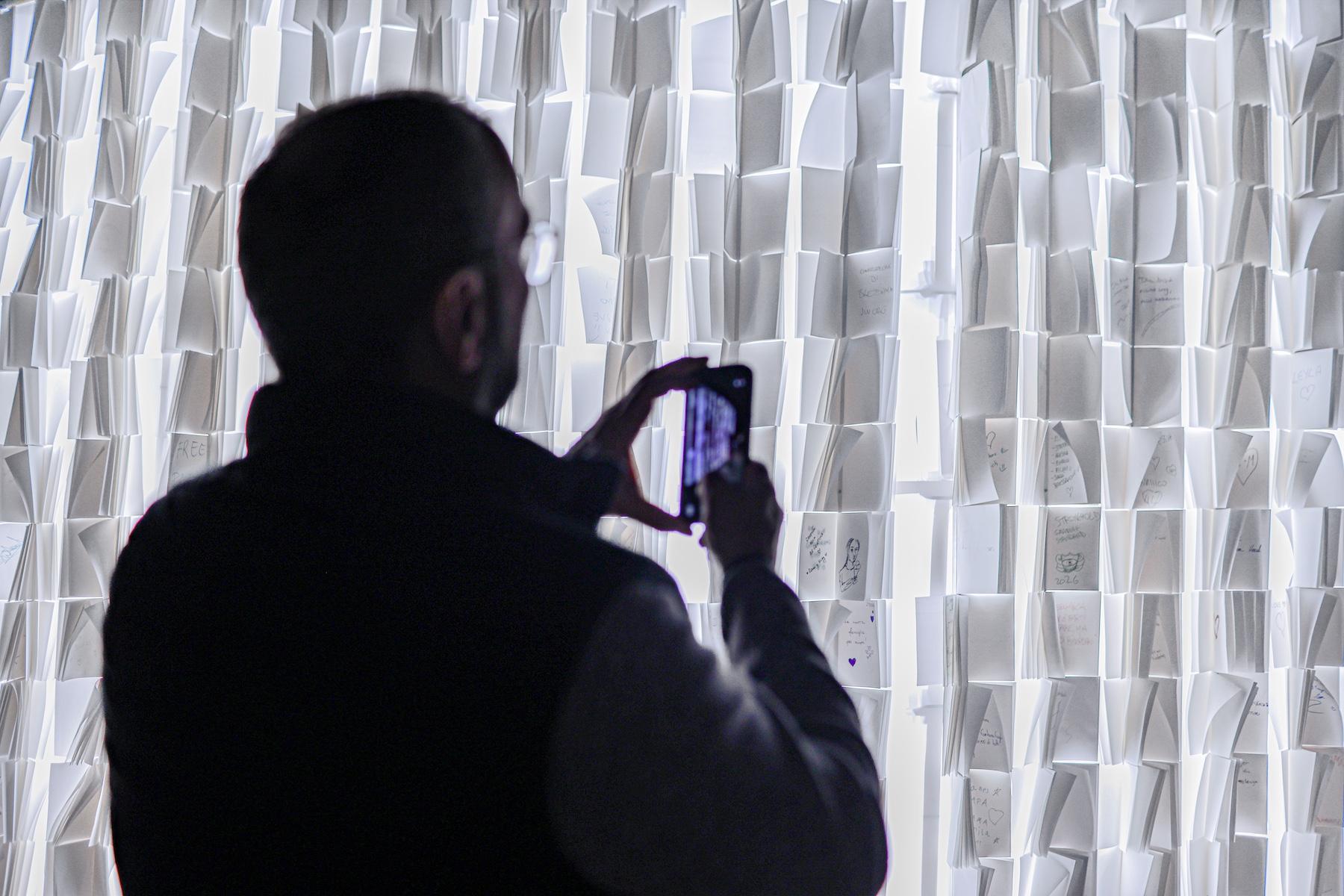
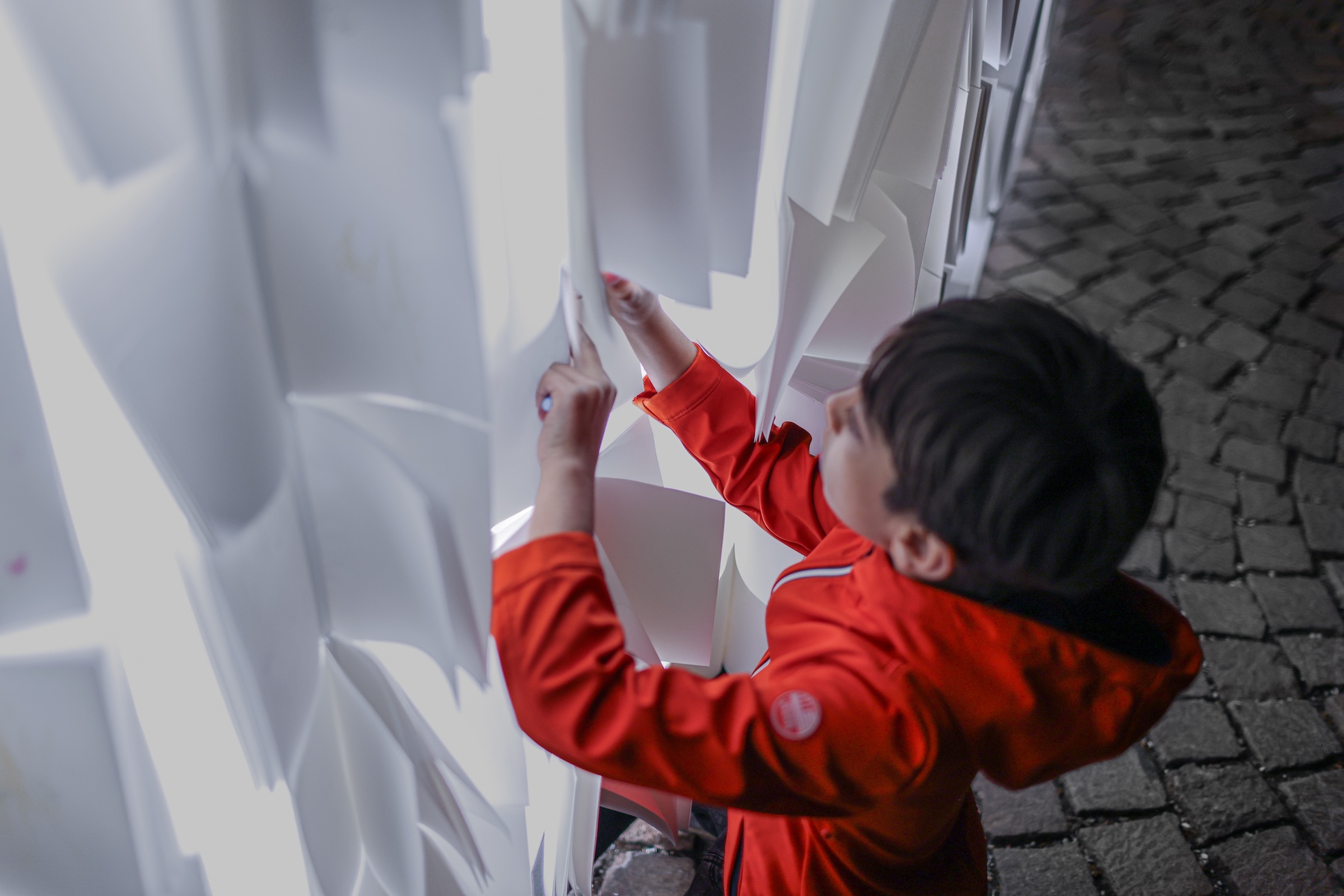
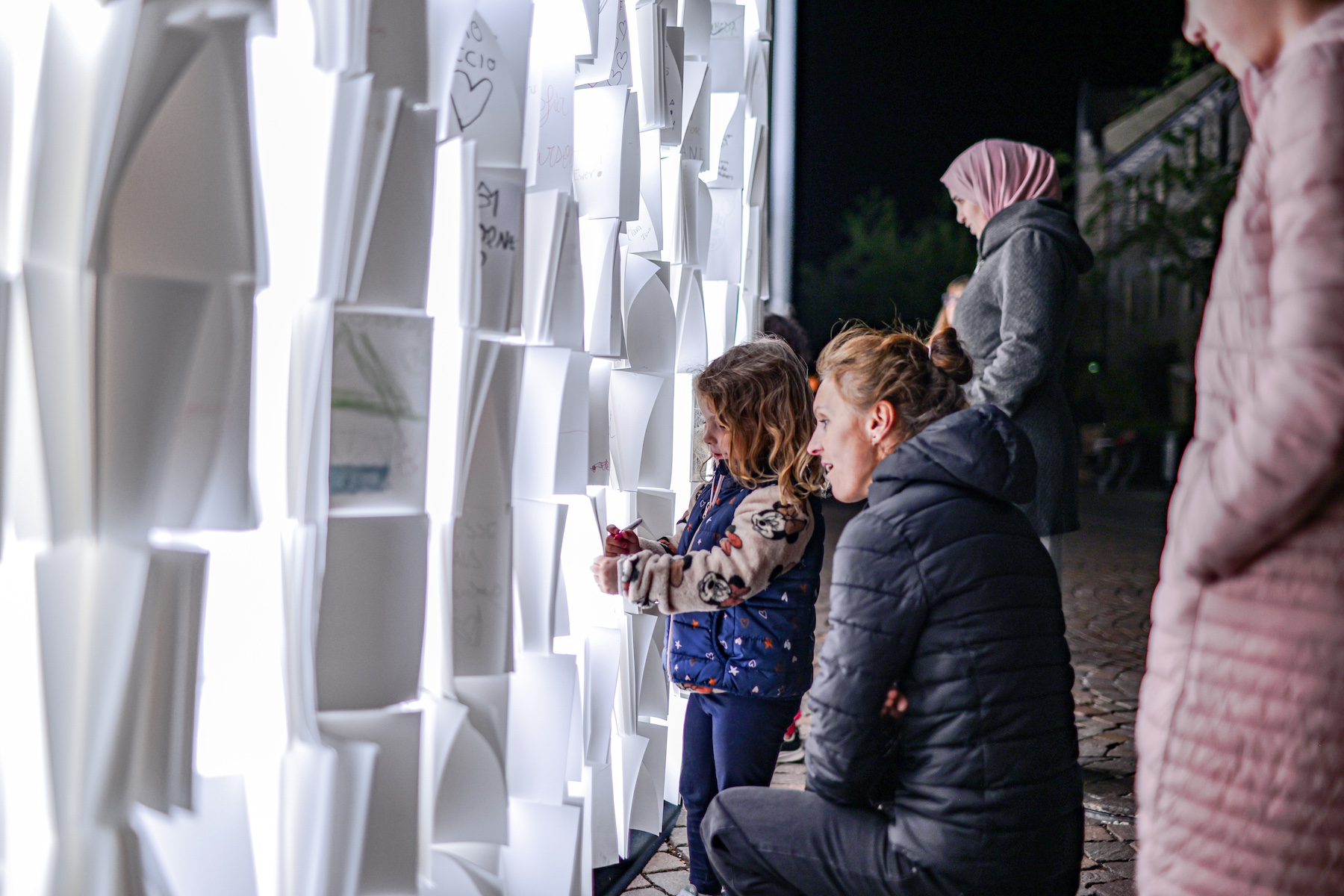
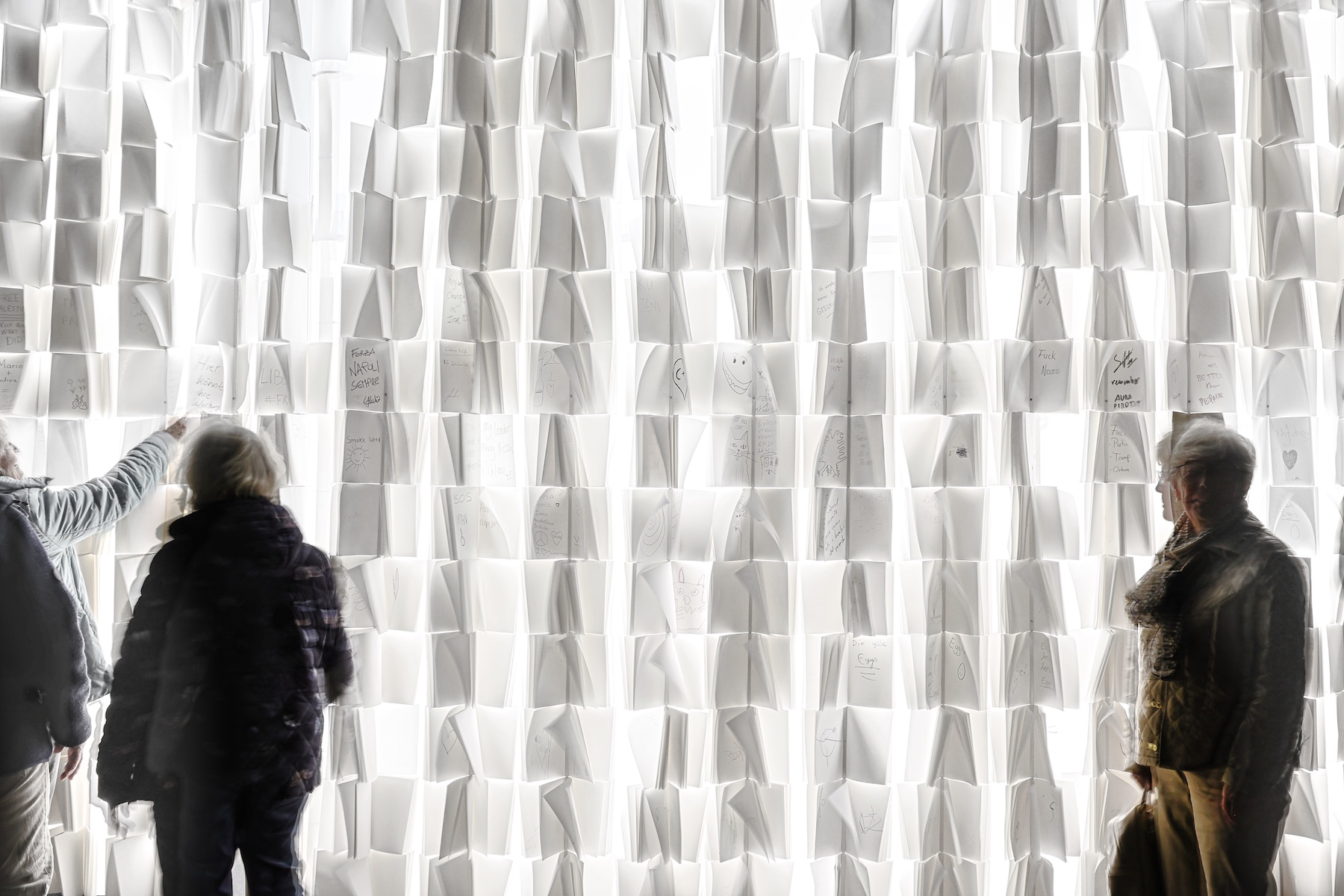
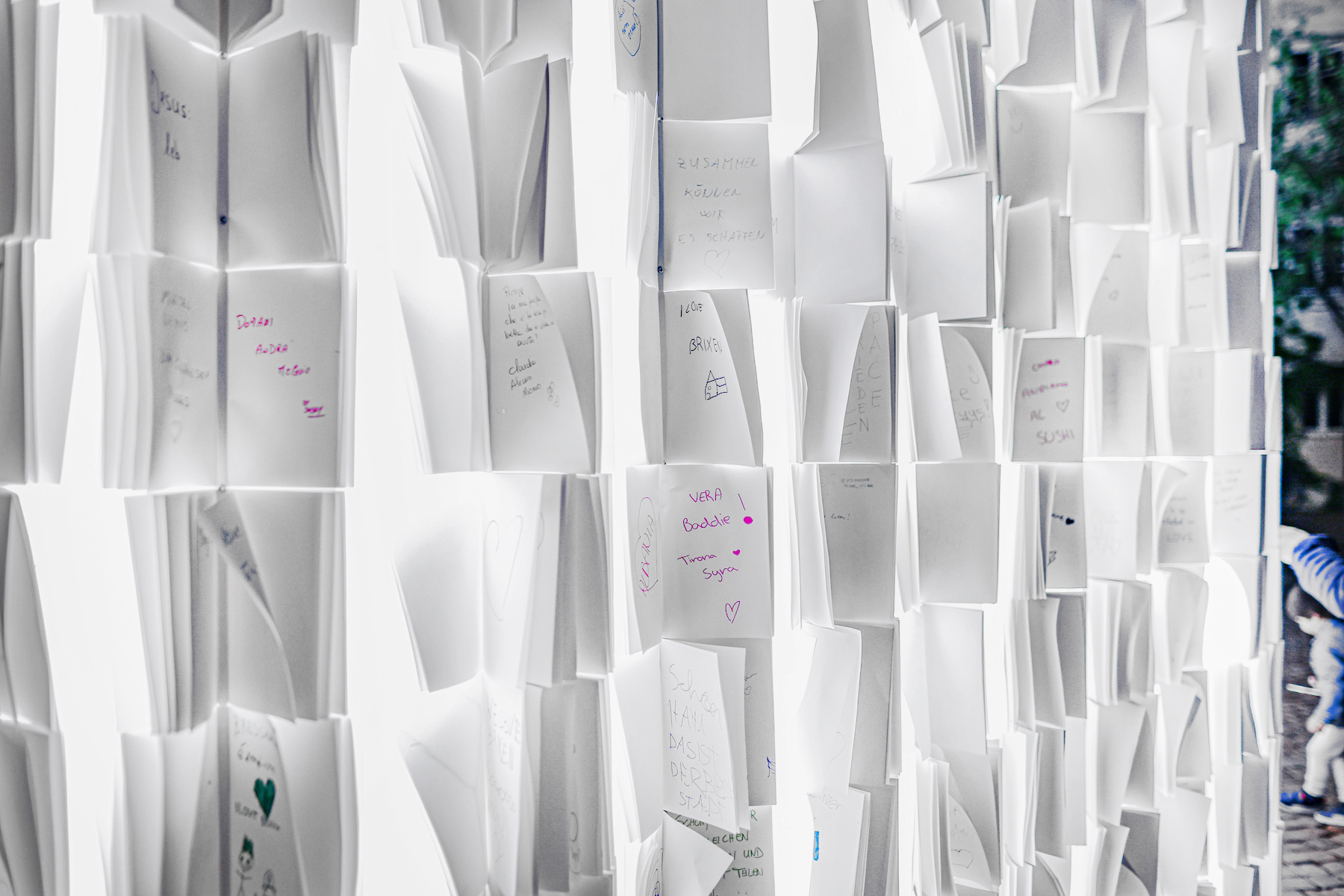
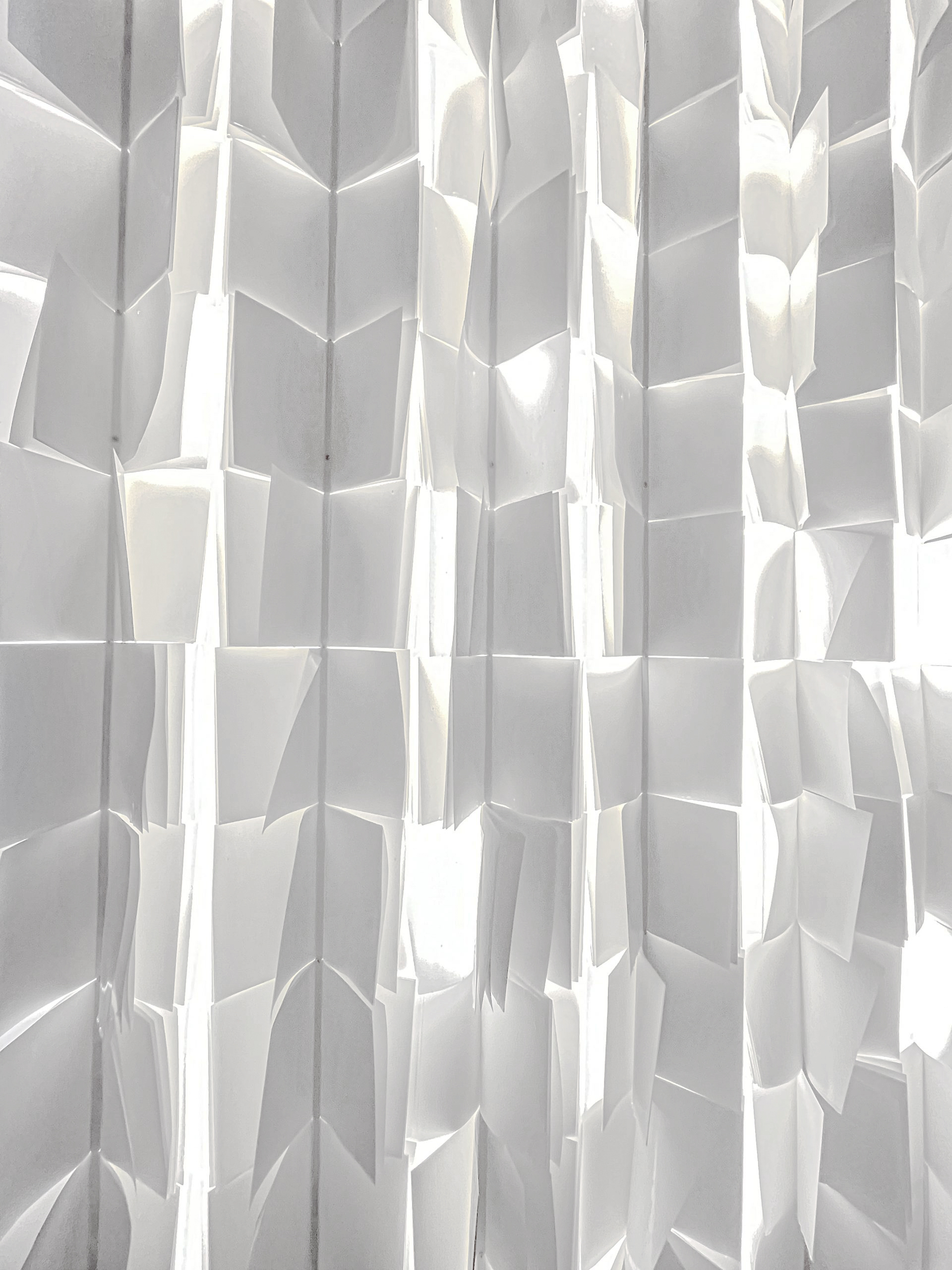
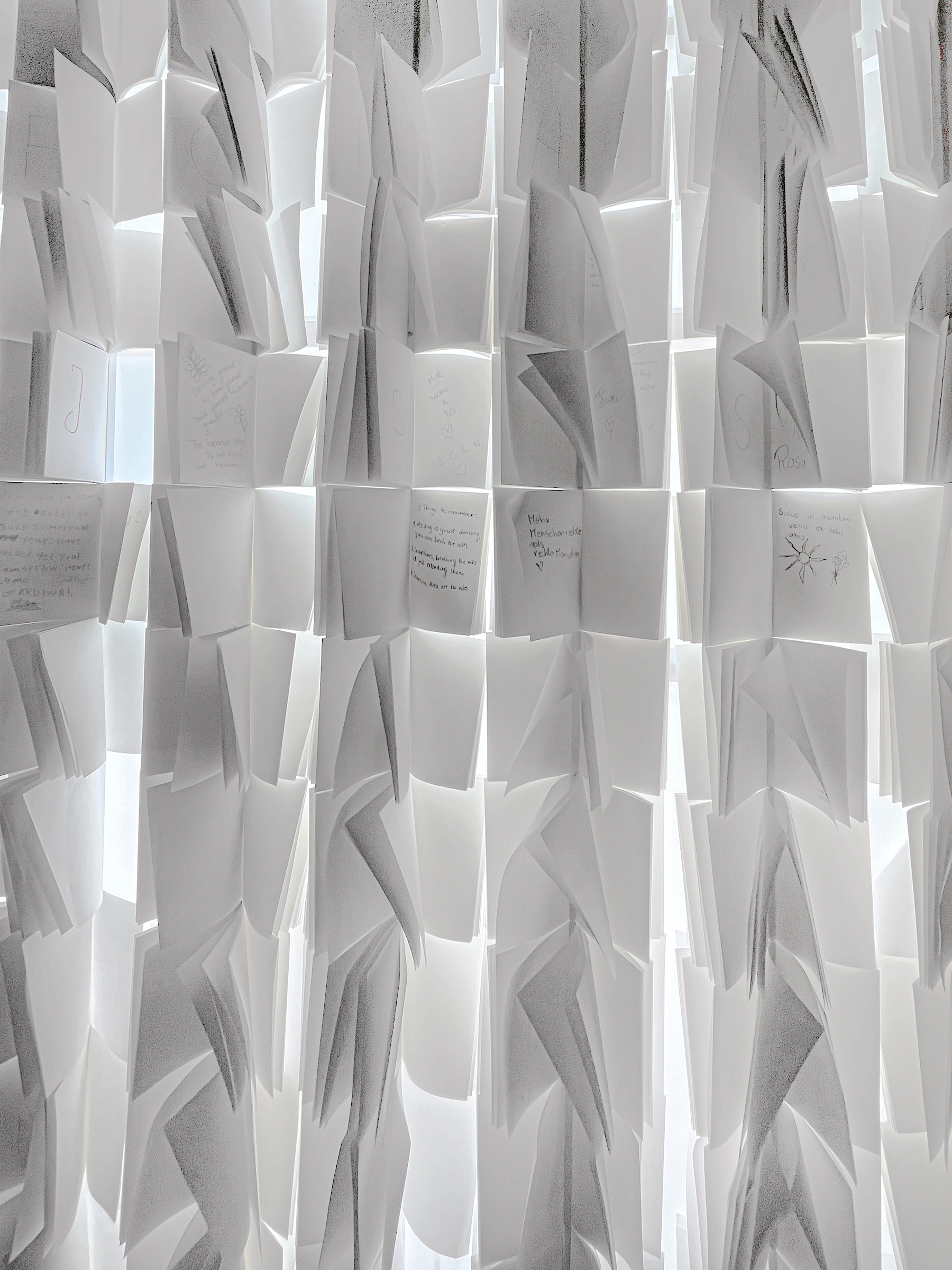
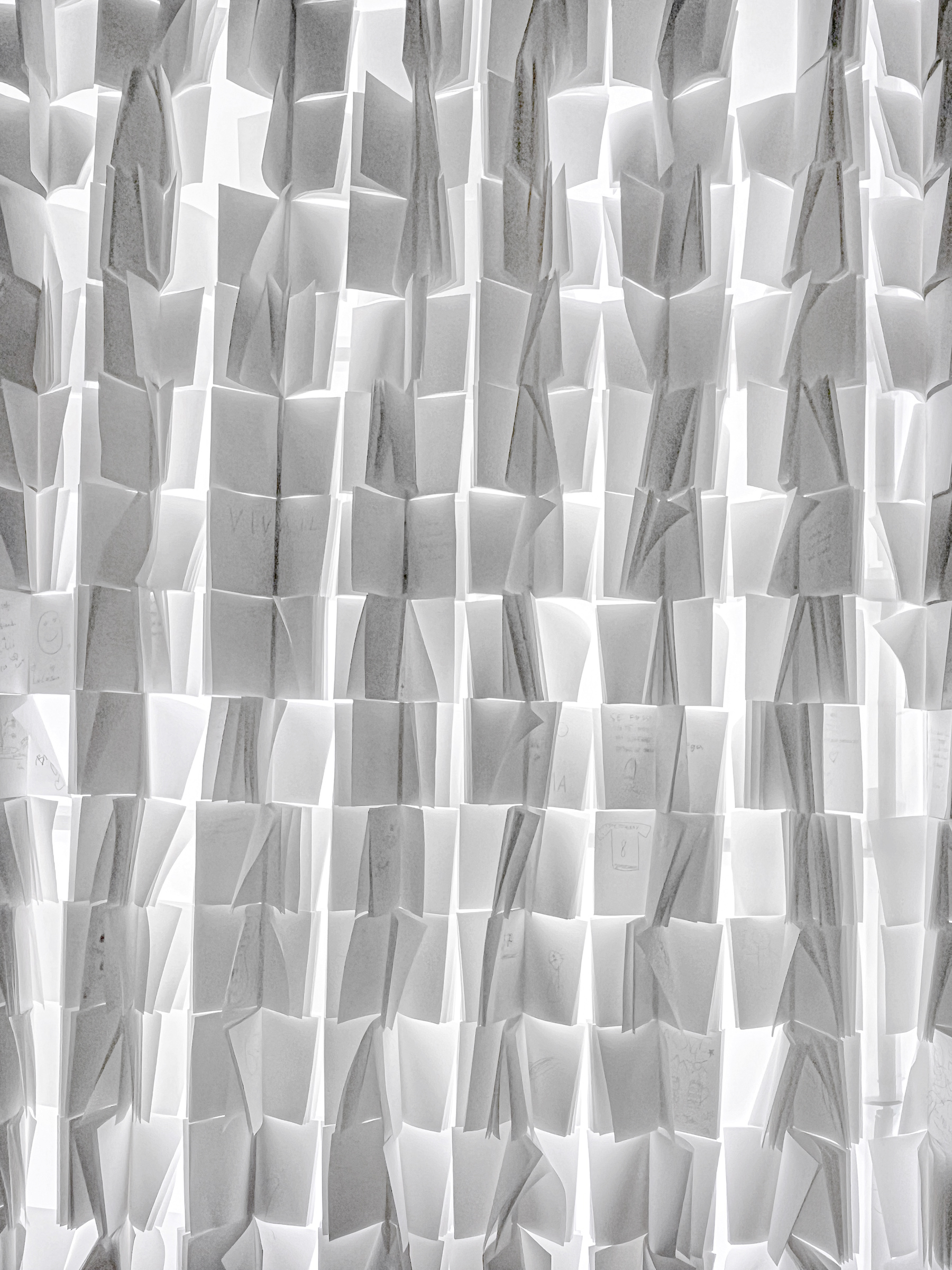
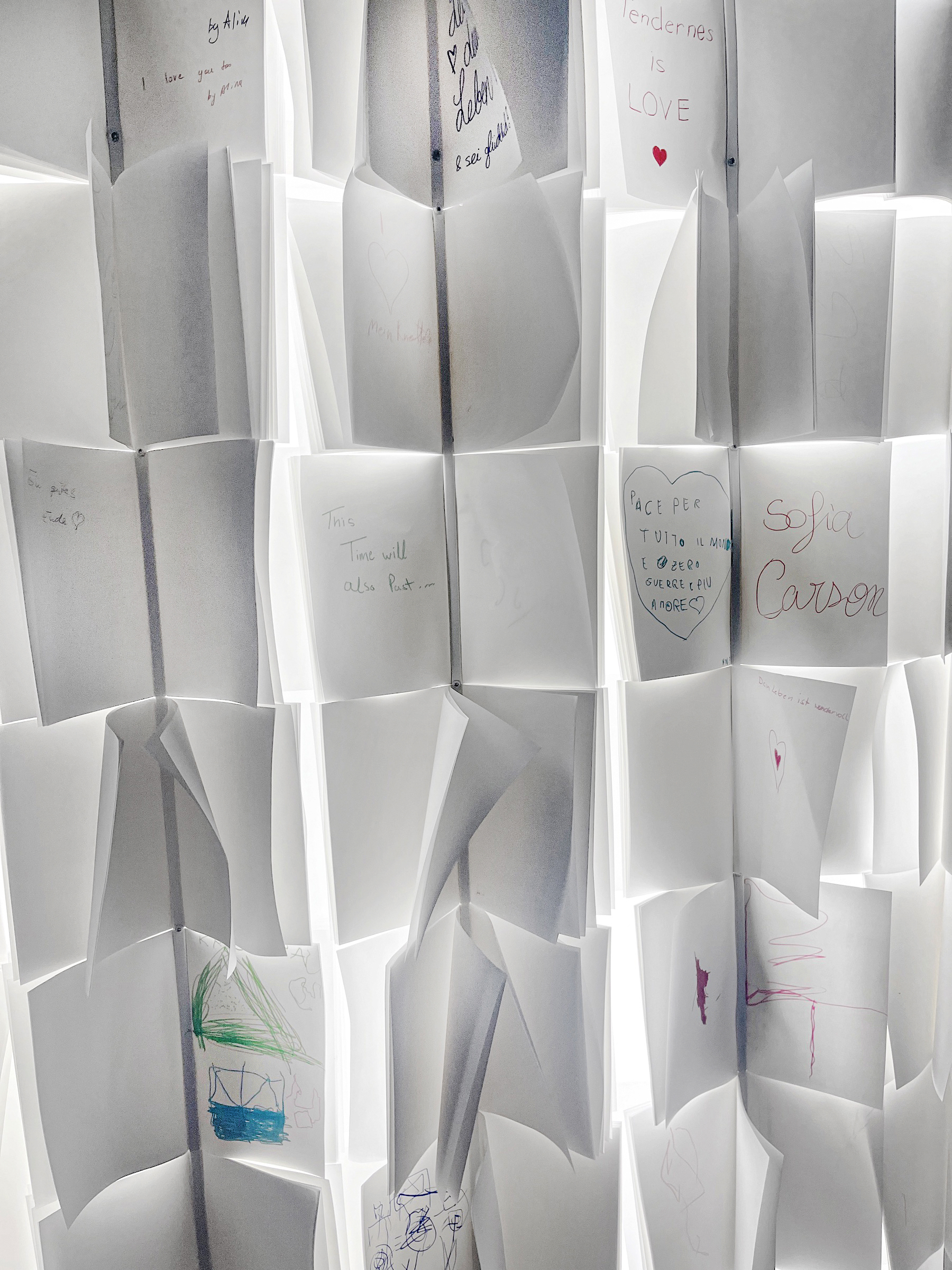
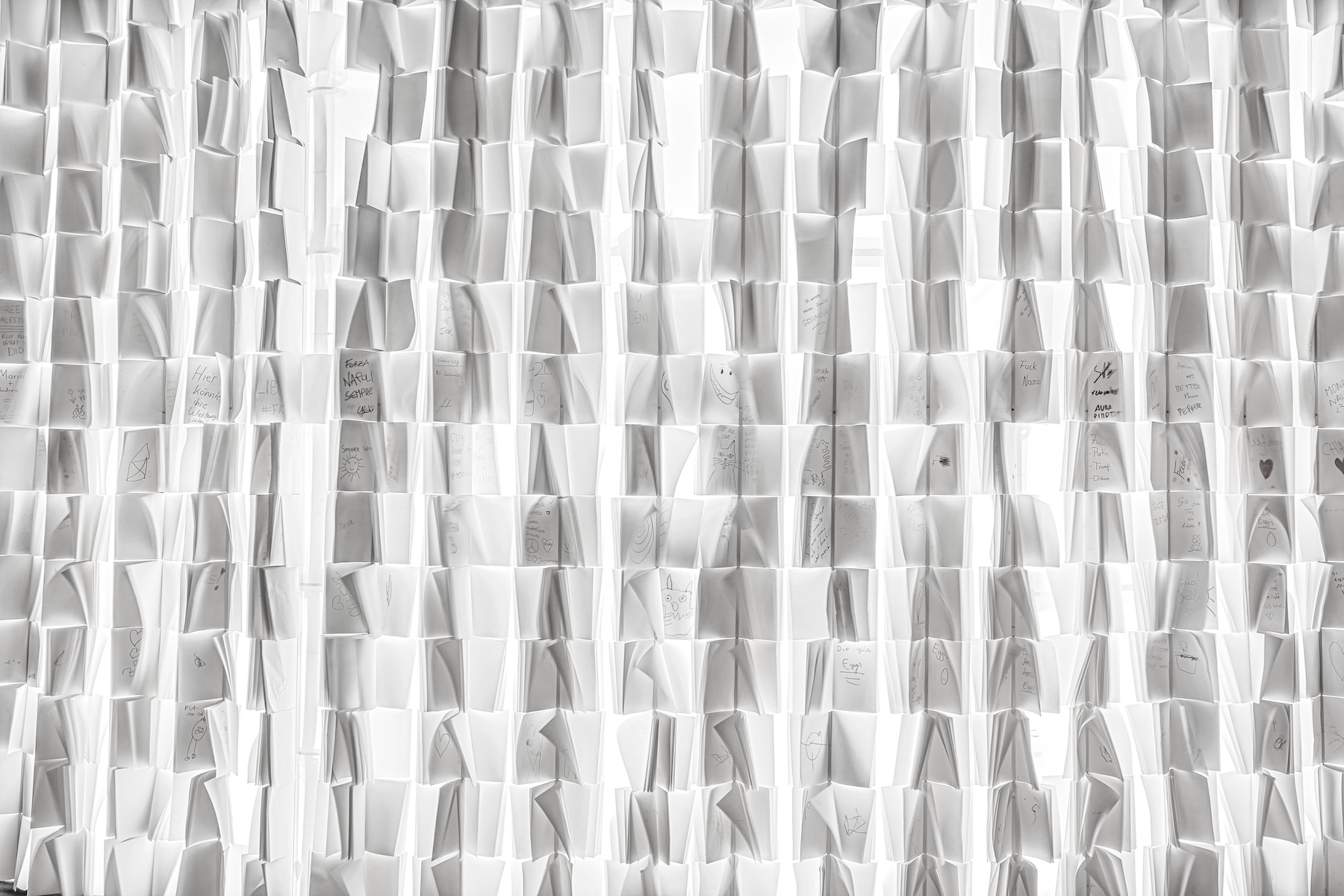
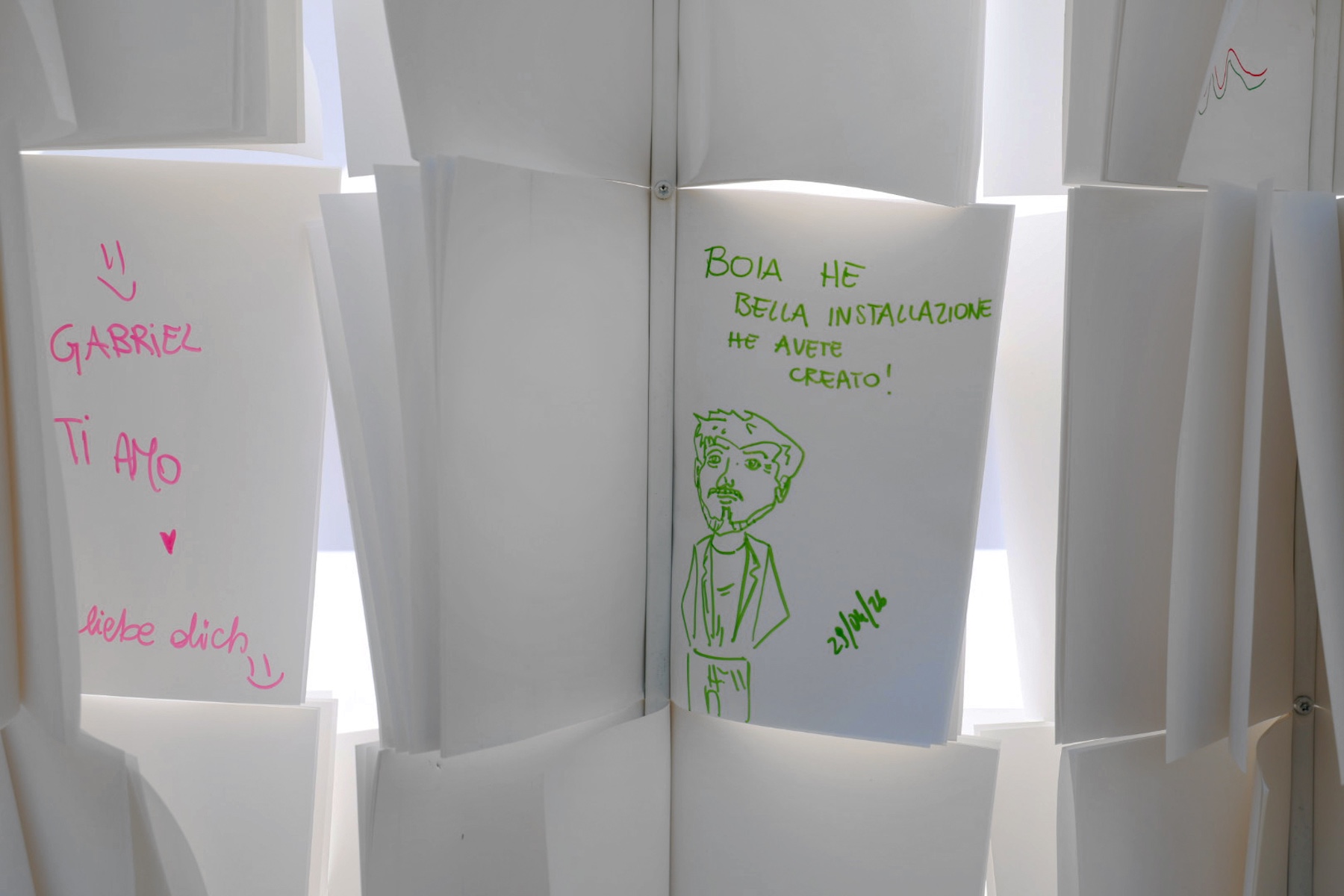
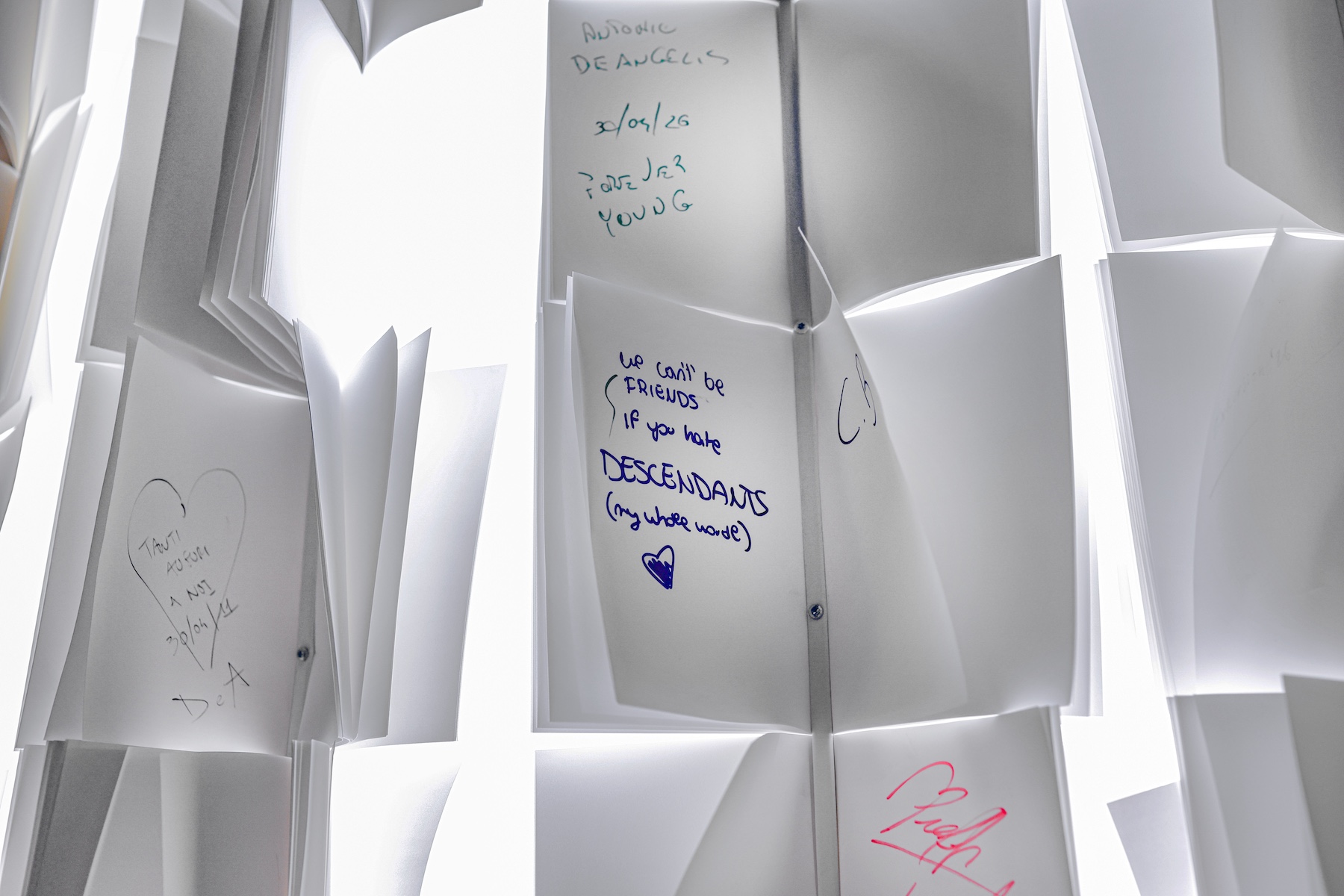
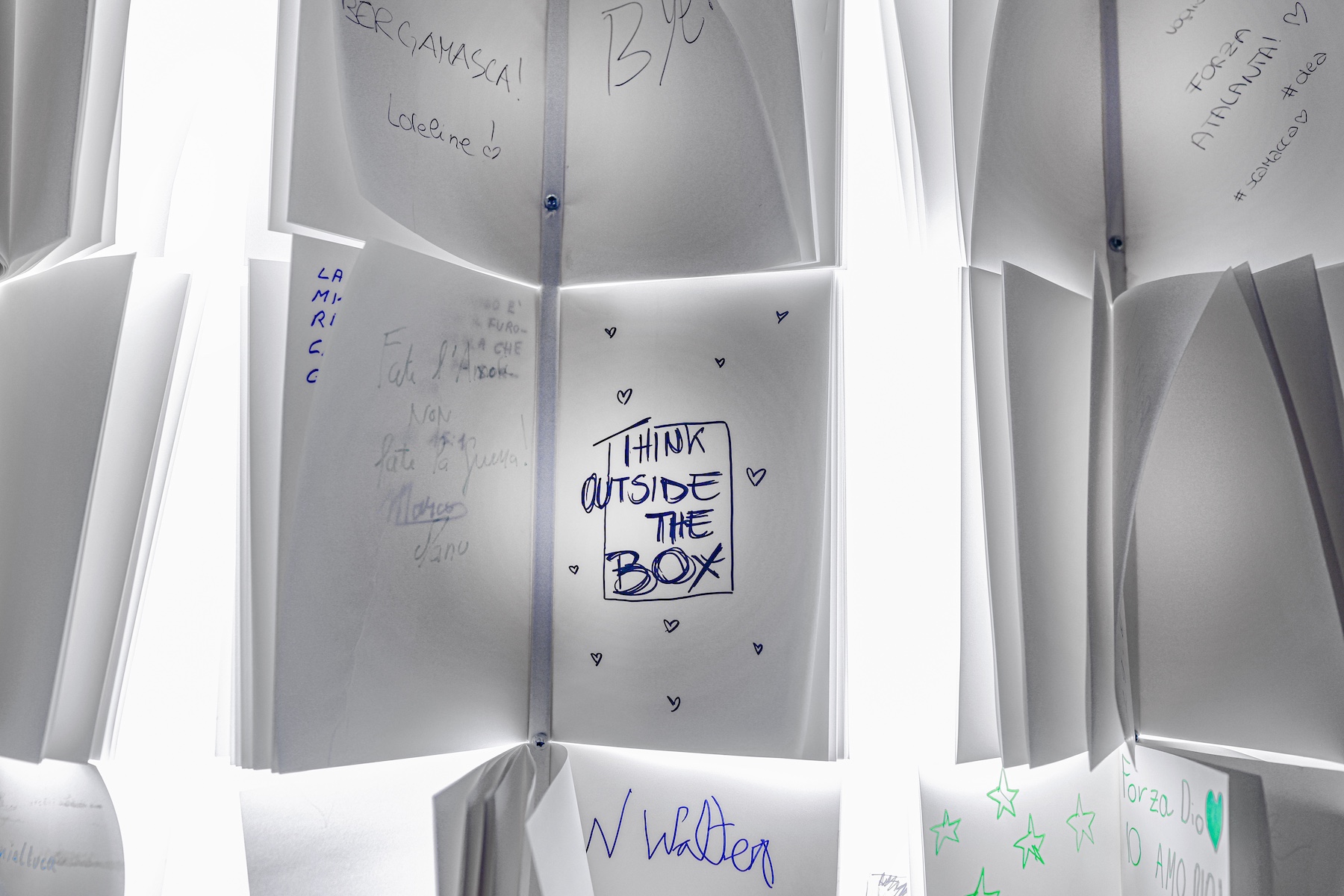
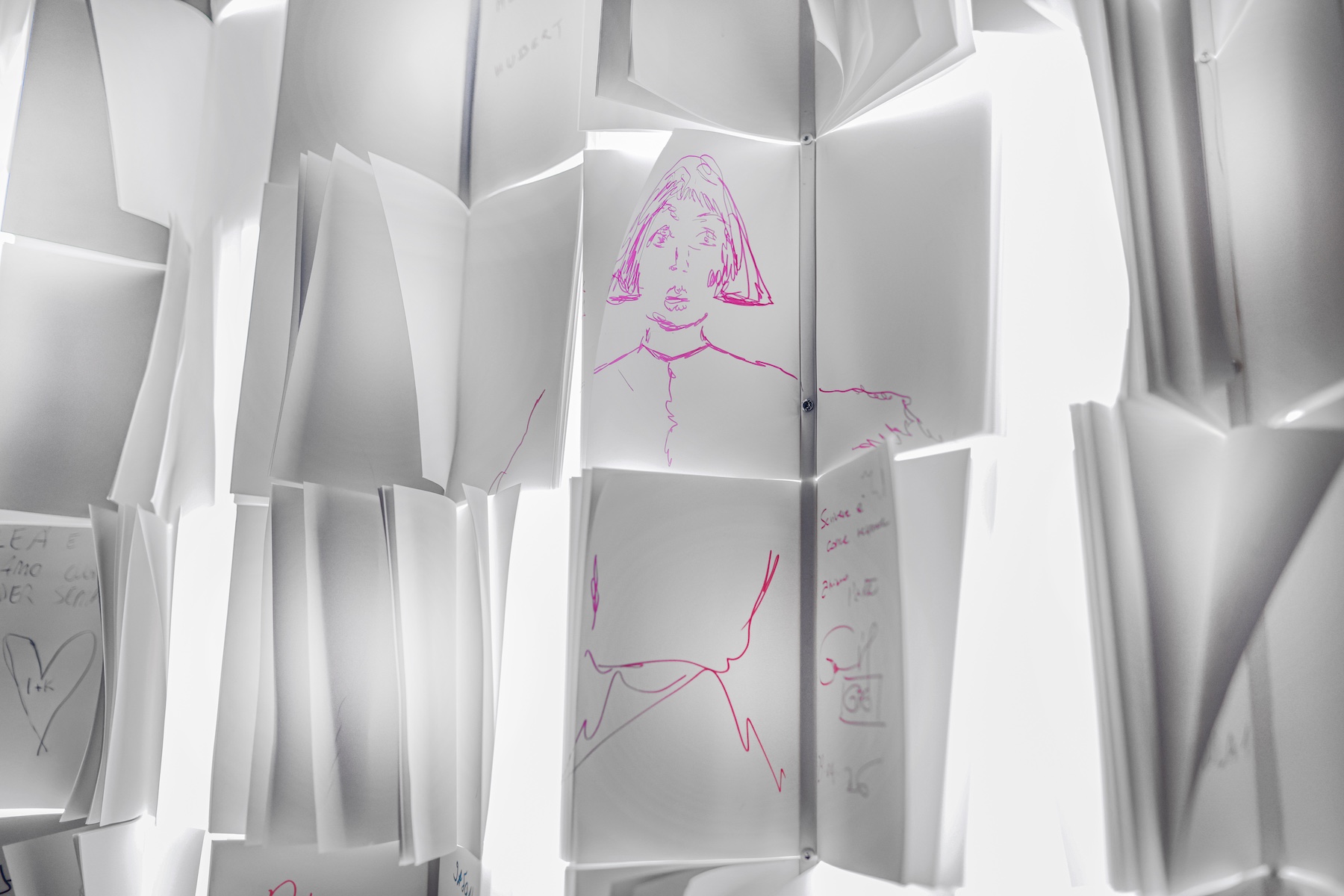
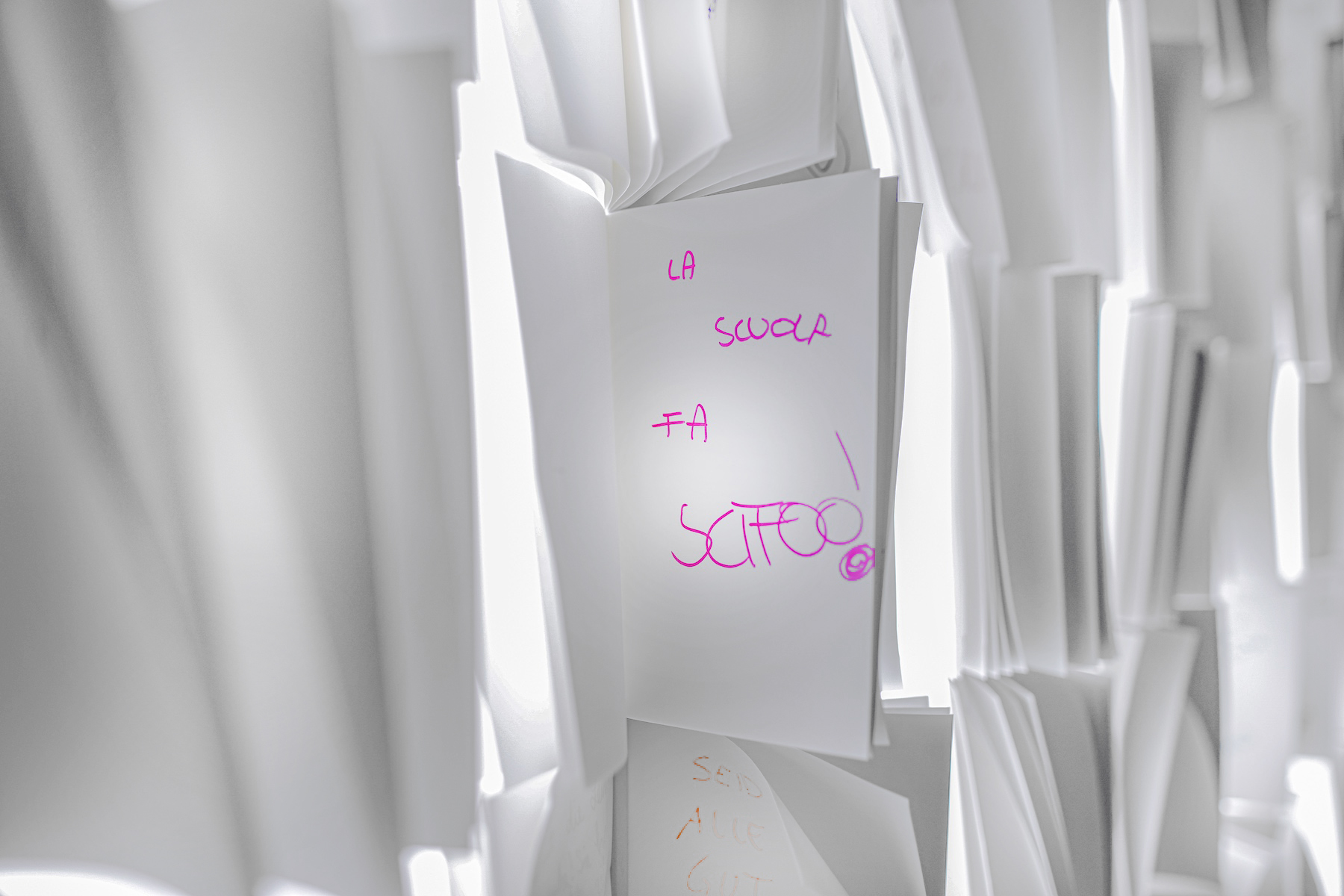
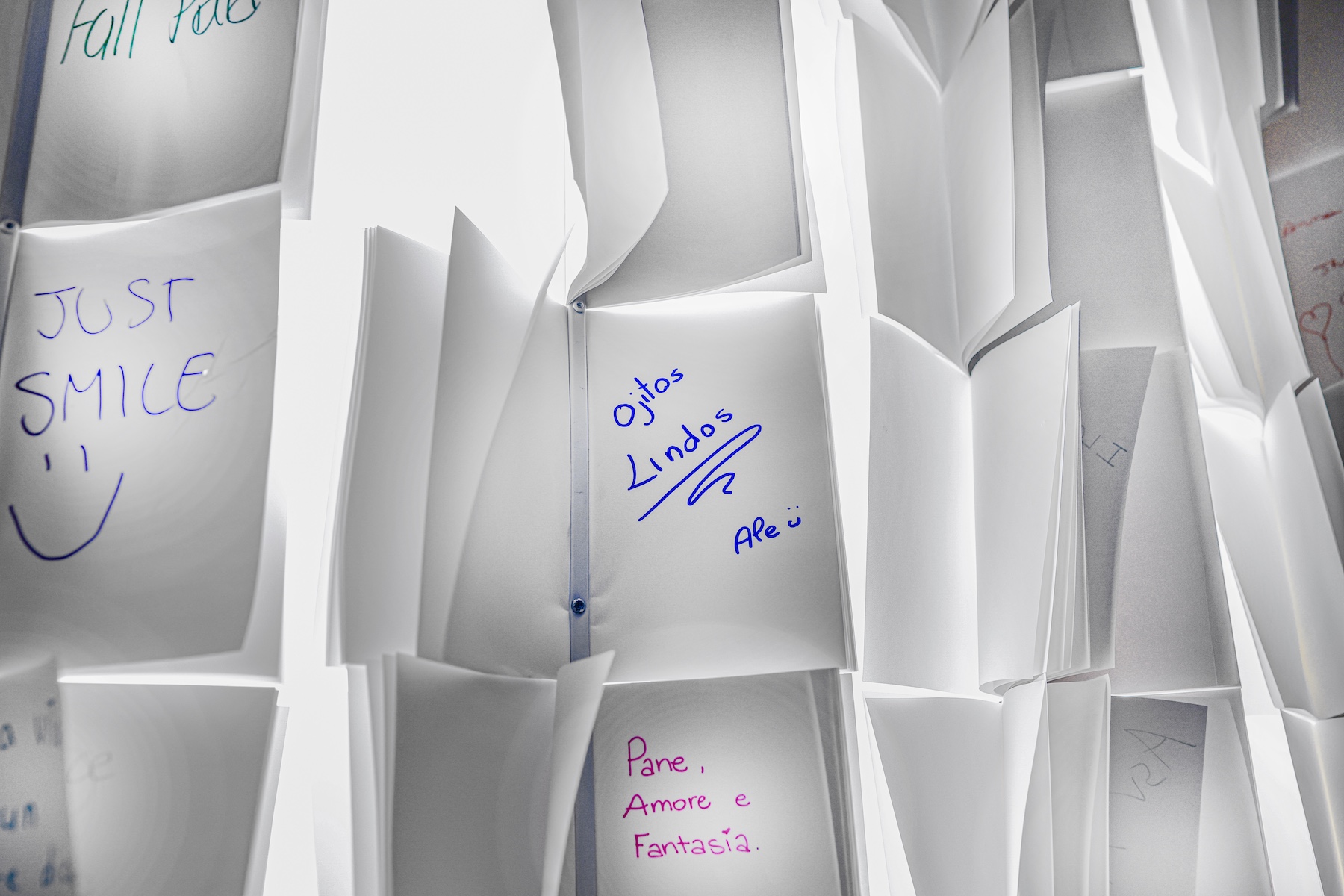
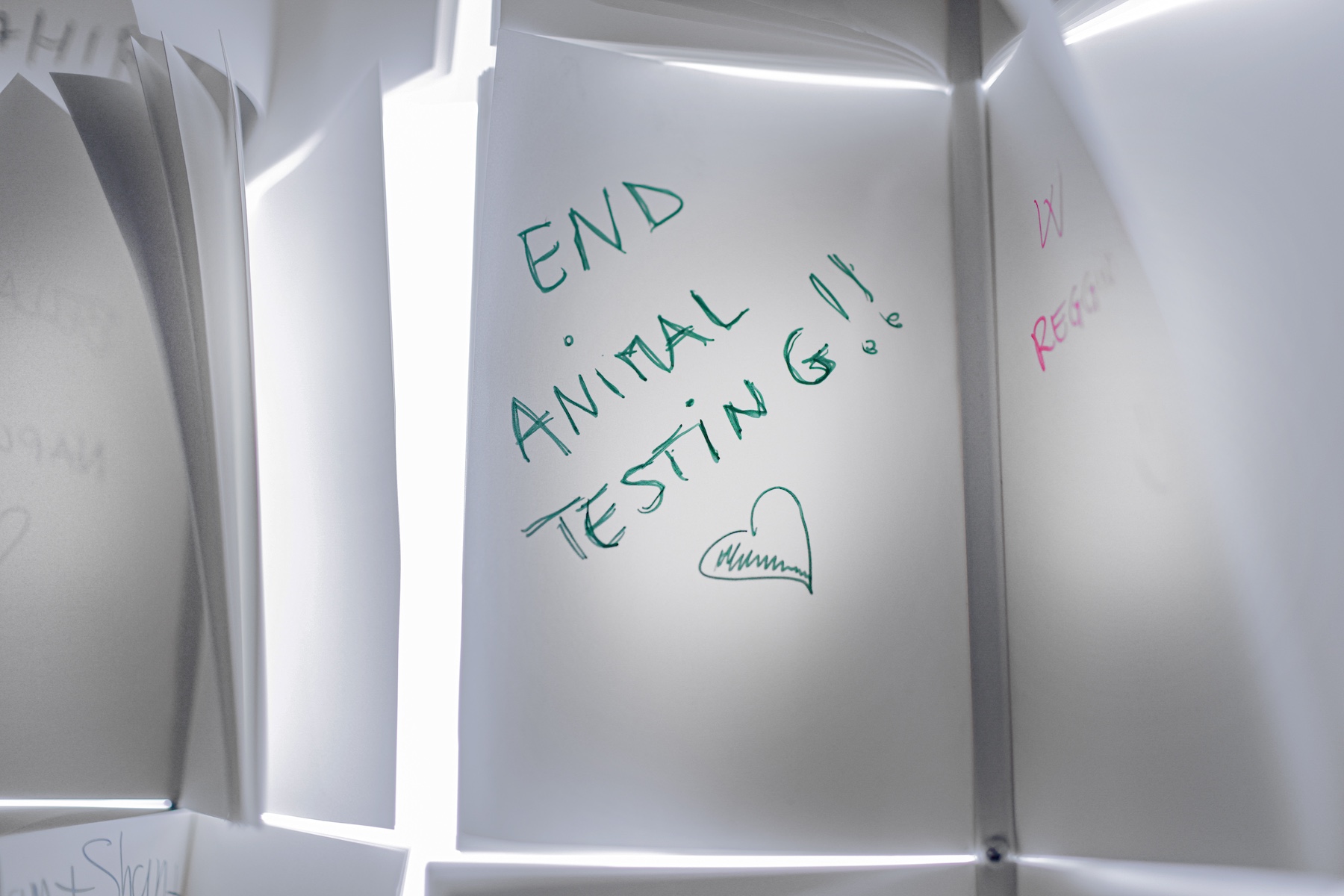
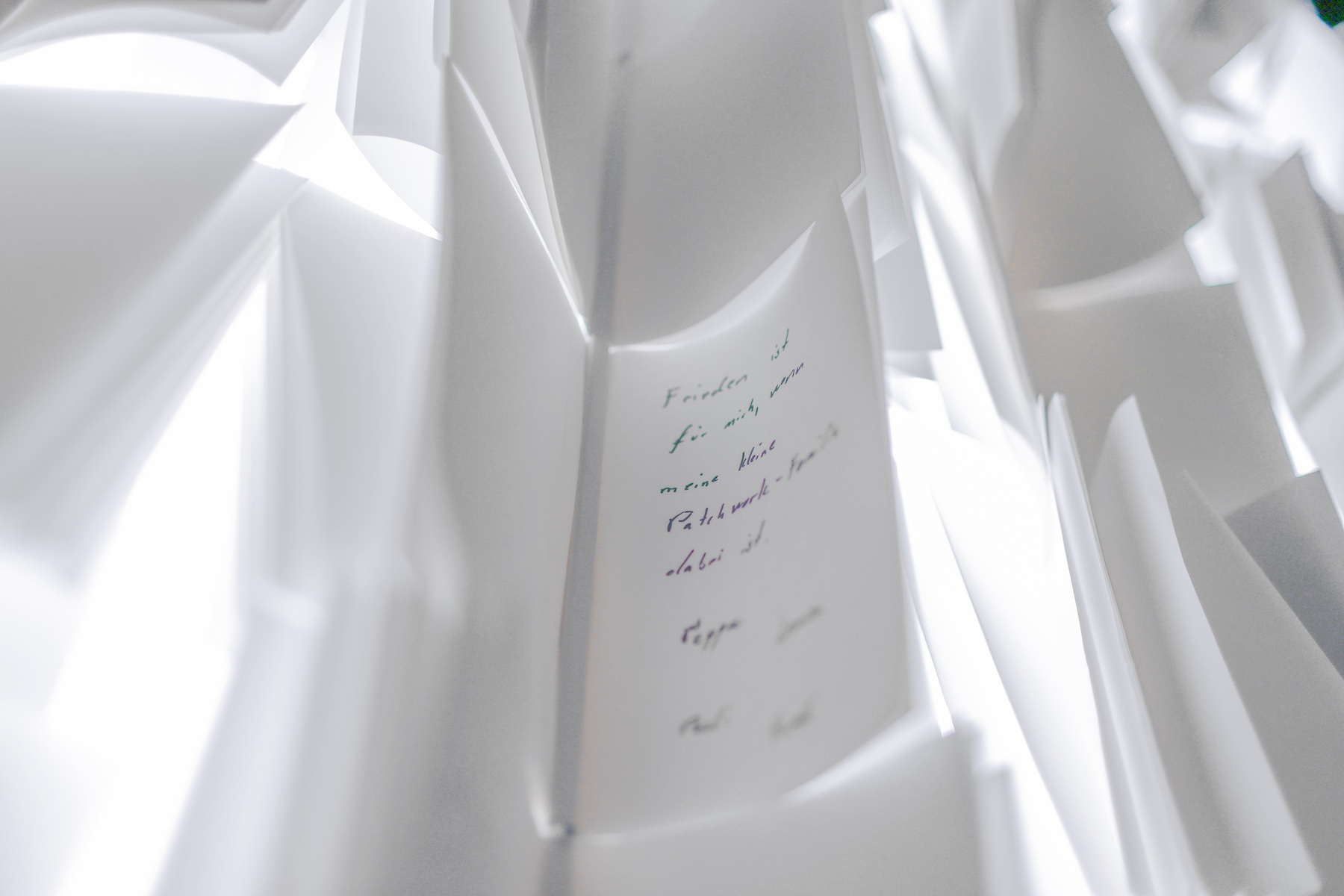
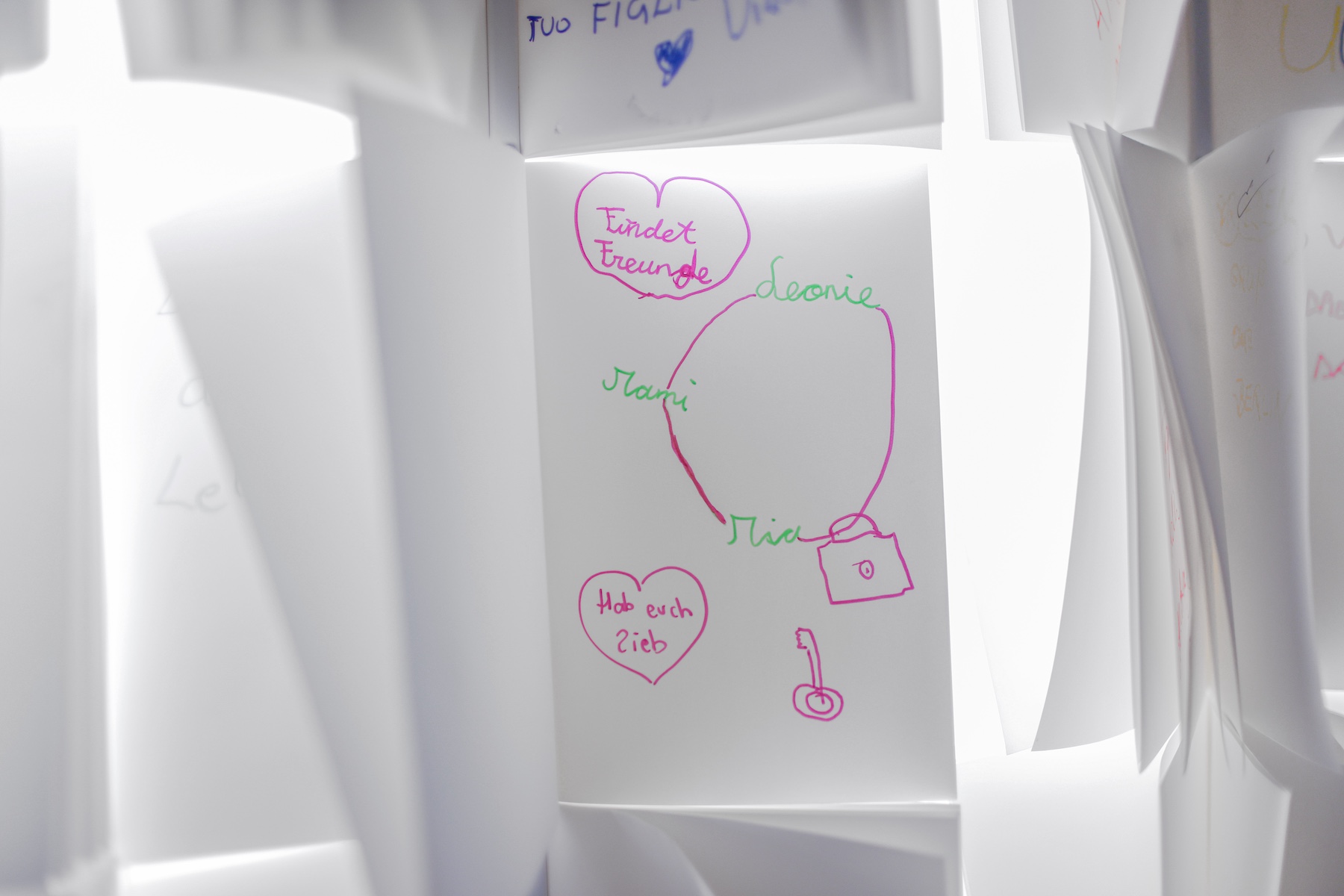
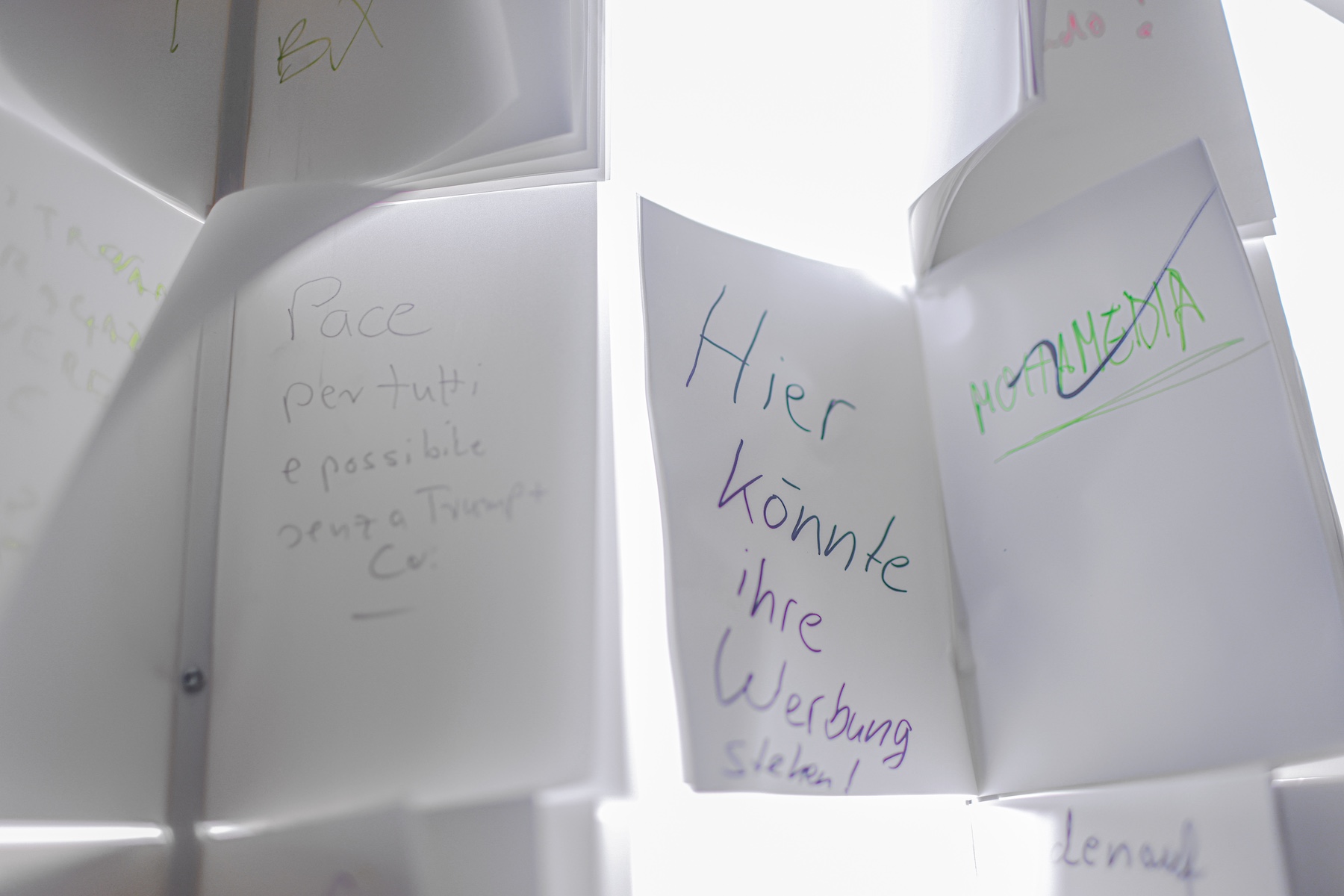
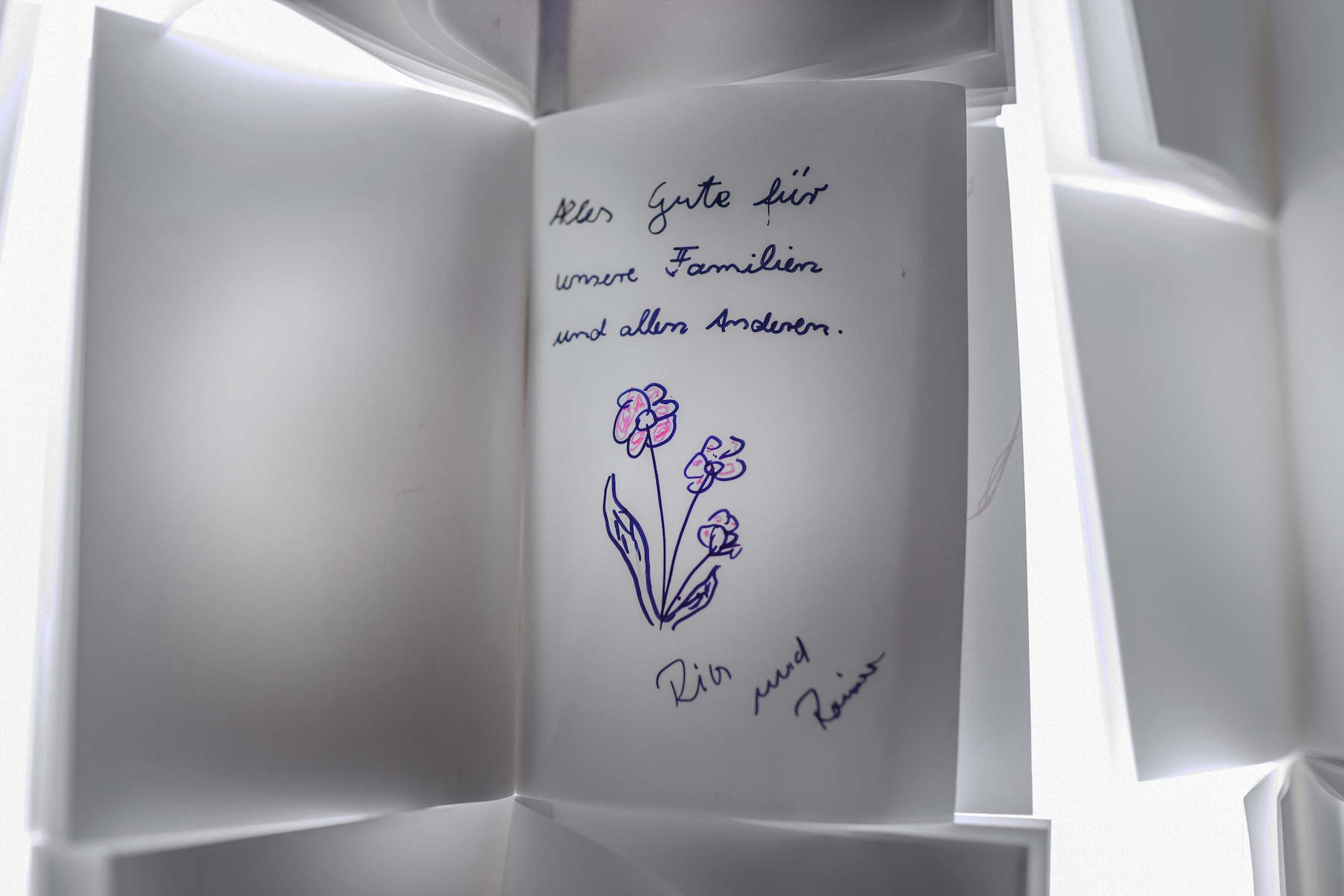
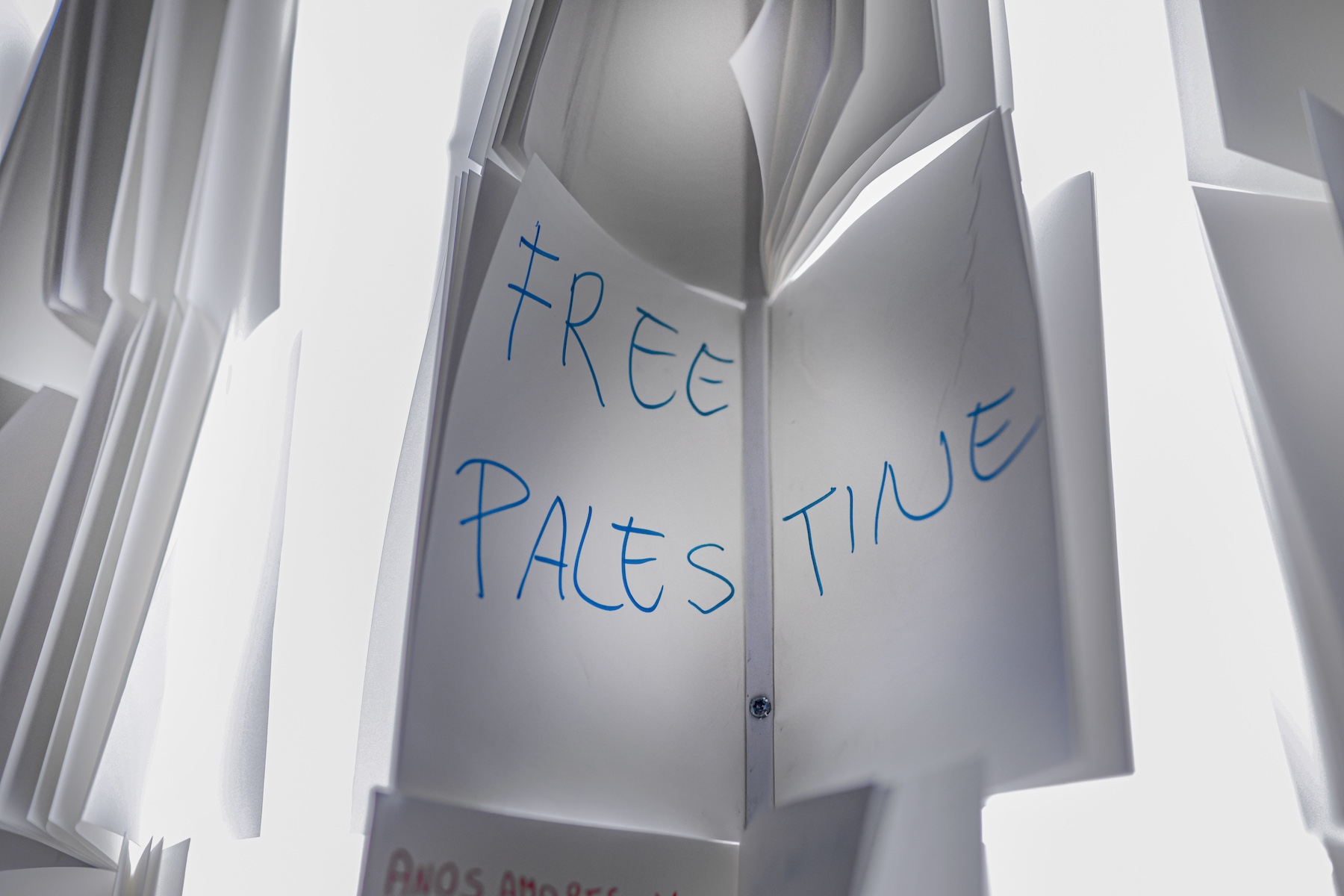
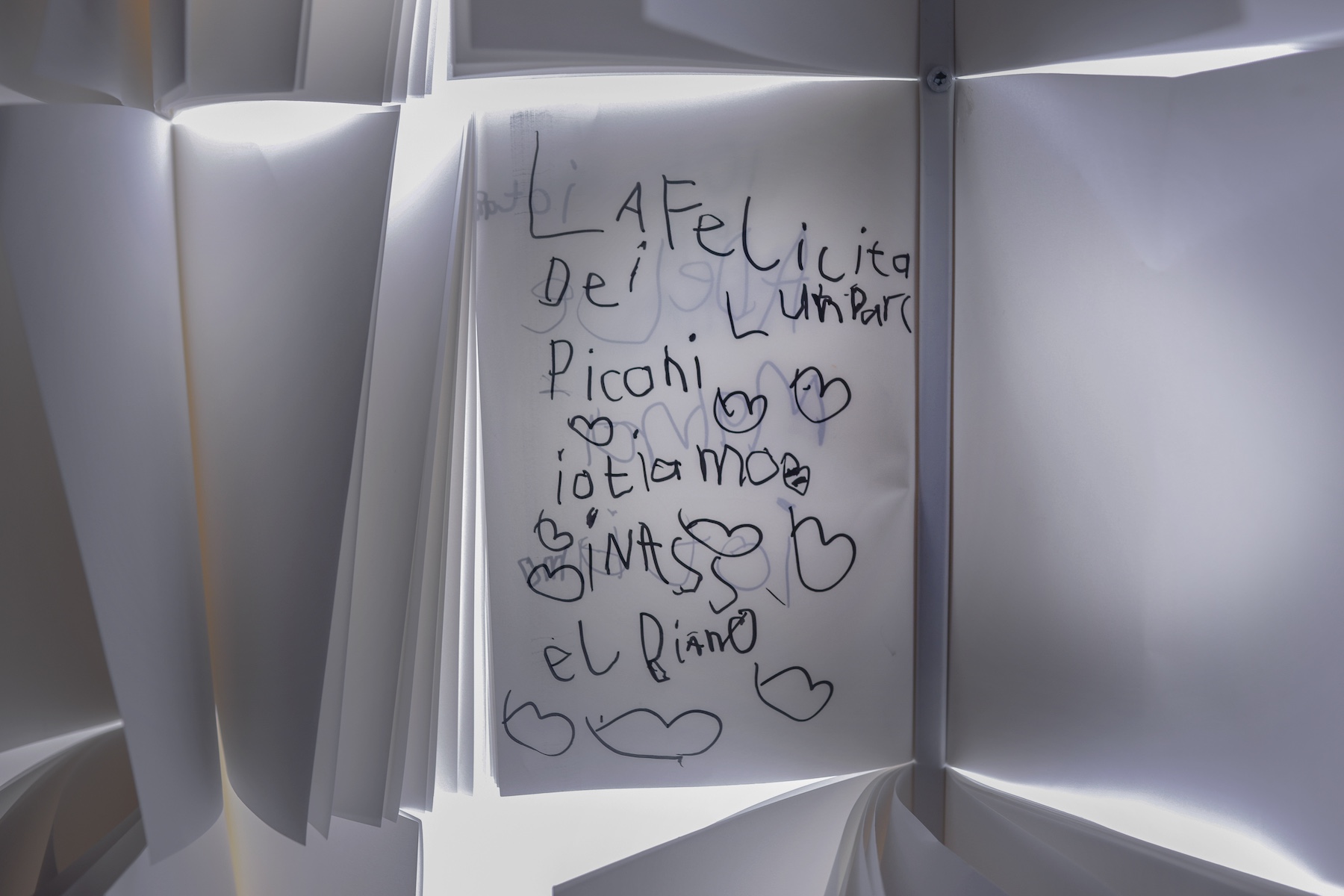
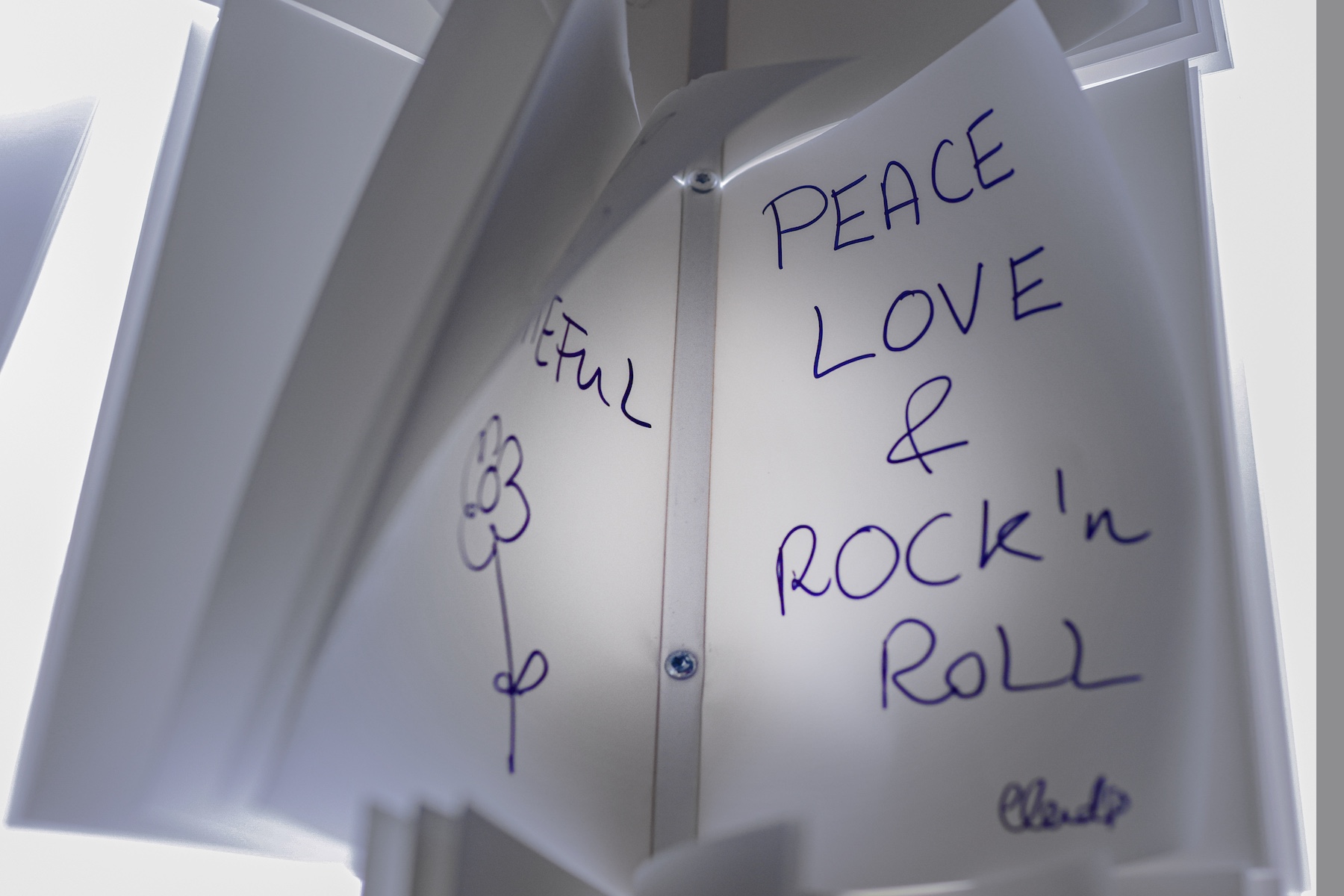
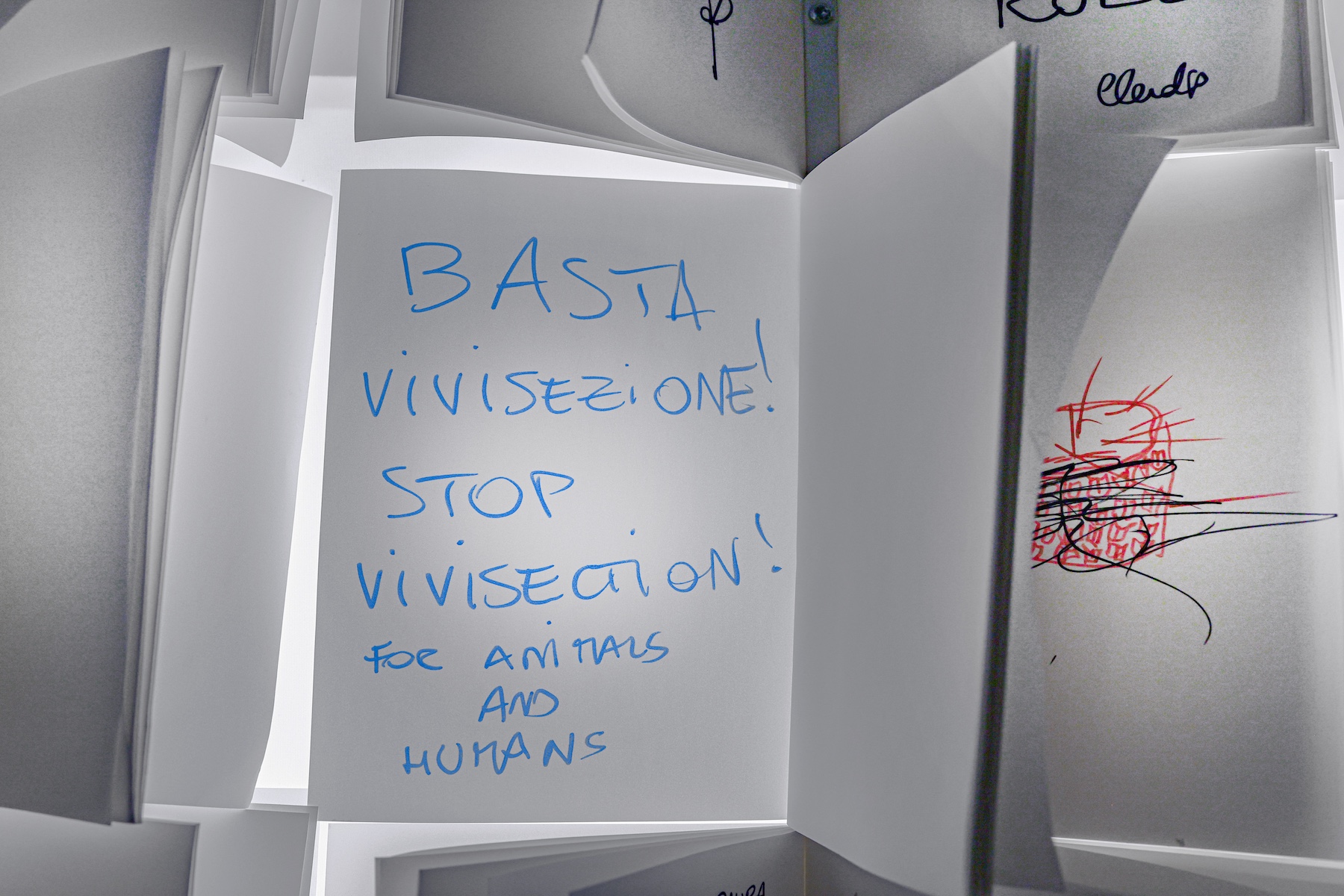
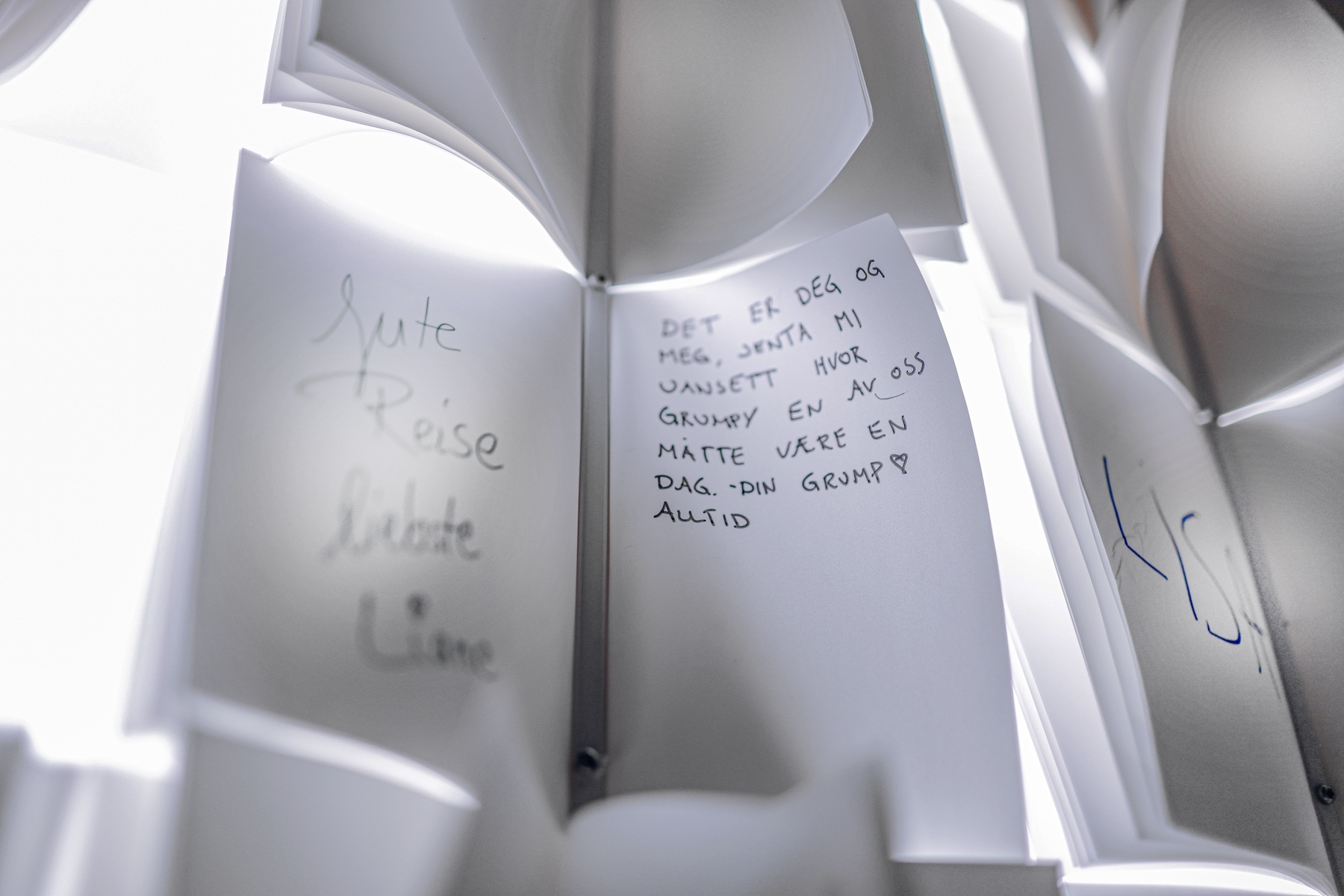
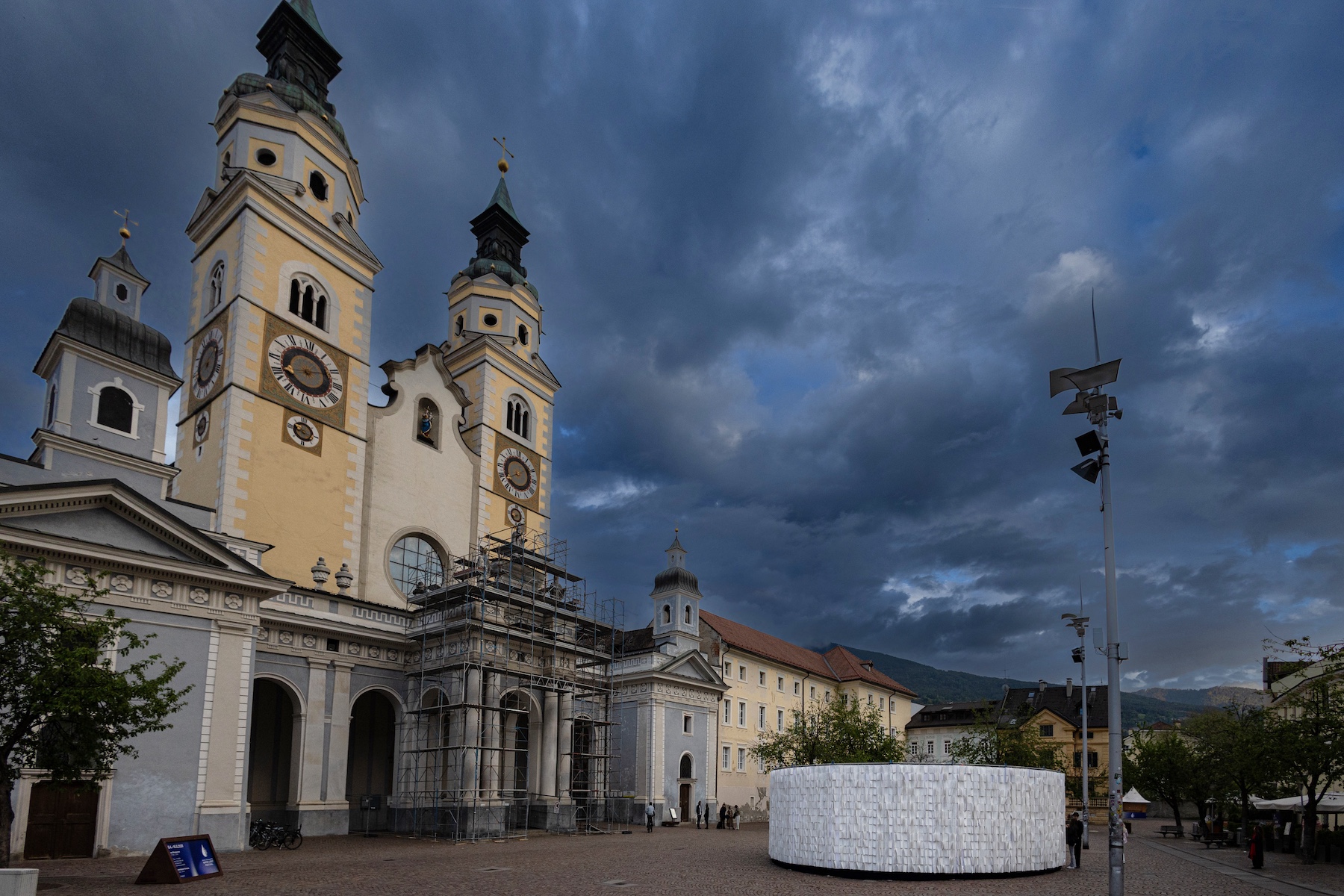
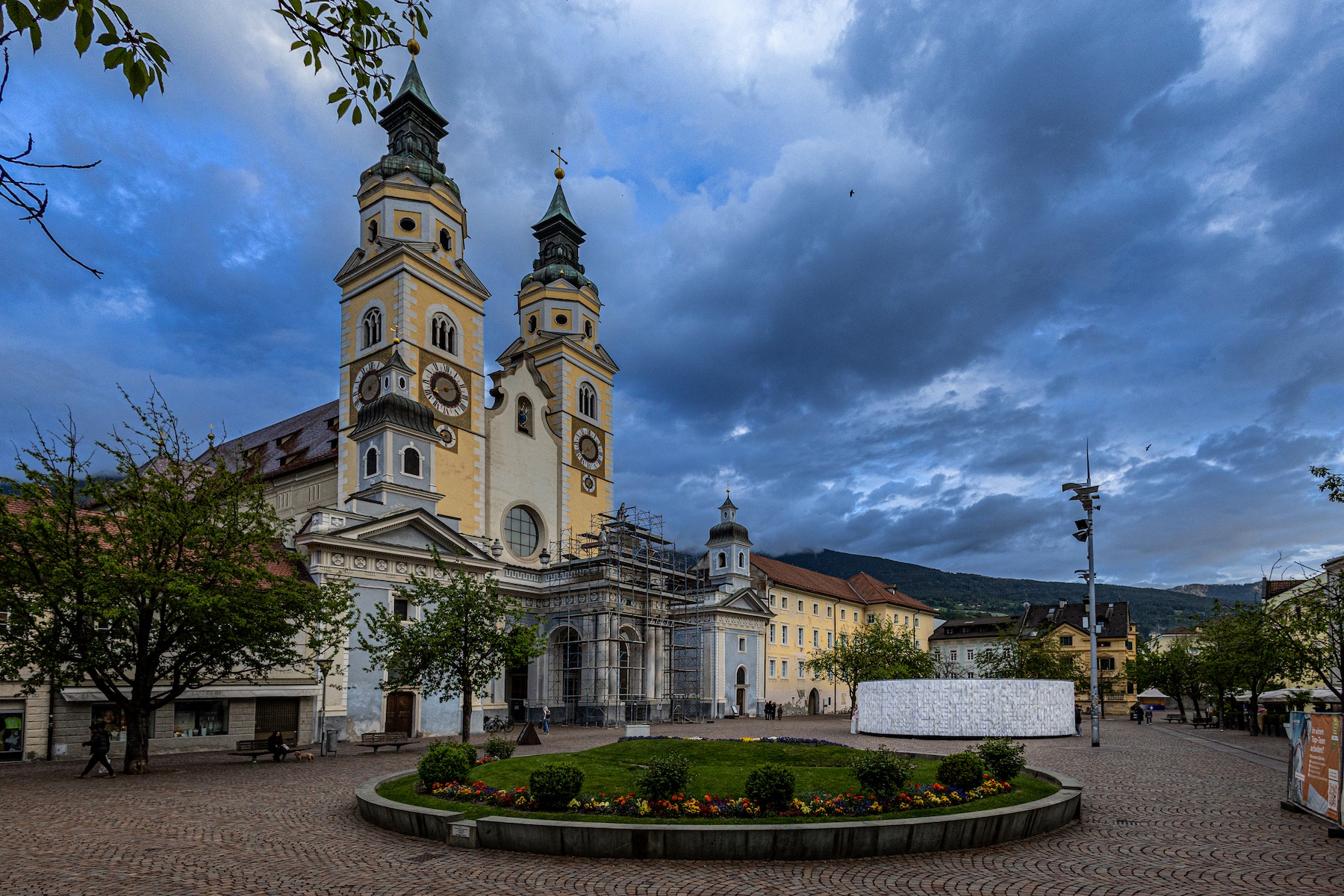
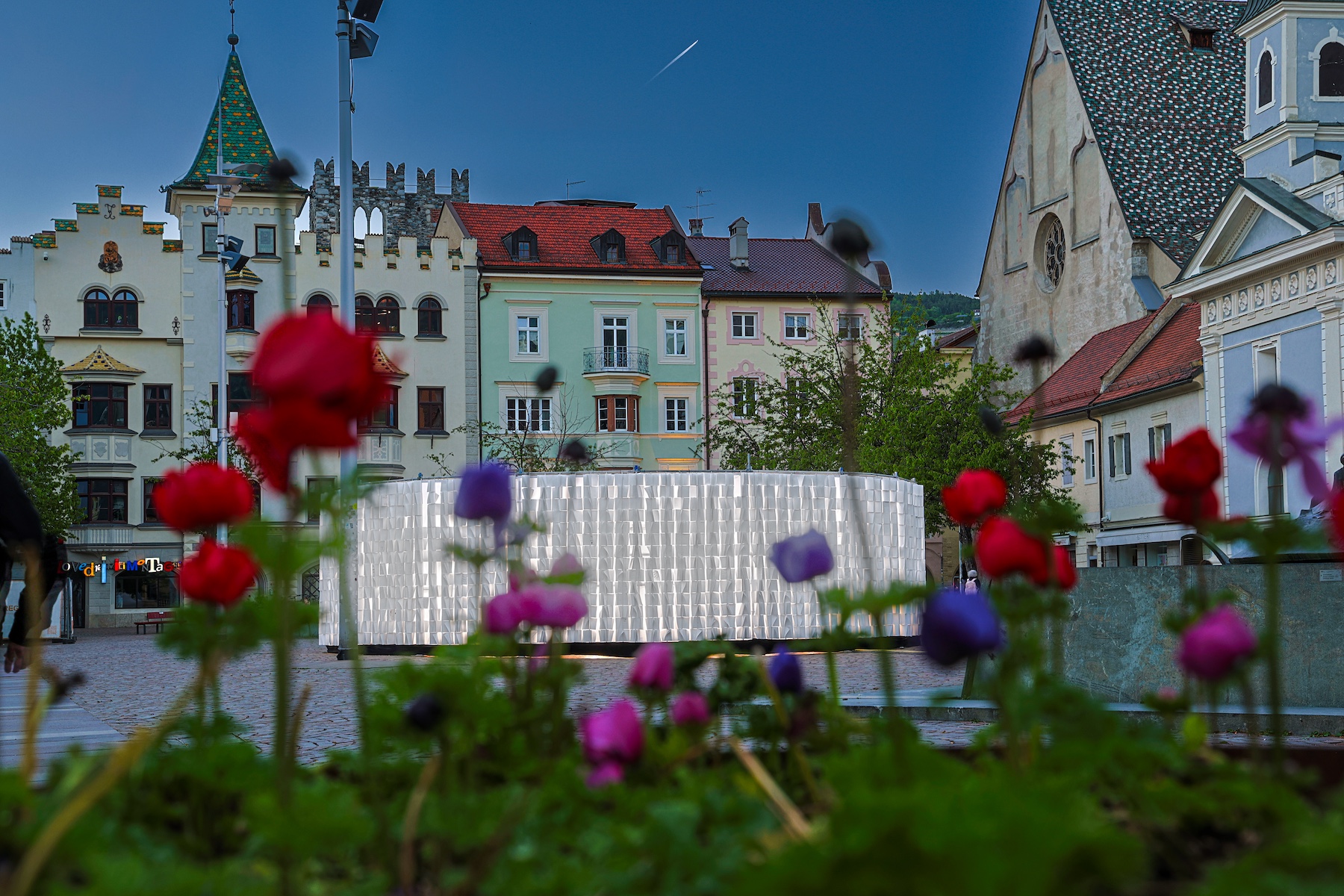
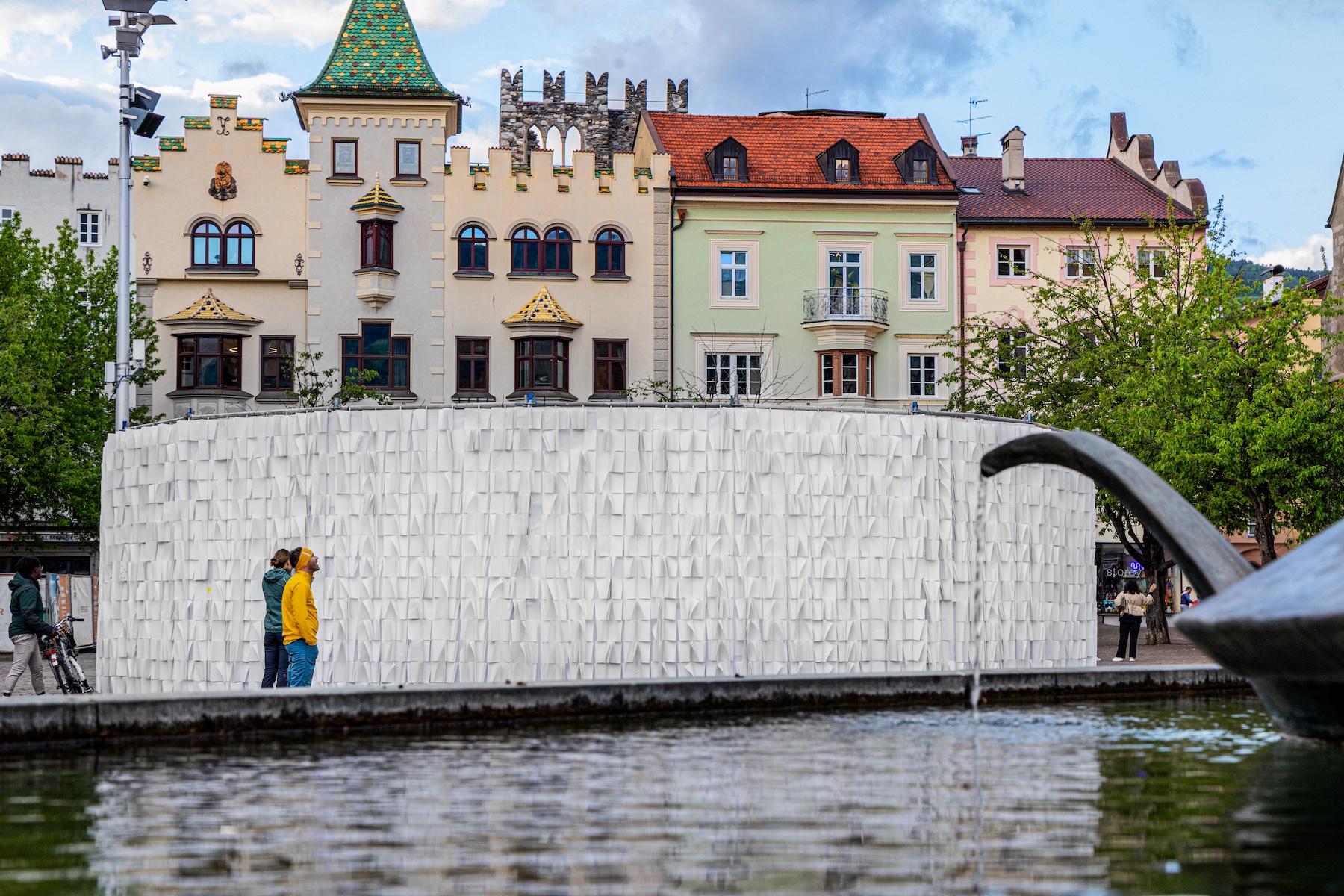
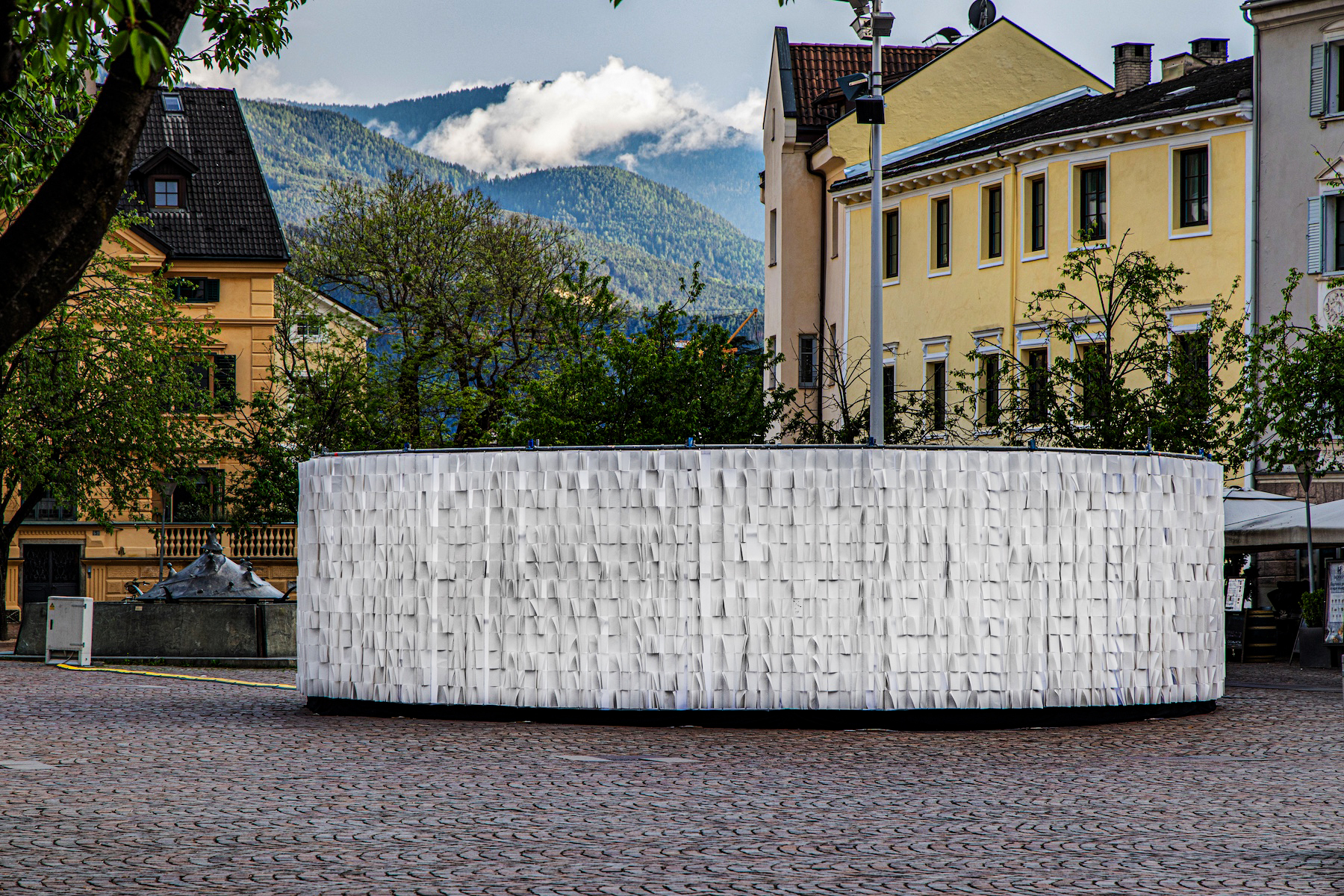
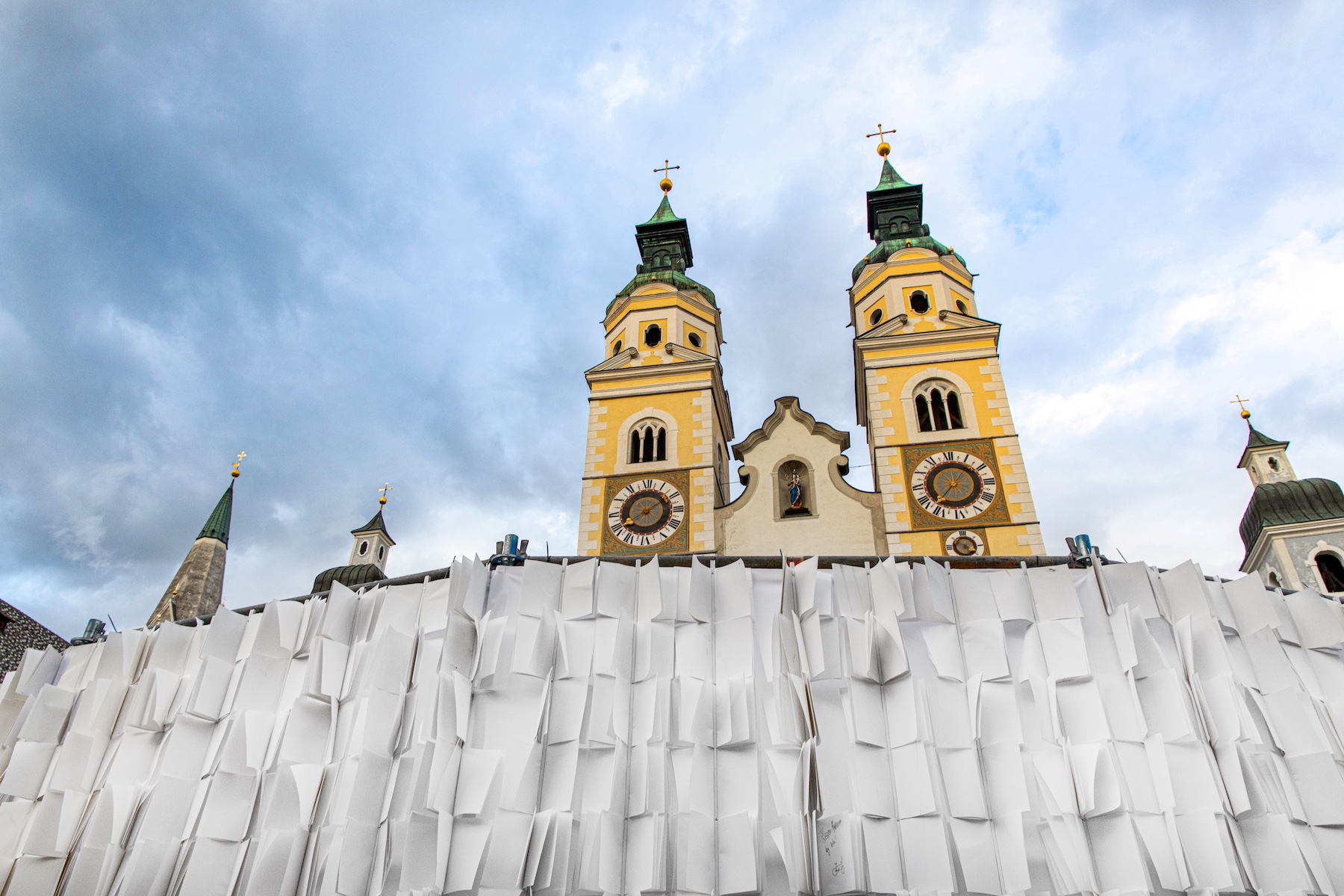
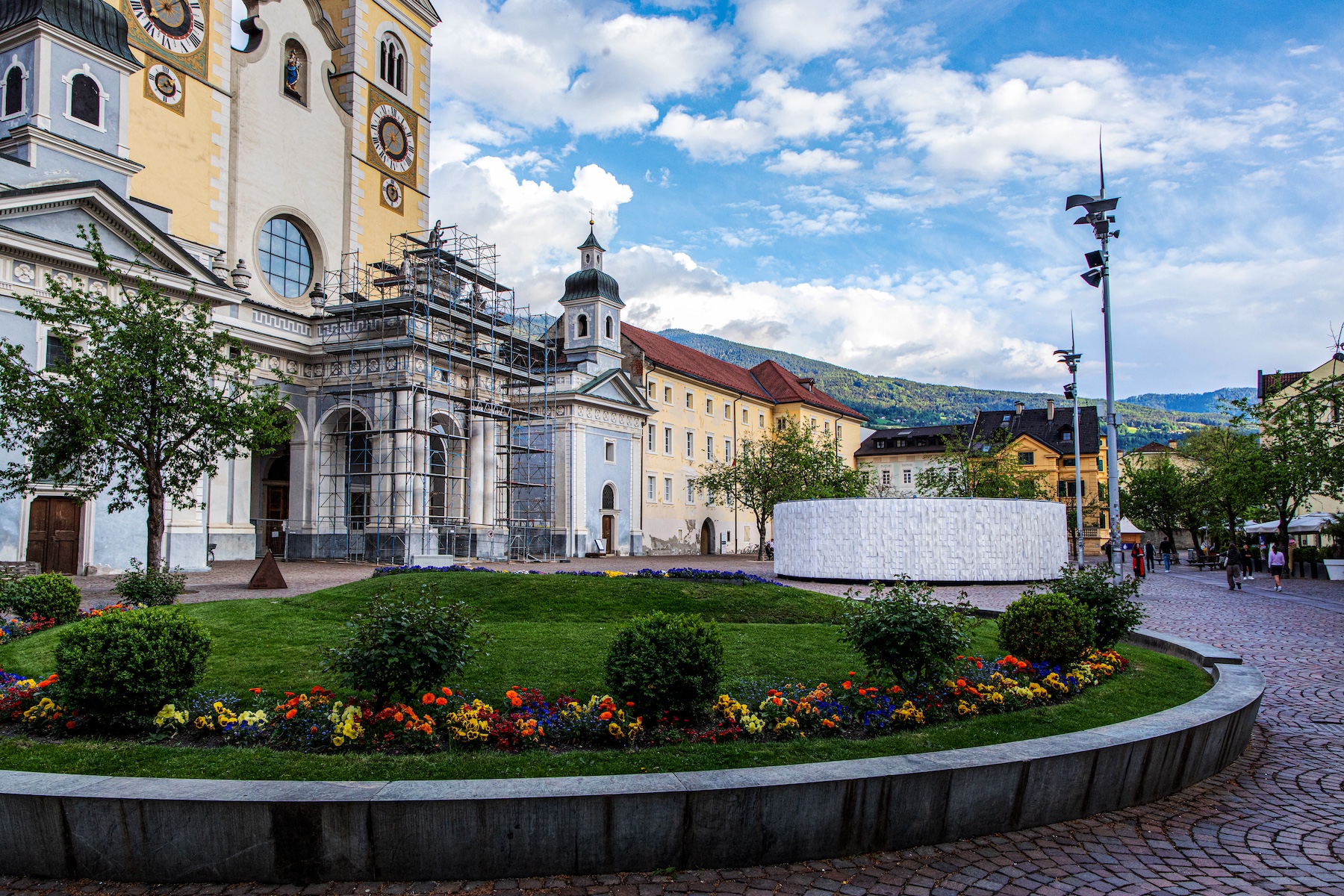
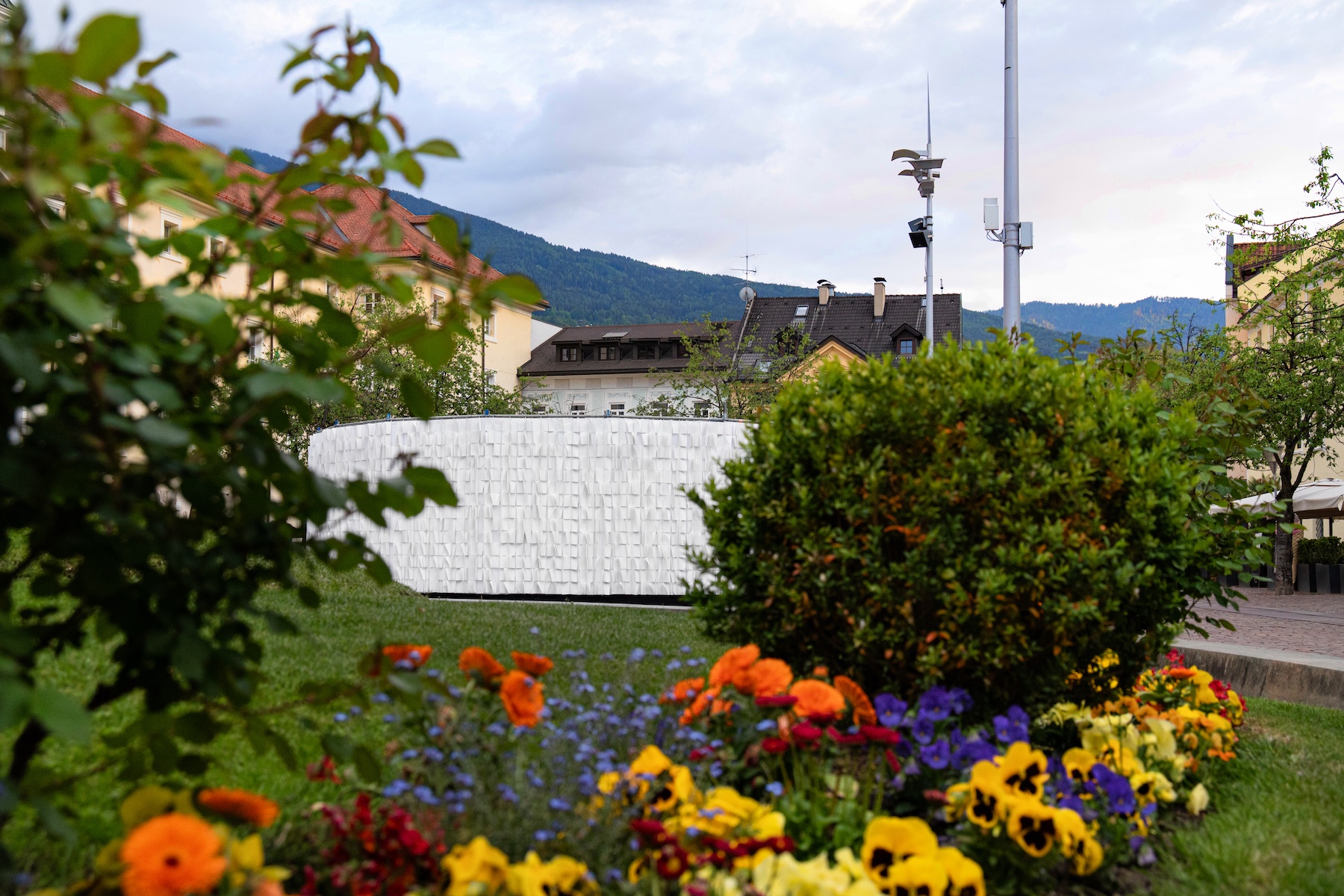
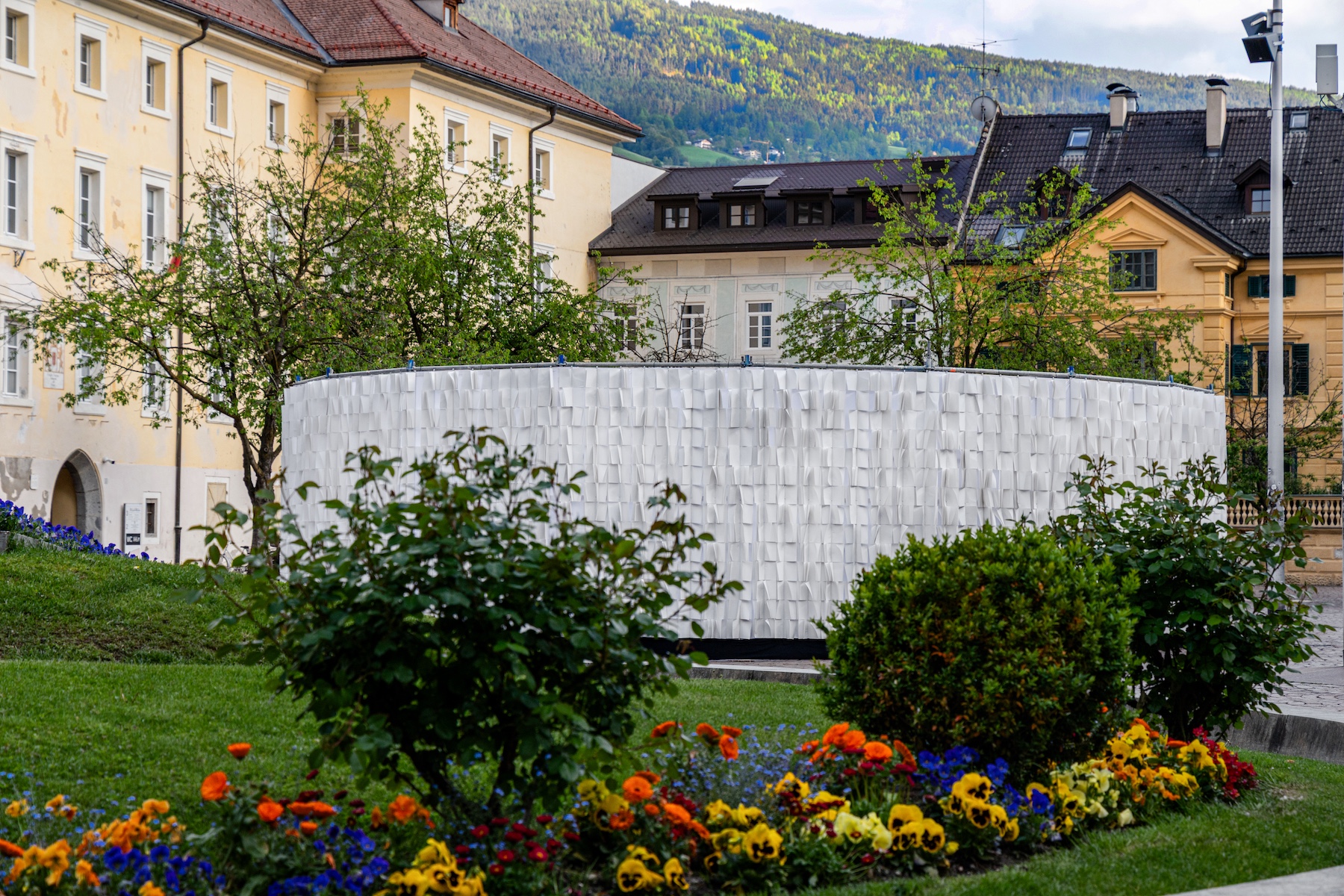
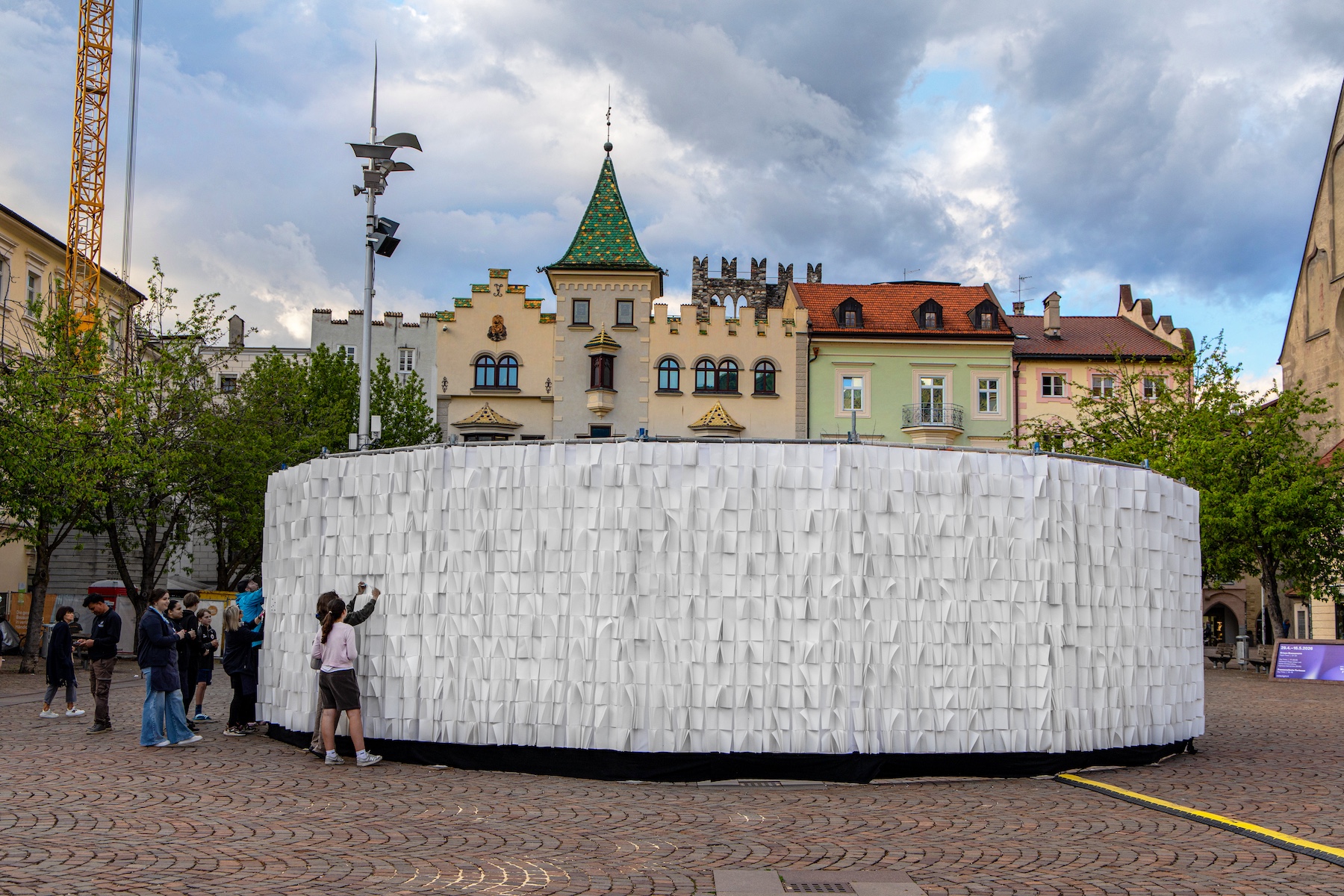
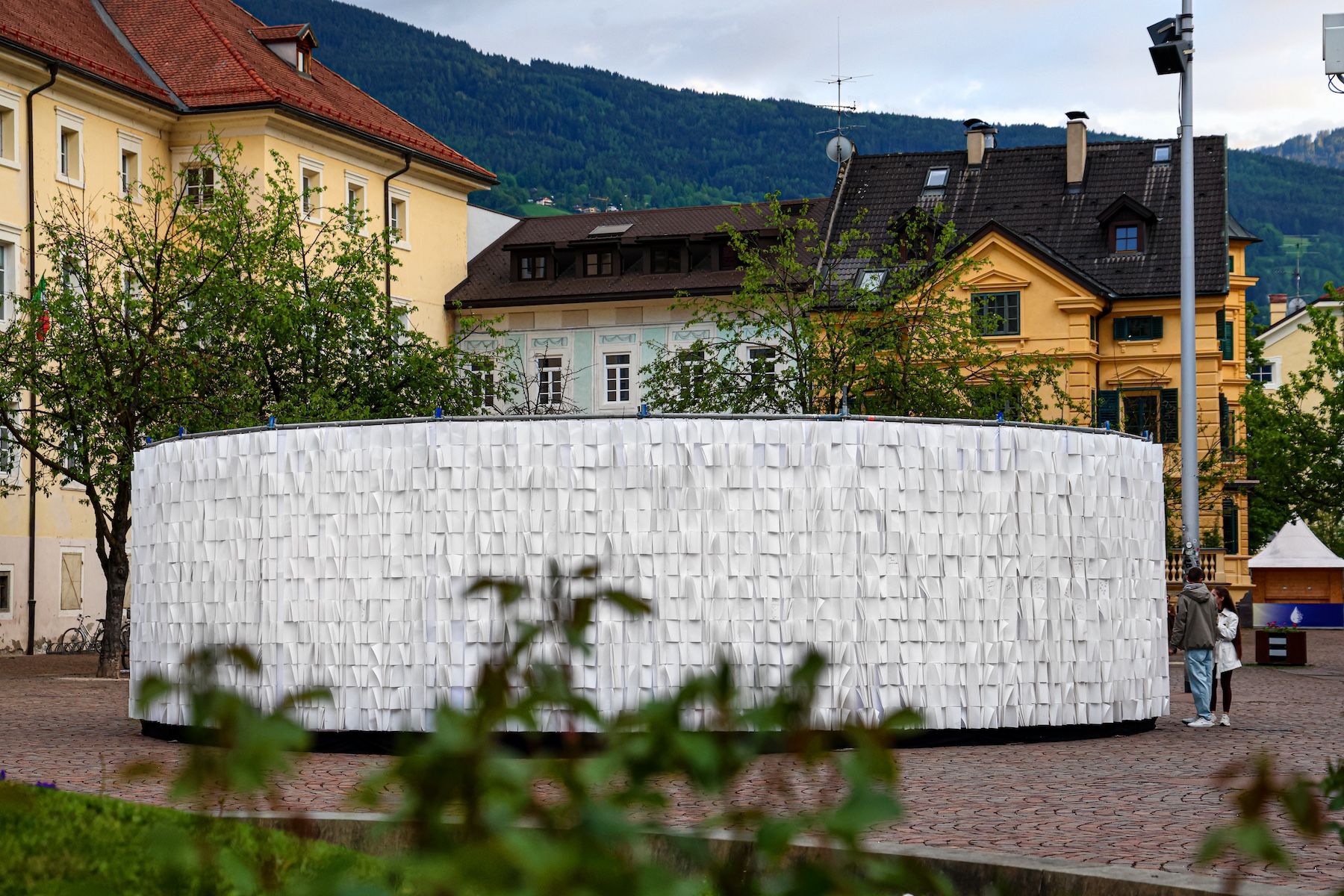
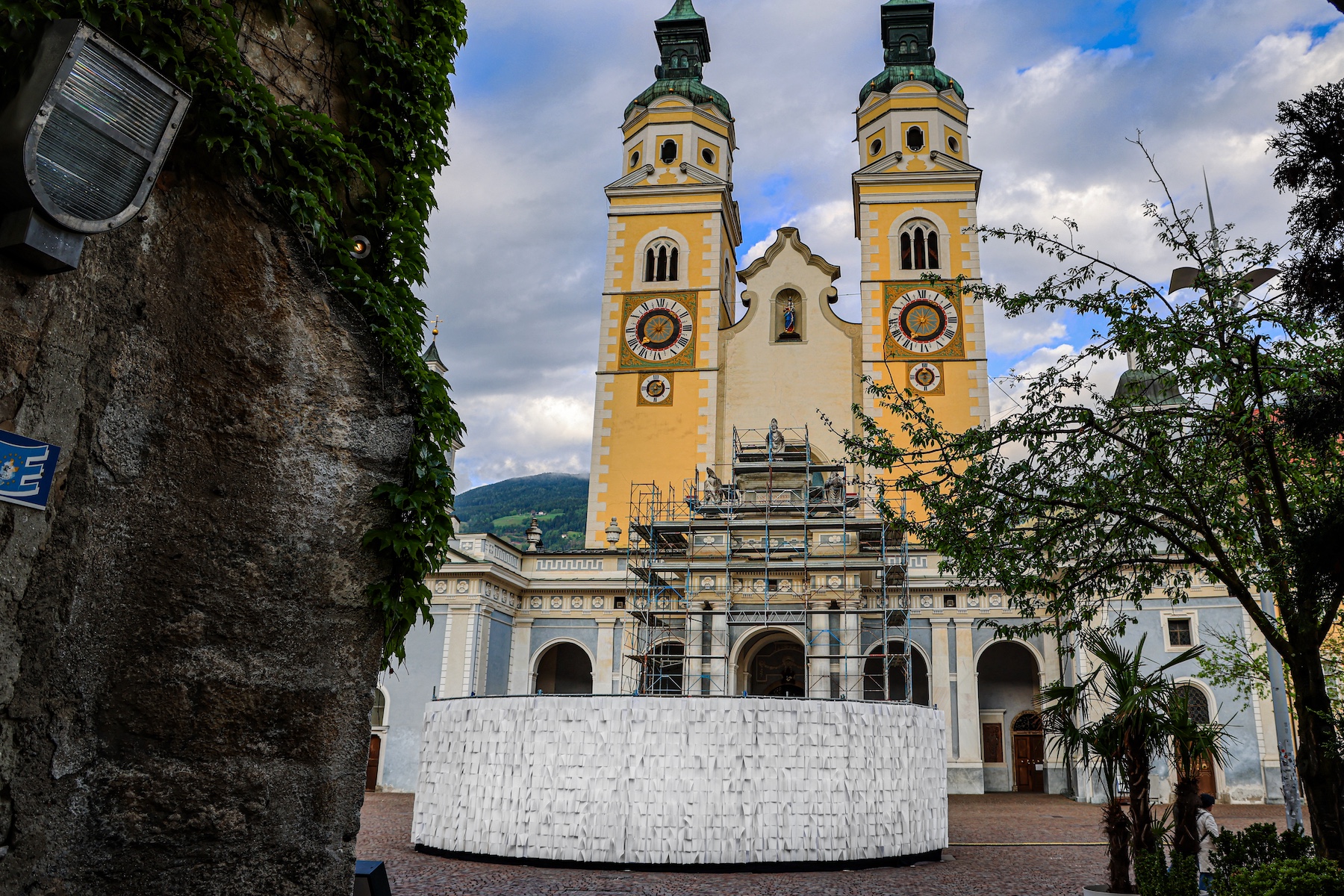
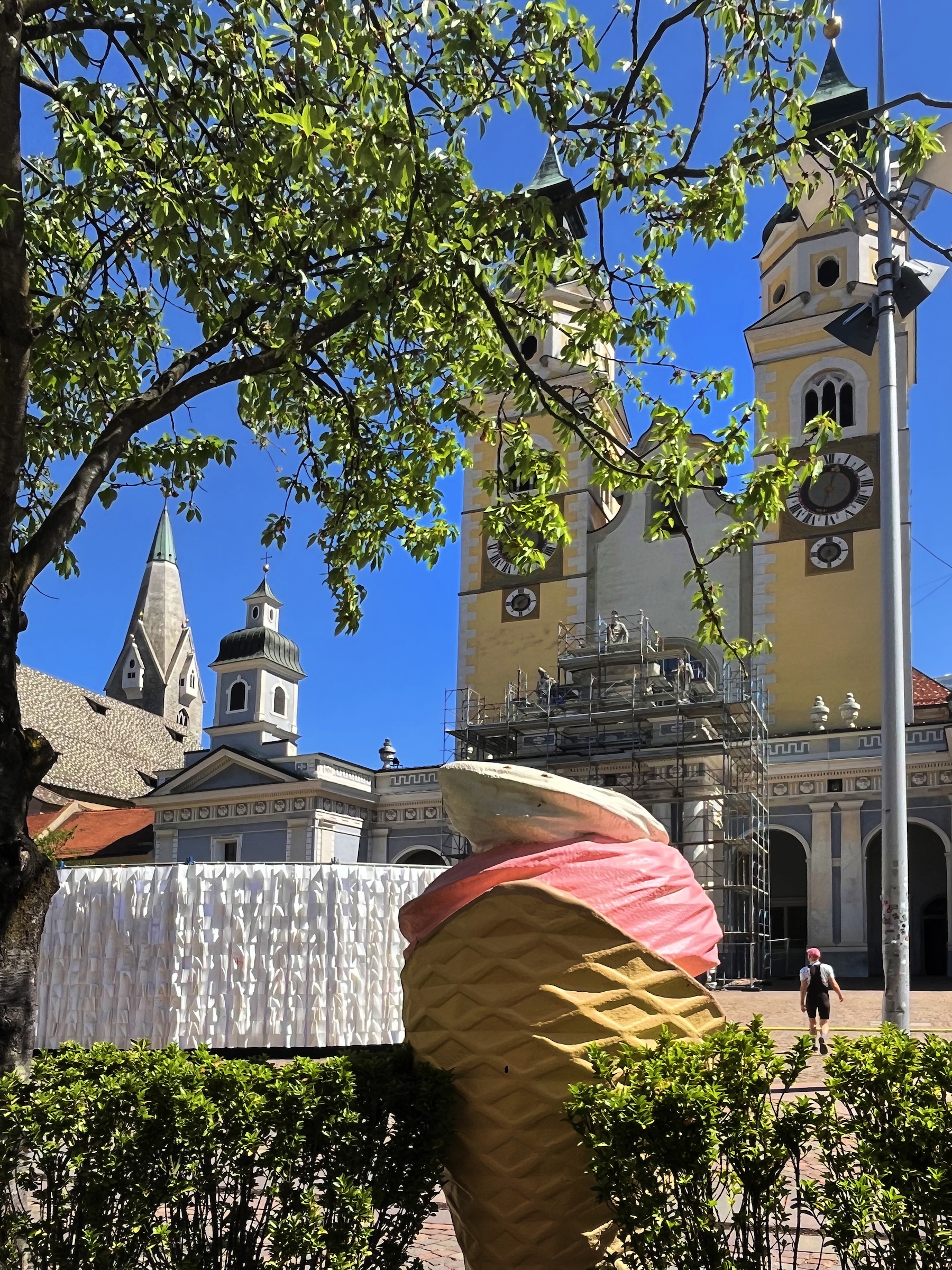
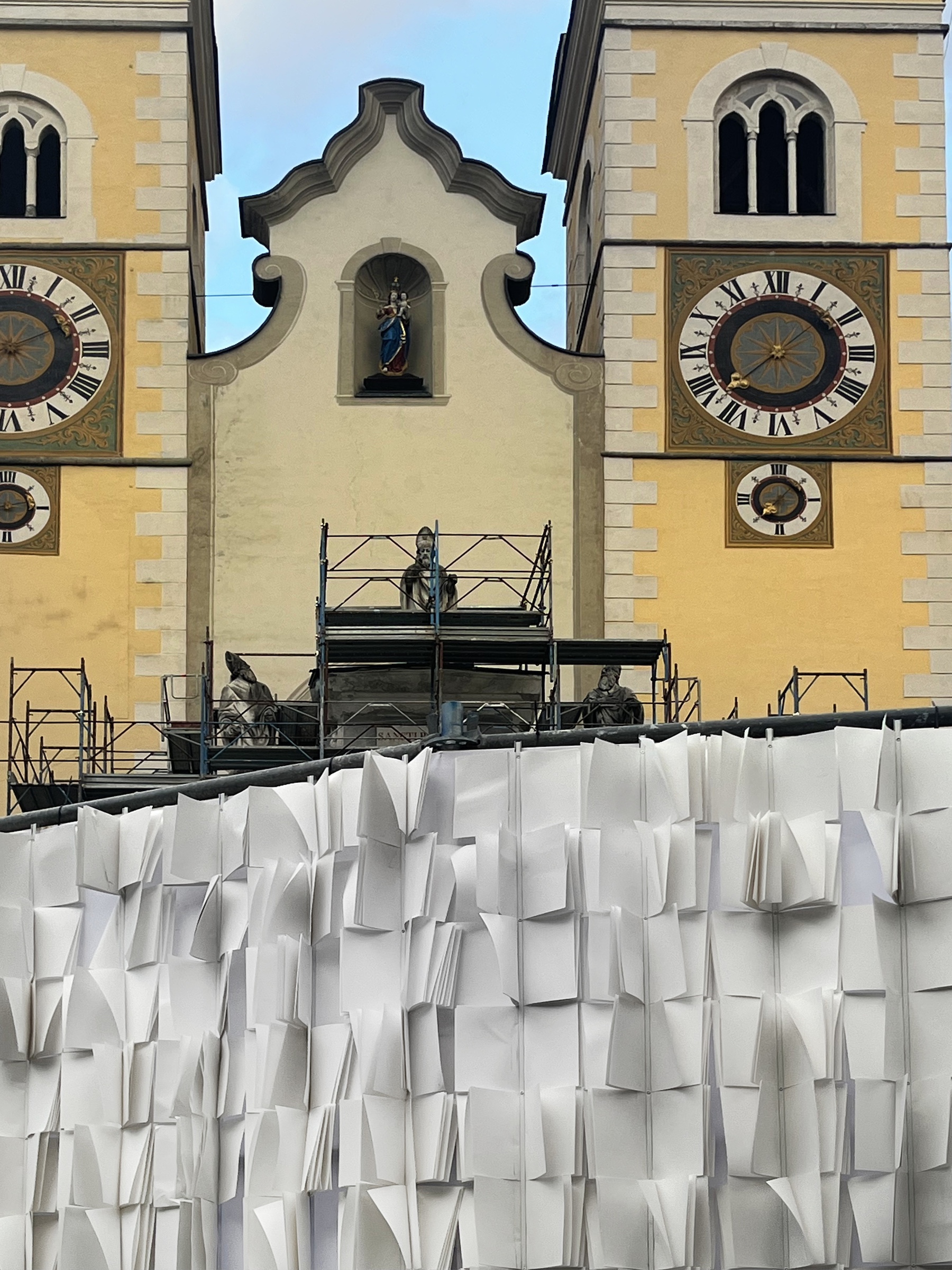
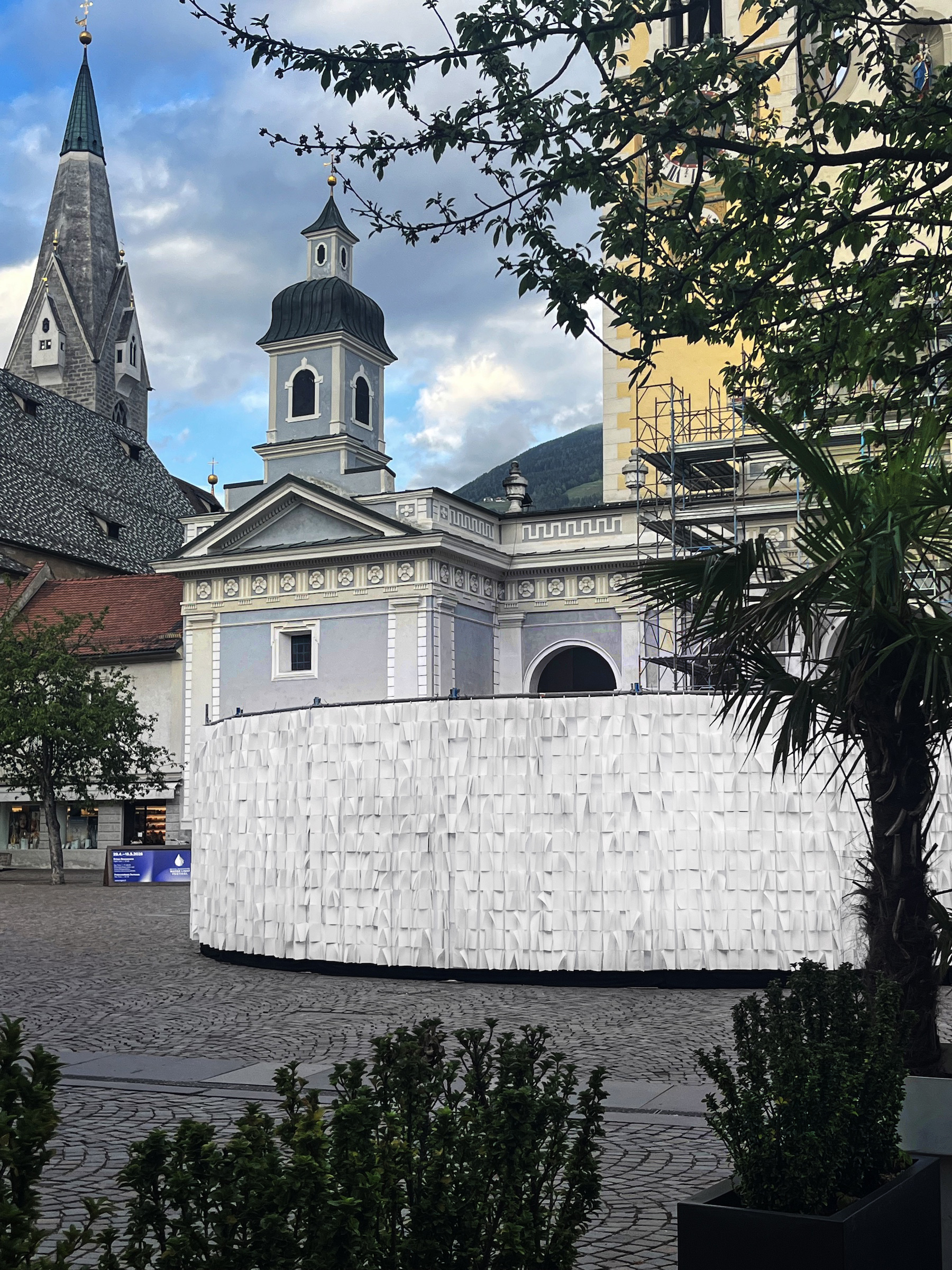
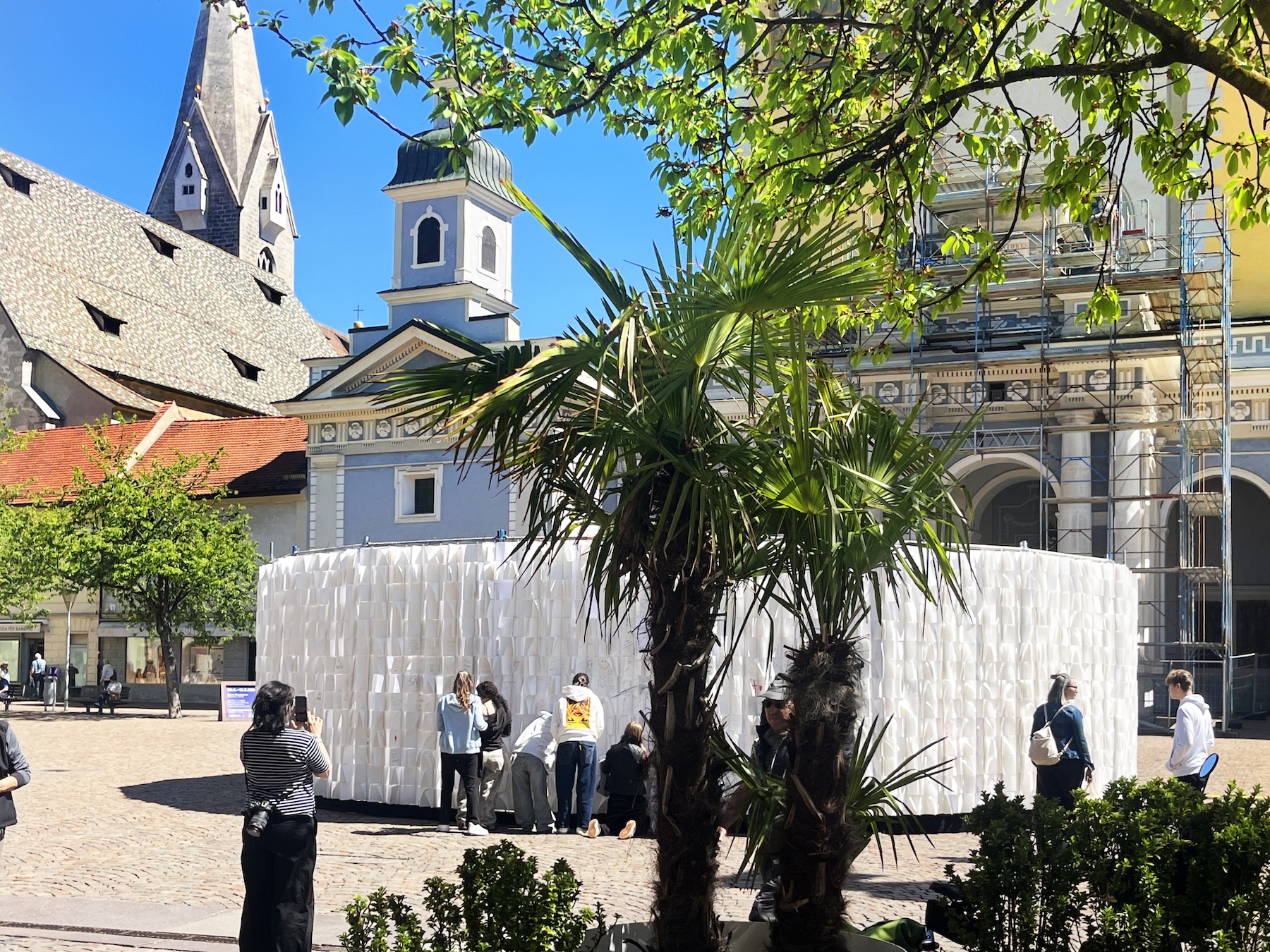
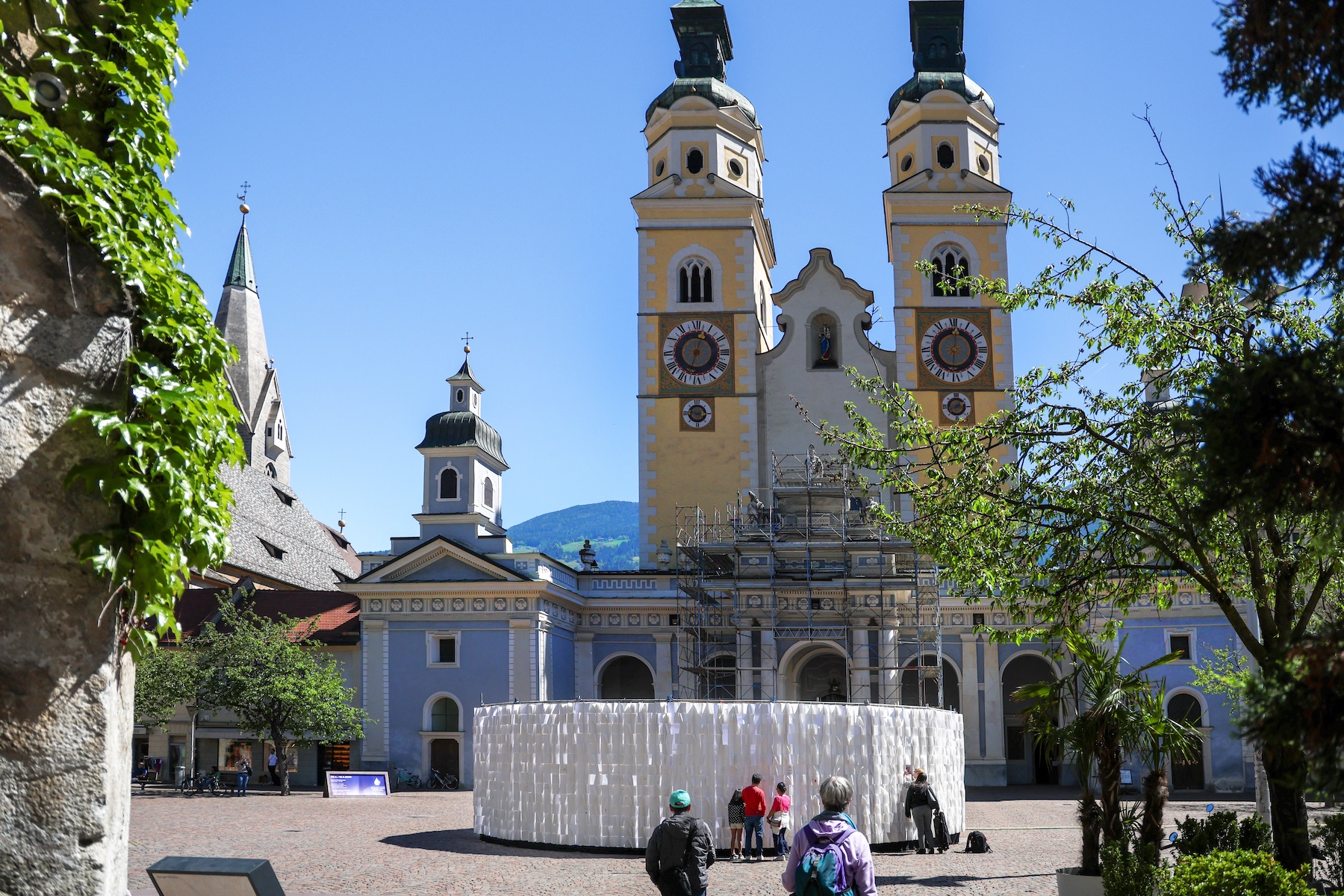
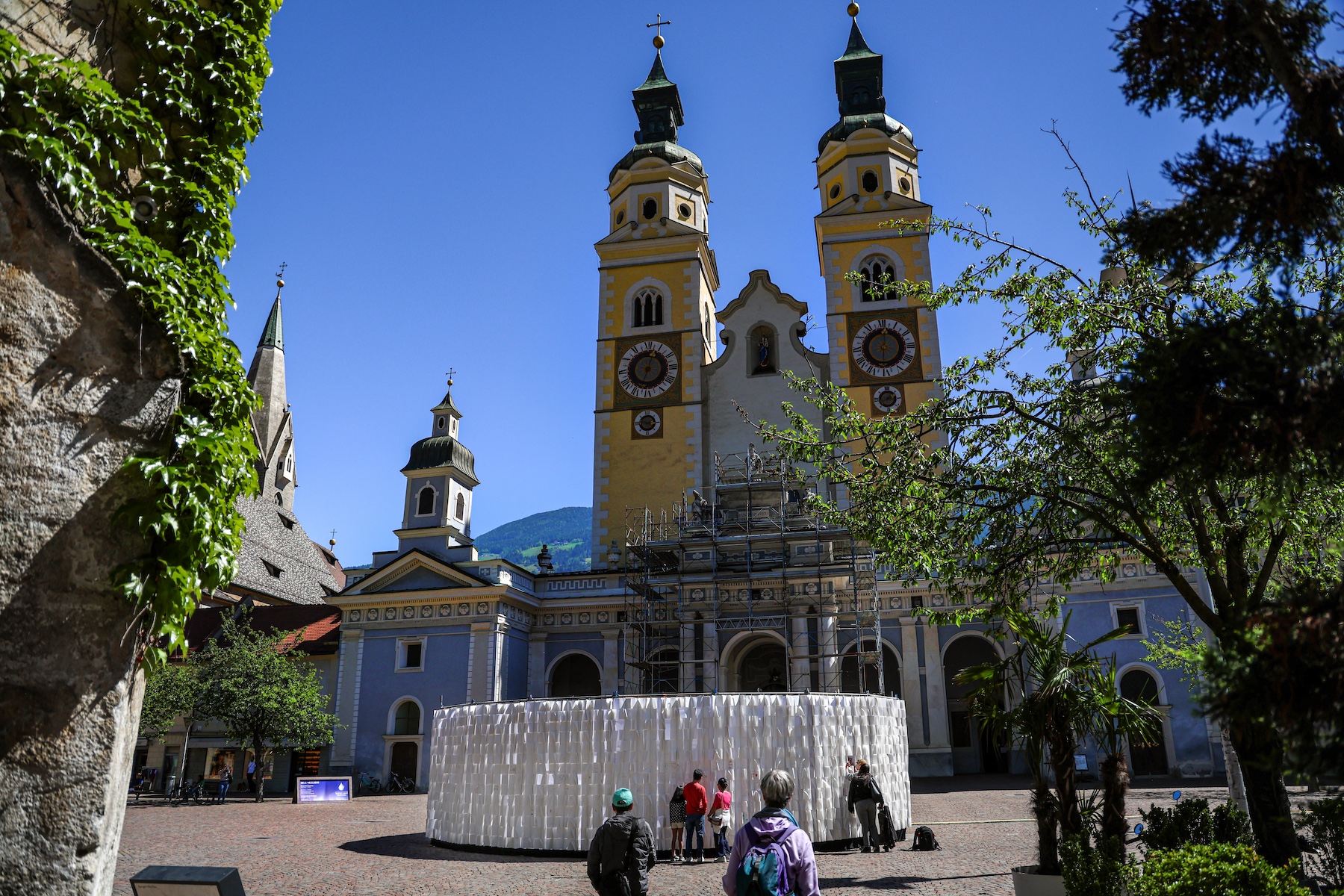
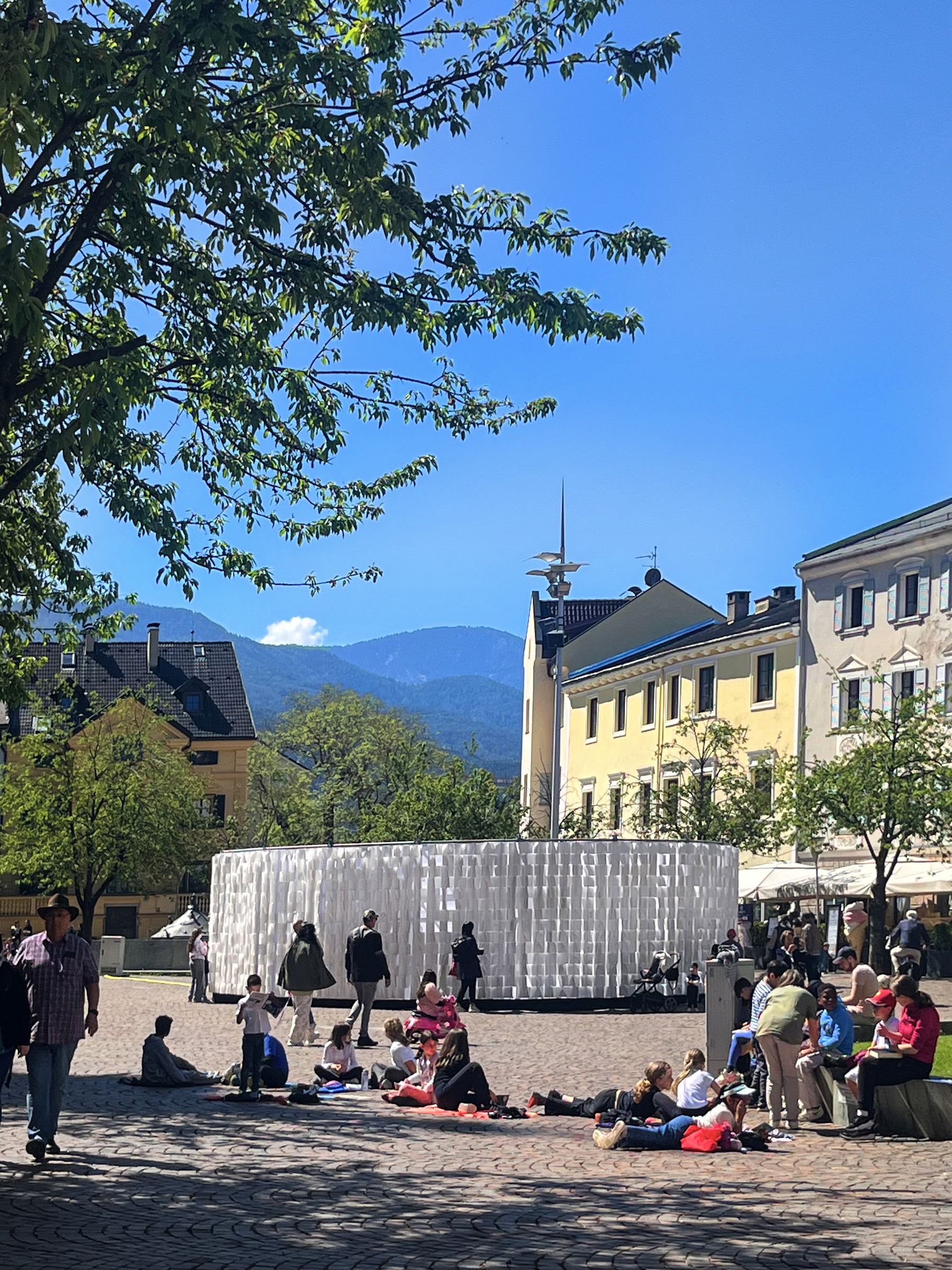
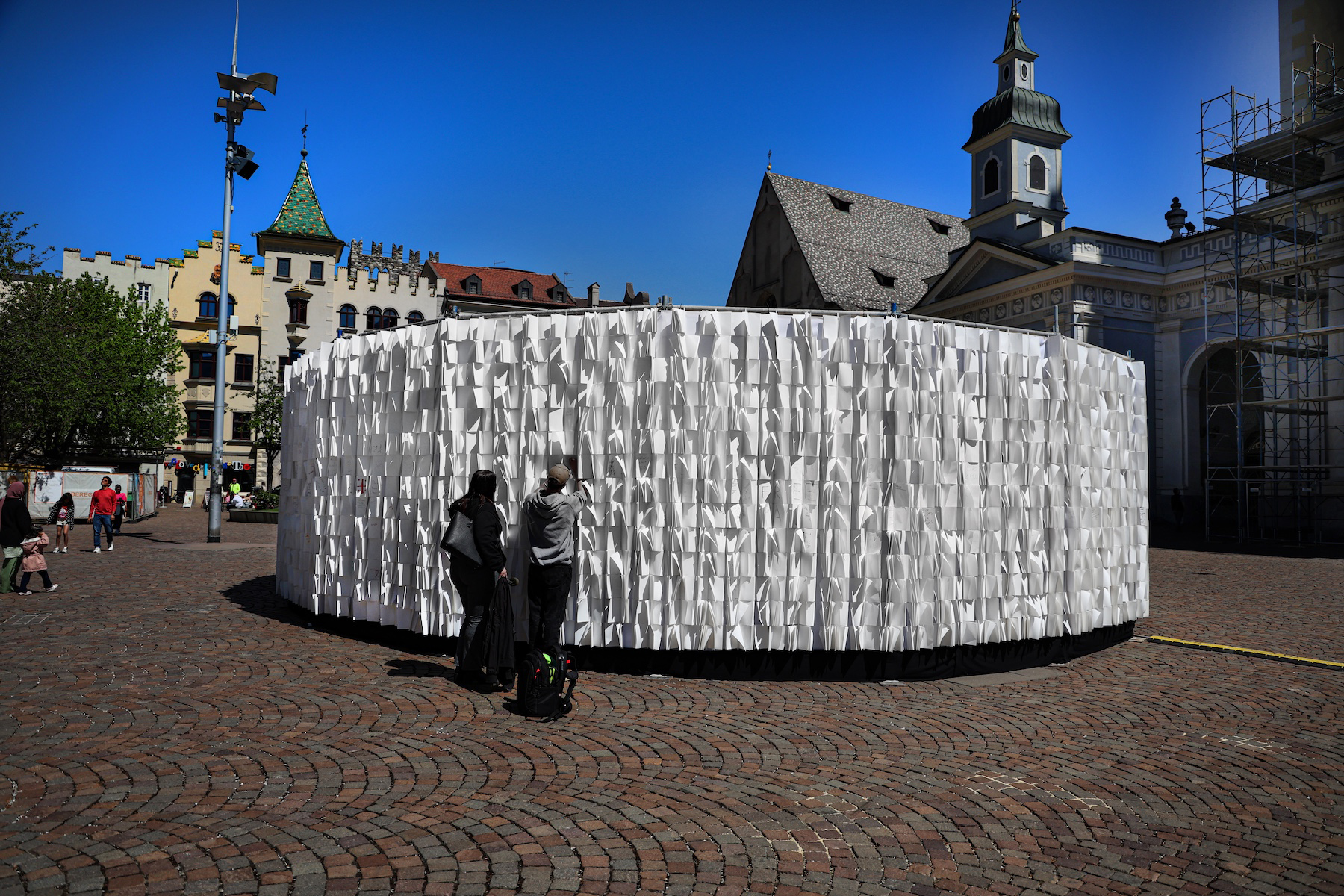
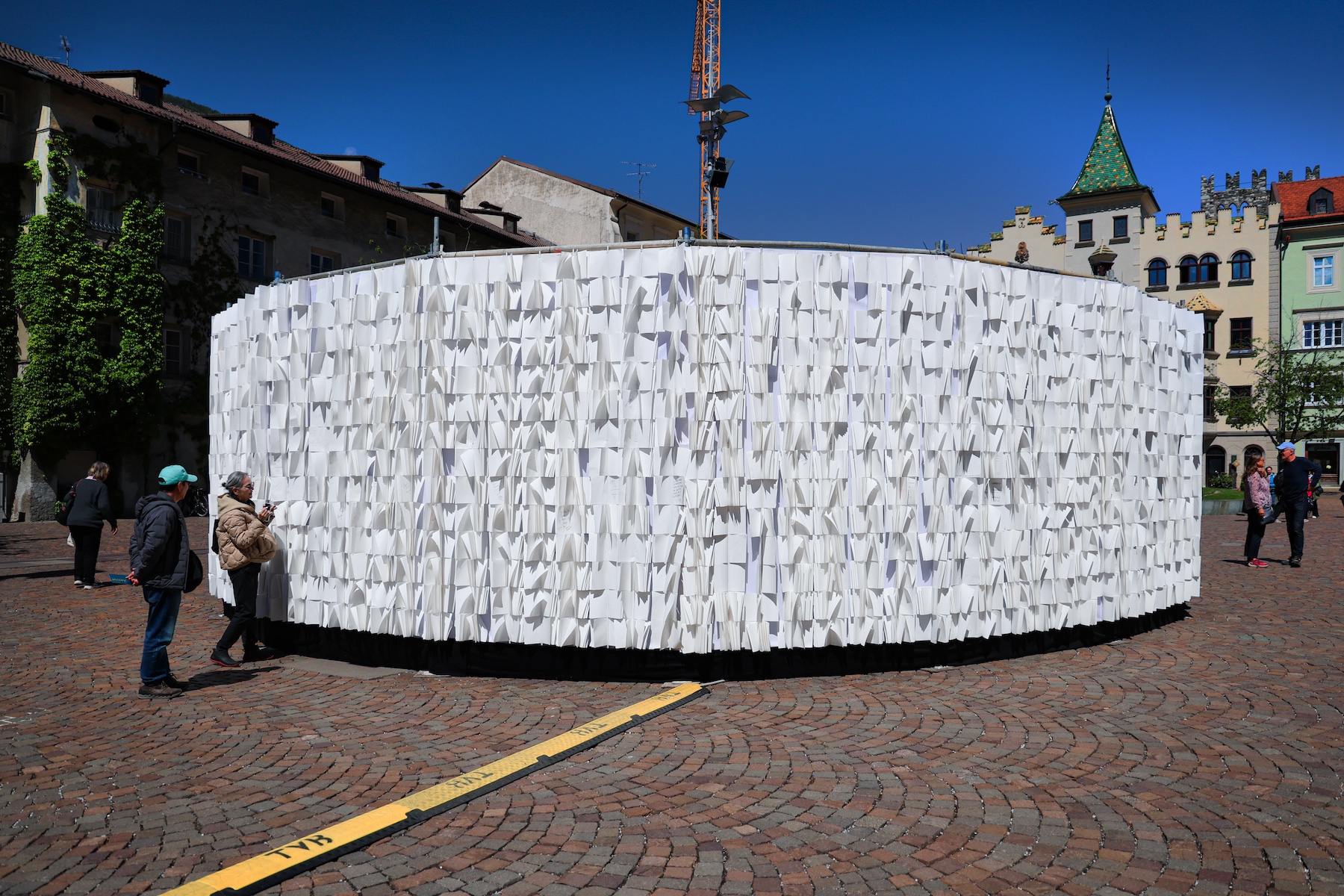
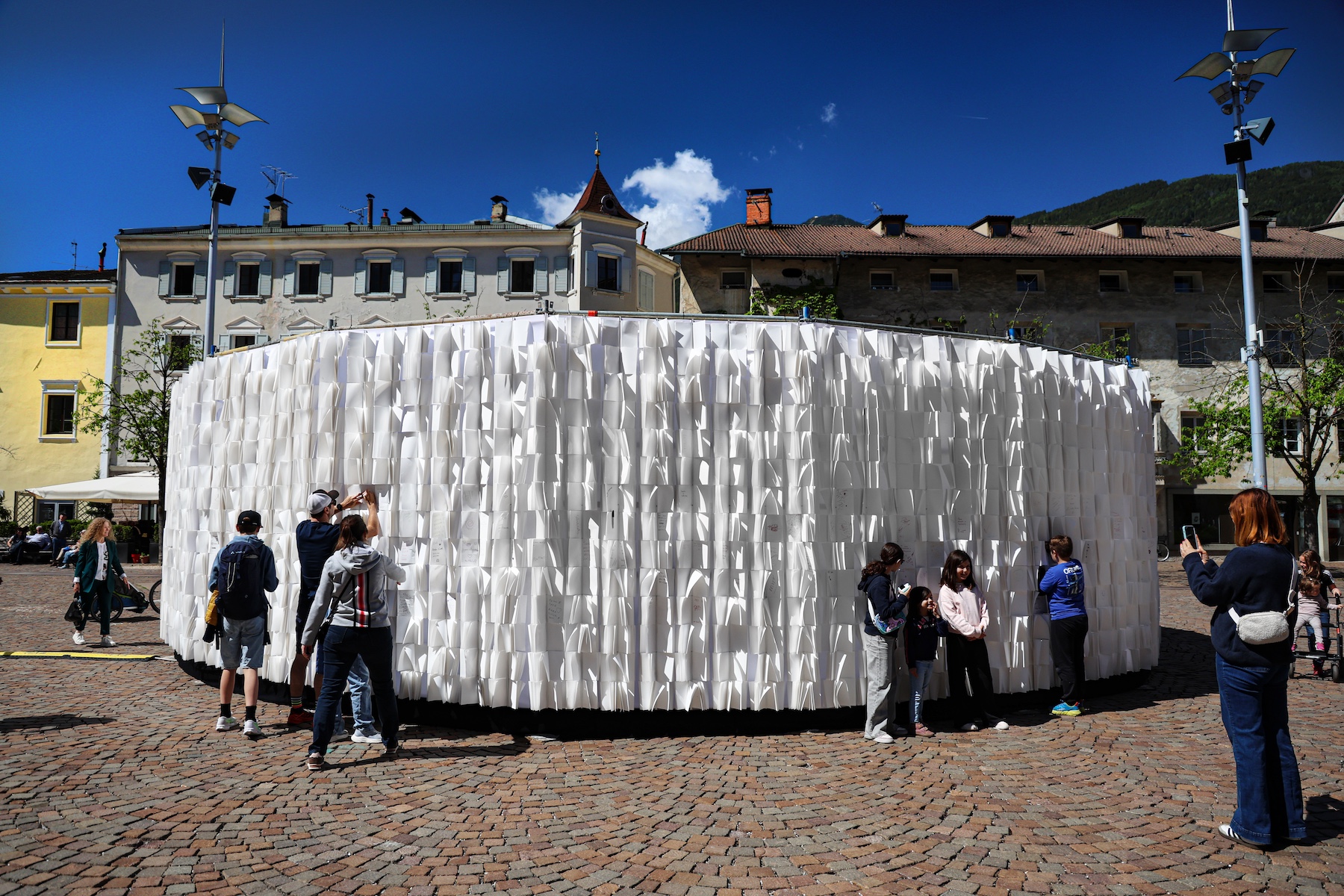
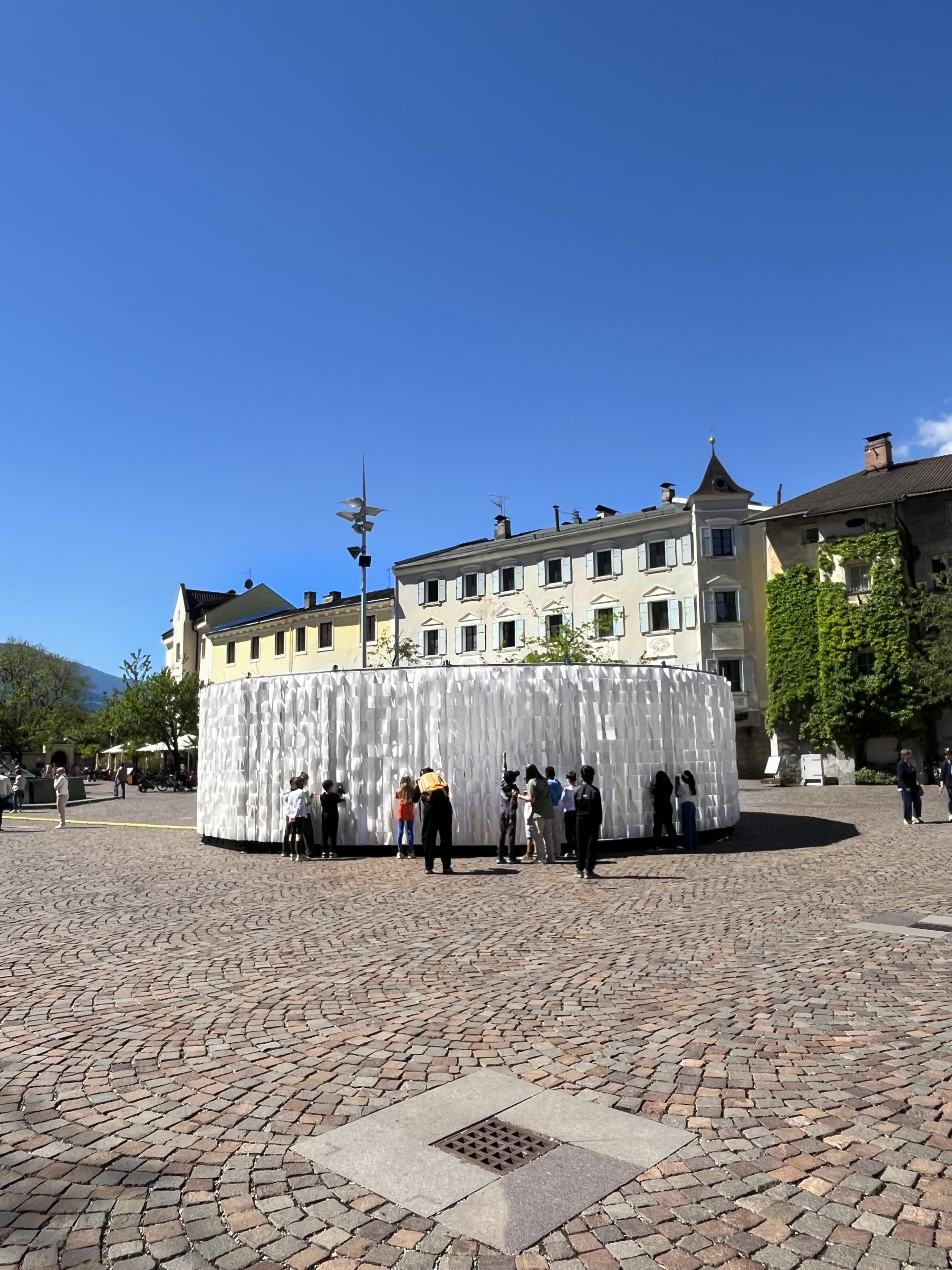
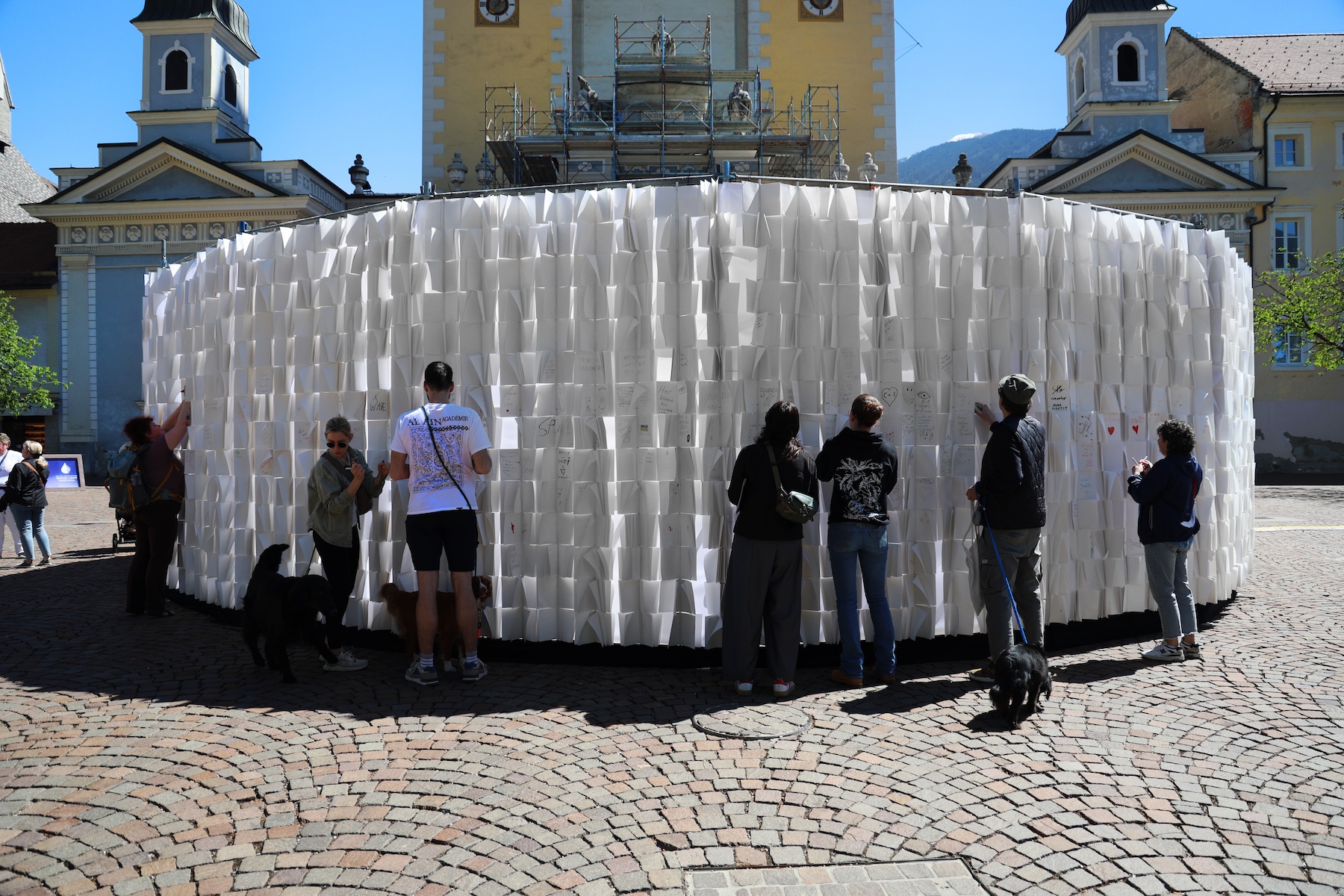
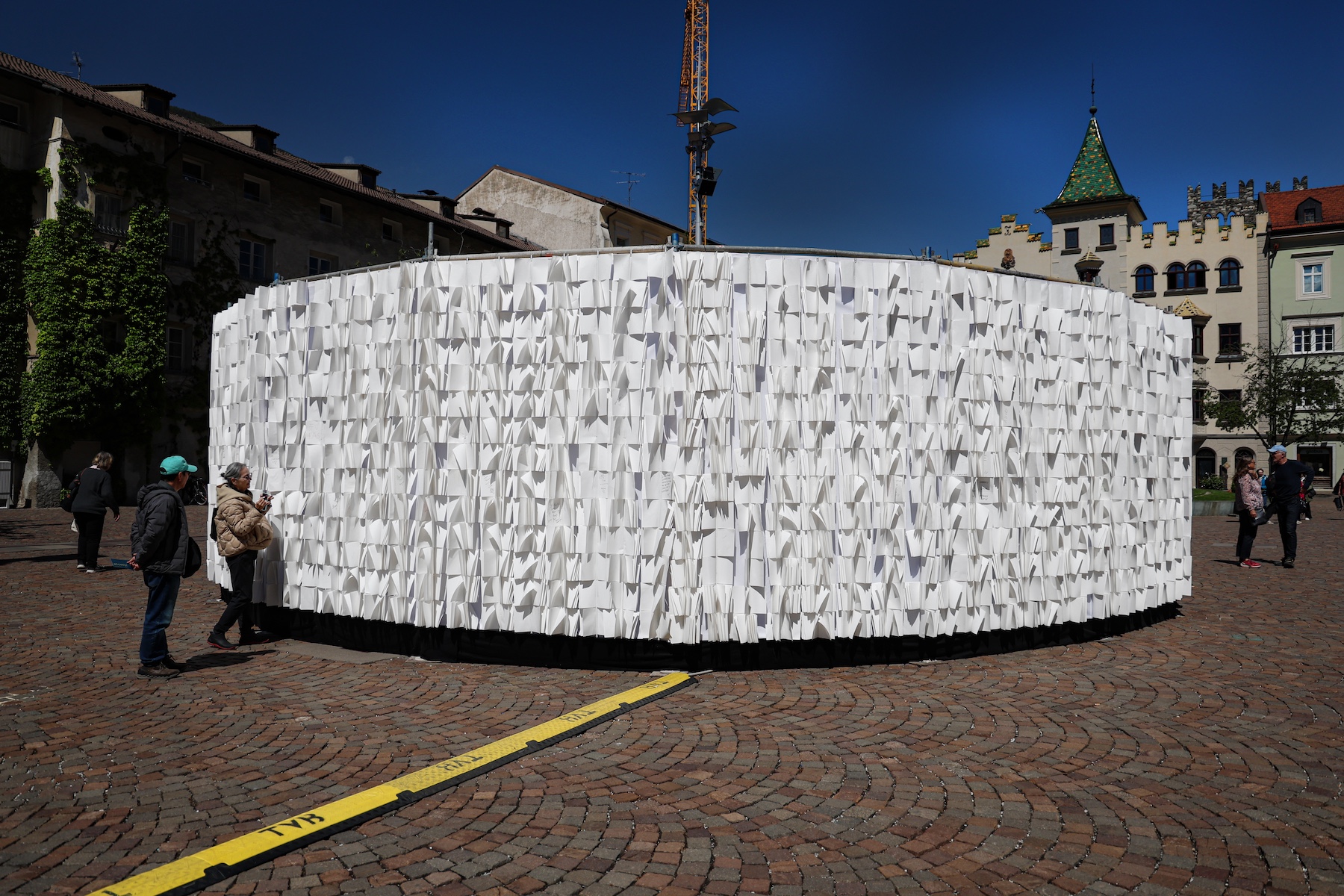
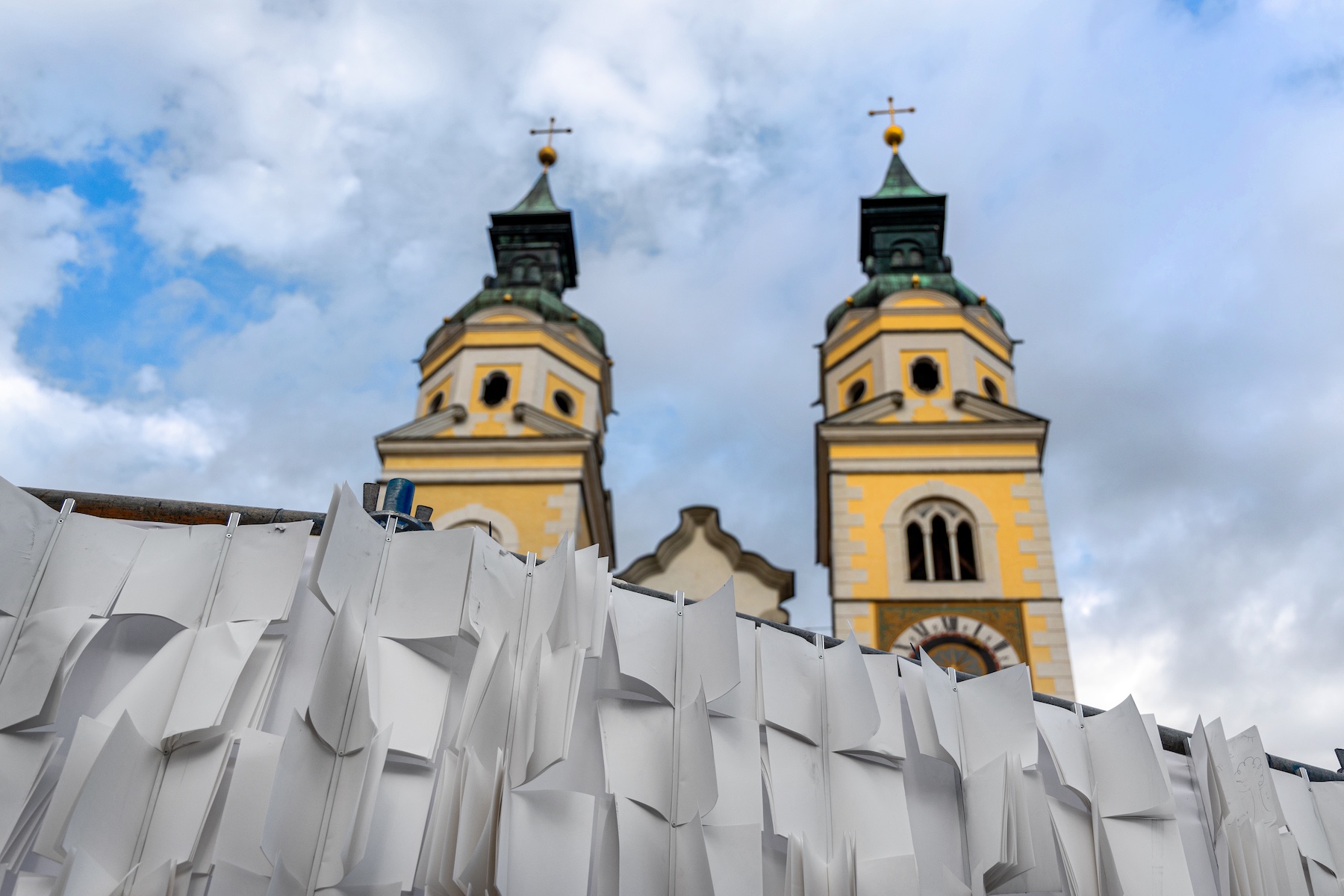
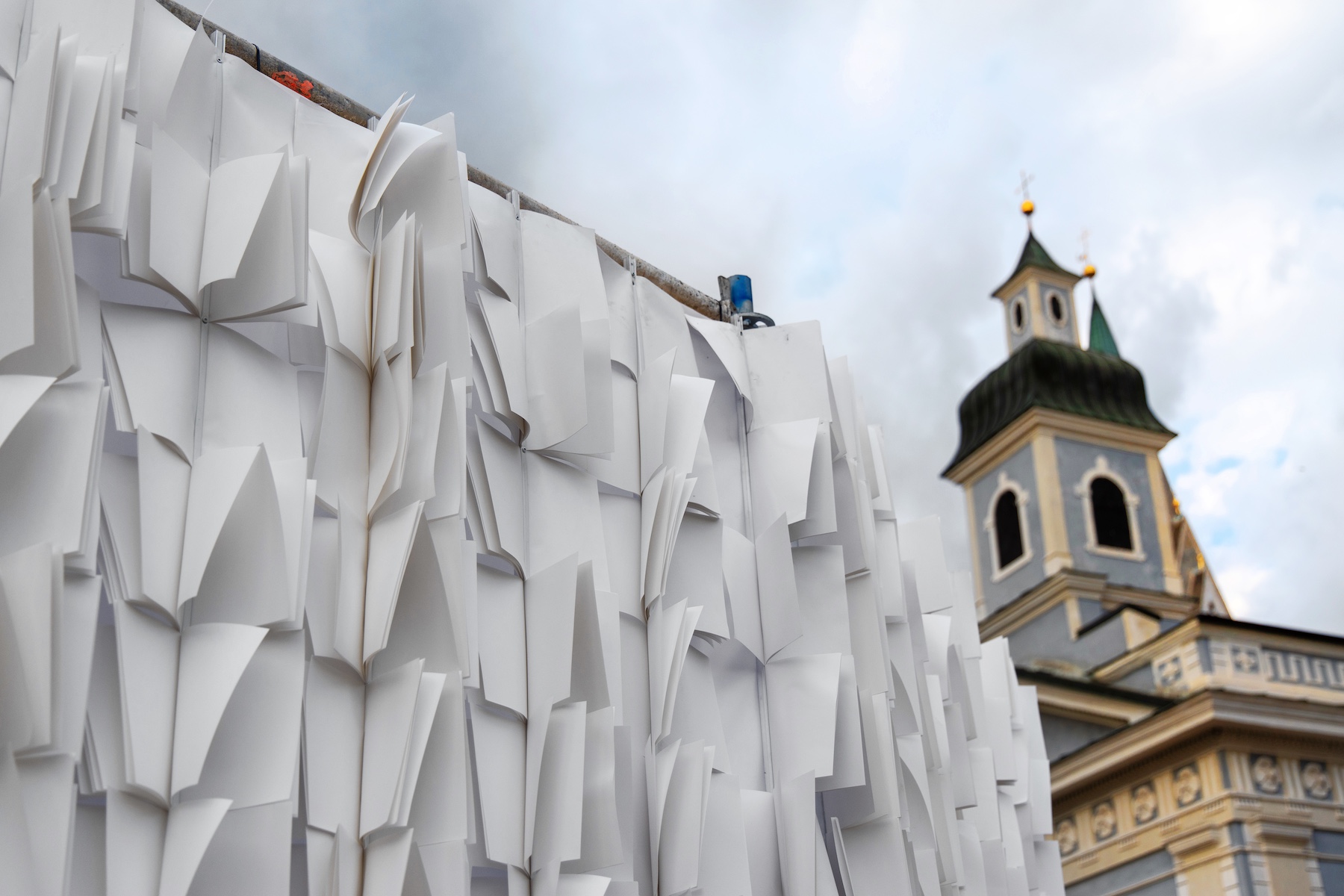
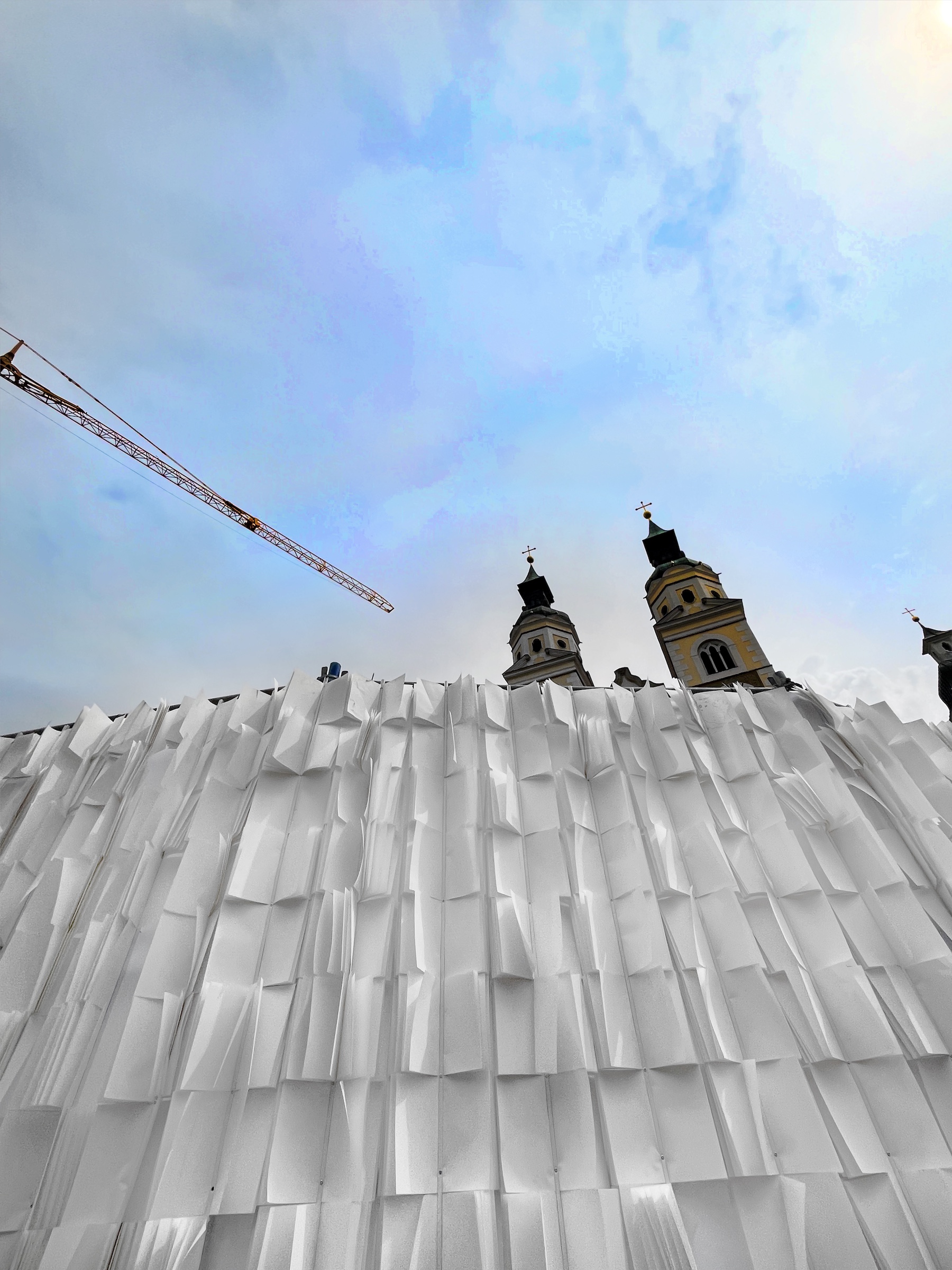
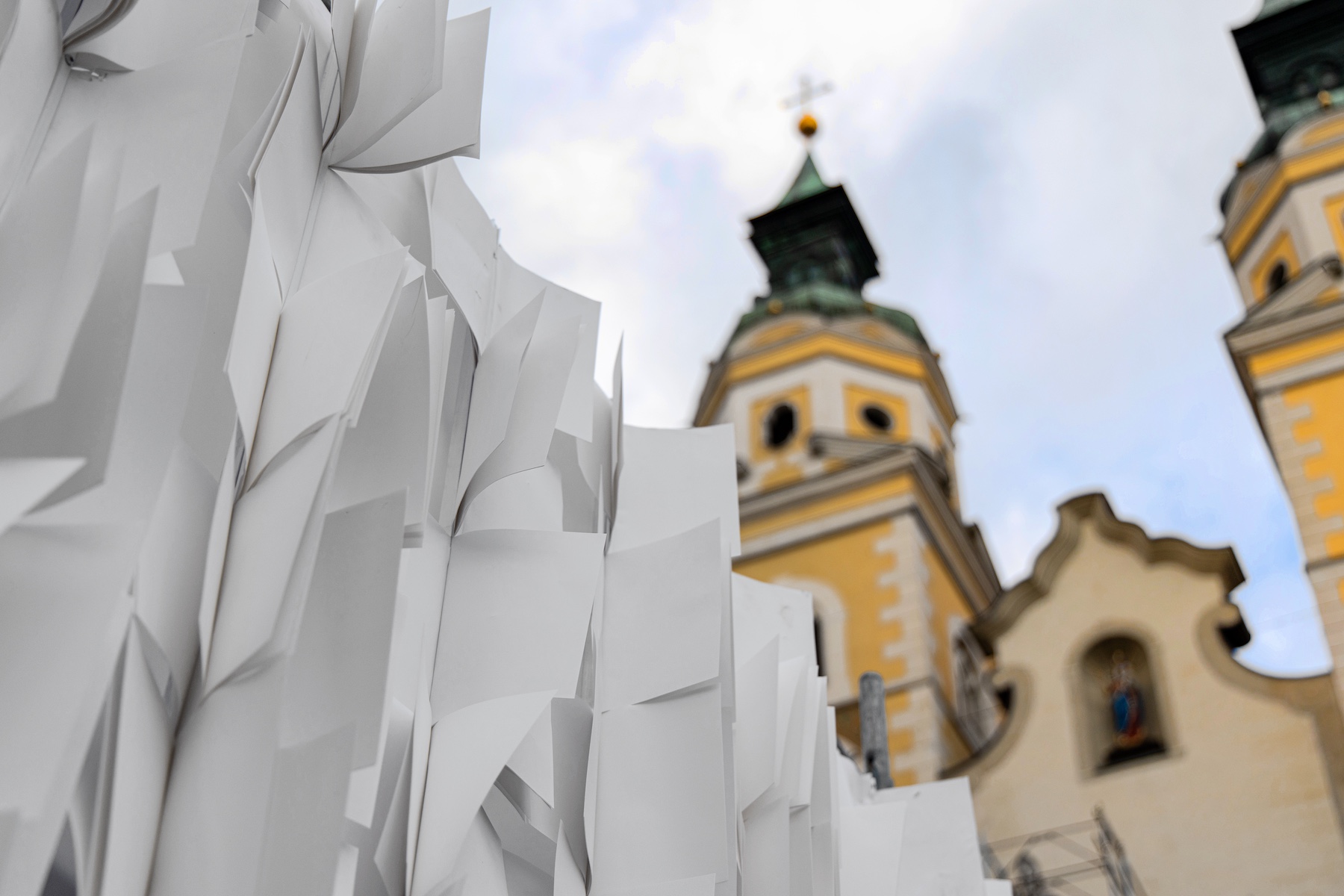
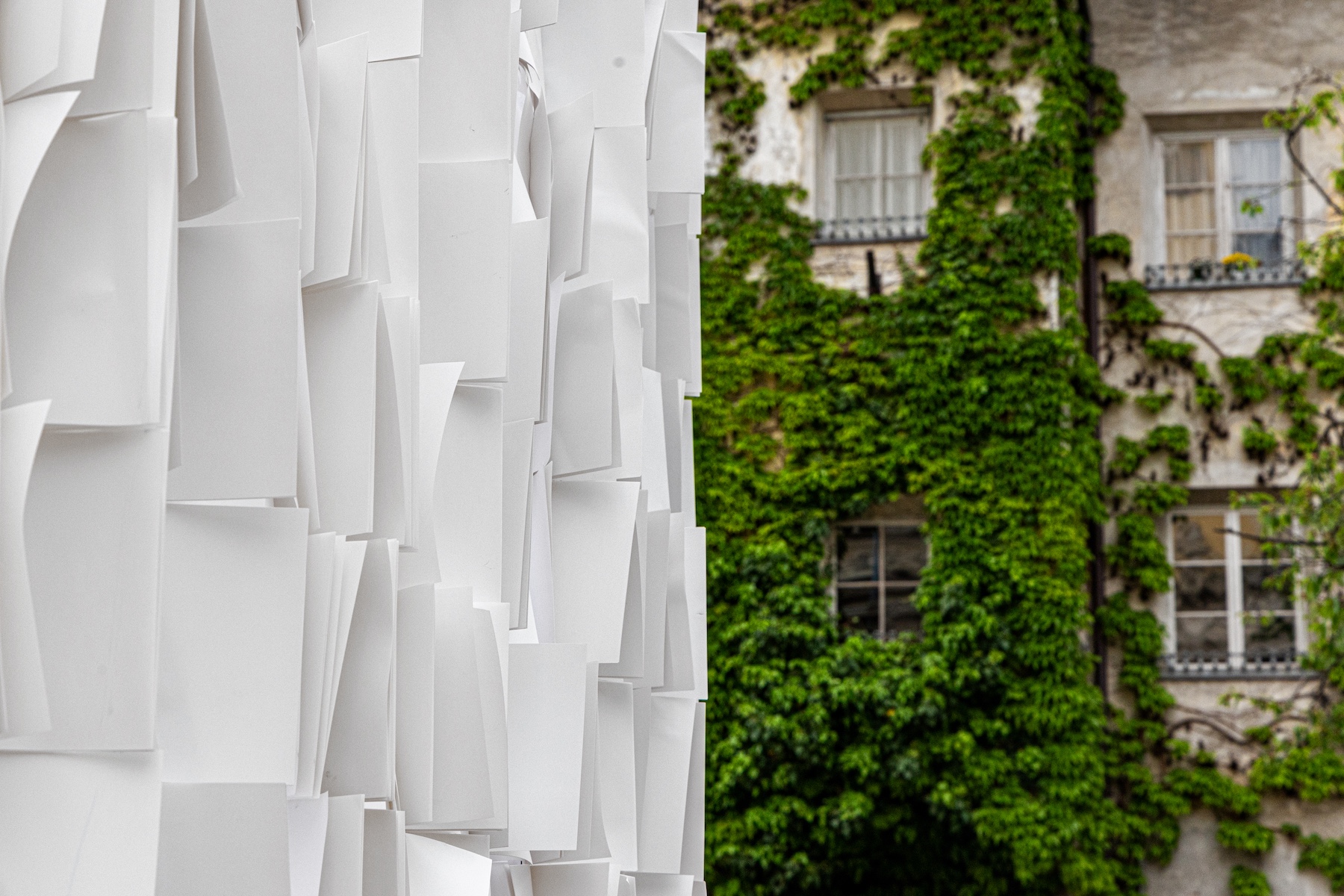
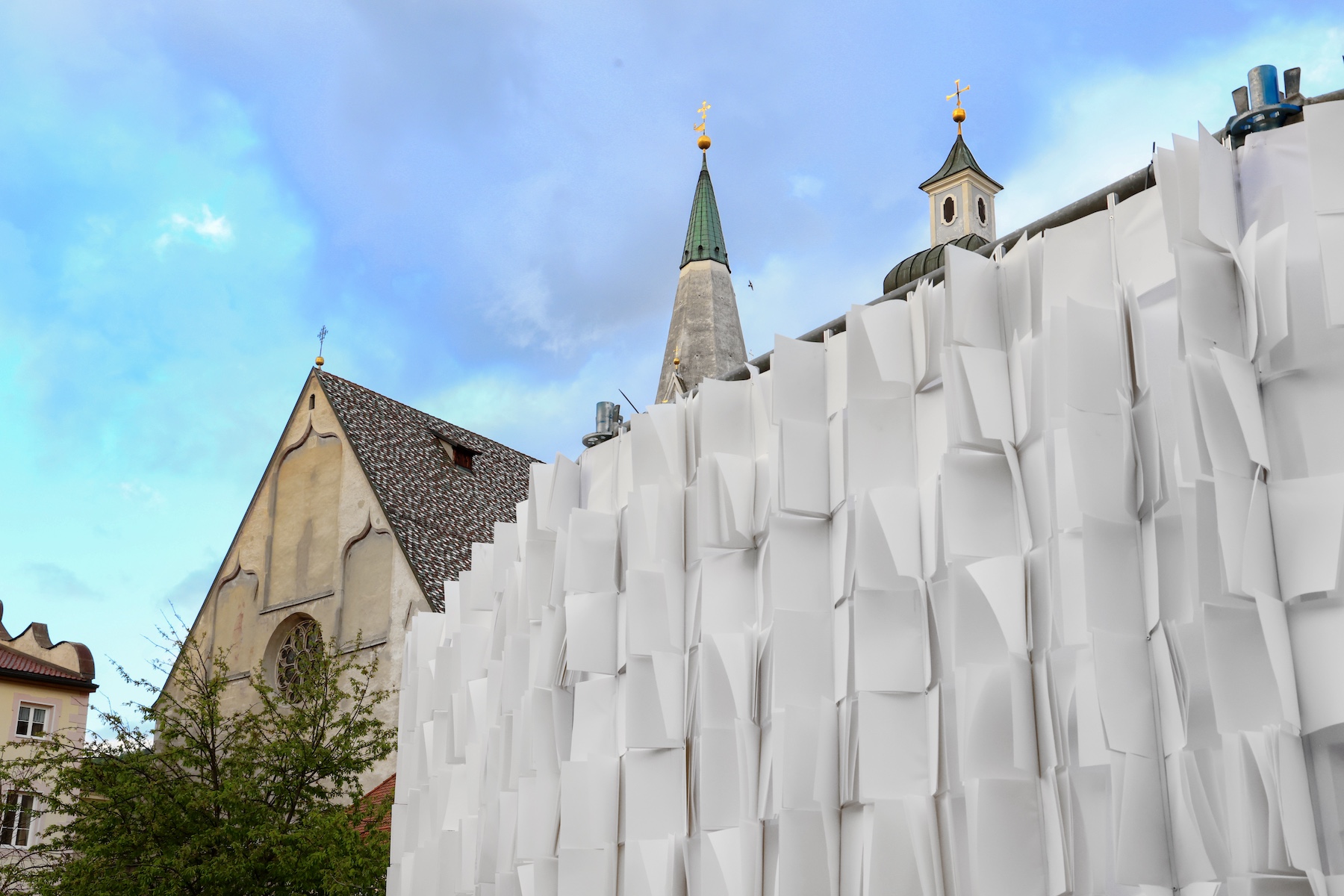
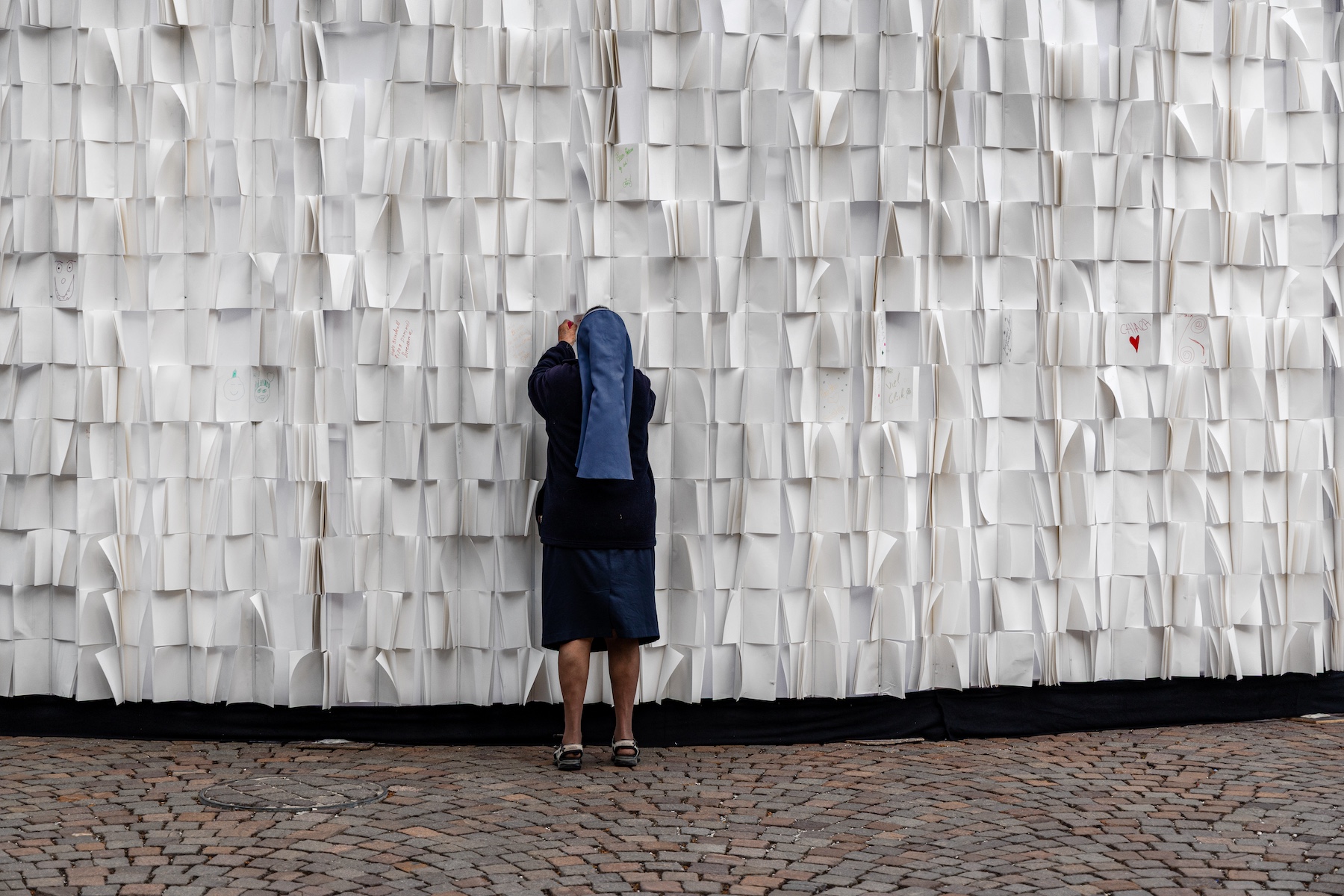
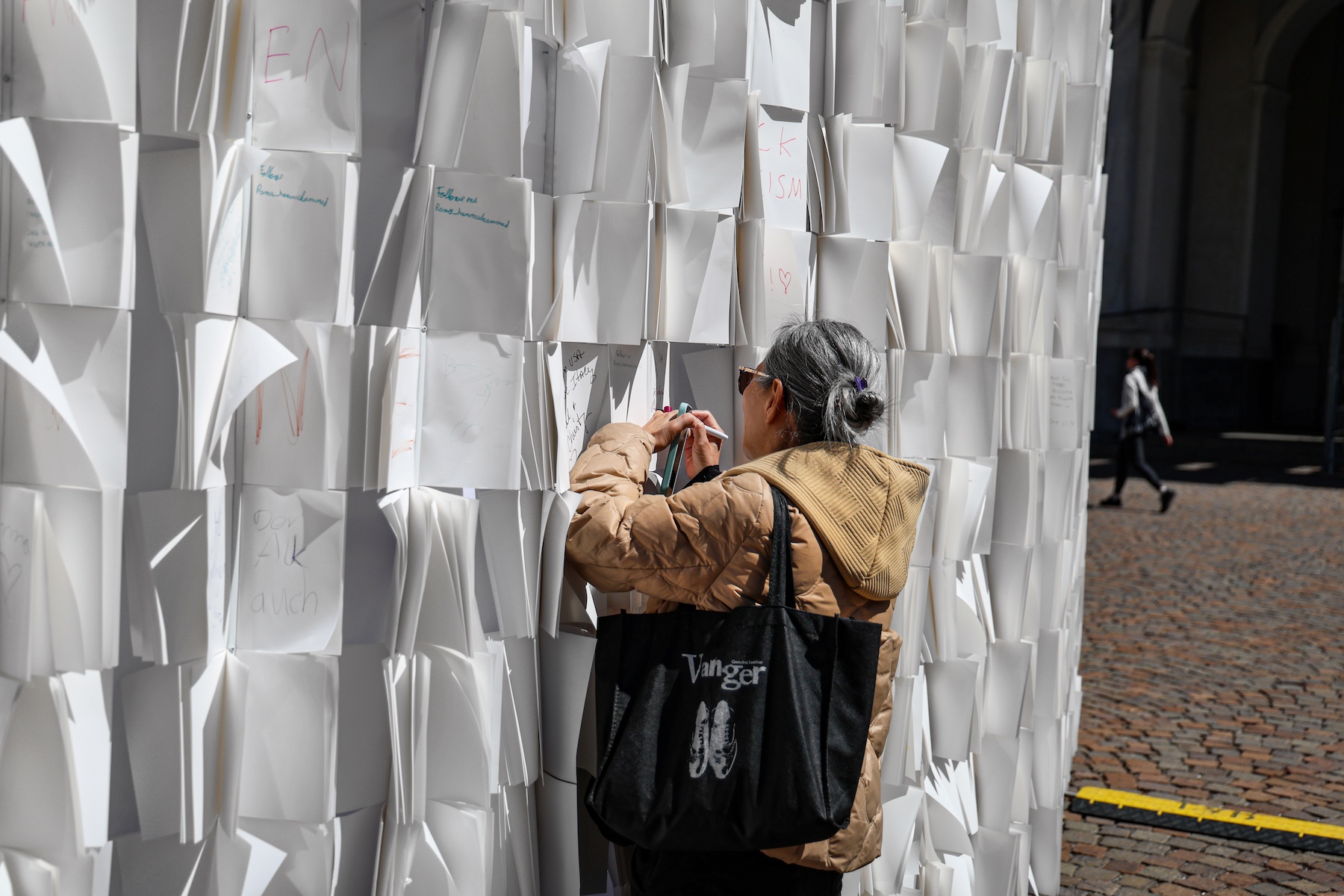
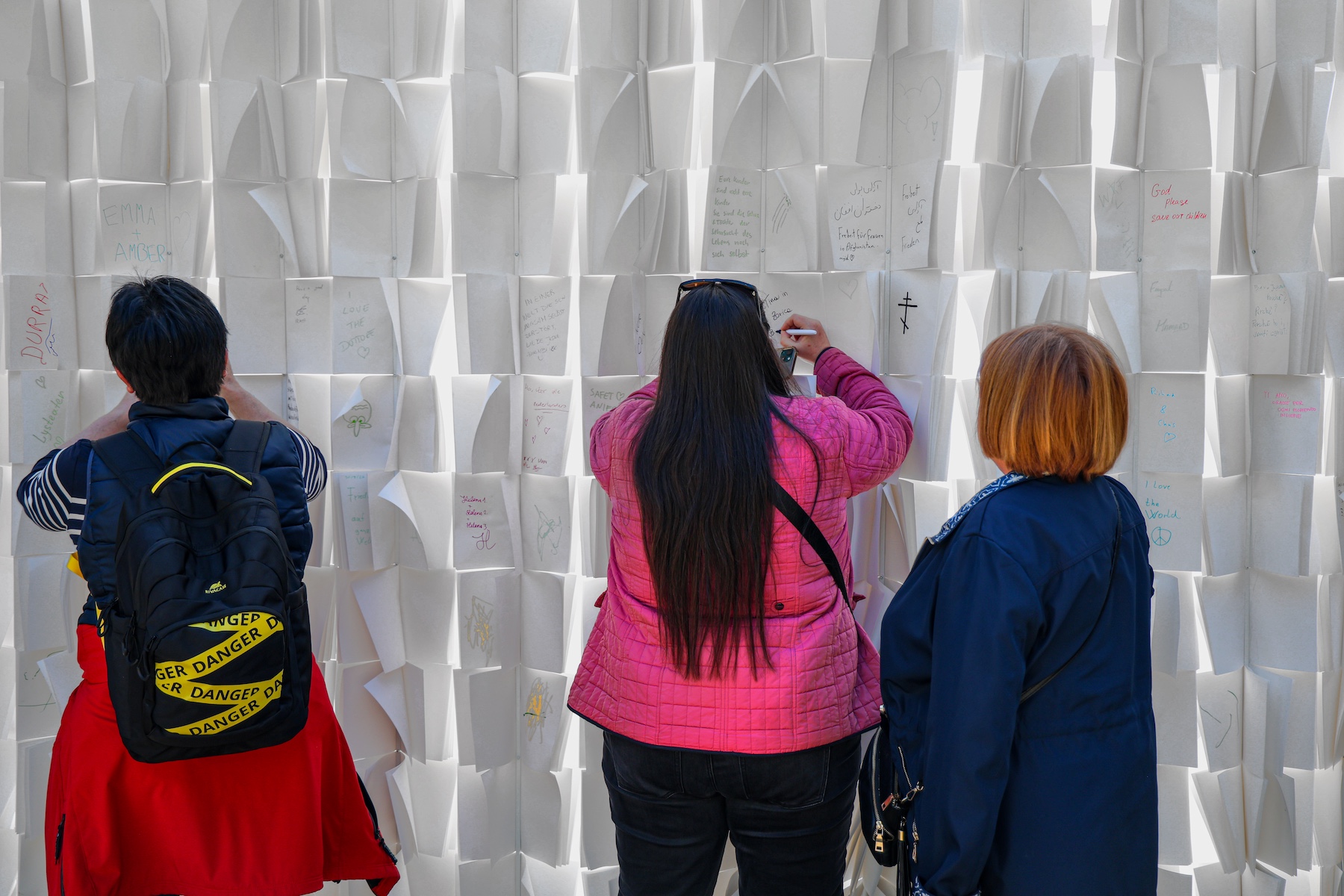
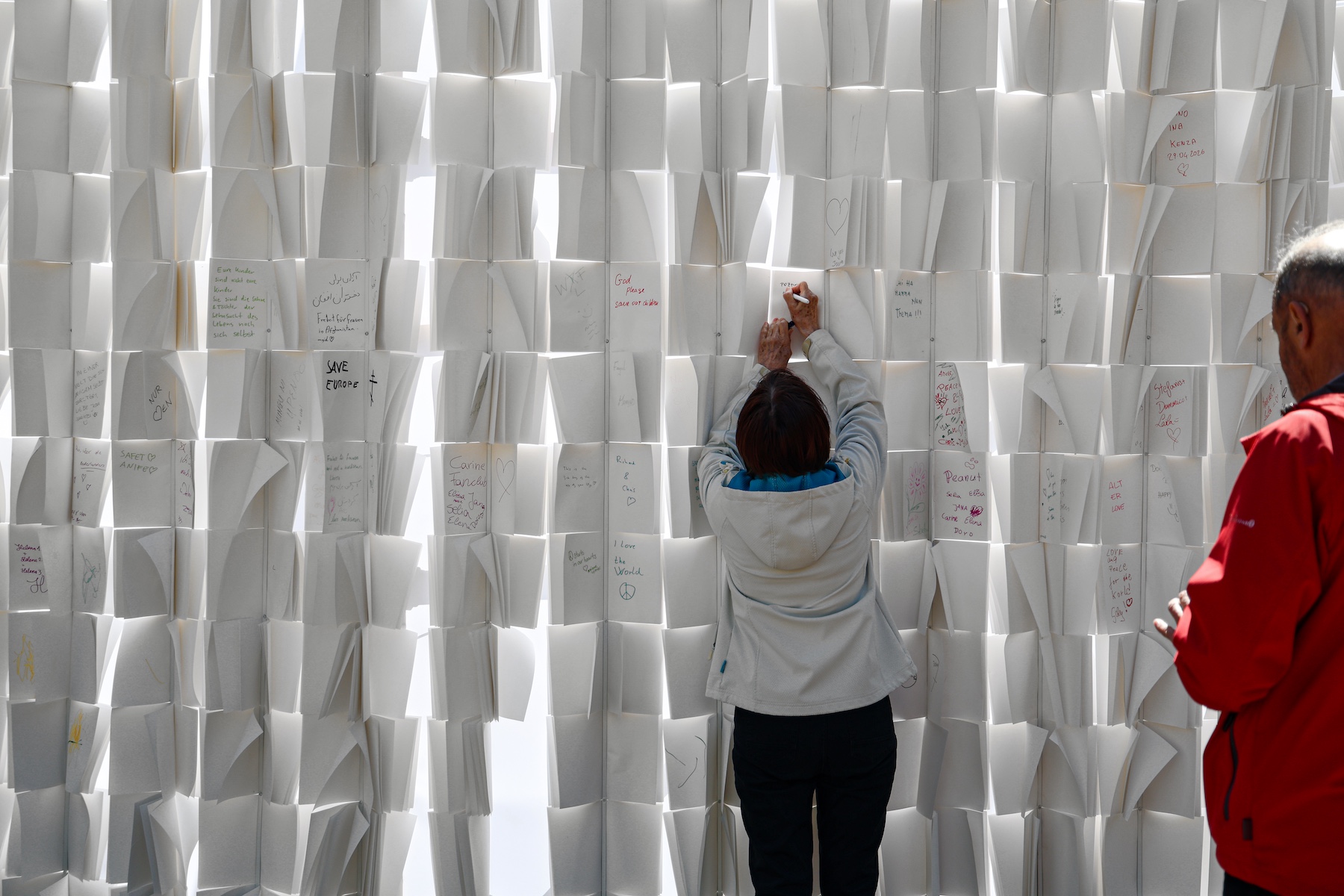
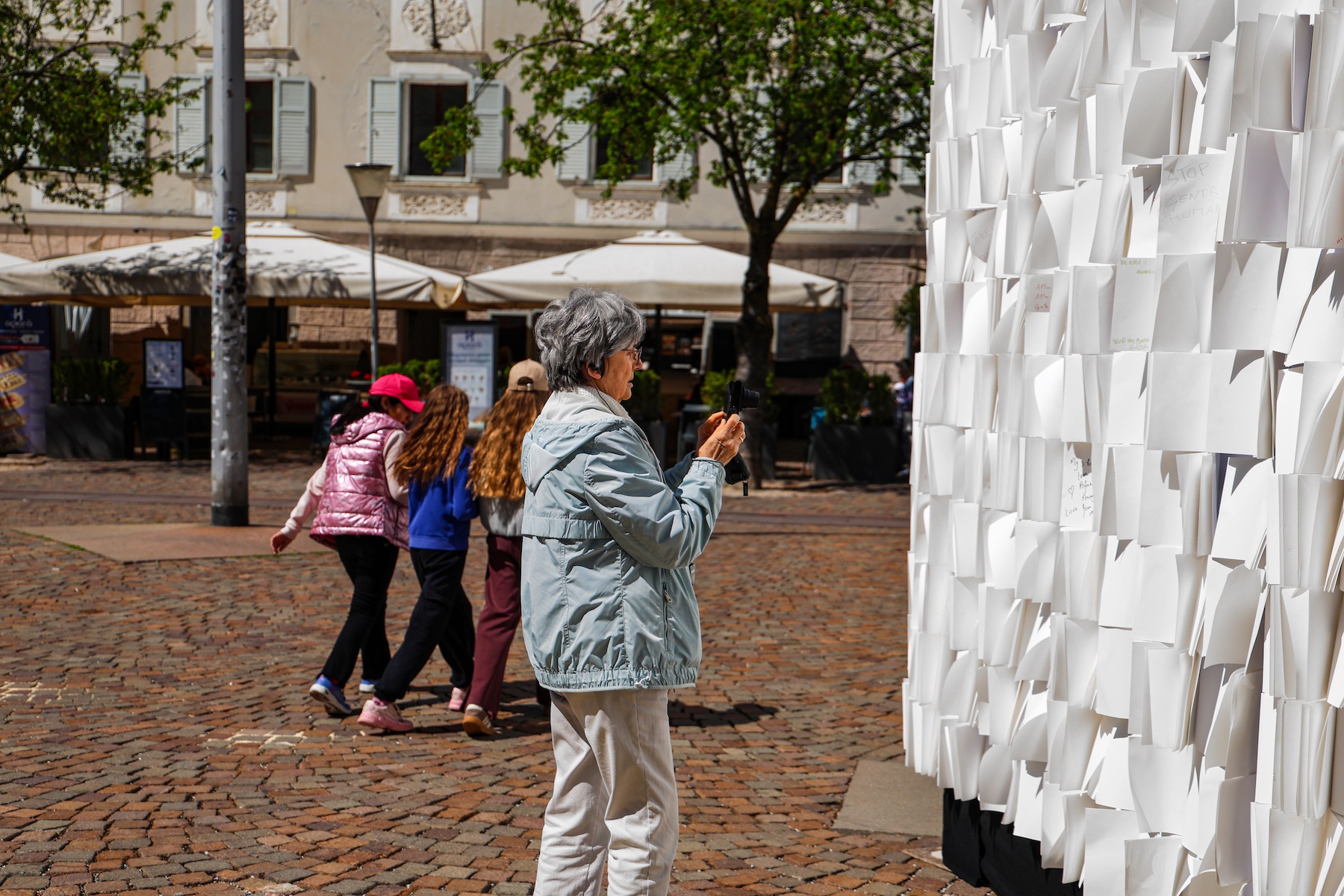
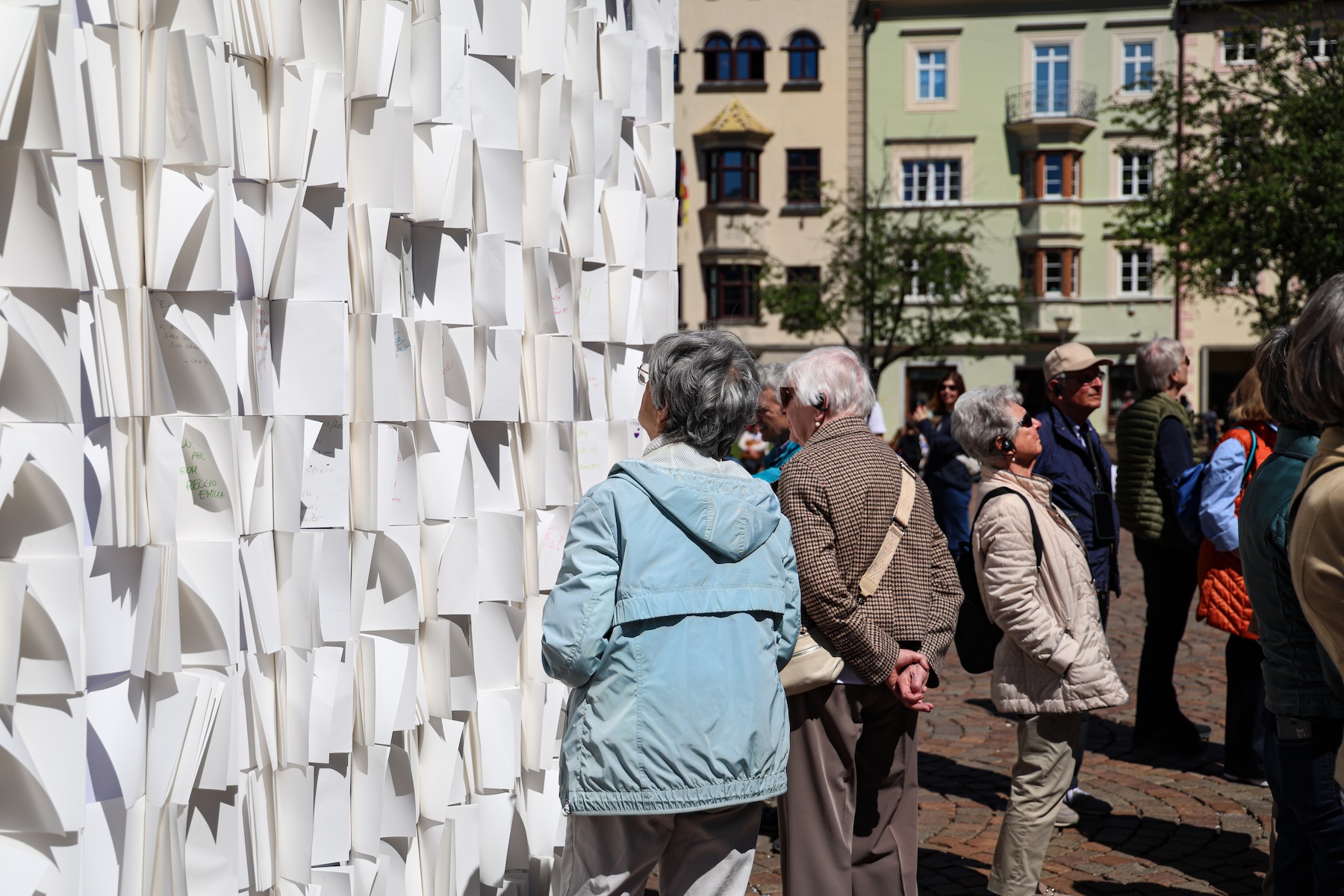
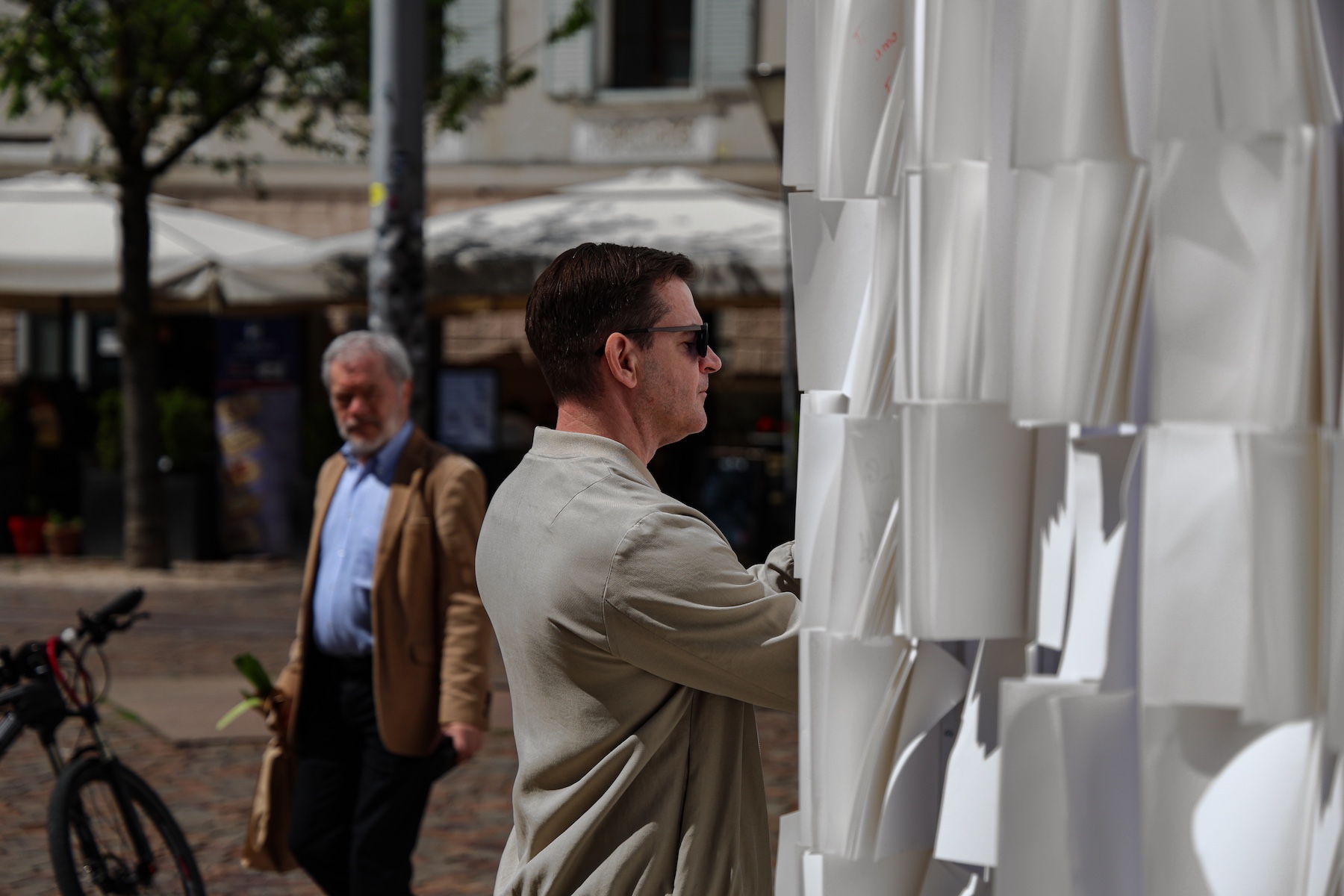
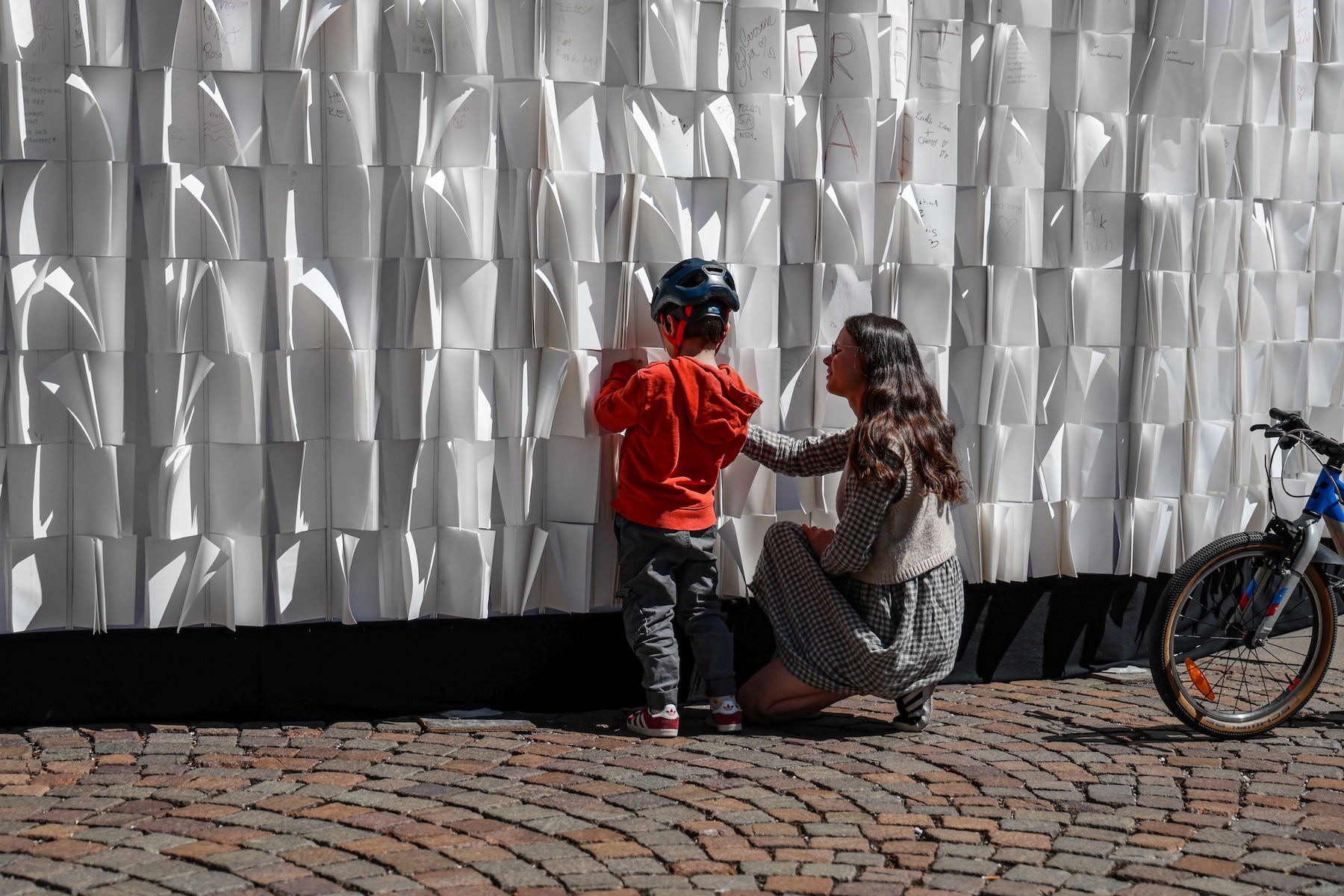
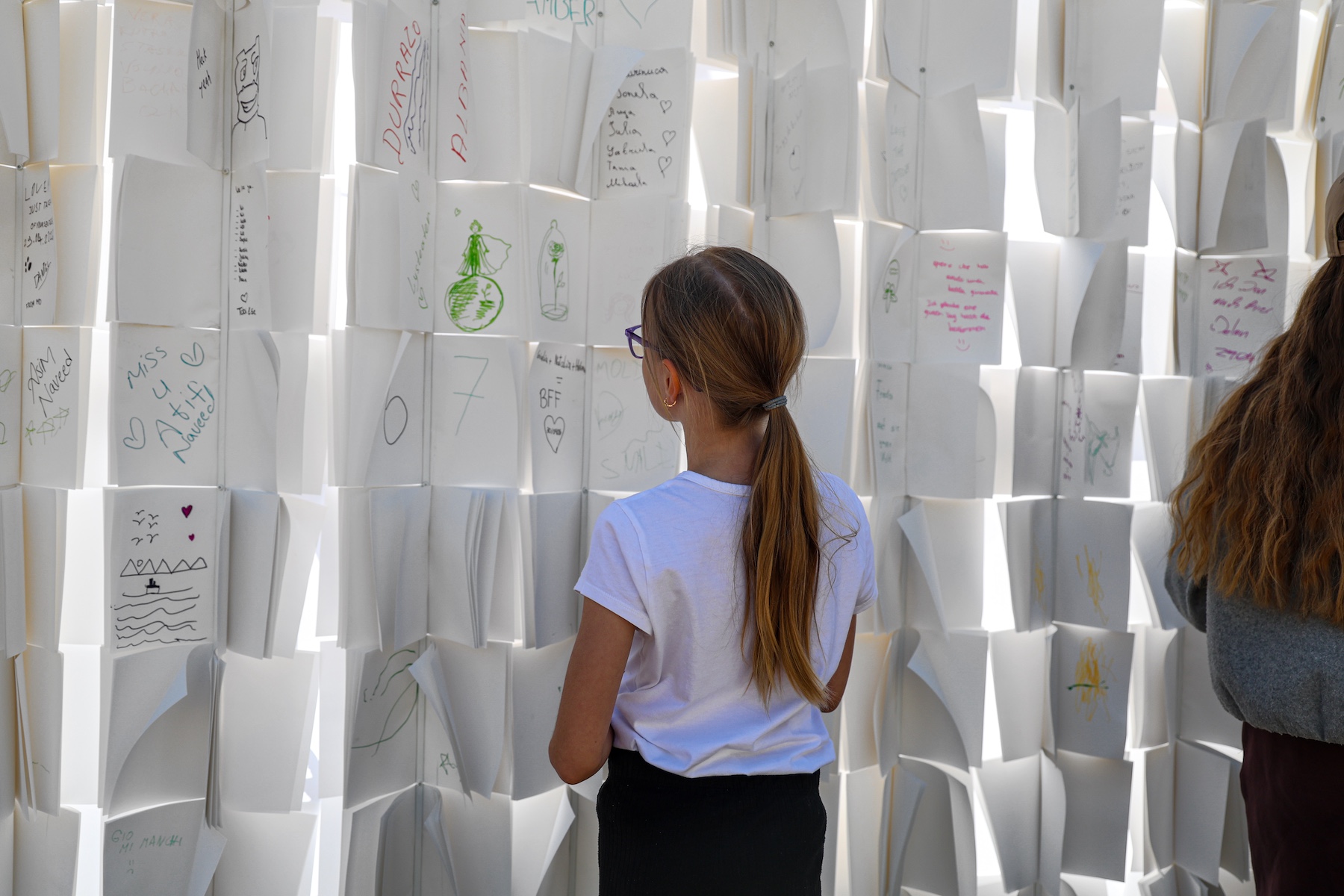
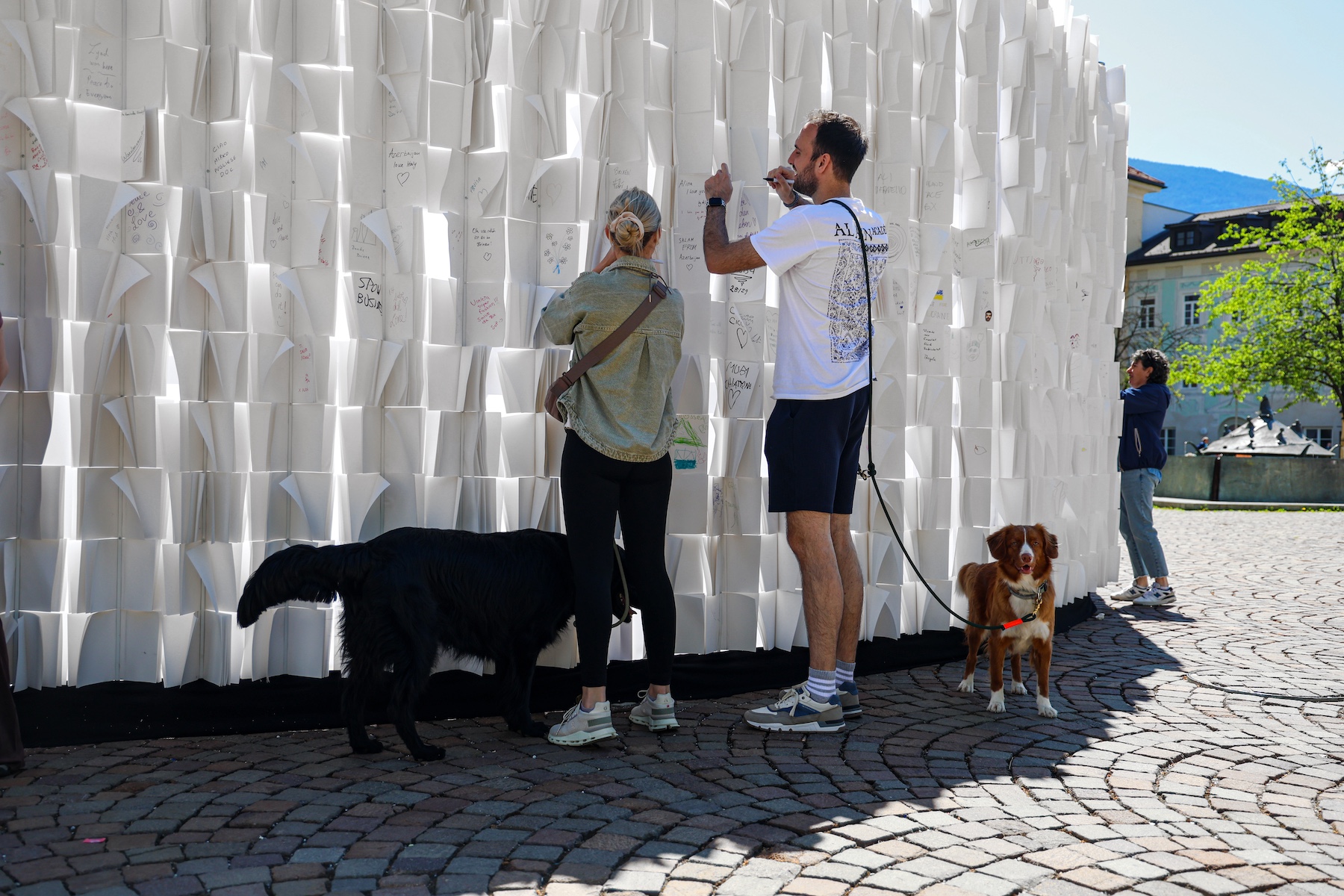
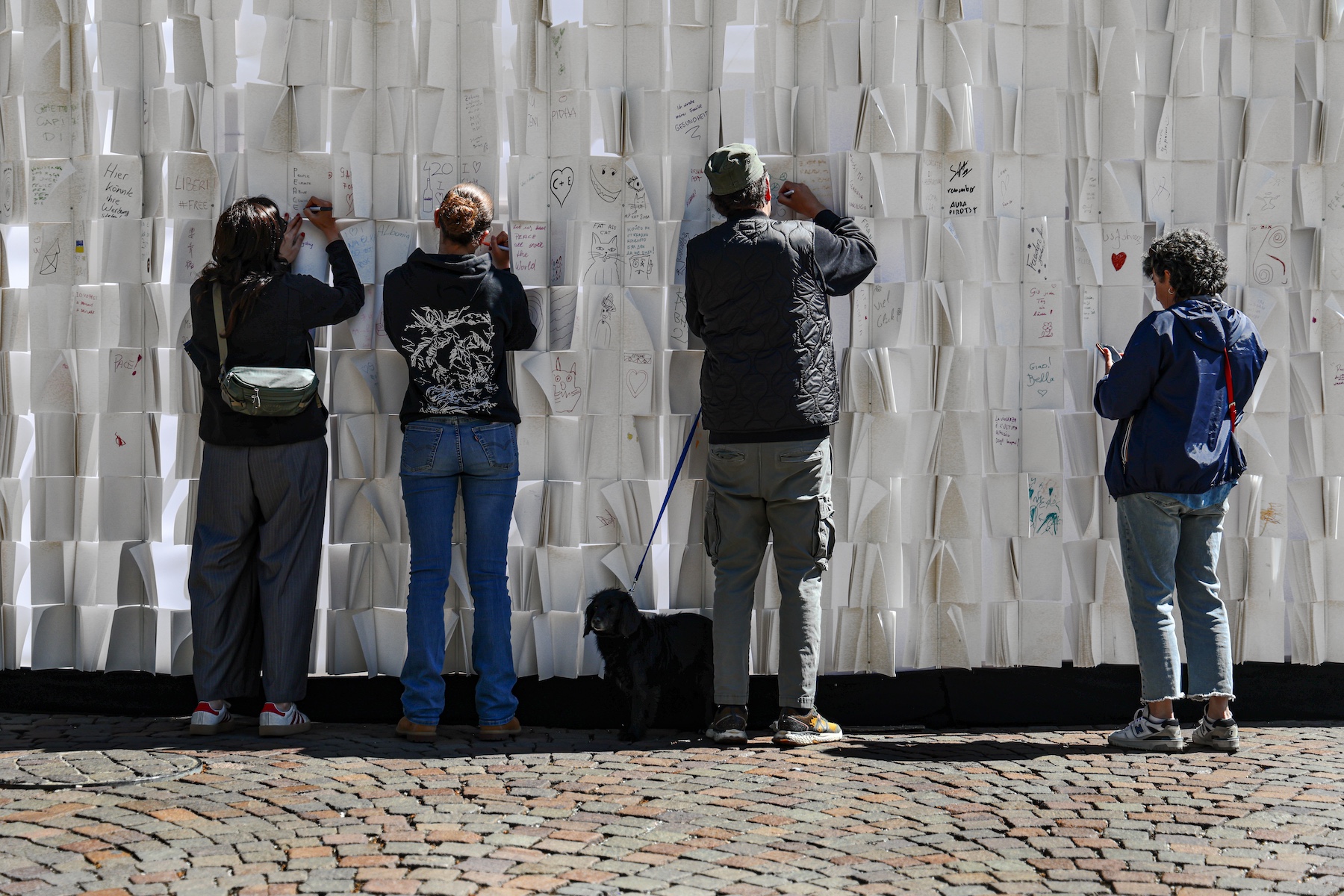
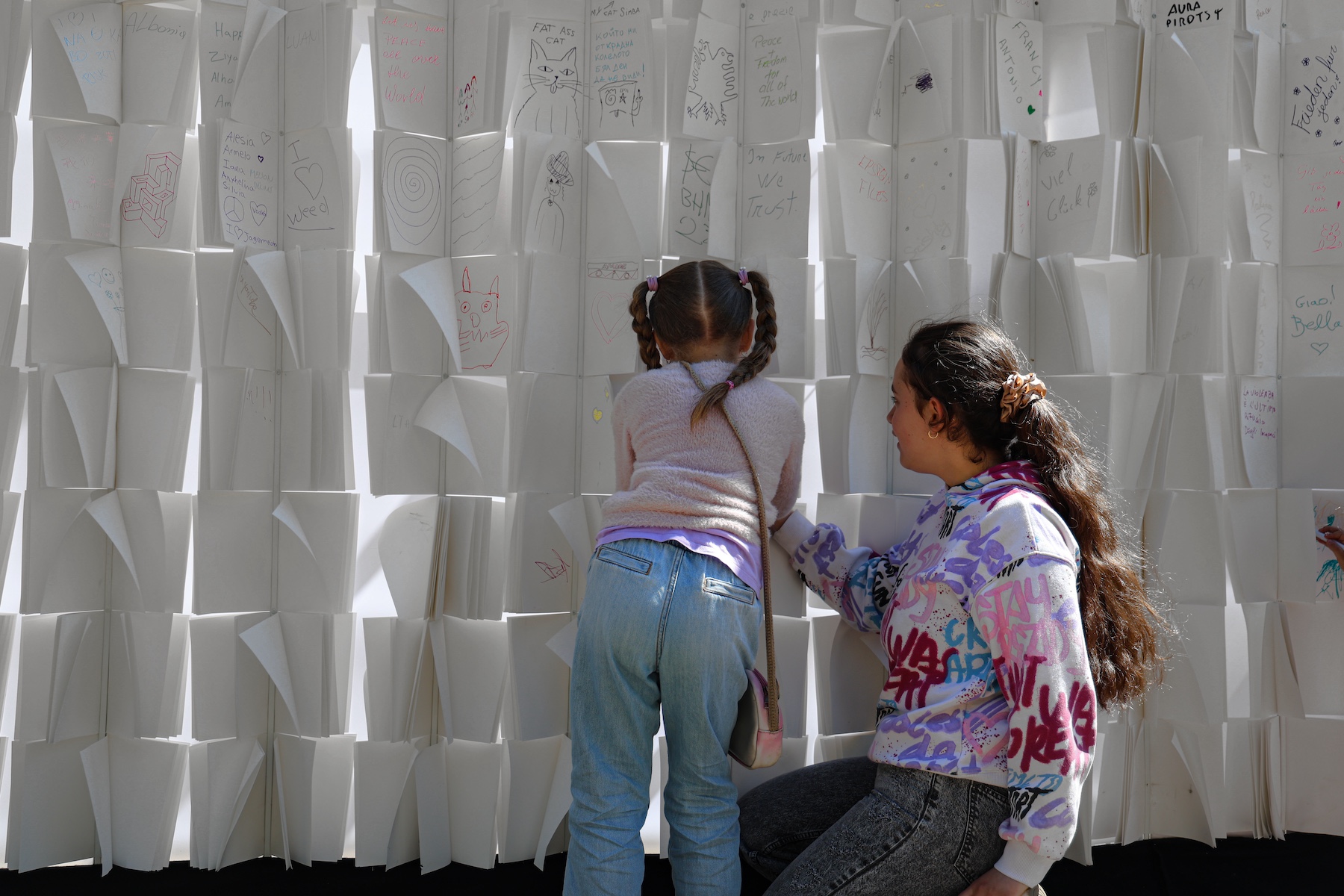
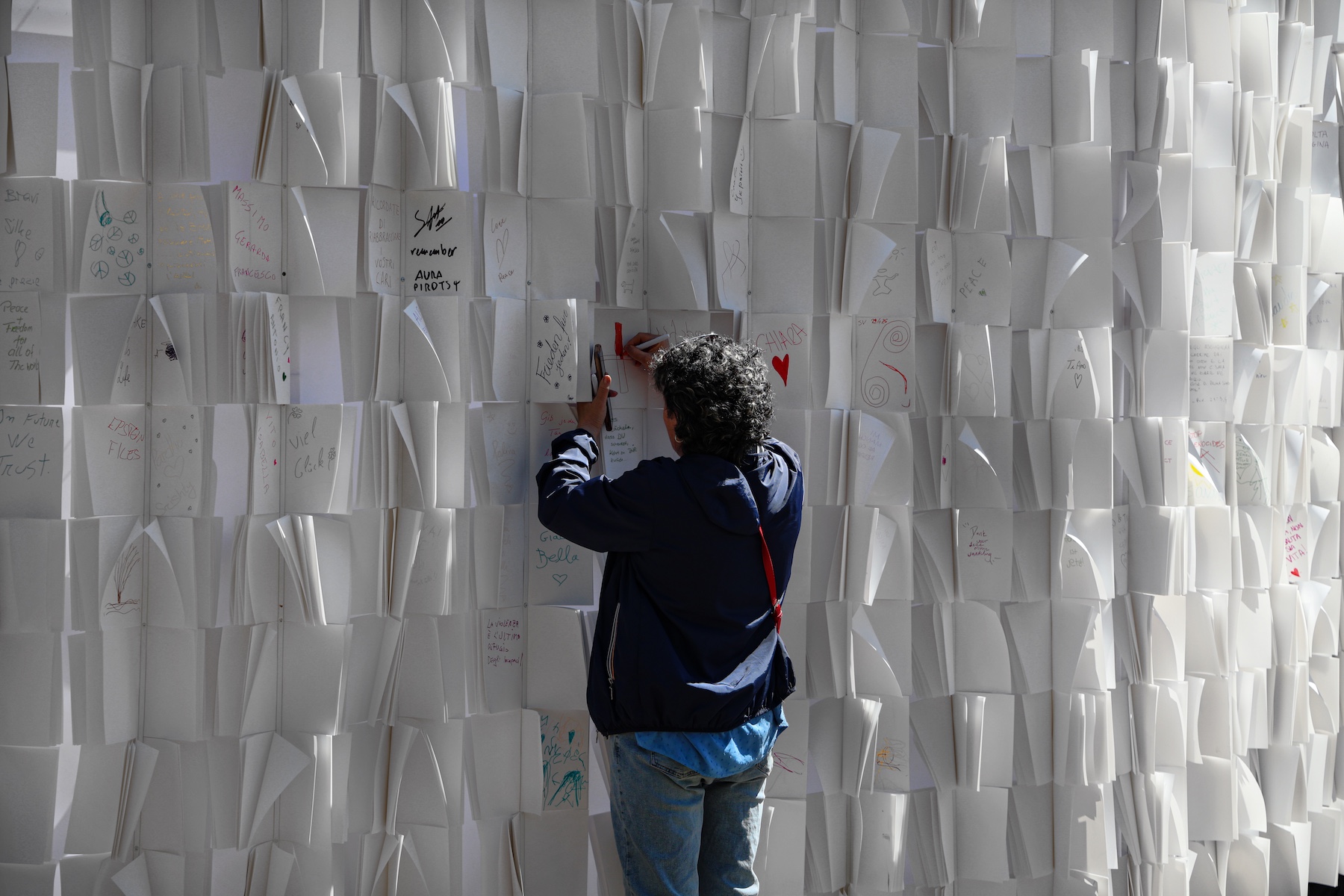
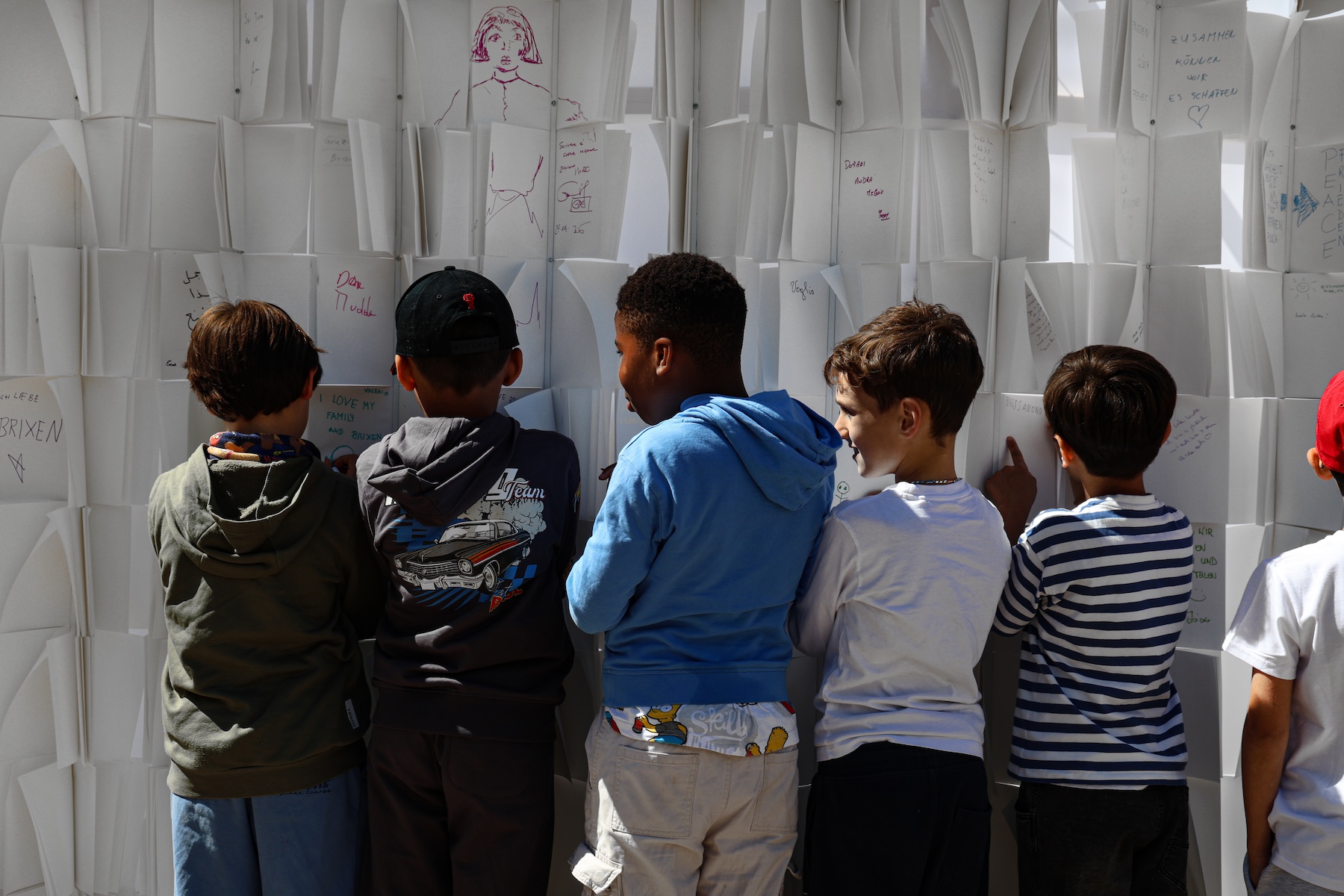
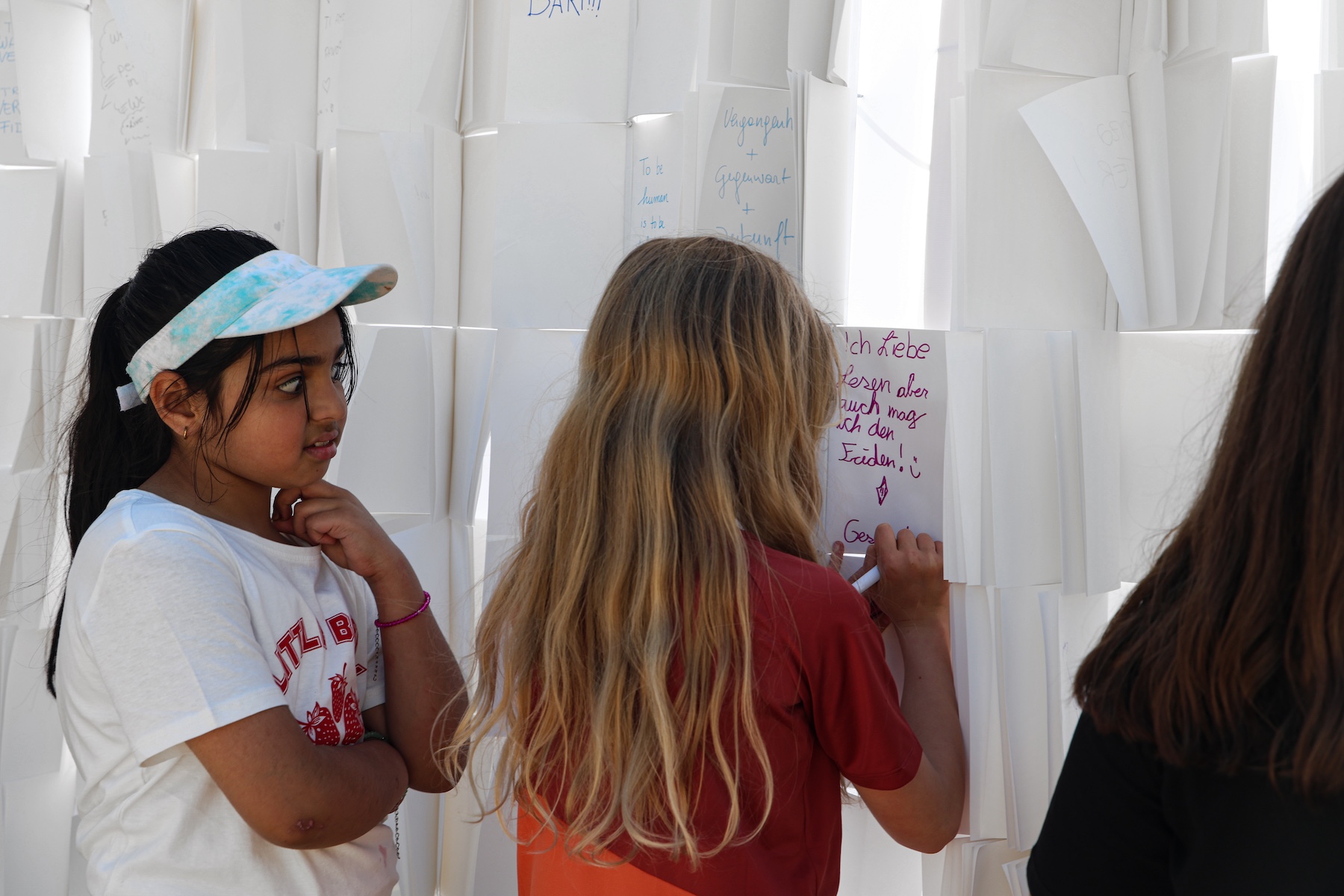
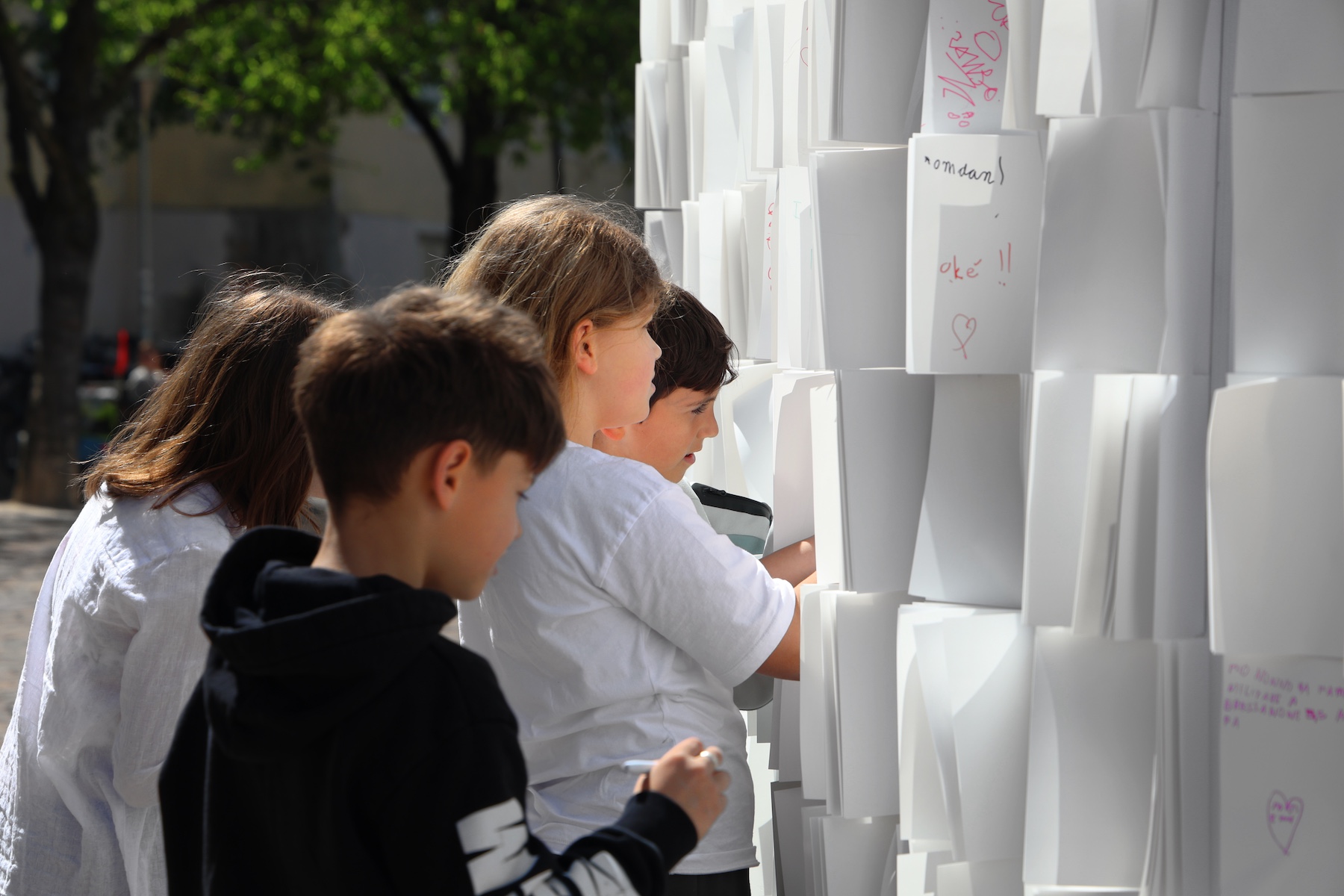
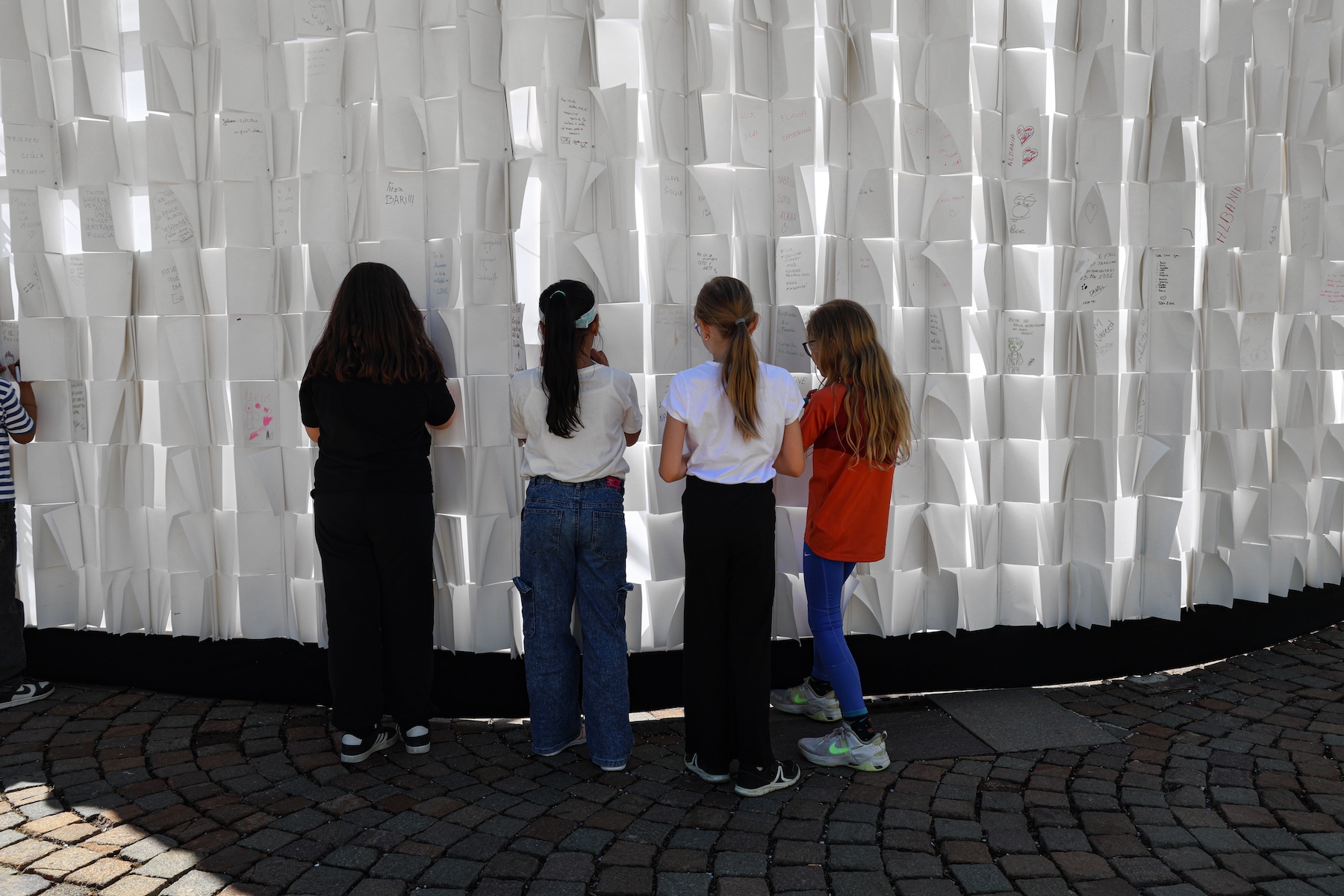
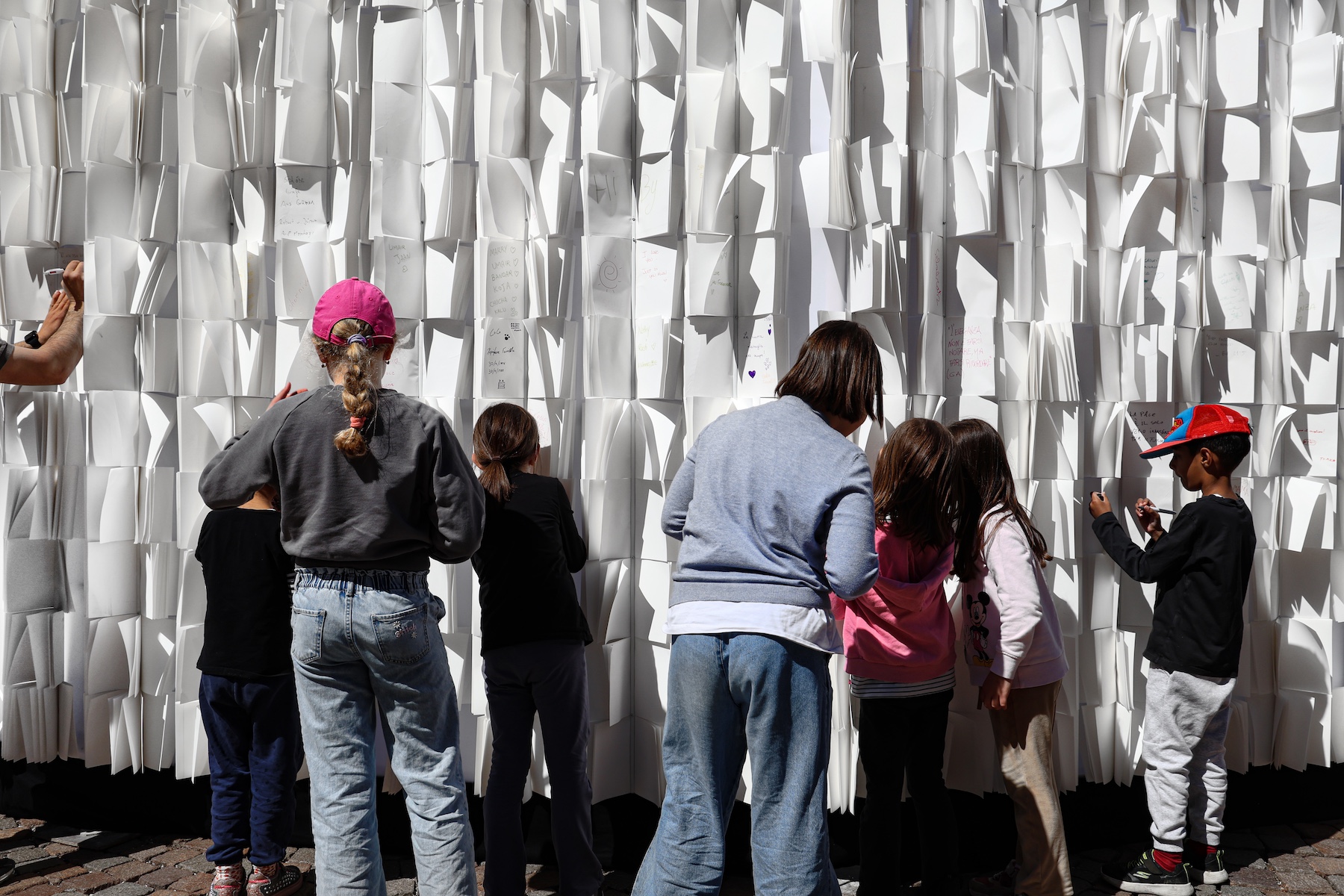
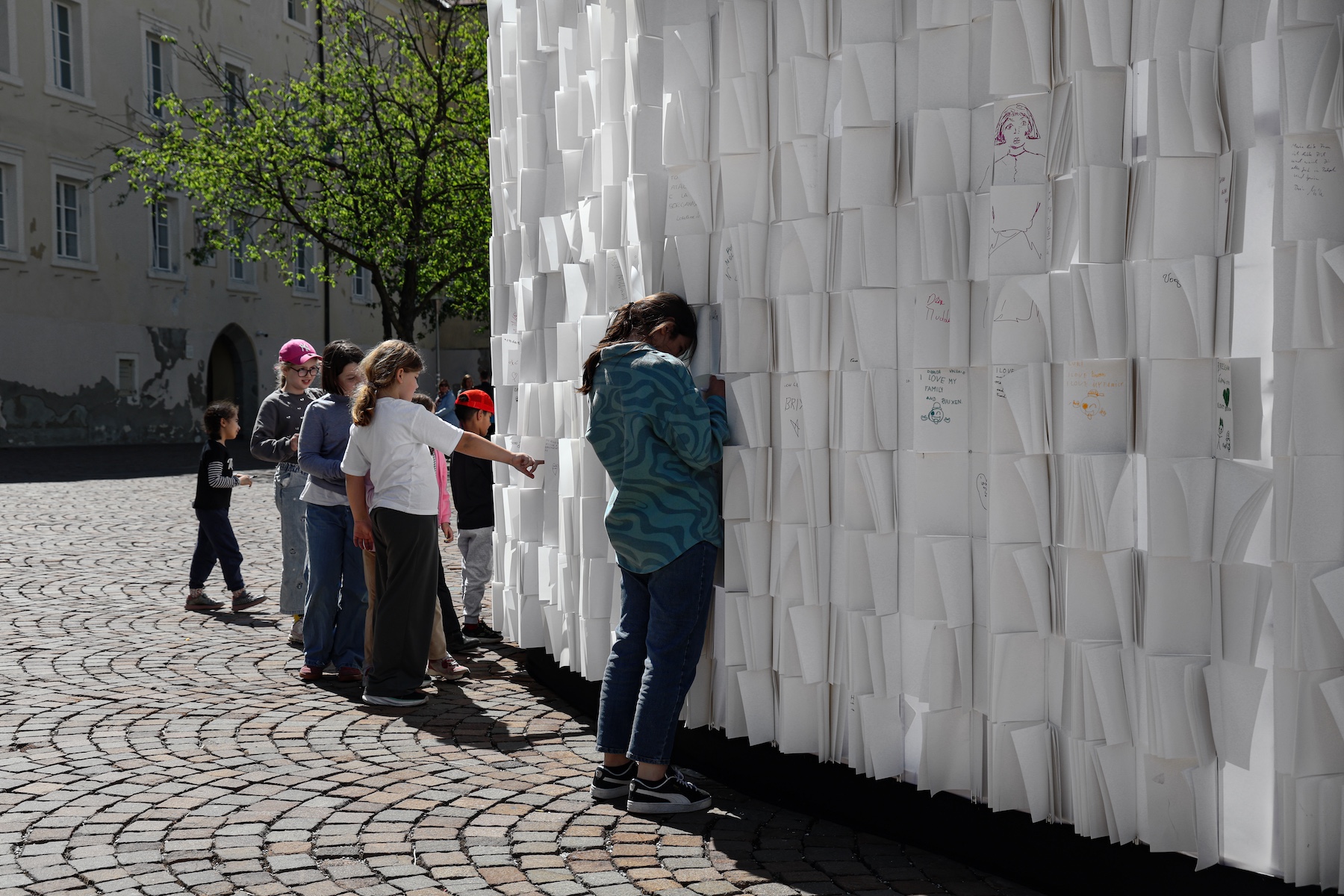
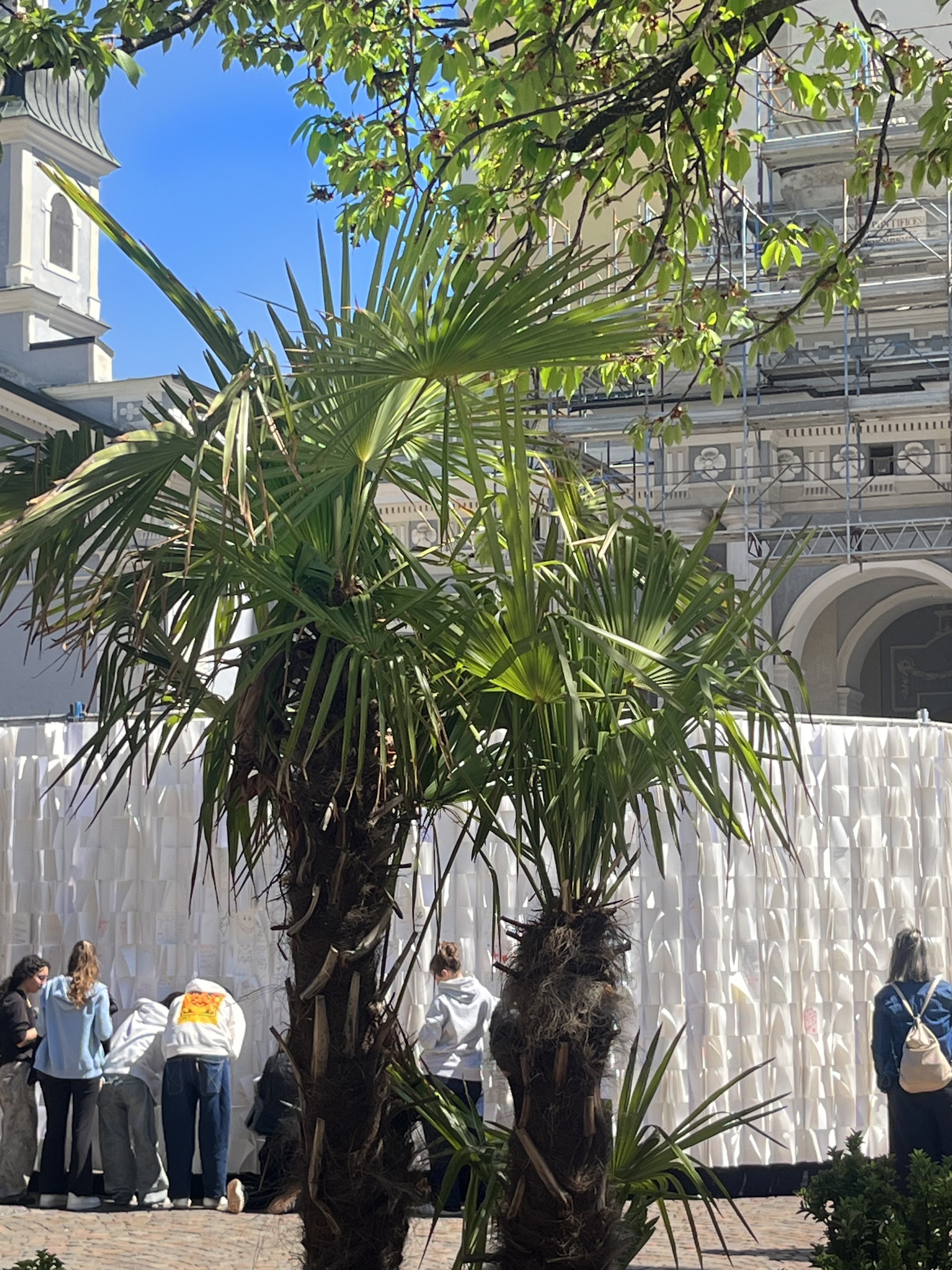
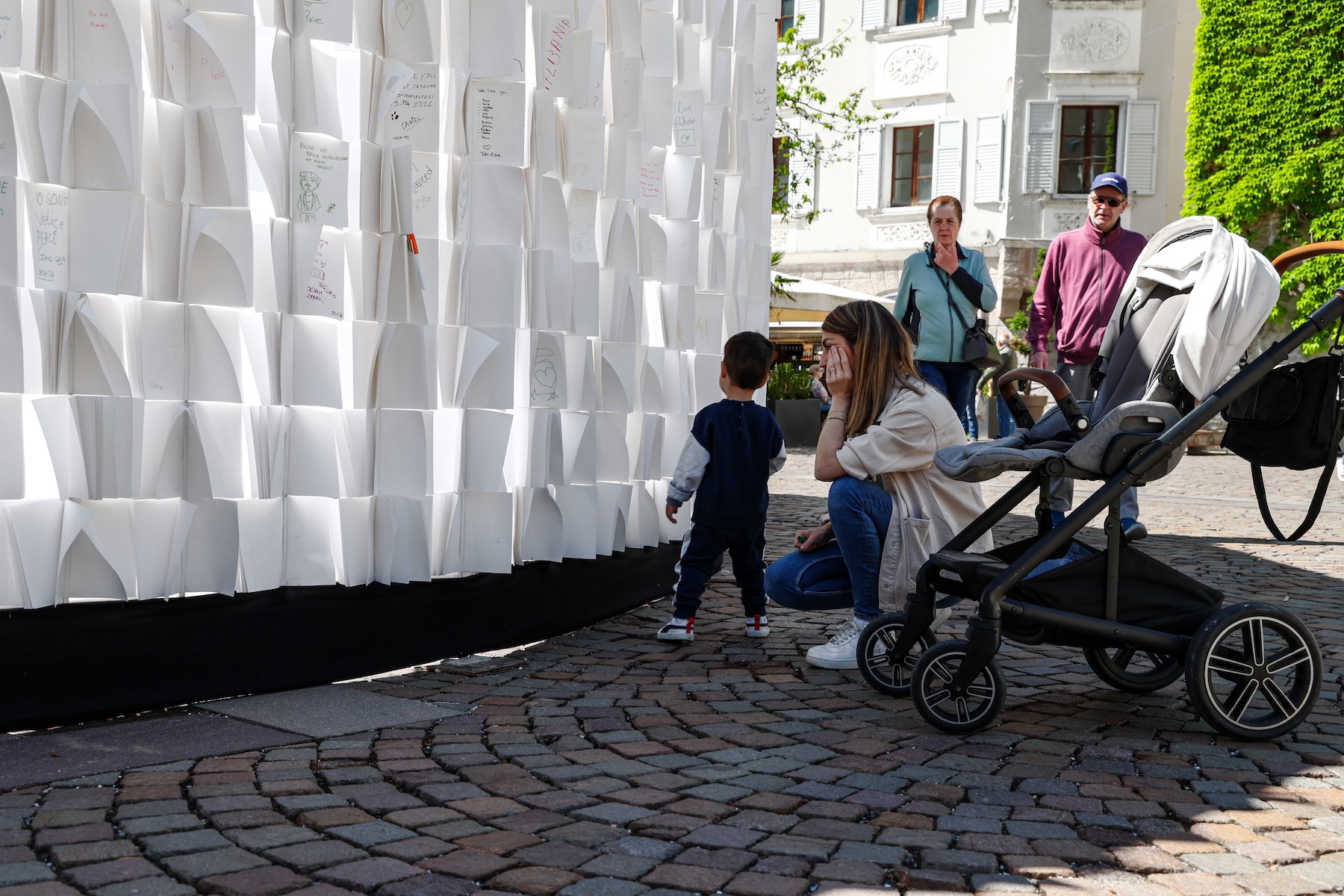
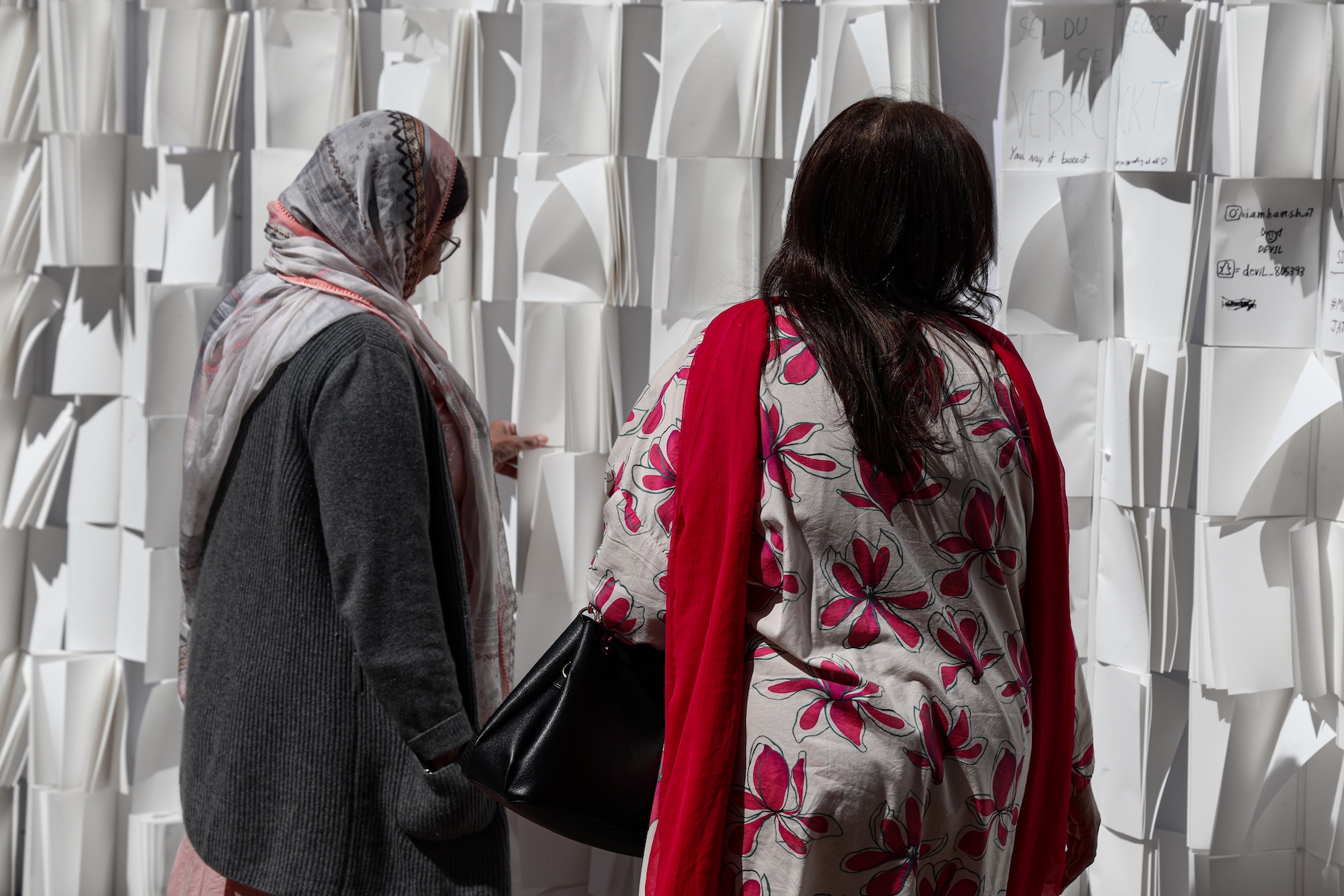
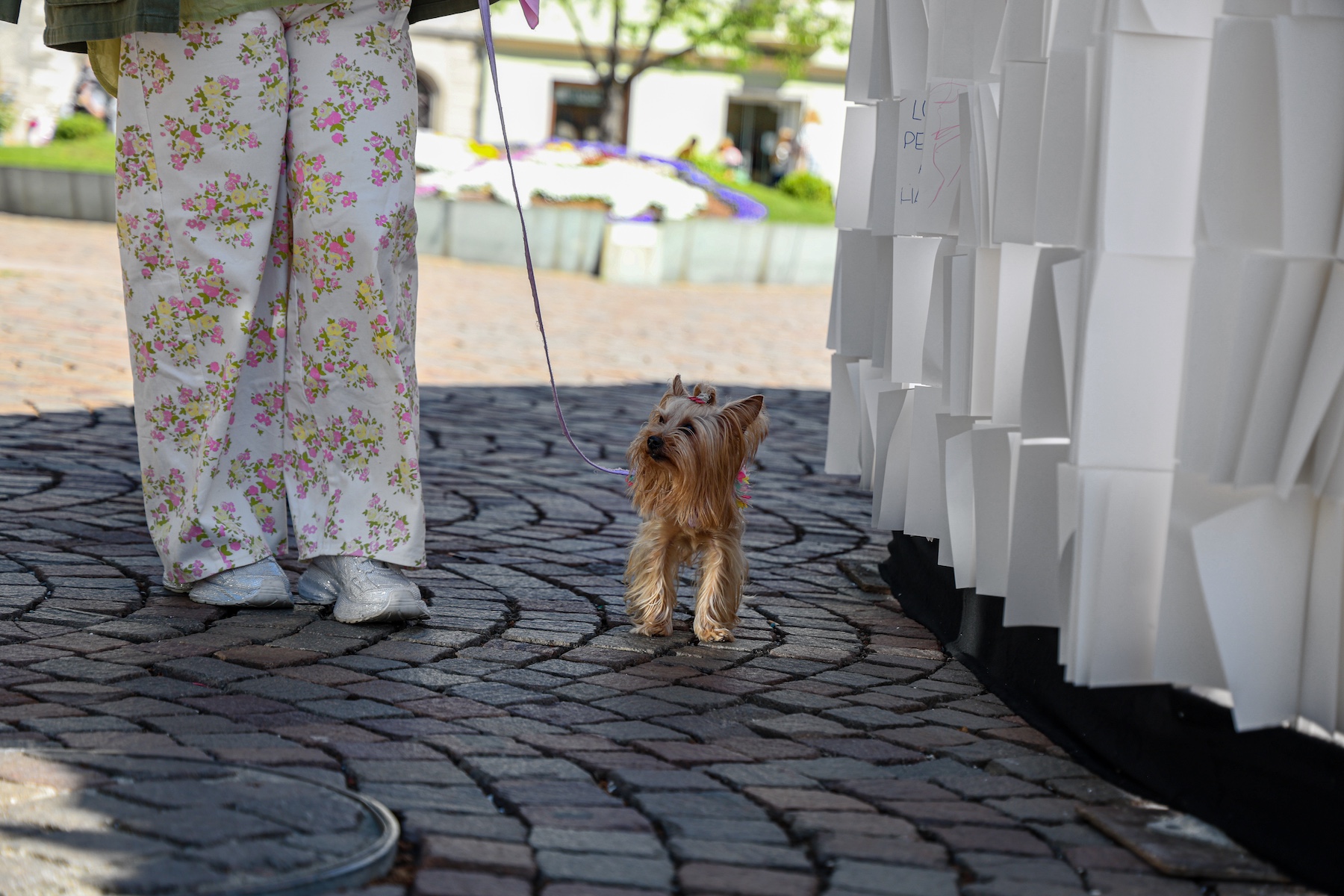
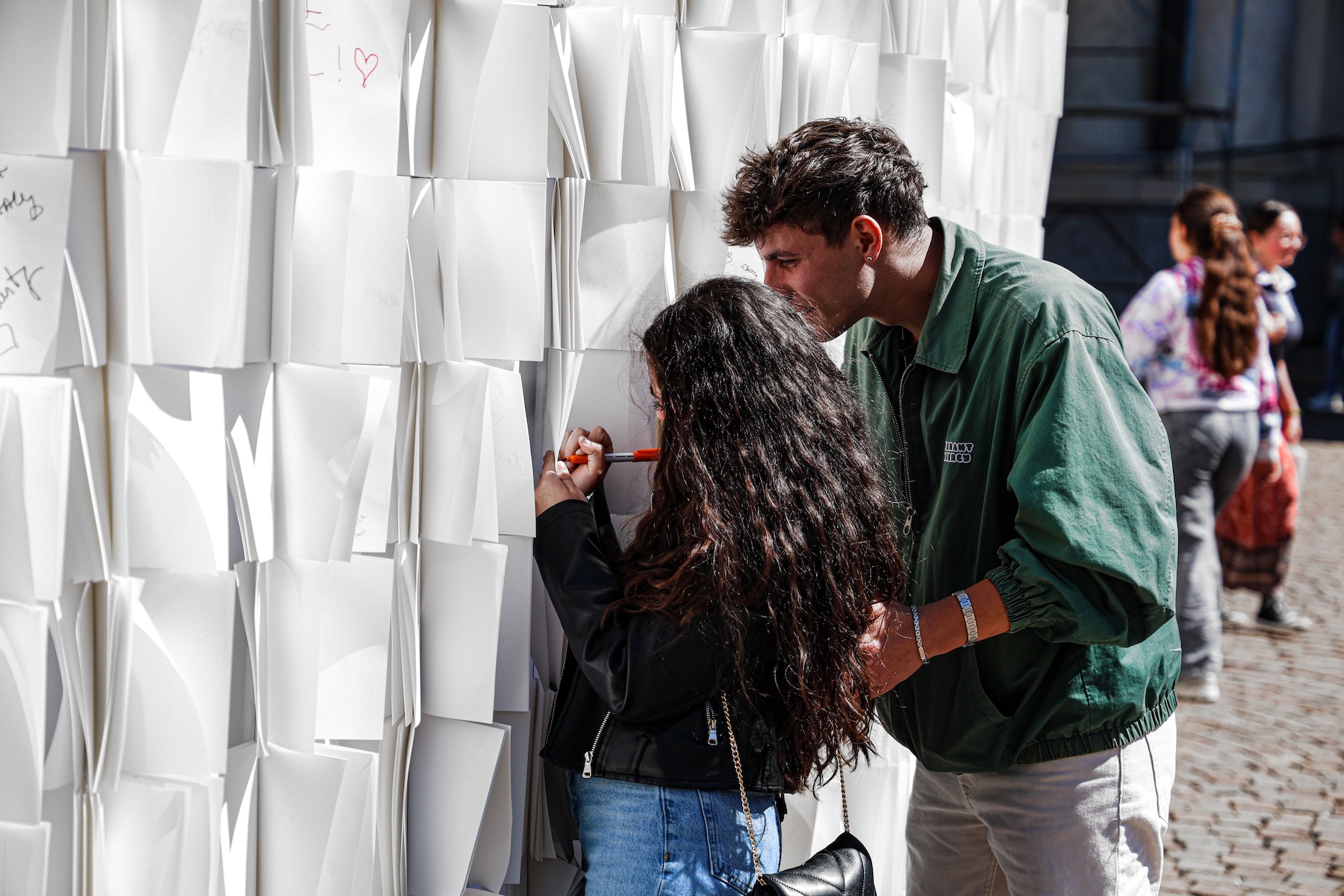
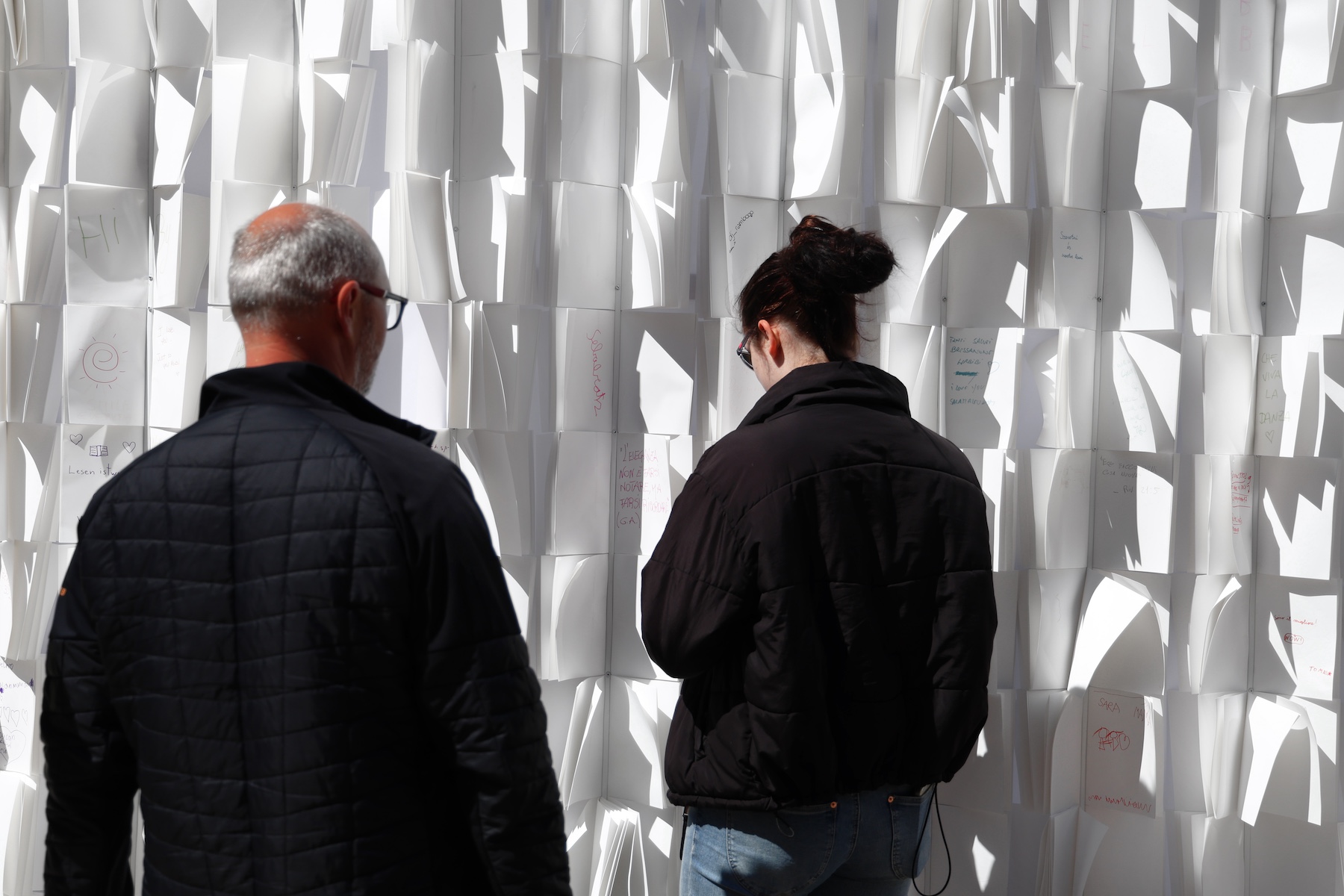
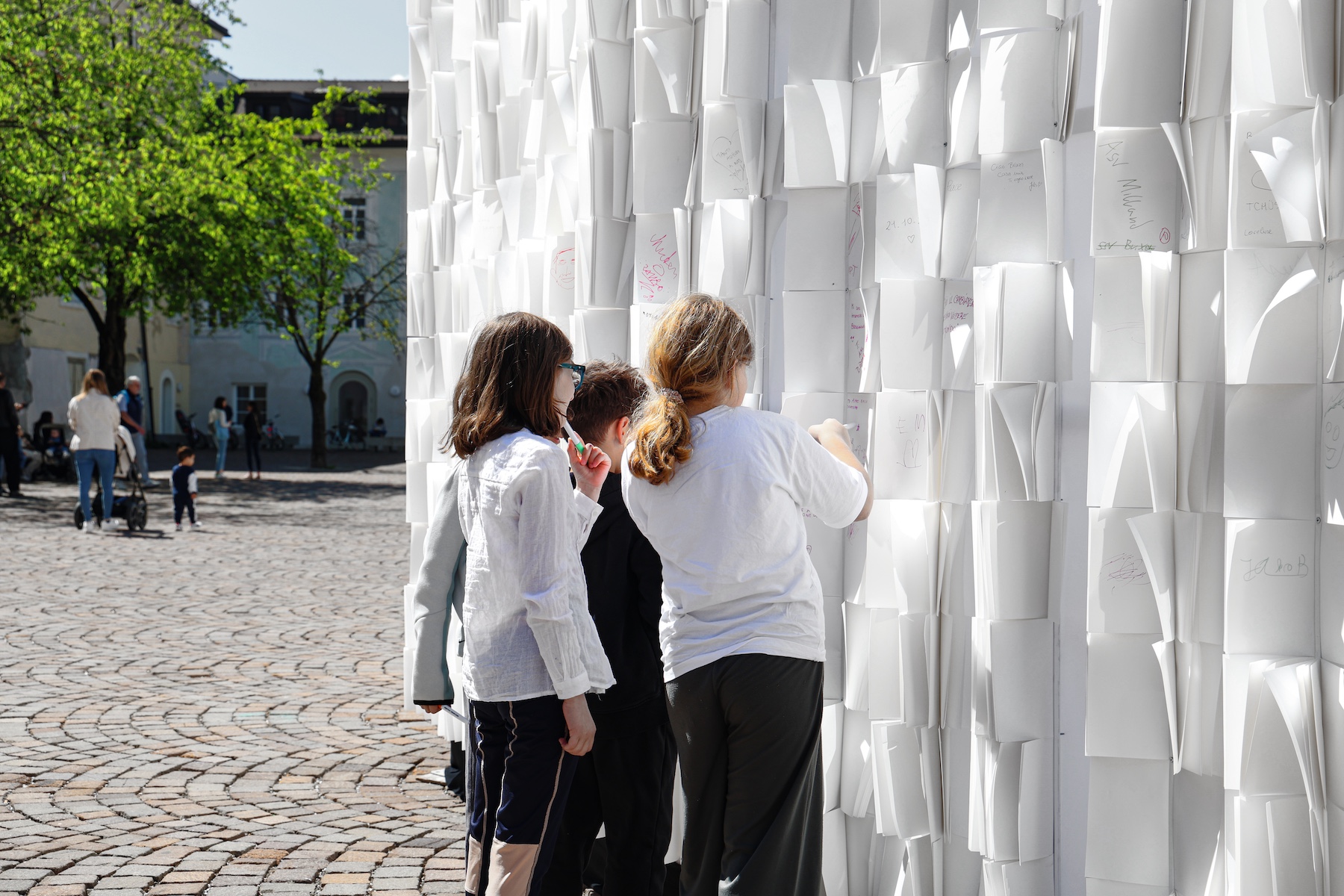
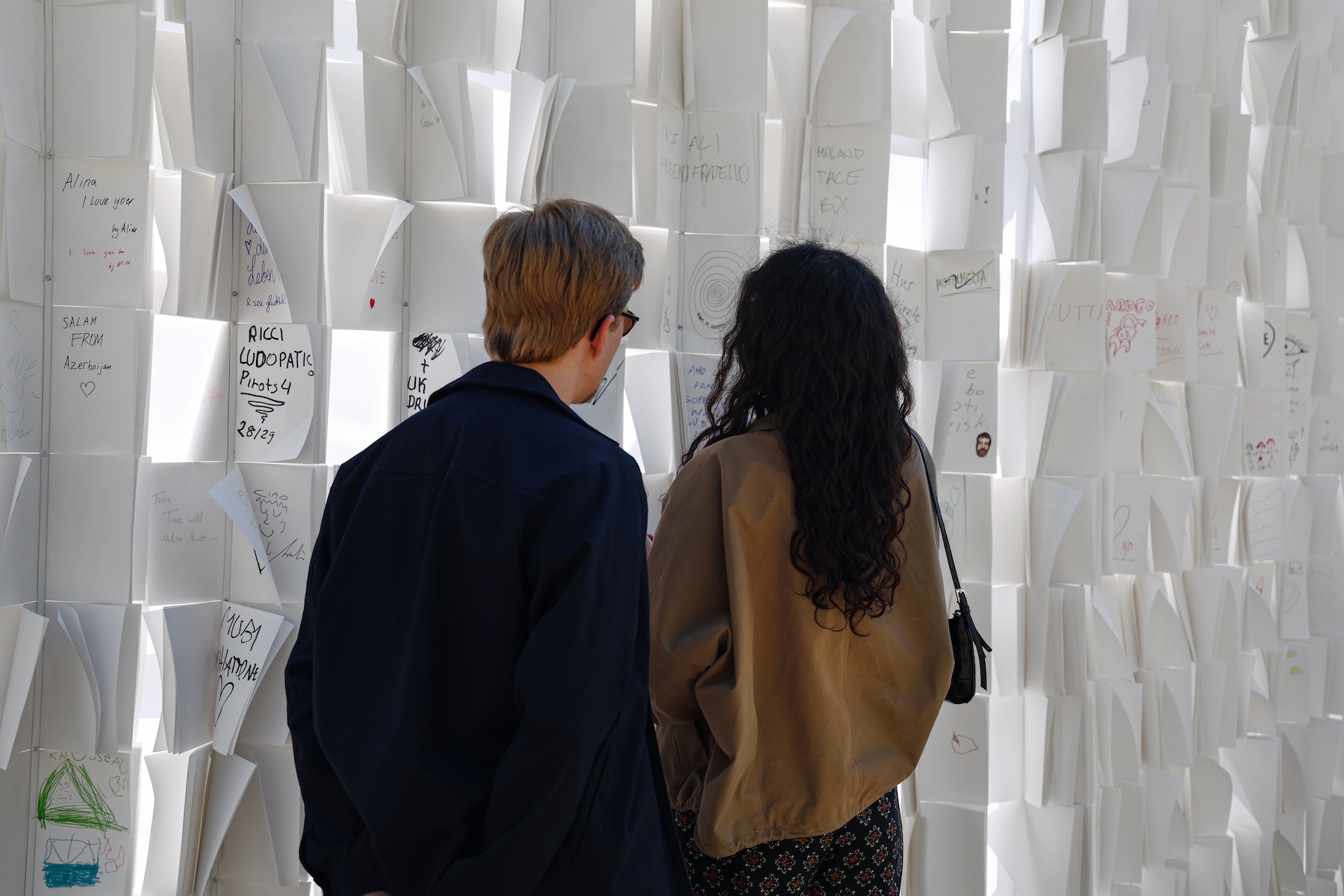
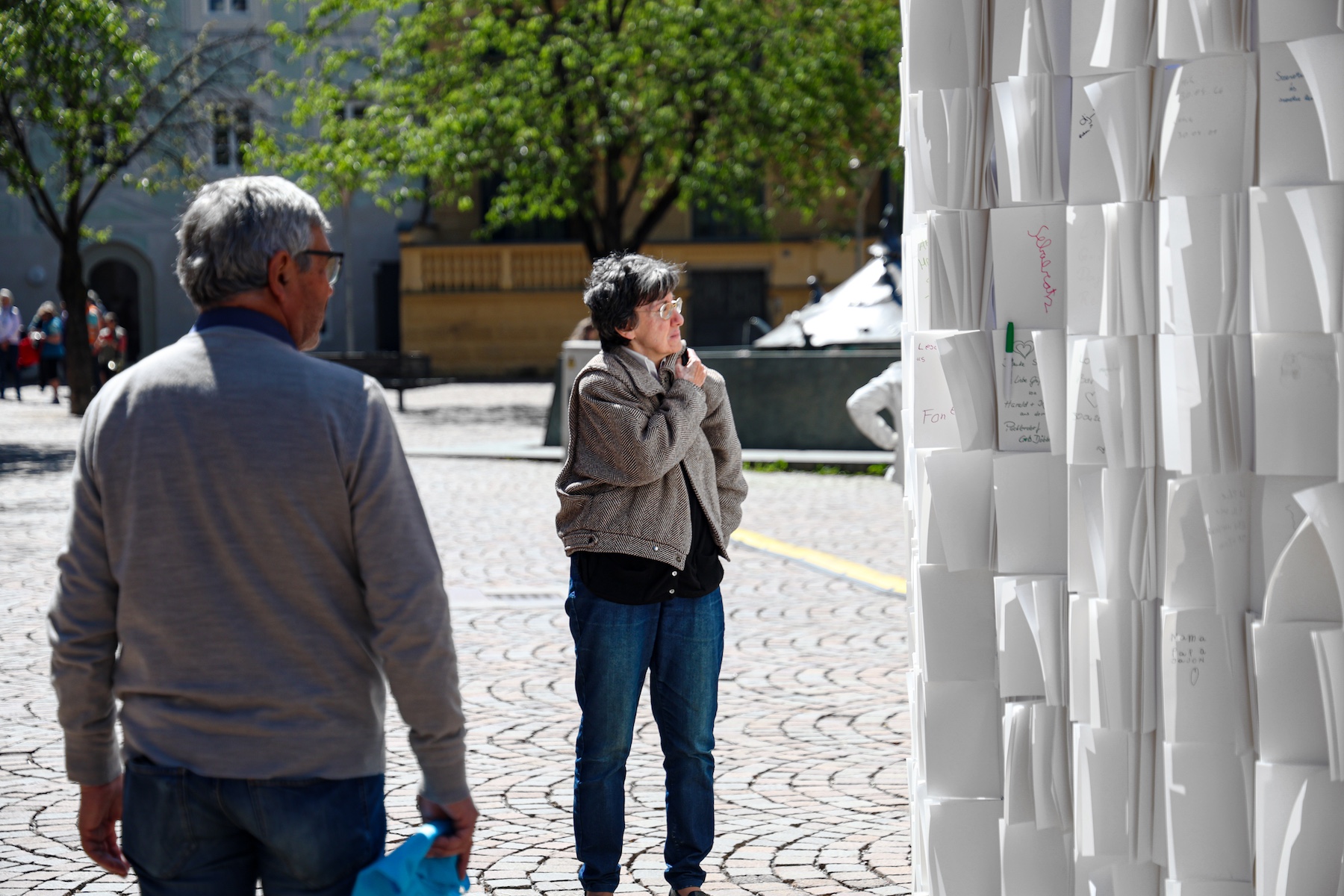
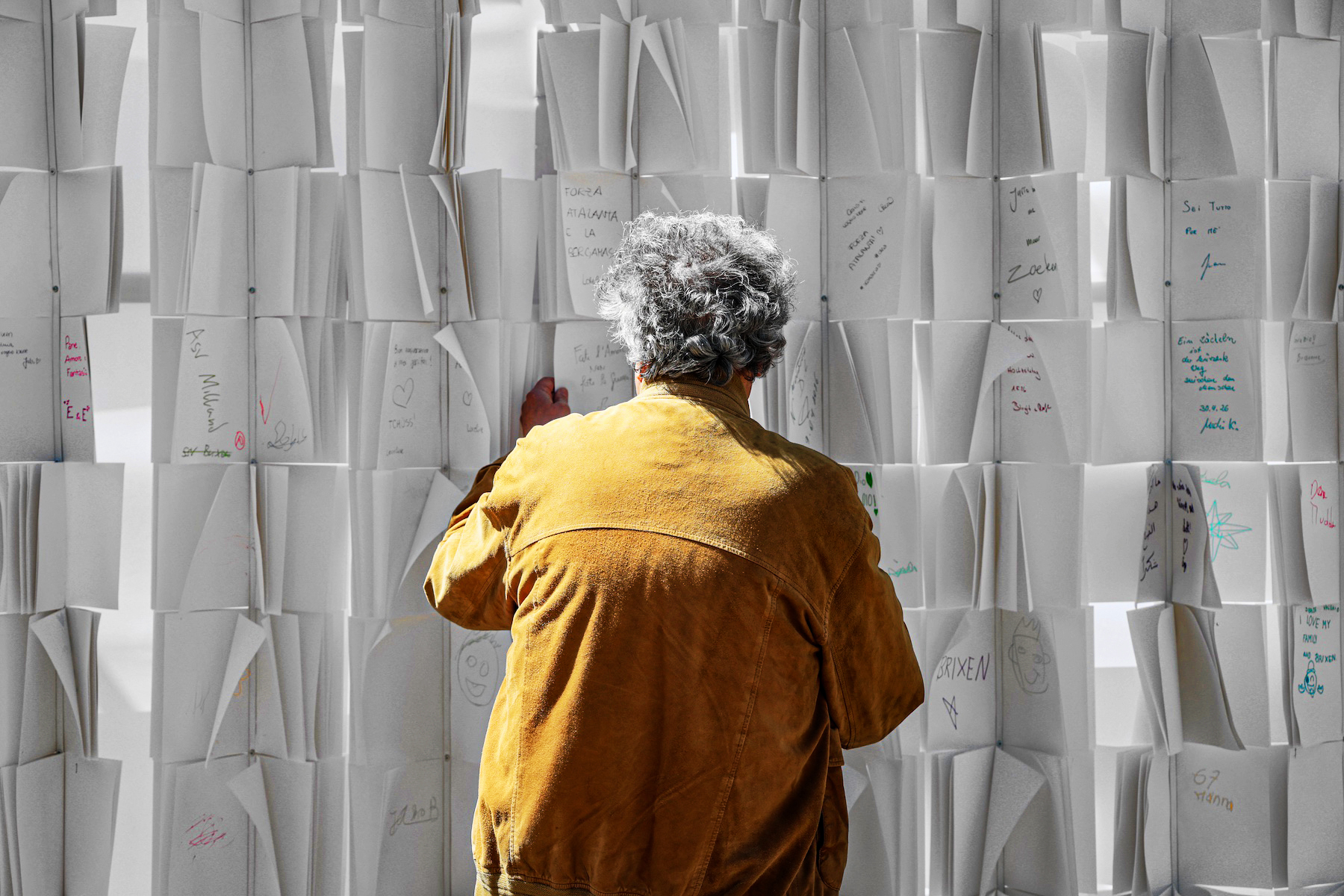
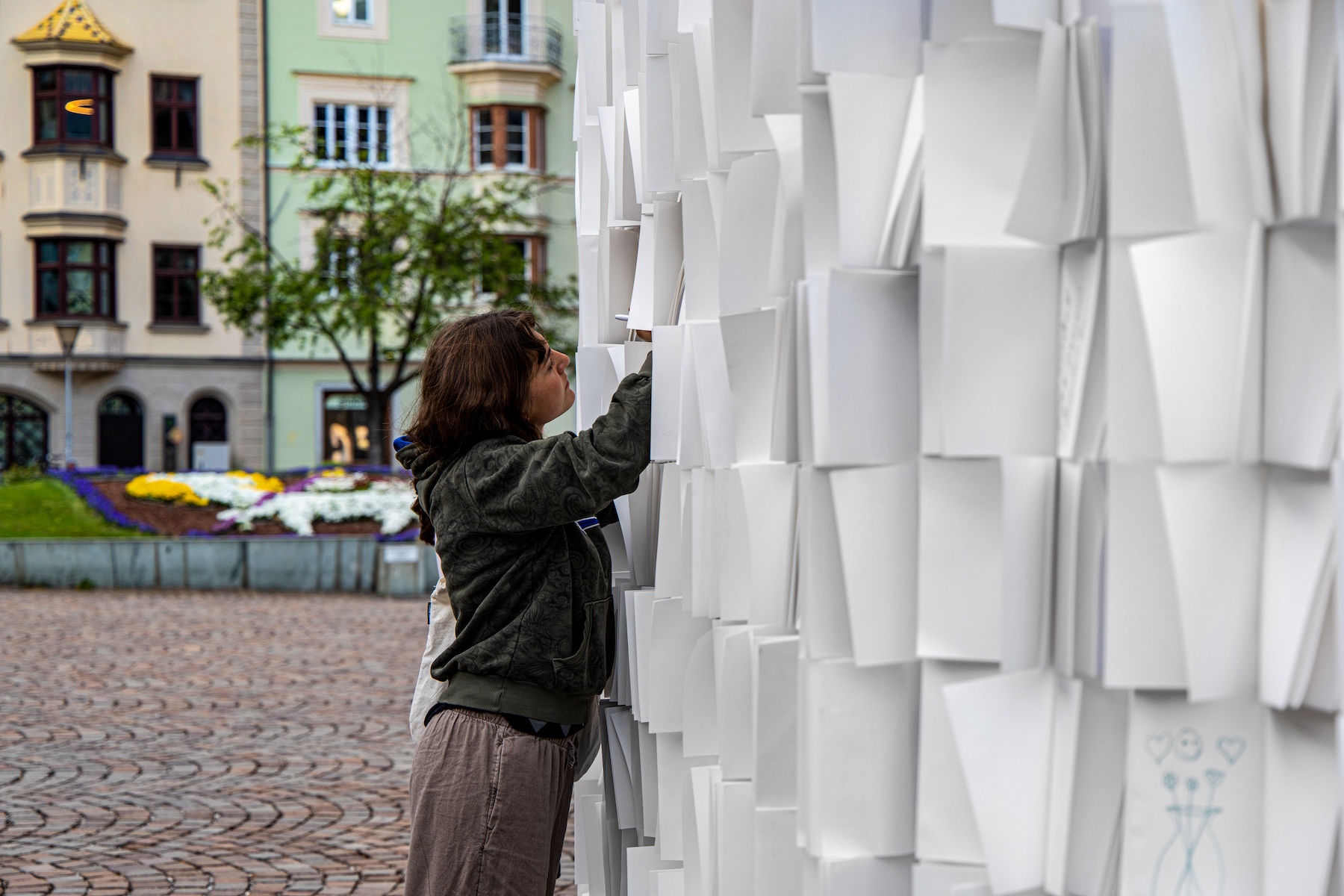
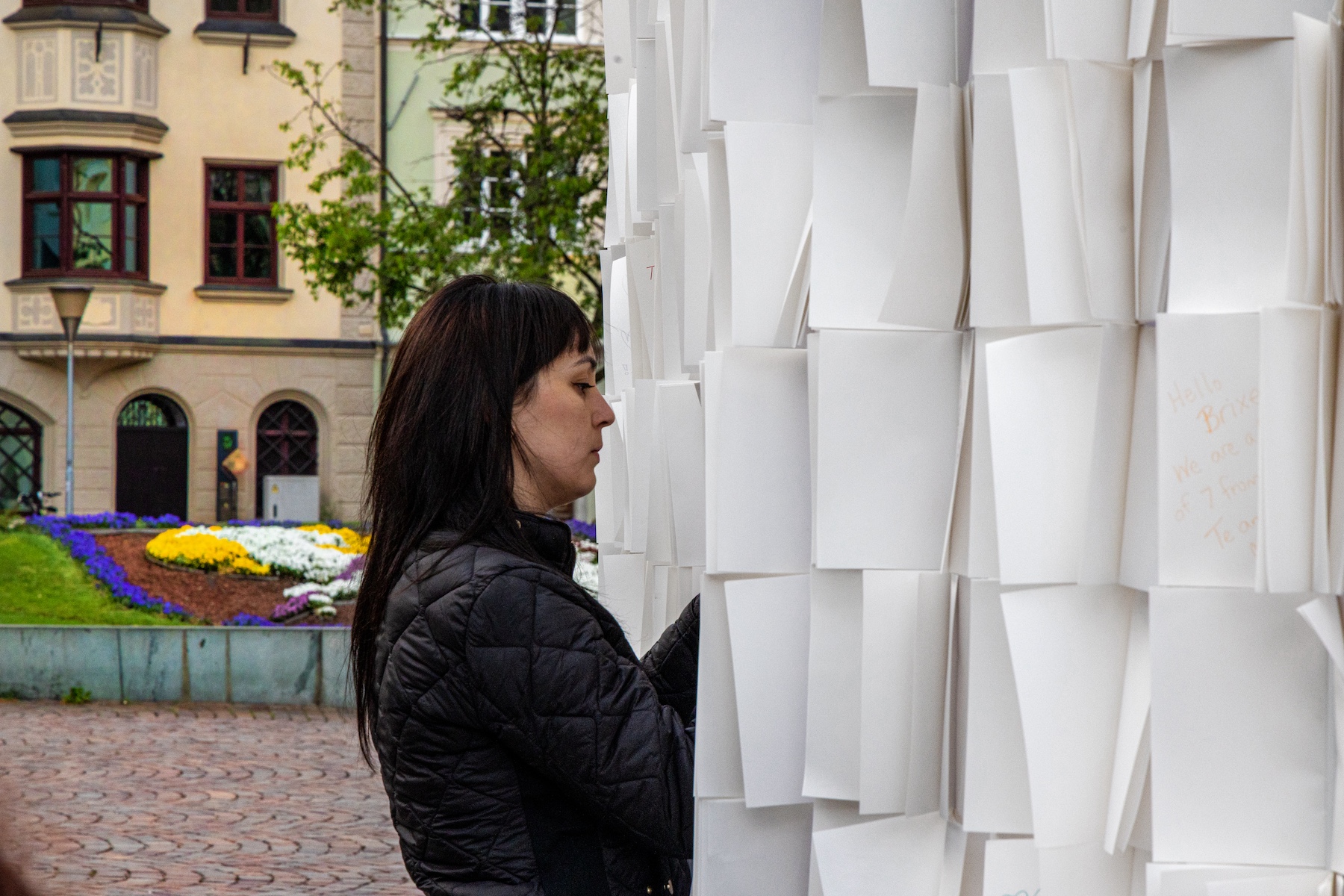
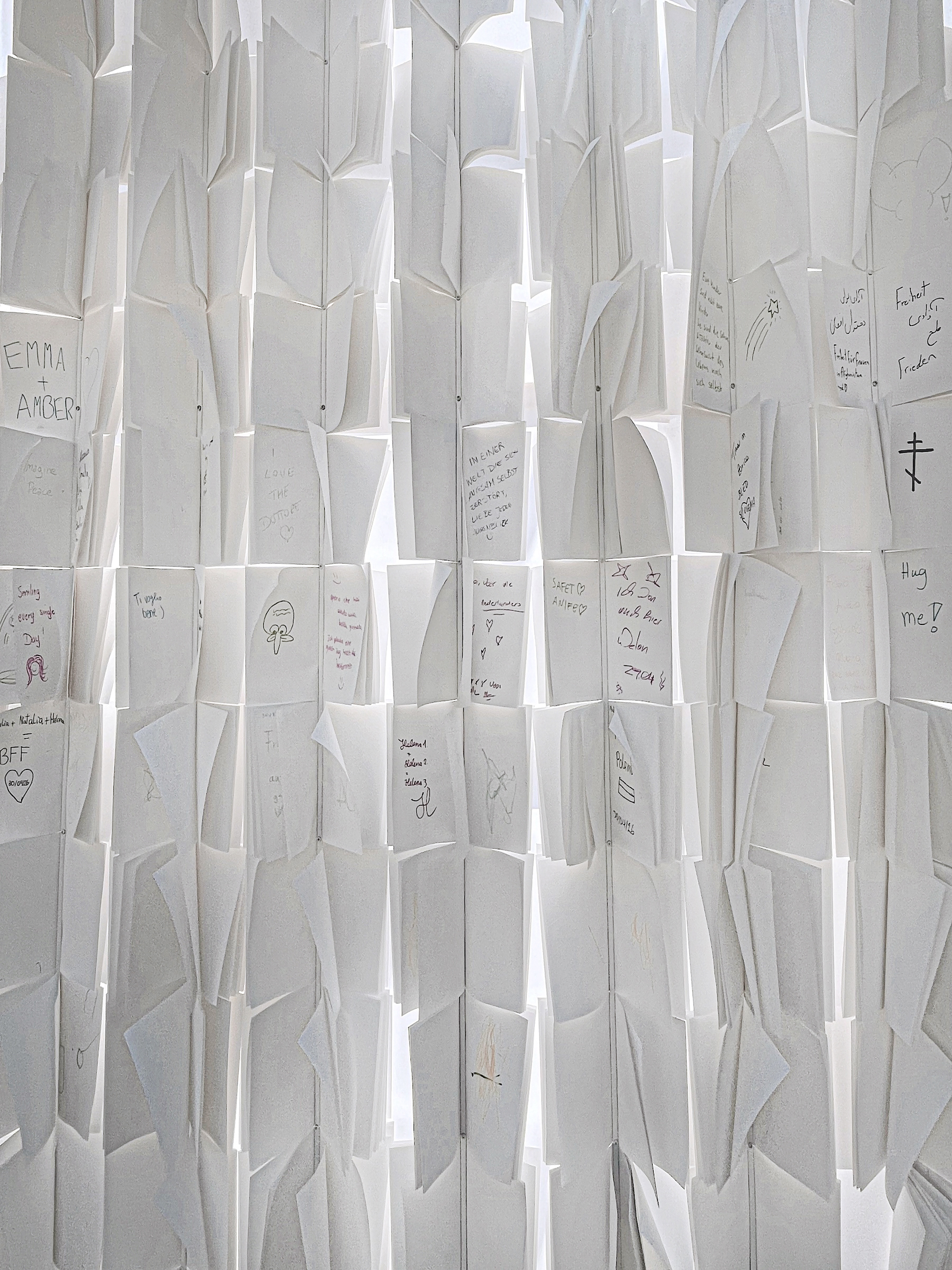
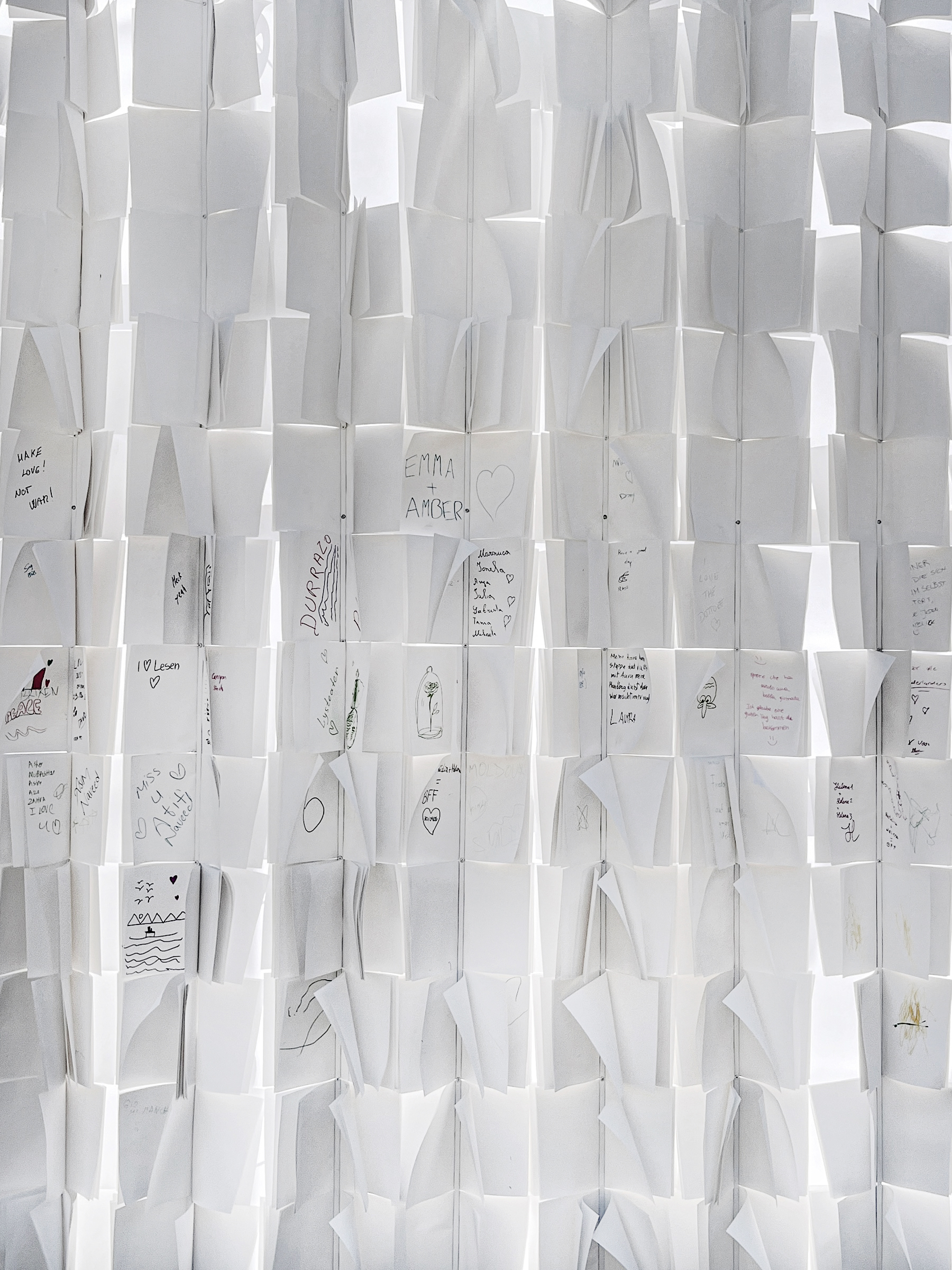
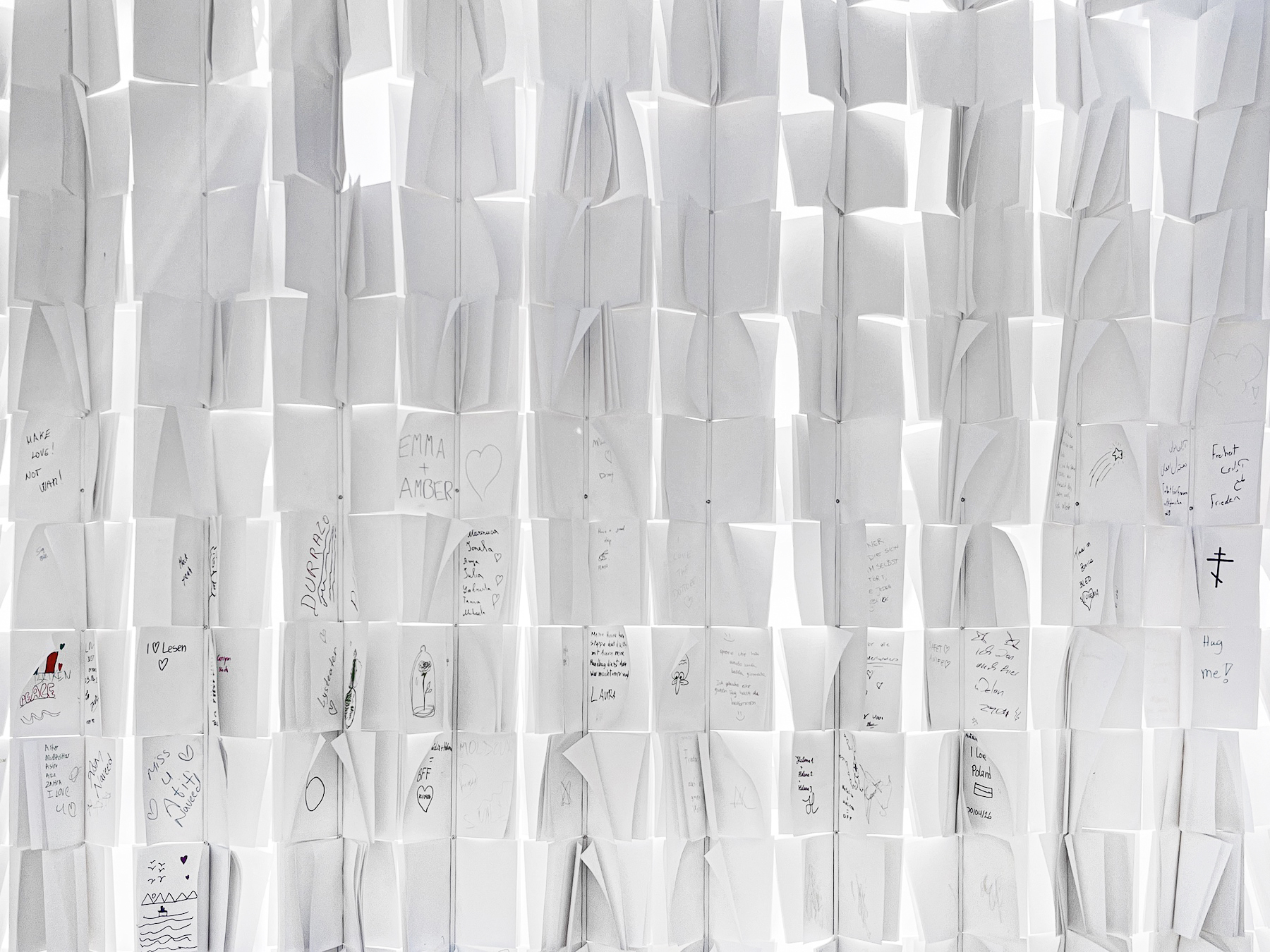
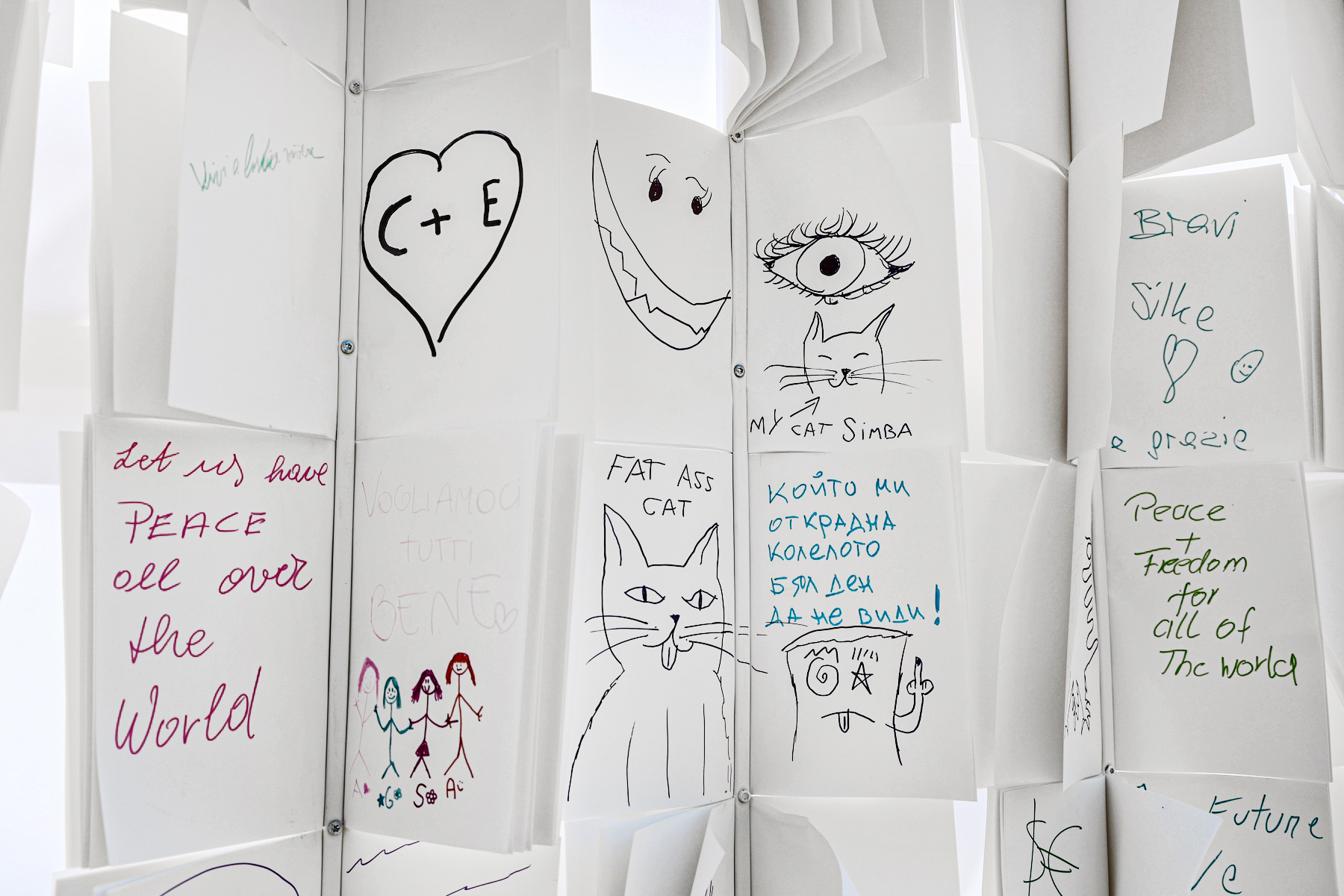
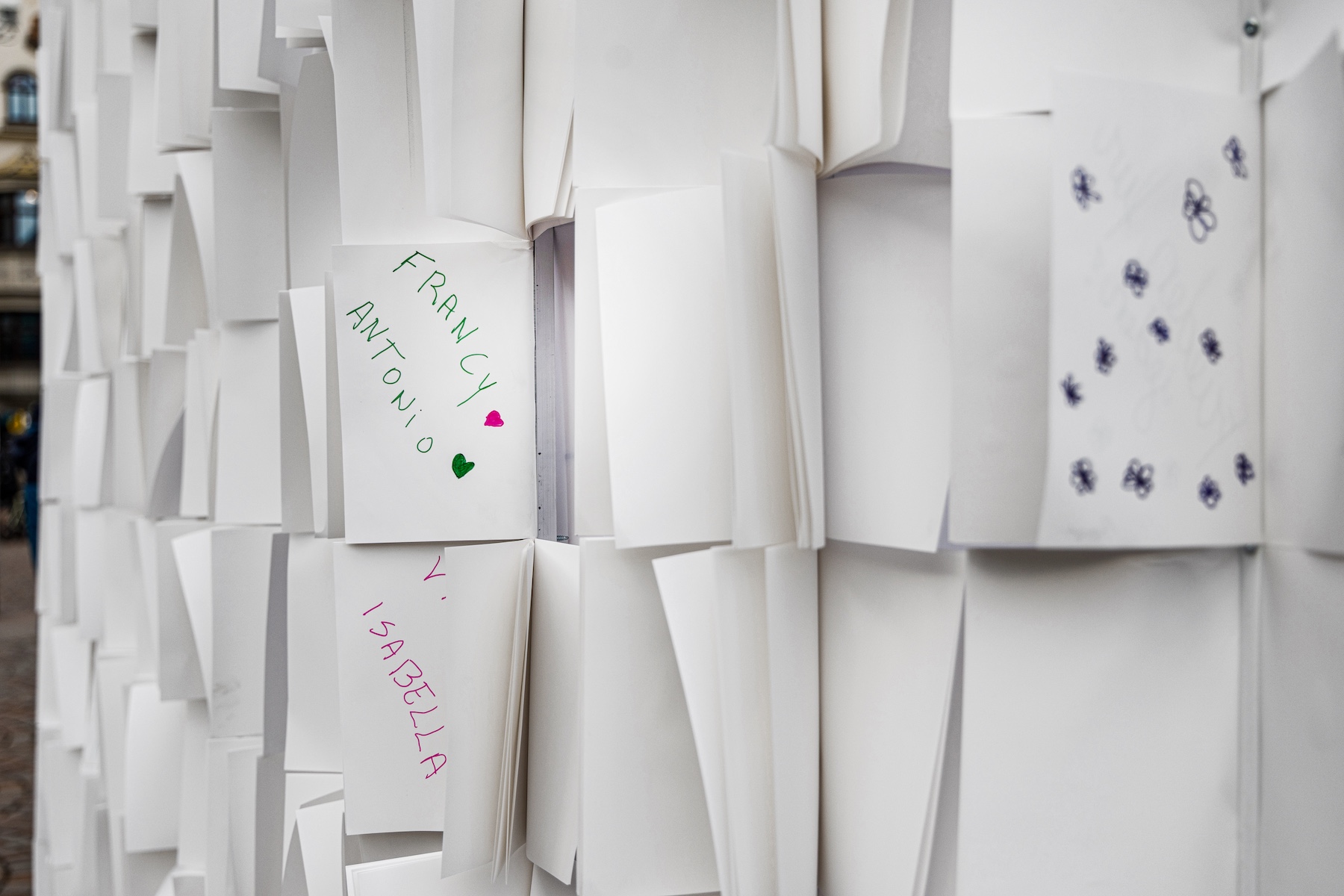
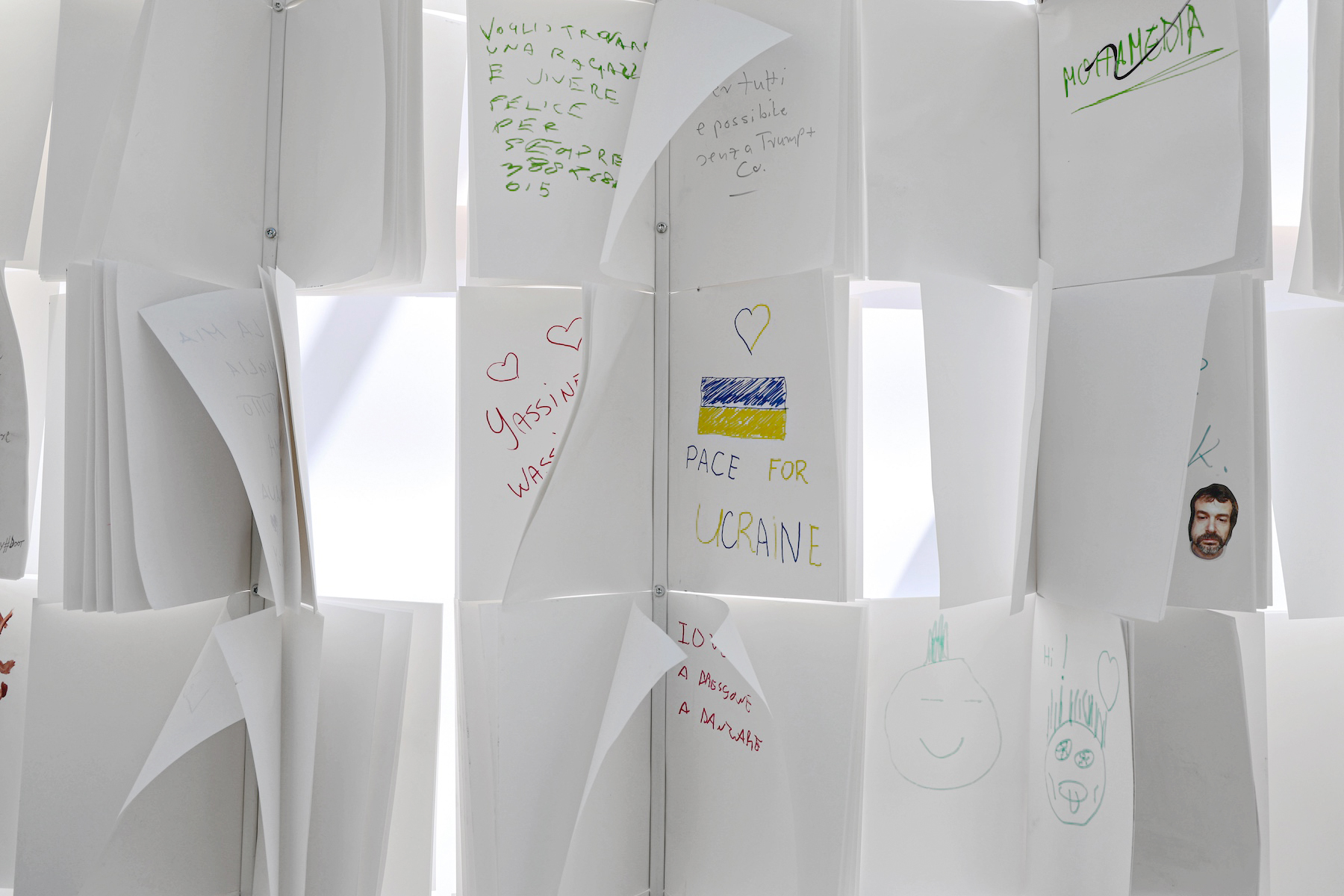
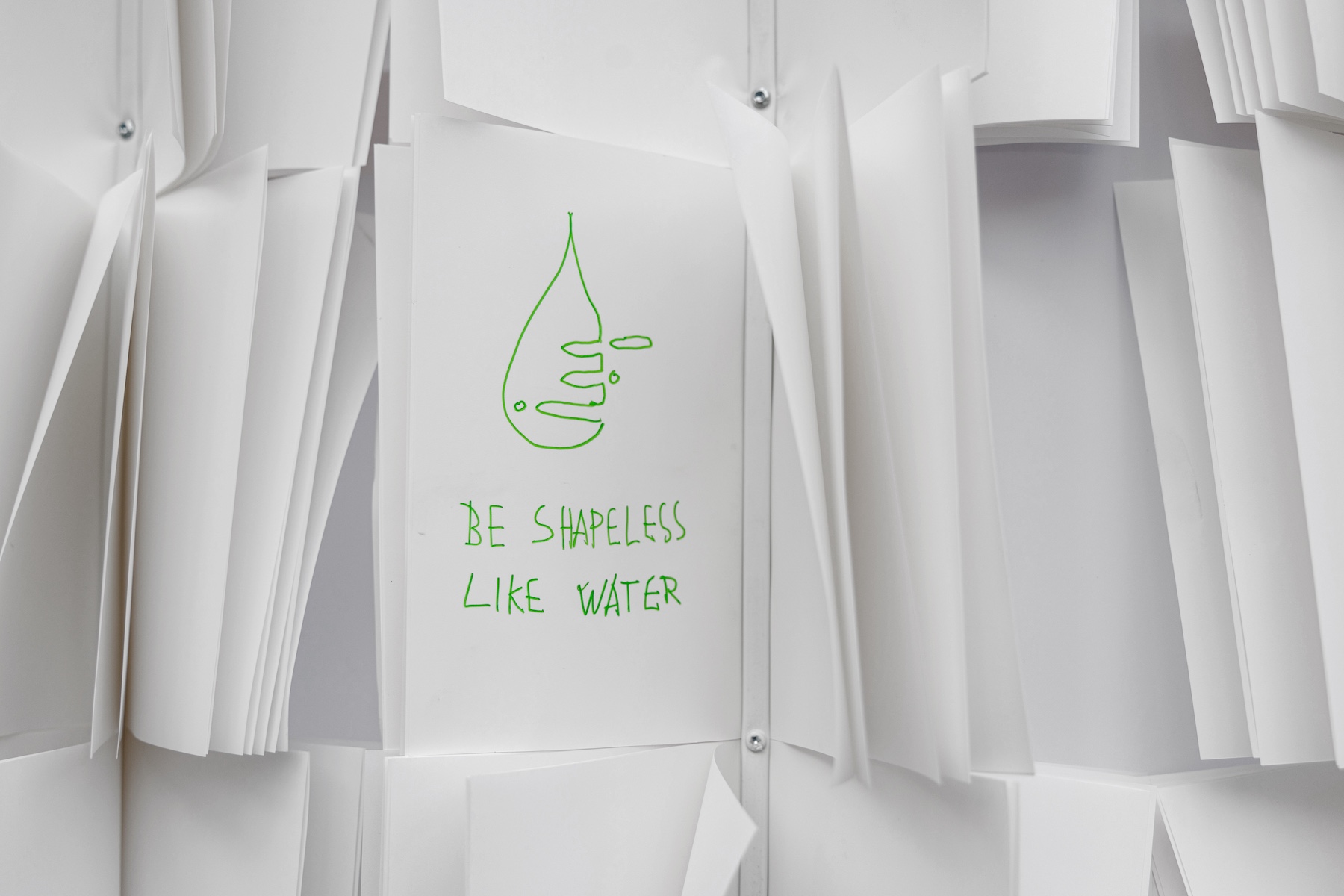
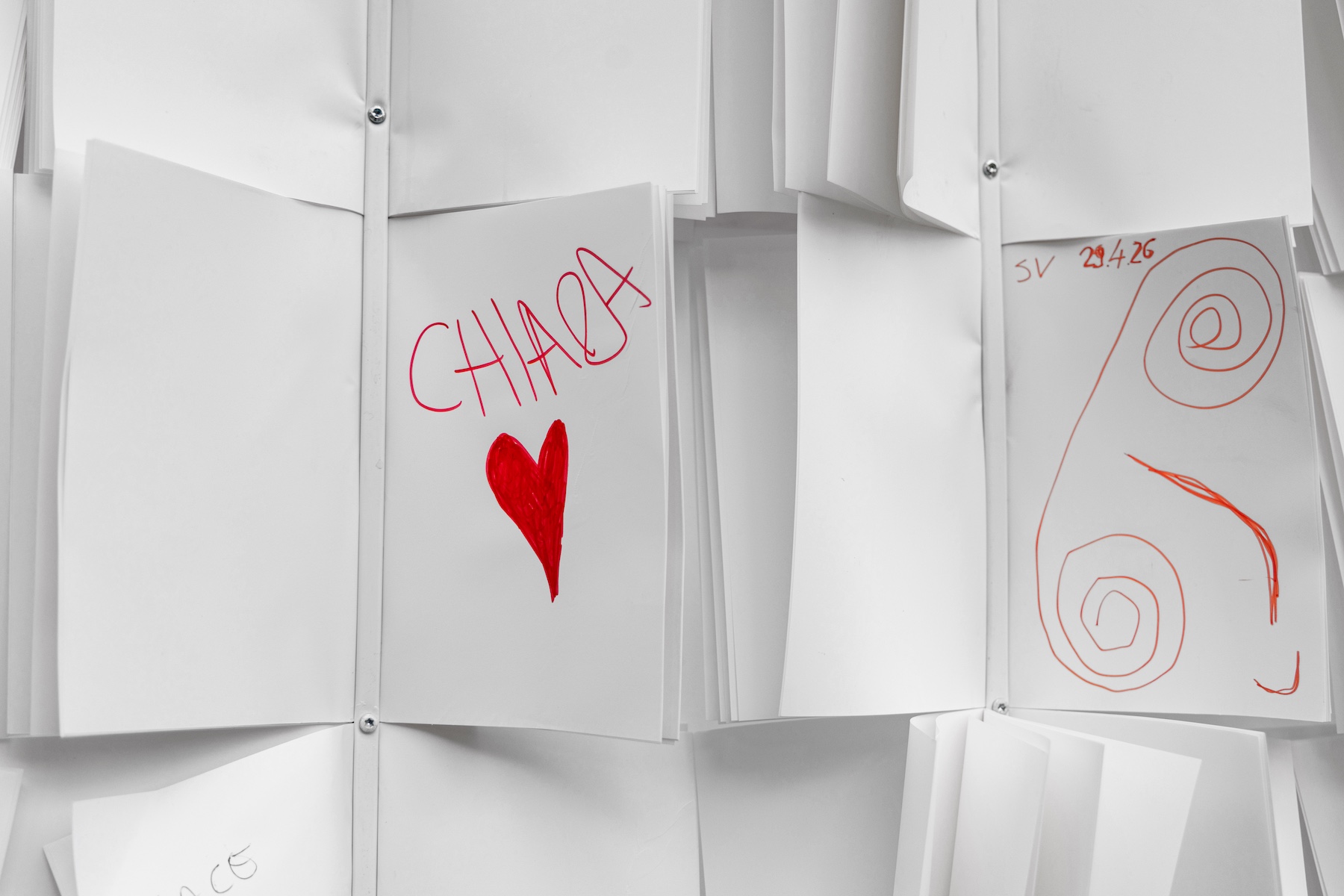
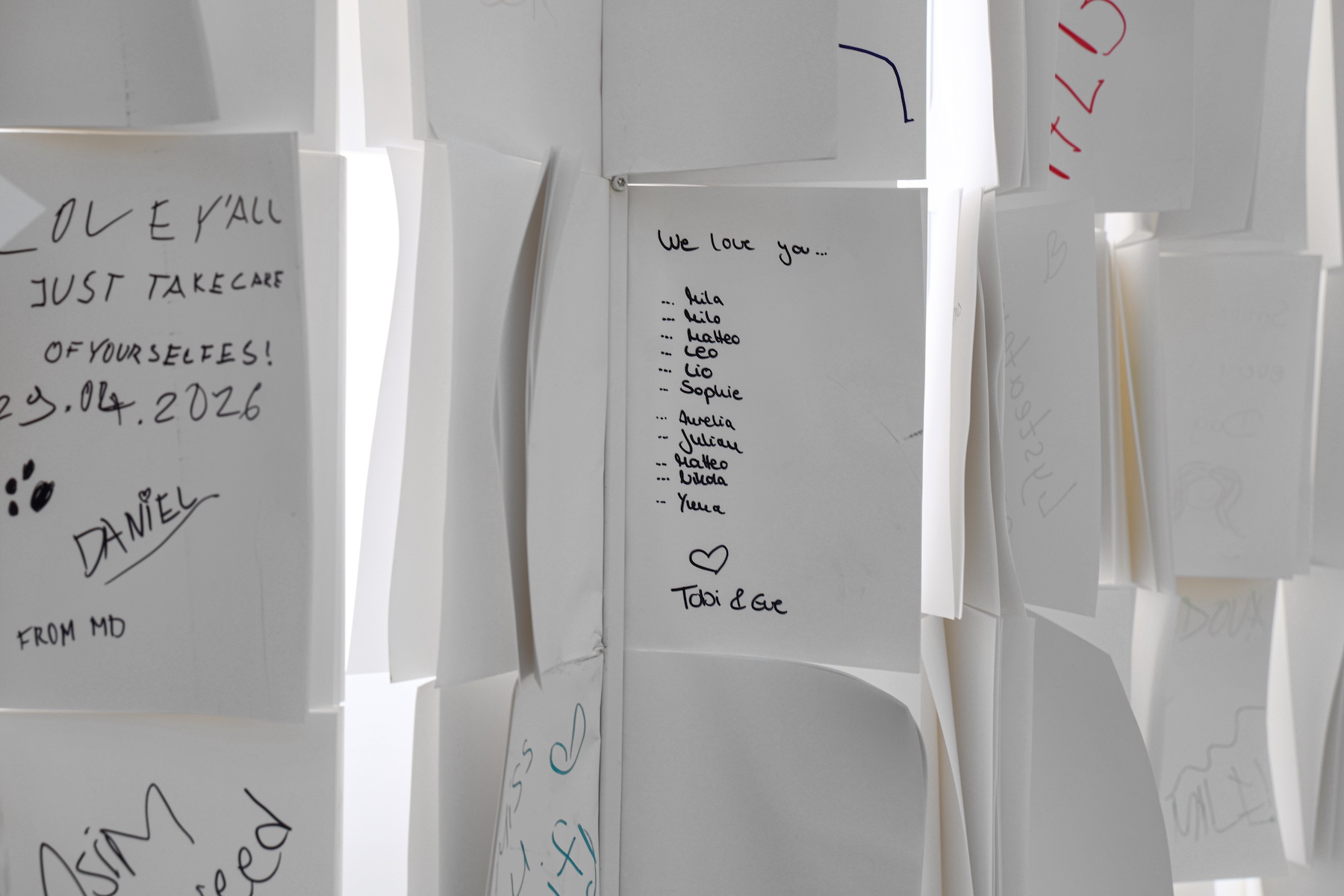
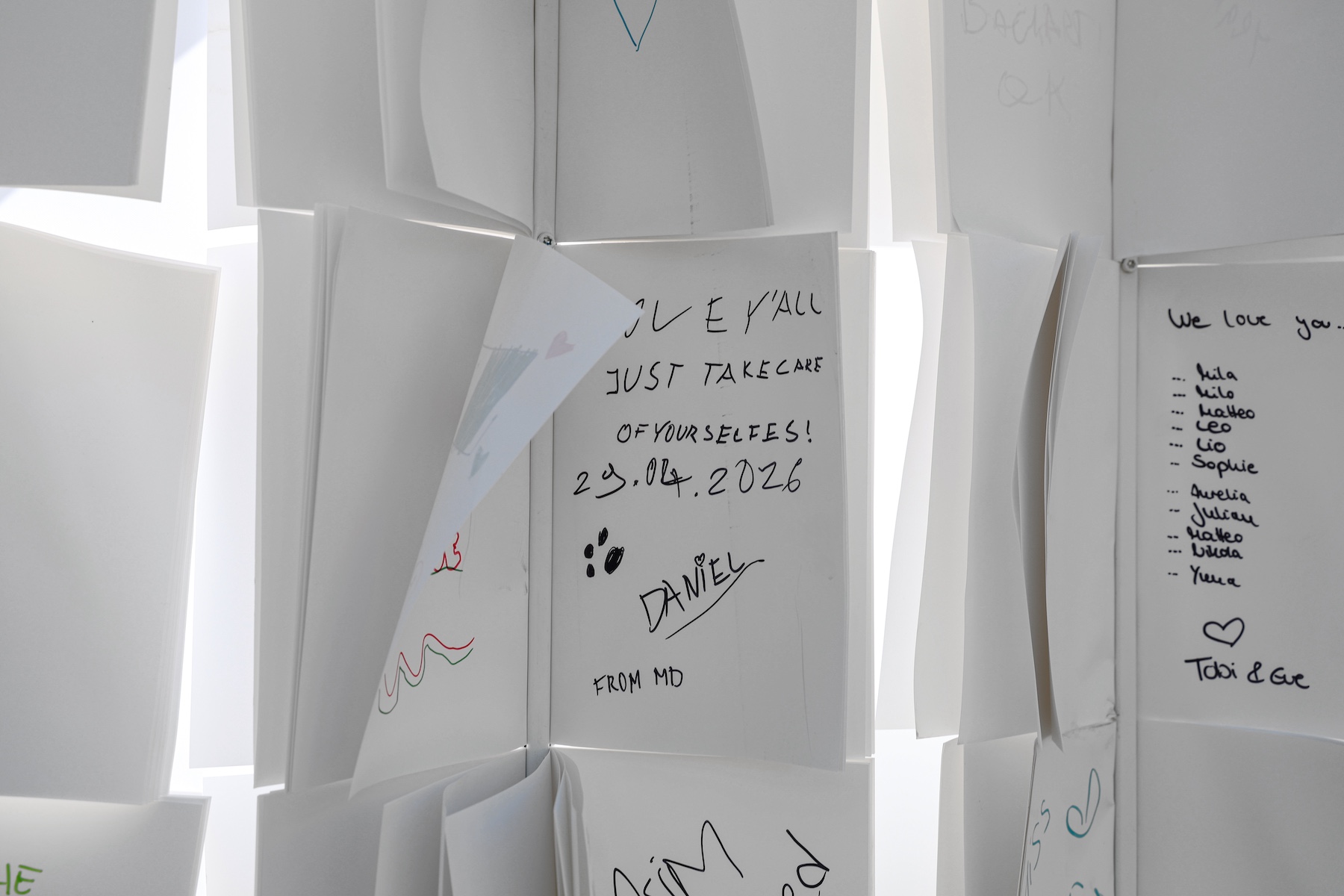
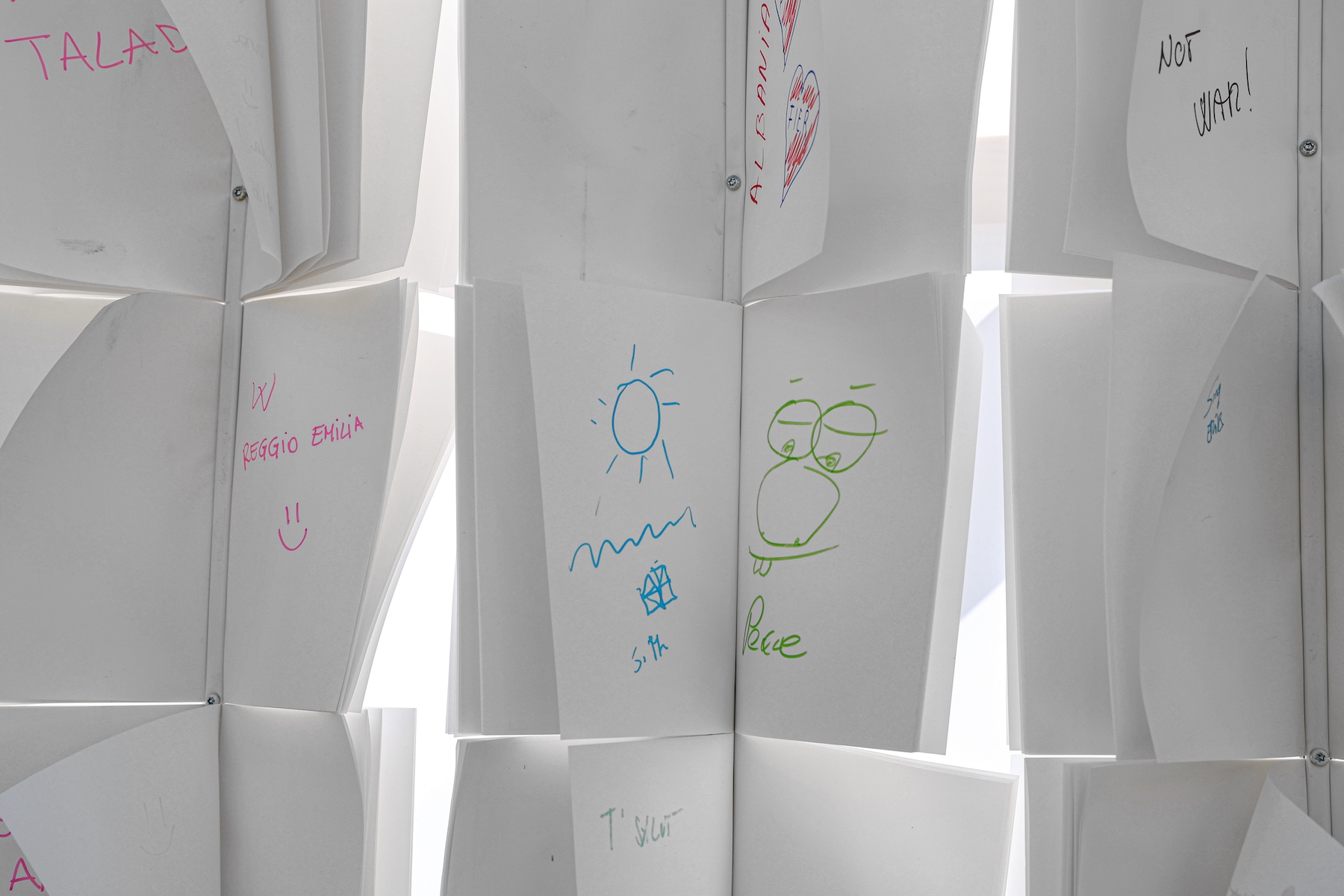
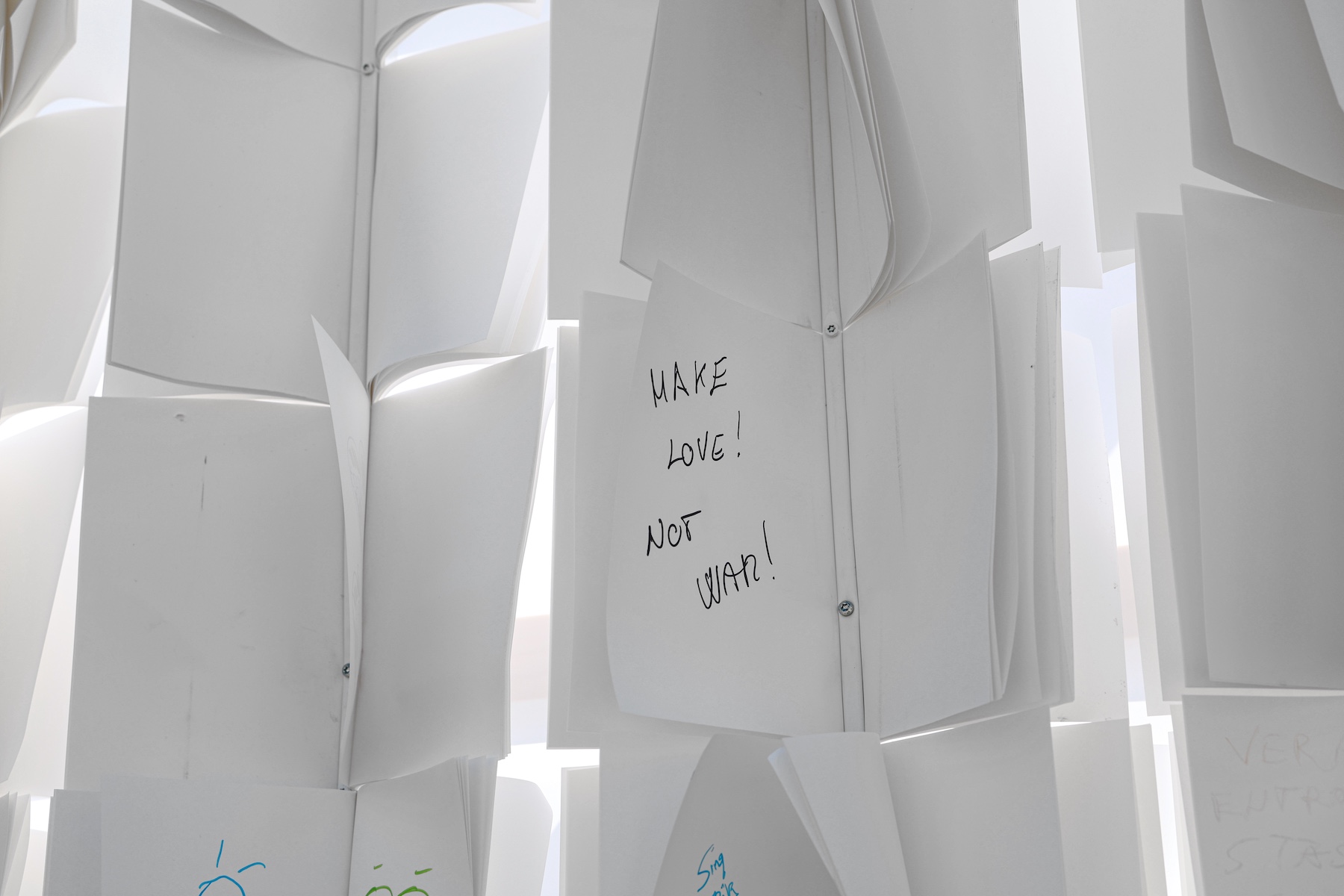
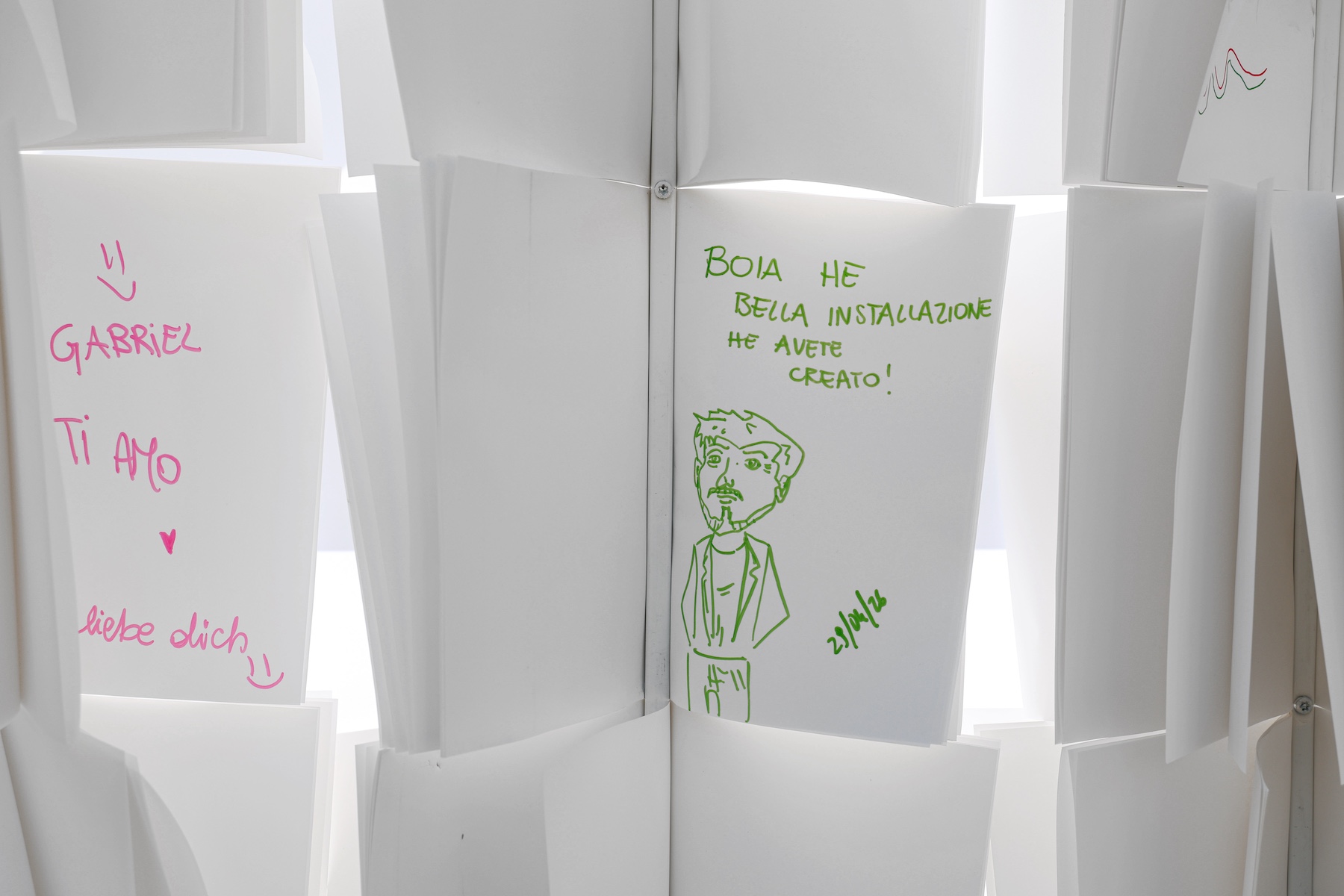
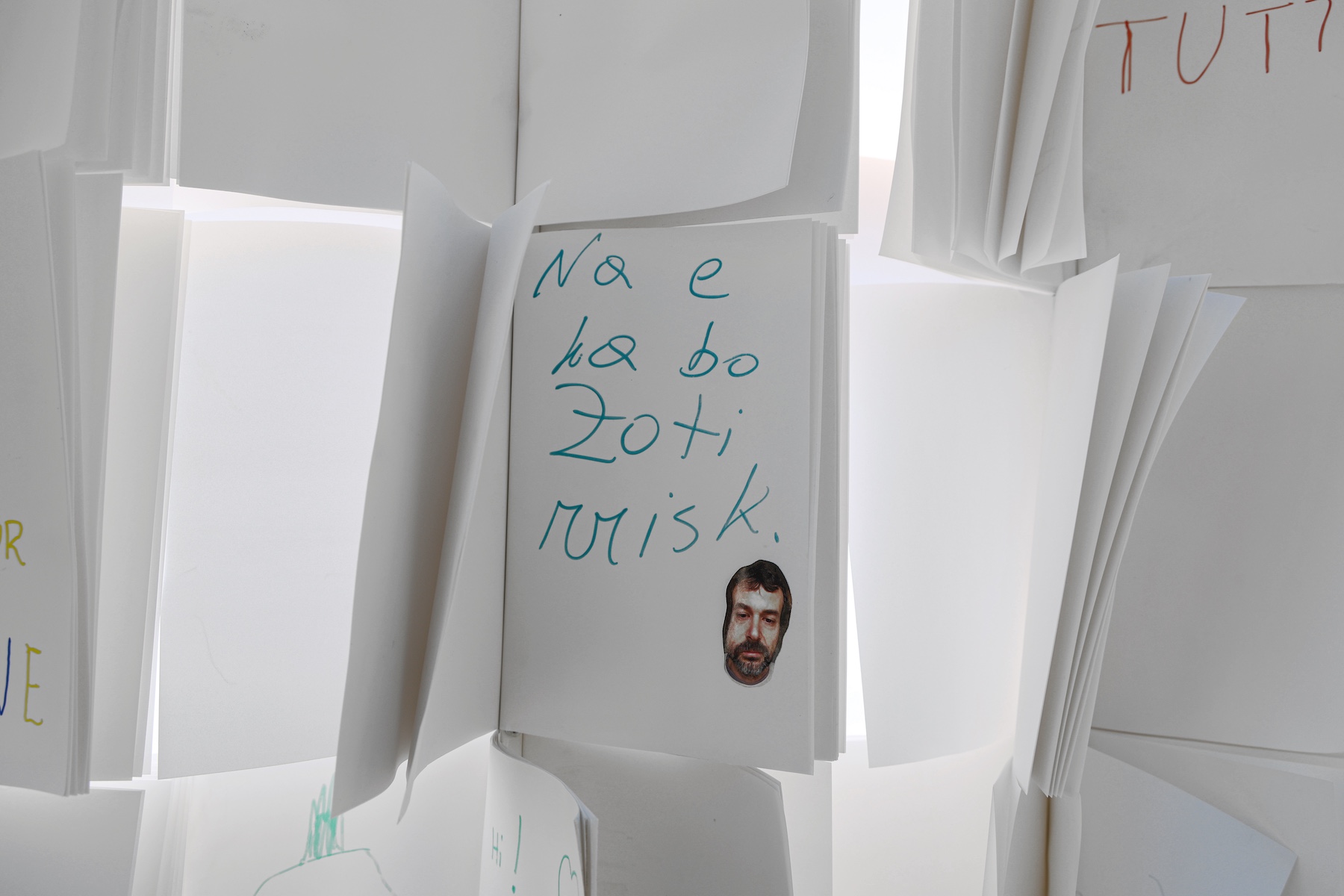
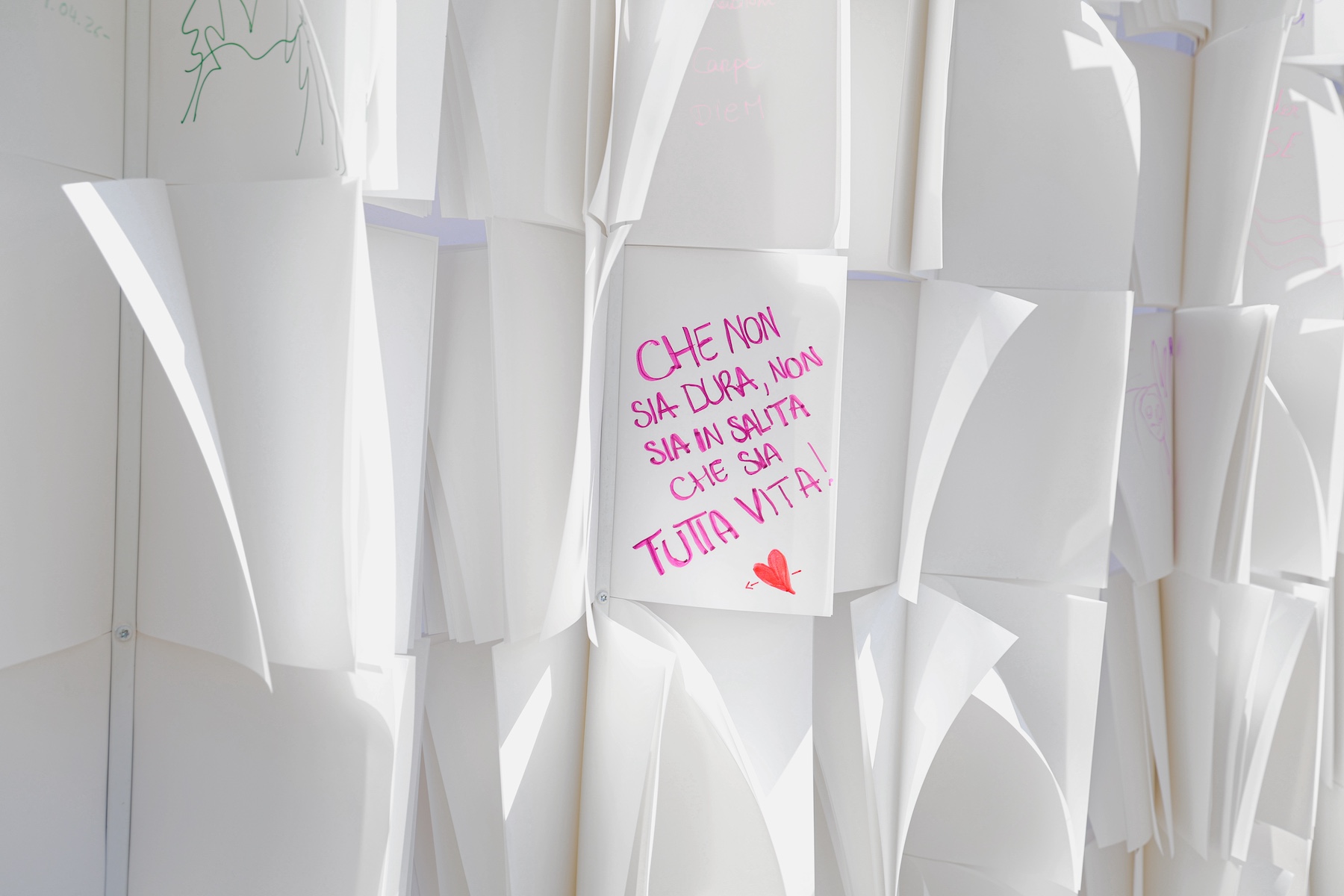
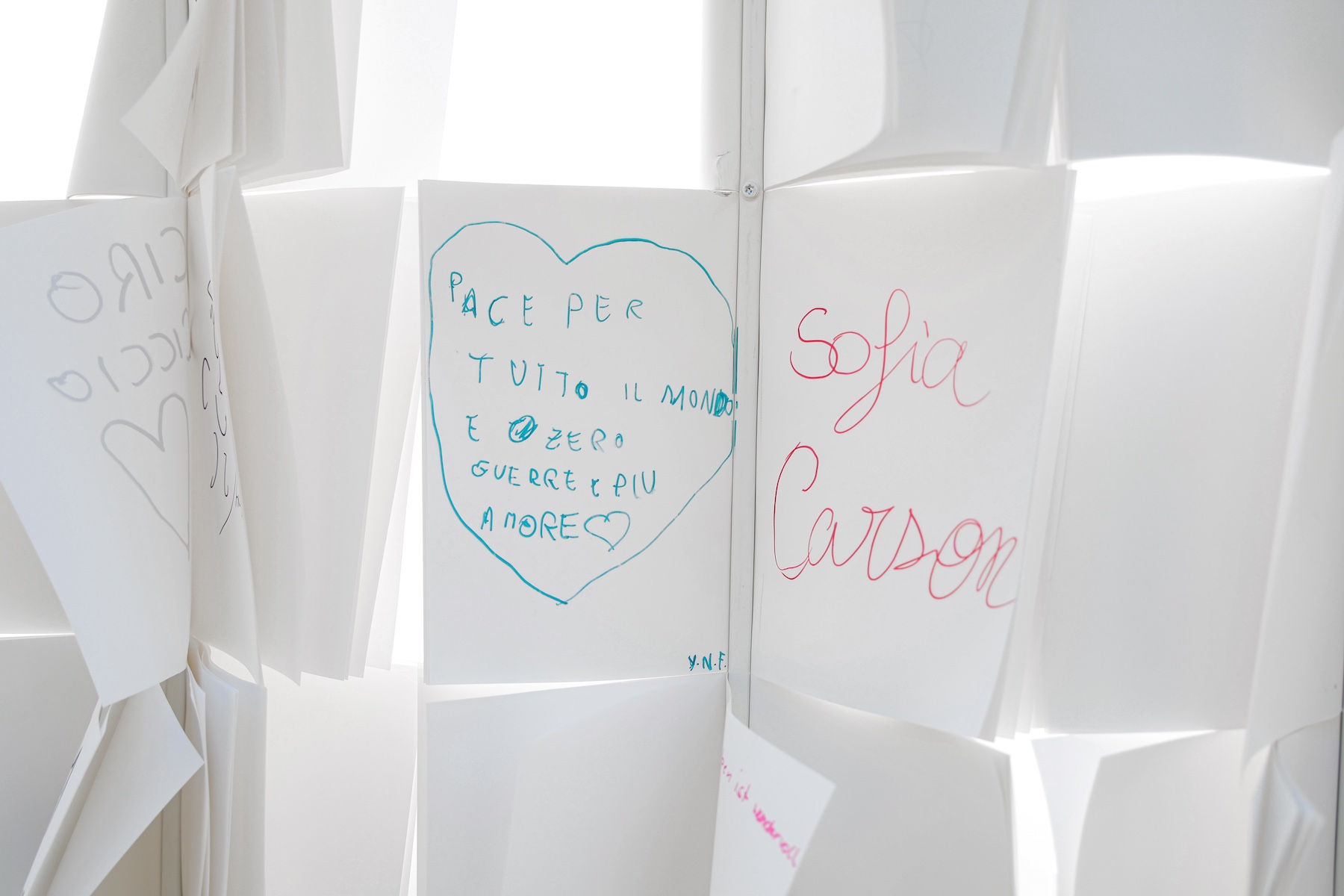
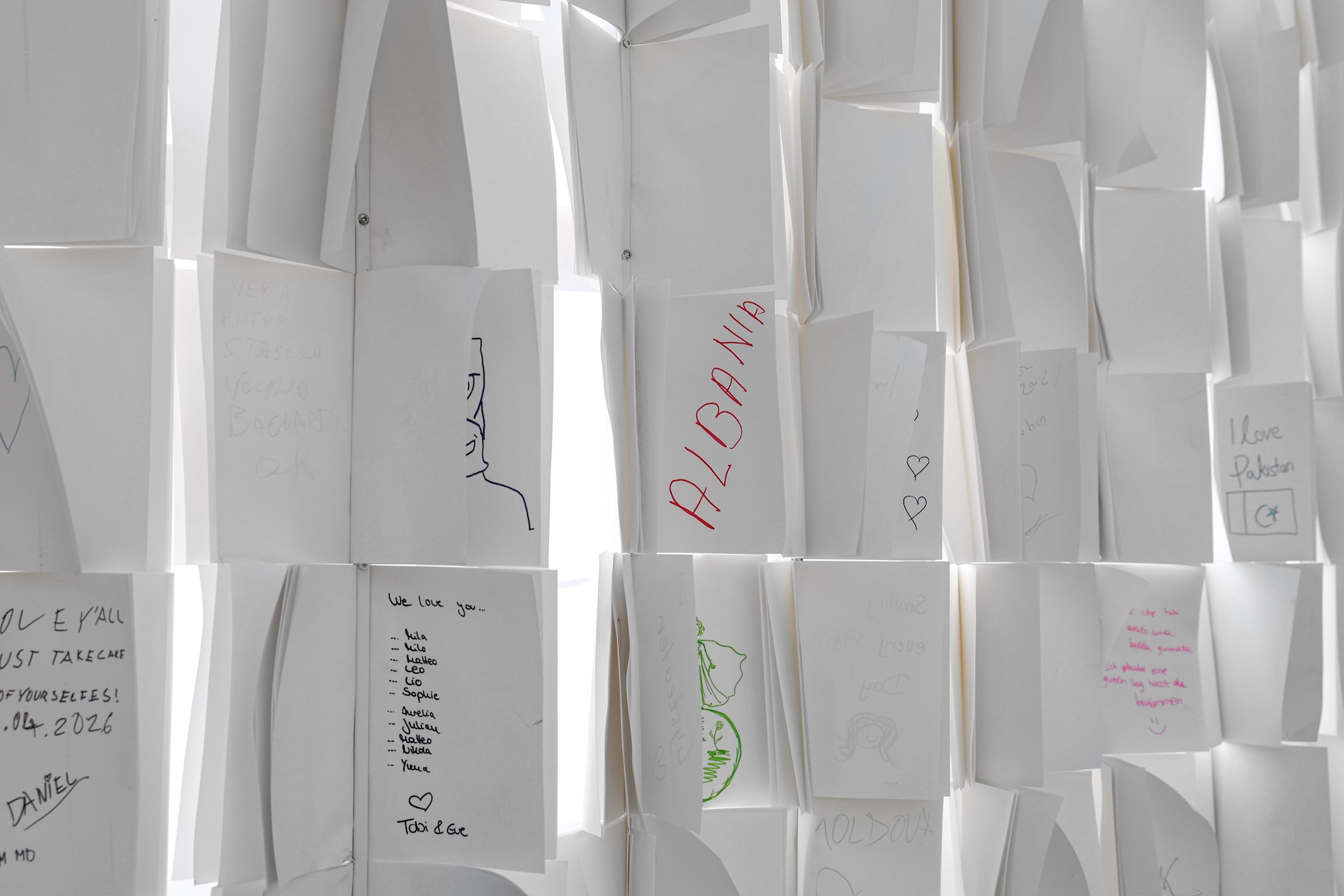
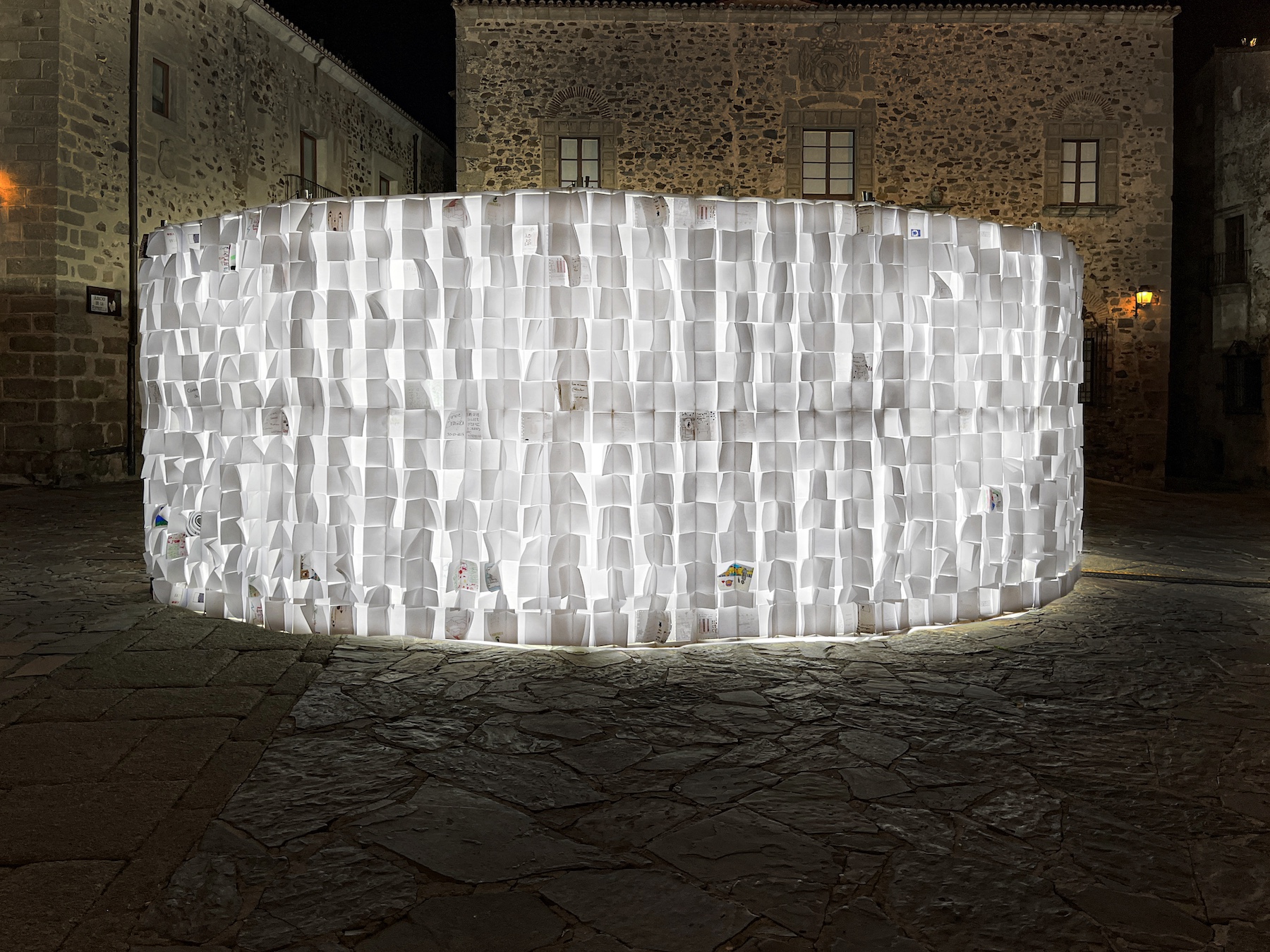
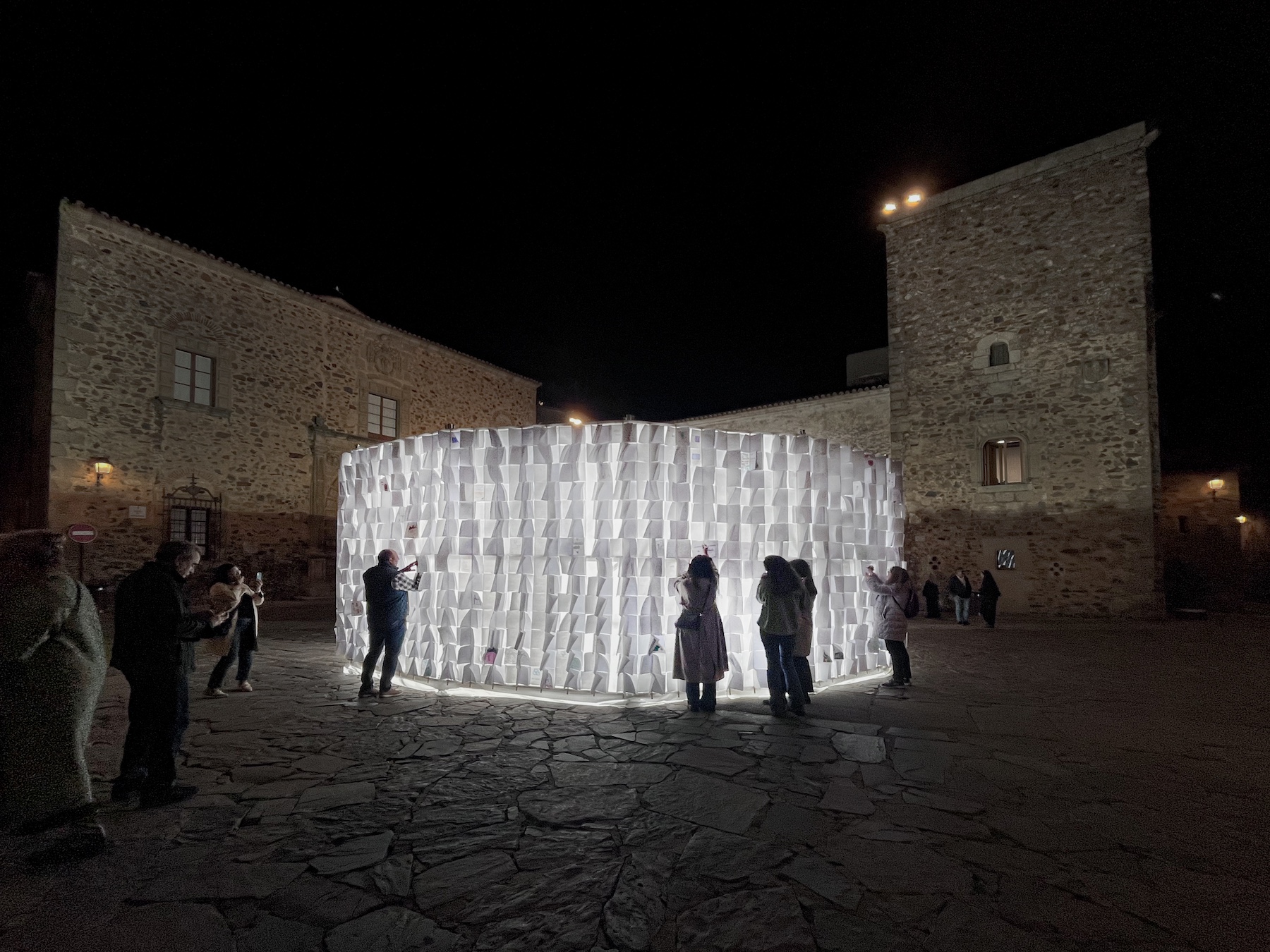
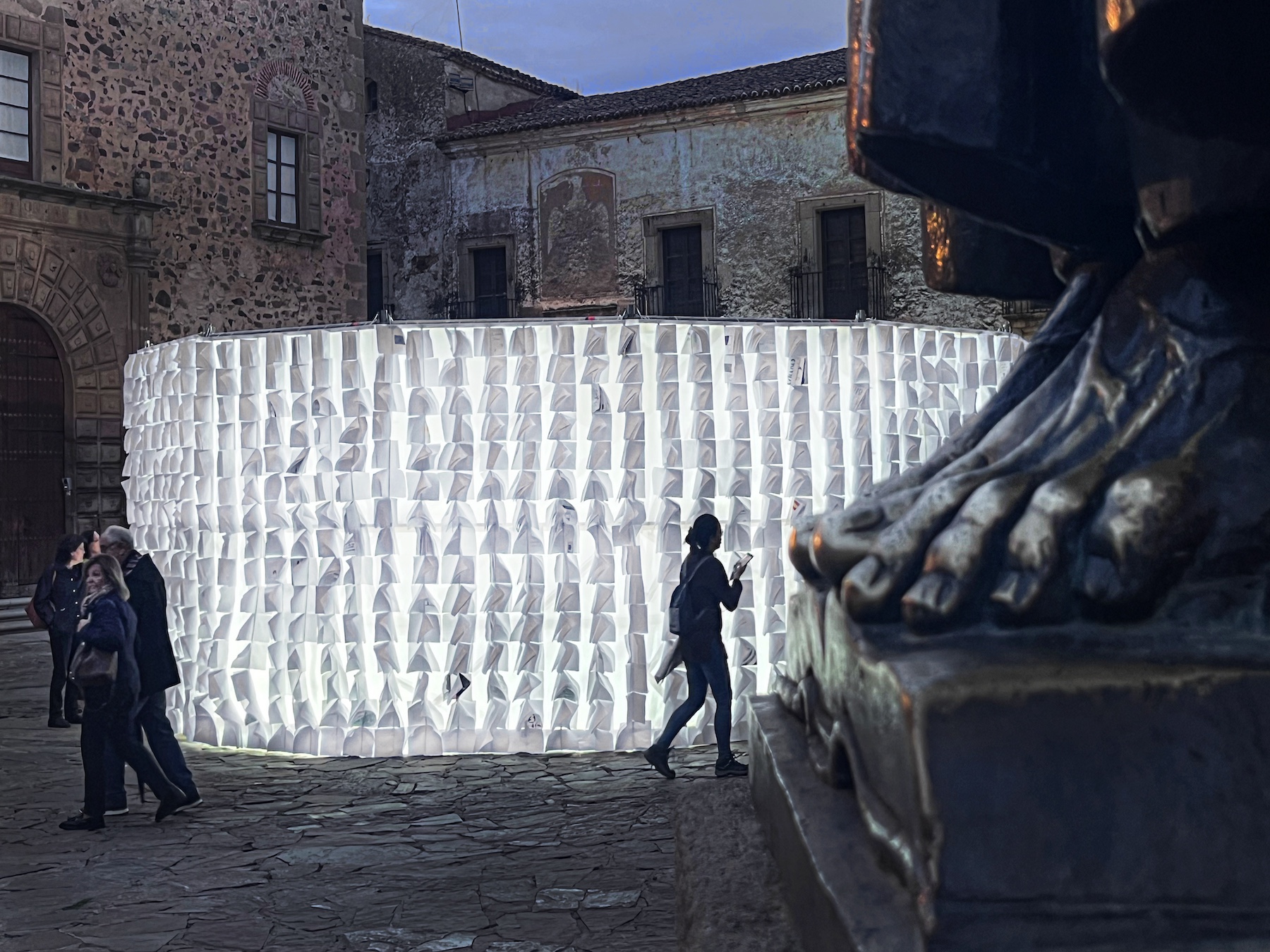
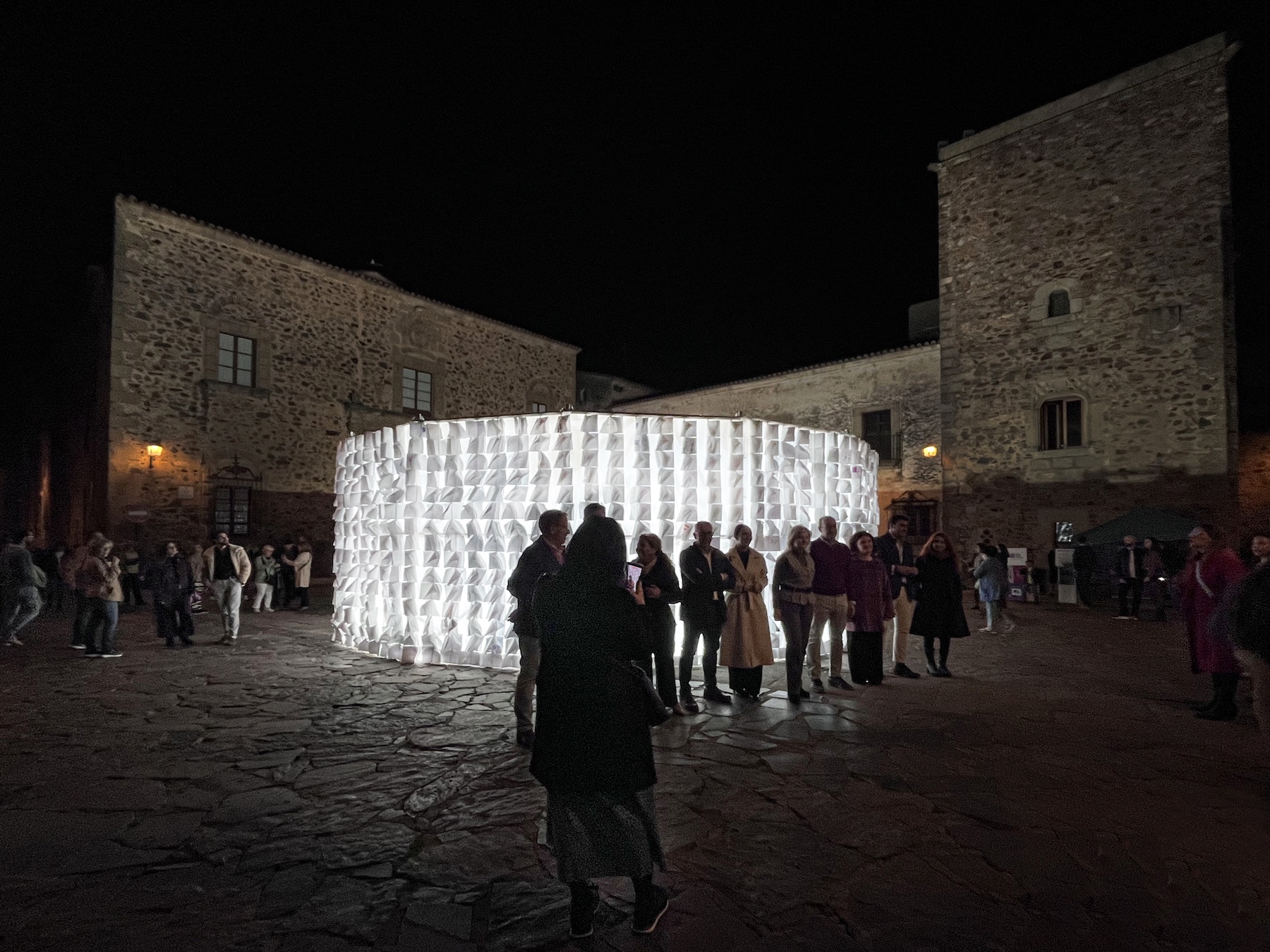
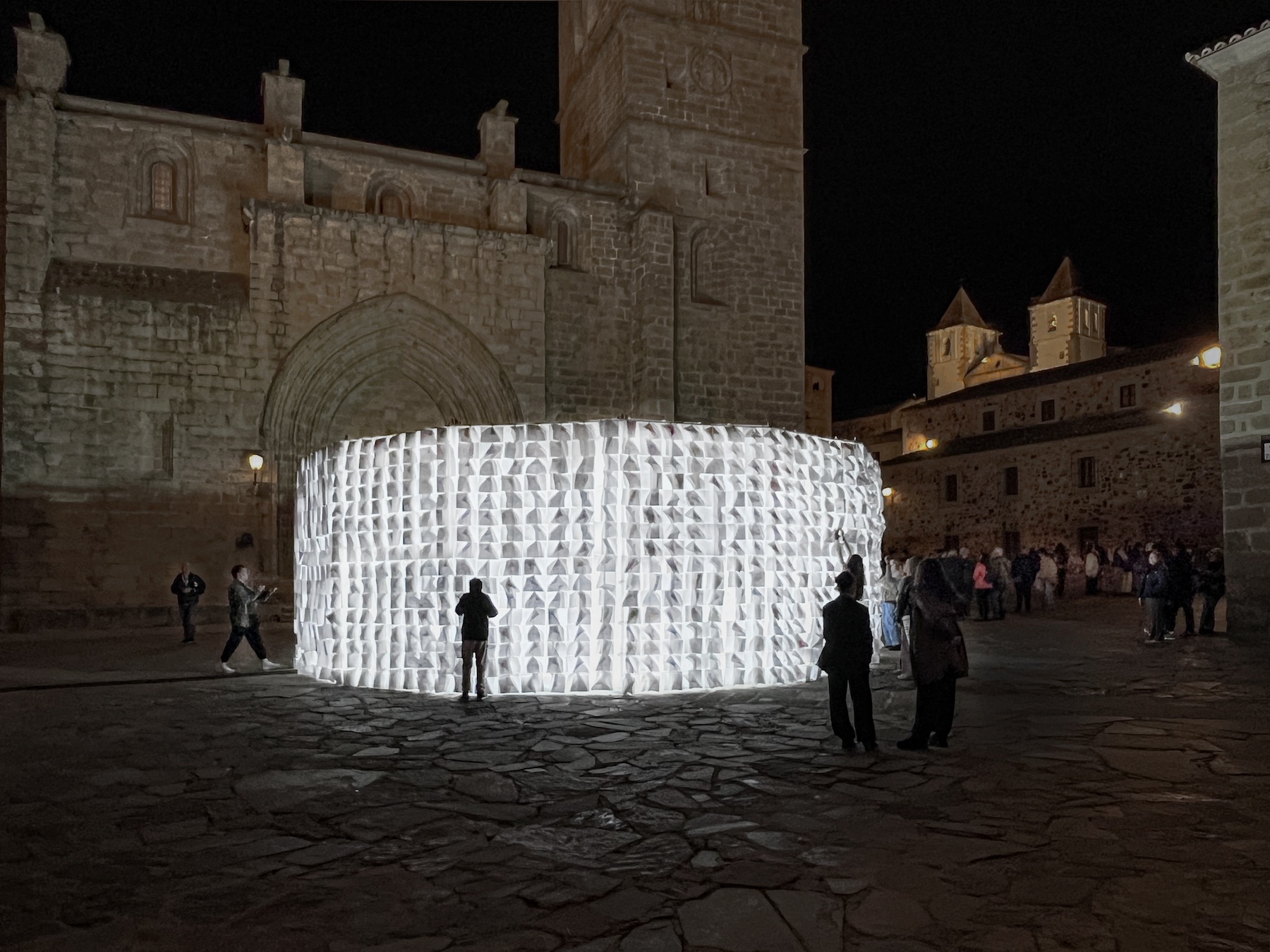
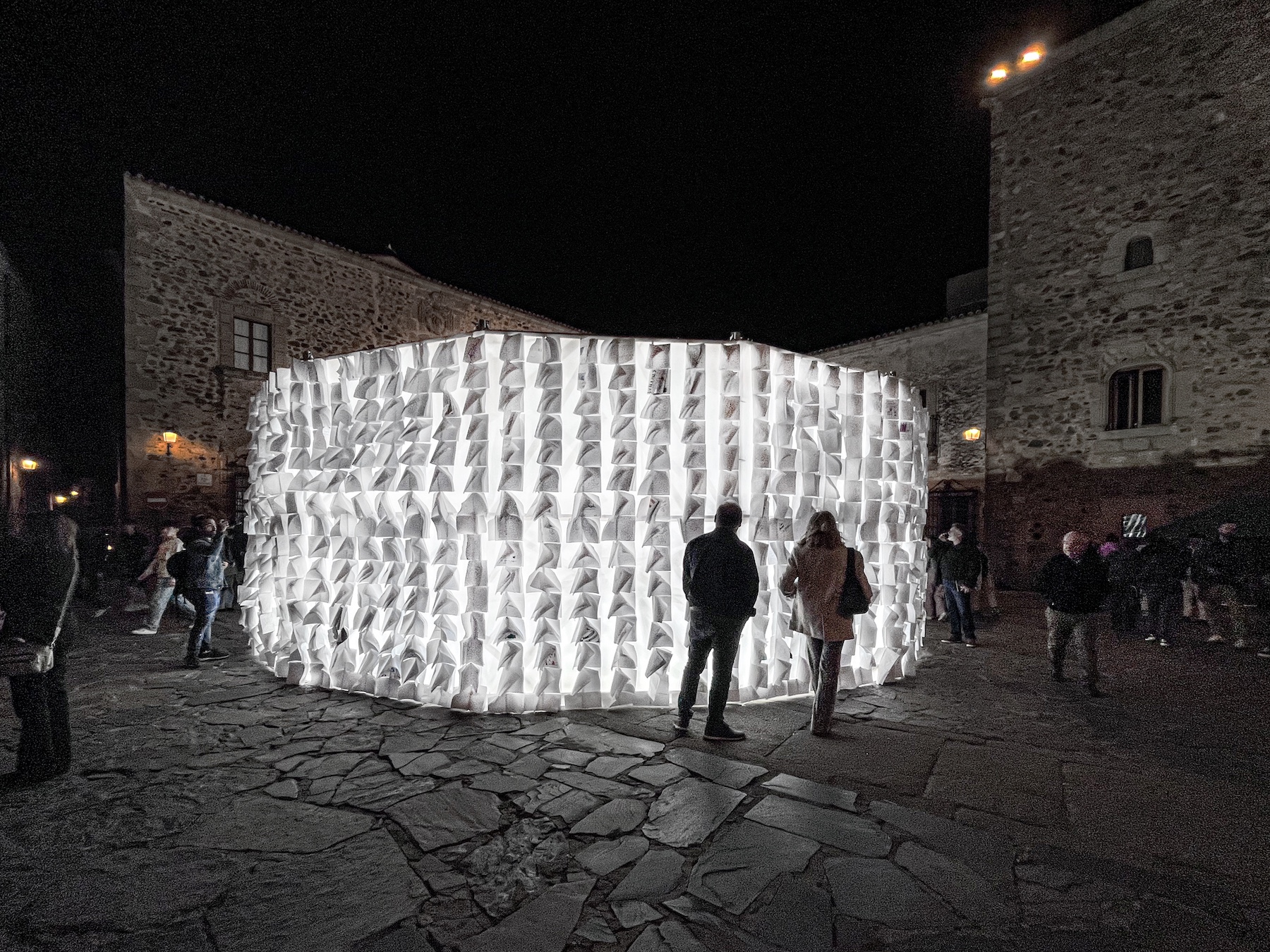
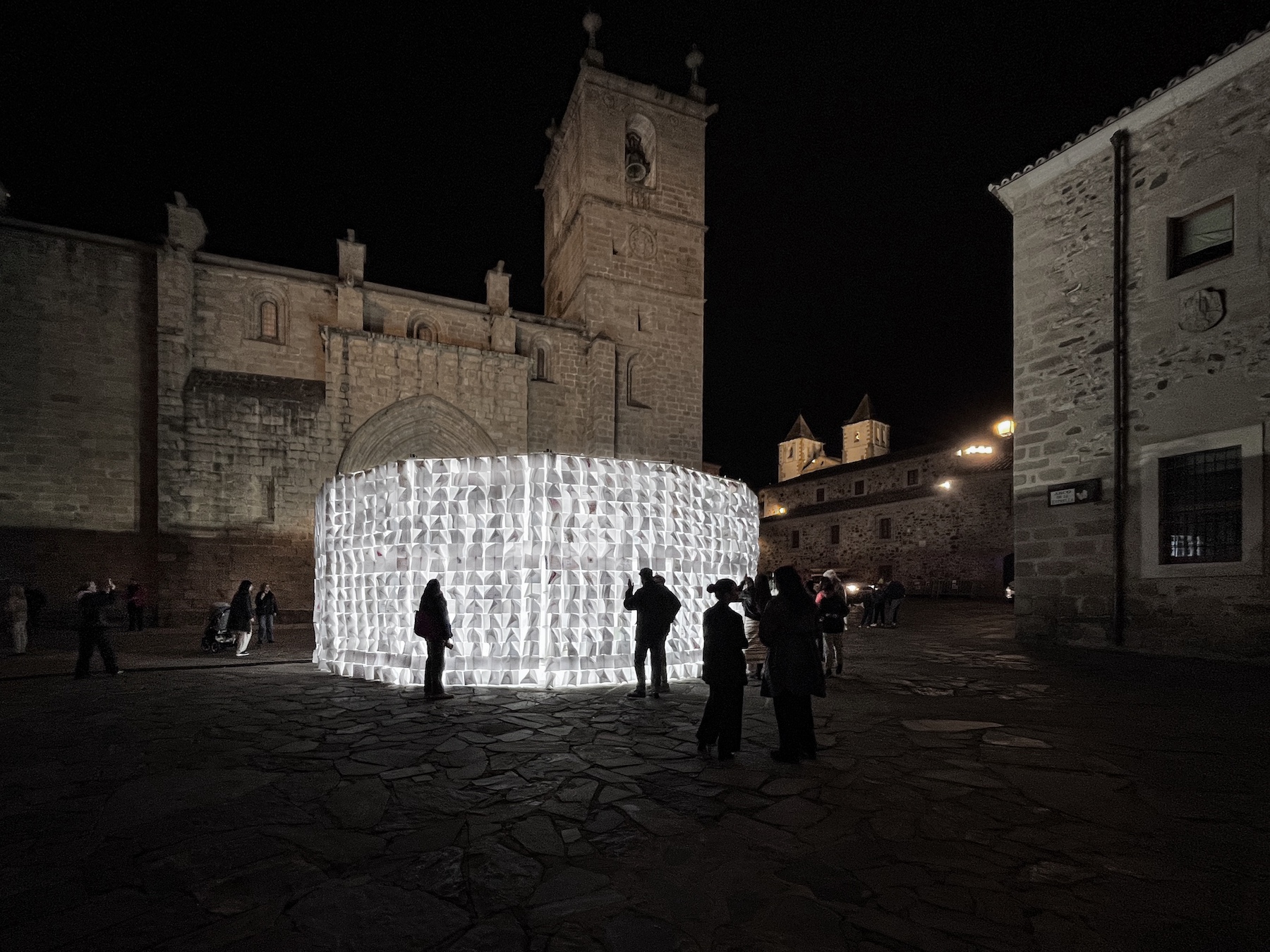
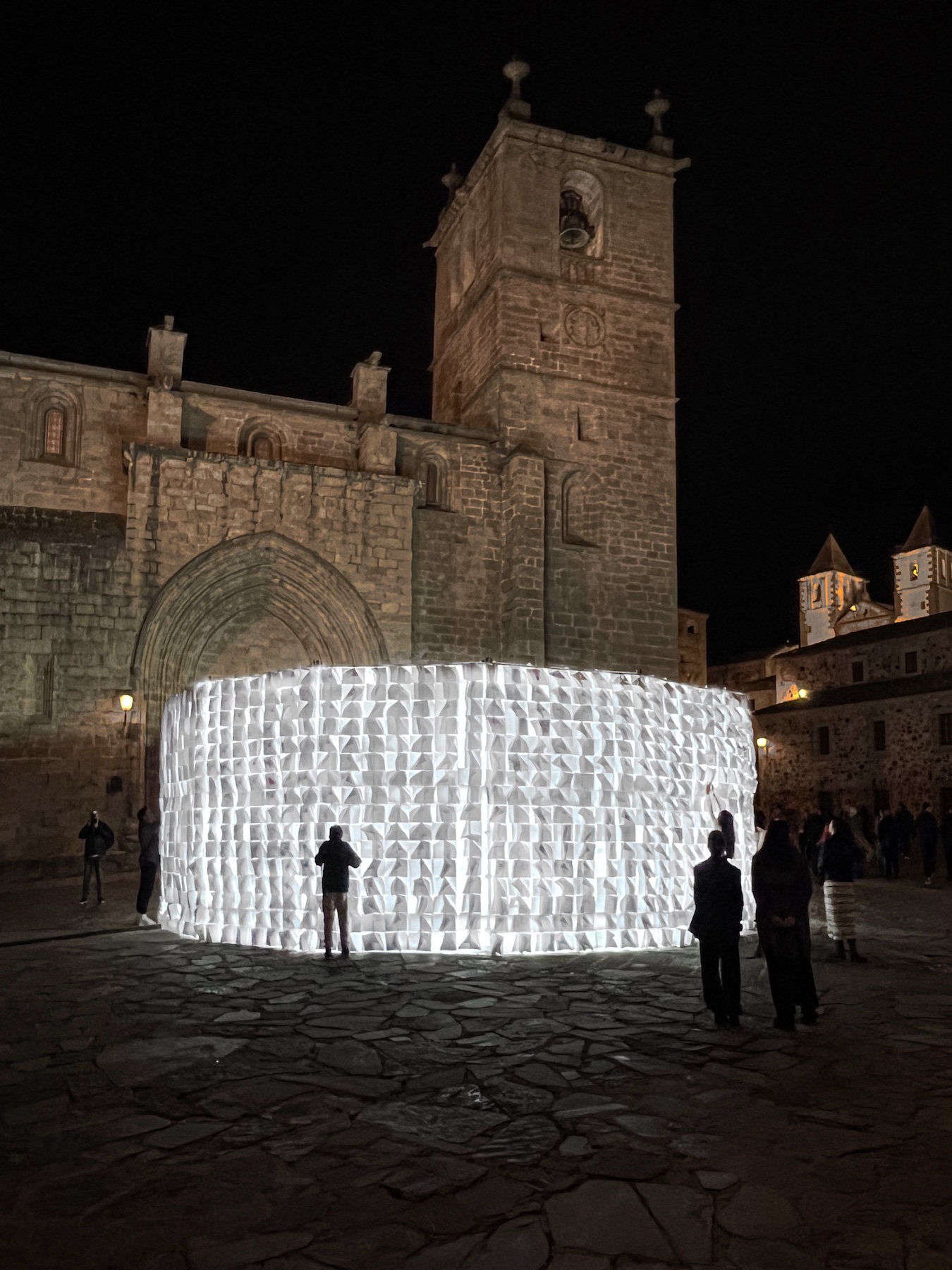
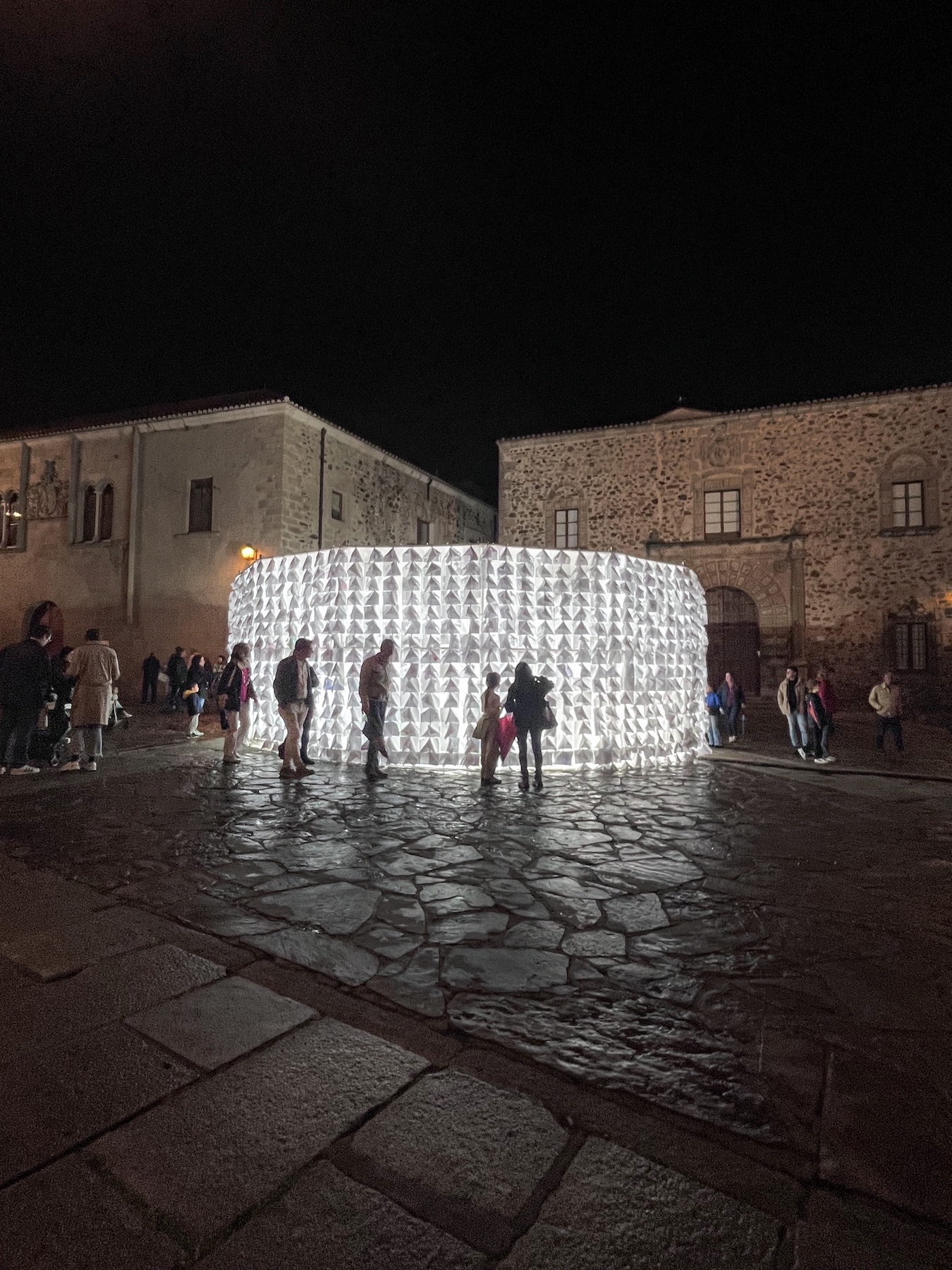
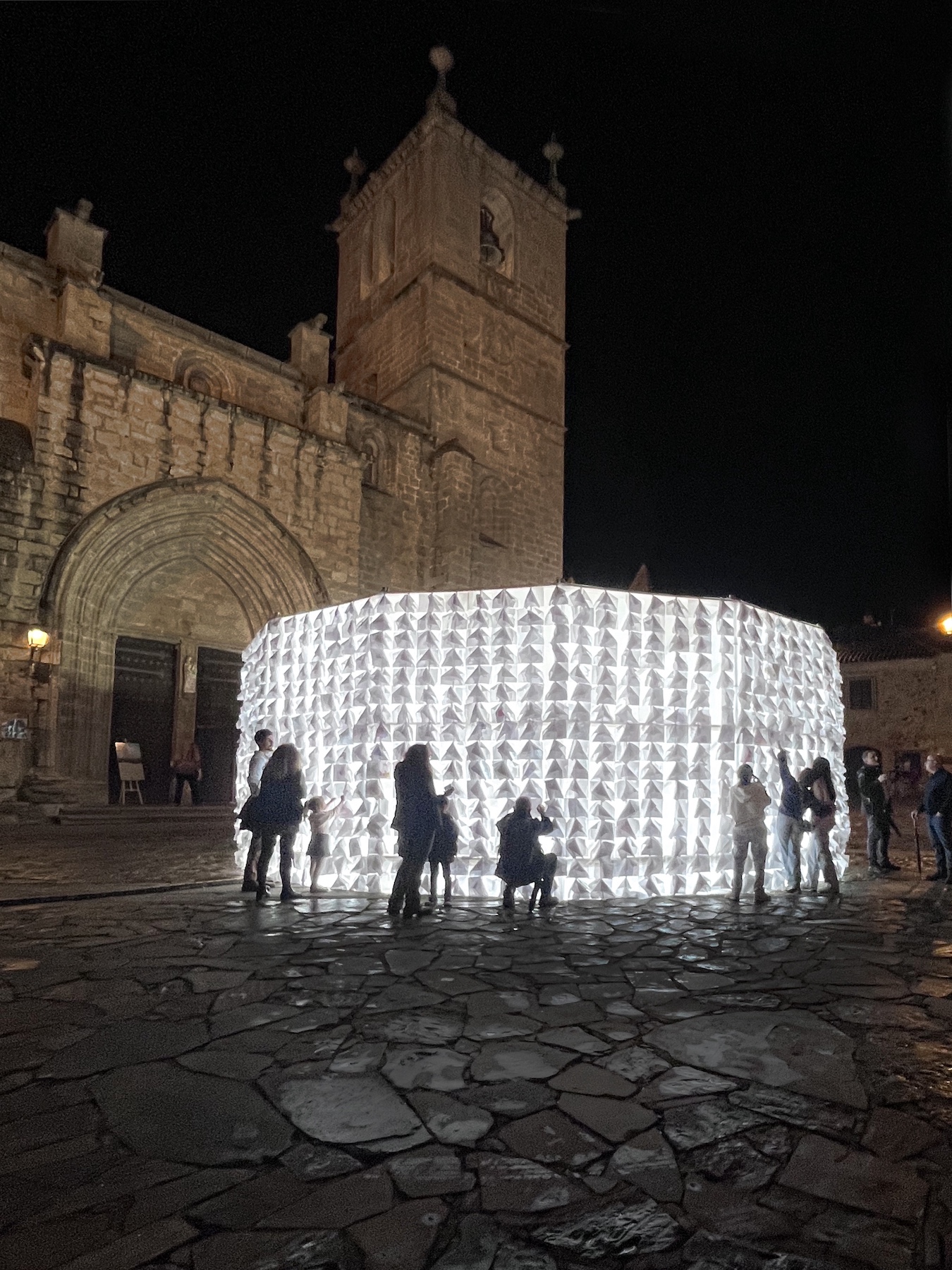
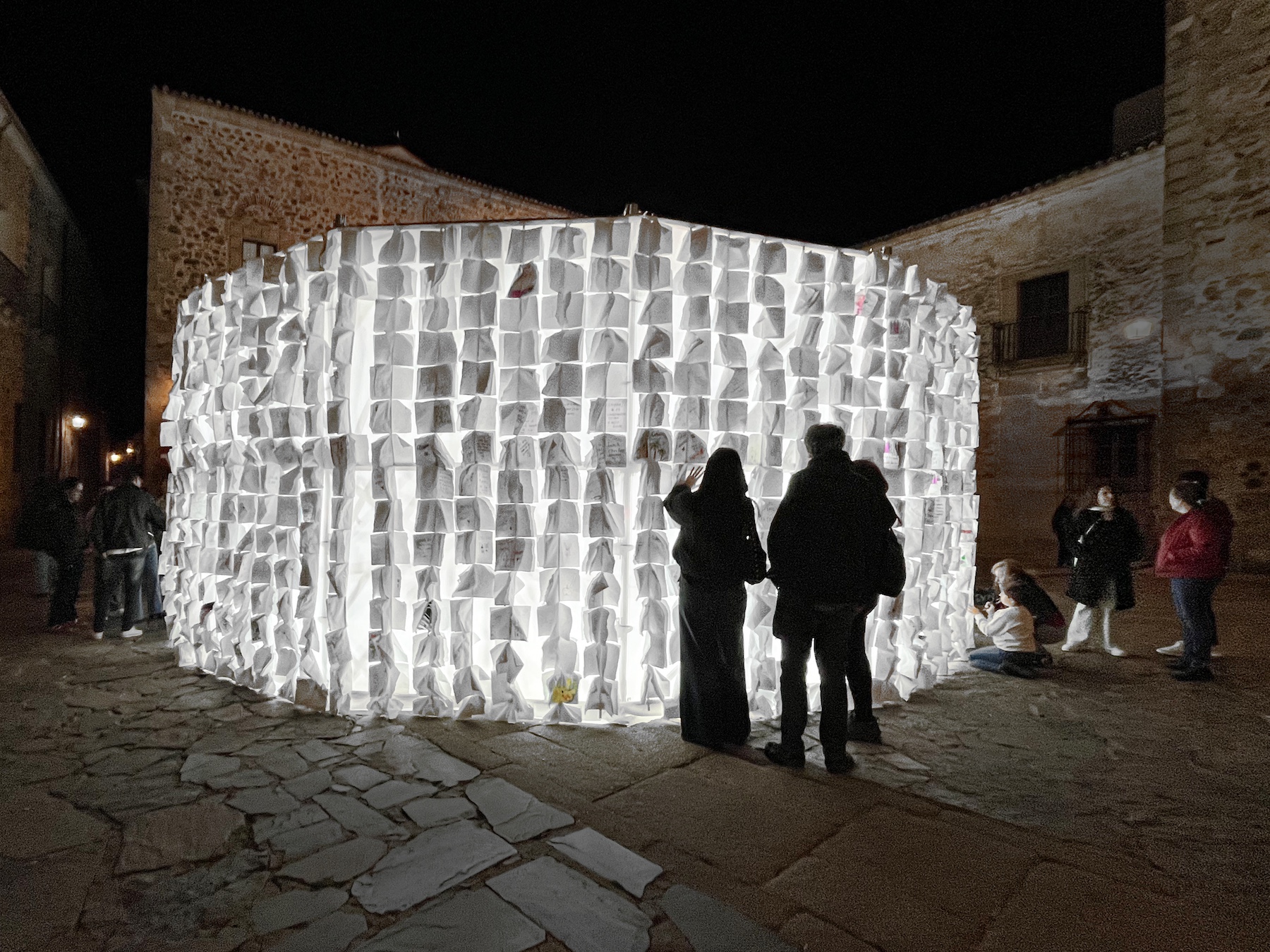
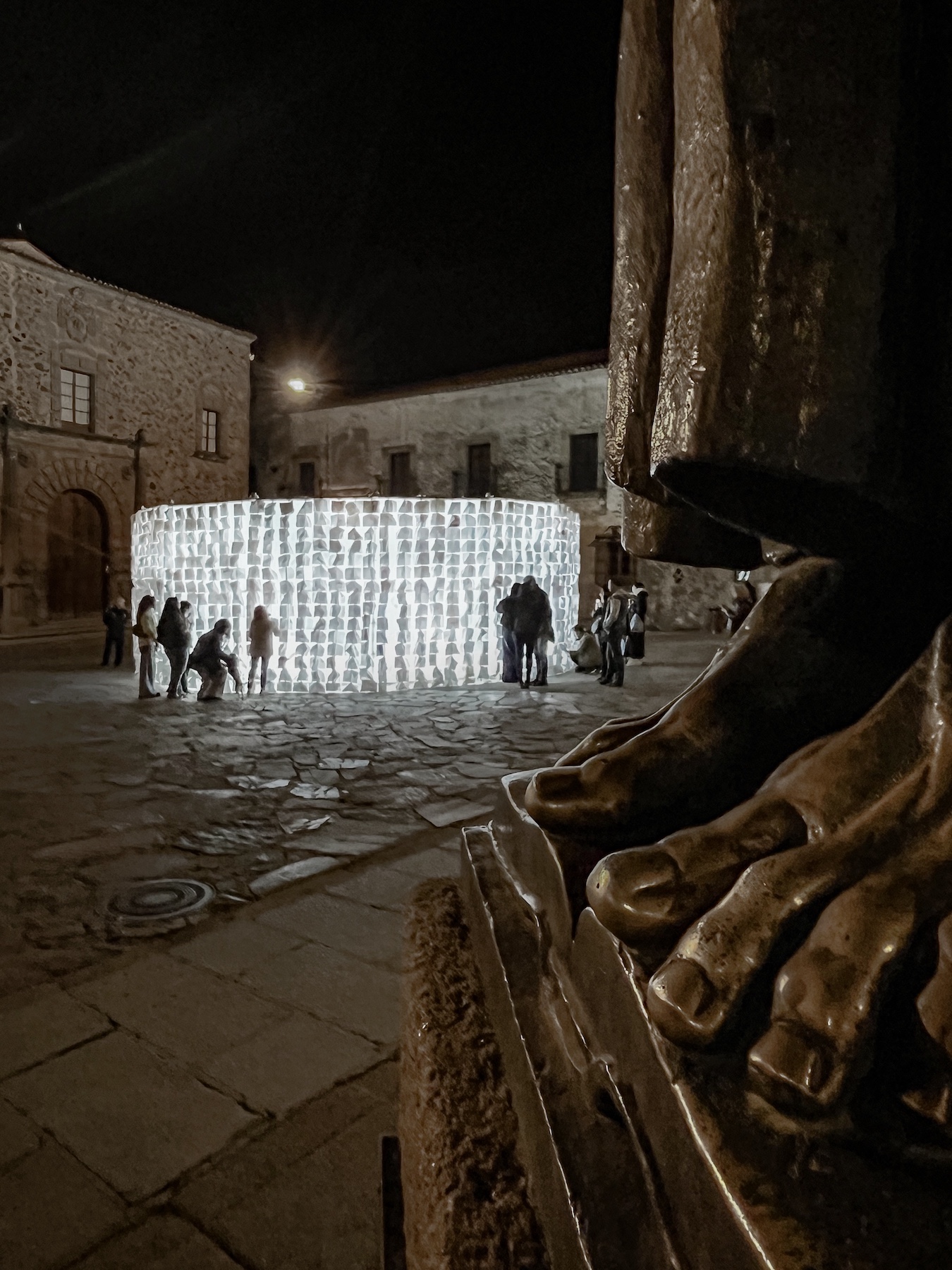
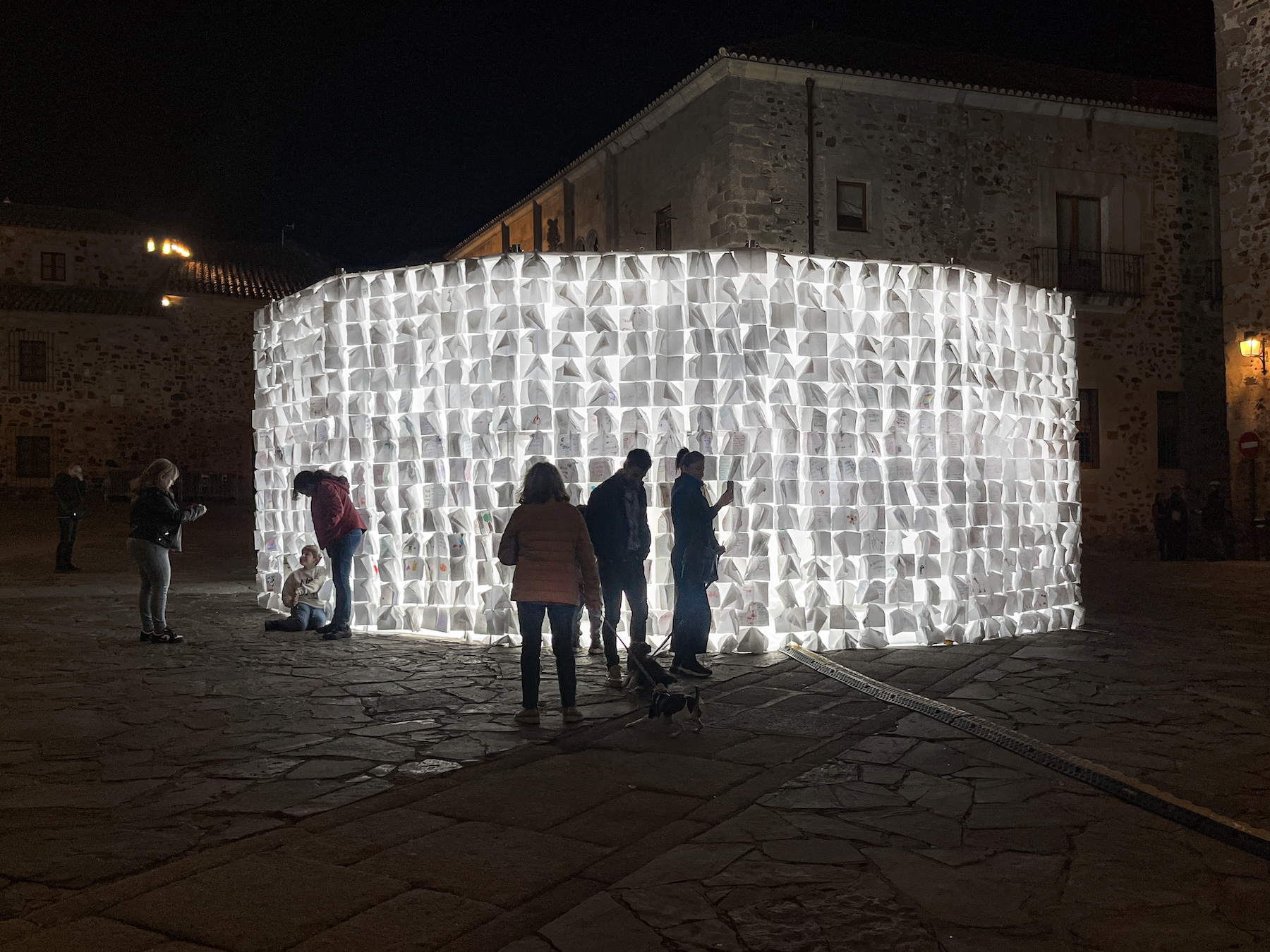
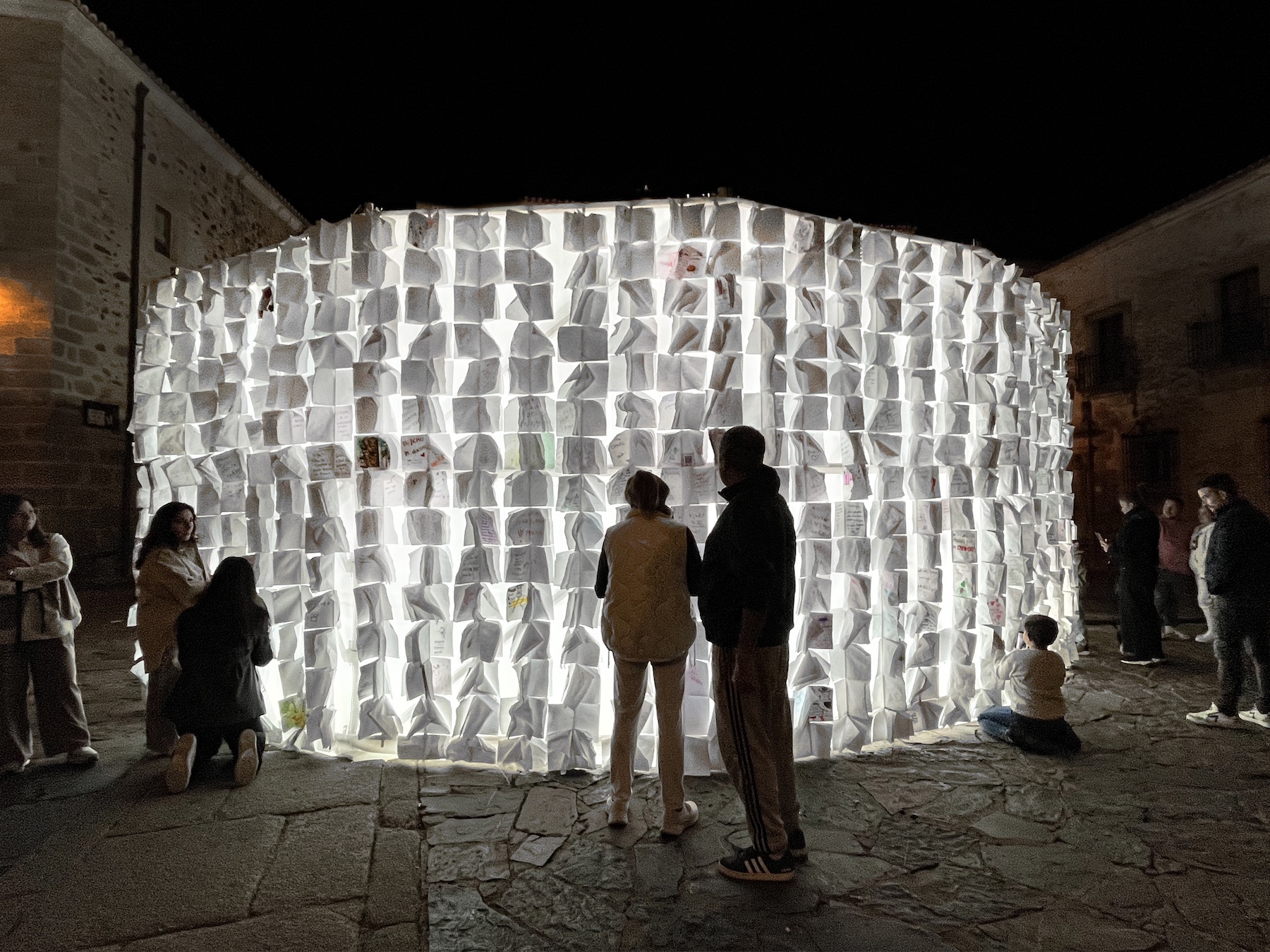
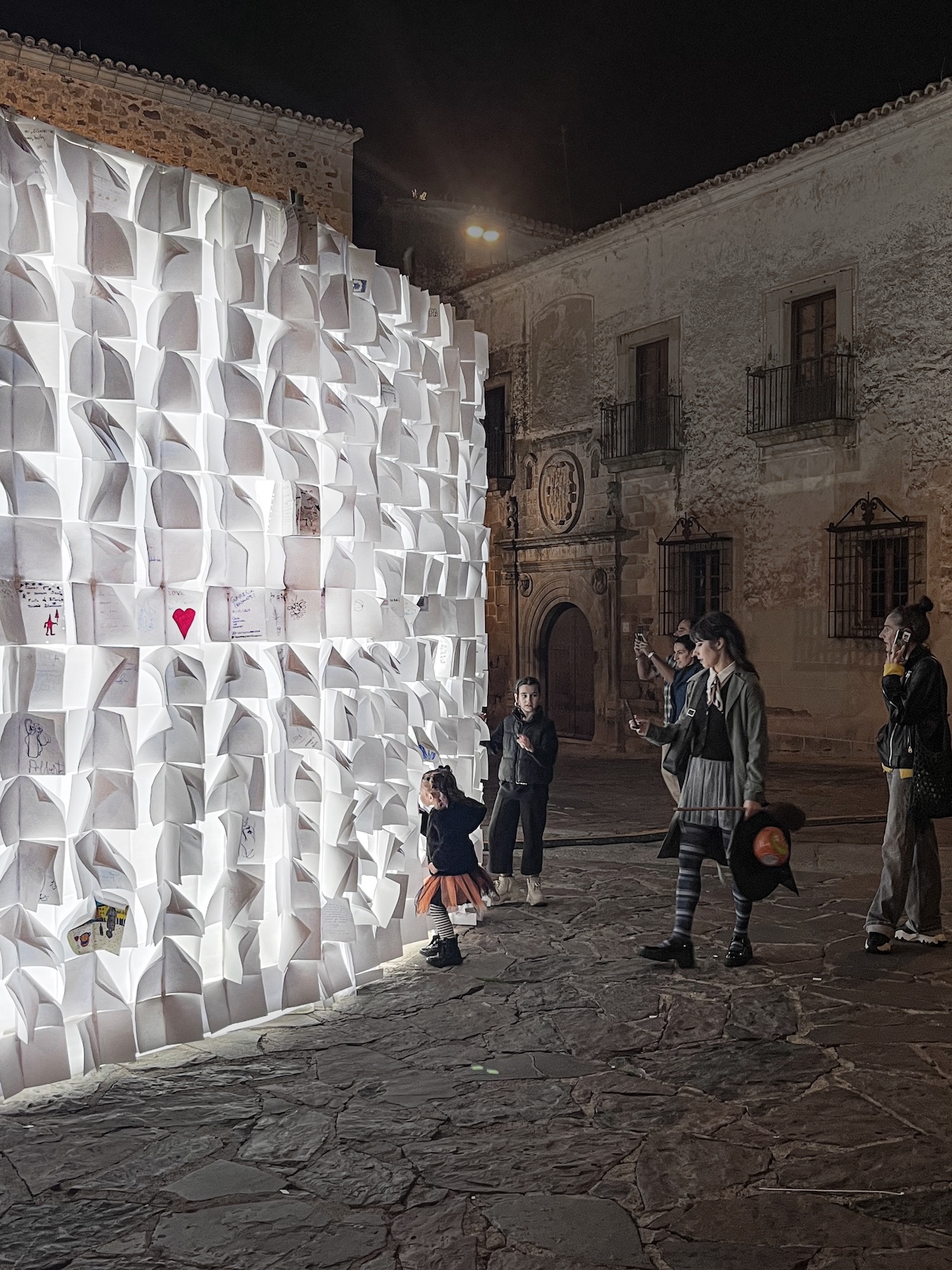
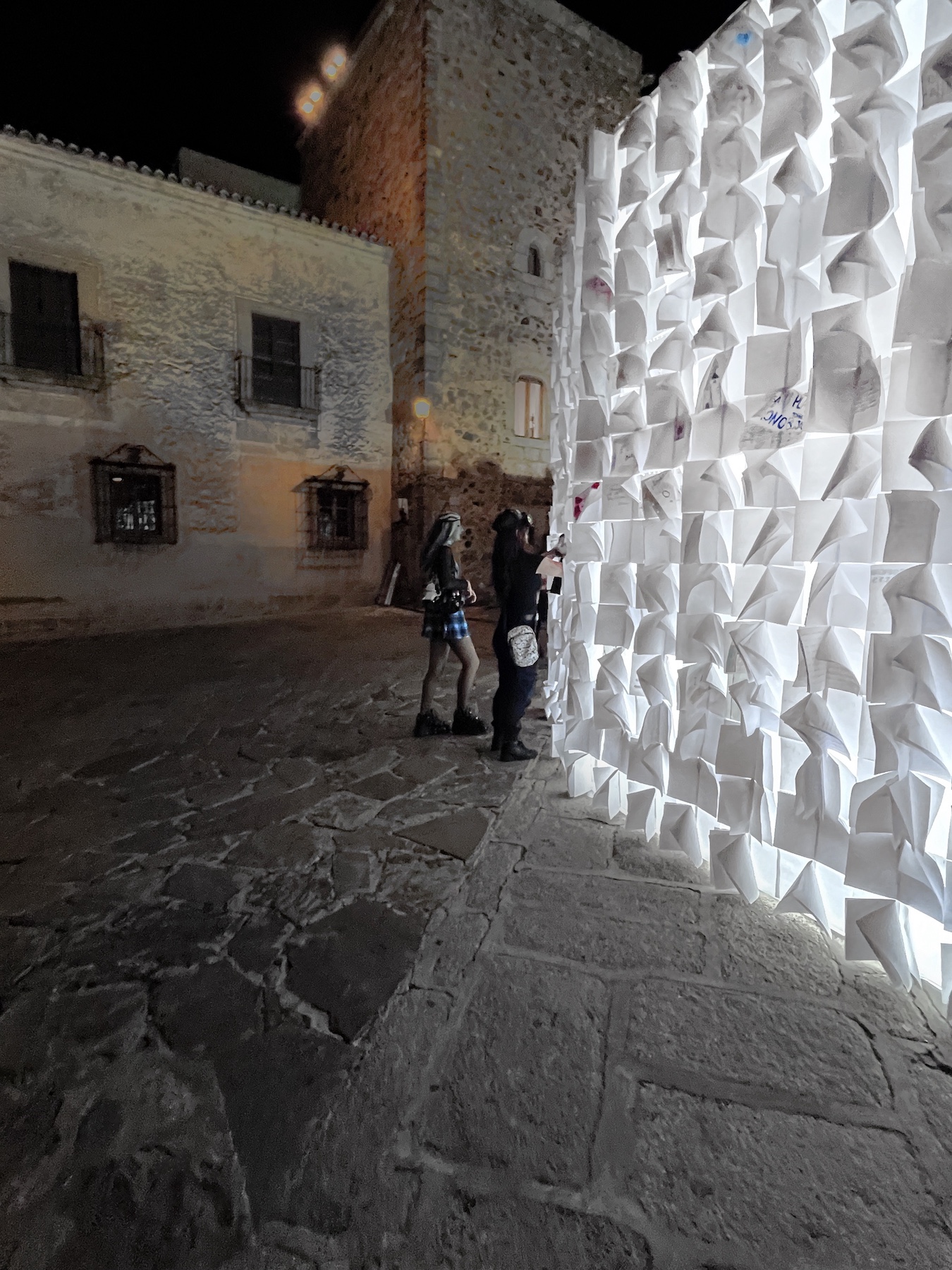
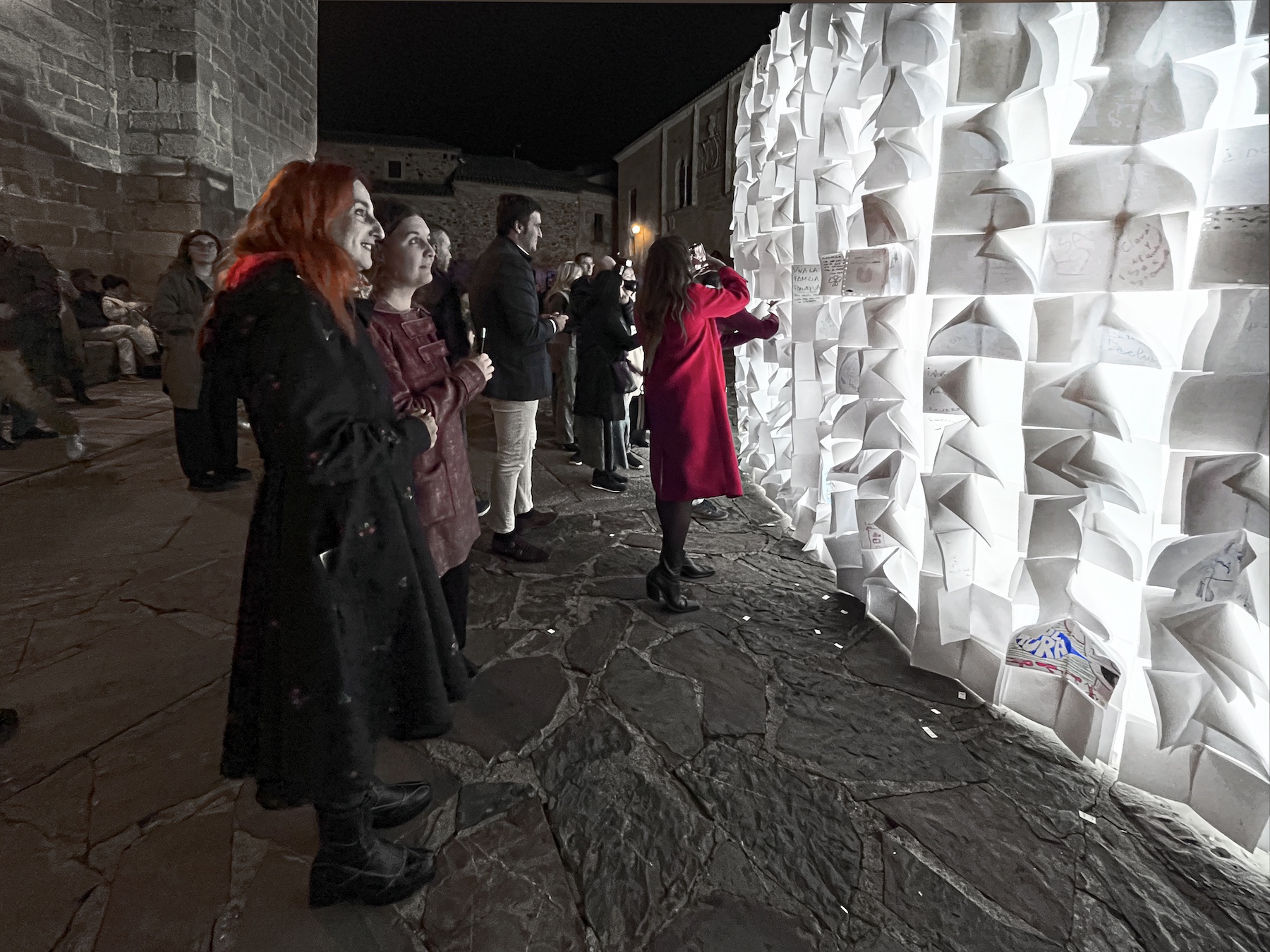
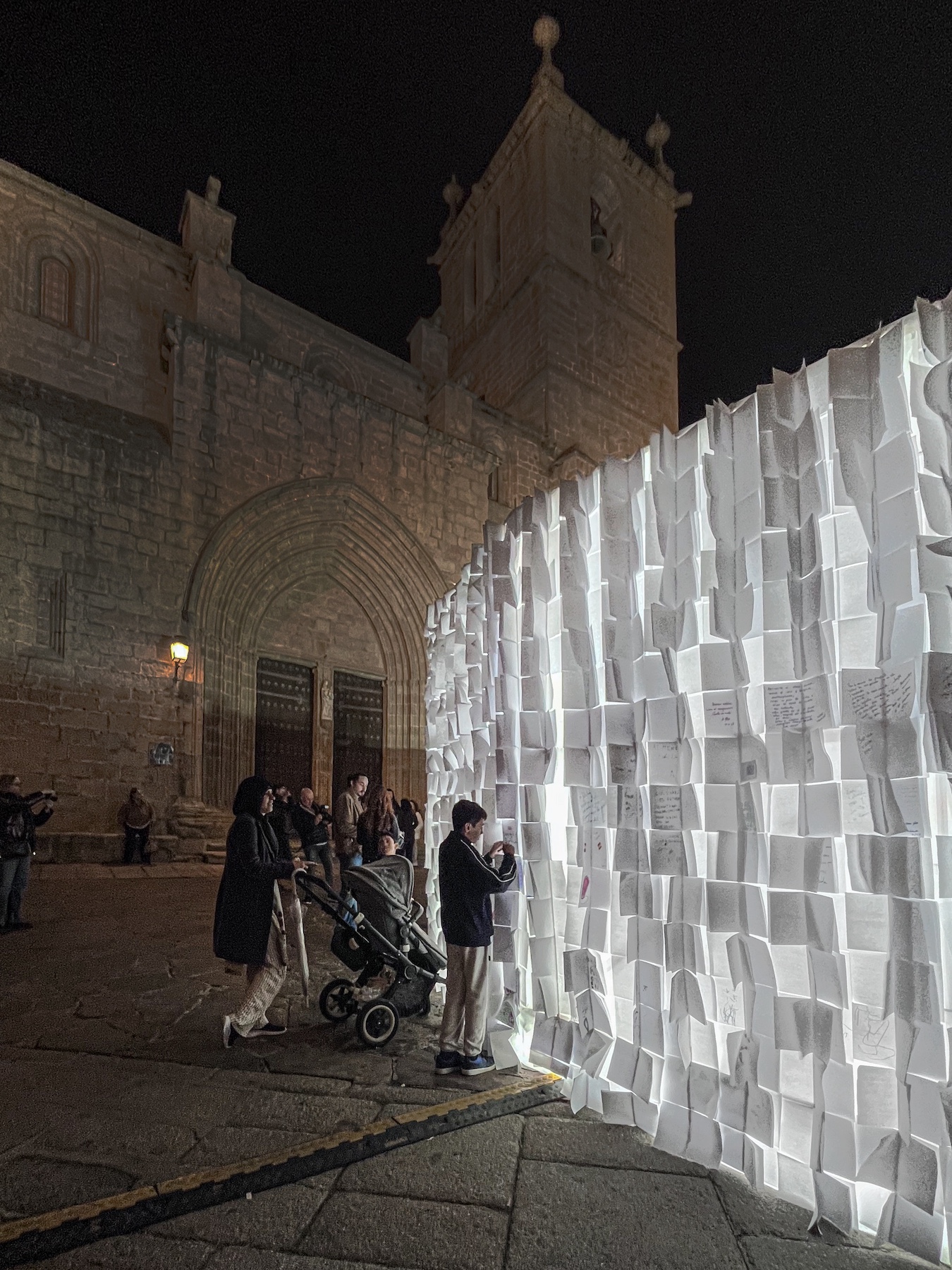
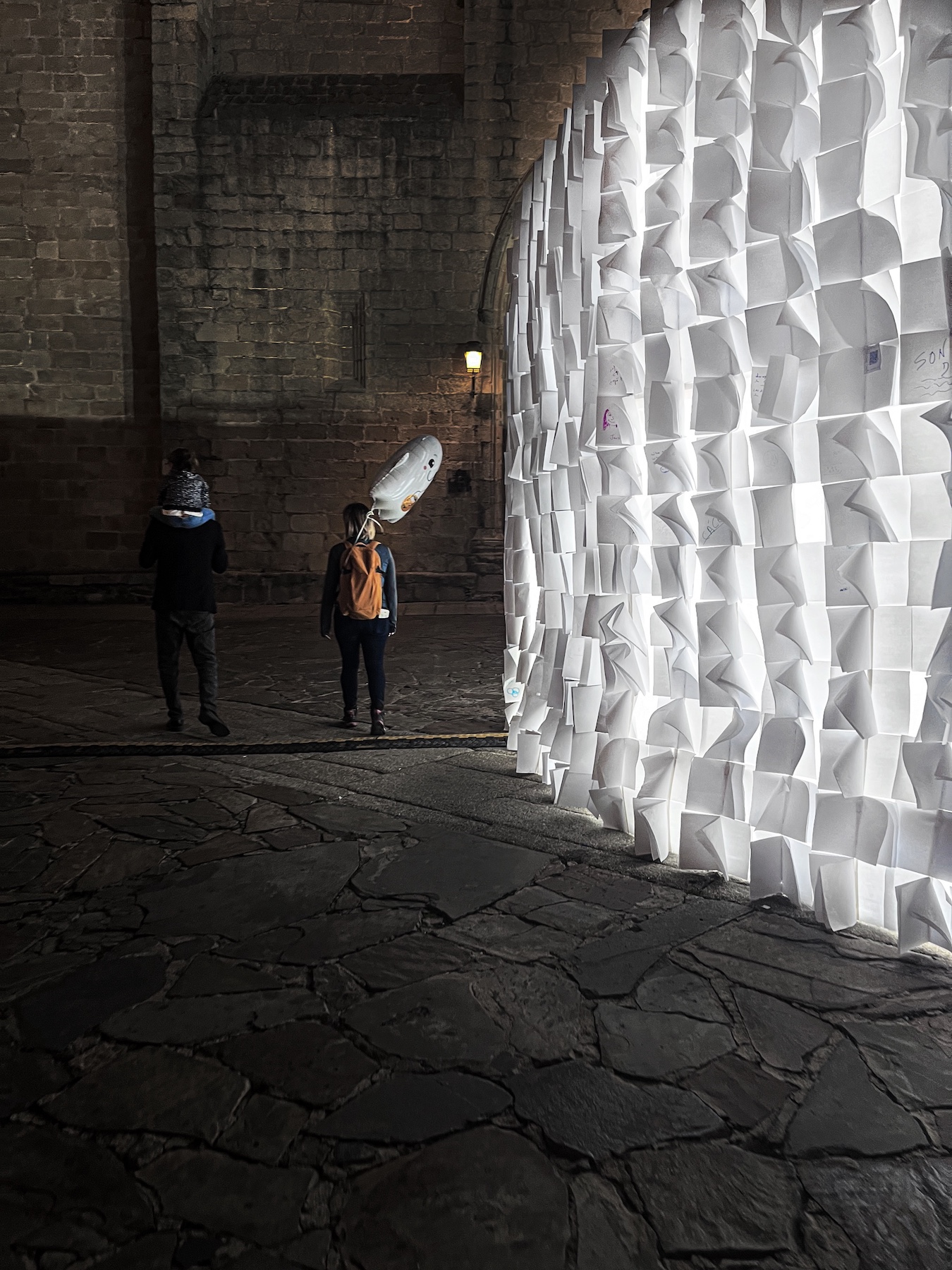
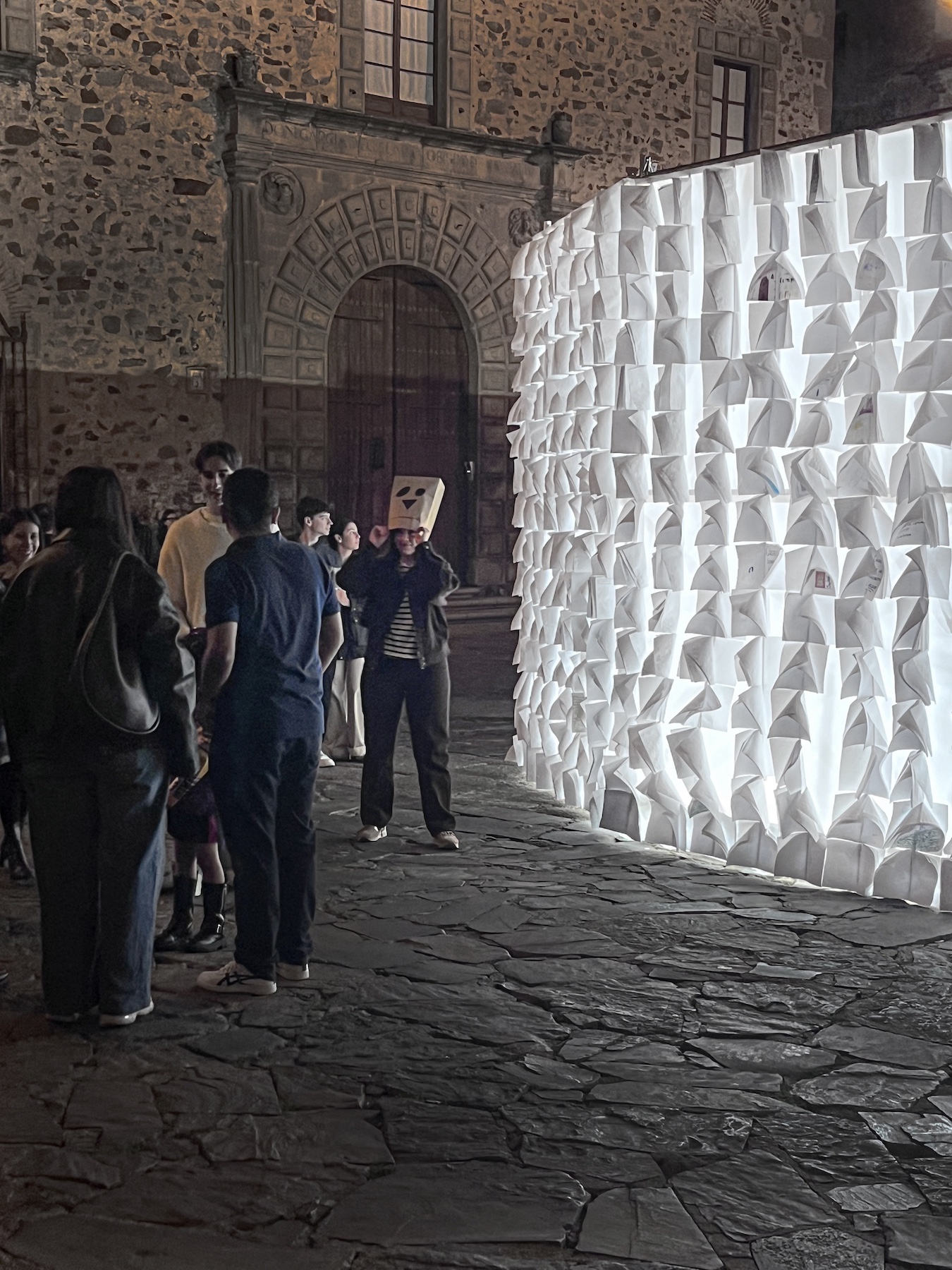
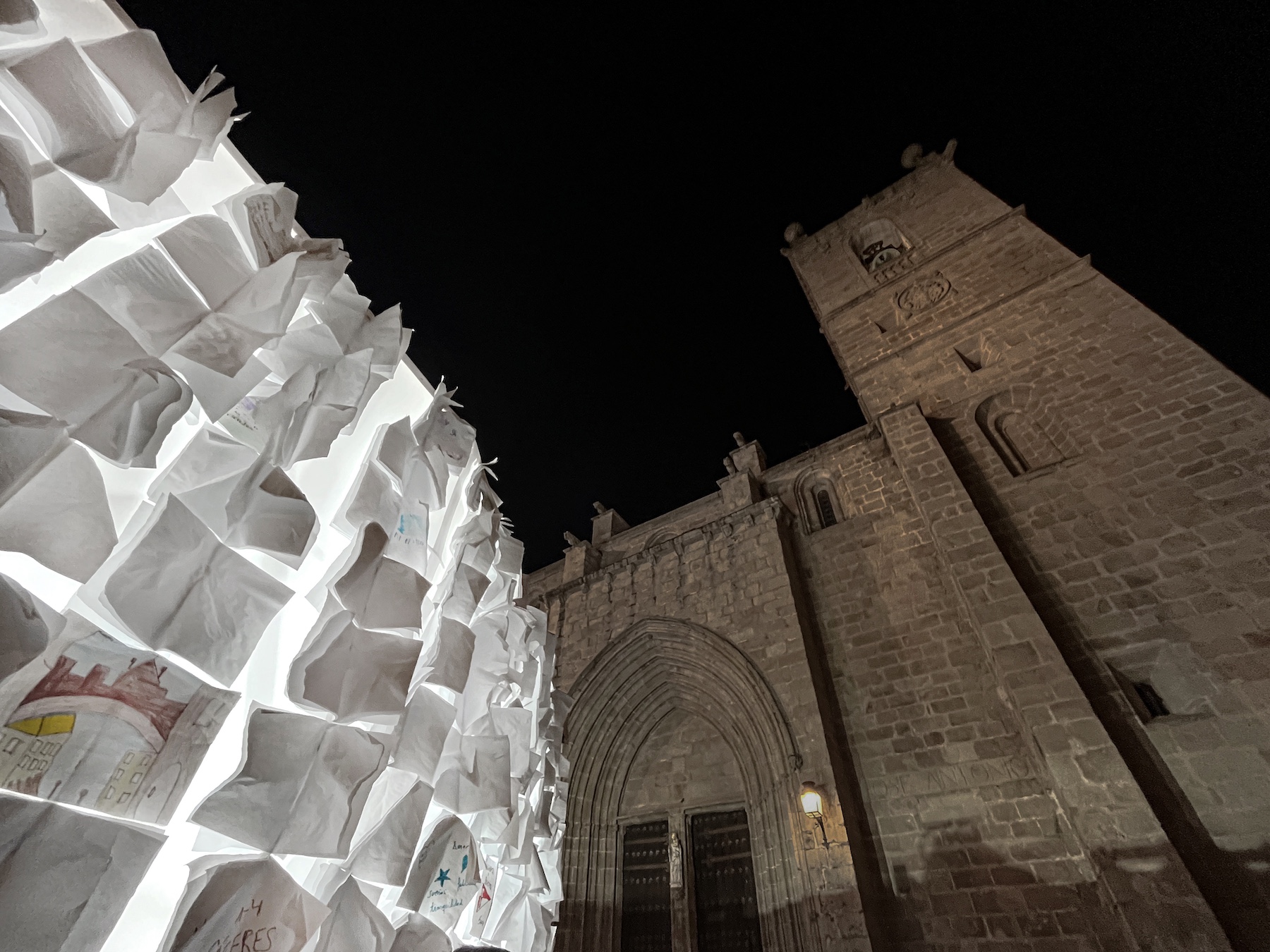
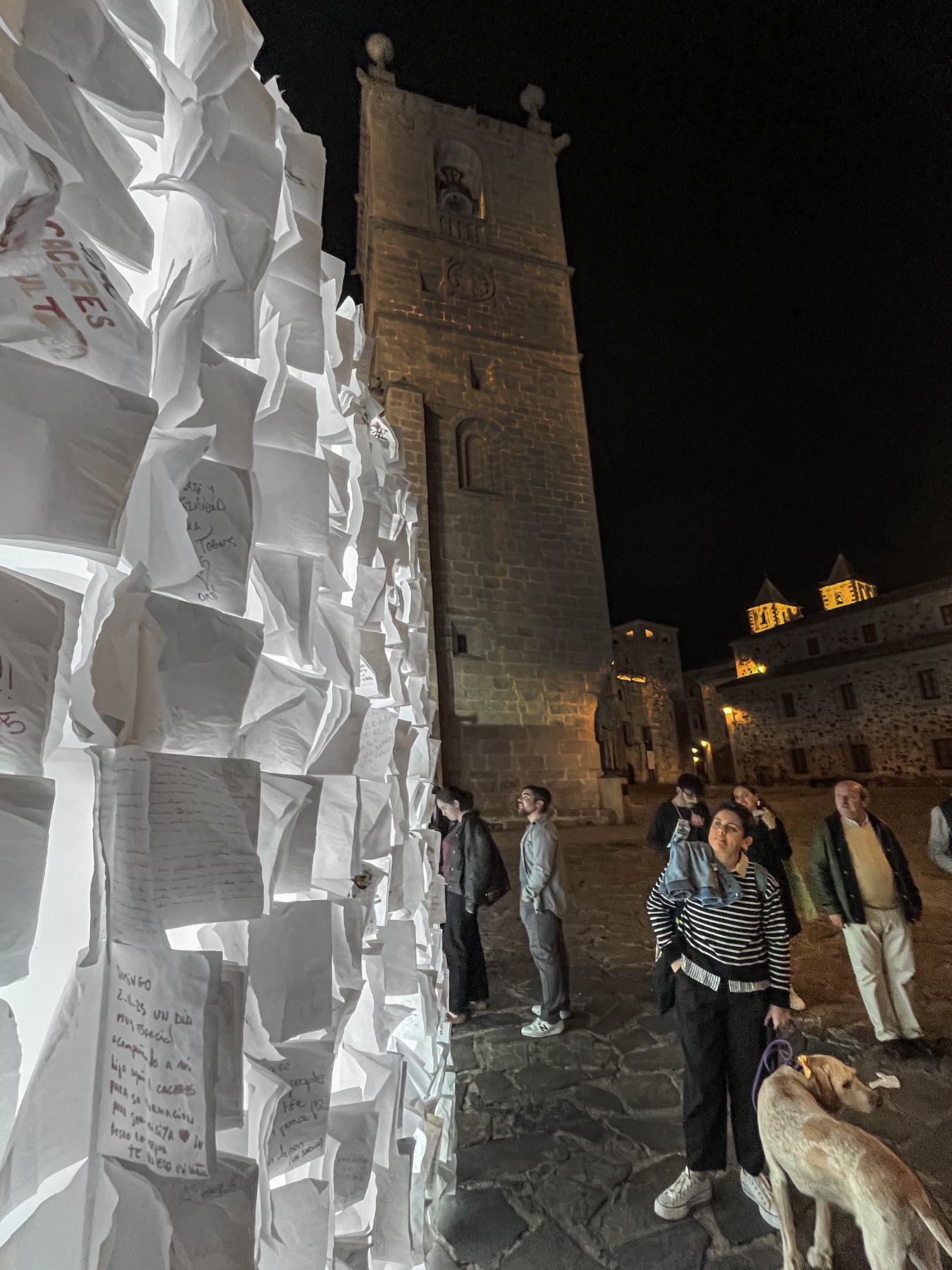
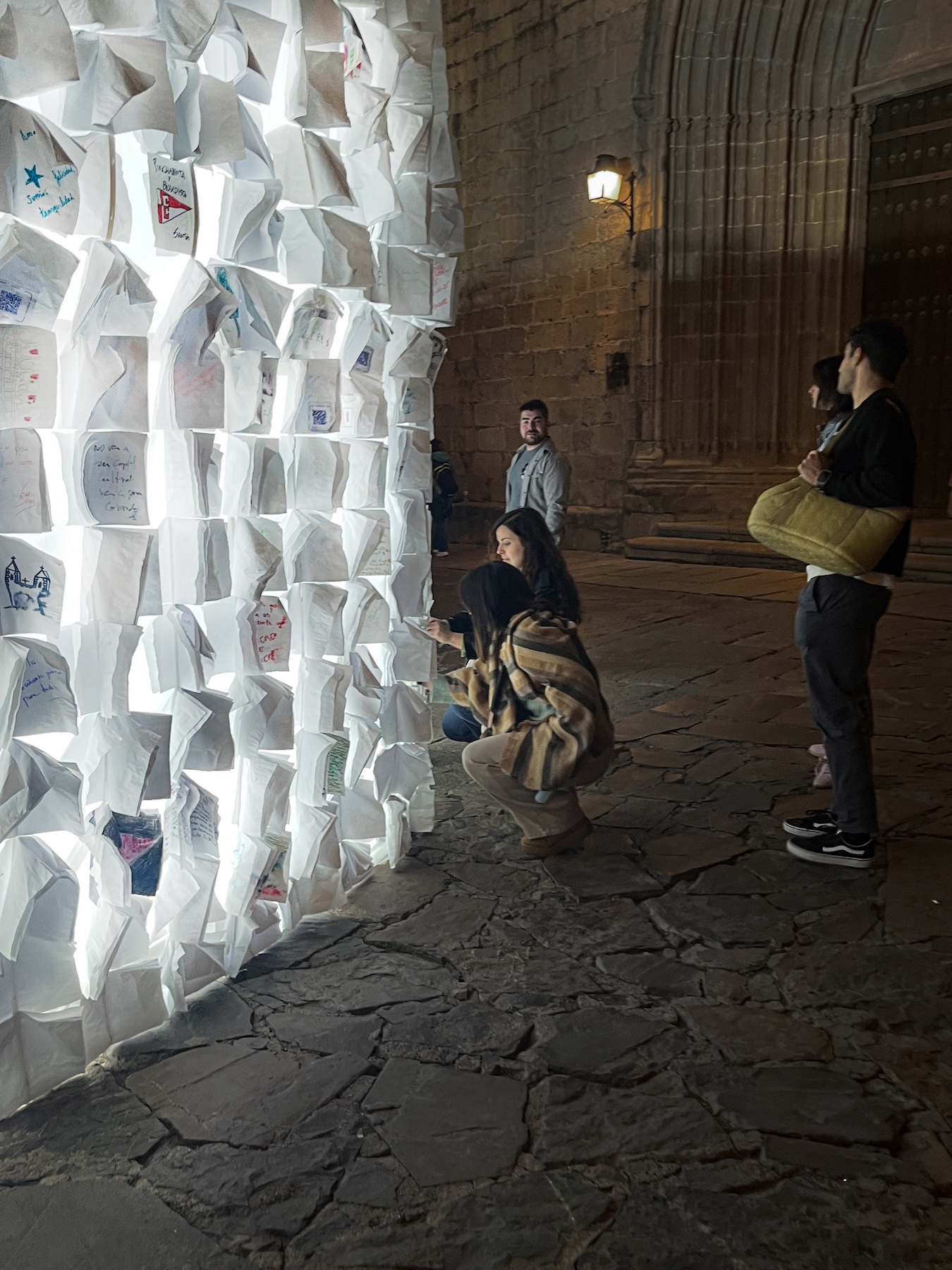
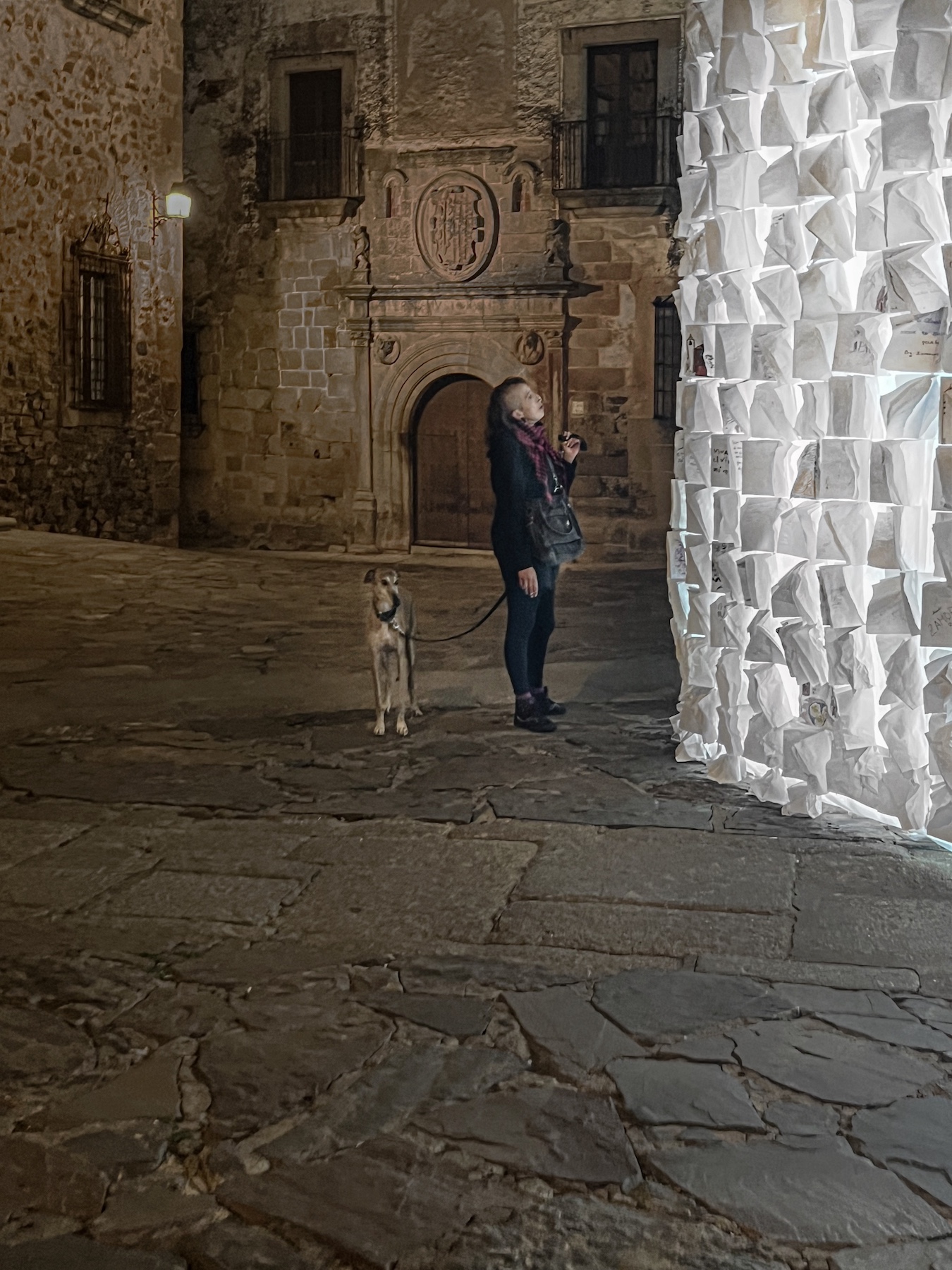
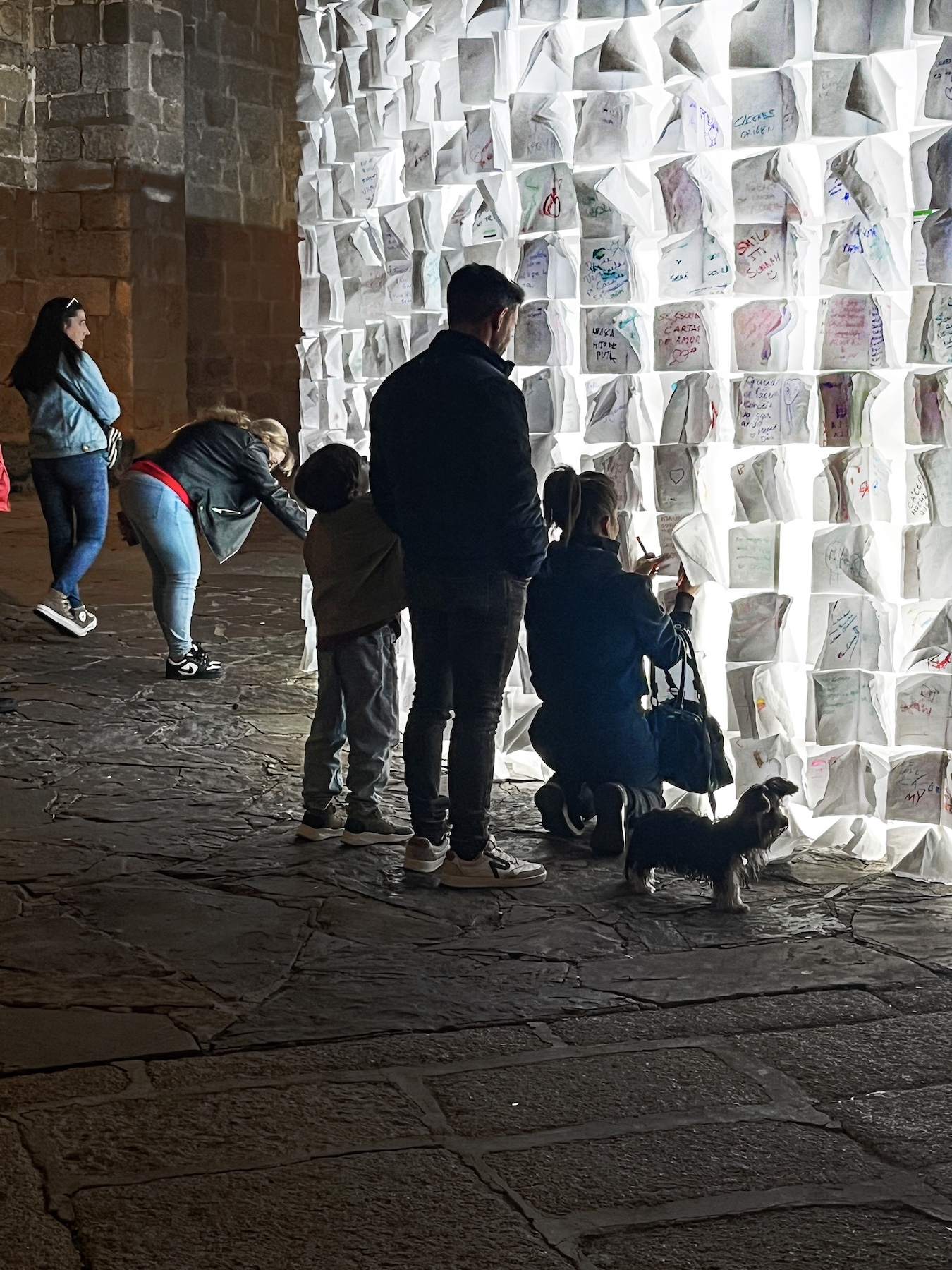
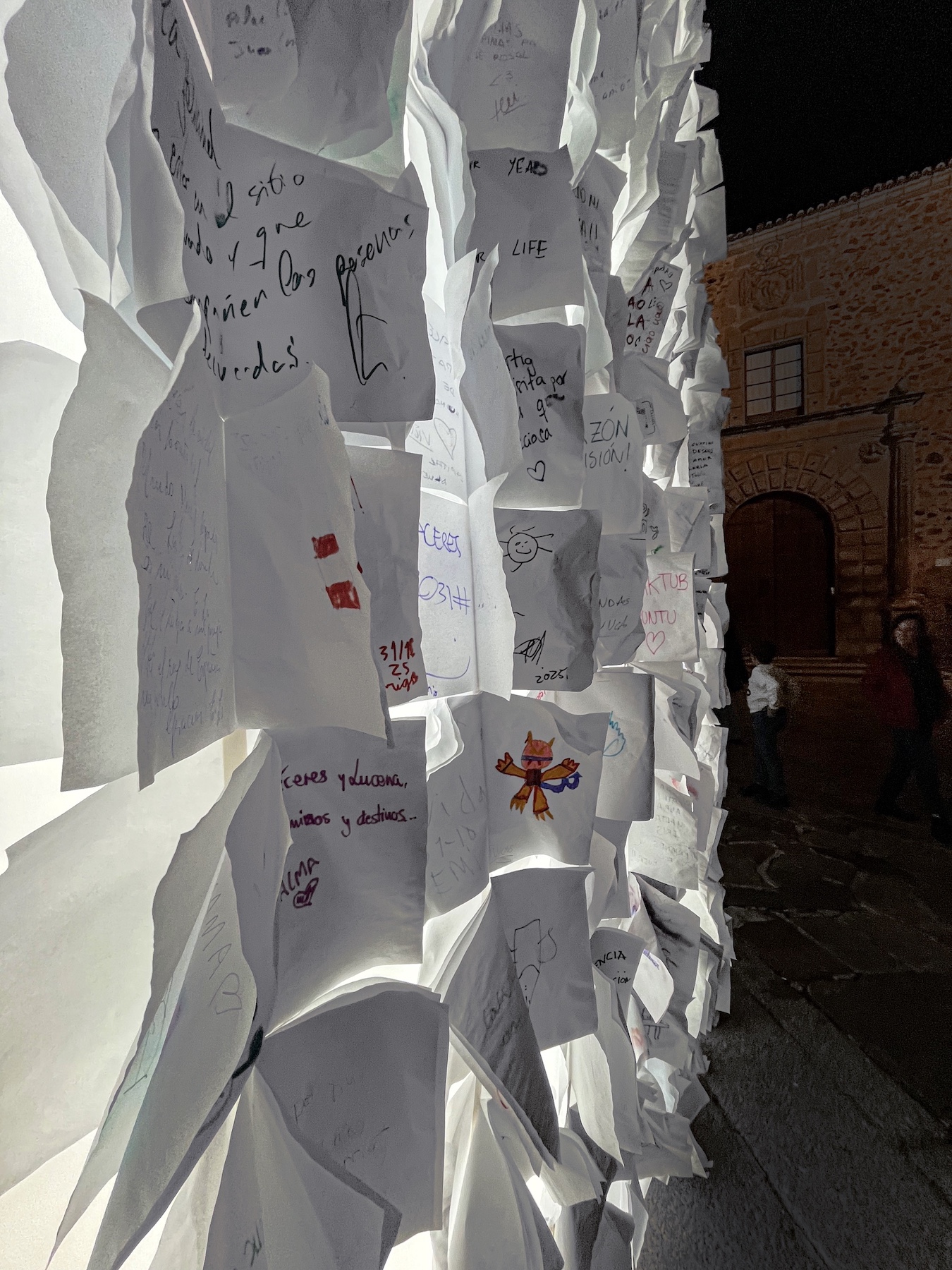
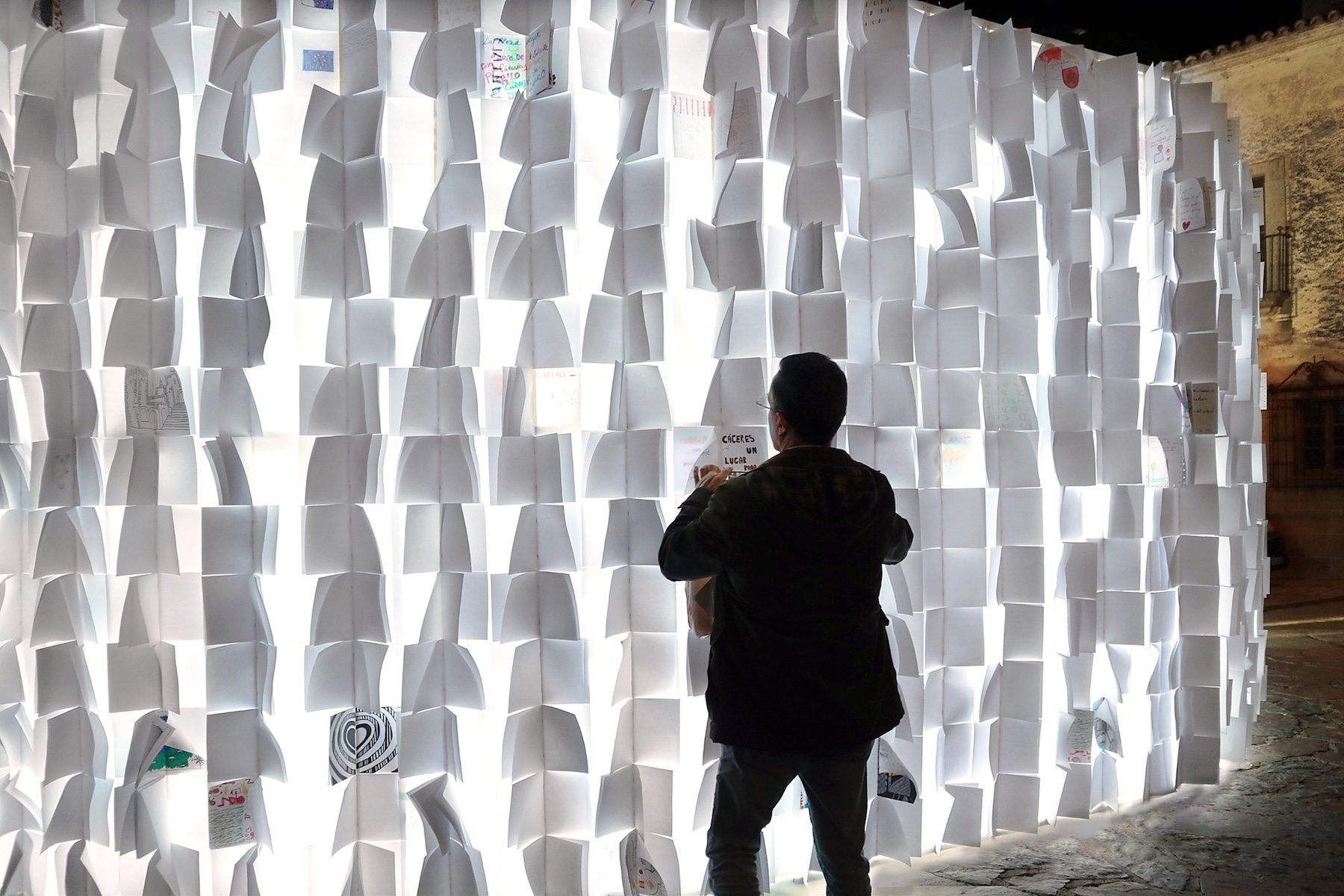
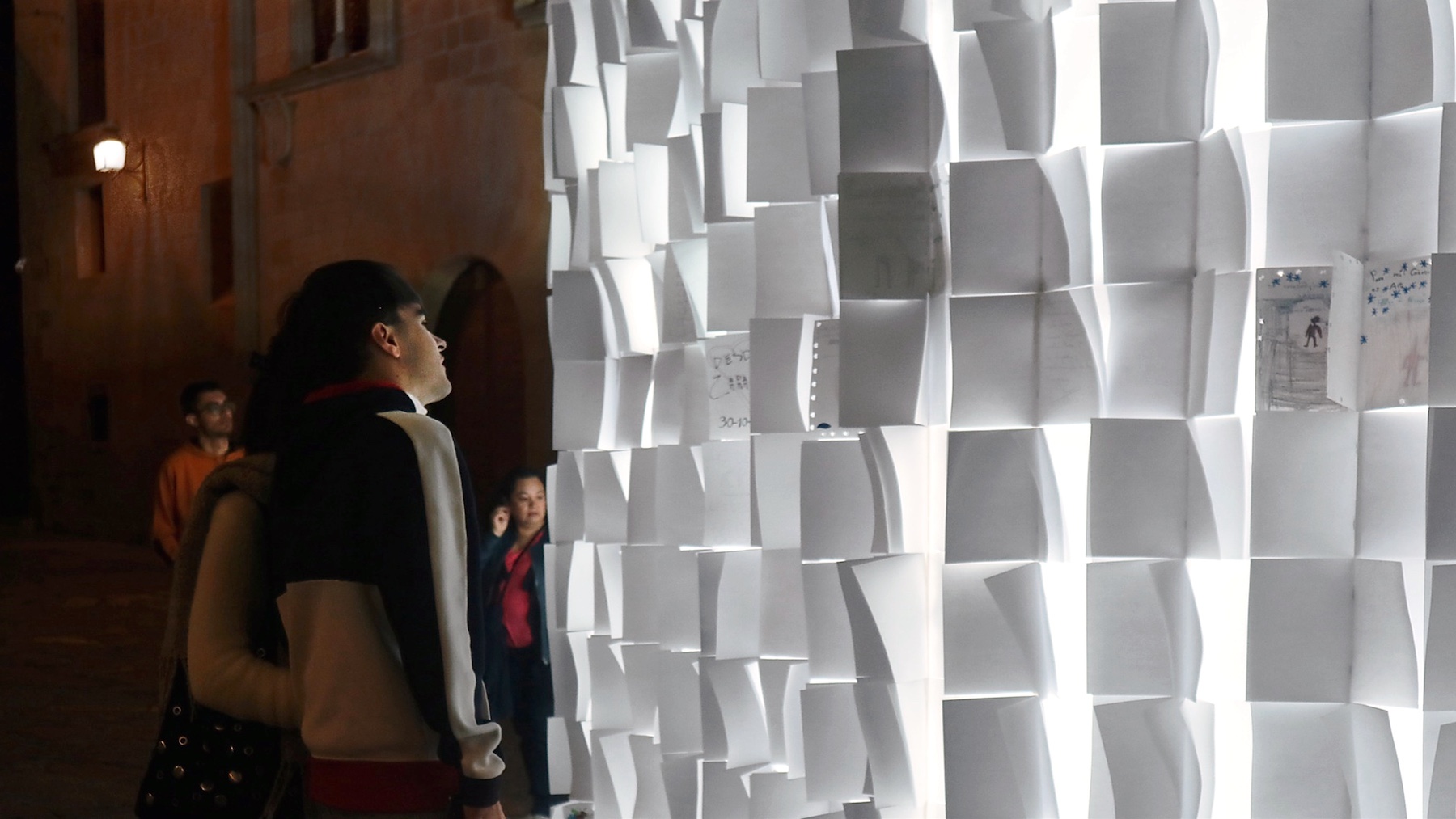
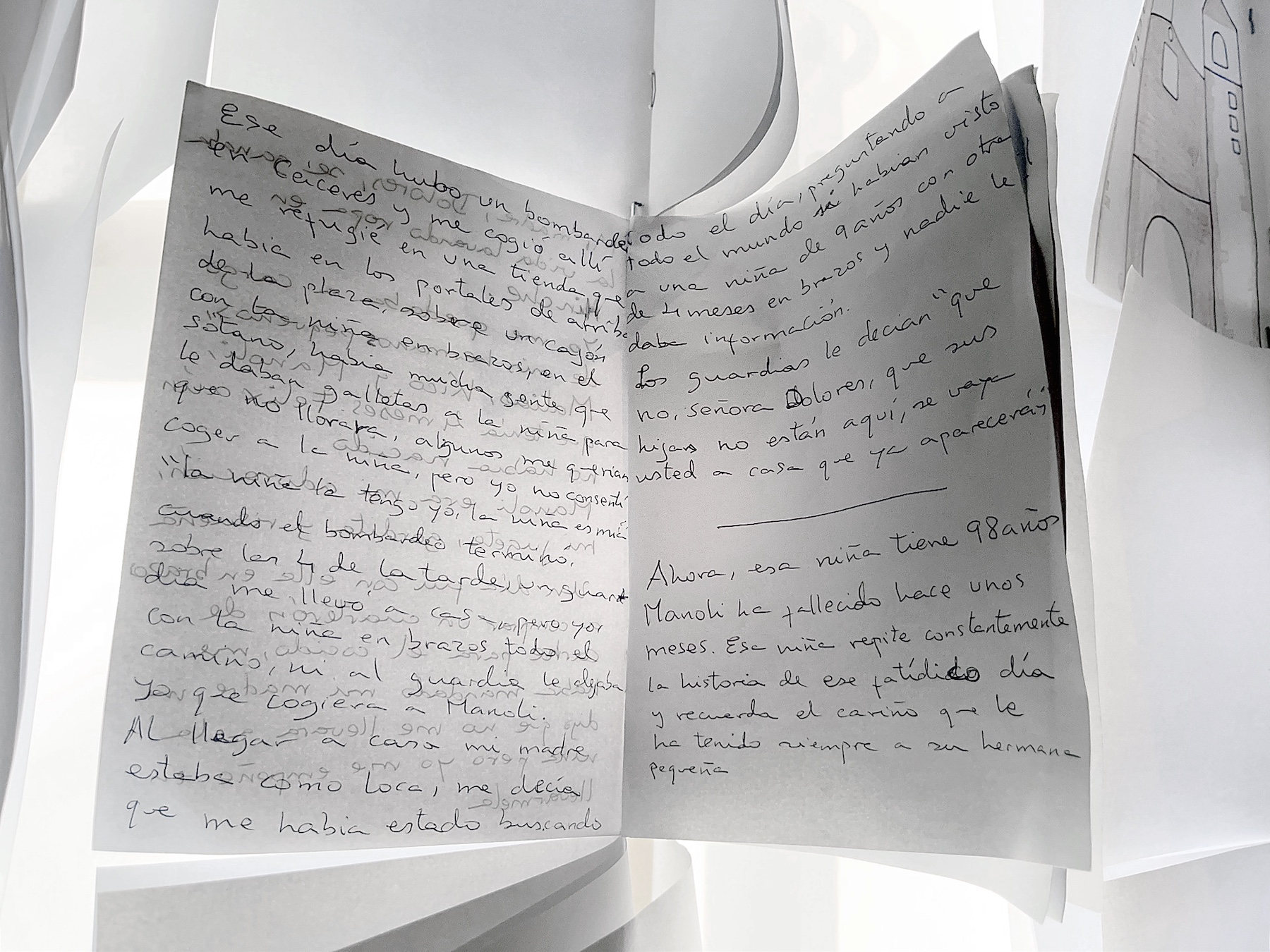
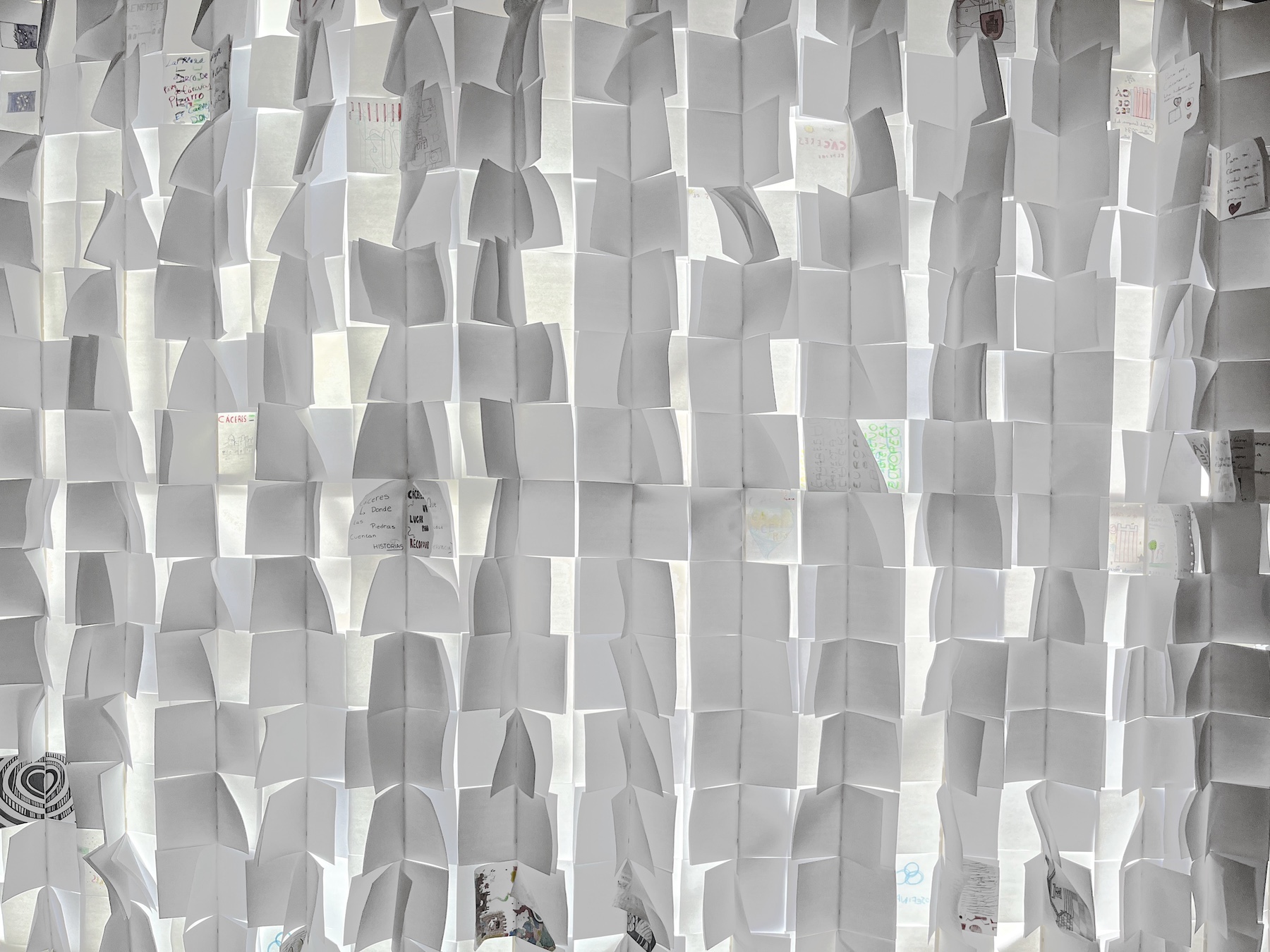
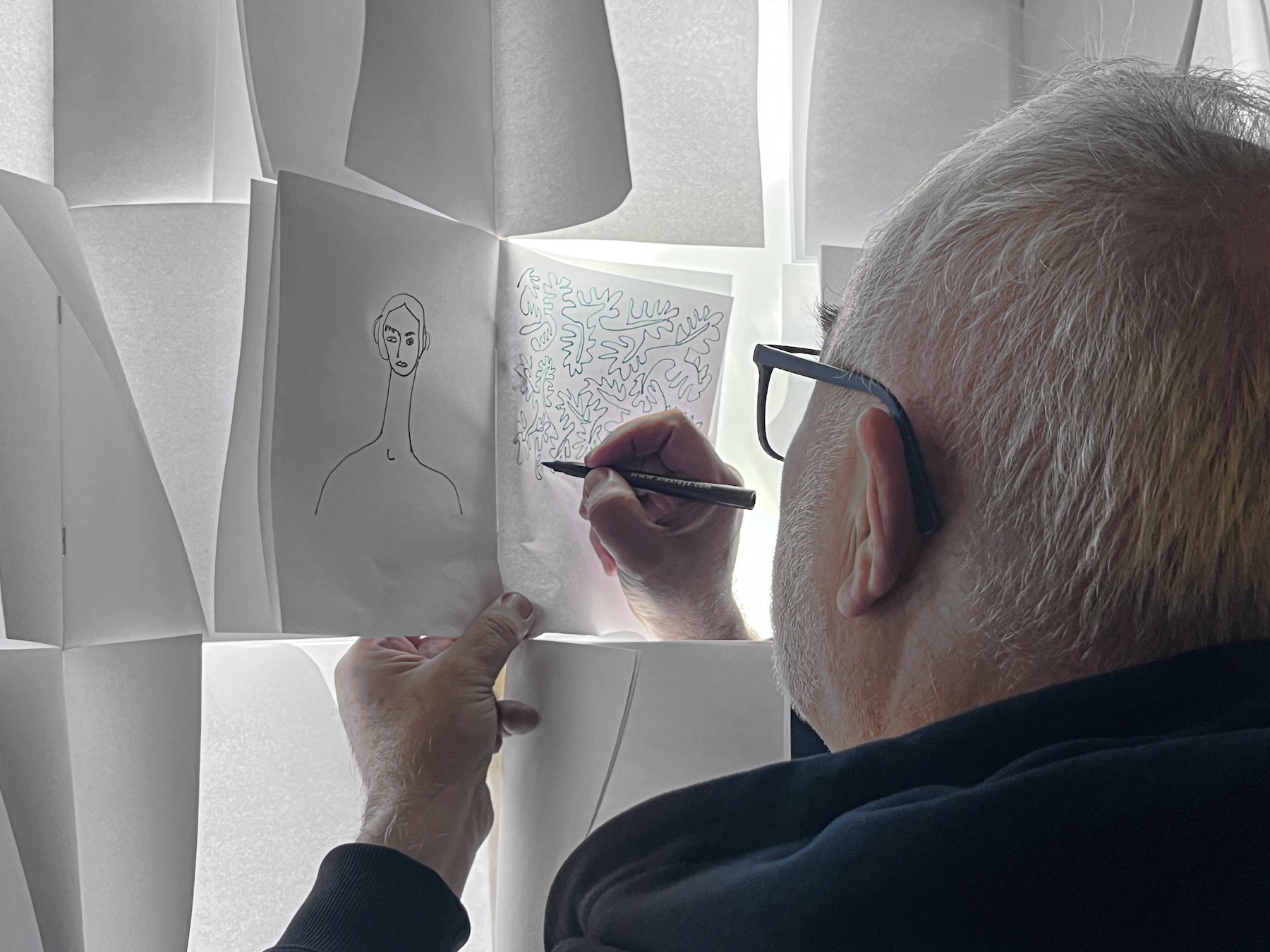
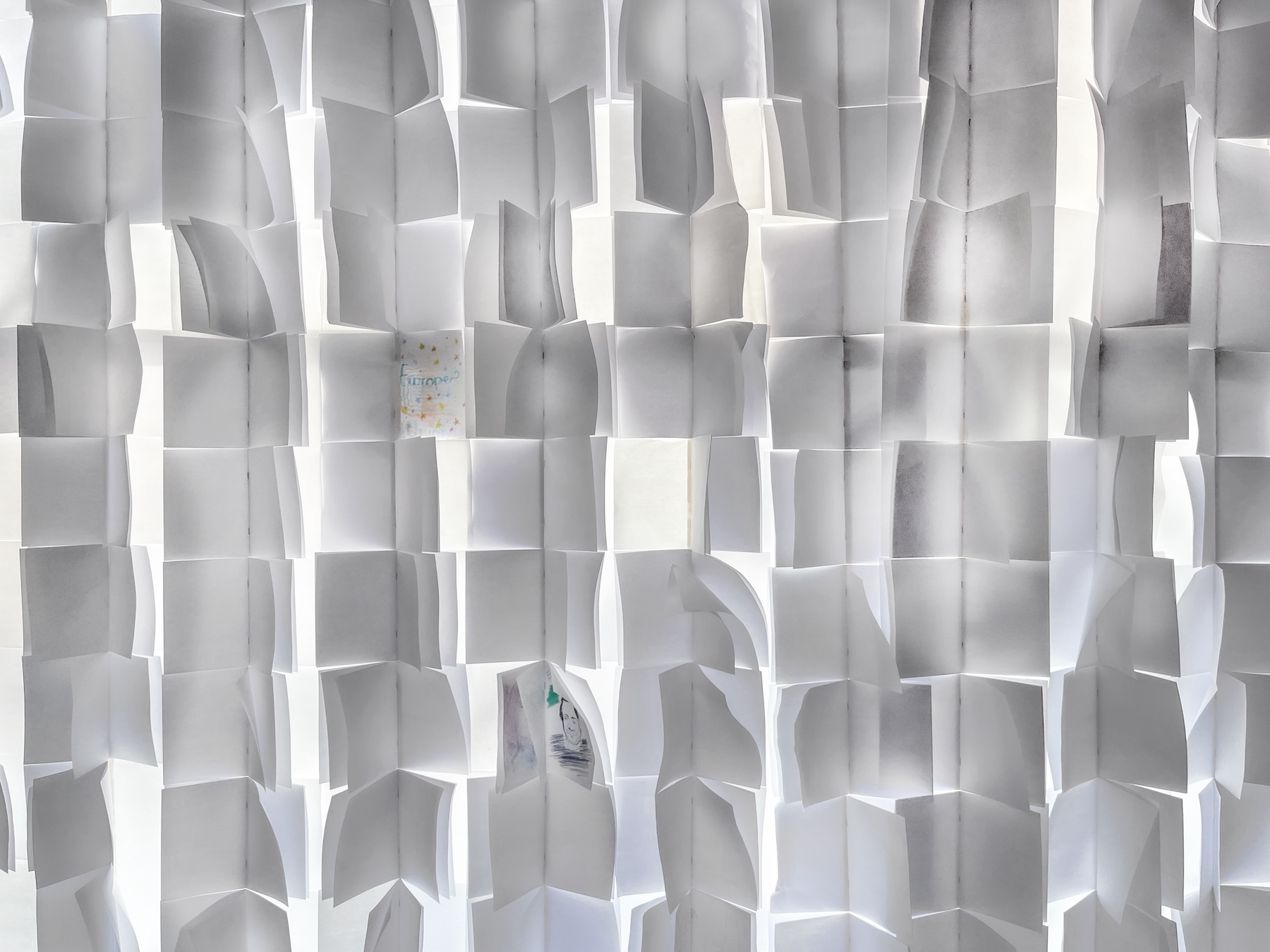
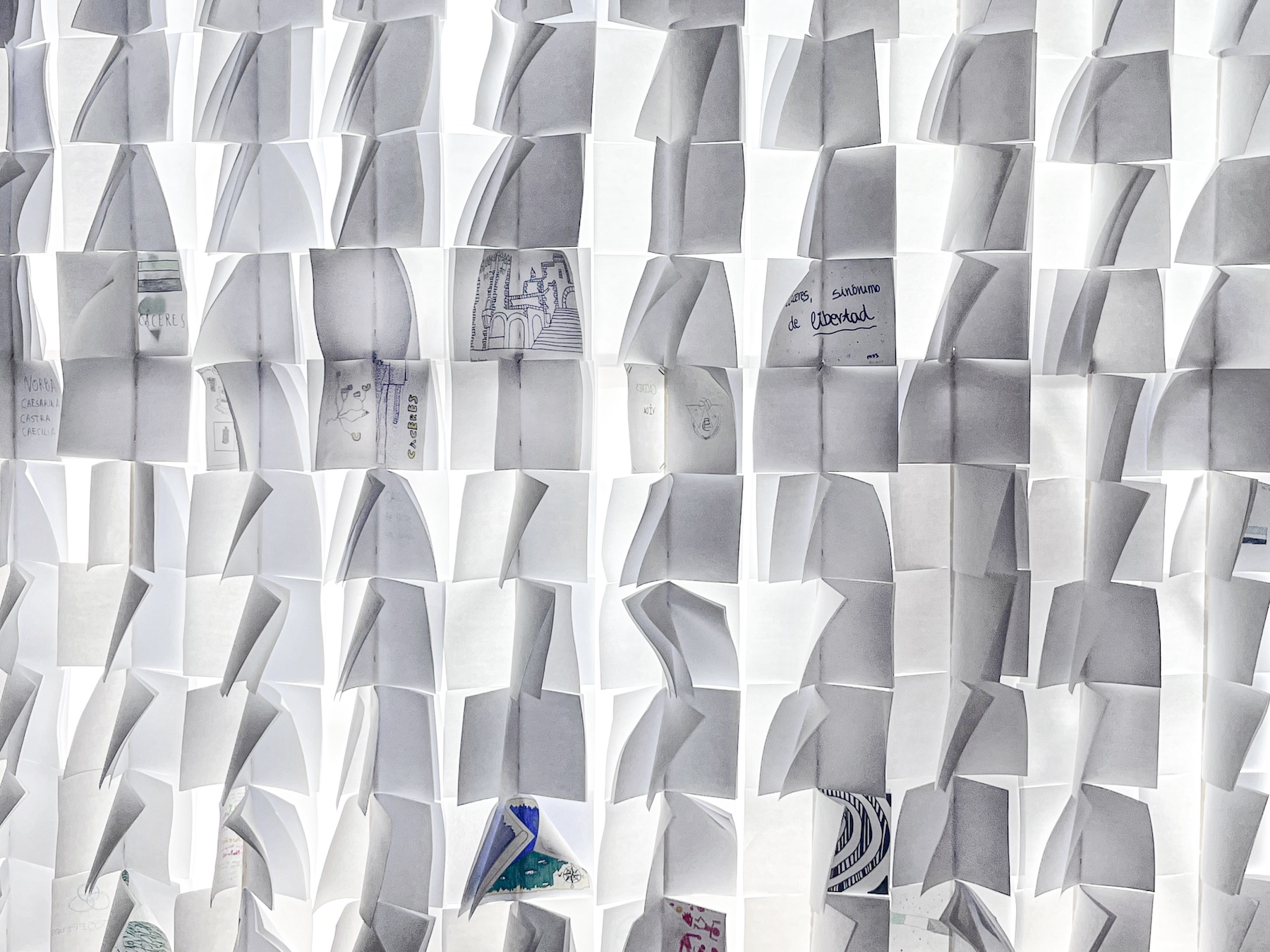
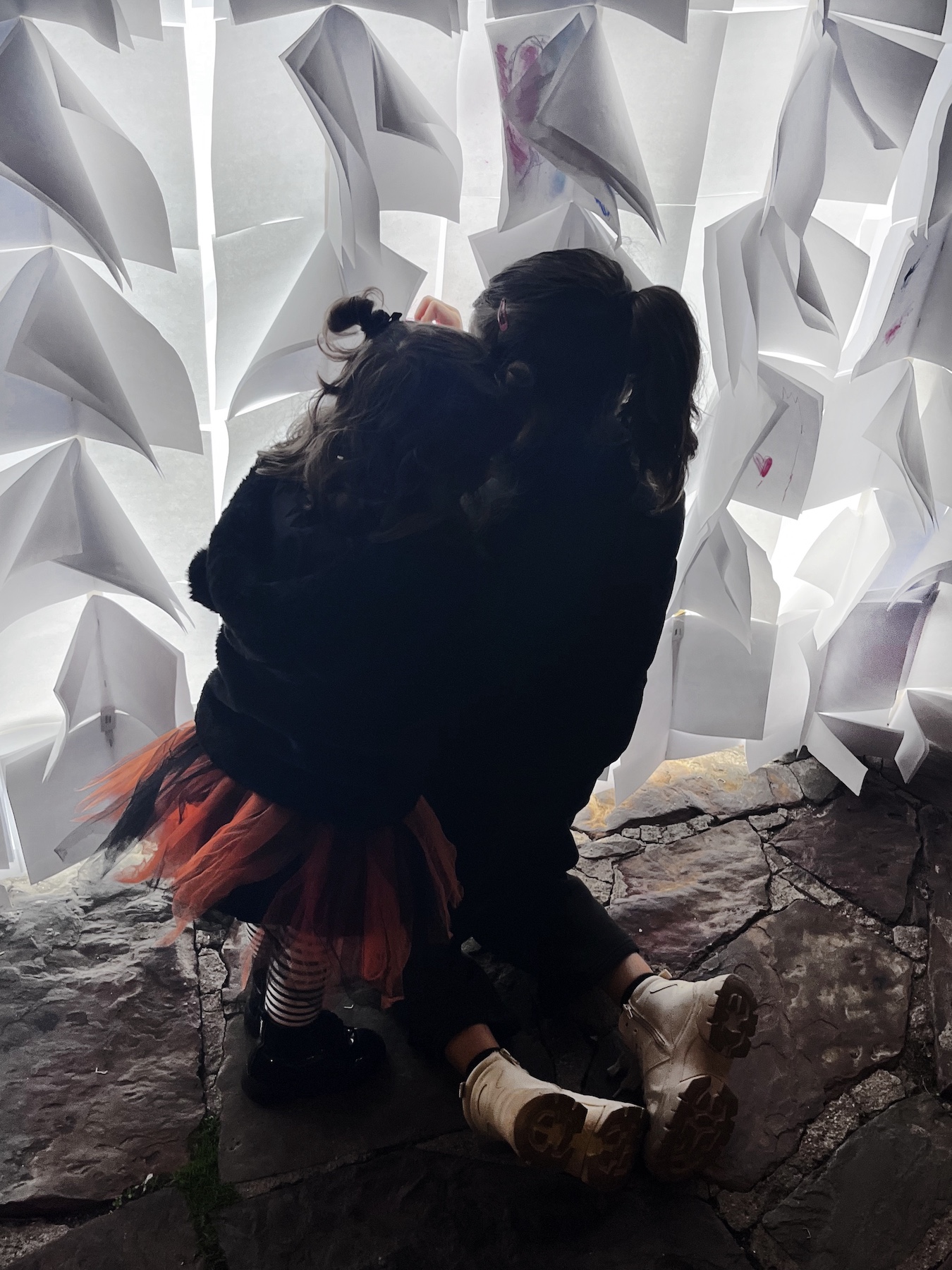
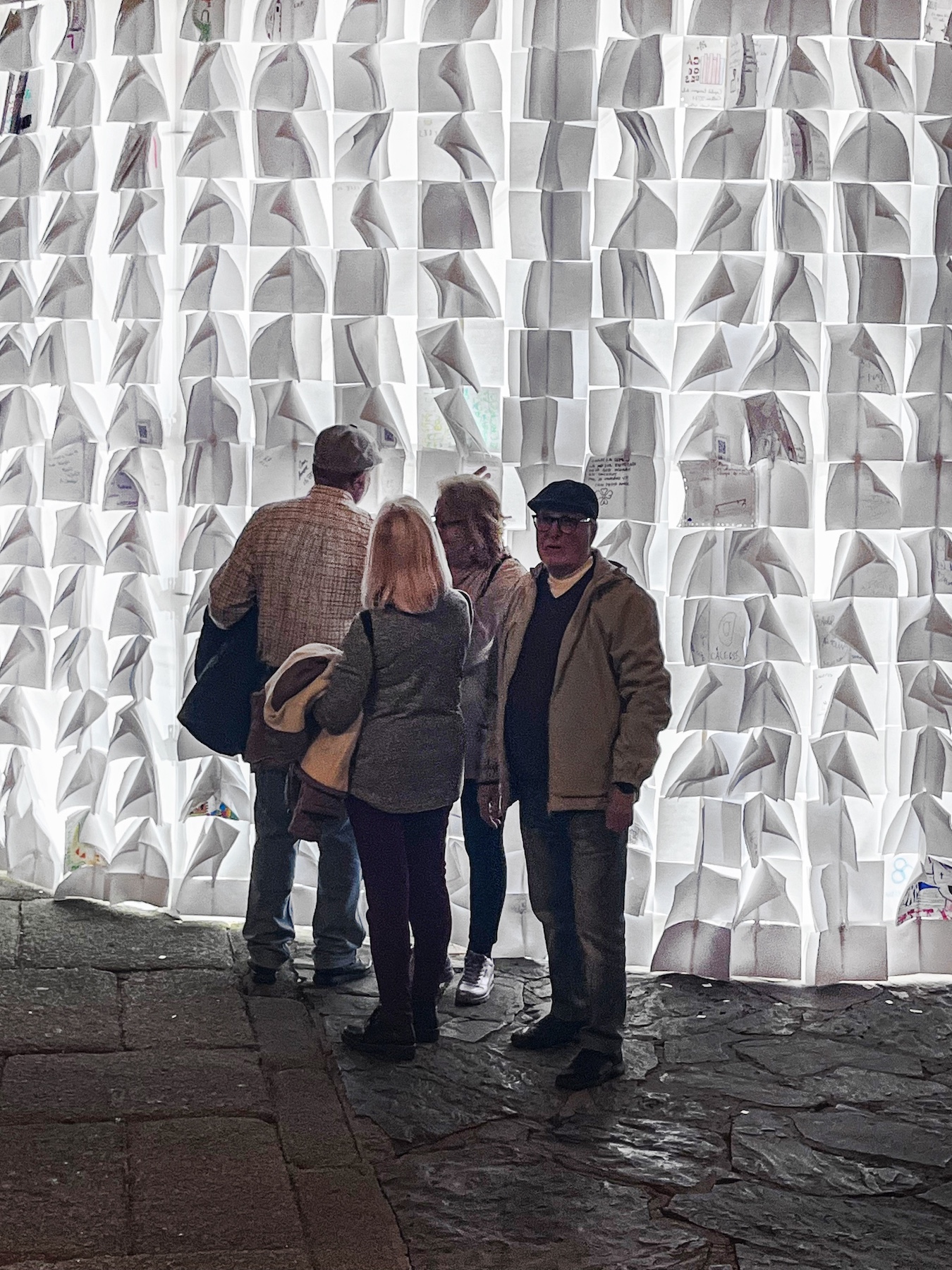
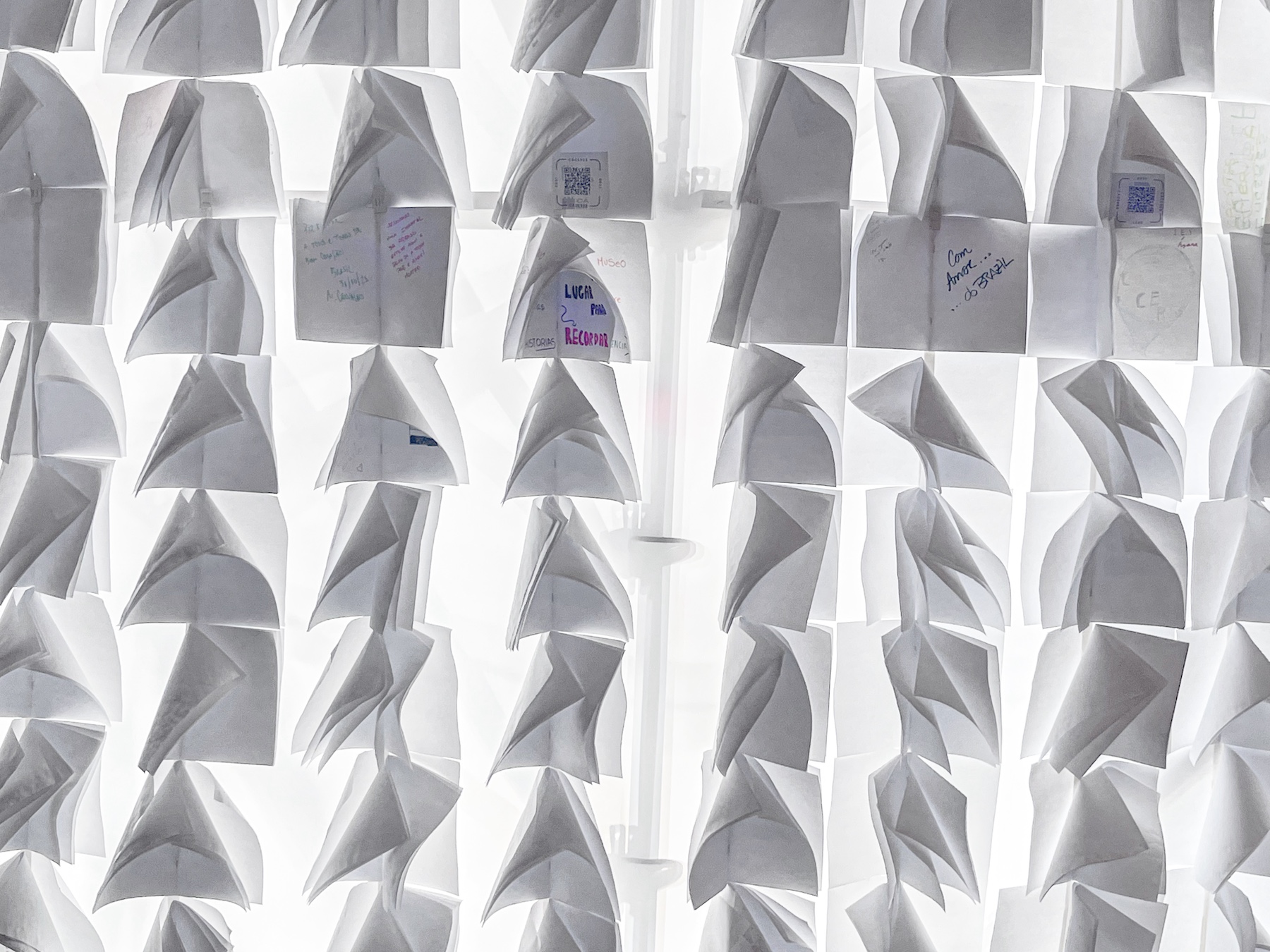
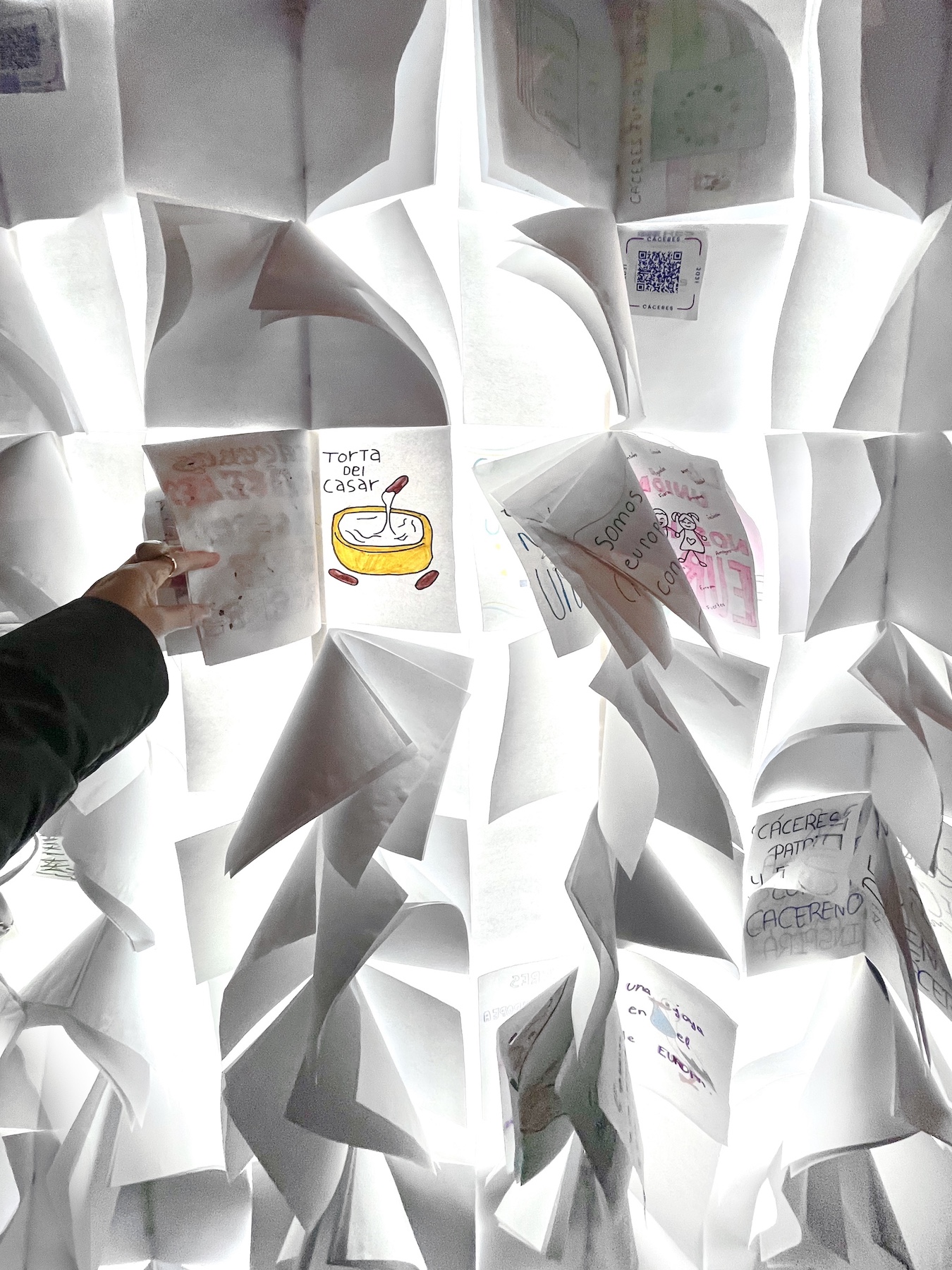
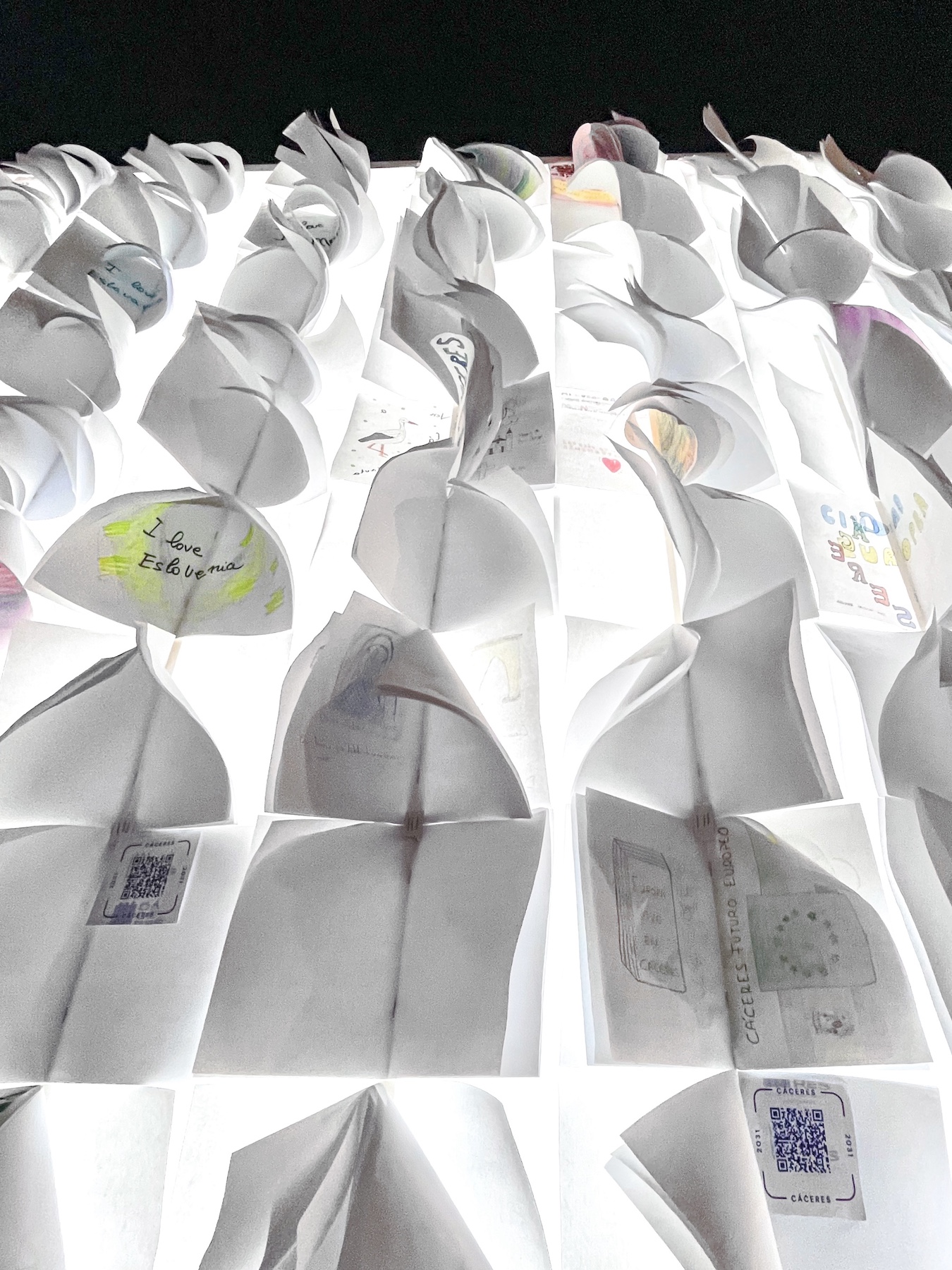
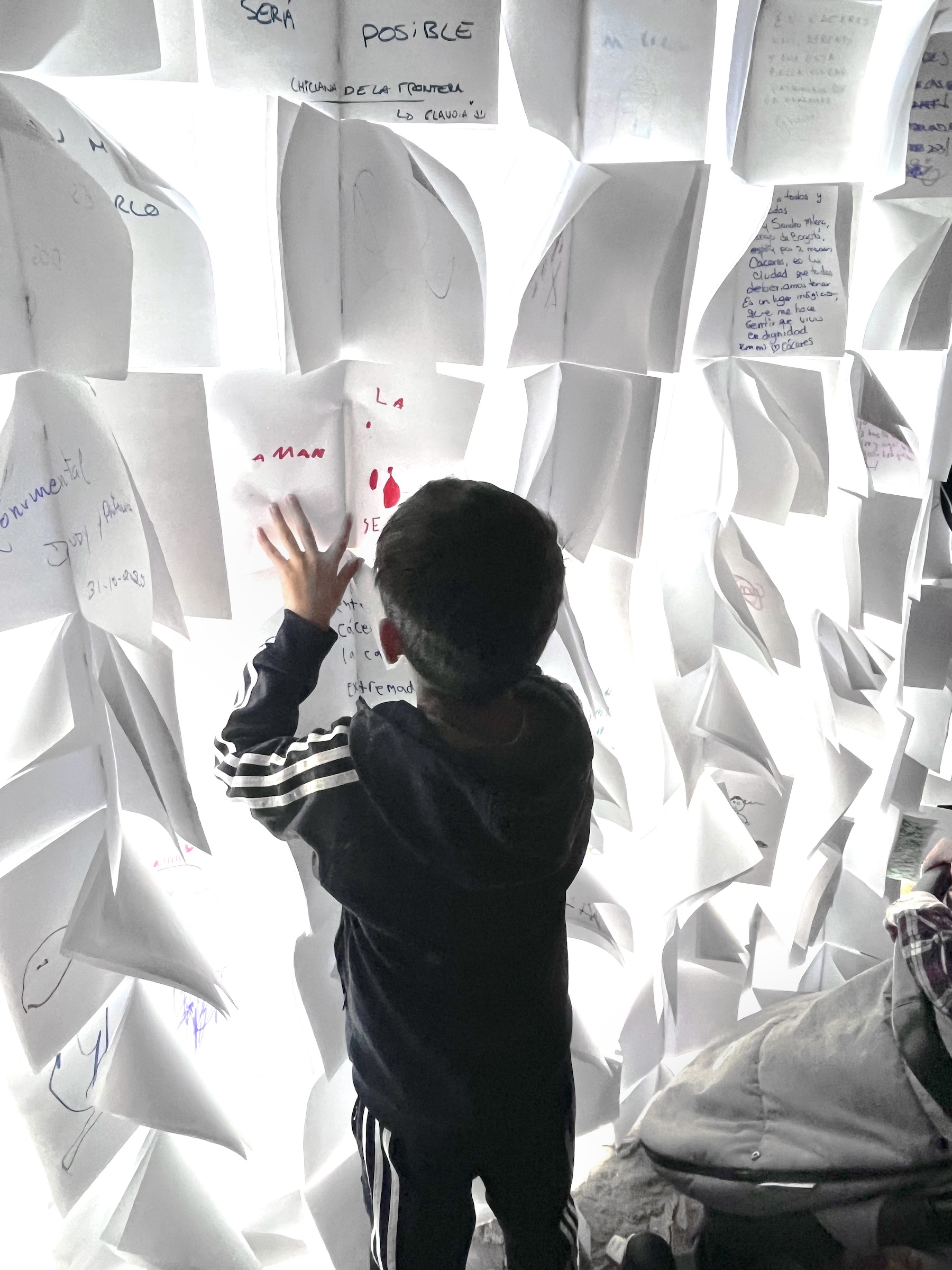
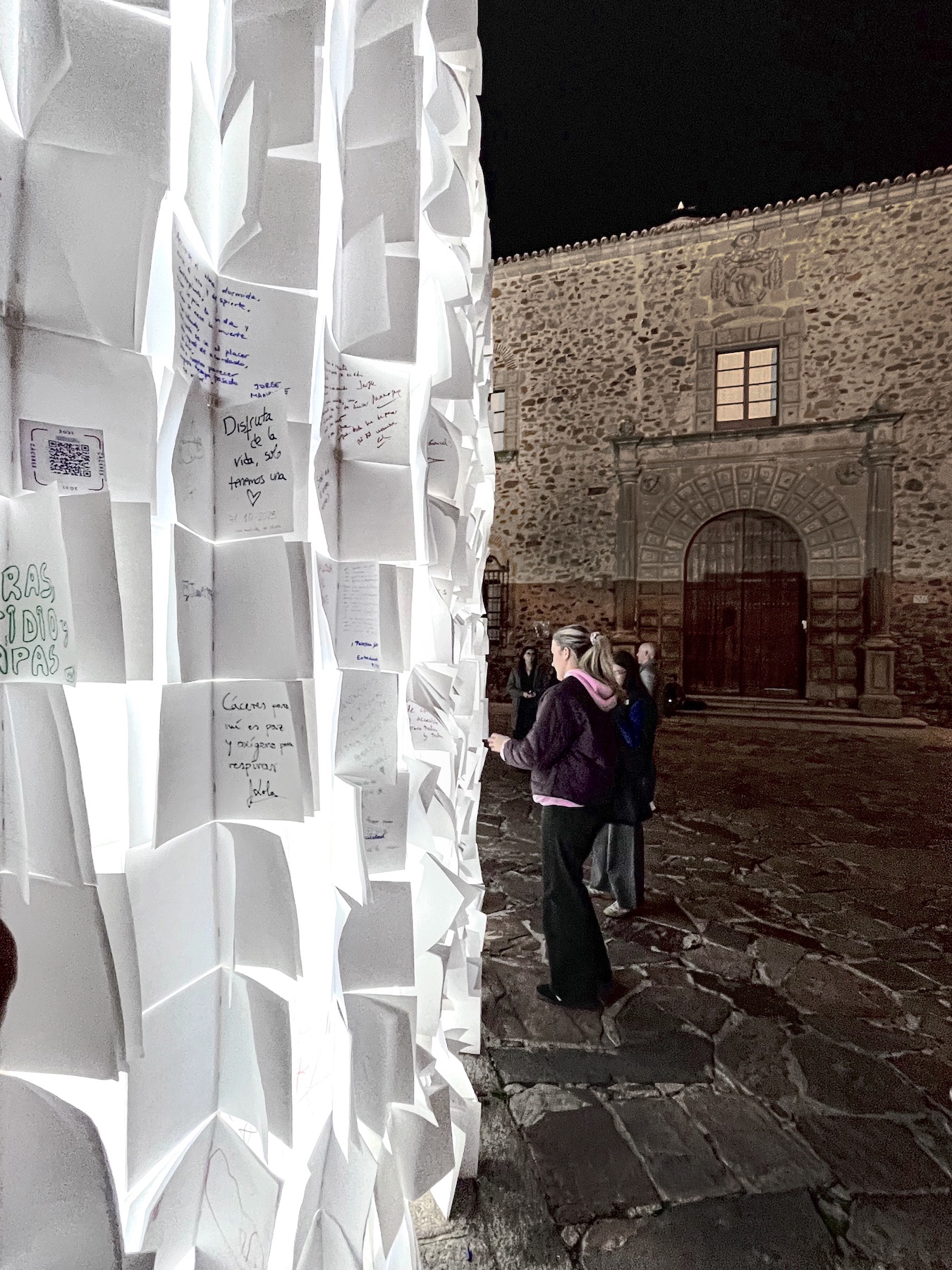
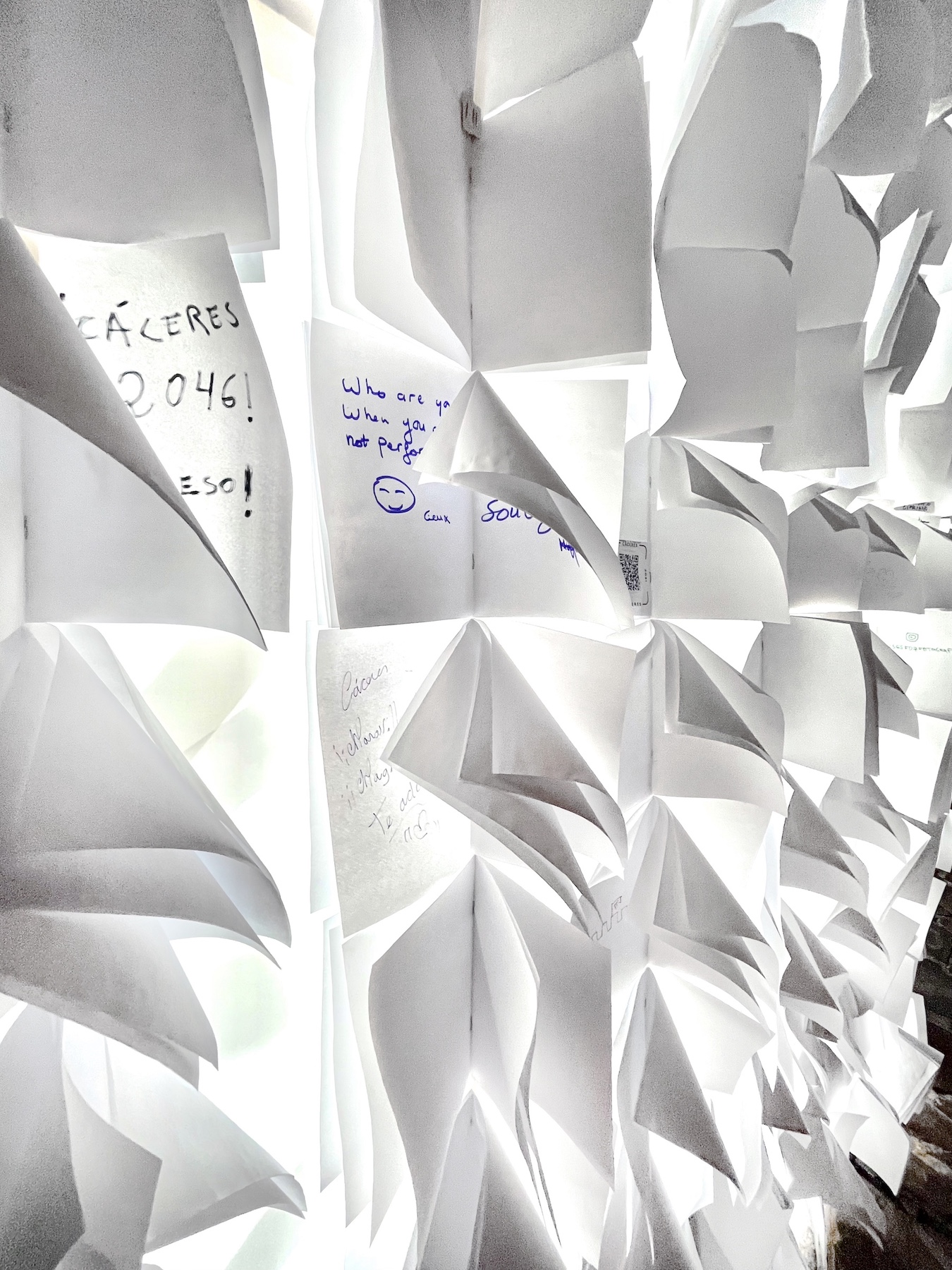
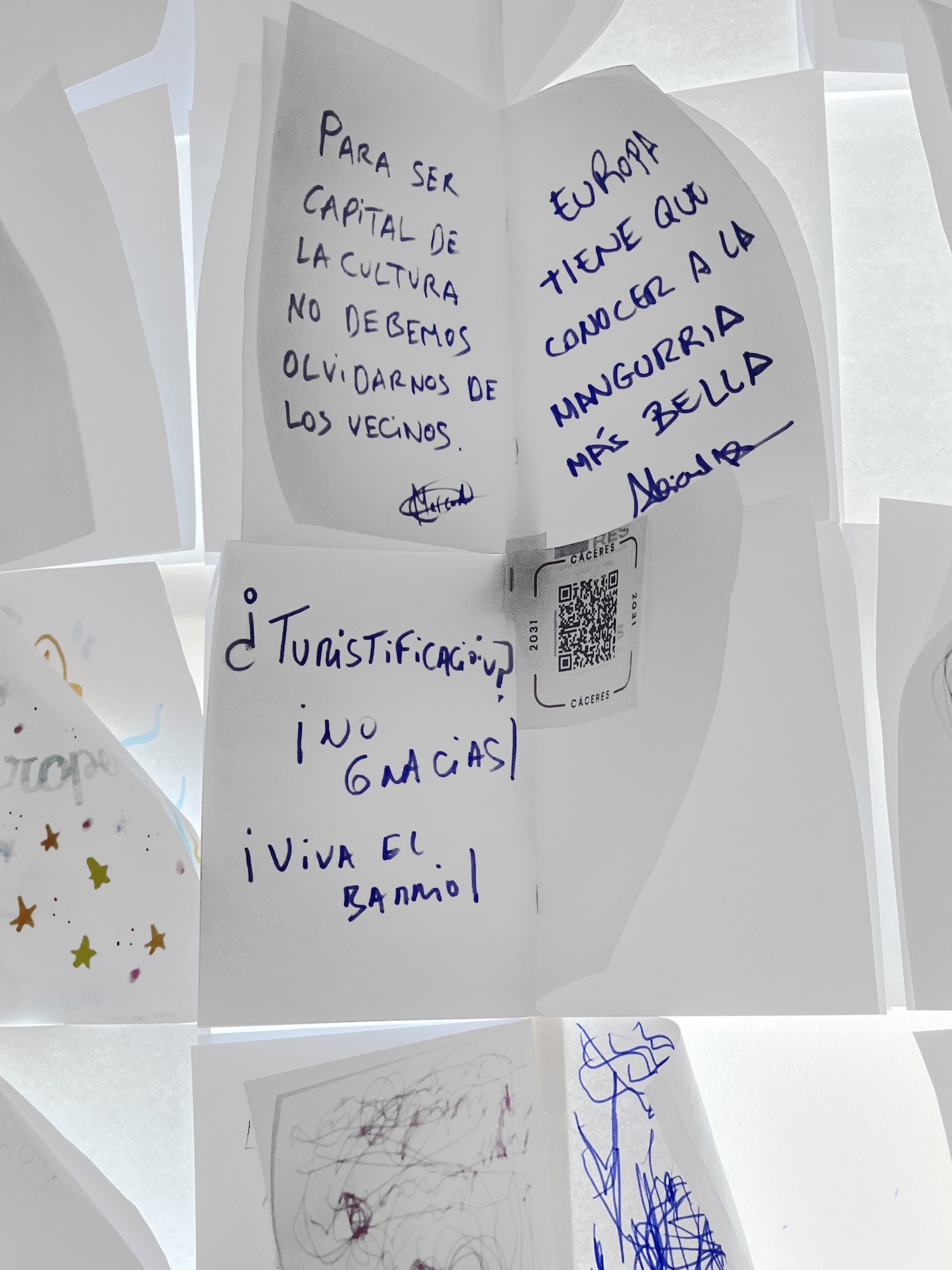
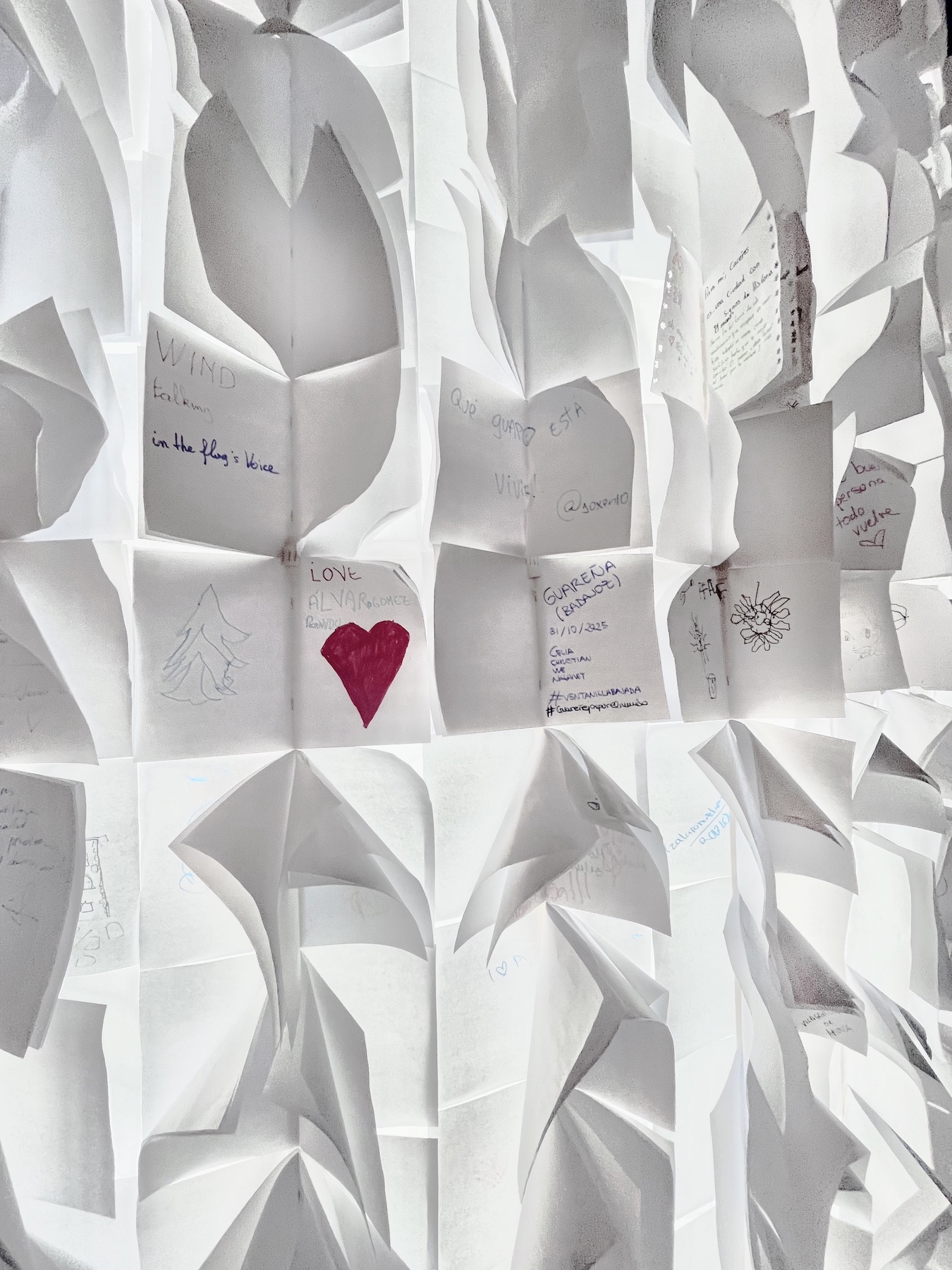
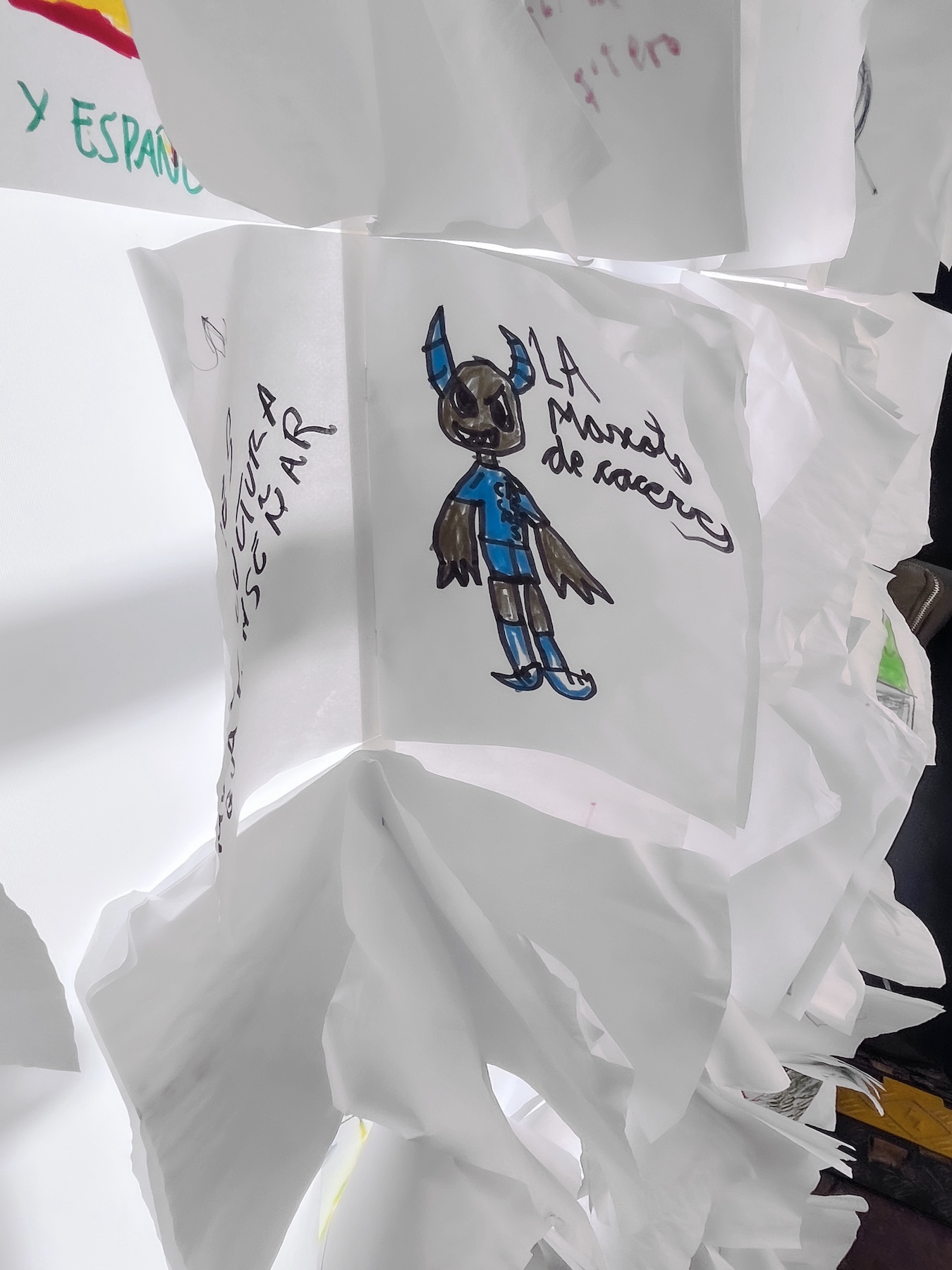
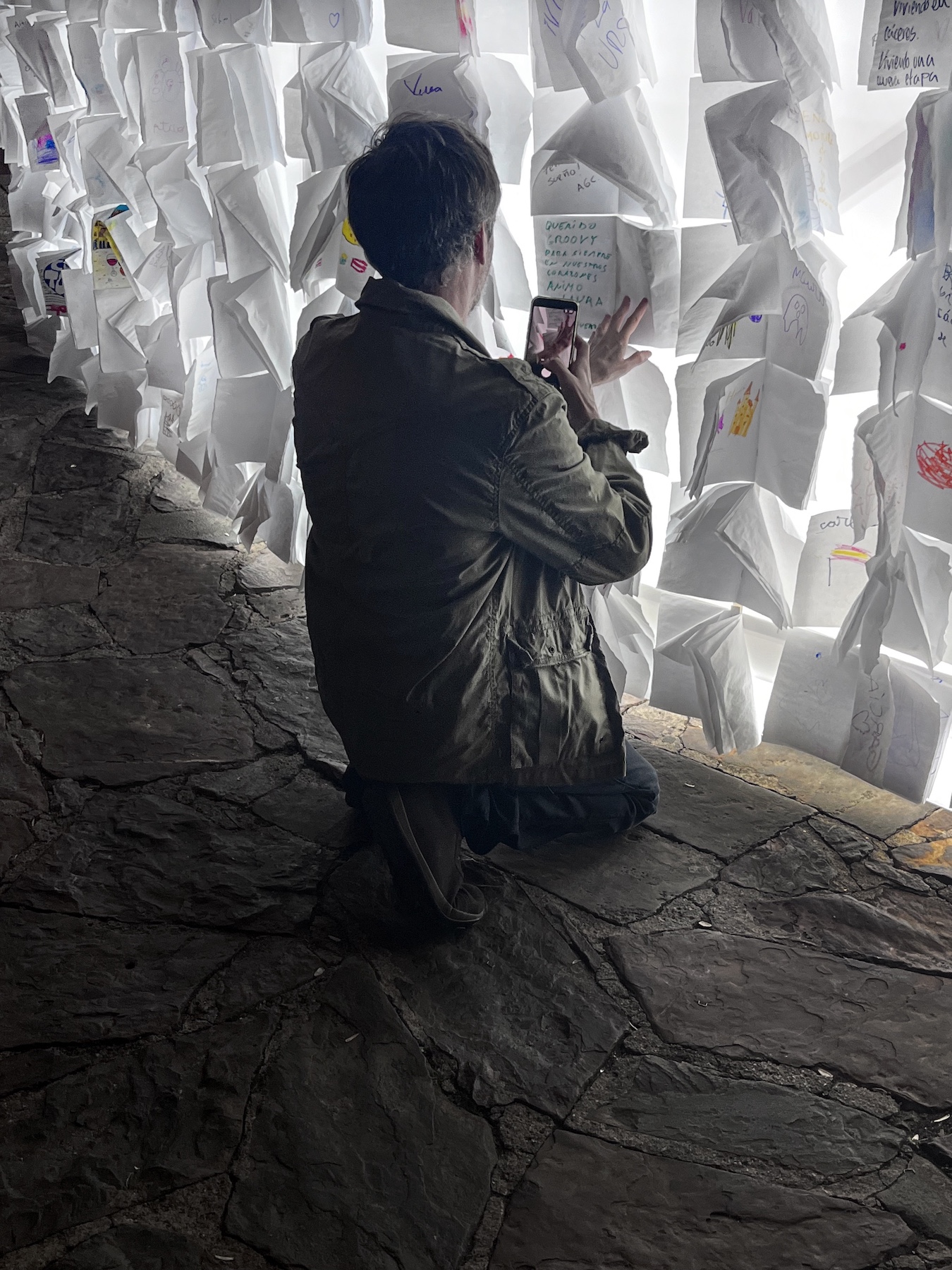
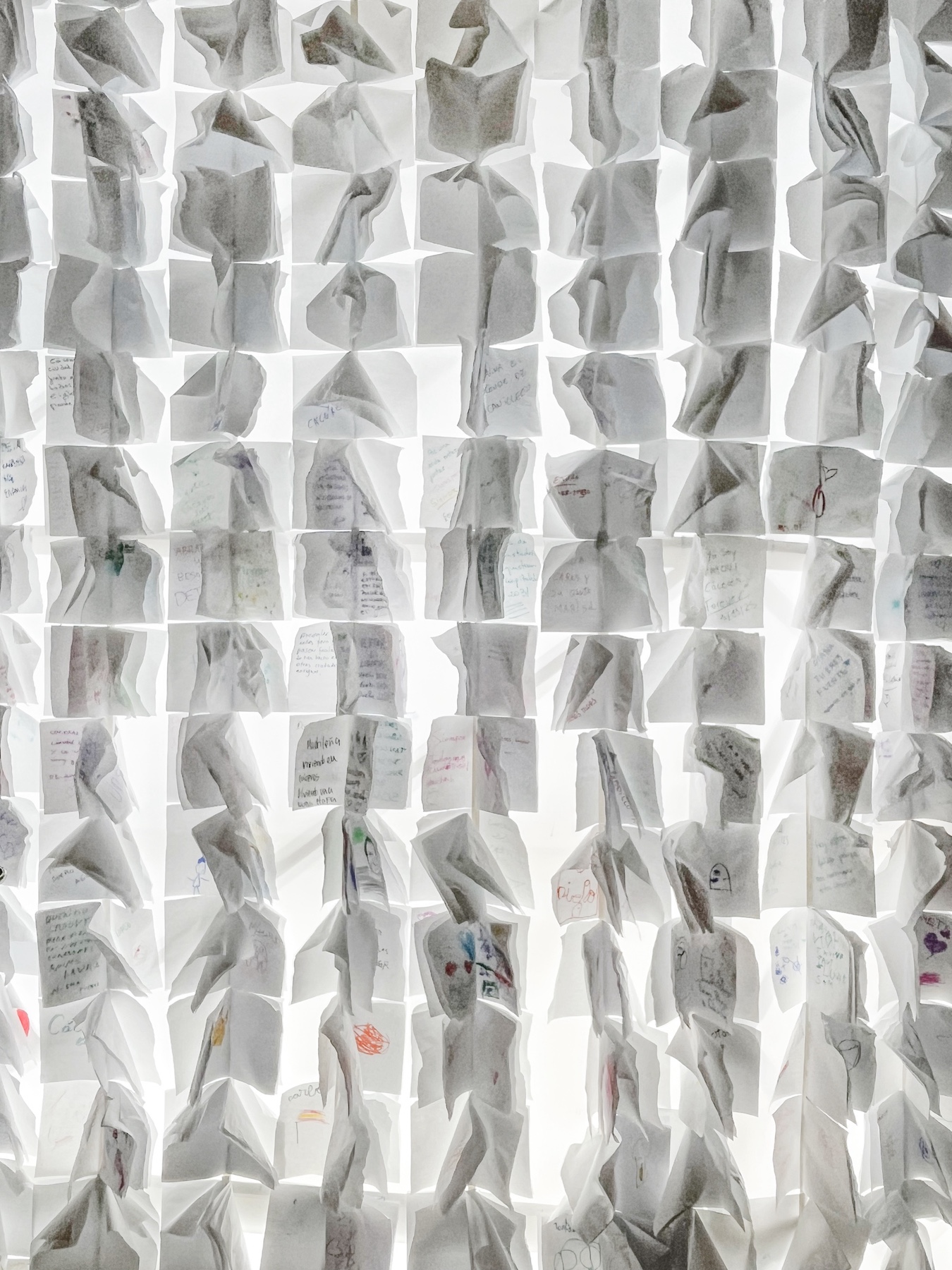
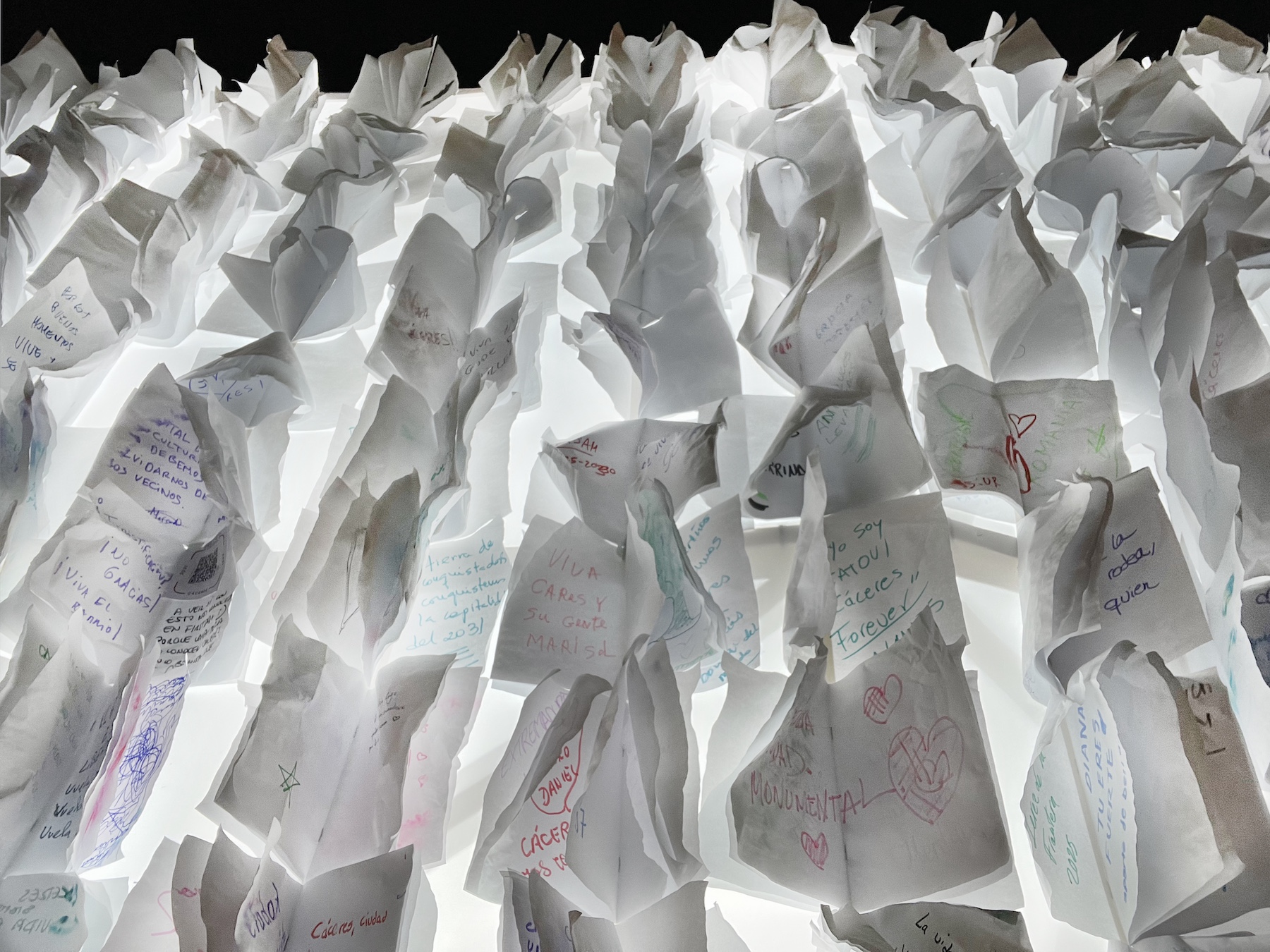
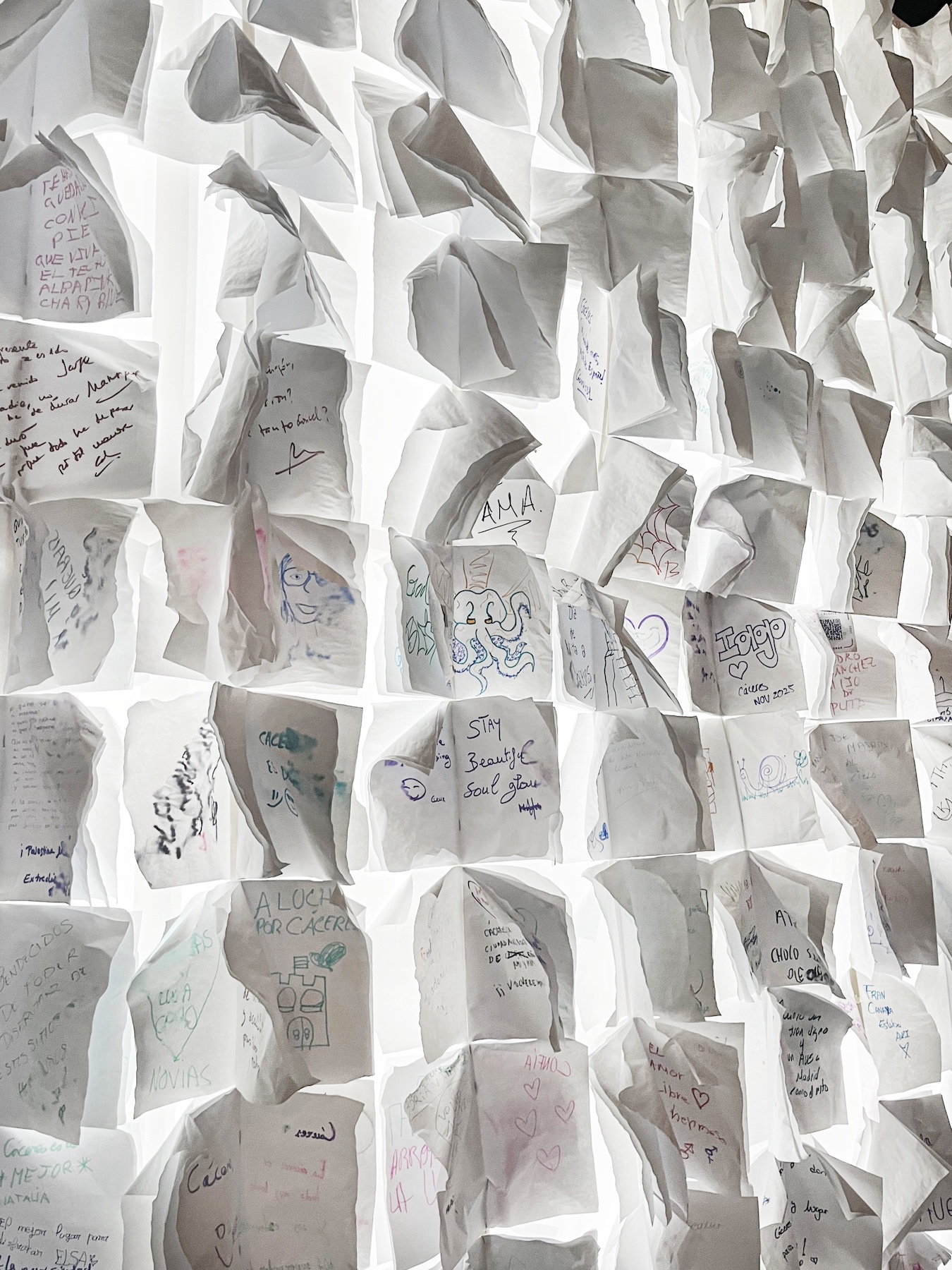
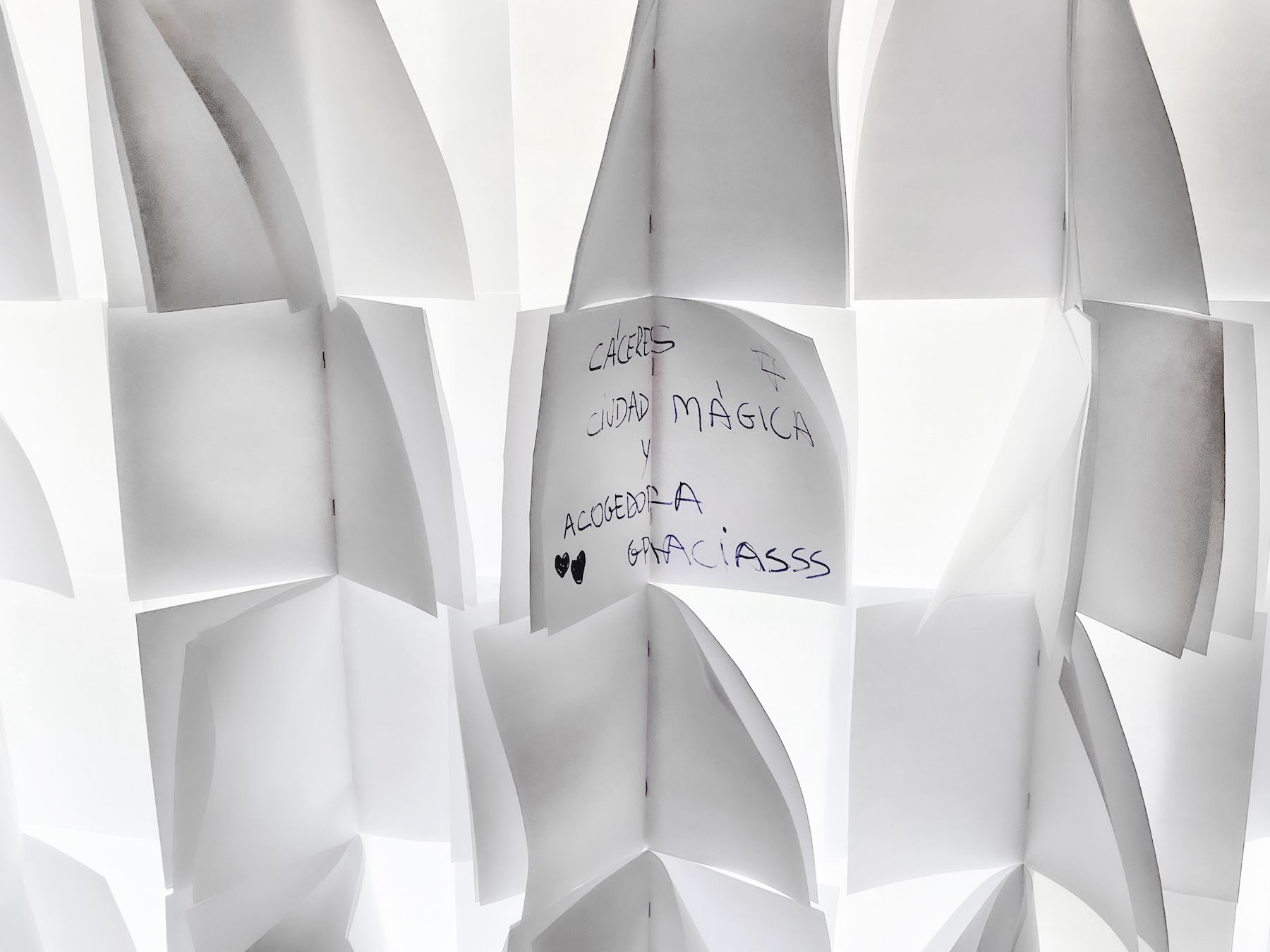
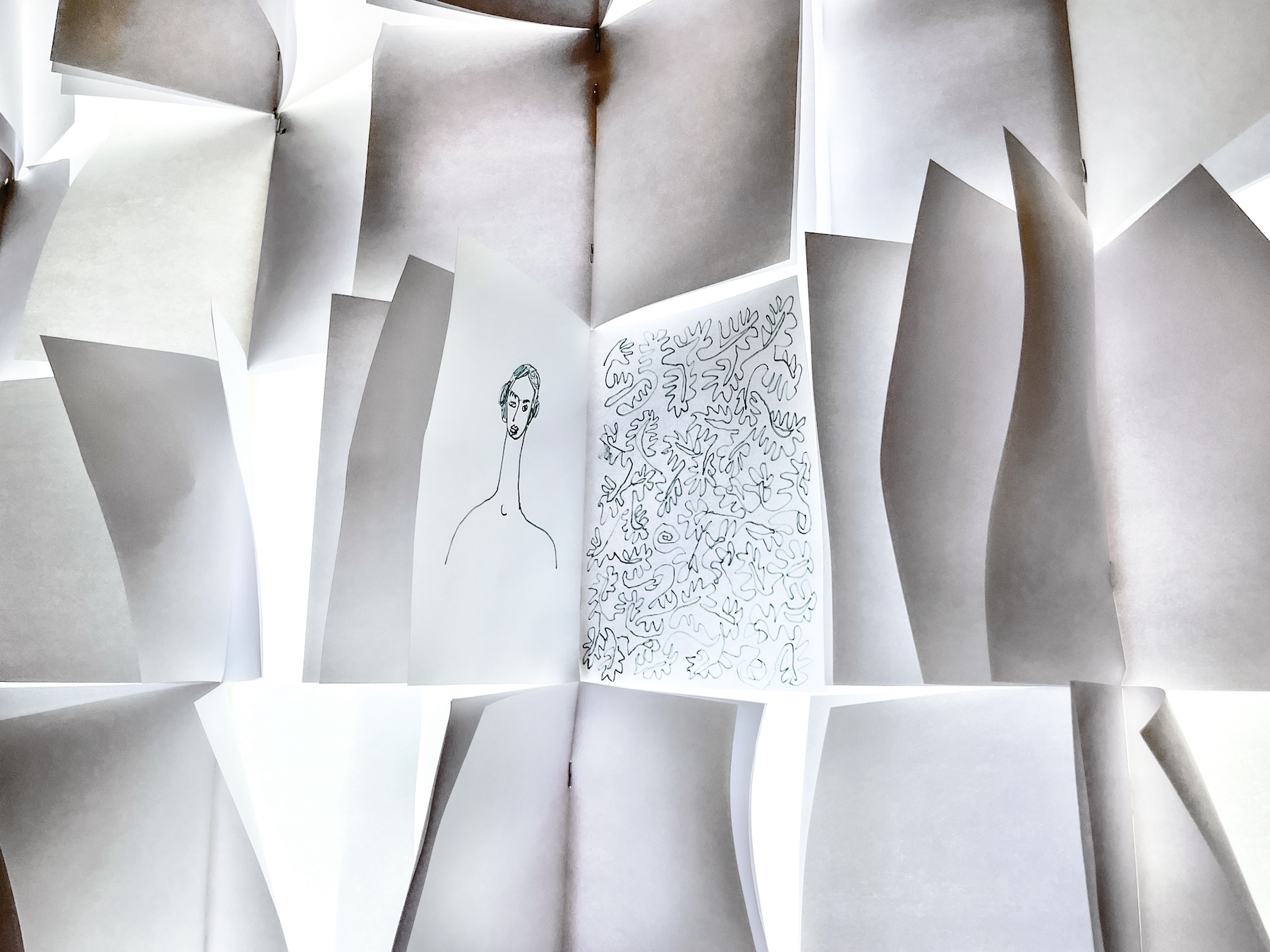
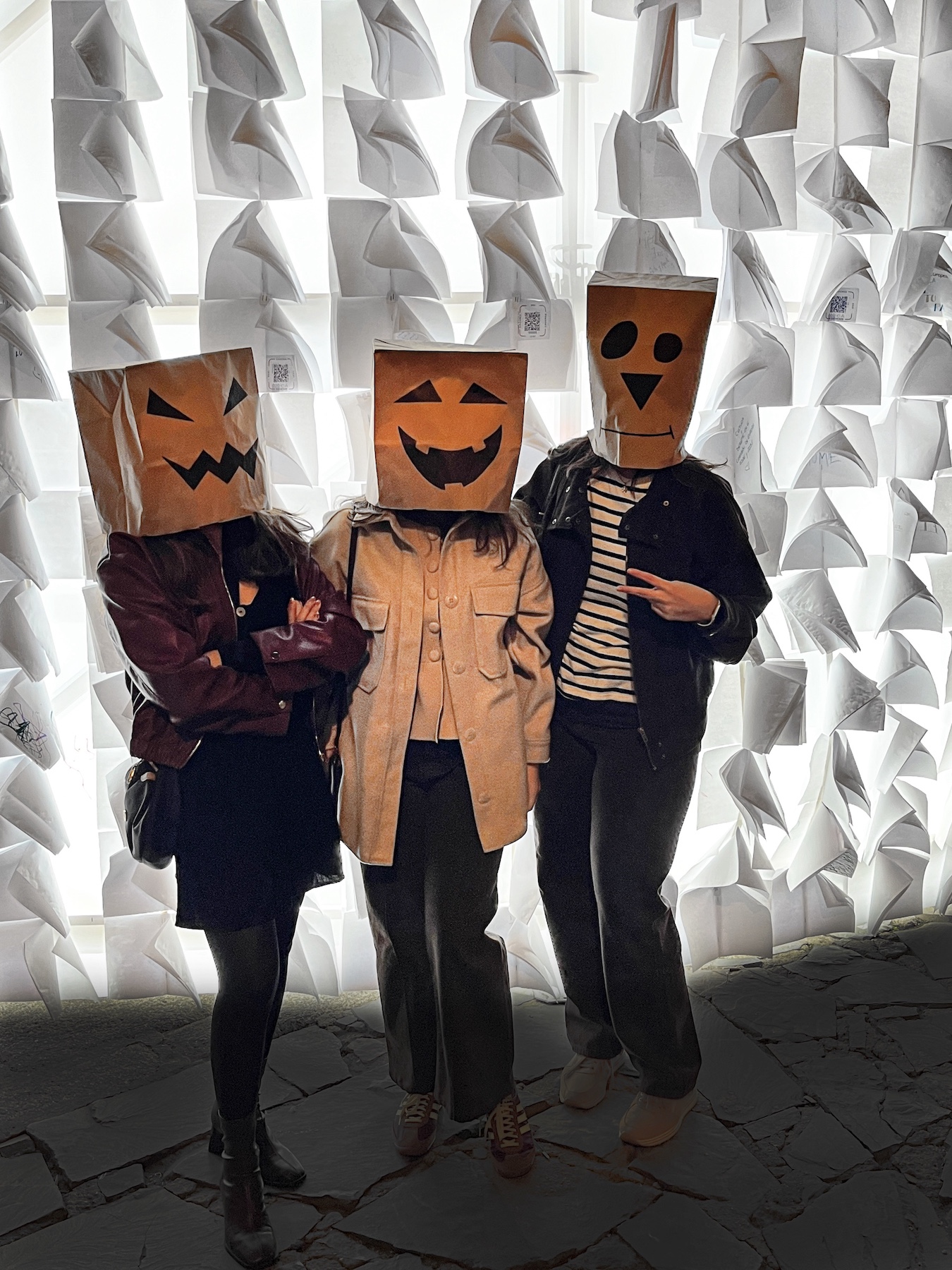
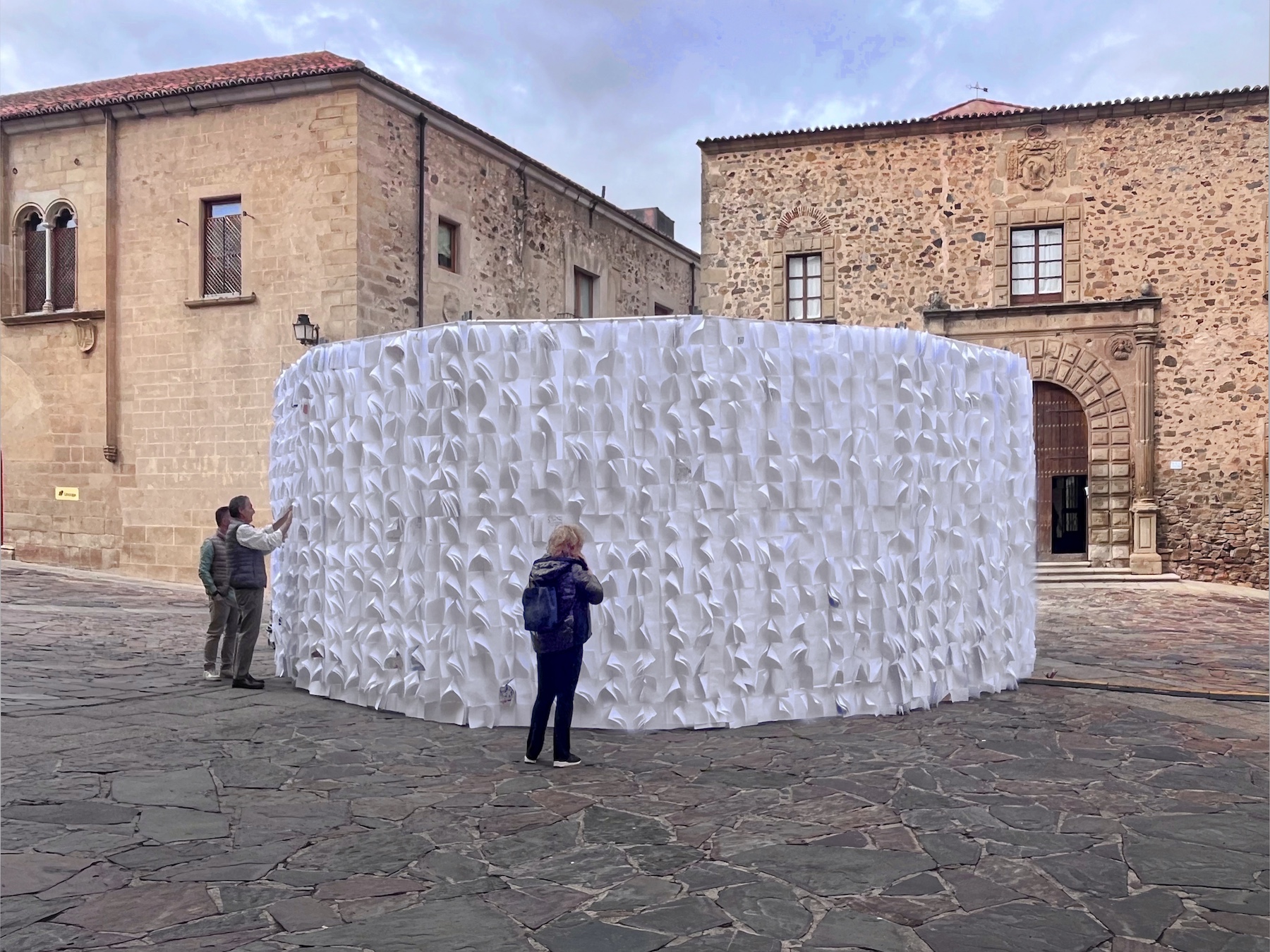
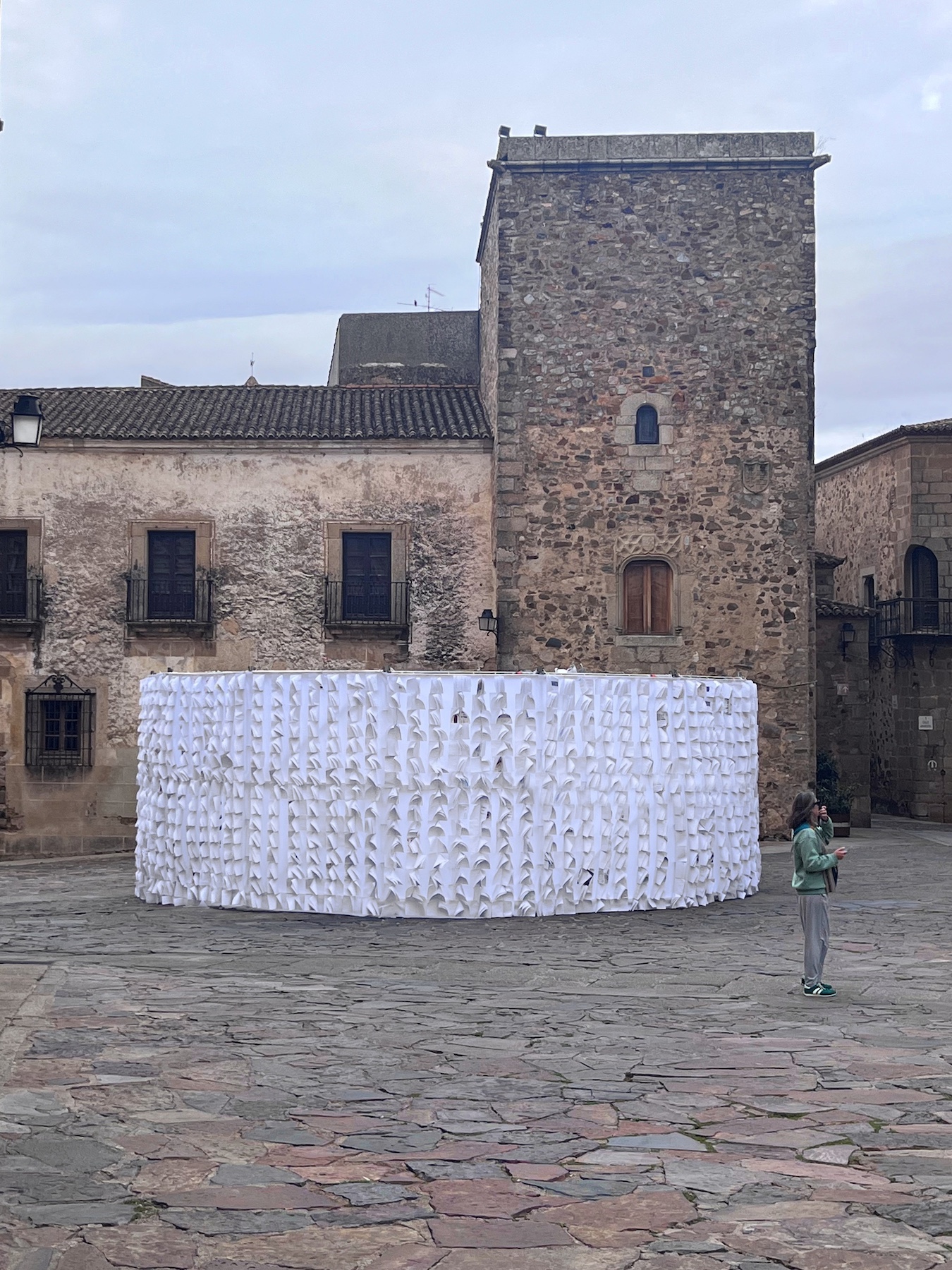
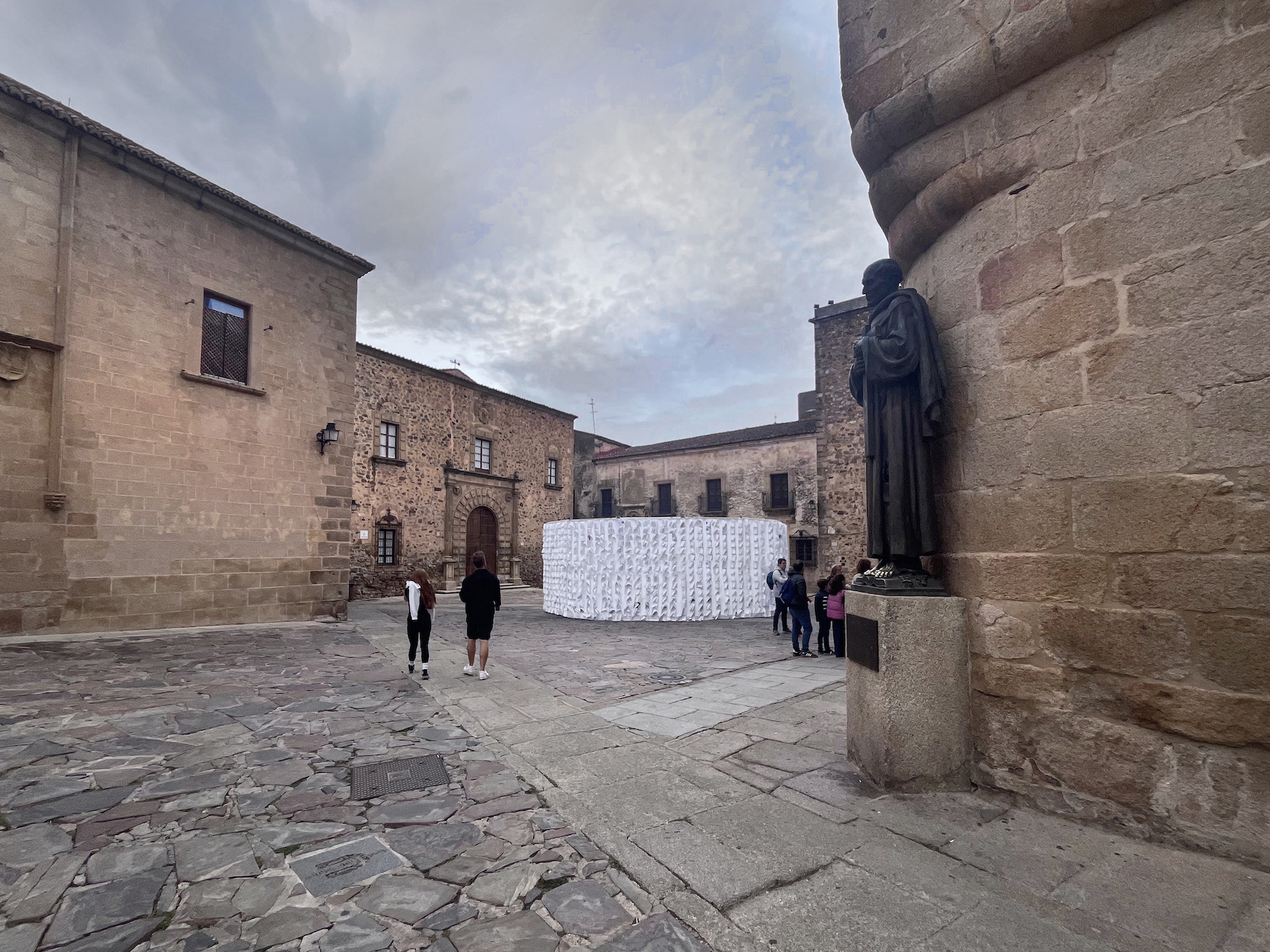
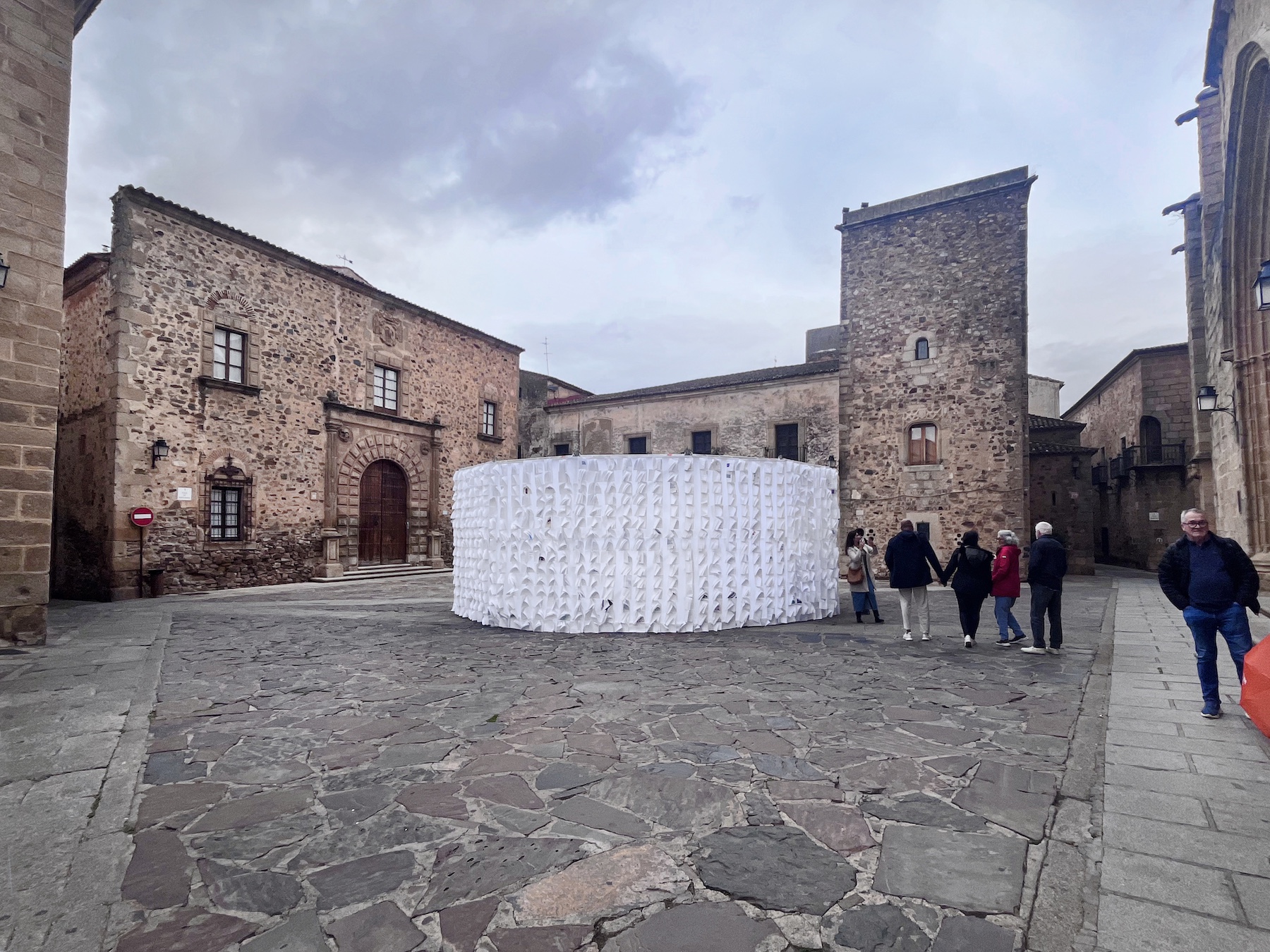
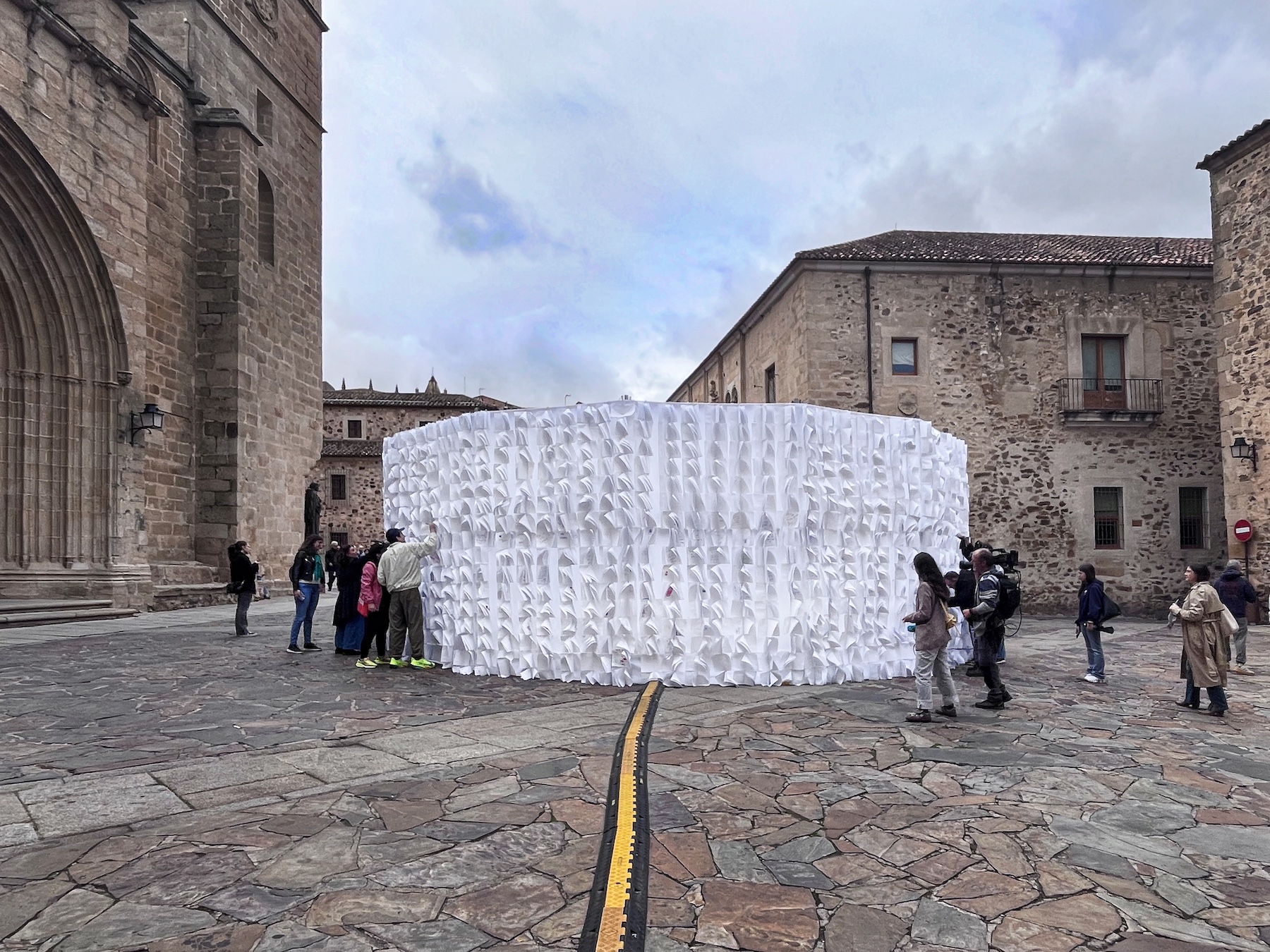
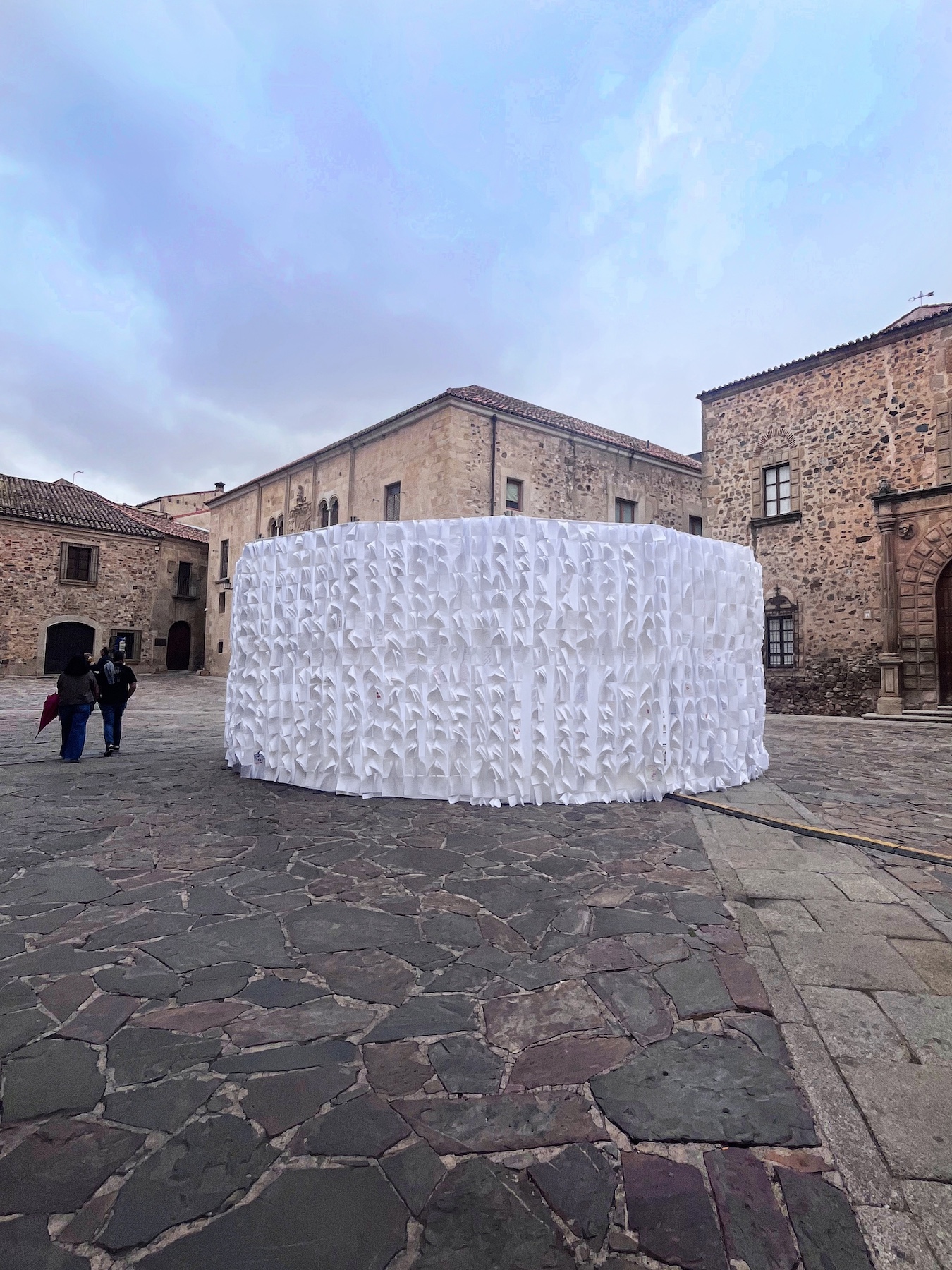
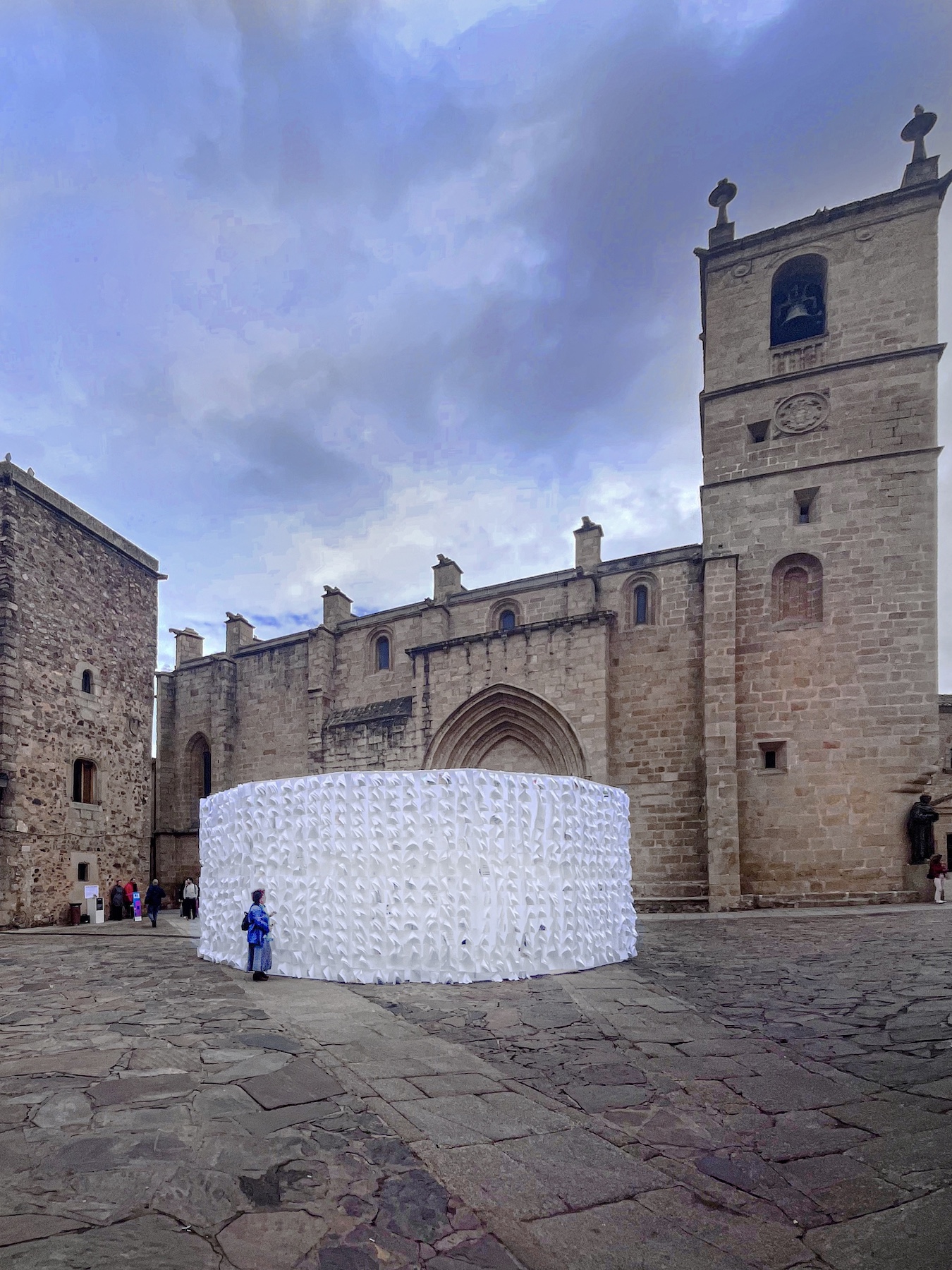
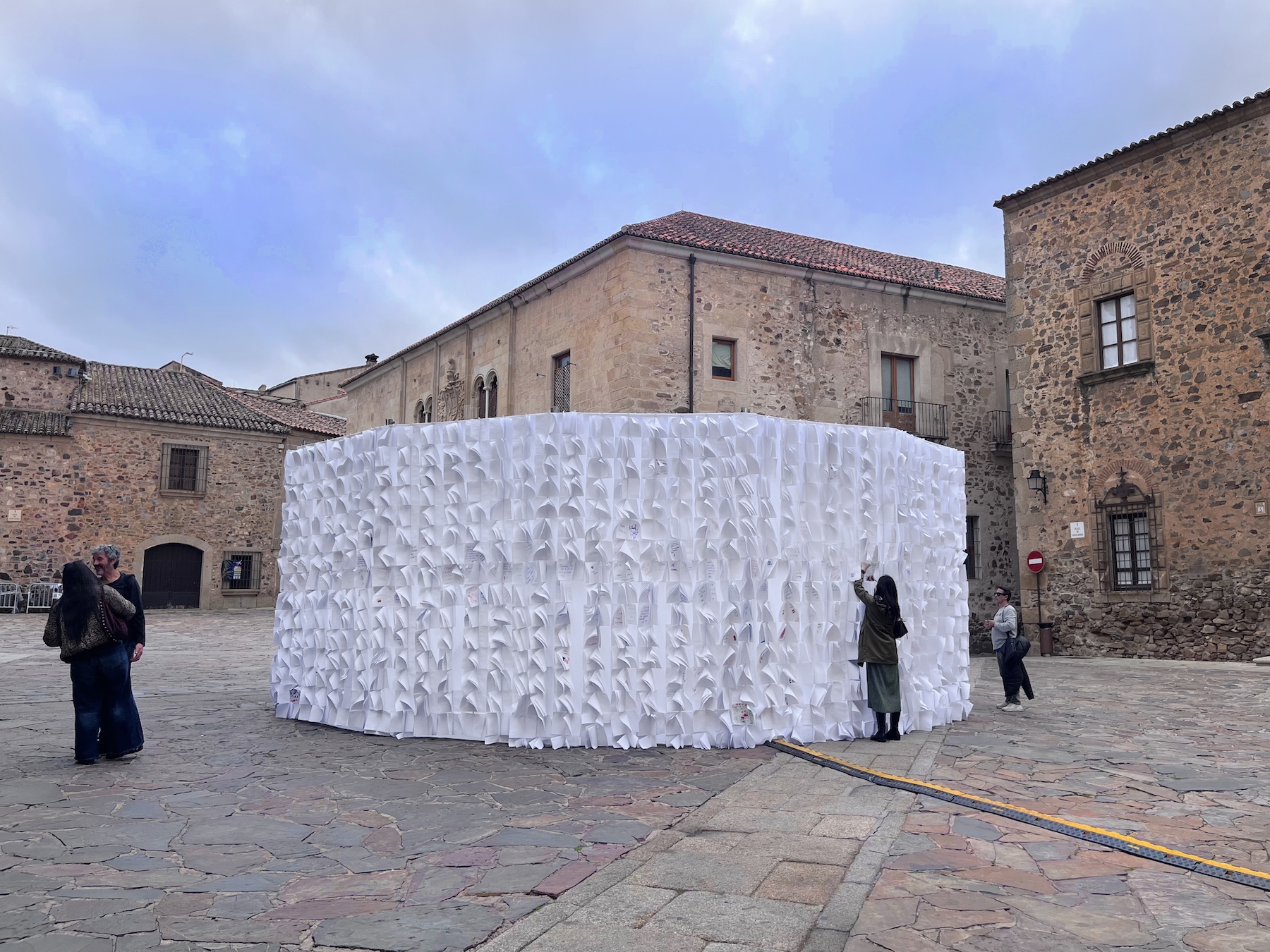
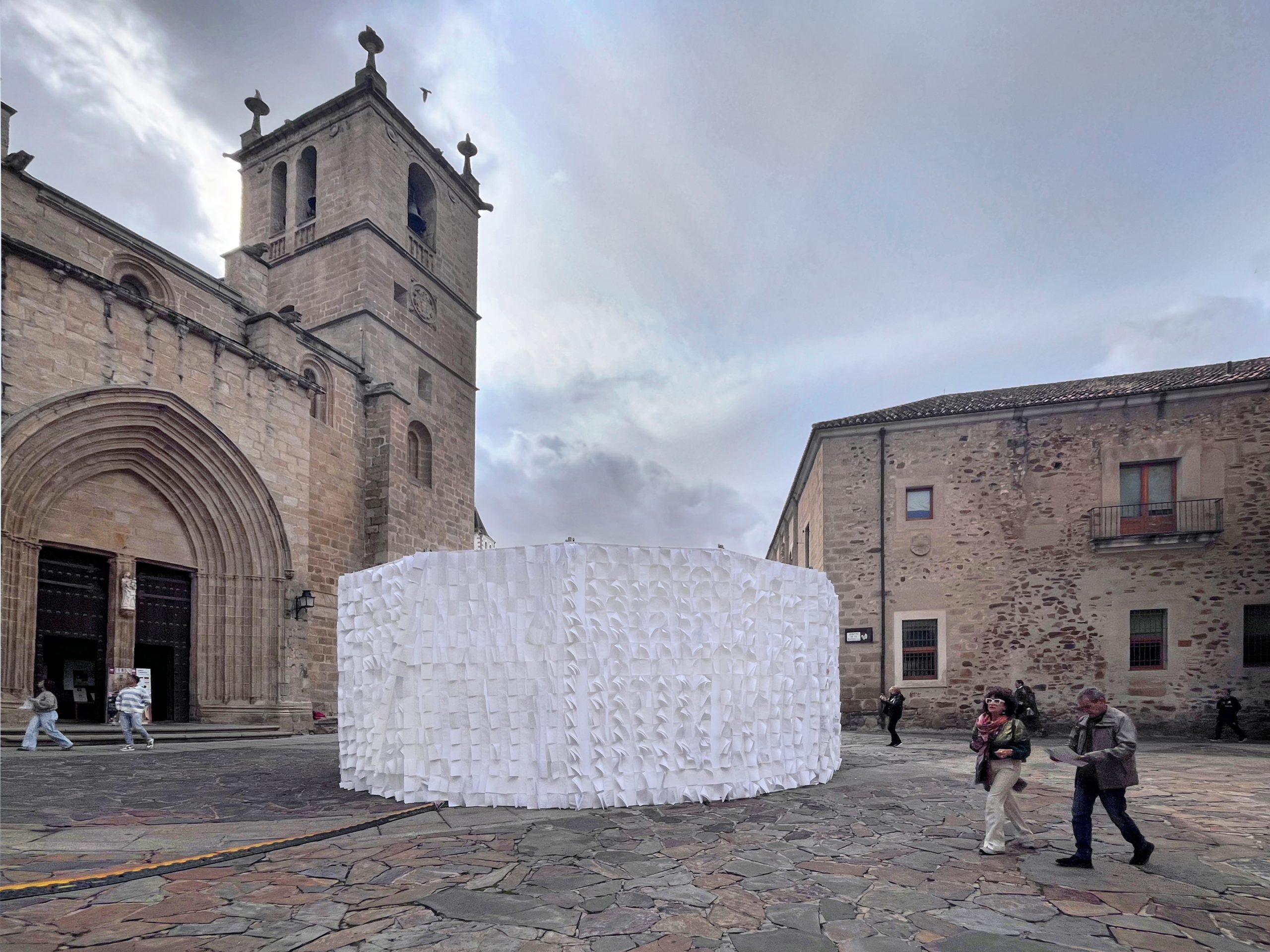
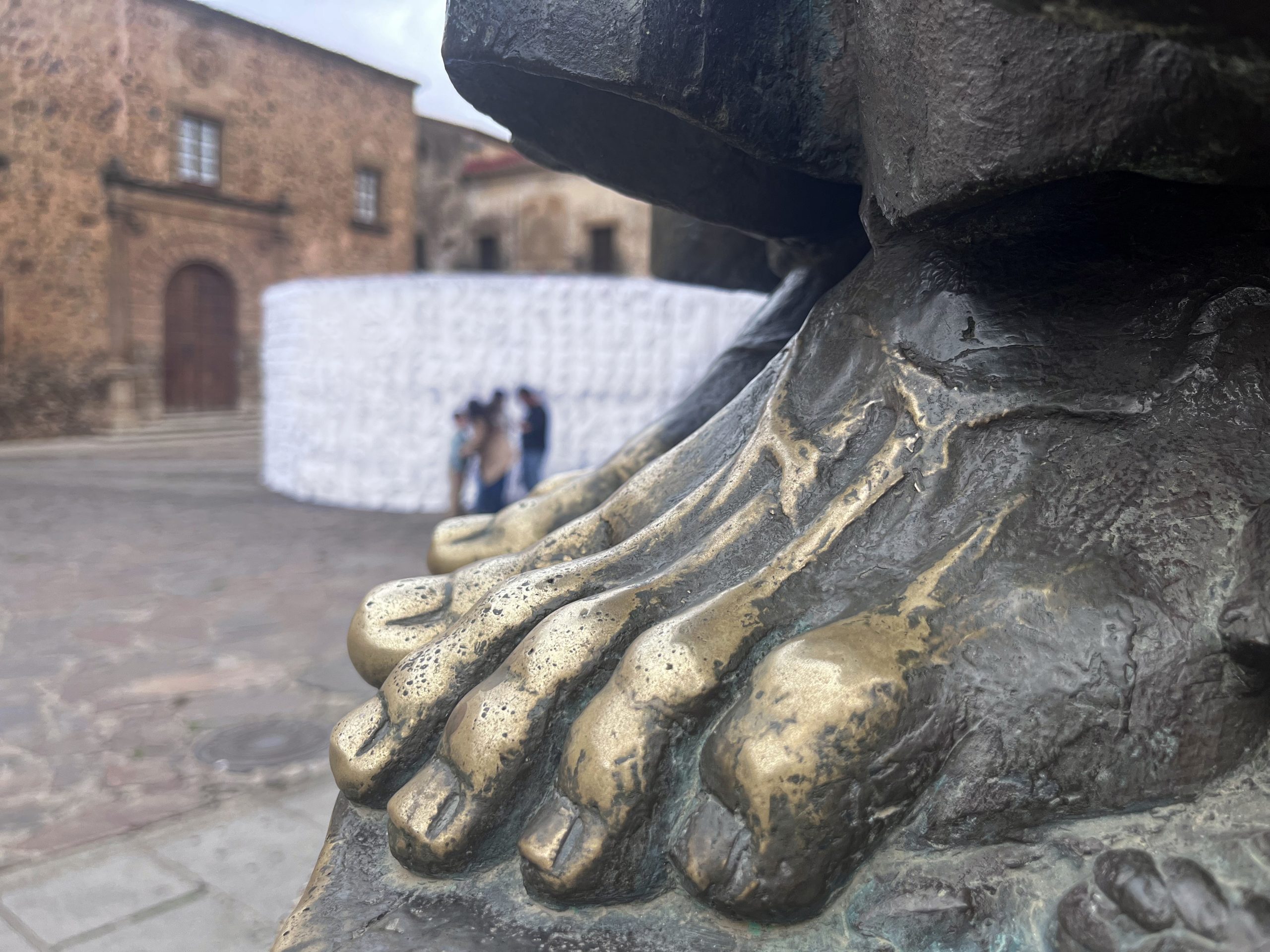
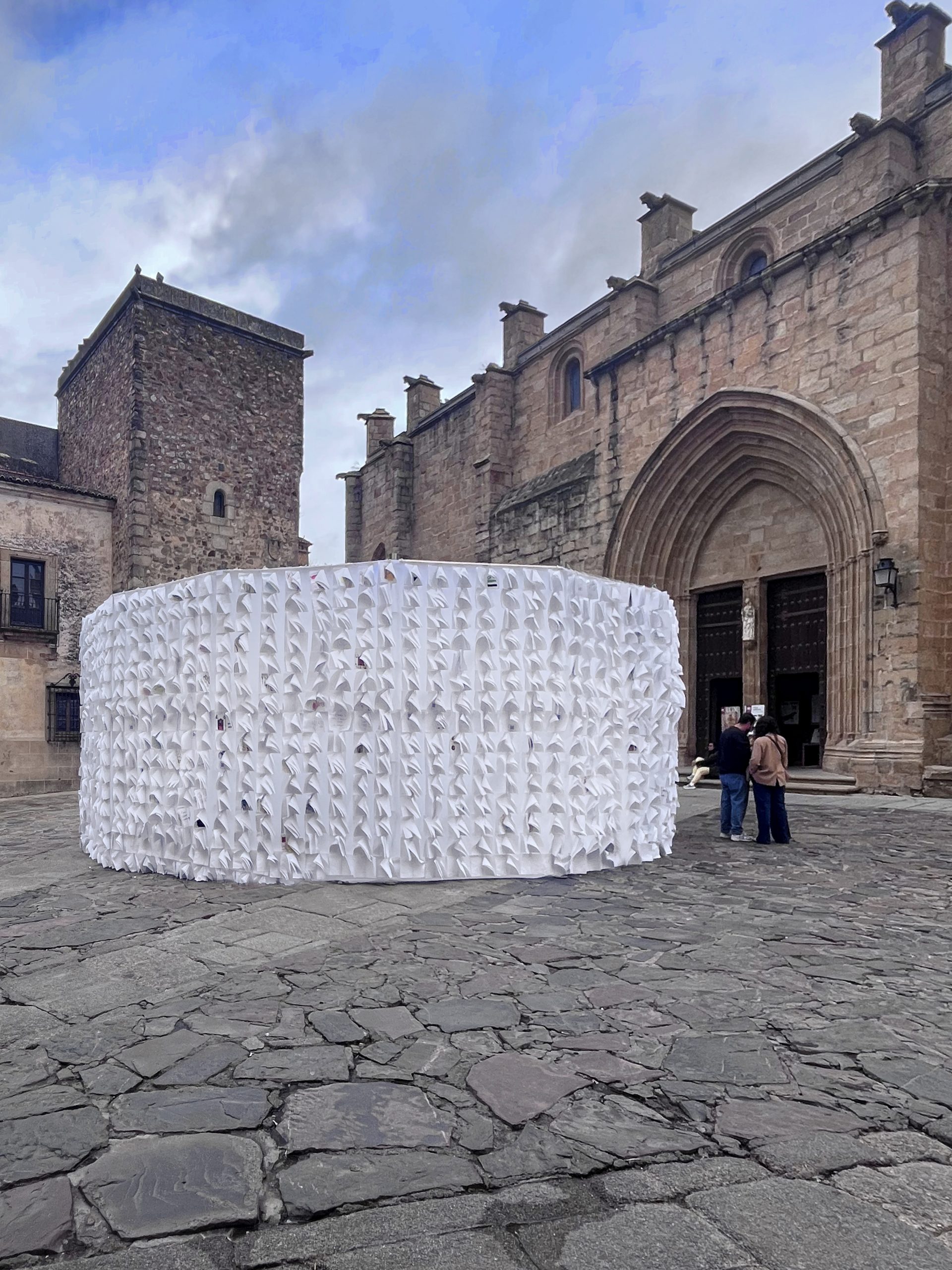
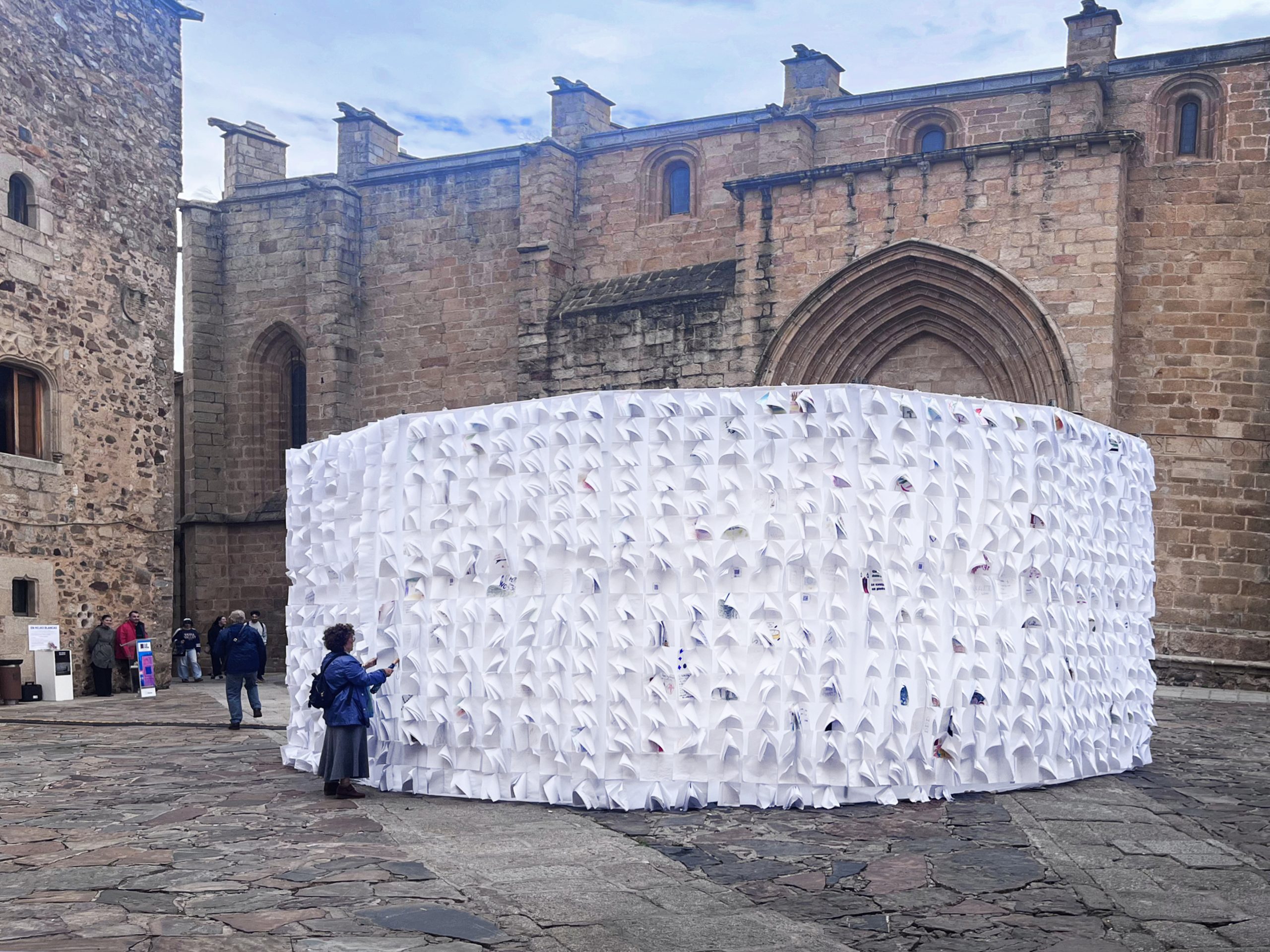
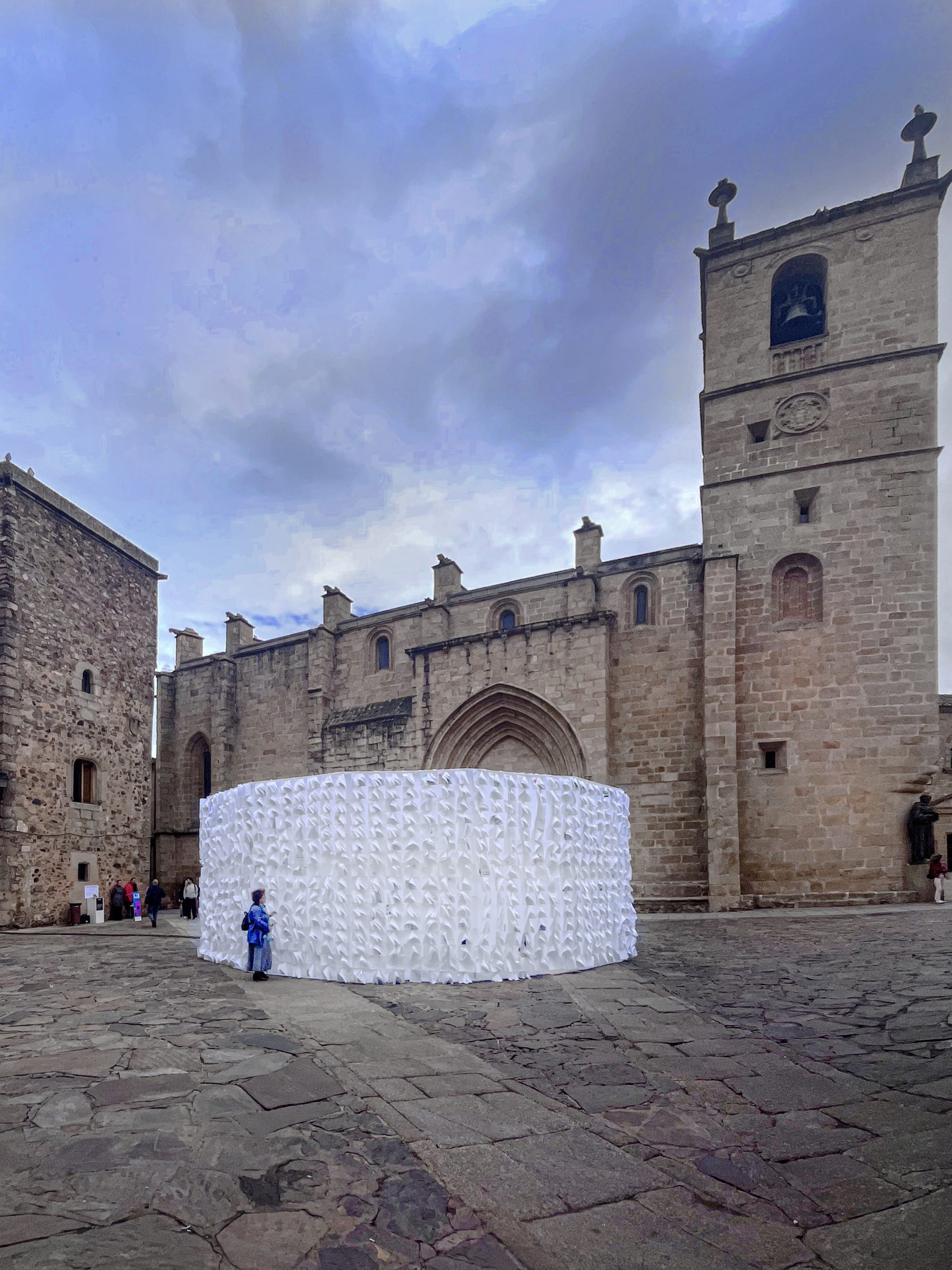
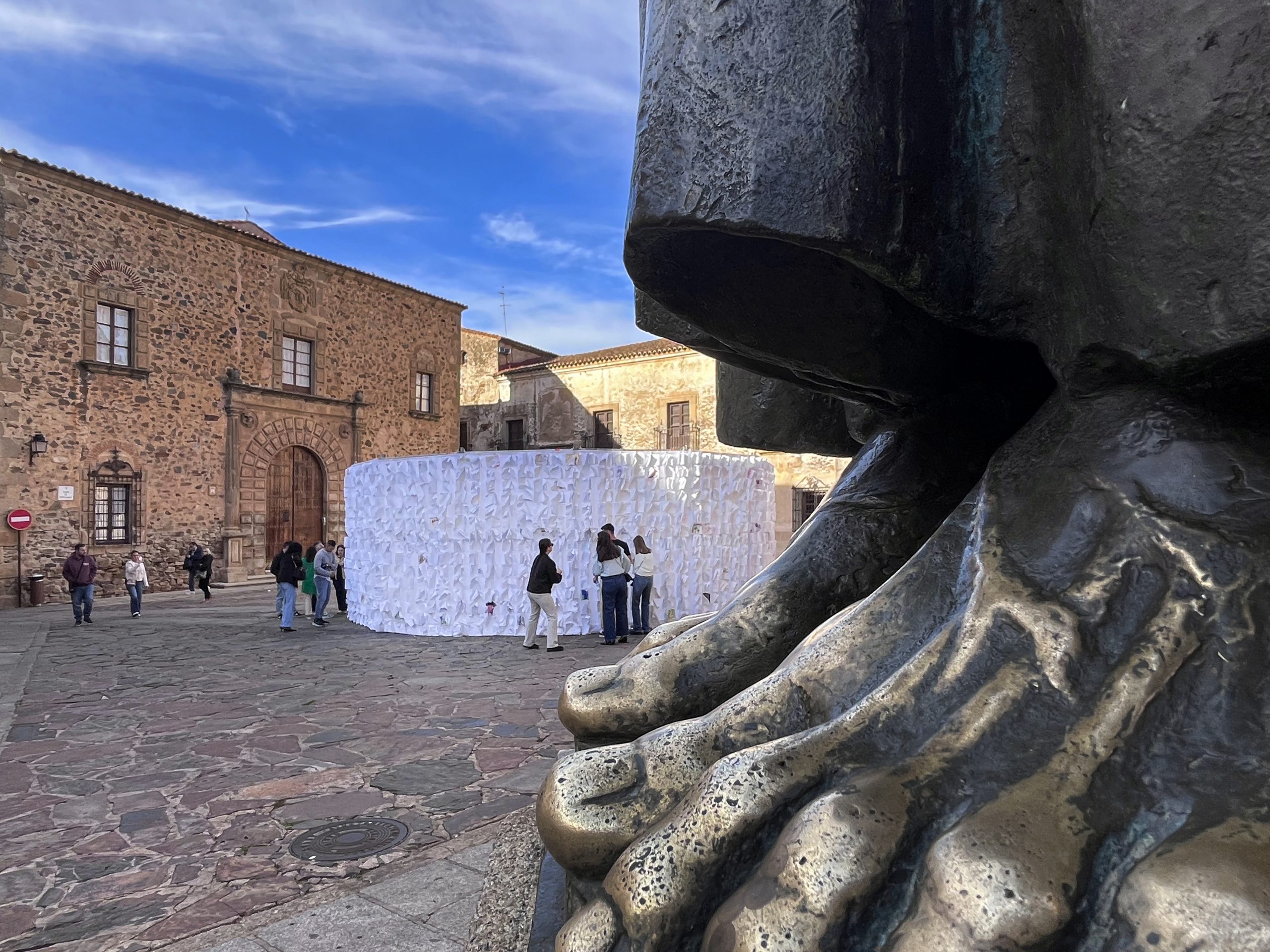
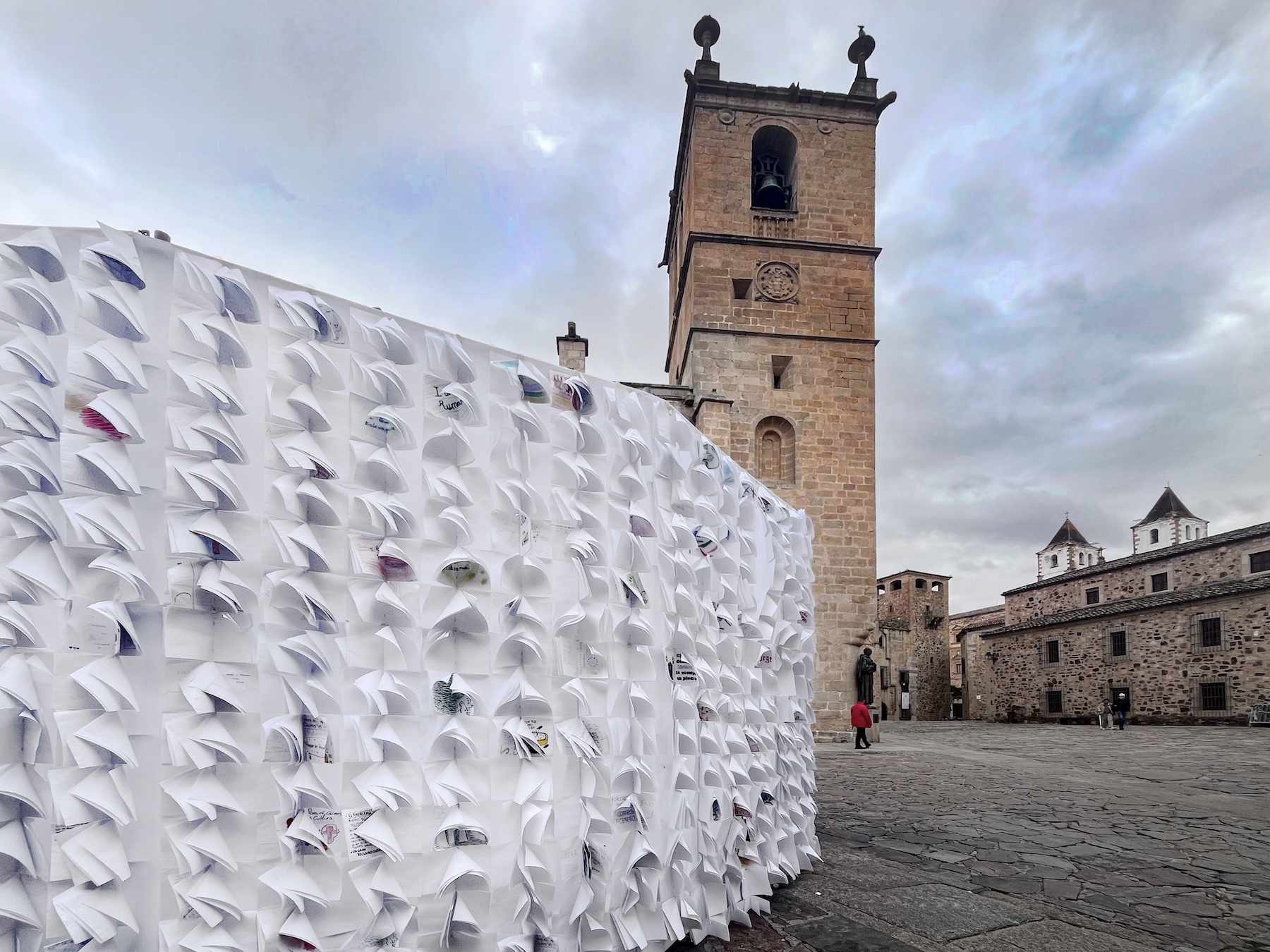
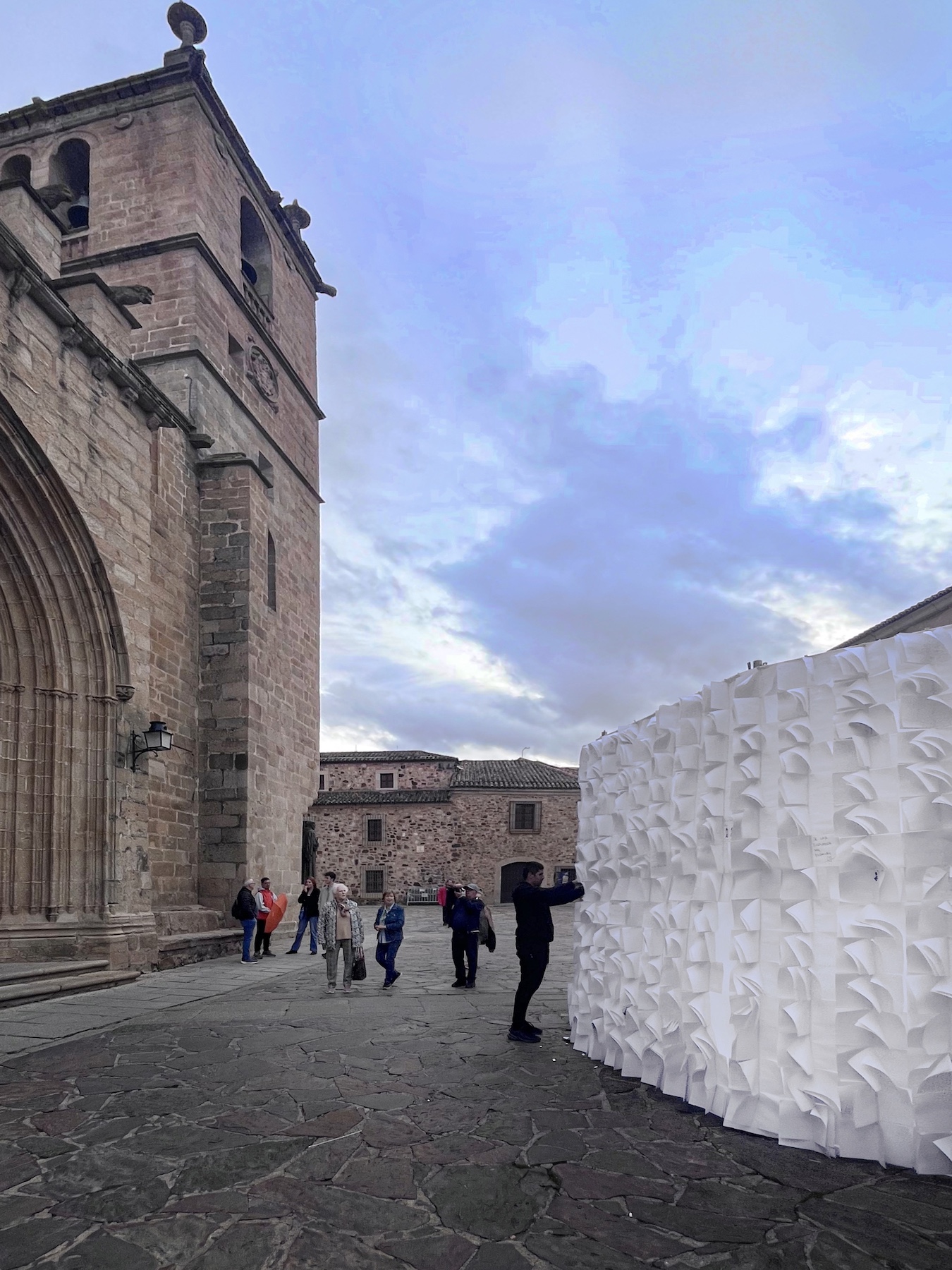
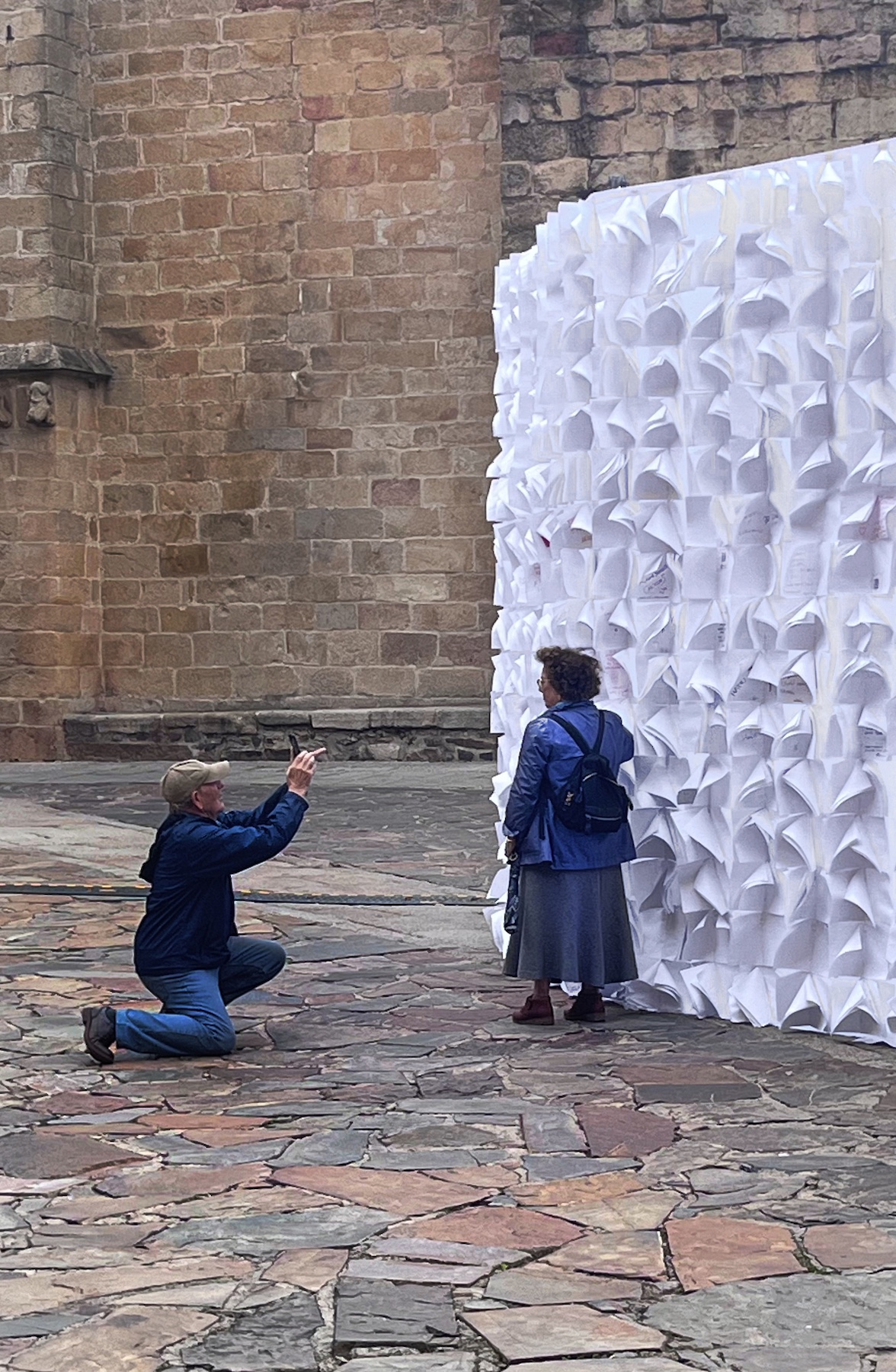
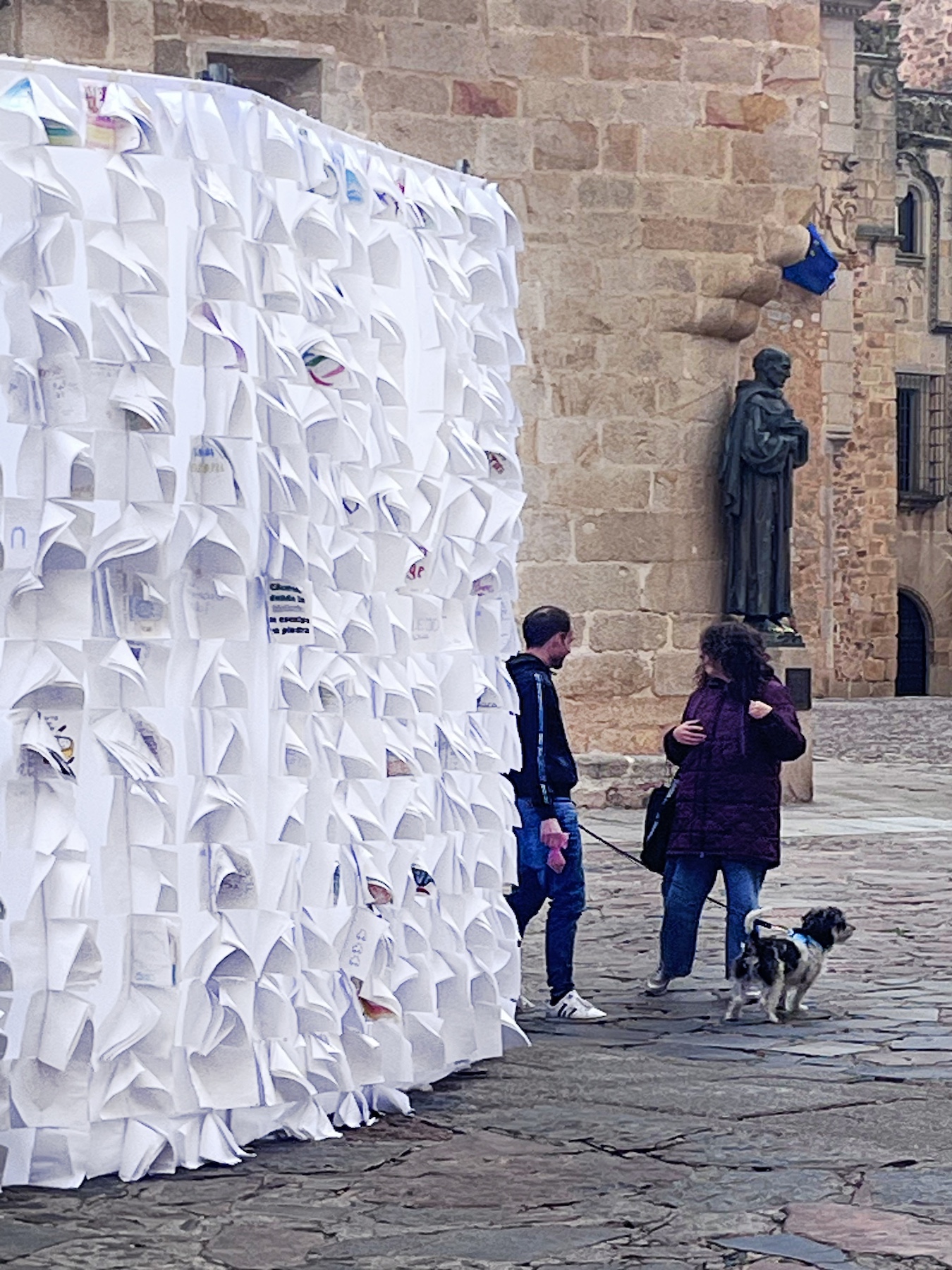
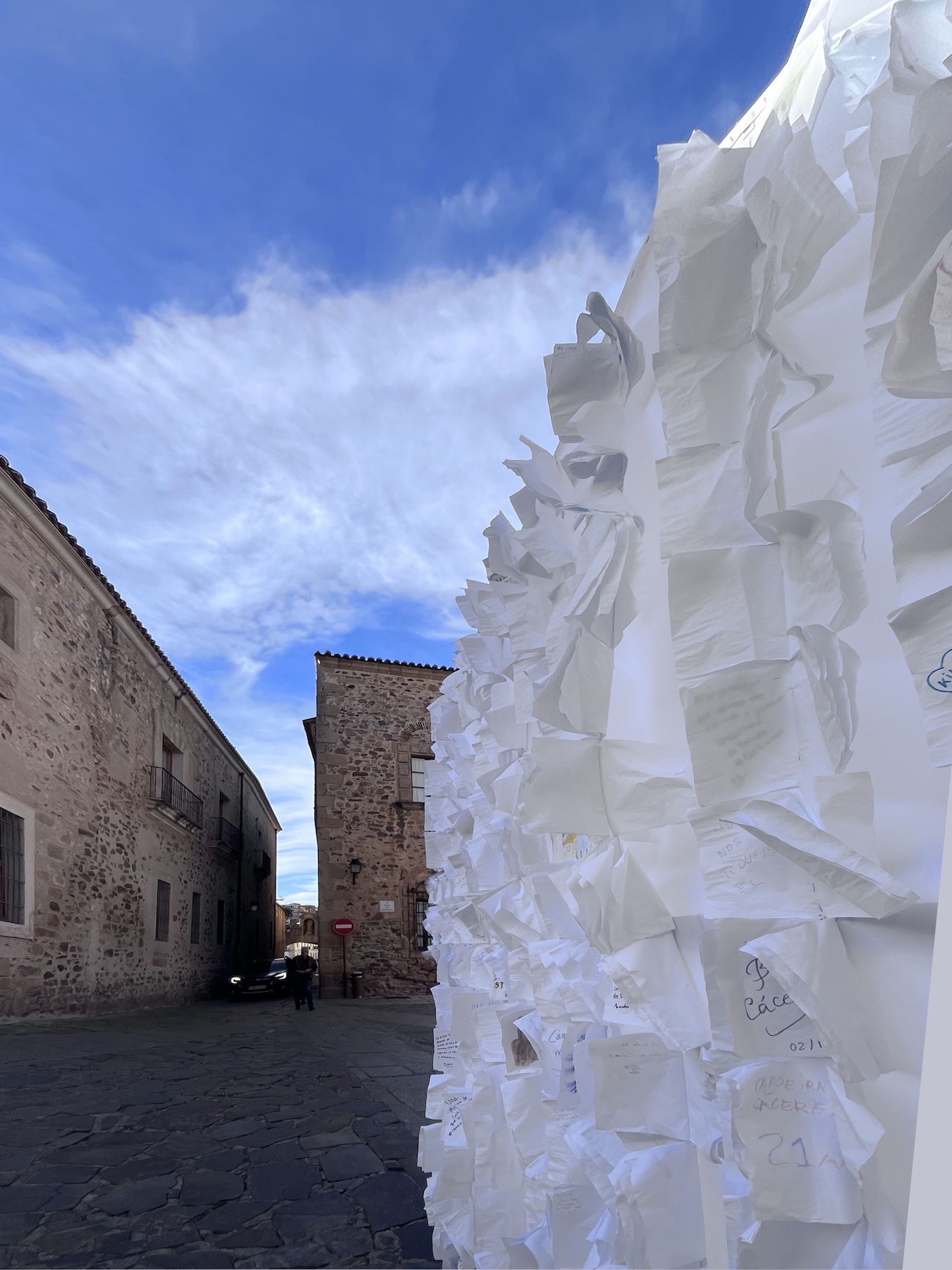
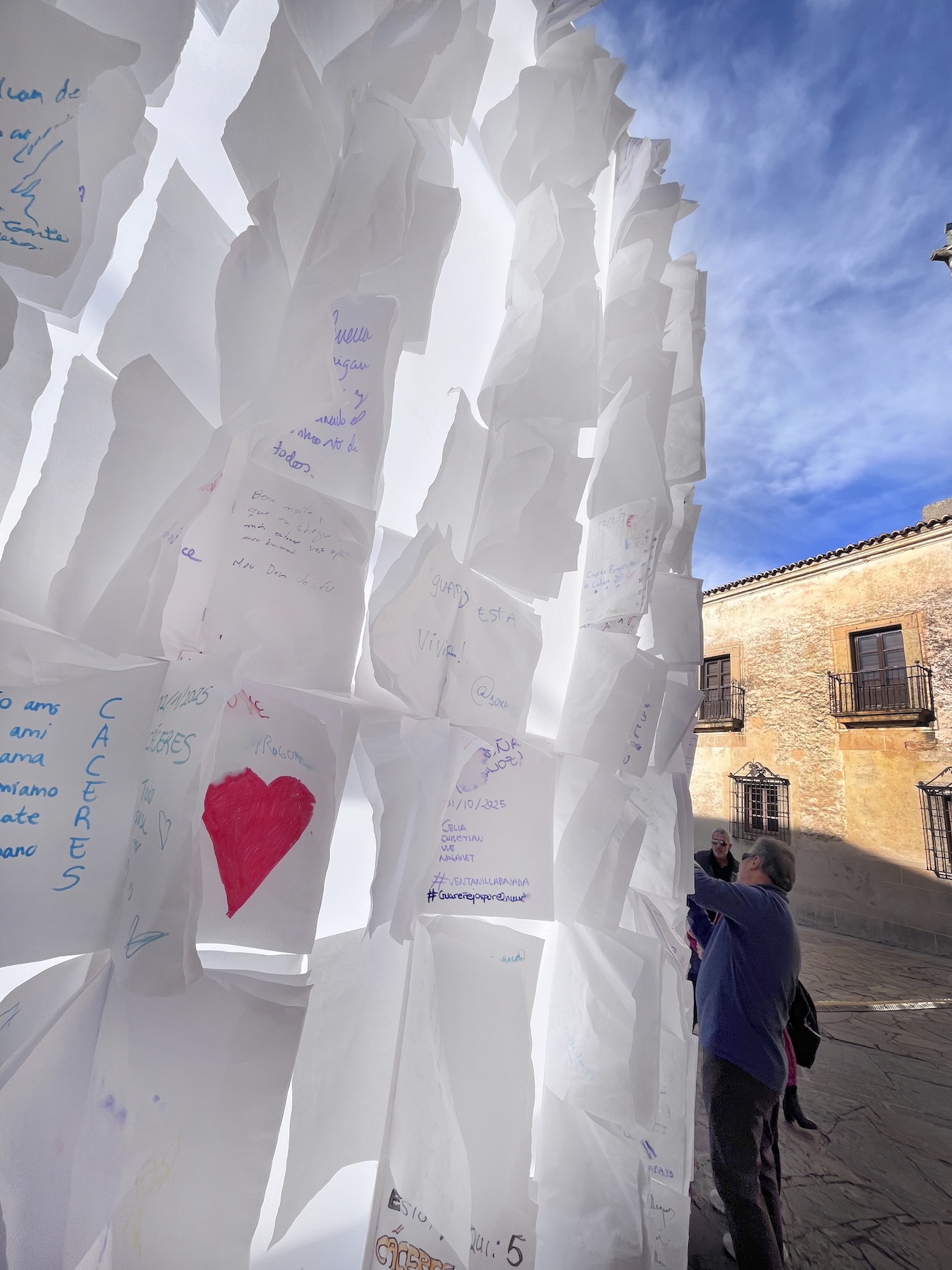
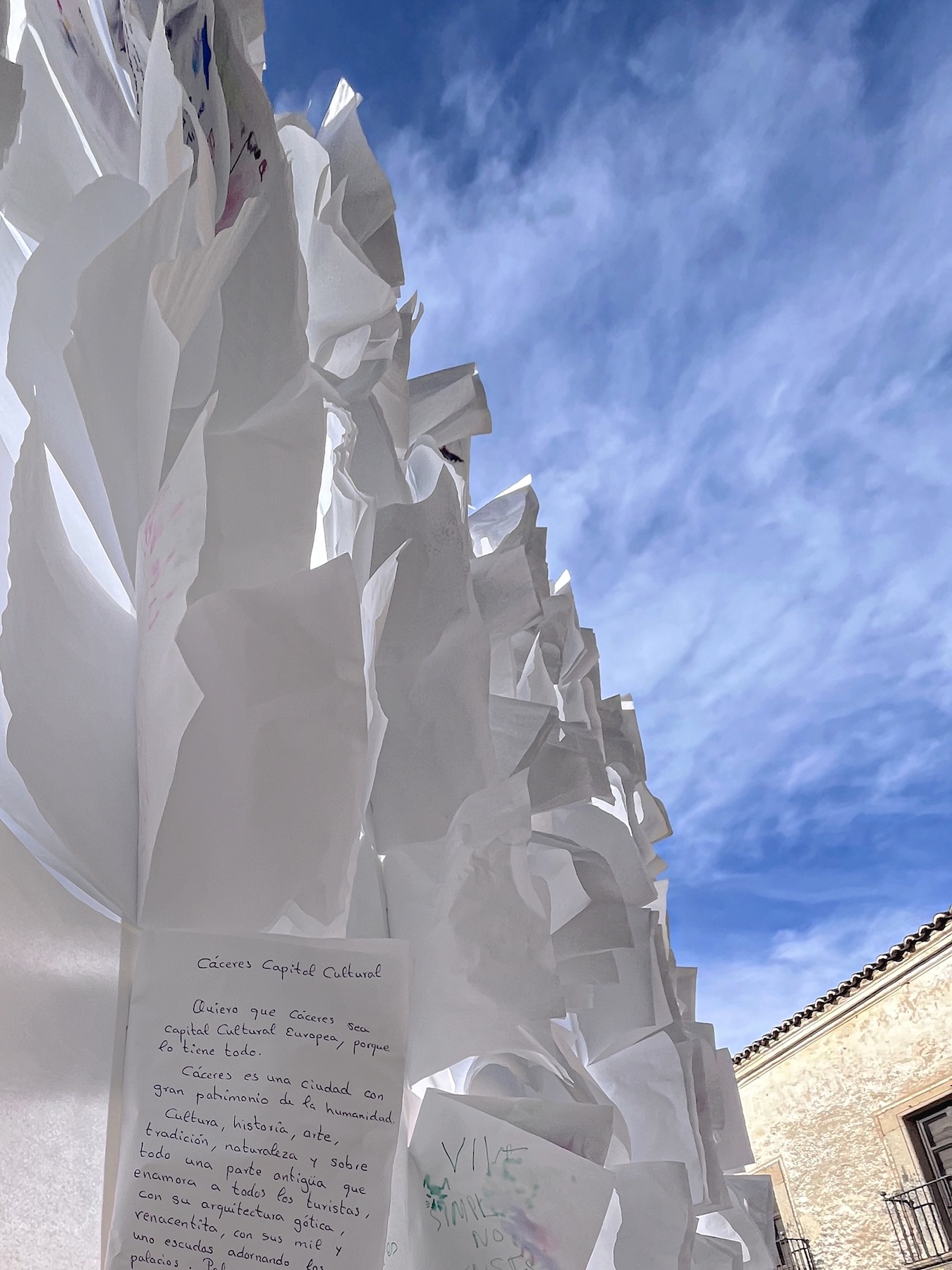
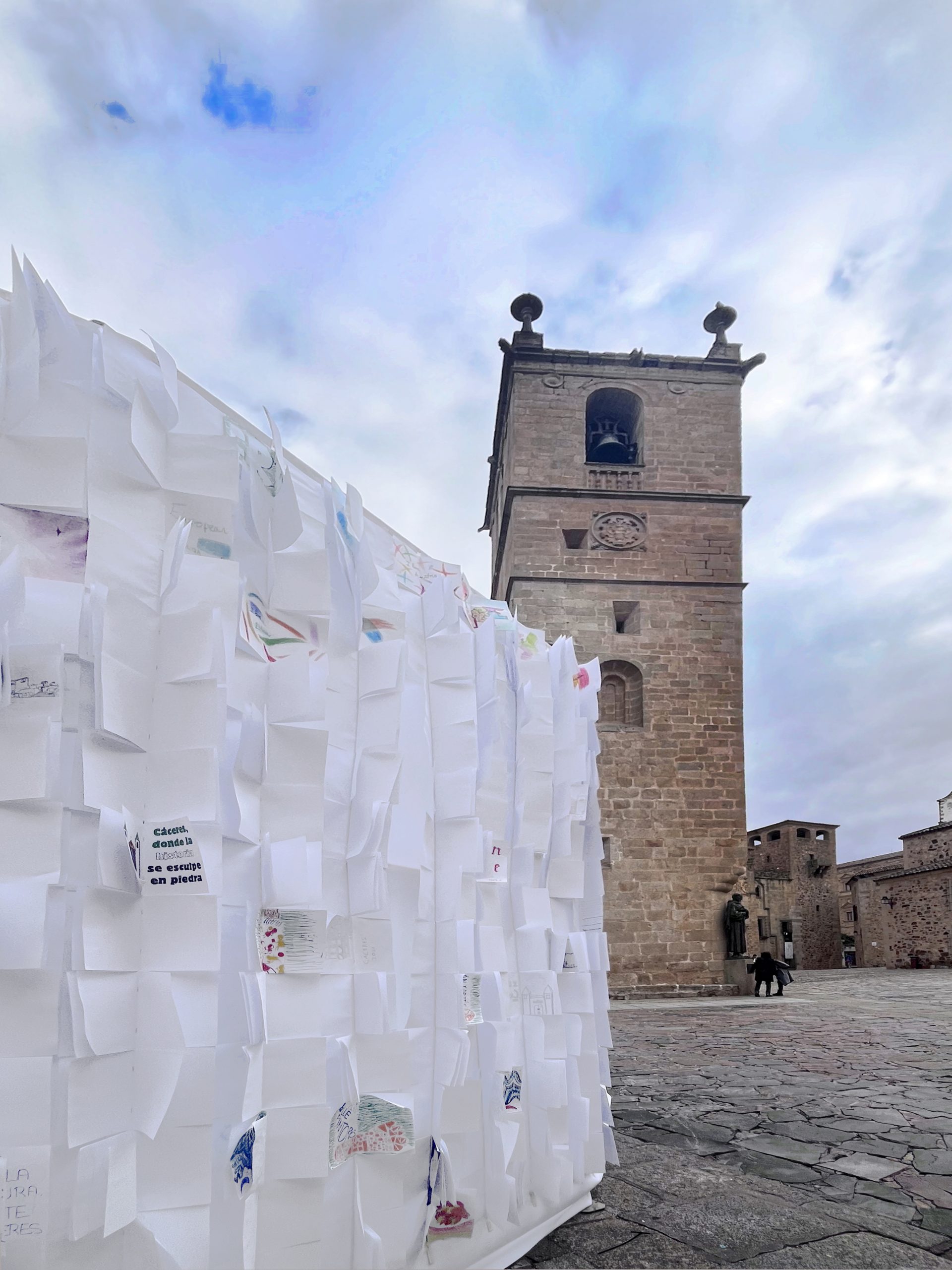
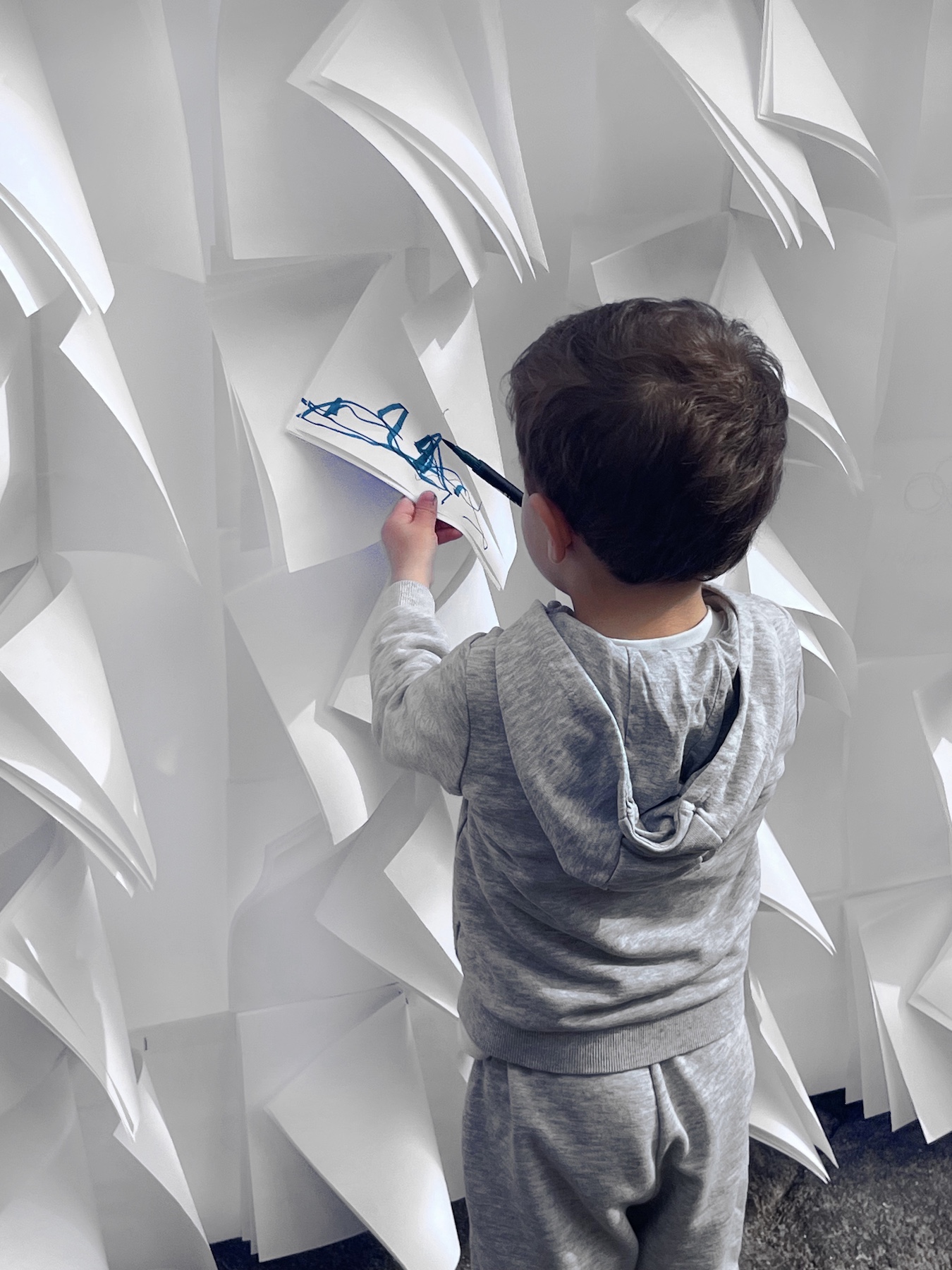
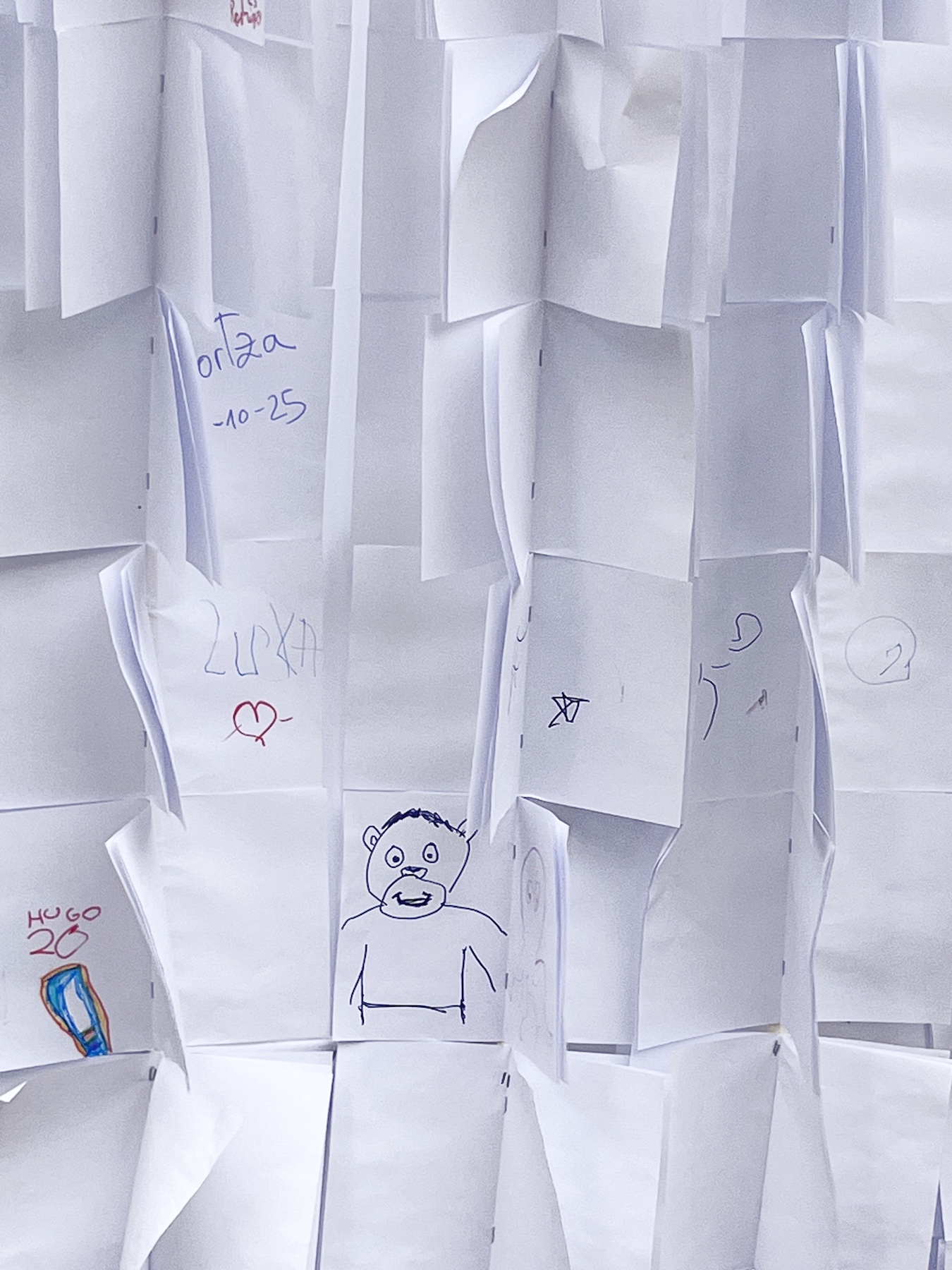
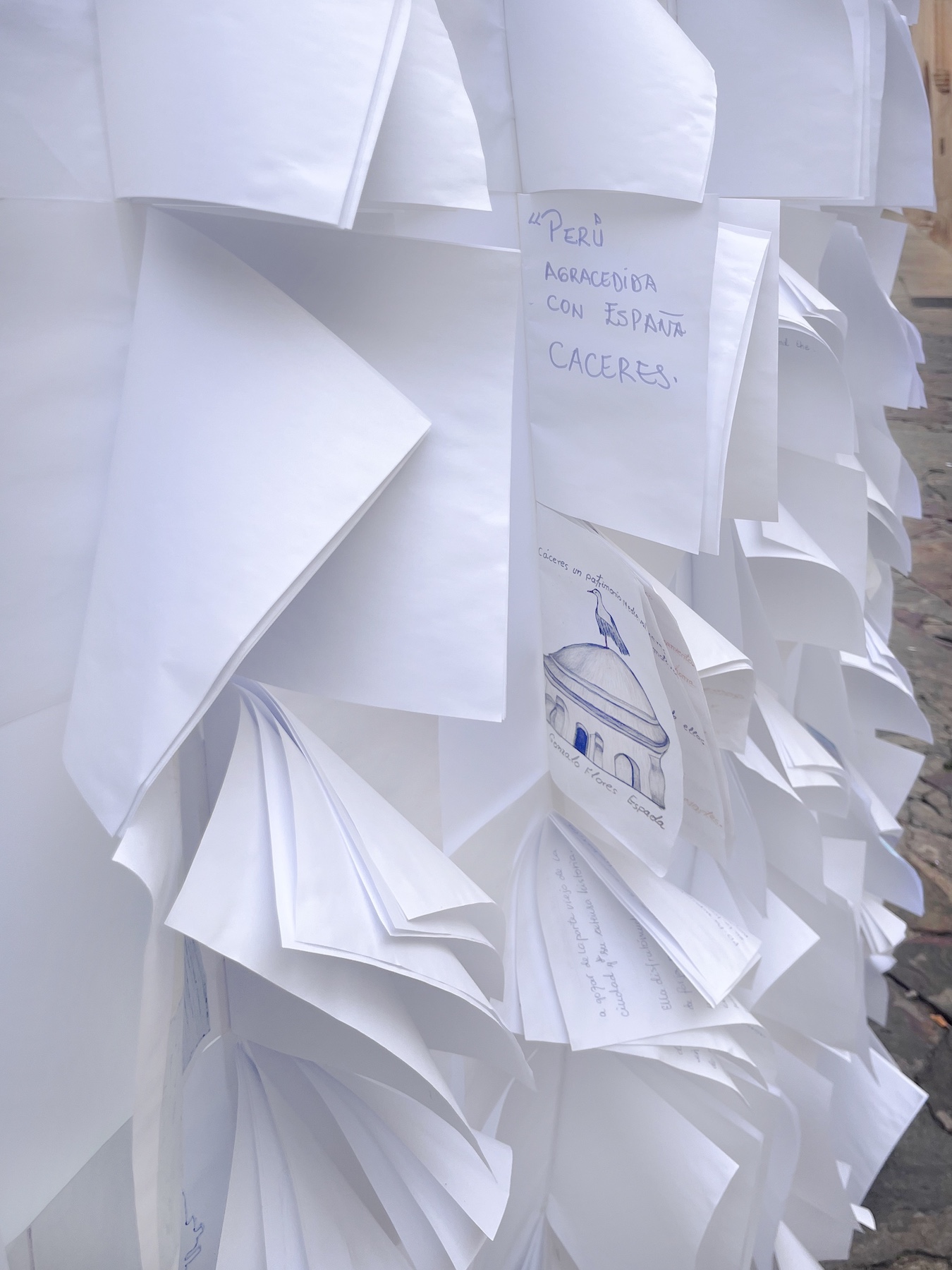
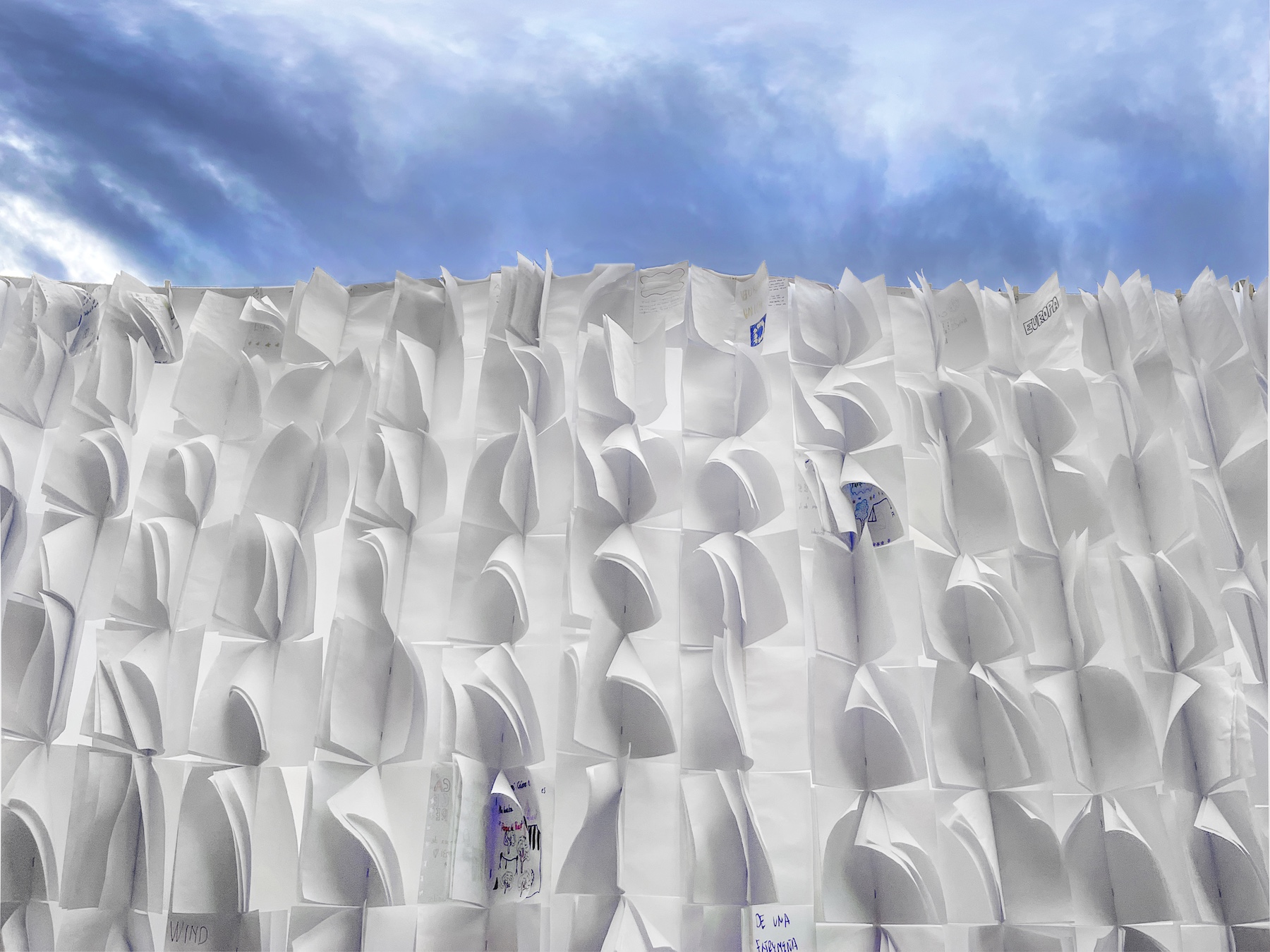
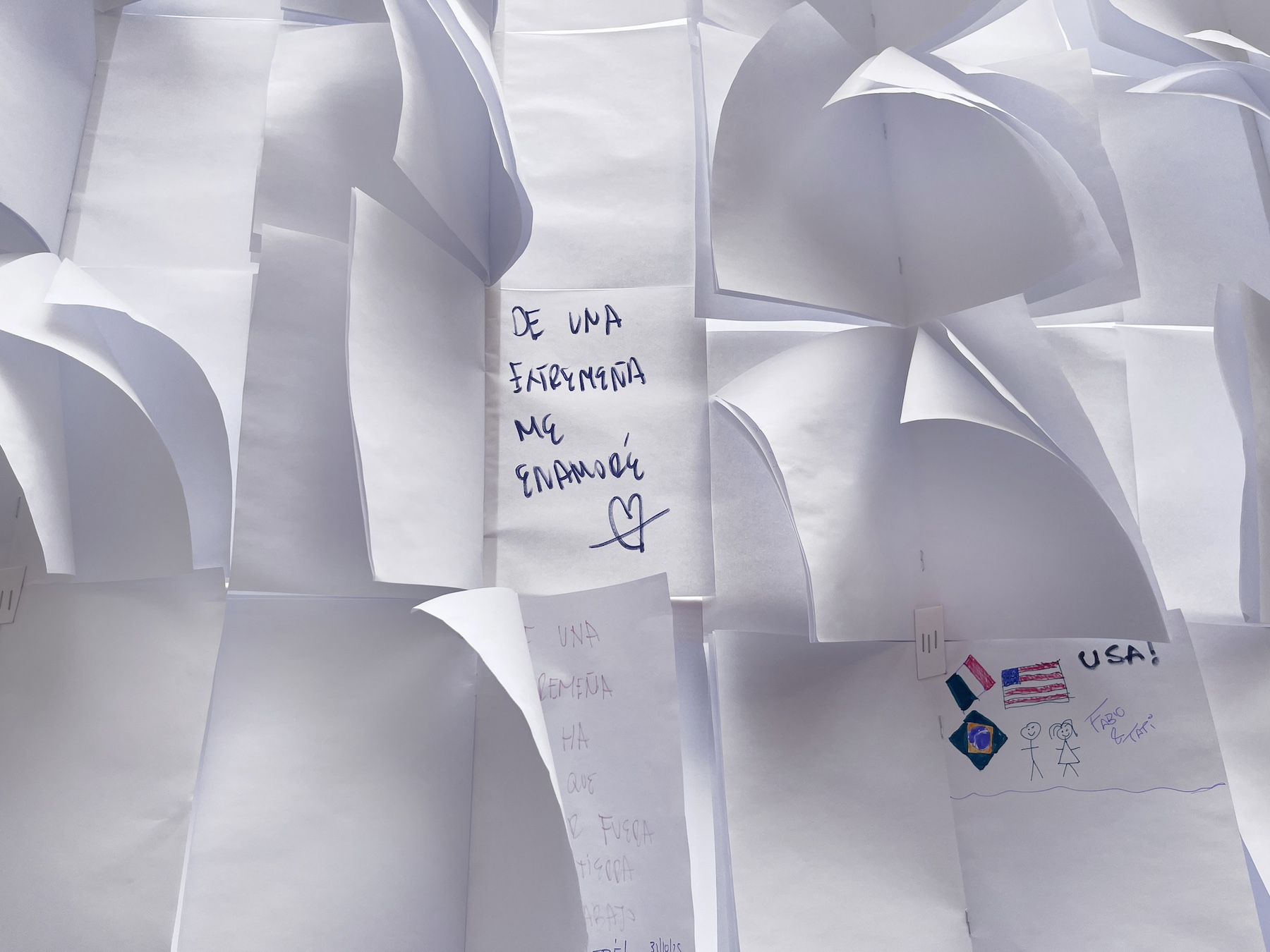
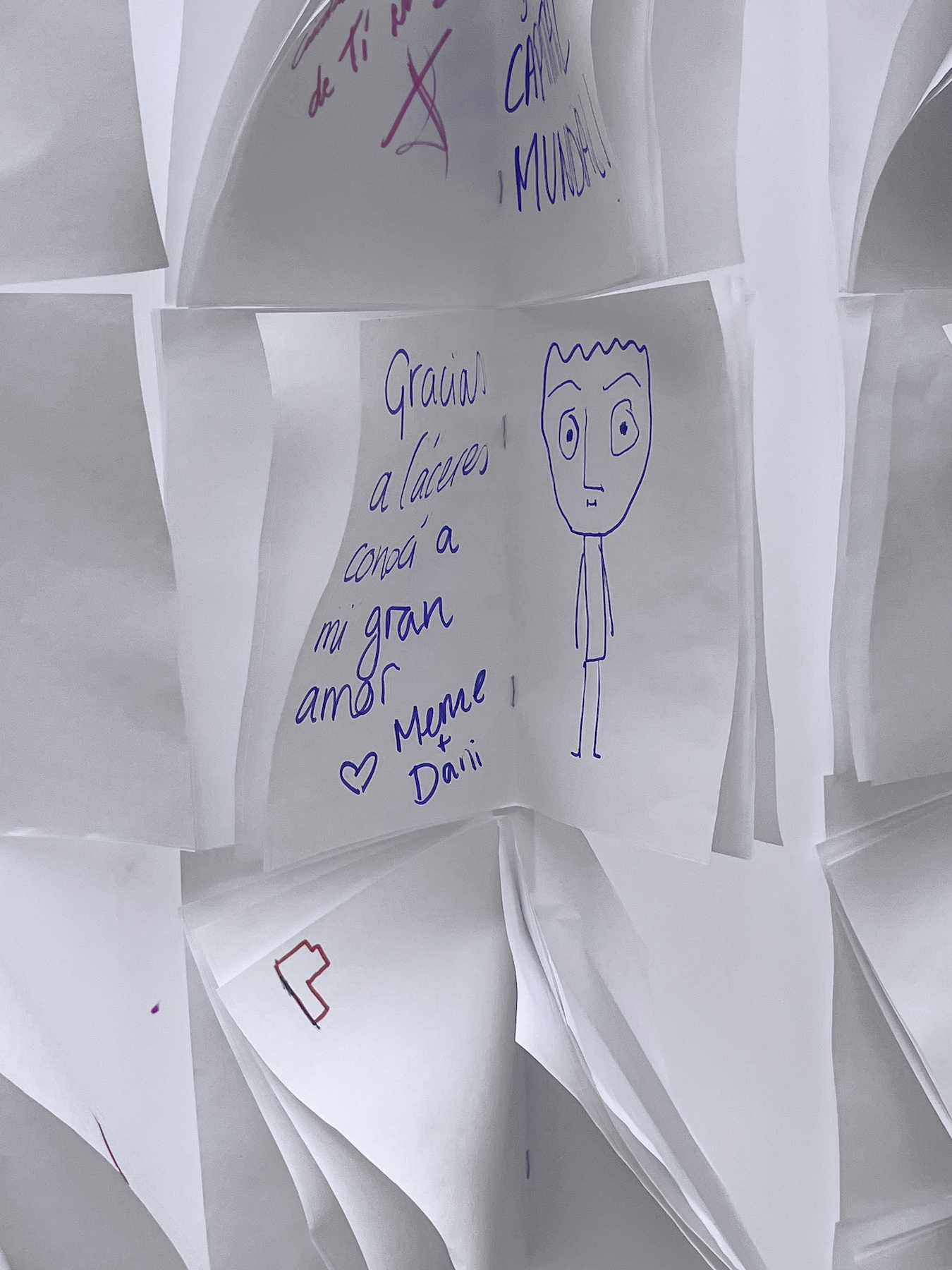
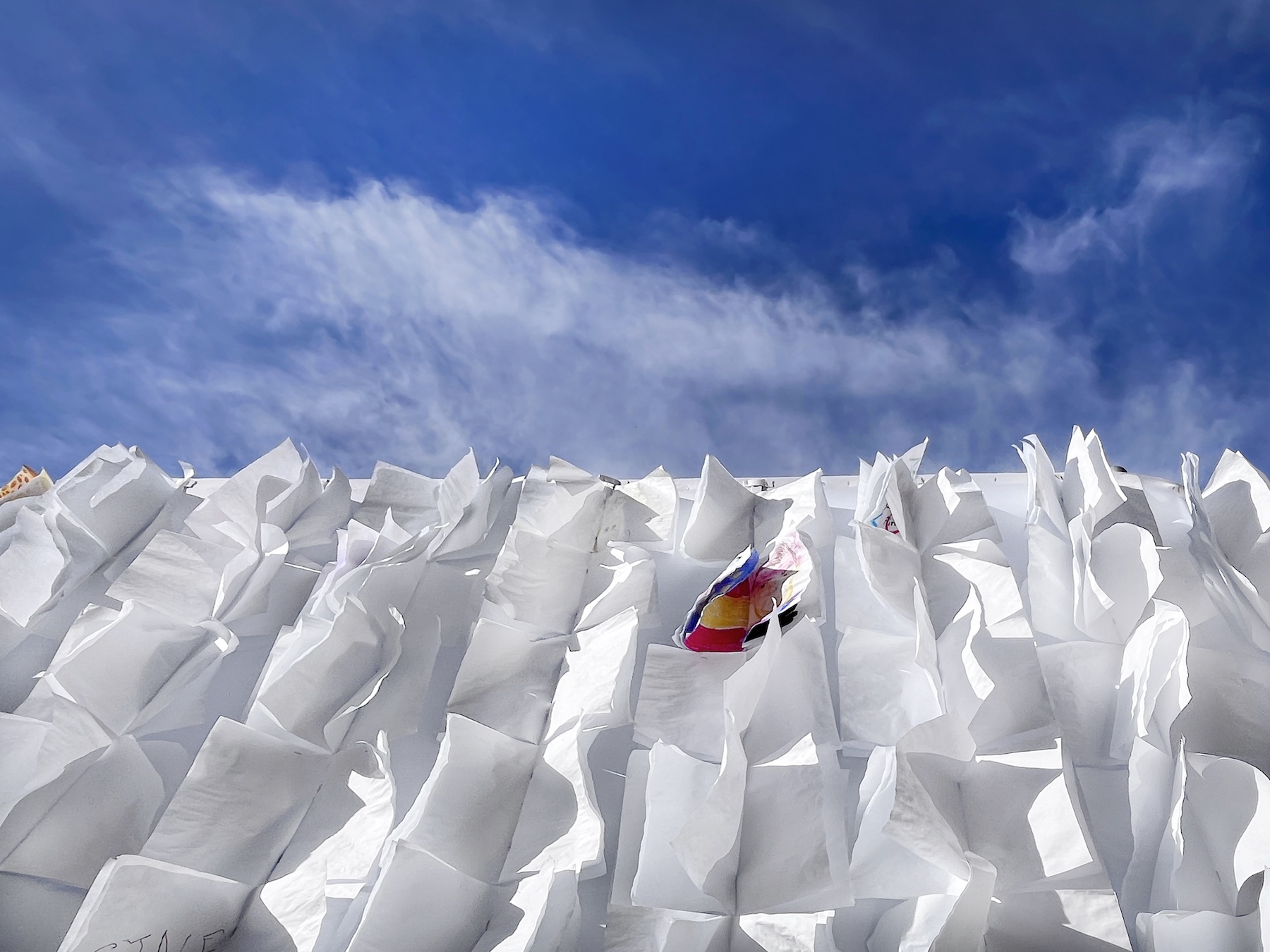
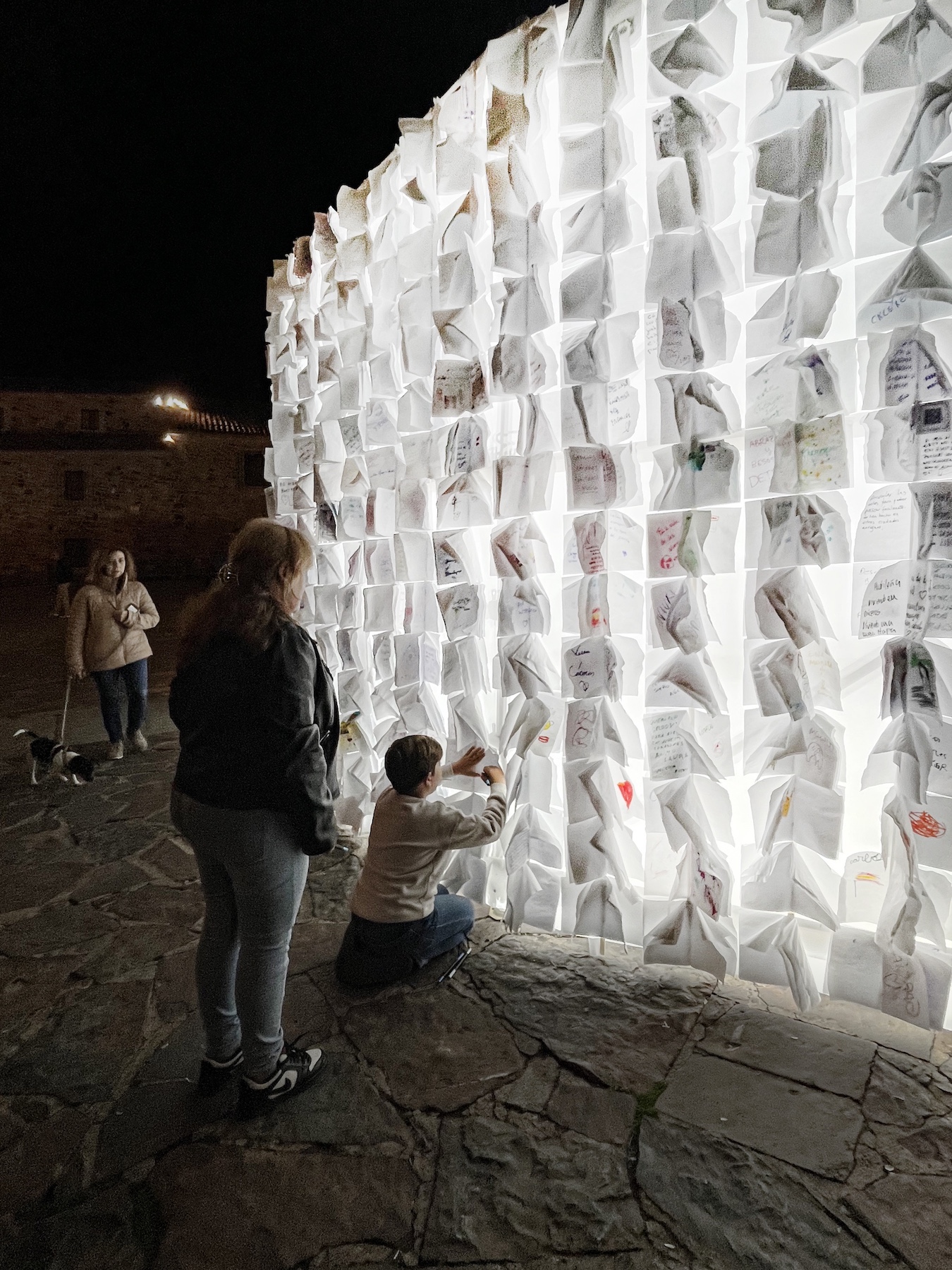
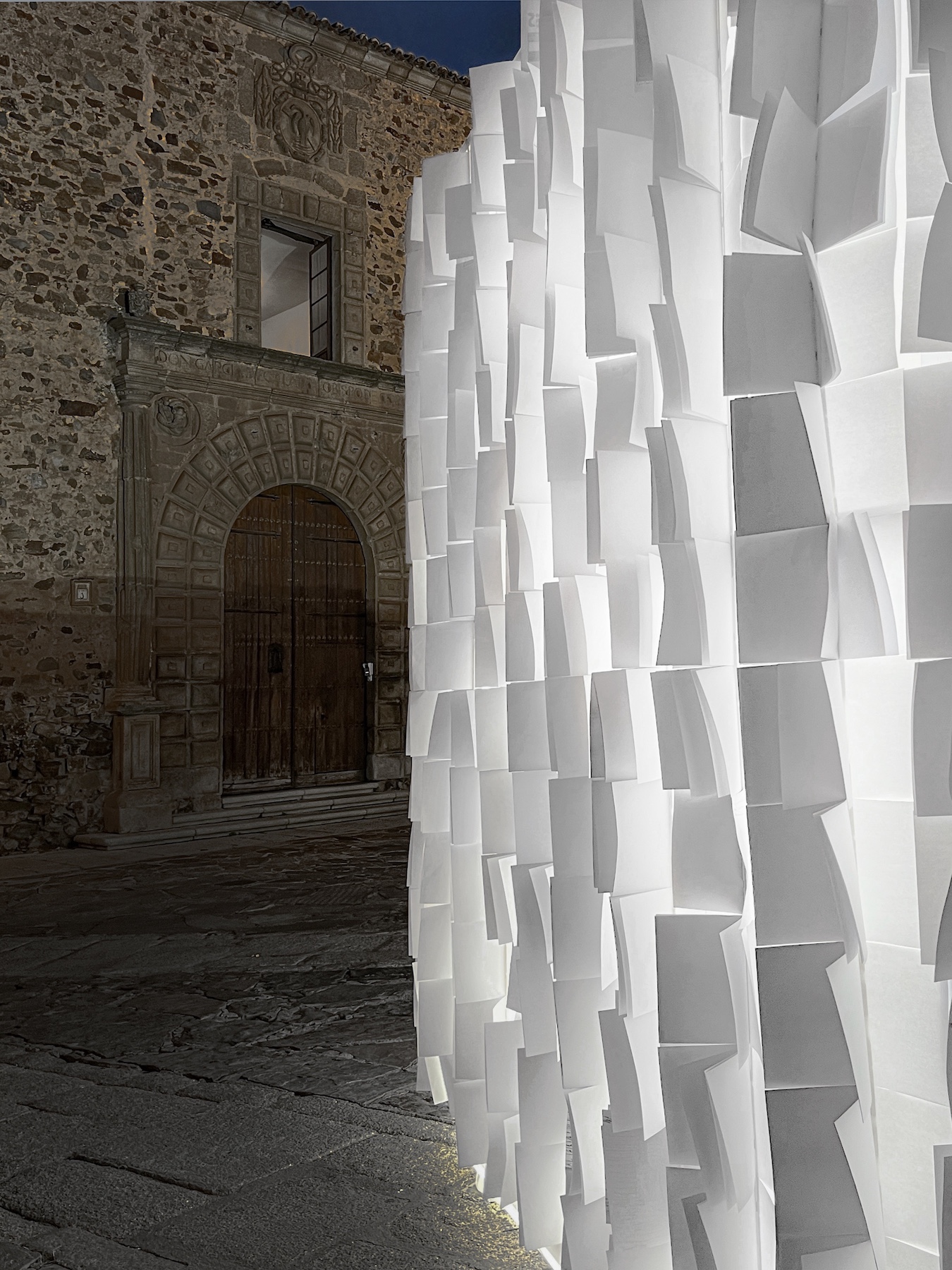
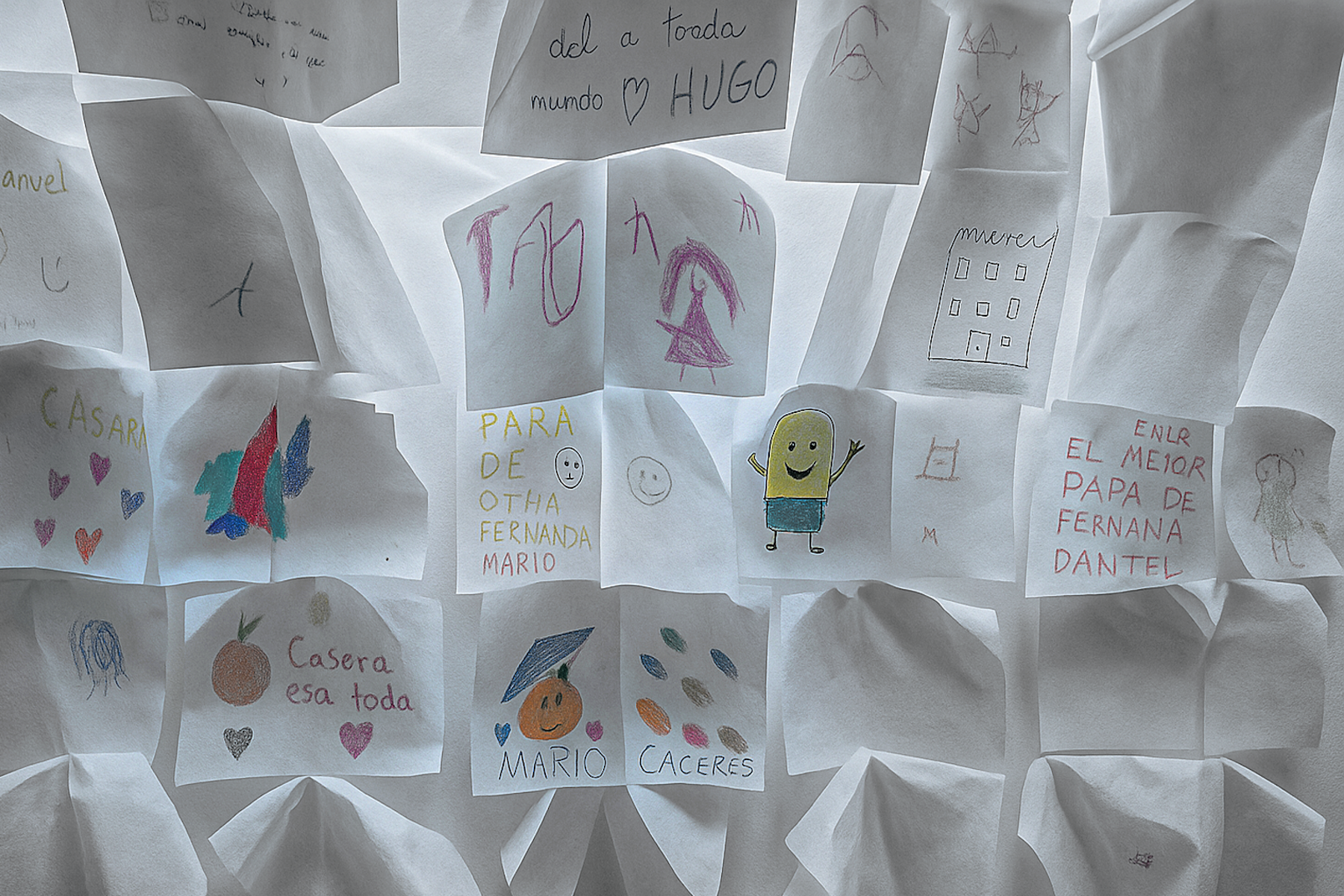
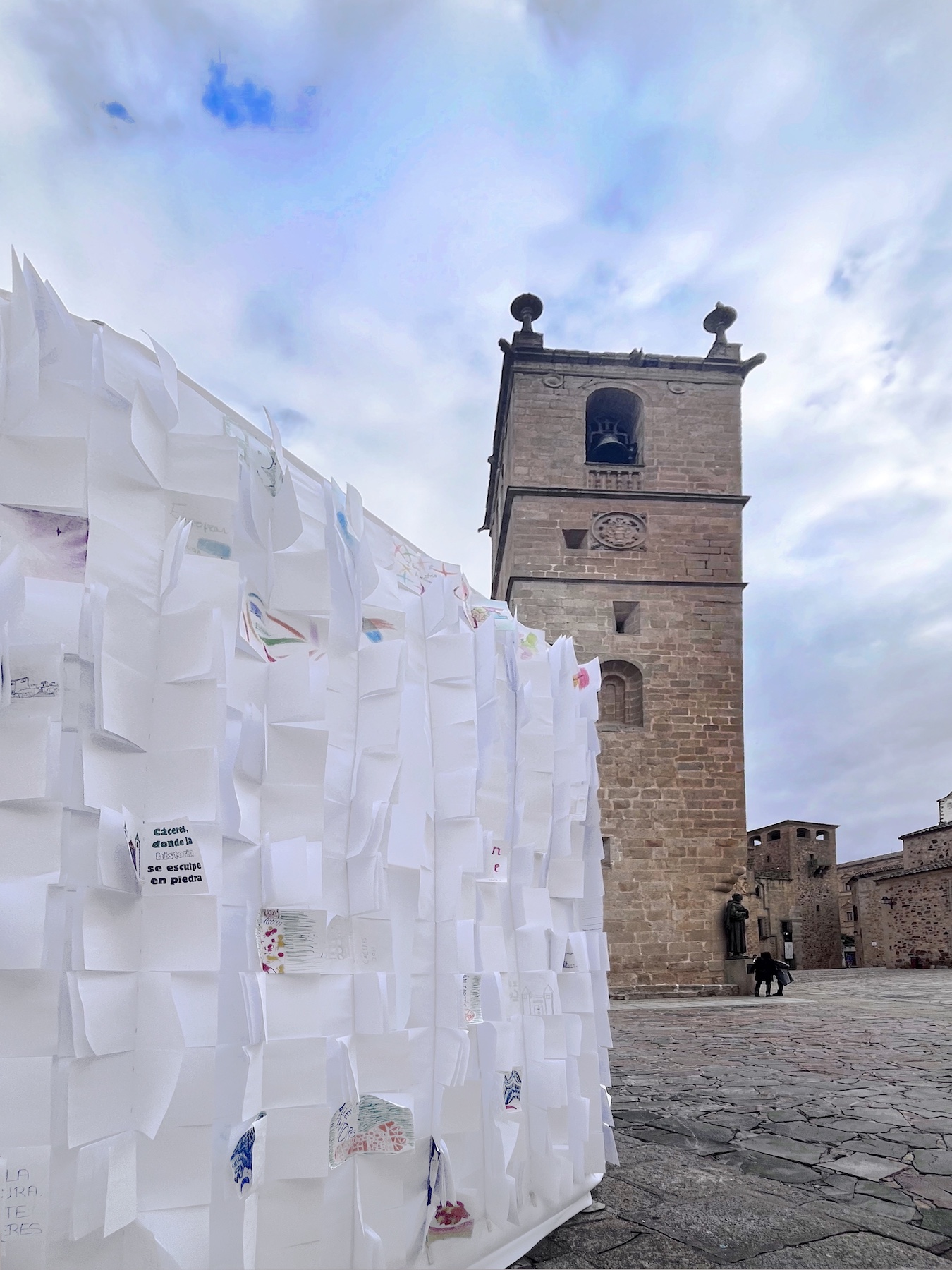
For three days, the piece took over Plaza de Santa María with a large circular wall covered in thousands of notebooks filled with messages from citizens. The structure, illuminated from within, functioned as a collective archive and a wall of free expression—something the public could write on and transform. The wind rustled the pages, creating an unpredictable collage of shared thoughts and reflections.

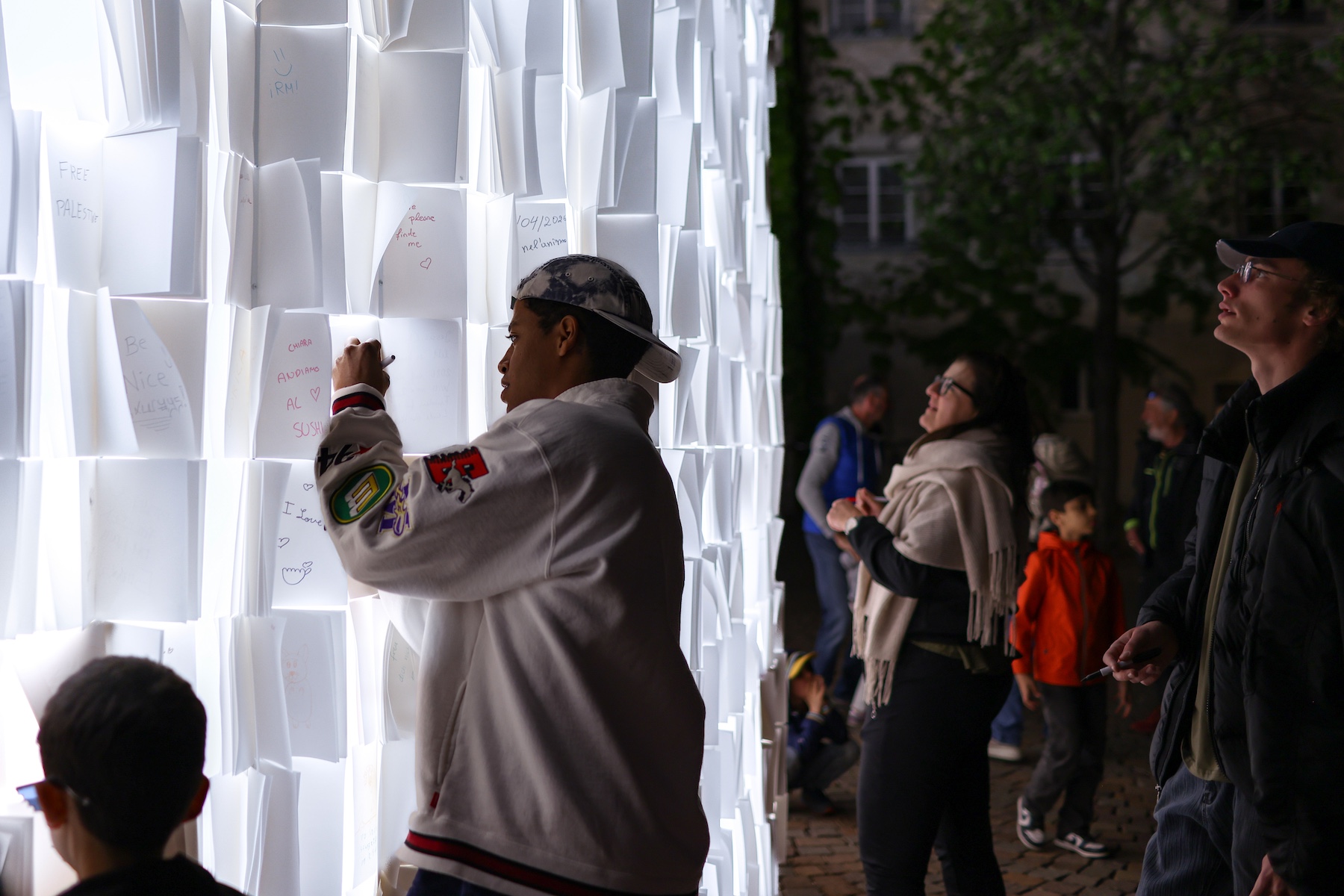
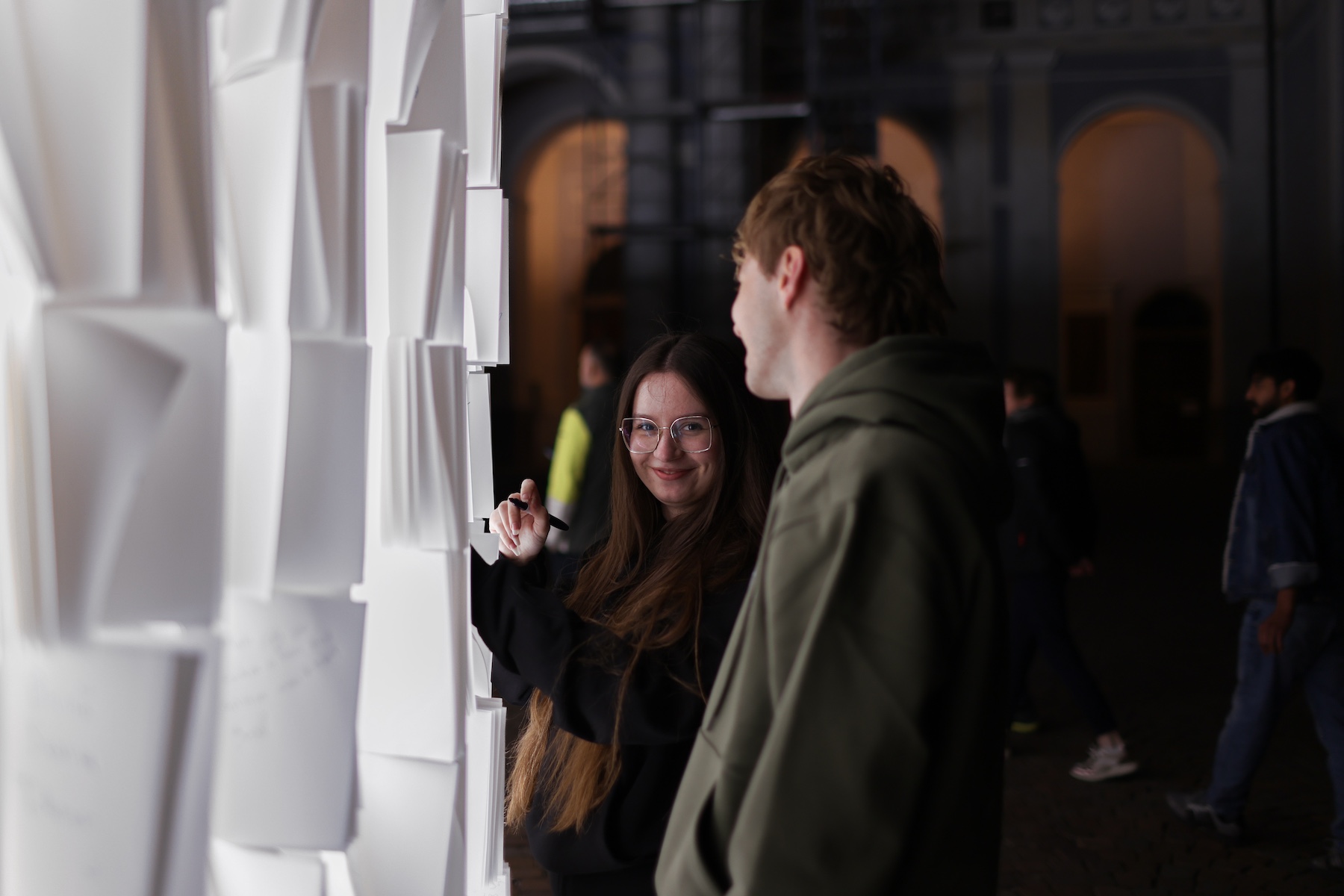
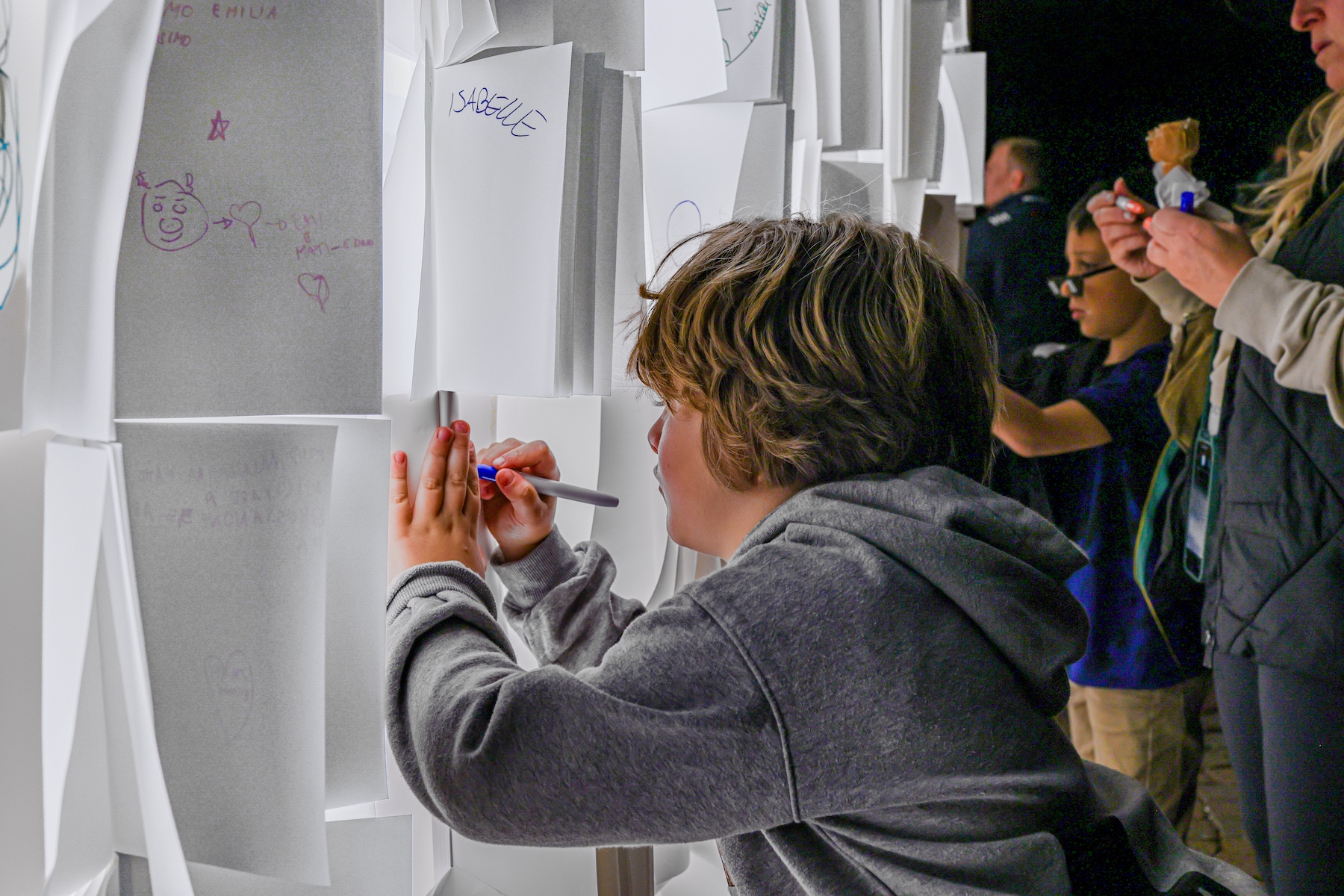
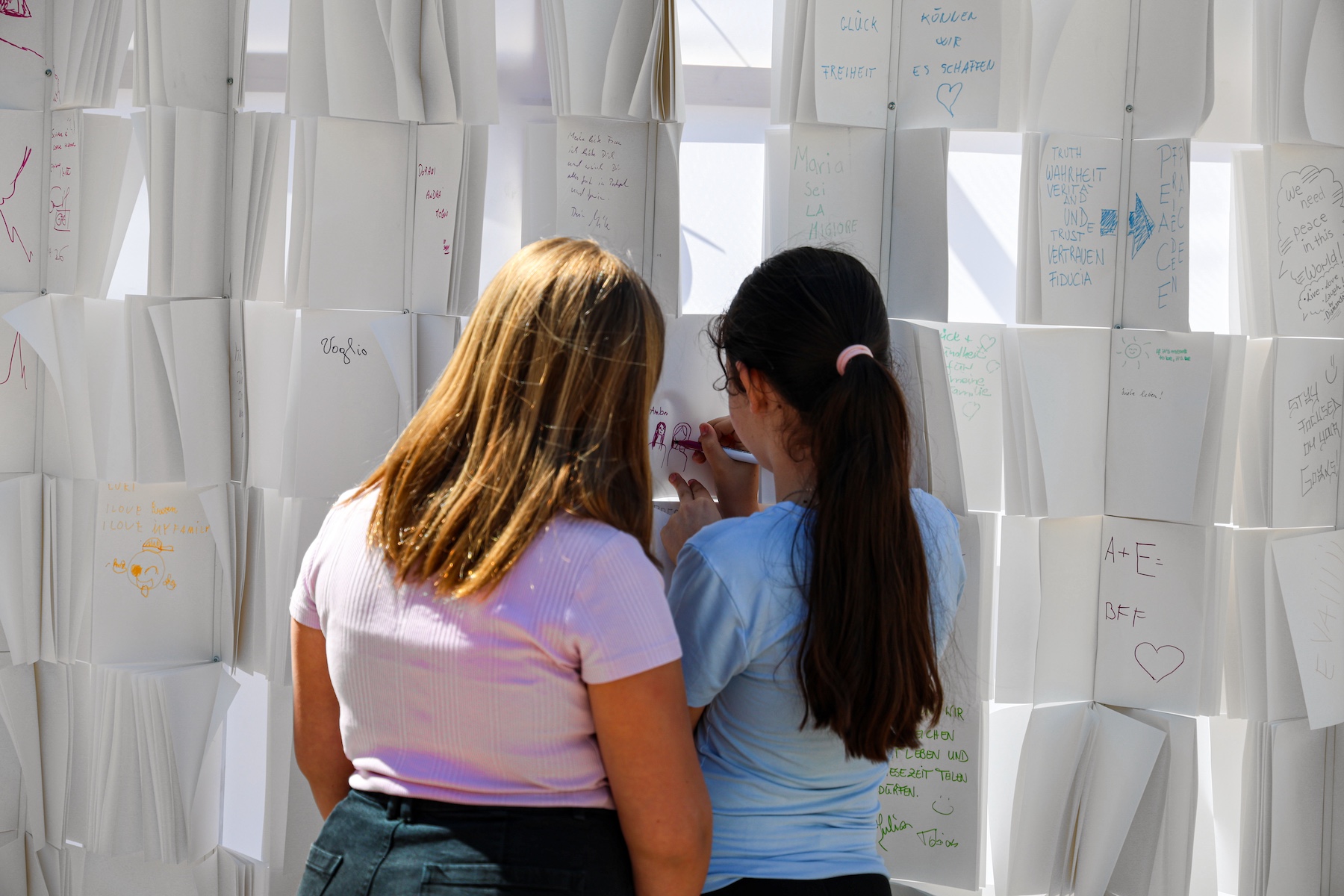
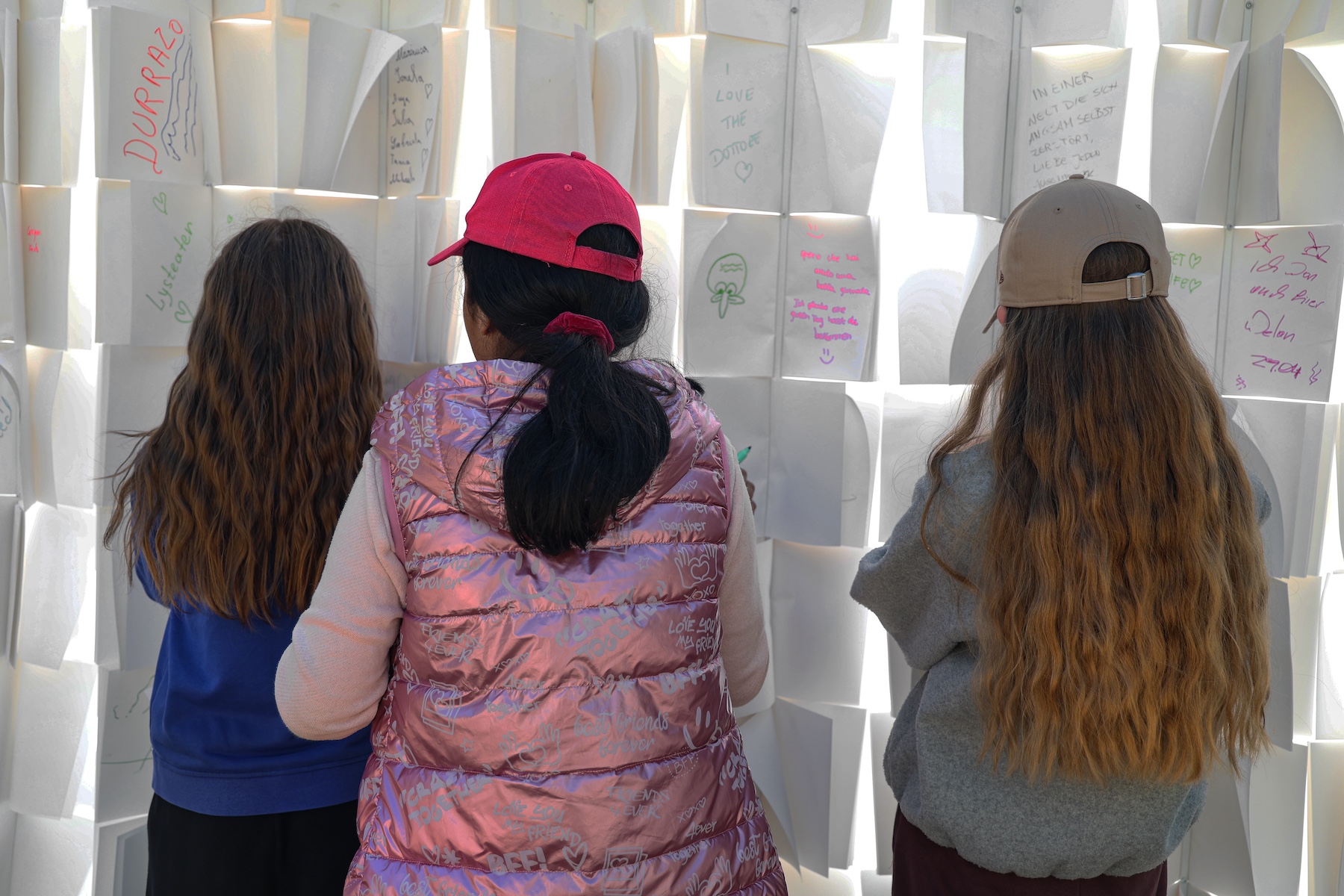
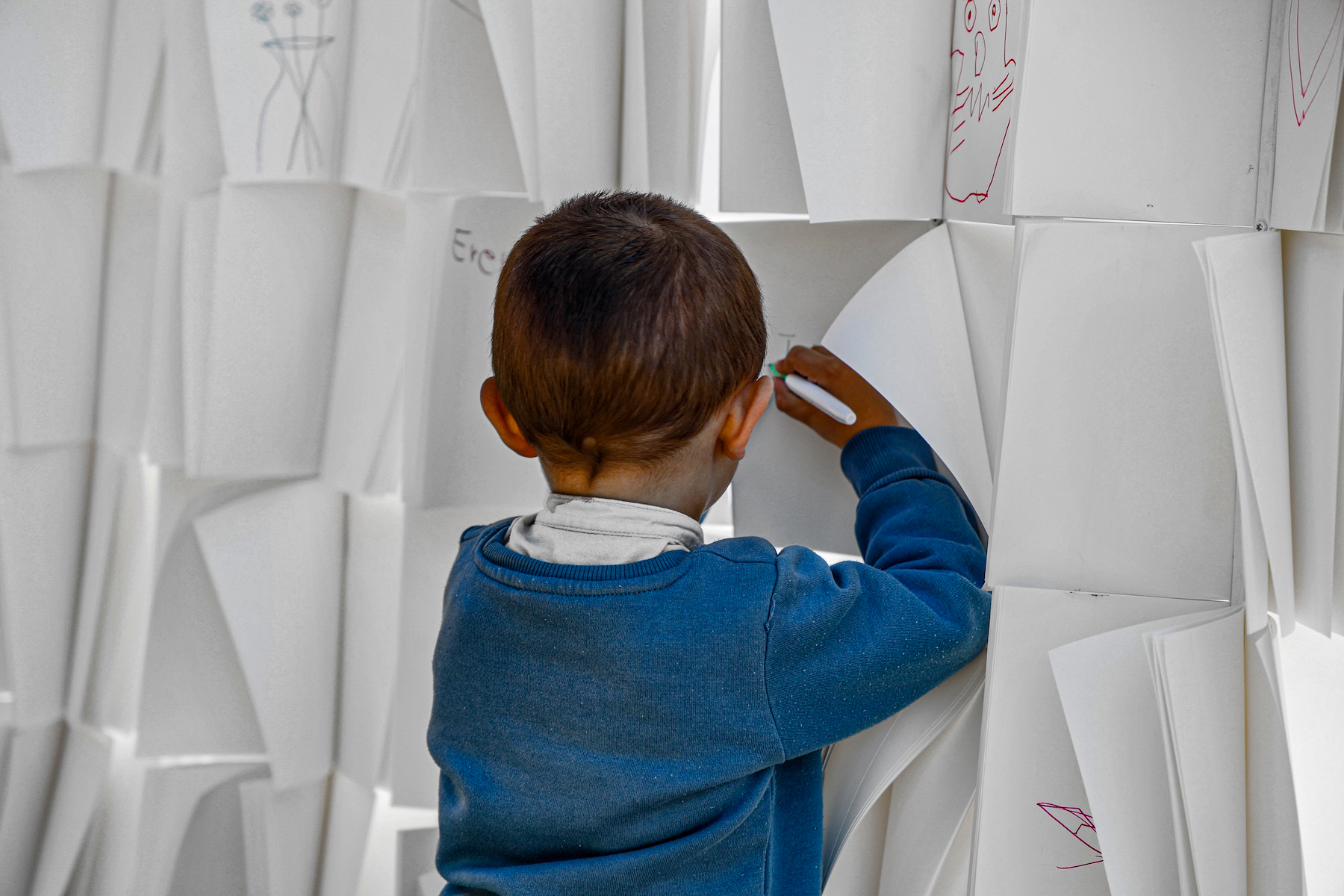
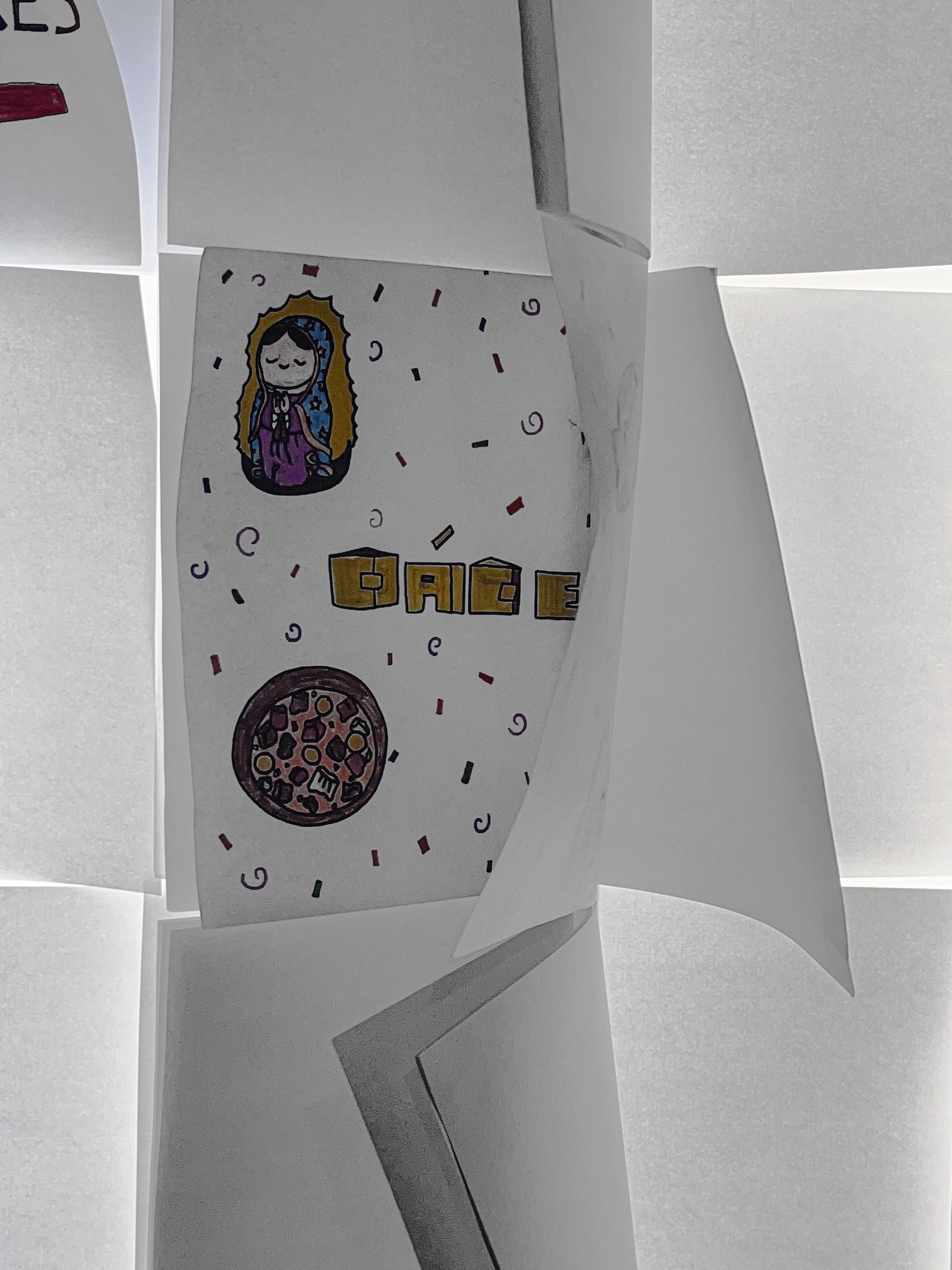
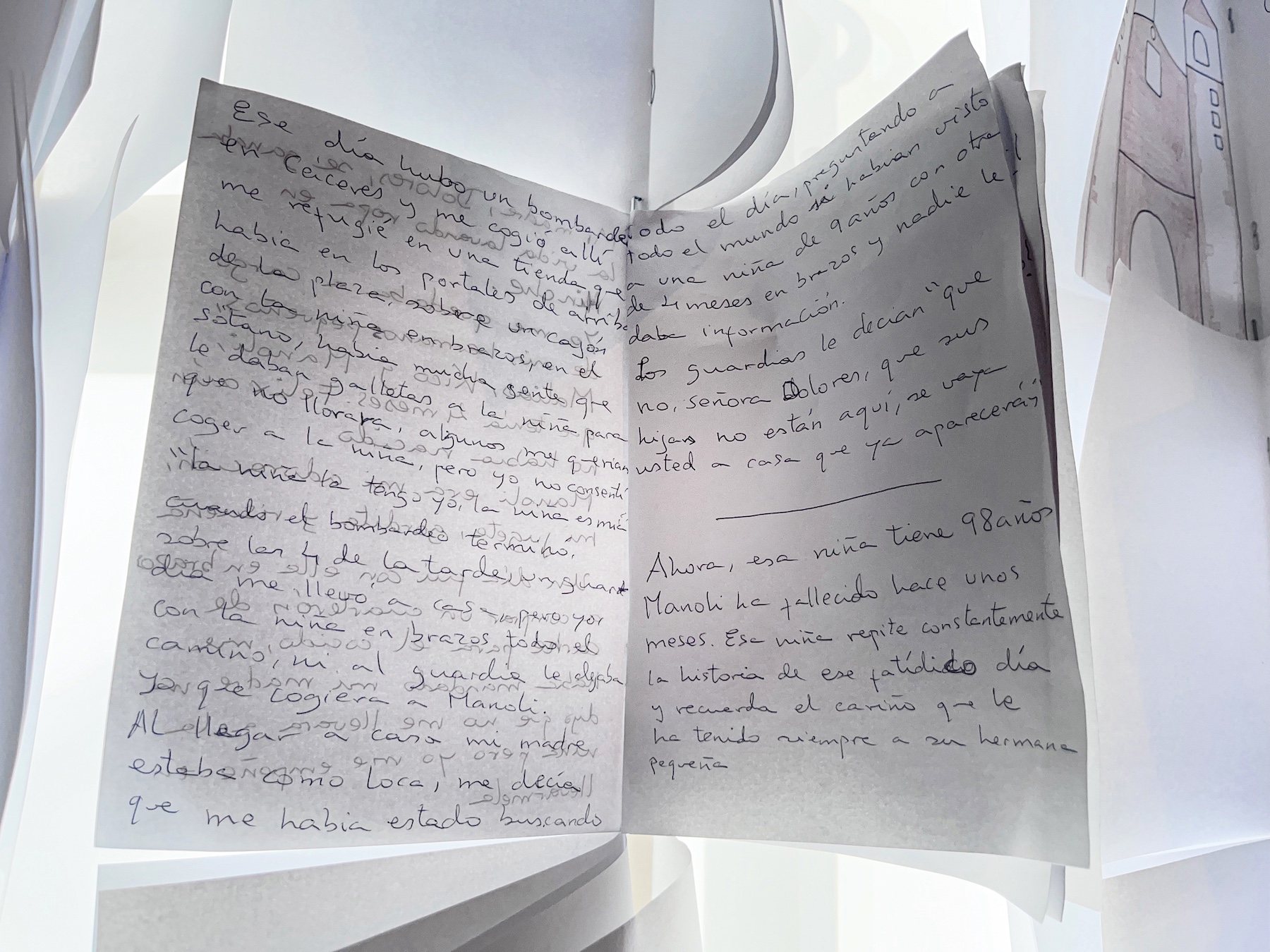
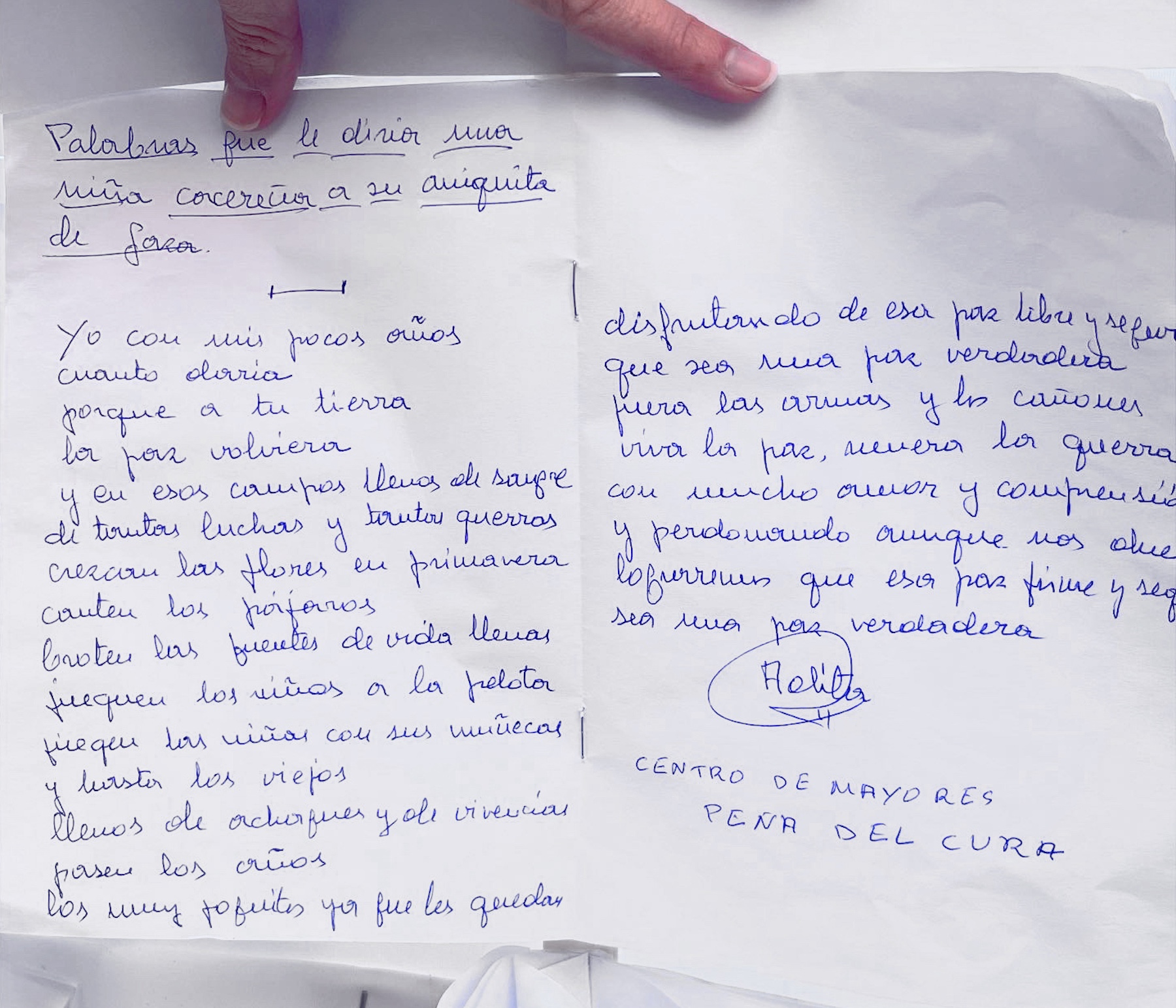
Participation unfolded on three levels: through preliminary workshops in schools and senior centers; during the installation, through spontaneous contributions by visitors; and remotely, via messages sent and shared by those who could not attend in person. All contributions revolved around Europe, culture, and the role of citizens.

Over the course of the event, the messages multiplied, and even the rain altered the physical appearance of the installation, adding an unexpected texture that reinforced its organic and mutable nature.

Some of the notebooks will soon travel to Brussels as a testament to the public’s interest in this European initiative.

We would like to thank the Consorcio Cáceres Capital Europea de la Cultura 2031  for the opportunity to carry out this intervention; 3 Elefantas for selecting us and producing the project; Burna visual Art for executing the piece with care and precision; and of course, the people of Cáceres for actively participating and giving meaning to every page.

On Blank Pages is an installation we have already carried out in various parts of the world. The version created for Cáceres has been one of the most ambitious to date, due to its scale, local involvement, and symbolic value as the starting point on the city’s path toward cultural capital status.

Time of installation: and installation: 2 days.
Damages: none.
Exhibition time: 3 days.

——————————–

El pasado mes de noviembre fuimos invitados a trabajar en Cáceres con nuestra pieza “En hojas blancas”. La instalación inauguró las actividades con las que la ciudad  arranca su candidatura para convertirse en Capital Europea de la Cultura 2031.

Durante tres días, la pieza ocupó la Plaza de Santa María con un gran muro circular recubierto por miles de cuadernos intervenidos con mensajes de los ciudadanos. La estructura, iluminada desde el interior, funcionaba como un archivo colectivo y un muro de libre expresión, que el público podía escribir y transformar. El viento movía las páginas creando un collage imprevisible de ideas y reflexiones compartidas.

La participación se articuló en tres niveles: con talleres previos en centros educativos y residencias de mayores; durante la instalación, con las intervenciones espontáneas de los visitantes; y de forma remota, mediante mensajes enviados y compartidos por quienes no pudieron asistir en persona. Todos ellos giraban en torno a Europa, la cultura y el papel de la ciudadanía.

A lo largo de los días, los mensajes fueron creciendo y la lluvia incluso modificó el aspecto físico de la instalación, aportando una textura inesperada que reforzó su carácter orgánico y mutable.

Algunos de los cuadernos viajarán próximamente a Bruselas como testimonio del interés ciudadano por esta propuesta europea.

Queremos dar las gracias al Consorcio Cáceres Capital Europea de la Cultura 2031 por darnos la oportunidad de llevar a cabo esta intervención; a 3 Elefantas por elegirnos y producir el proyecto; a Burna visual Art por materializar la pieza con precisión y cuidado; y, por supuesto, a los ciudadanos de Cáceres por participar activamente, llenando de sentido cada una de sus páginas.

En hojas blancas” es una instalación que ya hemos realizado en distintas partes del mundo. La versión creada para Cáceres ha sido una de las más ambiciosas por su escala, implicación local y valor simbólico como punto de partida del camino hacia la capitalidad cultural.

Tiempo de montaje:  2 días.
Daños ocasionados: 0.
Permanencia de la intervención: 3 días.
Human Signage/ Señalización humana. (Ongoing serie)

Legs floating above the city as if swimming through the sky. Hands suspended in the air, waving to the wind and, when it calms down, seeming to gently caress passersby. Feet in the air stretching on tiptoe, light, as if trying not to disturb. Poetic presences that do not impose… they simply accompany us.
With this series, which stems from the idea of «They Step on Us», we aim, in a subtle and non-invasive way, to humanize public space, transforming places that are usually meant to signal, control, monitor or promote consumption into scenes of light that invite us to pause, to look, to imagine, and to let time pass.
In this piece, unlike the previous one version, the elements no longer fall nor press down on the heads of citizens: now they fly in the direction the wind dictates. They rise before our eyes, occupying the space usually assigned to flags, advertising and road regulations.
To do so, we will create giant-scale human body parts —legs, hands, arms— made of white, translucent, lightweight fabrics that allow the wind to move them like Japanese kites, and we will illuminate them from within with cold light. They will be attached to lampposts using traditional advertising banner supports, to masts or to existing urban structures. They can also be installed on traffic beacons or wind measurement poles along roads, creating a magical and calming effect for drivers.

At night, light will take center stage, and the suspended figures will become more visible, slightly altering the rhythm of the landscape without interrupting it. They will float gently, visibly, within everyone’s sight — a silent invitation to look at the city with slightly more humanized eyes…

—————————

Piernas que flotan sobre la ciudad como si nadaran por el cielo. Manos suspendidas que saludan al viento y, cuando este amaina, parecen acariciar a los transeúntes. Pies en el aire que se estiran de puntillas, livianos, como si intentaran no molestar. Presencias poéticas que no se imponen… solo nos acompañan.

Con esta serie, que parte de la idea «Nos pisan«, queremos, de manera sutil, humanizar el espacio público, transformando lugares que normalmente están destinados a señalizar, ordenar, vigilar o invitar al consumo en escenas de luz que inviten a detenerse, a mirar, a imaginar y a dejar pasar el tiempo.

En esta pieza, al contrario que en la anterior versión, los elementos ya no caen ni oprimen las cabezas de los ciudadanos: ahora vuelan en la dirección que el viento les marca. Se elevan ante nuestros ojos, ocupando el espacio asignado a las banderas, a la publicidad y a las normativas viales.

Para ello, crearemos elementos del cuerpo humano a tamaño gigante —piernas, manos, brazos— hechos con telas blancas y translúcidas, ligeras para que el viento las mueva cual cometas japonesas, y que iluminaremos desde dentro con luz fría. Se sujetarán a farolas mediante los soportes tradicionales de banderolas publicitarias, a mástiles o a estructuras urbanas ya existentes. También se pueden usar los soportes del balizamiento y medición de viento de las carreteras para producir un efecto mágico y tranquilizador a los conductores.

De noche, la luz tomará el protagonismo y las figuras suspendidas se harán más visibles, modificarán el ritmo del paisaje sin interrumpirlo. Flotarán suaves, visibles, al alcance visual de todos. Serán una invitación silenciosa a mirar la ciudad con ojos algo más humanizados…

They Step on Us / Nos pisan

+

This installation speaks to a shared feeling — that of being stepped on, pressured, or dominated by something or someone. Each person knows who or what is trampling over them; we ourselves can think of many reasons why…

The piece consists of a large number of long, white, soft, translucent stockings, illuminated from within by a cool light. They represent human legs — bodiless, suspended from a structure or from the ceiling of the exhibition space. Some reach the ground, others float at various heights, creating a chaotic, dense, and immersive environment.

People are invited to walk through the installation, interact with the elements — touch them, hug them, caress them, or push them to create movement — giving the piece a life of its own.

Each stocking is made from translucent elastic fabric, with a metal ring sewn into its top to allow individual suspension. Inside, a low-voltage LED light provides even illumination. Visitors don’t observe the work from the outside — they enter it, pass through it, touch it, move it aside in order to navigate.

The installation can be set up in both outdoor and indoor spaces and easily adapts to different formats. It can be mounted on its own structure or hung from existing ceilings. Its shape, scale, and density vary according to the space, making each installation unique.

Because sometimes, what oppresses us can’t be seen… until we shine a light on it.

——————————–

Esta instalación habla de una sensación compartida, la de sentirse pisado, presionado o dominado por algo o alguien. Cada uno sabe quien y por qué le pisotea, a nosotros se nos ocurren muchas ideas al respecto….

La pieza está formada por una gran cantidad de medias blancas, largas, suaves y translúcidas, iluminadas desde dentro con luz fría. Representan piernas humanas, sin cuerpo, suspendidas desde una estructura o desde el techo del espacio expositivo. Algunas llegan hasta el suelo, otras flotan a diferentes alturas, creando un entorno caótico, denso e inmersivo.

Las personas pueden andar por su interior interactuando con los elementos, tocarlos, abrazarlos, acariciarlos y empujarlos para crear movimiento, lo que hace que la instalación tenga vida propia.

Cada media está confeccionada en tela elástica translúcida, con una anilla metálica, cosida en su parte superior que permite su suspensión individual. En su interior, una luz LED de bajo voltaje genera una iluminación homogénea. El visitante no observa la obra desde fuera, sino que entra en ella, la atraviesa, la toca, la aparta para poder moverse.

La instalación puede estar situada en espacios exteriores o interiores y se adapta fácilmente a distintos formatos. Puede montarse sobre estructura propia o colgarse de techos existentes. Su forma, escala y densidad varían según el lugar, haciendo que cada montaje sea único.

Porque a veces, lo que nos oprime no se ve… hasta que lo iluminamos.

Healing Light / Luz Sanadora

Ç

Healing Light is an updated revision of an installation we carried out clandestinely in 2014, originally conceived as a critique of the Spanish healthcare system. We believe that this idea remains fully relevant today, but its message can now extend further and become more universal, given that nature is increasingly fragile and deteriorated due to irresponsible practices and overexploitation.

For this new version, we would use thousands of real medical syringes, preferably large and made of glass, equipped with autonomous lights emitting a soft, cold glow. Lights of different colors could also be employed to further emphasize the dramatic effect of the installation.

These syringes, without needles, would be assembled by their tips onto thin, flexible rods inserted into the ground, allowing them to sway gently with the wind, creating a dynamic and organic visual effect. This composition delicately integrates artificial elements with the natural, generating small luminous points reminiscent of fireflies, highlighting the contrast between the artificial fragility of the syringes and the regenerative, vital strength of the surrounding nature.

The installation invites viewers to reflect on our responsibility regarding environmental deterioration and underscores the urgent need to reconnect with nature as an essential source of healing and balance.

Hopefully, we will soon be able to carry it out.

—————————

Luz Sanadora es una revisión actualizada de una instalación que realizamos de manera clandestina en 2014, originalmente concebida como una crítica al sistema sanitario español. Consideramos que esta idea sigue plenamente vigente, pero su mensaje puede extenderse y hacerse más universal, dado que la naturaleza se encuentra cada vez más frágil y deteriorada por los usos irresponsables y la sobreexplotación a la que la sometemos.

Para esta nueva versión utilizaríamos miles de jeringas médicas reales, preferentemente grandes y de cristal, equipadas con luces autónomas que emitirían una suave luz fría. También podrían emplearse luces de colores distintos para enfatizar aún más el dramatismo de la instalación.

Estas jeringas, sin agujas, se ensamblarían por la punta a finas varillas flexibles insertadas en el suelo, permitiendo que se balanceen ligeramente con el viento y creando un efecto visual dinámico y orgánico. Esta composición integra delicadamente lo artificial con lo natural, generando pequeños puntos luminosos similares a luciérnagas, que resaltan el contraste entre la fragilidad artificial de las jeringas y la capacidad regeneradora y vital de la naturaleza circundante.

La instalación invita a reflexionar sobre nuestra responsabilidad ante el deterioro ambiental y subraya la urgente necesidad de reconectar con la naturaleza como fuente esencial de curación y equilibrio.

Ojalá pronto podamos llevarla a cabo.

Low Cost Lamps (bag version) / Lamparas de bajo coste (versión bolsas)

Years ago, we set out to create low-cost lamps to illuminate the streets, using inexpensive materials, preferably donated by citizens.

Among other ideas, we came up with the idea of using discarded commercial plastic bags—an omnipresent and practically indestructible material. Beyond giving them a new use, we wanted to place them at the center of attention: suspended in the air, floating above our heads, threatening to fall on us and bury us.

These lamps, made from donated commercial bags, can illuminate both outdoor and indoor public spaces. And just like the plastic they are made of, they will last indefinitely, serving as a reminder that the problem doesn’t disappear—it just moves elsewhere. What hangs in the air today will be in our bodies, in our oceans, and in our future tomorrow.

To make them a reality, we need commercial bags donated by neighbors and local businesses that no longer use them. To shape them, we use transparent recycled plastic sourced from local stores and a wire mesh structure to which the bags are attached, creating a chaotic and striking volume. Inside, powerful hidden lights penetrate through the layers of plastic, backlighting the bags and highlighting the collage of colors and commercial logos.

Through this intervention, we take over public space with a clear message: plastic does not disappear. It is in our hands to decide what to do with it and how to use it responsibly.

—————

Hace años, nos propusimos pensar en lámparas de bajo coste para iluminar espacios públicos, utilizando materiales baratos y, siempre que fuera posible, reciclados.

Entre otras ideas, pensamos en utilizar uno de los materiales recurrentes en nuestro trabajo, bolsas de plástico comerciales descartadas, para, ademas de darles un nuevo uso, ponerlas en el centro de todas las miradas: suspendidas en el aire, flotando sobre nuestras cabezas, amenazando con caernos encima y sepultarnos.

Estas lámparas, podrían iluminar tanto espacios públicos exteriores como interiores. Y, al igual que el plástico del que están hechas, durarán indefinidamente.

Para hacerlas realidad, necesitaríamos bolsas comerciales donadas por vecinos y comercios locales que ya no las utilicen. Utilizamos plástico transparente reciclado del comercio local para darles volumen, y una estructura de malla de gallinero sobre la que sujetamos las bolsas, creando formas caóticas y contundente. En su interior, instalaríamos luces ocultas de gran potencia que atraviesen las capas de plástico, retroiluminando las bolsas y resaltando el collage de colores y marcas comerciales.

A través de esta intervención, ocuparíamos espacios de uso público con un mensaje claro: el plástico no desaparece, sólo cambia de lugar. Y lo que hoy cuelga en el aire, mañana estará en nuestros cuerpos, en nuestros mares y en nuestro futuro.