El día que las paredes sangraron


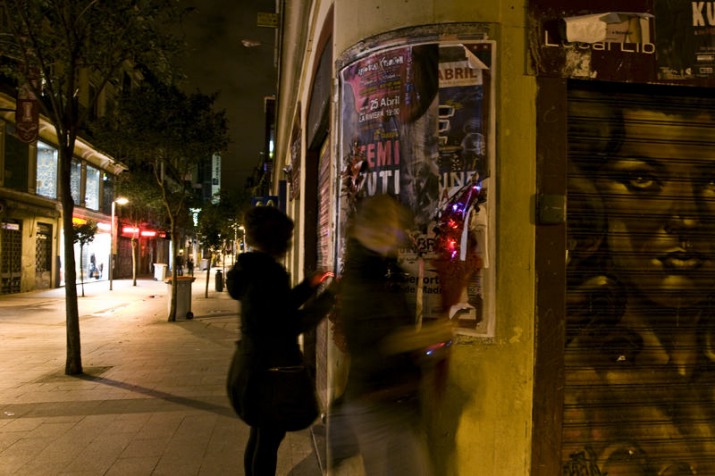
Madrid rebosa publicidad, sólo hay que darse un paseo por el centro para comprobarlo. Y es que el espacio público está tan cotizado por los anunciantes, que no hay nada que la policía y los servicios de limpieza puedan hacer para mantenerlos a raya.

La publicidad, antes legal y controlada, en los últimos tiempos se ha bajado de vallas y marquesinas para invadir los muros, fachadas y escaparates, llenado las calles de anuncios y más anuncios.

A nosotros siempre nos ha llamado la atención, la manera en que los carteles se acumulan unos encima de otros, llegando a encontrarse espacios, estratégicamente situados, con más de 25 capas de papel.

Cuando ya están completamente saturados los espacios, estos bloques compactos de papel y pegamento, acaban cayendo por su propio peso, quedando tirados en la calle, hasta que los servicios de limpieza los retiran, pero a esas horas, el espacio que antes ocuparon, ya ha sido llenado de nuevo de publicidad por esas brigadas de pegadores de carteles, que patrullan por las calles, armados con cubos y pegamento, vigilando que no quede ni un centímetro cuadrado, libre de publicidad.

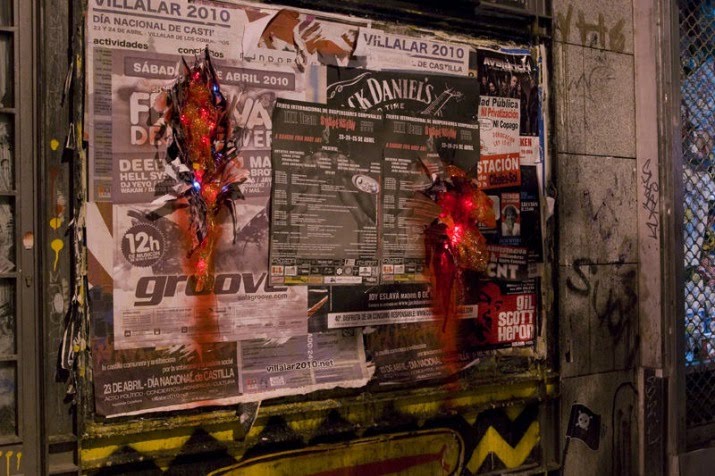
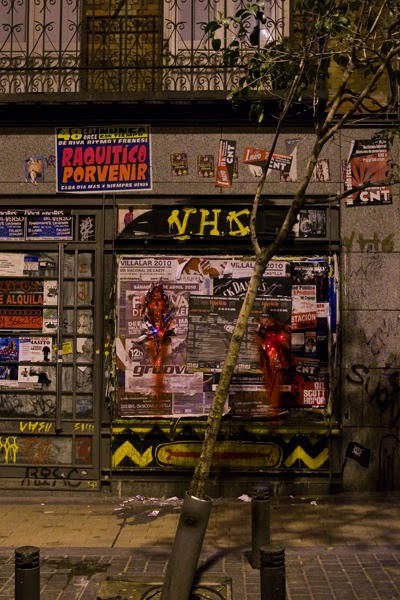
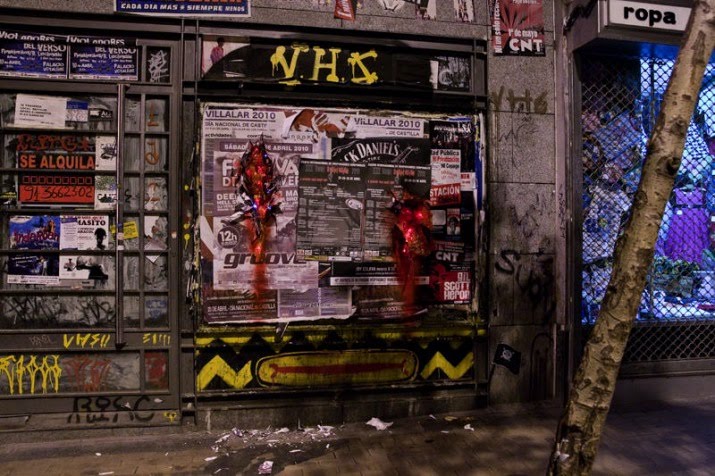
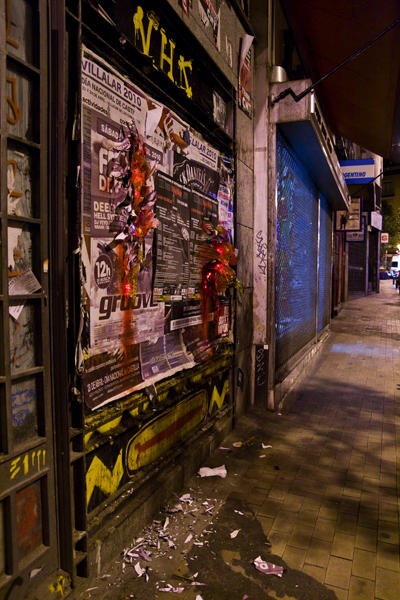
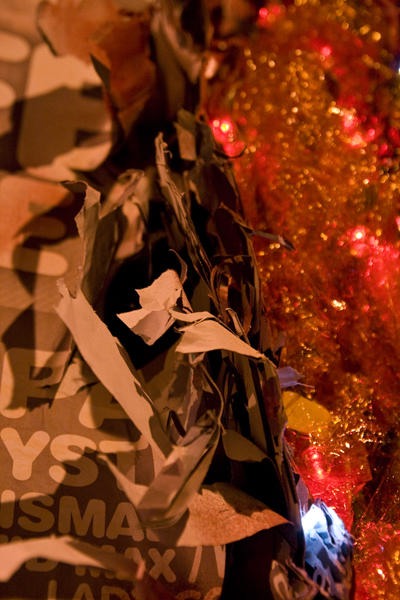
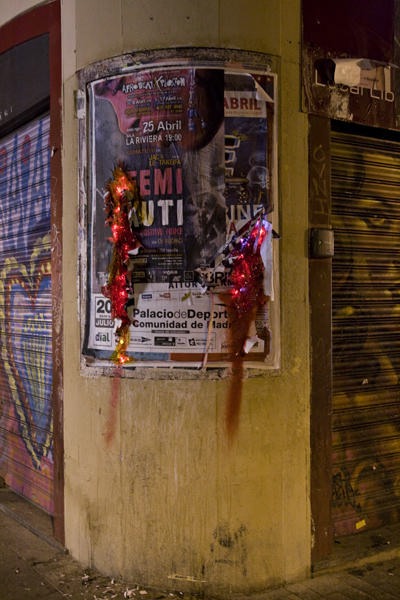
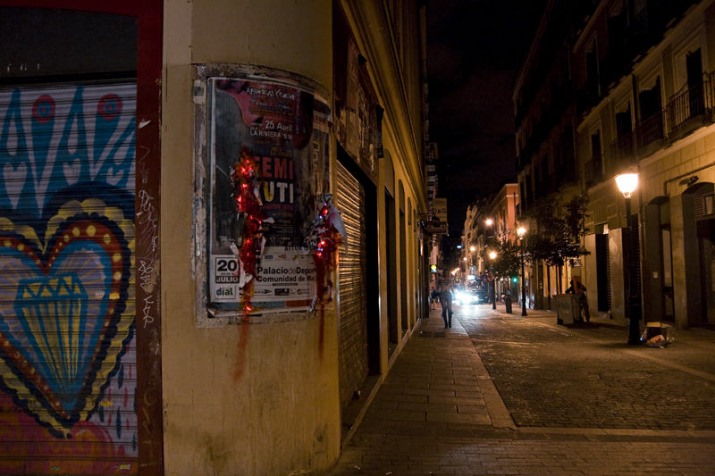
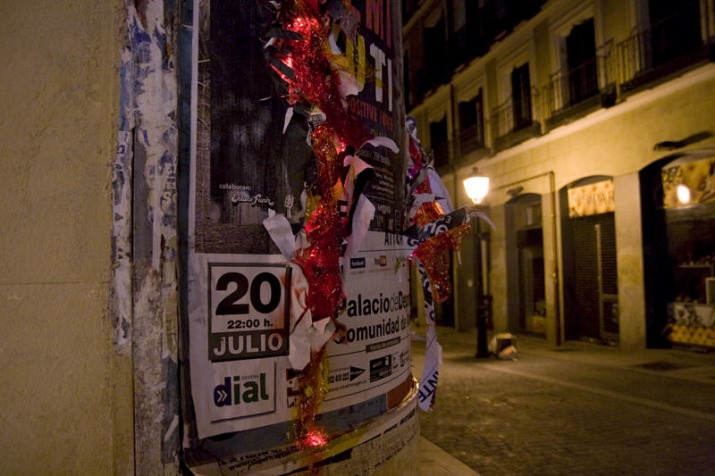
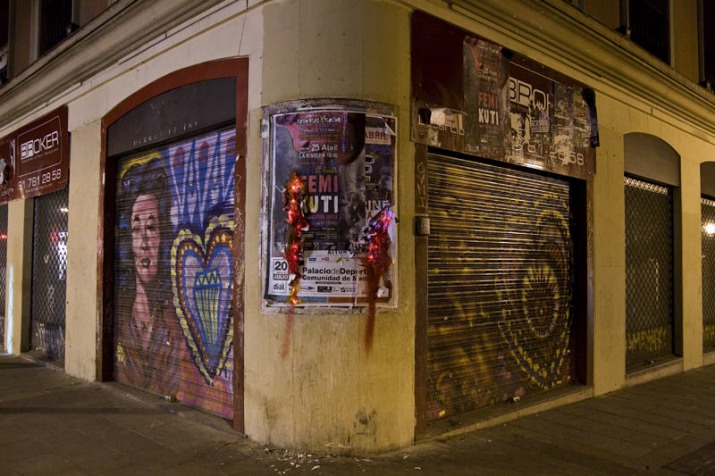
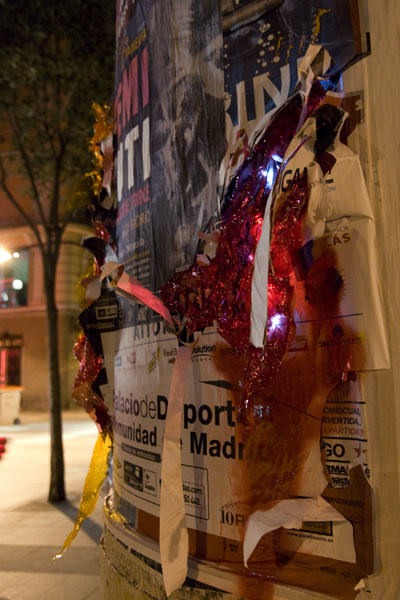
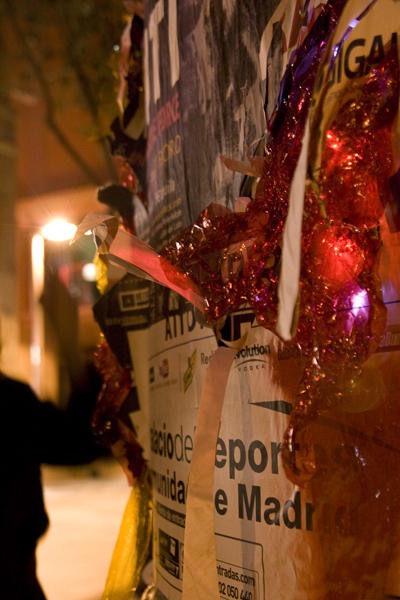
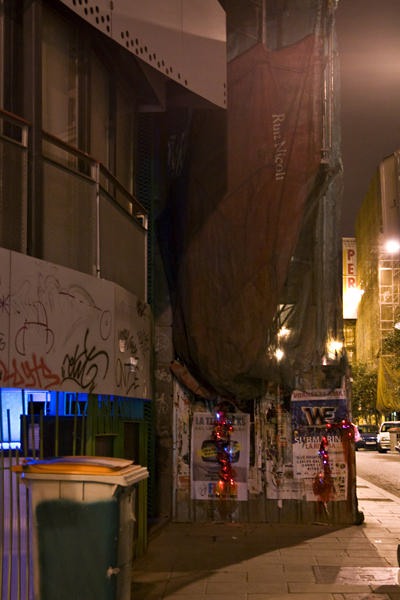
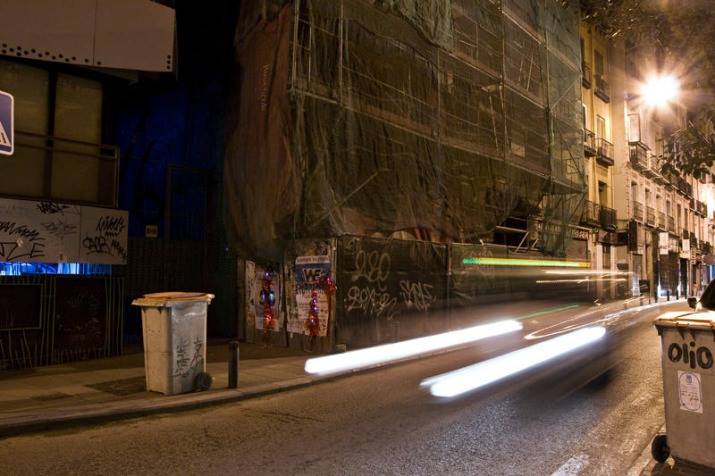
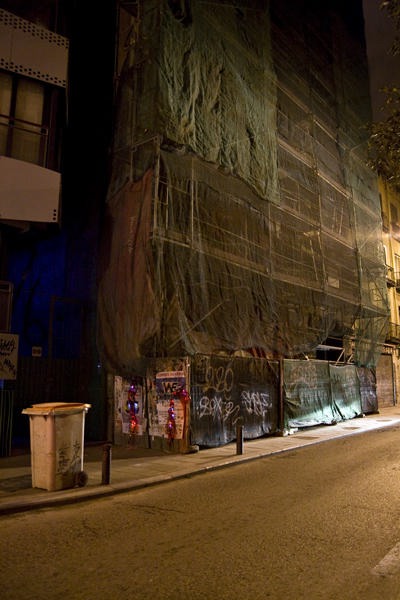
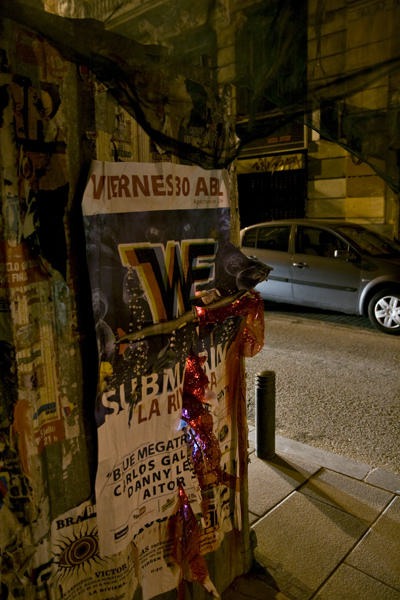
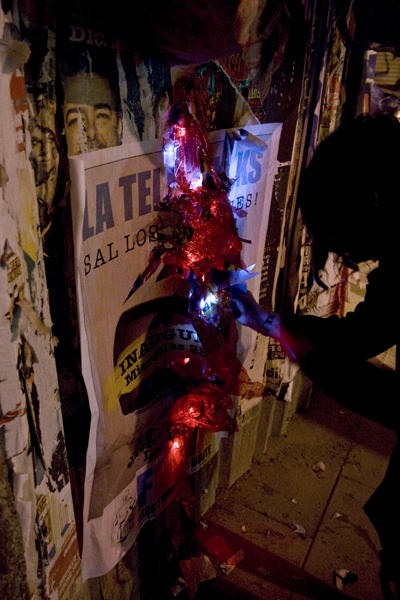
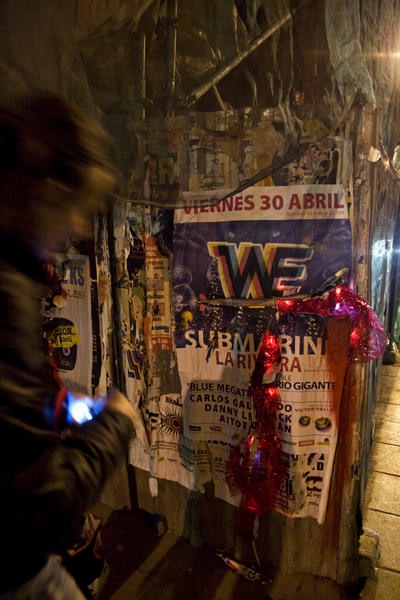
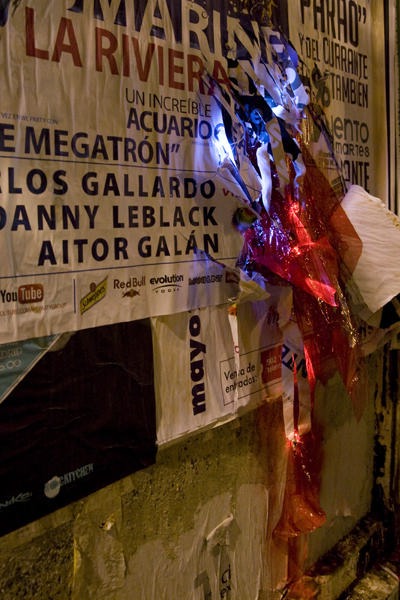
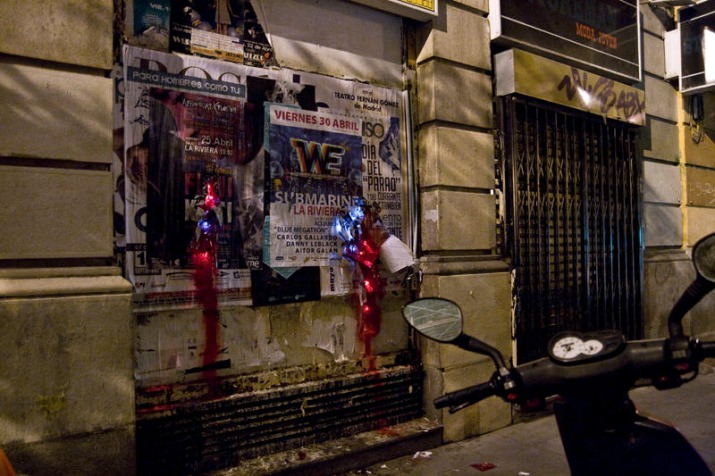
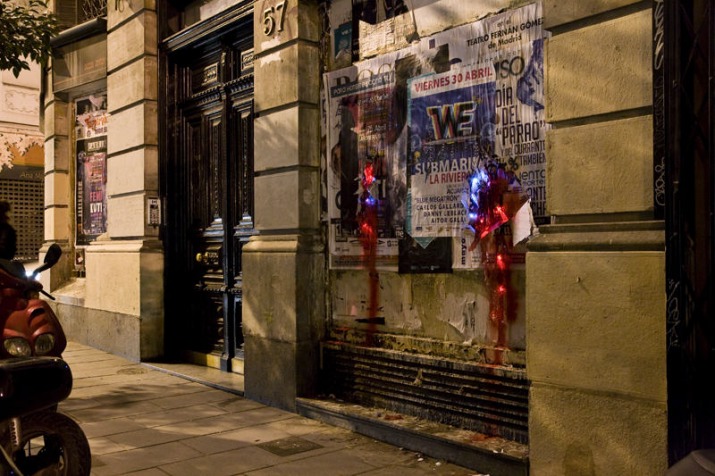
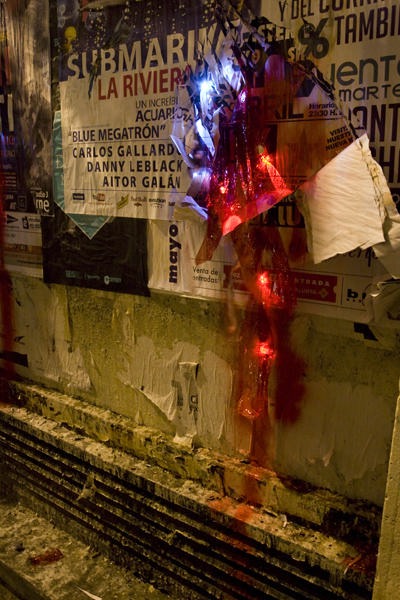
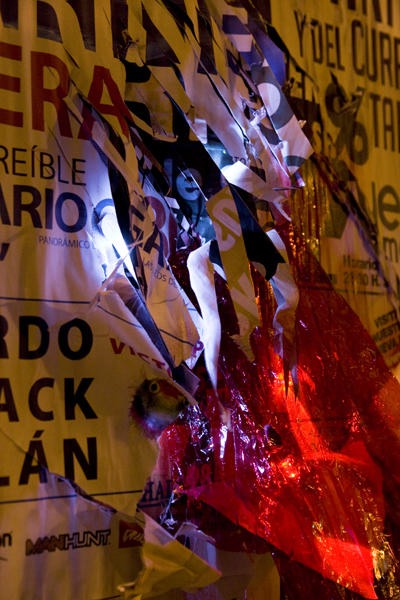
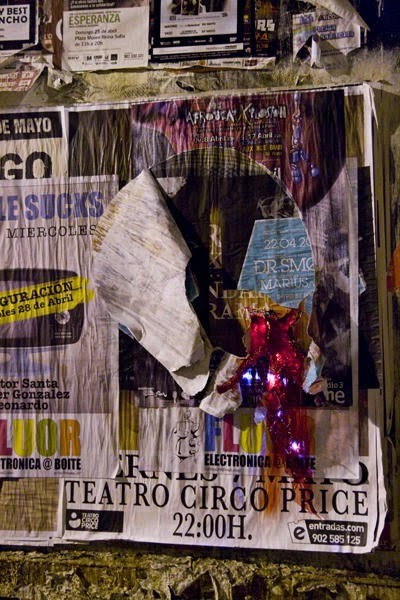
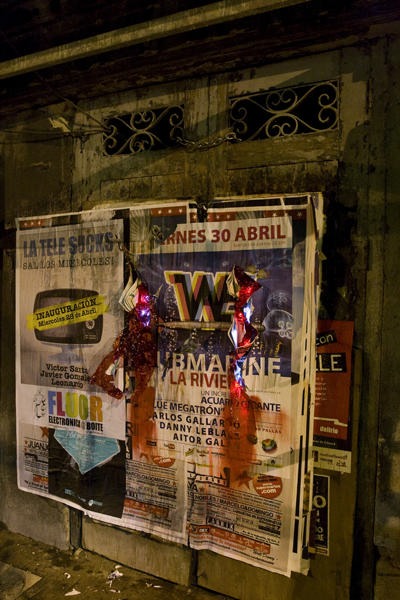
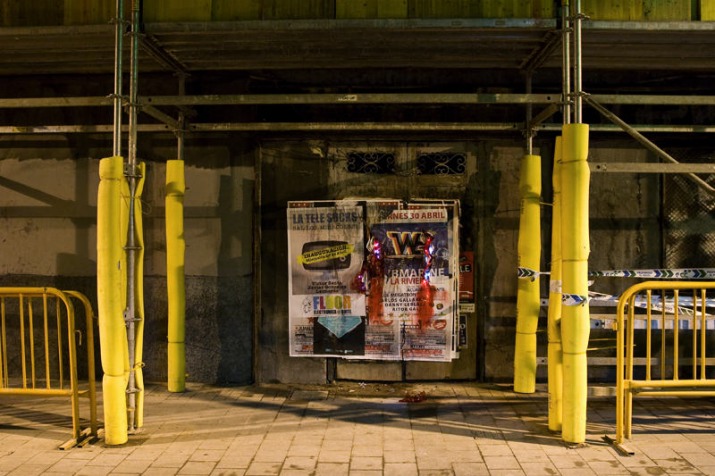
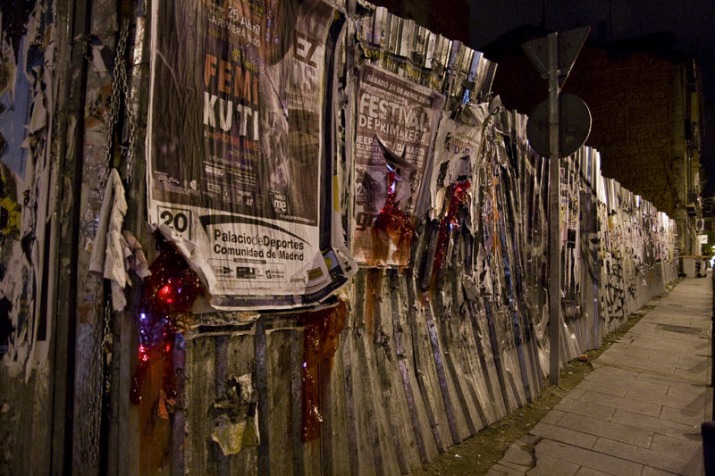
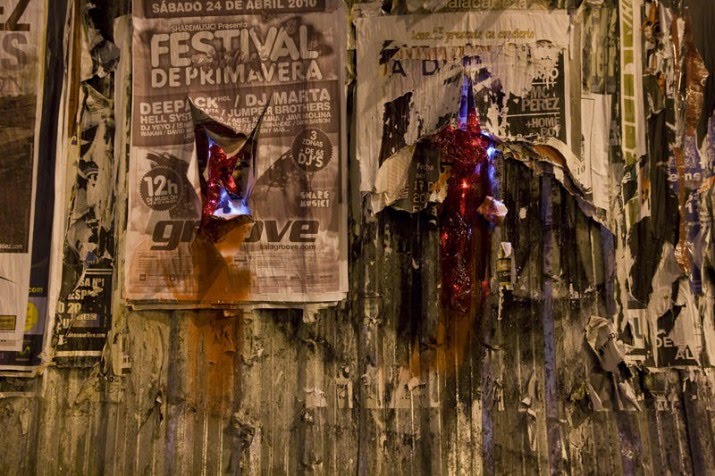
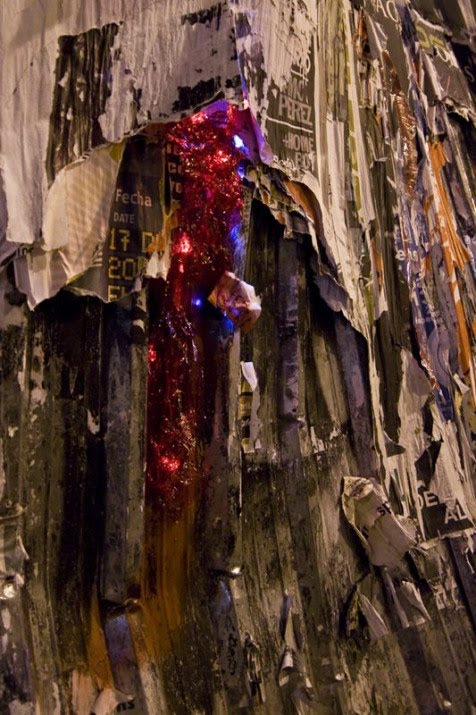
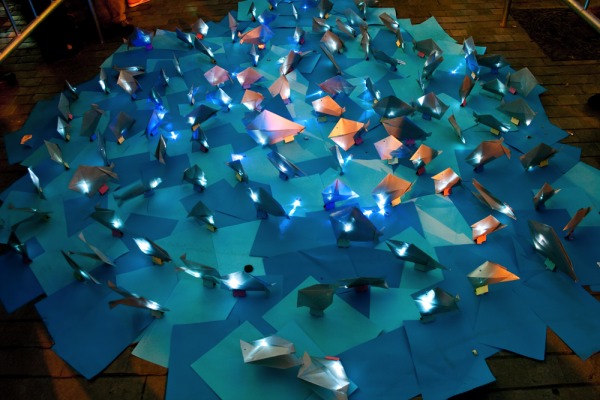
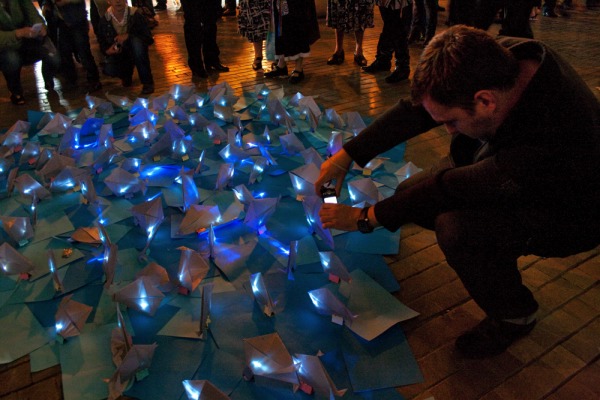
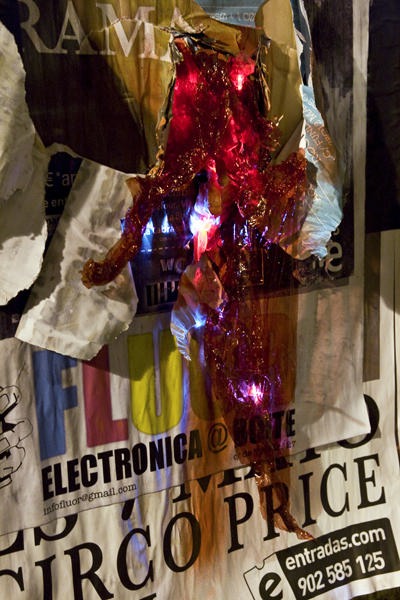
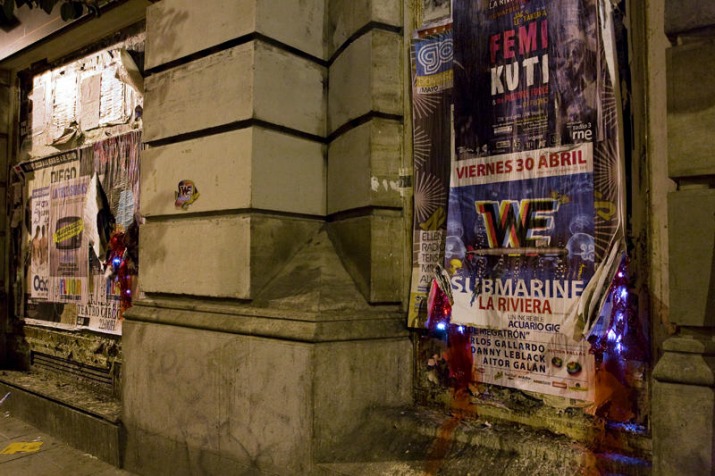
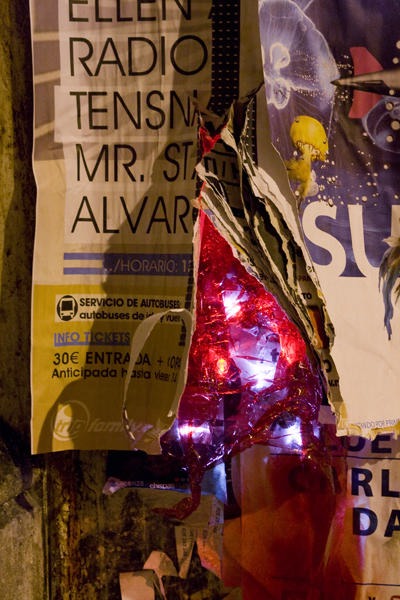
Y con todas estas cosas, nos ha dado por pensar que las paredes sufren mucho y que a causa de ese dolor, grandes llagas se abren en su superficie, haciéndolas supuran sangre y fuego.

Y para e

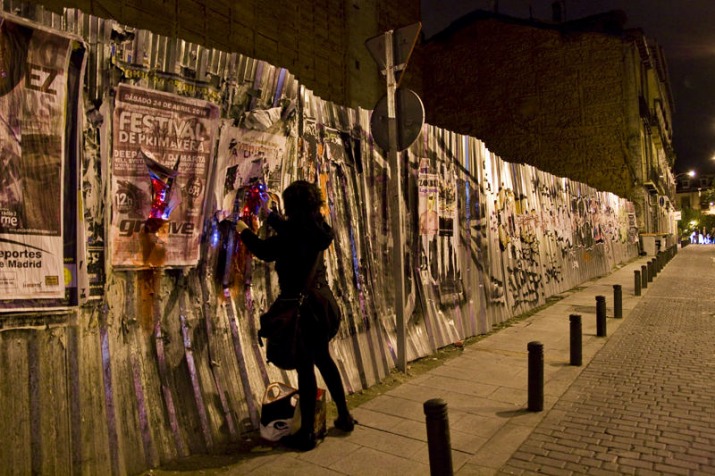
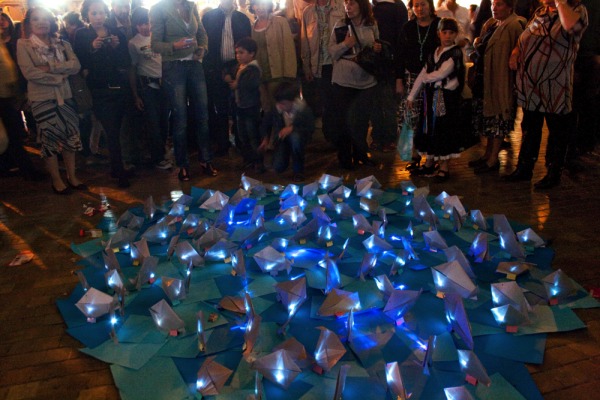
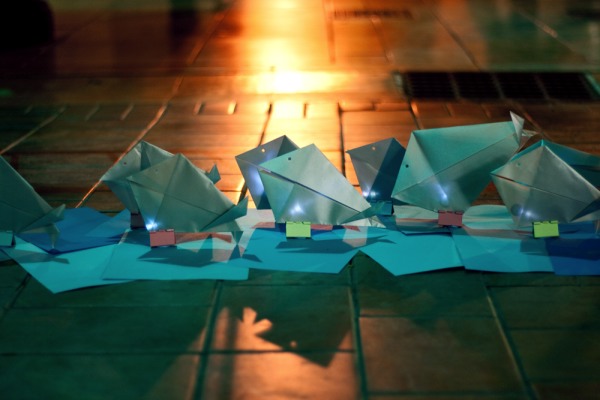
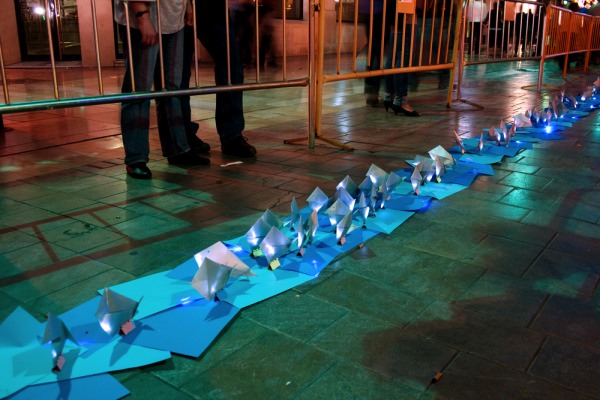
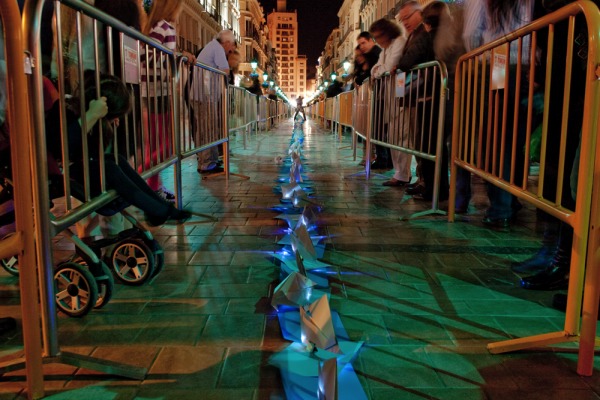
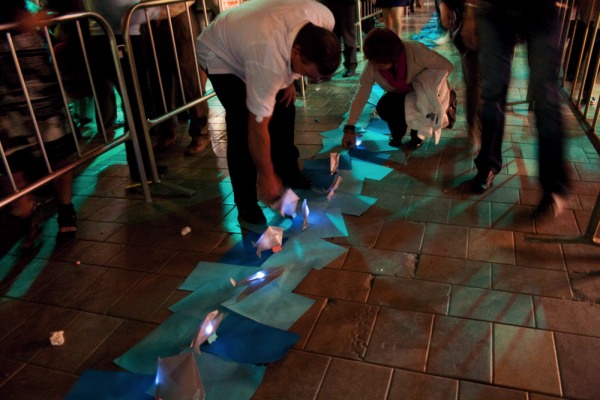
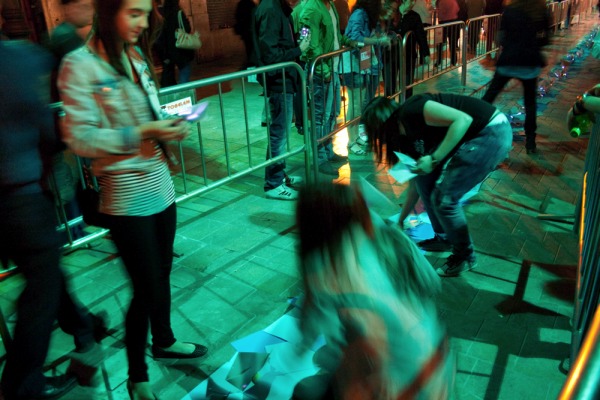
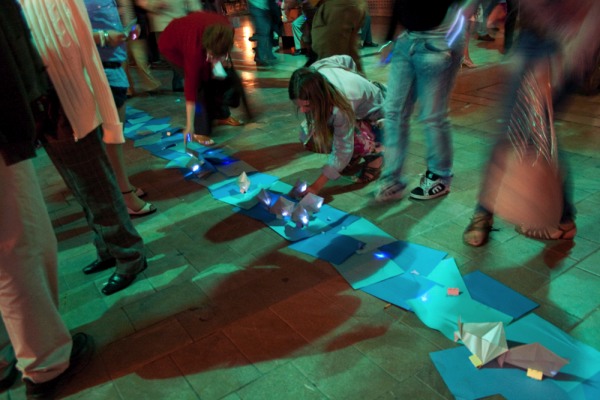
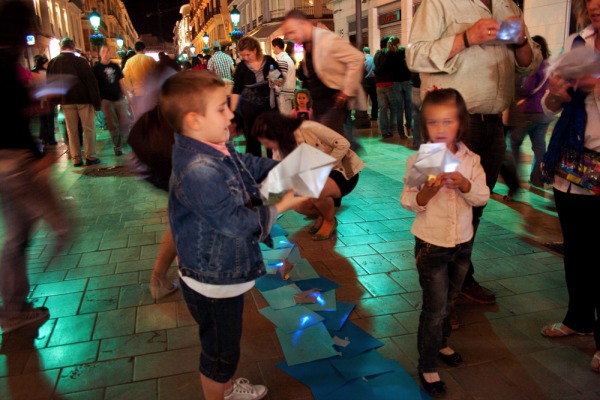
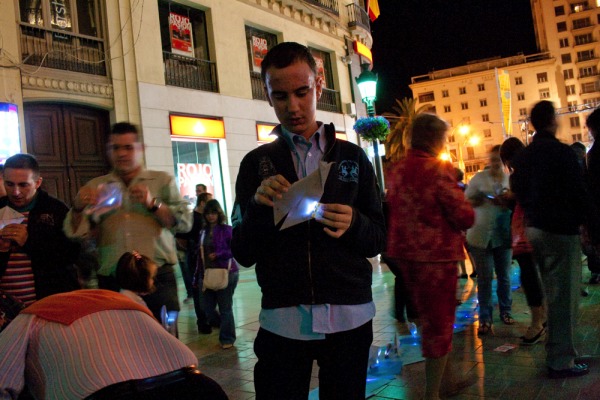
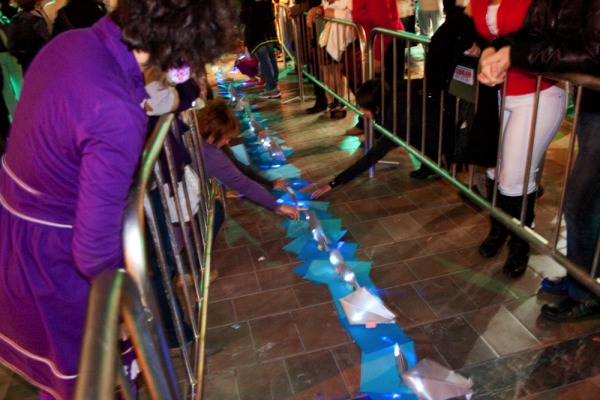
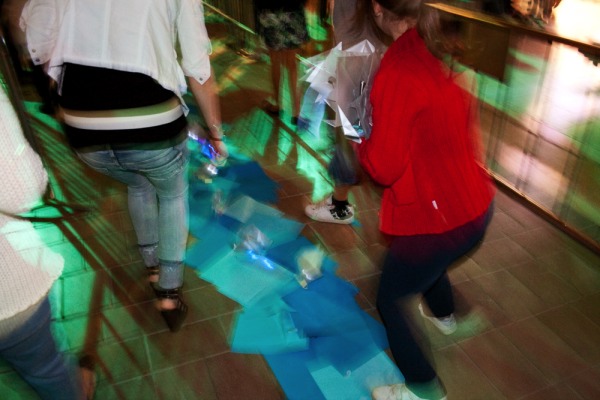
scenificar este pensamiento hemos salido a la calle con nuestras luces y hemos intervenido con simple papel, luces y un poco de pintura, sobre estas grandes superficies de publicidad adherida a las paredes.

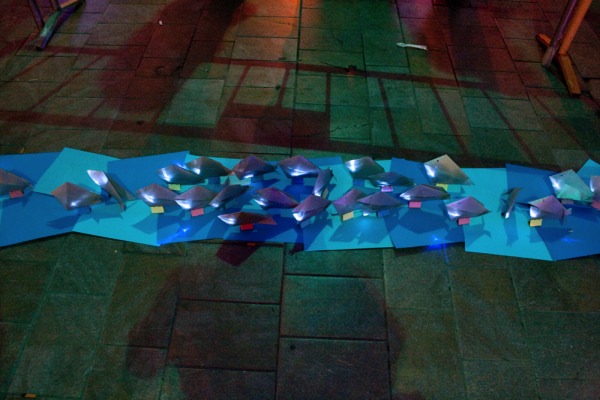
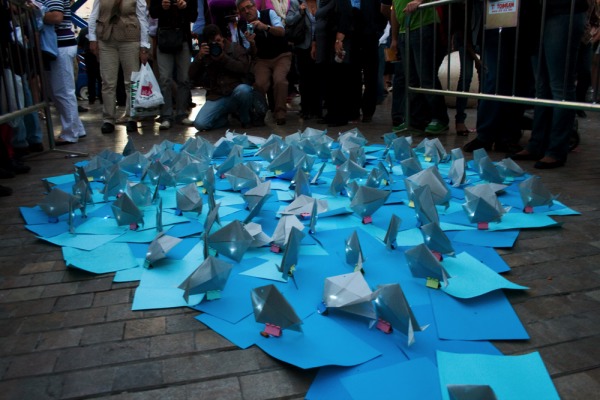
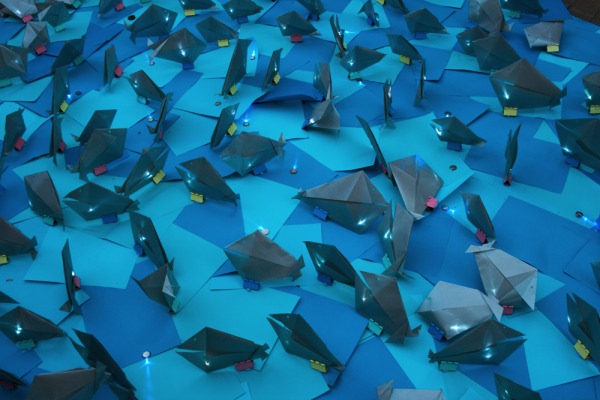
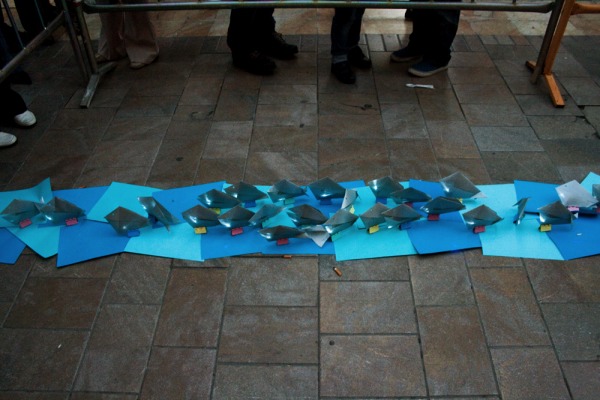
La intervención se ha llamado Publicidad herida de muerte y tuvo lugar el 21 de abril. Esa noche unos 15 tomos de carteles, sangraron y ardieron, para concienciar a los transeuntes sobre el estado lamentable en que se encuentran nuestras calles más transitadas, a causa de esta publicidad invasiba.

Las tremendas fotos son de Lola Martínez, que se manchó las manos de sangre con nosotros.

Tiempo de montaje: 3 horas.
Daños ocasionados: 0.
Permanencia de la intervención: ¿20 horas?.

————————————————————————————–

Madrid is full of advertisements, have a walk around the city centre to check it out. And it is the public space which is highly considered by advertisers where there is nothing that police and cleaning services can do to keep them under control.

Advertisments, before legal and self-controlled, have come down the billboards and fences and have invaded walls, facades and shop windows and the result is that ads are everywhere in the streets.

It has always surprised us the way in which the posters accumulate one on top of another and there are places which -due to theirs strategic position- have over 25 layers of poster paper.

When the spaces are absolutely saturated, these stiff blocks of paper and glue, drop to the ground, pulled down by their own weight and are left there until the cleaning services take them away. By then, the room available is taken up again by the poster sticking teams that patrol the streets, carrying buckets and the glue. They keep a watch so that not even a square centimetre is free from advertisements.

And all these stuff has led us to consider how much the walls suffer and because of this pain, huge bruises open up in their surface, making them expell blood and fire.

To stage this idea, we have gone out onto the streets with our lights. We have intervened them with just paper, lights and a little paint, and over those large advertising surfaces which are stuck to the walls.

The intervention was called Deadly wounded Advertisements and took place on 21 April. On that night about 15 advertising posters blocks bled and were on fire to remind passers-by about the disgraceful state of our most used streets, owing to this invasive advertising.

The photos were taken by Lola Martínez.

Time of installation: 3 hours.
Damages: none.
Exhibition time: ¿20 hours?
.

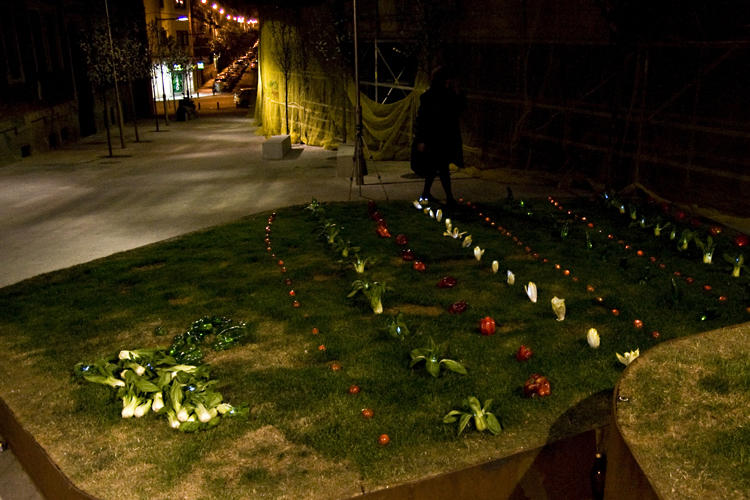
Pequeño huerto en maceta urbana


Seguimos buscando con empeño zonas verdes en las plazas de Madrid donde poder sentarnos al sol, ahora que llega el buen tiempo y buscando buscando hemos encontrado una, pero por más que nos lo hemos propuesto no nos hemos atrevido a utilizarla.

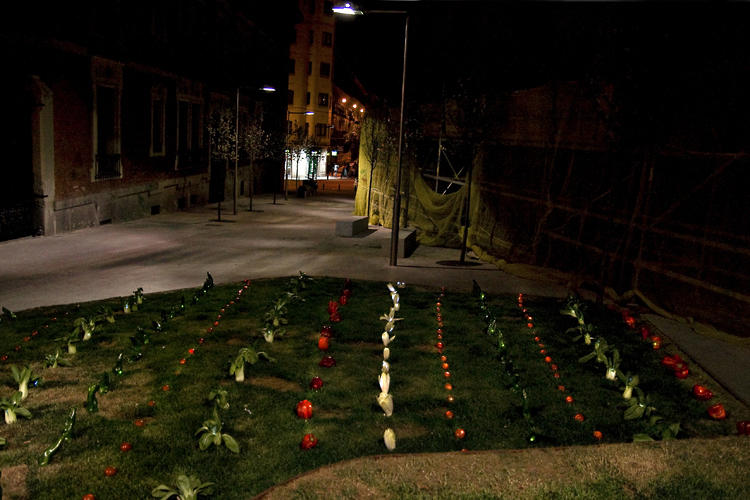
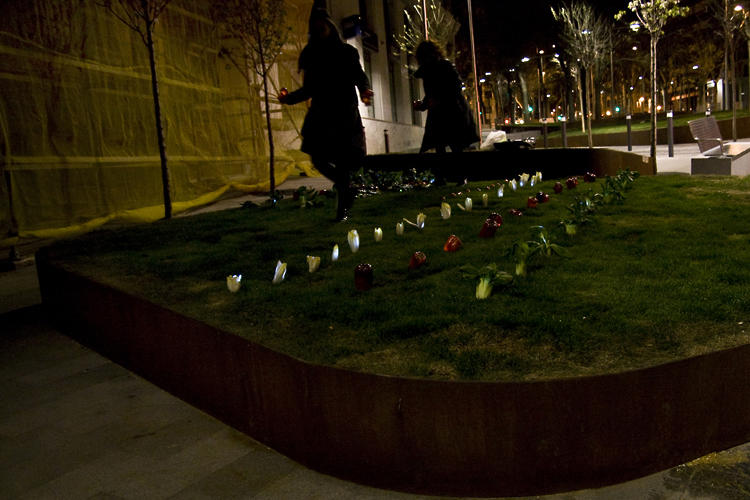
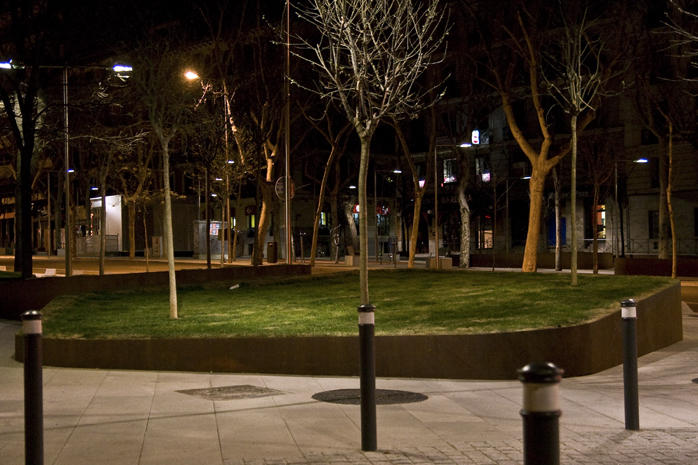
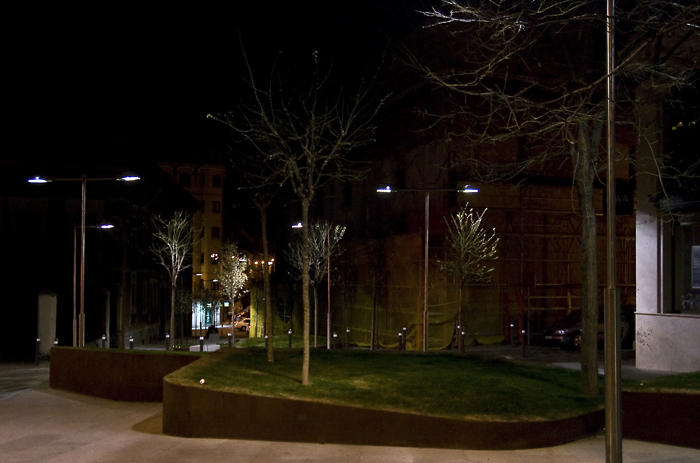
Y es que La plaza de Santa Bárbara, un gran espacio público en el centro de la ciudad ha sido reformado y ahora aparece ocupada en su totalidad por unos 10 maceteros gigantes de hierba, elevados unos 50 centímetros del nivel del suelo y rodeados de unas planchas de acero cortex que no invita en absoluto a permanecer dentro, con lo que al final es normal percibirla como llena obstáculos verdes que no sirven más que para ser mirados.

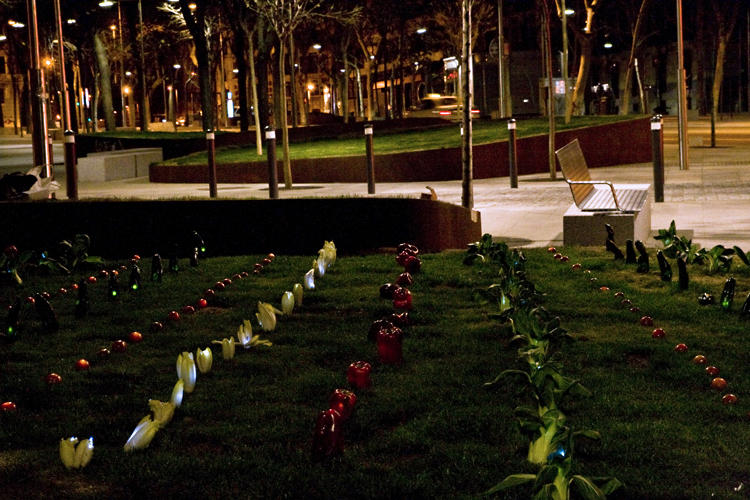
Por eso, pensando en qué se podía hacer allí, para dar utilidad pública a esos contenedores de verde, decidimos plantar nuestro huerto en uno de ellos.

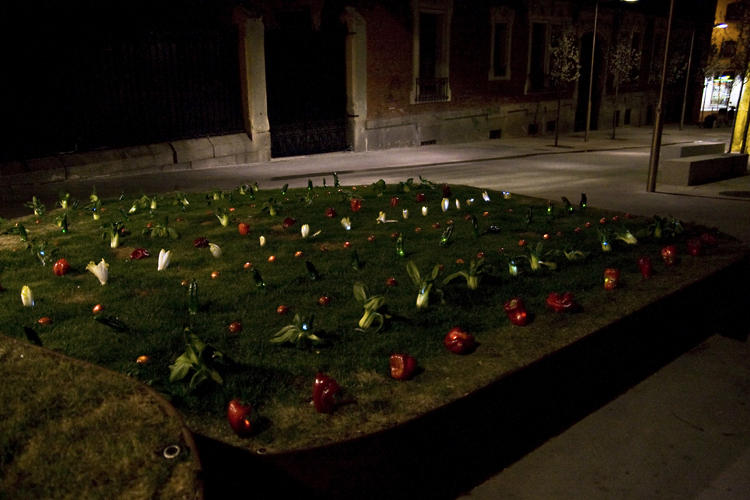
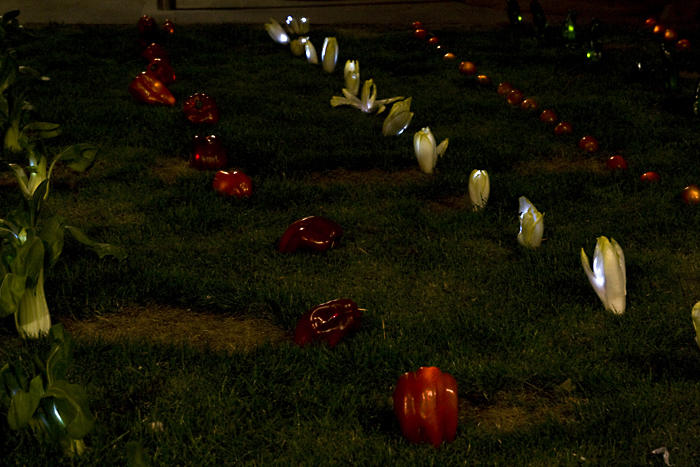
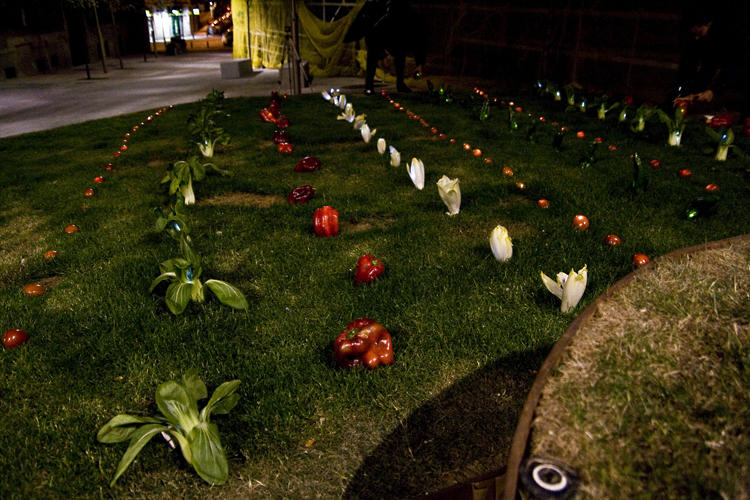
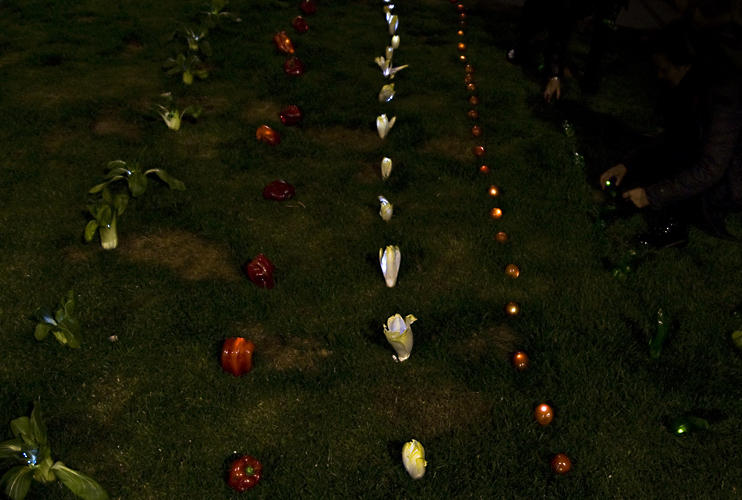
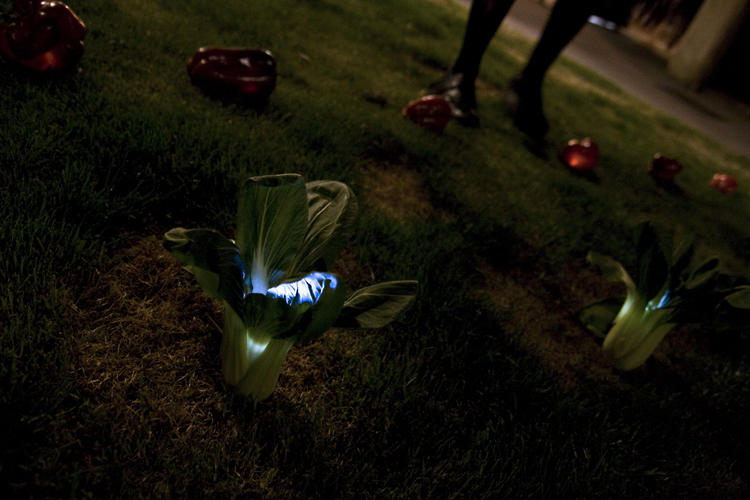
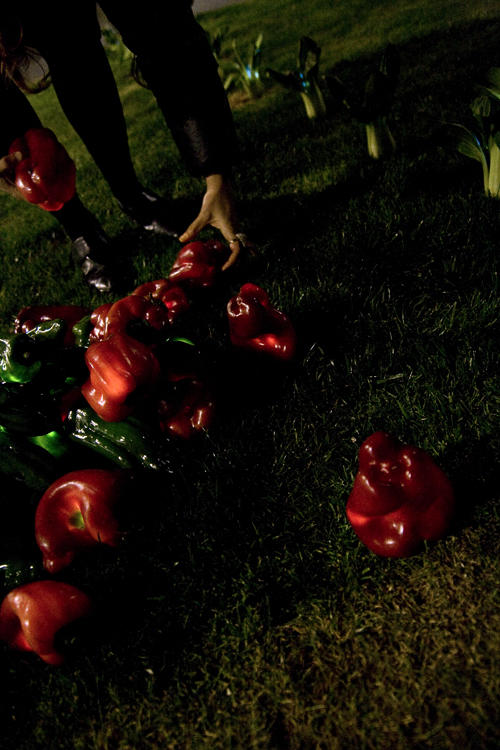
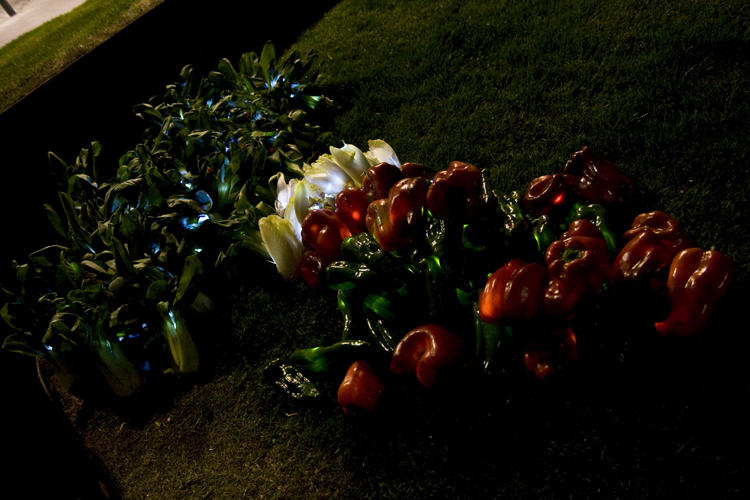
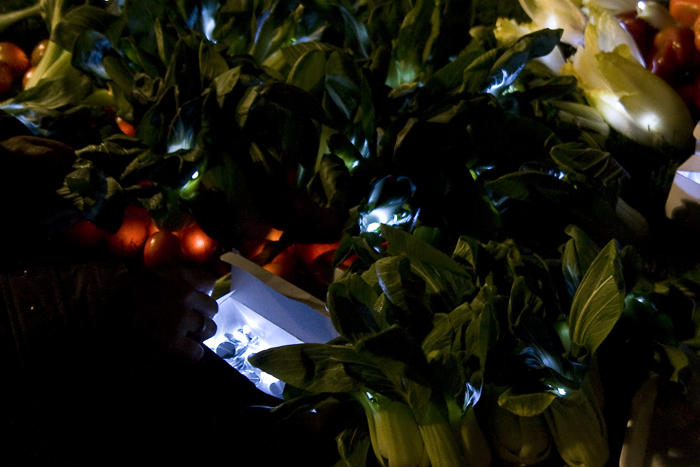
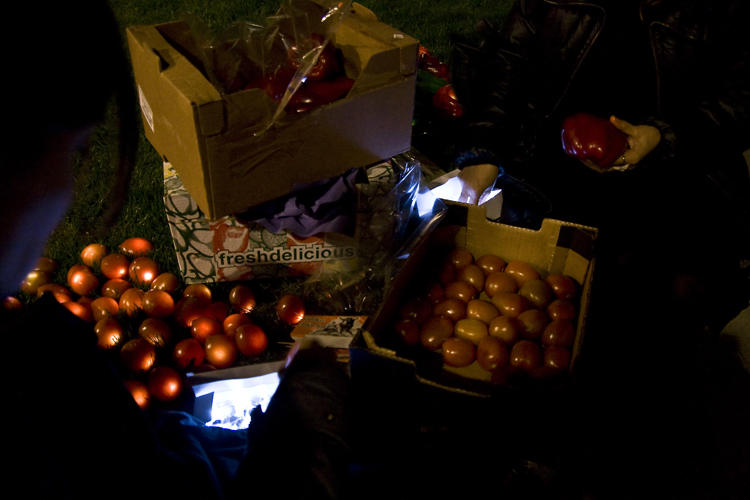
Así la noche del 6 de abril nos echamos a la calles con una caja de preciosos tomates, otras de pimientos rojos y verdes, acelgas y endivias y los plantamos en su interior. A esta intervención la llamamos Hortalizas creciendo en un verde inútil y disfrutamos muchísimo viendo lo bien que quedaban entre el moderno mobiliario público.

Las estupendas fotos son de Lola Martínez que nos acompañó y ayudó a plantar tomates. Mil gracias.
Tiempo de montaje: 1,30 horas.
Daños ocasionados: 0.
Permanencia de la intervención: ¿5horas?.

————————————————————————————

We are still looking stubbornly for green areas in the squares in Madrid where we can sit in the sun. Now as the weather improves, after searching for a while we found one at last. But as much as we have desired we have not dared to use it just yet.

And this is the square of Santa Barbara, a huge public space in the centre of the city, which has been redone, and now is decorated with 10 enormous pots with grass in them. Lifted about 50 centimetres above the ground level and surrounded by cortex steel plates, the pots do not make you feel much at ease at all. It is perceived as a place with green obstacles everywhere that serve the only purpose of being looked at.

For this reason, considering what could be done there in order to allow a public use for these green containers, we set out to plant our own vegetable garden in one of them.

So on the night of 6th April, we went out in the streets, carrying some boxes with lovely tomatoes, other with red and green peppers… and we planted them within. This intervention we called Vegetables growing in a useless green and we really enjoyed how well they looked among the modern public furniture.

The wonderful photos are Lola Martínez´s, who joined us this time ,and helped planting tomatoes. Thank you so much.
Time of installation: 1.30 hours.
Damages: none.
Exhibition time: ¿5 hours?
.

Noche de verbena y basura / Festival rubbish night


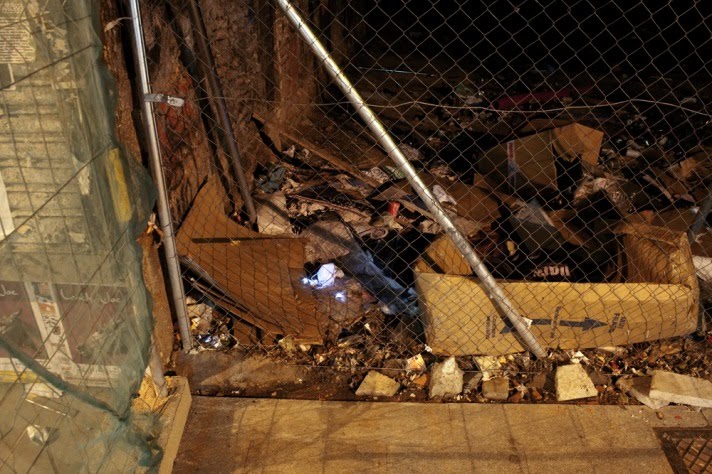
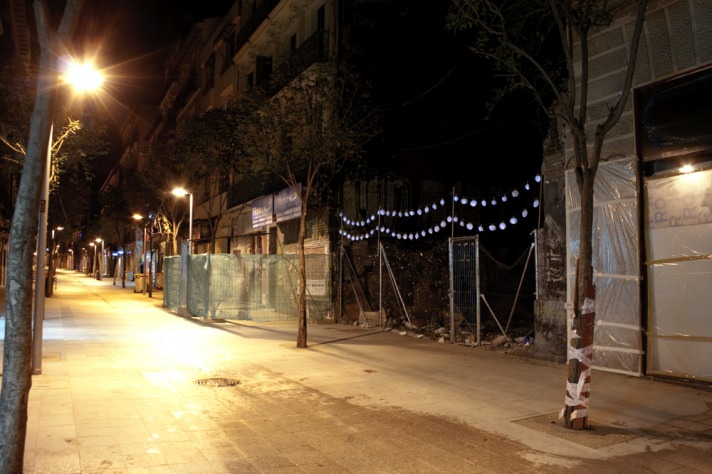
La crisis inmobiliaria ha traído a Madrid, entre otras muchas cosas, gran cantidad de vacios urbanos en el centro de la ciudad. Estos terrenos, anteriormente construidos, están ahora a la espera de tiempos mejores y mientras llega el comprador soñado, se van degradando y muchos son ya auténticos vertederos, en los que basura y ratas conviven en perfecta armonía.

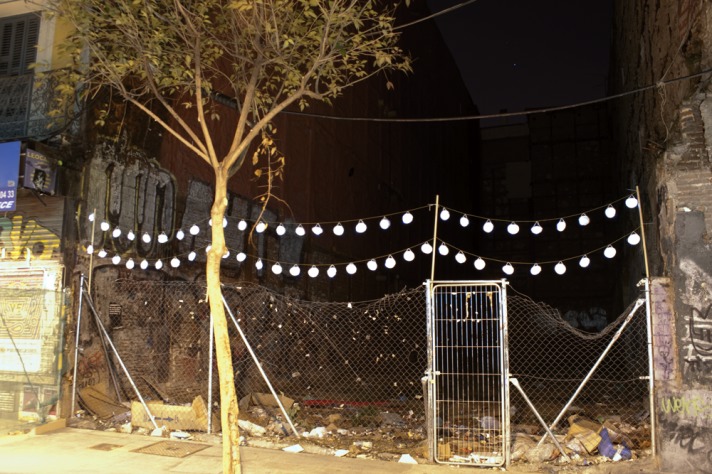
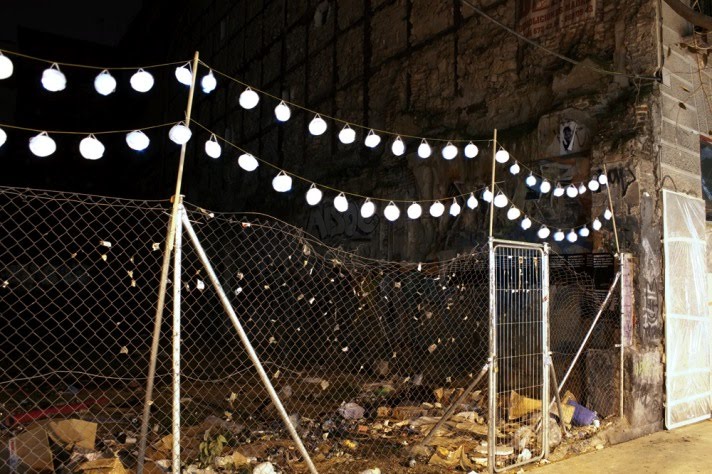
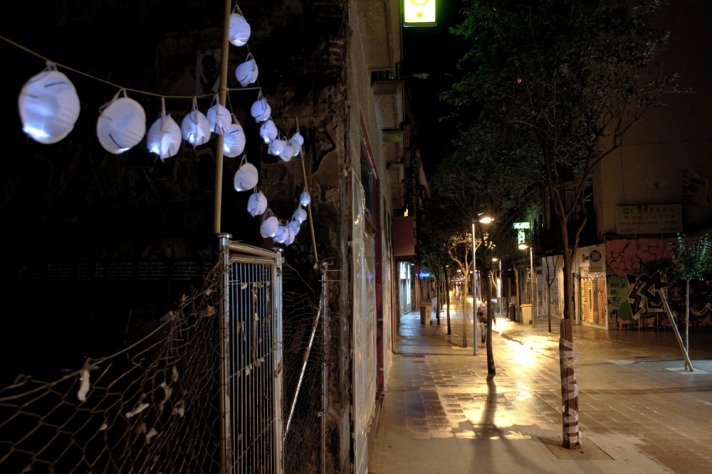
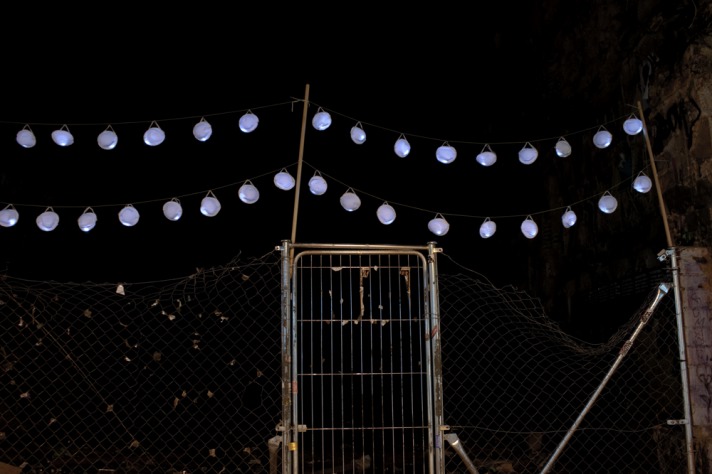
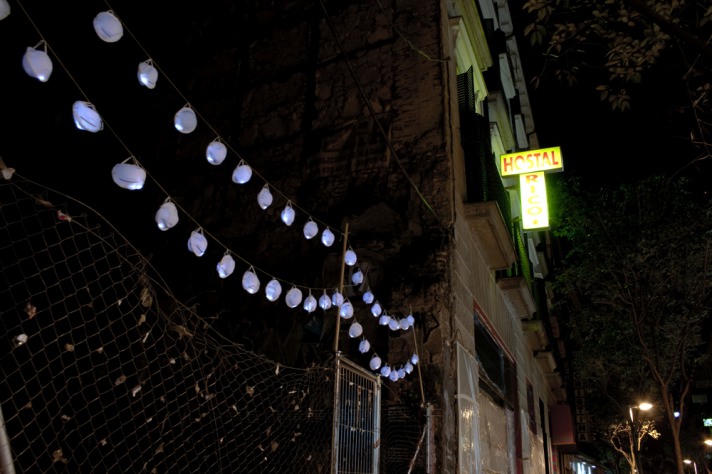
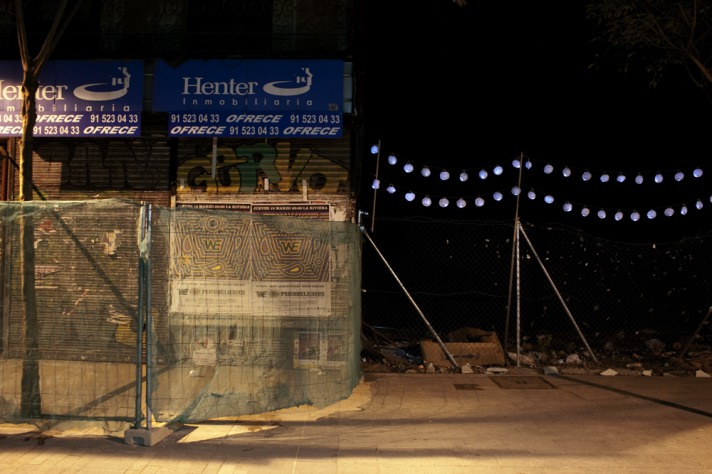
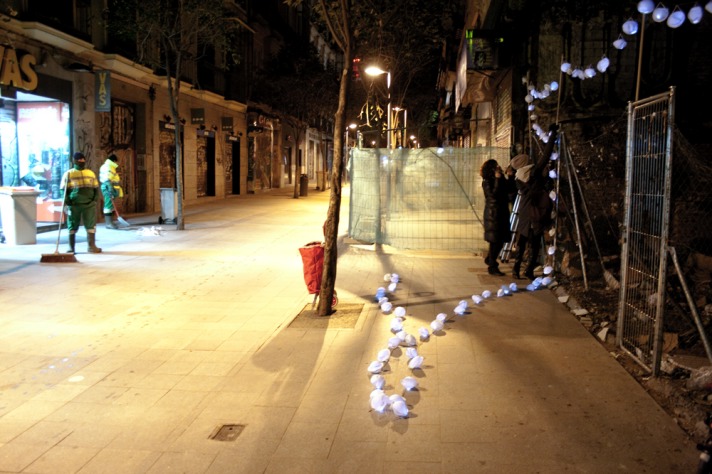
Con nuestra instalación Farolillos para espacios contaminados, queríamos sugerir que quizás estos solares, ahora cerrados y sucios, pudieran convertirse en espacios públicos, cedidos temporalmente para ser usados por los ciudadanos, hasta el momento en que los dueños, por fin puedan ver cumplidas sus expectativas.

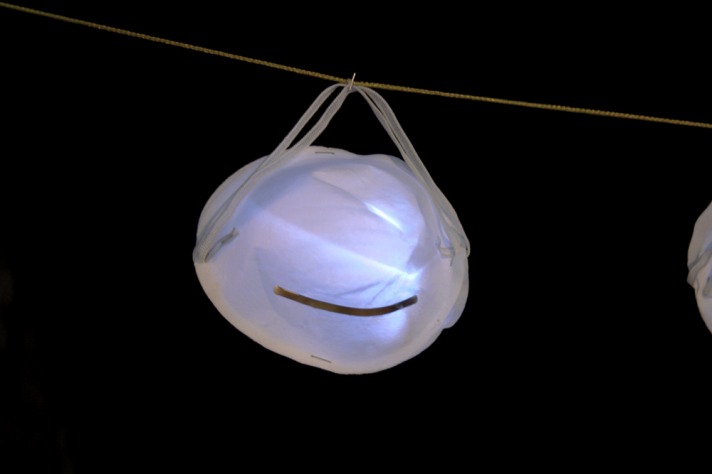
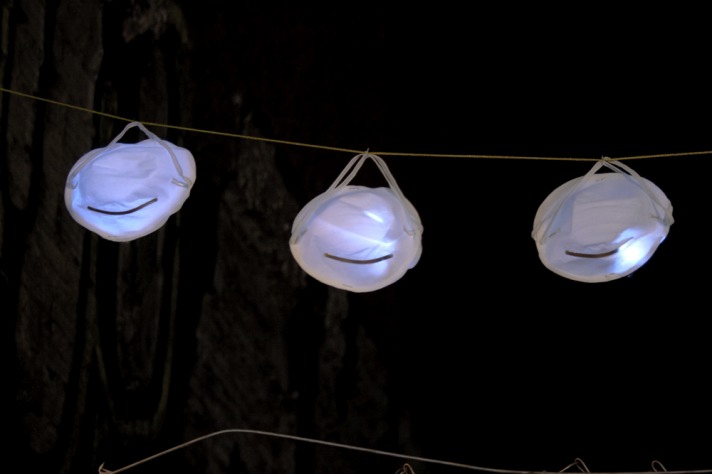
La acción fue llevada a cabo el martes 2 de marzo en la valla de un solar privado de la calle Fuencarral de Madrid, con 120 mascarillas sanitarias, unidas para formar unos particulares farolillos, con los que iluminar una supuesta verbena contaminada.

Las fotos como siempre son de Gustavo Sanabria.

Tiempo de montaje: 1,30 horas.
Daños ocasionados: 0.
Permanencia de la intervención 3 días.

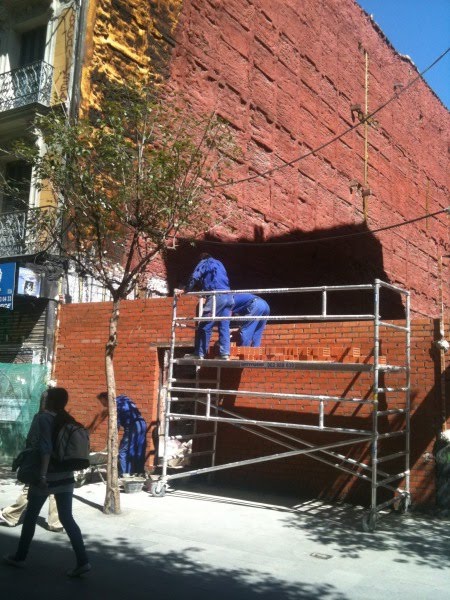
¿Casualmente? a los dos días de publicar nuestra intervención, alguien decidió limpiarlo y tapiarlo y aunque esto no era lo que nosotros deseábamos, seguro que los vecinos estarán mas contentos, ya que así resulta más difícil arrojar basura en su interior.”


The real state crisis in Madrid resulted in lots of urban empty spaces in the city centre, among other things. These plots occupied by buildings previously are sitting now, hoping for a better future and awaiting a buyer, are deteriorating and many are turning into real dumps where rubbish and rats coexist in perfect harmony.

With the installation called Little lanterns for polluted spaces Little lanterns for polluted spaces we would like to suggest the idea that, maybe, these pieces of land now closed and dirty, could one day become public spaces used temporarily by people until the moment comes when the rightful owners do with it whatever they intend for them.

The intervention was carried out on 2 March on the fence of a private plot in Fuencarral street in central Madrid.
We used 120 sanitary masks, linked together so that they resembled lanterns and they enabled us to provide sufficient light for a kind of polluted festival.

Just by chance? Two days after our intervention was published, the owners of the unbuilt plot started cleaning it up and putting up a brick wall around it. Although this was not what we wished for, we are sure that neighbours are over the moon as it has become more difficult for people to throw away rubbish there.

The photos were taken, as always, by Gustavo Sanabria.

Time of installation: 1.30 hour.
Damages: none.
Exhibition time: ¿3 days?
.


Jardín para un futuro, no muy lejano / Garden for a not too distant future


Crítica, en tono humorístico a la falta de espacios verdes en las grandes urbes contemporáneas.

Con la instalación Jardín vertical envasado, queremos invitar a la preservación del verde urbano, ya que de seguir erradicando este color del espacio público o reduciéndolo a paramentos verticales inaccesibles, el único modo de tener contacto de la naturaleza, será en las cámaras frigoríficas de los supermercados, envasada y con fecha de caducidad.

Por lo general, resulta más cómodo para los planificadores y urbanistas, construir inhóspitos espacios de cemento en los que no es necesario un cuidado especial, que diseñar zonas verdes, en las que los ciudadanos puedan permanecer tiempo, disfrutando de los espacios comunes.

Además, hemos observado que cada vez más, proliferan los jardines verticales, interesantes decorativamente hablando, pero caros de mantener y con los que los ciudadanos no pueden interactuar y dar un uso real, quedando reducidos a un leve intento de poner algo de verde, pero de una manera demasiado artificial e inaccesible…

Para esa instalación utilizamos 110 envases transparentes de los usados en alimentación y metimos dentro hojas y ramas encontradas en árboles de la zona, y por supuesto luz interior. Después, los colocamos en el muro de una fea plaza del centro de Madrid y allí lo dejamos a modo de un jardín vertical de moda.

Las fotos están hechas, como siempre, por Gustavo Sanabria.

Tiempo de montaje: 3 horas.
Daños ocasionados: 0.
Permanencia de la intervención: ¿24 horas?.

——————————————————————————————————

Criticism, of a humorous tone, at the lack of green spaces in large contemporary cities.

With the installation Packaged vertical garden, we wanted to promote the preservation of urban greenery, because if we continue to eradicate it from public spaces or reducing it to inaccessible vertical faces, the only form of contact with nature will be in supermarket refrigerators, packaged with expiry dates.

In general, it is more comfortable for city planners to build inhospitable cement spaces, where there is no need for special care, than to design green spaces where the citizens can spend their time and enjoy public places.

In addition, we have noticed the increasing proliferation of vertical gardens, which are interesting decoratively speaking, but expensive to maintain and with which the citizens cannot interact or put to real use, being a minimal attempt at providing greenery, but in an inaccessible and artificial way…

For this installation we used 110 transparent food packaging containers, inside which we put leaves and branches found in the trees in the area and lights of course. Afterwards, we placed them on a wall in an ugly square in the center of Madrid and there we left our form of fashionable vertical garden.

The photos were taken, as always, by Gustavo Sanabria.

Time of installation: 3 hourss.
Damages: none.
Exhibition time: ¿24 hours?
.


Barcos de papel encallados en la nieve / Paper ships stranded on the snow


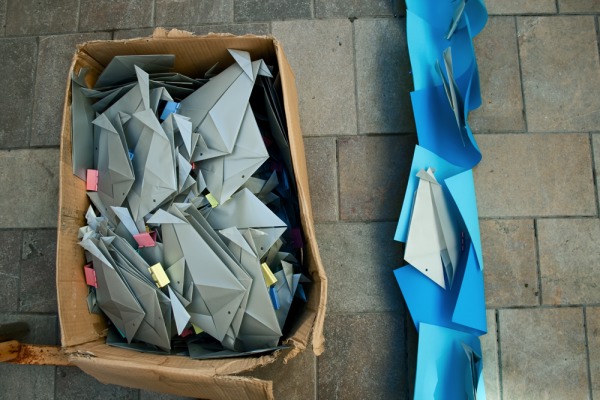
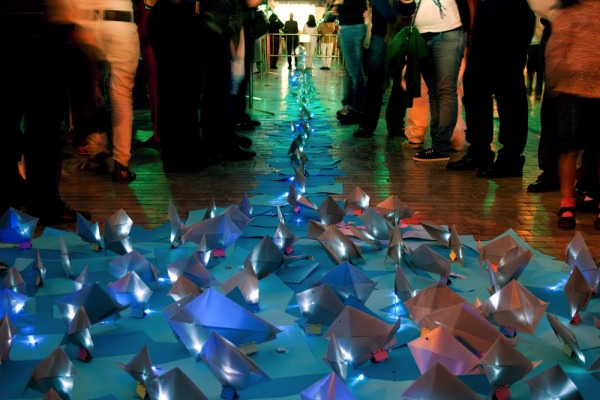
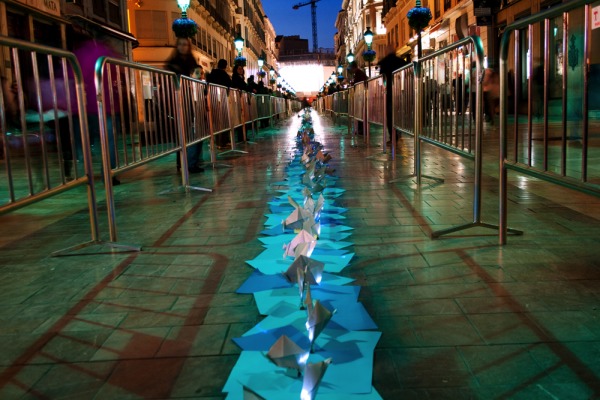
A la espera del sol y el buen tiempo, dejamos nuestros barcos de papel sobre la nieve, con la esperanza de que cuando esta se derritiera y se convirtiera en un torrente de agua de deshielo, los arrastraría hacia el mar…, pero como eso no iba a suceder, pensamos que quizás en tren, les fuera más fácil llegar…

Nuestra pequeña acción poética Barcos de viaje al mar, tuvo lugar la madrugada del 27 de enero en la estación de tren de Cotos, un puerto de montaña cercano a Madrid.

Una larga línea azul, pintada sobre la blanca nieve y paralela a la vía del tren, nos sirvió de río, sobre el que dejamos flotando 150 barquitos con luz. A esas horas el tren no pasaba, pero quizás al día siguiente… siguiendo su estela… llegarían al destino final…

Las fotos, cómo no, son de Gustavo Sanabria.

Tiempo de montaje: 2 horas.
Daños ocasionados: 0.
Permanencia de la intervención: ¿8 horas?.

———————————————————————————————————-

Wating for the sun and good weather, we left our paper ships on the snow, with the hope that when it melted and became a torrent of melt water, it would drag them towards the sea…, but as that was not going to happen, we thought that perhaps by train, they would arrive more easily…

Our small poetic action Ships travelling to the sea, took place in the earlymorning of January 27 at the Cotos train station, a mountain pass near Madrid.

A long blue line, painted on the white snow, parallel to the train tracks, formed our river, on which we left 150 floating boats with lights. In those hours the train was not running, but perhaps the following day… following its wake… they would arrive at their final destination…

The photos, of course, are by Gustavo Sanabria.

Time of installation: 2 hourss.
Damages: none.
Exhibition time: ¿8 hours?
.