Glints of the Wind /Destellos del viento (revisited)
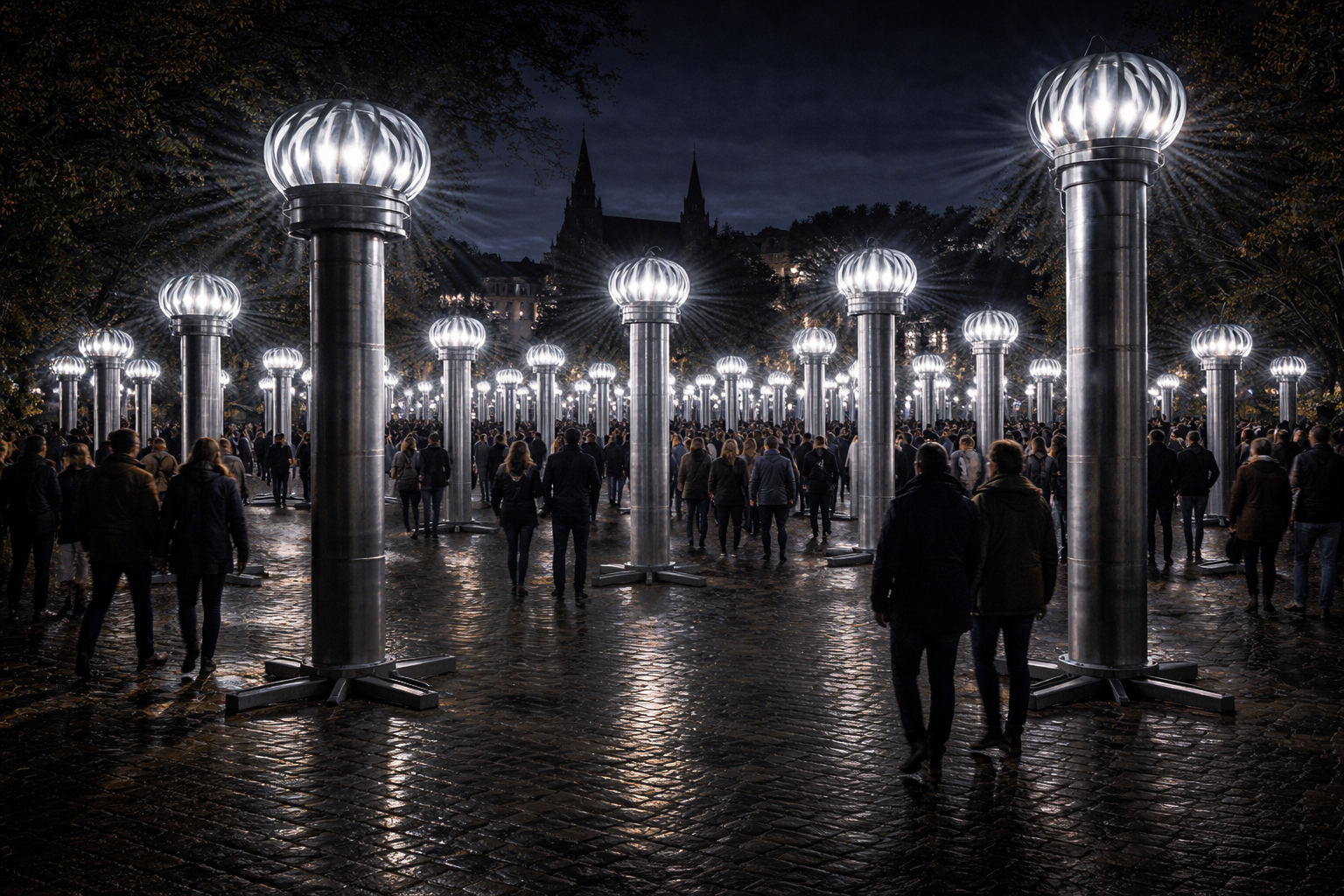
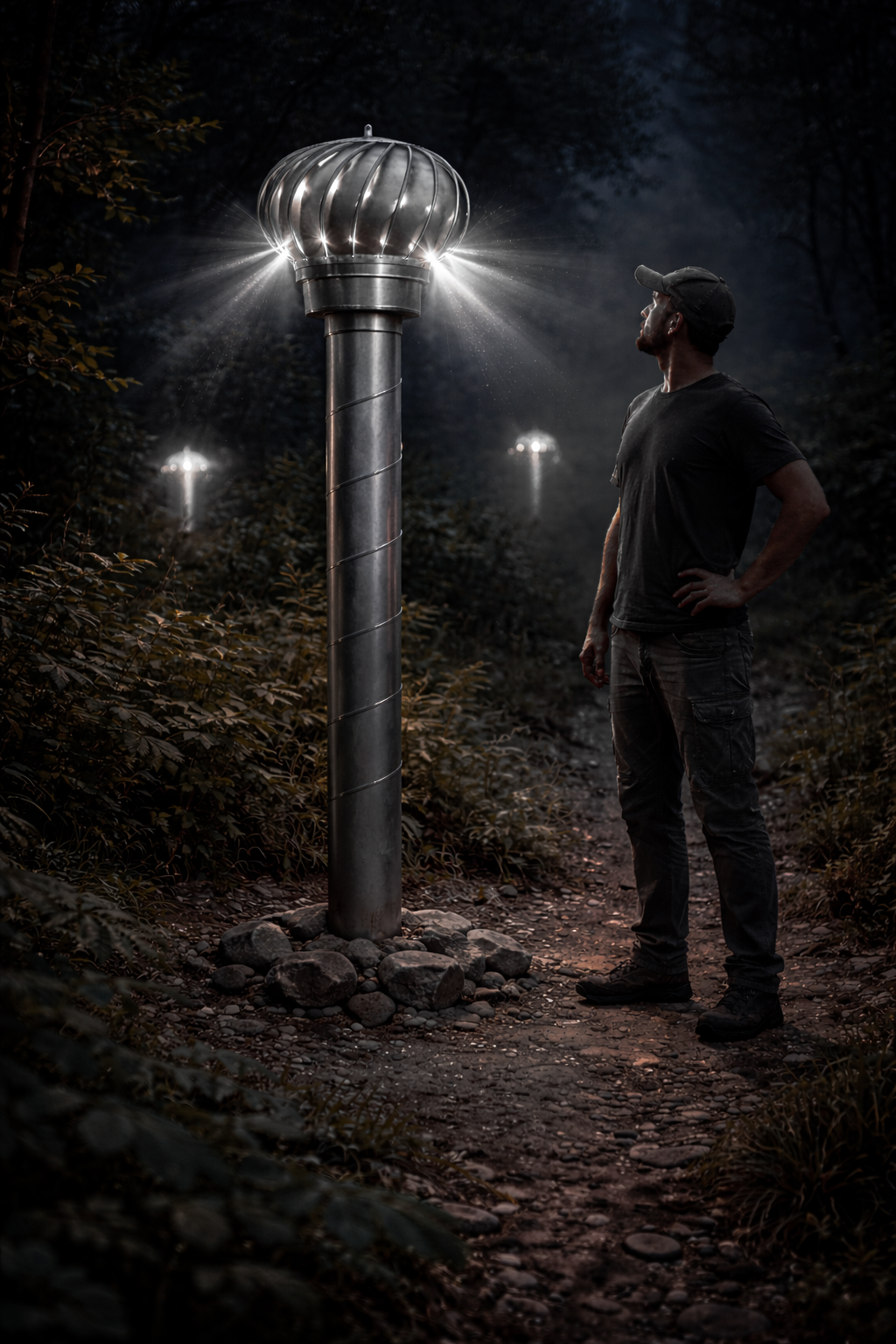
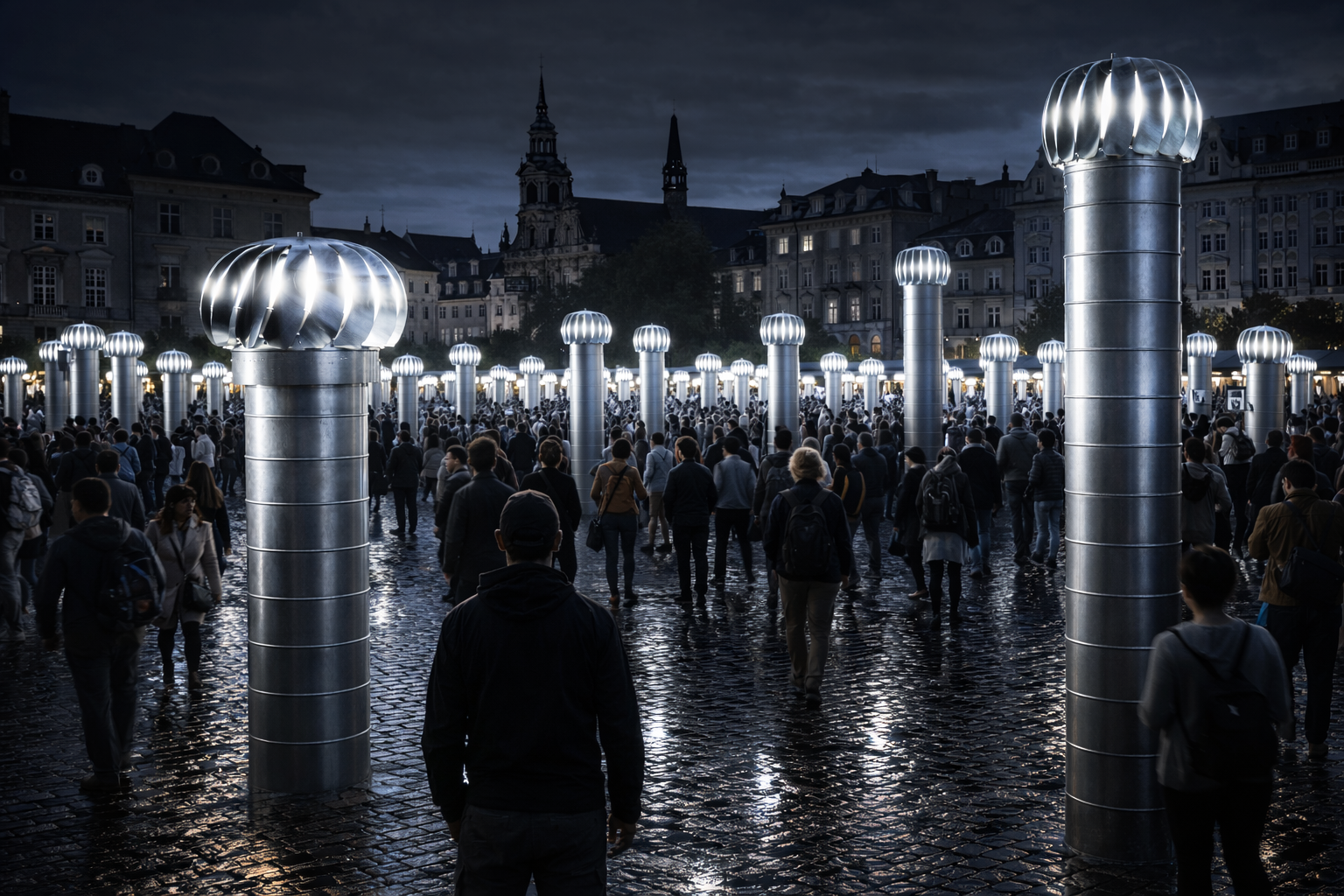
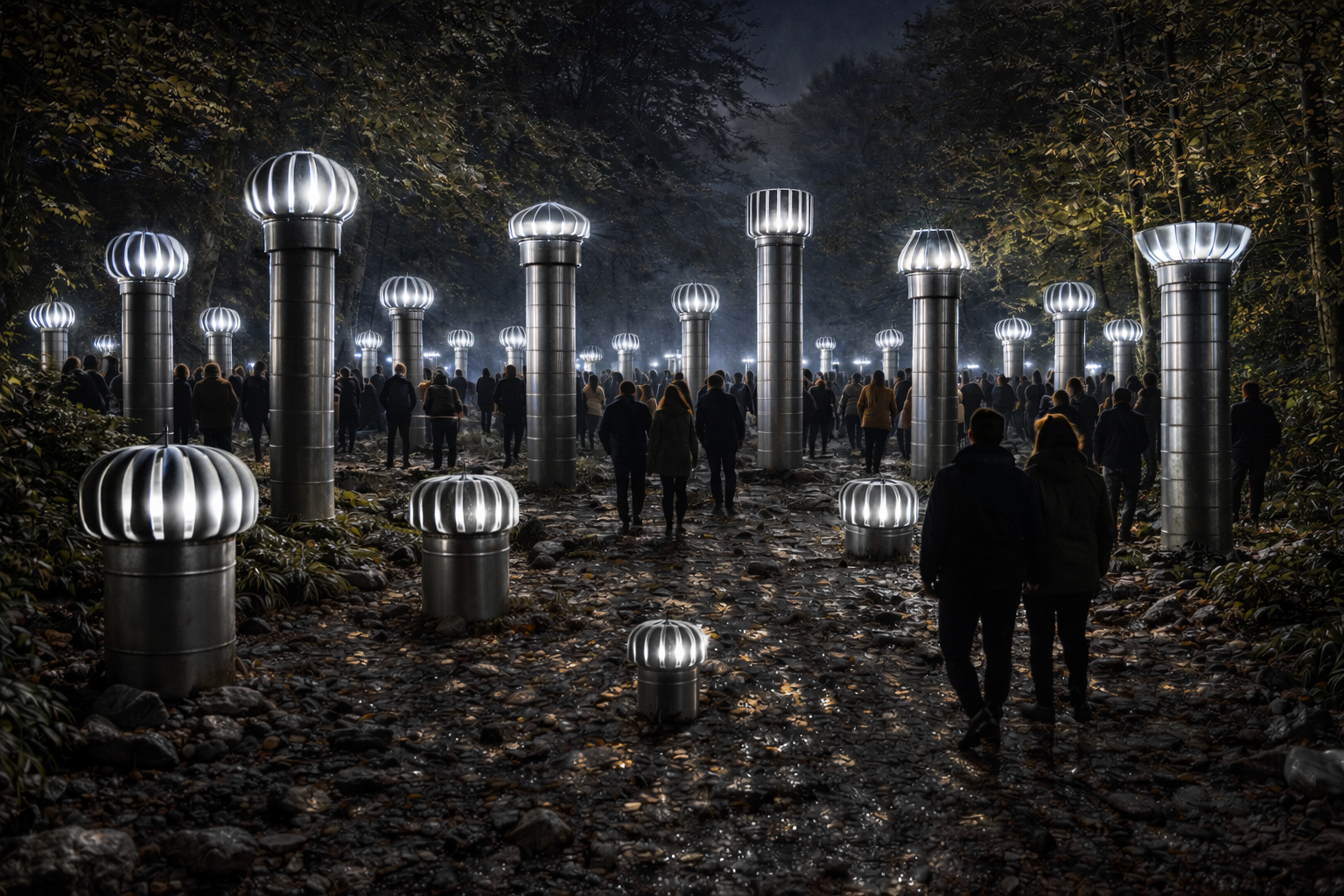
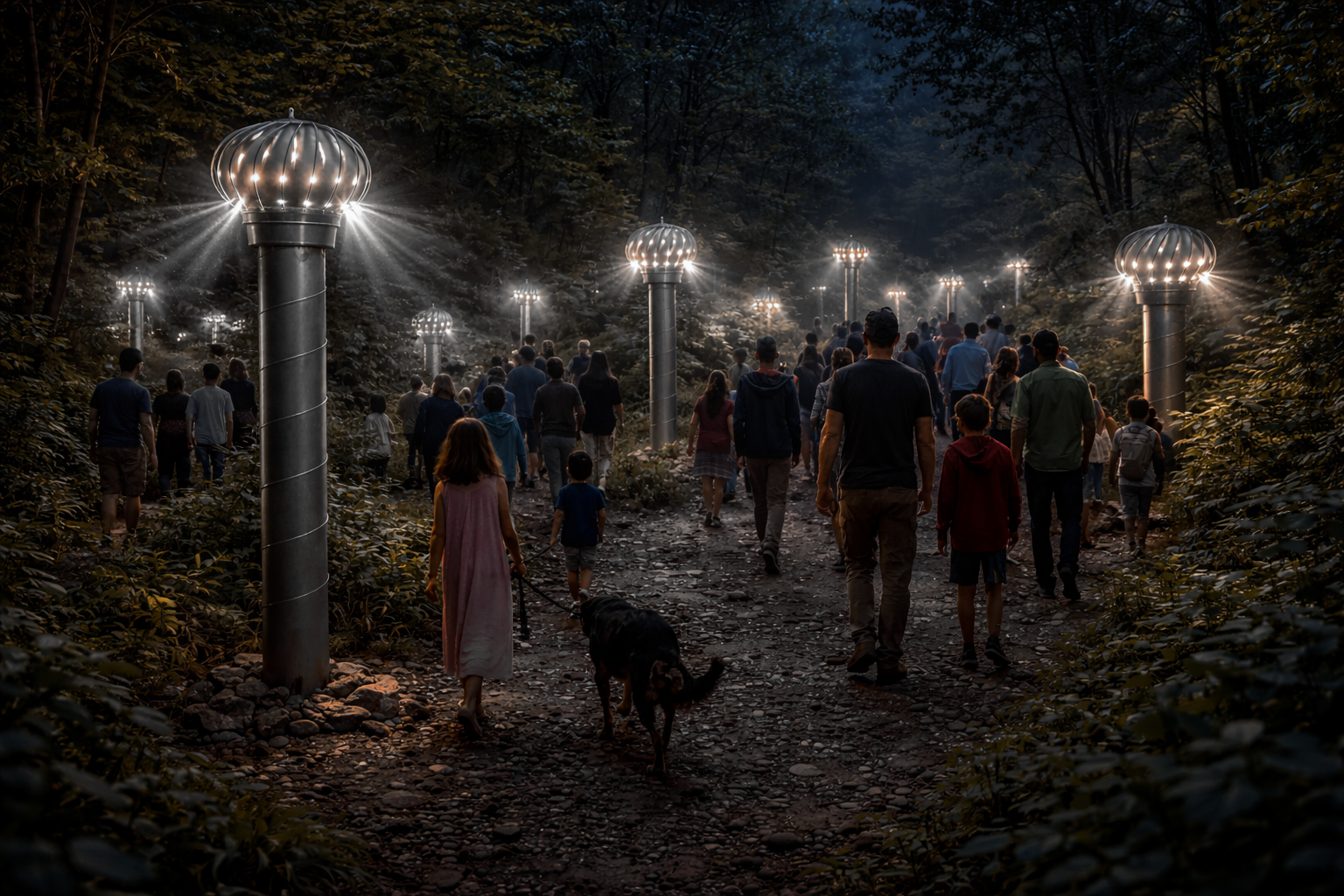
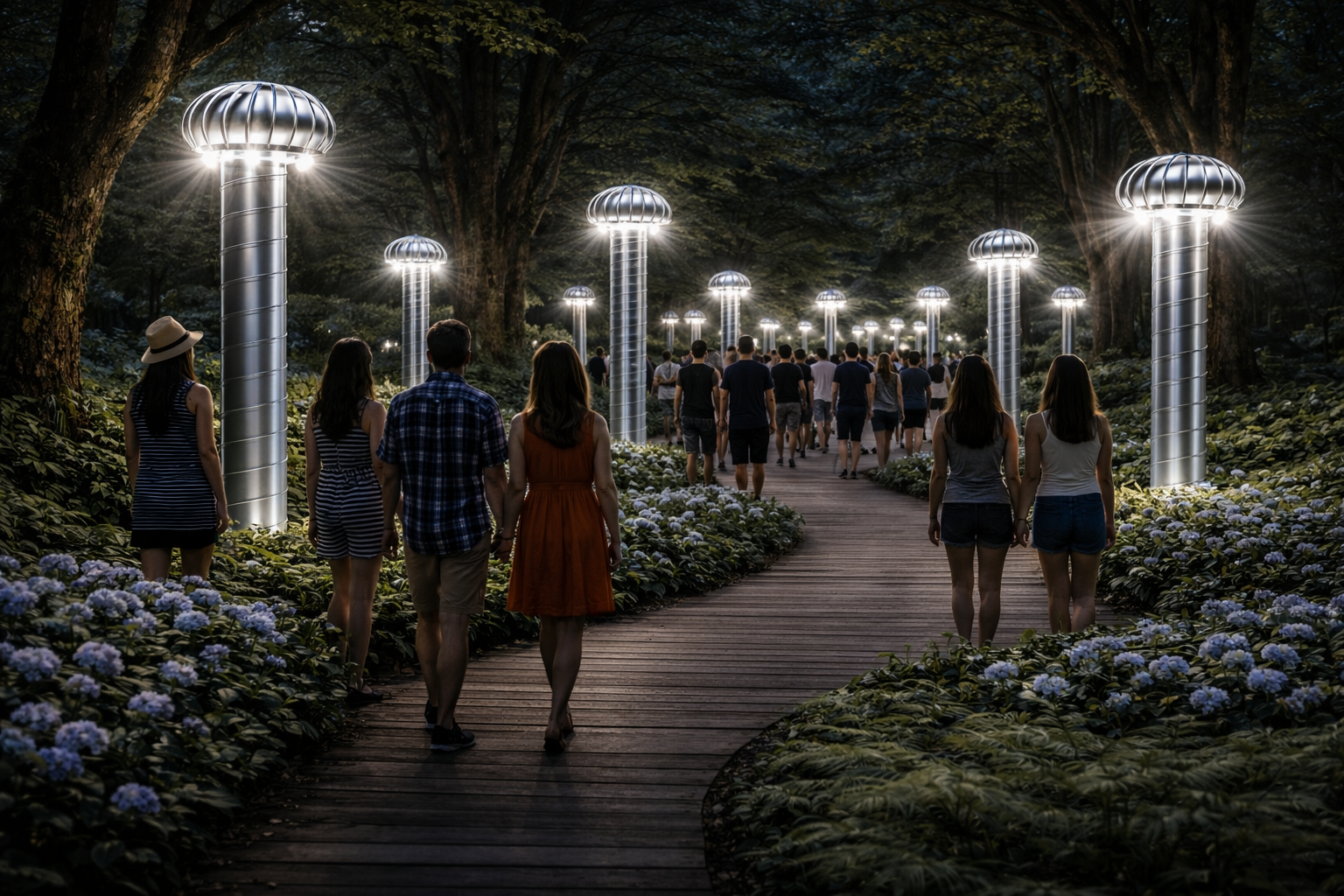
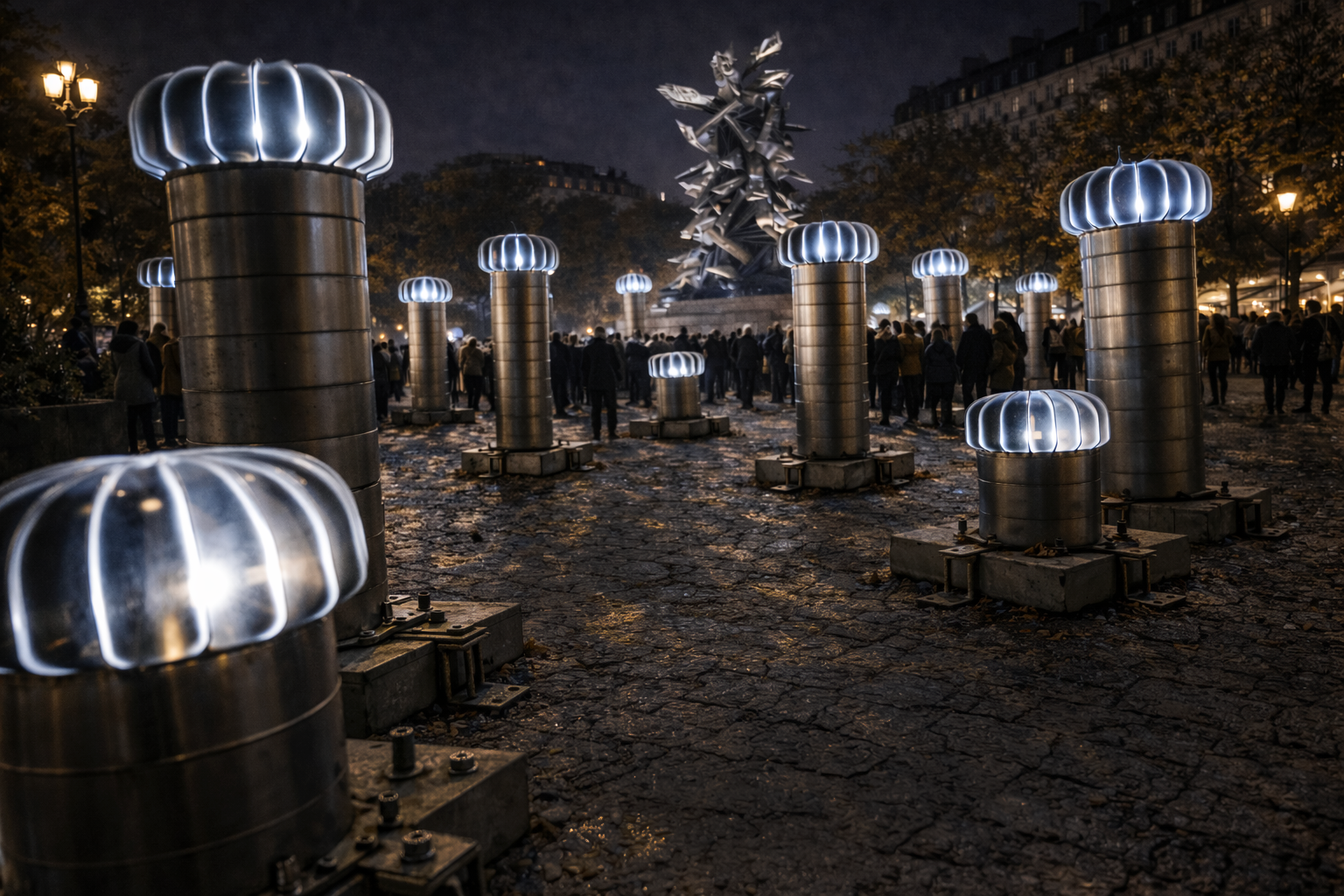
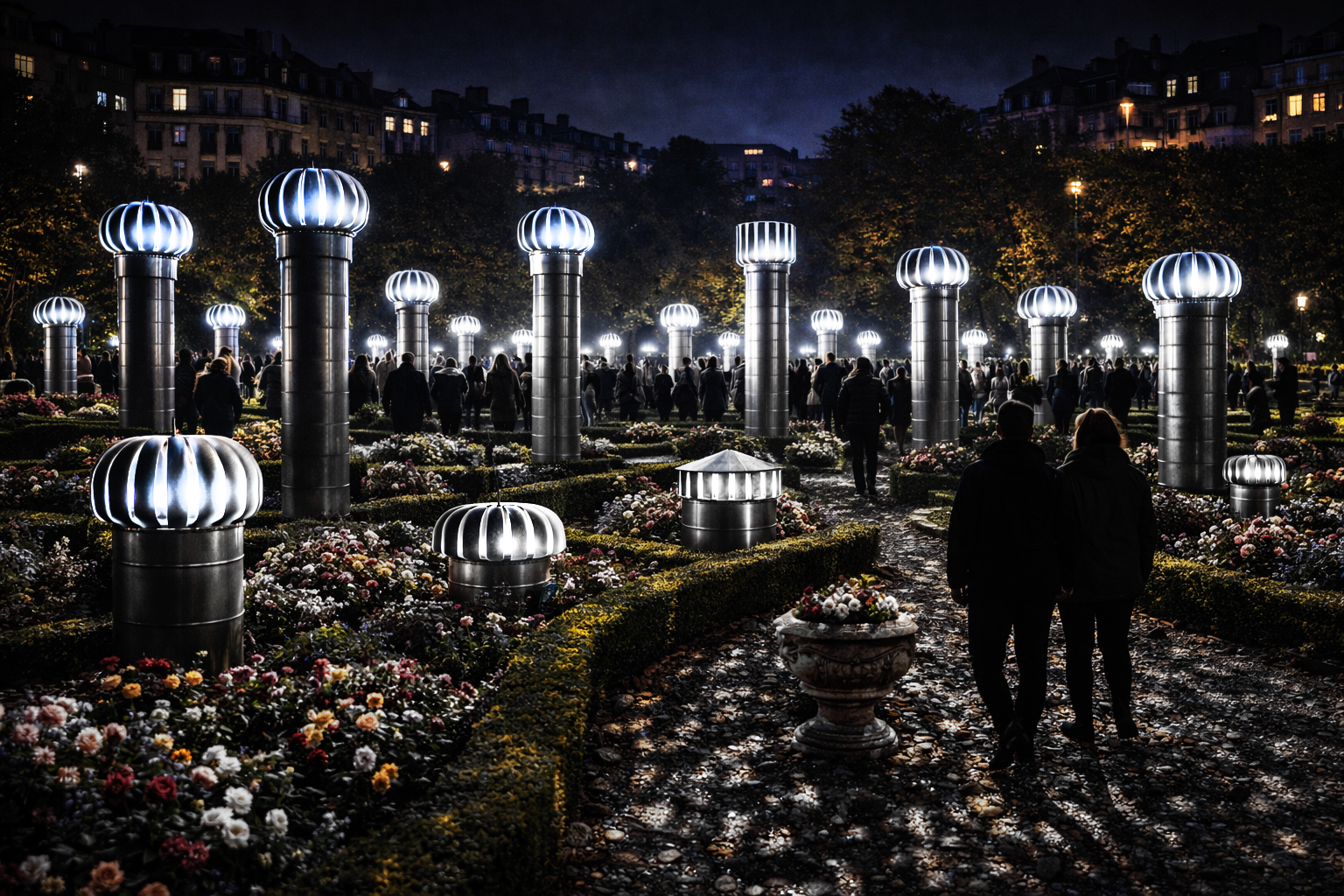
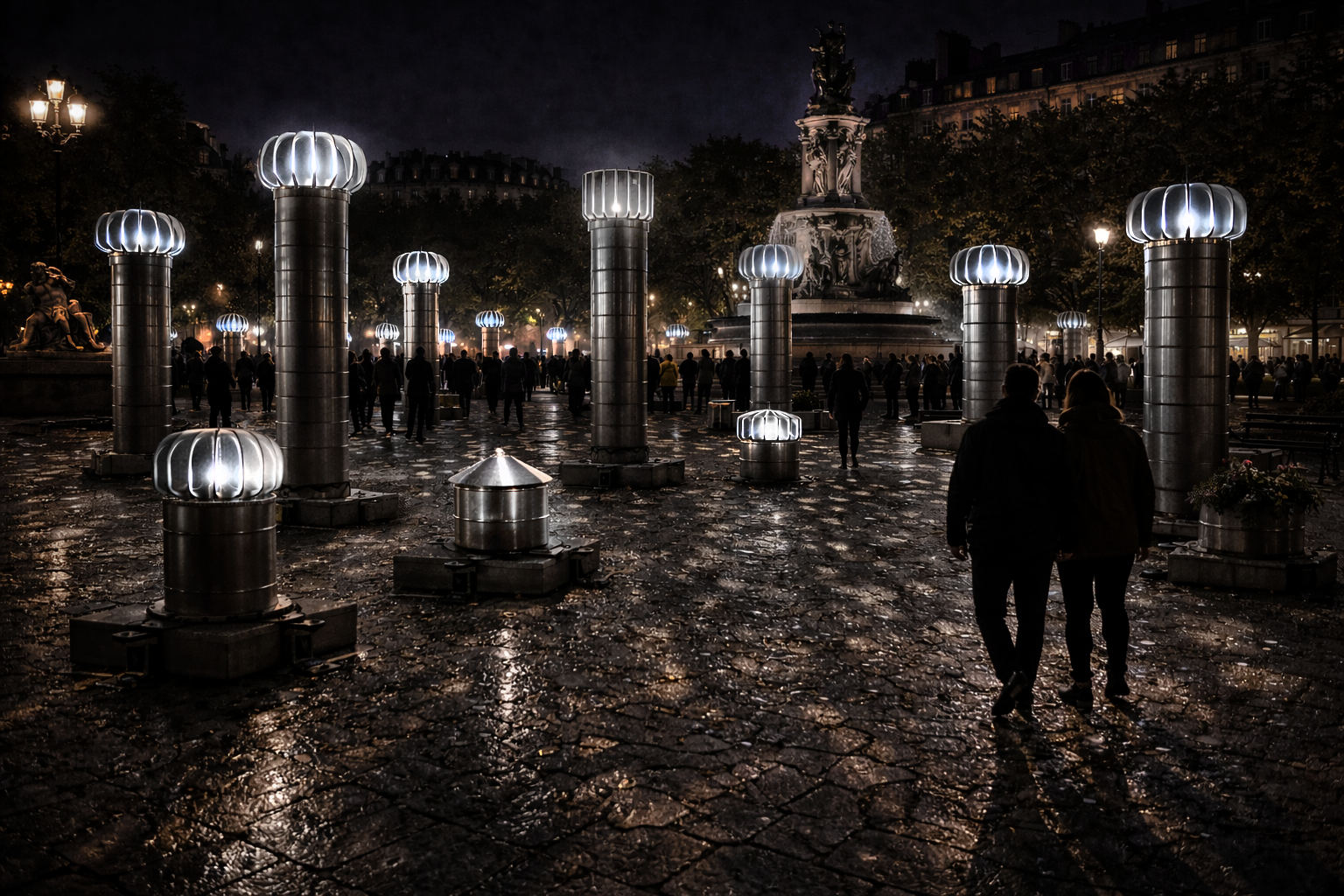
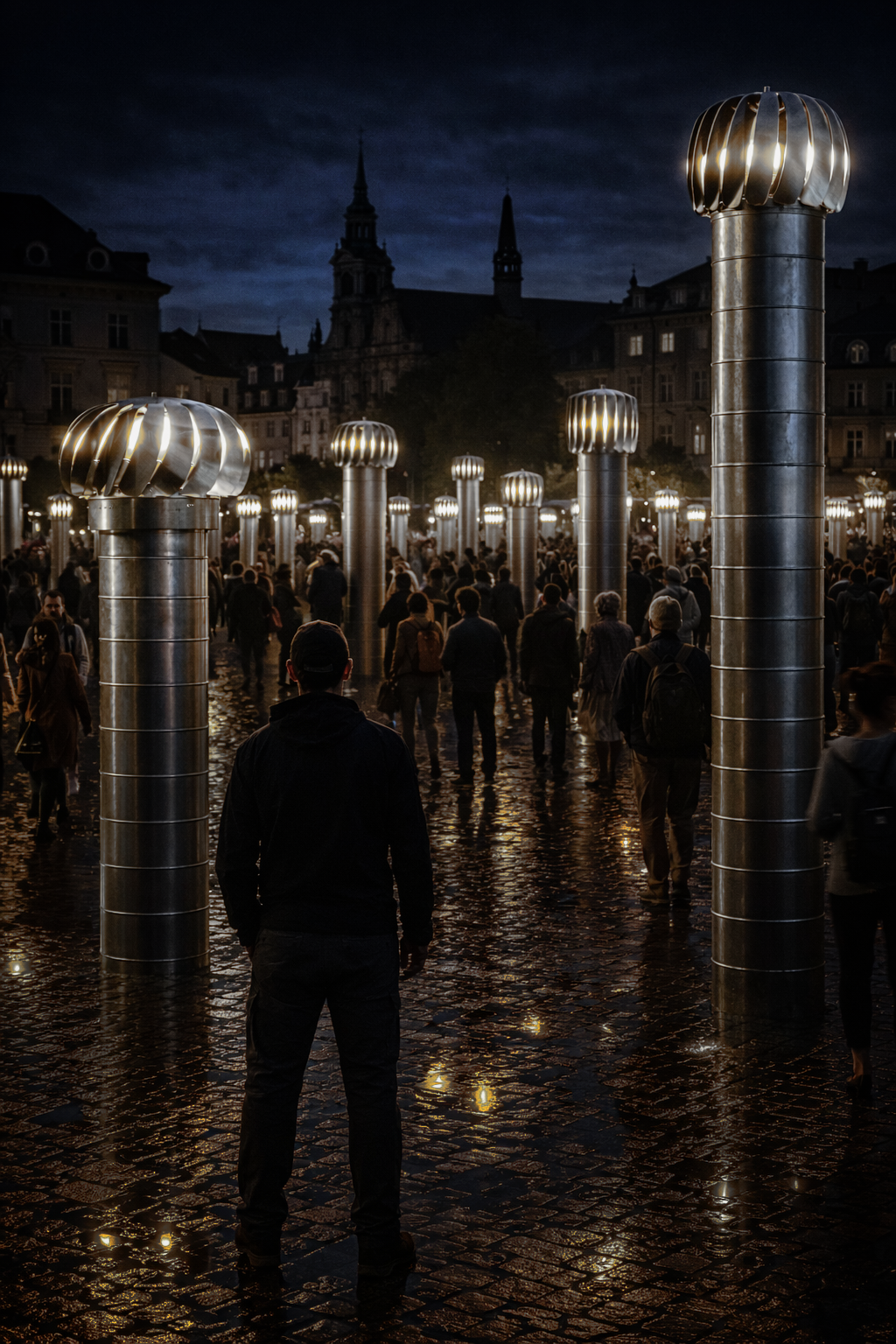
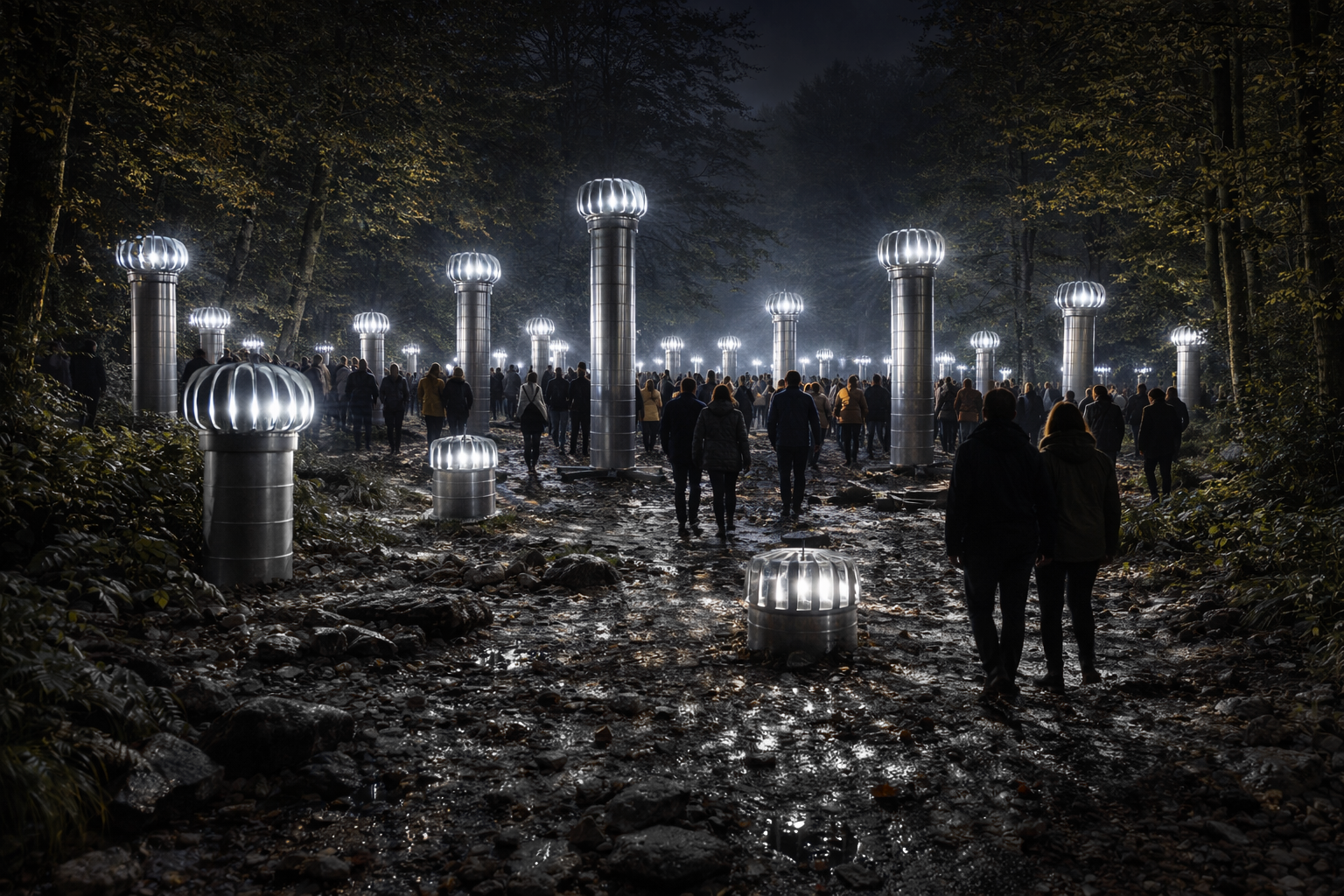
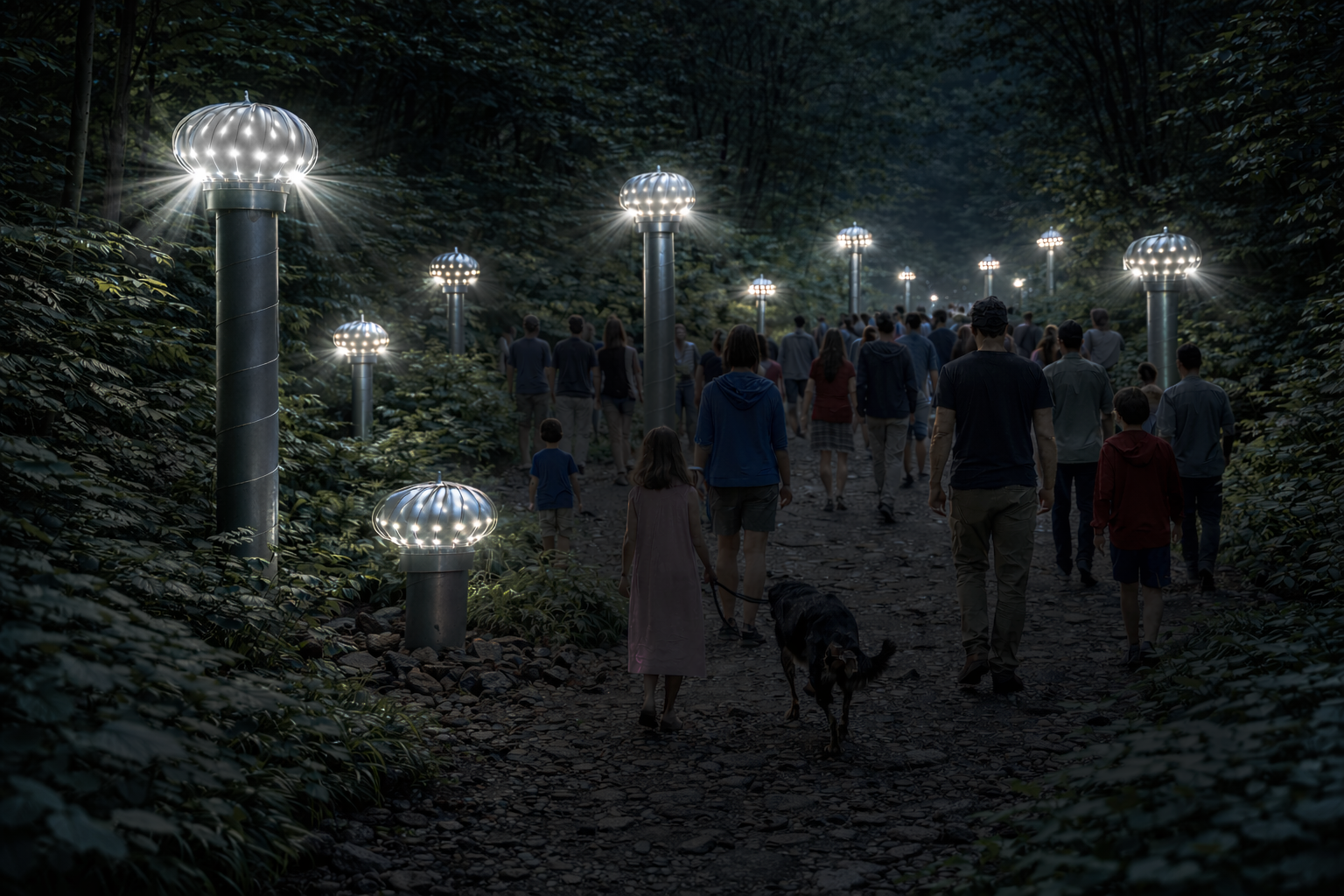
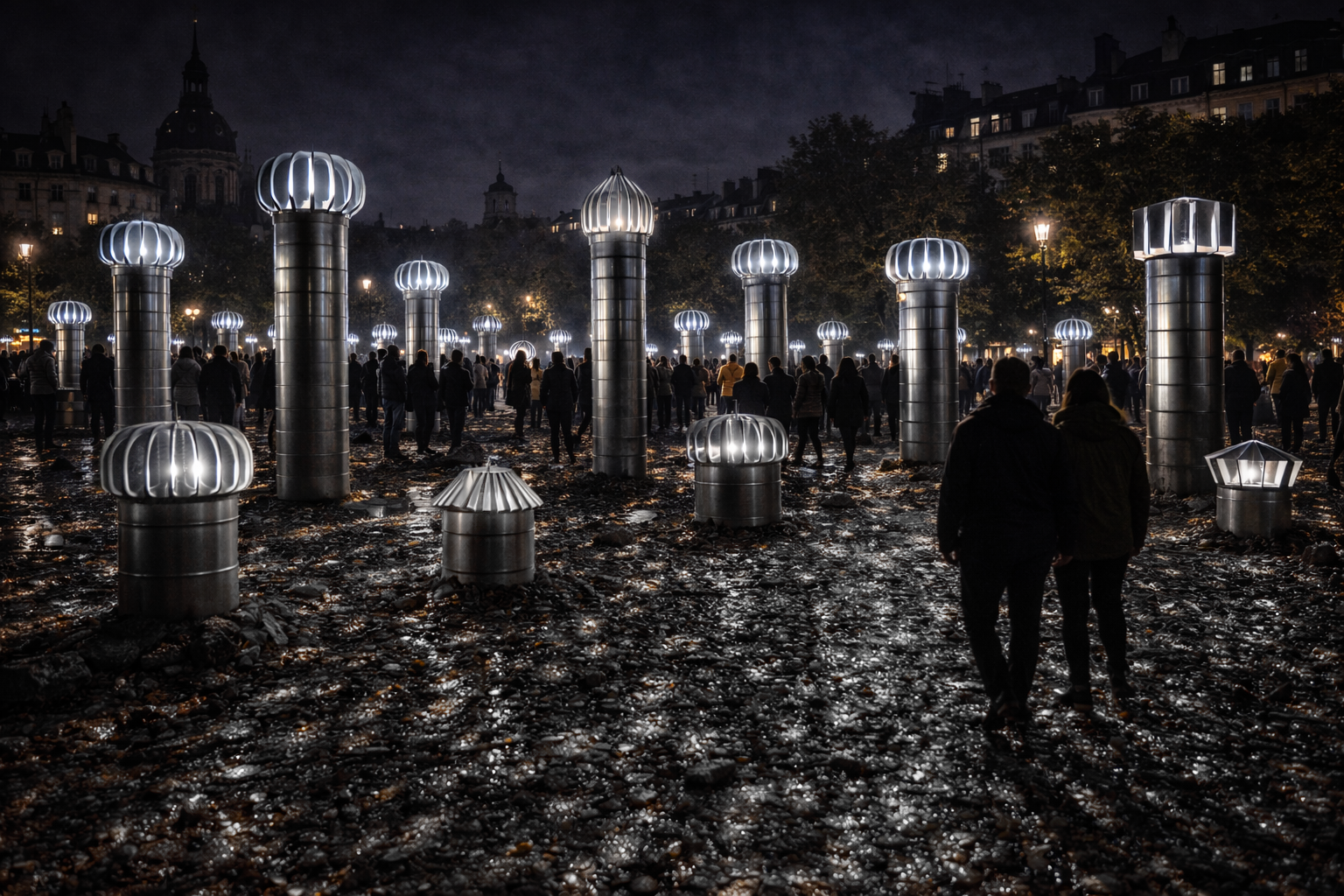
«Glints of the Wind» is a piece we created in 2017. At that time, we relied on the wonderful illustrations by Marta Menacho to give shape to the idea.
Today, the way we work demands images that are absolutely visual and, although we miss that more creative space of representation, we have no choice but to adapt the language so that ideas can circulate and be understood at first glance. That is why we have dared to redraw the piece.
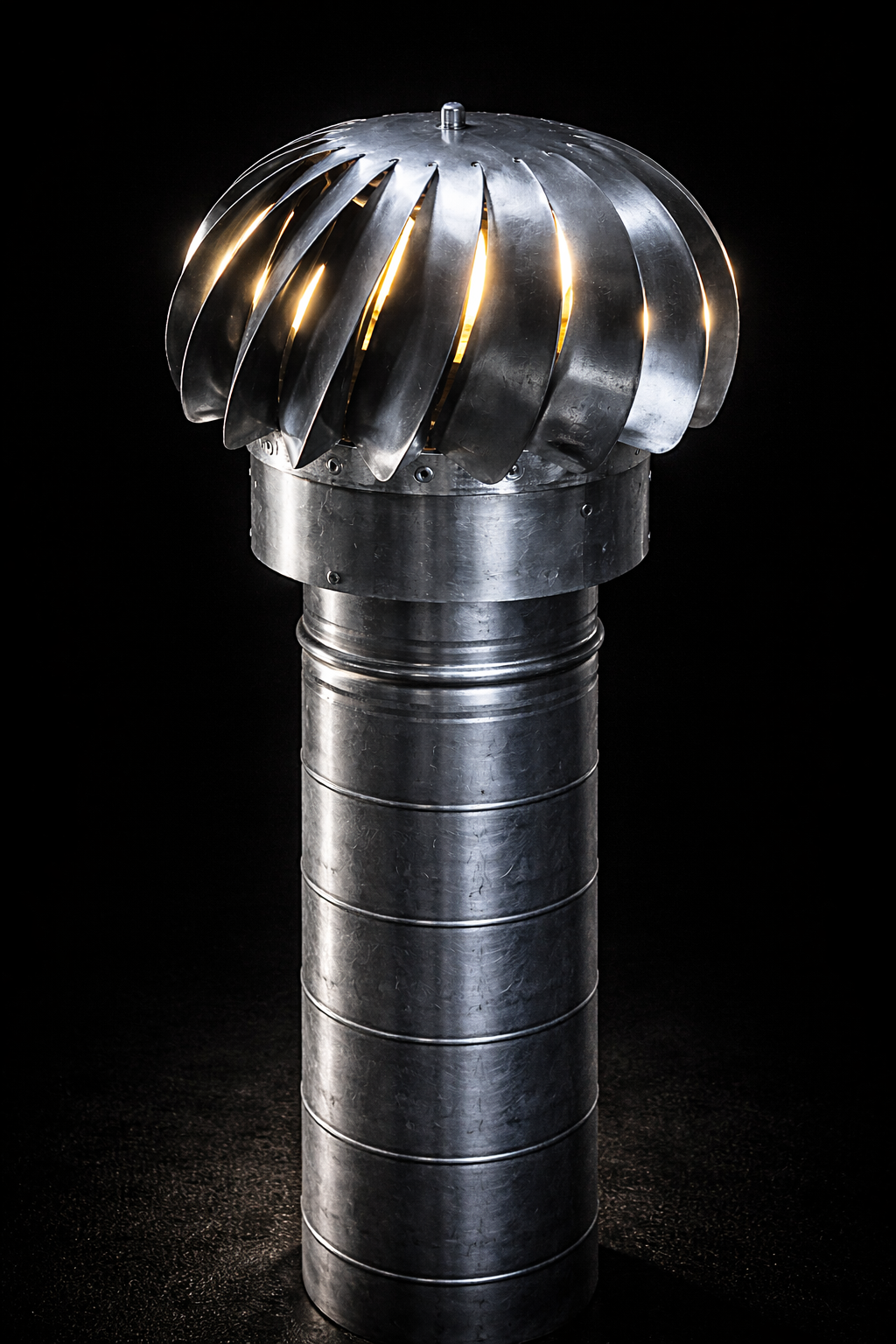
As in almost all our work, this proposal arises from the direct observation of what surrounds us. We focus on an object that is absolutely common in the urban and domestic landscape: the wind-driven turbine ventilators that sit on top of chimneys and ventilation ducts. Their function is simple and very specific: to use the wind to extract air and smoke from inside buildings. They are cheap, industrial elements, designed to last and to go unnoticed.
However, when sunlight hits their metallic surface, these turbine caps produce rotating glints that catch the eye and force us to look upwards, towards that rooftop landscape we usually ignore.
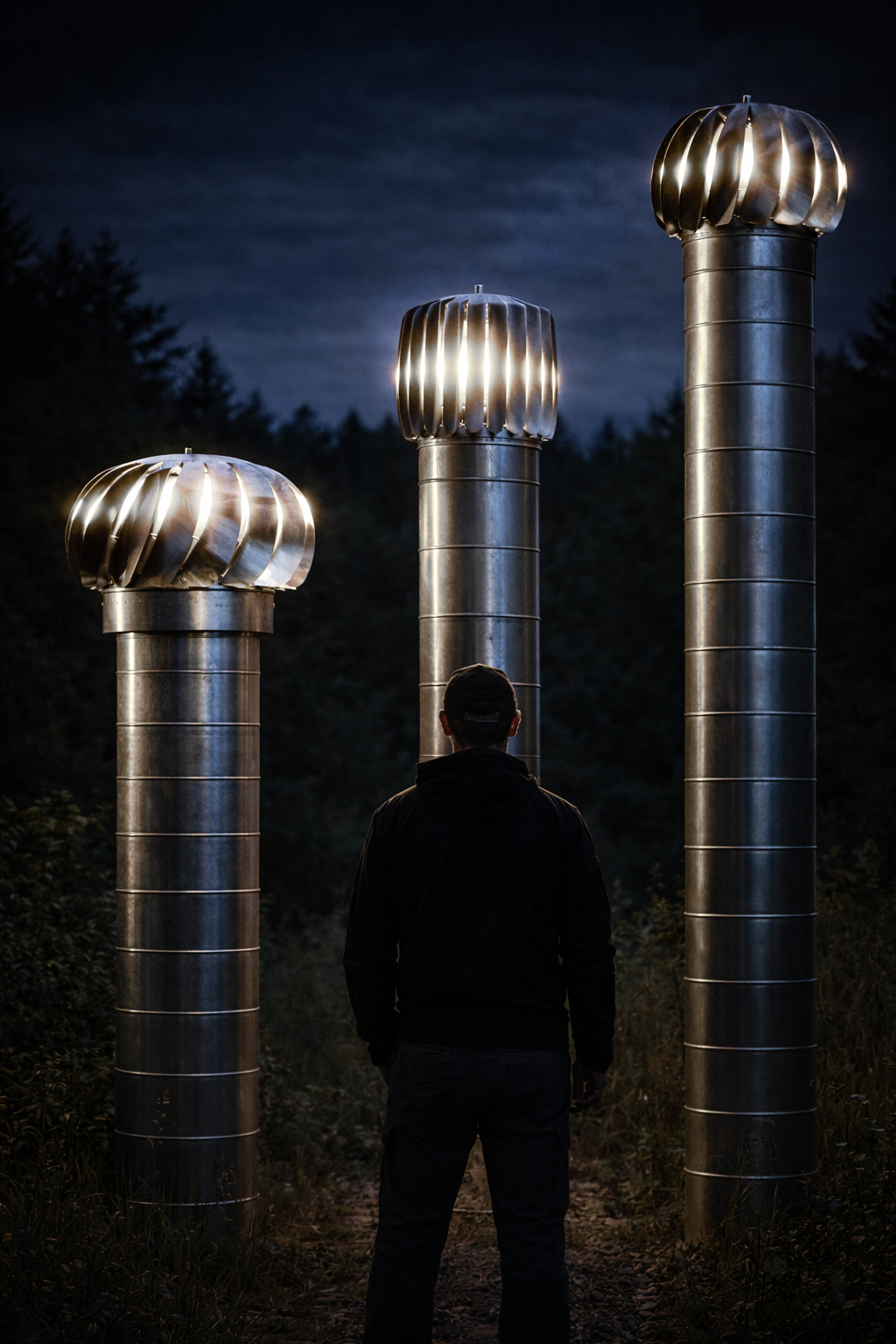
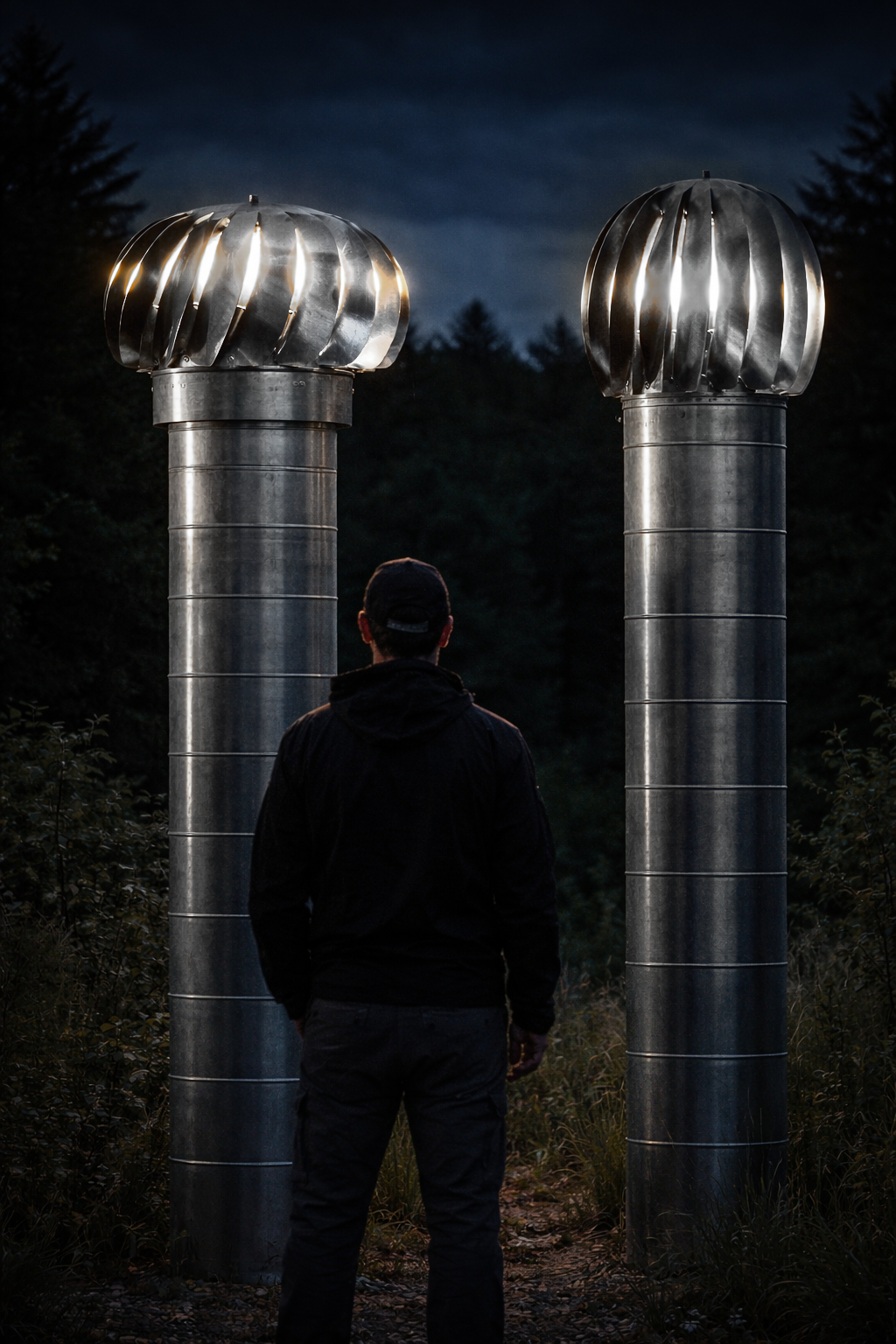
The piece consists of taking these same tubes and turbine ventilators and bringing them down to ground level, planting them in an open public space as if they formed a small forest of industrial elements of different heights and shapes. Inside each turbine cap, a powerful light source would be installed. As the cap rotates with the wind, the light would fragment and scatter into the surrounding space in the form of moving glints, extending into the night the effect that sunlight produces during the day.
The system is deliberately simple: standard metal tubes, real turbine ventilators, light inside, and wind as the driving force. Low technology, common materials, reduced energy consumption and, whenever possible, renewable energy sources. There are no complex mechanisms or digital control systems: the piece depends entirely on the environment and its changing conditions.
After the intervention, the pieces could return to the everyday landscape. Visitors could take them and install them on rooftops or in gardens, where they would continue to function as kinetic lamps or as rudimentary disco balls, returning to the domestic sphere an object that has always belonged to it.
Hopefully, we will be able to carry out this idea soon.
————————-
«Destellos del viento· es una pieza que creamos en 2017. En aquel momento recurrimos a las maravillosas ilustraciones de Marta Menacho para dar forma a la idea.
Hoy, la manera de trabajar nos exige imágenes absolutamente visuales y, aunque echamos de menos ese espacio más creativo de la representación, no nos queda más remedio que adaptar el lenguaje para que las ideas puedan circular y ser entendidas al primer golpe de vista. Por eso nos hemos atrevido a redibujar la pieza.
Como en casi todo nuestro trabajo, esta propuesta nace de la observación directa de lo que nos rodea. Nos fijamos en un objeto absolutamente común del paisaje urbano y doméstico: los sombreretes eólicos que coronan chimeneas y conductos de ventilación. Su función es sencilla y muy concreta: aprovechar el viento para extraer aire y humo del interior de los edificios. Son elementos baratos, industriales, pensados para durar y pasar desapercibidos.
Sin embargo, cuando el sol incide sobre su superficie metálica, estos sombreretes producen destellos giratorios que llaman la atención y nos obligan a mirar hacia arriba, hacia ese paisaje de tejados que normalmente ignoramos.
La pieza consiste en tomar esos mismos tubos y sombreretes eólicos y desplazarlos al suelo, plantándolos en un espacio público abierto, como si formaran un pequeño bosque de elementos industriales de distintas alturas y formas. En el interior de cada sombrerete se introduciría una fuente de luz potente. Al girar con el viento, la luz se fragmentaría y se proyectaría al entorno en forma de destellos móviles, prolongando de noche ese efecto que durante el día produce el sol.
El sistema es deliberadamente simple: tubos metálicos estándar, sombreretes eólicos reales, luz en su interior y viento como motor. Baja tecnología, materiales comunes, consumo energético reducido y, siempre que sea posible, energías renovables. No hay mecanismos complejos ni control digital: la pieza depende del entorno y de sus condiciones cambiantes.
Tras la intervención, las piezas podrían volver a integrarse en el paisaje cotidiano. Los visitantes podrían llevárselas e instalarlas en azoteas o jardines, donde seguirían funcionando como lámparas cinéticas o como rudimentarias bolas de discoteca, devolviendo al ámbito doméstico un objeto que siempre ha pertenecido a él.
Ojalá podamos llevar esta idea a cabo pronto.